
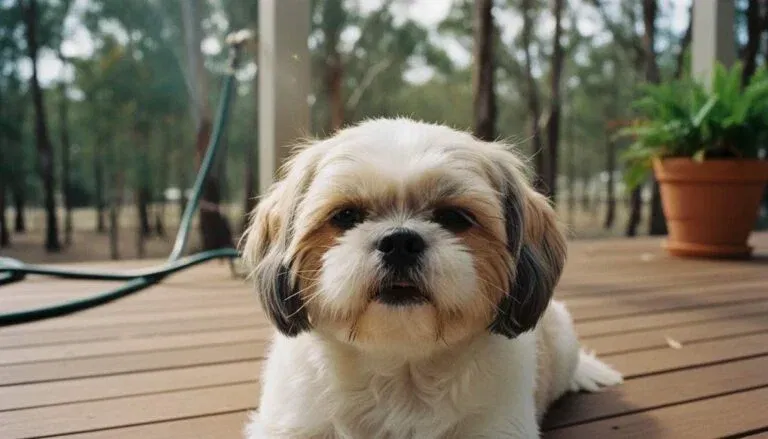
For over a thousand years, the Shih Tzu sat in the laps of Chinese emperors. It was already a small, sturdy, companion-bred dog designed for one purpose: being adored. And at 4–7 kg (9–16 lbs), it was perfectly sized for the job.
Then the teacup trend arrived.
The teacup Shih Tzu — also marketed as the Imperial Shih Tzu, miniature Shih Tzu, or toy Shih Tzu — is a deliberately undersized version bred below the breed standard, typically weighing under 4 kg (9 lbs) and sometimes as little as 1.8–2.7 kg (4–6 lbs). It’s not recognised by any kennel club, and the health risks of shrinking a brachycephalic (flat-faced) breed are significant.
If you’re searching for teacup Shih Tzu puppies for sale in Australia, this guide covers what you need to know before putting down a deposit — size, price, health problems, grooming reality, and why the standard Shih Tzu might be the smarter choice.
What You’ll Learn
- Breed traits & temperament
- Health concerns to know
- True cost in Australia
- Training & exercise needs
- Is this breed right for you?
Quick Facts at a Glance
| Trait | Details |
|---|---|
| Official Breed? | No — “teacup” and “Imperial” are not recognised by the ANKC, AKC, or ASTC. There is one Shih Tzu breed. |
| Also Known As | Imperial Shih Tzu, Miniature Shih Tzu, Toy Shih Tzu, Munchkin Shih Tzu |
| Full Grown Height | Under 23 cm (9 inches); standard Shih Tzu: 20–27 cm (8–11 inches) |
| Full Grown Weight | Under 4 kg (9 lbs); often 1.8–3.2 kg (4–7 lbs). Standard: 4–7.25 kg (9–16 lbs) |
| Coat | Long, silky double coat; all colours including white, black, gold, red, brindle, liver, blue, and combinations |
| Shedding | Low — double coat sheds minimally; considered hypoallergenic-friendly |
| Temperament | Affectionate, outgoing, playful, charming; loves people and other pets; can be stubborn |
| Lifespan | 10–15 years (standard Shih Tzu: 10–18 years) |
| Price (AUD) | $2,000–$5,000+ for teacup/imperial; $1,500–$4,000 for standard ANKC-registered |
| Suitability | Families, singles, retirees; all household types including apartments |
| Exercise | Low — short daily walks and indoor play |
| Grooming | High — daily brushing if coat kept long; regular professional grooming |
History & Origins
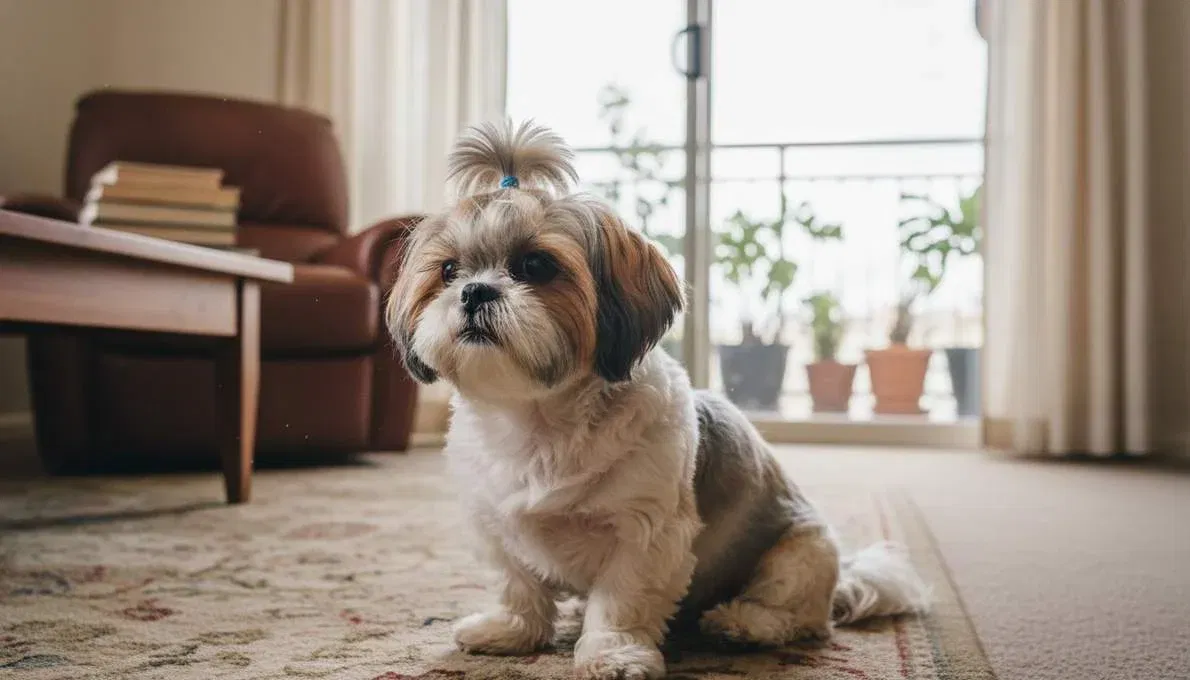
The Shih Tzu is one of the oldest dog breeds, with origins traced to Tibet and China over 1,000 years ago. The breed is likely a cross between the Lhasa Apso and the Pekingese, developed as a palace companion for Chinese royalty. The name means “lion dog” — the breed was designed to resemble the lions of Buddhist mythology.
By the early 20th century, the Shih Tzu had been refined into the sturdy, friendly companion we know today. The AKC recognised the breed in 1969. The standard calls for a weight of 4–7.25 kg (9–16 lbs) and a height of 20–27 cm (8–11 inches). The ANKC follows a similar standard.
The “Imperial” and “teacup” labels are marketing inventions. Some breeders claim Imperial Shih Tzus descend from a separate royal lineage with a special “imperial gene.” There is no evidence for this. The American Shih Tzu Club and all major kennel clubs recognise only one Shih Tzu breed. “Imperial,” “teacup,” “miniature,” and “munchkin” are all names for the same thing: a Shih Tzu bred below the breed standard.
The teacup Shih Tzu trend gained momentum in the 1970s when breeders began deliberately pairing the smallest dogs from their litters. This practice continues today, driven by consumer demand for ever-smaller companion dogs.
Temperament & Personality
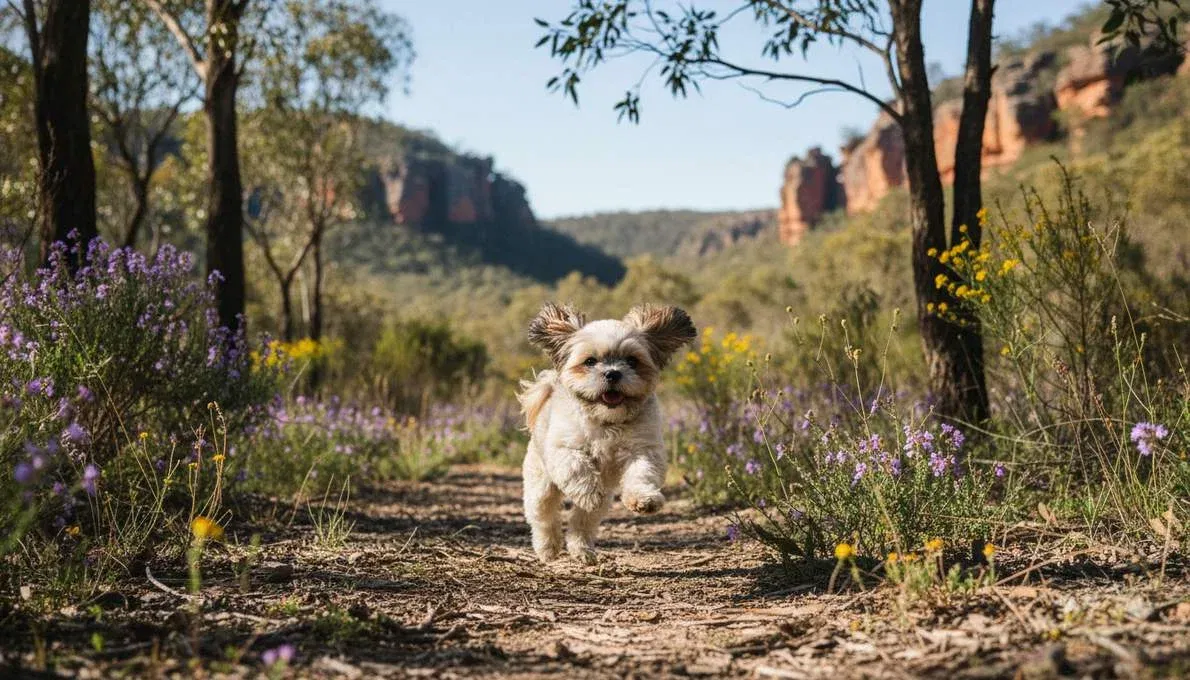
The Shih Tzu’s temperament is arguably its greatest asset — and it’s the same whether the dog is standard or teacup-sized.
- Born companion: The Shih Tzu was literally bred for centuries to be a lap dog. They’re affectionate, people-oriented, and happiest when they’re with you. They’ll follow you from room to room and claim your lap as their rightful territory.
- Genuinely friendly: Unlike some toy breeds that are wary of strangers, Shih Tzus tend to greet everyone — visitors, other dogs, cats, children — with cheerful enthusiasm. They’re one of the most sociable toy breeds.
- Playful but not hyperactive: They enjoy short bursts of play and are happy to entertain themselves with toys, but they’re equally content to nap on the couch. Their energy level is manageable for almost any lifestyle.
- Charmingly stubborn: Shih Tzus have a reputation for being a little headstrong. They’ll learn what you want them to do — and sometimes choose not to do it. Training requires patience, consistency, and humour.
- Good with children: Standard Shih Tzus are one of the better toy breeds for families with kids, thanks to their sturdy build and tolerant nature. However, teacup Shih Tzus are significantly more fragile, and rough handling from small children poses a real injury risk.
- Low exercise demand: A couple of short walks and indoor play sessions are plenty. This makes them ideal for retirees, apartment dwellers, and anyone who doesn’t want a high-energy dog.
Health & Genetic Conditions
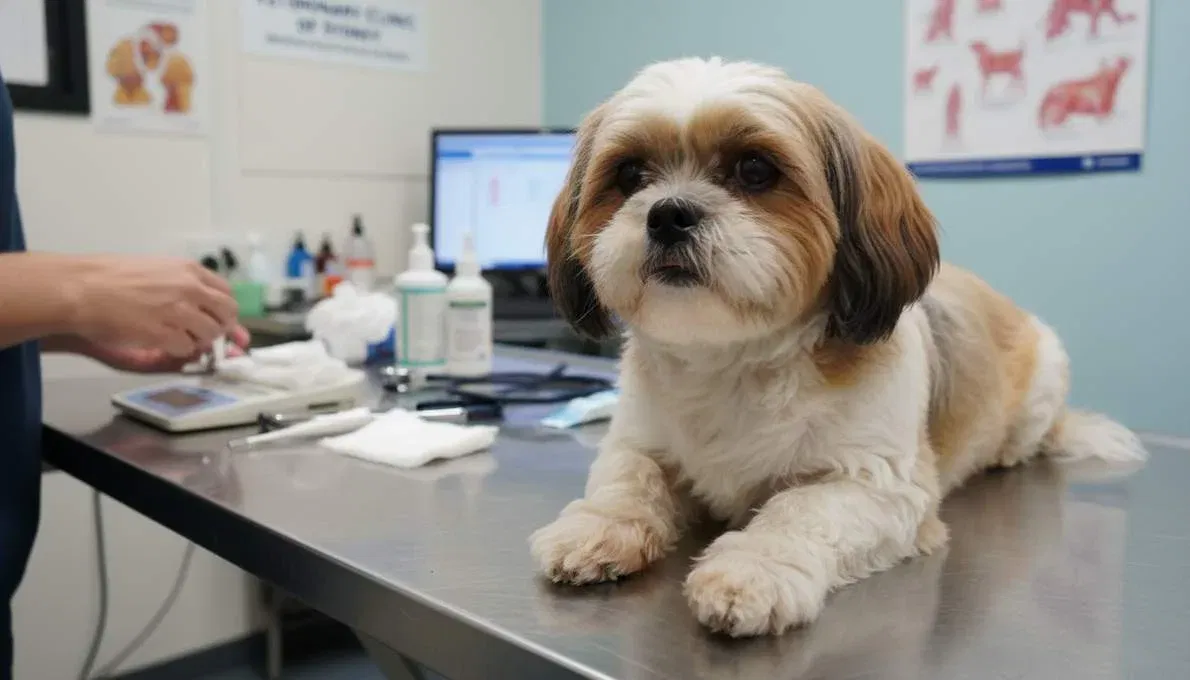
Standard Shih Tzus are generally a long-lived, healthy breed. However, they are brachycephalic (flat-faced), which introduces respiratory challenges that worsen in undersized dogs. Breeding a brachycephalic breed even smaller is one of the riskiest combinations in the teacup dog world.
- Brachycephalic obstructive airway syndrome (BOAS): The Shih Tzu’s flat face already restricts airflow. In teacup-sized dogs, the airways are even narrower. Symptoms include snoring, laboured breathing, exercise intolerance, and overheating. Severe cases require corrective surgery ($2,000–$5,000+ AUD). This is the single biggest health concern with teacup Shih Tzus.
- Hypoglycaemia: Rapid blood sugar drops in tiny dogs. Puppies need 4–6 small meals daily to prevent weakness, tremors, seizures, and collapse. Keep glucose gel on hand at all times.
- Luxating patella: Kneecap dislocation — common in small breeds, worse in undersized dogs. Surgery costs $2,000–$5,000 per knee in Australia.
- Intervertebral disc disease (IVDD): Spinal disc problems causing pain, weakness, and potential paralysis in the hind legs. The Shih Tzu’s long back relative to its short legs makes them susceptible, and extreme small size amplifies the risk.
- Eye problems: Shih Tzus have large, prominent eyes that are prone to ulcers, dry eye (keratoconjunctivitis sicca), progressive retinal atrophy, and proptosis (eye popping out of the socket — yes, this happens). Their flat faces mean the eye sockets are shallow, offering less protection.
- Dental overcrowding: Full adult teeth in a jaw smaller than the breed standard. Causes overlapping teeth, gum disease, painful infections, and inevitable extractions. Annual dental cleanings ($400–$1,000+ AUD) are standard.
- Ear infections: Shih Tzus have heavy, floppy ears that create warm, moist environments perfect for infections. Regular ear cleaning is essential.
- Kidney and liver issues: Undersized organs in teacup dogs may not develop or function properly, leading to renal dysplasia and liver shunts. Treatment can range from dietary management to major surgery.
- Bone fragility: Delicate bones that fracture from minor falls, jumps, or rough handling. A standard Shih Tzu is a sturdy little dog — a teacup Shih Tzu is not.
The brachycephalic factor: this is what makes teacup Shih Tzus uniquely risky compared to teacup versions of non-flat-faced breeds. You’re combining extreme small size with an already-compromised airway. Australian summers make this especially dangerous — a teacup Shih Tzu can overheat in minutes on a warm day.
Lifespan & Longevity
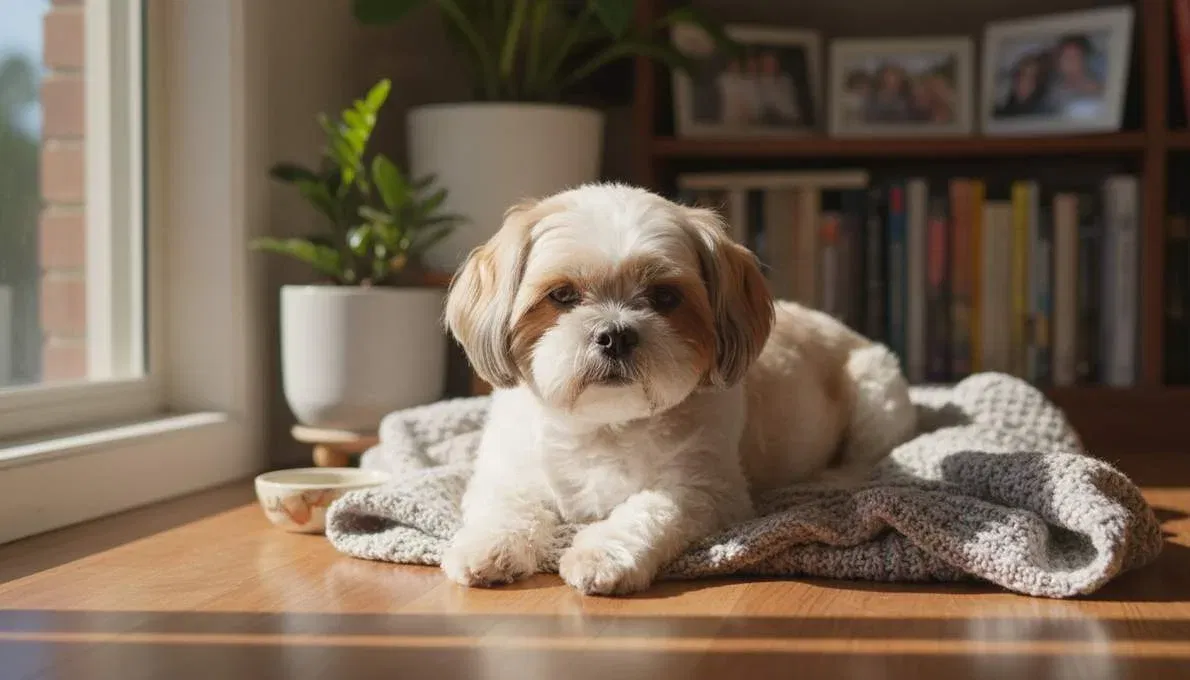
Standard Shih Tzus enjoy one of the longest toy breed lifespans at 10–18 years. Teacup Shih Tzus typically live 10–15 years, with some poorly bred individuals living significantly less.
To maximise your teacup Shih Tzu’s life expectancy:
- Keep them cool. Avoid exercise in heat, never leave them in cars, and ensure air-conditioned environments in Australian summers.
- Feed 3–4 small meals daily to prevent hypoglycaemia.
- Maintain a healthy weight — obesity dramatically worsens breathing problems in brachycephalic dogs.
- Prioritise dental care — daily brushing and annual professional cleanings.
- Use a harness, never a collar, to protect both the trachea and the eyes (collars can increase intraocular pressure in brachycephalic breeds).
- Schedule six-monthly vet visits with eye, patellar, and respiratory assessments.
- Get comprehensive pet insurance before any health issues emerge.
Grooming & Coat Care
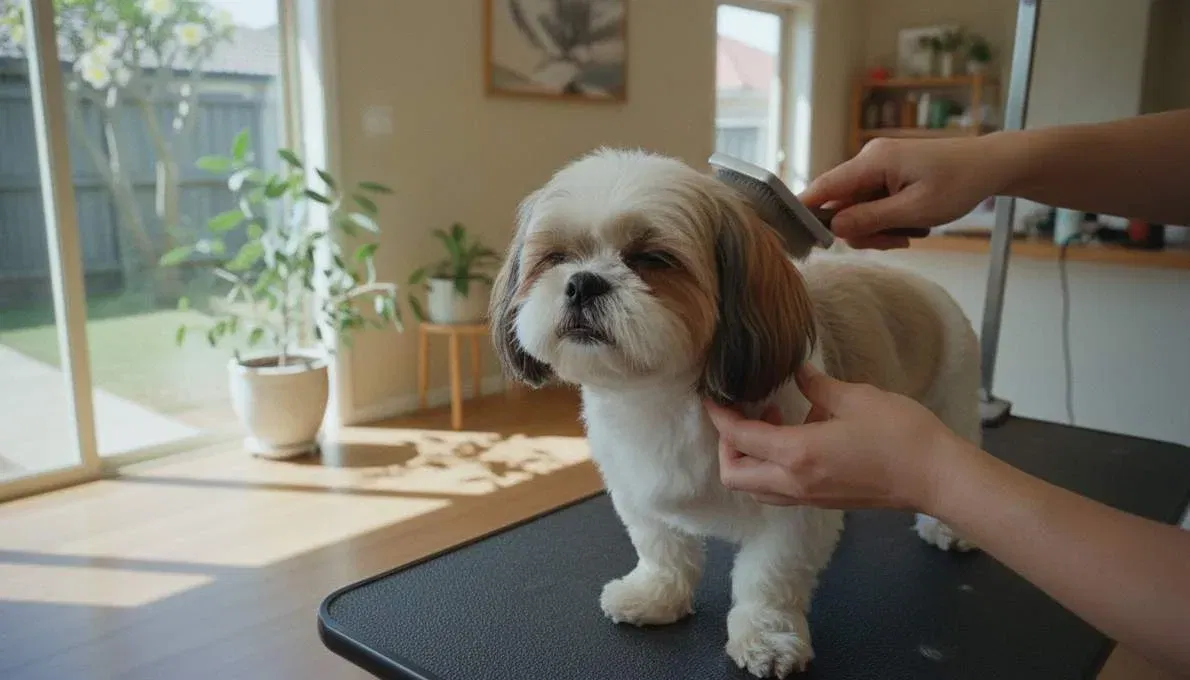
The Shih Tzu’s long, silky double coat is stunning — and high-maintenance. The coat grows continuously (like human hair), doesn’t shed much, and tangles easily.
Grooming Schedule
| Task | Frequency | Est. Cost (AUD) |
|---|---|---|
| Brushing & combing | Daily if coat is long; every 2–3 days if clipped short | DIY — pin brush & comb ~$25–$40 |
| Professional grooming | Every 4–6 weeks | $60–$110 per session |
| Bathing | Every 1–3 weeks | DIY or included in grooming |
| Face cleaning | Daily — eyes, folds, and beard need wiping | Cleaning wipes ~$15–$25 |
| Dental care | Daily brushing; annual professional clean | $400–$1,000+ per dental |
| Ear cleaning | Weekly | Ear cleaner ~$15–$25 |
| Nail trimming | Every 2–3 weeks | $10–$20 at groomer, or DIY |
Most pet owners opt for a “puppy cut” or “teddy bear cut” — coat clipped to a uniform short length — to reduce daily grooming from 20+ minutes to a quick brush. The full-length show coat is beautiful but impractical for most households.
Face care is non-negotiable. Shih Tzus have facial folds, prominent eyes, and beards that collect food, moisture, and debris. Daily face wiping prevents tear staining, skin infections, and eye irritation. This is a daily task that many first-time Shih Tzu owners underestimate.
Exercise Needs
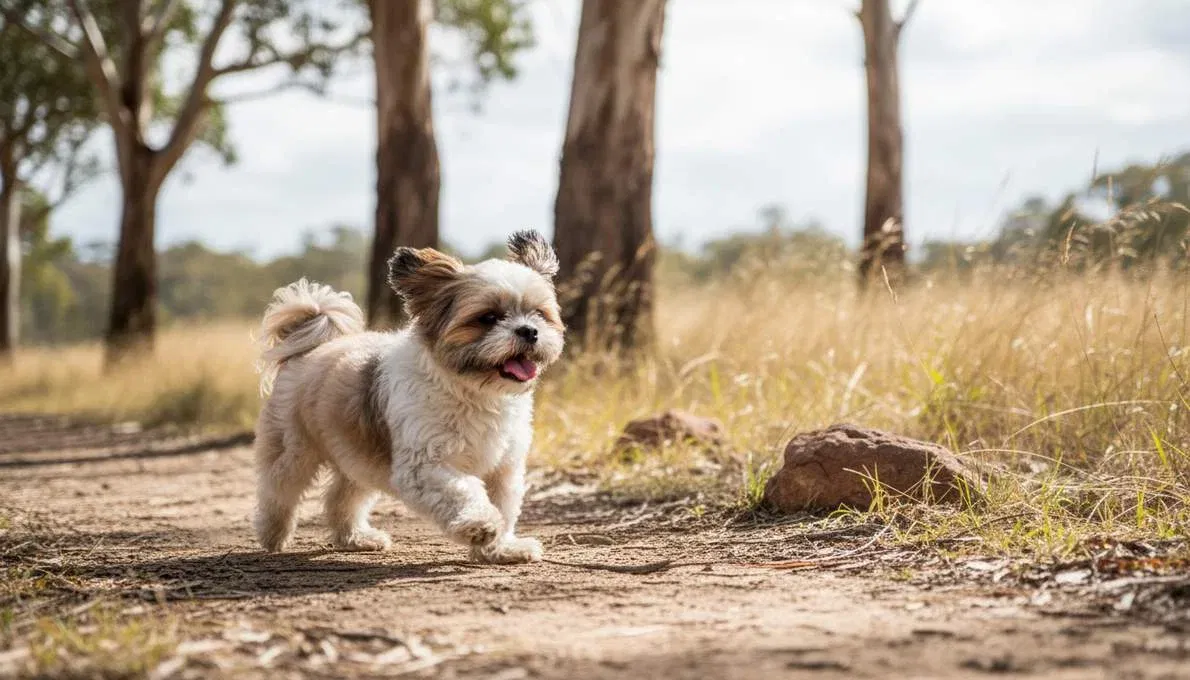
Teacup Shih Tzus are among the lowest-exercise dogs available. A couple of short, gentle walks (10–15 minutes each) and indoor play sessions are more than sufficient. They’re ideal apartment dogs.
Australian climate warning — this is critical: Shih Tzus are brachycephalic. They overheat easily in normal conditions — and a teacup Shih Tzu overheats even faster due to its tiny body mass. In Australian summers, never walk them during the day. Walk only in cool early morning or late evening. Ensure they have air conditioning or fans indoors. Overheating is a genuine life-threatening emergency for this breed, especially at teacup size.
Mental enrichment through puzzle toys, snuffle mats, and gentle training games is more valuable than physical exercise for this breed.
Training Guide
Socialisation & Training Timeline
| Age | Focus | Honest Difficulty |
|---|---|---|
| 8–12 weeks | Toilet training, crate intro, gentle handling | Hard. Tiny bladder + stubborn streak = slow progress. Puppy pads are a long-term solution for most teacup owners. |
| 3–6 months | Sit, come, stay; socialisation with people, dogs, sounds | Moderate. Willing to please but easily distracted. Short sessions (5 min) with high-value treats work best. |
| 6–12 months | Leash manners, independence training, preventing resource guarding | Moderate. The stubborn streak emerges. Consistent, patient training is essential. Never use harsh corrections. |
| 1 year+ | Ongoing manners, trick training, confidence building | Easy–moderate. A well-trained Shih Tzu is cooperative and charming. They respond to routine and reward. |
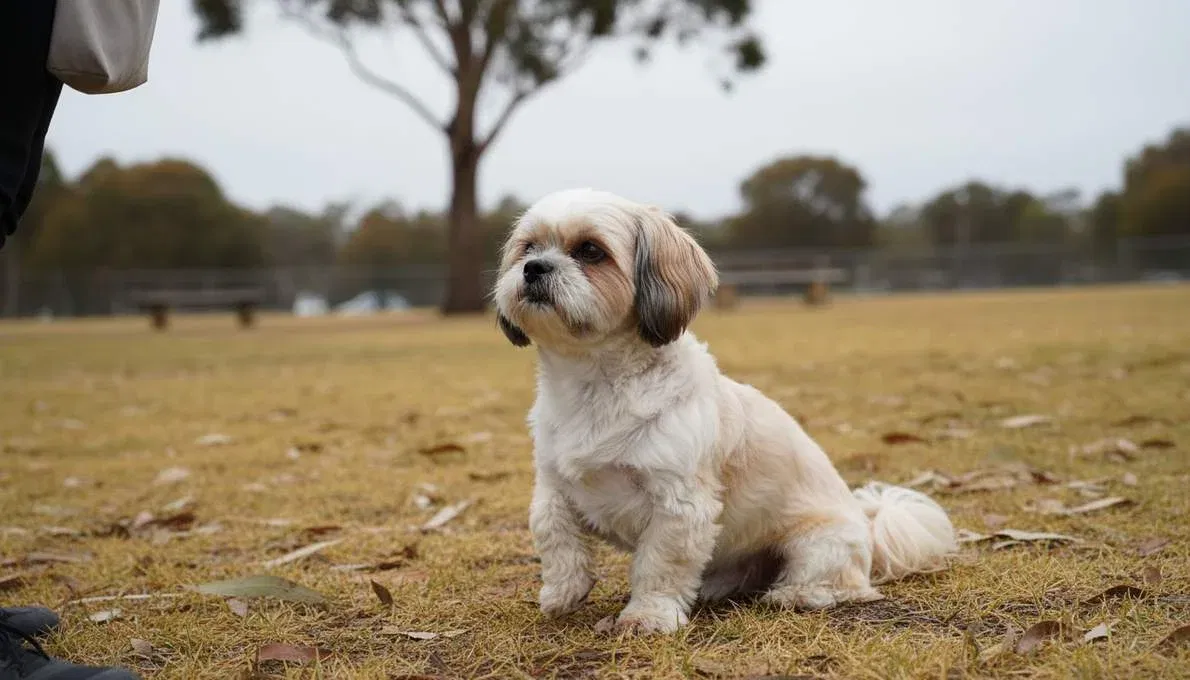
The Shih Tzu stubbornness factor: Shih Tzus are not unintelligent — they’re selectively obedient. They understand what you want but may decide they’d rather not. This makes them charming but occasionally frustrating to train. Positive reinforcement, patience, and consistency are the only approaches that work. Harsh corrections will shut a Shih Tzu down completely.
Cost of Ownership (AUD)
Purchase Price
| Source | Price Range (AUD) |
|---|---|
| ANKC-registered standard Shih Tzu breeder | $1,500–$4,000 |
| Breeder marketing “teacup” or “Imperial” Shih Tzu | $2,000–$5,000+ |
| Rare colours (blue, liver, solid black) | $3,000–$6,000+ |
| Unregistered / backyard breeder | $500–$1,500 |
| Rescue or rehome (adult Shih Tzu) | $250–$600 |
Annual Ongoing Costs
| Expense | Est. Annual Cost (AUD) |
|---|---|
| Food (premium small-breed formula) | $400–$700 |
| Professional grooming (every 5–6 weeks) | $520–$1,100 |
| Vet check-ups & vaccinations | $300–$600 |
| Pet insurance (comprehensive) | $500–$1,000 |
| Dental cleaning | $400–$1,000 |
| Flea, tick & worming | $100–$250 |
| Eye care, ear care, face wipes, misc. | $100–$300 |
| TOTAL (healthy year) | $2,320–$4,950 |
If major health issues arise — BOAS surgery, patellar surgery, IVDD treatment, eye surgery — expect to add $3,000–$10,000+ in a single year. Pet insurance is essential with any brachycephalic teacup dog.
Popular Teacup Shih Tzu Crosses
Several high-volume search terms relate to Shih Tzu crossbreeds, so let’s address the most common ones:
- Teacup Maltese Shih Tzu (Mal-Shi): A Maltese × Shih Tzu cross. Popular in Australia as a low-shedding, friendly companion dog. Standard Mal-Shis weigh 3–6 kg. A “teacup” version would be under 3 kg. The cross can reduce brachycephalic severity (Maltese have longer muzzles), which is a genuine advantage.
- Teacup Shih Tzu Poodle (Shih-Poo): A Shih Tzu × Toy Poodle cross. Combines the Shih Tzu’s affectionate nature with the Poodle’s intelligence and hypoallergenic coat. Standard Shih-Poos weigh 3.5–8 kg. The Poodle influence can lengthen the muzzle, improving breathing.
- Teacup Shih Tzu Chihuahua (ShiChi): A smaller cross combining two very different temperaments. Can result in a feisty, territorial dog if the Chihuahua personality dominates. Less common in Australia.
Crossbreed note: none of these crosses can be ANKC-registered. There are no breed standards, no guaranteed sizes, and no mandatory health testing. If you’re drawn to a Shih Tzu cross, focus on finding a breeder who health-tests both parent dogs and can show you the parents in person.
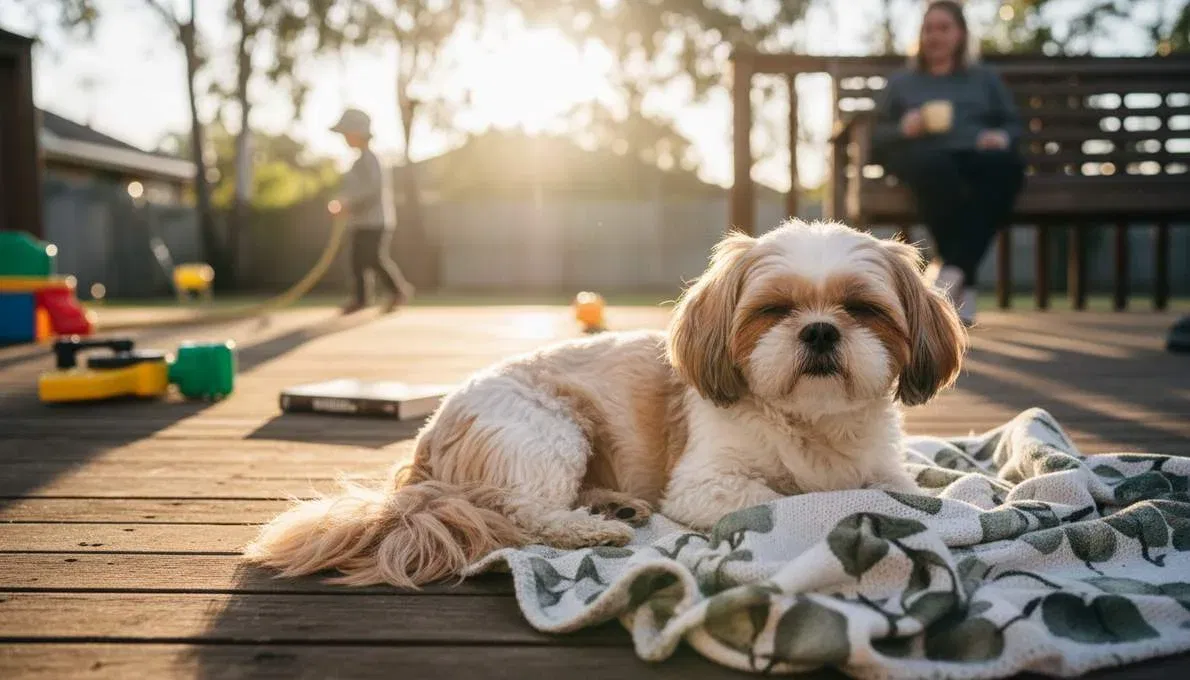
Is a Teacup Shih Tzu Right for You?
- You want an affectionate, sociable lap dog for apartment living.
- You’re home most of the day or retired.
- You’re committed to daily grooming and regular professional grooming.
- You have air conditioning or can keep your dog cool in Australian summers.
- You can afford comprehensive vet care and pet insurance.
- You have toddlers or young children — the fragility risk is high.
- You live in a hot climate without air conditioning — brachycephalic + teacup = heat emergency.
- You want a low-grooming dog — the coat demands daily attention.
- You’re on a tight budget — grooming, dental, and potential BOAS surgery costs are substantial.
- You’re uncomfortable supporting breeding practices that shrink a flat-faced breed even further.
a standard Shih Tzu from an ANKC-registered breeder. At 4–7 kg, the Shih Tzu is already a small, portable, apartment-friendly lap dog. A standard Shih Tzu has better airflow, stronger bones, a longer expected lifespan, and the same wonderful temperament — for the same or lower purchase price. The difference between “teacup” and “standard” is a few kilograms, but the health difference can be years of life.
- Teacup Shih Tzus are sweet, friendly, loveable dogs — the breed’s temperament is one of its strongest qualities at any size.
- The brachycephalic + teacup combination is uniquely risky. Shrinking an already flat-faced breed creates compounded breathing, overheating, and organ development problems that non-brachycephalic teacup breeds don’t face to the same degree.
- The “Imperial” label is marketing. There is no imperial gene, no royal lineage, and no separate breed. It’s a sales term used to charge more for an undersized dog.
- Buy standard, buy registered, buy healthy. An ANKC-registered standard Shih Tzu is already a tiny, gorgeous, deeply affectionate companion. You’ll get all the Shih Tzu charm — without the amplified health risks of extreme miniaturisation.
Teacup Shih Tzu FAQs
How big does a full grown teacup Shih Tzu get?
A full grown teacup Shih Tzu typically stands under 23 cm (9 inches) and weighs under 4 kg (9 lbs), with some as small as 1.8–2.7 kg (4–6 lbs). Standard Shih Tzus weigh 4–7.25 kg (9–16 lbs). The size difference is noticeable but not as dramatic as with some other teacup breeds.
How much does a teacup Shih Tzu cost in Australia?
Teacup or Imperial Shih Tzus in Australia typically cost $2,000–$5,000+, with rare colours pushing prices higher. ANKC-registered standard Shih Tzus generally cost $1,500–$4,000. Be cautious of very cheap puppies — these may come from puppy farms or unregistered breeders without health testing.
What’s the difference between a teacup and an Imperial Shih Tzu?
Nothing. Teacup, Imperial, miniature, and toy Shih Tzu are all marketing terms for the same thing: a Shih Tzu bred below the breed standard. No kennel club recognises any of these as a separate breed or variety.
How long do teacup Shih Tzus live?
Teacup Shih Tzus typically live 10–15 years, compared to 10–18 years for standard Shih Tzus. Their lifespan depends on breeding quality, the severity of brachycephalic issues, diet, dental care, and weight management.
Are teacup Shih Tzus good with kids?
Standard Shih Tzus are excellent family dogs. However, teacup Shih Tzus are significantly more fragile and vulnerable to injury from rough play or accidental drops. They’re better suited to families with older children (8+) who understand gentle handling.
Do teacup Shih Tzus have breathing problems?
Yes — this is the breed’s most significant health concern. All Shih Tzus are brachycephalic (flat-faced), which restricts airflow. Teacup-sized dogs have even narrower airways. Symptoms include snoring, laboured breathing, exercise intolerance, and overheating. Some require BOAS corrective surgery.
Are teacup Shih Tzus hypoallergenic?
They’re better than most breeds for allergy sufferers. Their continuously growing, low-shedding coat produces less airborne dander. However, no dog is truly 100% hypoallergenic. Spend time with a Shih Tzu before committing if you have allergies.
Where can I find teacup Shih Tzu breeders in Australia?
Start with ANKC-registered Shih Tzu breeders on Dogzonline and RightPaw. Look for breeders registered with Dogs NSW, Dogs Victoria, Dogs QLD, or their state equivalent who health-test their dogs. Be cautious of anyone marketing “Imperial” or “teacup” as a separate breed — and always verify that parent dogs have been screened for eye conditions, patellar luxation, and respiratory health.
What’s a teacup Maltese Shih Tzu?
A Mal-Shi — a cross between a Maltese and a Shih Tzu. It’s a popular designer breed in Australia, known for being affectionate, low-shedding, and friendly. The Maltese influence can improve breathing by lengthening the muzzle. Standard Mal-Shis weigh 3–6 kg; a “teacup” version would be smaller.
Can teacup Shih Tzus handle Australian heat?
Poorly. Brachycephalic dogs are extremely heat-sensitive, and teacup size makes it worse. Never walk them in the heat of the day, ensure they have air conditioning or cooling, and watch for signs of overheating: excessive panting, drooling, lethargy, and collapse. Heat is a genuine life-threatening risk for this breed.
1. PetMD — Shih Tzu Dog Breed: Health, Care, and Lifestyle (Vet-Reviewed): https://www.petmd.com/dog/breeds/shih-tzu
2. AllShihTzu — Imperial & Tea Cup Shih Tzu: Weight, Size, Breed Standards: https://www.allshihtzu.com/imperial-teacup-shih-tzu
3. Shih Tzu Time — Imperial Shih Tzu: What You Need to Know: https://shihtzutime.com/imperial-shih-tzu/
4. Dog Academy — Teacup Shih Tzu Complete Guide: https://dogacademy.org/breeds/teacup-shih-tzu
5. Dogster — Imperial Shih Tzu: Info, Pictures, Temperament & Care (Vet-Reviewed): https://www.dogster.com/dog-breeds/imperial-shih-tzu
6. SpiritDog Training — Teacup Shih Tzu Breed Profile: https://spiritdogtraining.com/breeds/teacup-shih-tzus/
7. Miracle Shih Tzu — Imperial Shih Tzu: Myth or Reality: https://www.miracleshihtzu.com/imperial-shih-tzu.html
8. Arizona Sunrise Shih Tzus — What Is a Teacup or Imperial Shih Tzu Puppy?: https://www.arizonasunriseshihtzusandpoos.com/what-is-a-teacup-or-imperial-shih-tzu-puppy/
9. NAHF — Imperial Shih Tzu Care and Ownership Guide: https://www.nahf.org/article/imperial-shih-tzu
10. Dogzonline — Shih Tzu Breeders in Australia (ANKC): https://www.dogzonline.com.au/breeds/breeders/shih-tzu.asp