
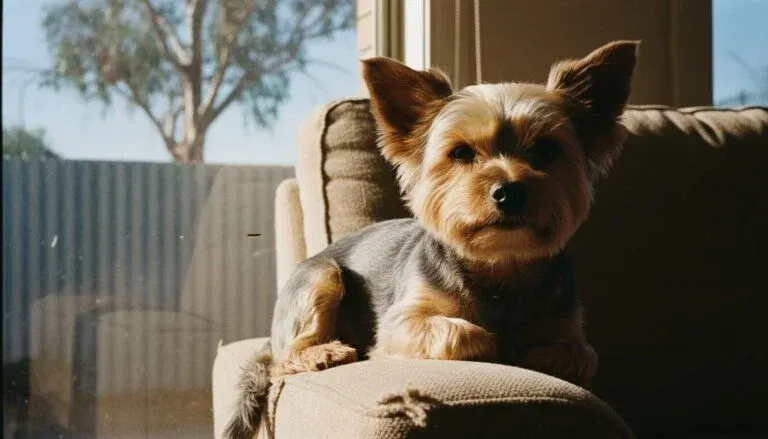
The Yorkshire Terrier is already one of the world’s smallest breeds. At 1.8–3.2 kg (4–7 lbs), it’s a genuine pocket-sized dog with a terrier’s fearless attitude, a silky coat that could win beauty pageants, and an ego that dwarfs its body.
And yet, the demand for even smaller Yorkies keeps growing.
The teacup Yorkshire Terrier — also called a micro Yorkie, miniature Yorkie, or toy Yorkie — weighs under 1.8 kg (4 lbs) and sometimes as little as 0.9–1.3 kg (2–3 lbs). These dogs are produced by breeding the smallest individuals from each litter across generations. The Yorkshire Terrier Club of America explicitly warns against this practice. No kennel club recognises “teacup” as a size variety.
If you’re searching for teacup Yorkshire Terrier puppies for sale in Melbourne, Sydney, Brisbane, or anywhere in Australia, here’s what the cute photos don’t tell you.
What You’ll Learn
- Breed traits & temperament
- Health concerns to know
- True cost in Australia
- Training & exercise needs
- Is this breed right for you?
Quick Facts at a Glance
| Trait | Details |
|---|---|
| Official Breed? | No — “teacup” is not recognised by the ANKC, AKC, or YTCA. The AKC standard says under 3.2 kg (7 lbs) with no minimum weight. |
| Parent Breed | Yorkshire Terrier (toy group; originally bred for ratting in English mills) |
| Full Grown Height | Under 18 cm (7 inches); standard Yorkie: 18–23 cm (7–9 inches) |
| Full Grown Weight | Under 1.8 kg (4 lbs); standard: 1.8–3.2 kg (4–7 lbs) |
| Coat | Long, silky, single-layer; steel blue and tan. Low-shedding, considered hypoallergenic. |
| Shedding | Very low — single coat with hair-like texture, minimal dander |
| Temperament | Bold, feisty, loyal, affectionate; can be territorial, yappy, and stubborn |
| Lifespan | 7–12 years (standard Yorkie: 11–16 years) |
| Price (AUD) | $2,000–$6,000+ for teacup; $1,500–$4,000 for ANKC-registered standard |
| Suitability | Adults-only households; singles, couples, retirees |
| Exercise | Low–moderate — short walks and active indoor play |
| Grooming | High — daily brushing; regular professional grooming |
History & Origins
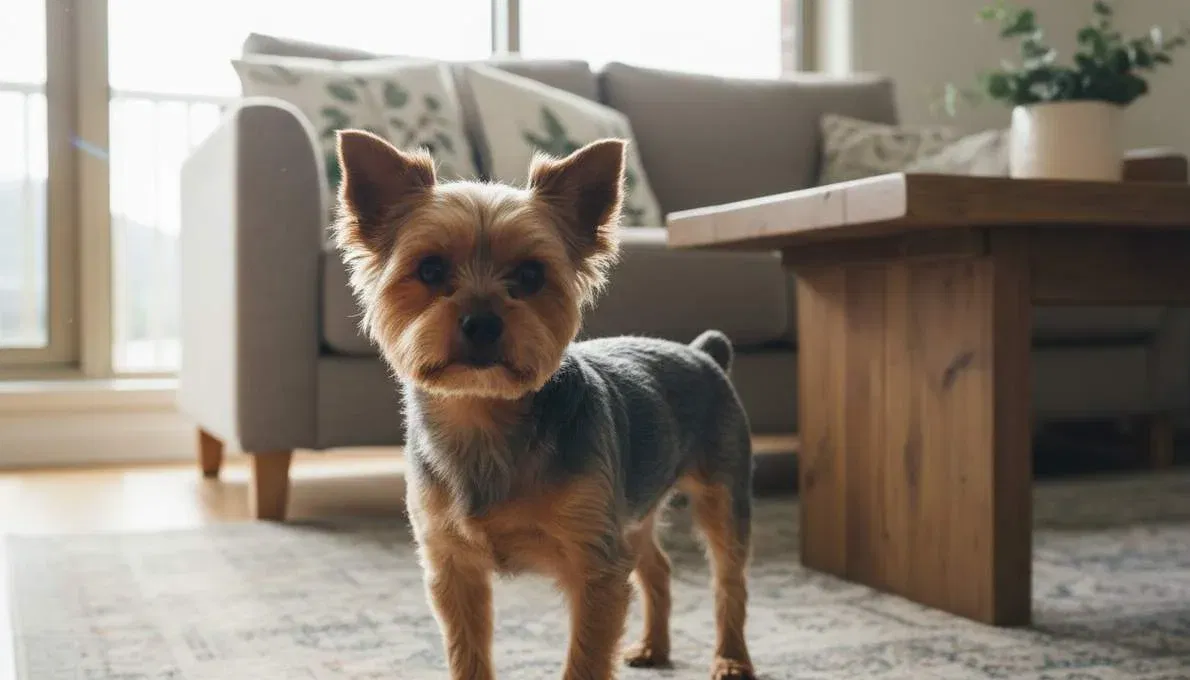
The Yorkshire Terrier was developed in 19th-century England — not as a lap dog, but as a working ratter in textile mills and coal mines of Yorkshire and Lancashire. Scottish weavers migrating south brought small terrier breeds that were crossed to create a compact, fearless vermin hunter. The resulting dog was recognised by the Kennel Club in 1886.
Over time, the Yorkie transitioned from working dog to fashionable companion, particularly after its AKC recognition in 1885. The breed was progressively miniaturised — early Yorkies weighed up to 6.3 kg (14 lbs), while the modern standard calls for a maximum of 3.2 kg (7 lbs).
There is no official teacup Yorkie. The AKC standard sets a maximum weight of 3.2 kg but — uniquely among breeds — sets no minimum weight. This means technically any weight below 3.2 kg “meets the standard.” However, the Yorkshire Terrier Club of America explicitly states that responsible breeders do not breed females weighing under 2.3 kg (5 lbs) and warns against purchasing dogs marketed as “teacup.”
Most pet Yorkies weigh 1.8–3.6 kg (4–8 lbs). A dog under 1.8 kg (4 lbs) is considered undersized and at elevated health risk. When breeders use “teacup,” “micro,” or “miniature,” they’re describing dogs deliberately bred below this practical threshold.

Temperament & Personality
The Yorkie is a terrier through and through — and that terrier spirit doesn’t shrink with the body.
- Fearless and bold: Yorkies have no concept of their own size. They’ll bark at large dogs, investigate every noise, and confront anything they perceive as a threat. This courage is charming in a well-socialised dog and a liability in a poorly socialised one.
- Loyal and possessive: They bond deeply to their owner — often to one person above all others. This devotion can tip into possessiveness, resource guarding, and jealousy of other pets or family members if not managed.
- Energetic and playful: Don’t be fooled by the silk coat and the bow. Yorkies are active dogs with genuine terrier drive. They enjoy chasing toys, exploring, and engaging in play far more than many toy breeds.
- Vocal: Yorkies bark. At strangers, at doorbells, at squirrels, at sounds you can’t even hear. They’re natural watchdogs with strong alert instincts. Without training, this becomes nuisance barking — especially in apartments.
- Not great with small children: Their tiny size makes them vulnerable to injury, and their terrier temperament means they may nip when startled or mishandled. Teacup Yorkies and toddlers are a poor combination. Recommended for families with children aged 8+.
- Surprisingly stubborn: Yorkies are smart but can be headstrong. Toilet training in particular is notoriously slow with this breed. They respond to consistency and positive reinforcement — never harsh corrections.
Health & Genetic Conditions
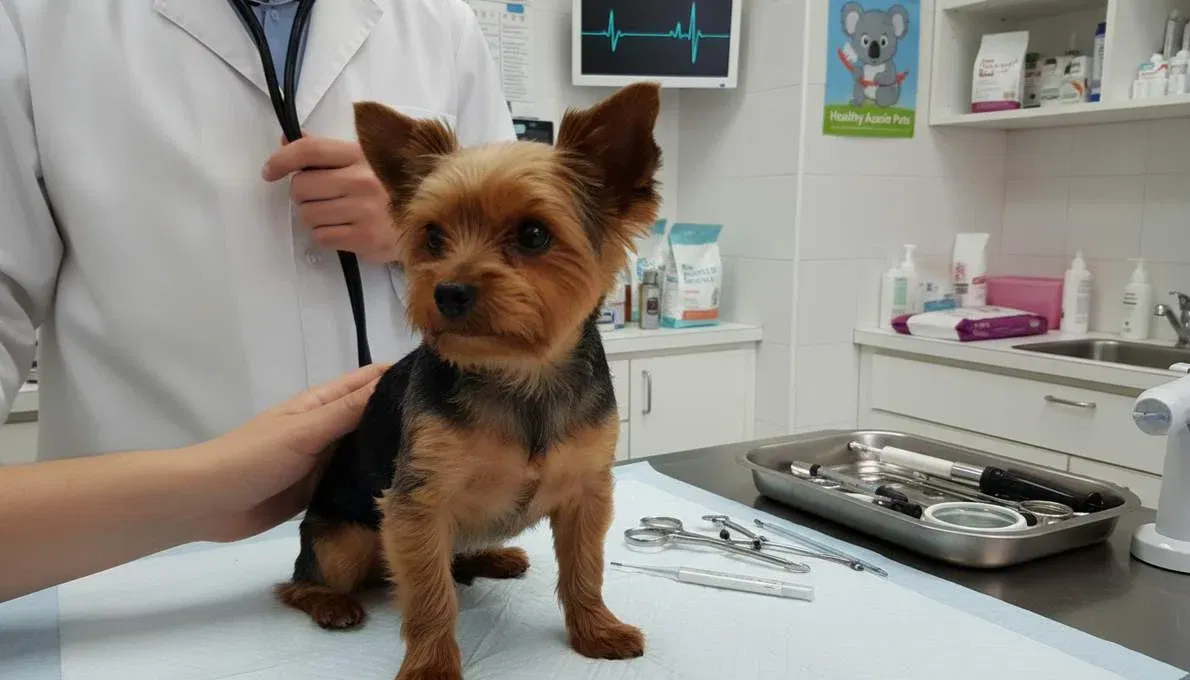
Standard Yorkies are generally healthy with lifespans of 11–16 years. However, the breed already carries several genetic predispositions that worsen dramatically in undersized dogs. Trauma is the leading cause of death in Yorkie puppies and a top cause in adults — a risk that multiplies with teacup size.
- Traumatic injury: The number one risk. At under 1.8 kg, teacup Yorkies can be fatally injured by being stepped on, sat on, dropped, grabbed by children, attacked by larger dogs, or falling from furniture. A jump from a couch can break a leg. A closing door can be lethal. This isn’t an exaggeration — trauma is statistically the leading cause of Yorkie deaths.
- Hypoglycaemia: Acute blood sugar crashes causing lethargy, tremors, seizures, and death. Teacup Yorkie puppies need 4–6 small meals daily. Adults need 3–4. Always carry glucose gel or honey.
- Portosystemic shunt (liver shunt): Yorkshire Terriers are more predisposed to this condition than almost any other breed. Blood bypasses the liver, allowing toxins to accumulate. Symptoms include stunted growth, seizures, and disorientation. Treatment ranges from dietary management to surgery ($3,000–$10,000+ AUD). Undersized Yorkies are at higher risk.
- Tracheal collapse: Weakened windpipe cartilage causing a chronic honking cough and breathing difficulty. Very common in Yorkies and worse in undersized dogs. Use a harness, never a collar. Severe cases may need surgical stenting ($3,000–$7,000 AUD).
- Luxating patella: Kneecap dislocation. Common in Yorkies, amplified in teacup size. Surgery costs $2,000–$5,000 per knee in Australia.
- Dental overcrowding: Full adult teeth in a jaw the size of a thimble. Causes overlapping teeth, retained baby teeth, gum disease, and infections. Annual dental cleaning ($400–$1,000+ AUD) and extractions are virtually guaranteed.
- Legg-Calvé-Perthes disease: Deterioration of the hip joint. Common in small breeds, painful, and often requires surgery ($2,000–$4,000 AUD).
- Anaesthesia sensitivity: Teacup Yorkies react unpredictably to anaesthesia due to their tiny size, making even routine surgeries (desexing, dental work) significantly more dangerous. Additional pre-surgical testing is required.
- Difficulty with diagnosis: Tiny veins make blood draws and IV placement difficult. Medication dosing is extremely sensitive — small errors can have outsized effects. Your vet needs experience with very small dogs.
What the breed club says: the Yorkshire Terrier Club of America states that no responsible breeder breeds for teacup size. They warn that undersized Yorkies are prone to “vomiting, diarrhoea, and undetected birth defects” and note that many teacup breeders are either uninformed or deliberately prioritising profit over health.
Lifespan & Longevity
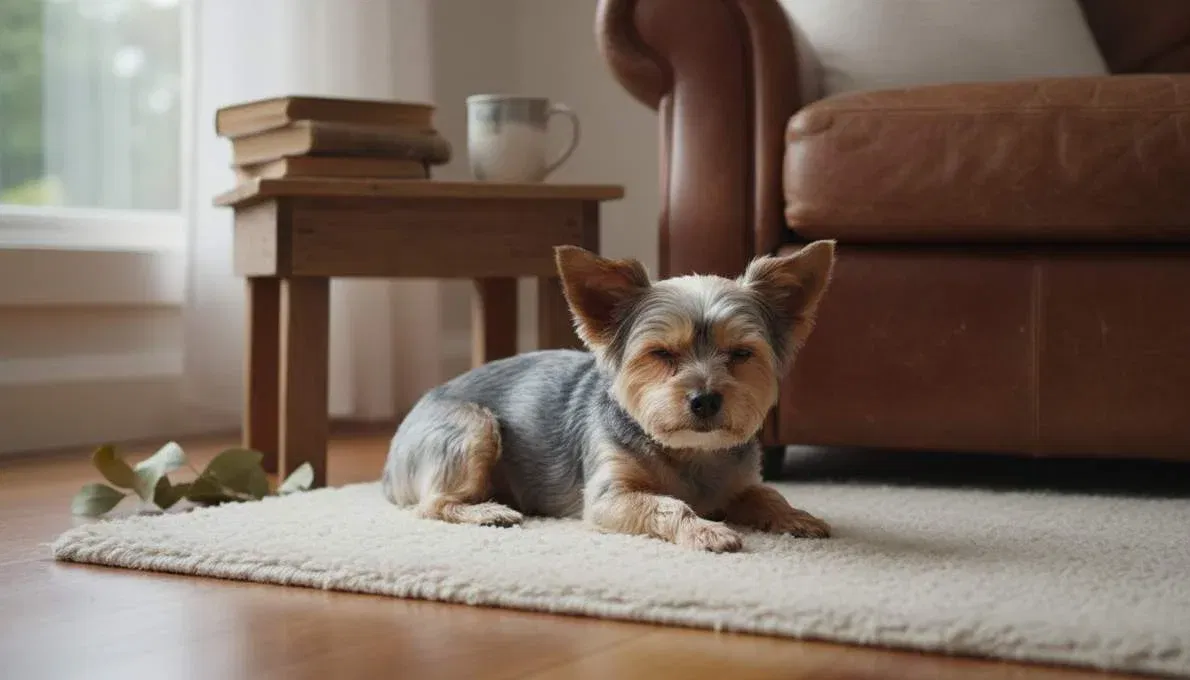
Standard Yorkies typically live 11–16 years, with many reaching their late teens. Teacup Yorkies have a significantly shorter expected lifespan of 7–12 years. Some estimates are even lower — 7–9 years — due to the combination of health problems and elevated trauma risk.
To maximise your teacup Yorkie’s life expectancy:
- Feed 3–4 small meals daily (puppies: 4–6) to prevent blood sugar crashes.
- Puppy-proof obsessively. Block stairs, cover gaps, secure furniture, and never leave them unattended on elevated surfaces.
- Use a harness, never a collar, to protect the trachea.
- Supervise all interactions with children, other dogs, and even cats.
- Prioritise dental care — daily brushing and annual professional cleanings.
- Schedule six-monthly vet visits with liver, patellar, and cardiac screening.
- Carry them through crowded areas to avoid being stepped on or attacked by larger dogs.
- Get comprehensive pet insurance from puppy age.
Grooming & Coat Care
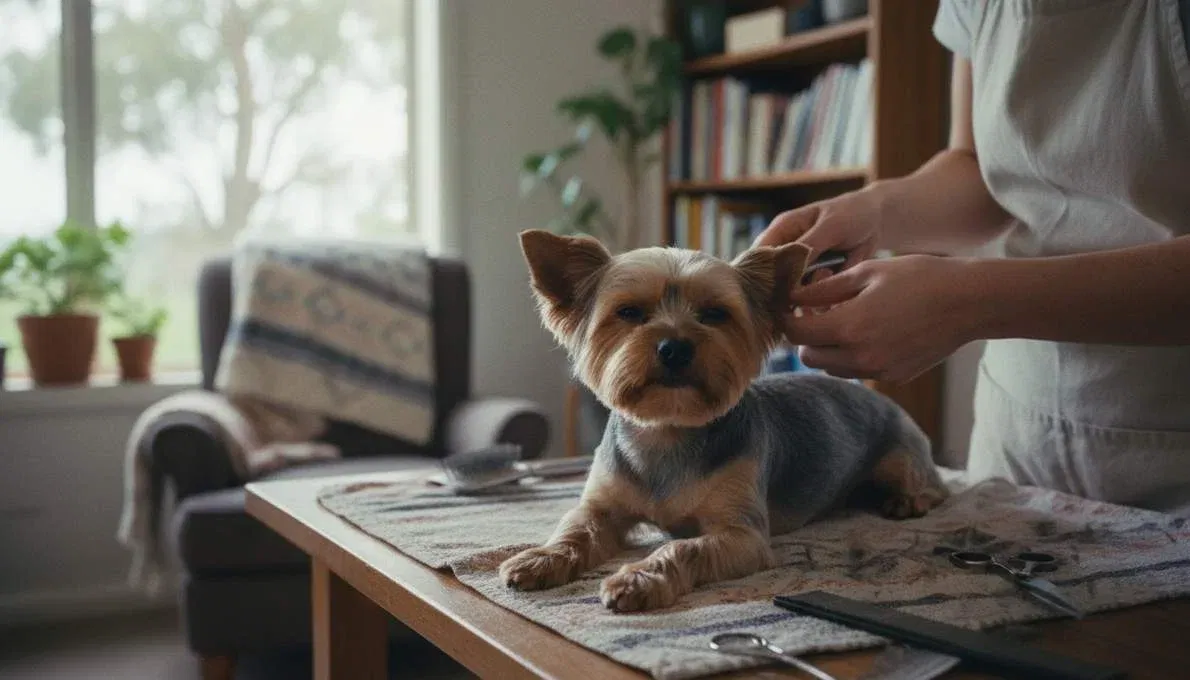
The Yorkie coat is one of the breed’s most distinctive features — long, silky, and hair-like (not fur). It grows continuously, barely sheds, and is widely tolerated by allergy sufferers. The traditional steel blue and golden tan colouring is iconic.
Grooming Schedule
| Task | Frequency | Est. Cost (AUD) |
|---|---|---|
| Brushing & combing | Daily if coat is long; every 2–3 days if clipped short | DIY — pin brush & comb ~$25–$40 |
| Professional grooming | Every 4–6 weeks | $50–$100 per session |
| Bathing | Weekly to fortnightly | DIY or included in grooming |
| Eye cleaning | Daily — Yorkies tear excessively | Cleaning wipes ~$15–$25 |
| Dental care | Daily brushing; annual professional clean | $400–$1,000+ per dental |
| Ear cleaning & hair trimming | Weekly (hair grows inside ears) | Included in grooming |
| Nail trimming | Every 2–3 weeks | $10–$20 at groomer, or DIY |
Most teacup Yorkie owners opt for a short “puppy cut” over the flowing show coat. It’s dramatically easier to maintain and more comfortable for the dog in Australian climates.
White teacup Yorkies? This is a high-volume search term, but purebred Yorkies do not come in white. A “white teacup Yorkshire Terrier” is almost certainly a Biewer Terrier (a separate breed developed from parti-coloured Yorkies), a Maltese cross, or a misrepresented dog. If you see a white Yorkie advertised as purebred, ask for registration papers.
Exercise Needs
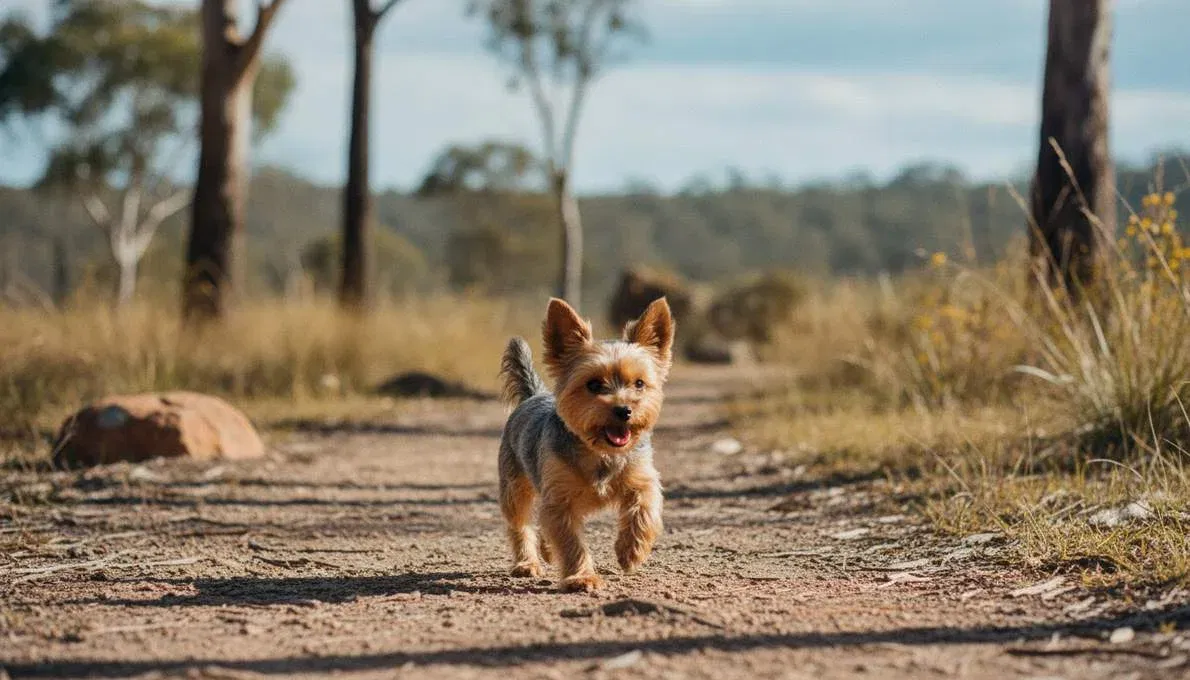
Yorkies are more active than many toy breeds — they’re terriers, not lapdogs, at heart. Standard Yorkies enjoy 30–45 minutes of daily activity. Teacup Yorkies need less physical exertion — two short walks (10–15 minutes each) and indoor play — but still need mental stimulation.
Australian climate warning: Teacup Yorkies are sensitive to both heat and cold. Their tiny bodies lose and gain heat quickly. Avoid walking on hot pavement in summer; provide a coat in winter for Melbourne, Canberra, and cooler regions. Their single coat offers minimal insulation compared to double-coated breeds.
Predator warning: A teacup Yorkie weighing under 2 kg is potential prey for large birds of prey (wedge-tailed eagles, hawks), foxes, and even domestic cats. Never leave a teacup Yorkie unsupervised in an outdoor area in Australia.
Training Guide
Socialisation & Training Timeline
| Age | Focus | Honest Difficulty |
|---|---|---|
| 8–12 weeks | Toilet training, crate intro, handling, socialisation basics | Hard. Yorkies are one of the most difficult toy breeds to house-train. Tiny bladder + stubbornness = slow progress. Puppy pads are essential. |
| 3–6 months | Sit, come, stay; socialisation with people, dogs, sounds | Moderate. Smart and eager when motivated, but short attention span. 5-minute sessions with tiny treats. |
| 6–12 months | Bark management, leash manners, preventing resource guarding | Moderate–hard. Terrier confidence + small dog syndrome = a dog that thinks it rules the house. Consistent boundaries matter. |
| 1 year+ | Ongoing manners, confidence building, trick training | Easy–moderate. A well-trained Yorkie is a responsive, charming companion. But training is never truly “done” with a terrier. |
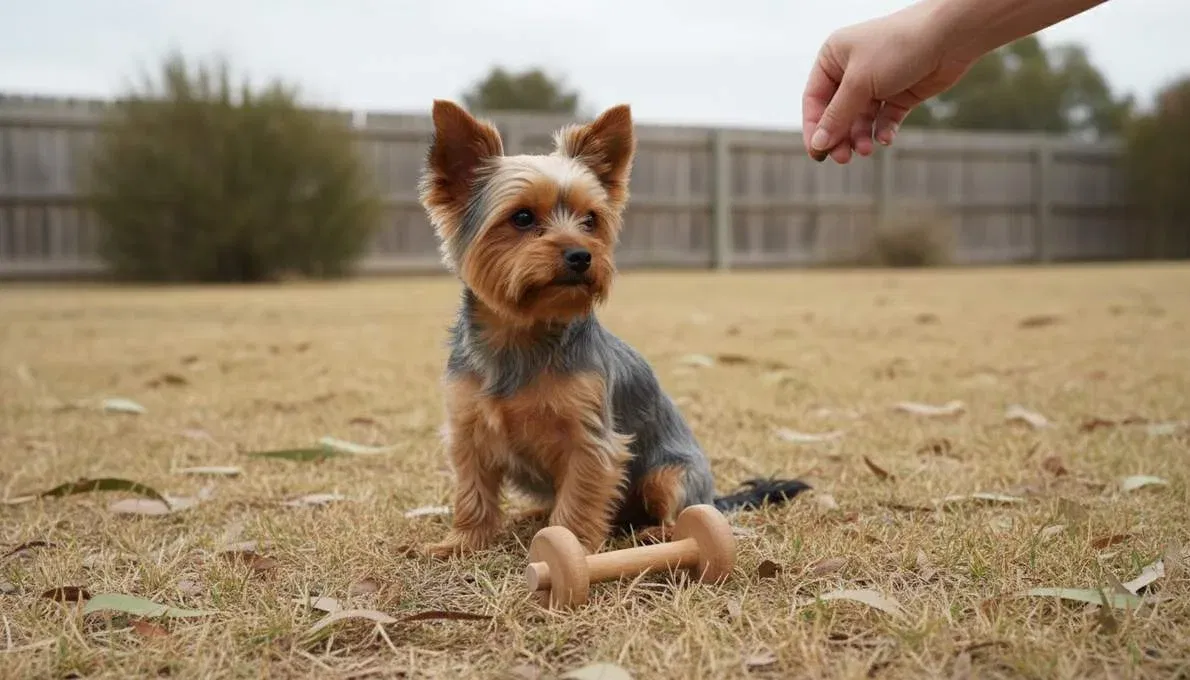
Toilet training is the big challenge. Yorkies — especially teacup-sized — are consistently ranked among the hardest toy breeds to house-train. Their tiny bladders, combined with a stubborn terrier personality, mean that accidents will happen for months. Most experienced owners use indoor puppy pads or a grass patch as a permanent option alongside outdoor training. Adjust your expectations accordingly.
Cost of Ownership (AUD)
Purchase Price
| Source | Price Range (AUD) |
|---|---|
| ANKC-registered standard Yorkshire Terrier breeder | $1,500–$4,000 |
| Breeder marketing “teacup” or “micro” Yorkie | $2,000–$6,000+ |
| Unregistered / backyard breeder | $500–$1,500 |
| Yorkipoo or other Yorkie cross | $1,000–$3,000 |
| Rescue or rehome (adult Yorkie) | $250–$600 |
Annual Ongoing Costs
| Expense | Est. Annual Cost (AUD) |
|---|---|
| Food (premium small-breed formula) | $300–$550 |
| Professional grooming (every 5–6 weeks) | $430–$1,000 |
| Vet check-ups & vaccinations | $300–$600 |
| Pet insurance (comprehensive) | $500–$1,000 |
| Dental cleaning | $400–$1,000 |
| Flea, tick & worming | $100–$250 |
| Eye care, toys, bedding, clothing | $100–$300 |
| TOTAL (healthy year) | $2,130–$4,700 |
Liver shunt surgery alone can cost $3,000–$10,000+ AUD. Patellar surgery, tracheal stenting, and Legg-Perthes treatment add thousands more. Pet insurance is non-negotiable with a teacup Yorkie.

Is a Teacup Yorkshire Terrier Right for You?
- You’re an experienced small-dog owner who understands the fragility involved.
- You’re home most of the day or retired.
- You have no young children, large dogs, or unsupervised outdoor areas.
- You want a hypoallergenic, low-shedding companion with a big personality.
- You can commit to daily grooming and regular professional grooming.
- You can afford comprehensive vet care, dental work, and pet insurance.
- You have toddlers or young children — both the injury and nipping risk are high.
- You have large or boisterous pets — a 1.5 kg dog is vulnerable to serious injury from playful roughhousing.
- You want a quiet dog — Yorkies are vocal terriers. Barking is part of the package.
- You’re on a tight budget — dental, grooming, and potential surgical costs add up quickly.
- You want an easy-to-toilet-train dog — Yorkies are notoriously difficult.
a standard Yorkshire Terrier from an ANKC-registered breeder. The Yorkie is already one of the smallest breeds in the world at 1.8–3.2 kg. A well-bred standard Yorkie is tiny, gorgeous, hypoallergenic, and far more robust than a teacup. The difference is often just a few hundred grams — but the health and lifespan difference can be enormous.
- Teacup Yorkies are charismatic, bold, loveable dogs — the Yorkie personality is one of the most entertaining in the toy group.
- The health risks are among the most serious of any teacup breed. Liver shunts, trauma, hypoglycaemia, tracheal collapse, and anaesthesia sensitivity aren’t rare edge cases — they’re well-documented realities.
- The Yorkie’s own breed club says don’t buy teacup. When the people most dedicated to a breed explicitly warn against extreme miniaturisation, that’s a signal worth taking seriously.
- Buy standard, buy registered, buy healthy. An ANKC-registered Yorkshire Terrier is already a pocket-sized, hypoallergenic, spirited companion. You’ll get all the Yorkie attitude — in a body that’s built to handle it.
FAQs
How big does a full grown teacup Yorkshire Terrier get?
A full grown teacup Yorkshire Terrier typically stands under 18 cm (7 inches) and weighs under 1.8 kg (4 lbs). Some micro Yorkies weigh as little as 0.9–1.3 kg (2–3 lbs). Standard Yorkies weigh 1.8–3.2 kg and stand 18–23 cm.
How much does a teacup Yorkshire Terrier cost in Australia?
Teacup Yorkies in Australia typically cost $2,000–$6,000+. ANKC-registered standard Yorkies from reputable breeders generally cost $1,500–$4,000. Be cautious of cheap puppies — and be equally cautious of inflated “teacup” prices without health guarantees.
How long do teacup Yorkshire Terriers live?
Teacup Yorkies typically live 7–12 years, compared to 11–16 years for standard Yorkies. Their shorter lifespan is due to elevated health risks and the high incidence of traumatic injury in very small dogs.
Are teacup Yorkshire Terriers hypoallergenic?
Yes — Yorkies have a single-layer, hair-like coat that sheds minimally and produces less dander than most breeds. They’re one of the better options for allergy sufferers. However, no dog is 100% hypoallergenic.
What is a white teacup Yorkshire Terrier?
Purebred Yorkshire Terriers come in steel blue and tan only. A “white teacup Yorkie” is almost certainly a Biewer Terrier (a related but separate breed), a Maltese cross, or a misrepresented dog. Always ask for registration papers if purebred status is claimed.
Do teacup Yorkies bark a lot?
Yes. Yorkshire Terriers are alert, territorial terriers bred to notify their owners of anything unusual. Without consistent training from puppyhood, barking can become excessive. Some degree of alert barking is a permanent breed trait.
What are the biggest teacup Yorkshire Terrier health problems?
The most serious are traumatic injury (the #1 killer of young Yorkies), portosystemic liver shunt (Yorkies are highly predisposed), hypoglycaemia, tracheal collapse, luxating patella, dental disease, and Legg-Calvé-Perthes disease. Anaesthesia sensitivity is also a major concern.
Where can I find teacup Yorkshire Terrier breeders in Australia?
Start with ANKC-registered Yorkshire Terrier breeders on Dogzonline and RightPaw. Look for breeders registered with Dogs NSW, Dogs Victoria, Dogs QLD, or their state equivalent who screen for patellar luxation, eye conditions, and liver shunts. Avoid breeders who specialise in “teacup” or “micro” sizes.
Are teacup Yorkies good apartment dogs?
Physically, yes — their tiny size and modest exercise needs suit apartments well. The main concern is barking. Yorkies are vocal dogs, and in an apartment setting with close neighbours, bark training is essential from day one.
What’s the difference between a teacup and a standard Yorkshire Terrier?
Size only. A teacup Yorkie weighs under 1.8 kg; a standard Yorkie weighs 1.8–3.2 kg. There’s no breed difference, no separate variety, and no special gene. Teacup Yorkies face higher health risks and shorter lifespans than standard Yorkies.
1. MetLife Pet Insurance — Teacup Yorkie Breed Information: https://www.metlifepetinsurance.com/blog/breed-spotlights/teacup-yorkie/
2. YorkieInfoCenter — Teacup, Miniature and Toy Size Yorkies: https://www.yorkieinfocenter.com/teacup-miniature-yorkies
3. Cuteness — Yorkie Lifespan: How Long Can a Teacup Yorkie Live?: https://www.cuteness.com/article/life-span-teacup-yorkie/
4. The Dog Tale — Teacup Yorkie Life Expectancy: https://thedogtale.com/teacup-yorkie-life-expectancy/
5. Viva Essence Pet — Teacup Yorkie Lifespan: How Long Do They Live?: https://vivaessencepet.com/blogs/furry-facts/teacup-yorkie-lifespan
6. Yorkie.Life — The Truth About Teacup Yorkies: https://yorkie.life/truth-teacup-yorkies-everything-need-know-teacup-mini-micro-toy-yorkshire-terriers/
7. Dummies — Characteristics of Teacup Yorkies: https://www.dummies.com/article/home-auto-hobbies/pets/dogs/breeds/terriers/characteristics-of-teacup-yorkies-195783/
8. PetMD — Yorkshire Terrier Dog Breed Health and Care (Vet-Reviewed): https://www.petmd.com/dog/breeds/yorkshire-terrier
9. Dogzonline — Yorkshire Terrier Breeders in Australia (ANKC): https://www.dogzonline.com.au/breeds/breeders/yorkshire-terrier.asp
10. Northshore Yorkshire Terriers — About Teacup Yorkies: https://www.yorkiesofnorthshore.com/about-teacup-yorkies/