
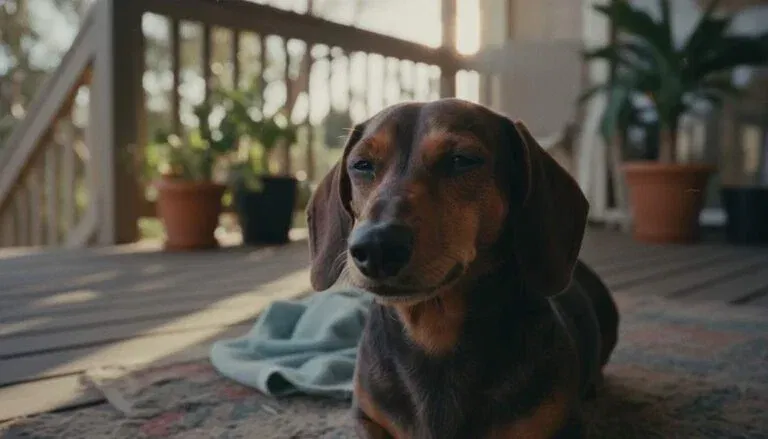
There’s no dog on earth quite like a Miniature Dachshund. They’re shaped like a sausage, bark like a Rottweiler, and genuinely believe they’re the biggest dog in the room. If you’ve never lived with one, you might wonder what all the fuss is about. If you have, you already know: they’re addictive.
Bred in 17th-century Germany to flush badgers from underground dens, the Miniature Dachshund was later developed in the late 1800s as a smaller, rabbit-hunting version of the standard. That hunting heritage is still very much alive — in the relentless digging, the fearless attitude toward dogs ten times their size, and the stubborn streak that makes training them an exercise in patience.
At just 13–18 cm tall and under 5 kg, they’re one of Australia’s most popular small breeds. They come in three coat types (smooth, long-haired and wire-haired) and a dazzling array of colours. But behind the Instagram-worthy looks is a breed with a serious health vulnerability: their long spine. Understanding and managing that risk is non-negotiable if you’re considering one.
This guide breaks down everything Australian owners need to know — real costs in AUD, honest temperament assessments, IVDD risks explained plainly, and whether this breed actually suits your lifestyle.
What You’ll Learn
- Breed traits & temperament
- Health concerns to know
- True cost in Australia
- Training & exercise needs
- Is this breed right for you?
Miniature Dachshund Quick Facts
| Attribute | Details |
|---|---|
| Breed Group | Hound (ANKC Group 4) |
| Height | 13–18 cm (5–6 inches) at the shoulder |
| Weight | Under 5 kg (under 11 lbs) — ideally 4–5 kg |
| Length (nose to tail) | Approx. 30–35 cm |
| Lifespan | 12–16 years (some reach 17+) |
| Coat Types | Smooth (short-haired), Long-haired, Wire-haired |
| Coat Colours | Black & tan, cream, red, chocolate, dapple, piebald, brindle, golden, blue & tan |
| Temperament | Bold, loyal, stubborn, vocal, surprisingly brave |
| Shedding | Low to moderate (varies by coat type) |
| Exercise Needs | Moderate — approx. 30–50 minutes daily |
| Good With Kids | Yes — best with older children who handle them gently |
| Apartment Friendly | Excellent — great size, but barking may be an issue |
| Grooming Needs | Low (smooth), Moderate (long-haired), Moderate (wire-haired) |
| Average Price (AUD) | $2,000–$5,000 from a registered breeder |
History & Origins
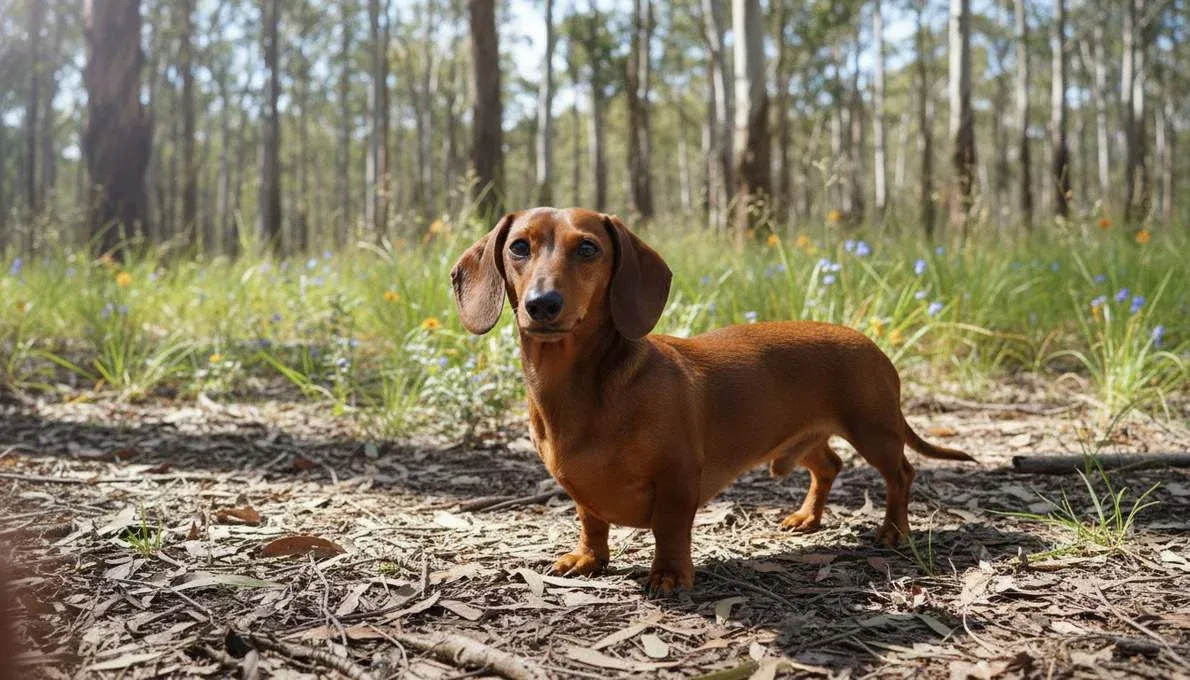
The Dachshund’s name tells you everything: “Dachs” means badger, “Hund” means dog. These were purpose-built badger hunters, developed in Germany over several centuries with contributions from German, French and English hound and terrier bloodlines. Standard Dachshunds were fearless enough to enter underground dens and confront animals that could weigh three times as much.
In the late 1800s, German breeders began selectively breeding smaller Dachshunds to hunt rabbits, which burrowed into narrower holes. The result was the Miniature Dachshund — same bold temperament, same elongated body, just in a more compact package. By the 1930s and 1940s, the Miniature had become hugely popular as a companion dog across Europe and North America.
The breed holds a unique pop culture distinction: the first-ever Olympic mascot was a Dachshund named Waldi, chosen for the 1972 Munich Games. In Australia, Dachshunds have been nicknamed “sausage dogs” for obvious reasons, and they’ve been a consistent favourite since the mid-20th century. The ANKC classifies them under Group 4 (Hounds), recognising six varieties based on size (standard vs miniature) and coat type (smooth, long-haired, wire-haired).
Today, the Dachshund was ranked 6th in AKC registrations in 2024, and Australian demand remains strong — particularly for miniature long-haired and dapple varieties.
Temperament & Personality
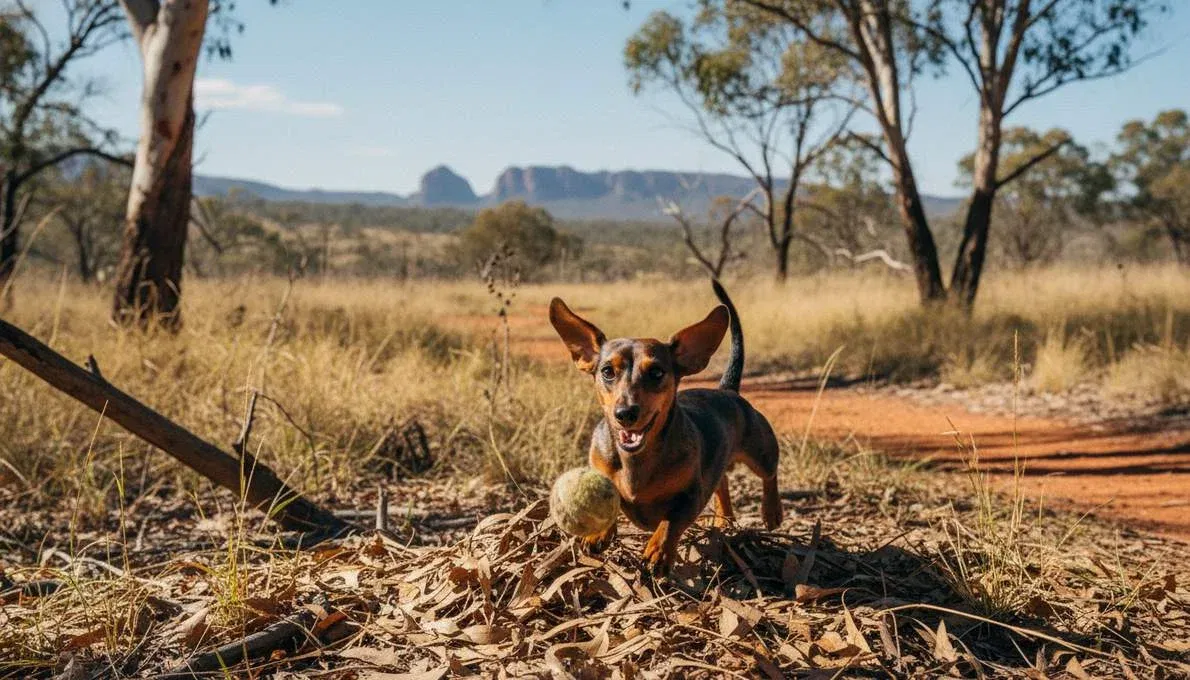
Miniature Dachshunds have enormous personalities crammed into very small bodies. The AKC breed standard describes them as “clever, lively and courageous to the point of rashness” — and that last bit is key. These dogs genuinely don’t understand that they’re small. They’ll square up to a German Shepherd at the dog park without a second thought.
They’re fiercely loyal to their family and can be deeply affectionate, but that loyalty comes with a possessive streak. Some Miniature Dachshunds become one-person dogs, bonding intensely with a single family member and being aloof (or outright grumpy) with everyone else. Early socialisation is critical to prevent this.
And then there’s the stubbornness. These were independent hunting dogs that made their own decisions underground, out of earshot of their handler. That independence is still hardwired. Training a Miniature Dachshund isn’t about intelligence — they’re smart enough to understand what you want. It’s about whether they decide your request is worth complying with.
They can be, with the right family. They do best with older children (roughly seven and up) who understand that picking up a Dachshund incorrectly can injure their spine. They’re not ideal for families with toddlers — not because they’re aggressive, but because they’re fragile and can snap if handled roughly or startled.
They’re vocal dogs. Barking at outside noises, visitors, the postman, and things only they can see is standard Dachshund behaviour. A Japanese behavioural study found Miniature Dachshunds had higher rates of barking at strangers, separation anxiety and reluctance to walk than many other breeds. None of this is unmanageable, but it does require consistent training and realistic expectations.
This is one of the top searches in Australia. The differences are mostly physical: Miniature Dachshunds weigh under 5 kg and stand 13–18 cm, while Standards weigh 7.5–14.5 kg and stand 20–23 cm. Temperamentally, Miniatures tend to be slightly more energetic and alert, while Standards are often described as calmer and more laid-back. Both share the same stubbornness, the same loyalty and the same vulnerability to back problems — though Miniatures are generally at slightly lower risk of joint issues simply because they carry less weight.
Health & Genetic Conditions
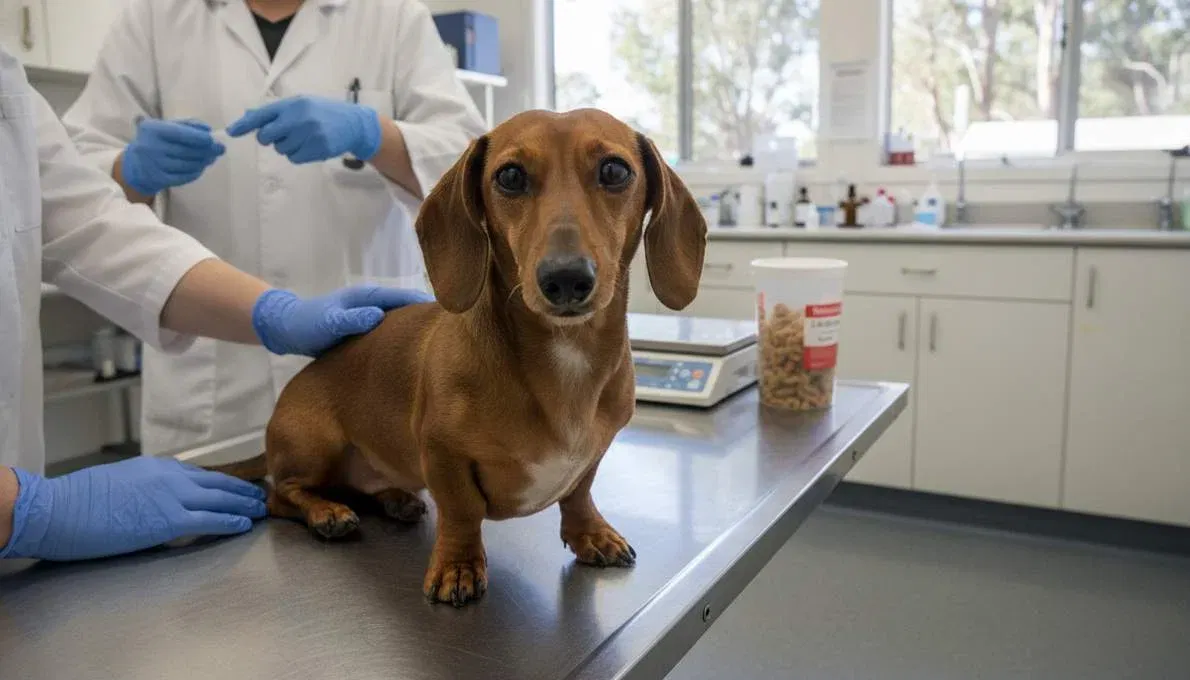
Here’s the part no Dachshund breeder wants to lead with, but every future owner needs to understand: the Miniature Dachshund’s elongated spine makes it one of the most back-injury-prone breeds in existence. This isn’t a minor footnote — it’s the defining health concern of the breed.
That said, Miniature Dachshunds are otherwise hardy little dogs with impressive longevity. The key is knowing what to watch for and budgeting for it.
Prevalence: One of the most significant health concerns in the breed — affects up to 25% of all Dachshunds due to their long spine and short legs
Symptoms: Sudden back pain, reluctance to move, weakness in the back legs, loss of coordination, or in severe cases, partial or full paralysis
Treatment Cost (AUD): $2,000–$10,000+ for surgical treatment; $500–$2,000 for conservative management with rest and medication
Prevention: Keep your Dachshund at a healthy weight, use ramps instead of stairs, discourage jumping on and off furniture, and support their back when lifting them
IVDD happens when the cushioning discs between the bones of the spine degenerate, bulge, or burst — pressing on the spinal cord and causing pain or loss of movement. Dachshunds are especially prone to this because of their uniquely long bodies. Acting fast at the first sign of back pain is critical, as early treatment dramatically improves the chances of a full recovery. (Source: American College of Veterinary Surgeons)
Prevalence: Extremely common in Dachshunds — even being 500g overweight is considered significant for a 5kg dog, putting enormous strain on their spine
Symptoms: Visible weight gain, reduced willingness to exercise, difficulty breathing after mild activity, and worsening back or joint problems
Treatment Cost (AUD): Prevention cost only — managed through diet and exercise with no medication required in most cases
Prevention: Measure meals carefully, limit treats, ensure daily low-impact exercise, and weigh your dog regularly — small amounts of extra weight add up fast in a small breed
Extra weight on a Dachshund isn’t just a cosmetic concern — it directly increases the risk of IVDD by putting constant additional pressure on an already vulnerable spine. Because they have such short legs and a long back, even a small amount of excess weight has a disproportionately large impact. Keeping your Dachshund lean is genuinely one of the most powerful things you can do to protect their long-term health. (Source: Australian Veterinary Association)
Prevalence: Common in small breeds including Dachshunds; mild cases often self-correct while severe cases require surgery
Symptoms: Occasional skipping or hopping on a back leg, intermittent lameness, or a “bunny hop” gait that appears and disappears
Treatment Cost (AUD): $1,500–$4,000 per knee for surgical correction in more severe cases
Prevention: Maintain a healthy weight to reduce pressure on the joints; avoid repetitive high-impact activities in young growing puppies
Patellar luxation means the kneecap slips out of its normal groove in the leg. You might notice your Dachshund suddenly pick up a back leg mid-walk for a few steps, then put it back down and carry on normally — that’s often the kneecap popping in and out. Mild cases can be managed conservatively, but more severe or frequent episodes require surgery to prevent chronic pain and arthritis developing over time. (Source: VCA Animal Hospitals)
Prevalence: A known genetic condition in Dachshunds; reputable breeders DNA test for it before breeding
Symptoms: Night blindness in early stages, bumping into objects in low light, reluctance to go into dark rooms, and gradual deterioration to full blindness
Treatment Cost (AUD): $300–$600 for diagnosis; there is currently no cure or treatment
Prevention: Only buy from breeders who DNA test their dogs for PRA — ask to see proof of testing for both parents before committing to a puppy
Progressive Retinal Atrophy is a genetic condition where the cells in the retina gradually break down over time, eventually leading to complete blindness. It is painless, and dogs adapt remarkably well to vision loss — especially when their home environment stays familiar and consistent. While there is no treatment currently available, DNA testing means responsible breeders can prevent affected puppies from being born altogether. (Source: OFA — Orthopedic Foundation for Animals)
Prevalence: Highly common across all small breeds including Dachshunds — most dogs will show signs of dental disease by age 3 without regular care
Symptoms: Bad breath, visible yellow or brown tartar build-up, red or swollen gums, loose teeth, and discomfort when eating
Treatment Cost (AUD): $300–$800 per professional dental clean performed under general anaesthesia
Prevention: Brush your Dachshund’s teeth regularly from puppyhood, provide dental chews, and book annual dental check-ups with your vet
Dental disease in small breeds is far more serious than most owners realise — bacteria from infected gums can enter the bloodstream and cause damage to the heart, liver, and kidneys over time. Dachshunds have small mouths where teeth are crowded together, making them especially prone to plaque and tartar build-up. Starting a brushing routine early in life is the single most effective way to avoid expensive dental procedures down the track. (Source: Australian Veterinary Association)
Prevalence: More commonly seen in middle-aged to older Dachshunds; requires lifelong management once diagnosed
Symptoms: Increased thirst and urination, increased appetite, pot-bellied appearance, thinning coat or hair loss, and low energy
Treatment Cost (AUD): $500–$2,000 per year for ongoing medication and regular monitoring blood tests
Prevention: No guaranteed prevention, but regular annual vet check-ups help identify hormonal changes early before symptoms become severe
Cushing’s Disease occurs when the body produces too much cortisol — the stress hormone — usually due to a small benign tumour on the pituitary or adrenal gland. It develops slowly and the early signs are easy to dismiss as normal ageing, which is why it often goes undiagnosed for a while. The good news is it is very manageable with daily medication, and most dogs feel significantly better once their cortisol levels are under control. (Source: VCA Animal Hospitals)
Prevalence: Significantly higher risk in double-dapple Dachshunds — where both parents carry the dapple gene — along with an increased risk of eye defects
Symptoms: Unresponsiveness to sounds, not reacting to their name, difficulty locating the source of sounds, and in some cases, visible eye abnormalities present from birth
Treatment Cost (AUD): No treatment available — prevention through responsible breeding is the only solution
Prevention: Never breed two dapple-patterned dogs together — this is a well-established and preventable cause of deafness and blindness in the breed
When two dapple Dachshunds are bred together, the resulting double-dapple puppies carry a significantly elevated risk of being born deaf, blind, or with severely underdeveloped eyes. This is a known and entirely avoidable outcome — responsible breeders simply do not pair two dapple dogs. If you are purchasing a dapple Dachshund, always ensure only one parent carries the dapple pattern. (Source: Dachshund Club of America)
An estimated 1 in 4 Dachshunds will experience IVDD in their lifetime. Surgery can cost $5,000–$10,000+ in Australia, and not all cases are operable. Prevention matters enormously: use ramps instead of stairs, never let them jump on or off furniture, support their full body when lifting them, use a harness (never a collar on lead), and keep their weight strictly controlled. Pet insurance taken out before any symptoms appear is strongly recommended for this breed.
Miniature Dachshund Lifespan & Longevity
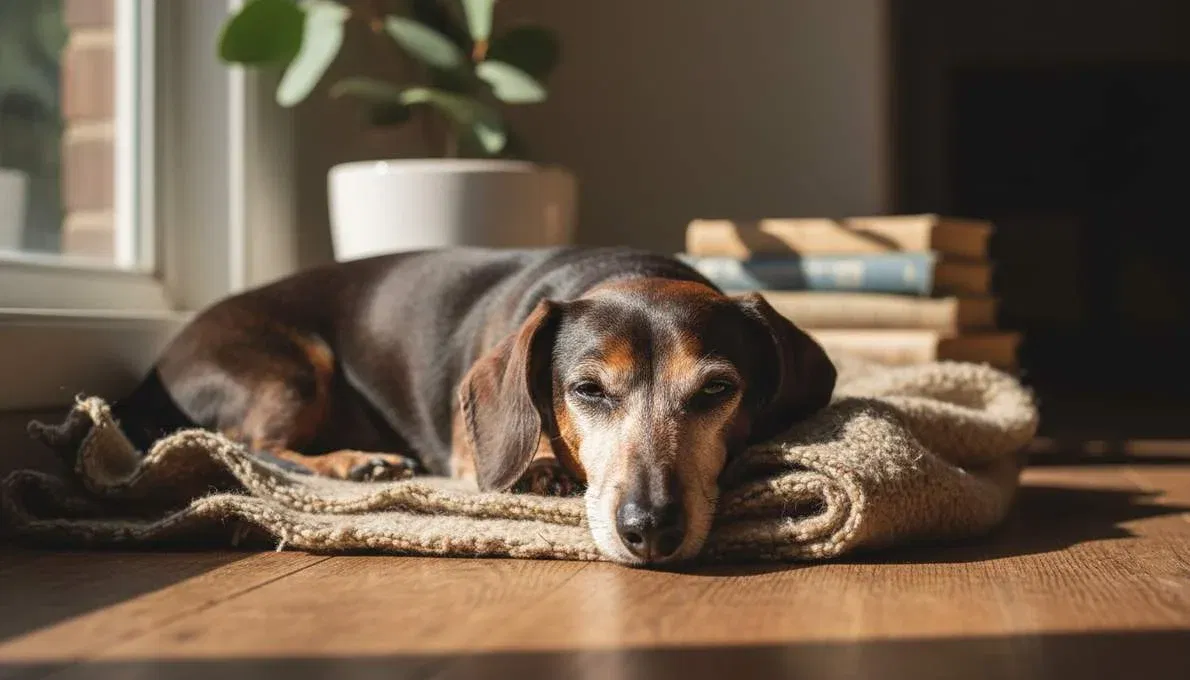
For such a health-vulnerable breed, Miniature Dachshunds live surprisingly long lives. The average lifespan is 12–16 years, with many reaching 15+ when well cared for. A 2024 UK study found an average life expectancy of 14 years for Miniature Dachshunds specifically, which is well above the average for purebred dogs (12.7 years). A Japanese study put the figure at 13.9 years.
Their longevity is a genuine selling point, but it also means committing to back-protection protocols for well over a decade. A Miniature Dachshund puppy bought today will likely be with you into the late 2030s.
Maximising Your Miniature Dachshund’s Lifespan
Weight management is the single most important thing you can do. An overweight Dachshund is a Dachshund at dramatically increased risk of IVDD and joint problems. Feed a measured, high-quality diet appropriate for their age and activity level. Provide regular but back-safe exercise — walking is great, jumping is not. Keep up with annual vet checks, dental cleans and parasite prevention. And invest in ramps for any furniture they use regularly.
Grooming & Coat Care
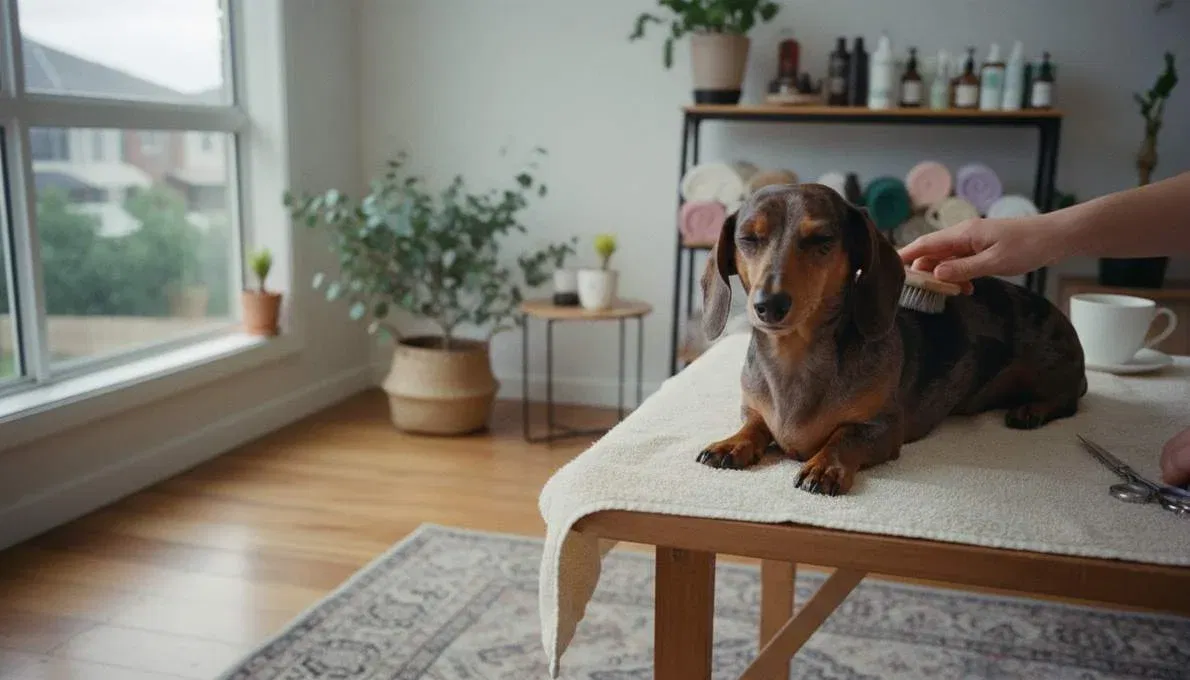
One of the Miniature Dachshund’s advantages is relatively low grooming demands — especially compared to breeds like Poodles. That said, grooming needs vary significantly by coat type.
Grooming Schedule
| Grooming Task | Smooth Coat | Long-Haired | Wire-Haired |
|---|---|---|---|
| Brushing | Weekly with a soft bristle brush | Every 2–3 days with a slicker brush to prevent matting | 2–3 times weekly; hand-stripping 2–3 times per year |
| Professional groom | Rarely needed | Every 6–8 weeks ($50–$80) | Every 8–12 weeks ($60–$90); hand-stripping extra |
| Bathing | Every 4–6 weeks | Every 3–4 weeks | Every 4–6 weeks |
| Shedding level | Low to moderate | Low to moderate | Low |
| Nail trimming | Every 2–4 weeks | Every 2–4 weeks | Every 2–4 weeks |
| Ear cleaning | Weekly — floppy ears trap moisture | Weekly — extra hair around ears | Weekly |
| Dental care | Daily brushing; professional clean every 1–2 years | Daily brushing; professional clean every 1–2 years | Daily brushing; professional clean every 1–2 years |
Annual grooming estimate: Smooth-coated Miniature Dachshunds are very affordable to groom — roughly $100–$300 per year if you handle most of it at home. Long-haired varieties cost more: budget $400–$800 per year for professional grooming. Wire-haired sit somewhere in between, though hand-stripping appointments add cost.
One universal requirement: dental care. Small breeds like Dachshunds are disproportionately prone to periodontal disease. Daily tooth brushing at home plus professional dental cleans every 1–2 years ($300–$800 under anaesthesia in Australia) will save you thousands in extraction costs down the line.
Exercise Needs
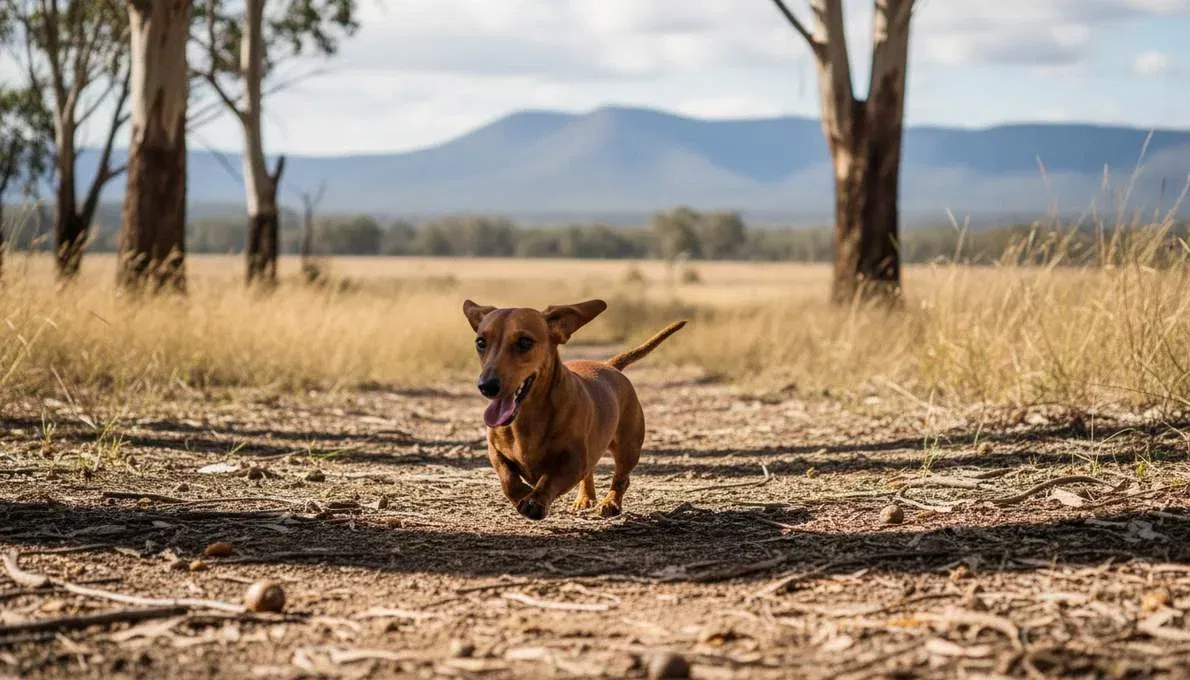
Miniature Dachshunds need less exercise than you’d expect from a hound breed. Around 30–50 minutes per day is sufficient, ideally split across two shorter walks. Their short legs mean they cover less ground per step, so what feels like a casual stroll for you is a solid workout for them.
That said, they’re not couch potatoes. They were bred to hunt, and that prey drive is alive and well. They’ll chase lizards, dig holes, and follow scent trails with single-minded determination. Puzzle toys, scent games and short training sessions provide excellent mental stimulation without stressing their backs.
Exercise Rules for Back Health
This is non-negotiable for Dachshund owners: no jumping off furniture, no running up or down stairs, no rough wrestling with larger dogs. Use ramps to get on and off beds and couches. When walking, always use a harness rather than a collar — collars put pressure on the neck and spine. Swimming is excellent low-impact exercise (though not all Dachshunds are natural swimmers, so introduce water gradually and always supervise).
Australian Climate Considerations
In summer, walk early in the morning or after sunset. Miniature Dachshunds are low to the ground, which means they’re closer to hot pavement and radiated heat. Their small body mass makes them more vulnerable to heatstroke. Carry water, test pavement with your palm, and never leave them in a parked car.
In cooler months, smooth-coated Miniature Dachshunds feel the cold. A well-fitted dog coat is genuinely useful — not a fashion statement — for winter walks in southern states. Long-haired and wire-haired varieties handle cooler temperatures better but still appreciate warmth.
Training Guide
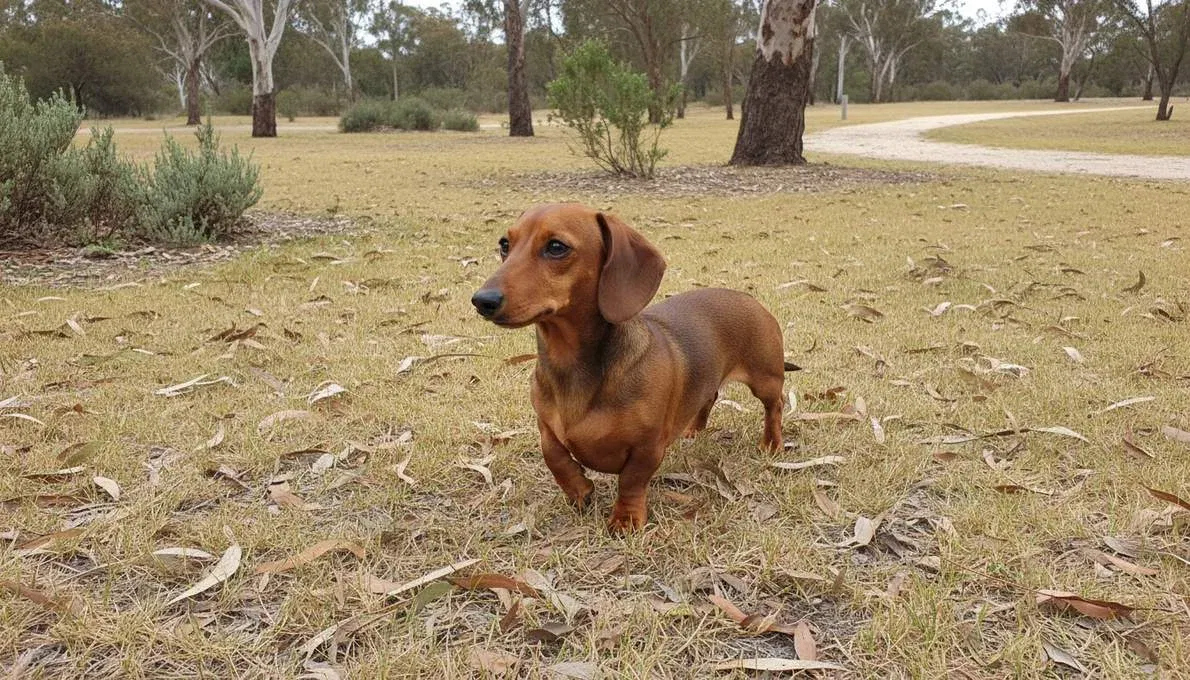
Let’s be honest: Miniature Dachshunds are not the easiest breed to train. They’re intelligent enough to learn anything, but their independent streak means they’ll regularly decide whether they feel like obeying. Training requires patience, consistency and a sense of humour.
Socialisation & Training Timeline
| Age | Focus | Tips |
|---|---|---|
| 8–12 weeks | Socialisation, toilet training, crate training, handling (especially lifting technique) | Toilet training takes longer than most breeds. Expect 4–6 months. Crate training helps enormously. Short, positive sessions only. |
| 3–6 months | Basic commands (sit, stay, come), lead walking with harness, bark management | Use high-value treats — Dachshunds are food-motivated. Start “quiet” command early. Puppy school ($150–$300) is highly recommended. |
| 6–12 months | Recall, impulse control, not jumping on/off furniture, socialisation with other dogs | Adolescence hits hard. They’ll test every boundary. Stay consistent. Reward compliance; never punish stubbornness. |
| 1+ years | Ongoing obedience, trick training, scent work, continued socialisation | Scent work and earth dog trials play to their natural instincts. Mental stimulation prevents boredom-related barking and digging. |
Honest difficulty rating: 6/10. They’re not untrainable, but they’re significantly more stubborn than breeds like Labradors or Poodles. Toilet training in particular takes longer. Positive reinforcement with food rewards works best. Harsh corrections backfire — they’ll shut down or dig their heels in harder.
Cost of Ownership (AUD)
Miniature Dachshunds are moderately expensive to buy and can become very expensive to own if back problems develop. Here’s an honest breakdown of costs in Australia.
Purchase Price
From a registered Australian breeder with DNA testing and health screening, expect to pay $2,000–$5,000 for a Miniature Dachshund puppy. Long-haired varieties and sought-after colours like cream, dapple or chocolate tend to sit at the higher end, with some breeders charging $5,000–$7,000 for premium bloodlines. Adoption through rescue organisations typically costs $300–$600 and includes desexing, vaccinations and microchipping.
Annual Running Costs
| Expense | Estimated Annual Cost (AUD) |
|---|---|
| Premium dog food | $500–$800 |
| Grooming (varies by coat type) | $100–$800 |
| Vet check-ups & vaccinations | $200–$450 |
| Parasite prevention (flea, tick, worming) | $150–$300 |
| Pet insurance (strongly recommended) | $300–$1,500 |
| Dental cleaning | $300–$800 (every 1–2 years) |
| Ramps, harness & back-safe accessories | $100–$300 (mostly one-off) |
| Toys, treats & misc. | $100–$300 |
| Estimated Total | $1,750–$5,250 per year |
The IVDD wildcard: If your Miniature Dachshund develops IVDD requiring surgery, you’re looking at $5,000–$10,000+ in a single event, plus rehabilitation costs. This is why pet insurance is not optional for this breed. Take out a comprehensive policy before any symptoms appear, and confirm that IVDD and spinal conditions are covered.
Over a 14-year lifespan, total ownership costs (including purchase) sit between $27,000 and $80,000+ depending on health outcomes. That’s a wide range, and IVDD is the single biggest variable.
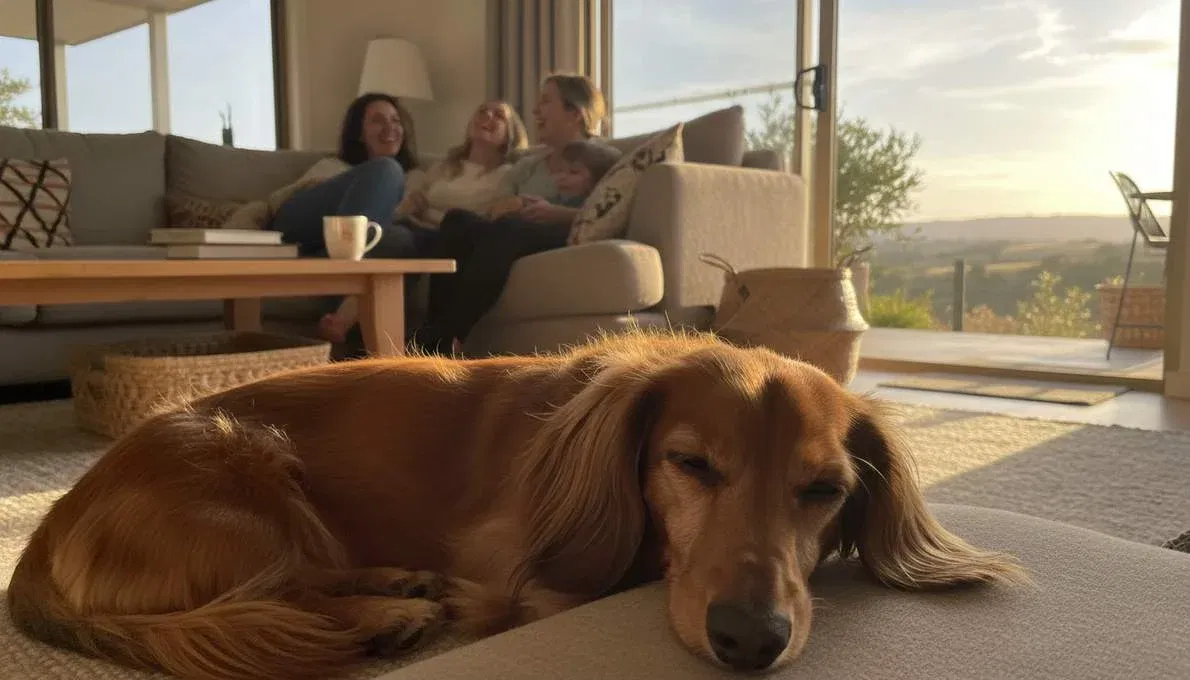
Is a Miniature Dachshund Right for You?
You want a small, characterful dog with genuine personality. You live in an apartment or smaller home and need a breed that doesn’t require a backyard. You’re patient with training and can see the humour in a dog that occasionally decides your commands are optional. You’re prepared to invest in back-protection measures (ramps, harness, weight management) for the dog’s entire life. You want a loyal companion who’ll bond deeply with you — potentially to the point of being a Velcro dog.
You have very young children. Their fragile backs make them a poor match for toddlers who grab, drop or sit on dogs. You want a quiet dog. Dachshunds bark. A lot. At everything. Training helps, but you’ll never eliminate it entirely. You’re not willing to manage their back health. If “no jumping” rules and ramps feel like overkill, this breed isn’t for you. You want an off-lead dog. Their prey drive and selective hearing make reliable off-lead recall a constant challenge. You’re on a tight budget with no capacity for unexpected vet bills. IVDD surgery alone can cost more than the dog.
If you want a slightly more robust dog with a marginally calmer demeanour, the Standard may suit you better. If space is limited and you prefer a truly compact companion, the Miniature is hard to beat. Both need the same back-protection protocols. Temperamentally, the Miniature tends to be feistier and more vocal.
- The Miniature Dachshund is one of the most personality-packed small breeds you can own — fearless, loyal, endlessly entertaining and stubbornly convinced they run the household. For the right owner, they’re irresistible.
- Their back is the deal-breaker. Budget for ramps, pet insurance and weight management from day one. IVDD affects up to 25% of the breed, and surgery costs $5,000–$10,000+ in Australia. This is not a breed you can wing it with.
- Buy from a registered breeder who DNA-tests for PRA and screens for IVDD risk factors, or adopt through a reputable Dachshund rescue. Either way, you’re getting a dog with more courage and charisma than breeds five times their size.
Frequently Asked Questions
How big do Miniature Dachshunds get?
A full grown Miniature Dachshund stands 13–18 cm (5–6 inches) at the shoulder and weighs under 5 kg (under 11 lbs). They reach their full height by around 8–12 months but may continue filling out until 18 months. Their body length from nose to tail is approximately 30–35 cm.
How long do Miniature Dachshunds live?
The average Miniature Dachshund lifespan is 12–16 years. A 2024 UK study found an average life expectancy of 14 years for the miniature variety specifically, which is above average for purebred dogs. With good care, many reach 15–17 years.
Do Miniature Dachshunds shed?
Yes, but not heavily. Smooth-coated Miniature Dachshunds shed low to moderate amounts year-round. Long-haired varieties shed similarly but the longer coat can make it more noticeable. Wire-haired Dachshunds shed the least of the three coat types. None are considered hypoallergenic.
Are Miniature Dachshunds easy to train?
Not particularly. They’re intelligent but independent and stubborn. Toilet training takes longer than most breeds (4–6 months is common). They respond best to positive reinforcement with high-value food rewards. Patience and consistency are essential — harsh corrections will backfire.
Do Miniature Dachshunds bark a lot?
Yes. They’re a vocal breed that barks at visitors, outside noises, other dogs, and sometimes nothing at all. Training can reduce excessive barking, but you won’t eliminate it entirely. If you live in an apartment with noise-sensitive neighbours, factor this in seriously.
How much does a Miniature Dachshund cost in Australia?
From a registered breeder, expect $2,000–$5,000 for a pet-quality puppy. Popular colours like cream, dapple and chocolate long-haired varieties often sit at $4,000–$7,000. Rescue adoption costs $300–$600. Annual running costs add roughly $1,750–$5,250 per year.
Do Miniature Dachshunds have back problems?
Yes — this is the breed’s most significant health concern. An estimated 25% of all Dachshunds will develop IVDD (Intervertebral Disc Disease) in their lifetime. Prevention includes using ramps, avoiding stairs and jumping, using a harness, maintaining a healthy weight and taking out pet insurance early.
Can Miniature Dachshunds be left alone?
Not for extended periods. They bond closely with their owners and are prone to separation anxiety, which often manifests as barking, digging and destructive behaviour. Most can handle 4–6 hours alone with training and enrichment, but they’re not suited to owners who are away all day.
What’s the difference between a Miniature and Standard Dachshund?
Size. Miniature Dachshunds weigh under 5 kg and stand 13–18 cm tall. Standards weigh 7.5–14.5 kg and stand 20–23 cm. Miniatures tend to be slightly more energetic and vocal. Standards are often calmer. Both share the same coat types, colours and back-health vulnerabilities.
When do Miniature Dachshunds stop growing?
Most Miniature Dachshunds reach their adult height by 8–12 months and their full adult weight by around 18 months. They’re one of the faster-maturing small breeds. You should transition from puppy food to adult food around 8–9 months, or when your vet confirms they’ve finished growing.
- American Kennel Club — Dachshund Breed Standard: https://www.akc.org/dog-breeds/dachshund/
- PetMD — Dachshund Dog Breed Health and Care: https://www.petmd.com/dog/breeds/dachshund
- Wikipedia — Dachshund (breed history, health, temperament): https://en.wikipedia.org/wiki/Dachshund
- ASPCA Pet Health Insurance — Miniature Dachshund Personality and Care: https://www.aspcapetinsurance.com/resources/mini-dachshund/
- Pawlicy Advisor — Dachshund Growth & Weight Chart: https://www.pawlicy.com/blog/dachshund-growth-and-weight-chart/
- RightPaw Australia — Miniature Dachshund Breeders: https://rightpaw.com.au/dogs/breed/dachshund-miniature
- Bella & Duke — Miniature Dachshund Owner’s Guide: https://www.bellaandduke.com/dogs/expert-advice/dog-breeds/miniature-dachshund-owners-guide/
- DogzOnline Australia — Miniature Dachshund Puppies: https://www.dogzonline.com.au/breeds/puppies/dachshund-miniature-smooth-haired.asp