
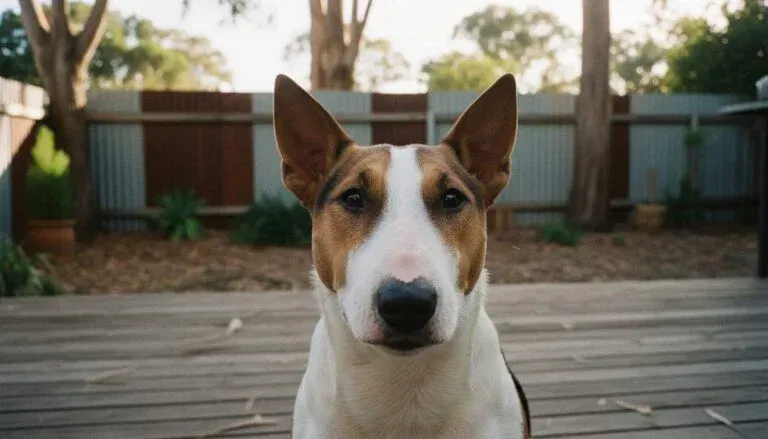
Imagine taking a Bull Terrier — all 30-odd kilograms of egg-headed, muscular, clownish energy — and compressing it into a package that weighs about 12 kilograms. That’s the Miniature Bull Terrier. Same unmistakable head. Same fearless attitude. Same conviction that every piece of furniture is a launching pad. Just half the size.
Here’s what makes this breed fascinating: the Mini Bull actually came first. The original Bull Terriers of the 1800s were closer in size to today’s miniatures. It was only later that breeders selectively bred them larger, and the smaller dogs became the “miniature” variant. So when you look at a Mini Bull, you’re actually looking at something closer to the breed’s original form — a compact, powerful little gladiator designed to dispatch rats and hold its own against dogs twice its size.
In Australia, the Miniature Bull Terrier has a strong and dedicated breeding community. Almost every Mini Bull line in the country traces back to imports from the UK in the mid-1980s, and breeders here are fiercely protective of the breed’s health and temperament. This guide covers everything: the real differences between the mini and standard, health issues you need to know about (especially kidney disease and lens luxation), Australian pricing, and honest temperament advice for a breed that is absolutely not for everyone.
What You’ll Learn
- Breed traits & temperament
- Health concerns to know
- True cost in Australia
- Training & exercise needs
- Is this breed right for you?
Miniature Bull Terrier at a Glance
| Attribute | Details |
|---|---|
| Breed Group | Terrier (ANKC Group 2) |
| Origin | England (19th century) |
| Other Names | Mini Bull, MBT, Miniature English Bull Terrier |
| Height | Up to 35.5 cm (14 inches) |
| Weight | 11–15 kg (24–33 lbs) — no weight limit in breed standard |
| Lifespan | 11–14 years (UK study average: 12.2 years) |
| Coat | Short, flat, harsh, glossy |
| Colours | White, brindle, black, red, fawn, tricolour, brindle & white |
| Temperament | Playful, stubborn, courageous, clownish, loyal, high-energy |
| Shedding | Moderate — short coat sheds seasonally |
| Prey Drive | High — bred as ratters and pit fighters |
| Good With Kids | Yes, with older children — too boisterous for toddlers |
| Good With Other Dogs | Variable — may challenge dogs regardless of size; socialisation critical |
| Apartment Friendly | Possible if exercised heavily, but they need space to burn energy |
| Experience Level | Intermediate to experienced owners recommended |
| Puppy Price (AUD) | $3,000–$6,000 (registered ANKC breeder) |
Miniature Bull Terrier vs Bull Terrier
This is the question that drives most searches, so let’s address it properly. The Miniature Bull Terrier and the Standard Bull Terrier are separate breeds under the ANKC, not size variants of the same breed. They have separate breed standards and are shown in separate classes.
| Feature | Miniature Bull Terrier | Standard Bull Terrier |
|---|---|---|
| Height | Up to 35.5 cm | 45–55 cm |
| Weight | 11–15 kg | 22–32 kg |
| Head shape | Same egg shape, slightly rounder in proportion | Classic long egg profile |
| Lifespan | 11–14 years | 10–13 years |
| Key health risks | PLL, kidney disease, heart disease, deafness | Heart disease, kidney disease, deafness, skin allergies |
| Temperament | Equally clownish; can be more intense per kilo | Clownish, boisterous, can be calmer in maturity |
| Exercise needs | High for size — 40–60 min/day | High — 60–90 min/day |
| Apartment suitability | More feasible due to size, but still challenging | Not ideal |
The core personality is identical. Both are clownish, stubborn, energetic, and fiercely loyal. The main practical difference is size and the fact that Mini Bulls are more prone to primary lens luxation. Many people describe Mini Bulls as having the same intensity as the standard, but packed into a smaller, faster body — which can actually make them more challenging to manage for inexperienced owners.
History & Origins
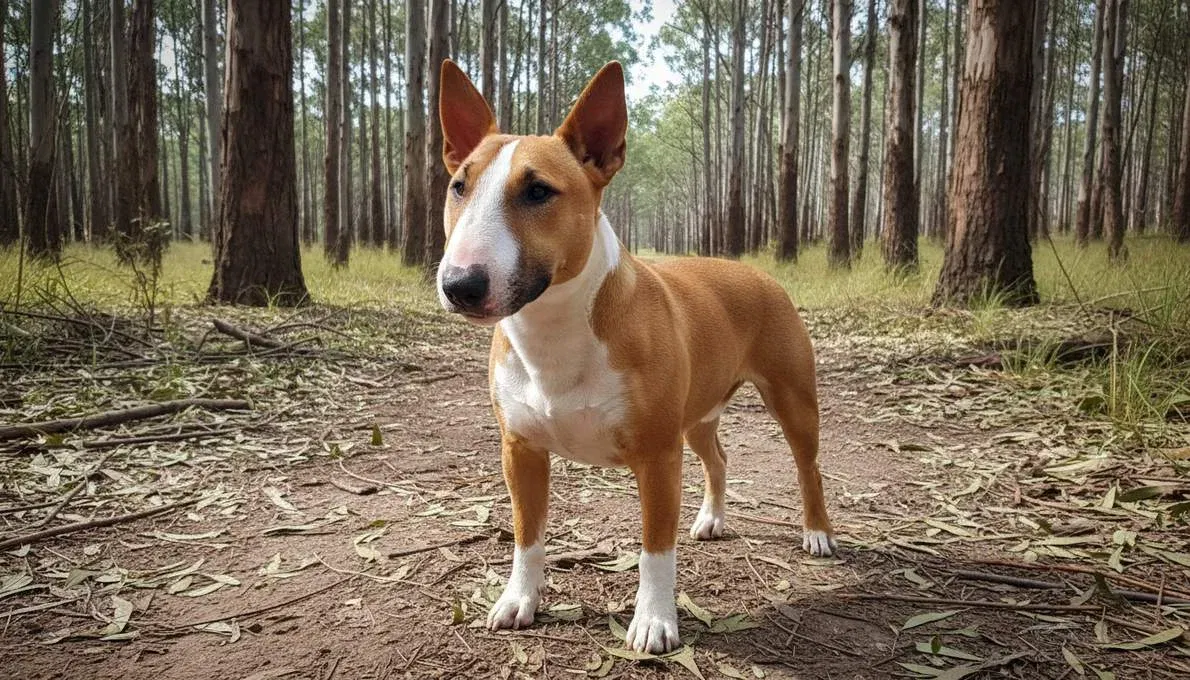
The Miniature Bull Terrier’s story begins in early 19th-century England, when breeders crossed the Old English Bulldog with the now-extinct White English Terrier to create a dog for blood sports — bull-baiting, rat-killing, and dog fighting. When those sports were banned, a breeder named James Hinks refined the type around 1860, crossing in Dalmatian and possibly other breeds to produce a cleaner, more elegant dog. He called it the Bull Terrier.
The early Bull Terriers came in a wide range of sizes — some as small as 4 pounds, others much larger. The tiny “toy” versions were poor specimens that didn’t last, but the slightly larger miniatures proved robust and capable. They retained the same muscle, determination, and egg-shaped head of their bigger relatives while being practical ratters and companions.
For decades, the two sizes were shown together. It wasn’t until the AKC recognised the Miniature Bull Terrier as a separate breed in 1991 that the formal split became official. The ANKC also classifies them as separate breeds.
In Australia: The Miniature Bull Terrier’s Australian story starts in 1984 when the Schardale kennel imported Aust Ch Erenden Roxana from the UK — the first Mini Bull in the country in over 20 years. Almost every Miniature Bull Terrier line on the east and west coasts of Australia traces back to Roxana and her imported son. In 1986, the Minibull kennel in Victoria brought in additional UK imports, further establishing the breed. Today, Australian Mini Bull breeders are internationally recognised, with some Aussie-bred dogs appearing in European pedigrees.
Temperament & Personality
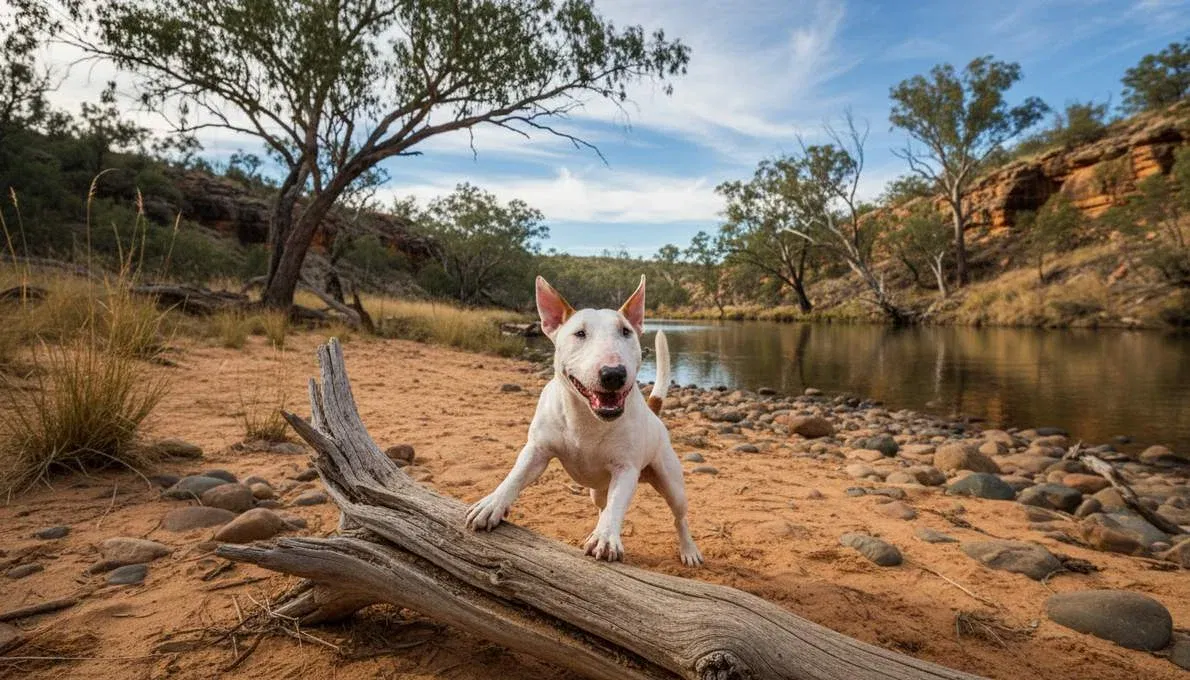
If you’ve never met a Miniature Bull Terrier, prepare for something that doesn’t quite match any other breed. They’re part clown, part gladiator, part toddler, and part velcro strip. Living with one is equal parts hilarious and exhausting.
Mini Bulls are natural comedians. They spin in circles. They zoom around the house at high speed for no apparent reason. They make bizarre vocalisations that sound like a cross between a grumble and a conversation. They’ll perform increasingly dramatic antics to get your attention, and they know exactly what makes you laugh. One Queensland breeder describes them as “a mixture of pig, T-Rex, and a clown.” That’s remarkably accurate.
This is where the breed separates from easy-going companion dogs. Mini Bulls are intelligent, but they use that intelligence to test boundaries, not to obey them. They understand commands perfectly well — they just decide whether they feel like complying. This isn’t defiance so much as a strong-willed personality that requires firm, consistent, patient leadership. Harsh corrections don’t work; they make the dog more stubborn.
Miniature Bull Terriers have essentially no sense of scale. They will challenge dogs three times their size without hesitation. This isn’t aggression — it’s an inherited confidence from a breed that was developed for blood sports. But it means that dog-on-dog interactions must be managed carefully, especially with unfamiliar dogs. Socialisation from puppyhood is critical, not optional.
Behind the tough exterior is a deeply affectionate dog that craves human contact. Mini Bulls want to be on your lap, leaning against you, following you from room to room. They bond intensely with their family and can develop separation anxiety if left alone for extended periods. They’re not a breed you can leave in the backyard and visit occasionally.
Mini Bulls were ratters. That instinct is still very much alive. They will chase cats, small dogs, birds, lizards — anything that moves quickly and is smaller than them. They can coexist with cats if raised together from puppyhood and managed carefully, but small pocket pets are at genuine risk. Several Australian breeders successfully raise Mini Bulls alongside cats, but it requires careful introduction and ongoing supervision.
Mini Bulls can be wonderful family dogs. Australian breeders regularly raise them alongside children, and some even work in school responsible pet ownership programs. However, they’re boisterous, muscular, and play rough. They’re better suited to families with children aged 6+ who understand how to interact with a strong, active dog. Toddlers can be knocked over by a zooming Mini Bull before anyone blinks.
No — not toward people. Well-bred, well-socialised Mini Bulls are devoted to their families and should never show human-directed aggression. The breed’s reputation issues come from dog-on-dog reactivity (that fearless attitude toward other dogs) and from poorly bred or unsocialised individuals. Choosing a reputable breeder who prioritises temperament, and investing in early socialisation, is the single best thing you can do to ensure a well-adjusted dog.
Health & Genetic Conditions
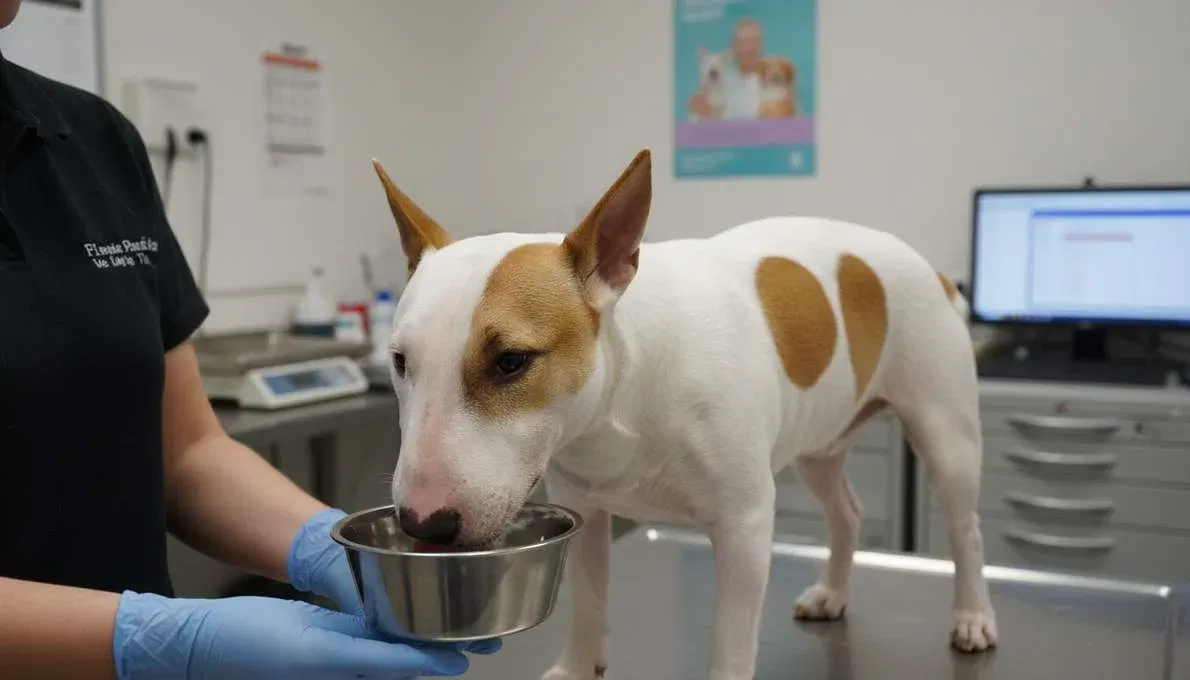
This is the section that matters most when considering a Miniature Bull Terrier. The breed has some serious genetic health concerns, and responsible breeders test extensively for them. Never buy a puppy from a breeder who doesn’t DNA test.
A well-documented genetic condition in Miniature Bull Terriers; caused by a specific gene mutation (ADAMTS17) that can be identified through DNA testing
Sudden eye pain, redness, excessive tearing, cloudiness in the eye, and in untreated cases, permanent blindness
$2,000–$4,500 per eye for surgical removal of the displaced lens
Only purchase from breeders who DNA test for PLL — both parents should be tested, as it is passed down in an autosomal recessive pattern
Primary Lens Luxation happens when the tiny fibres holding the lens of the eye in place break down, causing it to shift out of position. This is painful and can escalate to blindness very quickly without treatment. The silver lining is that a reliable DNA test exists for the exact gene responsible, so responsible breeders can screen their dogs and prevent affected puppies from being born. (Source: OFA — Orthopedic Foundation for Animals)
A serious and well-known concern in the breed; all breeding dogs should be screened through urine protein testing
Increased thirst and urination, weight loss, lethargy, and in advanced stages, full kidney failure — often appearing in young dogs
$1,000–$5,000+ for ongoing management depending on how advanced the disease is
Buy from breeders who regularly screen their dogs with urine protein tests; ask to see screening results before purchasing a puppy
Hereditary Nephritis is a progressive kidney disease where the kidneys slowly lose their ability to filter waste from the blood. It can affect dogs at a surprisingly young age and unfortunately has no cure — management focuses on slowing its progression and keeping the dog comfortable. Because it is inherited, choosing a puppy from screened parents is the most important step any owner can take. (Source: Bull Terrier Club of America)
A separate kidney condition from HN but equally serious; diagnosed through kidney ultrasound
Similar to other kidney diseases — increased thirst, reduced appetite, weight loss, lethargy, and vomiting as the condition progresses
$500–$2,000 for diagnosis; ongoing management costs continue throughout the dog’s life
Ask breeders if their dogs have been screened via ultrasound; regular vet check-ups help catch early signs before they become severe
Polycystic Kidney Disease causes fluid-filled cysts to develop in the kidneys over time, gradually reducing their ability to function. It is a separate condition from Hereditary Nephritis, though both affect the same organ. There is no cure, but with careful dietary management and regular monitoring, affected dogs can still enjoy a good quality of life for many years. (Source: Merck Veterinary Manual)
Documented in Miniature Bull Terriers; aortic stenosis has also been reported — all dogs should have a heart check at 12 months of age
Heart murmur detected by a vet, reduced exercise tolerance, coughing, breathing difficulties, and in serious cases, heart failure
$500–$3,000+ for diagnosis and ongoing management with medication
Have your dog’s heart checked by a vet at 12 months as recommended for the breed; buy from breeders with cardiac-screened parents
The mitral valve is a small flap in the heart that controls blood flow — when it doesn’t close properly, blood leaks backwards, forcing the heart to work harder over time. Many dogs live comfortably for years with a murmur when it is caught early and managed with medication. Regular cardiac check-ups are especially important for this breed, as early detection makes a significant difference in outcomes. (Source: American Kennel Club Canine Health Foundation)
Especially common in white-coated Miniature Bull Terriers; can affect one ear (unilateral) or both ears (bilateral)
Unresponsiveness to sounds, not waking to loud noises, difficulty locating the direction of sounds, or appearing confused by verbal commands
$200–$400 for a BAER (Brainstem Auditory Evoked Response) test to confirm diagnosis
BAER testing should be done at 6 weeks of age — reputable breeders will have puppies tested before they go to their new homes
Congenital deafness in Miniature Bull Terriers is closely linked to the genetics behind white coat colouring, and is present from birth. A BAER test — a simple, painless hearing test — can confirm whether a puppy can hear in one or both ears as early as 6 weeks old. Deaf dogs can still live wonderfully full lives and are trained successfully using hand signals and vibration cues, but it’s important to know early so you can adapt your training approach. (Source: Louisiana State University School of Veterinary Medicine)
Common in smaller breeds including Miniature Bull Terriers; mild cases are often manageable without surgery
Occasional skipping or hopping on a back leg, intermittent lameness, or a “bunny hop” gait that comes and goes
$1,500–$3,000 per knee for surgical correction in more severe cases
Keep your dog at a healthy weight to reduce joint stress; avoid repetitive high-impact activities during puppyhood
Patellar luxation means the kneecap slips out of its normal groove in the leg. It often looks like your dog suddenly lifts a back leg for a few strides, then puts it down and keeps going as if nothing happened. Mild cases can be managed with weight control and anti-inflammatories, while more severe or recurring cases require surgery to realign the joint and prevent long-term arthritis. (Source: VCA Animal Hospitals)
A rare but fatal genetic condition specific to Bull Terrier breeds; responsible breeders DNA test all breeding stock
Painful skin lesions on the face and feet, stunted growth, immune system problems, and difficulty eating — symptoms appear in young puppies
Fatal — there is currently no effective treatment and affected puppies do not survive to adulthood
DNA testing is available and should be mandatory for all breeding dogs — never breed two carriers together
Lethal Acrodermatitis is one of the most heartbreaking conditions a Bull Terrier puppy can be born with. It affects the immune system and skin simultaneously, causing painful lesions and leaving puppies unable to fight off infections. Thankfully a DNA test can identify carrier dogs before breeding, meaning this condition is entirely preventable when breeders take the necessary screening steps seriously. (Source: ISPAD / Canine Genetic Disease Network)
Documented in Miniature Bull Terriers; can become a surgical emergency in hot weather or during strenuous exercise
Noisy or raspy breathing, exercise intolerance, voice changes, gagging when eating, and distress in warm temperatures
$2,000–$5,000 for surgical correction
Keep affected dogs cool and calm; avoid exercise in heat; seek urgent veterinary attention if breathing becomes laboured
Laryngeal paralysis occurs when the muscles controlling the opening of the airway stop working properly, causing the airway to partially collapse during breathing. In mild cases it just sounds like noisy breathing, but in hot or stressful conditions it can escalate into a life-threatening emergency. Surgery to permanently tie back the airway opening is highly effective and most dogs recover well, going on to live comfortably afterwards. (Source: VCA Animal Hospitals)
PLL (primary lens luxation), LAD (lethal acrodermatitis), and LP (laryngeal paralysis) testing should be done on all breeding stock. Every reputable Australian breeder listed on DogzOnline specifically states their dogs are “PLL, LAD, and LP clear.” This is the bare minimum. Additional screening should include BAER testing for deafness (especially in whites), heart auscultation at 12 months, patella grading, and urine protein screening for hereditary nephritis.
The Miniature Bull Terrier’s health profile is manageable with careful breeding, but devastating with careless breeding. A puppy from untested parents could develop kidney failure, go blind, or be born with a fatal skin condition. The difference between a $3,000 puppy from a health-tested litter and a $1,500 puppy from an unscreened backyard breeder could be tens of thousands of dollars in vet bills — or heartbreak.
Lifespan & Life Stages
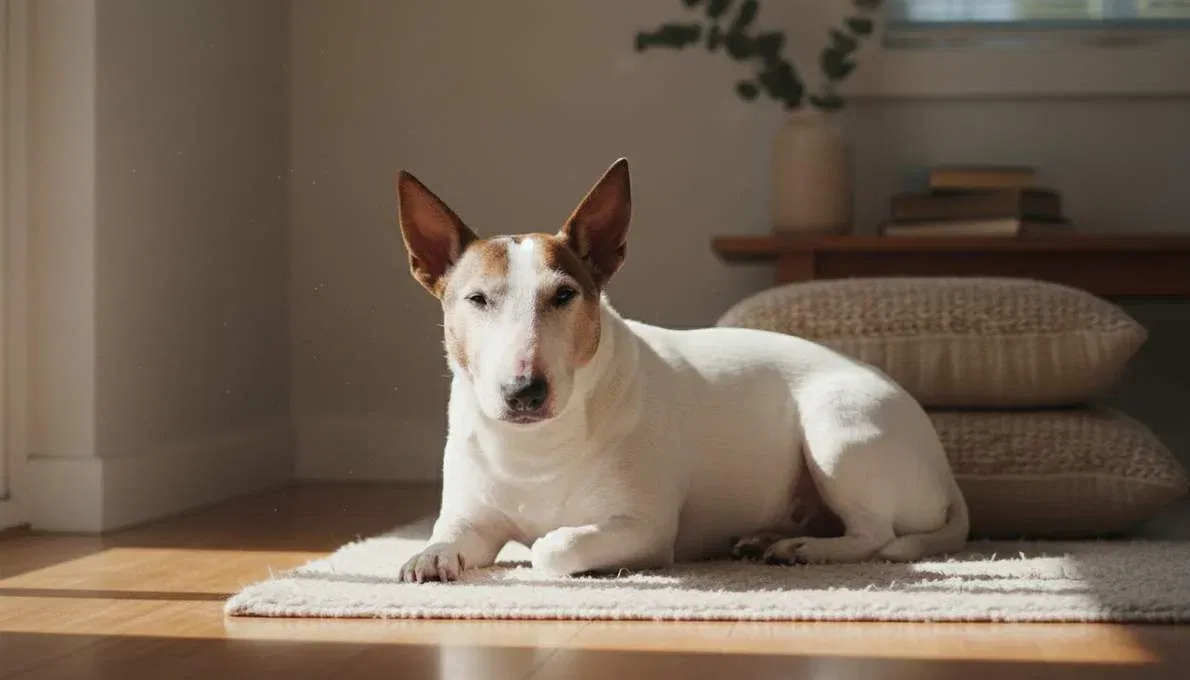
The Miniature Bull Terrier’s average lifespan is 11–14 years. A 2024 UK study placed the breed average at 12.2 years, which is close to the overall purebred average. With careful breeding, good nutrition, and proactive health monitoring, many reach 13–14 years.
Puppy to 18 months: Mini Bull puppies are absolute tornadoes. Expect constant energy, mouthing, zooming, and boundary-testing. This is the critical socialisation window — expose them to other dogs, people, environments, and children early and often. Crate training is almost non-negotiable for managing their energy and preventing destructive behaviour when unsupervised. Feed three to four small meals daily; monitor for any signs of skin issues (potential LAD indicator in very young puppies).
18 months to 7 years: Your Mini Bull will settle somewhat, but “settle” is relative. Adults are still high-energy, playful dogs that need daily exercise and stimulation. Keep them at a lean weight — Mini Bulls are prone to becoming overweight, which stresses joints and hearts. Annual vet checks should include heart auscultation and urine screening. Watch for squinting, redness, or tearing in the eyes (potential PLL signs).
7+ years (senior): Move to six-monthly vet visits. Request blood work to monitor kidney function. Eye checks become more important as PLL risk increases with age. Watch for noisy breathing or exercise intolerance (laryngeal paralysis, heart issues). Reduce high-impact exercise but maintain daily walks and mental stimulation. Senior Mini Bulls are often still playful and goofy well into their golden years.
Grooming & Care
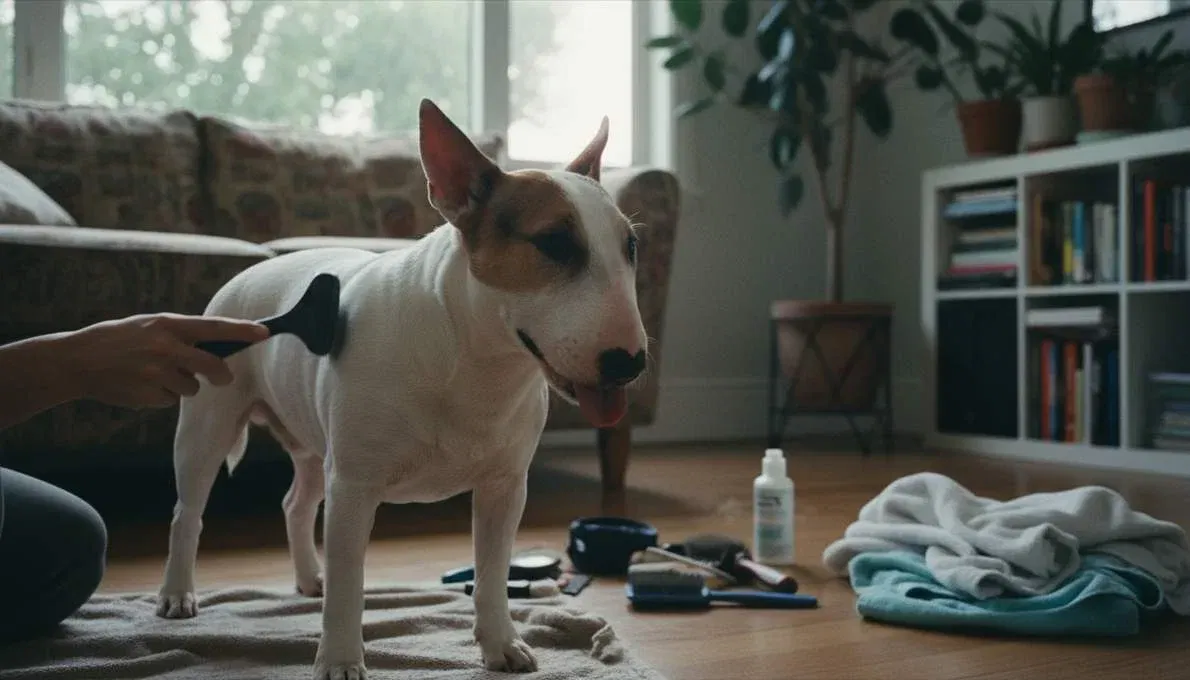
Grooming a Miniature Bull Terrier is about as simple as it gets. Their short, harsh coat needs very little maintenance. But there are some breed-specific care points that Australian owners need to know.
Grooming Schedule
| Task | Frequency | Cost (AUD) |
|---|---|---|
| Brush / glove wipe | Once a week with a rubber curry brush or hound glove | DIY — brush $10–$20 |
| Bath | Every 6–8 weeks or as needed | DIY or $30–$50 at groomer |
| Nail trim | Every 2–3 weeks | $10–$20 or DIY |
| Teeth brushing | Daily ideally; minimum 3x/week | DIY — toothpaste $10–$18 |
| Ear check | Weekly | DIY |
| Sunscreen (white dogs) | Before every outdoor session in sun | Pet-safe sunscreen $15–$30 |
| Professional groom | Rarely needed — 2–3 times/year | $30–$50 per session |
☀️ Sunscreen is not optional for white Mini Bulls in Australia. This is a critical care point that many new owners miss. White Miniature Bull Terriers, and any Mini Bull with sparse white fur around the face, ears, belly, or hindquarters, are at genuine risk of sunburn and skin cancer in Australian UV conditions. Apply pet-safe sunscreen to all exposed or thinly-coated areas before outdoor exercise. A sun-protective dog shirt is also worth considering for extended time outdoors.
Do Miniature Bull Terriers shed? Moderately. Their short coat sheds seasonally (spring and autumn primarily). You’ll find short white or coloured hairs on furniture and clothing, but nothing close to a double-coated breed. A weekly brush significantly reduces loose hair around the house.
Exercise Needs
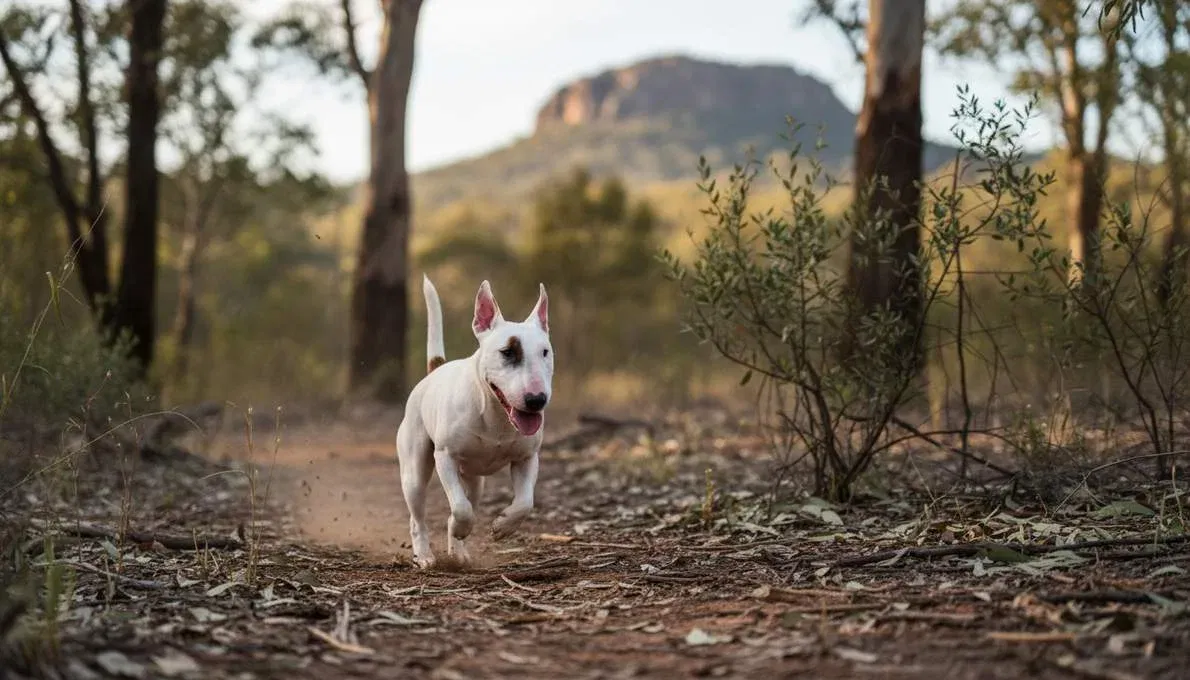
Do not underestimate the Miniature Bull Terrier’s energy requirements. This is a small dog with the engine of a much larger breed.
Daily exercise: 40–60 minutes minimum, split across two or more sessions. This should include a brisk walk plus some high-intensity play — fetch, tug, chase games, or a fenced-yard zoomie session. Mini Bulls are built for short, explosive bursts of speed rather than sustained endurance.
Mental stimulation matters as much as physical exercise. A physically tired Mini Bull with nothing to think about will still destroy your shoes. Puzzle feeders, scent work, trick training, and interactive toys are essential daily additions. These dogs are intelligent and need mental outlets.
Dog sports: Mini Bulls excel at agility, flyball, lure coursing, Rally-O, trick dog, and obedience. Several Australian Mini Bulls hold dual conformation and sporting titles. Bullacktiv in NSW has dogs competing across conformation, obedience, Rally-O, trick dog, lure coursing, and agility — proof that this breed thrives when given a job.
Exercise caution: Mini Bulls will challenge other dogs they encounter. Off-leash exercise at dog parks can be risky unless your dog is exceptionally well-socialised. Secure, fenced areas where you control the environment are safer. Many Mini Bull owners find that structured sport activities are a better outlet than unstructured dog park play.
⚠️ Australian climate note: Mini Bulls enjoy warmth but struggle in extreme heat, especially white-coated dogs. Exercise early morning or late evening during Australian summers. Watch for signs of overheating — heavy panting, drooling, disorientation. Their short muzzle (while not brachycephalic) provides less cooling efficiency than longer-nosed breeds. In cold weather, they’re comfortable but may appreciate a coat during VIC, TAS, or SA winters.
Training Guide
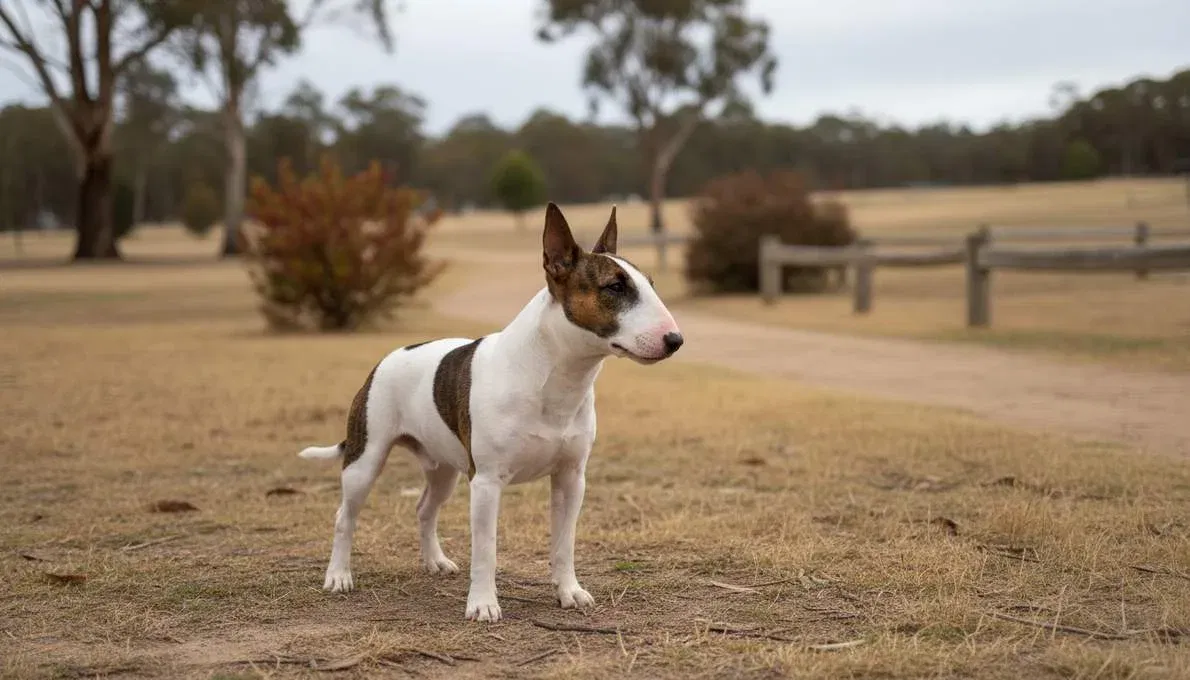
Training a Miniature Bull Terrier requires patience, humour, consistency, and the understanding that you are negotiating with a very determined creature, not commanding an obedient one.
Socialisation & Training Timeline
| Age | Training Focus | Tips |
|---|---|---|
| 8–12 weeks | Socialisation (dogs, people, places, sounds), bite inhibition, crate training, toilet training | Socialisation is the single most important investment you’ll make. Puppy school is non-negotiable for this breed. Expose to as many friendly dogs as possible. |
| 3–6 months | Basic commands, impulse control (“wait,” “leave it”), lead walking, handling exercises | Keep sessions short (5–10 min) and varied. Mini Bulls bore quickly with repetition. Use high-value treats. Start “drop” command early — they steal things. |
| 6–12 months | Recall, off-leash reliability, dog-to-dog manners, advanced impulse control | Adolescence will test your resolve. They’ll “forget” everything they learned. Stay consistent. Increase exercise to manage energy. |
| 1 year+ | Dog sports, advanced obedience, trick training, ongoing socialisation maintenance | Channel the drive into structured activities. A Mini Bull with a job is a Mini Bull that stays out of trouble. |
Honest difficulty rating: 6/10. Mini Bulls are not beginner dogs. They’re not as stubborn as a Bulldog or as reactive as some terrier breeds, but they’re significantly more wilful than a Labrador or Golden Retriever. They learn fast but comply on their own terms. Positive reinforcement works; punishment absolutely does not — it creates a more stubborn, less trusting dog. The ideal Mini Bull owner has a sense of humour, firm boundaries, and the patience to outlast a creature that genuinely believes it can negotiate its way out of anything.
Cost of Ownership in Australia
Miniature Bull Terriers are expensive to buy and can be expensive to own if health issues emerge. Budget conservatively.
Upfront Costs
| Item | Cost (AUD) |
|---|---|
| Puppy (ANKC registered breeder, health tested) | $3,000–$6,000 |
| Rescue / rehome (extremely rare) | $300–$800 |
| Crate, bed, bowls, lead, harness, toys | $250–$450 |
| First vet visit + vaccinations | $150–$350 |
| Desexing | $250–$500 |
| Microchipping (if not included) | $50–$80 |
| Total Upfront (Breeder) | $3,700–$7,380 |
Ongoing Annual Costs
| Item | Cost (AUD/Year) |
|---|---|
| Quality dog food (small–medium breed) | $500–$900 |
| Vet check-ups + vaccinations | $250–$500 |
| Flea, tick & worming prevention | $150–$300 |
| Pet insurance (highly recommended) | $500–$1,000 |
| Dental clean (professional) | $500–$1,500 |
| Grooming (mostly DIY) | $60–$150 |
| Toys, treats, training / sport fees | $200–$400 |
| Sunscreen + seasonal gear | $50–$100 |
| Total Annual | $2,210–$4,850 |
Lifetime cost estimate: Over 12 years, expect $30,000–$65,000 including purchase price. This estimate assumes no major health events. If your Mini Bull develops kidney disease, requires lens luxation surgery, or needs ongoing heart medication, costs can climb significantly higher. Pet insurance is strongly recommended for this breed — more so than most.
Finding a breeder in Australia: Start at DogzOnline (dogzonline.com.au) under “Bull Terrier (Miniature).” Key Australian kennels include Schardale (foundation kennel for most Australian lines, VIC/NSW border), Bullacktiv (NSW — Supreme Champions, sporting titles, school programs), Deroyale (QLD), Starmin (WA, 20+ years), Fambully (QLD), Minibull (VIC, breeding since 1986), and Daminabul (ACT). RightPaw also lists verified breeders. Expect a waitlist of 6–12+ months. Non-negotiable questions: Are parents PLL, LAD, and LP clear? Are puppies BAER tested? Heart and patella checked?
Rescue: Miniature Bull Terriers occasionally appear in rescue but it’s uncommon. Contact breeders directly about rehoming retired show or breeding dogs — they make wonderful pets and are already trained and socialised. The Bull Terrier and Bull Terrier (Miniature) Association of WA and state breed clubs can assist with breed-specific rehoming.
Is the Miniature Bull Terrier Right for You?
You have experience with strong-willed breeds and enjoy the challenge of a dog that thinks for itself. You want a compact, muscular, athletic dog with a larger-than-life personality. You have time for daily exercise, mental stimulation, and ongoing training. Your household includes older children (6+) who can handle a boisterous, physical dog. You’re prepared to invest in health testing, pet insurance, and proactive veterinary care. You appreciate a dog that makes you laugh every single day.
You’re a first-time dog owner looking for an easy, biddable companion. You have small pets like rabbits, guinea pigs, or birds. You want a dog that’s reliably friendly with all other dogs at the park. You’re gone for long hours daily — Mini Bulls need company and develop separation anxiety. You don’t have a securely fenced yard or the ability to provide structured, high-energy exercise. You expect a dog to obey on the first command without question — that’s not how Mini Bulls operate.
Miniature Bull Terrier vs Staffordshire Bull Terrier: Both are muscular, people-loving terriers. The Staffy is generally more easygoing with other dogs and slightly more biddable. The Mini Bull is more intense, more clownish, and more likely to test boundaries. If you want a dog that’s a bit easier for a first-time bull breed owner, the Staffy is the safer bet. If you want maximum personality per kilogram, the Mini Bull wins.
The Miniature Bull Terrier is one of the most characterful dogs on the planet. Here’s the honest summary:
- They’re hilarious, devoted, and never boring — but they’re also stubborn, high-energy, and require experienced ownership. This is a breed that rewards patience and consistency with unwavering loyalty and daily entertainment.
- Health screening is critical — PLL, LAD, kidney disease, and heart conditions are real risks. Only buy from breeders who DNA test all breeding stock and can show you the results. Pet insurance is strongly recommended.
- Budget $3,000–$6,000 upfront and $2,210–$4,850/year in Australia. The breed has a strong Australian community with dedicated breeders across every state, but waitlists are common. Start your search early.
If you want a small dog with the heart of a lion, the brain of a master negotiator, and a face that looks like it was drawn by a cartoonist, the Miniature Bull Terrier is unlike anything else. Just don’t expect it to follow the rules.
Frequently Asked Questions
What is the difference between a Miniature Bull Terrier and a Bull Terrier?
They’re separate breeds with the same personality and appearance, just different sizes. Mini Bulls stand up to 35.5 cm and weigh 11–15 kg; Standards stand 45–55 cm and weigh 22–32 kg. Under ANKC rules, they’re separate breeds with separate registrations. Mini Bulls are also more prone to primary lens luxation.
How much does a Miniature Bull Terrier cost in Australia?
$3,000–$6,000 from a registered ANKC breeder with full health testing. Puppies from breeders who DNA test for PLL, LAD, and LP, BAER test for deafness, and screen for heart and kidney issues are worth every dollar of the premium.
Are Miniature Bull Terriers aggressive?
Not toward people. Well-bred, well-socialised Mini Bulls are affectionate and loyal family dogs. They can be reactive toward other dogs due to their fearless, confident temperament, which is why early socialisation and careful management around unfamiliar dogs is important.
How long do Miniature Bull Terriers live?
11–14 years on average, with a 2024 UK study placing the breed average at 12.2 years. Good breeding, proactive health care, and maintaining a lean body weight all contribute to a longer life.
Do Miniature Bull Terriers shed?
Moderately. Their short coat sheds seasonally, primarily in spring and autumn. A weekly brush with a rubber curry brush keeps shedding manageable. They’re not hypoallergenic.
Are Miniature Bull Terriers good with children?
Yes, especially with older children (6+) who can handle a boisterous, physical play style. Mini Bulls are loyal and playful but can accidentally knock over small children. Supervision is always recommended.
What health tests should I ask a breeder about?
At minimum: DNA testing for PLL (primary lens luxation), LAD (lethal acrodermatitis), and LP (laryngeal paralysis). Plus BAER testing for deafness, heart auscultation, patella grading, and urine protein screening for hereditary nephritis. If a breeder can’t show you these results, walk away.
Can Miniature Bull Terriers live with cats?
Possibly, if raised together from puppyhood and carefully managed. Many Australian breeders raise their Mini Bulls alongside cats successfully. However, the breed has high prey drive, so introductions must be slow and supervised. Small pocket pets like rabbits and guinea pigs are not recommended.
Do Miniature Bull Terriers need sunscreen?
Yes, particularly white or mostly-white dogs. In Australian UV conditions, any sparse or unpigmented skin (face, ears, belly, hindquarters) is vulnerable to sunburn and skin cancer. Pet-safe sunscreen should be applied before every outdoor session in the sun.
How do I find a Miniature Bull Terrier breeder in Australia?
DogzOnline lists ANKC-registered breeders by state. RightPaw also verifies breeders. Key kennels include Schardale, Bullacktiv, Deroyale, Starmin, Fambully, and Daminabul. Expect a waitlist of 6–12+ months.
- PetMD — Miniature Bull Terrier Health and Care: https://www.petmd.com/dog/breeds/miniature-bull-terrier
- Wikipedia — Miniature Bull Terrier: https://en.wikipedia.org/wiki/Miniature_Bull_Terrier
- VCA Animal Hospitals — Miniature Bull Terrier: https://vcahospitals.com/know-your-pet/dog-breeds/miniature-bull-terrier
- Daily Paws — Miniature Bull Terrier Breed Information: https://www.dailypaws.com/dogs-puppies/dog-breeds/miniature-bull-terrier
- DogzOnline Australia — Bull Terrier (Miniature) Breeders: https://www.dogzonline.com.au/breeds/breeders/bull-terrier-miniature.asp
- RightPaw — Bull Terrier Miniature Breeders: https://rightpaw.com.au/dogs/breed/bull-terrier-miniature
- Minibull Australia — Miniature Bull Terriers History: http://www.minibull.com.au/
- Aelfhere Miniature Bull Terriers: https://miniaturebullterrier.com.au/