
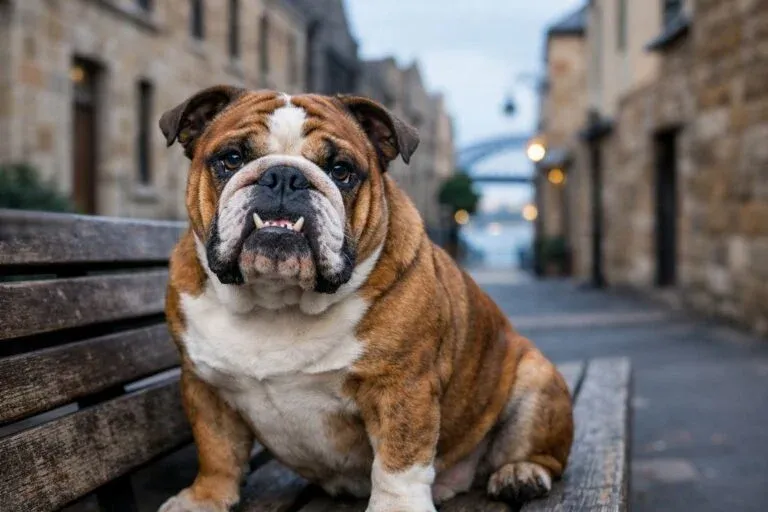
There’s a reason the British Bulldog has been a symbol of courage and determination for centuries — yet the modern reality is far more nuanced than the breed’s fierce reputation suggests. Today’s British Bulldog is more likely to be found snoring on the couch than facing down bulls in an arena. In fact, since bull-baiting was outlawed in 1835, breeders have spent nearly 200 years transforming this once-ferocious fighter into one of the most docile, affectionate companion dogs you’ll ever meet.
But here’s what many first-time owners don’t realise: that adorable squashed face and stocky build come with serious health considerations that every prospective owner needs to understand. This guide covers everything — the good, the challenging, and the honest truth about what it really takes to own a British Bulldog in Australia.
What You’ll Learn
- Breed traits & temperament
- Health concerns to know
- True cost in Australia
- Training & exercise needs
- Is this breed right for you?
British Bulldog Quick Facts Table
| Attribute | Details |
|---|---|
| Breed Group | Non-Sporting (Utility) |
| Origin | England |
| Size Category | Medium |
| Height (Adult) | Male: 31-36 cm | Female: 31-36 cm |
| Weight (Adult) | Male: 25 kg (55 lbs) | Female: 23 kg (50 lbs) |
| Lifespan | 8-10 years |
| Coat Type | Short, smooth, fine-textured |
| Exercise Needs | 20-40 minutes/day (low intensity) |
| Trainability | 3/5 (stubborn but willing) |
| Good with Children | Excellent — gentle and patient |
| First-Time Owner Suitable | 3/5 (easy temperament, complex health needs) |
| Average Puppy Price (AUD) | $3,500 – $7,000 |
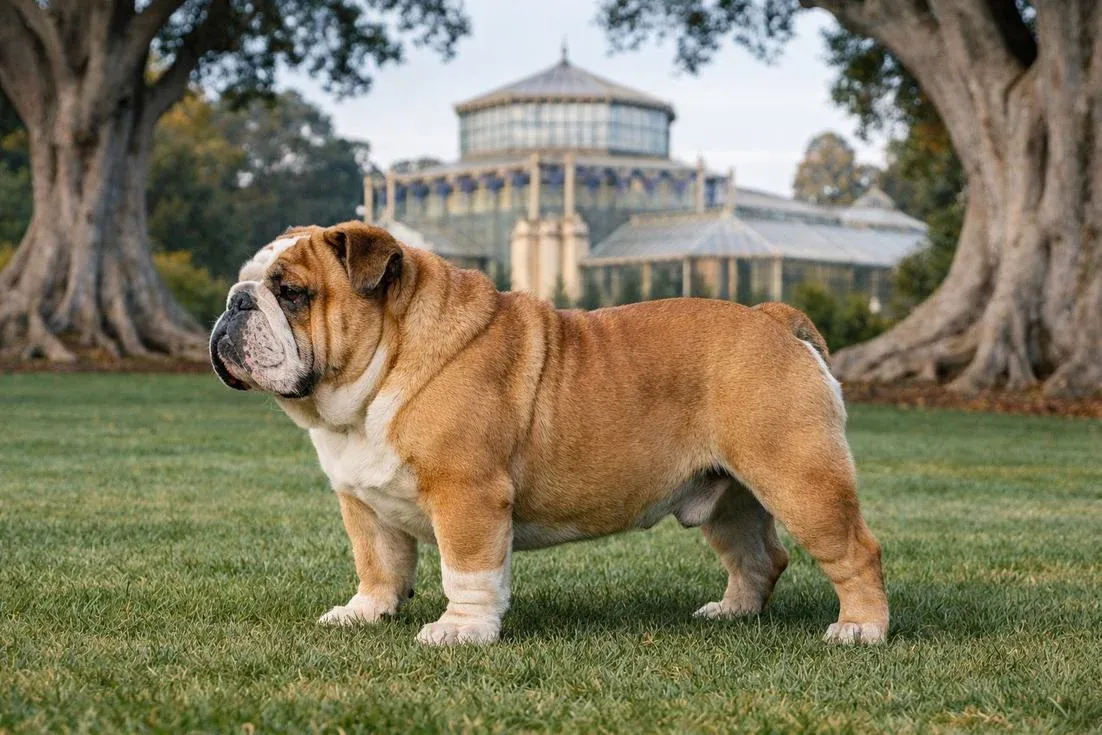
History of the British Bulldog
The British Bulldog’s history is both fascinating and, frankly, brutal. Originally bred in England for the bloody sport of bull-baiting — where dogs would attack tethered bulls for entertainment — the breed developed its distinctive features for functional reasons. That wide stance kept them grounded when a bull tried to shake them off. Those facial wrinkles channelled blood away from their eyes. The undershot jaw helped them grip while still breathing.
When bull-baiting was outlawed under the Cruelty to Animals Act of 1835, the British Bulldog faced extinction. Dog enthusiasts who loved the breed stepped in, selectively breeding for temperament rather than fighting ability. According to the American Kennel Club’s breed history archives, this transformation from ferocious fighter to gentle companion took decades of careful breeding.²
The Bulldog Club was formed in England in 1878, establishing breed standards that emphasised the calm, dignified temperament we know today. The breed arrived in Australia with British settlers and has remained popular ever since — though modern breeders increasingly focus on health alongside appearance.
British Bulldog Temperament
Despite their fierce appearance, British Bulldogs are gentle souls. The breed standard describes the ideal British Bulldog temperament as “equable and kind, resolute and courageous” — and that’s exactly what most owners experience. They’re the quintessential couch potato who’d rather nap beside you than do… well, almost anything else.
Affectionate and Loyal: Many British Bulldog owners report that their dogs form incredibly strong bonds with family members. They’re not aloof — they want to be where you are, preferably touching you.
Calm and Docile: This isn’t a hyperactive breed. British Bulldogs are content with low-key days and short bursts of playful activity. As one Queensland breeder put it: “A Bulldog’s idea of exercise is walking to the food bowl and back.”
Stubborn: This varies significantly between individual dogs, but British Bulldogs have a well-earned reputation for doing things on their own schedule. Every British Bulldog is different, but the breed’s general tendency is toward stubborn independence when they’ve decided they don’t want to do something.
Comedic: First-time British Bulldog owners are often surprised by how entertaining these dogs are. Their snorts, wiggles, and general personality make them natural entertainers.
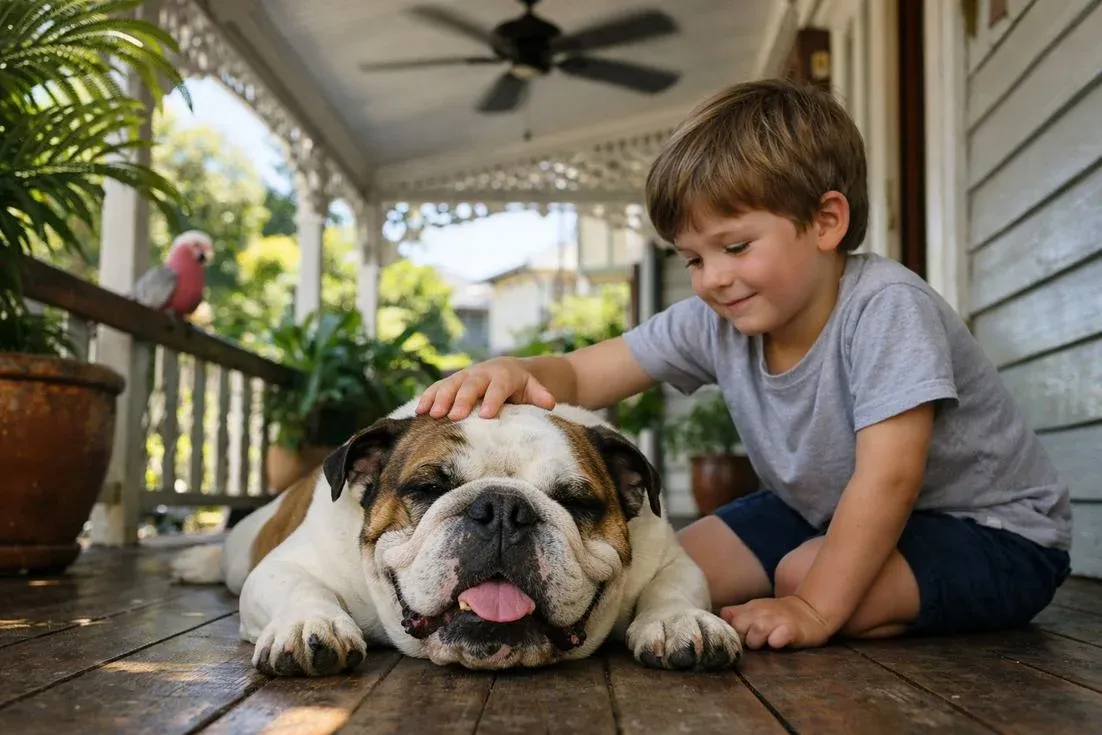
Are British Bulldogs good family dogs? Absolutely. Their patient, gentle nature makes them excellent with children of all ages. They’re sturdy enough to handle enthusiastic toddlers and calm enough to be trusted around babies. Many generations of selective breeding have created a breed that’s remarkably tolerant and protective of young family members.
British Bulldogs generally get along well with other animals, including cats and other dogs. They lack the prey drive that makes some breeds problematic with smaller pets. However, some intact males can show dog-to-dog aggression — early socialisation and desexing typically prevent this.
No — despite their historical origins, modern British Bulldogs are not aggressive. If your British Bulldog shows signs of aggression, don’t panic — this usually indicates fear, pain, or poor socialisation rather than breed temperament. Consult a veterinary behaviourist to rule out health issues.
British Bulldog Health Issues
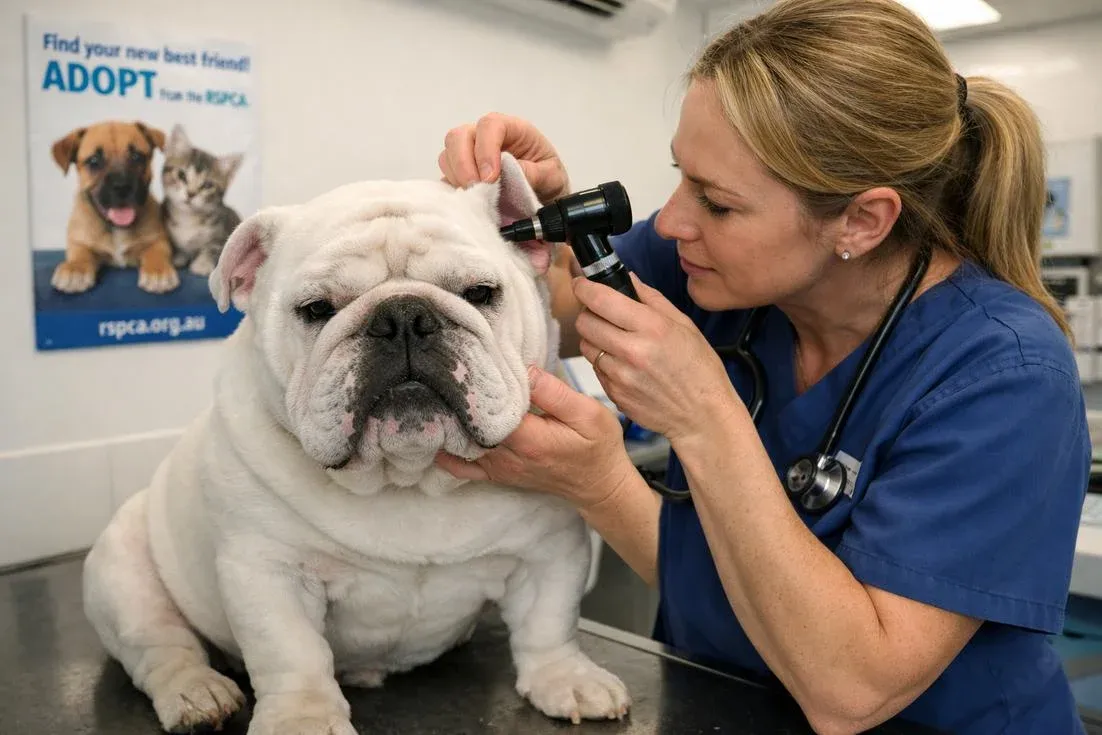
If you’re worried about British Bulldog health problems, you’re right to do your research — this is perhaps the most important section in this entire guide. The good news is that understanding these issues upfront means you can prepare properly and find a breeder who prioritises health.
According to VLP, British Bulldogs are among the breeds most affected by brachycephalic obstructive airway syndrome (BOAS) due to their flat-faced anatomy.³
Prevalence: Affects most British Bulldogs to varying degrees
Symptoms: Loud breathing, snoring, snorting, exercise intolerance, overheating, sleep apnoea
Treatment Cost (AUD): $2,000-$5,000 for corrective surgery (soft palate resection, nares widening)
Prevention: Buy from breeders who prioritise respiratory health and BOAS grading
Prevalence: Very common — those adorable wrinkles trap moisture
Symptoms: Red, inflamed, smelly skin folds, especially on face and tail
Treatment Cost (AUD): $100-$500 per episode; ongoing management costs
Prevention: Daily cleaning and drying of skin folds
Prevalence: Common genetic condition in the breed
Symptoms: Lameness, difficulty rising, reluctance to exercise, bunny-hopping gait
Treatment Cost (AUD): $3,000-$8,000+ for surgical correction
Prevention: Buy from breeders who hip and elbow score parent dogs
Additional conditions to be aware of include cherry eye, entropion (inward-rolling eyelids), allergies, and heat sensitivity. Breeders consistently note that responsible health testing dramatically reduces the risk of serious issues.
British Bulldog Lifespan & Longevity Tips
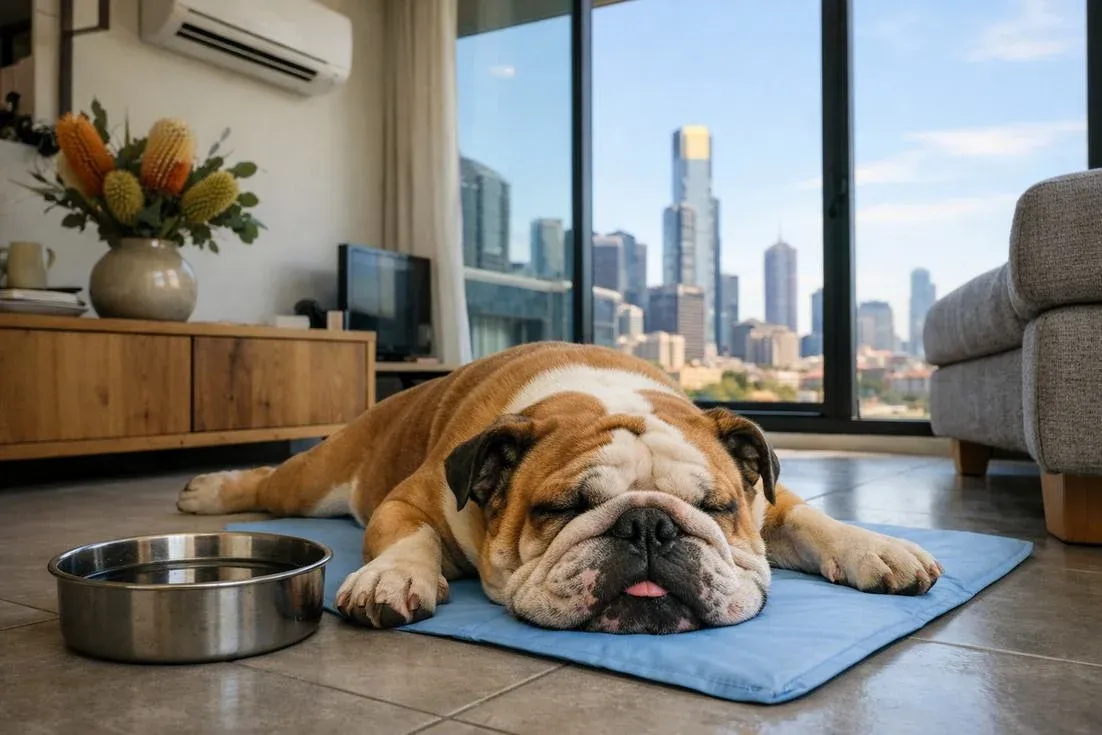
How long do British Bulldogs live? The honest answer is shorter than most breeds — the average British Bulldog life expectancy is 8-10 years. This is below average for a dog of their size, largely due to their brachycephalic anatomy and associated health complications.
Don’t be discouraged if this seems short — many British Bulldogs live happy, comfortable lives within this timeframe, and some exceed it. Veterinarians at the Australian Veterinary Association recommend the following to maximise your British Bulldog’s lifespan:⁵
- Maintain a lean body weight — obesity dramatically worsens breathing and joint issues
- Keep them cool — British Bulldogs cannot regulate body temperature effectively
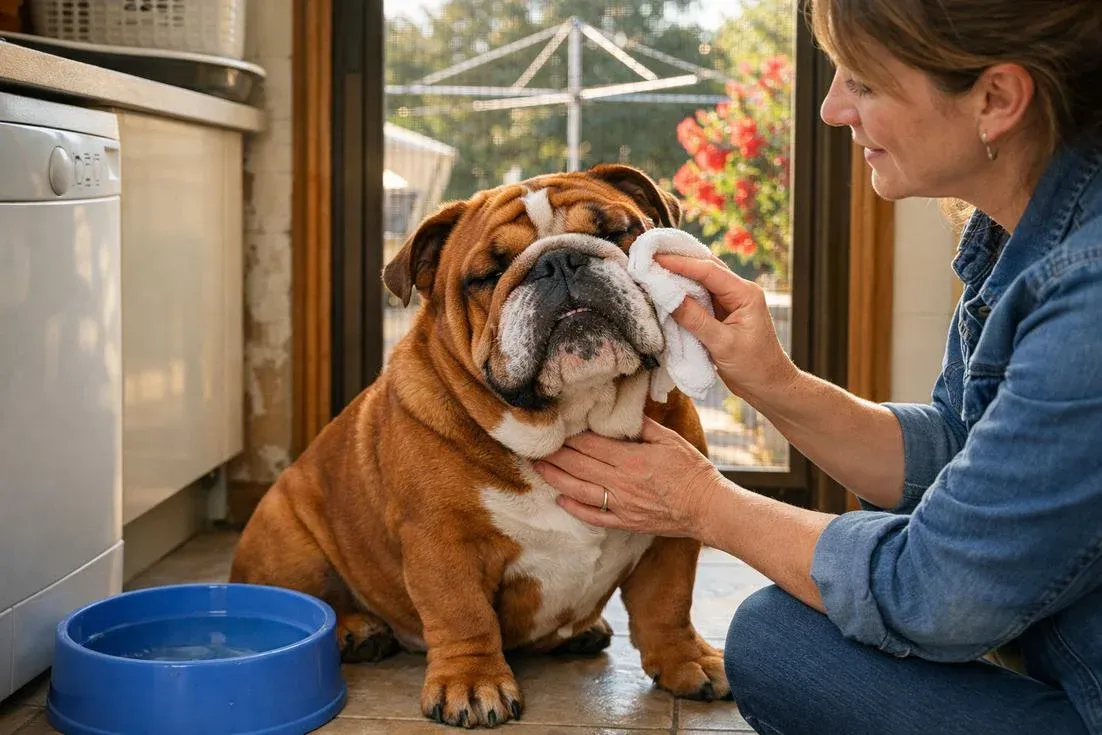
- Clean skin folds daily to prevent infections
- Consider early BOAS surgery if your vet recommends it
- Schedule regular veterinary check-ups (twice yearly is ideal)
British Bulldog Grooming Guide
The British Bulldog’s short coat is low-maintenance in terms of brushing, but those wrinkles require daily attention. Do British Bulldogs shed? Yes, moderately — their fine, short coat sheds year-round, though it’s far less noticeable than double-coated breeds.
The critical grooming task is skin fold care. Many British Bulldog owners report that establishing a daily wrinkle-cleaning routine early prevents the majority of skin problems.
Grooming Schedule Table
| Task | Frequency | Time | Tools/Products |
|---|---|---|---|
| Wrinkle Cleaning | Daily | 5 mins | PAW Medicated Wipes |
| Brushing | Weekly | 10 mins | Rubber curry brush |
| Bathing | Every 4-6 weeks | 30 mins | Dermcare or Fido’s Shampoo |
| Nail Trimming | Every 2-3 weeks | 10 mins | Clippers or grinder |
| Ear Cleaning | Weekly | 5 mins | Vet ear cleaner |
British Bulldog colours include brindle (various shades), red, fawn, white, and pied (white with patches of colour). Blue British Bulldogs exist but are considered a “fad colour” not accepted by breed standards — and blue colouring is associated with skin issues.
British Bulldog Exercise Needs
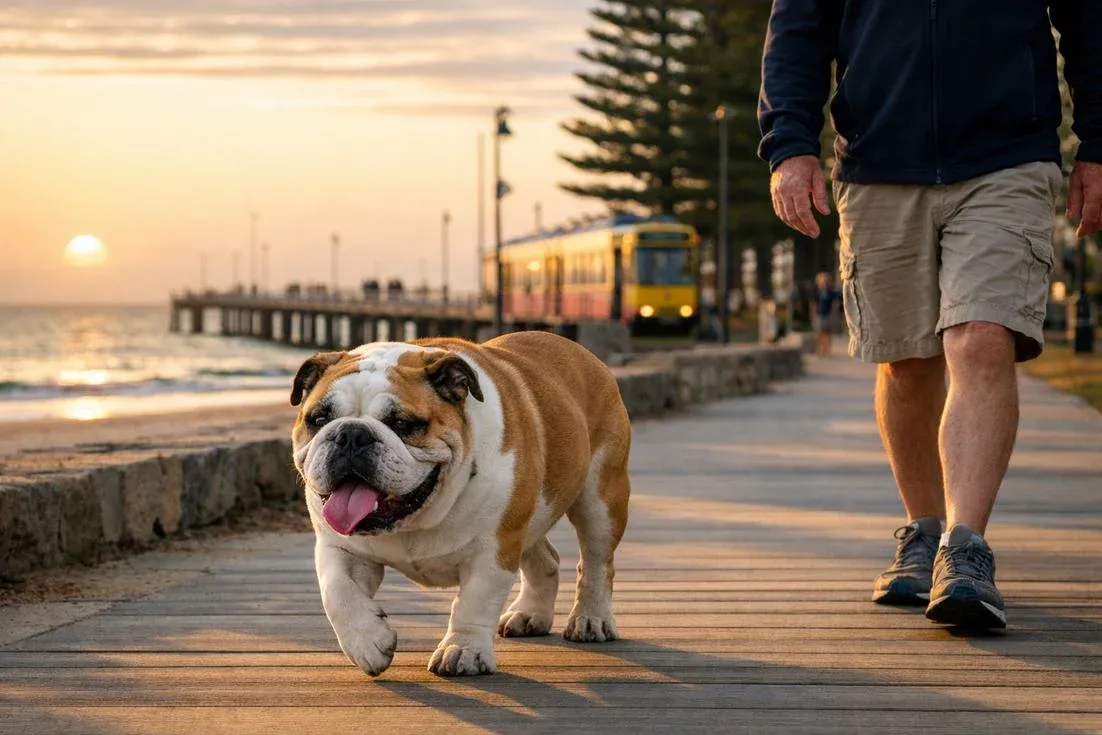
It advises that brachycephalic breeds like British Bulldogs have reduced exercise tolerance compared to other dogs.⁶ This isn’t a breed for long hikes or running partners — and that’s actually part of their appeal for many owners.
Short, gentle walks of 20-40 minutes daily are typically sufficient. Many British Bulldog owners report that their dogs are quite content with even less — a quick stroll around the block and some indoor play often satisfies them completely.
Critical: If your British Bulldog starts panting heavily, breathing loudly, or showing signs of distress during exercise, stop immediately and get them somewhere cool. British Bulldogs can overheat rapidly and this can become a life-threatening emergency within minutes. Never exercise them during the heat of the day in Australian summers — early morning or evening only.
Important note on swimming: Can British Bulldogs swim? No — most cannot. Their heavy, front-loaded bodies make swimming extremely difficult and dangerous. Never leave a British Bulldog unsupervised near water, and consider a canine life jacket for any water activities.
British Bulldog Training Guide
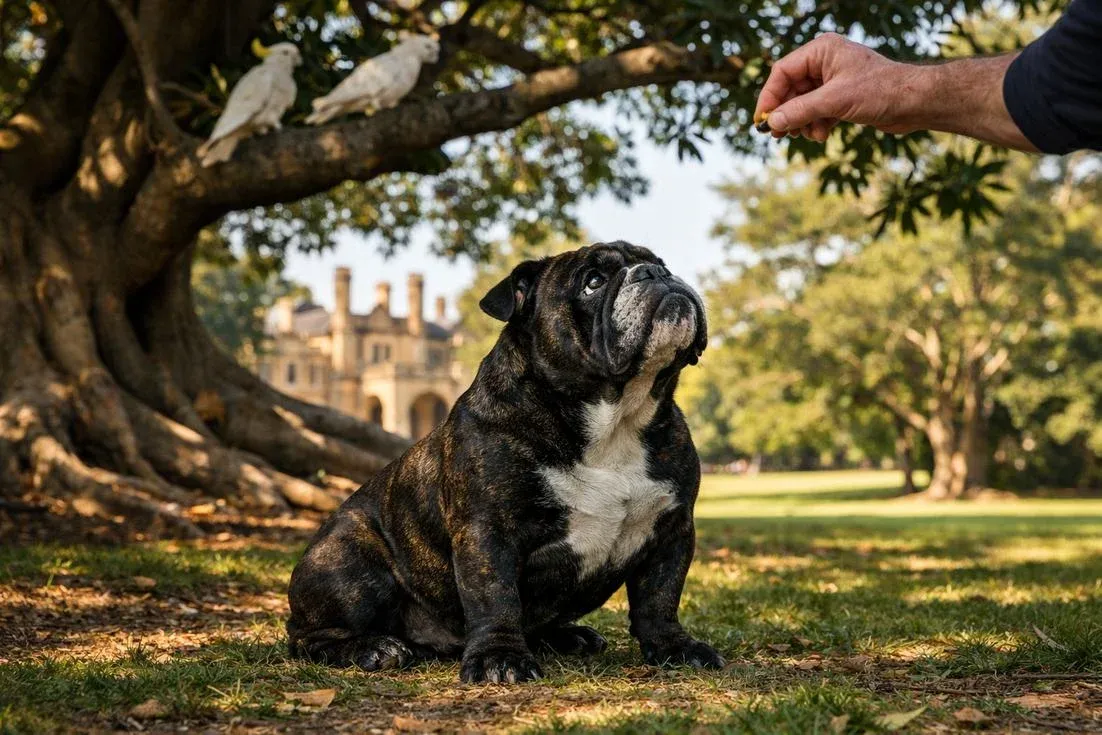
Don’t be discouraged if your British Bulldog seems to have a mind of their own — their stubbornness is legendary, but it’s not untrainable. The good news is that British Bulldogs genuinely want to please their owners; they just need the right motivation.
Are British Bulldogs easy to train? Experienced handlers often say that the key is keeping sessions short (5-10 minutes), using high-value food rewards, and being patient. Bulldogs respond poorly to harsh corrections — positive reinforcement works far better with this sensitive breed.
Socialisation & Training Timeline
| Age | Training Focus | Expected Outcomes |
|---|---|---|
| 8-12 weeks | Name, potty training, handling | Basic recognition |
| 3-4 months | Sit, stay, come, leash manners | Basic obedience |
| 4-6 months | Socialisation, public behaviour | Confident in new situations |
| 6-12 months | Reinforcement, impulse control | Well-mannered adult |
When your British Bulldog puppy decides to plant themselves and refuse to move during a walk, stay calm. This is classic Bulldog behaviour. Try an enthusiastic voice, a treat lure, or simply wait them out. Dragging them will only create negative associations.
British Bulldog Price & Costs
How much does a British Bulldog cost in Australia? This is a breed where purchase price is just the beginning — and being financially prepared is essential.
Find registered breeders through the Dogs Australia Breeder Directory or contact the British Bulldog Club in your state. Consider adoption through PetRescue or breed-specific rescue organisations.
Initial Costs:
| Expense | Approx. Cost (AUD) |
|---|---|
| Puppy Price (Registered Breeder) | $3,500 – $7,000 |
| Adoption Fee (Rescue) | $400 – $1,000 |
| Initial Vet + Vaccinations | $300 – $500 |
| Desexing | $400 – $800 |
| Essential Supplies | $400 – $800 |
| TOTAL INITIAL COST | $5,000 – $10,100 |
Annual Ongoing Costs:
- Food (premium quality): $800 – $1,200
- Vet & Preventatives: $800 – $1,500
- Pet Insurance (essential for this breed): $800 – $1,500
- Grooming supplies & potential skin treatments: $200 – $500
TOTAL ANNUAL: $2,600 – $4,700
Important: Budget for potential BOAS surgery ($2,000-$5,000) which many British Bulldogs require. Pet insurance is strongly recommended for this breed given their health profile.
Lifetime Cost Estimate: $30,000 – $55,000+ (based on 9-year average lifespan, including potential surgeries)
Is a British Bulldog Right for You?
Homebodies who want a loving, low-exercise companion and are prepared for ongoing health management. Best suited to owners who work from home or have flexible schedules, as British Bulldogs don’t tolerate being alone for long periods.
Home Size: Excellent apartment dogs — low exercise needs and calm indoors
Yard: Not essential; they’re not outdoor dogs anyway
Climate: CRITICAL — British Bulldogs struggle in Australian heat. Air conditioning is essential in summer. They suit cooler climates far better.
This can feel overwhelming, but being honest about challenges upfront saves heartbreak later.
- Active people wanting a running, hiking, or swimming companion
- Those unable to provide air conditioning during hot weather
- Owners unwilling or unable to afford potential medical costs
- People who travel frequently or work long hours away from home
- Anyone expecting a long-lived breed (8-10 years is typical)
Perfect for: Families and individuals wanting a gentle, loyal, low-energy companion who are financially prepared for health needs and live in a climate-controlled environment.
Think twice if: You live in a hot climate without AC, want an active outdoor dog, or are on a tight budget.
First-time owner rating: Suitable with research and preparation — their easy temperament balances their complex health needs.
The British Bulldog won’t suit everyone — but for those who understand and accept their needs, few breeds offer such devoted companionship. Their gentle, comical nature and unwavering loyalty create bonds that owners describe as unlike any other breed. Just go in with your eyes open, your wallet prepared, and your air conditioner serviced.
British Bulldog FAQs
How long do British Bulldogs live?
British Bulldogs typically live 8-10 years, which is shorter than average for dogs their size. Their brachycephalic anatomy and associated health issues contribute to this reduced lifespan. Choosing a puppy from health-tested parents and maintaining optimal weight can help maximise longevity.
Are British Bulldogs aggressive?
No — modern British Bulldogs are gentle, docile dogs. Their fierce appearance belies their calm, friendly temperament. The breed has been selectively bred for companionship since the 1830s, and aggression is not a breed characteristic.
Do British Bulldogs shed?
Yes, British Bulldogs shed moderately year-round. Their short, fine coat releases loose hair consistently, though it’s less noticeable than longer-coated breeds. Weekly brushing helps manage shedding.
Do British Bulldogs have health problems?
Yes — British Bulldogs are prone to numerous health issues, particularly breathing problems (BOAS), skin fold infections, hip dysplasia, and heat sensitivity. This is a breed that requires careful management and often significant veterinary care. Pet insurance is strongly recommended.
Are British Bulldogs good family dogs?
Excellent family dogs — they’re gentle, patient with children, and love being part of the household. Their calm temperament makes them particularly good with young children and elderly family members.
Are British Bulldogs good pets?
For the right owner, absolutely. They’re affectionate, loyal, entertaining, and relatively low-maintenance in terms of exercise. However, prospective owners must be prepared for health management responsibilities and potential medical costs.
Can British Bulldogs swim?
Most British Bulldogs cannot swim safely. Their heavy, front-loaded bodies make it nearly impossible for them to stay afloat. Never leave a British Bulldog unsupervised near water, and always use a canine life jacket for any water activities.
Are British Bulldogs smart?
British Bulldogs are moderately intelligent but famously stubborn. They understand commands well but may choose not to comply. Training requires patience, consistency, and high-value rewards. They’re smart enough to know what you want — they just need motivation to do it.
Primary Sources:
- Dogs Australia (ANKC) — Official breed registration and standards (dogsaustralia.org.au)
- American Kennel Club (AKC) — Breed history archives (akc.org)
Veterinary & Health Sources:
- VCA Hospitals — Brachycephalic Airway Syndrome in Dogs (vcahospitals.com)
- PetMD — Bulldog health and care (petmd.com)
- Australian Veterinary Association — Care guidelines (ava.com.au)
Australian-Specific Sources:
- RSPCA Australia — Brachycephalic breed welfare (rspca.org.au)
- National British Bulldog Council of Australia — Breed information
- DogzOnline Australia — Breeder directory (dogzonline.com.au)