
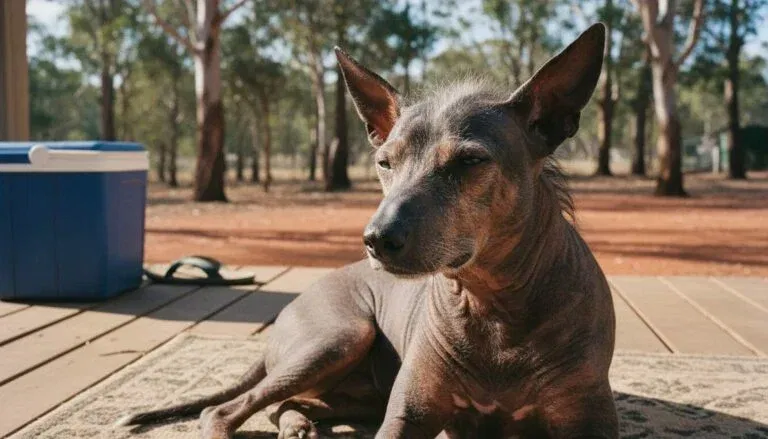
Let’s get the obvious question out of the way first. It’s pronounced “show-low-eets-KWEENT-lee.” Most people just call them Xolos (“show-lows”). And yes, they really are hairless. And yes, they’re warm to the touch — like a living, breathing hot water bottle with bat ears and a 3,500-year history.
The Xoloitzcuintli is one of the world’s most ancient dog breeds — a living archaeological artefact with a lineage stretching back to the Aztecs, Maya, and Toltecs. Named after the Aztec god Xolotl (god of lightning, the underworld, and guiding the dead), these dogs were sacred companions believed to heal the sick and escort souls to the afterlife. Today, the Xoloitzcuintli is Mexico’s official national dog, a Pixar movie star (Dante in “Coco”), and one of the rarest, most distinctive breeds you can own in Australia.
This guide covers the Xoloitzcuintli’s temperament, the skin care reality of owning a hairless dog, what they cost in Australia, and why bringing one home means committing to a breed that attracts attention everywhere you go.
What You’ll Learn
- Breed traits & temperament
- Health concerns to know
- True cost in Australia
- Training & exercise needs
- Is this breed right for you?
Quick Facts at a Glance
| Trait | Details |
|---|---|
| Breed Group | Non-Sporting (ANKC Group 7) |
| Origin | Mexico — over 3,500 years ago (Mesoamerican civilisations) |
| Size | Three sizes: Toy (25–35 cm), Miniature (36–45 cm), Standard (46–60 cm) |
| Weight | Toy: 4.5–7 kg; Miniature: 7–14 kg; Standard: 14–25 kg |
| Coat | Hairless (smooth, tough skin; may have tufts on head, feet, tail) or Coated (short, flat coat) |
| Colour | Wide range: black, grey, slate, red, liver, bronze, gold, and spotted/painted patterns |
| Lifespan | 13–18 years |
| Temperament | Calm, loyal, alert, protective, intelligent, reserved with strangers |
| Exercise Needs | 30–60 minutes daily (moderate) |
| Shedding | Hairless: none; Coated: minimal |
| Good With Kids | Yes — when raised together and properly socialised |
| Apartment Friendly | Yes — calm indoors, moderate exercise needs |
| Hypoallergenic | Hairless variety is allergy-friendly (not 100% hypoallergenic) |
History & Origins
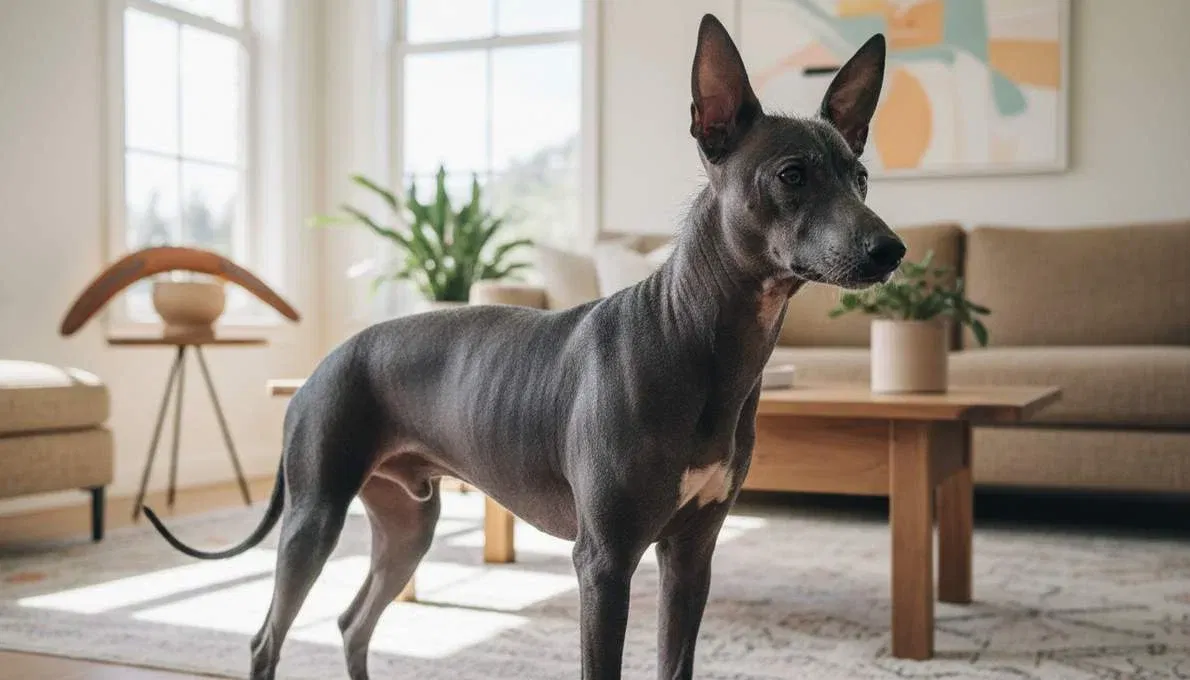
The Xoloitzcuintli’s history reads like mythology — because it literally is. The breed’s name comes from two Nahuatl words: “Xolotl” (the dog-headed Aztec god of lightning, death, and the underworld) and “itzcuintli” (meaning dog). Aztec mythology held that Xolotl created the Xolo from a sliver of the Bone of Life, and that these dogs would guide the souls of the dead through the treacherous underworld to reach Mictlan, the land of the dead.
Archaeological evidence confirms the Xolo’s existence dating back over 3,500 years. Clay figurines and skeletal remains have been found in burial sites across Mexico and Central America, alongside Aztec, Maya, Toltec, Zapotec, and Colima peoples. Many dogs were sacrificed and buried with their owners to fulfil their role as spiritual guides — a grim honour that reflected the deep reverence these cultures had for the breed.
Beyond the spiritual realm, Xolos served practical purposes. Their warm, hairless bodies were used as living heating pads for people suffering from ailments — a tradition that many modern Xolo owners recognise, as these dogs are remarkably warm to the touch and instinctively seek out people in pain. They were also used as watchdogs, companions, and unfortunately, as a food source during times of scarcity.
By the mid-20th century, the Xoloitzcuintli was nearly extinct. In 1956, the Federación Canofila Mexicana launched a rescue programme, sending expeditions into remote Mexican villages to find purebred Xolos. The breed was slowly recovered, recognised by the FCI, and eventually gained full AKC recognition in 2011. Today, the Xolo is Mexico’s official national dog and was immortalised in Pixar’s “Coco” as the character Dante.
In Australia, the first Xoloitzcuintli arrived in 2009, imported from the United States by Wazzat Xoloitzcuintle (WA). The breed has been shown in ANKC conformation events since 2010 and has achieved multiple Best in Show wins, including at Royal Shows. Australian breeders now operate across several states, though the breed remains very rare — expect waiting lists and limited litter availability.
Temperament & Personality
The Xoloitzcuintli personality is unlike most modern companion breeds. These are primitive dogs with thousands of years of natural selection behind them, and their temperament reflects that heritage: calm, watchful, deeply loyal, and naturally suspicious of anything unfamiliar.
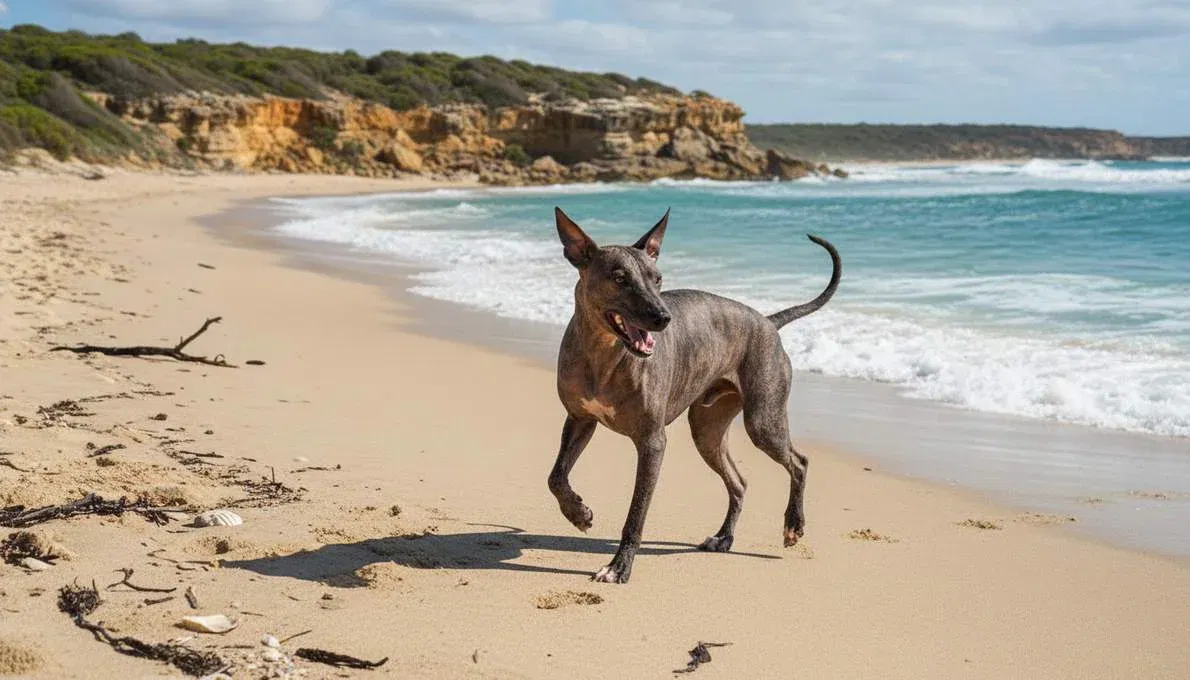
Once their exercise needs are met, Xolos are remarkably relaxed house dogs. They’re content to spend hours curled up beside you (or on you — they radiate heat and love body contact). They’re not hyperactive, not destructive when properly stimulated, and are genuinely pleasant to live with.
Xolos bond intensely with their family — and often with one person in particular. This is a “velcro dog” breed that wants to be wherever you are. They’ll follow you from room to room, sleep pressed against you, and become visibly distressed if separated for long periods. Separation anxiety is a real risk with this breed.
This is not a golden retriever. Xolos are naturally wary of unfamiliar people and situations. Without early, extensive socialisation, this reserve can escalate into timidity or defensive behaviour. They need to meet many different people, experience varied environments, and learn that the world isn’t threatening. Properly socialised Xolos are friendly and welcoming; poorly socialised ones can be nervous and reactive.
Xolos are alert, territorial, and protective of their home without being aggressive. They’ll bark to alert you to visitors or unusual activity, but they’re not excessive barkers. Their imposing (and frankly unusual) appearance alone is enough to make strangers pause.
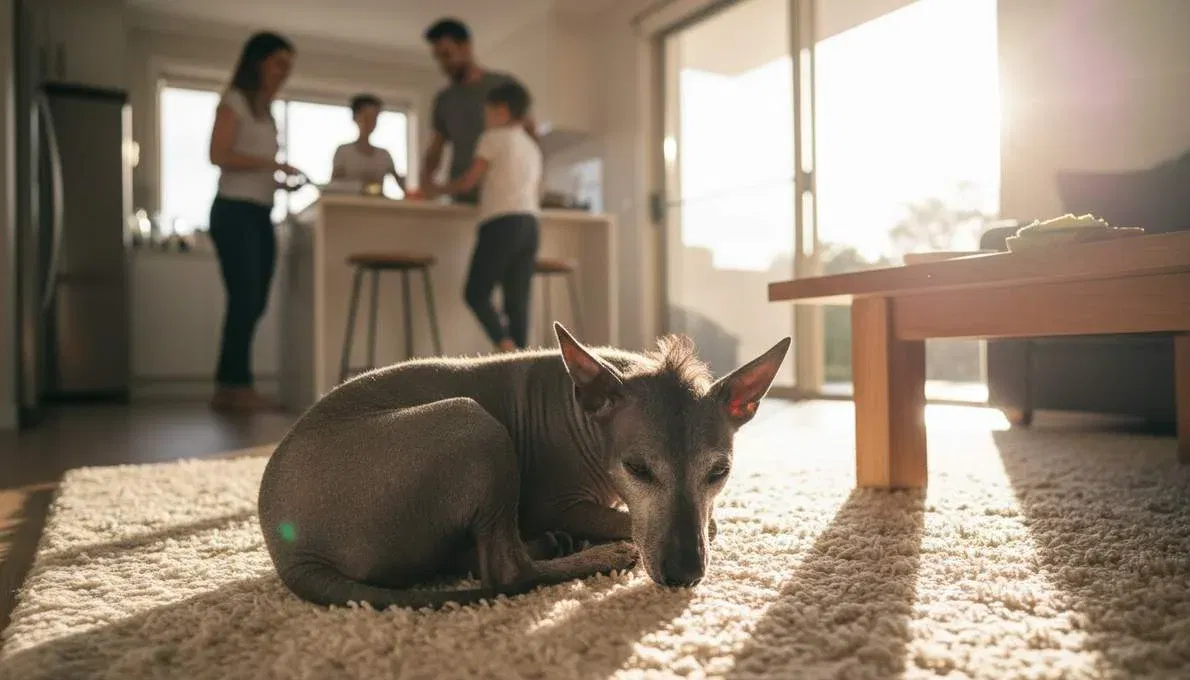
Good with children when raised together. They’re gentle and patient, but their reserved nature means introductions to new children should be gradual. Supervision with young children is always recommended, as with any breed.
Generally good with other dogs, especially when socialised early. Xolos are pack-oriented and enjoy canine company. They can coexist with cats, though some have a prey drive toward smaller animals. They do best in homes where they’re not the only pet, as their pack instinct is strong.
Xolos think independently. They’re intelligent problem-solvers who sometimes decide your rules don’t apply to them. They can be dominant if boundaries aren’t established early, and their climbing and digging abilities are impressive. They’re not recommended for first-time dog owners without mentorship from an experienced Xolo breeder.
Health & Genetic Conditions
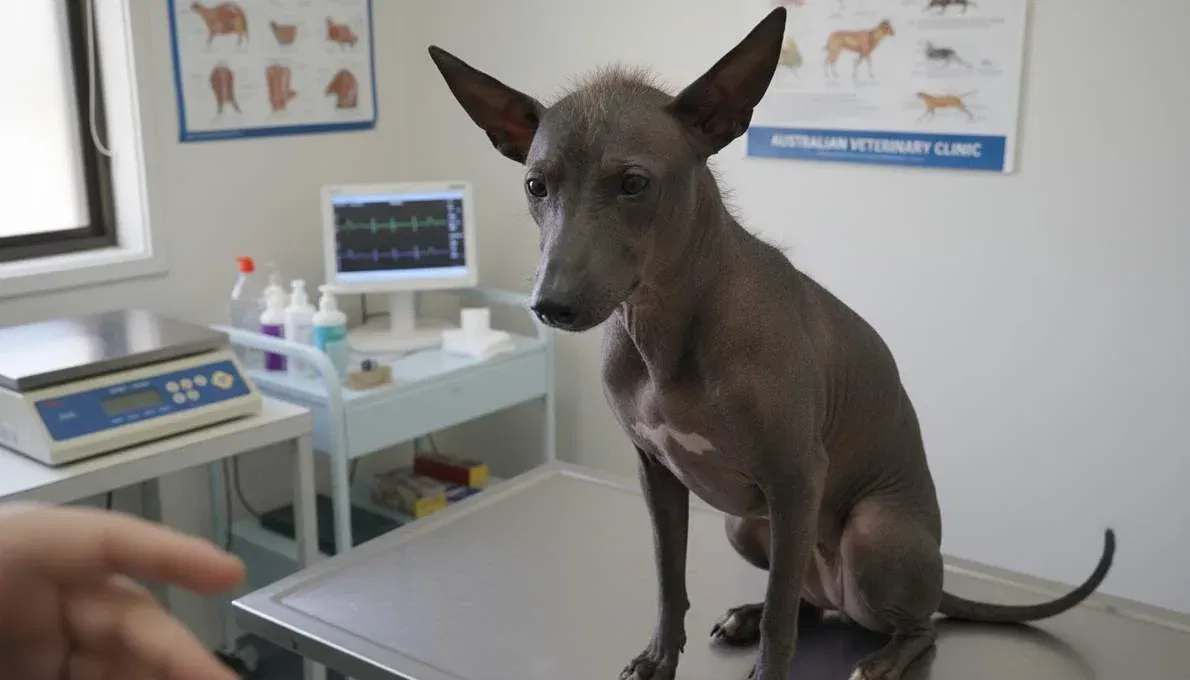
The Xoloitzcuintli is an exceptionally healthy breed. Their natural, primitive development — shaped by thousands of years of natural selection rather than selective breeding for appearance — means they’re free of many health problems that plague modern breeds. Most Xolos live long, healthy lives with minimal veterinary intervention beyond routine care.
Prevalence: Skin-related issues are the most common day-to-day health consideration for hairless Xolos and are a direct consequence of the FOXI3 gene mutation responsible for hairlessness in the breed — a dominant mutation that also affects ectodermal tissues including sweat glands and, in some individuals, ear development. Without a coat, the skin is fully exposed to UV radiation, environmental irritants, temperature extremes, and friction. Adolescent Xolos are particularly prone to acne on the lips and muzzle.
Symptoms: Red bumps, pimples, blackheads, or comedones — most commonly on the face and body during adolescence. Sunburn appears as redness, peeling, or sensitivity to touch on exposed skin, particularly on lighter-pigmented or pink areas. Dry skin presents as flaking, scaling, or a dull appearance. Repeated scratching or rubbing at acne lesions can cause scarring.
Treatment Cost (AUD): Mild acne and dry skin are managed at home with gentle, fragrance-free dog shampoos, dog-safe moisturisers, and routine bathing — ongoing cost of $10–$30/month in products. Vet treatment for infected skin or persistent acne (topical antibiotics, benzoyl peroxide wash) runs $100–$300 per course. Sunburn requiring veterinary attention adds $80–$200 per visit.
Prevention: Apply a vet-approved, zinc-free dog sunscreen to all exposed skin before any outdoor activity, especially in Australian summer conditions. Bathe regularly but not excessively — stripping the skin’s natural oils worsens dryness and clogs pores. Keep skin clean and dry, particularly in skin folds. Avoid leaving a Xolo outdoors for extended periods without shade or protective clothing.
Prevalence: Missing teeth are a defining characteristic of the hairless Xolo — not a disease, but a predictable consequence of the same FOXI3 ectodermal dysplasia mutation that causes hairlessness. Research confirms that hairless Xolos consistently lack permanent canines, premolars, and to varying degrees, incisors. The AKC breed standard explicitly accepts absent premolars as normal in the hairless variety. Coated Xolos, carrying two recessive (hh) alleles, have full dentition. The missing teeth do not impair eating ability but do affect dental hygiene management.
Symptoms: Gaps in the tooth row, particularly where premolars should sit. Some dogs have very few teeth overall; others have a nearly complete set minus the premolars. Absent teeth do not cause pain, but the remaining teeth — with wider spacing and altered bite mechanics — are more prone to tartar accumulation, gum inflammation, and periodontal disease over time.
Treatment Cost (AUD): Routine annual dental cleans under anaesthetic cost $300–$800 and are important for managing tartar on the teeth that are present. Periodontal disease treatment, if it develops, runs $500–$1,500 per episode. Daily tooth brushing at home significantly reduces this cost.
Prevention: No prevention is possible for the missing teeth themselves — this is an expected trait of hairless Xolos. Focus instead on keeping remaining teeth clean. Start tooth brushing from puppyhood, use enzymatic dog toothpaste, and schedule annual veterinary dental assessments. Avoid feeding hard treats or chews that put excessive pressure on teeth with gaps in the supporting row.
Prevalence: Patellar luxation is listed by the Xoloitzcuintli Club of America as a required OFA health screening for Toy-sized Xolos — and is the most relevant orthopaedic concern for smaller individuals of the breed. The condition occurs when the kneecap slips out of the groove on the thigh bone, causing intermittent lameness. It is more common in toy and miniature sizes than in standard Xolos, consistent with patellar luxation’s general pattern across small breeds.
Symptoms: Intermittent skipping on a hind leg, sudden three-legged hopping that resolves after a few steps, reluctance to jump or climb stairs, and in more severe cases, a persistent abnormal gait or obvious knee deformity. Grade 1 luxations are mild and may cause no visible symptoms; Grade 4 is a permanent dislocation requiring surgical correction.
Treatment Cost (AUD): Mild grades (1–2) are managed with weight control, joint supplements, and anti-inflammatories ($50–$150/month). Surgical correction for Grade 3–4 costs $2,000–$4,500 per knee and carries a very good prognosis for full recovery, particularly in smaller dogs.
Prevention: OFA patella evaluation is recommended for breeding Toy Xolos. Keep your Xolo at a lean body weight — excess weight significantly accelerates progression of patellar problems. Avoid repetitive high-impact jumping on hard surfaces, particularly in young, growing dogs. Confirm that patella OFA results are on file for the parents of any Toy or Miniature Xolo puppy you are considering.
Prevalence: Hip dysplasia is not a major concern in the Xolo overall, but the breed club does list it as a recommended health screen for Standard and Miniature sizes. The OFA recommends hip, cardiac, and ophthalmology testing for Standard and Miniature Xolos as part of CHIC requirements. Being a naturally evolved breed shaped by centuries of functional selection rather than human manipulation, Xolos have broadly avoided the extreme structural faults that drive high dysplasia rates in some purpose-bred large breeds.
Symptoms: Reduced activity, a swaying or stiff rear gait, reluctance to rise after rest, difficulty with stairs or jumping, and muscle wasting over the hindquarters. Symptoms can begin as early as six months in more severely affected dogs, or may not appear until middle age as arthritis develops.
Treatment Cost (AUD): Conservative management with joint supplements, physiotherapy, and anti-inflammatories costs $100–$300/month in ongoing cases. Surgical options including total hip replacement run $5,000–$10,000 per hip if needed, though surgery is rarely required in a breed with generally mild dysplasia rates.
Prevention: OFA or BVA hip scoring is recommended for breeding Standard and Miniature Xolos — confirm parents hold current clearances. Maintain lean body weight throughout life, feed a large-breed puppy diet to Standard Xolos during growth, and avoid high-impact exercise on hard surfaces until the dog reaches full skeletal maturity at around 18 months.
There’s a direct genetic link between hairlessness and missing teeth in Xolos. The same gene that produces the hairless coat also affects dental development. Hairless Xolos commonly have incomplete dentition — this is expected and does not cause health problems. Coated Xolos typically have a full set of teeth.
Young hairless Xolos (roughly 6–18 months) commonly develop acne on the lips and muzzle. It looks worse than it is and typically resolves with maturity. Keep the skin clean, use vet-recommended medicated wipes, and resist the urge to squeeze — scarring is the main risk.
Reputable breeders should conduct: hip scoring (Standard and Miniature), patella evaluation (Toy and Miniature), cardiac examination, eye examination, and ideally comprehensive DNA profiling. The breed’s primitive health is an asset, but responsible breeders still test.
Lifespan & Longevity
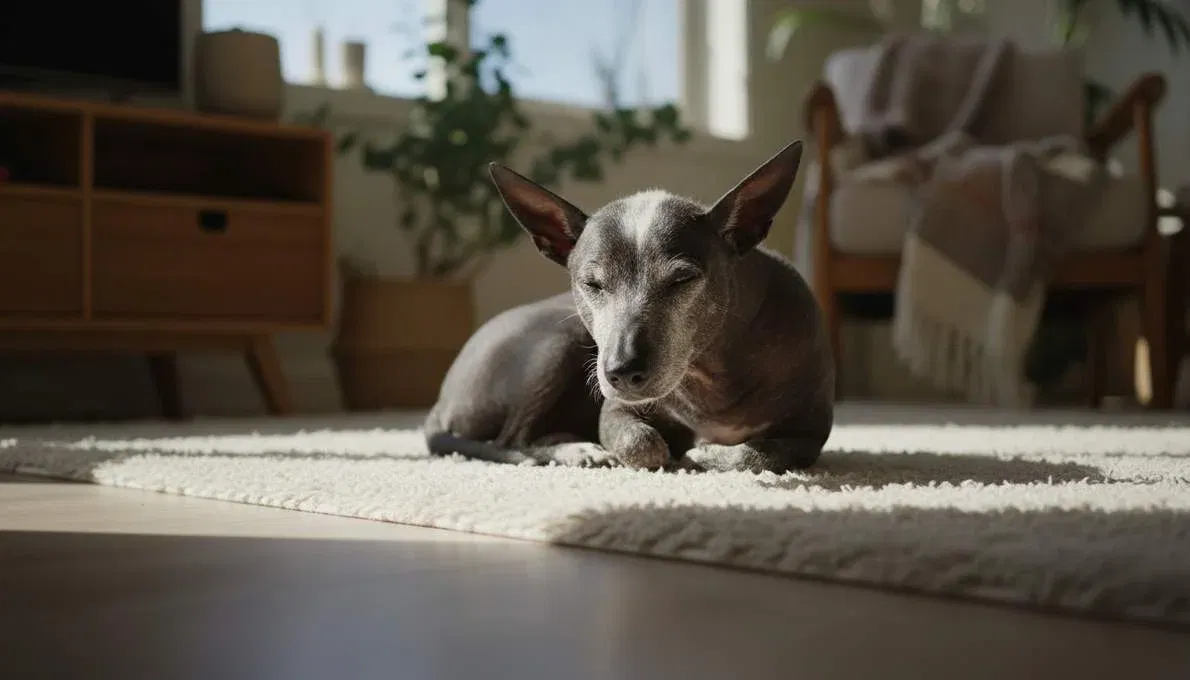
The Xoloitzcuintli lifespan is 13 to 18 years, which is remarkable for any breed and exceptional for the Standard size. Their primitive genetics and lack of extreme breeding contribute to this longevity. Many Xolos remain active and healthy well into their teens.
Puppy stage (0–2 years): Feed a quality food appropriate for the dog’s size category (Toy, Miniature, or Standard). Toy and Miniature puppies benefit from 3–4 small meals daily to prevent hypoglycaemia. Begin socialisation immediately and extensively — this is the critical window for preventing adult fearfulness. Expect adolescent acne in hairless puppies; manage with gentle skincare. Start sun protection habits early.
Adult stage (2–12 years): Prime years. Maintain daily exercise and mental stimulation. Annual vet check-ups with dental assessment, skin examination, and appropriate orthopaedic screening. Monitor weight carefully — Xolos love food and gain weight easily if portions aren’t controlled.
Senior stage (12+ years): Increase vet visits to twice yearly. Monitor for joint stiffness, vision changes, and dental health. Many senior Xolos remain surprisingly active. Joint supplements and a senior-appropriate diet maintain comfort. Their natural warmth makes them excellent comfort companions in later years.
Grooming & Skin Care
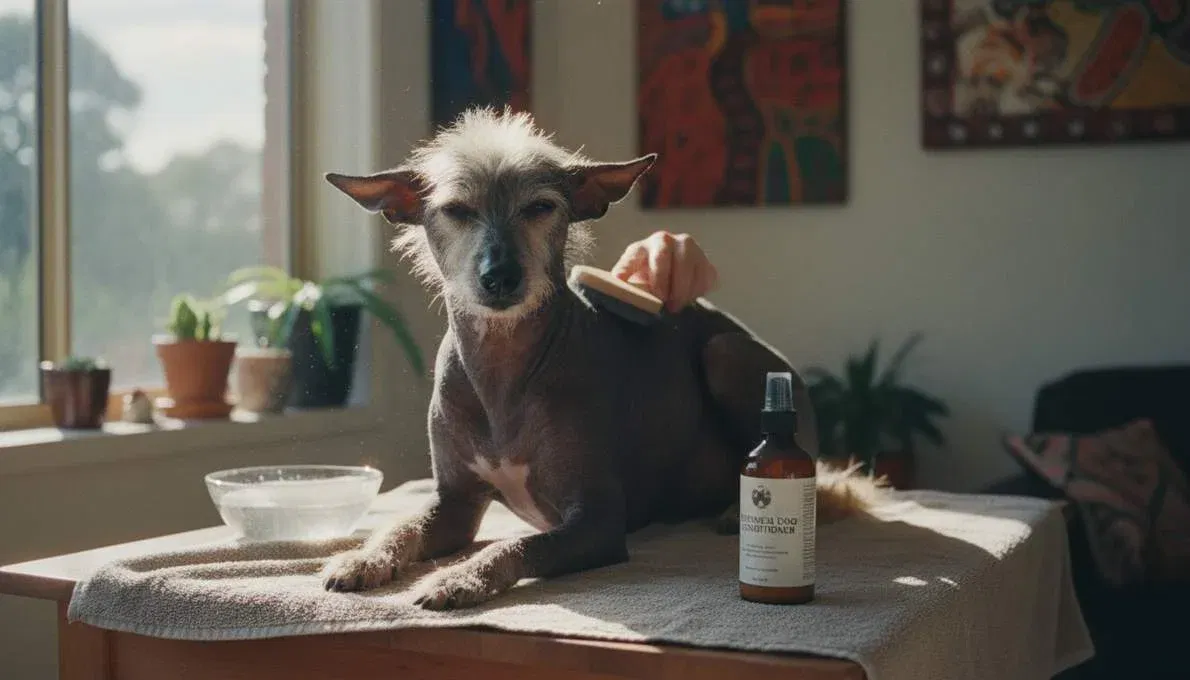
The Xoloitzcuintli is the ultimate low-grooming breed — there’s no coat to brush, no shedding to manage, no professional grooming appointments. But “no coat” doesn’t mean “no maintenance.” Hairless Xolos require a skin care routine that’s more similar to human skincare than traditional dog grooming.
Grooming Schedule
| Task | Frequency | Notes |
|---|---|---|
| Bathing | Every 1–2 weeks | Use a gentle, dog-specific shampoo. Over-bathing strips natural oils; under-bathing leads to clogged pores and acne. |
| Skin moisturising | After every bath; as needed between baths | Use dog-safe lotion or coconut oil. Avoid human products containing zinc oxide or other toxic ingredients. |
| Sunscreen application | Before every outdoor exposure in sunlight | Use dog-specific sunscreen. Never use human sunscreen — many contain ingredients toxic to dogs. Reapply every 2 hours in direct sun. |
| Skin wipe-down | Between baths as needed | A damp cloth removes dirt and excess oil. Helps prevent acne and blackheads. |
| Dental care | Daily brushing ideal; minimum 3x/week | Especially important for hairless Xolos with incomplete dentition. Remaining teeth need diligent care. |
| Ear cleaning | Weekly | Large upright ears collect debris. Check for wax buildup and clean gently. |
| Nail trimming | Every 2–3 weeks | Active dogs may self-maintain, but check regularly. |
| Cold weather protection | Whenever temperature drops below ~15°C | Xolos need a coat or jumper in cold weather. They have no insulating fur. |
Hairless vs Coated Xoloitzcuintli. Both varieties appear in Xolo litters. The hairless variety is far more recognised and has the distinctive look the breed is known for. Coated Xolos have a short, flat, low-shedding coat that requires minimal grooming — a weekly brush and occasional bath. Coated Xolos don’t need sunscreen or the extensive skincare routine of hairless dogs, making them a lower-maintenance option for owners who love the Xolo temperament but don’t want the skin care commitment.
Do Xoloitzcuintli dogs smell? No. A clean, healthy Xolo has no particular body odour. In fact, the absence of fur means there’s nowhere for odour-causing bacteria to accumulate. Regular bathing keeps them fresh. They’re one of the cleanest-smelling breeds.
Exercise Needs
The Xoloitzcuintli has moderate exercise needs — typically 30 to 60 minutes of daily activity. This makes them significantly easier to manage than many working or sporting breeds. A brisk walk, a play session in the yard, and some mental stimulation will satisfy most Xolos.
Xolos enjoy: walks (on-leash or in secure areas), fetch and chase games, agility training, nose work and scent games, interactive puzzle toys, and simply being wherever you are. Many Xolos also make excellent therapy dogs due to their calm temperament and warm bodies.
⚠️ Australian climate warning — both directions: Hairless Xolos are vulnerable to sunburn in Australian summers and cold in winter. In summer, exercise only in early morning or late evening. Apply dog-safe sunscreen to exposed skin before any sun exposure. Provide shade at all times. In winter, even in mild climates, hairless Xolos need a coat or jumper for outdoor exercise. They should never be left outside unsheltered in cold or wet weather — they have no insulating fur whatsoever. Coated Xolos are less affected but still sensitive to extreme heat.
Escape artists. Xolos are remarkably athletic for their appearance. They can climb fences, jump heights you wouldn’t expect, and dig with enthusiasm. Secure fencing is essential. Many Xolo owners add fence extensions or use coyote rollers to prevent escapes. If a Xolo wants out, they’ll find a way unless you’ve planned ahead.
Training Guide
Xoloitzcuintli training is generally enjoyable. These are intelligent dogs that want to please their owners and respond well to positive reinforcement. The caveat is their primitive independence — Xolos think for themselves and may decide your instructions are optional if they don’t see the point.
Socialisation & Training Timeline
| Age | Training Focus | Honest Difficulty Level |
|---|---|---|
| 8–16 weeks | Socialisation (critical!), house training, name response, crate introduction, handling/touch exercises | Easy–Moderate — willing learners but socialisation must be intensive |
| 4–6 months | Basic obedience, leash manners, continued socialisation, impulse control | Easy–Moderate — quick learners when motivated; can be sensitive |
| 6–12 months | Reliable recall, settle/calm cues, boundary training, separation tolerance | Moderate — adolescent independence emerges; consistency essential |
| 1–2 years | Advanced obedience, trick training, dog sport foundations, pack hierarchy | Moderate — establishing yourself as a fair, consistent leader is key |
| 2+ years | Maintenance, therapy dog certification, agility, trick training | Enjoyable — mature Xolos are calm, cooperative, and fun |
Socialisation cannot be overstated. The Xoloitzcuintli’s natural wariness of strangers means that socialisation during the critical window (8–16 weeks) is the single most important thing you will do for this breed. Expose them to as many different people, environments, sounds, surfaces, and situations as possible. Puppy school is essential. Continue socialisation throughout adolescence and into adulthood. An under-socialised Xolo can become fearful, anxious, and reactive.
Pack leadership matters. Xolos have a primitive pack mentality and will fill a leadership vacuum if one exists. This doesn’t mean domination — it means consistent rules, boundaries, and expectations. The entire family should be involved in training. A Xolo that runs the household is a stressed Xolo; one that understands its place in the family is a relaxed, happy dog.
Cost of Ownership in Australia
| Expense | Estimated AUD Cost |
|---|---|
| Registered Xoloitzcuintli puppy (ANKC breeder) | $4,000–$8,000+ |
| Imported puppy (overseas breeder + quarantine + transport) | $8,000–$15,000+ |
| Initial setup (crate, bed, bowls, leads, clothing, skincare products) | $500–$1,000 |
| Annual food (premium diet, size-appropriate) | $600–$1,500 (varies by size) |
| Annual vet check-ups & vaccinations | $350–$600 |
| Pet insurance (comprehensive) | $40–$90/month |
| Desexing | $300–$700 |
| Skincare products (sunscreen, moisturiser, medicated wipes) | $200–$500/year |
| Clothing (coats, jumpers — essential for hairless) | $100–$300 |
| Training (puppy school + follow-up) | $300–$600 |
| Emergency vet fund (recommended reserve) | $2,000–$4,000 |
Total first-year cost estimate: $6,000–$12,000+ (Australian-bred puppy) or $10,000–$18,000+ (imported). Ongoing annual costs: $2,000–$4,000. The primary cost driver is the puppy price itself — ongoing costs are moderate, as Xolos require no professional grooming and have minimal health issues.
Where to find Xoloitzcuintli in Australia:
The breed is rare but growing. ANKC-registered breeders include: Wazzat (WA — Australia’s founding Xolo kennel, importing since 2009), Sherabill (QLD), Amasa (VIC/NSW — Standard Xolos with European imports), Liliah (VIC, Mornington Peninsula), Zeigen, TikTok Xolo, and Concerti. Both Standard and Miniature Xolos are bred in Australia. Contact breeders through DogzOnline or the Wazzat Xoloitzcuintle Australia Facebook group. Expect waiting lists of 12+ months for well-bred puppies.
Import option.
Some Australian owners import Xolos from overseas breeders (USA, Mexico, Europe, Russia). This involves strict quarantine requirements, international health certification, and significant cost. Work with a registered pet transport service like Jet Pets and allow 6–12 months for the process.
Is a Xoloitzcuintli Right for You?
want a calm, loyal, deeply bonded companion; appreciate a breed with ancient history and unique appearance; are prepared for regular skin care (hairless) or want a low-shedding coated variety; have experience with dogs or are willing to learn from an experienced breeder; can commit to extensive early socialisation; work from home or can avoid leaving the dog alone for long periods; and enjoy being the centre of attention on every walk (people will ask about your dog constantly).
are a first-time dog owner without mentorship; want an instantly friendly, everyone’s-best-friend type dog; are away from home for 8+ hours daily; don’t have secure fencing (they climb and dig); live in extreme cold without willingness to manage clothing and indoor living; expect a hands-off, independent dog that requires little attention; or are uncomfortable with the constant public attention a hairless dog attracts.
The other major hairless breed comparison. Both are ancient, hairless, and share a similar silhouette. The Peruvian Inca Orchid tends to be more sighthound-like in build and temperament — faster, more independent, and slightly more high-strung. The Xolo is generally calmer, more robust in build, and has tougher skin. Xolos come in three size varieties; PIOs come in three as well. Both require similar skin care. Xolos are better suited to families; PIOs may suit experienced sighthound enthusiasts.
The AHT is smaller (Toy-sized), more terrier-like in temperament (higher energy, more playful), and has completely smooth, thin skin compared to the Xolo’s tougher hide. The AHT is a modern breed (developed in the 1970s); the Xolo is ancient. Both are allergy-friendly hairless breeds, but their temperaments and care needs differ significantly.
The Xoloitzcuintli is not just a dog — it’s a conversation starter, a historical artefact, and a devoted companion rolled into one warm, hairless package. For owners who appreciate a calm, loyal, deeply bonded breed with minimal grooming and maximum personality, the Xolo offers something no other breed can match.
Three things to remember: (1) Socialise relentlessly during puppyhood — this breed’s natural wariness needs proactive counterbalancing. (2) Commit to skin care — sunscreen, moisturiser, and gentle bathing are the trade-off for zero shedding. (3) Be prepared for attention. Walking a hairless dog with 3,500 years of Aztec heritage means every outing includes at least one person asking “What IS that?” Learn to enjoy it — sharing the Xolo’s story is one of the genuine pleasures of owning one.
Frequently Asked Questions
How do you pronounce Xoloitzcuintli?
It’s pronounced “show-low-eets-KWEENT-lee.” Most people just call them Xolos (“show-lows”).
How much does a Xoloitzcuintli cost in Australia?
Registered ANKC puppies range from $4,000 to $8,000+, with imported puppies costing $8,000–$15,000+. The breed is rare, and pricing reflects scarcity and extensive health testing.
Are Xoloitzcuintli hypoallergenic?
The hairless variety is allergy-friendly (not 100% hypoallergenic) because they have no shedding fur. Coated Xolos shed minimally but are not considered hypoallergenic.
Are Xoloitzcuintli good family dogs?
Yes, when raised with children and properly socialised. They are gentle, loyal, and protective. Their reserved nature means introductions to new children should be gradual, and supervision with young kids is recommended.
Do Xoloitzcuintli need sunscreen?
Yes, hairless Xolos absolutely require dog-safe sunscreen before any sun exposure to prevent sunburn. Coated Xolos do not need sunscreen.
What is the Xoloitzcuintli in “Coco”?
The character Dante in Pixar’s “Coco” is a Xoloitzcuintli. He is portrayed as a loyal, hairless spirit guide — a direct nod to the breed’s Aztec mythology role.
Do Xoloitzcuintli have teeth?
Hairless Xolos commonly have missing teeth (especially premolars) due to the FOXI3 gene linked to hairlessness — this is normal. Coated Xolos typically have a full set of teeth.
How long do Xoloitzcuintli live?
13 to 18 years, which is exceptionally long for a breed, especially the Standard size. Their primitive genetics contribute to this longevity.
Are Xoloitzcuintli aggressive?
No. They are naturally reserved and protective but not aggressive. With proper socialisation, they are calm and friendly. Fear-based reactivity can develop in poorly socialised individuals.
What are the three sizes of Xoloitzcuintli?
Toy (25–35 cm), Miniature (36–45 cm), and Standard (46–60 cm). All three sizes share the same breed temperament and characteristics.
1. PetMD — Xoloitzcuintli Breed Health and Care: https://www.petmd.com/dog/breeds/xoloitzcuintli
2. WebMD Pets — Xoloitzcuintli Dogs: What You Should Know: https://www.webmd.com/pets/dogs/what-to-know-about-xoloitzcuintli
3. Chewy — Xoloitzcuintli Breed Guide: https://www.chewy.com/education/dog-breeds/xoloitzcuintli
4. Dog Academy — Xoloitzcuintli Complete Guide: https://dogacademy.org/breeds/xoloitzcuintli
5. Wisdom Panel — Xoloitzcuintli Facts: https://www.wisdompanel.com/en-us/dog-breeds/xoloitzcuintli
6. ShowSight Magazine — Xoloitzcuintli Breed Profile: https://showsightmagazine.com/dog-breeds/xoloitzcuintli/
7. Xolo Dog Love — Xoloitzcuintli Breed Profile: https://xolodoglove.com/
8. PetHelpful — Xoloitzcuintli History, Care, and More: https://pethelpful.com/dogs/xoloitzcuintli
9. Wazzat Xoloitzcuintle Australia: https://www.xoloaus.com/
10. DogzOnline Australia — Xoloitzcuintle Breeders: https://www.dogzonline.com.au/breeds/breeders/xoloitzcuintle.asp
11. Perfect Pets — Xoloitzcuintle Breed Guide Australia: https://perfectpets.com.au/pets/dogs/dog-breeds/dog-breeders/xoloitzcuintle
12. Xoloitzcuintli Club of America: https://www.xoloitzcuintliclubofamerica.org/