
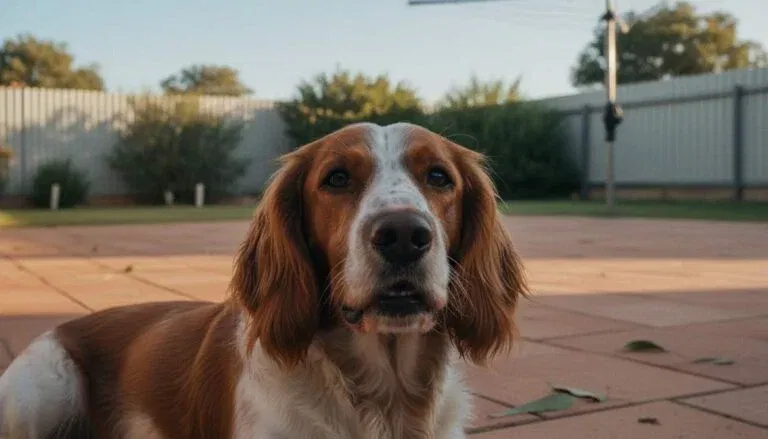
If you’ve never heard of the Welsh Springer Spaniel, you’re not alone. This is one of the rarest sporting breeds in Australia — and that’s a shame, because behind that gorgeous red and white coat lives one of the most devoted, gentle, and quietly charming dogs you’ll ever meet.
Welshies, as their fans call them, earned the nickname “Velcro dog” for good reason. The Welsh Springer Spaniel Club of America puts it simply: this dog needs to be with you every minute you’re home. They follow you to the kitchen, the bathroom, and the garden shed. They’ll wedge themselves between you and the couch cushion with zero shame. If you want a dog that respects personal space, look elsewhere.
But if you want a medium-sized, trainable, water-loving gundog that adores your kids, gets on with other pets, and looks like it stepped out of a Welsh countryside painting — keep reading. This guide covers the Welsh Springer Spaniel’s temperament, health issues, grooming needs, realistic Australian costs, and whether this rare breed actually suits your lifestyle.
What You’ll Learn
- Breed traits & temperament
- Health concerns to know
- True cost in Australia
- Training & exercise needs
- Is this breed right for you?
Quick Facts at a Glance
| Trait | Details |
|---|---|
| Breed Group | Sporting / Gun Dog (ANKC Group 3) |
| Origin | Wales, Great Britain — origins traced to the 1600s (possibly earlier) |
| Size | Medium: Males 46–48 cm, Females 43–46 cm at shoulder |
| Weight | Males 18–20 kg (40–45 lbs), Females 16–18 kg (35–40 lbs) |
| Coat | Silky, flat, naturally straight with feathering on legs, ears, chest & underside |
| Colour | Rich red and white only — no other colour combinations |
| Lifespan | 12–15 years |
| Temperament | Loyal, affectionate, active, reserved with strangers, one-family dog |
| Exercise Needs | 1–2 hours daily of vigorous activity |
| Shedding | Moderate year-round, heavier seasonally in spring and autumn |
| Good With Kids | Excellent — gentle, patient, and playful |
| Apartment Friendly | No — needs a yard and outdoor space |
| Hypoallergenic | No |
History & Origins
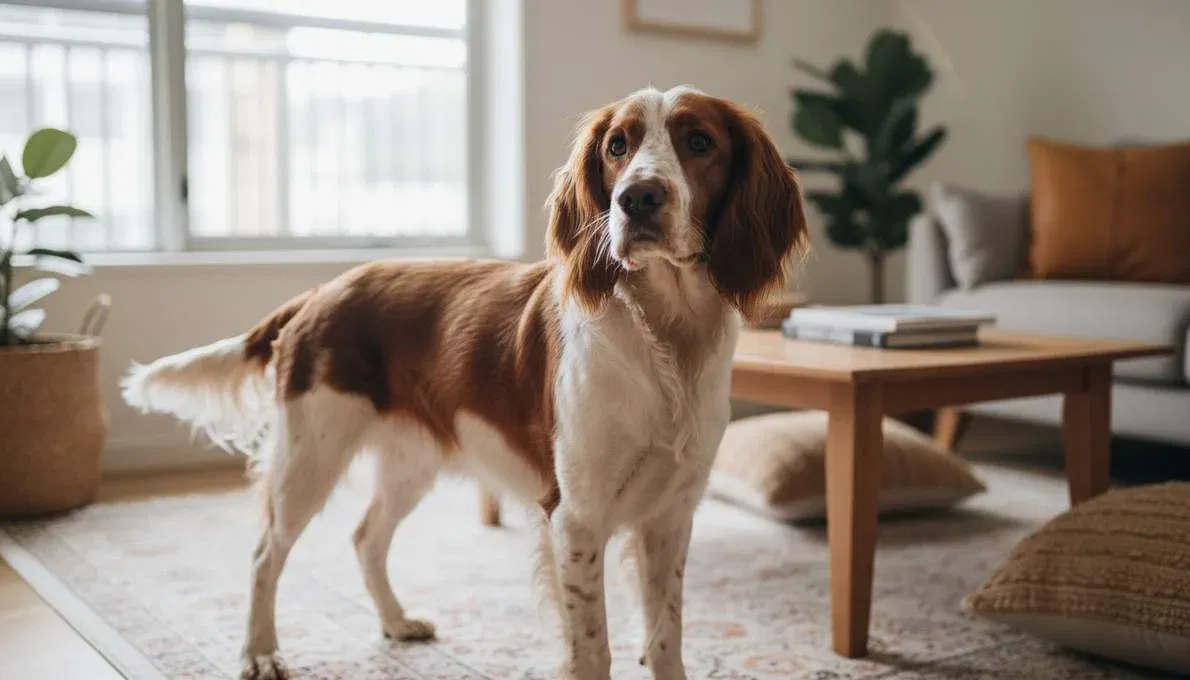
The Welsh Springer Spaniel history stretches back centuries — possibly as far as the 1300s, with some breed enthusiasts pointing to art and literature depicting spaniel-type dogs from as early as 250 BC. What’s certain is that by the 1600s, distinct red and white spaniels were well established in Wales, bred to “spring” game birds from cover toward nets and later toward guns.
The breed’s name tells its story: “Springer” refers to its working method of springing or flushing game, and “Welsh” roots it firmly in the valleys and hills of Wales. These were the dogs of Welsh hunters and farmers — versatile enough to flush birds, retrieve from water, and even help drive cattle and sheep.
For a long time, the Welsh Springer was lumped together with other spaniels. It wasn’t formally recognised as its own breed until the late 1800s, with the Kennel Club (UK) granting separate status. The AKC recognised the breed in 1906, although it nearly disappeared from American shores during both World Wars. Dedicated breeders in Wales kept the line going, and the breed was reintroduced to the US and other countries, including Australia, in the decades that followed.
Today, the Welsh Springer Spaniel remains genuinely rare. The AKC ranked them 132nd out of 200 breeds in 2023, with only about 300 puppies registered annually across the entire United States. In Australia, the breeding community is small but passionate, with kennels in NSW, Victoria, Queensland, Tasmania, Western Australia, and the Northern Territory working to preserve and improve the breed.
Temperament & Personality
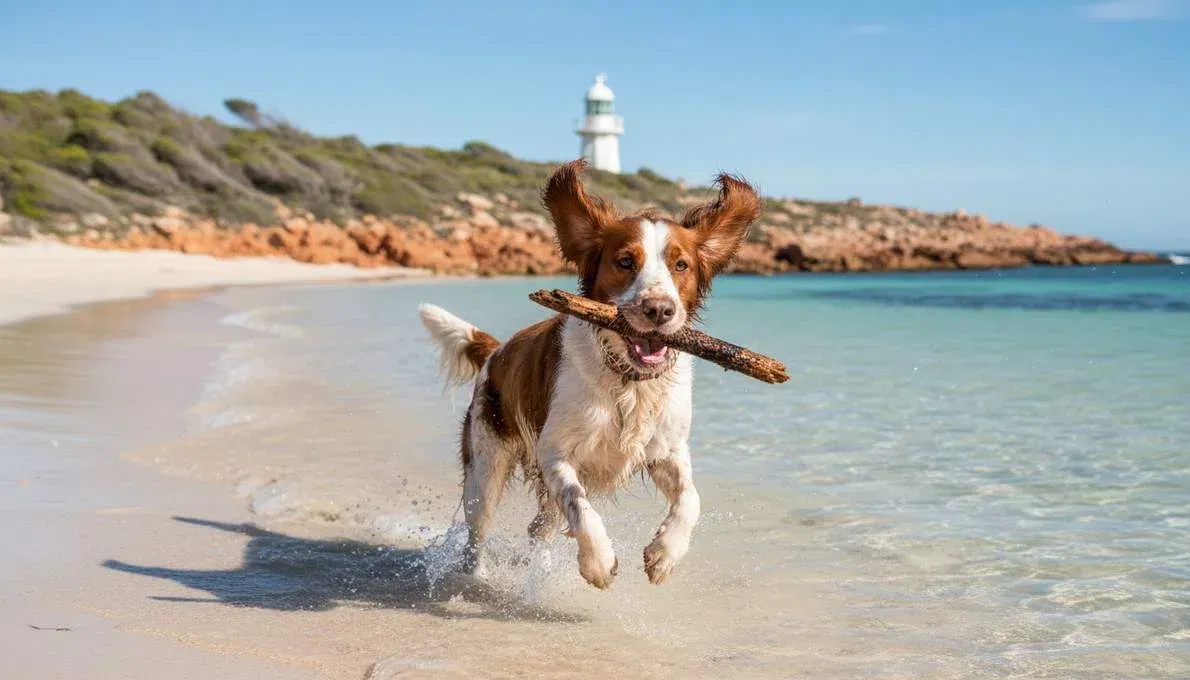
The Welsh Springer Spaniel temperament is where this breed really sets itself apart from its more popular English cousin. Where the English Springer is outgoing and enthusiastic with everyone, the Welshie is a one-family dog. They love deeply, but they love selectively.
This is not an exaggeration. Welsh Springers want physical contact with their people at all times. They’ll follow you from room to room, sleep pressed against your legs, and position themselves wherever you are. For people who work from home or have an outdoorsy lifestyle, this is wonderful. For people who leave their dog alone for eight hours a day, this breed will struggle — and your furniture may pay the price.
Unlike many spaniels, the Welshie doesn’t rush up to every person at the dog park with a wagging tail. They tend to be cautious, even shy, around people they don’t know. This isn’t aggression — the Welsh Springer Spaniel personality is never aggressive — but it does mean early and consistent socialisation is critical. Expose puppies to different people, sounds, and environments from 8 weeks onwards. Without this, shyness can become timidity.
This is where Welshies shine. They’re gentle, patient, and genuinely enjoy children. Their medium size means they’re sturdy enough for active play without being big enough to accidentally flatten a toddler (unlike some larger gun dogs). Many Australian Welshie owners describe them as the perfect family dog for households with school-age kids.
Welsh Springers generally get along well with other dogs and can coexist with cats if introduced young. However, their hunting heritage means they have a prey drive — small pets like rabbits, guinea pigs, and birds should be kept separate. And any off-leash time needs to happen in a secure area, because a Welshie that catches a scent will follow it.
Welshies will bark to alert you to strangers or anything unusual. They make solid watchdogs. However, barking can become habitual if they’re bored, under-exercised, or left alone for long periods. Address the cause and the barking usually resolves.
Health & Genetic Conditions
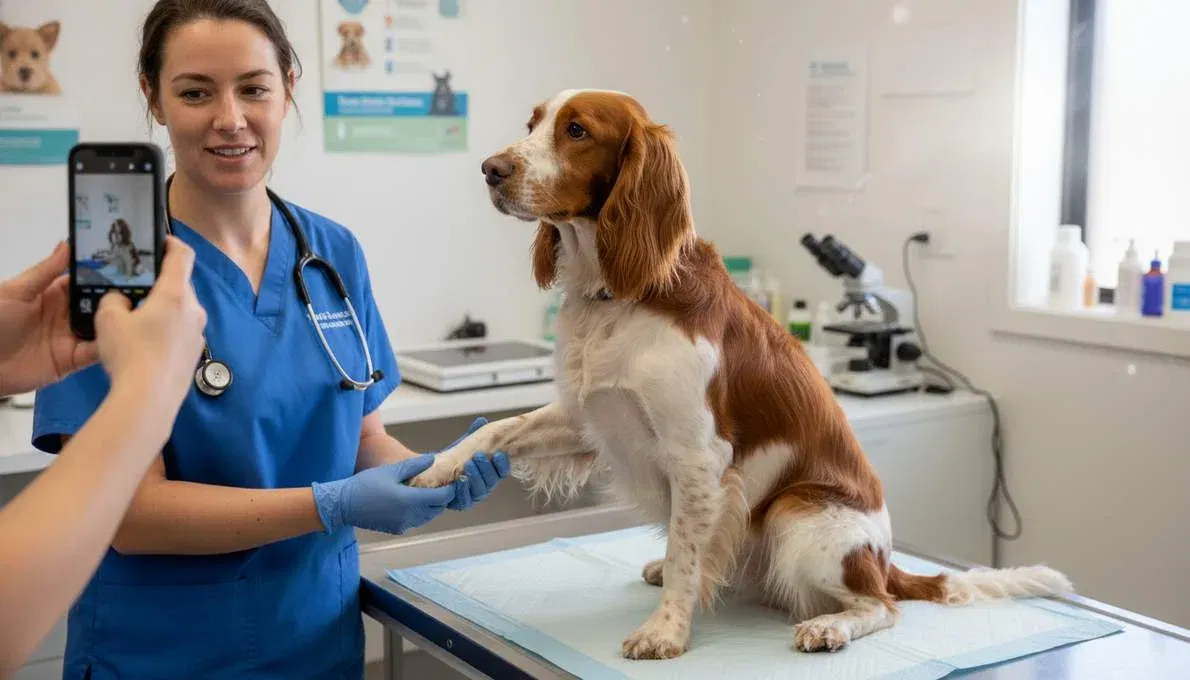
The Welsh Springer Spaniel is considered a generally healthy breed. Their working heritage means breeders historically selected for function over appearance, which has kept the gene pool relatively sound. But like all purebreds, there are conditions to be aware of — and responsible breeders test for them.
Prevalence: Hip dysplasia is the single biggest health concern in the breed. A 1997 survey ranking over 100 breeds placed the Welsh Springer Spaniel 14th worst for hip scores, with an average score of 18.45. Elbow dysplasia also occurs and both conditions are flagged in the breed’s CHIC health testing requirements.
Symptoms: Stiffness when rising, reluctance to climb stairs, bunny-hopping at the trot, and reduced exercise tolerance. Many dogs show no obvious pain until arthritis sets in.
Treatment Cost (AUD): Mild cases are managed with anti-inflammatories, physiotherapy, and joint supplements ($80–$300/month ongoing). Surgical options such as total hip replacement or FHO run $4,000–$8,000 per joint.
Prevention: Only buy from parents with OFA or PennHIP hip and elbow clearances — both are mandatory CHIC requirements for the breed. Avoid early desexing before 18 months, keep puppies lean, and skip high-impact exercise during bone development.
Prevalence: Glaucoma is a serious and well-documented concern in the breed, with narrow-angle (closed-angle) glaucoma inherited as an autosomal dominant trait. It is more common in Welsh Springer Spaniels than the slower open-angle form and can cause blindness within 24 hours of acute onset.
Symptoms: Sudden redness in the eye, a cloudy or bluish cornea, squinting, sensitivity to light, and the dog rubbing at their eye. Pain is often severe even when owners don’t immediately notice it.
Treatment Cost (AUD): Emergency treatment to reduce intraocular pressure costs $500–$1,500. Long-term management with eye drops runs $100–$300/month, and surgical intervention (laser therapy or valve implant) is $2,000–$5,000 per eye.
Prevention: Annual eye exams by a registered veterinary ophthalmologist are strongly recommended for all Welshies. Breeding stock should be CAER-certified clear. Any sudden eye changes warrant same-day emergency vet attention — do not wait overnight.
Prevalence: Idiopathic (inherited) epilepsy is commonly reported in Welsh Springer Spaniels, with the condition frequently appearing in certain bloodlines. It is listed as a notable breed concern by VCA Hospitals alongside glaucoma.
Symptoms: Seizures typically begin between six months and three years of age. Episodes can include collapsing, paddling of the legs, loss of bladder control, drooling, and temporary confusion or disorientation before and after the event.
Treatment Cost (AUD): Diagnostic workup (MRI, bloodwork) costs $1,500–$3,500. Lifelong anticonvulsant medication runs $40–$150/month depending on the drug used, plus periodic blood monitoring.
Prevention: No DNA test is currently available. Ask breeders directly about any neurological history in the pedigree — reputable breeders will exclude affected dogs from their programmes. If your dog has a first seizure lasting more than five minutes, treat it as an emergency.
Prevalence: This inherited blood clotting disorder is well-established in the breed. Around24% of Welsh Springer Spaniels tested were found to carry the F7 gene mutation (autosomal recessive), meaning carrier-to-carrier matings risk producing affected pups. Homozygous dogs have measurably prolonged clotting times and elevated bleeding risk.
Symptoms: The condition is often mild and goes unnoticed in everyday life. Affected dogs may bleed excessively after surgery, trauma, or even routine blood draws. Spontaneous internal bleeding is less common but possible in severely affected individuals.
Treatment Cost (AUD): No ongoing daily treatment is needed in most cases. Surgical or trauma-related bleeding episodes require hospitalisation and supportive care, which can cost $1,500–$4,000 depending on severity.
Prevention: A DNA test is available through UC Davis VGL and Paw Print Genetics. All breeding dogs should be tested — carriers can still be bred, but only to a clear (N/N) partner to avoid producing affected pups. Always inform your vet of Factor VII status before any planned surgery or procedure.
Prevalence: Entropion — where the eyelid rolls inward so the lashes rub directly against the cornea — is a recognised heritable condition in Welsh Springer Spaniels, most commonly affecting the lower eyelid. It typically appears within the first year of life, though it can also develop secondary to chronic eye infections.
Symptoms: Excessive tearing, squinting, eye discharge, redness, and the dog pawing at their face. Left untreated, persistent lash-on-cornea contact causes corneal ulcers and can permanently damage vision.
Treatment Cost (AUD): Mild cases in puppies may be managed temporarily with lubricating eye drops. Surgical correction (eyelid tacking or resection) costs $1,000–$2,500 per eye and is usually curative when done early.
Prevention: CAER eye exams are recommended for all breeding stock. Avoid breeding dogs with a history of entropion. Catch it early — a vet check at the first sign of eye rubbing or excessive tearing keeps treatment simpler and prevents corneal damage.
Responsible Welsh Springer Spaniel breeders in Australia test for goniodysgenesis — a structural abnormality in the eye’s drainage angle that predisposes dogs to developing glaucoma. This is a DNA and clinical test that reputable breeders should be conducting on all breeding stock. Ask to see the results.
Hip and elbow scoring (OFA or equivalent), eye examination (including gonioscopy for glaucoma predisposition), thyroid testing, and ideally DNA health panels. Australian breeders who are serious about the breed will have all of this documented.
Lifespan & Longevity
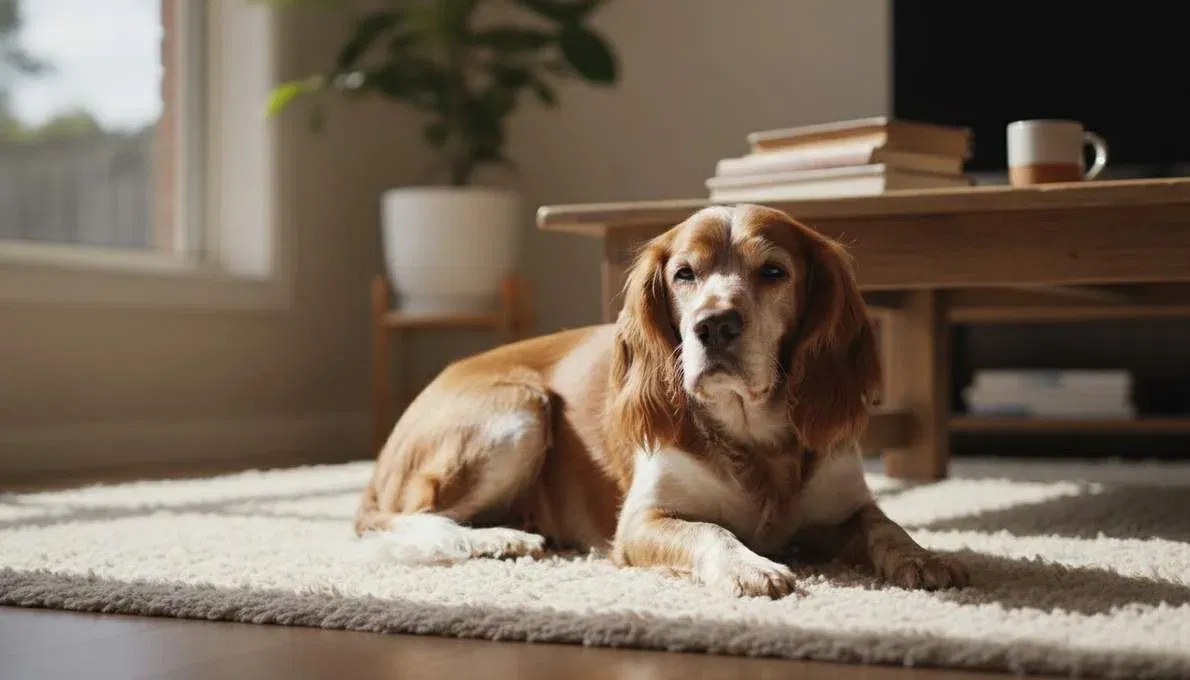
The Welsh Springer Spaniel life expectancy is 12 to 15 years, which is excellent for a medium-sized breed. Many well-cared-for Welshies reach 14 or even 15 years with proper nutrition, exercise, and preventive veterinary care.
Puppy stage (0–2 years): Feed a high-quality puppy food formulated for medium breeds. Avoid over-exercising growing joints — stick to the 5-minutes-per-month-of-age rule for structured walks. Focus on socialisation and positive training. Monitor for any signs of eye or joint issues during vet check-ups.
Adult stage (2–8 years): Peak years. Maintain consistent daily exercise (1–2 hours), a quality adult diet, and annual vet visits. Keep weight in check — Welsh Springers love food and will overeat if allowed. Obesity puts pressure on joints and shortens lifespan.
Senior stage (8+ years): Increase vet check-ups to twice yearly. Watch for signs of thyroid issues (unexplained weight changes, lethargy), joint stiffness, and eye changes. Senior-formulated food and joint supplements containing glucosamine and fish oil can help maintain quality of life. Many senior Welshies remain active and happy well into their teens with proper care.
Grooming & Care
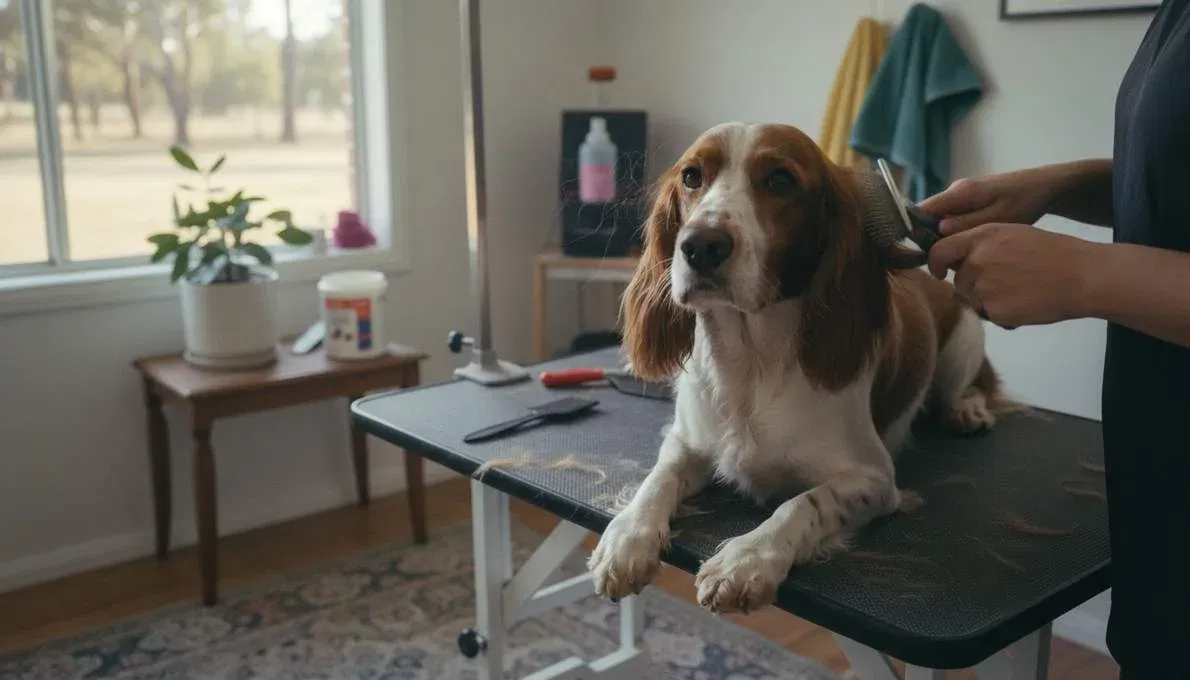
Welsh Springer Spaniel grooming is one of the breed’s genuine advantages. Their coat is naturally flat, silky, and straight — it doesn’t need the intensive maintenance of a Cocker Spaniel or a show-clipped English Springer. But the feathering on the legs, ears, chest, and underside does need regular attention.
Grooming Schedule
| Task | Frequency | Notes |
|---|---|---|
| Brushing | 1–2 times per week (slicker brush + comb) | Focus on feathered areas. Prevents tangles and removes loose undercoat. |
| Bathing | Every 6–8 weeks or as needed | Their coat is naturally water-repellent. Use a gentle dog shampoo. |
| Ear Cleaning | Weekly — non-negotiable | Floppy spaniel ears trap moisture. Check for redness, odour, or wax build-up. |
| Feathering Trim | Every 6–8 weeks | Light trimming around ears, feet, and hocks for a neat look. No full-body clipping needed. |
| Nail Trimming | Every 2–3 weeks | Active dogs on hard surfaces may wear nails down naturally. |
| Dental Care | Daily brushing ideal; minimum 3x/week | Dental disease is cumulative — prevention is far cheaper than treatment. |
| Eye Checks | Weekly | Watch for tearing, redness, cloudiness — early glaucoma signs. |
Do Welsh Springer Spaniels shed? Yes, moderately. They shed year-round with heavier periods in spring and autumn. The good news is that their flat, silky coat doesn’t mat as easily as curlier spaniel coats, and regular brushing keeps shedding manageable. A rubber grooming mitt during seasonal blowouts will help. They’re not hypoallergenic.
A note on short hair Welsh Springer Spaniels: Some people search for “short hair Welsh Springer Spaniel” expecting a lower-maintenance coat. The breed standard calls for a flat, silky coat with moderate feathering. Working-line dogs may have slightly less feathering than show-line dogs, but all Welshies have some. If you want a genuinely short-coated spaniel, a different breed may be a better fit.
Exercise Needs
Welsh Springer Spaniels are high-energy working dogs at heart. They were bred to spend entire days flushing game through rough terrain, and that stamina hasn’t faded. Welsh Springer Spaniel exercise needs aren’t quite as extreme as a Weimaraner or Border Collie, but they’re significant.
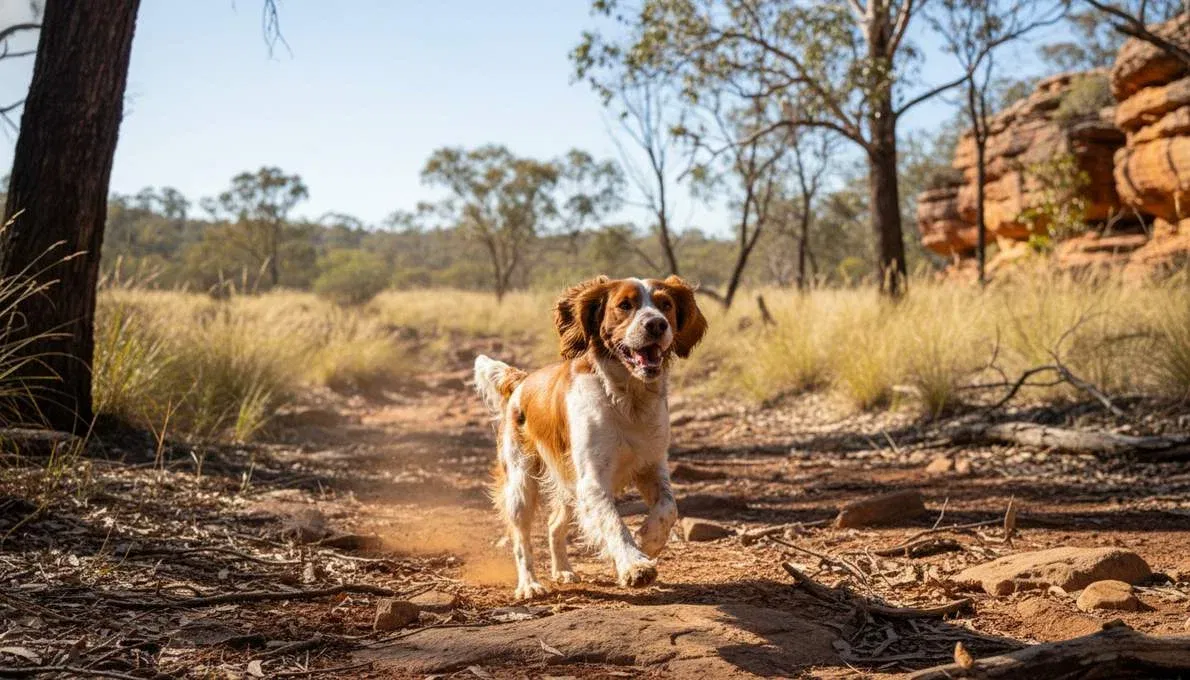
Plan for at least one to two hours of active exercise daily. This can include long walks, jogging, swimming (they love water and have webbed feet), fetch sessions, and off-leash time in secure areas. They also excel at dog sports like agility, tracking, obedience, and retrieving trials.
⚠️ Australian climate warning: Welshies have a moderately thick coat and can overheat in Australian summers, particularly in northern and inland regions. Exercise in the early morning or late evening during hot months. Always provide shade and fresh water. Their love of swimming is a genuine advantage here — a splash in the creek or a trip to a dog-friendly beach can be both exercise and cooling in one. In cooler southern states like Victoria and Tasmania, they’re in their element year-round.
Mental stimulation is equally important. Puzzle feeders, scent-work games, and training sessions keep their intelligent minds occupied. A bored Welshie with pent-up energy will find its own entertainment — usually involving your garden beds or furniture legs.
Training Guide: Willing but Easily Distracted
Welsh Springer Spaniel training is generally straightforward compared to more independent breeds. They’re intelligent, eager to please, and food-motivated. The main challenges are their distractibility (that nose gets them into trouble) and their sensitivity (harsh corrections will shut them down).
Socialisation & Training Timeline
| Age | Training Focus | Honest Difficulty Level |
|---|---|---|
| 8–16 weeks | Socialisation (critical for this breed), crate training, basic name response, potty training | Easy–Moderate — eager but easily overwhelmed |
| 4–6 months | Sit, stay, come, leash manners, exposure to new people and environments | Moderate — the nose starts taking over |
| 6–12 months | Reliable recall, impulse control, off-leash basics, stranger desensitisation | Moderate–Challenging — adolescent stubbornness + prey drive |
| 1–2 years | Advanced obedience, structured sport training, proofing commands around distractions | Getting easier with consistency |
| 2+ years | Maintenance, mental enrichment, sport or working activities | Rewarding — mature Welshies are a joy to work with |
Socialisation is the number one priority. Because Welsh Springers are naturally reserved with strangers, early and ongoing socialisation is more important for this breed than almost any other spaniel. Expose your puppy to different people, dogs, environments, sounds, and surfaces between 8 and 16 weeks. Puppy school is not optional — it’s essential. Without adequate socialisation, the Welshie’s natural caution can become problematic shyness or anxiety.
Use positive reinforcement only. This is a sensitive breed that responds poorly to raised voices, physical corrections, or punishment-based methods. They’ll simply shut down or become fearful. High-value treats (real chicken, cheese), praise, and play-based rewards work best. Keep sessions short (10–15 minutes) and varied to hold their attention.
Recall around scents. The biggest training challenge with any springer is getting them to come back when they’ve picked up a scent. Use a long line until recall is completely reliable, and never trust an untrained Welshie off-leash in an unfenced area near wildlife or roads.
Cost of Ownership in Australia
The Welsh Springer Spaniel is a rare breed in Australia, which affects both availability and pricing. You may need to join a waiting list, travel interstate, or even consider interstate puppy transport from a registered breeder.
| Expense | Estimated AUD Cost |
|---|---|
| Registered Welsh Springer Spaniel puppy (breeder) | $2,500–$4,000 |
| Rescue / Adoption fee | $200–$500 (rare — breed-specific rescue is uncommon in AU) |
| Initial setup (crate, bed, bowls, lead, toys) | $400–$700 |
| Annual food (premium medium-breed diet) | $1,000–$1,600 |
| Annual vet check-ups & vaccinations | $350–$600 |
| Pet insurance (comprehensive) | $60–$120/month |
| Desexing | $400–$800 |
| Grooming (mostly DIY; occasional professional) | $0–$300/year |
| Training (puppy school + follow-up) | $300–$700 |
| Interstate puppy transport (if applicable) | $400–$800 |
| Emergency vet fund (recommended reserve) | $2,000–$4,000 |
Total first-year cost estimate: $6,000–$10,000+ (including purchase price). Ongoing annual costs typically run $2,500–$4,000, excluding emergencies.
Where to find Welsh Springer Spaniel puppies in Australia:
Start with Dogs Australia registered breeders. Notable Australian kennels include Goldmaid (NSW), Mycroft (NSW), Laugharne (breeding since 1989), Rheged (NT), Ausspring, Esspree (WA), Daioni (NSW), Alclare (Victoria), Ricochez (QLD), and Tazlon (Tasmania). The Welsh Springer Spaniels Australia website is also a useful resource for connecting with the breed community. Expect a waiting list of 6–12 months or more — litters are small and breeders are selective about placements.
Rescue option:
Welsh Springer Spaniel rescue is uncommon in Australia due to the breed’s rarity and the tight-knit breeding community. Most breeders take back any dog they’ve bred if the owner can no longer keep it. If you’re open to an adult Welshie, let breeders know — occasionally older dogs or retired show dogs become available.

Is a Welsh Springer Spaniel Right for You?
want a loyal, devoted companion that’s deeply bonded to your family; are active and can provide 1–2 hours of daily exercise; have a securely fenced yard; spend most of your time at home (or can bring your dog with you); have children and want a gentle, kid-friendly breed; are willing to invest time in early socialisation; and are patient enough to wait for a puppy from a reputable breeder.
work long hours away from home with no dog company; want a breed that’s instantly friendly with every stranger and guest; live in an apartment without easy outdoor access; want a very low-energy, sedentary dog; need a hypoallergenic breed; or want a puppy immediately (expect a waiting list).
This is the most common comparison. English Springers are more outgoing with strangers, slightly larger, come in more colour combinations (black/white, liver/white, tricolour), and are far more common. Welshies are more reserved, exclusively red and white, and tend to bond more intensely to one family. Both need similar exercise levels. If you entertain a lot or want a dog that’s gregarious with everyone, the English Springer may suit you better. If you want a quieter, more devoted one-family dog, the Welshie is your match.
Another common comparison. Brittanys are slightly more independent and higher-energy, with a more compact build. Both are pointing/flushing breeds, but the Brittany tends to have an even stronger prey drive. The Welshie is generally calmer in the house and more attached to its people.
Cockers are smaller, more widely available, and often more demanding in grooming. Welshies have a lower-maintenance coat, are sturdier, and tend to be less excitable than some Cocker lines. Both are wonderful family dogs.
The Welsh Springer Spaniel is a rare gem in the Australian dog world — a beautiful, gentle, fiercely loyal breed that rewards devoted owners with years of unwavering companionship.
Three things to remember: (1) Socialisation is everything with this breed — their natural reserve with strangers needs active management from puppyhood. (2) They cannot handle being left alone for extended periods; if your lifestyle involves long absences, choose a different breed. (3) Because they’re rare in Australia, plan ahead — finding a reputable breeder and joining a waiting list is part of the process.
Frequently Asked Questions
How much does a Welsh Springer Spaniel cost in Australia?
Registered Welsh Springer Spaniel puppies from reputable breeders in Australia typically cost between $2,500 and $4,000. The breed’s rarity means there is often a waiting list of 6–12 months or more. Total first-year costs, including purchase, setup, vet care, and training, can range from $6,000 to $10,000+.
Are Welsh Springer Spaniels good family dogs?
Yes, Welsh Springer Spaniels are excellent family dogs. They are gentle, patient, and genuinely enjoy children. Their medium size makes them sturdy enough for play without being too large. They form deep bonds with their family and are known for their loyalty and affectionate nature.
Do Welsh Springer Spaniels shed?
Yes, Welsh Springer Spaniels shed moderately year-round, with heavier shedding periods in spring and autumn. Their flat, silky coat is relatively easy to maintain with regular brushing 1–2 times per week to manage loose hair and prevent tangles in the feathering. They are not hypoallergenic.
What is the difference between English and Welsh Springer Spaniels?
The key differences are temperament and appearance. Welsh Springers are more reserved with strangers, bond intensely to one family, and come exclusively in red and white. English Springers are more outgoing, come in multiple colour combinations (black/white, liver/white, tricolour), and are more common. Both are high-energy, but the Welshie is often described as a quieter, more devoted ‘one-family’ dog.
How long do Welsh Springer Spaniels live?
The Welsh Springer Spaniel has a life expectancy of 12 to 15 years, which is excellent for a medium-sized breed. With proper care, nutrition, exercise, and preventive veterinary attention, many Welshies live to 14 or even 15 years.
What health problems do Welsh Springer Spaniels have?
Major health concerns include hip and elbow dysplasia, narrow-angle glaucoma (a breed-specific priority), epilepsy, Factor VII deficiency (a blood clotting disorder), and entropion. Responsible breeders conduct health screenings for these conditions. Annual eye exams by a veterinary ophthalmologist are strongly recommended.
Are Welsh Springer Spaniels hypoallergenic?
No, Welsh Springer Spaniels are not hypoallergenic. They shed moderately and produce dander, which can trigger allergies in sensitive individuals.
How much exercise does a Welsh Springer Spaniel need?
Welsh Springer Spaniels are high-energy working dogs and need 1–2 hours of vigorous exercise daily. This should include walks, jogging, swimming, fetch, and off-leash play in secure areas. Mental stimulation through training, puzzle toys, and dog sports is equally important to prevent boredom.
How do you groom a Welsh Springer Spaniel?
Grooming involves brushing 1–2 times per week with a slicker brush and comb, focusing on the feathering. Bathe every 6–8 weeks, clean ears weekly, trim feathering around ears/feet every 6–8 weeks, trim nails every 2–3 weeks, and maintain daily dental care. Their coat is relatively low-maintenance compared to other spaniels.
Where can I find Welsh Springer Spaniel breeders in Australia?
Start with Dogs Australia registered breeders. Notable kennels include Goldmaid (NSW), Mycroft (NSW), Laugharne, Rheged (NT), Ausspring, Esspree (WA), Daioni (NSW), Alclare (Victoria), Ricochez (QLD), and Tazlon (Tasmania). The Welsh Springer Spaniels Australia website is a key resource. Expect to join a waiting list due to the breed’s rarity.
1. PetMD — Welsh Springer Spaniel Health and Care: https://www.petmd.com/dog/breeds/welsh-springer-spaniel
2. American Kennel Club — Welsh Springer Spaniel Breed Info: https://www.akc.org/dog-breeds/welsh-springer-spaniel/
3. VCA Animal Hospitals — Welsh Springer Spaniel: https://vcahospitals.com/know-your-pet/welsh-springer-spaniel
4. Hill’s Pet — Welsh Springer Spaniel Temperament & Characteristics: https://www.hillspet.com/dog-care/dog-breeds/welsh-springer-spaniel
5. Purina Australia — Welsh Springer Spaniel Breed Guide: https://www.purina.com.au/welsh-springer-spaniel.html
6. Welsh Springer Spaniels Australia: http://www.welshspringeraust.com
7. Dogz Online Australia — Welsh Springer Spaniel Breeders: https://www.dogzonline.com.au/breeds/breeders/welsh-springer-spaniel.asp
8. PetsForHomes Australia — Welsh Springer Spaniel Puppies: https://petsforhomes.com.au/dogs-puppies/welsh-springer-spaniel/
9. Chewy — Welsh Springer Spaniel Breed Guide: https://www.chewy.com/education/dog-breeds/welsh-springer-spaniel
10. Vetstreet — Welsh Springer Spaniel: https://www.vetstreet.com/dogs/welsh-springer-spaniel