
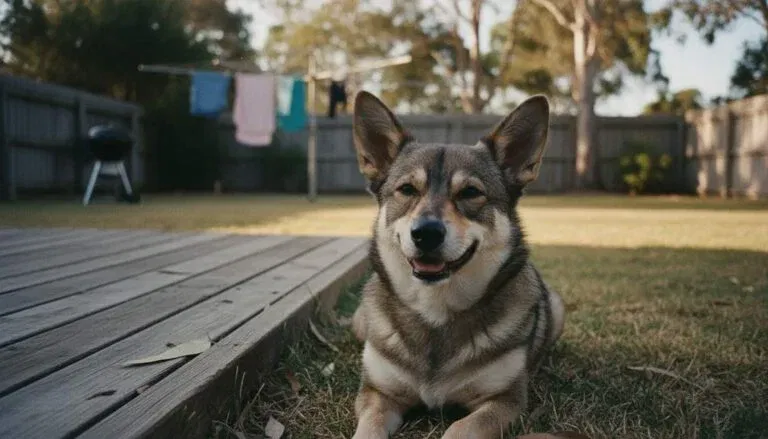
Picture a wolf that got shrunk in the wash. Now give it the body of a corgi, the personality of a border collie with a megaphone, and the confidence of a dog three times its size. That’s the Swedish Vallhund — one of the oldest, rarest, and most delightfully weird dog breeds you’ve probably never heard of.
Known as the Västgötaspets in their native Sweden and affectionately called the “Little Viking Dog,” the Swedish Vallhund has been herding cattle, catching rats, and barking at everything suspicious for over a thousand years. They nearly went extinct in the 1940s, were rescued by two dedicated Swedish breeders, and have been slowly winning over the world ever since. The AKC didn’t recognise them until 2007 — making them one of the newest breeds in terms of formal recognition, despite being one of the oldest in terms of actual history.
In Australia, the Swedish Vallhund is genuinely rare. Finding a breeder takes patience, and finding someone who’s actually met one in person takes luck. But if you’re the kind of owner who wants a small, athletic, hilariously vocal herding dog with a face that stops strangers in their tracks — this breed deserves a serious look. Here’s what living with a Viking Dog actually involves.
What You’ll Learn
- Breed traits & temperament
- Health concerns to know
- True cost in Australia
- Training & exercise needs
- Is this breed right for you?
Swedish Vallhund at a Glance
| Trait | Detail |
|---|---|
| Breed Group | Pastoral/Herding (ANKC Group 5) |
| Origin | Västergötland, Sweden — 8th–9th century Viking era |
| Size | Males 33 cm | Females 31 cm at the shoulder |
| Weight | 9–16 kg |
| Coat | Dense double coat — harsh outer coat, soft undercoat. Medium length. |
| Colours | Sable pattern in shades of grey, red-brown, grey-brown, grey-yellow, and red-yellow. Lighter markings on chest, belly, and legs. White permitted in limited areas. |
| Lifespan | 12–15 years (average around 15) |
| Temperament | Energetic, alert, intelligent, vocal, affectionate, fearless, sometimes stubborn |
| Exercise Needs | High — 45–60+ minutes daily plus mental stimulation |
| Shedding | Moderate — seasonal blowouts twice yearly |
| Good With Kids | Yes — playful and patient. May try to herd children by nipping ankles. |
| Apartment Friendly | Possible with sufficient exercise. Barking may be an issue. |
| Hypoallergenic | No |
| Barking Level | High — one of the most vocal breeds. Unique “argling” vocalisations. |
| Tail Variations | Long, stub, or bobbed — all natural and equally acceptable |

History & Origins
The Swedish Vallhund’s history stretches back to the Viking Age, making it one of the oldest dog breeds in Scandinavia. The breed originated in the province of Västergötland in southern Sweden, where these small, sturdy dogs worked as all-purpose farm dogs: herding cattle, catching vermin, and guarding the homestead. Their Swedish name, Västgötaspets, literally means “Spitz of Västergötland.”
The breed is closely related to larger Scandinavian spitz dogs and moose-hunting dogs. The most debated aspect of their history is the connection to the Welsh Corgi. The two breeds share obvious physical similarities — long bodies, short legs, herding instincts — and the prevailing theory is that during Viking raids on Wales in the 8th and 9th centuries, Norse dogs and Welsh dogs crossbred. Whether the Vallhund gave rise to the Corgi or vice versa remains an unresolved (and occasionally heated) discussion among breed enthusiasts.
By the 1940s, the Swedish Vallhund had nearly vanished. The breed was rescued from the brink of extinction by two Swedes: Björn von Rosen and K. G. Zettersten, who launched a breeding programme using the last known examples of the breed. The Swedish Kennel Club recognised the Vallhund in 1943. The United Kennel Club followed in 1996, and the AKC granted full recognition in 2007. Sweden declared the breed its national dog.
In Australia, the Swedish Vallhund remains genuinely rare. A small number of dedicated breeders exist across several states, but litters are infrequent and waiting lists can stretch well beyond 12 months. If you’ve set your heart on a Vallhund in Australia, patience is not optional — it’s the price of admission.
Temperament & Personality
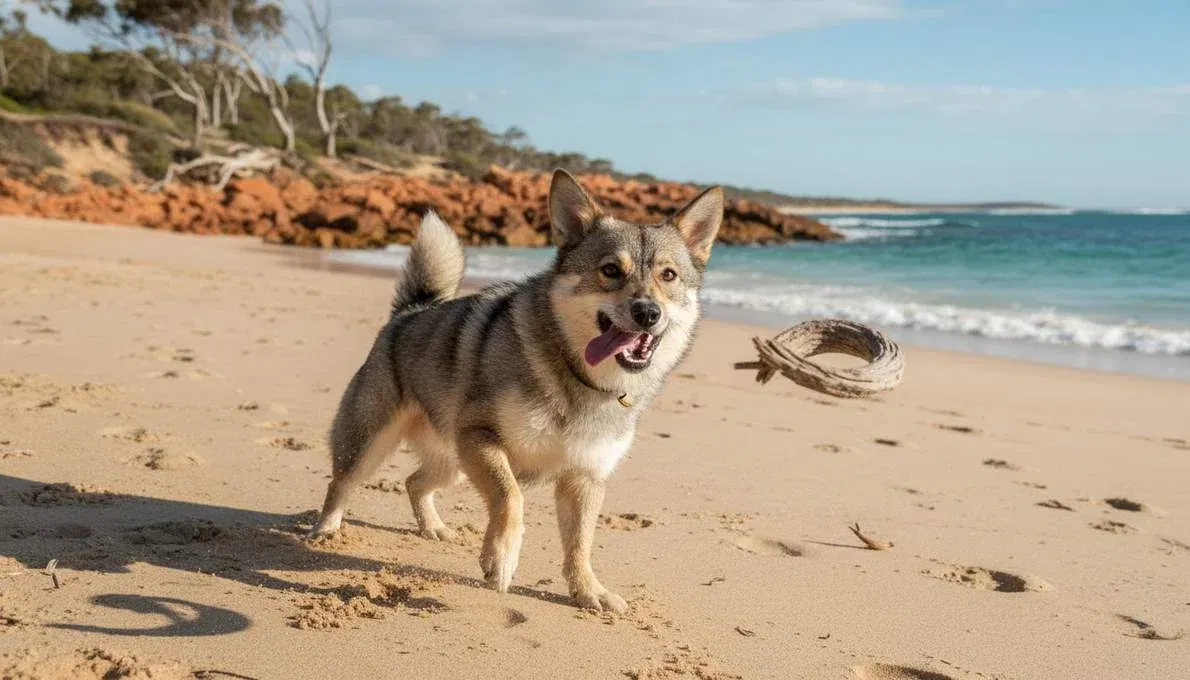
The Swedish Vallhund personality is enormous for a dog that barely reaches your knee. These are confident, energetic, opinionated dogs that approach life with the enthusiasm of a creature twice their size. If you’re expecting a quiet lap dog because of their stature, the Vallhund will correct that assumption within the first hour.
This is the breed’s defining behavioural trait. Swedish Vallhunds don’t just bark — they have a unique repertoire of vocalisations described as “argling,” howling, yipping, grumbling, and conversational sounds. They bark to alert, bark when excited, bark when bored, and bark to express opinions about the general state of the world. If you live in an apartment with thin walls, neighbours, or a strong preference for quiet, the Vallhund will test you. Training can manage excessive barking, but you will never own a silent Vallhund.
Extremely smart. Vallhunds are quick learners with strong problem-solving abilities. They were bred to make independent decisions while working cattle, and that independence shows in daily life. They’ll learn what you teach — and they’ll also learn things you didn’t intend to teach, like how to open the treat cupboard.
Strong and persistent. Vallhunds were bred low to the ground specifically to nip at the heels of cattle without being kicked. This instinct transfers directly to children, other pets, joggers, and bicycles. Ankle-nipping in a Vallhund puppy is not aggression — it’s hard-wired herding behaviour that needs to be redirected through training.
Despite their independence, Vallhunds are deeply affectionate with their families. They form strong bonds, enjoy physical closeness, and want to be involved in everything you do. They’re not clingy in the way some breeds are, but they’ll always want to be in the same room as you — preferably commenting on the proceedings.
Some Vallhunds are outgoing and social; others are reserved and take time to warm up. Early socialisation is important to develop confidence. With other dogs, they’re generally good, though their herding instinct can annoy less tolerant dogs. Their courage far exceeds their size, which can be a problem around much larger dogs that don’t appreciate being bossed around by a 12 kg spitz.
Health & Genetic Conditions
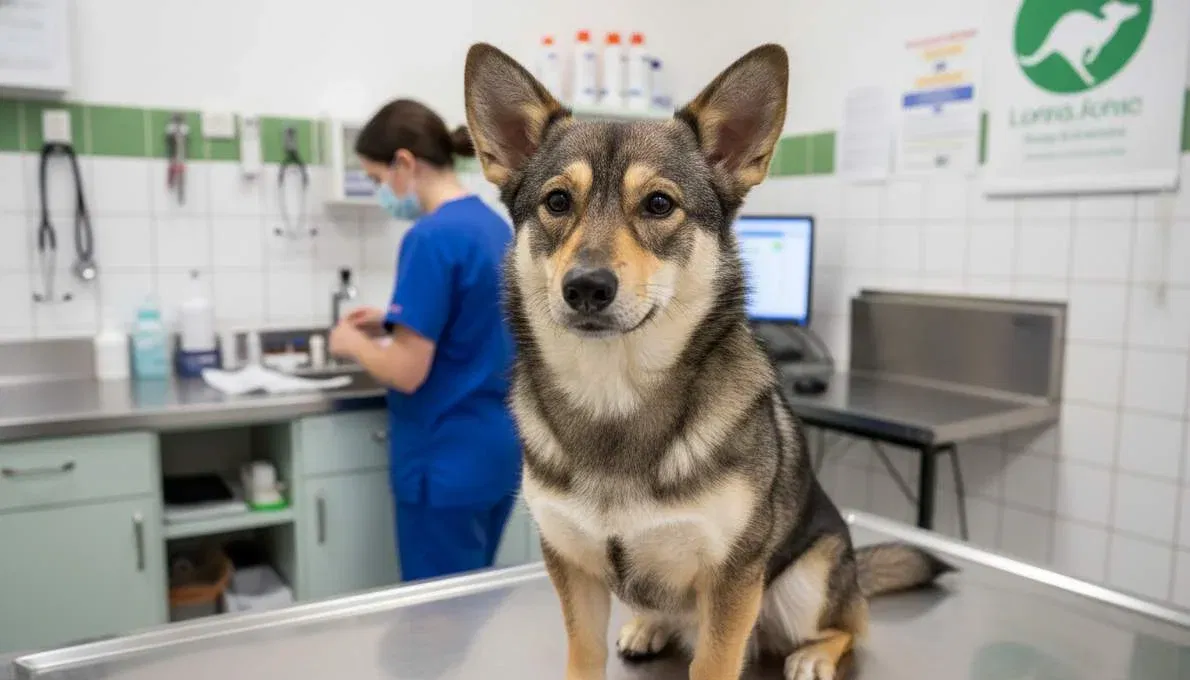
The Swedish Vallhund is a remarkably healthy breed overall. Their functional, moderate build and centuries of working selection have avoided many of the structural problems that plague more exaggerated breeds. However, there is one breed-specific condition that every owner and breeder must know about.
Prevalence: Retinopathy is the defining inherited health condition of the Swedish Vallhund — a form of progressive retinal atrophy that is entirely unique to the breed and unlike any other known canine retinal disease. [PLoS One 2014 – Novel PRA in Swedish Vallhund Dogs] A landmark international study examining 324 Swedish Vallhunds across seven countries on three continents found a disease prevalence of 34.9% — meaning more than one in three dogs was clinically affected. The BHCP eye examination data (2015–2019) found abnormal findings in 48.6% of 422 examined dogs, reflecting how widespread retinal changes are across the breed. The causal mutation — a LINE-1 insertion in the MERTK gene on chromosome 17 — was identified in 2017 and is associated with a roughly 20-fold increased risk of retinopathy. Inherited as an autosomal recessive condition, a DNA test is now available via Paw Print Genetics and other labs.
Symptoms: Swedish Vallhund retinopathy is distinctive in that early signs on ophthalmological examination can appear as young as 2 months — visible as multifocal areas of abnormal pigmentation on the retina — long before any functional vision loss is apparent to owners. Vision loss onset varies enormously between individuals: some dogs develop night blindness as early as 1 year of age, while others show no functional deficit until much later in life. Rod photoreceptors (responsible for low-light vision) are affected first, producing night blindness and hesitation in dim light. As cone cells are progressively lost, day vision deteriorates. Complete blindness can occur as early as 9 years of age in severely affected dogs, though milder progression is also seen.
Treatment Cost (AUD): There is no treatment for SVR. Annual CAER/ACVO eye examinations ($150–$350) can track disease stage in affected dogs. [petinsurance.com.au] DNA testing costs approximately $60–$100 per dog and is recommended for all breeding animals. Blind dogs generally adapt well to a stable home environment with consistent layout and routines.
Prevention: MERTK DNA testing of all breeding dogs is essential and is part of the Swedish Vallhund Club of America’s CHIC health requirements. Carriers can be safely bred to DNA-clear dogs — the resulting litter will contain no affected offspring, though approximately half will be carriers and should themselves be tested before breeding. Annual eye examinations provide additional monitoring. Ask breeders for MERTK DNA test results and CAER eye exam certificates for both parents. Note that the MERTK test does not exclude all possible causes of retinal disease — annual eye exams remain important alongside DNA testing.
Prevalence: Hip dysplasia is a recognised health concern in the Swedish Vallhund and is one of the two mandatory OFA screening requirements for CHIC certification by the Swedish Vallhund Club of America (alongside eye testing). [Vetstreet – Swedish Vallhund] While the breed’s compact, low-slung build means individual dogs carry less bodyweight across their joints than larger breeds, the chondrodystrophic conformation — short legs, elongated body — creates its own biomechanical stresses on the hip and knee joints. The breed’s active, herding-heritage energy levels mean high cumulative joint load over a lifetime. Hip dysplasia in the Swedish Vallhund progresses to secondary osteoarthritis with age and, while less catastrophic in impact than in giant breeds, produces meaningful pain and mobility limitation if untreated.
Symptoms: Early signs are often subtle — a slight reluctance to exercise as long as usual, intermittent stiffness after lying down, or a mild swaying gait when trotting. As arthritis develops, dogs may be noticeably stiff on rising in the morning, reluctant to jump onto furniture, and slower to recover from exercise. Some dogs shift to a bunny-hopping canter to reduce hip loading. Given the Swedish Vallhund’s stoic, working-dog temperament, owners may not notice the condition until it is quite established — any change in enthusiasm for physical activity in this naturally energetic breed is worth investigating promptly.
Treatment Cost (AUD): Joint supplementation, weight management, and anti-inflammatory medication for managed cases costs $500–$1,500/year. [petinsurance.com.au] Surgical options — femoral head ostectomy ($2,000–$4,000/hip) or total hip replacement ($6,000–$10,000/hip) — are reserved for severe cases where medical management is insufficient. Hydrotherapy is particularly well-suited to this breed, maintaining muscle mass and joint mobility without impact stress.
Prevention: OFA or PennHIP evaluation of both parents before breeding is required for CHIC certification and strongly recommended by the SVCA. Ask breeders to show hip certificates. Maintaining a lean body weight throughout the dog’s life and restricting high-impact exercise on hard surfaces before 15–18 months reduces the severity of expression in genetically predisposed dogs. Feed a large-breed puppy diet rather than a standard puppy formula to avoid excessive early growth rate.
Prevalence: Patellar luxation — where the kneecap slips out of its normal groove in the femur — is recognised in the Swedish Vallhund alongside hip dysplasia as an orthopaedic concern. [DogZone – Swedish Vallhund] The breed’s chondrodystrophic body structure (shortened, angulated limbs) creates biomechanical predisposition to medial patellar luxation, as is seen in several other low-to-the-ground herding breeds. The KC Breed Health and Conservation Plan for the Swedish Vallhund identifies degeneration/dystrophy of the knee as one of the top five conditions by relative risk in Swedish insurance data. Affected individuals should not be used in breeding programmes, as the condition has a hereditary component.
Symptoms: Mild grades (I–II) may cause only occasional “skipping” — the dog lifts a hind leg for a few strides before the patella pops back into place, then continues normally. More severe grades (III–IV) produce persistent hind-leg lameness, an abnormal crouching stance, and progressive pain from the secondary arthritis that develops as the unstable patella repeatedly damages the joint surface. In young, active Swedish Vallhunds the skipping episodes may initially be so brief that owners attribute them to a momentary trip. Any recurring intermittent hind-limb lameness should prompt orthopaedic examination.
Treatment Cost (AUD): Grade I–II cases are often managed medically with joint supplements and weight control at minimal cost. [petinsurance.com.au] Surgical correction (trochleoplasty, tibial tuberosity transposition) for grades III–IV costs $2,000–$4,500 per stifle. OFA patellar luxation evaluation is inexpensive ($50–$100) and recommended for all breeding dogs.
Prevention: OFA patellar luxation evaluation of breeding stock is advisable. Maintaining a lean body weight reduces mechanical stress on the stifle joint. Avoid repetitive high-impact jumping or landing in young dogs before the growth plates have closed at 15–18 months.
Prevalence: Epilepsy and seizures appear in the Swedish Vallhund health record with meaningful frequency. [KC BHCP – Swedish Vallhund] The 2017 Swedish Vallhund Society health survey identified epilepsy/fits as the third most common cause of death in the breed, accounting for 9.5% of recorded deaths. Seizures were also among the most common specific causes reported in the KC mortality survey. Whether epilepsy in the breed is predominantly idiopathic (primary genetic) or secondary to other causes is not fully characterised, and no DNA test currently exists. The condition appears particularly concerning given the breed’s already limited genetic diversity — the UC Davis VGL has identified the Swedish Vallhund as having the lowest retained genetic diversity of any breed tested to date at only approximately 7%.
Symptoms: Onset of idiopathic epilepsy typically occurs between 6 months and 5 years of age. Generalised tonic-clonic seizures involve loss of consciousness, full-body convulsions, and a post-ictal (recovery) period of disorientation and lethargy lasting minutes to hours. Focal seizures may present as facial twitching, sudden behavioural change, or brief staring episodes. A seizure lasting more than 5 minutes, or multiple seizures within 24 hours, constitutes an emergency requiring immediate veterinary attention.
Treatment Cost (AUD): Lifelong anticonvulsant medication — typically phenobarbitone and/or potassium bromide — costs $40–$150/month, with mandatory blood level monitoring every 6 months ($150–$300/test). [petinsurance.com.au] Specialist neurology referral for refractory seizure management costs $400–$800 for initial consultation plus diagnostics. Many epileptic Swedish Vallhunds achieve good seizure control and live active, full lives with appropriate medication.
Prevention: No DNA test exists. Ask breeders directly about any history of seizures in both parental lines and grandparents. Responsible breeders exclude known epileptic dogs from breeding programmes. Given the breed’s critically limited gene pool, working with breeders who actively manage genetic diversity using tools such as the UC Davis diversity test or BetterBred is particularly important for the long-term health of Swedish Vallhund lines.
Essential breeder tests: The absolute minimum from any Swedish Vallhund breeder is a DNA test for Swedish Vallhund Retinopathy (SVR). With approximately 35% of the breed population carrying the gene, this test is critical to prevent affected puppies. Eye examination by a board-certified veterinary ophthalmologist and hip evaluation are also recommended. Walk away from any breeder who cannot provide SVR test results for both parents.
Lifespan & Longevity
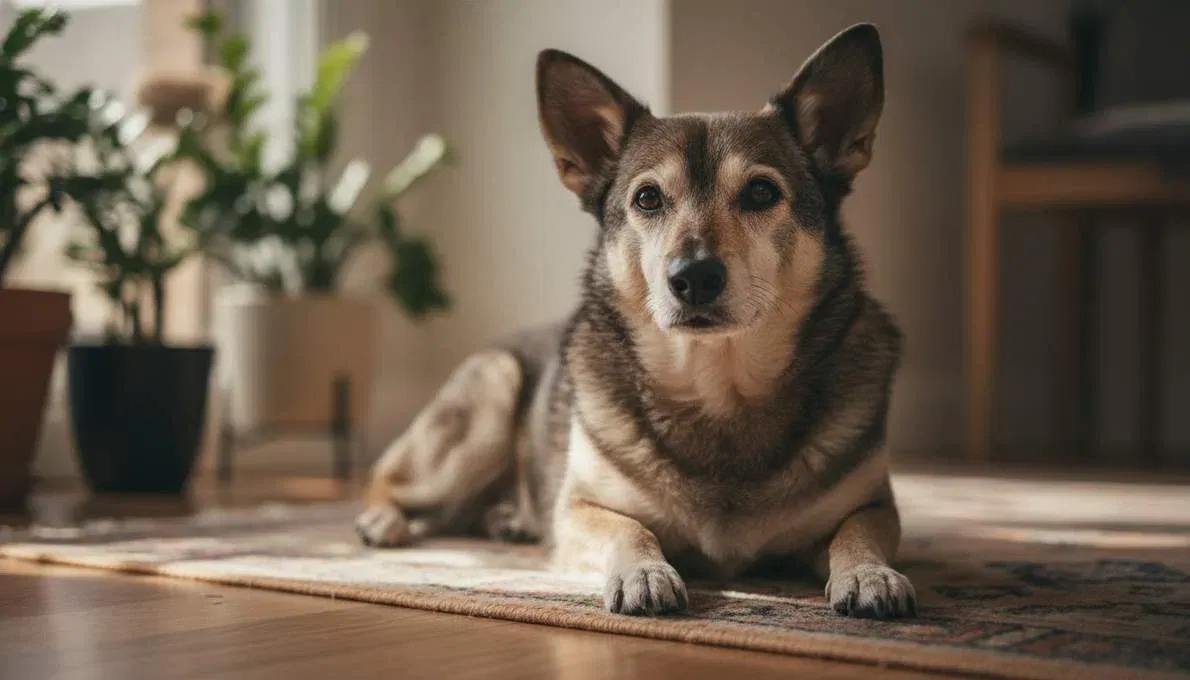
Swedish Vallhunds are long-lived dogs, typically reaching 12 to 15 years. Some sources cite an average of 15 years, which is excellent for any breed and reflects the Vallhund’s robust health and functional structure. Their small-to-medium size is a major factor — smaller dogs consistently outlive larger breeds.
Puppy stage (0–12 months): Energetic, mouthy, and loud from the start. Socialisation during the first 16 weeks is critical — expose to many people, dogs, environments, and sounds. Begin redirecting herding behaviour (ankle-nipping) immediately. Start grooming handling early so the puppy accepts brushing and nail trimming.
Adult (1–9 years): Peak energy years. Maintain regular exercise, mental stimulation, and training. Annual vet checks including eye examination (for SVR monitoring). Weight management is important — Vallhunds gain weight easily and their long backs suffer with extra kilograms.
Senior (9+ years): Energy levels moderate but many Vallhunds remain active and enthusiastic well into their teens. Watch for signs of vision changes (SVR typically manifests as mild night-blindness around age 10), joint stiffness, and dental deterioration. Twice-yearly vet visits recommended. Many Vallhunds retain their vocal nature and strong opinions until the very end.
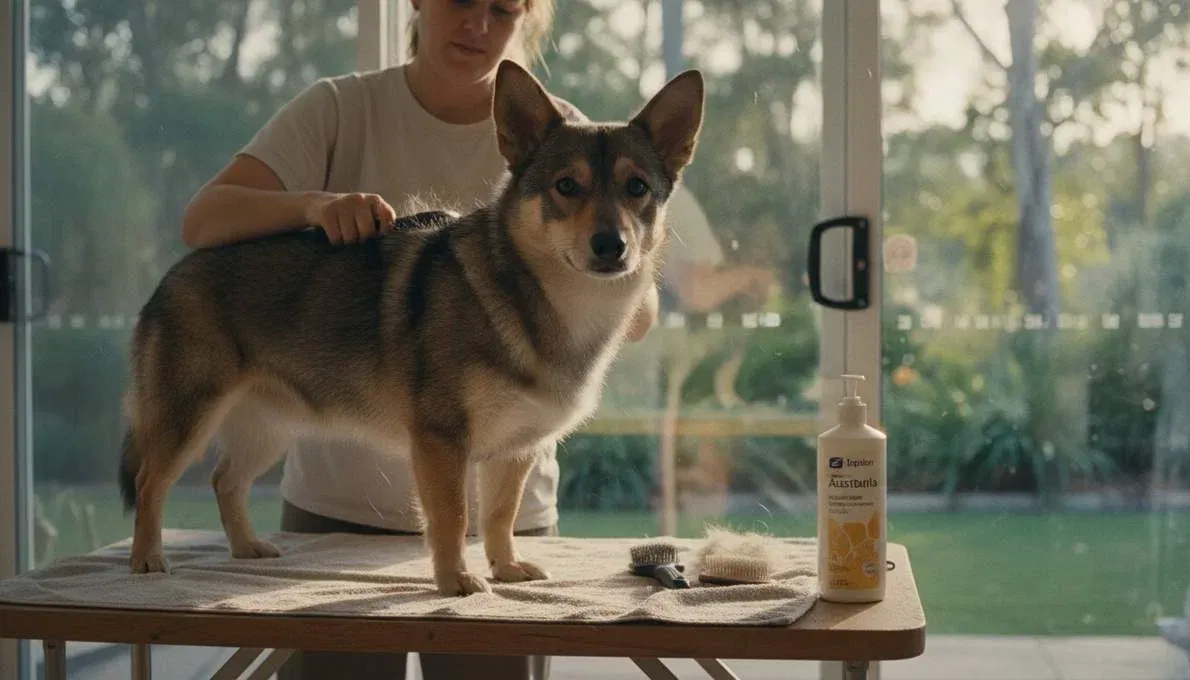
Grooming & Care
The Swedish Vallhund’s double coat is weatherproof, functional, and relatively low-maintenance compared to many breeds. The harsh outer coat repels dirt and water, and the soft undercoat provides insulation. Grooming is straightforward but does require consistency, especially during shedding season.
Grooming Schedule
| Task | Frequency | Notes |
|---|---|---|
| Brushing | 1–2 times weekly (daily during blowouts) | Use an undercoat rake and slicker brush. The coat is not prone to matting but dead undercoat needs removal during seasonal sheds. Spring and autumn blowouts are heavy. |
| Bathing | Every 4–6 weeks or as needed | Their coat naturally repels dirt — frequent bathing isn’t necessary and strips natural oils. |
| Seasonal Coat Blowout | Twice yearly (spring and autumn) | Heavy shedding over 2–3 weeks. Daily brushing essential. A deshedding tool makes a significant difference. |
| Ear Cleaning | Weekly | Erect ears mean good airflow and fewer ear infections than floppy-eared breeds. Check for wax build-up. |
| Nail Trimming | Every 2–3 weeks | Active Vallhunds on hard surfaces may self-maintain. |
| Dental Care | Daily brushing ideal | Small breeds are prone to dental disease. Regular brushing from puppyhood prevents tartar build-up. |
Swedish Vallhund colours explained: The breed standard requires a sable pattern in shades of grey through red. The most common colours include steel grey, grey-brown, grey-yellow, red-brown, and red-yellow. The body should be darker on the back, neck, and sides, with lighter markings on the chest, belly, legs, and under the tail. A well-defined facial mask with lighter hair around the eyes and muzzle is desirable. White is permitted in limited areas (narrow blaze, neck spot, legs, chest) but should not exceed one-third of the coat. Solid black, solid white, blue, or liver are not standard colours.
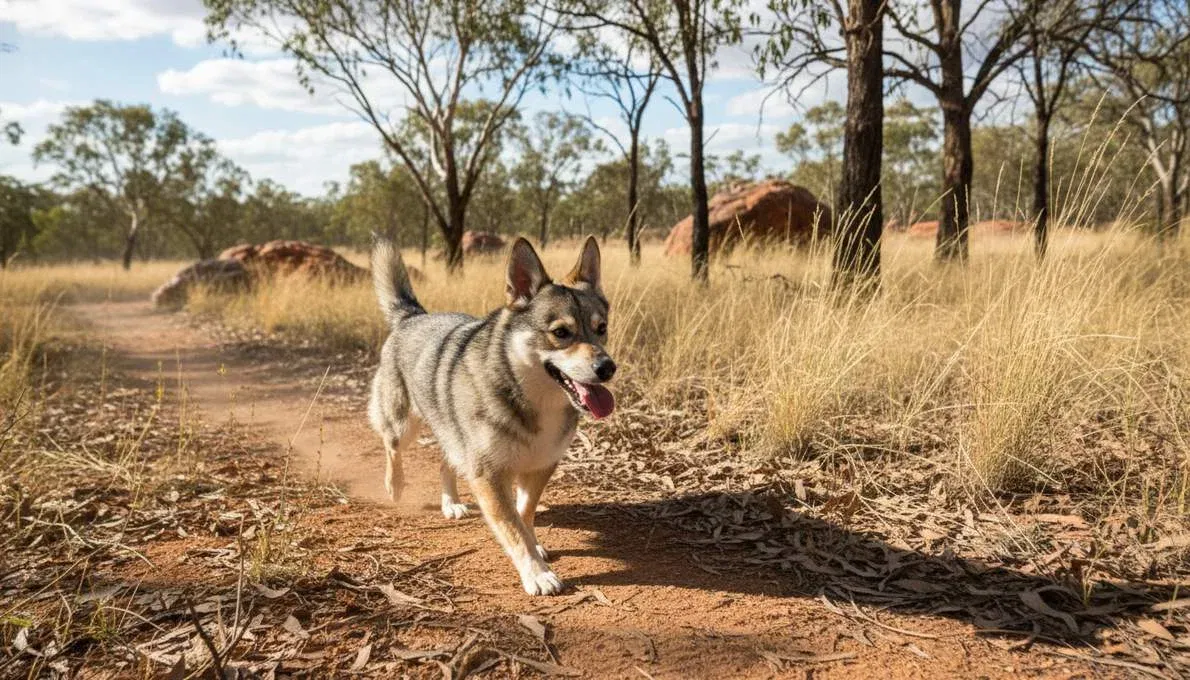
Exercise Needs
Swedish Vallhunds are high-energy dogs that need 45 to 60+ minutes of active exercise daily. They were bred to work all day on Swedish farms, and that stamina translates directly into a pet that needs real activity — not just a leisurely stroll around the block.
They’re outstanding candidates for dog sports. Agility is a natural fit for their athletic, low-slung build. They also excel at herding trials, flyball, tracking, rally obedience, and barn hunt. If you want a small dog to compete with, the Vallhund is a serious contender. Their eagerness, intelligence, and drive make them exceptional sport dogs.
Mental stimulation is equally important. A physically exercised Vallhund that’s mentally bored will bark incessantly, dig, and find creative ways to entertain itself (usually at the expense of your furniture or garden). Puzzle feeders, training sessions, scent games, and new experiences should be part of the daily routine.
Australian climate: Good news — the Swedish Vallhund handles the Australian climate surprisingly well. Their double coat provides insulation in both hot and cold conditions. As long as they have access to cool shade and fresh water, they manage heat better than many double-coated breeds. Exercise during cooler parts of the day in peak summer, and they’ll be fine in most Australian conditions. Their short legs do mean they’re low to the ground, so watch for hot pavement in summer.
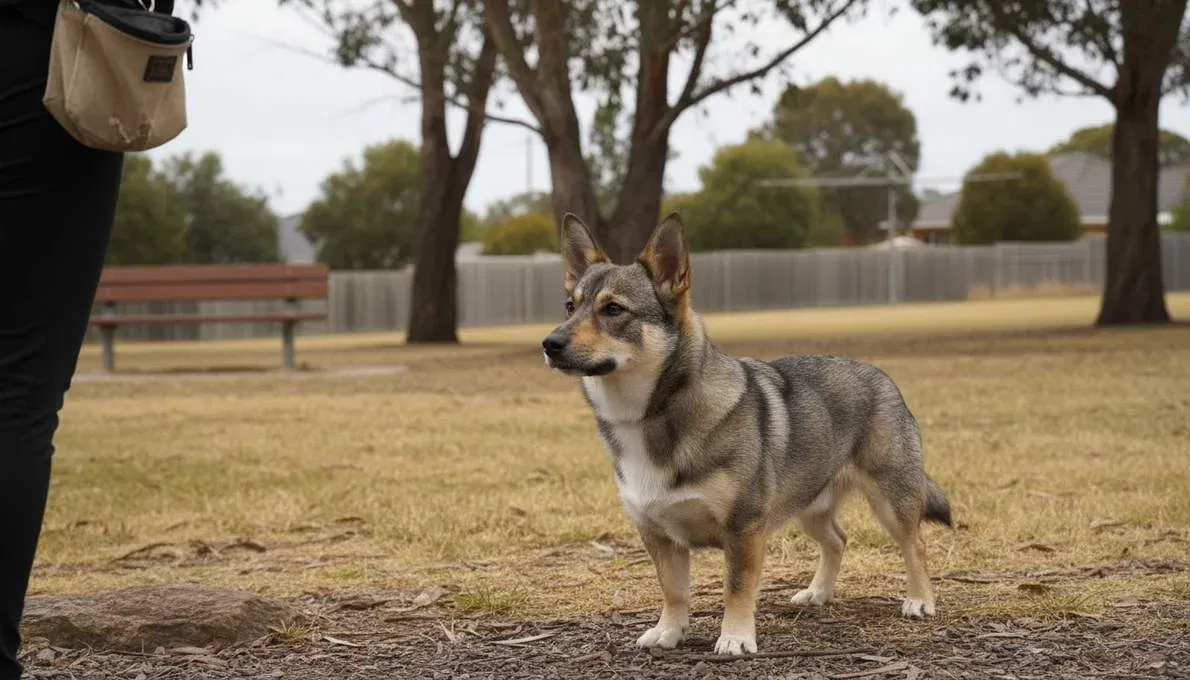
Training Guide
Training a Swedish Vallhund is rewarding and occasionally exasperating. They’re smart enough to learn anything but independent enough to decide when they feel like demonstrating it. Positive reinforcement, variety, and patience are the keys. Repetitive drills bore them; harsh corrections offend them.
Socialisation & Training Timeline
| Age | Focus | What to Expect |
|---|---|---|
| 8–12 weeks | Socialisation & bite inhibition | Expose to many people, dogs, and environments. Begin redirecting ankle-nipping immediately — yelp and redirect to toys. Start “quiet” training for barking. |
| 12–16 weeks | Basic commands | Sit, stay, come, leave it, drop it. Short, varied sessions. Vallhunds learn fast but get bored with repetition. Use high-value rewards. |
| 4–6 months | Lead manners & recall | Loose-lead walking, recall with distraction. Begin impulse control games. Introduce “enough” command for barking. Continue socialisation. |
| 6–12 months | Adolescence management | Independence increases. Herding behaviour may intensify. Stay consistent, patient, and engaging. Redirect energy into structured activities. |
| 1–2 years | Advanced training & sports | Channel intelligence and drive into agility, herding, flyball, or tracking. Vallhunds thrive when they have a “job.” |
| 2+ years | Ongoing enrichment | A well-trained Vallhund is a brilliant companion. Continue varied training, new challenges, and mental stimulation. They never stop learning. |
Honest difficulty rating: 5/10. Vallhunds are smart and eager to please, which makes basic training relatively straightforward. The challenges are managing their vocal nature, redirecting herding instincts, and keeping them engaged through variety. They’re not ideal for first-time owners — the combination of energy, barking, and independence requires experience and confidence. Experienced dog owners who enjoy working breeds will find the Vallhund a joy.
Cost of Ownership in Australia
| Expense | Estimated Cost | Notes |
|---|---|---|
| Puppy Purchase Price | $3,000–$5,000 AUD | From a registered ANKC breeder with SVR DNA test, eye exam, and hip evaluation. Rarity drives the price. Waiting lists of 12+ months are common. |
| Import (If Required) | $5,000–$12,000+ AUD | If no Australian litters are available, importing from NZ, Scandinavia, or the US may be necessary. Includes quarantine, freight, and paperwork. |
| Initial Setup | $400–$800 AUD | Crate, bed, bowls, lead, harness, puzzle toys, grooming tools, initial vet check. |
| Annual Food | $500–$800 AUD | Small breed, moderate appetite. High-quality diet recommended to maintain lean weight. |
| Annual Vet (Routine) | $350–$700 AUD | Vaccinations, check-ups, worming, annual eye examination (SVR monitoring). |
| Grooming | $50–$200 AUD/year | Minimal professional grooming needed. Home brushing and seasonal deshedding tools cover most needs. |
| Pet Insurance | $35–$60 AUD/month | Recommended for eye condition coverage and orthopaedic issues. Budget $420–$720/year. |
| Training & Dog Sports | $300–$800 AUD/year | Puppy school, ongoing training, and ideally a dog sport (agility, herding) for mental and physical outlet. |
Lifetime cost estimate: $20,000–$38,000 AUD over 12–15 years (excluding import costs). Their excellent health, long lifespan, small size, and minimal grooming needs make the Swedish Vallhund a relatively affordable breed to own once you’ve actually secured one. The challenge is finding and affording the initial puppy.
For breeders in Australia, contact the Swedish Vallhund Club of Australia or search DogzOnline for ANKC-registered breeders. Breed clubs in Victoria, NSW, and Queensland may have contacts. Be prepared for long waiting lists. The Swedish Vallhund Club of America and Scandinavian breed clubs can also direct you to international breeders if import is necessary.
Is the Swedish Vallhund Right for You?
want an intelligent, athletic, engaging small-to-medium dog; enjoy an active lifestyle with time for daily exercise and mental stimulation; appreciate a dog with personality, opinions, and vocalisations; are interested in dog sports (agility, herding, flyball); can manage and redirect herding behaviour around children and other pets; don’t mind barking and vocal communication; and have the patience to wait 12+ months for a puppy from a reputable breeder.
want a quiet dog (Vallhunds are one of the most vocal breeds alive); live in an apartment with noise-sensitive neighbours; want a low-energy lap dog; are a first-time dog owner without support (they’re manageable but not easy); keep small pets that trigger herding/chasing instincts; or want a dog you can acquire quickly (rarity means long waits).
The comparison is inevitable. Both are low-slung herding dogs, but they’re distinct breeds with different traits. The Pembroke Welsh Corgi (10–14 kg) is slightly more compact, friendlier with strangers, less vocal, and more widely available. The Swedish Vallhund (9–16 kg) is more wolf-like in appearance, more vocal, more independent, and significantly rarer. Corgis are prone to IVDD and obesity at higher rates. Vallhunds have the breed-specific retinopathy concern. If you want a corgi-type dog with a wilder look, more voice, and more working drive, the Vallhund is your breed.
The Swedish Vallhund is a thousand-year-old breed that still feels like a best-kept secret. They’re athletic, intelligent, healthy, long-lived, and endlessly entertaining. Their wolf-like face on corgi legs is one of the most striking silhouettes in the dog world, and their unique vocalisations will ensure your household is never, ever quiet.
The trade-offs are the barking (constant and creative), the rarity in Australia (prepare to wait), and the energy level that demands daily commitment. This is a working breed in a compact body, and they need owners who respect that.
If you want a small dog with a big personality, the athleticism to keep up with an active lifestyle, and the conversation skills to keep things interesting — the Swedish Vallhund is one of the most rewarding breeds you’ll find. You just might need a Viking’s patience to find one.
Frequently Asked Questions
Do Swedish Vallhunds shed?
Yes, Swedish Vallhunds shed moderately year-round and have heavy seasonal blowouts twice a year (spring and autumn). During these shedding periods, daily brushing is essential to manage the loose undercoat.
Are Swedish Vallhunds related to Corgis?
They share a common ancestry likely dating back to Viking times. The prevailing theory is that during Viking raids on Wales, Norse dogs (ancestors of the Vallhund) crossbred with local Welsh dogs, influencing the development of the Welsh Corgi. They are distinct breeds but share similar low-slung, herding builds.
How much does a Swedish Vallhund cost in Australia?
From a registered ANKC breeder, expect to pay $3,000–$5,000 AUD. Their rarity means waiting lists often exceed 12 months. Importing from overseas can cost $5,000–$12,000+ AUD.
Do Swedish Vallhunds bark a lot?
Yes, they are one of the most vocal breeds. They don’t just bark; they have a unique range of sounds including “argling,” howling, yipping, and grumbling. Training can manage excessive barking, but a silent Vallhund is not realistic.
Are Swedish Vallhunds good with children?
Yes, they are generally playful and patient with children. However, their strong herding instinct may lead them to nip at children’s ankles to herd them. This behaviour needs to be redirected through training from puppyhood.
What health problems do Swedish Vallhunds have?
The breed-specific concern is Swedish Vallhund Retinopathy (SVR), a form of progressive retinal atrophy. Other recognised conditions include hip dysplasia, patellar luxation, and epilepsy. Reputable breeders test for SVR and screen hips.
How long do Swedish Vallhunds live?
Swedish Vallhunds are long-lived, typically reaching 12 to 15 years, with an average around 15 years.
Are Swedish Vallhunds good apartment dogs?
It’s possible if they receive sufficient daily exercise (45–60+ minutes) and mental stimulation. The main challenge is their high barking level, which may not be suitable for apartments with noise-sensitive neighbours or thin walls.
What colours do Swedish Vallhunds come in?
They come in a sable pattern in shades of grey, red-brown, grey-brown, grey-yellow, and red-yellow. The body is darker on top with lighter markings on the chest, belly, and legs. Limited white is permitted. Solid black, white, blue, or liver are not standard.
Are Swedish Vallhunds easy to train?
They are highly intelligent and quick learners, making basic training straightforward. Challenges include their independent nature, vocalisations, and strong herding instinct. They require positive reinforcement, variety, and patience. They are not the easiest choice for first-time owners.
1. American Kennel Club — Swedish Vallhund Breed Information: https://www.akc.org/dog-breeds/swedish-vallhund/
2. Wikipedia — Swedish Vallhund: https://en.wikipedia.org/wiki/Swedish_Vallhund
3. PetMD — Swedish Vallhund Health and Care: https://www.petmd.com/dog/breeds/swedish-valhund
4. Dogster — Swedish Vallhund Breed Info: https://www.dogster.com/dog-breeds/swedish-valhund
5. WebMD Pets — What to Know About Swedish Vallhunds: https://www.webmd.com/pets/dogs/what-to-know-about-swedish-vallhunds
6. DogTime — Swedish Vallhund Breed Information: https://dogtime.com/dog-breeds/swedish-vallhund
7. Wisdom Panel — Swedish Vallhund Facts: https://www.wisdompanel.com/en-us/dog-breeds/swedish-vallhund
8. Swedish Vallhund Club of America: https://www.swedishvallhund.com/
9. Dog Academy — Swedish Vallhund Complete Guide: https://dogacademy.org/breeds/swedish-vallhund