
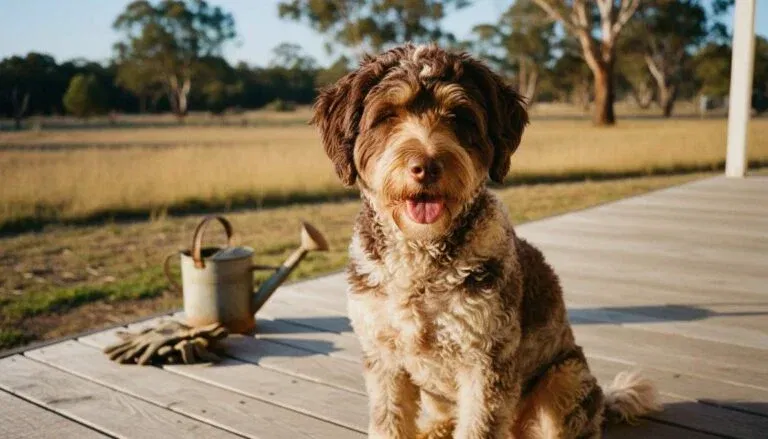
Imagine a dog that herds goats up a Spanish mountainside in the morning, dives into a river to retrieve ducks at noon, guards the farmhouse all night, and somehow still has energy left to demand your attention at breakfast. That’s the Spanish Water Dog in a nutshell — a 15 kg workaholic wrapped in a coat of woolly curls that, left to grow, forms actual dreadlocks.
Known in Spain as the Perro de Agua Español, this ancient breed has been working alongside Iberian farmers, fishermen, and hunters for over 800 years. They herd, they retrieve, they guard, they swim. They’re the Swiss Army knife of the dog world, only with more opinions and better hair.
The Spanish Water Dog is still rare in Australia, with a small but growing community of dedicated breeders and owners. If you’re considering one, you’ll need to understand what “working breed” really means — because this dog doesn’t just want a job, it needs one. Without it, things go sideways fast. Let’s talk about what that actually looks like in an Australian home.
What You’ll Learn
- Breed traits & temperament
- Health concerns to know
- True cost in Australia
- Training & exercise needs
- Is this breed right for you?
Spanish Water at a Glance
| Trait | Detail |
|---|---|
| Breed Group | Gundog (ANKC Group 3) |
| Origin | Spain (Iberian Peninsula) — working farm dog for 800+ years |
| Size | Males 44–50 cm | Females 40–46 cm at the shoulder |
| Weight | Males 18–22 kg | Females 14–18 kg |
| Coat | Single coat of woolly curls. Forms cords/dreadlocks when grown long. Never brushed. |
| Colours | Solid black, brown, beige, or white. Bi-colour always includes white (black & white or brown & white) |
| Lifespan | 12–14 years |
| Temperament | Loyal, intelligent, active, protective, one-person bonded |
| Exercise Needs | High — minimum 1 hour daily plus mental stimulation and a “job” |
| Shedding | Very low — single coat, minimal shedding, low dander |
| Good With Kids | Yes with early socialisation, but may try to herd children |
| Apartment Friendly | Not ideal — needs space, activity, and a job to do |
| Hypoallergenic | Often listed as hypoallergenic — low-shedding and low-dander but still produces allergens |
| Barking Level | Moderate — alert barkers; will notify you of everything they consider suspicious |
History & Origins
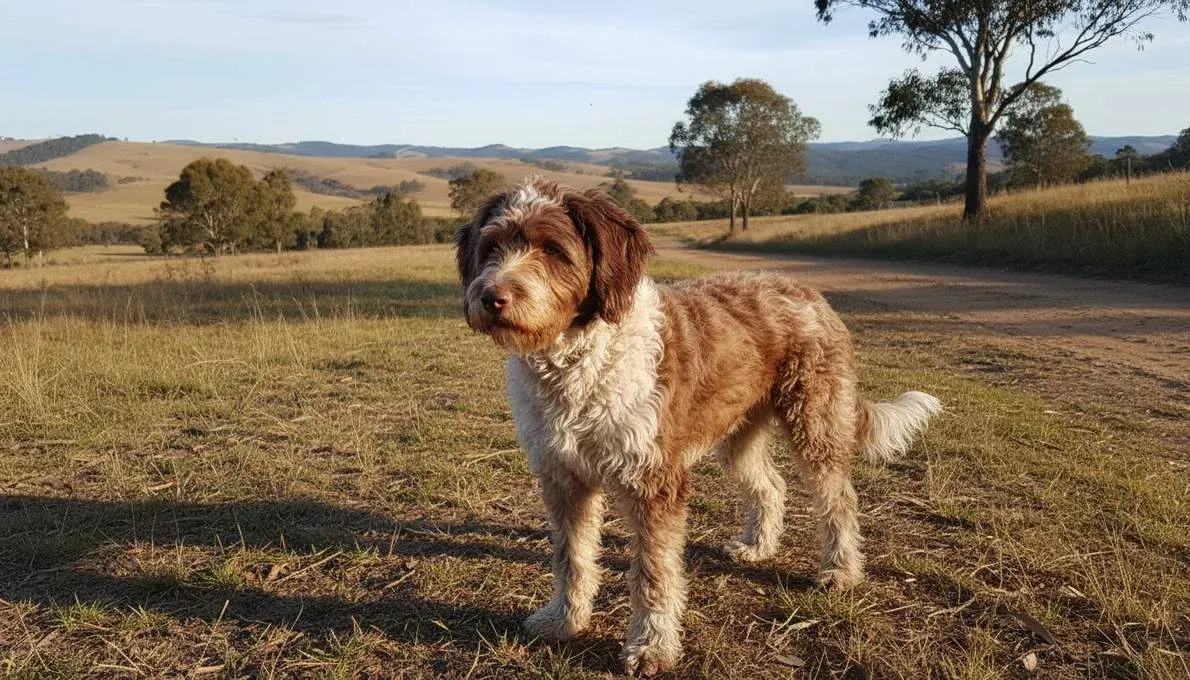
The Spanish Water Dog is an ancient breed whose history stretches back at least 800 years on the Iberian Peninsula. The breed was first referenced in historical literature around 1100 AD, though its true origins remain debated. Some theories suggest North African roots, with the dogs arriving in Spain alongside settlers from the Maghreb. Others point to Turkish traders bringing them by sea — hence the breed’s old name Perro Turco (“Turkish Dog”) or Turco Andaluz (“Andalusian Turk”).
Whatever the origin story, the Spanish Water Dog’s job description was remarkably broad. In Spain’s central and southern regions, they herded goats, sheep, cattle, and pigs across seasonal pastures and hunted small game. Along the coast and in the north, they worked with fishermen, retrieving nets and lost tackle from the water. On every farm, they served as guardians. This versatility made them indispensable — and it’s why the breed remains so adaptable today.
Despite this long history, the Spanish Water Dog nearly disappeared in the 20th century as mechanised farming reduced the need for working dogs. The breed was revived in the late 1970s by dedicated Spanish enthusiasts, with the Spanish Water Dog Club (Spain) forming in 1980. The AKC added the breed to its Foundation Stock Service in 2005 and granted full recognition in January 2015 — making it one of the newest AKC-recognised breeds.
In Australia, the Spanish Water Dog is still uncommon. A handful of registered breeders operate across the country, and most puppies involve waiting lists of 12 months or more. The breed is registered with the ANKC in the Gundog group.
Temperament & Personality
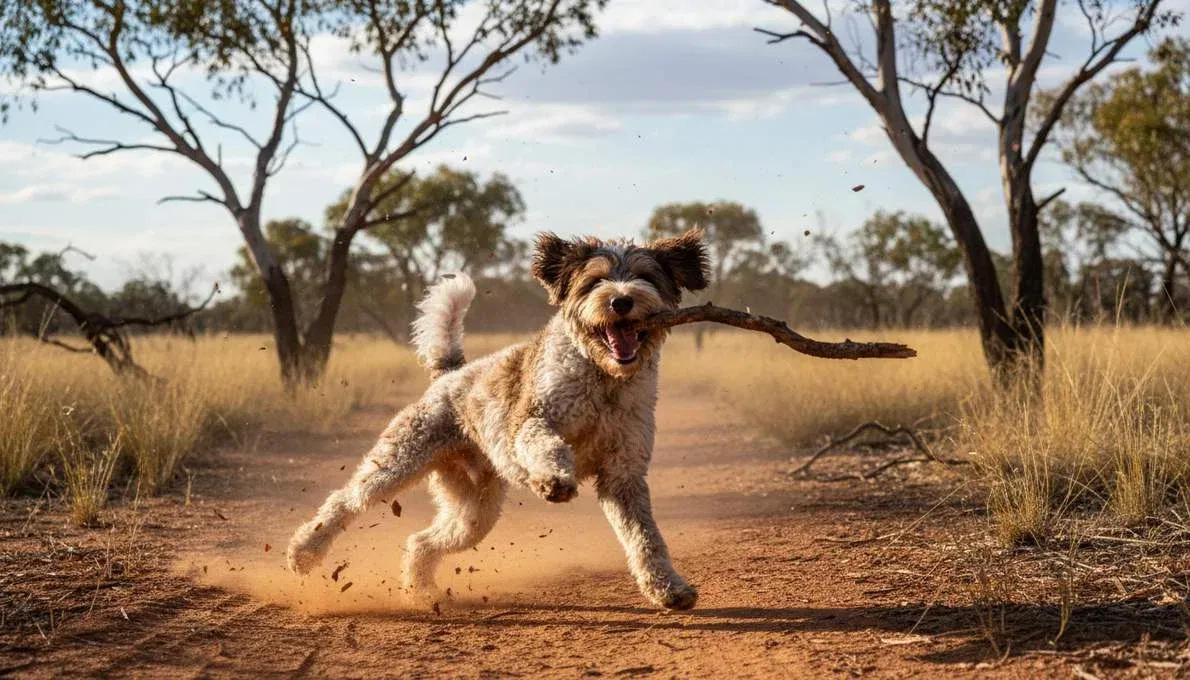
The Spanish Water Dog is not a golden retriever in a curly coat. This is a serious working breed with strong instincts, deep loyalty, and a brain that runs on diesel. They’re fantastic dogs for the right owner — but that “right owner” is someone who understands working breeds and is prepared to give this dog a purpose.
Spanish Water Dogs accept the whole family, but they tend to attach most intensely to one person. They’re often described as “Velcro dogs” — they’ll follow their chosen human from room to room and want to be involved in everything. This is endearing, but it also means separation anxiety is a genuine risk if not managed from puppyhood.
Naturally wary. Unlike the tail-wagging-at-everyone terrier breeds, Spanish Water Dogs take their guarding instincts seriously. They’re watchful around unfamiliar people and won’t warm up immediately. This isn’t aggression — it’s discernment. But it makes early, extensive socialisation absolutely critical.
Strong. Spanish Water Dogs will instinctively try to herd children, other pets, visitors, and occasionally passing cars. Nipping at heels is a herding behaviour, not aggression, but it needs to be redirected early. Kids need to understand this too.
Very high. These dogs are fast learners who thrive on problem-solving. They need mental stimulation as much as physical exercise. A bored Spanish Water Dog doesn’t just lie around looking sad — it finds something to do, usually something you’d rather it didn’t. Digging, barking, rearranging your furniture, and dismantling anything within reach are all common complaints from under-stimulated owners.
Spanish Water Dogs like order. They notice when things are out of place and thrive on consistent schedules. Sudden changes to routine can cause stress. This is a breed that appreciates predictability.
Health & Genetic Conditions
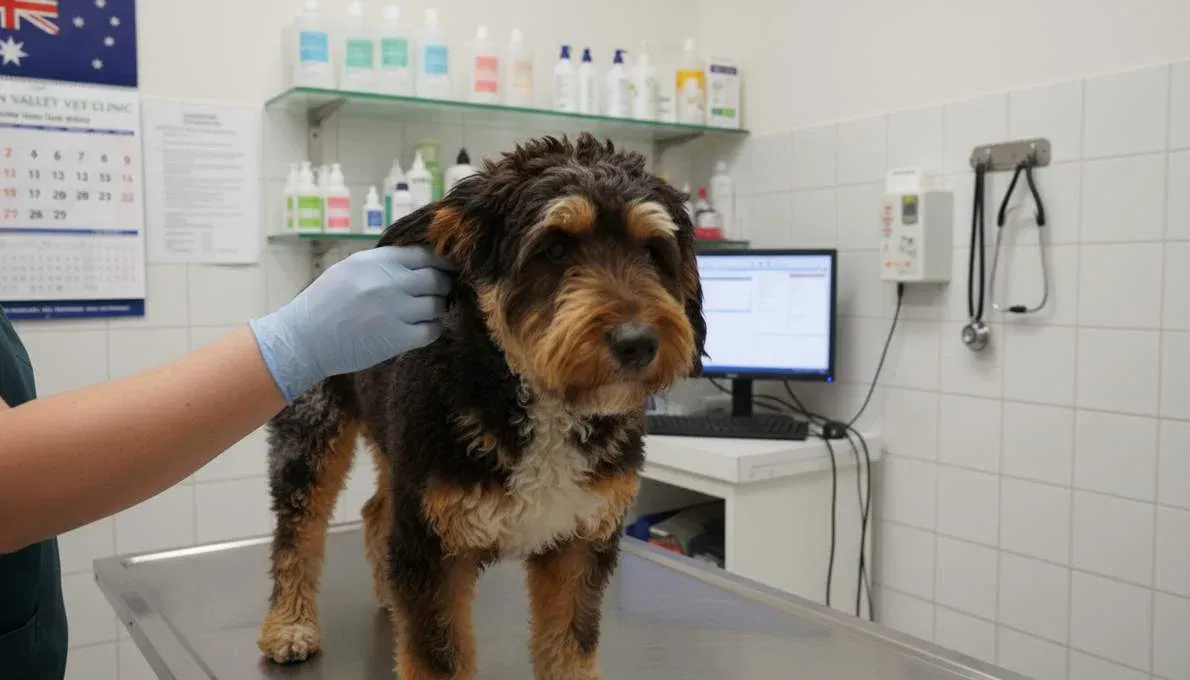
The Spanish Water Dog is a generally healthy, robust breed. Because AKC recognition only came in 2015, the breed’s genetic health profile is still being mapped, and breeders are learning more with each generation. The main established concerns are hip dysplasia and allergies, with several other conditions occurring at lower but notable rates.
Prevalence: CHG is a breed-defining genetic condition of the Spanish Water Dog — one of only a small number of breeds worldwide to carry a breed-specific mutation in the thyroid peroxidase (TPO) gene. [Paw Print Genetics – CHG Spanish Water Dog] The TPO enzyme is essential for the body’s production of thyroid hormone; affected puppies lacking functional TPO cannot synthesise adequate thyroid hormone from the very earliest weeks of life. Inherited as an autosomal recessive condition, two copies of the mutation are required to produce clinical disease — carriers are outwardly normal. The overall frequency of the carrier state in the breed is not precisely published, but breeders worldwide actively screen for it, indicating the mutation is present at meaningful levels in the gene pool.
Symptoms: Signs appear strikingly early — from around 2–8 weeks of age — with affected puppies visibly smaller and less active than their littermates. The thyroid glands enlarge dramatically, creating visible paired swellings along the underside of the neck (goiter). Dwarfism develops as bones fail to lengthen normally, producing short legs and a disproportionately large head. Eye and ear canal opening is substantially delayed. Coat quality is affected — fluffy without normal guard hairs. Neurological and neuromuscular deficits emerge, and without treatment puppies die within weeks to months. If caught early and treated with daily thyroid hormone supplementation, most symptoms can be prevented or substantially reversed.
Treatment Cost (AUD): Lifelong daily oral thyroid hormone (levothyroxine) — essential for any diagnosed puppy to survive — costs approximately $30–$80/month. [petinsurance.com.au] With early treatment, affected dogs can live reasonably normal lives; without it, death occurs in early puppyhood. DNA testing costs approximately $60–$100 per dog.
Prevention: DNA testing of all breeding dogs for the TPO mutation is essential and is recommended by the Spanish Water Dog Club of America. Two carriers must never be bred together. Carriers can be safely bred to clear-tested dogs — their offspring will include carriers but no affected puppies. Ask breeders to show CHG DNA test results for both parents.
Prevalence: The Spanish Water Dog carries its own breed-specific form of early-onset PRA, caused by a distinct genetic variant identified in the breed. [Wisdom Panel – EOPRA Spanish Water Dog] Unlike the more common late-onset prcd-PRA, EOPRA in Spanish Water Dogs typically produces clinical signs between 2 and 4 years of age — meaning dogs go blind significantly earlier in life. The photoreceptor cells of the retina progressively die, first causing night blindness before complete blindness follows. Inherited as an autosomal recessive condition, carrier dogs do not develop the disease but can produce affected offspring when bred to another carrier. The SWDCA and responsible breeders test for EOPRA (as well as the separate prcd-PRA variant) as mandatory health screening.
Symptoms: Owners typically first notice the dog hesitating in dim light or being reluctant to move around in darkness — this is night blindness from the loss of rod photoreceptors, usually detectable from around age 2–3. Day vision subsequently deteriorates as cone cells also fail, and complete blindness follows over months to years. The condition is painless, but affected dogs progressively lose independence. Pupils become permanently dilated and the retina shows characteristic reflective changes visible to a veterinary ophthalmologist.
Treatment Cost (AUD): There is no treatment for EOPRA. DNA testing costs approximately $60–$100. [petinsurance.com.au] Annual CAER eye examinations ($150–$350) can detect early retinal changes before owners notice symptoms, allowing earlier environmental preparation for vision loss. Blind dogs adapt well with consistent home routines and a safe, predictable environment.
Prevention: DNA testing for both EOPRA and prcd-PRA is recommended for all breeding Spanish Water Dogs. Carriers can be bred to clear-tested dogs safely. Ask breeders for DNA test certificates for both variants on each parent. Annual ophthalmological examination for breeding stock is also recommended alongside DNA testing.
Prevalence: Neuroaxonal dystrophy in the Spanish Water Dog is caused by a mutation in the TECPR2 gene, identified specifically in this breed in a 2015 published study. [Paw Print Genetics – NAD Spanish Water Dog] Inherited as an autosomal recessive condition, affected dogs develop progressive neurological deterioration that begins in the first year of life. The overall frequency of the mutation in the breed’s gene pool is not yet well characterised, but a DNA test is available and responsible breeders test for it. The disease is uniformly fatal — affected dogs are typically euthanised within a year of clinical onset.
Symptoms: Signs typically appear between 6 months and 1 year of age. The earliest signs are movement abnormalities — an abnormal gait, incoordination, and wobbling — followed by incontinence as spinal cord function deteriorates. Behavioural changes are distinctive: affected dogs become dull, nervous, and may vocalise abnormally. Vision loss and reduced muscle tone develop as the condition advances. The combination of neurological signs in a young dog of this breed should prompt DNA testing or specialist assessment.
Treatment Cost (AUD): There is no treatment. Palliative and supportive care can be provided in the short term, but the prognosis is invariably fatal. [petinsurance.com.au] DNA testing to prevent affected puppies costs approximately $60–$100 per dog and is the only meaningful intervention.
Prevention: DNA testing for the TECPR2 mutation should be performed on all breeding dogs. Carriers bred to clear dogs produce no affected offspring. Ask breeders for NAD DNA test results alongside CHG and PRA results — responsible breeders test for all three. The Wisdom Panel breed health screening includes NAD for Spanish Water Dogs.
Prevalence: Hip dysplasia is the primary orthopaedic concern in the Spanish Water Dog and is identified by both the VCA and the SWDCA as the leading structural health issue for the breed. [VCA Animal Hospitals – Spanish Water Dog] As an active medium-sized working breed, the physical demands placed on the hip joints — particularly in dogs engaged in herding, agility, or water work — can accelerate the progression of dysplasia-related arthritis. OFA and PennHIP screening are both used in the breed, and the SWDCA recommends hip evaluation for all breeding dogs. Breed-specific OFA data for Spanish Water Dogs is limited due to the breed’s relatively small registration numbers, but hip dysplasia is consistently ranked as the most important orthopaedic condition to screen against.
Symptoms: Early-stage hip dysplasia in young adult dogs may present as a slight reluctance to rise from rest, occasional bunny-hopping during running, or reduced enthusiasm for physical activity. As arthritis develops with age, more consistent signs emerge: stiffness after rest, a narrowed stride, reluctance to jump or climb stairs, and visible muscle wastage over the hindquarters. Dogs may shift weight onto their front end to compensate for hind end discomfort.
Treatment Cost (AUD): Joint supplements and anti-inflammatory medication for managed mild-to-moderate cases cost $500–$2,000/year. [petinsurance.com.au] Surgical options including triple pelvic osteotomy (young dogs, $3,000–$6,000/hip), femoral head ostectomy ($2,000–$4,000/hip), or total hip replacement ($6,000–$10,000/hip) are available for more severe cases.
Prevention: OFA or PennHIP evaluation of both parents before breeding is the SWDCA’s standard requirement. Ask breeders to show hip screening results. Keeping growing dogs lean, avoiding high-impact repetitive exercise on hard surfaces before 12 months, and feeding a joint-supportive diet through development all reduce severity of expression in genetically predisposed dogs.
Prevalence: Exocrine pancreatic insufficiency — where the pancreas fails to produce sufficient digestive enzymes — is a recognised condition in Spanish Water Dogs, as are autoimmune hypothyroidism and Addison’s disease. [HighView SWD – Health] Unlike CHG, prcd-PRA, EOPRA, and NAD, these autoimmune conditions have no simple single-gene cause and cannot be screened out by DNA testing. EPI is thought to arise from immune-mediated destruction of the pancreatic acinar cells. The breed’s predisposition to autoimmune conditions broadly — thyroiditis, Addison’s, EPI — suggests an underlying immune dysregulation tendency, though the genetic basis is complex and incompletely understood.
Symptoms: EPI produces a characteristic triad of signs: chronic large-volume diarrhoea (often yellowish or fatty-looking), marked weight loss despite a ravenous appetite, and coprophagia (eating faeces, driven by nutrient desperation). Affected dogs eat constantly but waste away. Autoimmune hypothyroidism presents with weight gain despite normal or reduced food intake, lethargy, coat changes, and skin infections. Addison’s disease causes recurring episodes of vomiting, weakness, and gastrointestinal upset — see the Soft Coated Wheaten Terrier entry for a detailed description.
Treatment Cost (AUD): EPI is managed with pancreatic enzyme powder added to every meal ($80–$200/month lifelong) plus cobalamin (B12) supplementation. [petinsurance.com.au] Autoimmune hypothyroidism requires lifelong levothyroxine ($30–$80/month). With treatment, all three conditions are manageable and affected dogs live good quality lives. Annual blood chemistry screening helps catch these conditions early.
Prevention: No DNA tests exist for autoimmune EPI, hypothyroidism, or Addison’s in this breed. Annual wellness blood testing including thyroid panel and ACTH stimulation testing for at-risk dogs is the most practical approach. Any Spanish Water Dog with dramatic weight loss despite good appetite, chronic loose stools, or recurring vague illness episodes warrants investigation rather than watchful waiting.
All costs are estimates. Metro specialist pricing (Sydney and Melbourne) is at the higher end.
Ask breeders for OFA hip scores and PRA DNA test results at minimum. Because the breed is still relatively new to formal registration, transparency about health history in the breeder’s lines is especially important.
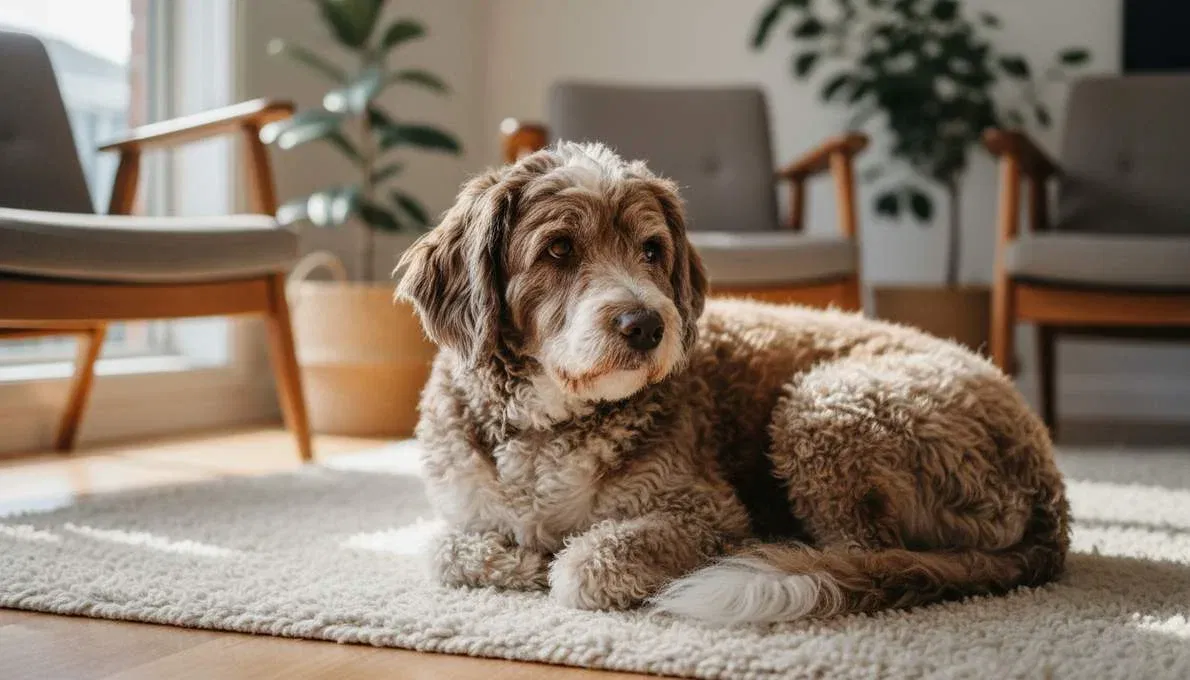
Spanish Water Lifespan & Longevity
Spanish Water Dogs typically live 12 to 14 years. Their robust, working-dog constitution serves them well, and the breed hasn’t been subjected to the kind of extreme physical exaggeration that shortens lifespan in some pedigree breeds.
Puppy stage (0–12 months): High energy and strong herding instincts emerge early. Socialisation is critical during this window — expose your puppy to many people, dogs, and environments. This breed’s natural wariness of strangers means under-socialised puppies can become anxious or reactive adults. Begin coat management from day one so the puppy accepts handling.
Adult (1–8 years): Peak working years. These dogs are slow to mature mentally, with some not reaching full adult temperament until age 2–3. Consistent training throughout this period is essential. Annual vet checks, hip monitoring, and thyroid screening are recommended.
Senior (8+ years): Energy levels moderate but many Spanish Water Dogs remain active and engaged well into their senior years. Twice-yearly vet visits. Watch for signs of hypothyroidism, joint stiffness, and eye changes. Maintain mental stimulation — an older SWD still needs a “job.”
Spanish Water Dog Grooming & Care
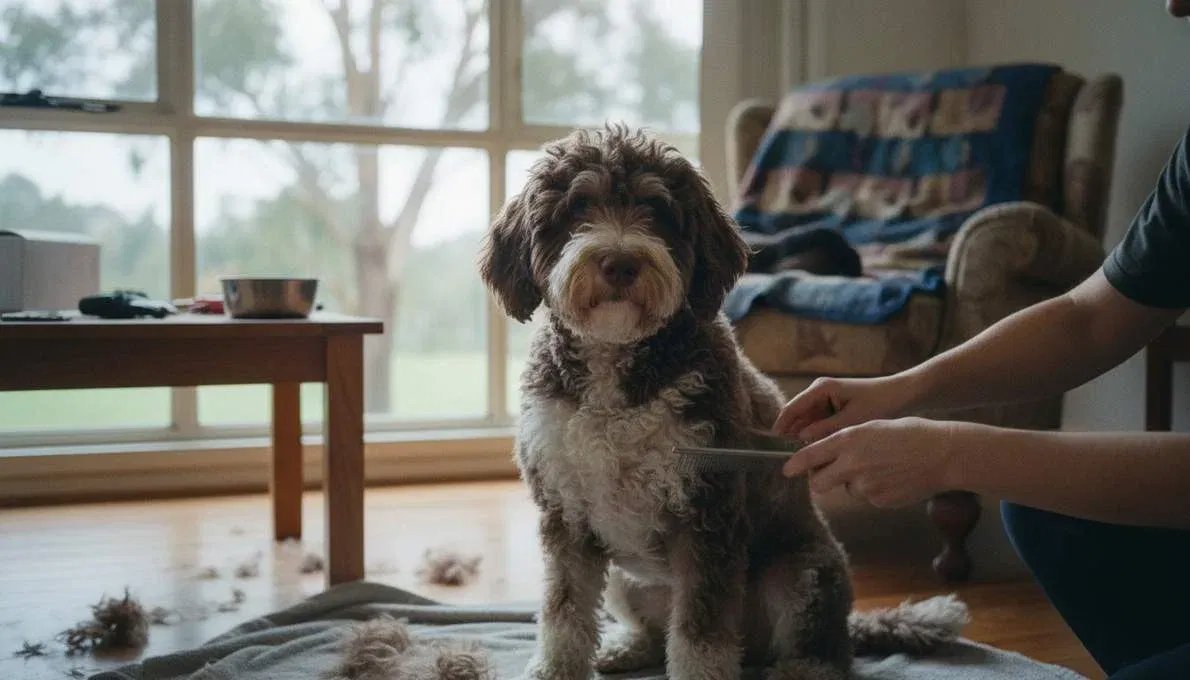
Here’s where the Spanish Water Dog breaks every rule you know about dog grooming. You do not brush this dog. Ever. The woolly, curly coat is designed to form natural cords (think dreadlocks) as it grows, and brushing destroys the coat’s structure. This makes grooming simultaneously simpler and more counterintuitive than almost any other breed.
Grooming Schedule
| Task | Frequency | Notes |
|---|---|---|
| Brushing | Never | Seriously. Do not brush a Spanish Water Dog. The coat is meant to curl and cord naturally. Brushing breaks the cords and damages the texture. |
| Full Clip/Shave | 1–2 times per year | The entire coat is clipped to the same length (usually 1–2 cm) once or twice yearly. Many owners time this for spring/summer in Australia. |
| Mat Separation | As needed | As cords form, separate them by hand to prevent large mats from pulling on the skin. Focus on behind ears, back legs, and under collars. |
| Bathing | As needed | Use gentle dog shampoo. Pat or squeeze cords dry with a towel — never rub. Allow to air dry or use low heat. Overbathing strips the coat’s natural oils. |
| Ear Cleaning | Weekly (more often after swimming) | Floppy ears + love of water = moisture build-up. Clean and dry ears thoroughly after every swim. |
| Nail Trimming | Every 2–3 weeks | Active dogs may self-maintain on hard surfaces. |
| Dental Care | Daily brushing ideal | Standard small-to-medium breed dental maintenance. |
The corded coat explained: When the SWD’s coat grows out, it naturally forms flat, rope-like cords similar to a Puli or Komondor. This is the traditional working coat — it protected the dog from weather, thorns, and bites while working. Many pet owners choose to keep the coat clipped short for convenience, which is perfectly acceptable. Others enjoy the corded look and maintain it by hand-separating cords as they form. Either approach is fine as long as the skin underneath stays clean and healthy.
Haircut styles: The breed standard calls for an even, all-over clip. Unlike poodles or other curly breeds, Spanish Water Dogs should not receive sculpted trims, shaped cuts, or styled grooming. The coat is meant to look rustic and natural. A good groomer familiar with the breed will clip evenly and leave the curls to do their thing.
Exercise Needs
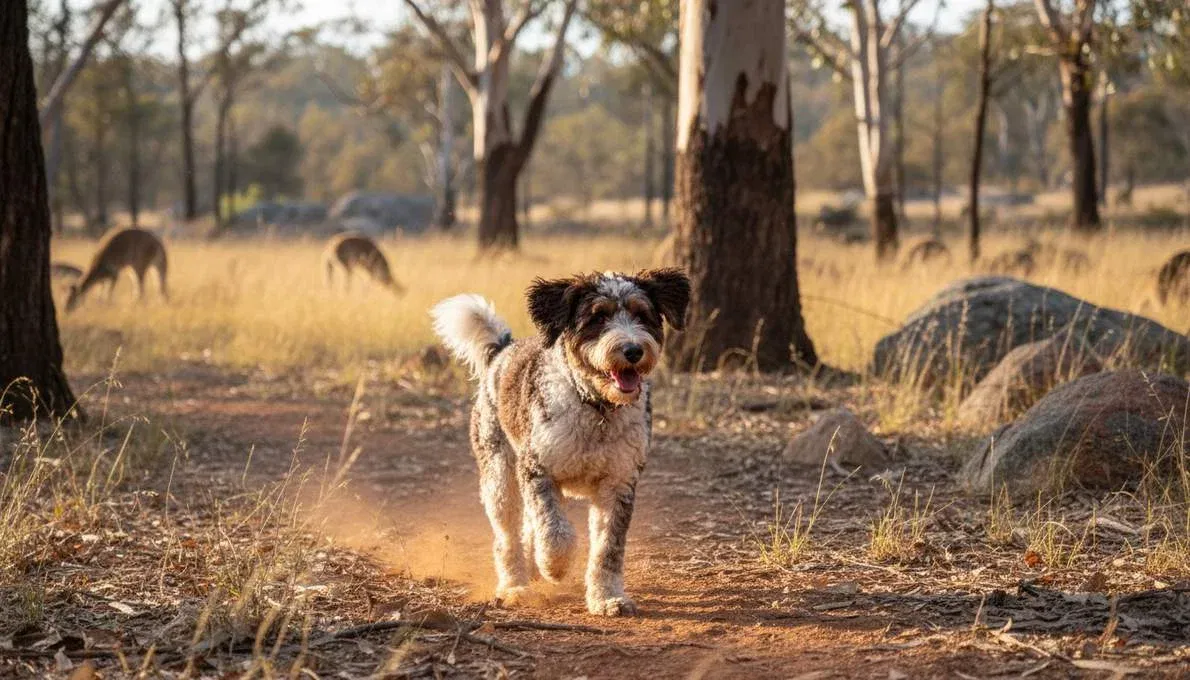
This is a high-energy working breed that needs a minimum of one hour of active exercise daily — and that’s the bare minimum. Spanish Water Dogs are at their best with 1.5 to 2 hours of combined physical and mental activity.
They’re natural athletes who excel at herding trials, agility, flyball, obedience, tracking, dock diving, and — unsurprisingly — water work. If there’s a body of water within range, your SWD will find it and be in it. Swimming is one of the best exercises for this breed.
The “job” requirement:
This cannot be overstated. Spanish Water Dogs need purposeful work, not just physical exertion. A long walk isn’t enough on its own. Incorporate training sessions, scent work, puzzle feeders, fetch with purpose, or dog sports into the daily routine. A working breed without work becomes a problem breed.
Australian climate note:
Spanish Water Dogs handle warm weather well for a coated breed. Their single coat doesn’t trap heat the way double coats do, and clipping short for summer is standard practice. They’re also excellent swimmers, making them well-suited to Australian coastal and lake lifestyles. Avoid exercise during peak heat, provide shade and water, and be vigilant about ear drying after swims. In cooler regions, a longer coat provides adequate warmth.
Fencing:
Essential. Spanish Water Dogs have strong herding drives and will attempt to chase and herd anything that moves. The breed club warns they may jump over or dig under fences. A minimum 1.5 m secure fence is recommended, with supervision in the yard.
Training Guide
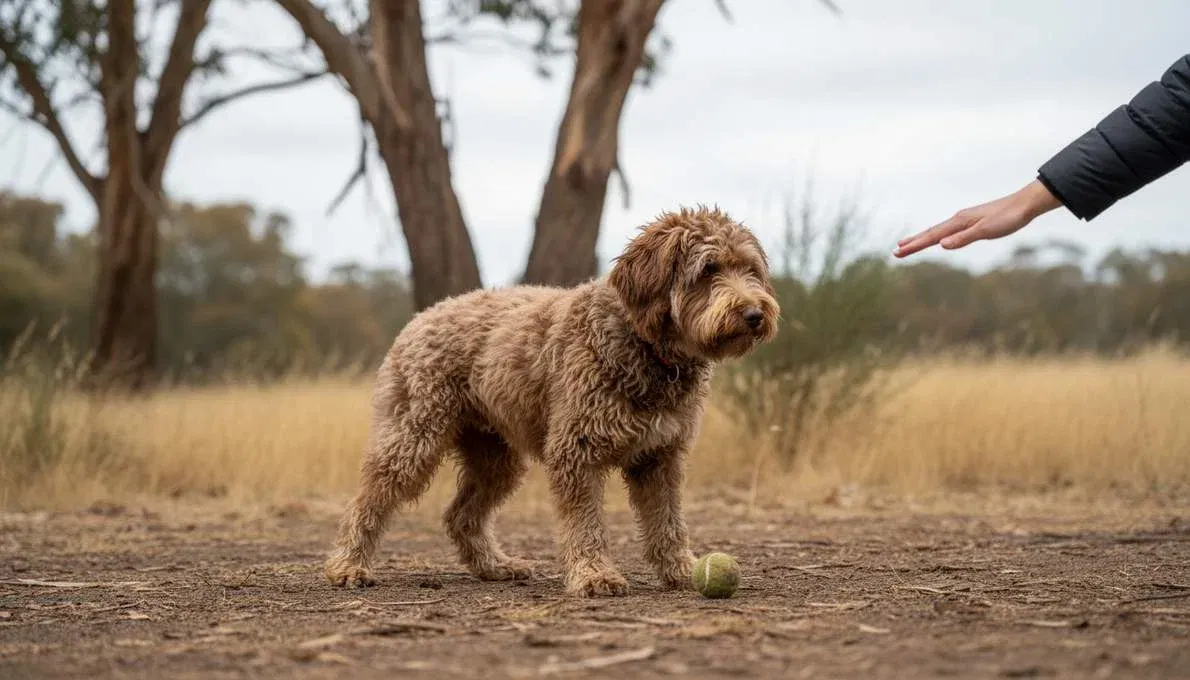
Spanish Water Dogs are intelligent, eager to please, and highly trainable — with one critical caveat: they respond only to positive, reward-based methods. Harsh corrections, raised voices, or punishment-based techniques will backfire spectacularly. This breed needs to trust its handler, and fear breaks that trust permanently.
Socialisation & Training Timeline
| Age | Focus | What to Expect |
|---|---|---|
| 8–12 weeks | Socialisation (priority #1) | Expose to as many people, dogs, environments, and sounds as possible. This breed’s natural wariness makes early socialisation non-negotiable. |
| 12–16 weeks | Basic commands & handling | Sit, stay, come, leave it. Begin grooming handling. Teach “enough” for alert barking. Redirect any herding of children. |
| 4–6 months | Lead manners & recall | These dogs are strong pullers with chasing instincts. Start loose-lead work early. Build reliable recall with high-value rewards. |
| 6–12 months | Impulse control & herding redirection | Adolescence brings peak herding drive and boundary-testing. Channel instincts into structured activities. Consistent boundaries essential. |
| 1–2 years | Advanced training & sports | Introduce agility, herding trials, water work, or tracking. The SWD’s working drive makes them naturals. Mental maturity still developing. |
| 2+ years | Ongoing enrichment | Full mental maturity reached. Maintain daily training and “job” structure. A trained adult SWD is a highly capable, reliable companion. |
Honest difficulty rating: 5/10.
Highly trainable for experienced owners. The intelligence and eagerness to please are genuine advantages. The challenges are the breed’s wariness with strangers (socialisation must be proactive and ongoing), strong herding instincts that need channelling, and slow mental maturity — training is a multi-year project, not a puppy-school-and-done deal. Not recommended for first-time dog owners unless they’re genuinely committed to breed-specific training.
Cost of Ownership
The Spanish Water Dog is a rare breed in Australia, which affects both purchase price and availability. Grooming costs are low (no professional styling needed), but the breed’s health risks and exercise/training demands should be factored into total ownership costs.
| Expense | Estimated Cost | Notes |
|---|---|---|
| Puppy Purchase Price | $3,000–$6,000 AUD | From a registered ANKC breeder with hip/eye testing. Waiting lists of 12+ months are common due to breed rarity. |
| Import (if required) | $5,000–$12,000+ AUD | If no local litters available, importing from Spain/Europe or the US adds quarantine, transport, and documentation costs. |
| Initial Setup | $500–$1,000 AUD | Crate, bed, bowls, lead, collar, puzzle toys, initial vet check. |
| Annual Food | $600–$1,000 AUD | High-quality diet. Dogs with EPI or allergies may need speciality food ($1,200–$2,500+). |
| Annual Vet (Routine) | $400–$800 AUD | Vaccinations, check-ups, worming, thyroid screening, annual hip assessment. |
| Grooming | $100–$300 AUD/year | 1–2 full clips yearly. Minimal professional grooming needed. Home maintenance is hand-separation only. |
| Pet Insurance | $45–$75 AUD/month | Recommended for hip dysplasia, Addison’s, and EPI coverage. Budget $540–$900/year. |
| Training & Sports | $300–$800 AUD/year | Puppy school, ongoing classes, and dog sport entry fees. These dogs need structured activities. |
| Emergency Vet Fund | $2,000–$5,000 AUD | Set aside for potential Addison’s crisis, hip surgery, or EPI diagnosis. |
Lifetime cost estimate: $22,000–$45,000 AUD
over 12–14 years (domestic purchase). Import adds $5,000–$12,000 to that figure. The breed’s low grooming costs are an advantage, but training, sports, and potential health management even things out.
For breeders in Australia:
contact the Spanish Water Dog Club of Australia (if active) or search DogzOnline for ANKC-registered breeders. The breed is represented in limited numbers across NSW, Victoria, Queensland, and WA. Because litters are infrequent, joining a breed-specific waiting list early is advisable. Import from Spain or the UK is an option for those unable to source locally.
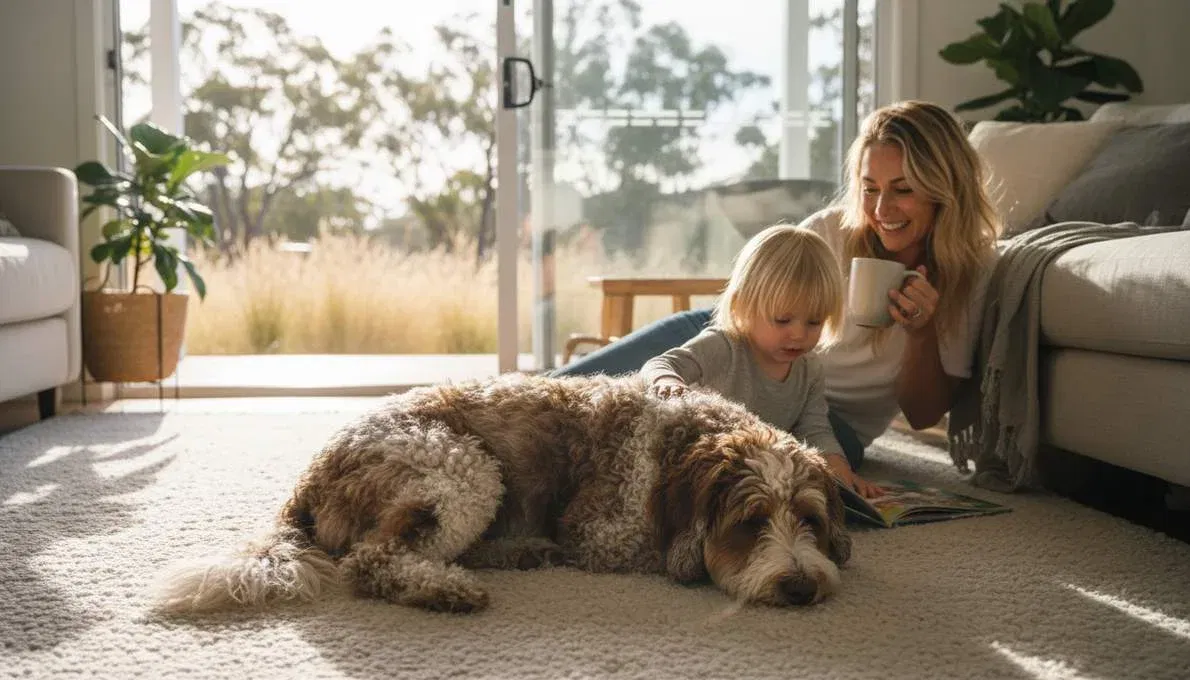
Is the Spanish Water Dog Right for You?
are an experienced dog owner comfortable with working breeds; lead an active lifestyle with time for daily training and exercise; want a dog for sports like agility, herding, or water work; have a securely fenced property; want a low-shedding breed with minimal grooming costs; can commit to extensive early socialisation; and appreciate a loyal, intelligent companion that bonds deeply.
are a first-time dog owner without breed-specific knowledge; want a dog that loves everyone immediately (they’re naturally reserved with strangers); can’t provide at least an hour of exercise and mental stimulation daily; live in an apartment without access to outdoor space; want a low-energy companion dog; have very young children without understanding of herding behaviour; or prefer a hands-off, low-commitment approach to training.
Both are curly-coated water-loving breeds, but they’re distinct. The Portuguese Water Dog is larger (20–27 kg vs 14–22 kg), more outgoing with strangers, and doesn’t have the SWD’s strong herding instinct. The PWD’s coat is typically clipped into specific patterns, while the SWD’s coat is kept natural. If you want a friendlier, more universally social water dog, the PWD may suit better. If you want a more versatile, protective working dog, the SWD is the choice.
Both are curly-coated, low-shedding Mediterranean breeds. The Lagotto is calmer, less protective, and was bred specifically for truffle hunting rather than herding. If you want the curly coat with a mellower temperament and less guarding instinct, the Lagotto is worth considering. The SWD is more intense, more protective, and more athletically driven.
The Spanish Water Dog is a rare, versatile, and deeply rewarding breed for the right owner. They’re intelligent, loyal, athletic, and low-shedding — with a distinctive coat that practically maintains itself.
The trade-offs are real: this is a working breed that demands daily mental and physical stimulation, extensive socialisation, and an owner who understands that a bored SWD is a destructive SWD. They’re reserved with strangers, strong in their herding instincts, and slow to mature.
If you’ve owned working breeds before, have the time and space for a high-drive dog, and want a curly-coated companion that’ll swim every river, herd every loose child, and follow you from room to room for the next 12–14 years — the Spanish Water Dog is one of the most rewarding breeds you’ll ever own.
Frequently Asked Questions
1. American Kennel Club — Spanish Water Dog Breed Information: https://www.akc.org/dog-breeds/spanish-water-dog/
2. PetMD — Spanish Water Dog Health and Care: https://www.petmd.com/dog/breeds/spanish-water-dog
3. VCA Animal Hospitals — Spanish Water Dog: https://vcahospitals.com/know-your-pet/spanish-water-dog
4. Wisdom Panel — Spanish Water Dog Facts: https://www.wisdompanel.com/en-us/dog-breeds/spanish-water-dog
5. Daily Paws — Spanish Water Dog Breed Information: https://www.dailypaws.com/dogs-puppies/dog-breeds/spanish-water-dog
6. WebMD Pets — Spanish Water Dogs: What You Should Know: https://www.webmd.com/pets/dogs/what-to-know-about-spanish-water-dogs
7. Chewy — Spanish Water Dog Breed Guide: https://www.chewy.com/education/dog-breeds/spanish-water-dog
8. Vetstreet — Spanish Water Dog Breed Information: https://www.vetstreet.com/dogs/spanish-water-dog
9. PDSA — Spanish Water Dog: https://www.pdsa.org.uk/pet-help-and-advice/looking-after-your-pet/puppies-dogs/medium-dogs/spanish-water-dog