
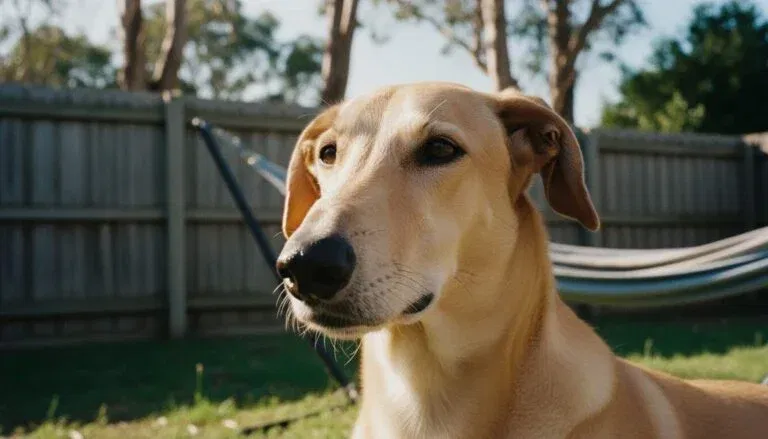
Picture a dog built like a desert wind — lean, powerful, and gone before you fully register what you’ve seen. That’s the Sloughi. Often called the Arabian Greyhound, this ancient North African sighthound can hit speeds of up to 65 km/h, hunts by sight across open terrain, and then curls up on your couch like a cat who’s too dignified to admit it needs you.
The Sloughi is one of the rarest dog breeds on the planet. In Australia, you’re more likely to spot a platypus in your bathtub than a Sloughi at your local dog park. The AKC only recognised the breed in 2016, and finding a breeder anywhere in the Southern Hemisphere requires patience, connections, and probably a few international phone calls.
But for the small circle of owners who’ve shared their lives with a Sloughi, there’s no going back. These dogs form bonds so deep they border on symbiotic — sensitive, intuitive, and fiercely loyal to their chosen person. If you’re drawn to a dog that’s equal parts athlete and aristocrat, and you’re not afraid of a breed that thinks for itself, keep reading. This is everything you need to know about owning a Sloughi dog in Australia.
What You’ll Learn
- Breed traits & temperament
- Health concerns to know
- True cost in Australia
- Training & exercise needs
- Is this breed right for you?
Sloughi at a Glance
| Trait | Detail |
|---|---|
| Breed Group | Hound (ANKC Group 4 — Sighthound) |
| Origin | North Africa (Morocco, Algeria, Tunisia, Libya) |
| Size | Males 66–72 cm | Females 61–68 cm at the shoulder |
| Weight | Males 25–30 kg | Females 16–23 kg |
| Coat | Short, fine, smooth — lies close to the body |
| Colours | Light sand to mahogany red fawn; may have brindle, black mask or mantle |
| Lifespan | 12–15 years |
| Temperament | Sensitive, loyal, reserved with strangers, one-person dog |
| Exercise Needs | High — minimum 1–2 hours daily including off-lead running |
| Shedding | Low to moderate; short coat sheds lightly |
| Good With Kids | Best with older, respectful children |
| Apartment Friendly | Possible if exercise needs are fully met, but not ideal |
| Hypoallergenic | No (though some owners report fewer allergy triggers than longer-coated breeds) |
| Top Speed | Up to 65 km/h (42 mph) — 9th fastest dog breed in the world |
History & Origins
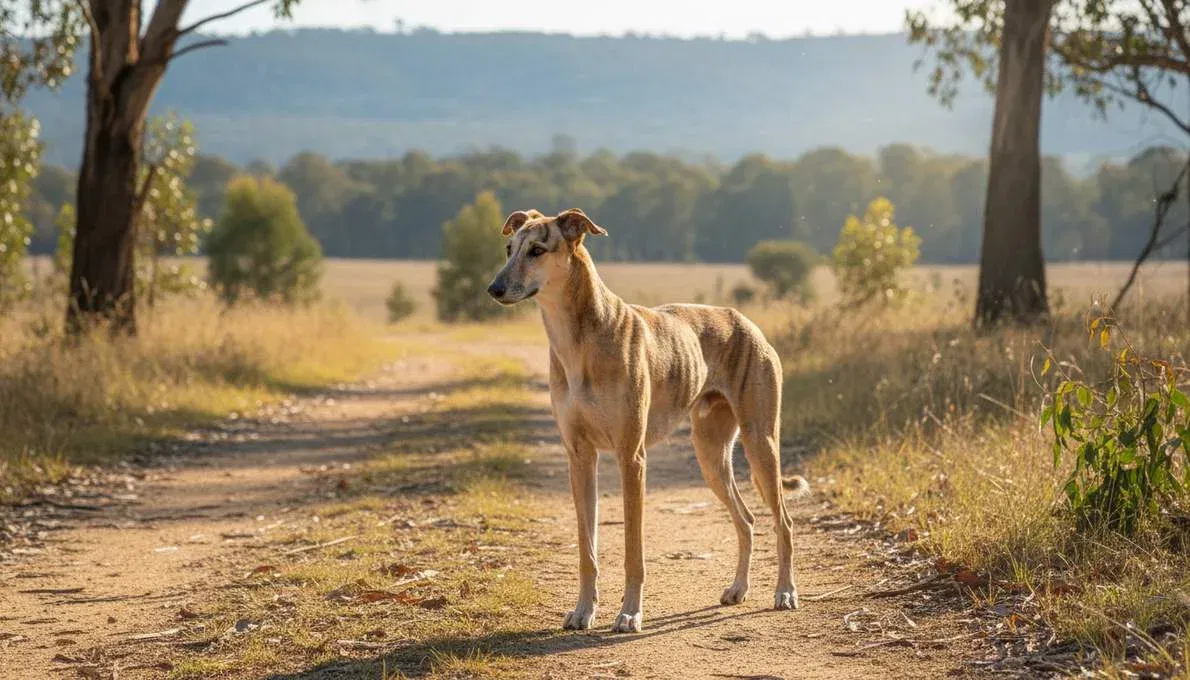
The Sloughi’s origins are lost in the deep past of North Africa. Neolithic rock art in Algeria and tomb paintings in Egypt depict slender, lop-eared hounds that look remarkably like the breed we know today. While no one can pin an exact date, the Sloughi is almost certainly one of the oldest domesticated dog breeds still in existence.
What we know for certain is that the Berber and Bedouin peoples of Morocco, Algeria, Tunisia, and Libya refined this sighthound over centuries. The Sloughi wasn’t a casual pet — it was a working hunting dog, used to course hare, jackal, fox, gazelle, and even wild boar across vast desert terrain. Only chieftains and tribal leaders were permitted to own Sloughis, and serious effort went into keeping bloodlines pure. An owner of a fine hunting female would travel enormous distances to find the right mate.
The breed’s name likely derives from a Berber pronunciation of the Arabic word “saluki” — the two breeds are often confused, but DNA testing has confirmed they’re only distantly related. The Sloughi’s closest genetic relative is actually the Azawakh, another sighthound from the Saharan Berber tribes.
The Sloughi first reached Europe in the late 19th century, initially arriving in the Netherlands and then France. The World Wars devastated the breed’s population, and it has never fully recovered. The FCI recognised the Sloughi in 1998 under Morocco’s patronage, and the AKC followed only in 2016 — making it one of the most recently recognised breeds in America. In Australia, the Sloughi remains exceptionally rare, with very few (if any) active registered breeders. Most Australian Sloughis have been imported from European or American breeding programs.
Sloughi Temperament & Personality
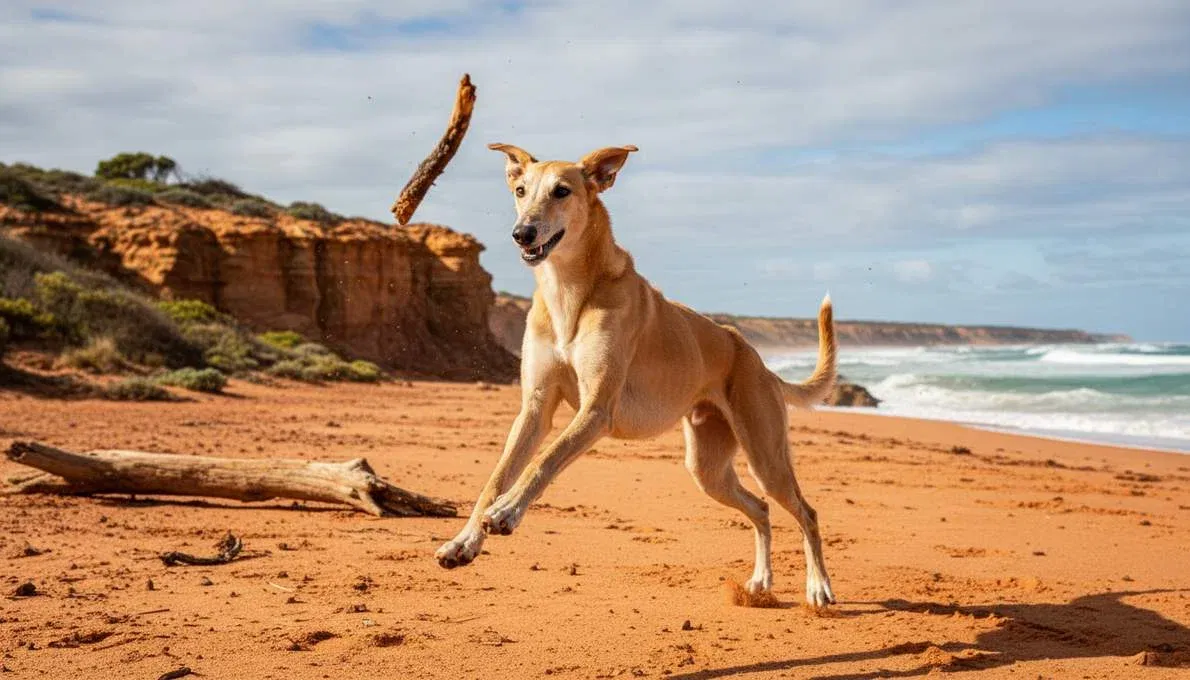
If golden retrievers are the extroverts of the dog world, the Sloughi is the quietly intense introvert who’d rather read a book than go to a party. This breed has been compared to cats more than once — and honestly, it’s not a bad analogy. Sloughis are independent thinkers, selectively affectionate, and perfectly happy to ignore you if they’re not in the mood.
But that aloofness evaporates with their chosen people. Within their family — and especially with their one favourite human — the Sloughi is tender, playful, and surprisingly silly. They’ll drape themselves across your lap, sleep on their backs with legs in the air at physically impossible angles, and follow you from room to room with quiet devotion. This isn’t a dog that broadcasts its love loudly. It’s a dog that shows it constantly through presence.
Expect reserve bordering on suspicion. Sloughis are not aggressive, but they will stand back and assess anyone new. They won’t run up to your dinner guests with a wagging tail. Some Sloughis can be genuinely shy, which is why early and careful socialisation is non-negotiable. Without it, that natural caution can become anxiety or fearfulness.
Generally fine with dogs they know, especially other sighthounds. However, their strong prey drive means small dogs, cats, and pocket pets can trigger a chase response. If raised together from puppyhood, Sloughis can coexist peacefully with cats — but this is learned behaviour, not instinct. Never assume it will generalise to unfamiliar small animals.
Best suited to families with older, calmer children. Sloughis are sensitive souls — loud, chaotic households can stress them out. They don’t enjoy rough play and may withdraw from children who grab, chase, or shriek. A teenager who respects a dog’s space? Perfect match. A toddler in full meltdown mode? Not ideal.
The single biggest thing to understand about the Sloughi temperament is sensitivity. These dogs feel everything. Harsh words, tension in the household, a raised voice during an argument — it all registers. They don’t bounce back from negative experiences the way a Labrador does. If you want a Sloughi, you need to be the kind of person who creates a calm, stable environment.
Sloughi Health & Genetic Conditions
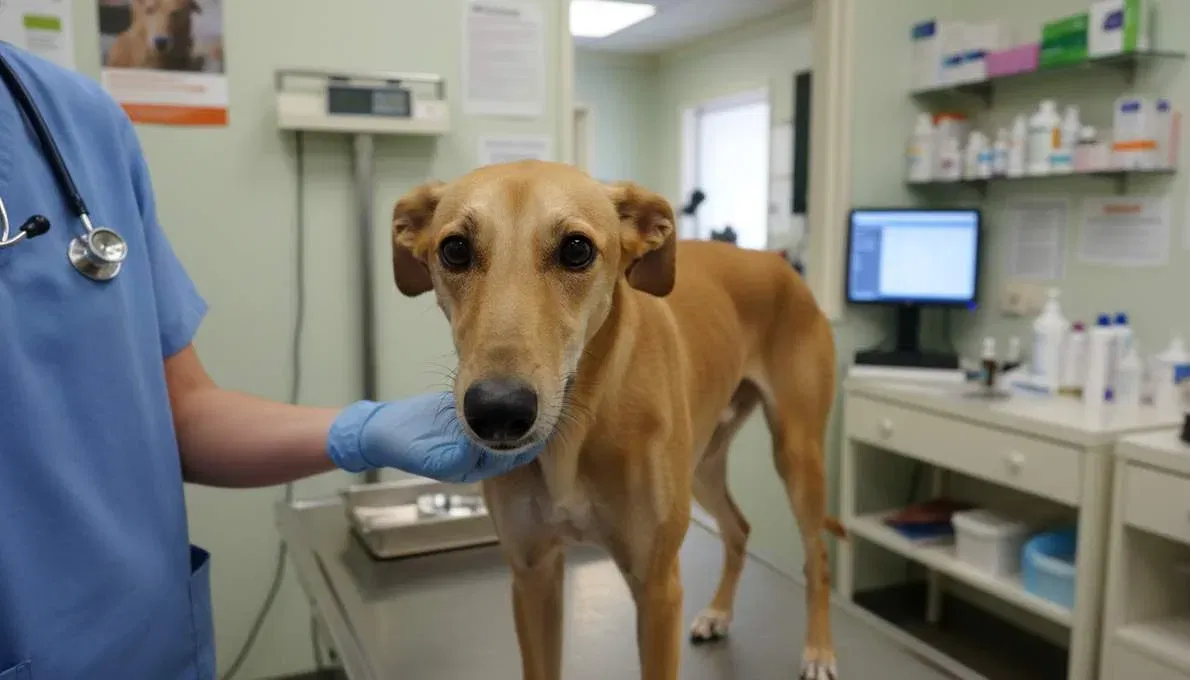
Here’s the good news: the Sloughi is one of the healthier purebred dog breeds out there. Their gene pool, while small, has been relatively well-managed, and the breed hasn’t been subjected to the extreme physical exaggerations that plague some other pedigree dogs. That said, there are a few conditions every potential owner should know about.
Prevalence: rcd1a-PRA is the only well-established genetic disease confirmed in the Sloughi and is the breed’s primary hereditary health priority. [American Sloughi Association – Health] The mutation — an 8-base pair insertion in exon 21 of the PDE6B gene — was identified in 2000 and is unique to the Sloughi (distinct from the rcd1 mutation found in Irish Setters, despite affecting the same gene). The condition is autosomal recessive, meaning two copies are needed to produce a clinically affected dog. The American Sloughi Association notes the mutation appeared in European and American Sloughi populations through spontaneous mutation or introduction from North African imports. The precise current carrier frequency in the Western breed population is not publicly documented, which makes DNA testing of all breeding stock essential.
Symptoms: Unlike the rapid early-onset blindness seen in Irish Setters with rcd1, the Sloughi’s rcd1a variant is notably slower and more variable in progression — signs of visual impairment typically first appear between 2 and 3 years of age. Early signs are difficulty navigating in dim light or at night (rod cell loss precedes cone cell loss), reluctance to go outside after dark, and hesitance in unfamiliar environments. Progression is gradual, and some affected dogs may retain partial vision well into later life rather than progressing to complete blindness. Dilated pupils and increased reflectivity from the tapetum are detectable by a veterinary ophthalmologist on examination.
Treatment Cost (AUD): There is no treatment or cure. DNA testing costs approximately $80–$120 per dog. [petinsurance.com.au] Annual CAER eye examinations are recommended for breeding stock and cost $150–$350. Environmental modifications — consistent furniture placement, night lights, removal of poolside and stairwell hazards — support quality of life in affected dogs at low ongoing cost.
Prevention: DNA testing via UC Davis VGL or equivalent laboratories is available and should be performed on all Sloughis intended for breeding. Avoid carrier-to-carrier matings, which produce 25% affected offspring. Carriers can continue to be bred responsibly with clear partners, ensuring no affected puppies are produced while maintaining genetic diversity in this rare breed. Ask breeders to provide rcd1a DNA test results for both parents.
Prevalence: Addison’s disease has been formally confirmed in the Sloughi and is actively monitored by the American Sloughi Association, which has asked owners worldwide to report all confirmed cases to build prevalence data. [American Sloughi Association – Health] Confirmed cases have emerged from European bloodlines, and the ASLA notes that clinical presentations consistent with Addison’s — unexplained collapse during surgery, chronic gastrointestinal issues, wasting — may be underdiagnosed in the breed. The disease occurs in dogs approximately 100 times more frequently than in humans and is inherited as an autosomal recessive disorder, meaning the parents of any affected Sloughi were almost certainly carriers, and siblings carry a 75% chance of carrying the gene. The true prevalence remains unknown due to the breed’s rarity and limited population surveillance.
Symptoms: Addison’s is notoriously called “the great pretender” in veterinary medicine because its signs are vague and wax and wane over time. Episodic vomiting, diarrhoea, lethargy, weight loss, poor appetite, and muscle weakness can all appear and temporarily resolve. The most dangerous presentation is Addisonian crisis — sudden cardiovascular collapse, severe weakness, and shock — which can occur under physical or emotional stress, during surgery, or spontaneously. In a sighthound already prone to anesthetic sensitivity, an undiagnosed Addisonian Sloughi facing surgery carries serious risk.
Treatment Cost (AUD): Once diagnosed, Addison’s is manageable with lifelong hormone replacement. Monthly desoxycorticosterone (DOCP) injections cost approximately $100–$250/month. [petinsurance.com.au] Oral prednisone supplementation is inexpensive. Initial diagnosis (ACTH stimulation test) costs $200–$400. Dogs on treatment typically live normal lifespans with excellent quality of life.
Prevention: No DNA test is currently available for Addison’s in the Sloughi specifically. Ask breeders about any cases of unexplained death, collapse, or chronic gastrointestinal illness in close relatives. Any Sloughi showing episodic weakness, poor appetite, or GI signs without an obvious cause should have an ACTH stimulation test performed before any surgical procedure. Reporting confirmed cases to the ASLA health committee assists prevalence research.
Prevalence: As a sighthound, the Sloughi shares the class-wide sensitivity to certain anaesthetic agents that affects all lean, deep-chested sight-hunting breeds — including Greyhounds, Salukis, Azawakhs, and Whippets. [Ocerico Sloughis – About Sloughis] The sensitivity arises from the sighthound’s characteristically low body fat percentage, which means fat-soluble drugs like thiopental accumulate at dangerously high levels in the organs rather than distributing into adipose tissue as they would in a typical dog. Sighthounds also metabolise certain drugs more slowly due to reduced cytochrome P450 enzyme activity in the liver. This is a physiological trait present in all Sloughis — not a disease — but it represents a meaningful risk during any surgical or dental procedure if the attending veterinarian is unfamiliar with the breed’s requirements.
Symptoms: This is not a condition that produces symptoms until a dog is anaesthetised with an inappropriate agent or dose. After administration of certain agents — particularly barbiturates (e.g. thiopental), some premedications, and high doses of propofol — a Sloughi may take far longer than expected to recover consciousness, may experience prolonged apnea (cessation of breathing), or may not recover at all. Hypothermia during recovery is also a risk given the breed’s lean build and short coat.
Treatment Cost (AUD): The “treatment” is prevention — using appropriate anaesthetic protocols. [petinsurance.com.au] Ensuring your vet uses isoflurane or sevoflurane gas anaesthesia, avoids barbiturates, and has appropriate warming equipment adds no extra cost in most cases. Complication management if sensitivity is triggered adds $500–$3,000+ depending on severity.
Prevention: Before any procedure requiring sedation or anaesthesia — including desexing, dental cleaning, or emergency surgery — always inform the veterinarian that your dog is a sighthound and request a sighthound-appropriate protocol. Carry a card or note in your dog’s records flagging this. A fasted Sloughi going under anaesthesia should have intravenous fluids running and active warming throughout the procedure. If using a new vet, asking directly whether they have experience with sighthound anaesthesia is not an overreach — it is essential.
Prevalence: A cluster of autoimmune conditions has been observed in Sloughis beyond Addison’s disease, with genetic hypothyroidism, symmetric lupoid onychodystrophy (SLO, an immune-mediated nail disorder), and inflammatory bowel disease (IBD) all documented in the breed. [Ocerico Sloughis – About Sloughis] These conditions are considered uncommon but represent a pattern suggesting a broader autoimmune predisposition in some lines. Hypothyroidism in the Sloughi is described as genetic in origin — distinct from the acquired hypothyroidism common in many breeds — and may affect the breed at younger ages than typically expected. Formal prevalence figures are unavailable given the breed’s small global population.
Symptoms: Hypothyroidism causes weight gain without dietary change, lethargy, heat-seeking behaviour, hair thinning or loss (particularly over the trunk and tail base), recurrent skin infections, and a dull coat. SLO presents dramatically as painful separation and sloughing of multiple toenails simultaneously, often with secondary bacterial infection in the nail beds. IBD produces chronic or recurrent vomiting, diarrhoea, weight loss, and poor condition despite adequate caloric intake.
Treatment Cost (AUD): Hypothyroidism is managed with twice-daily levothyroxine tablets at very low cost ($30–$80/month). [petinsurance.com.au] SLO requires long-term supplementation with fatty acids, niacinamide, and doxycycline ($100–$300/month); nail regrowth takes months and may be permanently abnormal. IBD management varies from dietary trials ($50–$150/month for prescription food) to immunosuppressive therapy for severe cases ($300–$600+/month).
Prevention: Annual thyroid panel testing (including TgAA for autoimmune thyroid disease) is advisable for breeding stock. If a Sloughi begins losing multiple nails simultaneously, prompt veterinary assessment for SLO avoids unnecessary pain and secondary infection. Any Sloughi with persistent gastrointestinal signs despite dietary management warrants endoscopic biopsy to confirm or rule out IBD before escalating treatment.
All costs are estimated in AUD as of 2026. Specialist or emergency treatment in metro areas will sit at the higher end.
The single most important health action: Ensure your breeder has PRA-tested all breeding stock and can show clear results. And make sure — absolutely make sure — your vet knows that sighthounds require modified anaesthetic protocols before any procedure. This is not optional. It is a matter of life and death.
Sloughi Lifespan & Longevity
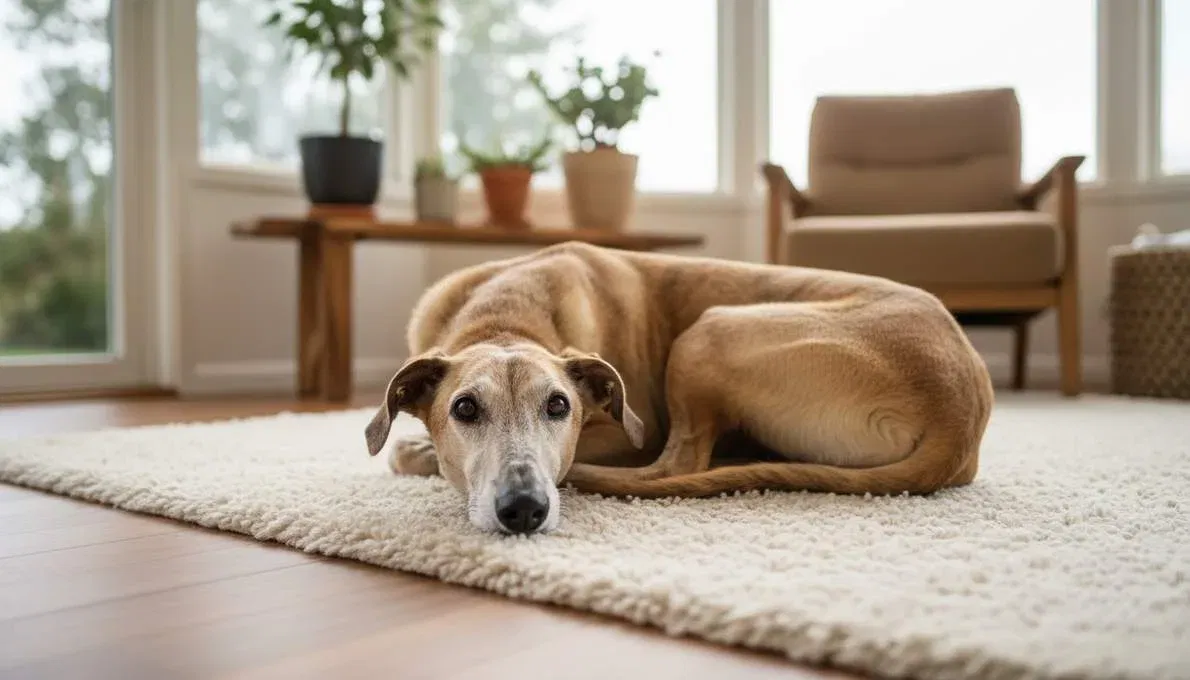
Sloughis typically live between 12 and 15 years, which is impressive for a dog of their size. Some individuals have been reported to reach 16. Their lean build and athletic conditioning contribute to their longevity — this isn’t a breed prone to obesity-related health problems.
Puppy stage (0–18 months): Sloughis are slow to mature both physically and mentally. Puppies are leggy, clumsy, and may go through fear periods where previously confident behaviour temporarily regresses. Don’t push socialisation during fear periods — keep things positive and low-pressure.
Adult (2–8 years): Peak athletic years. This is when your Sloughi will need the most exercise and mental stimulation. Maintain lean body condition — you should be able to see the last few ribs on a healthy Sloughi. If people tell you your dog looks too thin, they probably don’t know the breed.
Senior (8+ years): Sloughis age gracefully. Exercise needs decrease gradually, but they still benefit from daily outings. Watch for signs of vision changes (PRA), stiffness, and digestive sensitivity. Twice-yearly vet checks are wise from age 8 onward.
Sloughi Grooming & Care
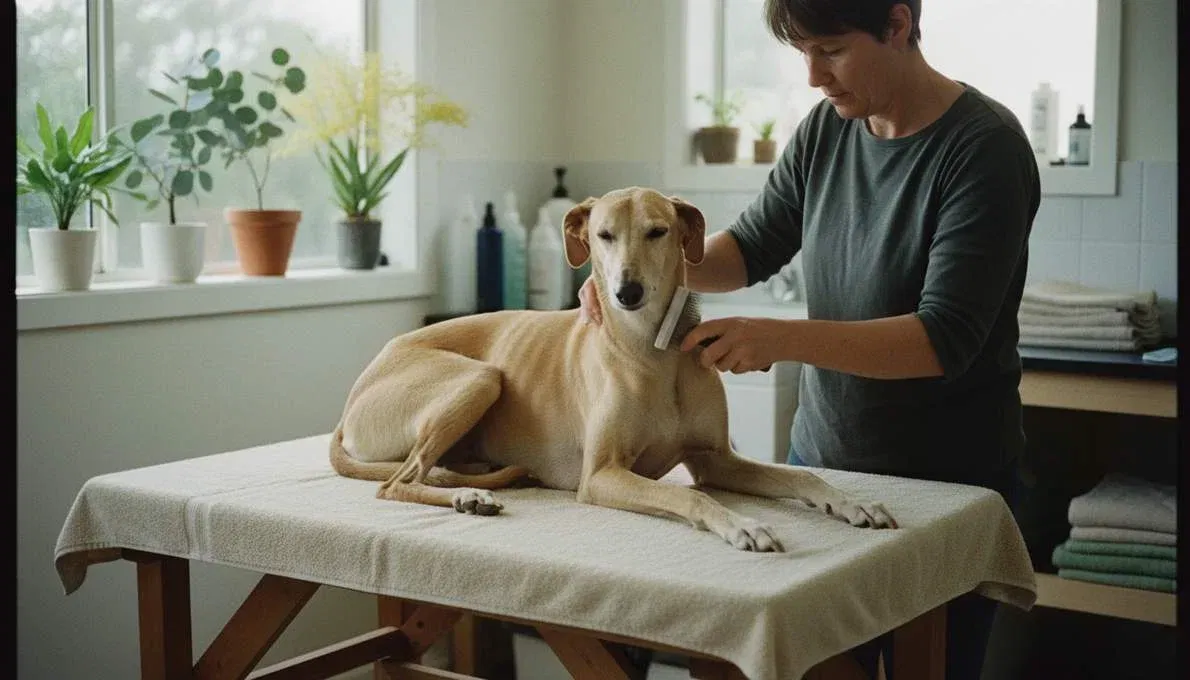
If grooming is the part of dog ownership you dread, the Sloughi might be your soulmate. That short, fine coat is one of the lowest-maintenance coats in the dog world. But “low maintenance” doesn’t mean “no maintenance.”
Grooming Schedule
| Task | Frequency | Notes |
|---|---|---|
| Brushing | Once a week | A rubber brush or grooming glove removes dead hair and keeps the coat glossy. Takes about 5 minutes. |
| Bathing | Every 4–6 weeks or as needed | Sloughis are naturally clean dogs. Overbathing strips natural oils from their fine coat. |
| Ear Cleaning | Weekly | Those drop ears can trap moisture and debris. Check and clean to prevent infections. |
| Nail Trimming | Every 2–4 weeks | Active Sloughis on hard surfaces may self-maintain nails. Check regularly. |
| Dental Care | Daily brushing ideal | Sloughis are prone to tartar build-up due to how they chew. Daily brushing prevents costly dental work later. |
| Skin & Coat Check | Weekly | Their thin coat offers less protection than heavy-coated breeds. Check for cuts, scrapes, and parasites. |
| Sun Protection | As needed in summer | Light-coloured Sloughis can sunburn on noses and ears. Dog-safe sunscreen for exposed pink skin. |
Australian tip: Sloughis are desert dogs, so they handle Australian heat better than many European breeds. However, they’re also surprisingly cold-sensitive due to their low body fat and thin coat. In Melbourne winters or Canberra mornings, your Sloughi will appreciate a dog coat. Yes, really. These desert athletes get cold. Keep soft bedding available at all times — Sloughis despise lying on hard, cold surfaces.
Sloughi Exercise Needs
This is where the Sloughi separates itself from your average companion dog. These are serious athletes that need serious exercise. A lap around the block won’t cut it.
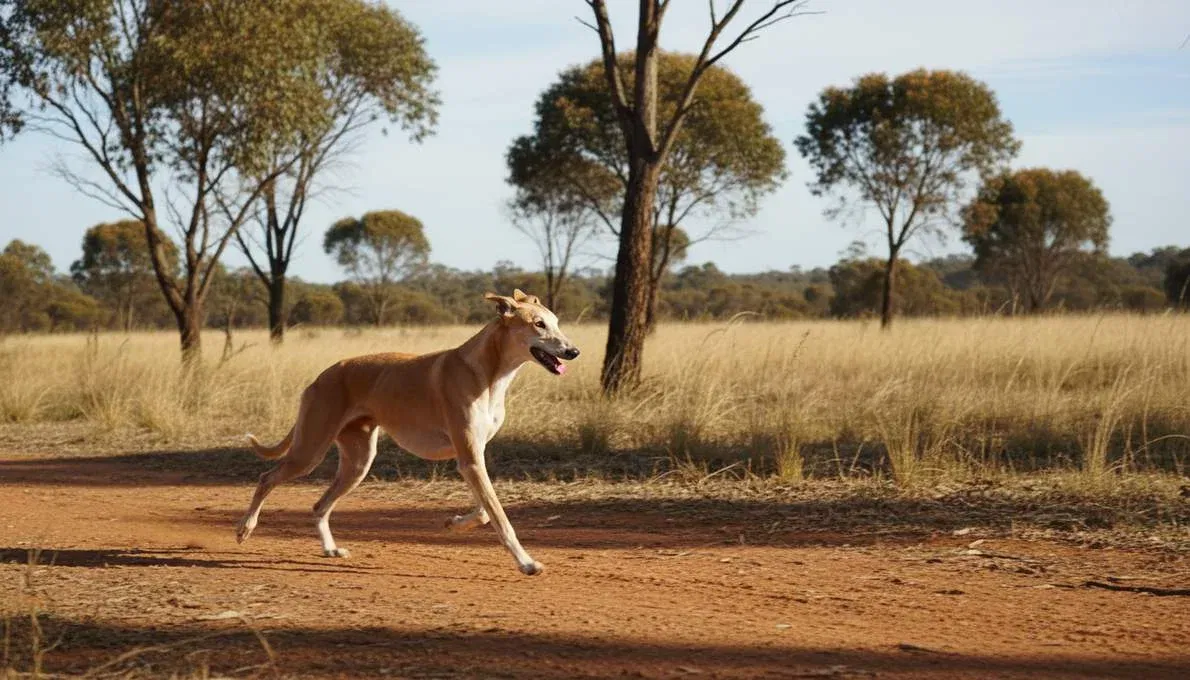
Plan for a minimum of one to two hours of exercise daily. This must include opportunities to run — genuinely run, at full speed, in a secure area. A Sloughi that never gets to stretch its legs will become anxious, destructive, or depressed. Lure coursing is the gold standard activity for this breed: it taps into their natural instincts and provides both physical and mental exhaustion.
The off-lead problem:
Sloughis have an extremely high prey drive. A running rabbit, a darting cat, even a blowing plastic bag can trigger a chase at 65 km/h. Once they’re running, no recall command on earth will bring them back. This means off-lead exercise must happen in fully fenced, secure areas only. We’re not talking about a 1.2-metre suburban fence either — a Sloughi in pursuit can clear a standard fence with a running jump. Secure means 1.8 metres minimum, with no gaps.
Australian climate advantage:
Unlike breeds designed for cold climates, the Sloughi actually thrives in warm, dry conditions. Australia’s climate suits them well for most of the year. They’ll happily exercise in temperatures that would flatten a Husky. Just ensure shade, water, and avoid peak midday heat in summer. Early morning and late afternoon are ideal for runs.
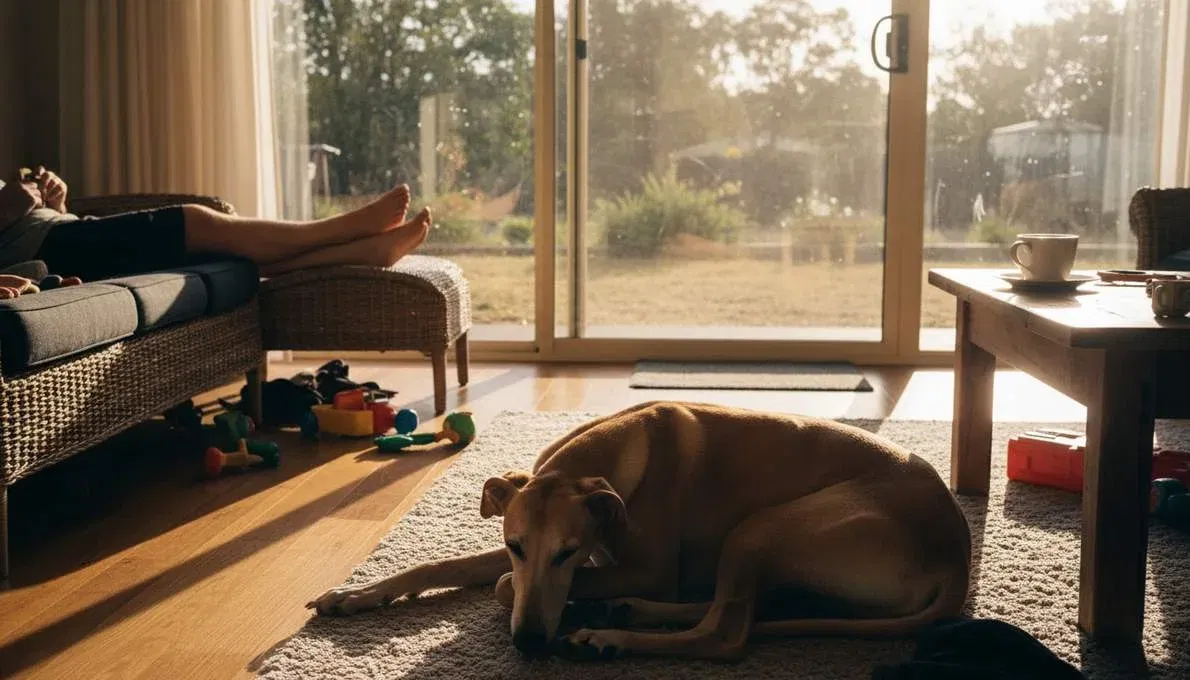
Between exercise sessions, Sloughis are remarkably calm indoors. They’ll spend hours draped across the couch, dozing in a patch of sun, or watching the world through a window. The joke among Sloughi owners is that they’re either doing 65 km/h or 0 km/h — there’s very little in between.
Sloughi Training Guide
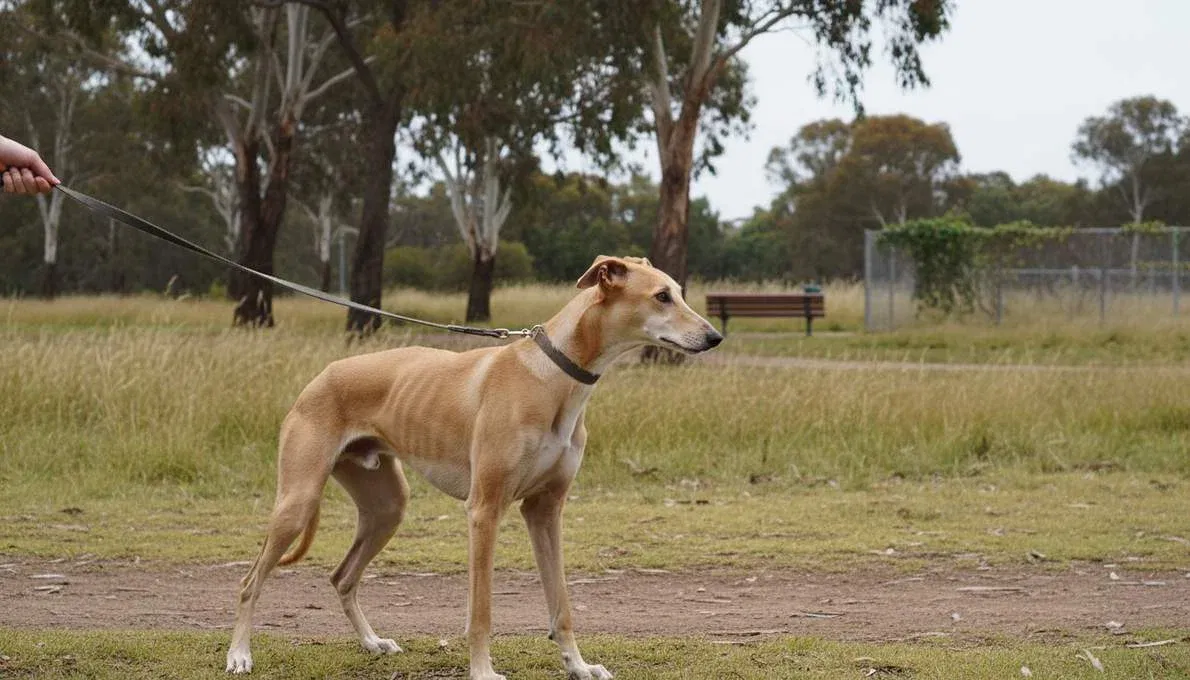
Let’s set expectations: the Sloughi is not going to win any obedience championships. This is a sighthound — a breed category built for independent decision-making at high speed, not for waiting patiently for commands. If you want a dog that lives to please, get a Golden Retriever. If you want a dog that cooperates when it sees the value, welcome to sighthound life.
Socialisation & Training Timeline
| Age | Focus | What to Expect |
|---|---|---|
| 8–12 weeks | Socialisation | Gentle exposure to people, dogs, surfaces, sounds. Sloughis go through fear periods — never force interactions. Positive associations only. |
| 12–16 weeks | Basics & recall | Start recall training early with extremely high-value rewards. You’re building a foundation you’ll rely on for life. Short, positive sessions only. |
| 4–6 months | Lead manners & house training | Sloughis are naturally clean and house-train relatively easily. Lead walking can be a challenge — they want to scan the horizon, not heel beside you. |
| 6–18 months | Adolescence | Expect independence to peak. Your Sloughi will test boundaries and may “forget” things it knew perfectly at 4 months. Stay calm and consistent. |
| 18 months–3 years | Maturity | Sloughis mature slowly. Training solidifies as they mentally grow up. Introduce lure coursing or other sighthound sports. |
| 3+ years | Maintenance | A mature, well-socialised Sloughi is a calm, reliable companion. Occasional refreshers keep skills sharp. |
Honest difficulty rating: 7/10.
Sloughis are intelligent but not biddable. Harsh corrections will damage your relationship permanently — these dogs are so sensitive that raising your voice during training can set you back weeks. Positive reinforcement with high-value food rewards and furry toys is the only approach that works. If you’ve only ever trained Labradors, prepare for a humbling experience.
Cost of Ownership in Australia
Owning a Sloughi in Australia is expensive — not because the breed is inherently costly to maintain, but because scarcity drives up acquisition costs and import logistics. Here’s what to budget.
| Expense | Estimated Cost | Notes |
|---|---|---|
| Puppy Purchase / Import | $5,000–$12,000+ AUD | Very few (if any) Australian breeders. Most Sloughis are imported from Europe or the US. Import costs include quarantine, flights, and paperwork. |
| Initial Setup | $500–$1,200 AUD | Crate, bed (soft and elevated — non-negotiable), bowls, lead, collar, sighthound-specific martingale collar. |
| Annual Food | $800–$1,400 AUD | High-quality, protein-rich food. These are lean athletes — cheap kibble won’t cut it. |
| Annual Vet (Routine) | $400–$800 AUD | Vaccinations (spaced apart), check-ups, worming, parasite prevention. Remind vet of sighthound sensitivities. |
| Grooming | $100–$300 AUD/year | Minimal professional grooming needed. Mostly home care. |
| Pet Insurance | $50–$90 AUD/month | Strongly recommended. Bloat surgery alone can exceed $10,000. |
| Lure Coursing / Exercise | $300–$800 AUD/year | Club memberships, travel to events, secure exercise area rental if you don’t have a suitable property. |
| Dog Coats & Bedding | $150–$400 AUD | Winter coats for cold mornings. Multiple soft beds around the house. Sloughis will not tolerate hard floors. |
| Secure Fencing | $2,000–$8,000 AUD | One-off cost if you need to upgrade to 1.8m+ fencing. Essential for any off-lead backyard time. |
| Emergency Vet Fund | $3,000–$5,000 AUD | Set aside or ensure comprehensive insurance. Running injuries and bloat are the biggest risks. |
Lifetime cost estimate: $30,000–$60,000 AUD
over 12–15 years, including acquisition. The wide range reflects the difference between importing a puppy versus finding one domestically (if that’s even possible), and whether you need fencing upgrades.
For breeders, your best starting point
is the American Sloughi Association (ASLA) or European breed clubs. In Australia, contact your state’s ANKC body or sighthound clubs (such as the Gazehound Club of Victoria) for leads on any local breeders or upcoming imports. Rescue is virtually non-existent in Australia for this breed.
Is the Sloughi Right for You?
have sighthound experience or are willing to learn a completely different approach to dog ownership; have access to secure, fenced areas where the dog can run at full speed; want a quiet, calm indoor companion that doubles as a serious athlete; live in a household with older children or adults only; can provide a stable, low-stress home environment; are patient with training and comfortable with a breed that won’t obey on command; and have the budget for a potentially imported, rare breed.
want a social butterfly who loves everyone; have small children, cats, or pocket pets without extensive prior socialisation experience; live in a high-rise apartment with no secure running space; expect obedience-trial precision; want a breed that’s easy to source locally; use punishment-based training methods; or can’t afford potential emergency veterinary costs.
If the Sloughi appeals but the rarity and exercise demands are daunting, consider related breeds more readily available in Australia: the Greyhound (similar couch-potato-to-sprinter temperament, far easier to adopt through racing rescue programs), the Whippet (a smaller, more manageable sighthound), or the Saluki (similarly ancient and reserved, slightly more common).
The Sloughi is an ancient, rare sighthound that offers a uniquely deep bond with the right owner — but requires secure space, serious exercise commitment, and a gentle hand in everything from training to vet care.
Health-wise, the breed is remarkably robust for a purebred, with the critical caveat that sighthound anaesthetic sensitivity is a non-negotiable conversation with your vet before any procedure.
If you’re the kind of person who values a dog that thinks for itself, moves like liquid mercury across open ground, and then spends the evening draped across your lap like a 30-kilogram weighted blanket — the Sloughi might be the most rewarding breed you’ll ever own. Just be prepared to explain what it is to every single person you meet.
Frequently Asked Questions
1. American Kennel Club — Sloughi Dog Breed Information: https://www.akc.org/dog-breeds/sloughi/
2. Wikipedia — Sloughi: https://en.wikipedia.org/wiki/Sloughi
3. PetMD — Sloughi Breed Profile: https://www.petmd.com/dog/breeds/c_dg_sloughi
4. Purina UK — Sloughi Dog Breed Information: https://www.purina.co.uk/find-a-pet/dog-breeds/sloughi
5. Wisdom Panel — Sloughi Facts: https://www.wisdompanel.com/en-us/dog-breeds/sloughi
6. Dogster — Sloughi Dog Breed Info, Pictures, Facts & Traits: https://www.dogster.com/dog-breeds/sloughi
7. DogZone — Sloughi Breed Information: https://www.dogzone.com/breeds/sloughi/
8. American Sloughi Association: https://sloughi-international.com/
9. ShowSight Magazine — Sloughi Breed Profile: https://showsightmagazine.com/dog-breeds/sloughi/