
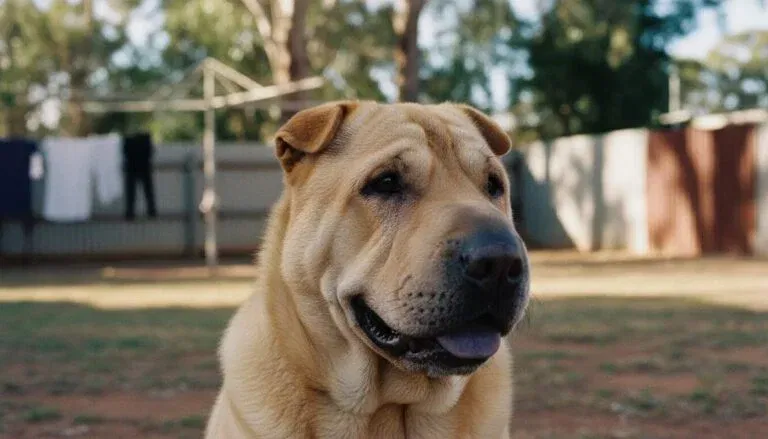
The Shar Pei is one of the most instantly recognisable dogs in the world and one of the most misunderstood. Those wrinkles. That hippopotamus muzzle. The blue-black tongue. The expression that somehow manages to look simultaneously wise, suspicious, and slightly disappointed in your life choices. No other breed looks quite like the Chinese Shar Pei, and no other breed carries quite so much complicated history in its DNA.
The name “Shar Pei” means “sand skin” in Cantonese — a reference to the breed’s distinctive harsh, bristly coat. This is an ancient Chinese breed, over 2,000 years old, originally used for guarding property, herding livestock, hunting boar, and — less proudly — dog fighting. The breed was driven to the brink of extinction in the 1970s, saved by a dramatic international rescue, and then bred so enthusiastically in the West that many of the health problems owners face today are a direct consequence of that rushed revival.
This is a guide that takes the Shar Pei’s health seriously. The breed has more eponymous diseases than any other — Shar Pei fever, Shar Pei Autoinflammatory Disease (SPAID), and a constellation of skin, eye, and ear conditions that are not rare complications but common breed realities. If you’re considering a Shar Pei in Australia, understanding these health demands is not optional. It’s the price of admission. In return, you get a dog of extraordinary loyalty, quiet dignity, and a personality unlike any other.
What You’ll Learn
- Breed traits & temperament
- Health concerns to know
- True cost in Australia
- Training & exercise needs
- Is this breed right for you?
Quick Facts at a Glance
| Attribute | Details |
|---|---|
| Breed Group | ANKC Group 7 — Non Sporting; AKC Non-Sporting Group; FCI Group 2 Molosser type |
| Origin | Southern China — ancient breed, 2,000+ years old (Han Dynasty) |
| Also Known As | Chinese Shar-Pei, Sand Skin Dog |
| Height | 46–51 cm (18–20 inches) at the shoulder |
| Weight | 20–27 kg (45–60 lb) |
| Lifespan | 8–12 years; UK study found average 10.6 years |
| Coat Types | Horse coat (very short, prickly); Brush coat (up to 2.5 cm); Bear coat (longer, soft — non-standard) |
| Colours | Solid colours: red, fawn, cream, sable, blue, black, chocolate, lilac, apricot |
| Shedding | Low to moderate — short coat sheds seasonally; not hypoallergenic |
| Temperament | Loyal, independent, calm, reserved with strangers, protective, intelligent, stubborn |
| Exercise Needs | Moderate — 30–60 minutes daily; heat-sensitive |
| Good with Kids | Yes with older children if socialised; not ideal with toddlers or unfamiliar children |
| Guard Dog Ability | Excellent — naturally territorial, alert, protective; will bark at threats but not nuisance barkers |
| Apartment Suitable | Yes — calm indoors, moderate exercise needs; heat sensitivity a concern |
| Tongue | Blue-black (like the Chow Chow — both ancient Chinese breeds) |
History & Origins
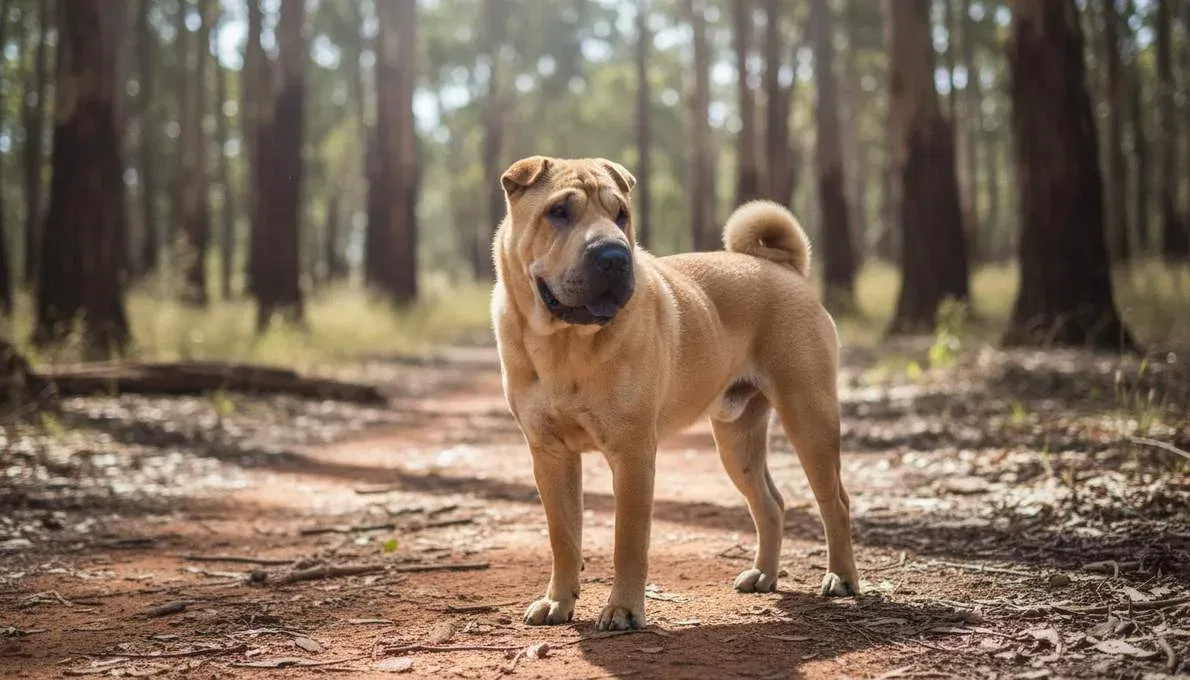
The Shar Pei is one of the world’s most ancient dog breeds, identified through DNA analysis as a basal breed that predates the emergence of modern breeds in the 19th century. Effigies from China’s Han Dynasty (around 200 BC) depict dogs closely resembling the Shar Pei, and the breed has been identified in southern China for over 2,000 years.
Chinese farmers used Shar Pei as versatile working dogs: guarding homes and livestock, herding, hunting boar, and — during later periods — dog fighting. The loose skin and bristly coat were practical advantages in fights, making it difficult for an opponent to gain a secure hold. The blue-black tongue is shared with the Chow Chow, suggesting an ancient common ancestry between the two breeds.
What Does Shar Pei Mean?
The name comes from the Cantonese “shā pèih” (沙皮), meaning “sand skin” or “sandpaper skin.” It describes the breed’s characteristic rough, gritty-textured coat. The traditional Chinese breed was less wrinkled than the Western version, with a more athletic build and tighter skin.
Bone Mouth vs Meat Mouth Shar Pei
This distinction is central to understanding the modern breed. The original Chinese Shar Pei — called the “bone mouth” type — was a leaner, less wrinkled dog with a tapered muzzle and tighter skin, maintained in Hong Kong. When the breed was rescued from extinction in the 1970s, unscrupulous breeders in Hong Kong, Macau, and Taiwan crossed remaining purebred Shar Pei with Bulldogs, Pugs, and Bull Terriers to meet overwhelming Western demand. The result was the “meat mouth” type: a heavily wrinkled dog with a padded, fleshy muzzle, excessive skin folds, and significantly more health problems. Most Western Shar Pei today are meat-mouth type. The excessive wrinkling that the West fell in love with is directly linked to hyaluronosis — an overproduction of hyaluronic acid in the skin — which in turn drives Shar Pei fever, skin infections, and eye problems. The bone-mouth Shar Pei remains healthier but is extremely rare outside Asia.
The Rescue That Changed the Breed
By the 1970s, the Shar Pei was nearly extinct. The Chinese Communist Party had imposed heavy taxes on pet ownership, and decades of political turmoil had devastated the breed. In 1973, Hong Kong businessman Matgo Law published an appeal in an American dog magazine to save the breed. The response was extraordinary. By 1978, the Shar Pei was listed in the Guinness Book of Records as the world’s rarest breed, with only 60 individuals remaining. Americans fell in love with the wrinkly puppies, demand skyrocketed, and the breed was rebuilt from a desperately small gene pool — a genetic bottleneck whose consequences are still felt today.
In Australia, the Shar Pei became famous after appearing in a Sorbent toilet paper television advertisement in 1982. The breed is ANKC-recognised in Group 7 (Non Sporting) with breeders across multiple states.
Temperament & Personality
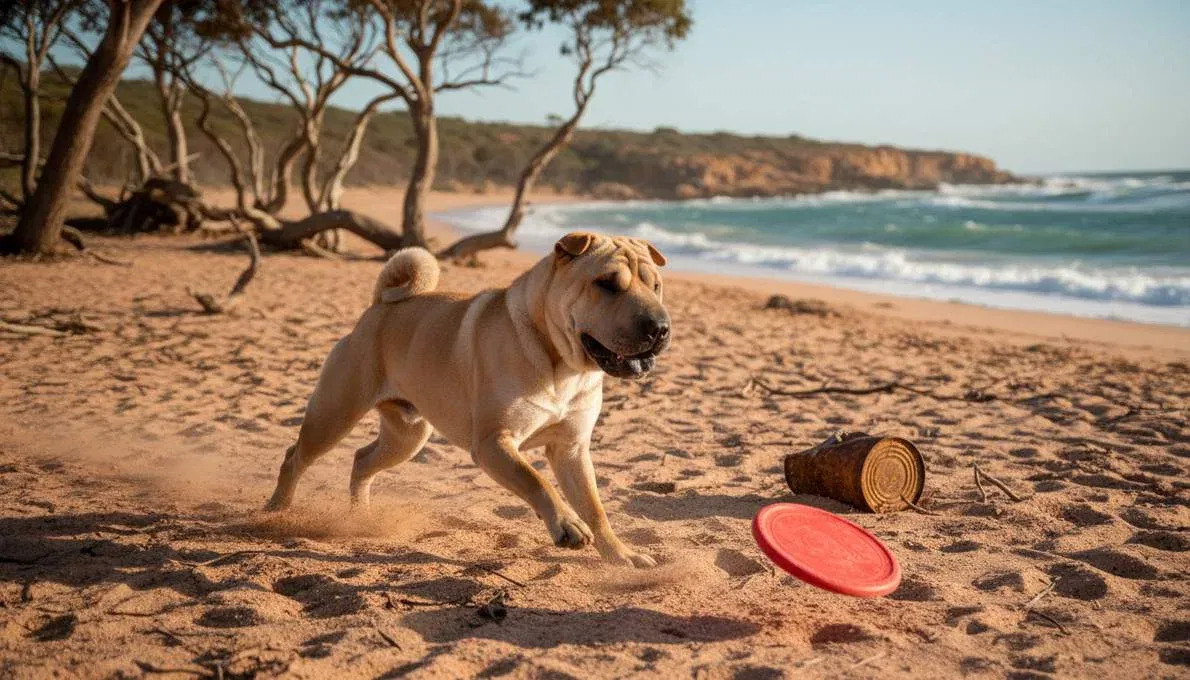
The Shar Pei temperament is not for everyone, and that’s by design. This is a breed that was created to guard, protect, and think independently. A well-bred, well-socialised Shar Pei is calm, dignified, deeply loyal to its family, and utterly indifferent to earning the approval of strangers. They bond intensely with their people — often favouring one person above all others — and can be affectionate and gentle within the family unit.
Outside that unit, the Shar Pei is a different dog. They are naturally reserved with strangers, suspicious of unfamiliar people and animals, and will position themselves between their family and perceived threats without being asked. They rarely bark without reason, but when they bark, it means something. This makes them excellent watchdogs and genuine guard dogs — they will protect their territory and their people with quiet, unwavering conviction.
The independence is significant. Shar Pei are intelligent dogs that were bred to make decisions without human direction. They are not eager to please in the way a Labrador or a Golden Retriever is. Training requires patience, consistency, and respect for the dog’s intelligence. They understand perfectly well what you’re asking; they simply reserve the right to decide whether it’s worth doing.
This question requires an honest answer. The Shar Pei is not inherently aggressive, but the breed does have a well-documented tendency toward dog aggression and can be reactive to unfamiliar people if not properly socialised. A UK VetCompass study found aggression was the fifth most commonly recorded disorder in the breed at 5.23%. This is not insignificant. The causes are a combination of genetics (the breed’s history includes dog fighting), the genetic bottleneck of the 1970s rescue (poor temperament was sometimes bred in haste), and inadequate socialisation by owners who don’t understand the breed’s needs. A well-bred Shar Pei from a breeder who prioritises temperament, combined with extensive early socialisation, is a calm, stable, non-aggressive dog. A poorly bred or unsocialised Shar Pei can be genuinely dangerous. Breeder selection matters enormously with this breed.
Outstanding. Territorial awareness, suspicion of strangers, natural protective instinct, physical presence, and the willingness to act if needed — the Shar Pei is one of the best natural guard dogs among medium-sized breeds. They don’t need guard dog training; the instinct is bred into them. They also don’t bark excessively, which means when they do alert, it’s a reliable signal rather than background noise.
No. Shar Pei are generally quiet dogs that only bark when they perceive a genuine reason. They bark at strangers approaching the home, unusual noises, or genuine threats. They are not nuisance barkers and are considerably quieter than most terriers or herding breeds. If a Shar Pei is barking constantly, something is wrong — boredom, separation anxiety, or a lack of exercise and mental stimulation are common causes.
Health & Genetic Conditions
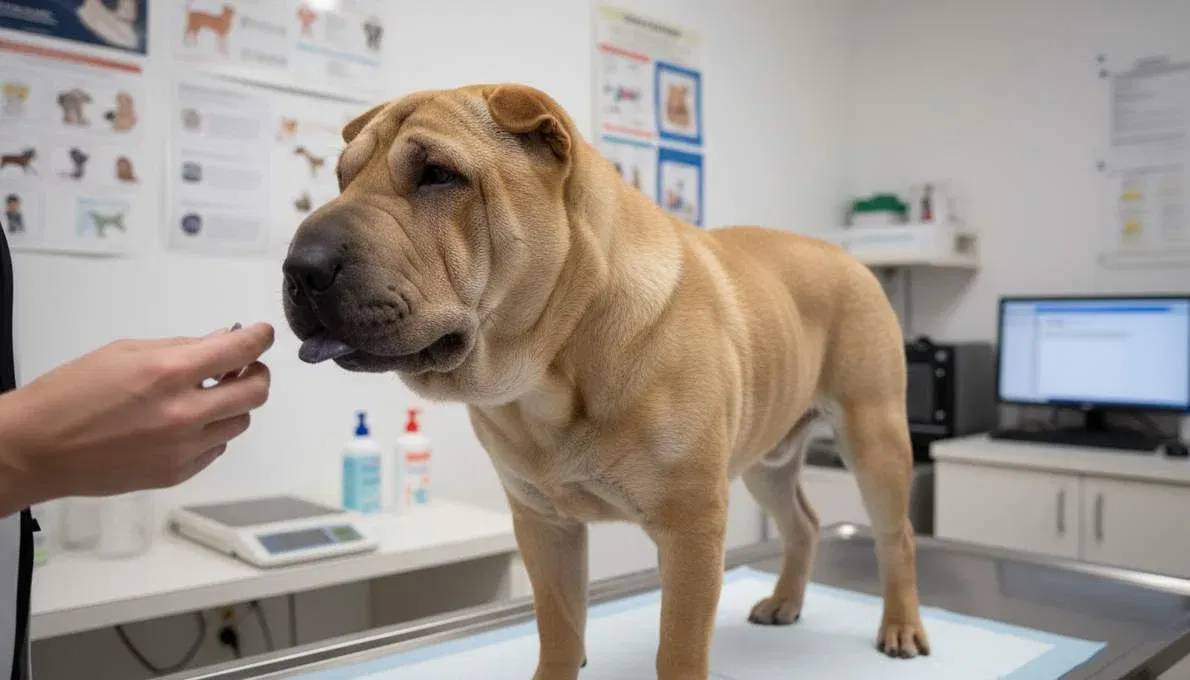
This is the longest and most important section of this guide. The Shar Pei has more breed-specific health problems than almost any other dog breed, and many of them are directly linked to the physical characteristics that make the breed distinctive — the wrinkles, the thick skin, the small ears, and the deep-set eyes. Owning a Shar Pei without understanding these conditions is unfair to the dog and financially reckless for the owner.
Prevalence
Entropion is the single most diagnosed disorder in the Shar Pei, with a landmark UK VetCompass study of nearly 1,900 Shar Peis finding 17.88% formally diagnosed each year — compared to just 1 in 200 dogs across all other breeds. [PMC – VetCompass Shar Pei Study 2023] The condition is directly caused by the breed’s excessive loose, folded skin around the eyes, which pulls the eyelids inward so that the bristly coat and eyelashes continuously scrape across the cornea with every blink. The same genetic trait that creates the wrinkled appearance — hyaluronosis, an overproduction of hyaluronic acid — is what drives this and several other major health issues in the breed.
Symptoms
Constant or frequent squinting, excessive tearing or eye discharge, visible redness of the eye surface, and the dog rubbing its face are the classic signs. Without correction, ongoing corneal irritation progresses to ulceration, scarring, and permanent vision loss. Some Shar Pei puppies are so severely affected at birth that they are effectively blind until corrected.
Treatment Cost (AUD)
Surgical correction — where the eyelid is repositioned and sutured — costs $800–$2,500+ per eye depending on severity. Puppies may require temporary tacking before a permanent procedure. [petinsurance.com.au] Some dogs need repeat surgery as the skin continues to fold with age.
Prevention
There is no way to prevent entropion in a breed predisposed by its very conformation. Prospective owners should carefully inspect the parent dogs’ eyes before purchasing and avoid breeders producing dogs with excessive facial wrinkling. The UK Kennel Club explicitly flags excessive loose facial skin and eyelid conformational defects as points of serious welfare concern in this breed.
Prevalence
Shar Pei Autoinflammatory Disease (SPAID) — including the recurrent fever episodes commonly called Familial Shar Pei Fever — is a breed-exclusive condition caused by a genetic mutation (duplication in the HAS2 gene region) that drives overproduction of hyaluronic acid. [AKC Canine Health Foundation – Shar Pei Fever] Around 23% of Shar Peis in the US are estimated to be affected. Approximately 3% of UK Shar Peis are diagnosed annually per VetCompass. Repeated episodes of inflammation cause amyloid proteins to accumulate in the kidneys and liver over time — the leading cause of death in the breed, with kidney disease accounting for 13.2% of all Shar Pei deaths in the VetCompass study.
Symptoms
Recurrent episodes of sudden high fever (sometimes reaching 40–41°C), painful swelling of the hock joints (the swelling has a characteristic fluid-filled, floppy feel rather than the hard stiffness of a sprain), lethargy, reduced appetite, and abdominal discomfort. Episodes typically self-resolve within 24–36 hours but cause cumulative kidney damage over time. Late-stage amyloidosis may present as increased thirst and urination, weight loss, or sudden collapse.
Treatment Cost (AUD)
Anti-inflammatory medication during fever episodes costs relatively little per episode, but long-term management with colchicine (to slow amyloid deposition) costs $500–$1,500/year. [petinsurance.com.au] End-stage kidney disease management is significantly more expensive and the prognosis is poor. Genetic testing to identify dogs carrying multiple HAS2 duplications is available and advised for breeding decisions.
Prevention
Breeders should avoid pairing dogs with multiple copies of the HAS2 duplication. Regular kidney function monitoring (annual blood and urine tests) from early adulthood is strongly recommended for all Shar Peis, even those without obvious fever episodes, to detect silent amyloid accumulation early.
Prevalence
The same excessive skin folding that defines the breed creates warm, moist, friction-prone pockets across the face, neck, body, and tail area — perfect conditions for bacterial and yeast infections. The VetCompass study found dermatological conditions affecting 21% of Shar Peis annually, with pyoderma (bacterial skin infection) diagnosed in 4.29% per year. [PMC – VetCompass Shar Pei Study 2023] Atopic dermatitis (environmental allergies) affects around 7.7% of Shar Peis per a University of Sydney study — more than double the general population rate. Demodectic mange is also significantly more prevalent in the breed than average.
Symptoms
Redness, odour, moisture, and visible irritation inside skin folds — particularly the facial folds, body folds, and the deep fold at the base of the tail. In more severe cases, raw or weeping skin, hair loss, crusting, and a distinctly unpleasant smell indicate active bacterial or yeast infection. Whole-body itching, foot licking, and recurrent ear infections often accompany allergic skin disease.
Treatment Cost (AUD)
Routine management with medicated wipes or shampoos costs $30–$100/month. Infections requiring antibiotics or antifungals cost $150–$600 per course, and recurrent cases needing specialist dermatology referral, allergy testing, or immunotherapy can run $1,500–$5,000+. [petinsurance.com.au]
Prevention
Weekly — or more frequent — inspection and cleaning of all skin folds with a vet-recommended drying solution is non-negotiable for this breed. Keeping folds dry is the most important preventive measure. A veterinary dermatology assessment is worthwhile early if any recurrent skin issues develop, as chronic infections are significantly harder and more expensive to manage than those caught early.
Prevalence
Ear disorders were the third most common condition group in the VetCompass study, with otitis externa alone diagnosed in 16.36% of Shar Peis annually — a rate driven by the breed’s characteristically tiny, tightly folded ears, which severely restrict airflow and trap moisture and debris. [PMC – VetCompass Shar Pei Study 2023] Without adequate air circulation, the ear canal becomes a warm, moist environment where bacteria and yeast thrive. Chronic, recurrent infections are common and, over time, can lead to permanent canal narrowing, hearing loss, and the need for surgical intervention.
Symptoms
Head shaking, scratching at one or both ears, a noticeable odour from the ear, visible redness or dark discharge when the ear flap is lifted, and sensitivity or pain when the ear is touched. Chronic cases may show visible canal thickening or calcification, and dogs may tilt or hold their head to one side.
Treatment Cost (AUD)
A single round of ear drops and cleaning solution costs $80–$200. Recurrent infections requiring bacterial culture, specialist assessment, or surgical ear canal ablation can cost $1,500–$5,000+. [petinsurance.com.au]
Prevention
Weekly ear cleaning with a vet-recommended drying ear solution is essential — always after swimming or bathing. Shar Pei owners should have a vet demonstrate correct technique, as improper cleaning can push debris deeper. Any new head shaking or ear odour should be investigated promptly before an infection escalates.
Prevalence
The Shar Pei is considered significantly predisposed to hypothyroidism, with some estimates suggesting up to 20% of the breed may be affected — well above the canine average of around 0.2–0.5%. [Houndsy – Shar Pei Health Guide] The thyroid gland fails to produce adequate levels of thyroid hormone, slowing the dog’s entire metabolism. It typically develops in middle age (2–6 years) and is manageable with lifelong medication, but can be difficult to diagnose in a breed whose wrinkled, thick skin and tendency toward a stockier build can mask classic signs.
Symptoms
Unexplained weight gain without increased food intake, lethargy and reduced exercise tolerance, a noticeably dull or thinning coat, skin thickening, recurrent skin infections, and a tendency to seek warmth. Some dogs develop a characteristically sad or “tragic” facial expression due to fat deposits around the face — which in the Shar Pei can be easy to miss against the breed’s already distinctive features.
Treatment Cost (AUD)
Thyroid hormone supplementation (levothyroxine) costs around $300–$700/year and is required for life. [petinsurance.com.au] Diagnosis via blood testing costs $80–$200. Annual thyroid checks are recommended for all middle-aged and older Shar Peis.
Prevention
No preventive measures exist, but annual thyroid screening from age 2–3 years allows early detection and treatment before secondary complications (recurrent skin infections, heart changes) develop. Ask your vet to include a thyroid panel in annual wellness blood work.
Prevalence
Hip dysplasia is a recognised concern in Shar Peis, where abnormal hip joint development causes progressive joint instability and arthritis. The breed’s compact, muscular build and tendency toward excess weight compound joint stress considerably. [OFA – Hip Dysplasia] OFA data consistently places Shar Peis among the breeds with above-average hip dysplasia rates. Patellar luxation (kneecap displacement) is also documented as an additional orthopaedic risk in the breed.
Symptoms
Reduced willingness to exercise, difficulty rising from rest, a shortened stride or “bunny hopping” gait, reluctance to climb stairs, and visible muscle loss over the hindquarters in chronic cases. Symptoms may appear as early as 5–12 months in severe developmental cases, or emerge gradually in middle age as arthritis progresses.
Treatment Cost (AUD)
Conservative management with pain medication, joint supplements, and physiotherapy costs $500–$2,000/year ongoing. Surgical options including femoral head ostectomy or total hip replacement cost $3,500–$9,000 per hip. [petinsurance.com.au]
Prevention
Ask breeders for OFA hip certification results for both parents. Maintain a lean body weight throughout the dog’s life — excess weight significantly accelerates joint degeneration in a breed already predisposed. Moderate, low-impact exercise (swimming is ideal) supports joint health without overloading the hips.
Lifespan & Longevity
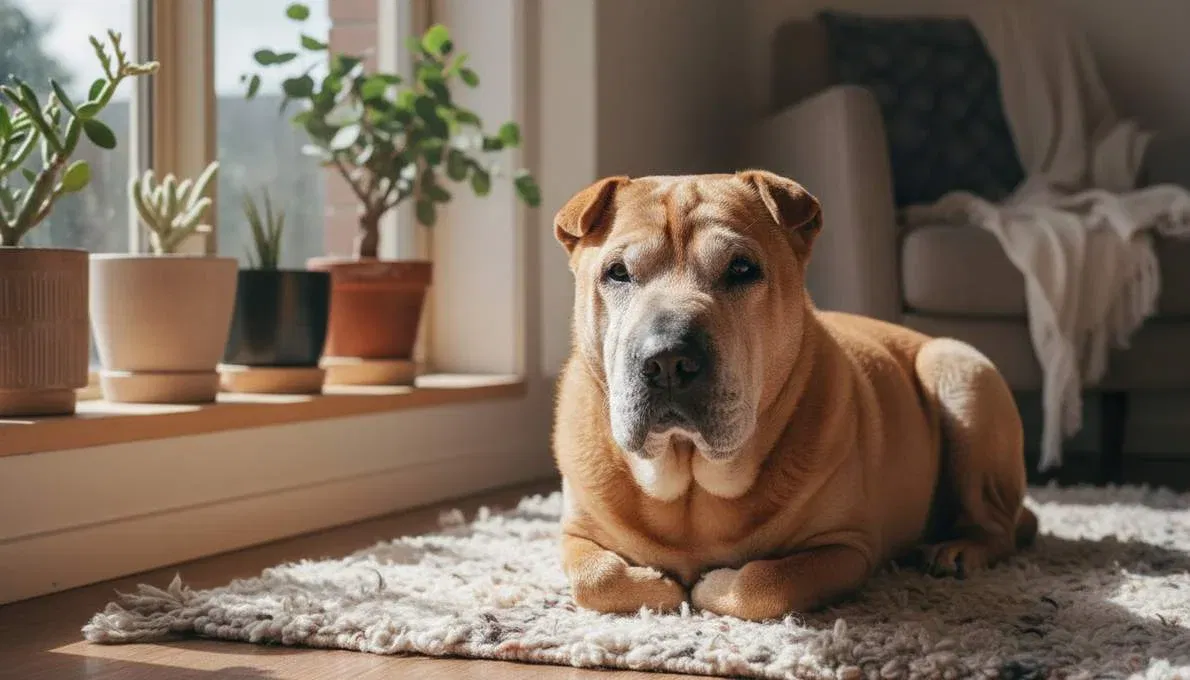
The Shar Pei lifespan is 8 to 12 years, with a 2024 UK study finding an average life expectancy of 10.6 years — below the purebred average of 12.7 years. Bondi Vet and several Australian sources cite 10–12 years as a realistic range for well-cared-for individuals.
The main causes of shortened lifespan are amyloidosis from Shar Pei fever (kidney/liver failure, often by age six in severely affected dogs), cancer (particularly mast cell tumours), and the cumulative burden of chronic skin, eye, and ear disease. Dogs from breeders who SPAID-test, screen for POAG/PLL, and breed for moderate skin (fewer extreme wrinkles) tend to live longer.
| Life Stage | Key Focus Areas |
|---|---|
| Puppy (0–12 months) | CRITICAL: Socialisation from 8–12 weeks non-negotiable (exposure to people, dogs, environments); monitor eyes for entropion (tacking may be needed); establish skin-fold cleaning routine; begin ear cleaning weekly; puppy-specific diet for medium breeds |
| Young Adult (1–3 years) | Entropion surgery if needed (often around 1 year); continue socialisation (especially with other dogs); SPAID awareness (fever episodes may begin); maintain skin/ear care routines; monitor weight |
| Adult (3–8 years) | Annual thyroid screening; monitor for fever episodes and amyloidosis signs (increased thirst/urination, appetite loss); skin allergy management; eye monitoring; dental care; regular lump checks (mast cell tumour risk) |
| Senior (8+ years) | Twice-yearly vet visits; kidney/liver function bloodwork (amyloidosis detection); joint support; adapt exercise to capacity; increased cancer screening; softer bedding; dental monitoring |
Grooming & Coat Care
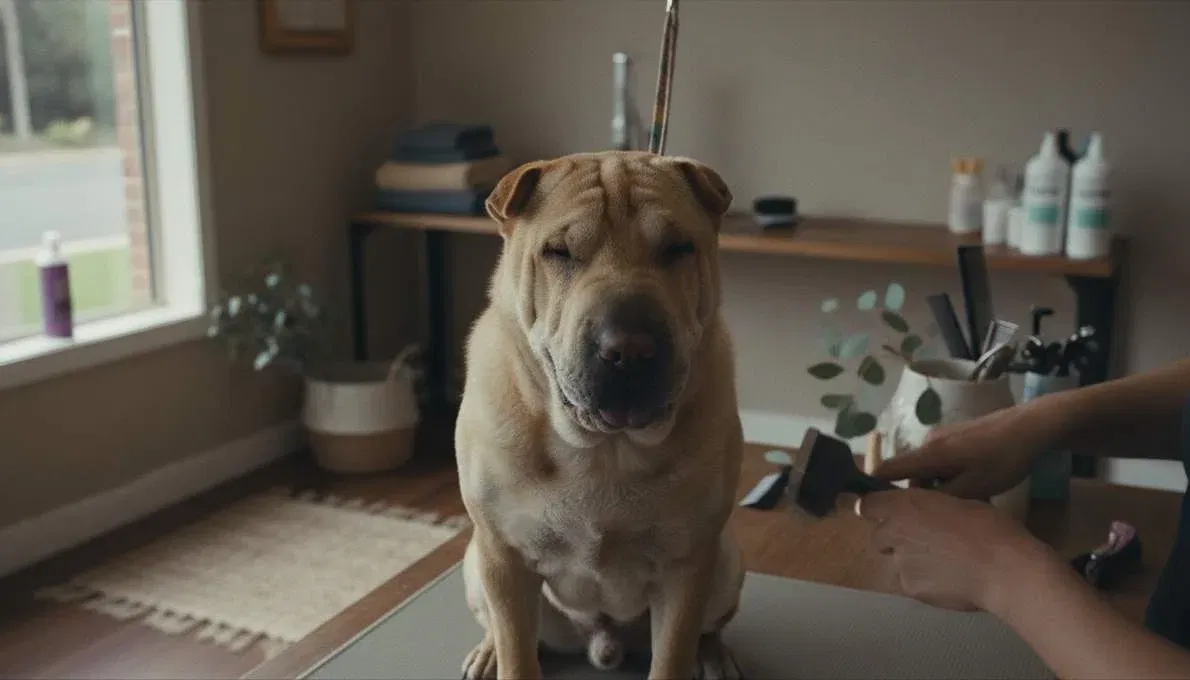
The Shar Pei’s coat is low-maintenance in terms of brushing but high-maintenance in terms of skin care. The distinction between coat types matters:
Shar Pei Coat Types
Horse coat: Extremely short (under 1 cm), harsh, prickly to touch — the original working coat. Very low grooming needs but the roughest on skin folds. Brush coat: Slightly longer (up to 2.5 cm), smoother feel, the most common type in Australia. Bear coat Shar Pei: A longer, softer coat caused by a recessive gene. Bear coat Shar Pei are visually striking but not recognised by most breed standards, including the ANKC. Reputable breeders do not breed for bear coats specifically, and dogs marketed as “rare bear coat Shar Pei” at premium prices should be approached with caution.
Do Shar Pei Shed?
Yes, but moderately. Shar Pei shed seasonally, with horse coats shedding less than brush coats. Weekly brushing with a rubber grooming mitt removes loose hair and distributes skin oils. They are not considered hypoallergenic, despite the short coat — their skin produces significant dander, and the bristly coat can cause skin irritation in sensitive people upon contact.
Are Shar Pei Hypoallergenic?
No. Despite their short coat, Shar Pei are not hypoallergenic. They shed moderately, produce typical levels of dander, and their rough coat can be irritating to sensitive skin. If you have dog allergies, the Shar Pei is not a good choice.
Wrinkle Care: The Non-Negotiable Routine
This is the single most important grooming task for a Shar Pei. The skin folds — especially around the face, muzzle, and tail — trap moisture, food, saliva, and debris. Without daily checking and regular cleaning, bacterial and yeast infections develop rapidly. Use a clean, damp cloth to wipe between folds, then dry thoroughly. Medicated wipes or antibacterial/antifungal shampoo may be needed for dogs prone to infection. This is not optional grooming — it’s a health requirement.
| Grooming Task | Frequency | Notes |
|---|---|---|
| Wrinkle/Fold Cleaning | Daily check; clean as needed | CRITICAL: face, muzzle, tail folds; wipe, dry thoroughly; medicated wipes if needed |
| Coat Brushing | Weekly | Rubber mitt or soft bristle brush; removes dead hair; distributes skin oils |
| Bathing | Every 2–4 weeks (or as directed) | Medicated shampoo if skin issues; dry folds THOROUGHLY after bathing |
| Ear Cleaning | Weekly minimum | Narrow ear canals; veterinary cleanser; critical infection prevention |
| Eye Monitoring | Daily | Check for squinting, discharge, redness, cloudiness; entropion signs; seek vet if concerned |
| Nail Trimming | Every 2–4 weeks | Standard; keep nails short to avoid interdigital issues |
| Teeth Brushing | Several times weekly | Dental disease common; daily brushing ideal; professional cleans as recommended |
Exercise Needs
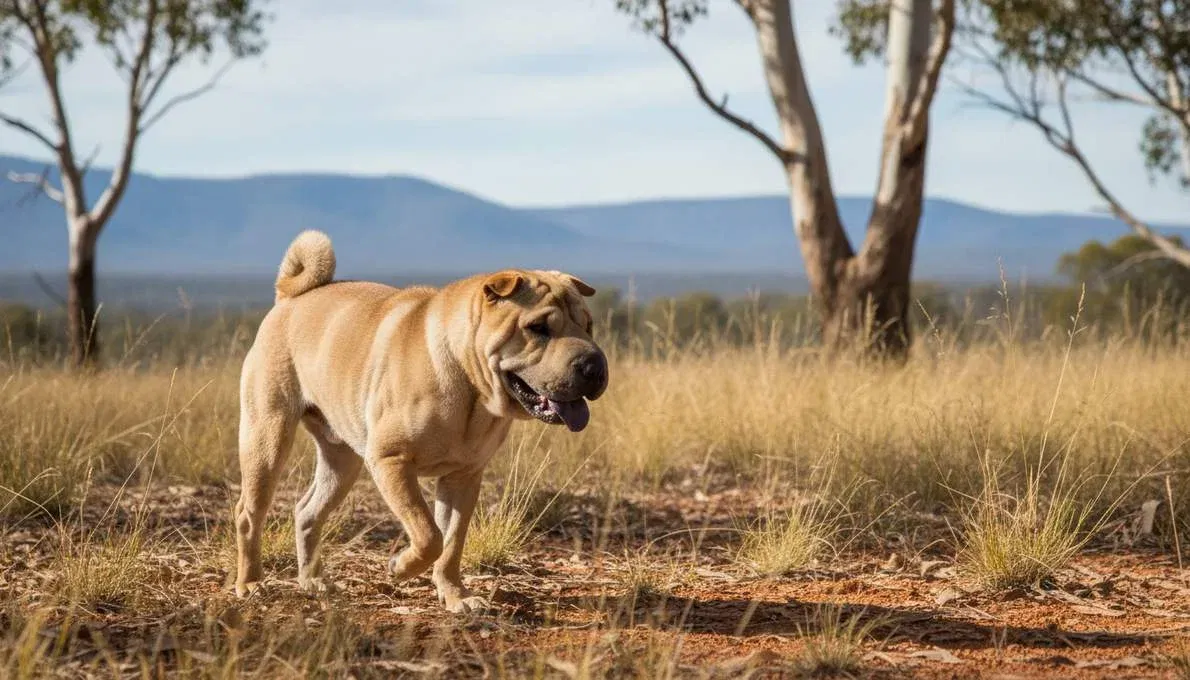
The Shar Pei has moderate exercise needs — around 30 to 60 minutes daily is sufficient for most adults. They enjoy walks, gentle play, and mental stimulation but are not high-energy dogs and don’t need the intense exercise demanded by working breeds. They are calm indoors and happy to relax between outings.
Heat sensitivity is a critical consideration. The Shar Pei’s brachycephalic features (short muzzle, narrowed airways) and thick skin make them vulnerable to overheating. In Australian summers, exercise should be restricted to early morning or late evening. Watch for signs of heat distress: excessive panting, drooling, staggering, or collapse. This breed does not belong at the dog park at midday in February.
Can Shar Pei Live in Apartments?
Yes. Their moderate size (20–27 kg), calm indoor temperament, moderate exercise needs, and quiet nature make them suitable for apartment living. They don’t bark excessively and aren’t destructive when adequately exercised. The main considerations are temperature control (air conditioning is strongly recommended in summer) and adequate daily outings for exercise and mental stimulation.
Why Do Shar Pei Have Wrinkles?
The wrinkles served a practical purpose in the breed’s fighting history: loose skin made it difficult for an opponent to get a secure grip, and if bitten, the skin would give without the teeth reaching muscle or organs. The level of wrinkling in modern Western (meat-mouth) Shar Pei is far more extreme than the original Chinese working dogs, driven by show standards and buyer preferences that favoured maximum wrinkles. This excess skin is directly linked to hyaluronosis — the overproduction of hyaluronic acid — which in turn causes Shar Pei fever, skin problems, and many of the breed’s chronic health issues. Responsible breeders now aim for moderate wrinkling rather than extreme — enough to preserve the breed’s character without maximising health risks.
Training Guide
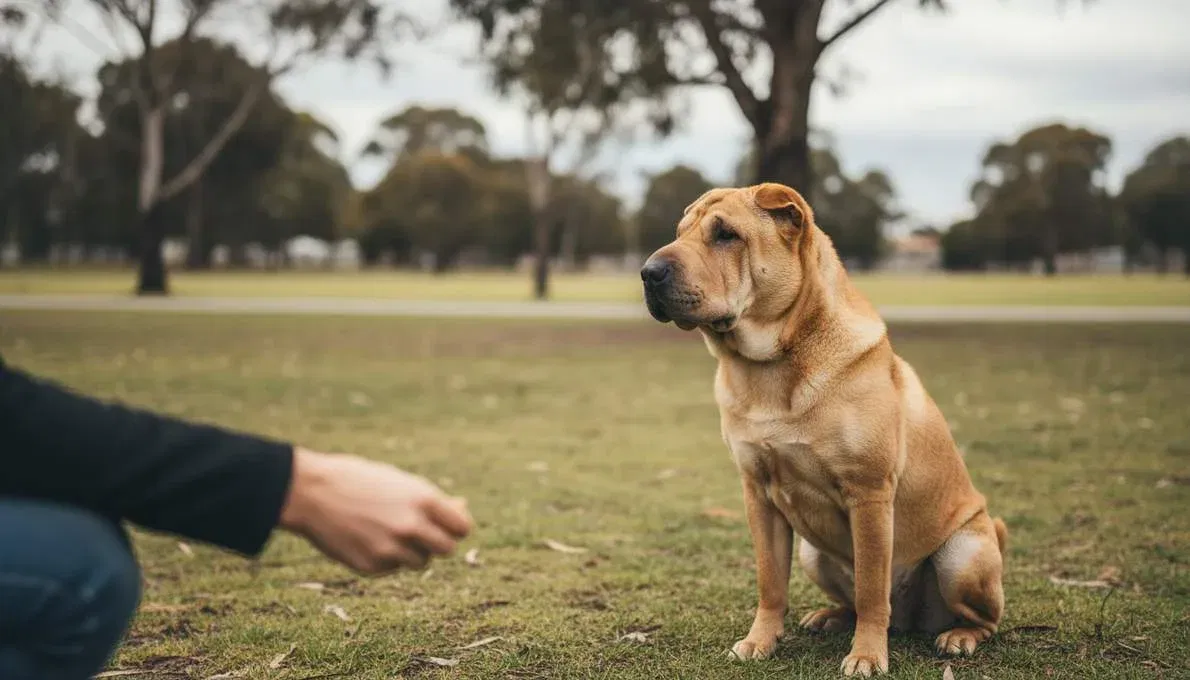
Training a Shar Pei requires understanding that you are dealing with a guard dog that was bred to act independently. Shar Pei are intelligent, quick to learn, and capable of complex problem-solving. They are also stubborn, dominant-inclined, and entirely comfortable ignoring commands they consider beneath them.
Early socialisation is the single most important investment you will make in a Shar Pei. Between 8 and 16 weeks, the puppy needs positive exposure to as many different people, dogs, environments, sounds, and experiences as possible. A Shar Pei that misses this socialisation window is significantly more likely to develop dog aggression, stranger reactivity, and general anxiety. This is not optional advice — it is the difference between a stable companion and a liability.
Positive reinforcement is essential. The Shar Pei responds to food rewards, praise, and consistent leadership. Harsh correction, physical punishment, or dominance-based methods will backfire badly — the Shar Pei will either shut down or become defensive. Short, varied training sessions work best. The breed excels when it respects its handler, and respect is earned through fairness, not force.
Training Difficulty
Training difficulty: 6 out of 10 for experienced owners; 9 out of 10 for first-time owners. The breed is not recommended for novice owners. The combination of independence, guarding instinct, potential dog aggression, and stubborn nature requires confident, experienced handling.
| Age | Training Focus |
|---|---|
| 8–16 weeks | CRITICAL SOCIALISATION WINDOW: Expose to people, dogs, children, environments, sounds, handling; puppy classes essential; begin house training; name recognition; gentle handling for wrinkle/ear cleaning; introduce grooming routine |
| 4–12 months | Continue socialisation (never stop with this breed); basic commands (sit, stay, come, leave it); lead manners; redirect guarding behaviour gently; teach “quiet” command; positive exposure to other dogs |
| 1–3 years | Reinforce all training; manage emerging territorial behaviour; maintain regular socialisation with other dogs; establish clear household rules; consider obedience classes for ongoing engagement |
Cost of Ownership in Australia
The Shar Pei is more expensive to own than many similarly sized breeds, primarily because of its health demands. The purchase price is only the beginning — the ongoing veterinary costs of managing skin, eyes, ears, and potential Shar Pei fever are the real financial commitment.
Shar Pei Price in Australia
ANKC-registered Shar Pei puppies in Australia typically cost $2,500–$4,500 AUD from registered breeders. Puppies from health-tested parents (SPAID, POAG/PLL, thyroid, hip/elbow, patella screening) may be priced at the higher end. Non-registered puppies on Gumtree and other platforms range from $1,000–$2,000 but come with significantly higher health and temperament risks. Given this breed’s extensive health challenges, purchasing from a breeder who does not health-test is a false economy.
Australian Breeders
Search Dogzonline.com.au and RightPaw.com.au for ANKC-registered Shar Pei breeders. Notable Australian breeders include Rynkls (committed to breed welfare, rescue work, public education, health-focused breeding), Staxapei (Sydney, breeds for health, temperament, skin and eye quality, all colours including blue/lilac/chocolate carriers), Shangyin (NSW, show-quality, comprehensive health testing), Silkston (previously South Gippsland VIC, now Central QLD, committed to SPAID/POAG/PLL/thyroid/hip/elbow/patella testing), and Wayatinah (Melbourne SE, emphasis on health and soft temperaments, Royal Melbourne Show winners). Ask breeders specifically about SPAID testing, entropion history in their lines, and POAG/PLL DNA screening.
Shar Pei Rescue in Australia
Shar Pei rescue is more active in Australia than for many breeds, reflecting the reality that some owners are overwhelmed by the breed’s health and temperament demands. Shar Pei Rescue QLD is one of the most active rescue organisations. General breed-specific rescue groups and state-based rescue organisations also occasionally have Shar Pei and Shar Pei crosses. Adoption fees typically range from $300–$700. Be aware that rescued Shar Pei may come with existing health conditions and socialisation gaps that require experienced management.
Ongoing Annual Costs
| Expense | Annual Estimate (AUD) | Notes |
|---|---|---|
| Premium Dog Food | $800–$1,500 | Medium breed; quality diet supports skin health; some may need prescription/hypoallergenic diet ($1,500–$2,500+) |
| Veterinary Care (routine) | $400–$800 | Annual checks, vaccines, parasite prevention; thyroid screening |
| Veterinary Care (breed-specific) | $500–$3,000+ | Skin/ear/eye management; SPAID medication if affected; entropion surgery in year 1 |
| Pet Insurance | $600–$1,500 | HIGHLY recommended; breed premiums may apply; covers entropion, SPAID, skin, ears |
| Grooming & Skin Care | $200–$500 | Medicated shampoos, wrinkle wipes, ear cleanser; minimal professional grooming |
| TOTAL (first year) | $6,000–$14,000+ | Including purchase, entropion surgery if needed, and setup |
| TOTAL (ongoing per year) | $3,000–$7,500+ | Breed-specific veterinary costs are the largest variable; healthy dogs at lower end, chronic conditions at upper |
Is the Shar Pei Right for You?
You are an experienced dog owner comfortable with an independent, strong-willed breed. You want a loyal, protective companion that bonds deeply with its family. You can commit to extensive early socialisation and ongoing management of guarding behaviour. You are prepared financially and emotionally for significant, ongoing veterinary costs related to skin, eyes, ears, and potential Shar Pei fever. You have researched the breed’s health thoroughly and are buying from a breeder who SPAID-tests and screens for eye conditions. You want a quiet, clean, moderate-exercise dog that is happy in a house or apartment.
You are a first-time dog owner — the Shar Pei’s combination of stubbornness, guarding instinct, and health demands requires experience. You can’t afford ongoing veterinary bills that may significantly exceed those of other breeds. You want a dog that is friendly with everyone — the Shar Pei is reserved with strangers by nature. You have young children and cannot supervise interactions closely. You want a dog-park-friendly breed — many Shar Pei are not reliably safe with unfamiliar dogs. You live in a hot climate without air conditioning — heat sensitivity is a genuine welfare concern.
The Shar Pei x Staffy cross is one of the most searched combinations in Australia, and these dogs appear frequently in rescue. The cross produces a medium-sized, muscular dog that may inherit the Shar Pei’s wrinkles and the Staffy’s broader build. Temperament is unpredictable — you may get the Staffy’s people-friendliness or the Shar Pei’s aloofness, or any combination. Health can go either way: the cross may dilute Shar Pei skin issues or may combine both breeds’ health challenges. These dogs are not ANKC-registered. If you’re considering a Shar Pei x Staffy, assess the individual dog’s temperament rather than assuming parent breed averages.
The “miniature Shar Pei” is not a recognised ANKC variety. Some breeders market smaller Shar Pei as “mini” or “miniature” at premium prices. These dogs are typically undersized individuals or the product of breeding for small size at the expense of health. Smaller Shar Pei may have exaggerated facial wrinkling and more severe health problems. Treat “miniature Shar Pei” marketing with significant caution.
Shar Pei come in a wide range of solid colours including red, fawn, cream, sable, blue, black, chocolate, lilac, and apricot. Blue Shar Pei (a dilute black) and black Shar Pei are popular and visually striking. Dilute colours (blue, lilac, isabella) can carry an increased risk of Colour Dilution Alopecia — a skin condition causing hair loss and skin inflammation. All solid colours are acceptable in the breed standard. Parti-colours or spotted patterns are not.
Beyond the Shar Pei x Staffy, common crosses searched in Australia include Shar Pei x Labrador, Shar Pei x Poodle (Shar-Poo), Shar Pei x Bulldog, and Shar Pei x Pitbull. None of these are ANKC-registered breeds. Crosses involving Shar Pei may inherit the breed’s skin conditions, guarding temperament, and health challenges. Any cross should be assessed as an individual rather than assumed to carry the best of both parent breeds.
The Shar Pei is a magnificent, infuriating, deeply loyal dog that demands more from its owner than almost any other medium-sized breed. The health challenges are real, costly, and ongoing. The temperament requires experience and commitment. The wrinkles that make people fall in love with the breed are the same wrinkles that drive its most serious health problems.
Here’s what it comes down to:
- The Shar Pei is a medium-sized (46–51 cm, 20–27 kg) ancient Chinese guard dog with a distinctive wrinkled appearance, blue-black tongue, and sand-textured coat. It lives 8–12 years (average 10.6 years). It is loyal, protective, calm, quiet, independent, and reserved with strangers. It is an outstanding guard dog and a poor choice for first-time owners. Early socialisation is non-negotiable. Dog aggression is a known breed tendency that requires management.
- Health is this breed’s defining challenge. Shar Pei fever (up to 49% affected, can cause fatal amyloidosis), entropion (~18%), ear infections (~16%), skin infections (~21%), eye conditions (~22%), hypothyroidism (~20%), and mast cell tumours are all common. Buy ONLY from breeders who SPAID-test, screen for POAG/PLL, and breed for moderate wrinkling. Pet insurance is essential. Annual breed-specific veterinary costs of $500–$3,000+ are realistic in addition to routine care.
- In Australia, ANKC-registered puppies cost $2,500–$4,500 AUD from breeders including Rynkls, Staxapei, Shangyin, Silkston, and Wayatinah via Dogzonline.com.au. Ongoing costs are $3,000–$7,500+ per year. Shar Pei Rescue QLD and general rescue groups offer adoption for $300–$700. The Shar Pei x Staffy is common in rescue but temperament/health are unpredictable. If you understand the health demands, can afford the veterinary commitment, and want a dog that will guard your family with quiet, absolute devotion, the Shar Pei is unlike anything else. Go in with your eyes wide open.
Frequently Asked Questions
How much does a Shar Pei cost in Australia?
ANKC-registered Shar Pei puppies in Australia typically cost $2,500–$4,500 AUD from registered breeders. Puppies from health-tested parents (SPAID, POAG/PLL, thyroid, hip/elbow, patella screening) may be priced at the higher end. Non-registered puppies on Gumtree and other platforms range from $1,000–$2,000 but come with significantly higher health and temperament risks. Given this breed’s extensive health challenges, purchasing from a breeder who does not health-test is a false economy.
What does “Shar Pei” mean?
The name comes from the Cantonese “shā pèih” (沙皮), meaning “sand skin” or “sandpaper skin.” It describes the breed’s characteristic rough, gritty-textured coat. The traditional Chinese breed was less wrinkled than the Western version, with a more athletic build and tighter skin.
How long do Shar Pei live?
The Shar Pei lifespan is 8 to 12 years, with a 2024 UK study finding an average life expectancy of 10.6 years — below the purebred average of 12.7 years. Bondi Vet and several Australian sources cite 10–12 years as a realistic range for well-cared-for individuals.
What is Shar Pei fever?
Shar Pei fever, part of Shar Pei Autoinflammatory Disease (SPAID), is a breed-exclusive condition caused by a genetic mutation that drives overproduction of hyaluronic acid. It causes recurrent episodes of sudden high fever, painful swelling of the hock joints, lethargy, and reduced appetite. Repeated episodes cause amyloid proteins to accumulate in the kidneys and liver, which is the leading cause of death in the breed.
Are Shar Pei aggressive?
The Shar Pei is not inherently aggressive, but the breed does have a well-documented tendency toward dog aggression and can be reactive to unfamiliar people if not properly socialised. A UK VetCompass study found aggression was the fifth most commonly recorded disorder in the breed at 5.23%. A well-bred Shar Pei from a breeder who prioritises temperament, combined with extensive early socialisation, is a calm, stable, non-aggressive dog.
Do Shar Pei shed?
Yes, but moderately. Shar Pei shed seasonally, with horse coats shedding less than brush coats. Weekly brushing with a rubber grooming mitt removes loose hair and distributes skin oils. They are not considered hypoallergenic, despite the short coat — their skin produces significant dander, and the bristly coat can cause skin irritation in sensitive people upon contact.
What is a bear coat Shar Pei?
A bear coat Shar Pei has a longer, softer coat caused by a recessive gene. Bear coat Shar Pei are visually striking but not recognised by most breed standards, including the ANKC. Reputable breeders do not breed for bear coats specifically, and dogs marketed as “rare bear coat Shar Pei” at premium prices should be approached with caution.
What’s the difference between bone mouth and meat mouth Shar Pei?
The original Chinese Shar Pei — the “bone mouth” type — was a leaner, less wrinkled dog with a tapered muzzle and tighter skin. The “meat mouth” type is a heavily wrinkled dog with a padded, fleshy muzzle, excessive skin folds, and significantly more health problems, developed to meet Western demand. Most Western Shar Pei today are meat-mouth type.
Are Shar Pei good apartment dogs?
Yes. Their moderate size (20–27 kg), calm indoor temperament, moderate exercise needs, and quiet nature make them suitable for apartment living. They don’t bark excessively and aren’t destructive when adequately exercised. The main considerations are temperature control (air conditioning is strongly recommended in summer) and adequate daily outings for exercise and mental stimulation.
Where can I find Shar Pei breeders in Australia?
Search Dogzonline.com.au and RightPaw.com.au for ANKC-registered Shar Pei breeders. Notable Australian breeders include Rynkls, Staxapei, Shangyin, Silkston, and Wayatinah. Ask breeders specifically about SPAID testing, entropion history in their lines, and POAG/PLL DNA screening.
1. PetMD — Chinese Shar-Pei Dog Breed Health and Care — https://www.petmd.com/dog/breeds/shar-pei
2. Wikipedia — Shar Pei — https://en.wikipedia.org/wiki/Shar_Pei
3. Bondi Vet — Shar Pei Dog Breed Characteristics — https://bondivet.com/blogs/dog-breeds/shar-pei-dog-breed-characteristics-origin-and-care
4. VetCompass/PMC — Health of Shar Pei Dogs Under Primary Veterinary Care in the UK — https://pmc.ncbi.nlm.nih.gov/articles/PMC10720141/
5. Dogzonline.com.au — Shar Pei Breeders in Australia — https://www.dogzonline.com.au/breeds/breeders/shar-pei.asp
6. Chewy — Chinese Shar-Pei Breed Characteristics — https://www.chewy.com/education/dog-breeds/shar-pei
7. Long Beach Animal Hospital — Diseases for Shar Pei — https://lbah.com/breed-disease/shar-pei-dog-breed-health-issues/
8. Lancaster Puppies — Shar Pei Breed Information — https://www.lancasterpuppies.com/dog-breeds/shar-pei/