
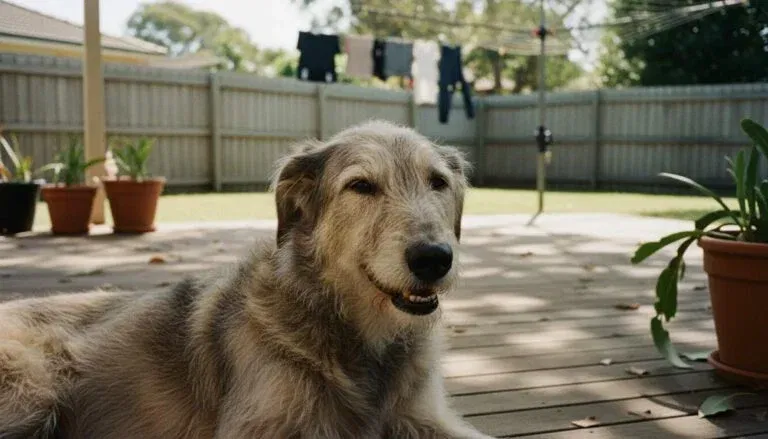
The Scottish Deerhound looks like a Greyhound that’s been left out in the Scottish Highlands and come back wearing a wiry coat and an air of quiet nobility. Which is, more or less, exactly what happened.
This is one of the tallest dog breeds in the world — males stand 76 cm or more at the shoulder and can weigh up to 50 kg — yet the Deerhound’s defining characteristic isn’t its size. It’s the temperament. Gentle, dignified, undemanding, and so profoundly laid-back as an adult that many owners describe them as the world’s largest couch ornament. Then something moves in the distance, and you’re reminded that this dog was purpose-built to course and bring down wild red deer weighing over 180 kg.
In Australia, the Scottish Deerhound has a quiet but devoted following. It’s an ANKC-recognised breed with dedicated breeders across several states and an active Deerhound Club of Victoria. This guide covers the reality of living with one: the glorious temperament, the brutally short lifespan, the health concerns every owner must understand, and why this breed is simultaneously one of the easiest and most heartbreaking dogs to own.
What You’ll Learn
- Breed traits & temperament
- Health concerns to know
- True cost in Australia
- Training & exercise needs
- Is this breed right for you?
Quick Facts at a Glance
| Attribute | Details |
|---|---|
| Breed Group | ANKC Group 4 — Hounds (Sighthound); AKC Hound Group; FCI Group 10 |
| Origin | Scottish Highlands, Scotland — ancient breed, records from 16th century+ |
| Also Known As | Deerhound, Royal Dog of Scotland |
| Height (Male) | 76 cm+ (30+ inches); ideally 76–81 cm |
| Height (Female) | 71 cm+ (28+ inches) |
| Weight (Male) | 39–50 kg (85–110 lb) |
| Weight (Female) | 34–43 kg (75–95 lb) |
| Lifespan | 8–11 years; average closer to 8–9 |
| Coat | Harsh, wiry, 7–10 cm long; beard and moustache; low-maintenance |
| Colours | Various shades of grey (dark blue-grey preferred); historically also brindle, fawn, red |
| Shedding | Minimal — wiry coat sheds very little |
| Temperament | Gentle, dignified, friendly, lazy (indoors), independent, non-aggressive |
| Exercise Needs | 1+ hour daily; needs access to safe, fenced running space; high prey drive off-lead |
| Good with Kids | Excellent — gentle, patient, adores children; size requires supervision with toddlers |
| Guard Dog Ability | Poor — too friendly and non-aggressive; unlikely to bark at strangers |
| Speed | Up to 56 km/h (35 mph); outperforms Greyhounds on rough terrain |
History & Origins
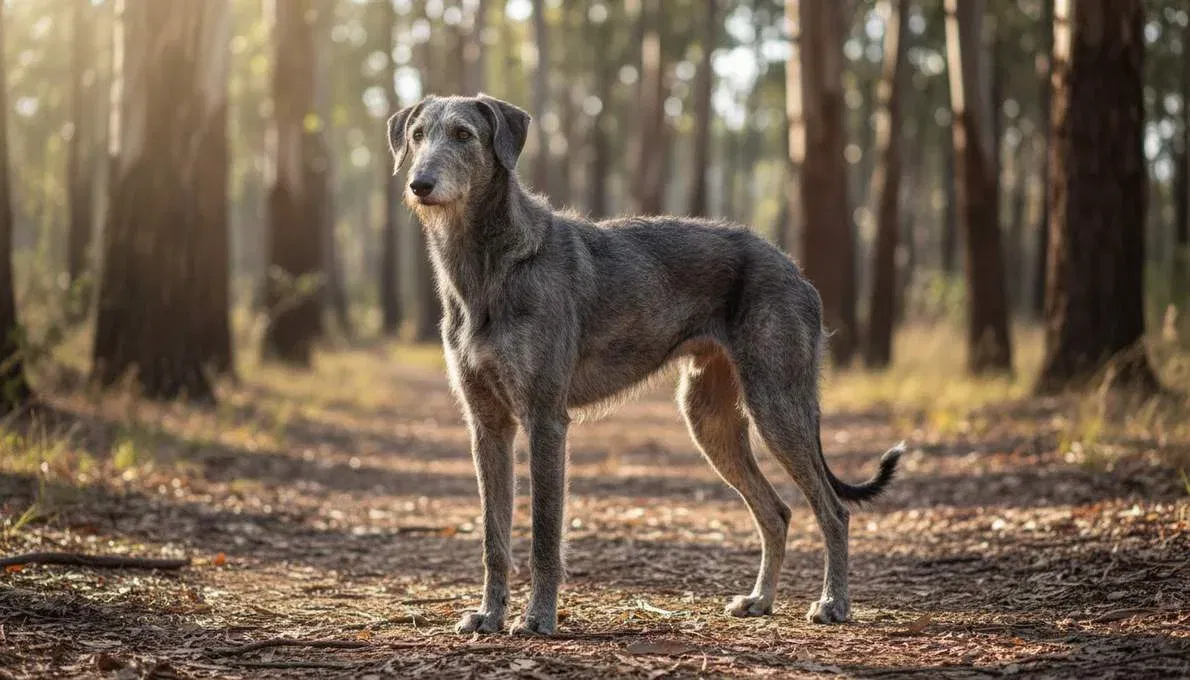
The Scottish Deerhound is one of the oldest identifiable dog breeds in the British Isles. Stone carvings from Scotland dating back over 1,200 years depict deer being chased by large hounds, and written records of the breed appear from at least the 16th century. The breed’s purpose was straightforward and spectacular: to course wild red deer across the rugged Scottish Highlands, running them down by sheer speed and bringing them to bay for the hunter.
Red deer in Scotland can weigh over 180 kg. The Deerhound needed to be fast enough to catch them, strong enough to pull them down, and brave enough to hold them. A single Deerhound or pair would be brought close to the deer and released, with the chase typically decided within a few minutes of flat-out sprinting across rough highland terrain.
The breed was so prized that for centuries, ownership was restricted to the nobility. During the Middle Ages, no one ranked below an Earl could own a Scottish Deerhound. This exclusivity nearly proved fatal to the breed — when the Scottish clan system collapsed, Deerhound numbers plummeted. The breed was saved by dedicated enthusiasts in the 19th century, though it was also during this period that the Deerhound became a major foundation breed for the modern Irish Wolfhound.
Queen Anne of Denmark (wife of James VI) sent Deerhounds as diplomatic gifts. General George Custer owned Deerhounds. Author Karen Blixen (“Out of Africa”) was gifted a pair as a wedding present. The breed’s association with nobility, literature, and art runs deep.
In Australia, Deerhounds have been present since at least the 1860s, initially used for hunting kangaroos and later for killing dingoes and foxes that preyed on sheep flocks. Today, Australian Deerhounds are bred for temperament, conformation, and health, with an active show and lure coursing community. The Deerhound Club of Victoria has supported the breed since its establishment, and ANKC-registered breeders operate across multiple states.
Temperament & Personality
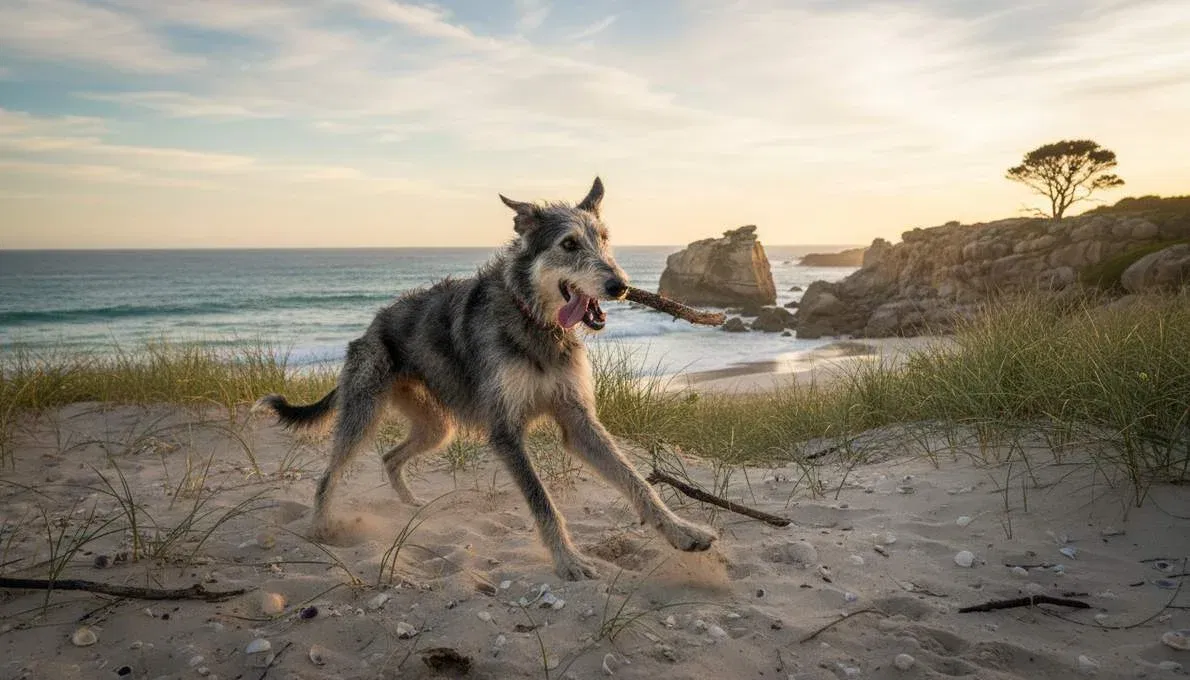
The Scottish Deerhound temperament is one of the breed’s greatest gifts. This is a gentle, quiet, dignified dog that seems to watch the world with good-natured amusement. Indoors, an adult Deerhound is remarkably calm — content to stretch out on the floor (or the sofa, or your bed) and nap for hours. They are often described as the gentlest of the giant breeds, and this reputation is well-earned.
Deerhounds bond deeply with their families. They are affectionate without being demanding, loyal without being clingy, and patient with children to a degree that larger, more excitable breeds often aren’t. They want to be near you, not on top of you. They’ll follow you from room to room and settle quietly wherever you are.
They are friendly with virtually everyone. Strangers, other dogs, visitors — the Deerhound greets them all with the same mild, welcoming interest. This makes them spectacularly bad guard dogs. They are unlikely to bark when someone approaches your door, and if a burglar entered your house, your Deerhound would probably offer them the couch.
The other side of this temperament is the prey drive. The Deerhound is a sighthound to its core, and when something small and fast-moving appears in its field of vision, 500 years of deer-coursing genetics switch on instantly. They can run at up to 56 km/h and will be deaf to your commands until the chase is complete. Off-lead exercise must always be in a secure, fenced area.
For the right household, they are exceptional. Deerhounds are quiet, clean, gentle, undemanding, and deeply companionable. The caveats: they need space, they need fenced running areas, they should not be left alone for long periods (they become depressed and withdrawn), and their lifespan is heartbreakingly short. If you can provide these things, few breeds make better companions.
This is the most common comparison, and it’s not surprising — the two breeds look similar and share a long intertwined history. The Irish Wolfhound is generally taller (minimum 79 cm vs 76 cm for Deerhounds), heavier, and more heavily built. The Deerhound is more refined, more elegant, and more athletic. The Deerhound’s coat is harsher and wirier; the Wolfhound’s is rougher and shaggier. Temperament-wise, both are gentle giants, but Deerhounds tend to be slightly more independent and less overtly affectionate, while Wolfhounds are often described as more openly demonstrative. Historically, the Deerhound was a major foundation breed for the modern Irish Wolfhound when the latter was reconstructed in the late 19th century. Lifespan is similarly short for both breeds (8–11 years for Deerhounds; 6–8 years for Wolfhounds, making the Deerhound the longer-lived of the two).
Very rarely. Deerhounds are one of the quietest dog breeds. They almost never bark without reason, and even then it tends to be a single, low bark rather than sustained barking. This makes them excellent for noise-sensitive environments but, again, terrible guard dogs.
Health & Genetic Conditions
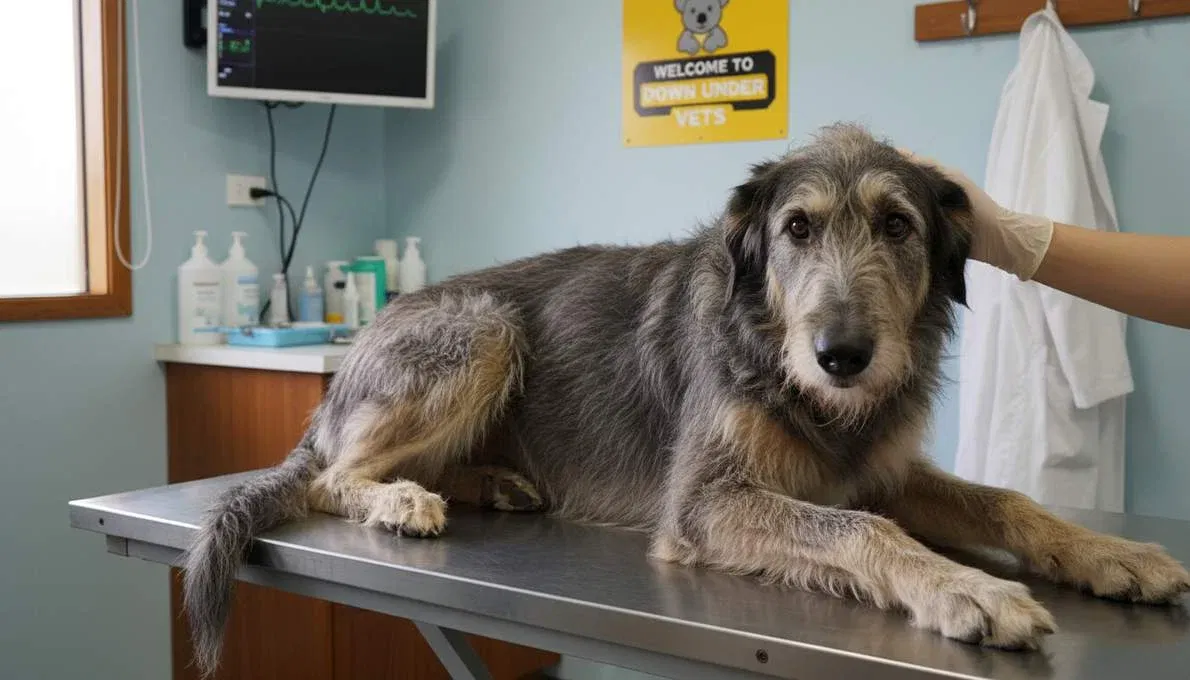
This is the section every prospective Deerhound owner needs to read carefully. The Scottish Deerhound is a giant sighthound, and like all giant breeds, its size comes at a cost. The breed faces several serious health concerns, and responsible ownership means understanding and preparing for them.
Prevalence: Osteosarcoma is one of the most devastating health realities for the Scottish Deerhound — the breed carries an estimated prevalence of 150 cases per 1,000 dogs (15%), compared to just 7 cases per 100,000 dogs across all breeds combined. [UFAW – Scottish Deerhound Osteosarcoma] Research suggests the condition is inherited as a single dominant gene mutation, meaning dogs with at least one copy of the mutant gene have a greater than 75% chance of developing the disease. The cancer is aggressive and spreads rapidly — in 90% of diagnosed cases it has already metastasised by the time of diagnosis, with a median survival time of just 76 days without treatment.
Symptoms: Progressive lameness in a limb that doesn’t improve with rest is the key early warning sign, along with a painful, firm swelling developing on or near a long bone — most commonly the femur or humerus. Lethargy and reduced appetite often accompany the pain. Any unexplained lameness in a Scottish Deerhound should be investigated by X-ray without delay rather than managed conservatively as a sprain.
Treatment Cost (AUD): Limb amputation combined with chemotherapy is the treatment offering the best survival outcomes, typically costing $8,000–$20,000+ AUD in a large breed. [petinsurance.com.au] Palliative pain management is significantly less expensive but does not meaningfully extend survival. Pet insurance taken out before any diagnosis is strongly recommended for this breed.
Prevention: No DNA test currently exists to identify carriers. Avoid breeding from any lineage with a documented history of osteosarcoma — given the dominant inheritance pattern, the condition can be passed through generations even by dogs that never developed it themselves. Familiarise yourself with the early signs and investigate any new lameness promptly. [UFAW – Scottish Deerhound Osteosarcoma]
Prevalence: Scottish Deerhounds have the highest recorded prevalence of dilated cardiomyopathy of any breed — one American study found 6% of the breed affected, placing them at the top of the DCM rankings across all dog breeds. [Wikipedia – Scottish Deerhound] DCM involves progressive weakening and enlargement of the heart muscle until it can no longer pump blood effectively. The condition is generally genetic in this breed. Most dogs live up to two years after diagnosis with appropriate cardiac medication, though some deteriorate faster.
Symptoms: Early DCM is often silent — the first sign may be a murmur or arrhythmia caught on a routine vet examination before the owner notices anything at home. As the disease progresses, exercise intolerance, a persistent cough, laboured breathing, abdominal fluid accumulation (visible as a swollen belly), fainting, and sudden collapse can all occur. Annual cardiac auscultation from 3–4 years of age is the most practical screening approach.
Treatment Cost (AUD): Specialist echocardiogram to confirm and grade DCM costs $400–$900. Ongoing cardiac medication runs $500–$2,500/year and is required for the remainder of the dog’s life once diagnosed. [petinsurance.com.au]
Prevention: Annual cardiac examinations are strongly recommended for this breed given the documented prevalence. Ask your breeder whether DCM has appeared in the family lines of both parents, and prioritise breeders who conduct cardiac evaluations before breeding. Early detection with medication gives significantly better outcomes than late diagnosis.
Prevalence: The Scottish Deerhound’s deep, narrow chest places it firmly in the high-risk category for GDV — where the stomach fills with gas and twists, cutting off blood supply to surrounding organs. [ShowSight – Scottish Deerhound] As a large sighthound that may eat rapidly and exercise vigorously, the combination of anatomy and lifestyle creates meaningful risk. Without emergency surgery, GDV is fatal within hours.
Symptoms: A visibly bloated or hard abdomen, repeated retching that produces nothing, excessive drooling, restlessness, and inability to get comfortable are the classic signs. Any Deerhound showing these signs after a meal or exercise should be treated as an emergency — drive straight to an emergency vet without waiting.
Treatment Cost (AUD): Emergency surgery costs $3,500–$9,000+ AUD. [petinsurance.com.au] A prophylactic gastropexy — tacking the stomach to the abdominal wall to prevent twisting — can be performed at desexing and is worth discussing with your vet for this deep-chested breed.
Prevention: Feed two smaller meals daily rather than one large feed, and enforce at least an hour of rest before and after meals, particularly before any running or coursing activity. Discuss a prophylactic gastropexy at desexing with your vet.
Prevalence: Like all sighthounds, Scottish Deerhounds carry very low body fat and a lean muscle mass, meaning standard anaesthetic doses calculated by weight produce far deeper sedation than intended and take significantly longer to metabolise. This is not a disease but a physiological reality that applies to every Scottish Deerhound and must be communicated to any vet involved in the dog’s care — including emergency vets and locums who may not be familiar with the breed. [Scottish Deerhound Breed Profile – AdoptAPet]
Symptoms: Prolonged recovery from anaesthetic, difficulty maintaining normal body temperature post-surgery, and respiratory depression at standard drug doses are the key concerns. In serious cases, an overdose using standard protocols can cause cardiac arrest.
Treatment Cost (AUD): No specific cost — this is about using the correct sighthound-adjusted anaesthetic protocol from the outset. Always notify any vet, emergency clinic, or specialist that your dog is a sighthound before any procedure, and confirm they have experience with lean breeds.
Prevention: Ensure your regular vet flags sighthound sensitivity clearly in your dog’s medical records. Before any anaesthetic procedure — including routine dental work — confirm your vet is using a sighthound-appropriate protocol. Keep a written note of the breed’s anaesthetic sensitivity on any emergency contact card in case after-hours care is needed.
Prevalence: Cystinuria — a hereditary condition causing the kidneys to fail to properly reabsorb the amino acid cystine, which then crystallises into bladder and urinary tract stones — is documented in Scottish Deerhounds, and a DNA test is available to identify affected dogs and carriers. [DressUpYourPup – Scottish Deerhound] In some affected dogs the stones cause recurrent urinary blockages that require urgent intervention. Males are more severely affected than females due to their narrower urethra.
Symptoms: Blood in the urine, straining or frequent attempts to urinate with little output, visible discomfort when urinating, and in severe cases a complete inability to pass urine at all — which is a urinary emergency requiring immediate veterinary attention. Recurrent urinary tract infections can also be a sign of underlying stone formation.
Treatment Cost (AUD): Dietary management to reduce cystine stone formation costs relatively little ongoing. Surgical removal of stones or urethral obstruction relief costs $1,500–$5,000+ depending on severity. [petinsurance.com.au] DNA testing of breeding dogs costs around $100–$150 per dog.
Prevention: Ask your breeder for cystinuria DNA test results for both parents. Dogs confirmed affected should not be bred. High water intake and a protein-restricted diet may help reduce stone formation in predisposed dogs — discuss specific dietary strategies with your vet.
Lifespan & Longevity
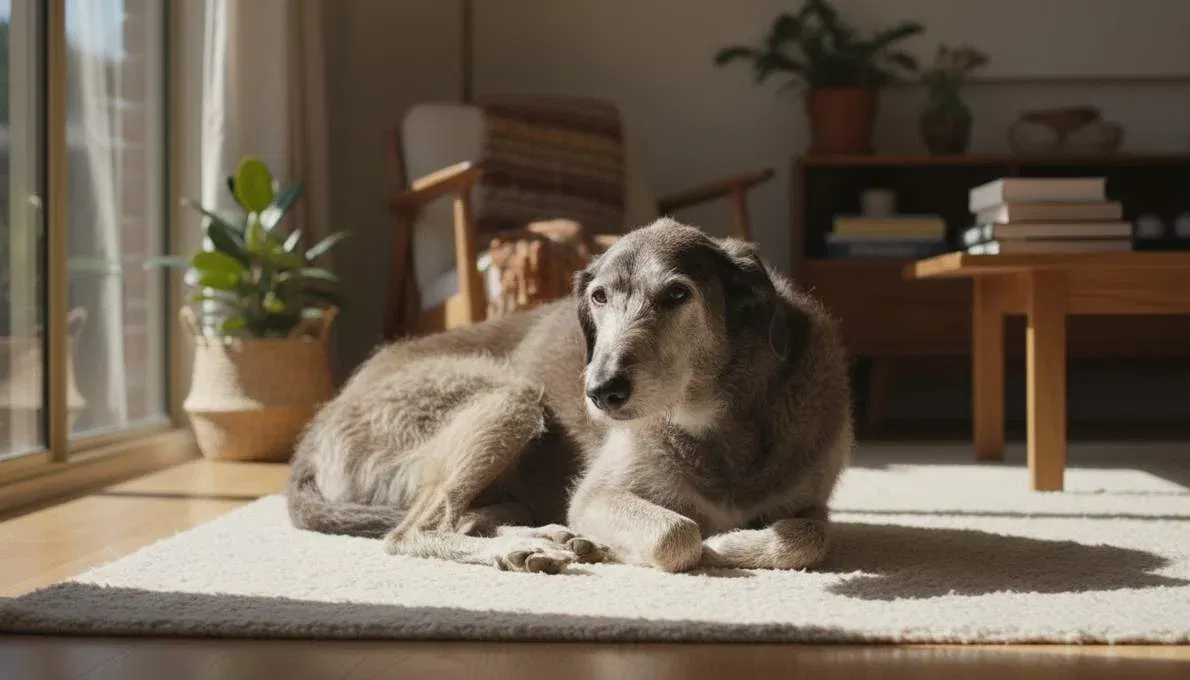
This is the hardest truth about the Scottish Deerhound. The average lifespan is 8 to 11 years, with many sources and Australian breeders noting the realistic average is closer to 8 to 9 years. Females tend to live slightly longer than males. For a dog this gentle and this beloved, the time is never enough.
The main causes of early death are osteosarcoma, cardiomyopathy, and bloat/GDV. These are not rare or unlikely events in the breed — they are common. Owning a Deerhound means accepting that you will almost certainly lose this dog younger than you want to, and being prepared emotionally and financially for significant veterinary costs in the later years.
Some individuals do reach 10, 11, or even 12 years with excellent care, good genetics, and a measure of luck. The breed’s breeders work tirelessly on cardiac screening and genetic testing to extend these years.
| Life Stage | Key Focus Areas |
|---|---|
| Puppy (0–18 months) | Socialisation (gentle breed but still benefits); CANNOT be crated — need free movement for bone/muscle development; high energy, destructive if bored; controlled growth rate; multiple meals daily; a companion dog/puppy highly recommended |
| Young Adult (1.5–3 years) | Settling into adult temperament; maintain daily exercise with running; cardiac baseline screening recommended; still building muscle; transition to adult feeding schedule |
| Adult (3–7 years) | Peak condition; increasingly calm indoors; annual cardiac screening; monitor for limb pain or swelling (osteosarcoma); dental care; maintain fitness despite laziness |
| Senior (7+ years) | Twice-yearly vet visits; cardiac monitoring essential; joint support; watch for lumps, limping, appetite changes; softer bedding for callus-prone pressure points; adapt exercise to capacity |
Grooming & Coat Care
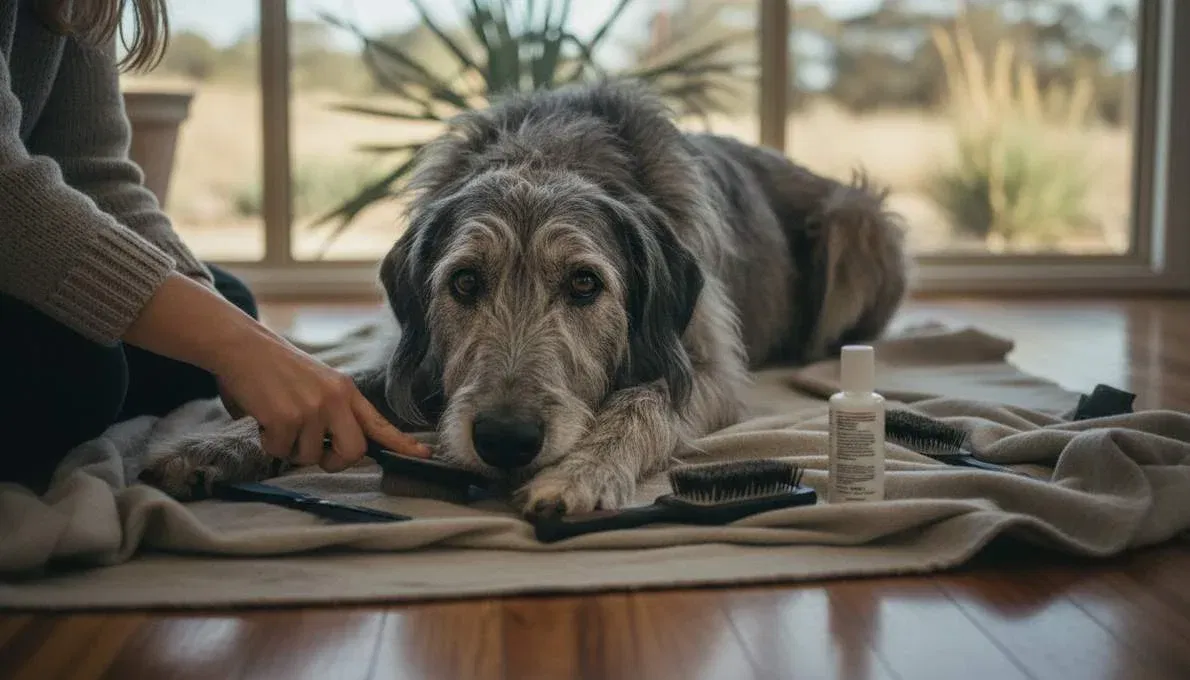
One of the practical joys of the Scottish Deerhound is its low-maintenance coat. The harsh, wiry outer coat is about 7–10 cm long and sheds dirt easily — a muddy Deerhound dries and shakes clean remarkably quickly. The beard and moustache add character, and the softer hair on the belly and breast provides some weather protection.
Do Scottish Deerhounds Shed?
Minimally. The wiry coat sheds very little compared to double-coated breeds. You won’t find Deerhound hair covering your furniture and clothes the way you would with, say, a Labrador or a Samoyed. Weekly brushing with a slicker brush removes dead hair and keeps the coat tidy. This is a low-shedding breed.
Are Scottish Deerhounds Hypoallergenic?
No dog is truly hypoallergenic, but the Deerhound’s low-shedding wiry coat produces significantly less loose hair than most breeds. They are a better choice for mild allergy sufferers than heavy-shedding breeds, though they are not marketed as hypoallergenic.
| Grooming Task | Frequency | Notes |
|---|---|---|
| Coat Brushing | Weekly | Slicker brush; quick and easy; coat naturally sheds dirt |
| Bathing | Occasionally | Only when necessary; harsh coat is self-cleaning |
| Hand-stripping (optional) | As needed | Show dogs may be hand-stripped to maintain coat texture; not required for pets |
| Nail Trimming | Every 2–4 weeks | Large dogs on soft surfaces may not wear nails naturally |
| Teeth Brushing | Several times weekly | Standard dental care; dental chews supplement brushing |
| Ear Cleaning | Weekly | Check for debris and redness |
| Callus Care | Ongoing | Deerhounds develop calluses from lying on hard surfaces; provide soft bedding |
Exercise Needs
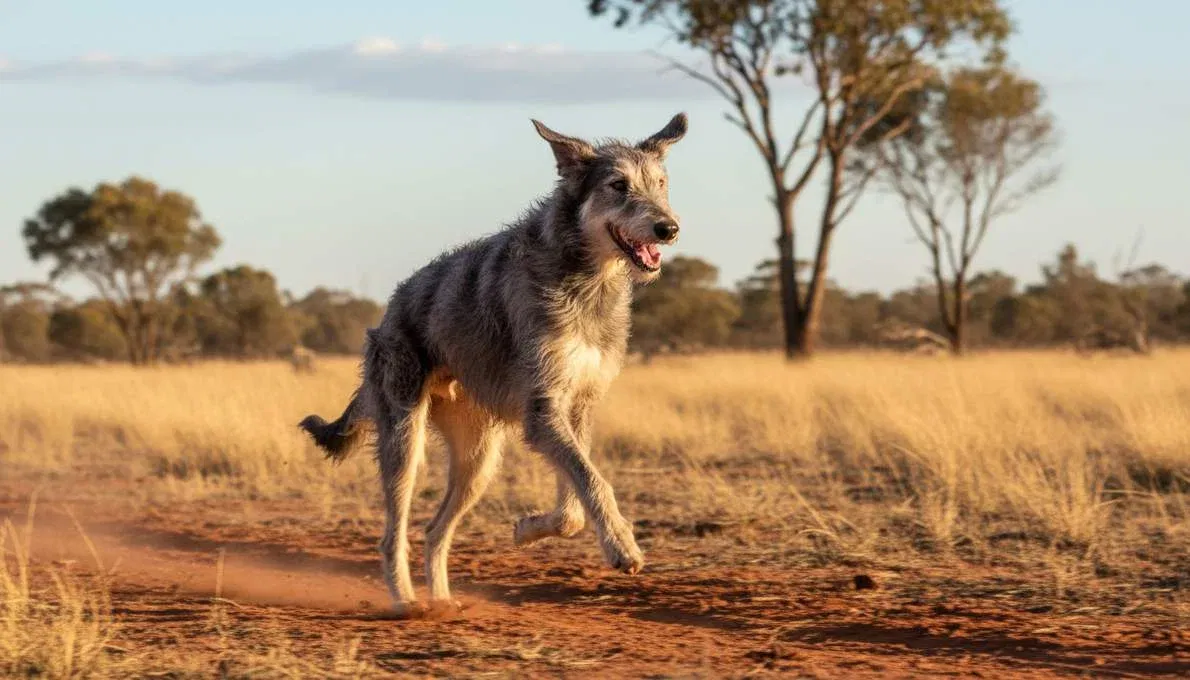
The Scottish Deerhound’s exercise needs are a study in contrasts. Indoors, this is one of the laziest dog breeds you’ll encounter — a 50 kg lounge ornament that would happily nap all day if you let it. But this laziness is deceptive and potentially harmful. Deerhounds need significant daily exercise, including regular opportunities to run at full speed, to maintain the muscular condition and cardiovascular fitness that keeps them healthy.
Plan for at least one hour of exercise daily, including access to a large, securely fenced area where they can sprint. A 1.8-metre fence is the minimum recommendation — some owners recommend higher. Electric or invisible fences are not suitable; a Deerhound in pursuit of prey will run straight through them.
The prey drive is absolute. Deerhounds should never be off-lead in an unfenced area. They can reach 56 km/h and will chase cats, rabbits, kangaroos, possums, birds, or anything else that moves. They will not hear your recall command. This is not a training failure — it’s 500 years of coursing genetics.
Deerhound puppies are a different animal entirely from adults. Puppies are wild, boisterous, destructive, and need enormous amounts of exercise and play to develop properly. Experienced breeders strongly recommend raising a Deerhound puppy with a canine companion to share the physical demands of play. An under-exercised puppy may develop skeletal and muscular problems, and crating is not recommended — puppies need freedom to move, run, and gallop for proper physical development.
Scottish Deerhound Speed
Deerhounds can reach speeds of approximately 56 km/h (35 mph). While not quite as fast as a Greyhound on a flat, smooth track, the Deerhound is superior on rough, uneven, or hilly terrain — exactly the conditions it was bred for in the Scottish Highlands. They combine speed with remarkable endurance and agility over challenging ground.
Training Guide
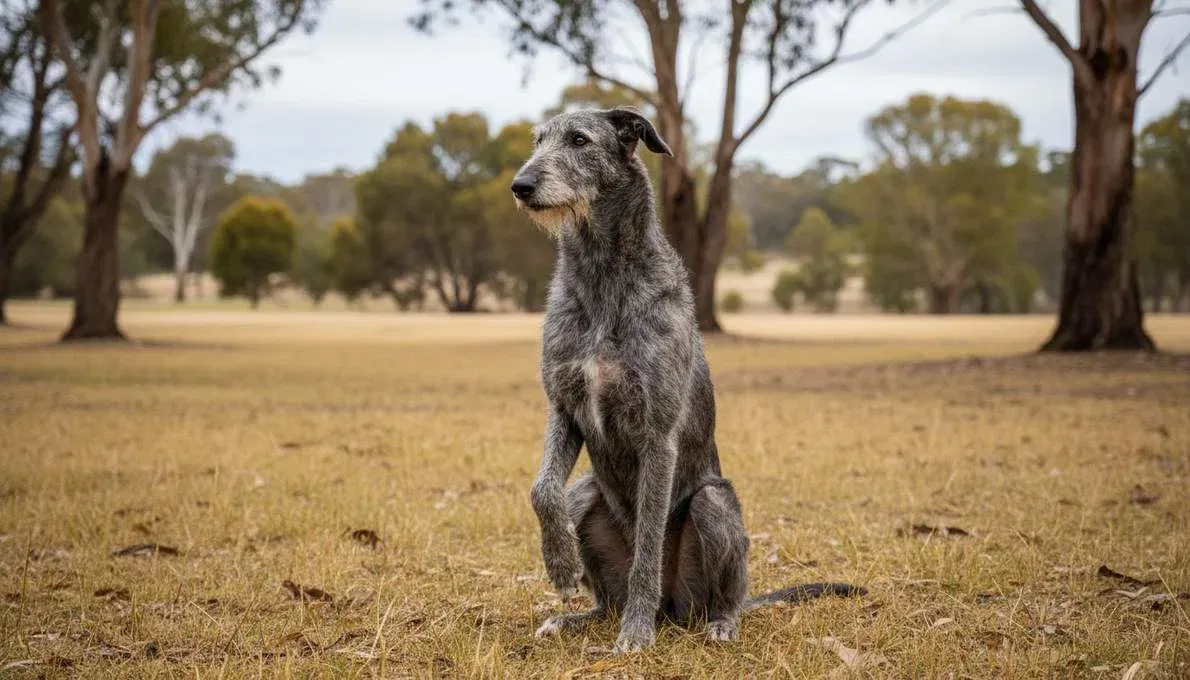
Training a Scottish Deerhound requires a philosophical adjustment. This is not a breed that lives to please you. It is not a breed that finds obedience exercises intellectually stimulating. The Deerhound learns commands easily enough — it is intelligent — but its response to being asked to perform them is often an expression best described as “I’ll get back to you on that.”
This is not stubbornness or dominance. It’s a sighthound’s characteristic independence. Deerhounds were bred to make split-second decisions while coursing deer at full speed across rough terrain. They don’t need (or want) micromanagement. Positive reinforcement, patience, and a genuine sense of humour about the process will serve you well. Harsh correction will get you nowhere — Deerhounds are sensitive dogs that respond poorly to force.
The breed is described by experienced breeders as tractable but not obedient. They will live harmoniously with you, follow household routines, and behave beautifully in the house — but formal competitive obedience is generally not their forte.
Training Difficulty
Training difficulty: 4 out of 10 for basic household manners; 8 out of 10 for formal obedience or reliable recall. They’re easy to live with but difficult to command. Recall training off-lead is essentially futile once prey drive activates — always use a lead or secure fencing.
| Age | Training Focus |
|---|---|
| 8–16 weeks | Socialisation (expose to people, dogs, environments); house training; lead training (start early — they become very strong); name recognition; handling for vet visits; begin with a companion puppy if possible |
| 4–12 months | Basic manners (sit, wait, leave it); lead manners critical before they reach full size; continue socialisation; redirect prey-drive chasing; puppy classes with positive methods |
| 1–3 years | Adult temperament developing; reinforce household rules; increasing calmness indoors; maintain exercise routine to prevent laziness; lure coursing as an outlet for prey drive |
Cost of Ownership in Australia
The Scottish Deerhound is a rare breed in Australia with a small but dedicated community of ANKC-registered breeders. Litters are infrequent, and waitlists are standard. This is not a breed you can find on impulse.
Purchase Price
Scottish Deerhound puppies in Australia typically cost $3,000–$5,000+ AUD from ANKC-registered breeders. Puppies from health-tested parents with cardiac screening, DNA testing (Factor VII, delayed postoperative haemorrhage, liver shunt bile acid testing), and imported bloodlines may cost more. Given the breed’s health risks, comprehensive health testing is non-negotiable — do not purchase from a breeder who does not test.
Australian Breeders
Start your search at Dogzonline.com.au, which lists ANKC-registered Deerhound breeders by state. Notable Australian breeders include Fyrth (home of Australia’s Supreme Champion Deerhounds, multiple Best in Show winners including Bhealaich Gotta Luv Me “Scrappy” and Fyrth Herding Cats “Kitty”; comprehensive health testing including cardiac, Factor VII, delayed haemorrhage, liver shunt, CMR3), Caberfei (Victoria, breeding since 1979, Deerhound Club of Victoria members since establishment, only 9 litters in 40+ years), Anduril (South Australia, established 1991, 40+ years breeding experience), Karawyndi (cardiac testing by sighthound-experienced cardiologist, DNA testing for multiple conditions), and Lainnir (established 2013, breeding for temperament, type, and soundness). The Deerhound Club of Victoria is the primary Australian breed club.
Scottish Deerhound Rescue
Breed-specific rescue is extremely limited due to the breed’s rarity. Deerhound breeders typically have contractual agreements that dogs be returned to them if the owner can no longer keep them. Contact the Deerhound Club of Victoria or breeders directly if you’re interested in rehoming an adult Deerhound.
Ongoing Annual Costs
| Expense | Annual Estimate (AUD) | Notes |
|---|---|---|
| Premium Dog Food (giant breed) | $1,500–$2,500 | Large dog = significant food costs; high-quality, large-breed formulation |
| Veterinary Care (routine) | $400–$800 | Annual check, vaccines, parasite prevention; cardiac screening recommended annually |
| Pet Insurance | $600–$1,500 | HIGHLY recommended; giant breed premiums; covers osteosarcoma, cardiac, bloat |
| Cardiac Screening | $300–$600 | Echocardiogram by sighthound-experienced cardiologist; annual recommended |
| Grooming | $50–$200 | Minimal; mostly home brushing; optional professional groom |
| Fencing (initial) | $3,000–$10,000+ | 1.8m+ secure fencing essential; no electric/invisible fences |
| Bedding & Equipment | $300–$600 | Giant-sized beds essential (callus prevention); heavy-duty leads; elevated food bowls |
| TOTAL (first year) | $8,000–$22,000+ | Including purchase, fencing, and setup |
| TOTAL (ongoing per year) | $3,500–$6,500+ | Cardiac screening and insurance are significant ongoing costs; food costs are high |
Is the Scottish Deerhound Right for You?
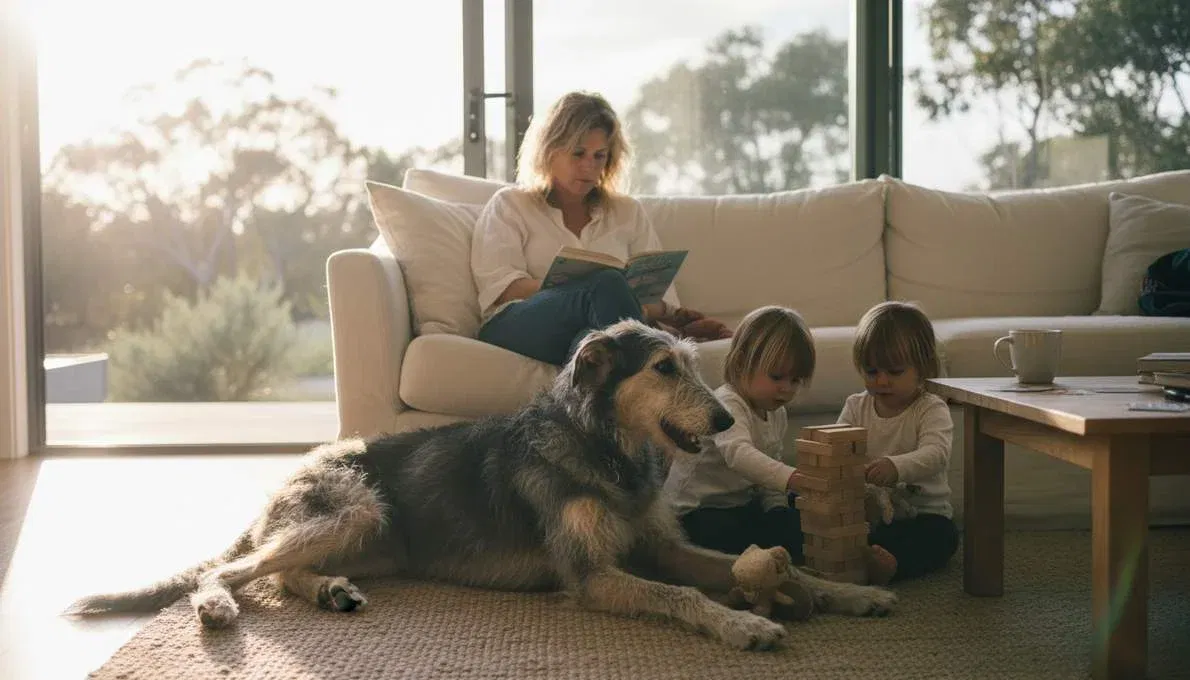
You want a gentle, quiet, dignified companion that is deeply bonded but not demanding. You have a large, securely fenced property where the dog can run at full speed. You are home frequently — Deerhounds do not cope well with long hours alone and become depressed if isolated. You can accept a short lifespan of 8–11 years and are prepared emotionally and financially for significant health challenges. You appreciate a low-maintenance coat and a dog that rarely barks. You have experience with sighthounds or giant breeds, or are prepared to learn.
You want a long-lived companion — the Deerhound’s lifespan is its greatest heartbreak. You live in an apartment or have no access to a large, fenced running area. You need a guard dog — Deerhounds are friendly to everyone and rarely bark. You want a dog that excels at obedience or follows commands with enthusiasm. You have small pets (cats, rabbits) without a secure separation strategy — the prey drive is serious. You are away from home for long periods regularly. You are not prepared for the potential costs of cardiac disease, osteosarcoma, or emergency bloat surgery.
No. There is no recognised miniature or mini Scottish Deerhound. The breed’s size is fundamental to its identity and purpose. If you love the Deerhound aesthetic but want a smaller dog, consider a Bedlington Terrier (somewhat similar wiry appearance, much smaller) or a Whippet (similar sighthound temperament and build, significantly smaller at 9–18 kg).
This requires honest assessment. Many Deerhounds live peacefully with indoor cats they’ve been raised with — they can learn that the household cat is family. However, outdoors, the sighthound prey drive can override this recognition, and a running cat may trigger a chase response. Introductions should be careful, supervised, and gradual. Some individual Deerhounds are more prey-driven than others. If you have outdoor cats, this is a genuine risk.
The Scottish Deerhound is one of the great dogs. There is nothing else quite like it — the size, the grace, the temperament, and the profound sense of living with an animal that genuinely seems noble. For those who can meet its needs, it rewards you with a companionship that is quiet, deep, and unforgettable.
Here’s what it comes down to:
- The Scottish Deerhound is one of the tallest breeds in the world (76+ cm, 34–50 kg) with one of the shortest lifespans (8–11 years, average closer to 8–9). It is gentle, dignified, quiet, non-aggressive, lazy indoors, and spectacularly fast outdoors. It bonds deeply, adores children, and greets strangers like old friends. It will not guard your house. It will steal your roast off the kitchen counter.
- Health is the critical consideration. Dilated cardiomyopathy, osteosarcoma, bloat, Factor VII deficiency, and sighthound anaesthetic sensitivity are all real risks. Only buy from breeders who cardiac screen and DNA test. Pet insurance is not optional — it’s essential. Annual cardiac screening is recommended.
- In Australia, ANKC-registered puppies cost $3,000–$5,000+ AUD with annual ongoing costs of $3,500–$6,500+. Breeders include Fyrth (Supreme Champions), Caberfei (since 1979), Anduril (since 1991), Karawyndi, and Lainnir via Dogzonline.com.au. The Deerhound Club of Victoria supports the breed community. Litters are rare — expect waitlists. If you’re ready for the short, bright, deeply rewarding experience of sharing your home with a Royal Dog of Scotland, nothing else will do.
Frequently Asked Questions
How much does a Scottish Deerhound cost in Australia?
Scottish Deerhound puppies in Australia typically cost $3,000–$5,000+ AUD from ANKC-registered breeders. Puppies from health-tested parents with cardiac screening, DNA testing (Factor VII, delayed postoperative haemorrhage, liver shunt bile acid testing), and imported bloodlines may cost more. Given the breed’s health risks, comprehensive health testing is non-negotiable — do not purchase from a breeder who does not test.
How long do Scottish Deerhounds live?
The average lifespan is 8 to 11 years, with many sources and Australian breeders noting the realistic average is closer to 8 to 9 years. Females tend to live slightly longer than males. The main causes of early death are osteosarcoma, cardiomyopathy, and bloat/GDV.
What’s the difference between a Scottish Deerhound and an Irish Wolfhound?
The Irish Wolfhound is generally taller (minimum 79 cm vs 76 cm for Deerhounds), heavier, and more heavily built. The Deerhound is more refined, more elegant, and more athletic. The Deerhound’s coat is harsher and wirier; the Wolfhound’s is rougher and shaggier. Temperament-wise, both are gentle giants, but Deerhounds tend to be slightly more independent and less overtly affectionate, while Wolfhounds are often described as more openly demonstrative. Historically, the Deerhound was a major foundation breed for the modern Irish Wolfhound. Lifespan is similarly short for both breeds (8–11 years for Deerhounds; 6–8 years for Wolfhounds, making the Deerhound the longer-lived of the two).
Do Scottish Deerhounds shed?
Minimally. The wiry coat sheds very little compared to double-coated breeds. Weekly brushing with a slicker brush removes dead hair and keeps the coat tidy. This is a low-shedding breed.
Are Scottish Deerhounds hypoallergenic?
No dog is truly hypoallergenic, but the Deerhound’s low-shedding wiry coat produces significantly less loose hair than most breeds. They are a better choice for mild allergy sufferers than heavy-shedding breeds, though they are not marketed as hypoallergenic.
How fast can a Scottish Deerhound run?
Deerhounds can reach speeds of approximately 56 km/h (35 mph). While not quite as fast as a Greyhound on a flat, smooth track, the Deerhound is superior on rough, uneven, or hilly terrain — exactly the conditions it was bred for in the Scottish Highlands.
Are Scottish Deerhounds good family dogs?
Yes, they are excellent family dogs. They are gentle, patient, and adore children. Their size requires supervision with toddlers to avoid accidental knocks. They are friendly with virtually everyone and bond deeply with their families.
Can Scottish Deerhounds live in apartments?
Not ideally. Deerhounds need access to a large, securely fenced area where they can run at full speed. They are large, lazy indoors but require significant daily exercise. A house with a yard is strongly recommended.
Where can I find Scottish Deerhound breeders in Australia?
Start your search at Dogzonline.com.au, which lists ANKC-registered Deerhound breeders by state. Notable Australian breeders include Fyrth, Caberfei, Anduril, Karawyndi, and Lainnir. The Deerhound Club of Victoria is the primary Australian breed club.
Are Scottish Deerhounds good with cats?
This requires honest assessment. Many Deerhounds live peacefully with indoor cats they’ve been raised with — they can learn that the household cat is family. However, outdoors, the sighthound prey drive can override this recognition, and a running cat may trigger a chase response. Introductions should be careful, supervised, and gradual.
1. PetMD — Scottish Deerhound Dog Breed Health and Care — https://www.petmd.com/dog/breeds/scottish-deerhound
2. Hill’s Pet — Scottish Deerhound Dog Breed — https://www.hillspet.com/dog-care/dog-breeds/scottish-deerhound
3. AKC — Scottish Deerhound Dog Breed Information — https://www.akc.org/dog-breeds/scottish-deerhound
4. Wikipedia — Scottish Deerhound — https://en.wikipedia.org/wiki/Scottish_Deerhound
5. Dogzonline.com.au — Deerhound Breeders in Australia — https://www.dogzonline.com.au/breeds/breeders/deerhound.asp
6. Dogs NSW — Deerhound Breeds — https://www.dogsnsw.org.au/Breeds/browse-all-breeds/109/Deerhound/
7. WebMD — What to Know About a Scottish Deerhound — https://www.webmd.com/pets/dogs/what-to-know-scottish-deerhound
8. Fern Hill Scottish Deerhounds — Deerhound Character — https://fernhill.com/about-deerhounds/deerhound-character/