
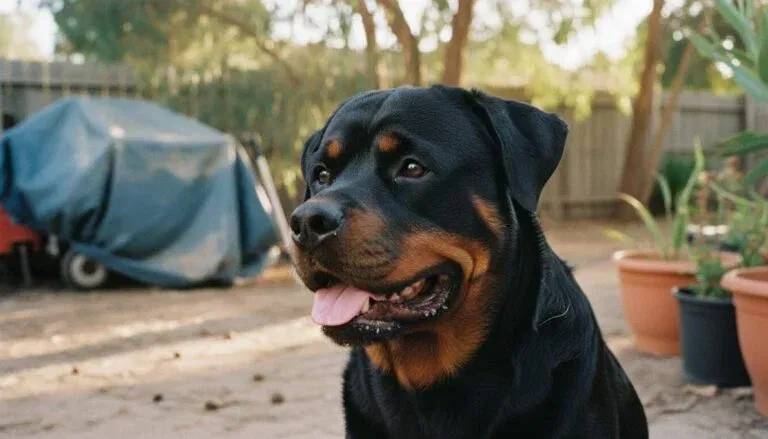
There’s no middle ground with a Rottweiler. People either love them or fear them — and in most cases, the fear comes from people who’ve never actually lived with one. Behind that broad chest, muscular frame, and serious expression is one of the most loyal, affectionate, and genuinely goofy breeds you’ll ever own. Rottweiler owners know the truth: these dogs think they’re lapdogs, they lean against you like they’re trying to merge with your body, and they’ll follow you to the bathroom with a look that says “I’m here if you need me.”
But let’s not pretend this is a breed for everyone. Rottweilers are powerful, intelligent dogs that were originally bred to drive cattle and pull carts for Roman legions. They’re natural guardians with a strong protective instinct, and without proper training, socialisation, and an owner who understands the breed, that strength can become a liability. In Australia, Rottweilers are the 8th most registered breed with the ANKC — but they also appear too often in rescue because people fall for the puppy and aren’t prepared for the adult.
This guide gives you the unfiltered version: real Australian pricing, verified health data, honest temperament advice, and a clear-eyed look at whether a Rottweiler actually fits your life.
What You’ll Learn
- Breed traits & temperament
- Health concerns to know
- True cost in Australia
- Training & exercise needs
- Is this breed right for you?
Quick Facts at a Glance
| Attribute | Details |
|---|---|
| Breed Group | Utility / Working (ANKC Group 6) |
| Origin | Rottweil, Germany |
| Height (Male) | 61–68 cm (24–27 inches) |
| Height (Female) | 56–63 cm (22–25 inches) |
| Weight (Male) | 50–60 kg (110–132 lb) |
| Weight (Female) | 35–48 kg (77–106 lb) |
| Lifespan | 8–10 years |
| Coat | Short, dense double coat — black with tan/mahogany markings |
| Shedding | Moderate; heavier twice yearly during coat blow |
| Temperament | Confident, calm, courageous, loyal, protective |
| Exercise Needs | Moderate to high — 1–2 hours daily |
| Good with Kids | Yes, with socialisation and supervision (large, powerful breed) |
| Puppy Price (AUD) | $3,000–$5,000+ from registered ANKC breeders |
| Banned in Australia? | No — Rottweilers are NOT a restricted or banned breed in any Australian state |
History & Origins
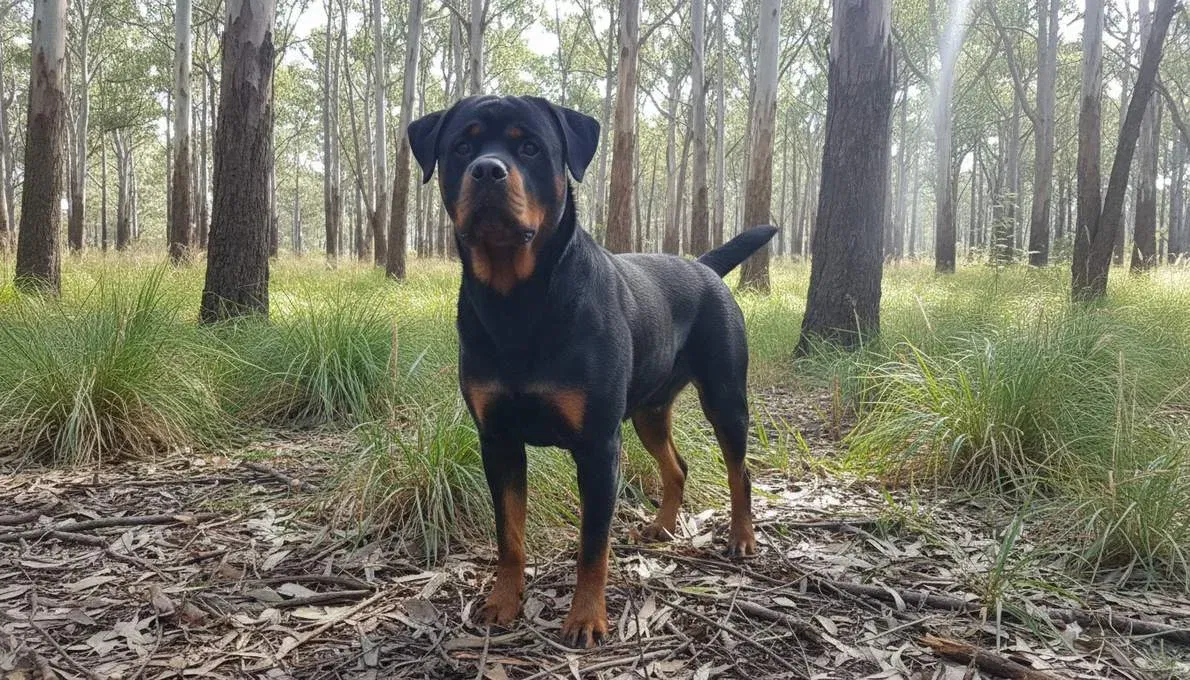
The Rottweiler’s origins stretch back roughly two thousand years. When the Roman legions marched through Europe, they brought herding dogs to drive and guard the cattle that fed the army. As the legions moved through what is now southern Germany, these dogs interbred with local breeds. When the Romans settled in the town of Rottweil — a thriving cattle market hub — the breed became essential to butchers and livestock dealers who needed a dog strong enough to drive cattle to market, guard the money purse tied around its neck on the return trip, and pull heavy carts of butchered meat.
For centuries, the Rottweiler was known as the “Rottweil Metzgerhund” — the Butcher’s Dog of Rottweil. When railways replaced cattle drives in the mid-1800s, the breed nearly went extinct. It was revived in the early 1900s when German police and military recognised the Rottweiler’s intelligence, strength, and trainability. The first Rottweiler breed standard was established in Germany in 1901, and the breed was officially recognised by the AKC in 1931.
In Australia, the Rottweiler has been registered with the ANKC for decades and remains one of the most popular working breeds. The National Rottweiler Council of Australia (NRCA) oversees breed standards, health testing protocols, and ethical breeding practices. Australian breeders typically follow both ANKC and ADRK (the German Rottweiler Club) standards, which emphasise correct temperament, structure, and comprehensive health testing including hip and elbow scoring, JLPP, LEMP, eye and mouth certification.
Temperament & Personality
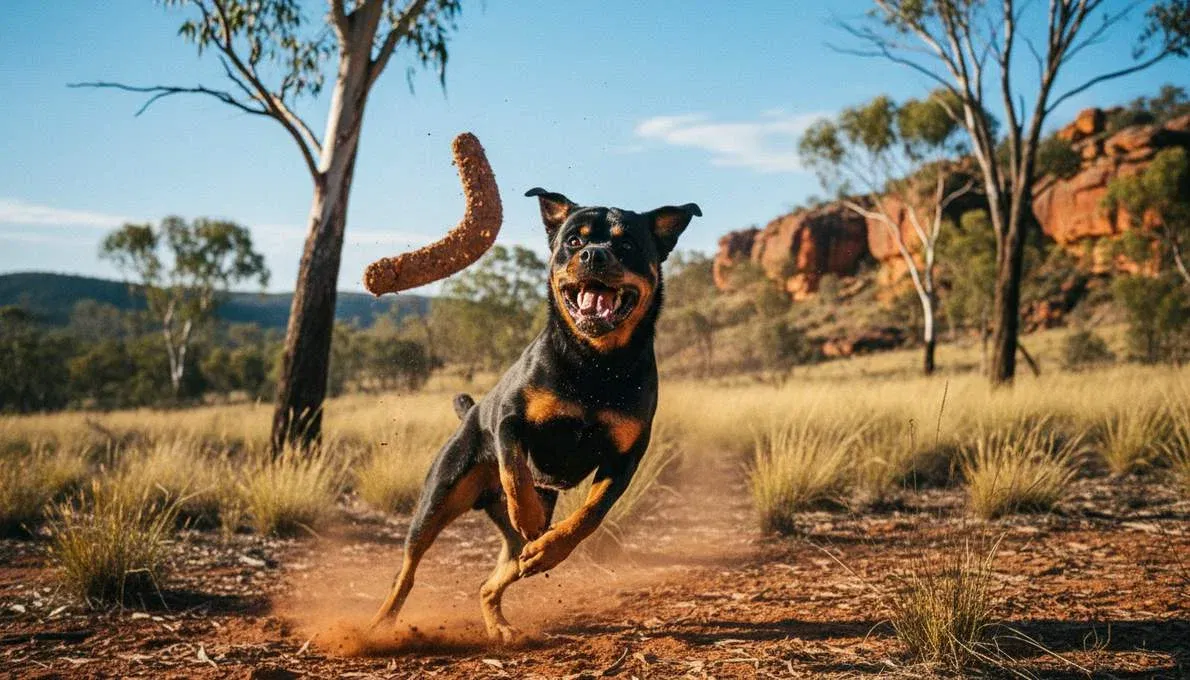
The official breed standard describes the Rottweiler’s temperament as “good-natured, placid in basic disposition, very devoted, obedient, biddable and eager to work.” That’s the dog breed standard version. Here’s the reality: Rottweilers are absurdly affectionate with their family, comically unaware of their own size, and possess a calm confidence that makes them one of the most stable companions you can own — when they’re properly raised.
A well-bred, well-socialised Rottweiler is not nervous, skittish, or randomly aggressive. They’re self-assured dogs that observe their environment, assess threats calmly, and act only when necessary. They’re also deeply tuned in to their owner’s emotional state — many Rottweiler owners report their dogs becoming visibly concerned when they’re upset and physically positioning themselves between their person and anything that seems threatening.
This is the question that follows the breed like a shadow, and it deserves an honest answer. Rottweilers are not inherently aggressive. A major UK veterinary study of over 5,300 Rottweilers found that while aggression appeared as a recorded disorder, it was strongly influenced by sex (males were more predisposed), lack of socialisation, and environmental factors — not the breed itself. The study also noted that negative media coverage disproportionately shapes public perception.
What Rottweilers are is protective. They have a strong guarding instinct that’s been bred into them over centuries. Without early and ongoing socialisation, that protective instinct can become misdirected — reacting to normal visitors, other dogs at the park, or delivery drivers. This is a management and training issue, not a breed flaw. Every Rottweiler owner has a responsibility to socialise their dog extensively from puppyhood and maintain consistent training throughout the dog’s life.
Rottweilers are NOT a banned or restricted breed in any Australian state or territory. The prohibited breeds in Australia are the American Pit Bull Terrier, Dogo Argentino, Fila Brasileiro, Japanese Tosa, and Perro de Presa Canario. Rottweilers are not on this list and can be legally owned, bred, and registered throughout Australia without special permits, muzzle requirements, or enclosure mandates — unless an individual dog is declared dangerous by a local council due to specific behaviour, which can happen to any breed.
That said, some councils and landlords may have breed-specific policies, so always check your local council regulations and rental agreements before purchasing a Rottweiler.
The Rottweiler’s bite force is frequently cited online at around 328 PSI, making them one of the strongest-biting domestic breeds. While this number gets attention, it’s important to understand that bite force alone doesn’t predict behaviour. A well-trained Rottweiler has impeccable bite inhibition — they’re capable of carrying an egg in their mouth without cracking it. It’s all about training, temperament, and responsible ownership.
Exceptionally so. Rottweilers are natural guardians who don’t need to be trained to protect — it’s instinctive. Their physical presence alone is a powerful deterrent. They have a deep, authoritative bark, they’re alert to changes in their environment, and they position themselves between their family and potential threats without being told. For Australian families wanting a dog that doubles as a genuine security presence, the Rottweiler is one of the best choices available.
When raised together and properly supervised, Rottweilers can be wonderful family dogs. They’re patient, tolerant, and often develop deep bonds with children. However, their size and strength mean they can accidentally knock over small children during play. Supervision is always necessary, and children must be taught to interact respectfully with any large, powerful dog. This is a breed where investing in a good trainer from day one pays dividends for the entire family.
Health & Genetic Conditions
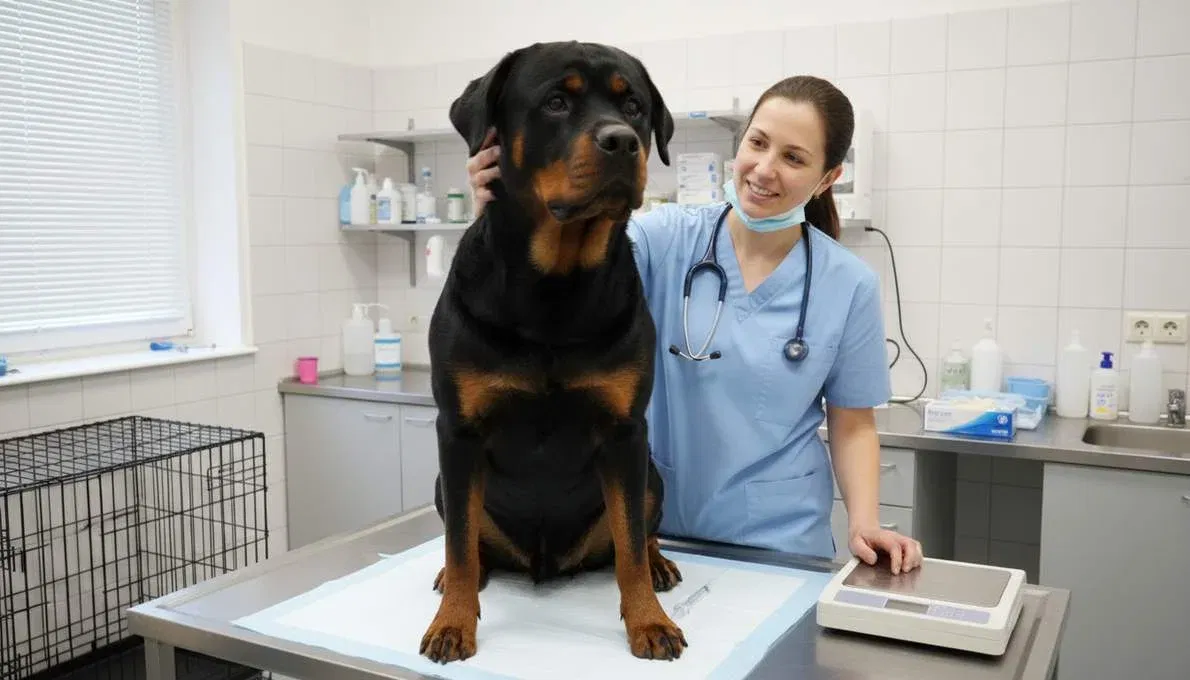
Rottweilers are robust, athletic dogs, but they’re predisposed to several health conditions that every prospective owner should understand. Being aware of these issues — and buying from a breeder who tests for them — is the single best investment you can make in your dog’s future.
Prevalence: Both hip and elbow dysplasia are heavily documented in Rottweilers, with elbow dysplasia estimated to affect anywhere from 30% to 50% of the breed — making it one of the highest rates of any large breed dog. [Dogster] Hip dysplasia follows a similar pattern, and the American Rottweiler Club requires OFA or PennHIP evaluation for all breeding dogs before they are used in a program. [OFA hip database] Both conditions are inherited through multiple genes, meaning even parents with clean scores can still produce affected puppies — which is why checking grandparent scores matters too. [Vanaheim Rottweilers]
Symptoms: Stiffness after rest, reluctance to jump, climb stairs or get into a car, a “bunny hop” gait when running, and visible loss of muscle in the rear legs are the main signs of hip dysplasia. [iHeartDogs] Elbow dysplasia tends to show up earlier — between 4 and 18 months — with forelimb lameness that worsens after exercise and eases with rest. [Dogster] Both conditions lead to progressive arthritis without proper management. [ManyPets]
Treatment Cost (AUD): Mild cases managed with anti-inflammatories, joint supplements, hydrotherapy, and weight control cost roughly $500–$2,000/year. [petinsurance.com.au] Surgical correction for severe cases runs $3,000–$8,000+ per joint — and given Rottweilers often need treatment in multiple joints, costs can add up significantly. [petinsurance.com.au]
Prevention: Always ask for OFA or PennHIP hip and elbow clearance on both parents and grandparents where possible. [RRCUS Health Screenings] Avoid overfeeding a growing Rottweiler puppy — rapid weight gain during the first 18 months puts enormous pressure on joints that are still forming. [OFA scoring explained]
Prevalence: Rottweilers are among the breeds most strongly associated with osteosarcoma — an aggressive, fast-spreading bone cancer. They are estimated to be 5 times more likely to develop it than the average dog, with between 5% and 12% of the breed affected during their lifetime. [Insurance Opedia] It is the most common primary bone tumour in large breed dogs, accounting for up to 90% of bone tumours in this size class, and carries a very poor prognosis without early intervention. [The Rottweiler Club] It has a strong family pattern, though no DNA test currently exists. [The Rottweiler Club]
Symptoms: Persistent lameness or limping that doesn’t improve with rest is the most common early warning sign, especially when it involves a limb rather than a soft tissue. [ImpriMed] A painful swelling around a bone — most often near the knee or shoulder — is another key indicator, and affected areas may suddenly fracture without significant trauma as the tumour weakens the bone. [The Rottweiler Club] Any unexplained limping in a Rottweiler should be investigated promptly, not managed as a sprain. [VCA Hospitals]
Treatment Cost (AUD): $5,000–$20,000+ depending on treatment path chosen — limb amputation combined with chemotherapy gives the best survival outcomes and is the most common approach. [petinsurance.com.au] Palliative pain management for dogs where surgery is not pursued is less expensive but does not extend survival significantly. [petinsurance.com.au] Pet insurance taken out before any diagnosis is strongly recommended for this breed. [petinsurance.com.au]
Prevention: No guaranteed prevention exists. Avoid breeding from lines with a known history of osteosarcoma — the strong family pattern of occurrence suggests selective breeding can reduce prevalence over time. [The Rottweiler Club] Get into the habit of running your hands along your Rottweiler’s limbs regularly and investigate any new swelling or lameness at your vet without delay. [AKC cancer awareness]
Prevalence: The Rottweiler’s deep, wide chest puts it squarely in the high-risk group for GDV — a life-threatening emergency where the stomach fills with gas and twists, cutting off blood supply to surrounding organs. [Insurance Opedia] There is a hereditary component alongside the anatomical risk, meaning some bloodlines carry a higher predisposition than others. [HubPages] Without emergency surgery, it is fatal — and the window to act is measured in hours. [VCA Hospitals]
Symptoms: A hard or visibly swollen belly, repeated unsuccessful attempts to vomit, heavy drooling, restlessness, laboured breathing, and a dog that cannot settle or lie comfortably. [iHeartDogs] These signs can escalate rapidly to collapse — if you see them, go straight to an emergency vet and do not wait. [VCA Hospitals]
Treatment Cost (AUD): Emergency surgery runs $3,000–$8,000+ AUD and costs rise considerably the longer treatment is delayed. [petinsurance.com.au] A preventive gastropexy — surgically tacking the stomach to the abdominal wall — can be performed at the time of desexing to dramatically reduce the risk of twisting, and is worth discussing with your vet for this breed. [AKC bloat guide]
Prevention: Feed two to three smaller meals daily rather than one large feed. [Insurance Opedia] Avoid vigorous exercise for at least an hour before and after meals. [ImpriMed] Ask your vet about a prophylactic gastropexy at desexing — for deep-chested large breeds this conversation is genuinely worthwhile. [AKC bloat guide]
Prevalence: Subaortic stenosis (SAS) is the most common inherited heart condition in Rottweilers, caused by excess tissue below the aortic valve that forces the heart to work harder than normal to push blood through the body. [Dogster] It has a clear genetic link and responsible breeders now use cardiac evaluations by qualified cardiologists before breeding. [Canna-Pet] Mild cases may go undetected for years, while severe cases can lead to sudden collapse or death. [ImpriMed]
Symptoms: Many dogs show no obvious signs in mild cases — the condition is often first detected as a heart murmur during a routine vet check. [Dogster] Exercise intolerance, fainting or collapsing during activity, laboured breathing, and unusual fatigue after normal exertion can all indicate a more significant problem. [ImpriMed]
Treatment Cost (AUD): Specialist cardiac evaluation including echocardiogram costs $400–$900 per appointment. [petinsurance.com.au] Ongoing management with cardiac medication runs $500–$2,000/year depending on severity. [petinsurance.com.au] Severe cases requiring intervention by a veterinary cardiologist can be significantly more expensive. [petinsurance.com.au]
Prevention: Ask your breeder for OFA cardiac clearance on both parents — ideally performed by a board-certified veterinary cardiologist rather than a general vet. [OFA cardiac registry] Annual heart checks from age 2–3 onwards allow any developing murmur to be caught and monitored before symptoms appear. [Canna-Pet]
Prevalence: Rottweilers are 3 to 7 times more likely to suffer a cruciate ligament rupture than the average dog — one of the highest breed-specific risk rates documented for this injury. [Dogster] Unlike the acute sports-injury most people picture, cruciate rupture in this breed is typically driven by chronic joint inflammation linked to their genetics, meaning the ligament progressively weakens rather than snapping in a single accident. [Dogster] Excess weight dramatically accelerates this process. [PMC UK Rottweiler Study]
Symptoms: Sudden hind leg lameness — often holding the leg up entirely — is the most obvious sign when the ligament ruptures fully. [VCA Hospitals] Before a full rupture, you may notice intermittent lameness, stiffness after lying down, or a subtle change in the way your Rottweiler sits. [Dogster] Both knees are often eventually affected. [Dogster]
Treatment Cost (AUD): Surgical repair is the standard treatment, with TPLO (tibial plateau levelling osteotomy) being the most common procedure for large breeds — typically costing $4,000–$7,000 per knee. [petinsurance.com.au] Post-operative physiotherapy adds to this, and bilateral repairs mean double the cost if both knees eventually require surgery. [petinsurance.com.au]
Prevention: Keeping your Rottweiler lean is the most impactful thing you can do — even mild overweight significantly increases ligament stress. [PMC UK Rottweiler Study] Controlled, regular exercise that builds muscle strength without sudden explosive movements (like repetitive ball chasing) is better for joint longevity than intermittent intense activity. [VCA Hospitals]
Prevalence: JLPP is a progressive and fatal neurological condition found specifically in Rottweilers, caused by a recessive mutation in the RAB3GAP1 gene. [Vanaheim Rottweilers] Both parents must carry the faulty gene to produce an affected puppy — carriers show no symptoms whatsoever. [Vanaheim Rottweilers] A DNA test is available and responsible breeders test all breeding dogs before pairing them. [OFA DNA diseases]
Symptoms: Affected puppies develop a characteristic noisy, laboured breathing from laryngeal paralysis in their first months of life, followed by progressive weakness and loss of coordination in all four limbs. [Vanaheim Rottweilers] Affected dogs also tend to have smaller eyes than normal (microphthalmia) and develop cataracts. [Vanaheim Rottweilers] There is no treatment and the condition is fatal. [Vanaheim Rottweilers]
Treatment Cost (AUD): There is no cure or treatment. DNA testing of both parents before breeding costs around $100–$200 AUD per dog — a small investment that completely prevents affected puppies from being born. [petinsurance.com.au]
Prevention: This condition is entirely preventable through responsible breeding. [Vanaheim Rottweilers] Ask your breeder for JLPP DNA test certificates for both parents confirming they are clear or a carrier-to-clear pairing only. [OFA DNA diseases] Never purchase a puppy from a breeder who cannot provide this documentation. [Vanaheim Rottweilers]
Prevalence: PRA is a recognised inherited eye condition in Rottweilers, identified as one of the more common hereditary problems in the breed. [Canna-Pet] The American Rottweiler Club recommends annual CAER eye examinations by a board-certified veterinary ophthalmologist until at least age 8, as hereditary eye problems can appear later in life. [Vanaheim Rottweilers] It leads to progressive vision loss starting with night blindness and ending in complete blindness. [Canna-Pet]
Symptoms: The first sign is usually struggling to see in low light or at night — your Rottweiler may hesitate at doorways after dark, bump into objects, or seem uncertain in unfamiliar low-light environments. [Canna-Pet] This gradually worsens over months to years until daytime vision is also affected. The condition is not painful, and most dogs adapt remarkably well. [VCA Hospitals]
Treatment Cost (AUD): No treatment exists to reverse or stop PRA. [VCA Hospitals] Annual CAER eye examinations cost $150–$300 per assessment. [OFA – CAER] Managing a blind or vision-impaired dog at home is largely about environmental adjustments and carries minimal ongoing cost. [petinsurance.com.au]
Prevention: Ask your breeder for current CAER eye clearance certificates on both parents and request the most recent exam date. [Vanaheim Rottweilers] Annual eye checks from puppyhood onwards allow any early changes to be caught well before significant vision loss occurs. [OFA – CAER]
Lifespan & Longevity
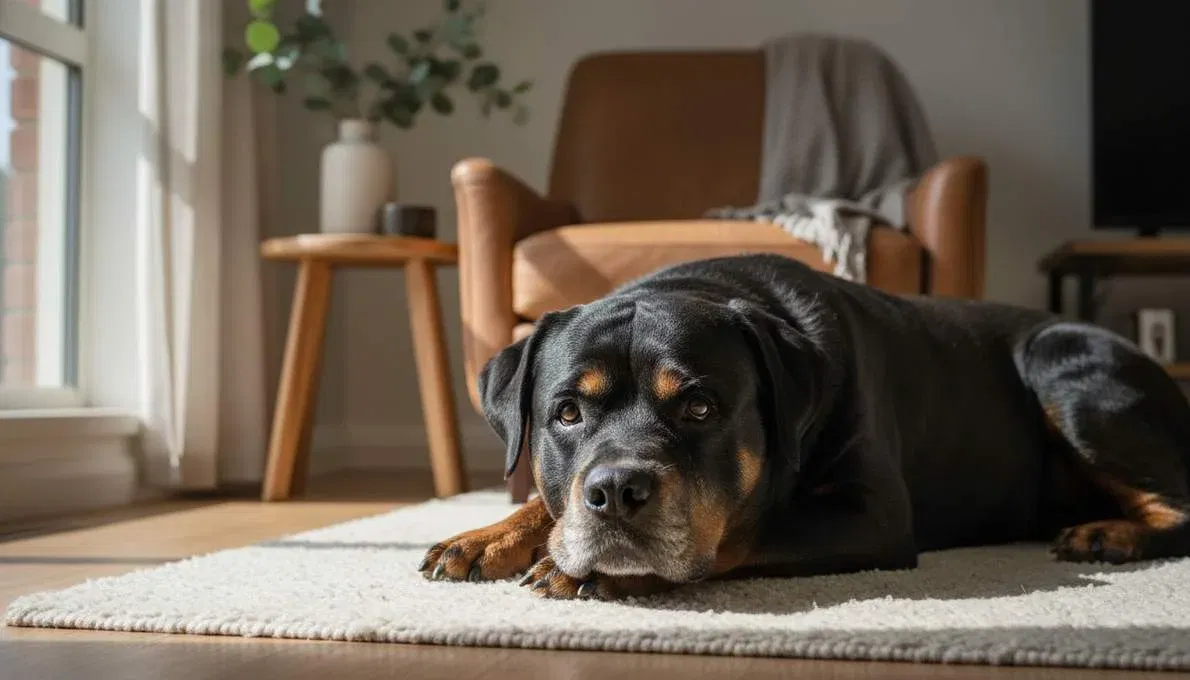
The average Rottweiler lifespan is 8 to 10 years. This is shorter than many breeds, and it’s the reality every prospective owner should face honestly. A major UK veterinary study found a median longevity of 9.0 years across over 5,300 Rottweilers, with females tending to live slightly longer than males.
Cancer — particularly osteosarcoma and lymphoma — is the leading cause of death in the breed. Joint disease and heart conditions also contribute to shortened lifespans. However, with excellent care, some Rottweilers reach 11–12 years.
How to Maximise Your Rottweiler’s Lifespan
Buy from health-tested parents (hip, elbow, heart, eyes, JLPP, LEMP). Feed a high-quality diet appropriate for their life stage and maintain a lean body condition — even a few extra kilograms stress their joints and heart. Provide consistent moderate exercise without over-exercising puppies. Keep up with annual vet checks, and twice-yearly visits for dogs over 7. Discuss preventative gastropexy with your vet. Consider pet insurance from day one — Rottweiler vet bills can be substantial.
| Life Stage | Key Focus Areas |
|---|---|
| Puppy (0–12 months) | Large-breed puppy food for controlled growth; socialisation before 16 weeks; gentle exercise only; first vaccinations and worming |
| Adolescent (1–3 years) | Continued training and socialisation; gradually increase exercise; hip/elbow x-rays after 12 months; JLPP/LEMP DNA test if not done |
| Adult (3–6 years) | Peak condition; annual health checks; weight monitoring; dental care; cardiac screening |
| Senior (6+ years) | Twice-yearly vet visits; joint supplements; cancer screening; reduced high-impact exercise; orthopaedic bedding |
Grooming & Care
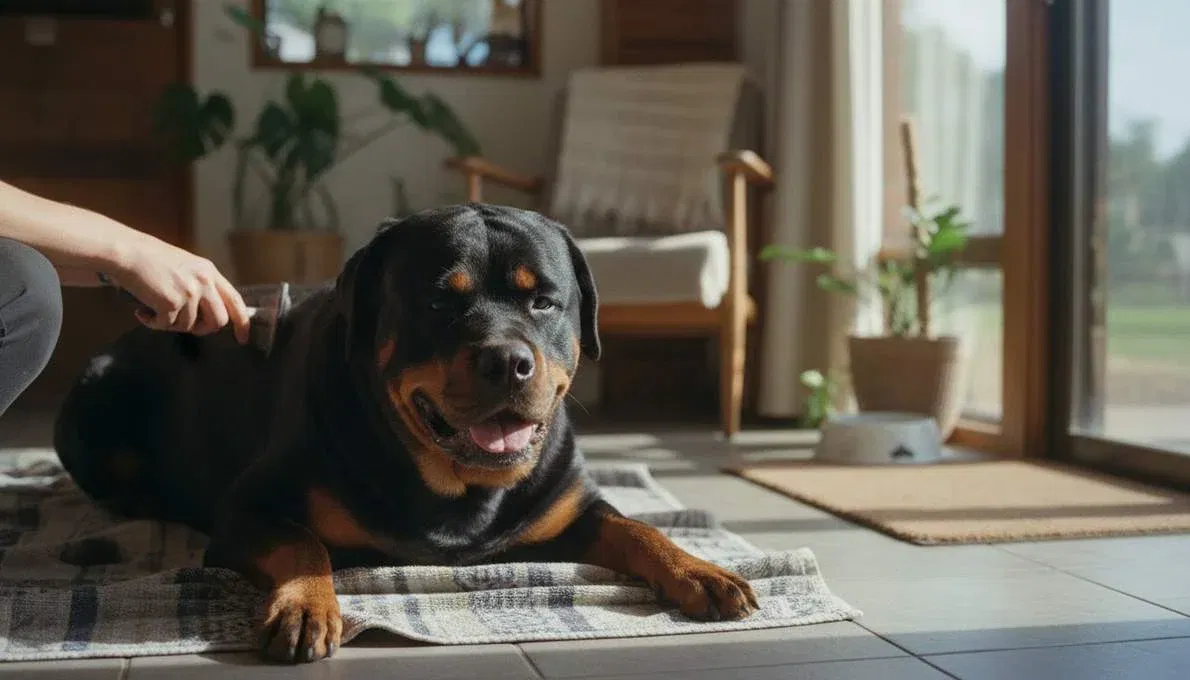
Rottweilers have a short, dense double coat that’s relatively easy to maintain. They’re not a high-grooming breed, but they do shed more than many people expect — particularly during the twice-yearly coat blow in spring and autumn.
Shedding
Rottweiler shedding is moderate year-round and heavy during seasonal changes. Those short black and tan hairs stick to everything — clothes, furniture, car seats. A weekly brush with a rubber curry comb or deshedding tool keeps it under control. During heavy shedding periods, daily brushing makes a noticeable difference.
| Grooming Task | Frequency | Notes |
|---|---|---|
| Coat Brushing | Weekly (daily when shedding) | Rubber curry comb or bristle brush; deshedding tool in spring/autumn |
| Bathing | Every 6–8 weeks | Use a gentle dog shampoo; avoid overbathing |
| Nail Trimming | Every 2–3 weeks | Essential — overgrown nails cause gait issues in this heavy breed |
| Ear Cleaning | Weekly | Check for redness, odour, or waxy build-up |
| Teeth Brushing | 2–3 times weekly | Daily is ideal; dental disease is common in the breed |
| Tick & Flea Prevention | Monthly | Year-round in Australia; paralysis tick prevention essential in QLD/NSW |
Exercise Needs
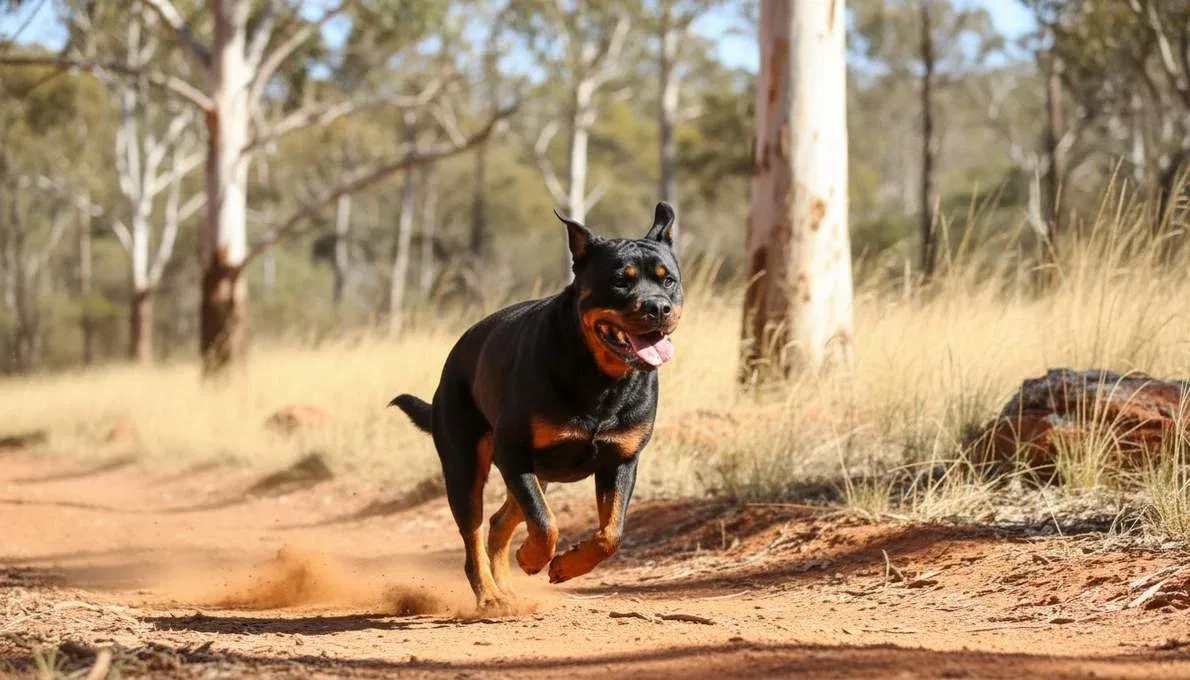
Despite their muscular build, Rottweilers aren’t hyperactive dogs. They’re moderate-energy athletes who need structured daily exercise but are equally happy to settle on the couch once their needs are met. Plan for 1 to 2 hours of exercise daily, split between walks, free play, and mental stimulation.
Rottweilers excel in obedience, tracking, carting, and agility — activities that engage their working drive. They’re also surprisingly good swimmers. A Rottweiler with a job is a happy Rottweiler; a bored Rottweiler with excess energy is a destructive one.
Australian Climate Considerations
Rottweilers have a dense double coat and can overheat in Australian summers, especially in Queensland, Northern Territory, and inland areas. During hot months, restrict exercise to early morning and late evening. Always provide access to shade, cool water, and air-conditioned spaces. Watch for signs of heat stress: excessive panting, drooling, glazed eyes, or stumbling. Never leave a Rottweiler in a car or exercise them on hot pavement.
In cooler southern climates — Melbourne, Hobart, Adelaide — Rottweilers are very comfortable and enjoy extended outdoor activities, including hiking and swimming.
Puppy Exercise Caution
Rottweiler puppies grow rapidly and their bones, joints, and growth plates are vulnerable until at least 18 months. Over-exercising a Rottweiler puppy — long runs, repetitive jumping, forced marches — can cause permanent joint damage. Stick to the 5-minutes-per-month-of-age rule for structured exercise, twice daily. Free play on soft surfaces is fine, but let the puppy set the pace.
Training Guide
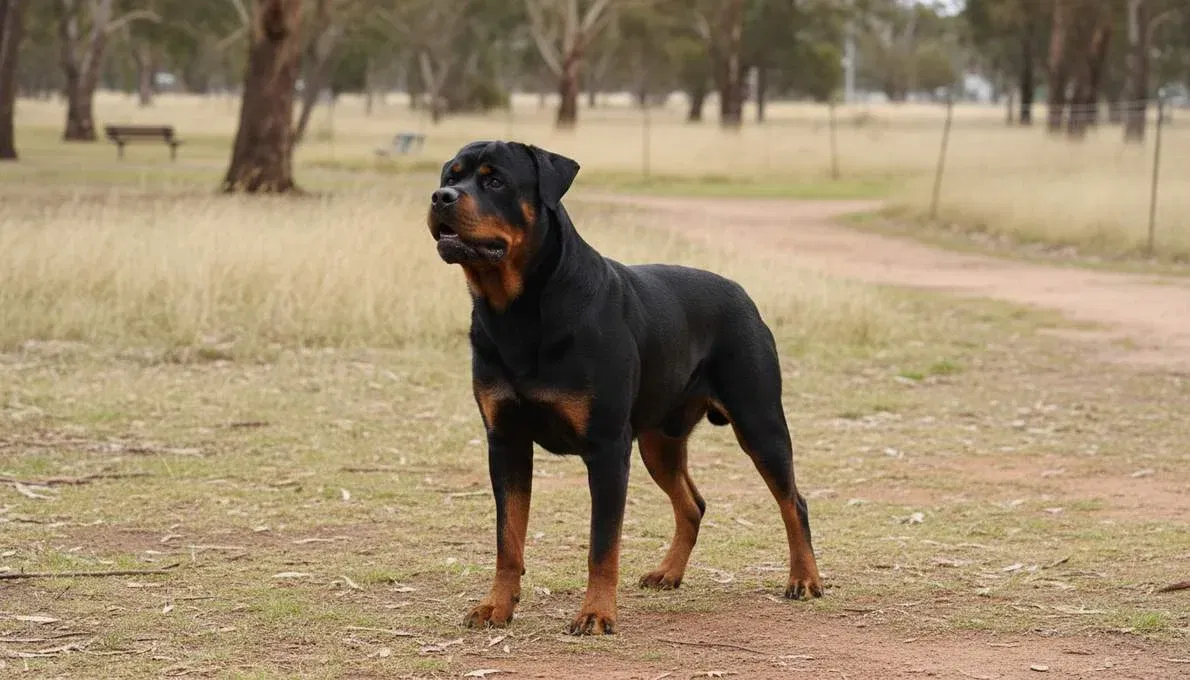
Rottweilers are highly intelligent and genuinely want to work with their owner — but they need a reason to comply. This isn’t a breed that responds to harsh corrections or dominance-based methods. A jerked lead or raised voice will either shut a Rottweiler down or make them defensive. Positive reinforcement — treats, praise, play — combined with calm, consistent boundaries produces a confident, well-adjusted dog.
The single most important investment you can make with a Rottweiler is early socialisation. Between 3 and 16 weeks, your puppy needs positive exposure to as many people, dogs, environments, sounds, and situations as possible. A Rottweiler that misses this window can develop fear-based reactivity or over-guarding — problems that are exponentially harder to fix in a 50-kilogram adult.
Honest Training Difficulty
Training difficulty: 5 out of 10 for experienced owners; 8 out of 10 for first-timers. Rottweilers are eager learners but can be pushy and will test boundaries, particularly during adolescence (8 months to 2 years). They need an owner who is calm, confident, and consistent. Professional training classes are strongly recommended — not optional — for this breed.
| Age | Training Focus |
|---|---|
| 8–16 weeks | Socialisation is the priority; exposure to people, dogs, surfaces, sounds; name recognition; crate training; bite inhibition; basic sit and come |
| 4–6 months | Puppy school (choose a positive reinforcement trainer); leash manners; impulse control (“wait,” “leave it”); continued socialisation |
| 6–12 months | Adolescent testing begins; reinforce all basics daily; recall training in low-distraction environments; introduce “place” command for settling |
| 1–2 years | Advanced obedience; off-lead work in secure areas; introduce working activities (tracking, carting, nose work); manage resource guarding if it appears |
| 2+ years | Ongoing mental enrichment; trick training; consider formal working titles (obedience, tracking); Rottweilers mature fully around age 3 |
Cost of Ownership in Australia
Rottweilers are a significant financial commitment. Their size means higher food costs, their health predispositions mean higher vet bills, and their strength means investing in quality equipment and training.
Purchase Price
From a registered ANKC breeder in Australia, expect to pay $3,000 to $5,000+ for a Rottweiler puppy. Show-quality puppies from imported European bloodlines can reach $5,000–$7,000. The Rottweiler Club of Victoria notes that most quality puppies are “around $4,000 or below.” Puppies should come ANKC registered, vaccinated, microchipped, wormed, and with copies of both parents’ health testing results (hips, elbows, eyes, mouth, JLPP, LEMP). Be wary of puppies advertised significantly below $3,000 without papers or health testing — this often indicates backyard breeding.
Adoption through rescue organisations typically costs $300–$800 AUD, which includes desexing, vaccinations, and microchipping.
Rottweiler Insurance Costs
Pet insurance for Rottweilers is higher than average due to the breed’s health predispositions. Expect $80–$150+ per month for comprehensive cover in Australia. Given the potential for $10,000+ surgical bills (cruciate repair, cancer treatment, bloat surgery), insurance is strongly recommended.
Ongoing Annual Costs
| Expense | Annual Estimate (AUD) | Notes |
|---|---|---|
| Premium Dog Food | $1,500–$2,500 | Large breed; 3–4 cups/day |
| Veterinary Care (routine) | $400–$900 | Annual check, vaccines, parasite prevention |
| Pet Insurance | $960–$1,800 | Comprehensive cover recommended |
| Council Registration | $30–$200 | Varies by council; desexed discount applies |
| Grooming Supplies | $100–$250 | Mostly DIY; low-maintenance coat |
| Toys, Beds, Equipment | $300–$600 | Heavy-duty items needed; they destroy cheap toys |
| Training | $300–$800 | First year; ongoing classes highly recommended |
| TOTAL (first year) | $6,500–$12,000+ | Including purchase price |
| TOTAL (ongoing per year) | $3,500–$7,000 | Excluding unexpected vet bills |
Finding a Breeder
Start with the National Rottweiler Council of Australia (NRCA) and your state’s Rottweiler breed club: the Rottweiler Club of QLD, Victoria, SA, WA, and NSW. Dogs Australia (dogsaustralia.org.au) lists registered breeders by state. Always verify health testing: hip and elbow scores, eye and mouth certificates, JLPP and LEMP DNA results, and cardiac screening. A good breeder will ask you as many questions as you ask them.
Rescue & Adoption
Rottweiler rescue groups operate in most Australian states and regularly have dogs needing homes. Many surrendered Rottweilers are wonderful dogs whose previous owners simply weren’t prepared for the breed’s needs. Rescue Rottweilers can make exceptional companions, though they may need extra patience and professional assessment for any behavioural history.
Is the Rottweiler Right for You?
You have experience with large, powerful breeds or are committed to professional training from day one. You have a securely fenced property — Rottweilers are territorial and should never be off-lead in unfenced areas. You can commit to 1–2 hours of daily exercise and ongoing mental stimulation. You want a loyal, protective companion that’s deeply bonded to your family. You’re financially prepared for higher-than-average vet costs and pet insurance. You’re confident enough to set boundaries without being harsh — Rottweilers respect calm leadership, not aggression.
You’re a first-time dog owner with no plans for professional training. You live in an apartment without substantial outdoor exercise opportunities. You want a dog that’s friendly with everyone — Rottweilers are naturally reserved with strangers. You work extremely long hours and the dog will be left alone for 8+ hours daily. You’re uncomfortable with a breed that carries public stigma — some people will cross the street, and some landlords won’t accept them. You’re looking for a low-cost breed — Rottweilers are expensive to buy, feed, insure, and treat.
Rottweiler crosses are extremely common in Australia. High-search-volume crosses include the Rottweiler x German Shepherd, Rottweiler x Staffy, Rottweiler x Labrador, Rottweiler x Doberman, Rottweiler x Kelpie, and Rottweiler x Mastiff. Crossbreeds can be wonderful dogs, but temperament, size, and health are unpredictable. Many Rottweiler crosses end up in rescue when they grow larger or more protective than expected. If you’re drawn to a specific cross, rescue adoption is a great option.
The Rottweiler is a magnificent, deeply loyal breed that’s been unfairly demonised by media headlines and misunderstood by people who’ve never shared their home with one. In the right hands, a Rottweiler is a calm, affectionate, naturally protective companion that bonds fiercely to its family and brings a quiet confidence to every room.
Here’s what it comes down to:
- Rottweilers are not inherently dangerous — they’re powerful dogs that require responsible, experienced ownership and early, ongoing socialisation.
- Health costs are real: budget $3,500–$7,000+ annually, invest in pet insurance, and always buy from health-tested parents (JLPP, LEMP, hips, elbows, heart, eyes).
- The reward is a dog that will be your shadow, your guardian, and the most devoted companion you’ve ever had — for 8 to 10 years that go by far too quickly.
Frequently Asked Questions
How much does a Rottweiler cost in Australia?
From a registered ANKC breeder in Australia, expect to pay $3,000 to $5,000+ for a Rottweiler puppy. Show-quality puppies from imported European bloodlines can reach $5,000–$7,000. The Rottweiler Club of Victoria notes that most quality puppies are “around $4,000 or below.” Puppies should come ANKC registered, vaccinated, microchipped, wormed, and with copies of both parents’ health testing results (hips, elbows, eyes, mouth, JLPP, LEMP). Be wary of puppies advertised significantly below $3,000 without papers or health testing — this often indicates backyard breeding.
Are Rottweilers banned in Australia?
Rottweilers are NOT a banned or restricted breed in any Australian state or territory. The prohibited breeds in Australia are the American Pit Bull Terrier, Dogo Argentino, Fila Brasileiro, Japanese Tosa, and Perro de Presa Canario. Rottweilers are not on this list and can be legally owned, bred, and registered throughout Australia without special permits, muzzle requirements, or enclosure mandates — unless an individual dog is declared dangerous by a local council due to specific behaviour, which can happen to any breed.
How long do Rottweilers live?
The average Rottweiler lifespan is 8 to 10 years. This is shorter than many breeds, and it’s the reality every prospective owner should face honestly. A major UK veterinary study found a median longevity of 9.0 years across over 5,300 Rottweilers, with females tending to live slightly longer than males. Cancer — particularly osteosarcoma and lymphoma — is the leading cause of death in the breed. Joint disease and heart conditions also contribute to shortened lifespans. However, with excellent care, some Rottweilers reach 11–12 years.
Are Rottweilers good family dogs?
When raised together and properly supervised, Rottweilers can be wonderful family dogs. They’re patient, tolerant, and often develop deep bonds with children. However, their size and strength mean they can accidentally knock over small children during play. Supervision is always necessary, and children must be taught to interact respectfully with any large, powerful dog. This is a breed where investing in a good trainer from day one pays dividends for the entire family.
Do Rottweilers shed a lot?
Rottweiler shedding is moderate year-round and heavy during seasonal changes. Those short black and tan hairs stick to everything — clothes, furniture, car seats. A weekly brush with a rubber curry comb or deshedding tool keeps it under control. During heavy shedding periods, daily brushing makes a noticeable difference.
What is the Rottweiler bite force?
The Rottweiler’s bite force is frequently cited online at around 328 PSI, making them one of the strongest-biting domestic breeds. While this number gets attention, it’s important to understand that bite force alone doesn’t predict behaviour. A well-trained Rottweiler has impeccable bite inhibition — they’re capable of carrying an egg in their mouth without cracking it. It’s all about training, temperament, and responsible ownership.
Are Rottweilers aggressive?
Rottweilers are not inherently aggressive. A major UK veterinary study of over 5,300 Rottweilers found that while aggression appeared as a recorded disorder, it was strongly influenced by sex (males were more predisposed), lack of socialisation, and environmental factors — not the breed itself. The study also noted that negative media coverage disproportionately shapes public perception. What Rottweilers are is protective. They have a strong guarding instinct that’s been bred into them over centuries. Without early and ongoing socialisation, that protective instinct can become misdirected — reacting to normal visitors, other dogs at the park, or delivery drivers. This is a management and training issue, not a breed flaw.
How much exercise does a Rottweiler need?
Despite their muscular build, Rottweilers aren’t hyperactive dogs. They’re moderate-energy athletes who need structured daily exercise but are equally happy to settle on the couch once their needs are met. Plan for 1 to 2 hours of exercise daily, split between walks, free play, and mental stimulation. Rottweilers excel in obedience, tracking, carting, and agility — activities that engage their working drive. They’re also surprisingly good swimmers. A Rottweiler with a job is a happy Rottweiler; a bored Rottweiler with excess energy is a destructive one.
What health tests should Rottweiler breeders do?
Always verify health testing: hip and elbow scores (OFA or PennHIP), eye and mouth certificates (CAER), JLPP and LEMP DNA results, and cardiac screening (OFA cardiac clearance). A good breeder will provide copies of both parents’ health testing results. The National Rottweiler Council of Australia (NRCA) and state breed clubs maintain recommended health testing protocols.
Are Rottweilers good with other dogs?
With proper socialisation, Rottweilers can get along well with other dogs. However, they can be same-sex aggressive, particularly males with other males. They also have a strong guarding instinct and may not tolerate unfamiliar dogs entering their home or property. Early, positive socialisation with a variety of dogs is crucial, and ongoing management is often necessary. Many Rottweilers do best as the only dog or with a carefully selected opposite-sex companion.
1. Dogs Australia — Rottweiler Breed Profile — https://dogsaustralia.org.au/BrowseBreed/browse-a-breed/144/Rottweiler/
2. National Rottweiler Council of Australia (NRCA) — Breed Standard & Health Requirements
3. Rottweiler Club of Victoria — Breeder Listing & Puppy Buyer Guide — https://www.rottweilerclubofvictoria.com/breeding/breeder-listing/
4. PetMD — Rottweiler Dog Breed Health and Care — https://www.petmd.com/dog/breeds/rottweiler
5. O’Neill et al. (2017) — “Rottweilers under primary veterinary care in the UK: demography, mortality and disorders” — Canine Genetics and Epidemiology — https://pmc.ncbi.nlm.nih.gov/articles/PMC5698930/
6. American Kennel Club — Rottweiler Breed Standard — https://www.akc.org/dog-breeds/rottweiler/
7. Dogs Australia / ANKC — Banned & Restricted Breeds Information — https://dogsaustralia.org.au/
8. Dogzonline.com.au — Rottweiler Breeders in Australia — https://www.dogzonline.com.au/breeds/breeders/rottweiler.asp