
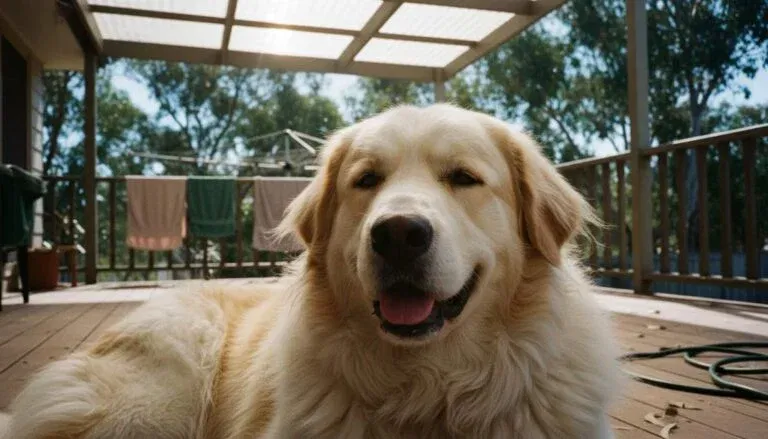
The Pyrenean Mountain Dog is one of those breeds that stops traffic. A 60–75 kg cloud of white fur with a calm, knowing expression and the bearing of something that belongs on a mountain rather than a suburban footpath. They’re majestic, composed, and deeply gentle — and they will bark at 3 AM because a possum walked across your fence line. Every. Single. Night.
Known as the Great Pyrenees in North America, the Pyrenean Mountain Dog was bred to guard livestock against wolves and bears in the Pyrenees Mountains between France and Spain. This is a breed whose job was to think independently, patrol territory at night, and make autonomous decisions about threats — all while being gentle enough to sleep alongside newborn lambs. That combination of independence, protectiveness and calm authority defines the breed to this day.
In Australia, the Pyrenean Mountain Dog occupies two distinct worlds: working livestock guardian on rural properties (often compared directly to the Maremma Sheepdog), and imposing family companion in suburban homes. Both roles suit the breed, but both come with realities that potential owners need to understand. The nocturnal barking, the shedding, the sheer size, the stubbornness, the bloat risk, the food bills — this guide covers all of it honestly.
What You’ll Learn
- Breed traits & temperament
- Health concerns to know
- True cost in Australia
- Training & exercise needs
- Is this breed right for you?
Breed Quick Facts Table
| Attribute | Detail |
|---|---|
| Breed Group | Utility (ANKC Group 6) / Pastoral (UK) / Working (AKC) |
| Other Names | Great Pyrenees (North America), Le Chien de Montagne des Pyrénées |
| Origin | Pyrenees Mountains, France/Spain. Ancient breed — possibly dating to 3000 BC. Royal dog of France from 1675. |
| Size | 65–80 cm at the shoulder (males 70–80 cm, females 65–75 cm) |
| Weight | 45–75 kg (males typically 50–75 kg, females 45–60 kg) |
| Coat | Thick, weather-resistant double coat. Long, flat outer coat; dense, fine undercoat. Heavy seasonal shedding. |
| Colours | Predominantly white. May have markings of grey, badger, tan or reddish-brown on head, ears and base of tail. No more than one-third of body coloured. |
| Lifespan | 10–12 years (UK study: 10.9 years average) |
| Temperament | Gentle, calm, loyal, independent, protective, confident, stubborn |
| Exercise Needs | Moderate — 30–60 minutes daily. Not a high-energy breed. Avoid strenuous exercise during growth phase. |
| Shedding | Very high — heavy year-round shedding with seasonal “coat blow.” Budget for fur on every surface. |
| Good With Kids | Excellent — one of the gentlest giant breeds. Calm and protective with children. |
| Good With Other Dogs | Generally good, though can be assertive with dogs of similar size. Excellent with smaller animals they consider “flock.” |
| Barking Level | High — especially at night. Nocturnal barking is a breed-defining trait from their guardian heritage. |
| Unique Feature | Double dewclaws on rear legs — a breed standard requirement and functional feature for navigating mountain terrain. |
| Price in Australia | $2,500–$5,000+ AUD from ANKC-registered breeders |
Pyrenean Mountain Dog Size
Males stand 70–80 cm (28–31 inches) at the shoulder and weigh 50–75 kg (110–165 lbs). Females are 65–75 cm (26–30 inches) and 45–60 kg (100–130 lbs). The coat adds significant visual bulk — a fully-coated Pyrenean Mountain Dog in winter looks substantially larger than its already considerable frame. This is a giant breed, and it takes up giant-breed space in your home, your car and your life.
Pyrenean Mountain Dogs are slow to mature physically, often not reaching full size until 2–3 years of age. This extended growth period has critical implications for exercise and nutrition — avoid high-impact exercise (jumping, extended running on hard surfaces) during the first 18–24 months to protect developing joints. Growth should be steady and controlled; rapid weight gain in puppyhood significantly increases the risk of hip and elbow dysplasia.
The weight question: Many owners are surprised by how heavy their Pyrenean Mountain Dog becomes. A male at the upper end of the range (70–75 kg) is the weight of an adult human. This has practical implications for veterinary care (larger doses of medication, higher anaesthesia requirements, specialist lifting equipment), vehicle transport, grooming and day-to-day management. If you cannot physically manage a dog of this size, this is not the breed for you.
History & Heritage
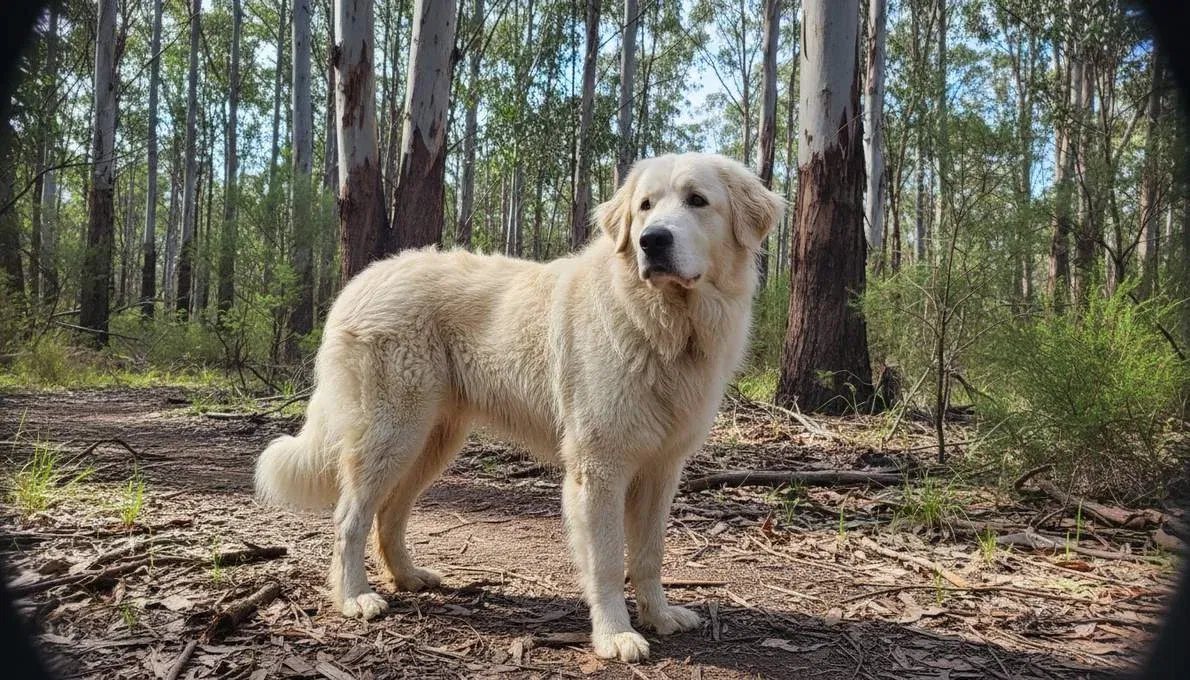
The Pyrenean Mountain Dog is among the oldest guardian breeds, with evidence suggesting the breed’s ancestors guarded livestock in the Pyrenees Mountains as far back as 3000 BC. The first formal description of the breed dates to 1407. For centuries, they protected sheep from wolves, bears and livestock thieves in the rugged terrain between France and Spain.
The breed’s social trajectory changed dramatically in 1675 when King Louis XIV declared the Pyrenean Mountain Dog the Royal Dog of France. The breed moved from peasant fields to aristocratic estates, guarding châteaux as well as livestock. By the 19th century, there was a thriving market for the dogs in mountain towns, and they were distributed across France and beyond.
Numbers dropped sharply during and after the World Wars — large dogs were expensive to feed during rationing. Dedicated breeding programs revived the breed through the mid-20th century. In Australia, the Pyrenean Mountain Dog Club of Victoria and breed enthusiasts in South Australia and NSW have established a consistent breeding community. Australian breeders import lines from Belgium, Norway, Finland, the UK, Canada and the USA to maintain genetic diversity.
Great Pyrenees vs Pyrenean Mountain Dog: These are the same breed. “Great Pyrenees” is the North American name (used by the AKC). “Pyrenean Mountain Dog” is the name used in Australia, the UK, Europe and the FCI. If you’re searching online, both terms will return information about the same breed. Australian breed clubs and ANKC registrations use “Pyrenean Mountain Dog.”
Temperament & Personality
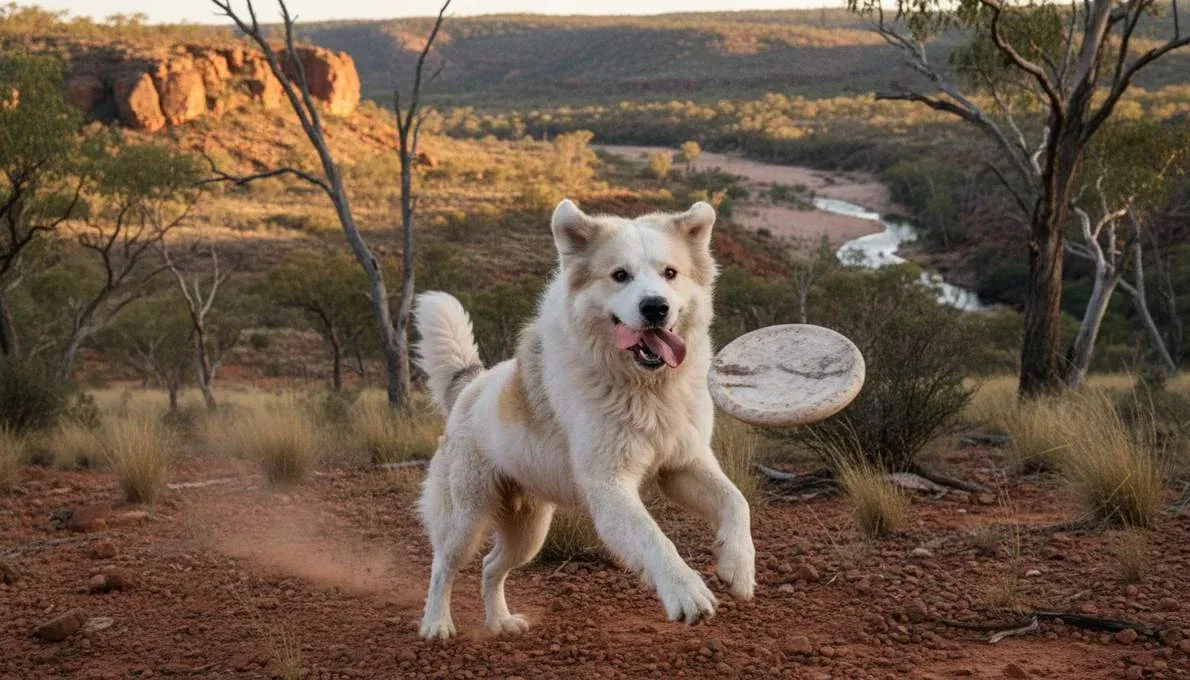
The Pyrenean Mountain Dog’s temperament is shaped entirely by its guardian heritage. This is a breed that was bred to think independently, assess threats without human direction, patrol large territories at night, and remain calm and gentle with vulnerable livestock during the day. Every behavioural trait — the independence, the stubbornness, the nocturnal activity, the selective obedience — makes sense when you understand the job the breed was built for.
This is one of the gentlest giant breeds in existence. Pyrenean Mountain Dogs are remarkably patient, particularly with children. They’re affectionate without being demanding, protective without being aggressive, and composed in situations that would send a more reactive breed into overdrive. Their default state is calm observation.
Here’s the reality: Pyrenean Mountain Dogs are not eager-to-please dogs. They’re intelligent — they understand what you want. They simply reserve the right to evaluate whether your request aligns with their assessment of the situation. Training a Pyrenean Mountain Dog requires patience, consistency and acceptance that this breed will never perform with the snap-to-it obedience of a Border Collie or German Shepherd. They respond well to positive reinforcement but poorly to repetitive drills or harsh corrections.
The guardian instinct is always present, even in companion-line dogs. Pyrenean Mountain Dogs are naturally wary of strangers, will position themselves between their family and perceived threats, and take their protective role seriously. This makes early and thorough socialisation critical — an unsocialised Pyrenean Mountain Dog can become overly suspicious and difficult to manage in public.
This is the single most common complaint from Pyrenean Mountain Dog owners, and it is not a behavioural problem — it’s a breed characteristic. These dogs were bred to patrol and bark at night to deter predators. In a suburban setting, they’ll bark at possums, cats, distant dogs, passing cars and atmospheric changes you can’t even detect. Nocturnal barking can be managed but not eliminated. Training helps. Bringing the dog inside at night helps more. If you live in a noise-sensitive area with close neighbours, this breed will create issues.
Pyrenean Mountain Dogs are natural roamers. Their instinct is to expand and patrol their territory. Secure, high fencing (minimum 1.8 m) is non-negotiable. They are escape artists when motivated, and a roaming Pyrenean Mountain Dog is a neighbourhood problem due to sheer size. Never leave them unsupervised in an unfenced area.
Coat & Grooming
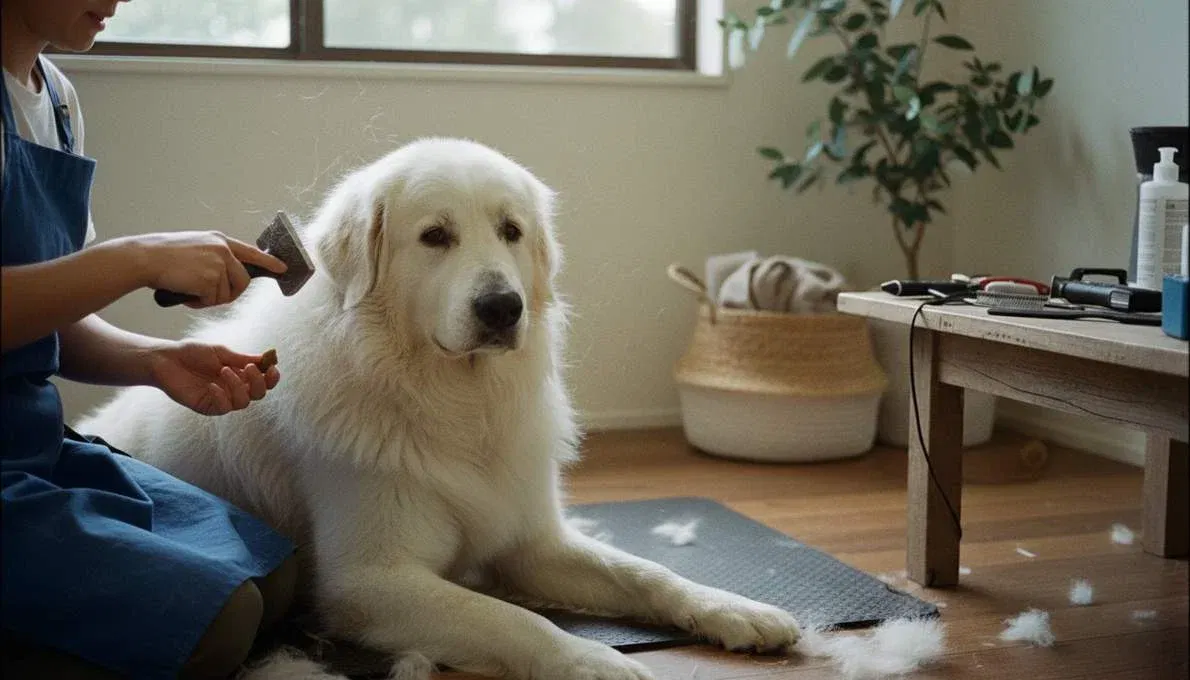
The Pyrenean Mountain Dog’s coat is magnificent and relentless. A thick, weather-resistant double coat with a long, flat outer layer and dense, fine undercoat. It was designed to protect against snow, rain, wind and wolf teeth in mountain conditions. In an Australian suburban home, it produces a phenomenal amount of loose hair.
Grooming Schedule
| Task | Frequency | Notes |
|---|---|---|
| Brushing | 2–3 times per week (daily during coat blow) | Thorough brushing with an undercoat rake or slicker brush. The double coat mats easily, particularly behind ears, armpits and hindquarters. During seasonal coat blow (spring and autumn), expect to fill garbage bags with loose fur. |
| Bathing | Every 4–8 weeks or as needed | Use a high-quality dog shampoo. Drying a full-coated PMD takes significant time. A force dryer helps enormously. |
| Ears | Weekly | Small, flat ears close to the head can trap moisture. Check for wax, debris and signs of infection. |
| Nails | Every 2–3 weeks | Giant breed nails grow quickly and bear heavy weight. Keep them short to prevent gait issues. |
| Double dewclaws | Monthly check | Rear double dewclaws are a breed requirement. Keep nails trimmed and check for snagging or injury. Never remove them — they’re functional and part of the breed standard. |
| Dental | Daily brushing ideal | Standard dental care. Giant breeds can be prone to dental issues. |
| Professional grooming | $80–$150 per session | Size premium applies. Not all groomers accept giant breeds. Budget $500–$1,500/year if using professional services. |
Shedding reality: There is no polite way to put this. Pyrenean Mountain Dogs shed an extraordinary amount. White fur will be on your clothes, your furniture, your food, your car and your visitors. During seasonal coat blow, the volume is staggering. If pet hair is a dealbreaker for you, this is absolutely not the right breed. Invest in a high-quality vacuum cleaner (robot vacuums help for maintenance), lint rollers in bulk, and acceptance. Many PMD owners say they just stopped wearing black.
Australian heat management: The thick double coat can cause overheating in Australian summers. Never shave a double-coated breed — the coat provides insulation against both cold and heat, and shaving damages the coat structure permanently. Instead, ensure shade, fresh water, air conditioning access, and avoid exercise in the heat of the day. Early morning and evening only during summer. Many Australian PMD owners report their dogs self-regulate well, seeking cool spots and reducing activity in warm weather.
Health & Genetic Conditions
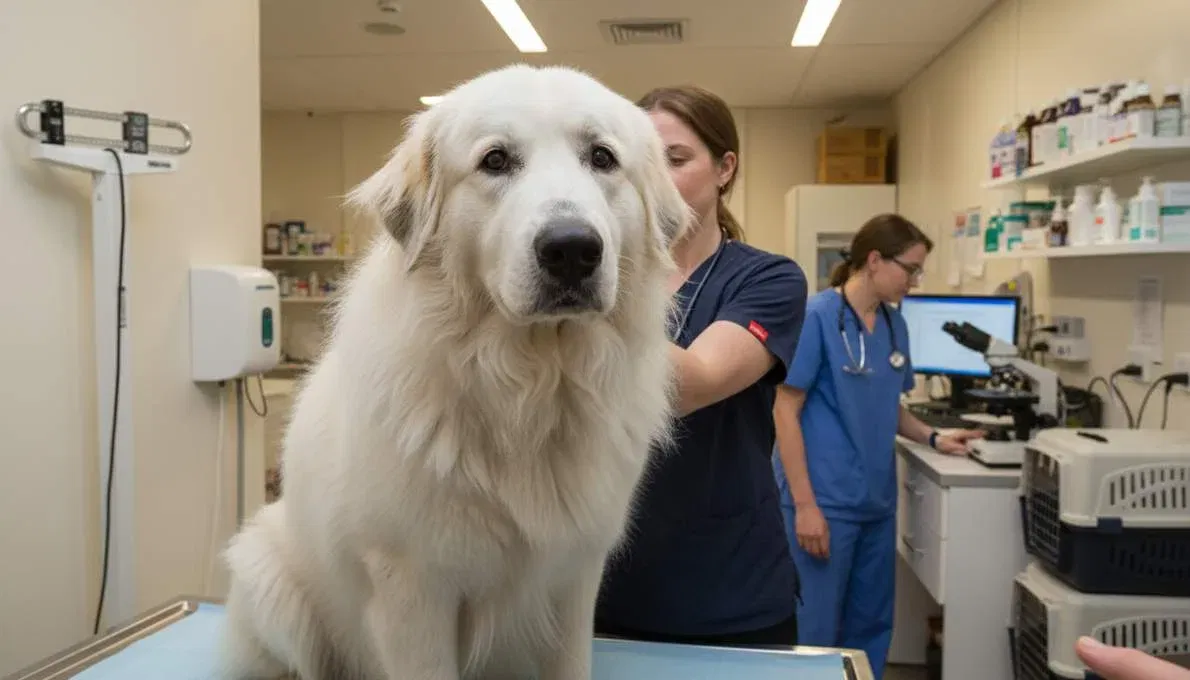
Like most giant breeds, the Pyrenean Mountain Dog is predisposed to several significant health conditions. A 2024 UK study found an average life expectancy of 10.9 years for the breed, compared to 12.7 years for purebreds generally. The conditions below are the key ones to understand before committing to this breed.
Prevalence: One of the most serious and commonly reported conditions in Pyrenean Mountain Dogs. Given their giant size and heavy build, the stress placed on hip joints is significant, and the Great Pyrenees Club of America lists hip evaluation as a mandatory health clearance for all breeding dogs. [OFA hip database]
Symptoms: Reluctance to rise from rest, stiffness after lying down, difficulty climbing stairs or getting into the car, a swaying or “bunny hop” gait, and noticeable loss of muscle in the back legs over time. In giant breeds these signs can worsen quickly if left unmanaged. [VCA hip dysplasia guide]
Treatment Cost (AUD): $3,000–$8,000+ for surgery in severe cases. Given the size of the breed, surgical costs and recovery are more involved than in smaller dogs. Milder cases are managed with joint supplements, anti-inflammatory medication, and weight control. [consider pet insurance]
Prevention: Always ask to see OFA hip clearance certificates for both parents before buying a puppy. Avoid over-exercising a growing Pyrenean Mountain Dog puppy — their bones and joints are still developing until 18–24 months and high-impact activity during this period increases the risk significantly. [OFA scoring explained]
Prevalence: A life-threatening emergency that is significantly more common in deep-chested giant breeds like the Pyrenean Mountain Dog. The stomach fills with gas and can twist on itself, cutting off blood supply to vital organs. Without immediate veterinary treatment it is fatal — this is one of the most urgent health risks in the breed. [Merck Vet Manual GDV guide]
Symptoms: A visibly swollen or hard belly, unsuccessful attempts to vomit, extreme restlessness, drooling, panting, and a dog that is clearly distressed and cannot settle. Symptoms can escalate to collapse within hours. If you see these signs, go to an emergency vet immediately — do not wait. [VCA bloat guide]
Treatment Cost (AUD): $3,000–$8,000+ for emergency surgery. A preventive procedure called gastropexy — where the stomach is surgically tacked in place — can be performed at the time of desexing to significantly reduce the risk. [consider pet insurance]
Prevention: Feed your Pyrenean Mountain Dog two to three smaller meals a day rather than one large one. Avoid vigorous exercise for at least an hour before and after meals. Ask your vet about a prophylactic gastropexy at the time of desexing — for giant breeds this is a conversation worth having early. [GDV prevention guide]
Prevalence: Pyrenean Mountain Dogs have a higher-than-average risk of osteosarcoma — a fast-moving and aggressive form of bone cancer that is unfortunately more common in giant and large breeds. It is one of the leading causes of death in older dogs of this size. [VCA osteosarcoma guide]
Symptoms: Persistent lameness or limping that does not improve with rest, swelling around a limb or joint, pain when you touch a leg, and a dog that is reluctant to bear weight. The limbs — especially around the knee and shoulder — are the most commonly affected areas. Any unexplained lameness in a giant breed should be investigated promptly. [AKC bone cancer guide]
Treatment Cost (AUD): $5,000–$20,000+ depending on whether limb amputation, chemotherapy, or palliative pain management is chosen. Pet insurance taken out before any diagnosis is made is strongly recommended for this breed given these potential costs. [consider pet insurance]
Prevention: There is no guaranteed prevention. Regular full-body checks with your vet from middle age onwards — along with getting any unexplained limping investigated early — give the best chance of catching it at a manageable stage. [Merck Vet Manual cancer guide]
Prevalence: A well-documented condition in Pyrenean Mountain Dogs, particularly in fast-growing puppies and adolescents. Because of the breed’s rapid growth rate, the long bones of the legs can become inflamed during development — causing episodes of significant pain that shift from leg to leg. [PDSA Pyrenean health guide]
Symptoms: Sudden onset of lameness that shifts unpredictably between legs over days or weeks, reluctance to walk or exercise, pain when you press on the long bones of the legs, and episodes that may come and go for several months. It typically resolves on its own once the dog finishes growing. [VCA panosteitis guide]
Treatment Cost (AUD): $300–$1,000 for vet consultations, X-rays, and pain relief medication during episodes. Most puppies grow out of it by 18–20 months with no lasting damage. [insurance tip]
Prevention: Do not over-supplement a growing Pyrenean Mountain Dog puppy with calcium — excess calcium during growth phases is linked to increased risk of bone development problems in giant breeds. Feed a large or giant breed puppy food and avoid pushing rapid weight gain. [giant breed puppy nutrition]
Prevalence: A recognised inherited condition in Pyrenean Mountain Dogs where the eyelid rolls inward, causing the eyelashes and skin to rub against the surface of the eye. It is listed as a breed-specific concern by the PDSA and multiple veterinary breed guides. [PDSA breed health guide]
Symptoms: Squinting, excessive tearing, red and irritated eyes, discharge, or your dog pawing and rubbing at their face frequently. Left untreated, the constant friction against the eye surface causes painful ulcers and can permanently affect vision. [VCA entropion guide]
Treatment Cost (AUD): $800–$2,500 for corrective surgery which permanently fixes the eyelid position. Most dogs recover quickly and fully after the procedure. [insurance tip]
Prevention: Ask your breeder for CAER eye clearance certificates on both parents. Annual eye checks from puppyhood allow any early eyelid changes to be caught before they cause corneal damage. [CAER eye testing]
Prevalence: Epilepsy has been documented in Pyrenean Mountain Dogs and is listed as a breed health concern by the PDSA and multiple veterinary sources. It can appear at any age but most commonly shows up in young to middle-aged dogs. [PDSA breed health guide]
Symptoms: Sudden collapse, uncontrolled shaking or paddling of the legs, loss of bladder control, blank staring, drooling, or confusion and disorientation for several minutes after the episode ends. Seizures can occur during sleep or rest — not just during activity. [Cornell Vet epilepsy guide]
Treatment Cost (AUD): $500–$2,000/year for daily anti-seizure medication. Most Pyrenean Mountain Dogs with epilepsy are well managed on medication and go on to live full, active lives. Given the size of the breed, medication doses — and therefore costs — are higher than for smaller dogs. [insurance tip]
Prevention: No guaranteed prevention exists. Choose a breeder who is open about any neurological history in their lines and avoids breeding dogs with a history of seizures. Ask directly — a reputable breeder will always answer honestly. [AKC canine epilepsy]
Prevalence: Hypothyroidism is a recognised condition in Pyrenean Mountain Dogs, listed in breed-specific health resources as occurring with moderate frequency. It typically develops in middle-aged dogs and is very manageable once confirmed through a simple blood test. [OFA thyroid registry]
Symptoms: Gradual weight gain without eating more, low energy, a dull or thinning coat, dry or flaky skin, feeling cold easily, and a flat or slow personality that is noticeably different from the dog’s normally calm but alert character. In epileptic dogs, unmanaged hypothyroidism can also worsen seizure activity. [VCA hypothyroidism guide]
Treatment Cost (AUD): $300–$700/year for a daily thyroid tablet. Because Pyrenean Mountain Dogs are a giant breed, medication doses are higher and therefore slightly more expensive than in smaller dogs — but it remains one of the most affordable long-term conditions to manage. [Merck Vet Manual]
Prevention: Ask for OFA thyroid clearance on both parents. Annual blood panels from around age 4–5 onwards are the most reliable way to catch it before symptoms become obvious and begin affecting your dog’s quality of life. [OFA thyroid testing]
This is the single most important health topic for Pyrenean Mountain Dog owners. GDV is a life-threatening emergency that can kill within hours. Preventive measures include: feeding 2–3 smaller meals daily (never one large meal), using slow-feeder bowls, avoiding vigorous exercise for 1–2 hours before and after eating, avoiding elevated food bowls (contrary to older advice), and discussing prophylactic gastropexy with your vet. Gastropexy is a procedure where the stomach is surgically tacked to the abdominal wall to prevent twisting. Many vets recommend performing it at the time of desexing. Knowing the signs of bloat — distended abdomen, excessive drooling, retching without vomiting, restlessness, rapid breathing — could save your dog’s life.
Hip scoring, elbow scoring, patella evaluation, eye examination, DM DNA test. Chondrodysplasia screening also recommended. Any breeder you work with should provide written results for both parents. Australian breeders working with imported lines from Belgium, Norway and Finland typically have comprehensive health records.
Lifespan & Life Stages
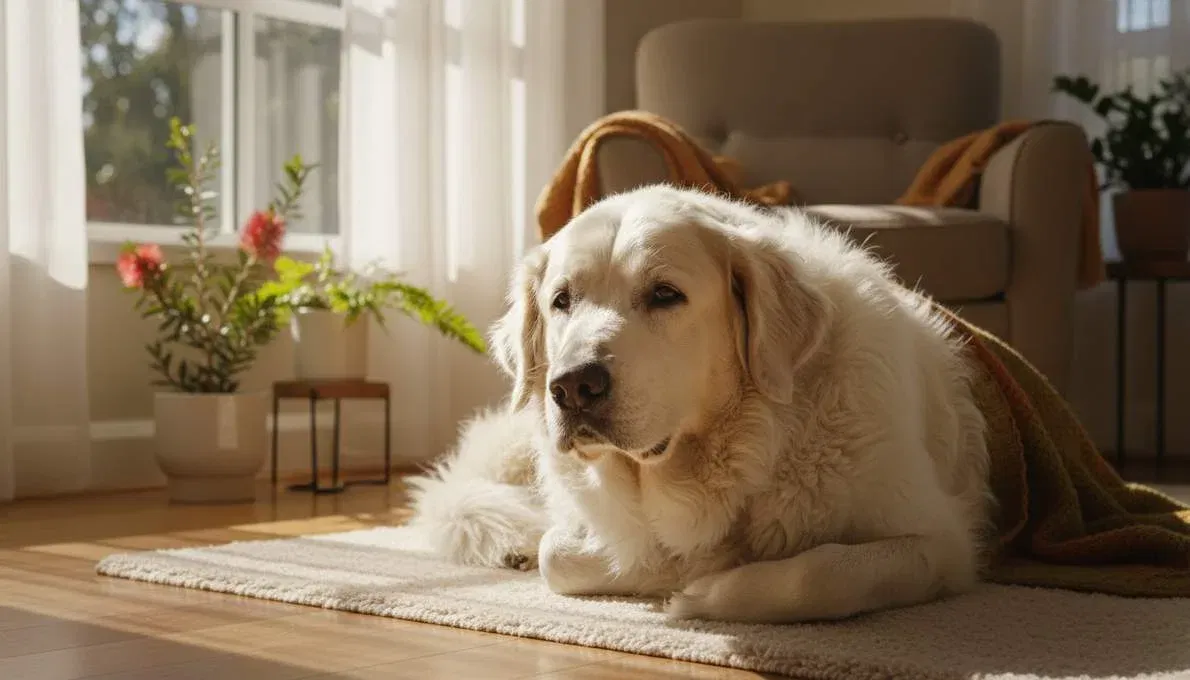
The Pyrenean Mountain Dog lives an average of 10–12 years. A 2024 UK study calculated a breed-average life expectancy of 10.9 years, below the purebred average of 12.7. This shorter lifespan is typical for giant breeds and reflects the increased risk of conditions like osteosarcoma, bloat and joint disease. Making it to 12–13 years is a good result.
Puppy to 24 months: Extended growth phase. PMD puppies grow rapidly but shouldn’t mature too fast. Follow your breeder’s recommended diet sheet — giant-breed puppy food with controlled calcium and protein is critical. Avoid jumping, stairs and extended running on hard surfaces. Socialisation is absolutely critical during this phase — a 70 kg unsocialised dog is a serious management problem. Begin training early and keep sessions short and positive.
2–3 years: Full physical maturity. The dog reaches final size and the coat matures. Temperament stabilises. This is when the guardian instinct becomes fully expressed — you’ll notice increased territorial awareness and protectiveness.
3–8 years: Prime adult years. A well-socialised, well-managed PMD is a magnificent companion. Moderate exercise, annual vet checks, joint monitoring, dental care. Watch weight carefully — giant breeds carry excess weight poorly.
8+ years: Senior phase begins earlier in giant breeds. Increase vet visits to twice yearly. Joint supplements, weight management, reduced exercise intensity. Monitor for signs of osteosarcoma (unexplained lameness). Many senior PMDs remain gentle and engaged but slow down noticeably.
Exercise Needs
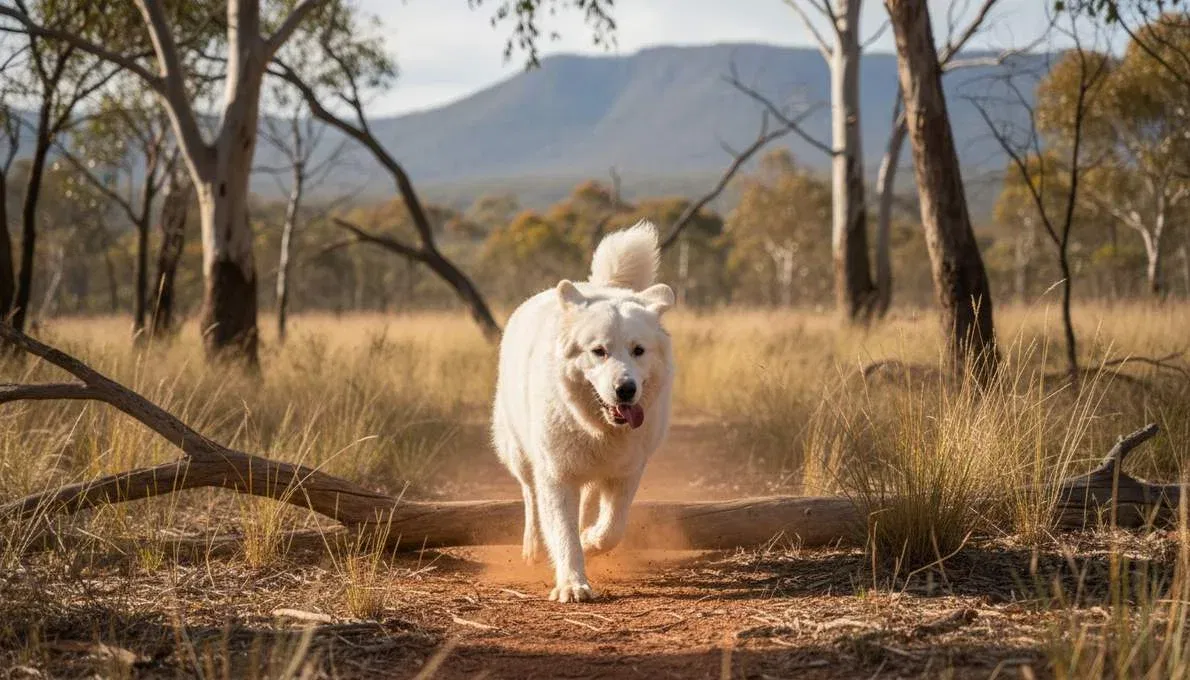
Despite their size, Pyrenean Mountain Dogs are not high-energy dogs. They were bred for calm, patient guarding — not the sustained drive of a herding breed. A well-exercised PMD needs 30–60 minutes of moderate daily exercise: leisurely walks, gentle hikes, or supervised free time in a securely fenced area. They’re not jogging companions and should never be exercised vigorously in heat.
Puppies and young dogs:
Control exercise carefully during the growth phase (up to 18–24 months). The rule of thumb is 5 minutes of structured exercise per month of age, twice daily. A 4-month-old puppy should have no more than 20 minutes of walking at a time. Free play in a safe area is fine — let the puppy self-regulate. Avoid repetitive jumping, stairs and running on hard surfaces.
The lazy perception:
PMDs can appear lazy, particularly in warm weather. They’re not — they’re energy-conserving, as their ancestors needed to save energy for nighttime patrols. They become noticeably more active in cool weather and at night. Don’t mistake calm for inactivity — they’re always observing.
Training Guide
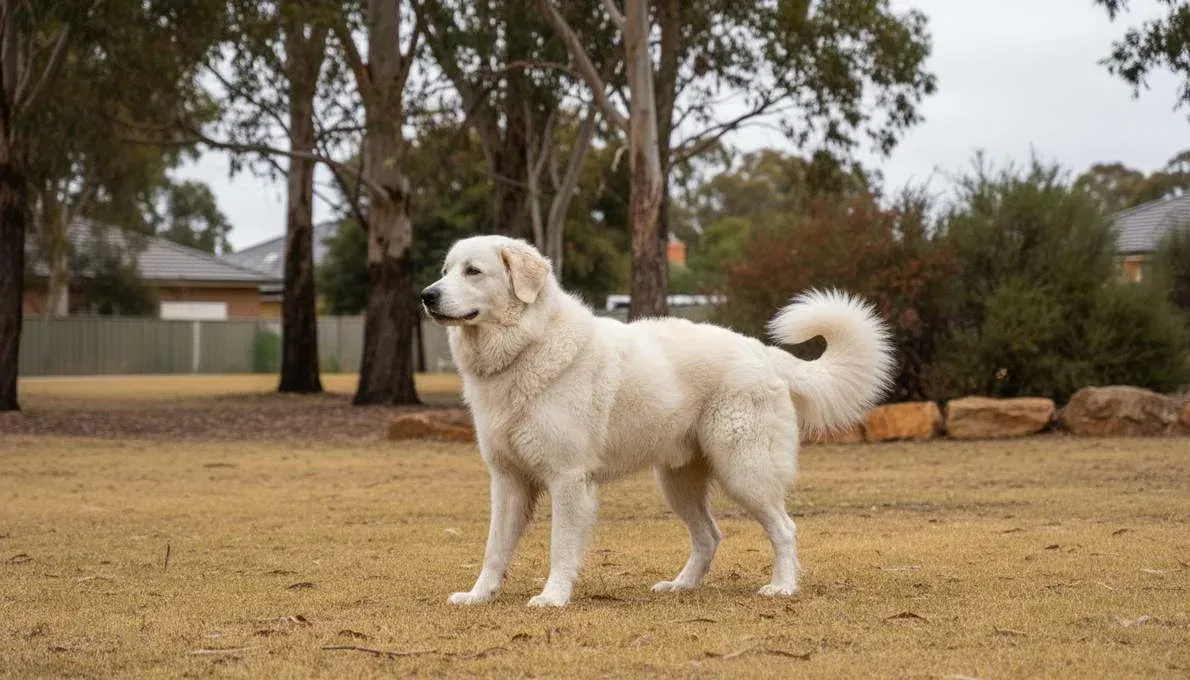
Training a Pyrenean Mountain Dog requires a fundamentally different mindset from training most other breeds. These dogs are intelligent — they understand your commands. The challenge is that they were bred to make independent decisions, and they will evaluate your instructions against their own assessment of the situation. This isn’t defiance; it’s the breed working as designed.
Patience is non-negotiable:
PMDs learn slowly by conventional standards. They’re not slow learners — they’re deliberate evaluators. Once they learn something, they retain it permanently (both good habits and bad). Keep training sessions short (5–10 minutes), varied and positive. Repetitive drilling bores them and they’ll simply stop participating.
Positive reinforcement only:
Harsh corrections destroy trust and make the stubbornness worse. Food rewards, praise and calm leadership work. Dominance-based training methods are counterproductive with this breed.
Socialisation is the priority:
More important than any obedience command. Expose your PMD puppy to as many people, dogs, environments, sounds and situations as safely possible before 16 weeks. Continue throughout the first year. A well-socialised PMD is confident and discerning. An under-socialised PMD is fearful and potentially dangerous at 60–75 kg.
Barking management:
Teach a “quiet” command early. Acknowledge alert barks (a brief “thank you” tells them you’ve noted the alert), then redirect. Bringing the dog inside at night significantly reduces nocturnal barking. Never punish barking — it’s a hardwired breed behaviour. Manage, don’t suppress.
Recall limitations:
Be realistic. A Pyrenean Mountain Dog’s recall will never be as reliable as a Labrador’s. The independent streak means they may choose not to return if something more interesting is happening. Off-leash exercise should only be in securely fenced areas.
Pyrenean Mountain vs Maremma Sheepdog
This is one of the most common comparison questions for Australian buyers, particularly those considering a livestock guardian dog. Both breeds serve similar roles, but there are meaningful differences.
| Feature | Pyrenean Mountain Dog | Maremma Sheepdog |
|---|---|---|
| Origin | France/Spain (Pyrenees Mountains) | Italy (Abruzzo and Tuscany regions) |
| Size | 65–80 cm, 45–75 kg — noticeably larger | 60–73 cm, 35–45 kg — lighter and more compact |
| Coat | Longer, thicker double coat. Heavier shedding. | Long, slightly harsher coat. Moderate–heavy shedding. More water-resistant. |
| Temperament | Calm, gentle, more sociable with people. Better with regular visitors. | More independent, more intense guardian instinct. Can be reserved with strangers. |
| Barking | High — especially nocturnal | Moderate–high — also nocturnal |
| Family companion suitability | Better adapted. Gentler with children. More tolerant of household life. | Primarily a working dog. Can adapt to family life but strongly prefers a job. |
| Livestock guardian role | Excellent. Prefers to bark and deter. Less likely to physically engage. | Excellent. More intense, more territorial. Slightly more assertive with predators. |
| Roaming tendency | High — will expand territory | Moderate — tends to stay closer to flock |
| Heat tolerance | Lower — thick coat is less adapted to Australian heat | Better — sheds heavier in summer, more heat-adapted |
| Availability (Australia) | Moderate — breeders in VIC, NSW, QLD, WA, SA | Higher — more established in Australian farming communities |
| Aggression to humans | Very low — gentle with people, good with farm visitors | Low but more cautious — more suspicious of unfamiliar people |
Which should you choose? If your primary need is a livestock guardian and you want the most intense working instinct with better heat adaptation, the Maremma is the traditional Australian choice. If you want a breed that doubles as a family companion and working guardian, is gentler with regular visitors, and you can manage the heavier coat and nocturnal barking, the Pyrenean Mountain Dog may suit better. Many Australian farmers run both breeds or crosses of the two.
Cost of Ownership in Australia
| Expense | Estimated AUD Cost | Notes |
|---|---|---|
| Puppy from ANKC breeder | $2,500–$5,000+ | Breeders across VIC, NSW, QLD, WA and SA. Some breed clubs (Pyrenean Mt Dog Club of Victoria) can direct enquiries. Waitlists common. Dogs from imported lines (Belgium, Norway, Finland) may command higher prices. |
| First-year setup | $1,000–$2,000 | Giant-breed crate, heavy-duty bed, bowls, harness, puppy training classes. Everything costs more in giant-breed size. |
| Annual food | $1,200–$2,500 | A 50–75 kg dog eats considerably more than smaller breeds. Quality giant-breed food is recommended. Puppies require specific giant-breed puppy formula — do not use standard puppy food. |
| Professional grooming | $500–$1,500/year | $80–$150 per session. Size premium. Not all groomers accept giant breeds. Many owners groom at home with proper tools. |
| Annual vet (routine) | $500–$900 | Vaccinations, heartworm, flea/tick prevention. Larger medication doses = higher costs. |
| Pet insurance | $60–$120/month | Strongly recommended for giant breeds. Bloat surgery, orthopaedic conditions and cancer treatment can exceed $10,000. |
| Gastropexy (preventive) | $500–$1,500 | One-time cost. Often combined with desexing. Highly recommended for bloat prevention. |
| Secure fencing | $1,000–$5,000+ | Minimum 1.8 m height. May need reinforcement. Essential for a breed that roams. |
| Total first year | $6,000–$12,000+ | Including puppy purchase, setup, food, vet, insurance, fencing. |
| Ongoing annual cost | $3,000–$5,000+ | Food is the dominant ongoing expense. Health costs increase with age. |
Where to find breeders:
DogzOnline (dogzonline.com.au) lists ANKC-registered PMD breeders across multiple states. Dogs Australia (dogsaustralia.org.au) is the ANKC portal. The Pyrenean Mountain Dog Club of Victoria is the primary Australian breed club. Dogs NSW also has breed-specific listings. Established Australian kennels include Vendein (VIC, 20+ years breeding), Charlaronne (VIC), Snofyre (NSW Central Coast) and Choorou (WA). Many import lines from Belgium, Norway, Finland, Canada and the USA. Always verify ANKC registration, hip and elbow scores, and DM testing.
Working dog vs companion lines:
If you want a livestock guardian, seek breeders who specialise in working/guardian lines rather than show lines. Working-line dogs have stronger guardian instincts and may be better suited to farm life. Show-line dogs are typically calmer and more companion-oriented. Discuss your intended role for the dog with breeders before purchasing.
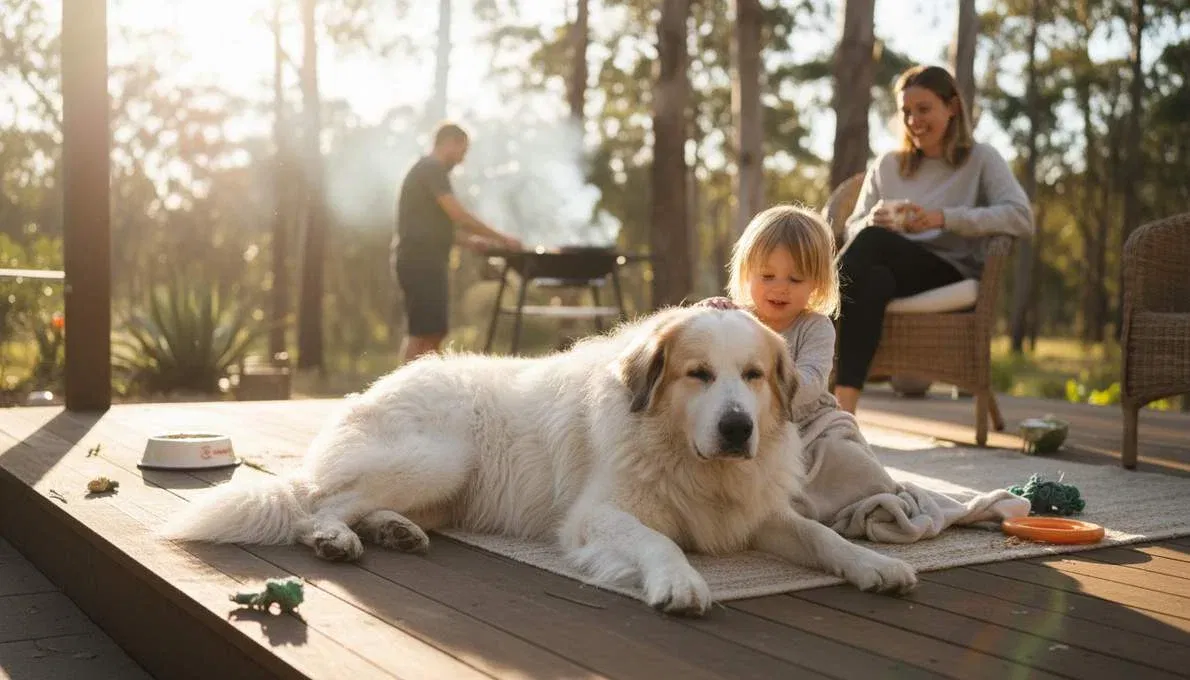
Is the Pyrenean Mountain Dog Right for You?
have a large property or spacious home with a securely fenced yard (1.8 m+ fencing), can tolerate heavy shedding and are prepared for daily fur management, appreciate a calm, independent and protective companion rather than an eager-to-please obedience dog, can manage nocturnal barking through indoor sleeping and training, have experience with large or giant breeds (or access to experienced support), are prepared for giant-breed costs including food, vet and potential emergency surgery, live in a climate or can provide conditions (shade, AC, cool surfaces) suitable for a heavy-coated breed, and want a dog that is genuinely gentle with children and livestock.
live in an apartment or townhouse, have close neighbours who are sensitive to barking, want a dog that obeys instantly and reliably off-leash, are not prepared for extreme shedding, cannot afford giant-breed ownership costs, have an unsecured yard or no fencing, want a high-energy jogging or hiking partner, or are a first-time dog owner without access to experienced guidance.
The Pyrenean Mountain Dog is a breed of contradictions — enormous yet gentle, independent yet deeply loyal, calm by day yet vocal by night. It’s a dog that will lean against your legs with the full weight of its 60 kg frame while simultaneously deciding that your recall command is merely a suggestion. It will guard your children with absolute devotion and cover your entire house in white fur in the process.
For the right owner — someone with space, patience, secure fencing and a tolerance for both shedding and 3 AM possum alerts — the Pyrenean Mountain Dog is one of the most rewarding breeds to live with. Their calm presence, their gentle authority, their quiet devotion to family are extraordinary. For Australian farmers seeking a livestock guardian that’s also safe around children and visitors, the breed offers a compelling alternative to the Maremma.
Three things to remember:
- Bloat (GDV) is a life-threatening emergency. Discuss prophylactic gastropexy with your vet. Feed 2–3 small meals daily, use slow-feeder bowls, and know the signs: distended abdomen, drooling, retching without vomiting, restlessness. Act immediately.
- Nocturnal barking is not a training failure — it’s a breed trait. Manage it by bringing the dog inside at night, teaching a quiet command early, and acknowledging alerts before redirecting. It can be reduced but never eliminated entirely.
- Secure fencing (minimum 1.8 m) is non-negotiable. Pyrenean Mountain Dogs are natural roamers that will expand their patrol territory if given the opportunity. A roaming 60–75 kg dog is a serious safety and liability concern.
Frequently Asked Questions
How big does a Pyrenean Mountain Dog get?
Males reach 70–80 cm (28–31 inches) and 50–75 kg. Females reach 65–75 cm and 45–60 kg. Full size is typically reached at 2–3 years. The heavy coat makes them appear even larger.
What is the Pyrenean Mountain Dog lifespan?
10–12 years on average. A 2024 UK study found a breed-average life expectancy of 10.9 years. This is typical for giant breeds. Regular vet care, weight management, bloat prevention and joint health monitoring all contribute to longevity.
What is the Pyrenean Mountain Dog temperament like?
Calm, gentle, loyal, independent and protective. They’re one of the gentlest giant breeds and are excellent with children. However, they’re also stubborn, independent thinkers that bark at night and make their own decisions about obedience. Not an eager-to-please breed.
How much does a Pyrenean Mountain Dog cost in Australia?
Expect $2,500–$5,000+ from an ANKC-registered breeder. Breeders exist in VIC, NSW, QLD, WA and SA. Waitlists are common. Budget $3,000–$5,000+ annually for ongoing costs including food, grooming, vet care and insurance.
Is a Great Pyrenees the same as a Pyrenean Mountain Dog?
Yes. “Great Pyrenees” is the North American name (AKC). “Pyrenean Mountain Dog” is used in Australia, the UK and Europe. Same breed, same standard, different name.
Pyrenean Mountain Dog vs Maremma — which is better?
Both are excellent livestock guardians. The Maremma is more independent, more heat-adapted and better suited as a dedicated working dog. The Pyrenean Mountain Dog is larger, gentler with people, better as a dual-purpose family companion and guardian, but has a thicker coat and heavier shedding. In Australia, Maremmas are more commonly available.
Do Pyrenean Mountain Dogs shed a lot?
Yes — heavily and continuously, with seasonal coat blows that produce astonishing volumes of fur. If pet hair is a significant concern, this is not the right breed. Regular brushing (2–3 times weekly, daily during shedding season) is essential.
Do Pyrenean Mountain Dogs bark a lot?
Yes, especially at night. Nocturnal barking is a hardwired breed trait from their guardian heritage. It can be managed (bringing indoors at night, quiet command training, adequate exercise) but not eliminated. Not suited to noise-sensitive environments or apartments.
Are Pyrenean Mountain Dogs good with children?
Excellent. They’re one of the best giant breeds with children — gentle, patient, protective and naturally careful. However, due to sheer size, supervision with small children is important to prevent accidental knockdowns.
What are the double dewclaws on a Pyrenean Mountain Dog?
Pyrenean Mountain Dogs have double dewclaws (two extra toes) on their rear legs. This is a breed standard requirement and was functional for gripping rocky mountain terrain. Never remove them — they’re part of the breed. Keep the nails trimmed and check for snagging.
1. PetMD — Great Pyrenees Health and Care: https://www.petmd.com/dog/breeds/great-pyrenees
2. AKC — Great Pyrenees Breed Information: https://www.akc.org/dog-breeds/great-pyrenees/
3. DogzOnline — Pyrenean Mountain Dog Breeders Australia: https://www.dogzonline.com.au/breeds/breeders/pyrenean-mountain-dog.asp
4. Dogs NSW — Pyrenean Mountain Dog: https://www.dogsnsw.org.au/Breeds/browse-all-breeds/171/Pyrenean-Mountain-Dog/
5. Purina Australia — Great Pyrenean Mountain Dog: https://www.purina.com.au/dogs/breeds/great-pyrenean-mountain-dog
6. PDSA — Pyrenean Mountain Dog Health: https://www.pdsa.org.uk/pet-help-and-advice/looking-after-your-pet/puppies-dogs/large-dogs/pyrenean-mountain-dog
7. DogTime — Great Pyrenees Information: https://dogtime.com/dog-breeds/great-pyrenees
8. Invasive Animals CRC — Guardian Dogs Best Practice Manual: https://pestsmart.org.au/wp-content/uploads/sites/3/2020/06/Guardian-Dogs-web.pdf
9. Gallant — 5 Common Great Pyrenees Health Concerns: https://www.gallant.com/blog/5-common-great-pyrenees-health-concerns/