
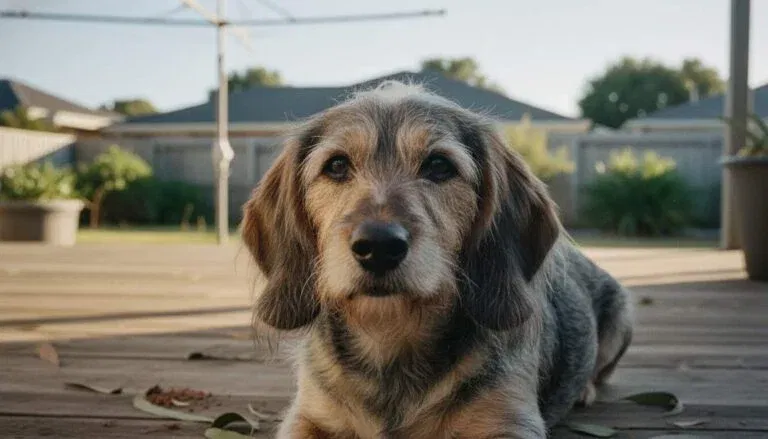
Let’s get the name out of the way first. It’s pronounced “peh-TEE bah-SAY grih-FON von-day-ON.” It means “small, low-framed, rough-coated dog from the Vendée region.” The French are thorough. Most people just say PBGV, or “Petit,” or “that scruffy little dog that looks like it’s having the best day of its life.”
And that last description is the one that matters most. The PBGV is a breed that radiates joy. They’re happy, outgoing, endlessly curious, and genuinely friendly to almost everyone they meet — humans, dogs, strangers at the park. In 2023, a PBGV named Buddy Holly won Best in Show at the Westminster Dog Show, and suddenly the whole world wanted to know about this tousled little French hound.
But behind the charming scruffy exterior is a proper working hound — bred to hunt rabbits through bramble and scrub in western France. They’re independent thinkers, surprisingly vocal, and have a nose that will override your recall command every single time. This guide covers everything Australian owners need to know: real costs, health concerns (including the breed-specific eye disease every buyer must understand), grooming, training, and whether a PBGV will actually suit your life. Let’s go.
What You’ll Learn
- Breed traits & temperament
- Health concerns to know
- True cost in Australia
- Training & exercise needs
- Is this breed right for you?
Quick Facts at a Glance
| Attribute | Detail |
|---|---|
| Breed Group | Hound (ANKC Group 4) |
| Other Names | PBGV, Petit, Roughie (UK), Happy Hound |
| Origin | Vendée region, France (1700s) |
| Size | 32–40 cm at the shoulder |
| Weight | 11–18 kg (25–40 lbs) |
| Coat | Rough, wiry double coat with thick, soft undercoat |
| Colours | White with lemon, orange, black, sable, tricolour or grizzle markings |
| Lifespan | 12–16 years (13.7 average per 2024 UK study) |
| Temperament | Happy, outgoing, curious, independent, vocal |
| Exercise Needs | Moderate–high — 45–60 minutes daily |
| Shedding | Moderate — weekly brushing, seasonal shedding |
| Good With Kids | Excellent — one of the best hound breeds for families |
| Good With Other Dogs | Excellent — bred to work in packs |
| Barking Level | High — hound bay, will vocalise freely |
| Price in Australia | $3,000–$5,000+ AUD (rare breed, waitlists common) |
History & Origins
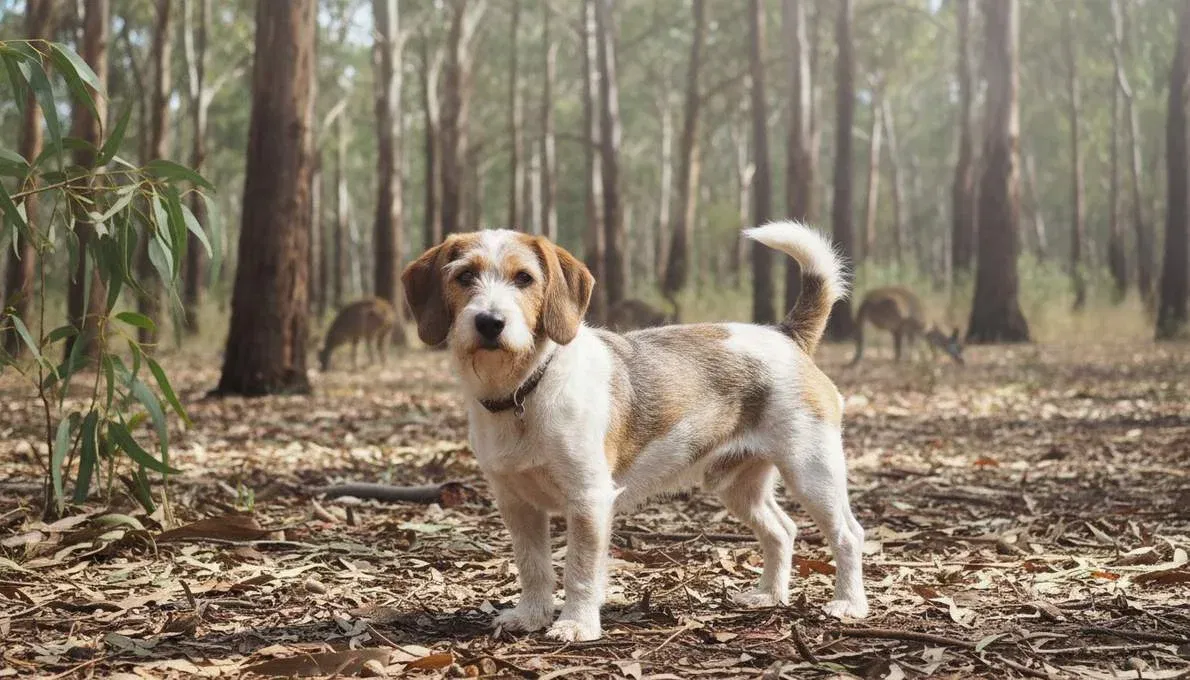
The PBGV’s story begins in the Vendée — a rugged, bramble-covered region on the west coast of France. Local hunters needed a dog that was small enough to push through dense scrub, tough enough to handle thorny terrain, and tenacious enough to trail rabbits and hare for hours. The result was the Petit Basset Griffon Vendéen: a short-legged, wire-coated scenthound built like a small all-terrain vehicle.
The breed descends from a combination of the Grand Griffon Vendéen (a larger hunting hound), the St. Hubert Hound, and the Italian Hound. For a long time, the Petit and its larger cousin the Grand Basset Griffon Vendéen (GBGV) were considered varieties of the same breed and were even interbred. In 1947, breeder Paul Dezamy established the first breed standard specifically for the Petit, and by the 1950s the two sizes were recognised as separate breeds.
The breed gained international popularity relatively recently. The AKC recognised the PBGV in 1990, and the breed’s profile skyrocketed in 2023 when a PBGV named Buddy Holly became the first of his breed to win Best in Show at the Westminster Dog Show. In Australia, the PBGV has a small but passionate breeding community, with breeders in South Australia, Victoria and NSW importing lines from Denmark, England, the USA, France and beyond to maintain genetic diversity.
Temperament & Personality
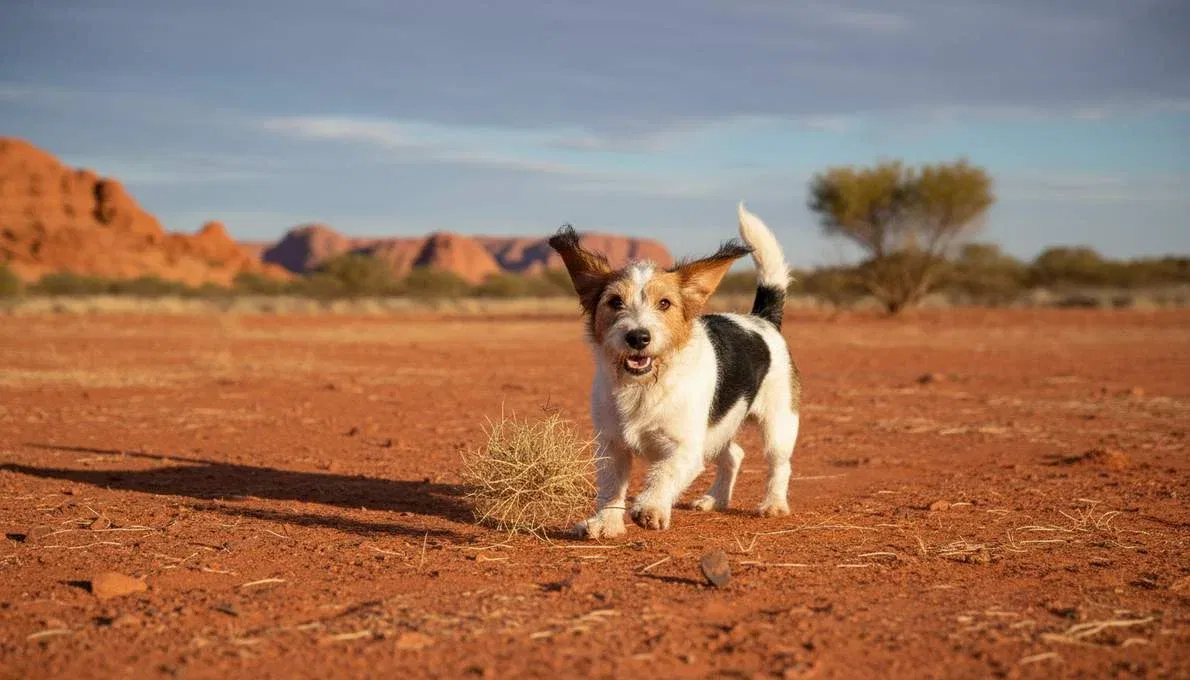
The PBGV is nicknamed “the Happy Hound” and it’s not marketing — it’s an accurate description. These dogs approach life with an enthusiasm that borders on infectious. Their tails wag constantly, their eyes are bright and engaged, and they genuinely seem to enjoy every moment of being alive. If dogs could whistle while they worked, PBGVs would.
They’re social dogs in the truest sense. Bred to hunt in packs, PBGVs thrive on company — human, canine, or both. They’re excellent with children, friendly with strangers, and generally get along well with other dogs. They’re one of the few hound breeds that’s genuinely recommended for multi-dog households.
PBGVs are affectionate without being clingy, energetic without being hyperactive (once mature), and robust enough to handle family life with kids. They’re adaptable, travel well, and bring genuine warmth to any household. Their rough coat gives them a permanently endearing “just rolled out of bed” look that never gets old.
They’re hounds. This means three things. First, they’re independent thinkers — they were bred to make decisions in the field without waiting for human instruction, and that independence shows up in training. Second, they have a strong prey drive — if they catch a scent, your recall command will become background noise. Third, they’re vocal. The PBGV breed standard literally says the dog should “give voice freely.” They have a deep, carrying hound bay that is wildly disproportionate to their size, and they will use it — when excited, when bored, when another dog walks past, or just because a particularly interesting smell drifted through the window.
You’re at the dog park. Your PBGV is playing happily with three other dogs when a rabbit darts across the far end of the field. Your PBGV’s head snaps up, nose twitches, and it launches into a full-voiced pursuit, bay echoing across the park like a tiny French hunting horn. Your carefully practised recall? Irrelevant. The rabbit is all that matters now. This is why off-leash time requires secure, fully fenced areas — always.
Health & Genetic Conditions
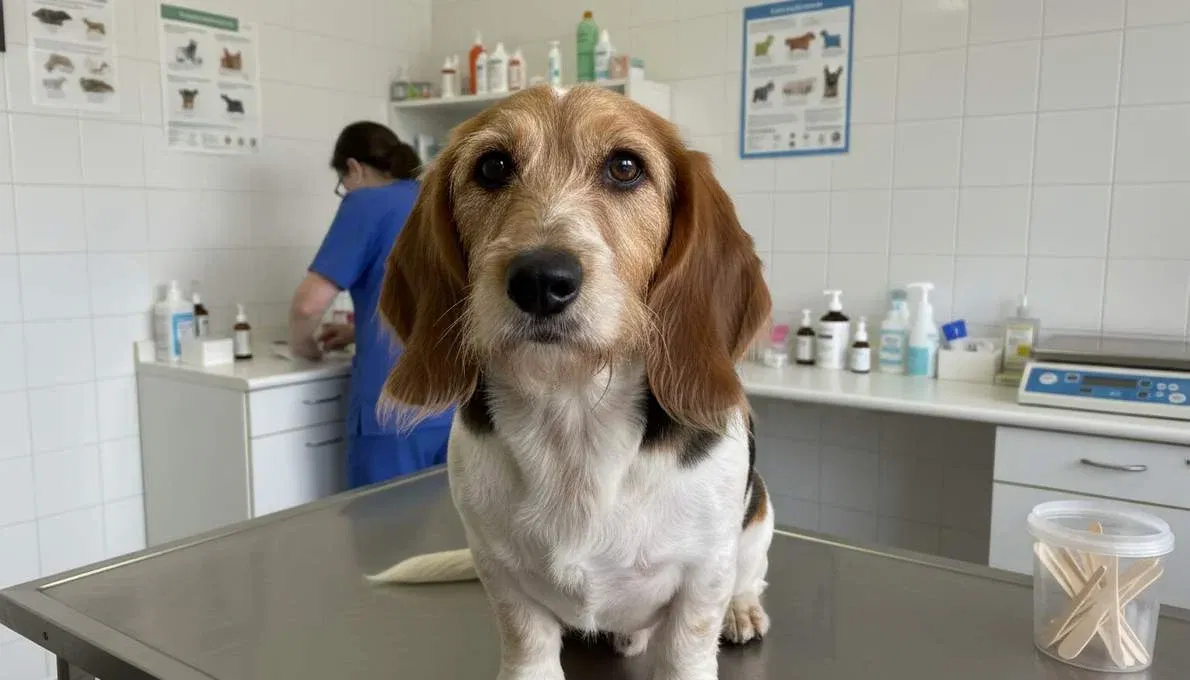
PBGVs are generally healthy and hardy dogs with good longevity. However, the breed has one significant genetic health concern that every buyer needs to understand before purchasing: Primary Open Angle Glaucoma (POAG).
Prevalence: One of the most serious health concerns in PBGVs — the breed carries a known genetic mutation (ADAMTS17) that makes them significantly more prone to this condition than most other breeds. [OFA eye testing]
Symptoms: You may notice your PBGV bumping into furniture, one eye appearing larger or cloudier than the other, frequent squinting, or redness around the eye. In advanced cases, vision loss can happen quickly. [VCA eye guide]
Treatment Cost (AUD): $1,500–$5,000+ depending on whether the condition is managed with long-term medication or requires surgery. Costs can be ongoing for life. [consider pet insurance]
Prevention: Always ask your breeder for a DNA certificate confirming both parents have been tested clear for the ADAMTS17 mutation. This single step is the most important health check you can do before buying a PBGV puppy. [DNA test info]
Prevalence: Fairly common in PBGVs. Most dogs are only mildly affected and live completely normal lives, but it is worth checking early. [CAER eye registry]
Symptoms: Small thread-like strands visible across the pupil of the eye. In mild cases there are no obvious problems. In more severe cases your dog may seem sensitive to bright light or have slightly blurred vision. [Merck Vet Manual]
Treatment Cost (AUD): $200–$1,000 if treatment is required. Mild cases need no treatment and are simply monitored at annual vet checks. [insurance tip]
Prevention: Request a CAER (Companion Animal Eye Registry) eye exam certificate from your breeder. Reputable PBGV breeders have their dogs eye-tested before breeding. [CAER info]
Prevalence: Epilepsy has been reported across the PBGV breed. It is not the most common condition but it does appear often enough that prospective owners should ask breeders directly about it. [AKC Canine Health Foundation]
Symptoms: Seizures can look like sudden collapse, uncontrolled shaking or paddling of the legs, loss of bladder control, staring blankly, or appearing confused and disoriented for several minutes after an episode. [Cornell Vet guide]
Treatment Cost (AUD): $500–$2,000/year for daily anti-seizure medication. Most PBGVs with epilepsy are well managed on medication and live full, active lives. [insurance tip]
Prevention: There is no guaranteed prevention. Choose a breeder who is transparent about neurological history in their lines and avoids breeding dogs with a history of seizures. [epilepsy in dogs]
Prevalence: Moderate prevalence in PBGVs. It tends to appear in middle-aged dogs and is one of the more straightforward conditions to manage once diagnosed. [OFA thyroid]
Symptoms: Your PBGV may gradually gain weight without eating more, become less enthusiastic about walks, develop a dull or thinning coat, feel cold, or seem generally flat and unwell. [VCA symptoms]
Treatment Cost (AUD): $300–$600/year for a once or twice daily thyroid tablet. Once the correct dose is found, most dogs return to their normal energetic selves within weeks. [Merck Vet Manual]
Prevention: There is no way to prevent it, but annual blood panels from age 4–5 onwards will catch it early before symptoms become severe. [testing info]
Prevalence: Moderate risk in PBGVs. Given their sturdy, low-to-ground build and active hunting nature, hip health is something responsible breeders take seriously. [OFA hip database]
Symptoms: Watch for your PBGV being reluctant to jump in the car, slowing down on walks, sitting awkwardly, showing stiffness first thing in the morning, or doing a characteristic “bunny hop” when running. [VCA guide]
Treatment Cost (AUD): $1,500–$6,000+ for surgical correction in severe cases. Milder cases can be managed with joint supplements, anti-inflammatories, hydrotherapy, and controlled exercise at a much lower cost. [consider pet insurance]
Prevention: Ask to see OFA or PennHIP scores for both parents before purchasing your puppy. Keep your PBGV at a lean, healthy weight and avoid repetitive high-impact jumping during their first 12–18 months of growth. [OFA scoring]
Prevalence: Moderate risk. PBGVs are a small-to-medium breed and like many dogs of this size, loose kneecaps can occur — sometimes alongside hip issues in the same dog. [OFA patella]
Symptoms: You may notice your PBGV suddenly lifting one back leg mid-stride and hopping for a few steps before continuing normally. This skipping gait is the most telling sign. Some dogs show intermittent lameness or are reluctant to use stairs. [VCA guide]
Treatment Cost (AUD): $1,500–$4,000 per knee if surgery is needed. Grade 1 and 2 cases are often managed without surgery through weight control and physiotherapy. [insurance tip]
Prevention: Buy from health-screened parents, keep your dog at a healthy weight, and avoid excessive jumping from heights — especially in young puppies whose joints are still developing. [grading system]
Prevalence: Very common in PBGVs. Their long, heavily furred, drop ears are a defining feature of the breed — but they also create a warm, dark, and moist environment where bacteria and yeast thrive. [AVMA ear guide]
Symptoms: Head shaking, pawing at the ears, a noticeable smell coming from the ear canal, dark or waxy discharge, redness inside the ear flap, or your dog wincing when you touch their ears. [VCA symptoms]
Treatment Cost (AUD): $100–$500 per episode for vet consultation and ear drops. Dogs that develop chronic infections can cost significantly more over time. [insurance tip]
Prevention: Make ear care a weekly habit from puppyhood. Gently clean the ears with a vet-approved solution, always dry them thoroughly after bathing or swimming, and check for early redness before it becomes a full infection. [how to clean ears]
Prevalence: Moderate risk in PBGVs. Their rough, wiry double coat — while weatherproof — can trap dirt, debris, and parasites close to the skin, and some dogs in the breed are prone to environmental or food allergies. [AKC skin care]
Symptoms: Constant scratching or licking, patchy or thinning fur, red and irritated skin, recurring hot spots, or a dog that chews relentlessly at their paws or base of tail. [VCA dermatitis guide]
Treatment Cost (AUD): $200–$1,000 depending on the underlying cause. Allergy testing and specialist dermatology consults sit at the higher end. [insurance tip]
Prevention: Strip — don’t clip — the PBGV coat as intended for the breed, as clipping softens the coat and affects its natural protective properties. Use year-round parasite prevention, wash bedding regularly, and if allergies are suspected, a simple food elimination trial with your vet is a great first step. [Merck skin guide]
Primary Open Angle Glaucoma is the most serious breed-specific health issue in PBGVs. It’s caused by a recessive mutation in the ADAMTS17 gene. Dogs with two copies of the mutation (homozygous) will almost certainly develop POAG, typically showing signs between 3–6 years of age. The disease is progressive and leads to blindness. A DNA test exists and every reputable breeder should test their breeding dogs. Ask to see results. A dog that is “clear” (N/N) or a “carrier” (N/POAG) bred to a clear dog will not produce affected puppies. Never buy from a breeder who hasn’t tested for POAG.
Eye examination by a veterinary ophthalmologist (for PPM and other eye conditions), hip evaluation (OFA or PennHIP method), and patellar examination. In Australia, the Basset Griffon Vendéen Club of NSW encourages all members to health-test their dogs.
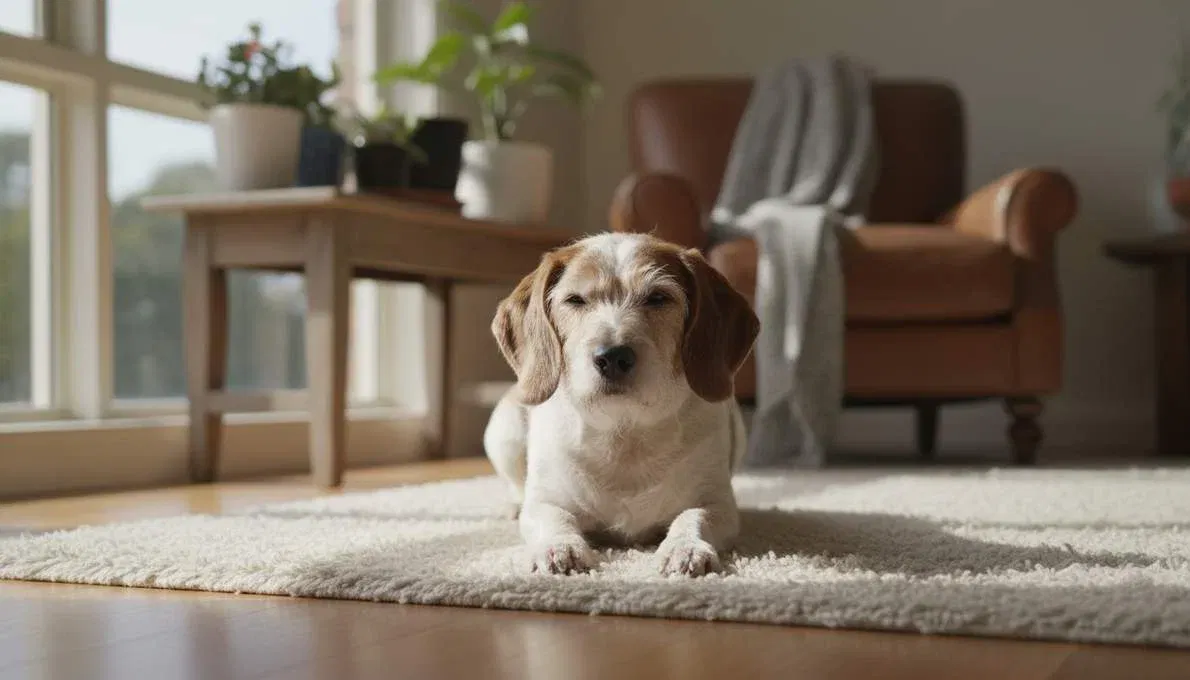
Lifespan & Longevity
PBGVs are a long-lived breed. A 2024 UK study found an average life expectancy of 13.7 years — well above the 12.7-year average for purebred dogs. Sources range from 12 to 16 years depending on individual health, genetics and care. This is a breed you can expect to be your companion for a long time.
Puppy to 1 year: Growth phase. PBGV puppies are bundles of energy and curiosity. Start socialisation early and widely — these are naturally social dogs, but exposure to different environments, sounds and surfaces builds confidence. Begin basic training immediately, but keep sessions short and fun. Puppies stop growing in height around 12–14 months but continue filling out until 18–24 months.
1–7 years: Active adult years. PBGVs are energetic adults that need daily exercise and mental stimulation. This is when prey drive and independence are at their peak. Maintain a secure yard, always use a leash in unfenced areas, and provide scent-based activities to satisfy their hunting instincts.
7–11 years: Mature adult phase. Energy levels moderate slightly but PBGVs remain active well into their senior years. Watch for signs of hypothyroidism (weight gain, lethargy, thinning coat) and have annual eye pressure checks if not already doing so. Bi-annual vet visits recommended.
11+ years: Senior stage. Many PBGVs remain bright and engaged. Monitor for age-related conditions including heart disease, mobility issues and cognitive changes. Adjust exercise to gentler, shorter outings. Continue regular eye monitoring.
Grooming & Care
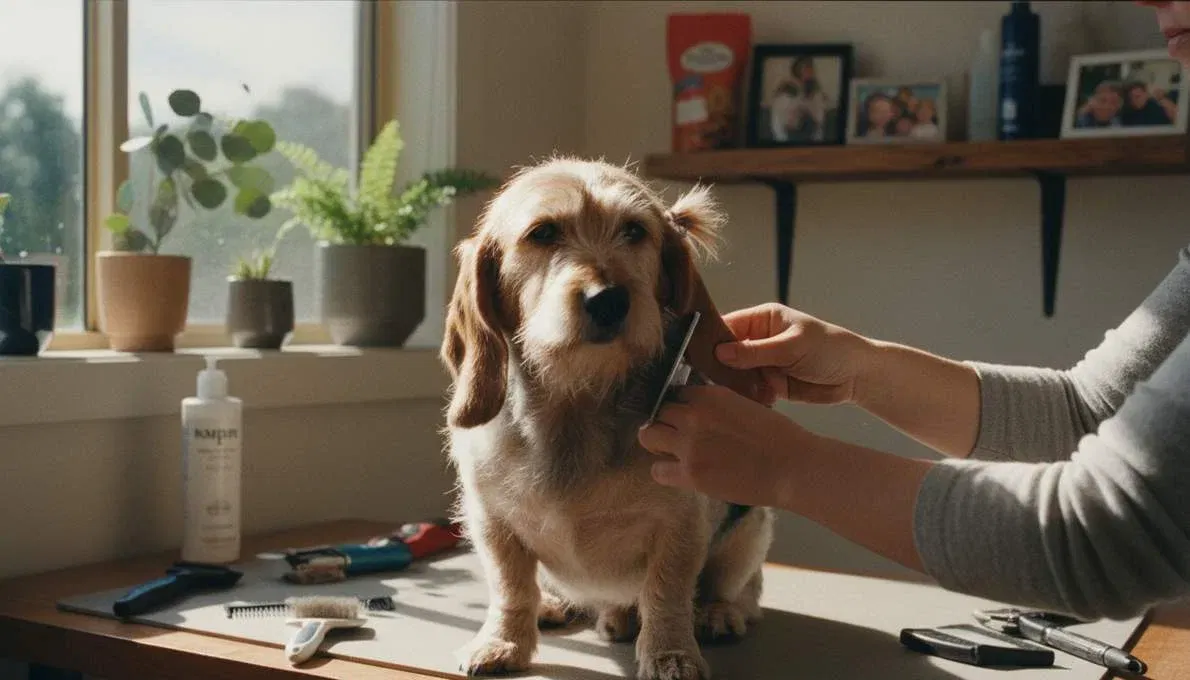
Here’s one of the PBGV’s great advantages: despite looking like a dog that requires hours of grooming, they’re actually relatively low-maintenance. That rough, tousled coat is functional — it was designed to protect the dog from brambles and thorns, not to be salon-perfect.
Grooming Schedule
| Task | Frequency | Notes |
|---|---|---|
| Brushing | Weekly (more during shedding) | Use a hard bristle brush or pin brush to remove loose hair and prevent mats. Pay attention to behind ears, armpits and feathering. |
| Hand-stripping | 2–4 times per year | The wire coat benefits from hand-stripping to maintain correct texture. Some owners have this done professionally; others learn to do it at home. |
| Bathing | As needed (every 4–8 weeks) | The rough coat naturally repels dirt. Only bathe when genuinely dirty. Over-bathing softens the wire texture. |
| Ear cleaning | Weekly | Essential. Long, droopy ears trap moisture and debris. Use a vet-recommended ear cleaner. Check for redness, odour or discharge. |
| Nail trimming | Every 2–3 weeks | Active dogs may wear nails down naturally, but check regularly. |
| Dental care | Daily brushing ideal | Standard for all breeds. Regular professional cleans as recommended by your vet. |
| Beard/eyebrow tidying | As needed | The characteristic facial furnishings can be tidied but should not be clipped short — they protect the eyes. |
Professional grooming costs: $60–$100 per session in Australia, though many PBGV owners learn to manage grooming at home. Hand-stripping is the main skill to develop — ask your breeder to demonstrate.
Shedding reality: PBGVs shed moderately. The rough outer coat sheds less than a smooth coat, but the undercoat will blow seasonally. Weekly brushing keeps it manageable. Hand-stripping (rather than clipping) helps maintain correct coat texture and reduces shedding.
Important note: Never clip or scissor a PBGV’s coat short. The wire texture is functional and grows back softer if cut. Hand-stripping preserves the correct harsh texture that naturally repels water and dirt.
Exercise Needs
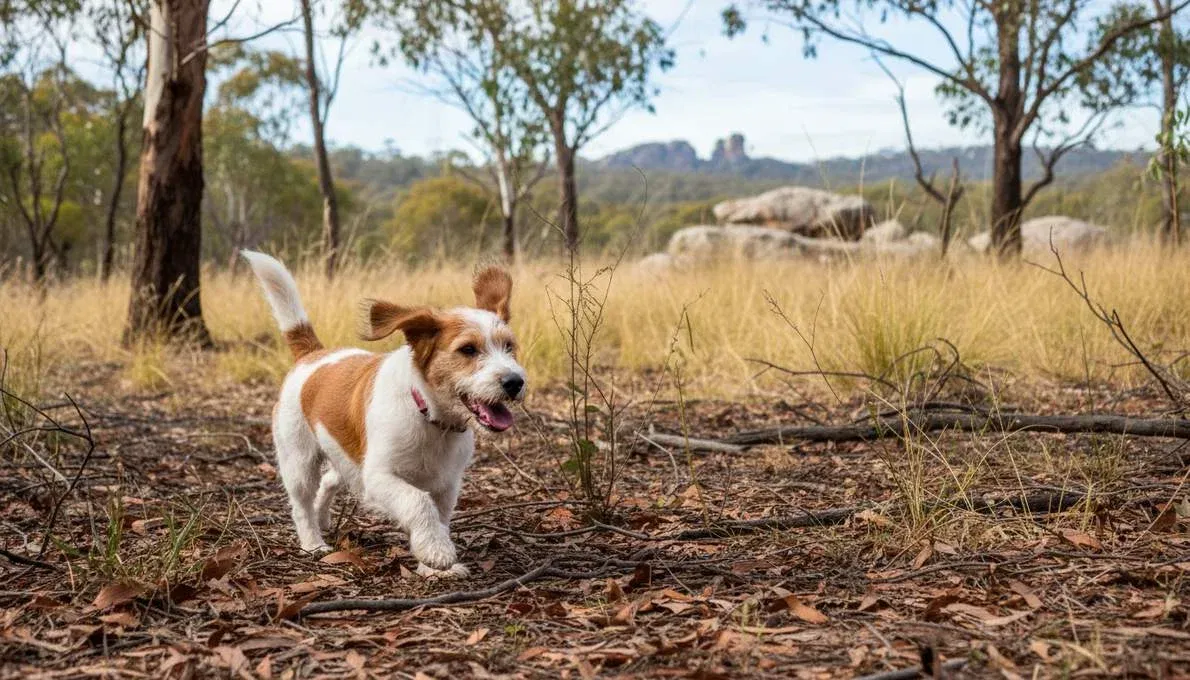
PBGVs were bred to hunt rabbits through rough terrain for hours. They’re not couch potatoes. An under-exercised PBGV will find its own entertainment — and that usually involves digging, barking, or redecorating your garden.
Aim for 45–60 minutes of exercise daily. This should include a combination of on-leash walks, off-leash play in secure fenced areas, and mental stimulation through scent-based activities. PBGVs are excellent candidates for scent work, tracking, and agility — activities that channel their natural abilities.
⚠️ Australian climate note: PBGVs handle heat better than brachycephalic breeds thanks to their normal muzzle, but their double coat still means they can overheat in extreme Australian summer conditions. Exercise in the cooler parts of the day during summer, provide shade and fresh water, and watch for signs of overheating. Their coat actually provides some insulation against heat as well as cold, so don’t shave them.
Off-leash warning: PBGVs should only be off-leash in fully fenced, secure areas. Their scent drive is incredibly strong and when they catch a trail, they will follow it with single-minded determination. No amount of training will reliably override centuries of breeding to follow a scent. Secure fencing (check for gaps at ground level — they’re low to the ground and can squeeze through small spaces) is essential.
Great activities for PBGVs: Scent work and tracking (perfect for their natural abilities), agility (they’re surprisingly athletic), long bushwalks on-leash, and interactive puzzle feeders. These dogs need their brains worked as much as their bodies.
Training Guide
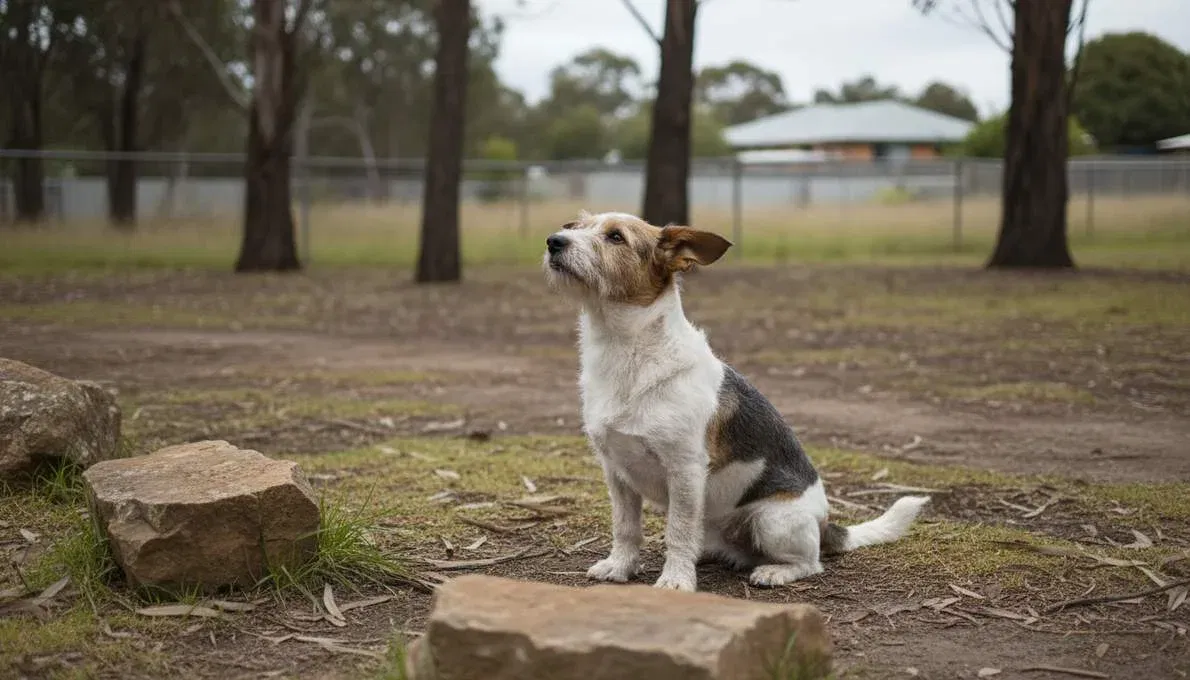
Training a PBGV is an exercise in patience, creativity and humour. They’re intelligent — they’ll learn what you want quickly. The challenge is convincing them it’s worth doing. Like most hounds, PBGVs were bred to work independently, making decisions in the field without waiting for human direction. That independence doesn’t switch off at home.
| Age | Training Focus | Tips |
|---|---|---|
| 8–12 weeks | Socialisation, name recognition, positive association with handling, crate introduction | Expose to diverse people, dogs, environments and sounds. PBGVs are naturally social but benefit enormously from early, positive experiences. Start ear-handling routines now. |
| 3–6 months | Basic commands (sit, down, come), leash walking, beginning recall | Use high-value food rewards — PBGVs are food-motivated. Keep sessions to 5 minutes maximum. Accept that recall will always be a work in progress with this breed. |
| 6–12 months | Impulse control, “leave it,” extended recall practice in enclosed areas, bark management | Adolescence brings peak stubbornness. Stay consistent, stay positive. Never use harsh corrections — they’ll shut down or become more defiant. |
| 1 year+ | Ongoing maintenance, advanced activities (scent work, agility), continued socialisation | PBGVs excel at scent work and tracking — channel their natural drive into structured activities. Obedience titles are achievable with patience. |
Honest difficulty rating: 6/10 for basic obedience (they’ll learn, but on their timeline), 8/10 for reliable recall (this is the hardest thing you’ll train — their nose wins), 7/10 for barking management (you can reduce it but won’t eliminate it — they’re hounds).
The barking reality: PBGVs are vocal dogs. Their hound bay is loud, deep and carries a surprising distance. They bark when excited, when they see something interesting, when they hear other dogs, and sometimes apparently just because they can. You can manage the volume with training, but you will not create a silent PBGV. If you have close neighbours or live in a noise-sensitive apartment, this breed will cause problems.
Cost of Ownership in Australia
The PBGV is a rare breed in Australia, which means higher purchase prices, longer waitlists, and potentially limited choice of breeders. Here’s what Australian ownership looks like financially:
| Expense | Estimated AUD Cost | Notes |
| Puppy (registered breeder) | $3,000–$5,000+ | Rare breed premium. Limited litters in Australia mean waitlists of 6–12+ months are normal. |
| Interstate transport | $300–$800 | You may need to source a puppy from another state. Ground or air transport costs apply. |
| First-year setup | $800–$1,500 | Crate, bed, secure fencing check, leash, harness, bowls, grooming tools, initial vet visit, desexing. |
| Annual food | $500–$800 | Medium-sized dog on quality food. PBGVs can be prone to weight gain, so portion control matters. |
| Annual vet (routine) | $400–$700 | Standard wellness checks, vaccinations, parasite prevention. Add POAG DNA test if not done by breeder. |
| Professional grooming | $60–$100 per session, 2–4 times/year for stripping | Lower than many breeds. Most PBGV owners learn home grooming. |
| Ear care products | $50–$100/year | Ongoing ear cleaning supplies. Budget for occasional vet-treated ear infections. |
| Pet insurance | $40–$70/month | Recommended. POAG treatment and hip surgery can be expensive. |
| Total first year | $5,500–$9,000+ | Including purchase price, setup and transport. |
| Ongoing annual cost | $1,800–$3,000 | Moderate for a medium-small breed. Lower grooming costs offset by potential health costs. |
Where to find breeders: Start with DogzOnline (dogzonline.com.au) which lists 11 PBGV breeders across Australia, concentrated in SA, VIC and NSW. The Basset Griffon Vendéen Club of NSW (dogsnsw.org.au) is another resource. Given the small breeding community, expect waitlists. Ask about POAG DNA testing, eye examinations and hip evaluations before committing.
Rescue option: PBGVs are extremely rare in Australian rescue. PetRescue (petrescue.com.au) may occasionally list one, but realistically you’ll need to go through a registered breeder.
Is the Petit Basset Griffon Vendéen Right for You?
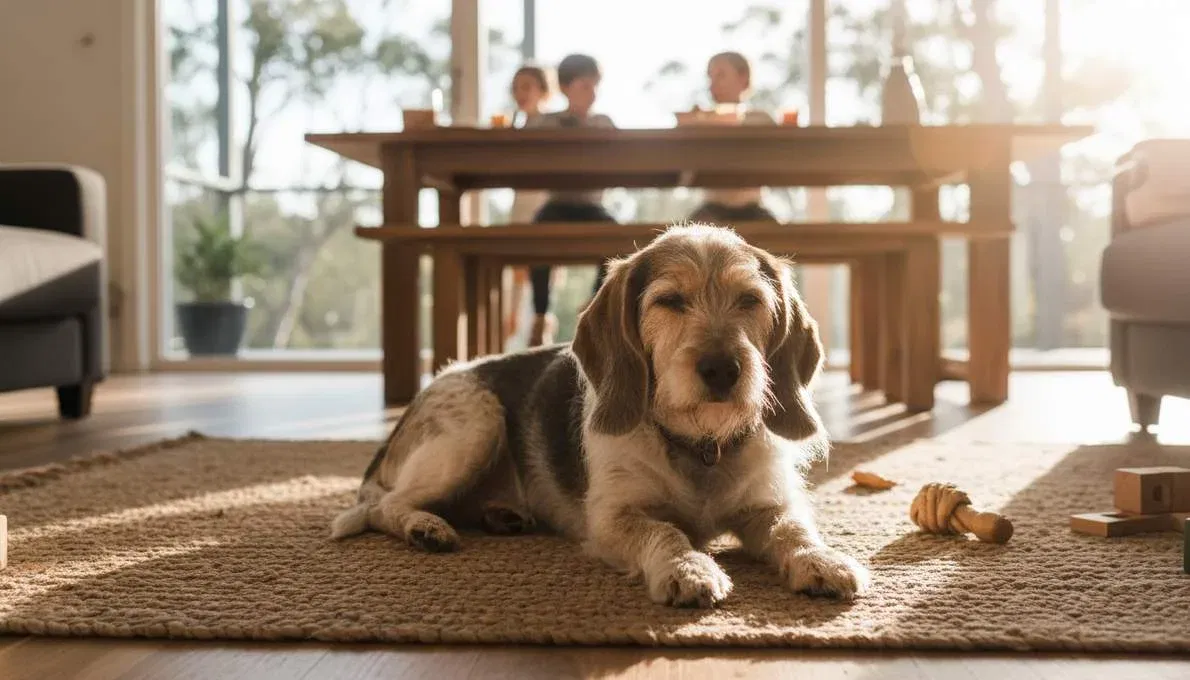
You’ll love a PBGV if you: want a genuinely happy, social dog that gets along with everyone, have an active lifestyle and enjoy daily walks or outdoor activities, already have other dogs (PBGVs are great pack dogs), want a robust, healthy breed with good longevity, have a securely fenced yard, appreciate a dog with independent character and a sense of humour, and are prepared to tolerate (and even enjoy) the hound voice.
A PBGV is probably NOT right if you: need a quiet dog (they bark — loudly and often), live in a noise-sensitive apartment or have close neighbours, want a dog that will reliably come when called off-leash in open areas, have cats or small pets that haven’t been raised with dogs (prey drive is strong), want an eager-to-please dog that lives to obey commands, or leave your dog alone for long periods (they’re social and will protest with noise and destruction).
Considering alternatives? If you love the PBGV personality but need less noise, the Beagle shares the happy hound temperament with slightly less volume. If you want a similar scruffy look with a calmer demeanour, the Soft Coated Wheaten Terrier is worth considering. If you love the PBGV but want a bigger version, the Grand Basset Griffon Vendéen (GBGV) is the same breed family in a larger package.
The Petit Basset Griffon Vendéen is one of the most genuinely joyful dog breeds you’ll encounter. They’re happy, healthy, social, and built to last — a scruffy French hound that brings warmth and energy to any household willing to meet their needs. They won’t always come when called, they’ll sing along to your favourite song at full volume, and they’ll follow a rabbit scent to the ends of the earth. But they’ll also greet you every morning like you’re the best thing that’s ever happened to them.
Three things to remember:
POAG testing is non-negotiable. Never buy a PBGV puppy from a breeder who hasn’t DNA-tested for Primary Open Angle Glaucoma. Ask to see results for both parents. This is the single most important health decision you’ll make.
Secure fencing is essential. PBGVs follow scents with absolute determination. A low fence, a gap at ground level, or an open gate will lead to an escape. Check your yard before bringing a puppy home.
In Australia, expect to pay $3,000–$5,000+ from a registered breeder, with waitlists of 6–12+ months. Ongoing annual costs of $1,800–$3,000 are moderate for a breed this size. Budget for potential ear care and eye monitoring.
Frequently Asked Questions
What is a Petit Basset Griffon Vendéen?
The PBGV is a small French scenthound bred to hunt rabbits through rough terrain in the Vendée region. They’re 32–40 cm tall, weigh 11–18 kg, and have a rough, wiry double coat. Known as “the Happy Hound,” they’re social, energetic and independent dogs with an average lifespan of 12–16 years.
What is the difference between a Petit and Grand Basset Griffon Vendéen?
The main difference is size. The Petit stands 32–40 cm and was bred to hunt rabbits, while the Grand stands up to 44 cm and was bred for larger game like boar. Both share similar temperaments and coat types, but the Grand is slightly more independent. They were recognised as separate breeds in the 1950s.
Do Petit Basset Griffon Vendéens shed?
Moderately. Their rough outer coat sheds less than a smooth coat, but the undercoat blows seasonally. Weekly brushing manages loose hair effectively. Hand-stripping (rather than clipping) helps maintain correct coat texture and reduces shedding.
Are PBGVs hypoallergenic?
No. While their wire coat sheds less than some breeds, they still produce dander and shed. They are not considered hypoallergenic.
How much does a PBGV cost in Australia?
Excellent. They’re one of the best hound breeds for families. They’re friendly, playful, gentle with children, and naturally social due to their pack-hunting heritage. They get along well with other dogs and thrive in active, engaged households.
Do PBGVs bark a lot?
Yes. PBGVs are vocal hounds with a deep, carrying bay. The breed standard says they should “give voice freely.” They bark when excited, when bored, when they detect interesting scents, and sometimes just for fun. This is not a breed you can train to be silent. Consider this carefully if you have noise-sensitive neighbours.
What is POAG and why does it matter?
Primary Open Angle Glaucoma is a breed-specific eye disease caused by a mutation in the ADAMTS17 gene. Dogs with two copies of the mutation develop increased eye pressure, lens displacement and eventual blindness. A DNA test exists and every breeding PBGV should be tested. Always ask breeders for POAG test results before purchasing a puppy.
Can PBGVs live in apartments?
It’s possible but not ideal. Their barking is the main concern — PBGVs are vocal and the hound bay carries. They also need daily exercise and ideally a secure yard for off-leash time. If you live in an apartment, ensure excellent soundproofing, commit to extensive daily exercise, and be realistic about the noise.
1. PetMD — Petit Basset Griffon Vendéen: https://www.petmd.com/dog/breeds/c_dg_petit_basset_griffon_vendeen
2. Wikipedia — Petit Basset Griffon Vendéen: https://en.wikipedia.org/wiki/Petit_Basset_Griffon_Vend%C3%A9en
3. AKC — Petit Basset Griffon Vendéen Dog Breed Information: https://www.akc.org/dog-breeds/petit-basset-griffon-vendeen/
4. Dogs NSW — Petit Basset Griffon Vendéen Breeds: https://www.dogsnsw.org.au/Breeds/browse-all-breeds/214/Petit-Basset-Griffon-Vendeen-/
5. DogzOnline — PBGV Breeders in Australia: https://www.dogzonline.com.au/breeds/breeders/petit-basset-griffon-vendeen.asp
6. Petfinder — Petit Basset Griffon Vendéen Breed Info: https://www.petfinder.com/dogs-and-puppies/breeds/petit-basset-griffon-vendeen/
7. UC Davis VGL — POAG in PBGV: https://vgl.ucdavis.edu/test/poag-petit-basset-griffon-vendeen
8. PBGVCA — Health Testing Resources: https://pbgv.org/health-testing-informational-resources/
9. Wisdom Panel — PBGV Facts: https://www.wisdompanel.com/en-us/dog-breeds/basset-griffon-vendeen-petit