
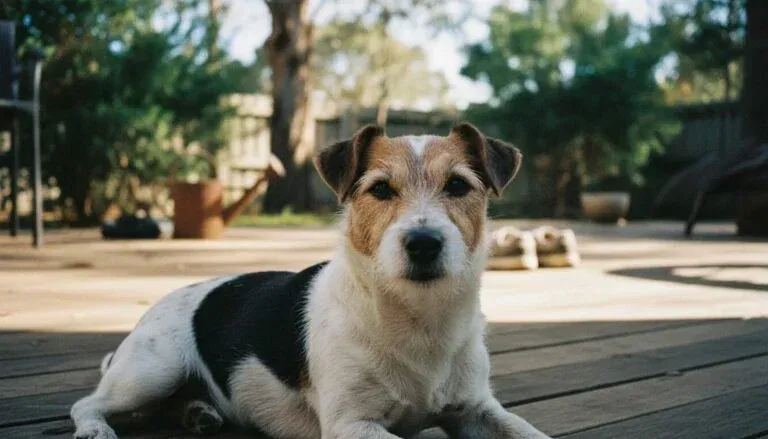
If you’ve ever met a Jack Russell Terrier and thought “I love the chaos, but I wish it had longer legs,” congratulations — someone already built that dog. The Parson Russell Terrier is the original fox-hunting terrier created by the Reverend John “Jack” Russell in 19th century England, and it’s a breed that packs more personality per kilogram than just about anything else on four legs.
Parsons are often confused with their close relative, the Jack Russell Terrier, and fair enough — they share the same ancestry and the same fearless attitude. But the Parson is a distinct, kennel club–recognised breed with longer legs, a squarer build, and a narrower size standard. They’re athletic enough to keep pace with a horse on a hunt, stubborn enough to argue with you about it, and affectionate enough to curl up in your lap afterward.
This guide is written specifically for Australian owners and prospective buyers. We’ll cover what Parson Russell Terriers actually cost in Australia, which health conditions the breed is prone to, what coat types exist, and whether this terrier will thrive in your home — or destroy it. Honest answers only.
What You’ll Learn
- Breed traits & temperament
- Health concerns to know
- True cost in Australia
- Training & exercise needs
- Is this breed right for you?
Quick Facts at a Glance
| Attribute | Detail |
|---|---|
| Breed Group | Terrier (ANKC Group 2) |
| Other Names | Parson Jack Russell Terrier, PRT |
| Origin | England (developed by Reverend John Russell, 1800s) |
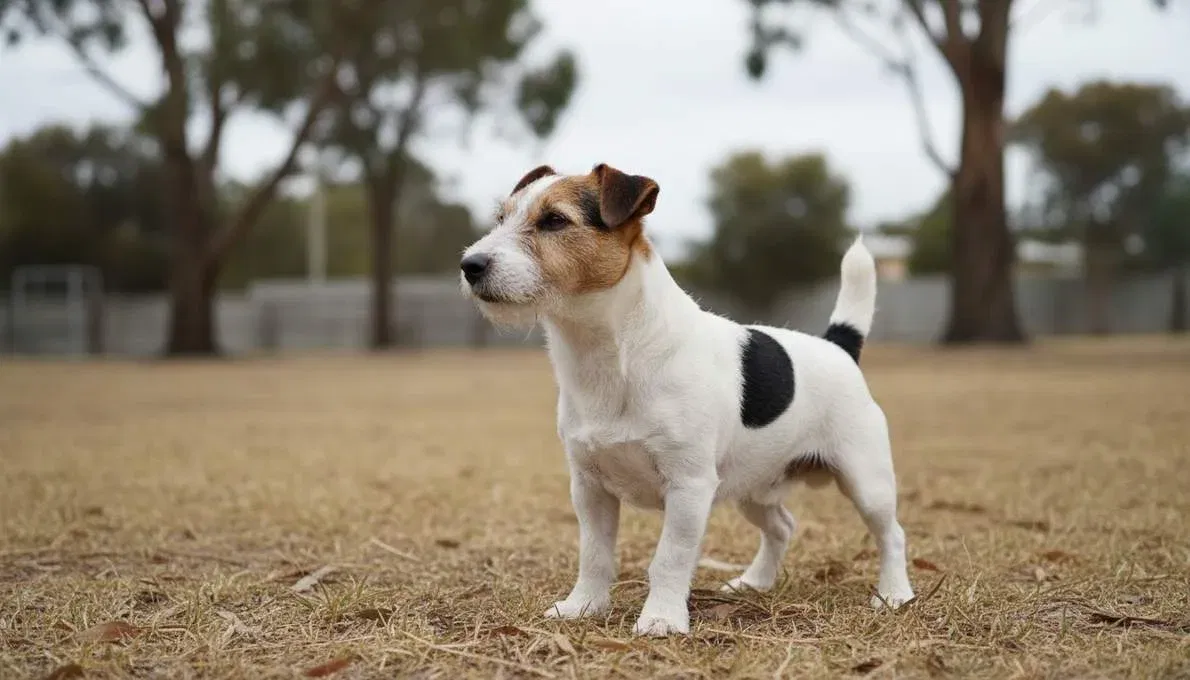
| Size | 33–36 cm (13–14 inches) at the withers |
| Weight | 6–8 kg (13–17 lbs) |
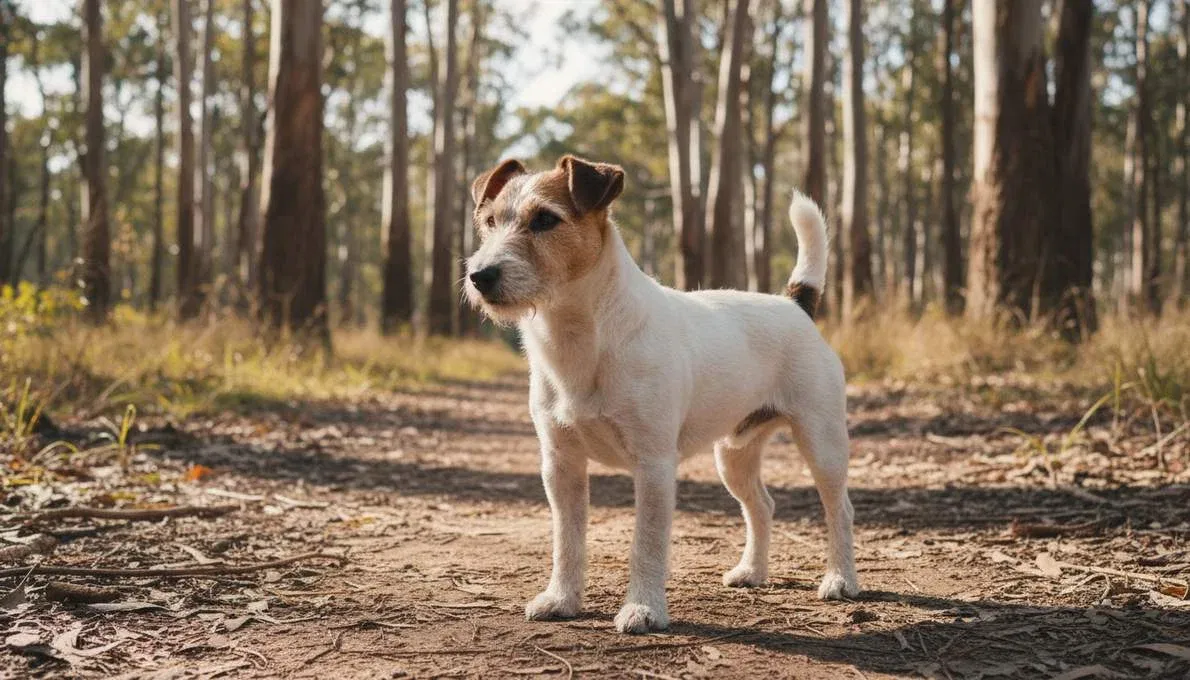
| Coat | Smooth, broken or rough — dense, weather-resistant, predominantly white |
| Colours | White with black, tan, or tricolour markings |
| Lifespan | 13–15 years (average 13.8 years per 2024 UK study) |
| Temperament | Bold, intelligent, energetic, tenacious, affectionate |
| Exercise Needs | High — 60–90+ minutes daily |
| Shedding | Low to moderate (smooth coats shed more; rough/broken need stripping) |
| Good With Kids | Yes, with older children who understand boundaries |
| Apartment Friendly | Possible but not ideal — needs significant exercise and mental stimulation |
| Barking Level | High — they’re terriers, they’ll tell you about everything |
| Price in Australia | $1,500–$3,000+ AUD from registered breeders |
History & Origins
The Parson Russell Terrier exists because one man wanted a dog that could keep up with his horse. In the early 1800s, Reverend John Russell — a theology student at Oxford and an obsessive fox hunter — bought a small white terrier named Trump from a local milkman. Trump became the foundation of an entire breed.
Russell’s goal was specific: he needed a terrier with legs long enough to run alongside hounds and horses, but a body small enough to follow a fox underground and flush it from its den. The result was a longer-legged, square-bodied terrier that was tough, fast and utterly fearless. For over a century, these dogs were bred for working ability rather than appearance, which meant the “breed” was really more of a type — varying widely in size and look.
Formal recognition came slowly. The Kennel Club of England accepted the Parson Jack Russell Terrier in 1990. The American Kennel Club recognised them as “Jack Russell Terriers” in 1997, then changed the name to Parson Russell Terrier in 2003. Australia’s ANKC recognises both the Parson Russell Terrier and the Jack Russell Terrier as separate breeds — one of only a few kennel clubs in the world to do so. In 2009, just 18 Parsons were registered with the ANKC compared to over 1,000 Jack Russells, making this a genuinely rare breed in Australia.
Temperament & Personality
If you want a quiet, easygoing dog that does what it’s told the first time, close this page now. The Parson Russell Terrier is a firecracker in a small, white, deceptively cute package. They’re intelligent, independent, and have a prey drive that could power a small engine.
The American Kennel Club describes them as “single-minded, tenacious and courageous” at work, and “exuberant, playful and affectionate” at home. That’s about right. A Parson will spend twenty minutes trying to dig a lizard out from under a rock, then come inside and demand to sit on your lap for the rest of the evening. There’s no off switch, but there is a cuddle mode.
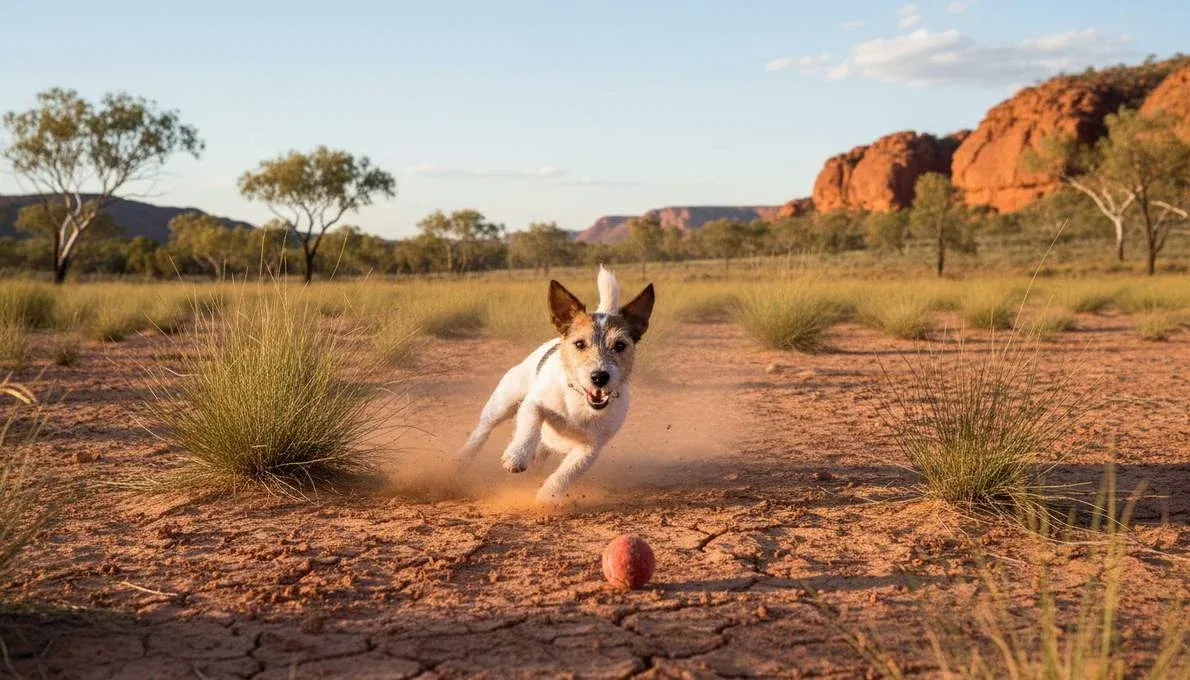
Parsons are fiercely loyal and form deep bonds with their families. They’re brave without being stupid about it (usually), they’re genuinely fun to be around, and they’re up for anything — hiking, swimming, agility, earthdog trials, or just chasing a ball until your arm falls off. They get along well with horses and are historically popular on rural properties for exactly that reason.
They have a strong prey drive and cannot be trusted off-leash around small animals unless you’ve put in serious recall training — and even then, a fleeing rabbit might override everything. They bark, they dig, and they can jump surprisingly high (a 30 cm Parson can clear a 1.5-metre fence). They’re also prone to resource guarding and can become possessive over food, toys or space if this isn’t managed early. This is not a beginner’s dog.
You’ve just spent $400 on landscaping. Your Parson Russell Terrier is standing in what used to be your herb garden, covered in dirt up to the chest, tail wagging, absolutely delighted with the crater they’ve excavated. They are not sorry. They will do it again. You will invest in a sandbox or a designated digging area, and you will learn to accept that some battles cannot be won.
Health & Genetic Conditions
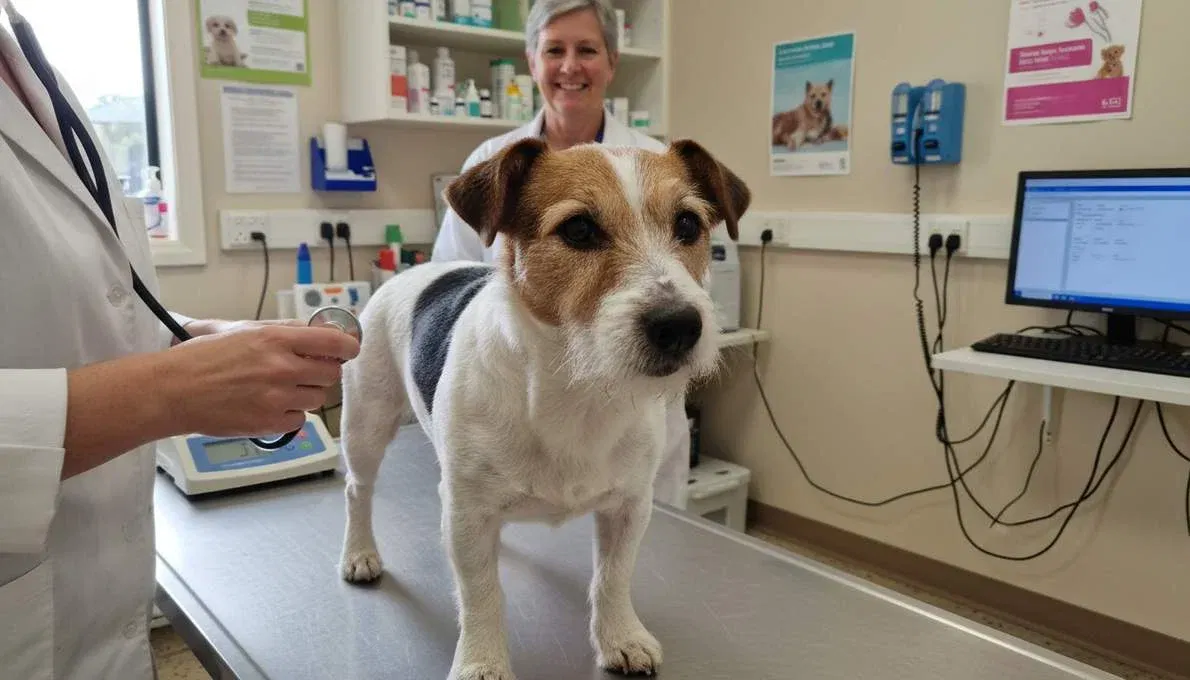
Parson Russell Terriers are generally robust dogs — they were bred for work, not for looks, which has kept them relatively free from the extreme health issues that plague some other breeds. But “relatively healthy” doesn’t mean “bulletproof,” and there are specific conditions every Parson owner should know about.
Prevalence: A moderate but breed-specific risk for Parson Russell Terriers — a DNA test is available and breeders should be testing both parents before any litter is produced
Symptoms: Sudden eye pain, redness, excessive tearing, cloudiness in the eye, and in untreated cases permanent blindness
Treatment Cost (AUD): $2,000–$4,000 per eye for surgical removal of the displaced lens
Prevention: Only buy from breeders who DNA test both parents for PLL — this test is readily available and there is no good reason for a responsible breeder not to use it; prompt treatment at the first sign of eye pain is critical
Primary Lens Luxation happens when the tiny fibres holding the lens of the eye in place break down, causing it to shift out of position. This is painful and can escalate to blindness very quickly without treatment. The silver lining is that a reliable DNA test exists for the exact gene responsible, so responsible breeders can screen their dogs and prevent affected puppies from being born altogether. (Source: OFA — Orthopedic Foundation for Animals)
Prevalence: Common in Parson Russell Terriers as in most smaller terrier breeds — ranges from mild intermittent skipping through to severe cases requiring surgical correction
Symptoms: Occasional skipping or hopping on a back leg, a “bunny hop” gait that comes and goes, intermittent lameness, or in more severe cases persistent difficulty walking on the affected leg
Treatment Cost (AUD): $1,500–$4,000 per knee for surgical correction in moderate to severe cases
Prevention: Buy from breeders who screen for patellar luxation; maintain a healthy weight throughout your dog’s life to reduce ongoing stress on the knee joints Patellar luxation means the kneecap slips out of its normal groove in the leg. You might notice your Parson Russell suddenly lift a back leg for a few strides then carry on as if nothing happened — that is often the kneecap briefly popping in and out. Mild cases can be managed conservatively with weight control and anti-inflammatories, while more severe or recurring cases require surgery to prevent chronic pain and long-term joint damage. (Source: VCA Animal Hospitals)
Prevalence: Uncommon in Parson Russell Terriers but a known inherited neurological condition in the breed — a DNA test is available and recommended for all breeding dogs
Symptoms: Progressive loss of coordination and balance, wobbliness when walking, difficulty judging distances, and gradual worsening of movement over time — symptoms typically appear in adulthood
Treatment Cost (AUD): No cure is currently available; management focuses on keeping affected dogs comfortable and safe as the condition progresses
Prevention: DNA testing is available — only buy from breeders who test both parents for LOA; knowing your dog’s status early allows you to plan their care and environment accordingly
Late Onset Ataxia is a degenerative neurological condition that gradually affects a dog’s ability to coordinate movement and maintain balance. It is inherited and currently has no cure, but affected dogs can be kept comfortable and safe for a considerable period with appropriate supportive care and home modifications. DNA testing by breeders is the most powerful tool available to prevent affected puppies from being born. (Source: Animal Health Trust Canine Genetics)
Prevalence: Uncommon in the breed but documented — a separate condition from LOA that also affects coordination and movement; a DNA test is available for breeding dogs
Symptoms: Loss of balance and coordination, an unsteady or exaggerated gait, difficulty walking in a straight line, and progressive deterioration of movement — often appearing in younger dogs than LOA
Treatment Cost (AUD): No cure available; supportive care focuses on quality of life and keeping affected dogs safe and comfortable
Prevention: DNA testing is available — responsible breeders test for both SCA and LOA before breeding; ask to see DNA test results for both conditions when purchasing a puppy
Spinocerebellar Ataxia involves the degeneration of the pathways in the spinal cord and cerebellum that control coordinated movement. Like LOA it is inherited and currently incurable, but it is a separate condition caused by a different genetic mutation — which is why testing for both is important. Affected dogs can still enjoy a good quality of life with attentive care, home adaptations, and regular veterinary monitoring. (Source: OFA — Orthopedic Foundation for Animals)
Prevalence: Uncommon but documented in Parson Russell Terriers — linked to white coat genetics, as the same pigmentation genes responsible for white markings can affect inner ear development
Symptoms: Unresponsiveness to sounds, not reacting to their name or loud noises, difficulty locating the direction of sounds, and appearing confused by verbal commands
Treatment Cost (AUD): $100–$300 for a BAER test to confirm hearing status in one or both ears
Prevention: BAER testing should be performed on puppies before they go to their new homes — reputable breeders will have this done and provide results to buyers Congenital deafness in Parson Russell Terriers is linked to the genetics behind their white colouring — the same genes that produce white markings can also interfere with the development of the inner ear. A BAER test is a simple, painless hearing assessment that can confirm whether a puppy can hear in one or both ears from as early as five to six weeks of age. Deaf dogs can live wonderfully full lives and can be trained very successfully using hand signals and vibration-based cues. (Source: Louisiana State University School of Veterinary Medicine)
Prevalence: Uncommon but seen in Parson Russell Terriers — more common in small breeds generally and typically appears before 12 months of age in young growing dogs
Symptoms: Gradual lameness in a back leg, muscle wasting around the hip and thigh, pain when the hip joint is touched, and reluctance to bear weight on the affected leg
Treatment Cost (AUD): $2,000–$4,500 for surgical treatment
Prevention: No guaranteed prevention as it has a vascular cause; buying from health-conscious breeders and keeping puppies at a healthy weight during their growth phase helps reduce risk
Legg-Calvé-Perthes Disease occurs when the blood supply to the top of the thigh bone is disrupted, causing the bone to slowly deteriorate at the hip joint. It is painful and worsens without treatment. The good news is that surgery to remove the deteriorating bone tissue is highly effective in small breeds, and most Parson Russell Terriers recover very well and go on to live active, comfortable lives with excellent mobility restored. (Source: VCA Animal Hospitals)
Prevalence: Common in Parson Russell Terriers — their small mouths mean teeth are closely packed together, making plaque and tartar build-up rapid and almost inevitable without consistent daily care
Symptoms: Bad breath, visible yellow or brown tartar build-up, red or swollen gums, loose teeth, and discomfort or reluctance when eating
Treatment Cost (AUD): $500–$1,500 per professional dental clean performed under general anaesthesia
Prevention: Brush your Parson Russell’s teeth daily from puppyhood, provide dental chews, and schedule annual professional dental checks with your vet — consistency from an early age makes an enormous difference Dental disease in small breeds like the Parson Russell Terrier is one of the most common yet overlooked health issues — bacteria from infected gums can enter the bloodstream and cause damage to the heart, kidneys, and liver over time. Their compact mouths create the perfect environment for plaque to accumulate quickly. Starting a brushing routine from the very first week you bring your puppy home is the most cost-effective and impactful thing you can do for their long-term health. (Source: Australian Veterinary Association)
Reputable Parson Russell Terrier breeders in Australia should DNA test for PLL, LOA and SCA at minimum, and BAER test all puppies for hearing. If a breeder can’t show you these results, walk away. Given the breed’s small gene pool in Australia, health testing isn’t optional — it’s the difference between a healthy dog and a heartbreaking vet bill.
Routine vet costs run $300–$600 per year. Pet insurance for Parsons typically costs $40–$70/month in Australia. Given the risk of lens luxation surgery alone, insurance is strongly worth considering.

Lifespan & Longevity
Parson Russell Terriers are long-lived dogs. A 2024 UK study found an average life expectancy of 13.8 years, well above the 12.7 average for purebreds. Many Parsons reach 14–15, and some push past 16 with good care.
Puppy to 1 year: Fast growth phase. Parsons reach full height by 8–9 months and fill out by 10–12 months. This is the critical window for socialisation — expose them to other dogs, livestock, cats, children, and different environments. What you skip now will haunt you later.
1–7 years: Peak energy years. A Parson in this age range needs serious daily exercise and mental stimulation. These are the years where under-exercised Parsons become destructive — digging, barking, chewing and escaping. Channel the energy or it’ll channel itself.
7–11 years: Senior phase begins. You may notice a slight slowing down, though many Parsons remain remarkably active into double digits. Watch for joint stiffness, dental deterioration and vision changes. Bi-annual vet checks are wise from age 8.
11+ years: Geriatric stage. Adjust exercise to their pace — they’ll still want to go, so you need to manage the intensity. Keep mental stimulation high with puzzle toys and gentle training. Dental care becomes even more important as teeth deteriorate.
Grooming & Care
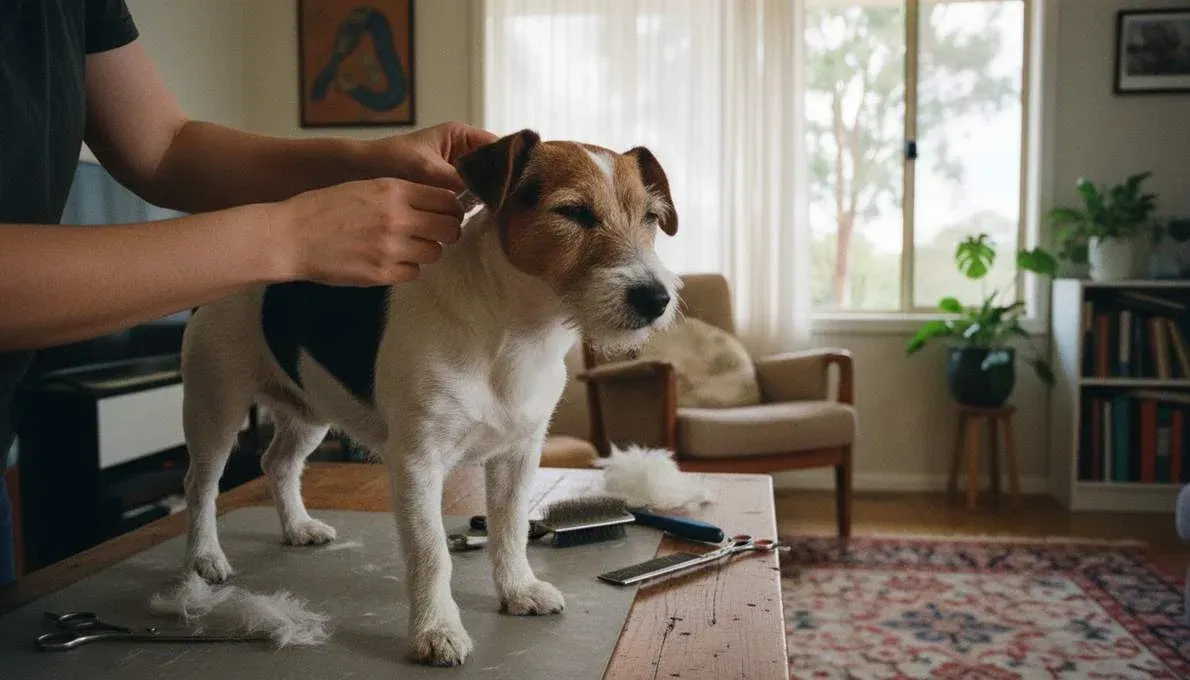
Grooming requirements for a Parson Russell Terrier depend heavily on their coat type. The breed comes in three varieties — smooth, broken and rough — and each has different needs.
Grooming Schedule
| Task | Frequency | Notes |
|---|---|---|
| Brushing (smooth coat) | Weekly | A firm bristle brush or hound glove removes loose hair. Smooth coats are the lowest maintenance but shed the most. |
| Brushing (broken/rough coat) | 2–3 times per week | Use a pin or slicker brush for the longer hairs. Prevents matting in the feathering around legs and face. |
| Hand stripping | 2–3 times per year | Essential for broken and rough coats. Dead hair is hand-plucked to maintain coat texture. Ask your breeder to demonstrate. |
| Bathing | Every 4–6 weeks or as needed | Parsons are working dogs — they’ll get dirty. Use a gentle dog shampoo. Avoid over-bathing. |
| Nail trimming | Every 2–3 weeks | Active Parsons may wear nails down naturally, but check regularly. |
| Dental care | Daily brushing ideal | Small terrier mouths are prone to dental disease. Daily brushing plus annual vet dental checks. |
| Ear cleaning | Weekly | V-shaped drop ears can trap moisture and debris. Check for redness or odour. |
Coat types explained: A smooth coat is short and flat all over. A broken coat is mostly smooth with some longer hair on the face, legs or body — you’ll see a hint of eyebrows and maybe a beard. A rough coat has longer, wiry hair throughout. All three types are weather-resistant with a dense undercoat. For the show ring, hand stripping is expected for broken and rough coats; for pet Parsons, a good groomer who understands terrier coats can handle it.
Exercise Needs
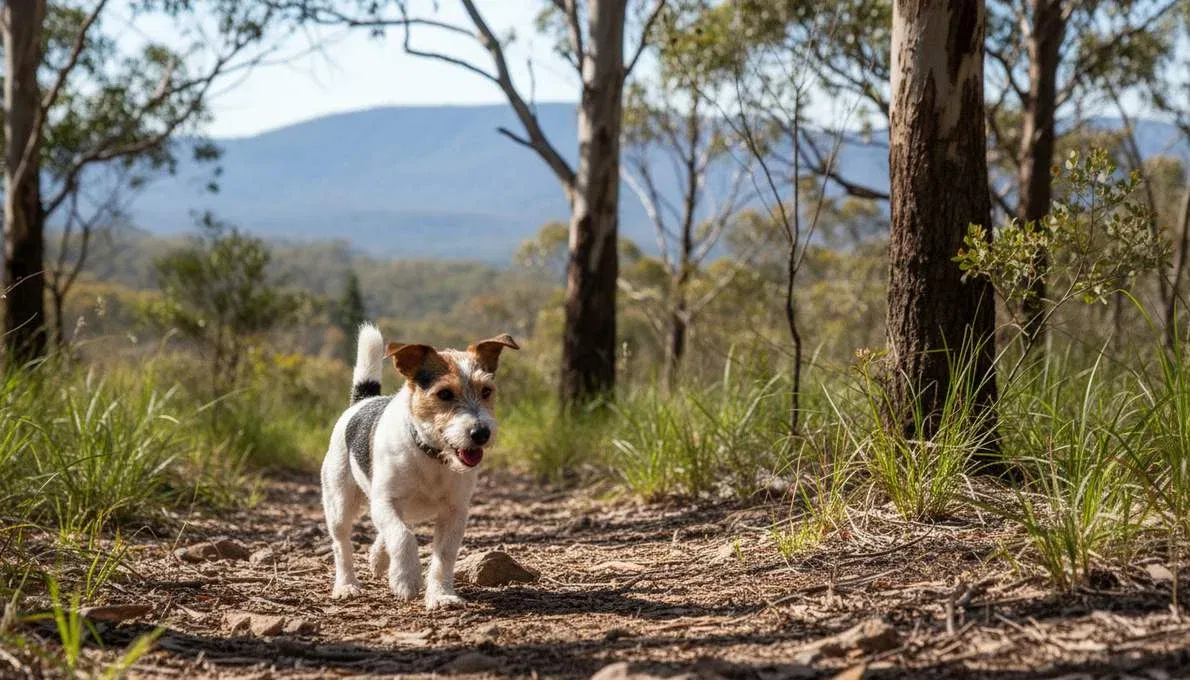
This is where most people underestimate the Parson Russell Terrier. These dogs were bred to run alongside horses for an entire day of fox hunting, then go to ground and flush out quarry. They have stamina that will outlast most of their owners.
Expect to provide 60–90 minutes of active exercise daily — and that’s a minimum. This should include structured walks, off-leash running in a secure area, and mentally stimulating activities. A bored Parson is a destructive Parson.
Best activities for Parsons:
Agility (they’re natural athletes), earthdog trials (taps into their breeding), barn hunt, flyball, dock diving, long bushwalks and fetch. If you’re a runner or cyclist, a Parson will happily keep pace. They also thrive on rural properties where they can patrol, explore and stay busy.
⚠️ Australian climate warning:
Parsons handle heat better than many breeds thanks to their light coat and moderate size, but they’re still high-energy dogs that can overheat if exercised hard in the middle of an Australian summer. Walk early morning or after sunset on hot days, always carry water, and watch for panting or slowing down. In cooler climates (Melbourne, Hobart, Canberra winters), their weather-resistant coat handles the cold well, but very small Parsons may appreciate a light jacket on frosty mornings.
Secure fencing is non-negotiable:
Parsons can jump 1.5 metres from standing, dig under fences, and squeeze through gaps you didn’t know existed. Your yard needs solid fencing at least 1.8 metres high with a buried or angled base to prevent digging out. A Parson with an escape route will use it.
Training Guide
Parson Russell Terriers are highly intelligent and very trainable — but they are also independent, stubborn and easily bored. Training a Parson is less about teaching them what to do (they’ll learn that in two repetitions) and more about convincing them to actually do it when they’d rather chase a skink.
Socialisation & Training Timeline
| Age | Training Focus | Tips |
|---|---|---|
| 8–12 weeks | Socialisation, name recognition, toilet training, crate training, bite inhibition | Socialise aggressively — other dogs, cats, livestock, children, different surfaces and sounds. This is the most important window. Short, fun sessions only. |
| 3–6 months | Basic obedience (sit, stay, come, down), leash manners, recall foundations, digging redirection | Start recall training early — it’s the single most important command for this breed. Enrol in puppy school. Provide a designated digging area. |
| 6–12 months | Recall reliability, impulse control, barking management, prey drive management, trick training | Terrier adolescence is intense. Stay consistent. Use high-value treats (real meat, not biscuits). Never chase a Parson that won’t come back — run the other way. |
| 1 year+ | Advanced obedience, dog sports, ongoing socialisation, resource guarding prevention | Parsons thrive with a “job.” Agility, earthdog or barn hunt gives them purpose. Keep training fun and varied — repetition bores them. |
Honest difficulty rating:
6/10 for trainability (they learn fast but comply on their own terms), 8/10 for recall (prey drive makes off-leash reliability a long-term project), 8/10 for barking management. This is not a breed for first-time dog owners unless you’re willing to invest in professional training.
Positive reinforcement only:
Harsh corrections will either shut a Parson down or make them dig in harder. Use treats, toys and play as motivators. They respond brilliantly to reward-based training — they just need you to make it worth their while.
Cost of Ownership in Australia
Parson Russell Terriers are a rare breed in Australia, which means finding a puppy takes patience and often a waitlist. The upside is that they’re small, eat modestly, and their grooming needs are manageable. Here’s what Aussie ownership actually looks like financially:
| Expense | Estimated AUD Cost | Notes |
|---|---|---|
| Puppy (registered breeder) | $1,500–$3,000+ | Very few ANKC-registered Parson breeders in Australia. Expect a waitlist. Show-quality pups at the higher end. |
| Adoption / Rescue | $300–$800 | Rare as a rescue. Check PetRescue and Jack Russell rescue groups — Parsons occasionally appear. |
| First-year setup | $800–$1,500 | Crate, bed, harness (not collar — they’re escape artists), lead, toys, digging area, initial vet visit, desexing. |
| Annual food | $500–$800 | High-energy dogs need quality fuel. Small-breed premium kibble or raw diet. They eat more per kg of body weight than you’d expect. |
| Annual vet (routine) | $300–$600 | Vaccinations, parasite prevention, annual check-up. Add $100–$300 for BAER or DNA tests if not done by breeder. |
| Dental cleans | $500–$1,500 per clean | Budget for 1–2 professional cleans over their lifetime, more if dental care at home is inconsistent. |
| Pet insurance | $40–$70/month | Strongly recommended given PLL and patellar luxation risks. |
| Hand stripping (broken/rough coat) | $80–$150 per session, 2–3x/year | Optional if you learn to do it yourself. Your breeder should teach you. |
| Total first year | $3,500–$6,500+ | Including purchase price and setup. |
| Ongoing annual cost | $1,500–$3,000 | Excluding unexpected vet bills. |
Where to find breeders:
Start with DogzOnline (dogzonline.com.au) to find ANKC-registered Parson Russell Terrier breeders. There are only a handful across Australia, concentrated in Victoria, NSW and Queensland. RightPaw (rightpaw.com.au) also lists vetted breeders. Always visit the breeder, meet the parents, and ask for PLL, LOA, SCA DNA results and BAER hearing test results.
Parson vs Jack Russell — which to buy?
If you want a registered, show-standard terrier with a predictable size range and documented health testing, the Parson Russell Terrier is the way to go. If you want a slightly smaller, more variable working-type terrier with more breeders to choose from, the Jack Russell Terrier has a much larger breeding community in Australia. Both breeds share the same ancestry and temperament — the difference is mostly in leg length, body proportion and breed standard formality.
Is the Parson Russell Terrier Right for You?
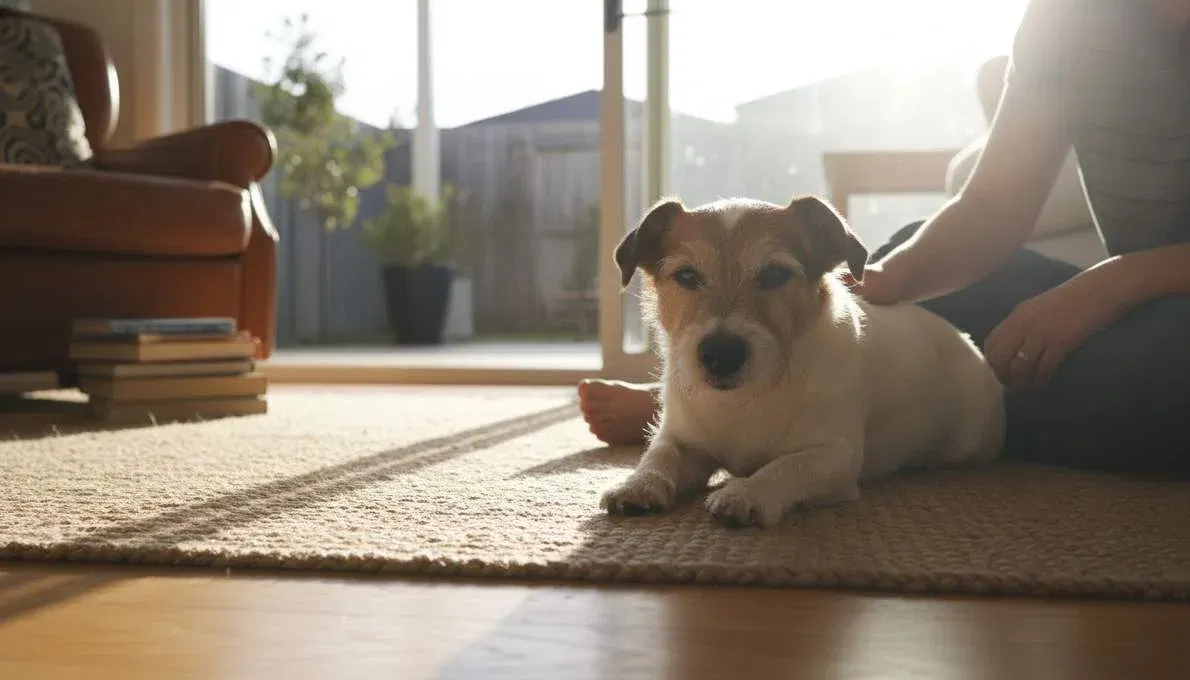
are an active person or family who can provide 60–90+ minutes of daily exercise, have experience with terrier breeds or strong-willed dogs, want a long-lived, robust companion for hiking, farm life or dog sports, have a securely fenced yard, enjoy training and can commit to ongoing mental stimulation, or want a small dog with genuine working-dog drive and intelligence.
are a first-time dog owner without access to professional training support, have small pets (rabbits, guinea pigs, birds) that the terrier could access, want a calm, low-energy lapdog, live in an apartment without a plan for significant daily exercise, can’t handle barking (they will bark at everything, persistently), or have very young children who don’t yet understand that pulling a terrier’s tail has consequences.
If you love the Parson Russell spirit but want something with a bigger breeder pool in Australia, look at the Jack Russell Terrier. If you want a similar-energy terrier with less prey drive, the Border Terrier is worth a look. If you like the size but want a calmer temperament, a Cavalier King Charles Spaniel is at the opposite end of the terrier-to-lapdog spectrum.
The Parson Russell Terrier is a brilliant, bold, exhausting and deeply rewarding dog — for the right owner. They’re not for everyone, and they’re certainly not for people who want a low-maintenance pet that slots quietly into a busy lifestyle. But if you’re active, experienced, and willing to match wits with a terrier that thinks it’s smarter than you (it might be), a Parson will be your most loyal, entertaining and long-lived companion.
Three things to remember:
- Parsons need serious exercise and mental stimulation — 60–90 minutes daily minimum. An under-exercised Parson will redesign your garden, your furniture and your patience.
- Health testing is critical. Insist on DNA results for PLL, LOA and SCA, plus BAER hearing tests. The breed’s small gene pool in Australia makes this non-negotiable.
- In Australia, expect to pay $1,500–$3,000+ from a registered breeder, with a waitlist. Annual costs run $1,500–$3,000. They’re rare here — plan ahead.
Frequently Asked Questions
What is the difference between a Parson Russell Terrier and a Jack Russell Terrier?
The Parson Russell Terrier has longer legs and a squarer, more proportional build — their height at the withers roughly equals the length of their body. Jack Russell Terriers are shorter-legged and more rectangular. The ANKC recognises both as separate breeds. They share the same ancestry and the same Reverend John Russell, but the Parson conforms to a stricter size standard (33–36 cm) while Jack Russells have a wider size range (25–30 cm).
Do Parson Russell Terriers shed?
Yes, but moderately. Smooth-coated Parsons shed the most and need weekly brushing. Broken and rough-coated Parsons shed less but require hand stripping 2–3 times a year to remove dead hair and maintain coat texture. None of the coat types are hypoallergenic.
Are Parson Russell Terriers hypoallergenic?
No. While broken and rough coats produce somewhat less loose hair than smooth coats, Parson Russell Terriers are not hypoallergenic. If you have dog allergies, spend time with a Parson before committing.
How much does a Parson Russell Terrier cost in Australia?
From an ANKC-registered breeder, expect $1,500–$3,000 or more. There are very few registered Parson breeders in Australia, so waitlists are common. Adoption through rescue groups is $300–$800 but Parsons are rare in rescue.
Are Parson Russell Terriers aggressive?
Not inherently, but they can show resource guarding, and their strong prey drive can be mistaken for aggression toward small animals. They’re bold and won’t back down from a confrontation with a larger dog, which is why early socialisation and experienced handling are essential. Overt aggression is a disqualification in the breed standard.
Do Parson Russell Terriers bark a lot?
Yes. Parsons are alert, vocal terriers. They’ll bark at strangers, other animals, unusual sounds and sometimes nothing at all. Training can help manage the intensity, but you won’t eliminate barking entirely. If you have noise-sensitive neighbours, this breed will test that relationship.
How long do Parson Russell Terriers live?
The average lifespan is 13–15 years, with a 2024 UK study reporting a breed average of 13.8 years. With proper care, health testing and regular vet visits, many Parsons live to 14–16.
Are Parson Russell Terriers good with children?
They can be excellent with older children who understand how to handle dogs respectfully. Parsons are playful, energetic and enjoy active kids. However, they have a typical terrier temperament and will not tolerate rough handling, ear pulling or being cornered. They are not ideal for homes with toddlers.
Can Parson Russell Terriers live in apartments?
It’s possible but challenging. Parsons need significant exercise, mental stimulation and access to outdoor space for running. Their barking can also be problematic in shared living spaces. If you’re in an apartment, you’d need to commit to very long daily walks, dog sports and enrichment to keep a Parson content.
What coat types do Parson Russell Terriers come in?
Three types: smooth (short, flat all over), broken (mostly smooth with some longer hair on the face, legs or body), and rough (longer, wiry hair throughout). All types are weather-resistant. Broken and rough coats need hand stripping; smooth coats are lower maintenance but shed more.
1. Wikipedia — Parson Russell Terrier: https://en.wikipedia.org/wiki/Parson_Russell_Terrier
2. WebMD — What to Know About Parson Russell Terriers: https://www.webmd.com/pets/dogs/what-to-know-about-parson-russell-terriers
3. Purina UK — Parson Russell Terrier Breed Information: https://www.purina.co.uk/find-a-pet/dog-breeds/parson-jack-russell-terrier-short-smooth-coat
4. Wisdom Panel — Parson Russell Terrier Facts: https://www.wisdompanel.com/en-us/dog-breeds/parson-russell-terrier
5. DogTime — Parson Russell Terrier: https://dogtime.com/dog-breeds/parson-russell-terrier
6. DogzOnline — Parson Russell Terrier Breeders in Australia: https://www.dogzonline.com.au/breeds/breeders/parson-russell-terrier.asp
7. RightPaw — Vosjager Parson Russell Terriers: https://rightpaw.com.au/l/vosjager-parson-russell-terriers/604600e8-dc51-488a-b8f9-fa66b2be6ad5
8. PuppyList Australia — Price of Parson Russell Terrier Puppies: https://puppylist.com.au/breeds/parson-russell-terrier/price/
9. Howlincreek Terriers — Australian Parson Russell Terrier Breeders: https://howlincreekterriers.com/