
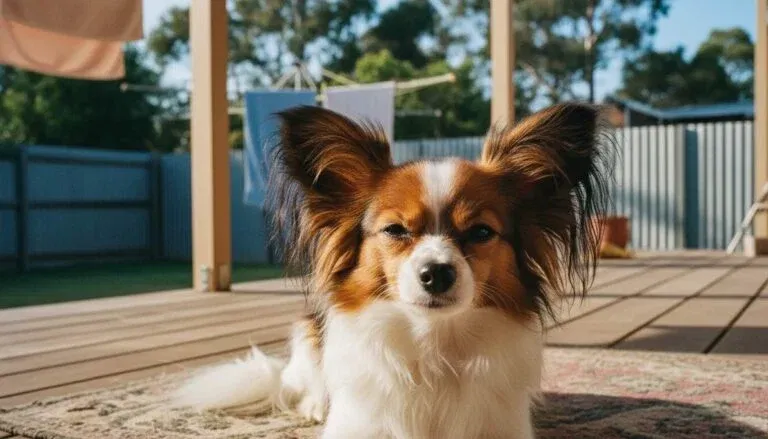
They weigh less than a bag of flour, but Papillons strut through life like they own the place — and frankly, they kind of do. Named after the French word for butterfly thanks to their spectacular fringed ears, the Papillon is one of the oldest toy spaniel breeds in the world and one of the most criminally underrated dogs in Australia.
If you’re picturing a delicate, nervous little handbag dog, think again. Papillons rank 8th out of 138 breeds for intelligence, they’ve been stealing the show in obedience and agility rings for decades, and they’ll happily hike, swim or play fetch until you’re the one who needs a nap. They also live an impressively long time — often well past 14 years — which means you’re signing up for a serious commitment with a dog that will remember every trick you ever taught it.
This guide is written for Australians who want the full picture: what Papillons actually cost here, which health conditions your vet will flag, what grooming really involves, and whether this breed will suit your home and lifestyle. No recycled American stats, no fluff. Let’s get into it.
What You’ll Learn
- Breed traits & temperament
- Health concerns to know
- True cost in Australia
- Training & exercise needs
- Is this breed right for you?
Quick Facts at a Glance
| Attribute | Detail |
|---|---|
| Breed Group | Toy (ANKC Group 1) |
| Other Names | Continental Toy Spaniel, Butterfly Dog, Phalène (drop-eared variety) |
| Origin | France / Belgium / Spain (developed from European toy spaniels) |
| Size | 20–28 cm at the shoulder |
| Weight | 3–5 kg (show dogs typically 2.3–4.5 kg) |
| Coat | Long, silky, single coat (no undercoat) |
| Colours | White with patches of any colour — sable, black, red, tri-colour common |
| Lifespan | 12–16 years (average 14.5 years per 2024 UK study) |
| Temperament | Alert, friendly, intelligent, confident, playful |
| Exercise Needs | Moderate — 30–45 minutes daily |
| Shedding | Low to moderate (no undercoat) |
| Good With Kids | Yes, but supervise young children due to small size |
| Apartment Friendly | Excellent |
| Barking Level | Moderate to high — alert barkers |
| Price in Australia | $2,500–$4,000 AUD from registered breeders |
History & Origins
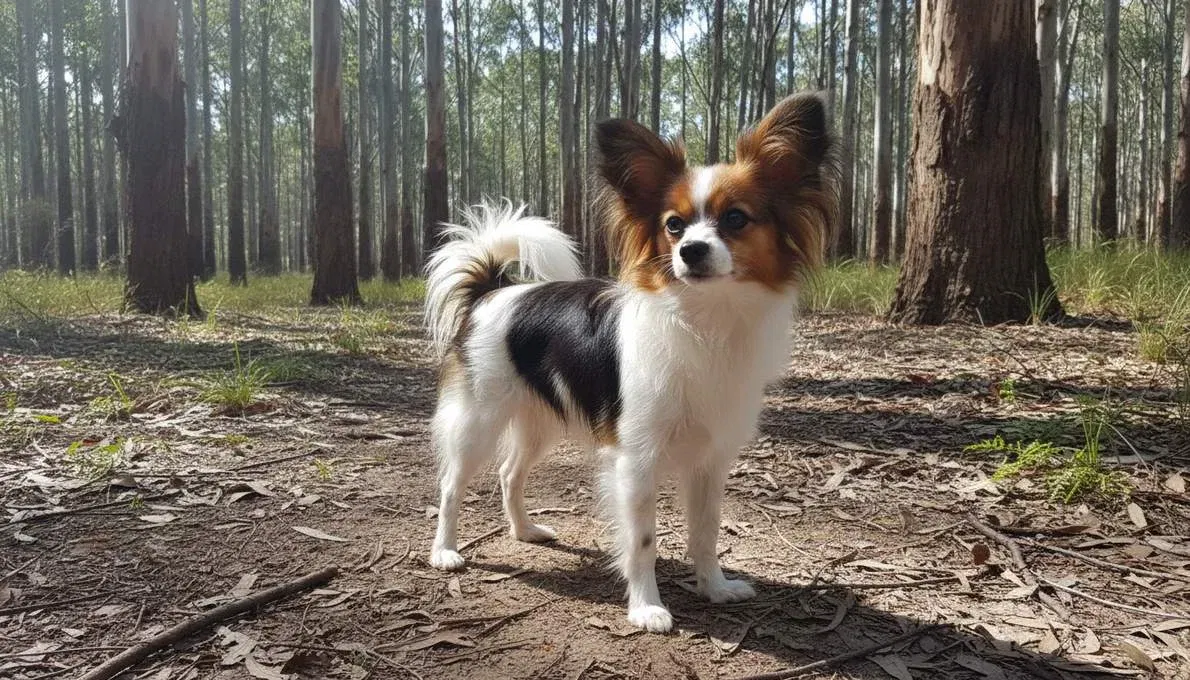
The Papillon’s ancestors pop up in European paintings from as early as the 1200s. Italian artists like Titian featured tiny toy spaniels in masterworks from the 1500s onward, and the breed became a fixture of royal courts across France, Spain and the Low Countries. Madame de Pompadour, Louis XIV and Marie Antoinette were all Papillon owners — legend has it Marie Antoinette carried her Papillon to the guillotine.
Originally, these toy spaniels had drooping ears and were known as Phalènes (French for “moth”). The erect-eared variety we recognise today began appearing in the 17th and 18th centuries and eventually became the dominant type. The name “Papillon” — French for “butterfly” — comes from the way those magnificent fringed ears fan out like butterfly wings.
The Kennel Club of England accepted the breed in 1923, the American Kennel Club in 1915, and the first Papillons arrived in Australia in 1949. Today they’re recognised by the ANKC under Group 1 (Toys) and have a passionate, if niche, breeding community across Australia.
Temperament & Personality
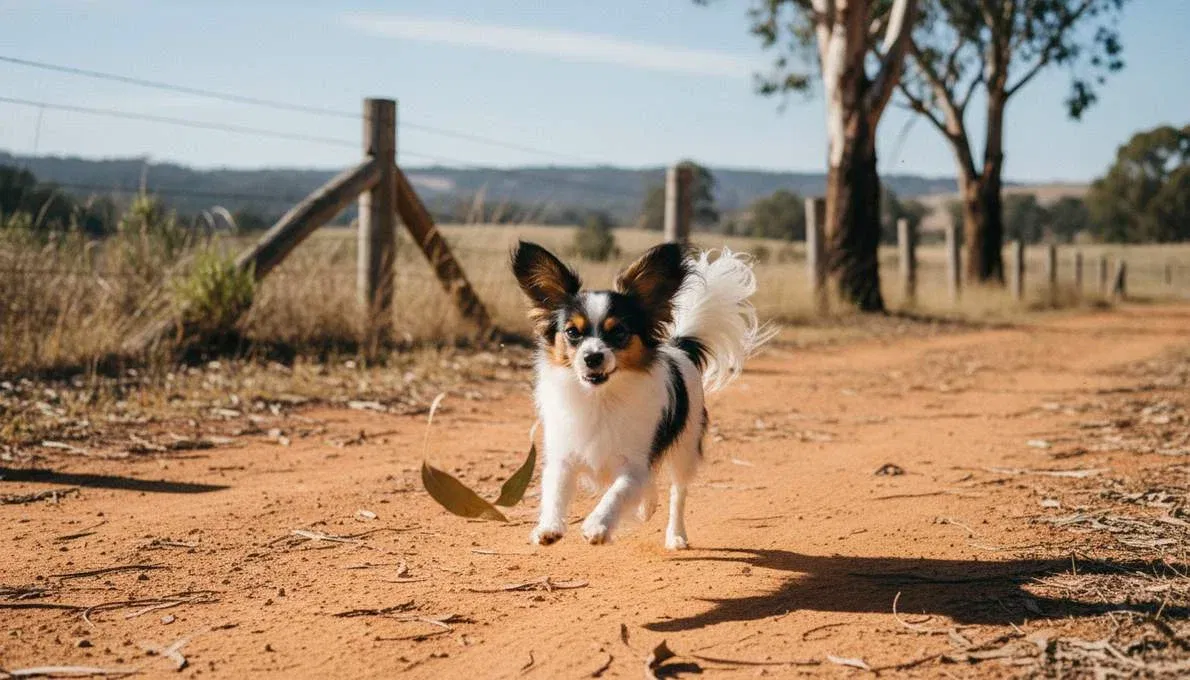
If you think small dogs can’t have big personalities, you haven’t met a Papillon. These dogs approach life with a confidence that borders on audacity. They’ll march up to a German Shepherd at the dog park without a second thought, and they’ll sulk for an hour if you don’t let them sit on your lap during dinner.
Papillons are ranked 8th in canine intelligence by Dr Stanley Coren, making them the smartest toy breed by a significant margin. In practical terms, this means they learn commands fast, remember them forever, and will absolutely use their brains to manipulate you if you let them. They’re also one of the top five breeds in obedience competition rings — a fact that surprises people who assume toy dogs are purely decorative.
Papillons are affectionate without being clingy in the way some toy breeds are. They’re happy to meet strangers (when properly socialised), they get along with other dogs and cats, and they’re playful well into old age. They bond deeply with their owners and are incredibly responsive to mood — if you’re having a rough day, your Papillon will know.
They bark. Papillons are alert dogs with a strong watchdog instinct, and they will let you know about every delivery driver, possum, and suspicious leaf. Training can manage this, but if you need silence, this isn’t your breed. They can also develop “small dog syndrome” if you let them get away with behaviour you’d never tolerate from a Labrador — so firm, consistent boundaries matter from day one.
You’re working from home on a video call. Your Papillon is quietly sitting on the couch. A magpie lands in the yard. Within 0.3 seconds, your Papillon has launched off the couch, hit the window at speed, and is producing a noise that makes your colleagues think you’re being burgled. This will happen daily. You will learn to love it.
Health & Genetic Conditions
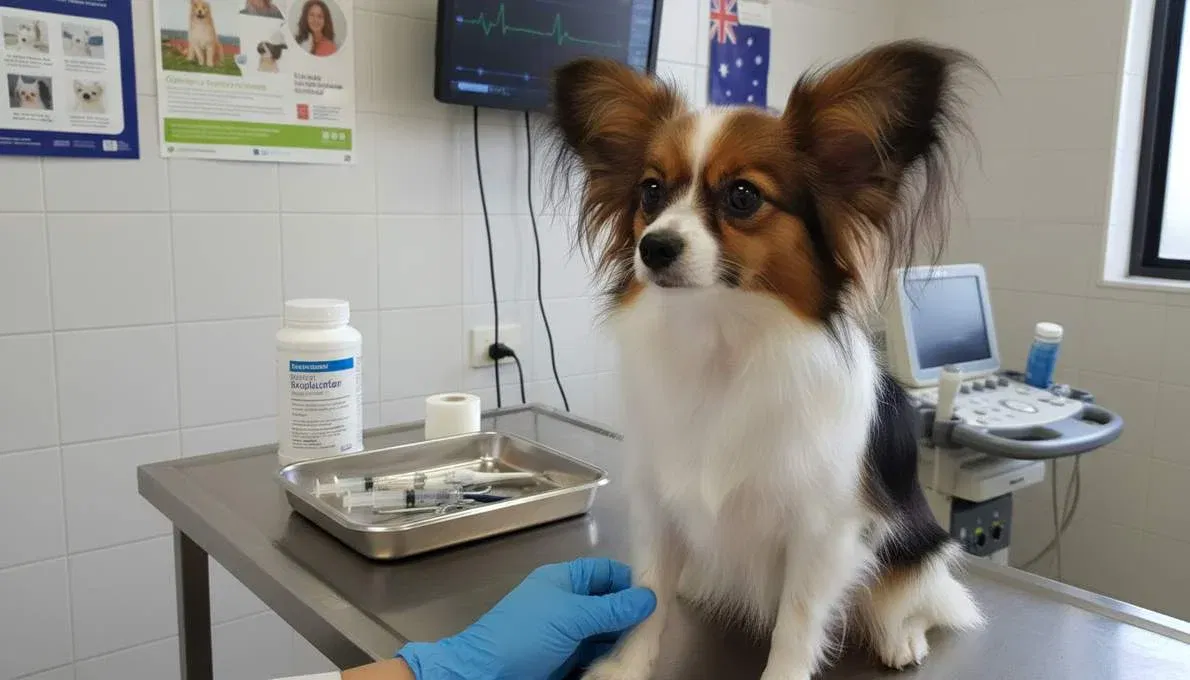
No one likes talking about vet bills, but pretending health issues don’t exist doesn’t help anyone — least of all your dog. Papillons are generally a healthy breed with fewer major concerns than many purebreds, but there are conditions you should know about before you commit.
Prevalence: Common in Papillons as in most toy breeds — ranges from mild cases requiring no treatment through to severe cases needing surgical correction
Symptoms: Occasional skipping or hopping on a back leg, a “bunny hop” gait that comes and goes, intermittent lameness, or in more severe cases persistent difficulty walking on the affected leg
Treatment Cost (AUD): $1,500–$4,000 per knee for surgical correction in moderate to severe cases
Prevention: Buy from breeders who screen for patellar luxation; maintain a healthy weight throughout your Papillon’s life to reduce ongoing stress on the knee joints
Patellar luxation means the kneecap slips out of its normal groove in the leg. You might notice your Papillon suddenly lift a back leg for a few strides then carry on as if nothing happened — that is often the kneecap briefly popping in and out. Mild cases can be managed conservatively with weight control and anti-inflammatories, while more severe or recurring cases require surgery to prevent chronic pain and long-term joint damage from developing. (Source: VCA Animal Hospitals)
Prevalence: Very common in Papillons — their small jaws mean teeth are tightly crowded together, making rapid tartar and plaque build-up almost inevitable without consistent daily care
Symptoms: Bad breath, visible yellow or brown tartar build-up, red or swollen gums, loose teeth, and discomfort or reluctance when eating
Treatment Cost (AUD): $500–$1,500 per professional dental clean performed under general anaesthesia
Prevention: Brush your Papillon’s teeth daily from puppyhood, provide dental chews, and schedule annual professional dental checks with your vet — for this breed daily brushing is essential rather than optional
Dental disease in Papillons is not just about bad breath — bacteria from infected gums can enter the bloodstream and cause damage to the heart, kidneys, and liver over time. Their tiny crowded mouths create the perfect environment for plaque to accumulate and harden into tartar quickly. Starting a brushing routine from the very first week you bring your puppy home is the single most impactful thing you can do for their long-term health and comfort. (Source: Australian Veterinary Association)
Prevalence: Seen at a moderate rate in Papillons and other toy breeds — the cartilage rings supporting the windpipe gradually weaken, causing partial airway obstruction that can worsen over time
Symptoms: A distinctive honking cough — often described as a “goose honk” — particularly during exercise, excitement, or when pressure is applied to the throat; gagging and breathing difficulty in more advanced cases
Treatment Cost (AUD): $300–$2,500 ranging from medication for mild cases through to surgical intervention for severe cases
Prevention: Always use a harness instead of a neck collar — never attach a lead directly to a collar on a Papillon; avoid situations that cause prolonged over-excitement or heavy exercise in warm conditions
Tracheal collapse happens when the rings of cartilage that keep the windpipe open weaken and flatten, partially blocking airflow with every breath. It is a progressive condition but is very manageable in most cases with medication and simple lifestyle adjustments. Switching to a harness is the single most important and easiest change any Papillon owner can make — pressure from a collar on the throat can trigger or significantly worsen the condition over time. (Source: VCA Animal Hospitals)
Prevalence: Seen occasionally in Papillons — a soft spot on the top of the skull that fails to fully close after birth; usually harmless but requires awareness and care from owners
Symptoms: A noticeable soft spot felt on the top of the skull — in most cases there are no symptoms at all, but a direct knock to the area carries a higher risk of serious injury than in dogs with a fully closed skull
Treatment Cost (AUD): No treatment required in most cases — management is purely preventative to protect the head from trauma
Prevention: Avoid rough play or situations where your dog’s head could be struck or compressed; handle your Papillon with care and make sure anyone interacting with the dog is aware of the soft spot
An open fontanelle is simply a gap in the skull where the bone plates have not fully fused — similar to the soft spot seen in newborn babies. In the vast majority of Papillons it causes no health issues whatsoever and the dog lives a completely normal life. The only real concern is that a direct impact to the area carries more risk than it would in a dog with a fully closed skull, so a little extra care during play and handling is all that is needed. (Source: VCA Animal Hospitals)
Prevalence: Uncommon but documented in Papillons — reputable breeders test for it before breeding; blind dogs can and do live very happily with the right home adjustments
Symptoms: Night blindness in the early stages, bumping into objects in low light, reluctance to enter dark rooms, and gradual progression to complete blindness over months to years
Treatment Cost (AUD): $300–$600 for diagnosis; there is currently no cure or treatment available
Prevention: Only buy from breeders who test both parents for PRA — ask to see proof of testing before committing to a puppy; early diagnosis allows you to begin adapting your home environment gradually
Progressive Retinal Atrophy causes the light-sensitive cells in the retina to gradually break down over time, eventually leading to complete blindness. It is entirely painless, and Papillons tend to adapt remarkably well to vision loss — particularly when their home layout stays consistent and familiar. While no treatment currently exists, responsible breeding using DNA and eye screening can prevent affected puppies from being born altogether. (Source: OFA — Orthopedic Foundation for Animals)
Prevalence: Rare in Papillons but worth being aware of — an abnormal blood vessel present from birth that allows blood to bypass the liver, preventing proper filtration of toxins from the body
Symptoms: Stunted growth compared to littermates, neurological signs such as staring, circling or disorientation, seizures, vomiting, poor appetite, and unusual behaviour following meals
Treatment Cost (AUD): $2,000–$8,000+ for surgical correction depending on the location and complexity of the shunt
Prevention: No guaranteed prevention for congenital cases; buy from health-conscious breeders and have any puppy showing slow growth or neurological signs assessed by a vet promptly — early intervention gives the best outcomes
A portosystemic shunt is an abnormal blood vessel that short-circuits the liver, allowing toxins that should be filtered out to instead travel through the bloodstream and affect the brain and other organs. Symptoms often become noticeable in the first few months of life. While rare in Papillons, it is worth keeping in mind as surgery to close the abnormal vessel is highly effective when the condition is caught and treated early. (Source: VCA Animal Hospitals)
Tip for Aussie owners: Budget $300–$600 per year for routine vet visits, vaccinations and parasite prevention. Pet insurance for Papillons typically runs $40–$80/month in Australia depending on your cover level and excess. Given the potential for patellar surgery and dental work, insurance is worth serious consideration for this breed.
Lifespan & Longevity
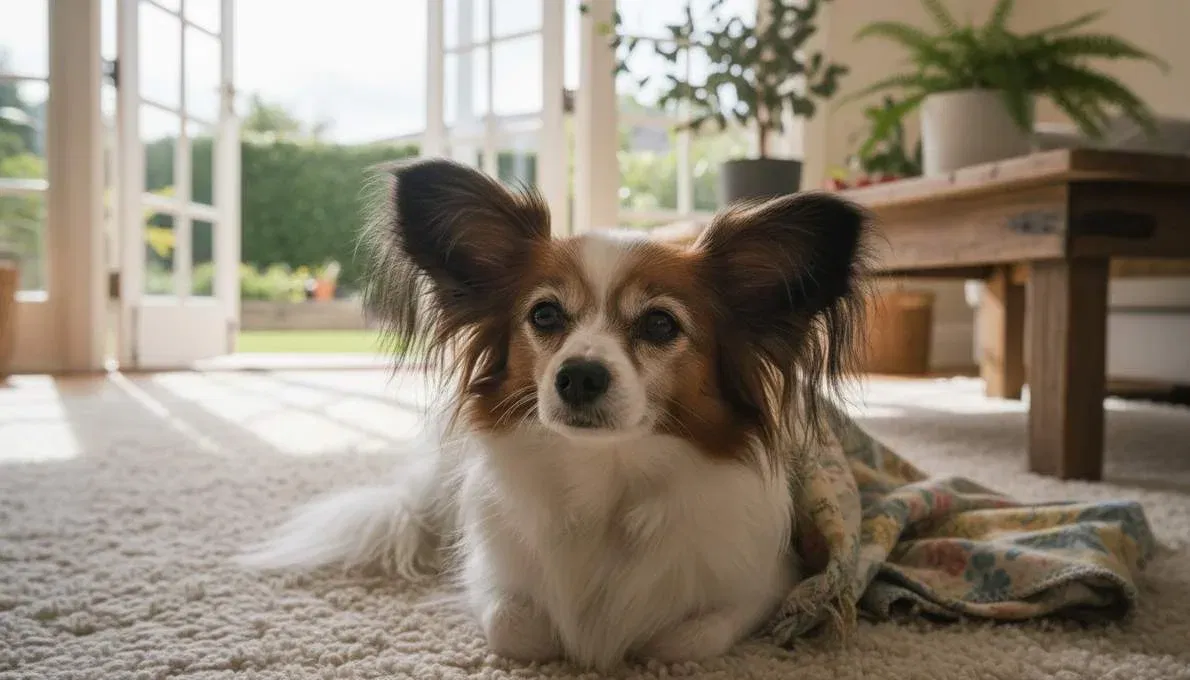
Papillons are one of the longest-lived dog breeds. A 2024 UK study found an average life expectancy of 14.5 years, compared to 12.7 for purebreds generally. Many Papillons comfortably reach 15–16, and some push past 17.
Puppy to 1 year: Rapid growth phase. Watch for open fontanelle (soft spot) and early signs of patellar luxation. Start dental hygiene habits now — it’s far easier to brush a puppy’s teeth than to start with a stubborn adult.
1–7 years: Prime years. Keep up regular exercise, annual vet checks, and dental cleans. Papillons stay playful and energetic well into middle age, so don’t ease off the stimulation just because they’re “grown up.”
7–12 years: Senior phase begins. Watch for weight gain, joint stiffness (especially if patellar luxation is present), vision changes and dental deterioration. Twice-yearly vet visits are a good idea from age 8 onward.
12+ years: Geriatric stage. Many Papillons remain bright and mobile at this age, but adjust exercise to their pace. Softer food may help if teeth are compromised. Keep mental stimulation high — puzzle toys, gentle training sessions and social interaction all matter.
Grooming & Care
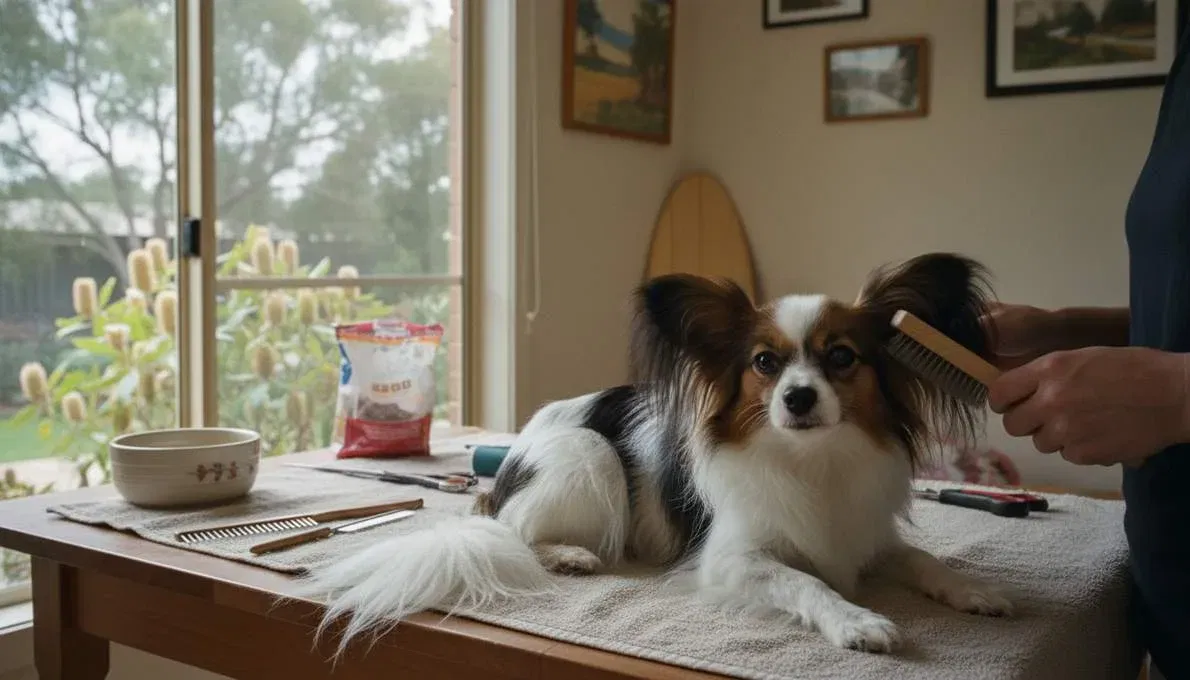
Despite looking high-maintenance, Papillons are surprisingly easy to groom. The secret is their single coat: no undercoat means less matting, less shedding and no need for professional clipping. That said, you can’t just ignore them.
Grooming Schedule
| Task | Frequency | Notes |
|---|---|---|
| Brushing | 2–3 times per week | Use a soft pin brush or slicker brush. Focus on ears, chest and rear feathering where tangles form. |
| Bathing | Every 4–6 weeks | Use a gentle dog shampoo. Papillons don’t typically have sensitive skin, but avoid over-bathing. |
| Ear Cleaning | Weekly | Those big ears are gorgeous but trap debris. Check for redness or odour. |
| Nail Trimming | Every 2–3 weeks | Small dogs = less natural wear. Overgrown nails cause discomfort and gait issues. |
| Dental Care | Daily brushing ideal | Non-negotiable for this breed. Dental disease is the #1 preventable health issue in Papillons. |
| Eye Cleaning | As needed | Wipe tear stains with a damp cloth. Watch for discharge or redness. |
Australian products worth trying: For daily dental care, Greenies Petite or Whimzees work well for Papillon-sized mouths. For coat maintenance, a Chris Christensen slicker brush is a favourite among Australian show breeders. For shampoo, Aloveen or Dermcare Natural Shampoo are gentle, vet-recommended Australian options.
Exercise Needs
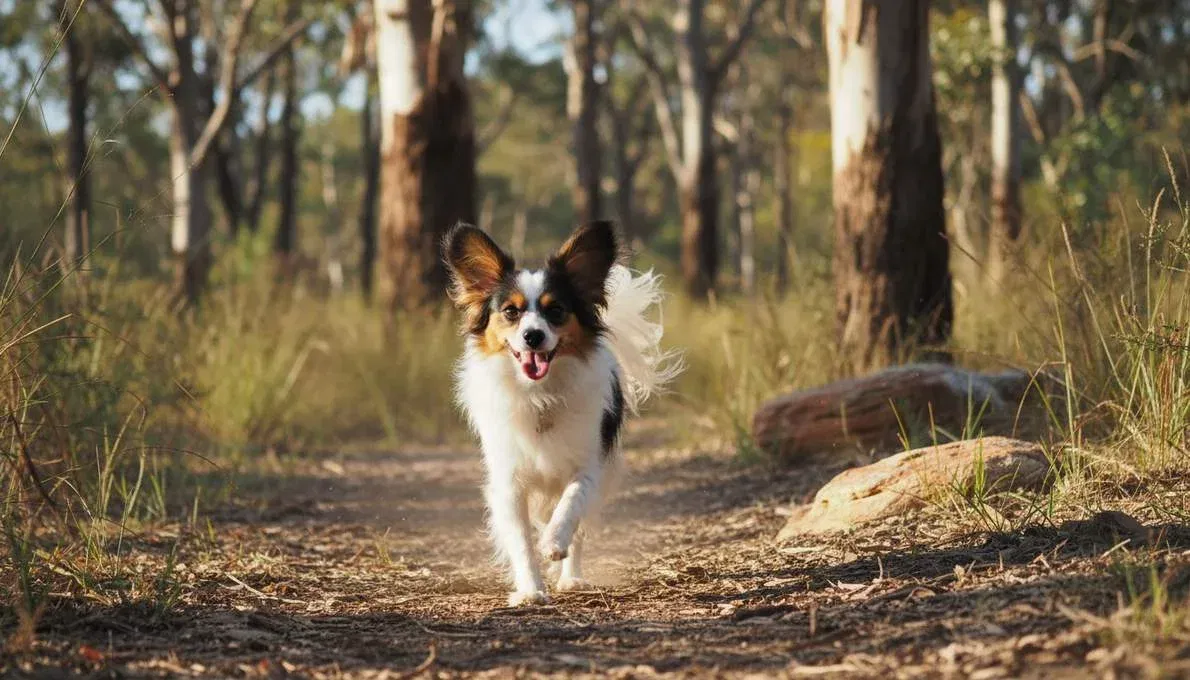
Don’t let the tiny frame fool you. Papillons are active, athletic dogs that need daily exercise and mental stimulation to stay happy. They were bred from spaniels — hunting dogs — and that energy hasn’t gone anywhere.
Aim for 30–45 minutes of exercise daily. This can be split into two shorter walks, a play session in the yard, or a combination. Papillons also excel at dog sports like agility, rally obedience and trick training, which is a brilliant way to tire them out mentally and physically.
⚠️ Australian climate warning:
Papillons have a single coat and no undercoat, which means they handle Australian heat better than many double-coated breeds — but they’re still small dogs. In summer, walk early morning or after sunset, always carry water, and never leave them in a hot car or on scorching pavement. In winter, they feel the cold more than you’d expect. A lightweight dog jumper is a good idea for early morning walks in Melbourne, Canberra or Hobart.
Indoor enrichment:
On days when it’s 40°C outside and you can’t walk them, puzzle feeders, snuffle mats and short training sessions will keep your Papillon from redirecting their energy into redecorating your lounge room.
Training Guide
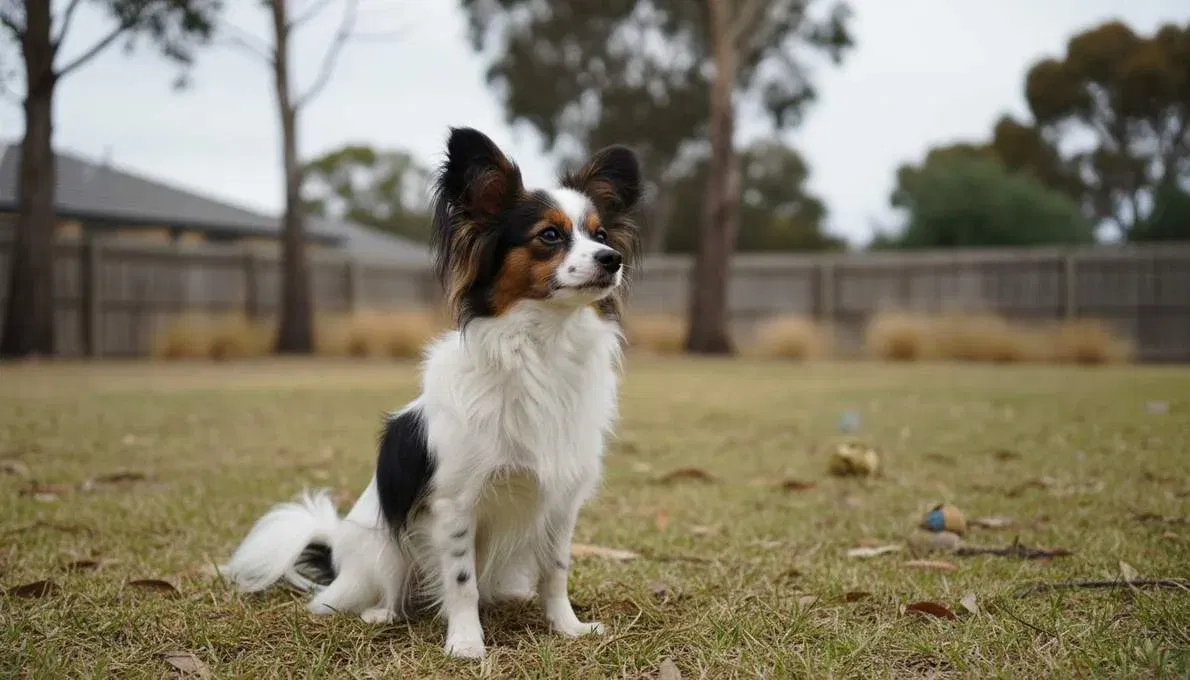
Papillons are ridiculously trainable. Their intelligence and eagerness to please make them one of the easiest toy breeds to work with — as long as you use positive reinforcement. Harsh corrections will shut a Papillon down faster than you can say “sit.”
Socialisation & Training Timeline
| Age | Training Focus | Tips |
|---|---|---|
| 8–12 weeks | Name recognition, toilet training, crate introduction, gentle handling | Start immediately. Papillon puppies are tiny but absorb everything. Short 3–5 minute sessions. |
| 3–6 months | Basic commands (sit, stay, come, down), leash walking, socialisation | Enrol in puppy school. Expose to different people, dogs, surfaces and sounds. This is critical. |
| 6–12 months | Impulse control, recall reliability, barking management, trick training | Adolescence hits. Stay consistent. Redirect barking rather than punishing it. |
| 1 year+ | Advanced obedience, dog sports, ongoing socialisation | Papillons love learning new things throughout their entire lives. Keep sessions fun and varied. |
Honest difficulty rating: 3/10 for trainability (they’re quick learners), but 7/10 for barking management. If you want a completely quiet dog, the Papillon isn’t it. If you can accept some alert barking and channel it through training, you’ll have one of the most responsive, obedient small dogs around.
Toilet training note: Small breeds have small bladders, and Papillons can take longer to fully housetrain than larger dogs. Consistency, frequent outdoor trips and positive reinforcement are your best tools. Most are reliable by 6–9 months.
Cost of Ownership in Australia
Let’s talk money. Papillons aren’t cheap to buy, but their ongoing costs are moderate compared to larger breeds. Here’s what Aussie ownership actually looks like:
| Expense | Estimated AUD Cost | Notes |
|---|---|---|
| Puppy (registered breeder) | $2,500–$4,000 | Show-quality pups or bitches often at the higher end. Males from $2,500. |
| Adoption / Rescue | $300–$800 | Check Papillon breed rescues and PetRescue. Older Papillons occasionally available. |
| First-year setup | $800–$1,500 | Crate, bed, bowls, harness, lead, toys, initial vet visit, microchipping, desexing. |
| Annual food | $400–$700 | Premium small-breed kibble. Papillons don’t eat much — roughly 1/4 to 1/2 cup per day. |
| Annual vet (routine) | $300–$600 | Vaccinations, parasite prevention, annual check-up. |
| Dental cleans | $500–$1,500 per clean | Expect 1–2 professional cleans in their lifetime, possibly more. |
| Pet insurance | $40–$80/month | Recommended given patellar and dental risks. |
| Grooming (if professional) | $50–$80 per session | Optional. Most Papillon owners groom at home. |
| Total first year | $4,500–$7,500+ | Including purchase price and setup. |
| Ongoing annual cost | $1,500–$3,000 | Excluding unexpected vet bills. |
Where to find breeders:
Start with DogzOnline (dogzonline.com.au) to find ANKC-registered Papillon breeders in your state. The Papillon Dog Club of NSW and equivalent state clubs are also excellent resources. Always visit the breeder, meet the parents, ask about health testing (patella evaluation and eye exams at minimum), and insist on ANKC registration papers.
Rescue option:
PetRescue (petrescue.com.au) occasionally lists Papillons and Papillon mixes. Breed-specific rescues are rare in Australia, but checking regularly is worth it. Adoption fees are typically $300–$800 and include desexing, vaccination and microchipping.
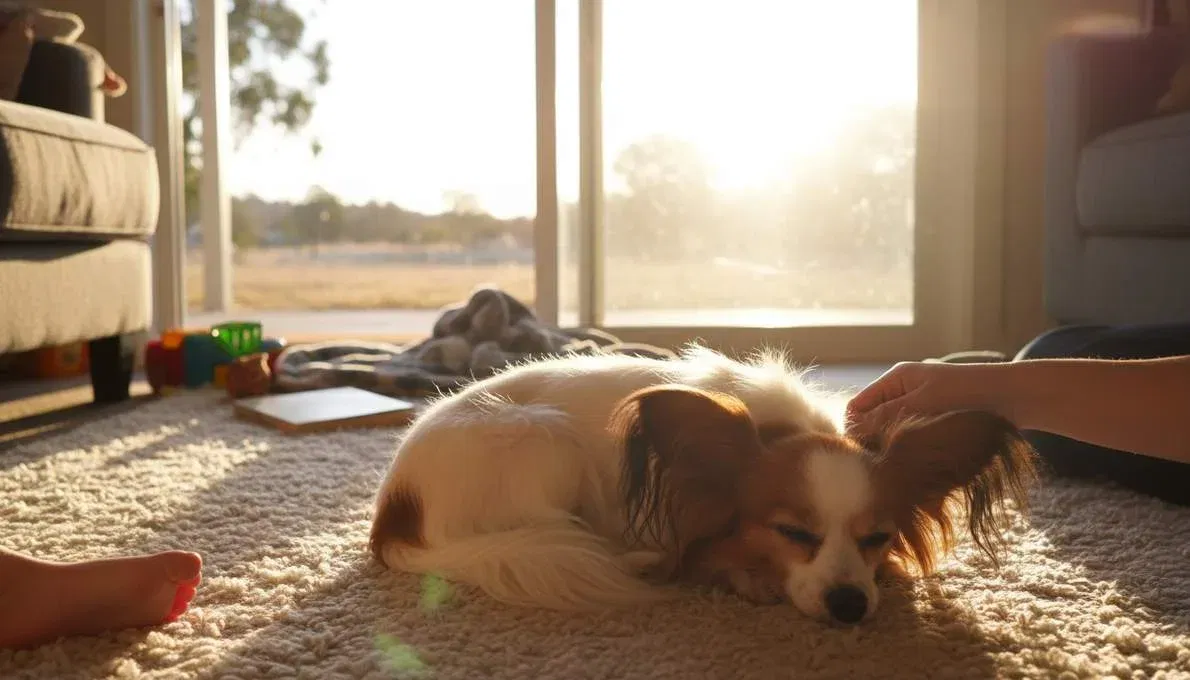
Is the Papillon Right for You?
want a small dog with real intelligence, enjoy training and teaching tricks, live in an apartment or smaller home, want a long-lived companion, are looking for a dog that’s good with other pets, or are an older owner wanting an active but manageable breed.
have very young children who haven’t learned to be gentle with small animals (Papillons are fragile and can be injured by rough handling), need a completely silent dog (they bark, period), travel frequently and can’t take your dog with you (Papillons get separation anxiety), want a low-energy dog that sleeps all day (they’re more active than they look), or live in an extremely cold climate without providing indoor warmth.
If you love the Papillon but want something slightly sturdier, look at the Cavalier King Charles Spaniel. If you want similar intelligence in a larger package, the Shetland Sheepdog is worth researching. If the Papillon’s barking puts you off but you want a similar-sized companion, the Japanese Chin is a quieter option.
The Papillon is a tiny dog with an enormous personality, a sharp brain and a surprisingly long lifespan. They’re not the right fit for every household — they bark, they’re fragile, and they need more mental stimulation than your average toy breed. But if you’re after a loyal, trainable, genuinely fun companion who’ll be by your side for the next 14–16 years, it’s hard to beat a Papillon.
Three things to remember:
- Papillons are the 8th smartest dog breed in the world — they need a job, even if that job is learning a new trick every week.
- Dental care is non-negotiable. Budget for it, brush daily, and your Papillon’s teeth (and vet bills) will thank you.
- In Australia, expect to pay $2,500–$4,000 from a registered breeder, with ongoing annual costs of $1,500–$3,000. They’re affordable to feed but can rack up dental and patellar vet bills.
Frequently Asked Questions
Are Papillons good family dogs?
Yes, Papillons are excellent family dogs for households with older children. They’re affectionate, playful and bond closely with all family members. However, they’re fragile due to their small size, so families with toddlers or very young children should supervise all interactions closely.
Do Papillon dogs shed a lot?
No. Papillons have a single coat with no undercoat, which means they shed less than most breeds. You’ll still find some hair around the house, but it’s minimal compared to double-coated breeds. Regular brushing 2–3 times a week keeps shedding under control.
Are Papillons hypoallergenic?
No dog is truly hypoallergenic, and Papillons are no exception. However, their single coat and lower shedding means they produce less dander than many breeds, so some allergy sufferers do tolerate them better. Spend time with a Papillon before committing if allergies are a concern.
How much does a Papillon cost in Australia?
From a registered ANKC breeder, expect to pay $2,500–$4,000 AUD. Males are typically at the lower end, while show-quality females can be at the higher end or above. Adoption through PetRescue or breed-specific rescues is $300–$800.
Do Papillons bark a lot?
Yes, Papillons are alert barkers. They’ll bark at doorbells, strangers, other animals and anything they find suspicious. Training can manage the volume and frequency, but you won’t eliminate it entirely. If barking is a dealbreaker, this may not be the breed for you.
How long do Papillons live?
The average Papillon lifespan is 12–16 years, with a 2024 UK study reporting an average of 14.5 years. With proper care, good nutrition and regular vet visits, many Papillons live to 15–16 and some beyond.
Are Papillons easy to train?
Very. Papillons are one of the most trainable toy breeds thanks to their intelligence and desire to please. They respond best to positive reinforcement — treats, praise and play. Harsh training methods are counterproductive with this breed.
What is the difference between a Papillon and a Phalène?
They’re the same breed. The Papillon has erect, butterfly-like ears while the Phalène (French for “moth”) has drop ears. Both can appear in the same litter. The erect-eared Papillon is the more common and recognisable variety.
Can Papillons live in apartments?
Absolutely. Papillons are one of the best apartment dogs available. They’re small, relatively clean, and don’t need a backyard — though daily walks and play sessions are still essential. Just be mindful of barking in shared living spaces.
Are Papillons good with other dogs and cats?
Generally yes, especially when socialised early. Papillons tend to be confident and friendly with other animals. However, their small size means you should supervise interactions with much larger dogs who could accidentally injure them during play.
1. PetMD — Papillon Dog Breed Health and Care: https://www.petmd.com/dog/breeds/papillon
2. Wikipedia — Papillon Dog: https://en.wikipedia.org/wiki/Papillon_dog
3. Bow Wow Meow Pet Insurance — Papillon Breed Profile: https://bowwowinsurance.com.au/dogs/dog-breeds/papillon/
4. Pet Circle — Papillon Complete Breed Guide: https://www.petcircle.com.au/discover/breed-guide-papillon
5. PetInsurance.com.au — Papillon Information & Insurance Guide: https://petinsurance.com.au/papillon/
6. WebMD — What to Know About Papillons: https://www.webmd.com/pets/dogs/what-to-know-about-papillons
7. DogzOnline — Papillon Breeders in Australia: https://www.dogzonline.com.au/breeds/breeders/papillon.asp
8. PetsForHomes — Papillon Dog Breed Information: https://petsforhomes.com.au/dogs-puppies/papillon/
9. Vetstreet — Papillon Dog Breed Information: https://www.vetstreet.com/dogs/papillon