
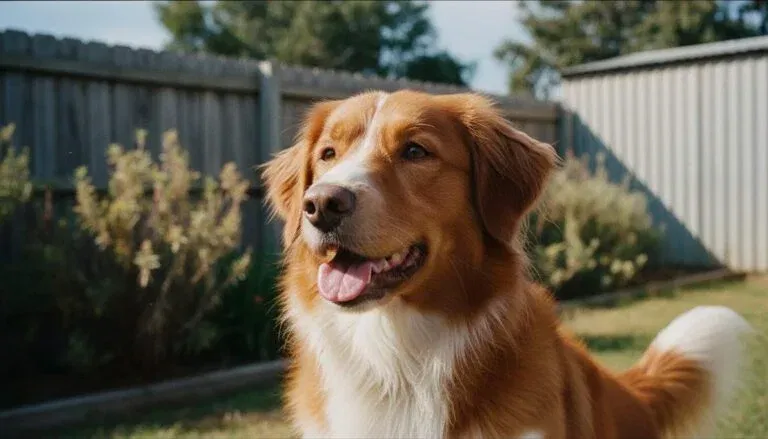
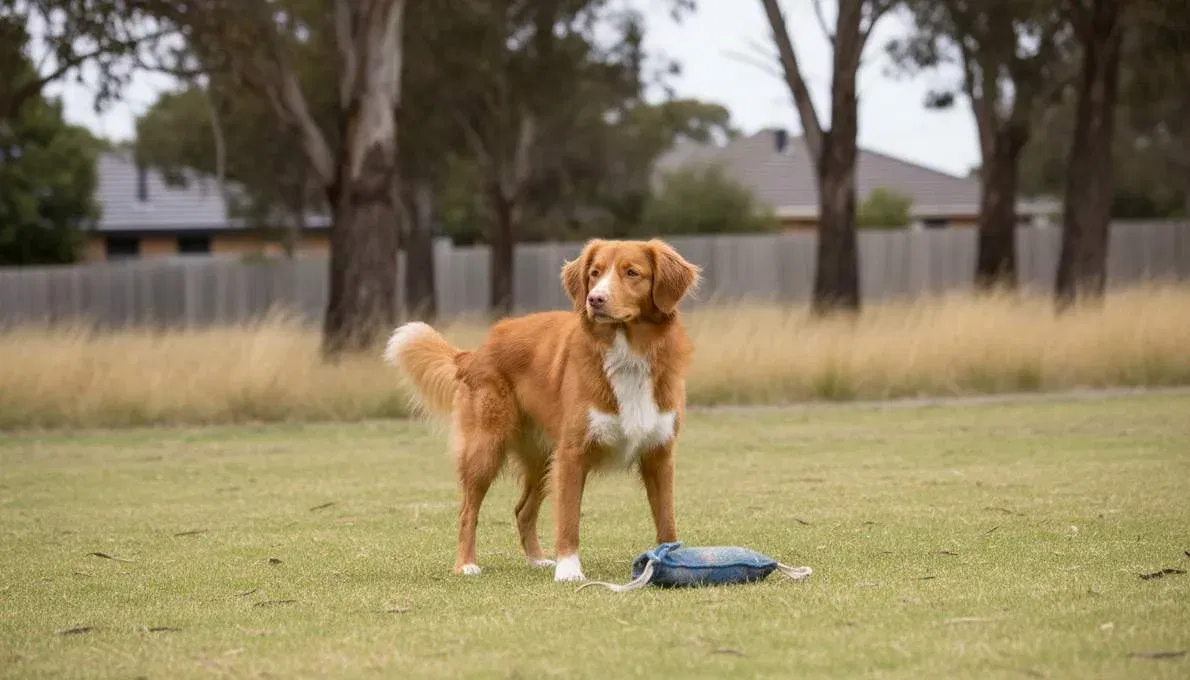
Picture a Golden Retriever that got shrunk in the wash, dyed copper-red, given the face of a fox, and then had its energy dial cranked to eleven. That’s the Nova Scotia Duck Tolling Retriever — universally known as the Toller, because nobody has time to say the full name more than once.
The Toller is the smallest of all the retriever breeds, originally developed in Nova Scotia, Canada for one of the most unusual hunting jobs in the dog world: prancing and playing along riverbanks to lure curious ducks within gunshot range, then retrieving them from icy water. The breed’s fox-like appearance, white-tipped tail, and playful antics were all deliberately selected to mimic the natural tolling behaviour of wild foxes — a hunting trick first observed by Canada’s Mi’kmaq people centuries ago.
Today, the Toller is a high-energy, intensely intelligent sporting dog that thrives on activity, adores water, and will play fetch until your arm gives out (and then ask for more, left-handed). They’re also famous for an unusual vocalisation known as the “Toller scream” — a high-pitched howl they emit when excited. It’s either endearing or alarming, depending on your tolerance for noise at 6am.
If you’re in Australia and thinking about a Toller, here’s everything you need to know — from the genuine health concerns to the reality of living with a dog that treats every body of water as an invitation.
What You’ll Learn
- Breed traits & temperament
- Health concerns to know
- True cost in Australia
- Training & exercise needs
- Is this breed right for you?
Quick Facts at a Glance
| Trait | Details |
|---|---|
| Breed Group | Gundog / Sporting (ANKC & AKC) |
| Origin | Yarmouth County, Nova Scotia, Canada |
| Size | Males: 48–51 cm (19–20 in) / Females: 45–48 cm (17–19 in) |
| Weight | Males: 20–23 kg (44–50 lbs) / Females: 17–20 kg (37–44 lbs) |
| Lifespan | 12–14 years |
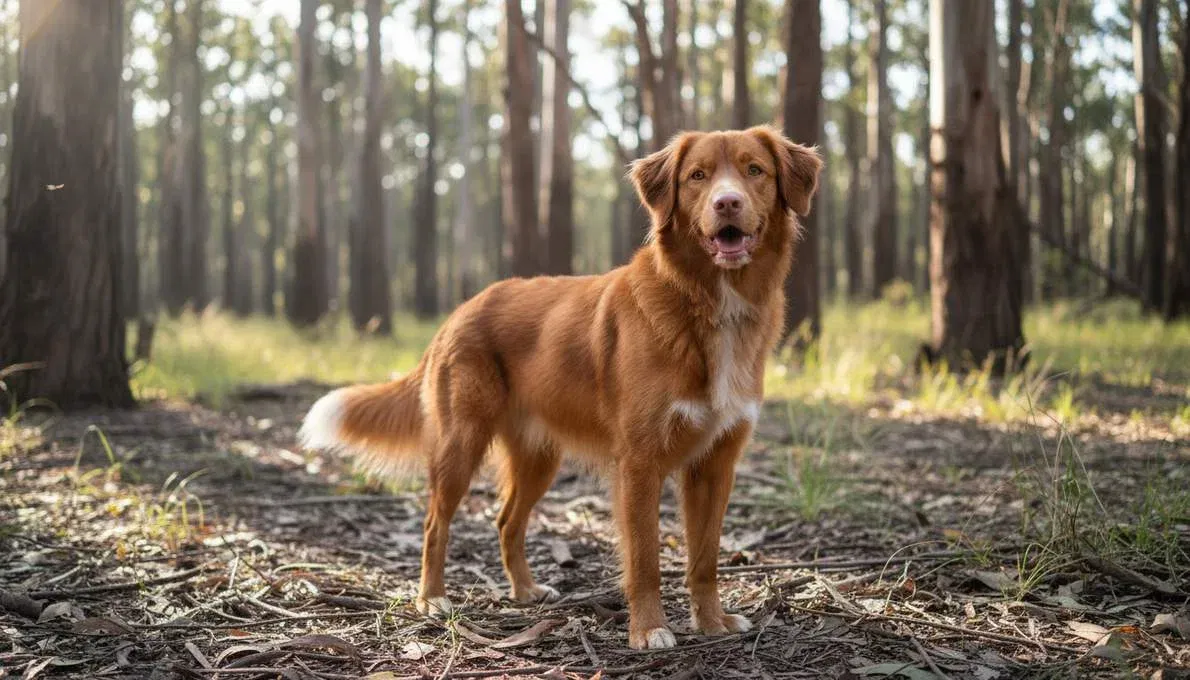
| Coat | Medium-length, water-repellent double coat with feathering |
| Colours | Any shade of red — golden red, dark copper, buff. White markings on chest, tail tip, feet, face. |
| Temperament | Intelligent, energetic, affectionate, eager to please, reserved with strangers |
| Shedding | Moderate year-round, heavy seasonal blowouts in spring and autumn |
| Barking | Low to moderate — not yappy, but may emit the famous “Toller scream” when excited |
| Good With Kids | Excellent — patient, playful, tireless play partners |
| Good With Other Dogs | Generally good. Prey drive toward smaller animals and cats. |
| Exercise Needs | High — 60–90 minutes daily of vigorous activity plus mental stimulation |
| Swimming | Loves water. Webbed feet. Born retriever. Will swim in anything. |
| Puppy Price (AUD) | $3,000–$5,500+ from a registered breeder |
History & Origins
The Nova Scotia Duck Tolling Retriever was developed in the early 19th century in the Acadian community of Little River Harbour, Yarmouth County, in the Canadian province of Nova Scotia. The breed was originally called the Little River Duck Dog or Yarmouth Toller before receiving its formal name.
The concept of “tolling” — luring waterfowl within gunshot range — was inspired by the natural behaviour of red foxes. Canada’s Mi’kmaq people observed foxes playing along riverbanks, their white-tipped tails flashing as they romped, which drew curious ducks closer to investigate. The Mi’kmaq trained their own dogs to mimic this behaviour, and European settlers in Nova Scotia refined the technique into a formal breeding program.
The Toller is a mixture of retriever, spaniel, setter, and possibly farm collie types. The breeding goal was a medium-sized, fox-like dog with a copper-red coat, white tail tip, webbed feet, and the drive to both lure and retrieve ducks from icy Atlantic waters. The hunter would hide in a blind and send the dog to play along the shore. The dog’s fox-like appearance and playful behaviour would attract curious waterfowl, and when the ducks were close enough, the hunter would call the dog back and rise to take the shot. The Toller would then retrieve the downed birds from the water.
The Canadian Kennel Club recognised the breed in 1945. It became the Provincial Dog of Nova Scotia in 1995 after two Tollers won Best in Show at major Canadian championship events. The AKC recognised the breed in 2003. In Australia, Tollers have a small but dedicated following, with ANKC-registered breeders in several states.
Temperament & Personality
The Toller’s temperament sits somewhere between a Golden Retriever’s warmth and a Border Collie’s intensity. They’re affectionate, intelligent, and driven — but with a notable independent streak and a clear distinction between “work mode” and “relax mode.”
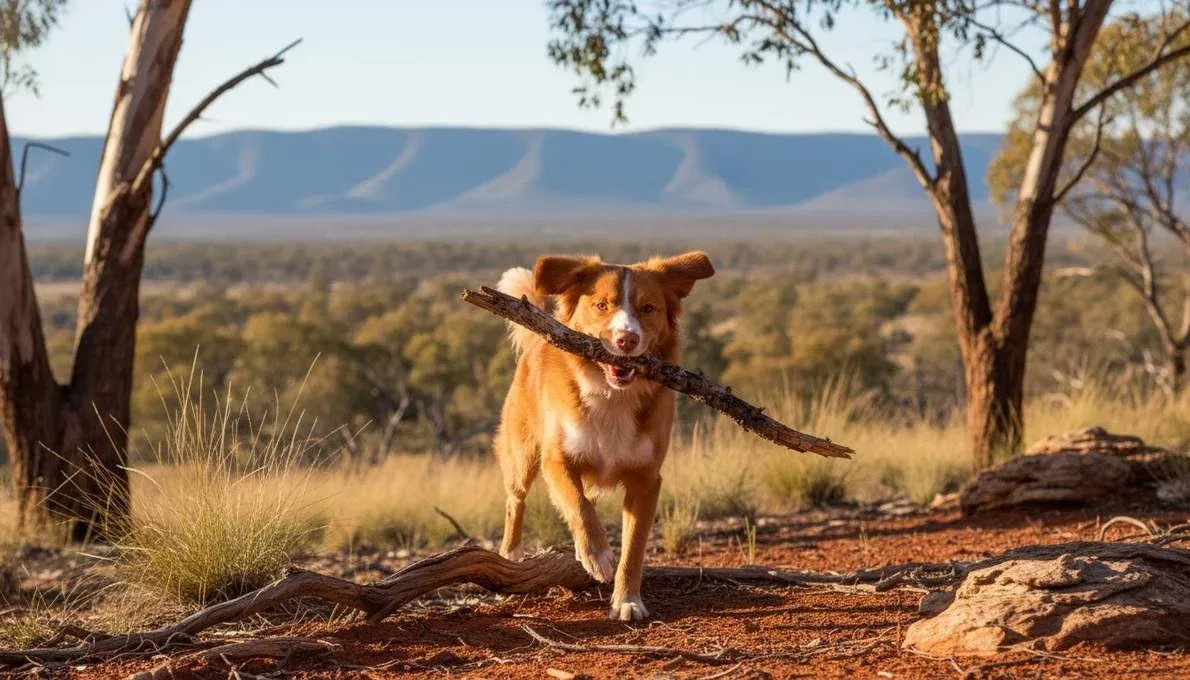
Tollers are deeply affectionate and loyal. They bond strongly to their people and want to be involved in everything. They’re exceptional with children — patient, playful, and seemingly tireless. The AKC rates them 5 out of 5 for patience and friendliness with kids. They’re the kind of dog that will play fetch with your children until the children give up (not the dog). Once their energy is spent, they’re happy to curl up on the couch with you.
Tollers are notably reserved. This is one of the key differences between Tollers and Golden Retrievers — a Golden loves everyone immediately; a Toller is cautious until they decide you’re safe. They’re not aggressive or fearful, just watchful. Early socialisation is crucial to prevent this natural reserve from becoming shyness.
Tollers are not typically barky dogs, but when they’re excited — seeing water, anticipating a retrieve, greeting you at the door — they can emit a distinctive high-pitched scream or howl. It’s unique to the breed and sounds nothing like a normal bark. Some owners find it charming. Others describe it as the sound of a squeaky toy being stepped on by an elephant. You’ll need to hear it before committing to the breed.
this is a working dog that needs a job. Tollers without adequate physical and mental stimulation become destructive, noisy, and neurotic. They excel at fetch (obviously), swimming, agility, flyball, scent work, tracking, and obedience. If you’re not prepared to exercise a Toller properly, they will exercise themselves — usually by disassembling your home.
The Toller is a phenomenal dog for active, outdoorsy families who want a devoted, intelligent companion with real working ability. They’re not Golden Retrievers in a smaller package — they’re more independent, more reserved with strangers, and need significantly more mental stimulation. They reward effort with extraordinary loyalty.

Health & Genetic Conditions
The Nova Scotia Duck Tolling Retriever has some notable health considerations that prospective owners must understand. The breed’s gene pool is relatively small — about 90% of current genetic diversity traces back to the founding population, and the average inbreeding coefficient is around 26%, which is high. This limited diversity makes certain inherited conditions more prevalent.
Prevalence: Affects approximately 7% of Tollers with around 40% estimated to be carriers — one of the most important genetic tests for this breed; DNA testing is essential for all breeding dogs
Symptoms: Night blindness in the early stages, bumping into objects in low light, reluctance to enter dark rooms, and gradual progression to complete blindness over months to years
Treatment Cost (AUD): $500–$1,500 for diagnosis; there is currently no cure or surgical fix available
Prevention: Only buy from breeders who DNA test both parents for PRA — with a carrier rate as high as 40% in the breed, this test is non-negotiable; early diagnosis helps you prepare your home environment for your dog’s changing needs
Progressive Retinal Atrophy causes the light-sensitive cells in the retina to gradually break down, eventually leading to complete blindness. It is painless, and Tollers adapt remarkably well to vision loss when their home environment stays familiar and consistent. The high carrier rate in this breed makes DNA testing by breeders the single most important action available to reduce how frequently affected puppies are born. (Source: OFA — Orthopedic Foundation for Animals)
Prevalence: A recognised concern in Nova Scotia Duck Tolling Retrievers — hip and elbow scoring of both parents is strongly recommended before breeding; ranges from mild cases managed conservatively to severe cases requiring surgery
Symptoms: Stiffness after rest, reluctance to exercise, lameness in the front or back legs depending on which joint is affected, difficulty rising from lying down, and gradual worsening of mobility as arthritis develops
Treatment Cost (AUD): $3,000–$7,000 per joint for surgical intervention; mild to moderate cases can be managed with medication, supplements, and controlled low-impact exercise
Prevention: Buy from breeders who provide hip and elbow scoring results for both parents; keep your Toller at a healthy weight and avoid high-impact exercise during puppyhood while joints are still developing
Hip and elbow dysplasia both involve joints that develop improperly, causing bones to grind rather than move smoothly and leading to progressive arthritis and chronic pain over time. Because Tollers are an active working breed, joint health has a direct impact on their ability to enjoy the exercise and activity they thrive on. Choosing a puppy from scored parents and maintaining a healthy weight throughout their life gives them the best chance of staying mobile and comfortable well into old age. (Source: OFA — Orthopedic Foundation for Animals)
Prevalence: More common in Tollers than in most other breeds — the adrenal glands fail to produce sufficient hormones, and the condition can appear at any age including in young adults
Symptoms: Vomiting, lethargy, loss of appetite, weight loss, shaking, and in severe cases a sudden life-threatening collapse known as an Addisonian crisis
Treatment Cost (AUD): $1,500–$3,000 per year for lifelong hormone replacement medication and regular monitoring blood tests
Prevention: No guaranteed prevention; knowing the breed’s predisposition means your vet can test for it sooner when vague symptoms appear — regular annual check-ups help catch hormonal changes before a crisis occurs
Addison’s Disease is sometimes called “the great pretender” because its symptoms — lethargy, vomiting, and weight loss — are vague enough to mimic many other conditions, making it easy to miss until a serious episode occurs. Once diagnosed, it is very manageable with lifelong medication, and most Tollers go on to live completely normal, active lives. The key is staying alert to the early warning signs given the breed’s known predisposition. (Source: VCA Animal Hospitals)
Prevalence: A breed-specific autoimmune predisposition unique to Nova Scotia Duck Tolling Retrievers — the immune system mistakenly attacks the joints, causing inflammation and pain that can be debilitating without treatment
Symptoms: Joint pain and stiffness, reluctance to move or exercise, swollen joints, fever, and in more severe cases significant reduction in mobility and quality of life
Treatment Cost (AUD): $1,000–$3,000 per year for immunosuppressant medication and ongoing monitoring
Prevention: No guaranteed prevention as it is immune-mediated; buying from health-conscious breeders reduces risk — seek veterinary assessment promptly if your Toller shows unexplained joint pain or stiffness, especially alongside a fever
Immune-Mediated Rheumatic Disease occurs when the immune system incorrectly identifies the body’s own joint tissue as a threat and attacks it. It is a condition with a specific predisposition in Tollers and can range from manageable with medication to significantly debilitating in more severe cases. Early diagnosis and prompt treatment with immunosuppressants can control inflammation effectively and help affected dogs maintain a good quality of life. (Source: Norwegian School of Veterinary Science — Toller Health Research)
Prevalence: Documented with a higher frequency in Tollers than in many other breeds — the immune system gradually destroys thyroid tissue, reducing hormone production over time
Symptoms: Unexplained weight gain, low energy and lethargy, thinning or dull coat, dry skin, and increased sensitivity to cold temperatures
Treatment Cost (AUD): $300–$800 per year for daily thyroid hormone replacement medication and regular blood monitoring
Prevention: No guaranteed prevention; thyroid antibody testing is available and recommended for breeding dogs — routine annual blood tests help catch declining thyroid function before symptoms become pronounced
Autoimmune Thyroiditis differs from standard hypothyroidism in that it is driven by the immune system actively attacking the thyroid gland rather than the gland simply underperforming on its own. The end result is the same — insufficient thyroid hormone — but the underlying cause is important for breeders to be aware of. Once diagnosed, it is straightforward to manage with daily medication, and most Tollers return to their normal energetic selves once hormone levels are balanced. (Source: OFA — Orthopedic Foundation for Animals)
Prevalence: A notable concern in Nova Scotia Duck Tolling Retrievers — an inflammatory condition affecting the blood vessels and protective membranes surrounding the brain and spinal cord; typically affects young adult dogs
Symptoms: Severe neck pain and stiffness, fever, lethargy, reluctance to move the head, and general signs of feeling very unwell — symptoms can come on relatively suddenly
Treatment Cost (AUD): $2,000–$5,000 for a full treatment course including diagnosis, hospitalisation if needed, and a prolonged course of corticosteroids
Prevention: No guaranteed prevention; seek urgent veterinary attention if your Toller develops unexplained neck pain combined with fever — early treatment leads to significantly better outcomes and reduces the risk of relapse
Steroid-Responsive Meningitis-Arteritis is an immune-mediated condition where the body’s own immune system causes inflammation around the brain and spinal cord. Despite sounding alarming, it responds well to treatment with corticosteroids when caught promptly — most dogs improve noticeably within days of starting medication. A full treatment course lasting several months is typically needed to prevent relapse, and the majority of dogs treated early go on to make a complete recovery. (Source: VCA Animal Hospitals)
Prevalence: A genetic birth defect with a carrier rate of approximately 15% in Tollers — one specific form of cleft palate is exclusive to this breed; a DNA test is available and should be used by all breeding dogs
Symptoms: Visible gap or opening in the roof of the mouth in affected puppies, difficulty feeding, milk coming through the nose, poor weight gain, and increased risk of aspiration pneumonia
Treatment Cost (AUD): $2,000–$5,000 for surgical repair if the puppy is a viable candidate for correction
Prevention: DNA testing is available — responsible breeders test both parents before breeding to ensure carrier-to-carrier pairings are avoided; this condition is entirely preventable with proper screening
Cleft palate occurs when the two sides of the roof of the mouth fail to fuse properly during development, leaving a gap that makes feeding extremely difficult and dangerous for newborn puppies. The Toller-specific genetic form of this condition is directly testable through DNA, meaning it is entirely within breeders’ power to prevent. With a carrier rate of around 15% in the breed, testing before every litter is a straightforward step that makes a life-or-death difference for the puppies produced. (Source: OFA — Orthopedic Foundation for Animals)
The autoimmune concern is real: Tollers have a higher-than-average predisposition to autoimmune conditions (Addison’s, IMRD, thyroiditis, SRMA). This is the breed’s most significant health profile difference from other retrievers. Ask breeders about autoimmune history in their lines, PRA testing, hip and elbow scores, and thyroid clearance. A 2002 breed survey of 1,180 Tollers worldwide found 73% in excellent health but 25% of deaths attributed to cancer.

Lifespan & Longevity
The Nova Scotia Duck Tolling Retriever lifespan is 12–14 years, which is solid for a medium-sized sporting breed. With excellent care, some Tollers reach 15+.
Key longevity factors: maintaining a lean, athletic body condition (Tollers should look fit, not stocky), providing ample daily exercise (a well-exercised Toller is a healthy Toller), feeding a high-quality diet appropriate for their activity level, monitoring for early signs of autoimmune conditions (unexplained lethargy, vomiting, stiffness, coat changes), and scheduling annual blood work from middle age onwards to catch Addison’s and thyroid issues early. Cancer is the leading cause of death in the breed, so awareness of lumps, behavioural changes, and regular vet checks matter.

Grooming & Care
The Toller’s medium-length, water-repellent double coat is relatively low-maintenance compared to breeds like Golden Retrievers. But they do shed — moderately year-round and heavily during seasonal blowouts.
Grooming Schedule
| Task | Frequency | Notes |
|---|---|---|
| Brushing | Weekly (daily during shedding season) | Use a slicker brush and undercoat rake. Focus on feathering behind ears, legs, and tail. |
| Bathing | As needed (they’ll swim frequently) | Rinse after saltwater or pool swims. The coat is naturally water-repellent and dirt-resistant. |
| Nail Trimming | Every 2–3 weeks | Active dogs on hard surfaces may need less frequent trimming. |
| Ear Cleaning | Weekly (more if swimming often) | Floppy-ish ears and frequent water exposure increase infection risk. Dry ears after swimming. |
| Teeth Brushing | 3–4 times per week (daily ideal) | Standard dental care. Use dog-friendly toothpaste. |
Are Tollers hypoallergenic? No. They shed moderately year-round and heavily twice yearly. Their double coat produces normal amounts of dander. They are not a good choice for people with dog allergies.
Exercise Needs
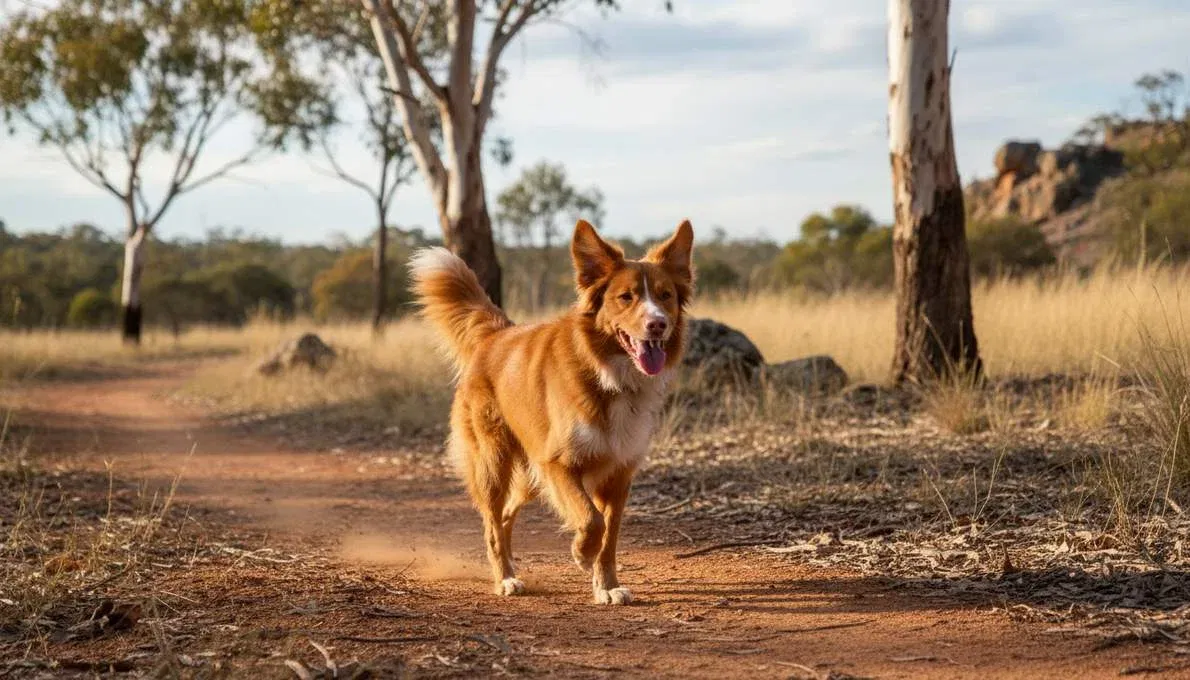
This is a high-energy working dog that needs 60–90 minutes of vigorous exercise daily — and that’s the minimum. Tollers were bred to work all day in the field, and their stamina is remarkable.
Ideal activities include swimming (they’re natural water dogs with webbed feet), fetch (their favourite thing on Earth), hiking, trail running, agility, flyball, dock diving, scent work, and retrieving drills. They excel in any activity that combines physical exertion with mental problem-solving.
Mental stimulation is non-negotiable.
A physically tired Toller that hasn’t been mentally challenged is still a restless Toller. Puzzle feeders, hide-and-seek games, training sessions, and structured activities like nosework keep their minds sharp and their behaviour manageable. A bored Toller is a destructive Toller.
Australian climate note:
Tollers were bred for Nova Scotia’s cold Atlantic coast and have a double coat designed for icy water. In Australia, they handle moderate climates well but need careful management in summer heat. Exercise during cooler hours, provide shade, fresh water, and air conditioning. Swimming is the ideal summer exercise — it’s what they were built for. They’re well-suited to southern Australian states and coastal areas. Avoid prolonged outdoor activity in temperatures above 30°C.
Training Guide
Tollers are highly intelligent and eager to please, but they can also be stubborn, easily distracted (especially by scent), and mouthy as puppies. They need a trainer who is patient, consistent, and creative enough to keep sessions interesting.
Socialisation & Training Timeline
| Age | Focus Area | Key Tips |
|---|---|---|
| 8–12 weeks | Socialisation, bite inhibition, water introduction | Expose to many people, sounds, surfaces. Introduce water gently — don’t force. Address mouthiness early. |
| 3–6 months | Basic obedience, leash walking, retrieve foundation | Harness their fetch drive for training. Keep sessions short (10 min) and varied. High-value treats essential. |
| 6–12 months | Advanced recall, impulse control, structured retrieve work | Recall needs ongoing work — prey drive pulls them away. Build reliable “drop it” and “leave it.” |
| 1–2 years | Sport-specific training (agility, dock diving, field work) | Channel their drive into structured activities. Tollers thrive when they have a “job.” Enrol in dog sports. |
| 2+ years | Maintenance, advanced skills, ongoing enrichment | A well-trained Toller is an extraordinary companion. Keep reinforcing and adding new challenges. |
Training difficulty: 4/10.
Tollers are highly trainable once you understand how to motivate them. They respond brilliantly to positive reinforcement, especially retrieve-based rewards. The challenges are their occasional stubborn streak, their distractibility around scent and water, and puppy mouthiness. Harsh methods destroy their trust and are completely unnecessary. Patient, game-based training produces outstanding results.
Cost of Ownership in Australia
| Expense | One-Off / Setup | Annual Ongoing |
|---|---|---|
| Registered Puppy (ANKC) | $3,000–$5,500+ | — |
| Desexing | $400–$700 | — |
| Food (premium active breed) | — | $1,000–$1,800 |
| Vet Check-ups & Vaccinations | — | $300–$600 |
| Pet Insurance | — | $600–$1,500 |
| Flea/Tick/Worming | — | $200–$400 |
| Grooming | $80–$200 (tools) | $200–$600 (2–4 professional grooms/year) |
| Bedding, Crate, Toys | $200–$400 | $150–$300 |
| Training / Dog Sports | $300–$800 | $200–$500 (ongoing class/sport fees) |
| Council Registration | — | $20–$200 (varies by LGA) |
Estimated first-year cost: $5,500–$11,500 AUD.
Estimated annual ongoing cost: $3,000–$6,500 AUD. Consider pet insurance carefully given the breed’s predisposition to autoimmune conditions — Addison’s disease alone requires lifelong medication.
Finding a breeder:
Search Dogs Australia (dogsaustralia.org.au) and DogzOnline.com.au. Tollers have a small but passionate community in Australia, with breeders in NSW, VIC, QLD, and SA. The Nova Scotia Duck Tolling Retriever Club of Australia is the breed-specific club and an excellent starting point. Waitlists are common. Ask for PRA DNA test results, hip and elbow scores, thyroid clearance, and autoimmune history in the line.
Rescue:
Toller rescues are rare in Australia. Contact the breed club directly. Internationally, Toller Rescue Inc. operates in the US and may assist with rehoming.

Is the Nova Scotia Duck Tolling Retriever Right for You?
you’re an active individual or family who can commit to 60–90 minutes of vigorous daily exercise, you enjoy outdoor activities like hiking, swimming, and dog sports, you want an intelligent, trainable dog that thrives with a “job,” you’re looking for a medium-sized dog that’s excellent with children, you appreciate a dog that’s affectionate with family but not overly needy with strangers, and you’re prepared for moderate shedding and the occasional Toller scream.
you want a low-energy dog (they will bounce off the walls), you work long hours and the dog will be left alone without stimulation (they become destructive), you want a dog that loves everyone immediately (Tollers are reserved with strangers), you live in a very hot climate without access to swimming or air conditioning, you’re sensitive to noise (the Toller scream is real and it’s loud), or you have small pets and can’t manage a strong prey drive.
If you’re comparing breeds, the Golden Retriever is friendlier with strangers but larger and less independent. The Australian Shepherd matches the Toller’s energy and intelligence but has stronger herding instincts. The Border Collie is similarly high-energy and smart but more intense and demanding. The Labrador is more easy-going but larger and less reserved.
In three lines: The Nova Scotia Duck Tolling Retriever is a medium-sized, fox-red athlete that combines retriever devotion with sporting dog intensity — they’ll swim, fetch, hike, and adore you for 12–14 years. They need serious exercise and mental stimulation, but reward effort with extraordinary loyalty, playfulness, and genuine partnership. If you want a retriever with a brain, a work ethic, and a slightly smaller footprint, the Toller is hard to beat.
Frequently Asked Questions
How much does a Nova Scotia Duck Tolling Retriever cost in Australia?
Expect $3,000–$5,500+ AUD from a registered ANKC breeder. Tollers are uncommon in Australia, so prices reflect limited availability. Contact the Nova Scotia Duck Tolling Retriever Club of Australia for breeder referrals.
Do Nova Scotia Duck Tolling Retrievers shed?
Yes, moderately. They shed year-round with heavier seasonal blowouts in spring and autumn. Weekly brushing (daily during blowouts) manages it well, but your house will have red dog hair. They are not hypoallergenic.
Are Nova Scotia Duck Tolling Retrievers good family dogs?
Excellent. Tollers are rated 5/5 for patience and friendliness with children by the AKC. They’re playful, affectionate, and tireless with kids. The caveat is their high exercise needs — the whole family needs to be active.
How long do Nova Scotia Duck Tolling Retrievers live?
12–14 years is the typical lifespan. Keeping them lean, well-exercised, and monitoring for autoimmune conditions supports longevity. Cancer is the leading cause of death in the breed.
What is the Toller scream?
A high-pitched howl or scream that Tollers emit when they’re excited — typically when anticipating a retrieve, seeing water, or greeting their favourite person. It’s not aggressive barking; it’s a unique vocalisation specific to the breed. Some owners love it; others find it intense.
Are Nova Scotia Duck Tolling Retrievers rare?
Relatively, yes. They’re the 69th most popular breed with the AKC and have limited breeding populations worldwide. In Australia, they’re uncommon with only a handful of dedicated breeders. Expect waitlists for puppies.
Are Tollers good apartment dogs?
Possible but challenging. Their small-for-a-retriever size helps, but their energy demands are high. If you can commit to 60–90 minutes of vigorous daily exercise and mental stimulation, apartment living can work. Without it, a Toller in an apartment will become destructive.
How big do Nova Scotia Duck Tolling Retrievers get?
Males: 48–51 cm (19–20 in) at the shoulder, 20–23 kg (44–50 lbs). Females: 45–48 cm (17–19 in), 17–20 kg (37–44 lbs). They’re the smallest of all the retriever breeds — noticeably smaller than a Golden or Labrador.
What health problems do Tollers have?
The main concerns are autoimmune conditions (Addison’s disease, thyroiditis, IMRD, SRMA), progressive retinal atrophy (PRA, ~7% affected, ~40% carriers), hip and elbow dysplasia, and cancer (leading cause of death). The breed has a high inbreeding coefficient, making health testing critical.
Do Tollers like water?
They love it. Tollers were bred to retrieve waterfowl from icy North Atlantic waters. They have webbed feet and a water-repellent double coat. Most Tollers will head for any body of water they can find — puddles, beaches, pools, dams. Swimming is the ideal exercise for this breed.
Are Tollers similar to Golden Retrievers?
They share retriever traits — intelligence, fetch drive, affection — but Tollers are smaller, more reserved with strangers, more independent, and have higher exercise demands. Think of them as a more compact, more intense version of a Golden Retriever with a stronger working drive.
1. American Kennel Club (AKC) — Nova Scotia Duck Tolling Retriever Breed Information: https://www.akc.org/dog-breeds/nova-scotia-duck-tolling-retriever/
2. PetMD — Nova Scotia Duck Tolling Retriever Health & Care: https://www.petmd.com/dog/breeds/nova-scotia-duck-tolling-retriever
3. Wikipedia — Nova Scotia Duck Tolling Retriever: https://en.wikipedia.org/wiki/Nova_Scotia_Duck_Tolling_Retriever
4. WebMD Pets — What to Know About Nova Scotia Duck Tolling Retrievers: https://www.webmd.com/pets/dogs/what-to-know-nova-scotia-duck-tolling-retrievers
5. DogTime — Nova Scotia Duck Tolling Retriever Information & Characteristics: https://dogtime.com/dog-breeds/nova-scotia-duck-tolling-retriever
6. Chewy — Nova Scotia Duck Tolling Retriever Breed Guide: https://www.chewy.com/education/dog-breeds/nova-scotia-duck-tolling-retriever
7. Wisdom Panel — Nova Scotia Duck Tolling Retriever Facts: https://www.wisdompanel.com/en-us/dog-breeds/nova-scotia-duck-tolling-retriever
8. Dogs Australia — Breed Information: https://dogsaustralia.org.au/