
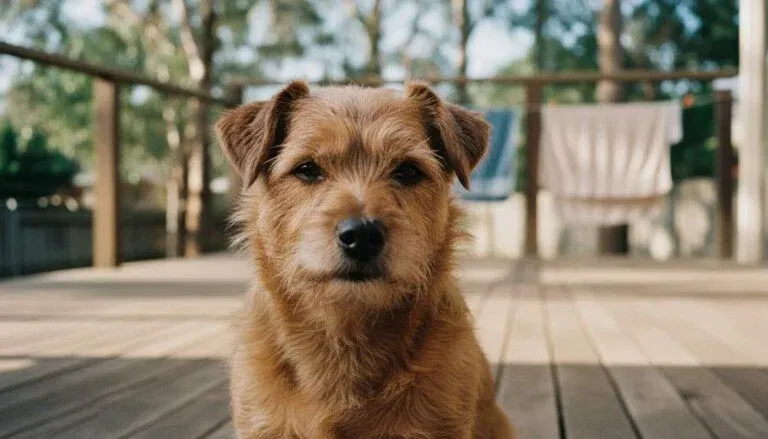
The Norwich Terrier looks like someone took a normal terrier and used the shrink setting, but forgot to shrink the personality. Standing just 25 centimetres at the shoulder and weighing less than your average house cat, this prick-eared little powerhouse is one of the smallest working terrier breeds in the world — and one of the rarest.
Bred in East Anglia, England to hunt rats and bolt foxes from their dens, the Norwich became so popular with Cambridge University students in the 1880s that it eventually became the unofficial mascot. Today, the breed sits on the Kennel Club’s vulnerable breeds list, with fewer than 300 births per year in the UK. In Australia, finding one is even harder.
But for those who manage to get their hands on a Norwich Terrier, the reward is a dog with genuine terrier fire, surprising toughness, and a deep, unwavering loyalty that makes them one of the most devoted companions you’ll ever meet. Here’s the full, honest rundown for Aussie buyers.
What You’ll Learn
- Breed traits & temperament
- Health concerns to know
- True cost in Australia
- Training & exercise needs
- Is this breed right for you?
Breed Quick Facts Table
| Trait | Details |
|---|---|
| Breed Group | Terrier (ANKC & AKC) |
| Origin | East Anglia, England |
| Size | 25 cm (10 inches) at the shoulder |
| Weight | 4.5–6.5 kg (10–14 lbs) |
| Lifespan | 12–16 years (UK study average: 14 years) |
| Coat | Wiry, hard, straight double coat — hand-stripping recommended |
| Colours | Red, wheaten, black and tan, grizzle |
| Temperament | Spirited, affectionate, fearless, eager to please, curious |
| Shedding | Low to moderate — sheds twice yearly, minimal between blowouts |
| Hypoallergenic | Largely yes — low-shedding wiry coat suits many allergy sufferers |
| Good With Kids | Yes — playful and sturdy enough for supervised children |
| Good With Other Dogs | Generally good — sociable for a terrier. Strong prey drive with small animals. |
| Exercise Needs | Moderate — 30–45 minutes daily plus mental stimulation |
| Barking | Moderate to high — vocal when excited or alerting. Trainable with early work. |
| Puppy Price (AUD) | $3,500–$6,000+ (extremely rare, long waitlists) |
History & Origins
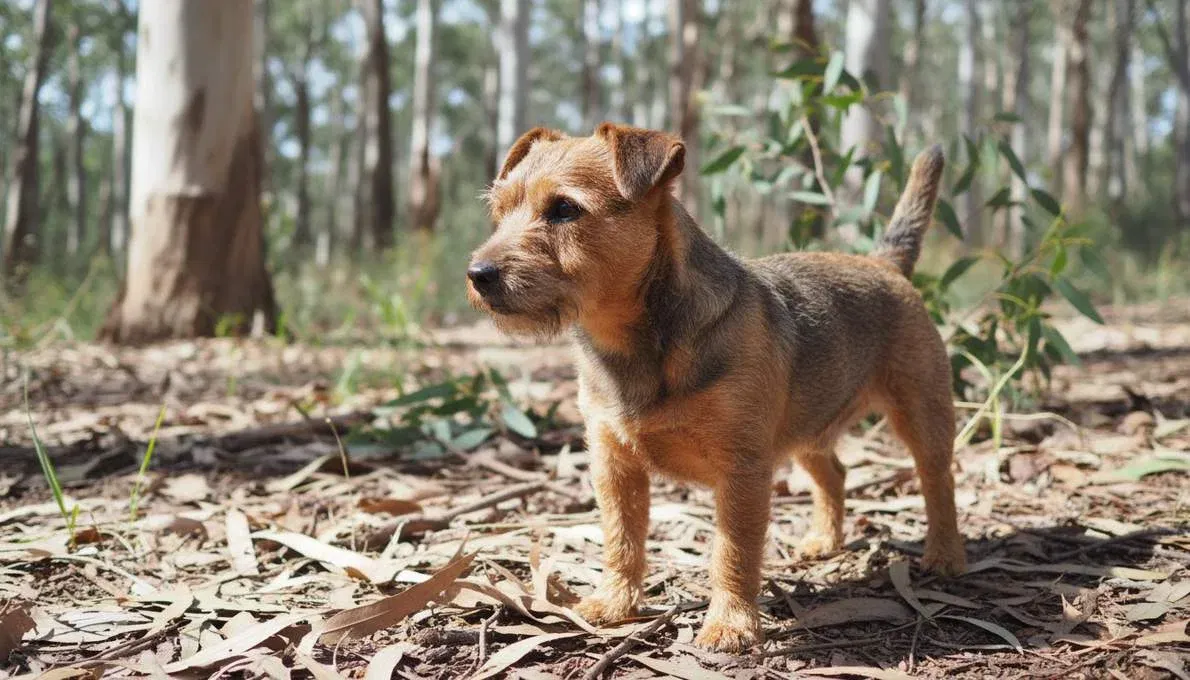
The Norwich Terrier and the Norfolk Terrier share identical origins — they were the same breed until 1964 in the UK and 1979 in the US. The only physical difference between them is their ears: the Norwich has pricked (upright) ears; the Norfolk has folded (drop) ears. Everything else — size, coat, temperament, working heritage — is essentially the same.
The breed’s story begins in the 1880s in East Anglia, eastern England, where small, tough terriers were bred to hunt rats in stables and barns. A dog dealer named Charles Lawrence in nearby Chesterton bred terriers from Irish Terriers, Yorkshire Terriers, and small red ratting dogs kept by Romani communities in Norfolk county. These dogs became popular with Cambridge University students, who smuggled them into their rooms.
A dog named Rags, kept at a livery stable on Trumpington Street in Cambridge, became the founding sire of the breed line. Rags was bred to various local sporting terriers, producing red-coated offspring with excellent working drive. The breed was recognised by the English Kennel Club in 1932 and the AKC in 1936. When the two ear types were finally separated into distinct breeds, the prick-eared variety kept the Norwich name.
Today, the Norwich Terrier is classified as a vulnerable breed. Fewer than 300 are born annually in the UK. They have small litters, high caesarean section rates (over a third of litters), and a limited breeding population globally. In Australia, registered breeders are extremely scarce, making this one of the hardest terrier breeds to acquire.
Temperament & Personality
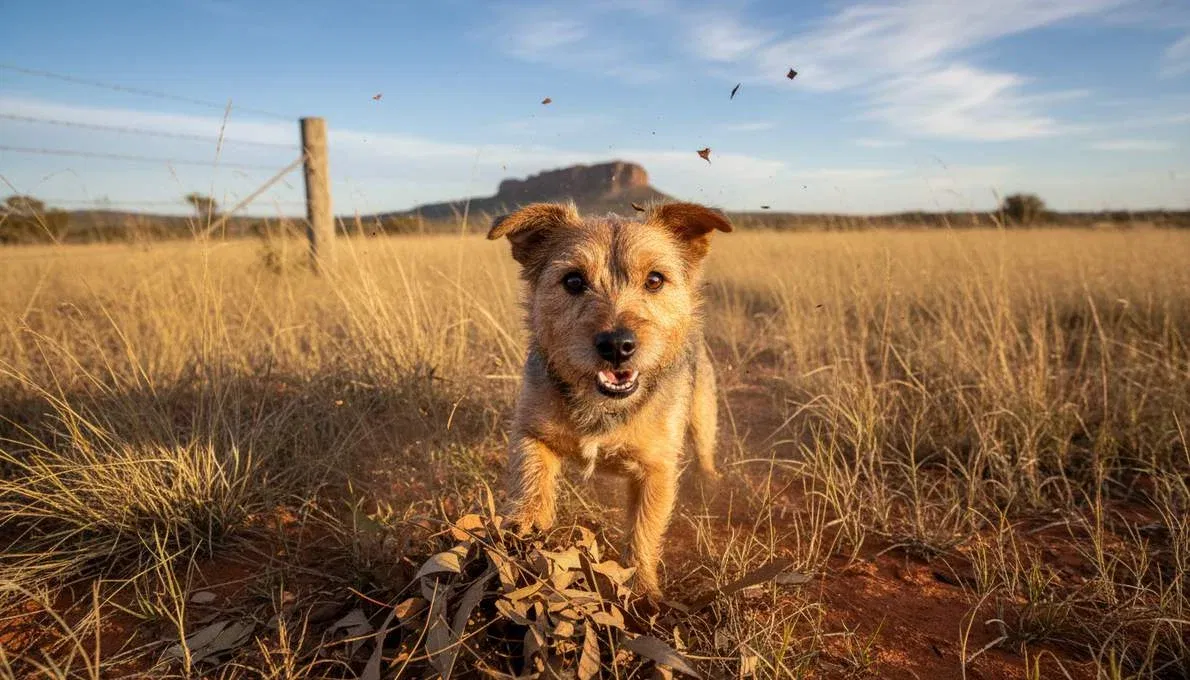
The Norwich Terrier is often described as having one of the best temperaments in the entire Terrier Group — and it’s a fair claim. They combine terrier fire with genuine sociability and affection in a way that few small breeds manage.
Norwich Terriers are intensely loyal and affectionate. They want to be involved in absolutely everything you do. They’ll follow you from room to room, sit on your lap while you work, and sleep as close to you as physically possible. They’re sometimes called “velcro dogs” for this reason. They form bonds with their entire household, not just one person, and they genuinely enjoy being part of family life.
they’re playful and surprisingly robust for their size. They can handle energetic kids and will play for hours. However, they’re still small dogs with strong wills — rough handling won’t be tolerated, so supervision with younger children is always smart.
Norwich Terriers are generally sociable. They’re more cooperative than many terrier breeds and usually get along well in multi-dog households. However, they have a strong prey drive — small animals like rabbits, guinea pigs, and rodents are not safe companions. This is a breed that was literally designed to catch and dispatch small creatures.
they’re curious rather than suspicious. They’ll bark to announce visitors but warm up quickly. They make good watchdogs (everything gets announced) but terrible guard dogs (at 5 kg, they’re guarding nothing). Most Norwich Terriers will try to befriend anyone who gives them attention.
they dig, they chase, they bark, and they have an independent streak that means recall can be… optional. They’re not as stubborn as some terrier breeds, but they’re still terriers. Off-lead in unfenced areas is never safe — if they see something worth chasing, they’re gone.
The Norwich Terrier is one of the most pleasant small dogs you can own. They’re not yappy, neurotic lapdogs — they’re genuine working terriers with big hearts, big courage, and a genuine love of people. If you can find one, you’ll wonder how this much personality fits in such a small package.
Health & Genetic Conditions
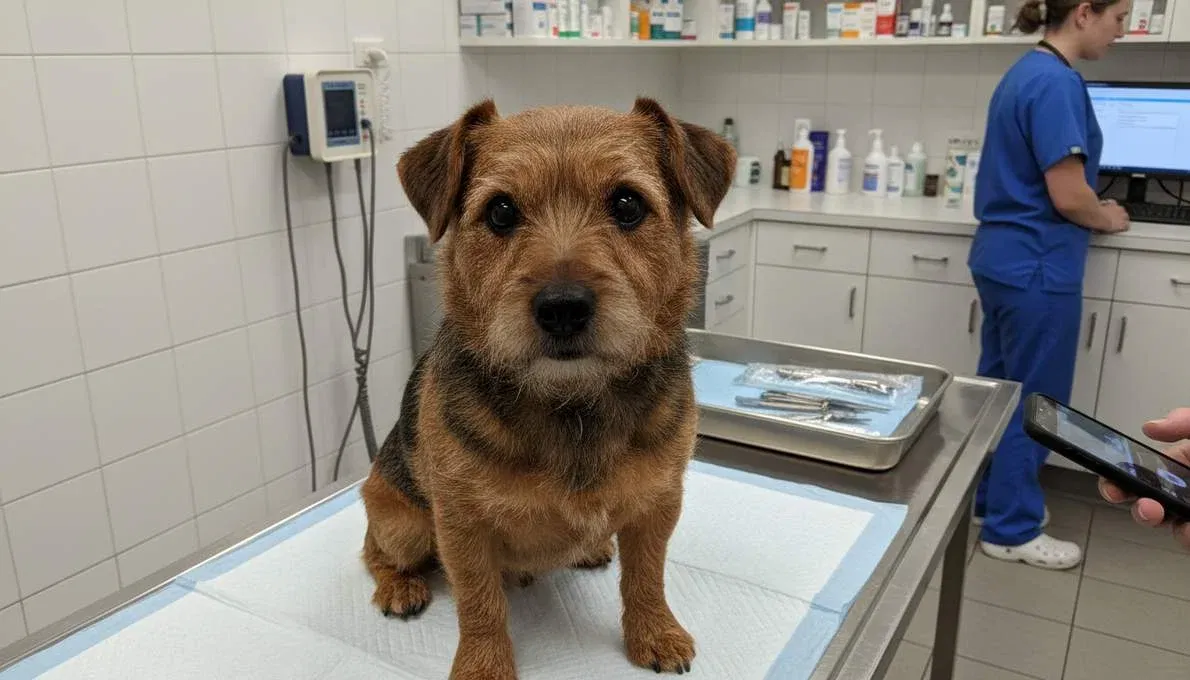
Norwich Terriers are generally a healthy, sturdy breed, but their limited gene pool (small litters, small breeding population, high inbreeding coefficient) means certain inherited conditions appear at notable rates. Some of these are breed-specific and unusual among dogs generally.
Prevalence: A respiratory condition unique to Norwich Terriers — distinct from the brachycephalic syndrome seen in flat-faced breeds; linked to a specific genetic mutation (ADAMTS3) and ranges from mild noisy breathing to severe respiratory distress
Symptoms: Noisy or laboured breathing, exercise intolerance, gagging, coughing, and in severe cases significant breathing difficulty especially during excitement or warm weather
Treatment Cost (AUD): $2,000–$6,000+ for surgical correction depending on severity
Prevention: Buy from breeders who are actively working to screen for this condition; avoid over-exercising your Norwich in hot or humid weather and monitor breathing closely — seek veterinary assessment at the first sign of respiratory difficulty
Upper Airway Syndrome in Norwich Terriers involves abnormal tissue folds in the larynx that partially obstruct airflow, making breathing harder than it should be. Unlike the flat-faced breeds most people associate with breathing problems, this is a condition specific to the Norwich and driven by its own genetic cause. Surgical correction can significantly improve quality of life, and research into the ADAMTS3 gene mutation is helping breeders work toward reducing its prevalence in future generations. (Source: Norwich Terrier Health Foundation)
Prevalence: Norwich Terriers are the second most predisposed breed to this condition at 7.4% — compared to just 0.35% in mixed breeds — making it a significant and well-documented concern for the breed
Symptoms: Stunted growth compared to littermates, neurological signs such as staring, circling or disorientation, seizures, poor appetite, vomiting, and unusual behaviour following meals
Treatment Cost (AUD): $3,000–$8,000+ for surgical correction depending on the location and complexity of the shunt
Prevention: No guaranteed prevention for congenital cases; buy from health-conscious breeders and have any puppy showing slow growth or neurological signs assessed by a vet promptly — early intervention gives the best outcomes
A portosystemic shunt is an abnormal blood vessel that allows blood to bypass the liver entirely, meaning toxins that should be filtered out instead circulate through the body and affect the brain. Given that Norwich Terriers are among the most predisposed breeds, it is a condition all owners should be aware of from the very start. Surgery to close the abnormal vessel is the most effective treatment, and many dogs go on to live completely normal, healthy lives when it is caught and treated early. (Source: VCA Animal Hospitals)
Prevalence: Norwich Terriers develop cataracts at more than double the rate of mixed breeds — 4.02% compared to 1.61% — most commonly in mature dogs; regular eye examinations are recommended throughout the dog’s life
Symptoms: A cloudy, bluish, or whitish appearance in one or both eyes, bumping into objects or furniture, reluctance to navigate dark spaces or stairs, and gradually worsening vision
Treatment Cost (AUD): $2,000–$4,000 per eye for surgical removal and lens replacement
Prevention: Buy from breeders who conduct eye health testing; schedule regular eye checks with your vet from middle age onward — catching cataracts early allows surgery to be performed before vision is severely compromised
Cataracts cause the normally clear lens of the eye to become progressively cloudy, reducing the amount of light that reaches the retina and gradually impairing vision. Surgical removal is highly effective — most dogs regain significant vision and adjust very well after the procedure. Because Norwich Terriers are statistically more prone to this condition than the average dog, keeping up with routine eye examinations is particularly worthwhile for this breed. (Source: American College of Veterinary Ophthalmologists)
Prevalence: Common in Norwich Terriers as in most small breeds — graded from 1 (mild and self-correcting) through to 4 (permanent displacement requiring surgery); caused by laxity in the ligaments supporting the kneecap
Symptoms: Occasional skipping or hopping on a back leg, a “bunny hop” gait that comes and goes, intermittent lameness, or in more severe grades persistent difficulty walking on the affected leg
Treatment Cost (AUD): $1,500–$4,000 per knee for surgical correction in moderate to severe cases
Prevention: Buy from breeders who screen for patellar luxation; maintain a healthy weight throughout your dog’s life to reduce ongoing stress on the knee joints
Patellar luxation means the kneecap slips out of its normal groove in the leg. You might notice your Norwich suddenly lift a back leg for a few strides then carry on as if nothing happened — that is often the kneecap briefly popping in and out. Grade 1 and 2 cases are often managed conservatively with weight control and anti-inflammatories, while Grade 3 and 4 cases cause enough ongoing discomfort and joint damage that surgery is the recommended course of action. (Source: VCA Animal Hospitals)
Prevalence: A known concern in Norwich Terriers and small breeds generally — weakening of the cartilage rings that support the windpipe causes partial airway obstruction that worsens over time
Symptoms: A distinctive honking cough — often described as a “goose honk” — particularly during exercise, excitement, or when pressure is applied to the throat; gagging and breathing difficulty in more advanced cases
Treatment Cost (AUD): $1,000–$5,000 ranging from medical management with medication through to surgical intervention in severe cases
Prevention: Always use a harness instead of a neck collar — never attach a lead directly to a collar on a Norwich Terrier; avoid situations that cause prolonged over-excitement or heavy exercise in warm conditions
Tracheal collapse happens when the rings of cartilage that keep the windpipe open weaken and flatten, partially blocking airflow. It is a progressive condition but can be managed very effectively in most cases with medication and simple lifestyle adjustments. The single most important habit any Norwich Terrier owner can adopt is switching to a harness — pressure from a collar on the throat can trigger or significantly worsen the condition over time. (Source: VCA Animal Hospitals)
Prevalence: Documented in Norwich Terriers — a progressive and currently incurable spinal cord disease; a DNA test is available to identify dogs that carry the gene mutation responsible
Symptoms: Gradual weakness and wobbliness in the back legs, dragging of the hind feet, difficulty rising, and progressive loss of hind limb function over months to years
Treatment Cost (AUD): $500–$2,000 for diagnosis and supportive care; there is currently no cure or treatment to halt progression
Prevention: DNA testing is available — responsible breeders screen their dogs before breeding to avoid producing affected puppies; while carriers can be bred carefully, two high-risk dogs should never be paired
Degenerative Myelopathy is a progressive disease of the spinal cord that slowly destroys the nerve fibres responsible for movement and coordination in the hind limbs. It is painless but relentlessly progressive, and there is currently no treatment to stop or reverse it. Physiotherapy and supportive care — including mobility aids and hydrotherapy — can help maintain quality of life and keep affected dogs comfortable and active for as long as possible. DNA testing by breeders is the most important tool available to reduce how frequently it appears. (Source: OFA — Orthopedic Foundation for Animals)
Prevalence: Very common in Norwich Terriers — plaque and tartar accumulate rapidly in this breed, making regular dental care essential to prevent tooth loss, gum disease, and secondary infections
Symptoms: Bad breath, visible yellow or brown tartar build-up, red or swollen gums, loose teeth, and discomfort or reluctance when eating
Treatment Cost (AUD): $500–$1,500 for a professi
Breeding note: over one-third of Norwich Terrier litters require caesarean section delivery, and stillbirth rates exceed 20%. This contributes to the breed’s rarity and high puppy prices. Ask breeders about UAS screening, PSS history, eye certifications, and patella grading. With such a small gene pool, health testing is critical.

Lifespan & Longevity
The Norwich Terrier lifespan is impressive: 12–16 years, with a UK study finding an average of 14 years. Many Norwich Terriers live comfortably into their mid-teens, making them one of the longer-lived terrier breeds.
What supports longevity: lean body condition (small dogs gain weight easily, stressing joints and organs), excellent dental care (this breed is particularly prone to dental disease, which can affect overall health), annual respiratory monitoring for UAS symptoms, a high-quality diet appropriate for their size and activity level, and consistent mental and physical stimulation. The breed’s generally robust constitution works in their favour — the main threats to longevity are the specific inherited conditions listed above, which responsible breeding and early detection can manage.
Grooming & Care
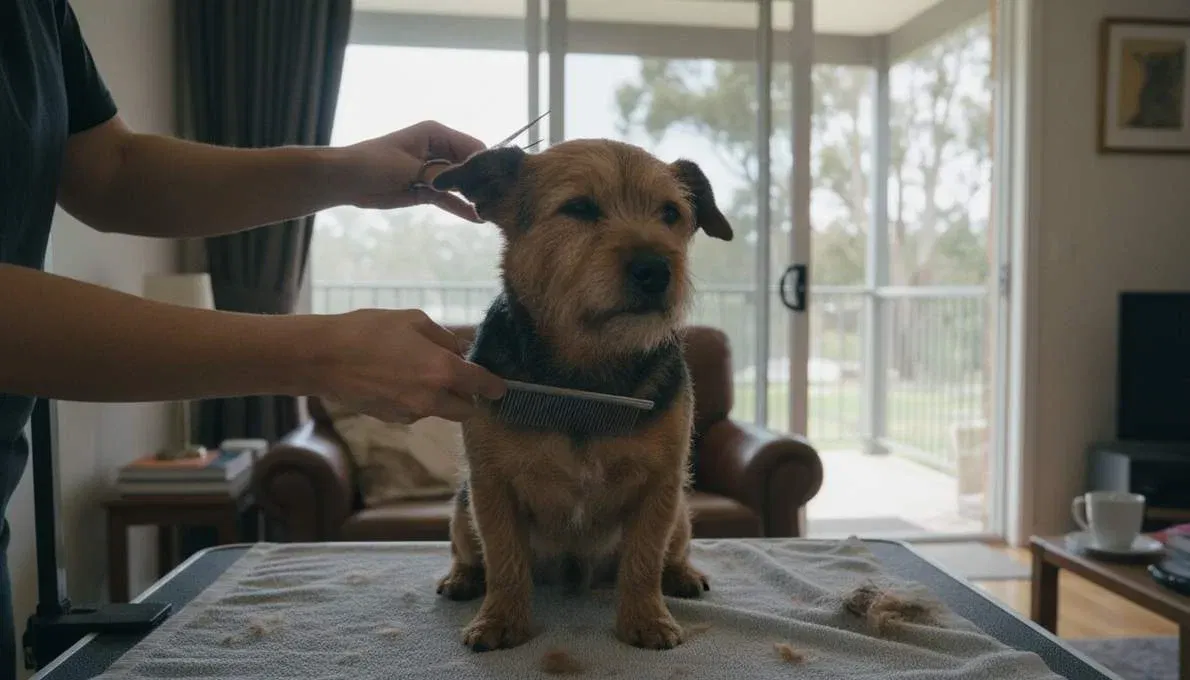
Norwich Terrier grooming follows the same principles as its cousin the Norfolk: a wiry double coat that benefits from hand-stripping rather than clipping. Clipping softens the coat texture and dulls the colour over time.
Grooming Schedule
| Task | Frequency | Notes |
|---|---|---|
| Brushing / Combing | 1–2 times per week (daily is ideal) | Use a steel greyhound comb. Removes dead hair and prevents matting. |
| Hand-Stripping | Twice yearly minimum (spring and autumn) | Removes dead outer coat by hand. Maintains wiry texture and rich colour. Find a terrier-experienced groomer. |
| Bathing | Every 4–6 weeks or as needed | Wiry coat is naturally dirt-resistant. Over-bathing softens texture. |
| Nail Trimming | Every 2–3 weeks | Small dogs often need more frequent trimming as nails don’t wear naturally. |
| Ear Cleaning | Weekly | Erect ears are well-ventilated but still check for debris. |
| Teeth Brushing | Daily (minimum 3–4 times per week) | Critical for this breed. Rapid plaque buildup. Start as a puppy. |
Australian grooming tip: finding a groomer who can hand-strip a terrier coat in Australia is a challenge. Many default to clipping, which is easier but compromises the coat. Ask your breeder for recommendations, or learn to hand-strip at home — it’s a skill worth acquiring for any wire-coated terrier.
Are Norwich Terriers hypoallergenic? Largely, yes. Their wiry, low-shedding coat produces less dander than most breeds. While no dog is truly 100% hypoallergenic, Norwich Terriers are a strong choice for people with mild to moderate dog allergies.
Exercise Needs
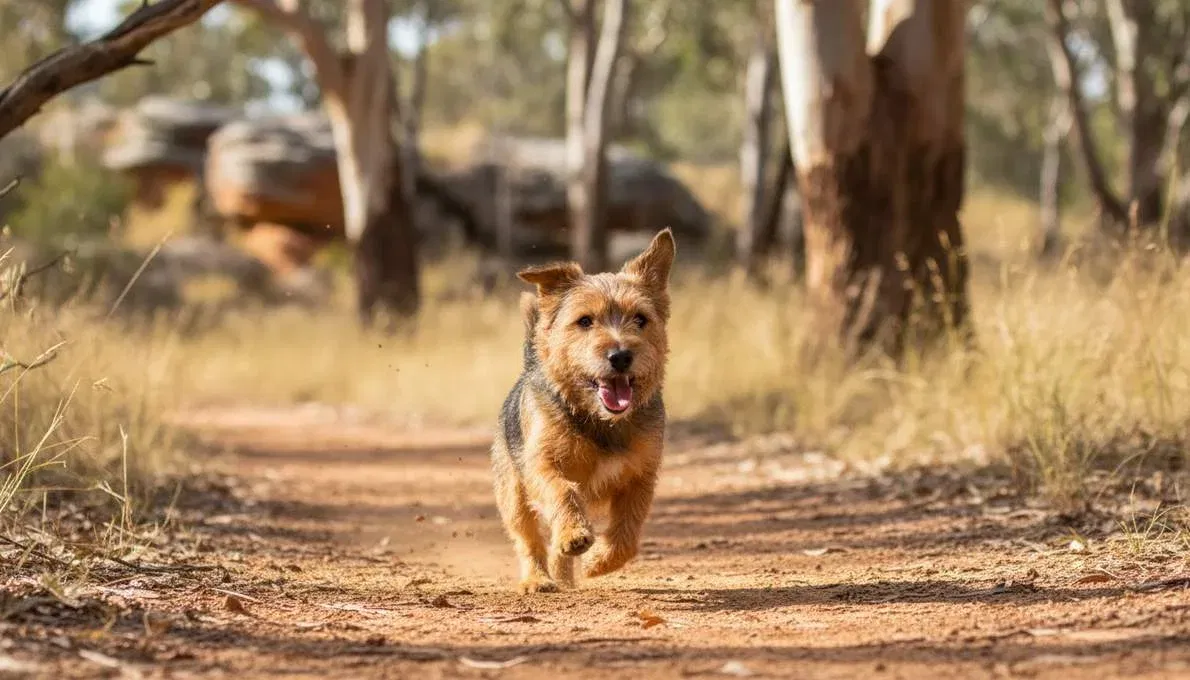
Norwich Terriers are active, energetic dogs that need regular exercise — but their small size means their requirements are very manageable. Aim for 30–45 minutes of daily activity, which can include brisk walks, play sessions, fetch, and interactive games.
They’re surprisingly good hiking companions for their size and have stamina that goes well beyond what their tiny legs suggest. They enjoy earth dog trials, agility, lure coursing, and scent work — anything that engages their sharp minds and working instincts.
Mental stimulation is essential. A bored Norwich Terrier will dig, bark, and find its own entertainment (usually at the expense of your shoes or garden). Puzzle feeders, scent games, short training sessions, and interactive toys keep them engaged and well-behaved.
Australian climate note: Norwich Terriers handle Australian conditions reasonably well. Their small size and wiry coat mean they’re less prone to overheating than larger, heavier-coated breeds. In extreme summer heat, exercise during cooler hours and always provide shade and water. They’re well-suited to apartment living in Australian cities provided exercise needs are met.
Training Guide
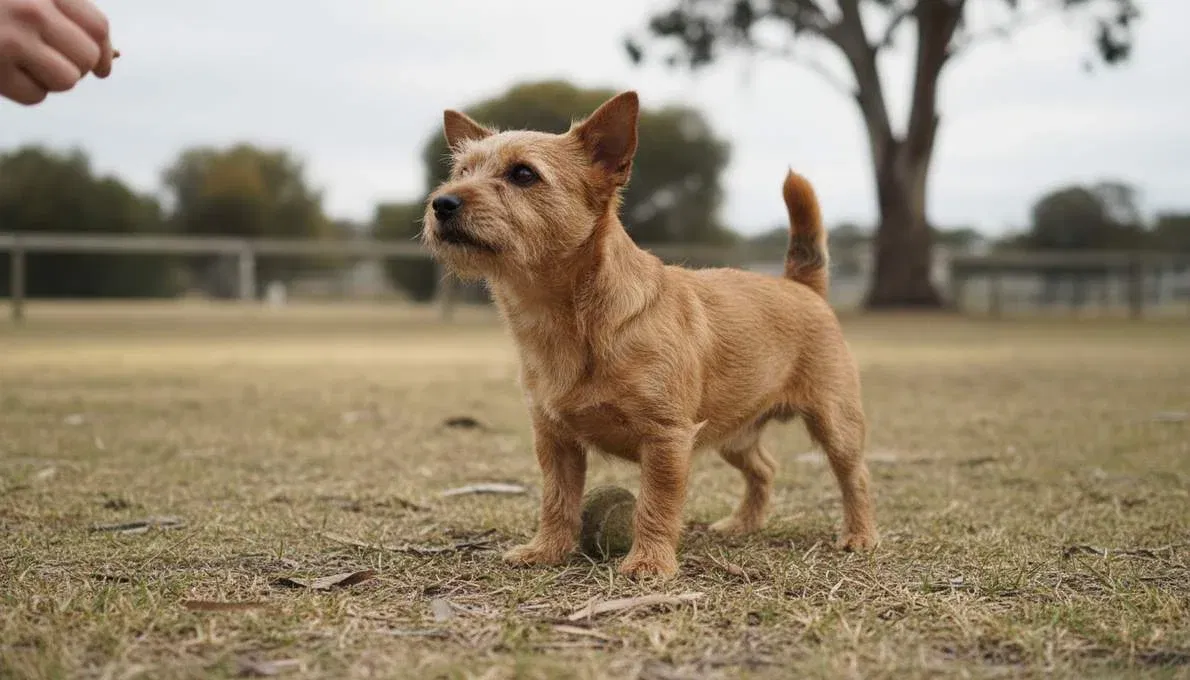
Norwich Terriers are among the more trainable terrier breeds. They’re intelligent, eager to please, and responsive to positive reinforcement — but they’re still terriers, which means they have moments of creative disobedience.
Socialisation & Training Timeline
| Age | Focus Area | Key Tips |
|---|---|---|
| 8–12 weeks | Socialisation, handling, bite inhibition | Critical period. Expose to people, dogs, sounds, environments. Puppy school is essential for this breed. |
| 3–6 months | Basic obedience, lead walking, bark management, dental handling | Start “quiet” command early. Get them used to teeth brushing now — you’ll be doing it for 14+ years. |
| 6–12 months | Recall, impulse control, settle command | Recall will always be a work in progress near prey. Practice in safe, fenced environments. They mature at about 1 year. |
| 1+ years | Advanced training, earth dog, agility, scent work | Norwich excel at dog sports. Keep training fun and varied — they get bored with repetition. |
Training difficulty: 3/10. Norwich Terriers are one of the easiest terrier breeds to train. They’re food-motivated, people-oriented, and genuinely want to cooperate. The main challenges are prey drive management (they will chase small animals), controlling alert barking, and the occasional bout of terrier stubbornness. Positive reinforcement with treats, praise, and games works brilliantly. Harsh corrections are counterproductive and unnecessary with this sensitive breed.
Cost of Ownership in Australia
| Expense | Annual Ongoing |
|---|---|
| Registered Puppy (ANKC) | — |
| Desexing | — |
| Food (premium small breed) | $600–$1,200 |
| Vet Check-ups & Vaccinations | $300–$600 |
| Pet Insurance | $500–$1,200 |
| Flea/Tick/Worming | $150–$300 |
| Grooming (hand-stripping) | $200–$600 (2–4 prof. strips/year) |
| Dental Care (professional) | $500–$1,500 (annual dental) |
| Bedding, Crate, Toys | $100–$200 |
| Training (puppy school) | — |
| Council Registration | $20–$150 (varies by LGA) |
Estimated first-year cost: $5,500–$11,000 AUD.
Estimated annual ongoing cost: $2,500–$5,500 AUD. The dental care line item is worth noting — this breed’s rapid plaque buildup makes professional cleaning a near-annual necessity.
Finding a breeder:
Norwich Terrier breeders in Australia are extremely limited. Start with Dogs Australia (dogsaustralia.org.au) and DogzOnline.com.au. Breeders may be located in VIC, NSW, or QLD, but numbers are very small. Expect waitlists of 1–3 years or longer. Because of small litter sizes and high caesarean rates, puppies are genuinely scarce. Be cautious of anyone offering Norwich Terrier puppies without ANKC registration or health testing.
Rescue:
Norwich Terrier rescues are virtually non-existent in Australia due to the breed’s rarity. Contact breed clubs directly or check PetRescue.com.au for small terrier mixes.
Is the Norwich Terrier Right for You?
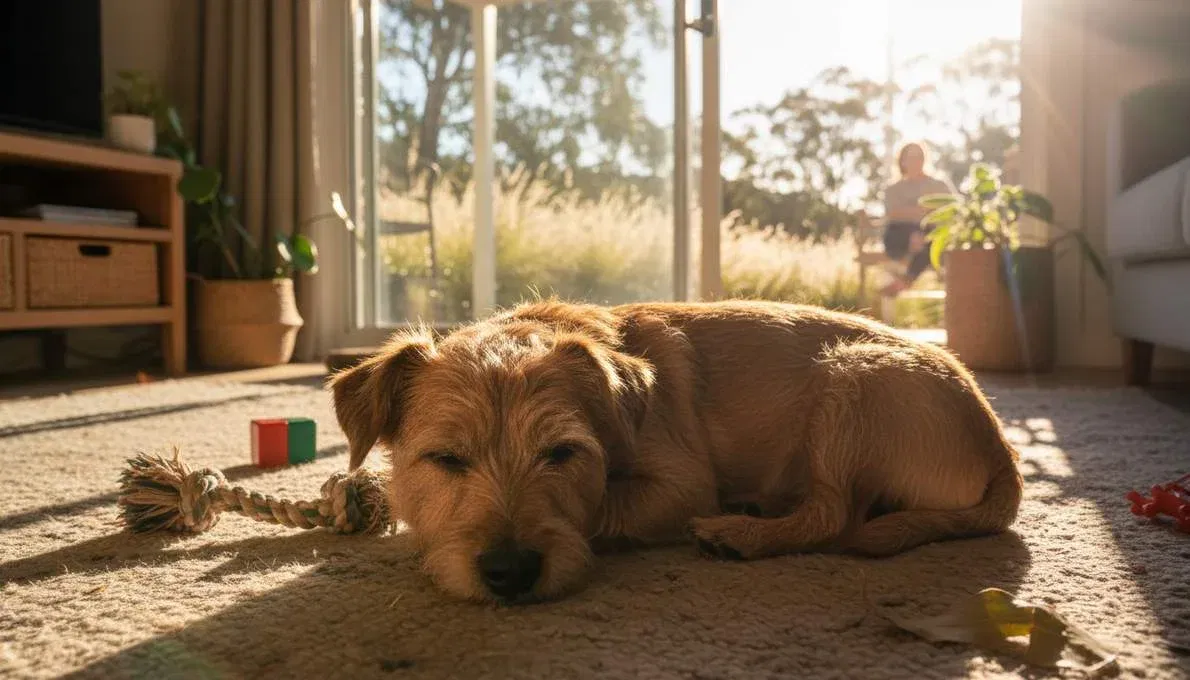
you want a small, active, affectionate dog with genuine terrier character, you enjoy daily walks and interactive play, you’re willing to learn hand-stripping or find a terrier-specialist groomer, you want a dog that’s good with kids and other dogs, you’re happy with apartment or house living (provided exercise needs are met), you want a long-lived companion (12–16 years), and you have the patience to wait potentially years for a puppy.
you have small pets like rabbits, guinea pigs, or rats (prey drive is strong), you want a silent, low-energy lapdog (they’re active and vocal), you want an off-lead dog in open spaces (recall is never fully reliable), you’re unwilling to commit to regular dental care (this breed needs it), or you need a dog immediately (supply is extremely limited).
If you’re comparing similar breeds, the Norfolk Terrier is almost identical except for ear shape and may be marginally more available. The Border Terrier is a slightly larger cousin with a similar gentle terrier temperament. The Cairn Terrier offers a comparable feisty-but-affectionate personality in a slightly more available package. The Australian Terrier is a local breed with similar size and working drive.
In three lines: The Norwich Terrier packs more personality per kilogram than almost any breed alive — they’re courageous, affectionate, funny, and fiercely loyal. Their rarity makes them hard to find and expensive to buy, but their low ongoing costs, long lifespan, and easy-going temperament make them worth the wait. If you manage to find a Norwich in Australia, you’ll have a shadow, a comedian, and a best mate for the next 14 years.
Frequently Asked Questions
How much does a Norwich Terrier cost in Australia?
Expect $3,500–$6,000+ AUD from an ANKC-registered breeder. Norwich Terriers are extremely rare in Australia with very few active breeders. Waitlists of 1–3 years or more are normal.
Do Norwich Terriers shed?
Minimally. Their wiry double coat sheds lightly year-round with two heavier seasonal blowouts. Regular brushing and twice-yearly hand-stripping keep shedding well under control. They’re considered largely hypoallergenic.
Are Norwich Terriers hypoallergenic?
Largely, yes. Their low-shedding wiry coat produces less dander than most breeds. While no dog is 100% hypoallergenic, Norwich Terriers are among the best options for people with mild to moderate dog allergies.
What is the difference between a Norwich Terrier and a Norfolk Terrier?
Ears. The Norwich Terrier has pricked (upright) ears; the Norfolk Terrier has folded (drop) ears. They were the same breed until 1964 in the UK and 1979 in the US. Their size, coat, temperament, and care needs are nearly identical.
How long do Norwich Terriers live?
12–16 years, with a UK study averaging 14 years. This is excellent for any dog breed and one of the Norwich’s biggest advantages.
Do Norwich Terriers bark a lot?
They can be vocal, particularly when excited or alerting. They’re terriers bred for working — barking is part of their heritage. Early training with a “quiet” command helps manage it, but they’ll never be completely silent dogs.
Are Norwich Terriers good family dogs?
Yes. They’re affectionate, playful, good with children (when supervised), and generally sociable with other dogs. They’re one of the most family-friendly terrier breeds. The main caveat is their prey drive around small pets.
What health problems do Norwich Terriers have?
The key breed-specific conditions are Upper Airway Syndrome (UAS), a respiratory condition unique to the breed; portosystemic shunt (liver blood vessel defect, affecting about 7.4%); cataracts; patellar luxation; tracheal collapse; and dental disease. Responsible breeders screen for these conditions.
Are Norwich Terriers easy to train?
Yes — they’re one of the most trainable terrier breeds. They’re intelligent, food-motivated, and people-oriented. Positive reinforcement works beautifully. The only real challenges are prey drive and occasional terrier stubbornness.
Can Norwich Terriers live in apartments?
Absolutely. Their small size, manageable exercise needs (30–45 minutes daily), and adaptable nature make them excellent apartment dogs. Just provide adequate mental stimulation and manage barking with early training.
How big do Norwich Terriers get?
Norwich Terriers stand about 25 cm (10 inches) at the shoulder and weigh 4.5–6.5 kg (10–14 lbs). They’re one of the smallest working terrier breeds. Full size is typically reached around 6–8 months, with full maturity at about one year.
1. American Kennel Club (AKC) — Norwich Terrier Breed Information: https://www.akc.org/dog-breeds/norwich-terrier/ [FOLLOW]
2. PetMD — Norwich Terrier Health & Care Guide: https://www.petmd.com/dog/breeds/norwich-terrier [FOLLOW]
3. Wikipedia — Norwich Terrier: https://en.wikipedia.org/wiki/Norwich_Terrier [FOLLOW]
4. Hill’s Pet — Norwich Terrier Breed Profile: https://www.hillspet.com/dog-care/dog-breeds/norwich-terrier [FOLLOW]
5. WebMD Pets — What to Know About Norwich Terriers: https://www.webmd.com/pets/dogs/what-to-know-about-norwich-terriers [FOLLOW]
6. Chewy — Norwich Terrier Breed Guide: https://www.chewy.com/education/dog-breeds/norwich-terrier [FOLLOW]
7. Wisdom Panel — Norwich Terrier Facts: https://www.wisdompanel.com/en-us/dog-breeds/norwich-terrier [FOLLOW]
8. Lancaster Puppies — Norwich Terrier Health Guide: https://www.lancasterpuppies.com/pet-advice/norwich-terrier-health-hereditary-issues-and-lifespan-guide.html [FOLLOW]
9. Dogs Australia — Breed Information: https://dogsaustralia.org.au/ [FOLLOW]
Breeds | Terrier Breeds | Small Breeds