
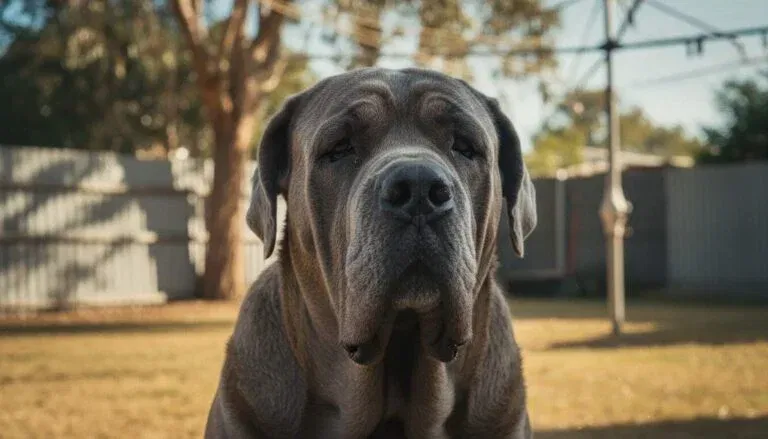
The first time you see a Neapolitan Mastiff in person, you don’t just notice them — you stop dead in your tracks. Somewhere between a bear, a hippo and a very saggy couch cushion, this ancient Italian breed carries itself with the quiet confidence of a dog that once fought alongside Roman legions. These days, they’re more likely to be found drooling on your couch than guarding a fortress, but make no mistake: the Neapolitan Mastiff is one of the most imposing and devoted breeds you’ll ever encounter.
If you’re in Australia and thinking about bringing home a Neo, you need the real story — not the glossy pet-shop version. This breed comes with enormous love, enormous vet bills, and a slobber radius that’ll have you rethinking your furniture choices. Let’s get into it.
What You’ll Learn
- Breed traits & temperament
- Health concerns to know
- True cost in Australia
- Training & exercise needs
- Is this breed right for you?
Neapolitan Mastiff at a Glance
| Trait | Details |
|---|---|
| Breed Group | Utility (ANKC) / Working (AKC) |
| Origin | Southern Italy (Naples region) |
| Size | Males: 66–75 cm / Females: 60–68 cm at the shoulder |
| Weight | Males: 60–70 kg / Females: 50–60 kg |
| Lifespan | 7–9 years (some reach 10 with excellent care) |
| Coat | Short, dense, smooth — uniform up to 1 inch long |
| Colours | Blue (grey), black, mahogany, tawny — brindle markings possible |
| Temperament | Loyal, protective, calm, stubborn, affectionate with family |
| Shedding | Low to moderate — heavier in spring and autumn |
| Drooling | Extreme. Budget for towels. |
| Good With Kids | Yes, with supervision — their size can cause accidental knocks |
| Exercise Needs | Moderate — 30–45 minutes daily, avoid over-exercising |
| Puppy Price (AUD) | $2,500–$5,000+ from a registered breeder |
History & Origins
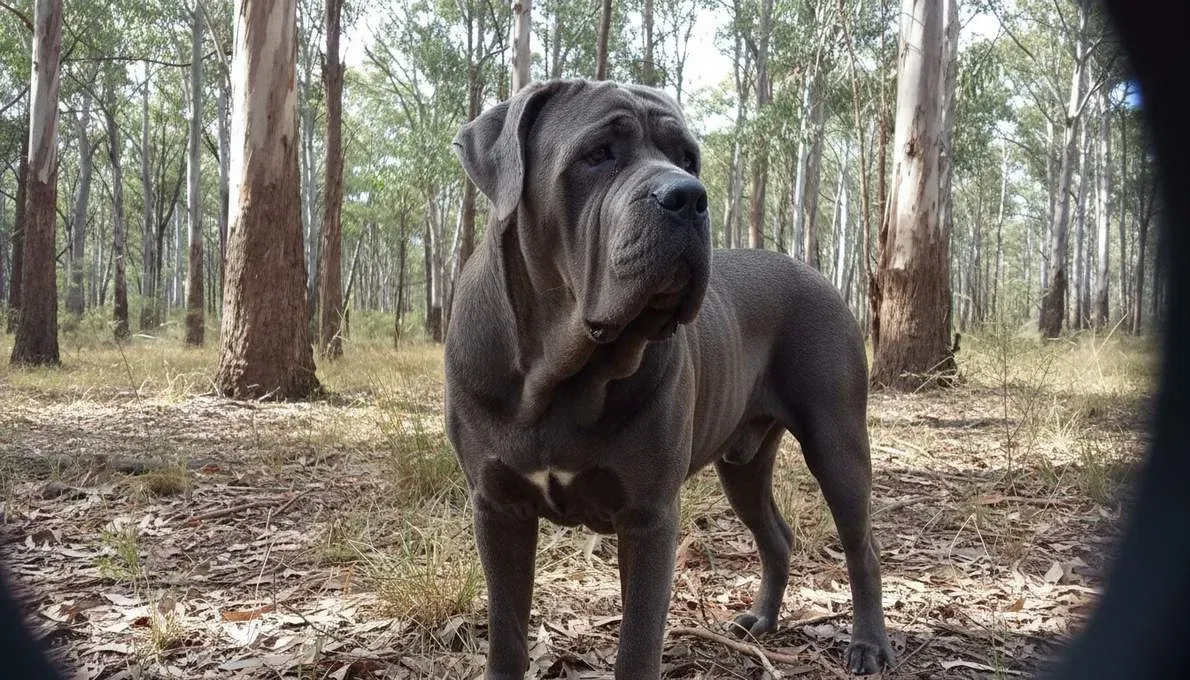
The Neapolitan Mastiff is one of the oldest recognisable dog breeds on the planet, with a lineage stretching back roughly 4,000 years. Their ancestors, the ancient Molossian war dogs, were used by armies across the Mediterranean. Alexander the Great is said to have crossed giant Macedonian war dogs with shorthaired Indian dogs around 330 BC, and the resulting offspring made their way to Rome where they served as war dogs, gladiators and estate guardians.
The breed as we know it today was shaped in the Naples region of southern Italy, where locals selectively bred for massive size, heavy loose skin (which served as natural armour against bites), and an intimidating wrinkled appearance. For centuries they guarded Italian estates and farms, largely unknown outside the region.
The Neapolitan Mastiff nearly went extinct after World War II. In 1946, journalist Piere Scanziani spotted a Neo at a Naples dog show and championed the breed’s revival, eventually establishing a breed standard. The FCI recognised them in 1949, the AKC followed in 2004, and the breed first arrived in Australia in the late 1980s. The first Australian-bred litter was born on 26 November 1992 under the Galesha prefix.
Today, Australia has a small but passionate community of registered Neo breeders, with kennels like Eterno, Cane Russare, and Omaggio consistently producing health-tested, show-quality dogs.
Temperament & Personality
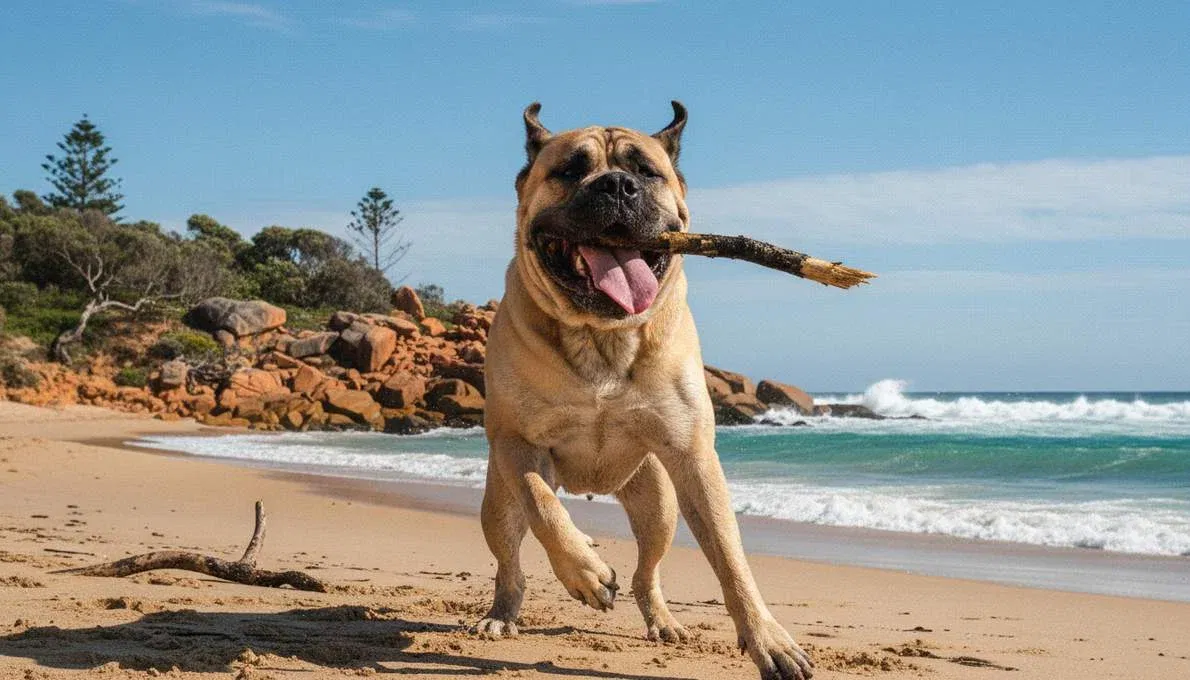
Living with a Neapolitan Mastiff is nothing like living with a Labrador. Where a Lab wants to befriend every stranger at the park, a Neo will position itself between you and the stranger and stare them down with a look that says, “I haven’t decided about you yet.”
With their family, Neos are shockingly gentle. They’ll lean their 65-kilo frame against your legs, try to climb into your lap, and follow you from room to room like an enormous, wrinkly shadow. They tend to bond most intensely with one person but are affectionate with the whole household. They’re typically good with children, though their sheer size means toddlers can get knocked over unintentionally.
With strangers, expect wariness. This isn’t aggression — it’s hardwired guardian instinct. Neos are naturally protective of their territory and will not willingly allow an unfamiliar person onto the property when left alone. Early and consistent socialisation from puppyhood is absolutely critical. Without it, their protectiveness can tip into territorial aggression.
They’re also stubborn. Wonderfully, infuriatingly stubborn. A Neo will look at you during a training session, fully understand what you’re asking, and decide whether it’s worth the effort. This is a breed that was bred to think independently and make decisions on its own — which is fantastic for a guard dog and frustrating for obedience training.
Neos are slow to mature and remain in “puppyhood” until around three years of age. During this extended adolescent phase, they can be clumsy, mouthy, and test boundaries constantly.
Honest take: If you want a dog that obeys instantly and loves everyone, the Neapolitan Mastiff is not for you. If you want a deeply loyal, intelligent dog that will protect your family with its life and lean on you while you watch TV, this might be the one.
Health & Genetic Conditions
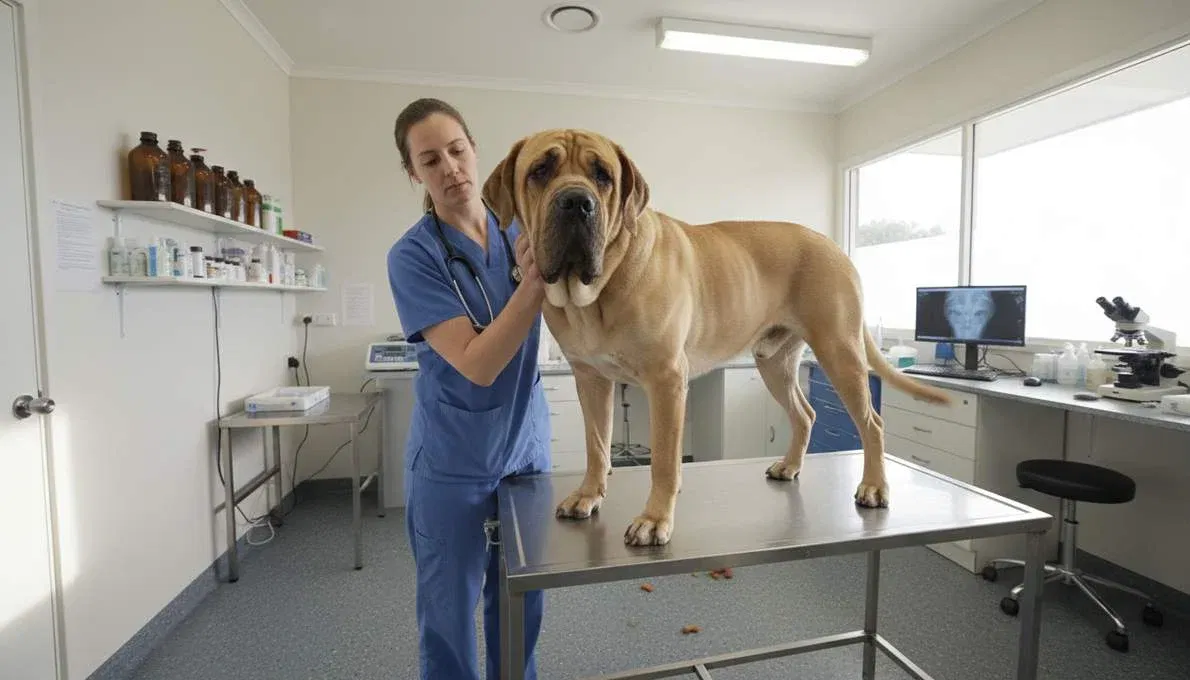
Let’s be upfront: the Neapolitan Mastiff is not the healthiest breed. Their massive size and the very features that make them look so distinctive — the heavy skin folds, the drooping eyelids, the enormous frame — come with real medical costs. Loving a Neo means budgeting for veterinary care that goes well beyond standard check-ups.
Very common in giant breeds including the Neapolitan Mastiff — their sheer body weight places enormous stress on the hip joints; screening is essential for all breeding dogs
Stiffness after rest, reluctance to exercise, lameness in the back legs, difficulty rising from lying down, and progressive worsening of mobility as arthritis develops
$3,000–$8,000+ per hip for surgical intervention; conservative management with medication and supplements is an option for milder cases
Buy from breeders who screen for hip dysplasia; keep your Neo at an appropriate weight — even a small reduction in excess weight makes a meaningful difference in a dog this size
Hip dysplasia occurs when the hip joint doesn’t develop properly, causing the bones to grind against each other rather than moving smoothly. In a dog as heavy as a Neapolitan Mastiff, the impact on daily comfort and mobility is significant. It has a strong genetic component, so choosing a puppy from screened parents is one of the most important steps you can take — and keeping weight managed throughout their life helps protect those joints long term. (Source: OFA — Orthopedic Foundation for Animals)
Especially common in larger and giant breeds; the three bones of the elbow growing at different rates causes painful misalignment that worsens without treatment
Front leg lameness, stiffness after rest, reluctance to extend or flex the front legs, and reduced willingness to exercise or play
$2,500–$6,000 per elbow for surgical correction
Buy from breeders who provide elbow screening clearances; avoid high-impact exercise in growing puppies and maintain a healthy weight throughout development
Elbow dysplasia refers to several developmental abnormalities that affect the elbow joint, all resulting in pain and reduced front leg mobility. The condition is significantly worsened by excess body weight — something particularly relevant in a breed as large as the Neo. Surgical intervention performed early gives the best outcome, and many dogs experience a dramatic improvement in comfort and movement once treated. (Source: OFA — Orthopedic Foundation for Animals)
The second leading cause of death in giant breeds — Neapolitan Mastiffs are at high risk due to their deep chest; every owner must know the warning signs as this is a life-threatening emergency
Visibly swollen or distended abdomen, unproductive retching or attempting to vomit without bringing anything up, restlessness, drooling, and rapid deterioration into collapse
$5,000–$10,000+ for emergency surgery — time is critical and every minute counts
Feed smaller meals two to three times a day rather than one large meal; avoid vigorous exercise immediately before and after eating; ask your vet about a preventative gastropexy procedure which tacks the stomach in place
Bloat — technically called Gastric Dilatation-Volvulus or GDV — is when the stomach fills rapidly with gas and then twists on itself, cutting off blood supply to surrounding organs. It can kill a dog within hours without emergency surgery. Every Neapolitan Mastiff owner should know the signs by heart, because acting within the first hour dramatically increases survival chances. A preventative gastropexy performed during desexing is strongly worth discussing with your vet. (Source: American College of Veterinary Surgeons)
Very common in Neapolitan Mastiffs — their loose facial skin and prominent eye area makes prolapse of the third eyelid gland particularly likely
A visible red or pink fleshy lump appearing in the inner corner of one or both eyes — it looks alarming but is not immediately painful in most cases
$800–$2,000 per eye for surgical correction to reposition the gland
No guaranteed prevention as it is largely structural in this breed; have it treated promptly if it appears to prevent secondary infections and dry eye developing
Cherry eye happens when the gland of the third eyelid — which produces a significant portion of the eye’s tears — pops out of its normal position and becomes visible as a red lump in the corner of the eye. It looks dramatic but is correctable with surgery. It is important to have it treated rather than left alone, as an exposed gland can become infected and its removal can lead to dry eye requiring lifelong management. (Source: VCA Animal Hospitals)
Both conditions are extremely common in Neapolitan Mastiffs — their characteristic drooping skin around the eyes makes eyelid abnormalities almost an expected feature of the breed
Ectropion causes the lower eyelid to droop outward, exposing the eye to debris and dryness; entropion causes the eyelid to roll inward, with lashes rubbing directly against the eyeball causing pain and potential corneal damage
$1,500–$3,500 per eye for surgical correction
No guaranteed prevention given the breed’s facial structure; regular eye cleaning helps minimise irritation and infection — seek veterinary attention at the first sign of eye discomfort or discharge
Ectropion and entropion are essentially opposite problems caused by the same thing — too much loose skin around the eyes. Ectropion leaves the eye exposed and prone to dryness and infection, while entropion causes constant pain as the eyelid rubs against the eye surface. Both are correctable with surgery, and addressing them promptly prevents the long-term corneal damage that can result from leaving them untreated. (Source: American College of Veterinary Ophthalmologists)
One of the most common day-to-day health management issues for Neo owners — the deep skin folds that define the breed’s appearance trap moisture, heat, and bacteria, making skin infections a recurring reality
Redness, sores, raw skin, and an unpleasant odour developing within the skin folds — most commonly around the face, neck, and tail area
$200–$800 per episode for veterinary treatment including cleaning, medication, and follow-up
Clean and thoroughly dry all skin folds regularly — ideally daily — as part of your grooming routine; keep folds dry after bathing, swimming, or wet weather
Fold dermatitis is a skin infection that develops when moisture and bacteria become trapped in the deep wrinkles Neapolitan Mastiffs are famous for. It is not a sign of neglect — it is simply an inevitable consequence of the breed’s anatomy without diligent daily care. Building a consistent fold-cleaning routine into your dog’s grooming schedule is the most effective way to keep infections at bay and avoid repeated vet visits. (Source: Merck Veterinary Manual)
Can develop at any age in Neapolitan Mastiffs due to their enormous body weight — the sheer load their joints carry accelerates cartilage breakdown well beyond what is seen in smaller breeds
Stiffness after rest, reluctance to climb stairs or jump, visible discomfort when rising or lying down, reduced activity levels, and behaviour changes such as increased irritability
$100–$300 per month for ongoing management including medication, joint supplements, and regular vet monitoring
Maintain a healthy weight throughout your dog’s life — this is the single most effective way to slow the progression of arthritis in a giant breed; low-impact exercise like swimming helps maintain muscle without stressing the joints
Arthritis in Neapolitan Mastiffs is not a matter of if but when — their sheer size means their joints endure significantly more wear and tear than those of smaller dogs. While it cannot be fully prevented, its onset can be delayed and its progression slowed considerably with weight management, appropriate exercise, and joint supplements started early. Many Neos live comfortably for years with well-managed arthritis when owners stay proactive about their care. (Source: Australian Veterinary Association)
Documented in Neapolitan Mastiffs — regular cardiac screening is recommended for all breeding dogs; giant breeds generally carry a higher risk of heart muscle disease
Exercise intolerance, persistent coughing, laboured breathing, weakness, fainting episodes, and a distended abdomen in more advanced cases
$2,000–$5,000+ for diagnosis and ongoing cardiac management with medication
Buy from breeders who conduct cardiac screening; schedule annual heart checks with your vet, especially from middle age onward — early detection makes a significant difference in managing the condition effectively
Cardiomyopathy is a disease of the heart muscle that reduces the heart’s ability to pump blood efficiently. In Neapolitan Mastiffs, as with many giant breeds, the heart works harder simply to support the body’s size, making cardiac health an important area to monitor throughout their life. While it cannot always be prevented, early diagnosis through regular vet screening allows medication to be started sooner, giving your dog the best possible quality of life for longer. (Source: American Kennel Club Canine Health Foundation)
(stomach tacking) costs around $500–$1,500 AUD if done at the time of desexing and is strongly recommended for Neos to reduce the risk of GDV.
Always buy from a breeder who provides hip and elbow scores, cardiac clearances, and eye certifications. Skipping health testing to save a few hundred dollars on the puppy price is a false economy when a single surgery can cost $8,000+.

Lifespan & Longevity
The Neapolitan Mastiff’s average lifespan is 7–9 years, which is typical for giant breeds but considerably shorter than most dogs. Some well-cared-for Neos reach 10, but it’s the exception rather than the rule. Dogs Australia notes that puppies from health-screened stock, raised and exercised correctly, can live to approximately 8 years with only routine veterinary care.
What affects longevity: Genetics matter enormously — buy from health-tested parents. Diet plays a crucial role: giant-breed-specific food supports slow, steady growth and reduces joint stress. Overfeeding and obesity are among the biggest preventable killers in this breed. Moderate exercise (not too much, not too little) keeps joints healthy without overloading them. And regular vet check-ups catch problems early, especially GDV risk and cardiac issues.
Age-specific advice: puppies under 12 months should avoid stairs and high-impact exercise. From 1–3 years, maintain consistent moderate activity as they’re still growing. From 4+ years, watch for early signs of arthritis and adjust exercise accordingly. From 6+ years, increase vet visits to twice yearly and monitor heart health.
Grooming & Care
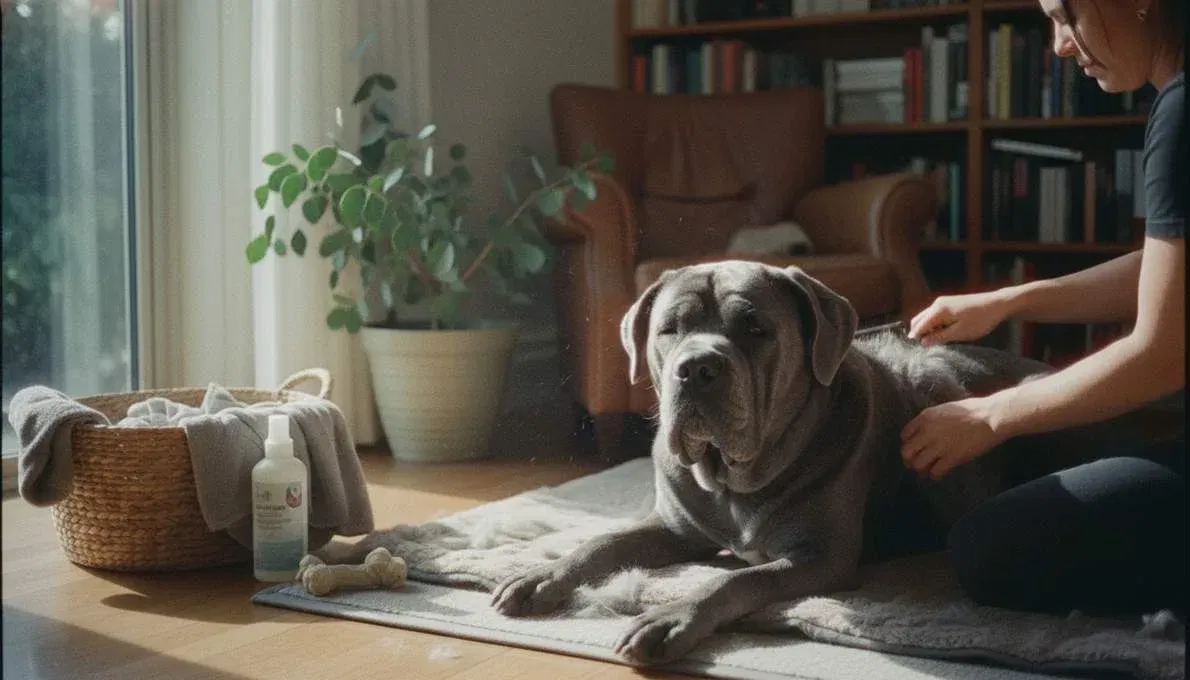
Despite their intimidating appearance, Neapolitan Mastiffs are relatively low-maintenance when it comes to coat care. The big grooming challenge isn’t fur — it’s wrinkles, drool, and skin folds.
Grooming Schedule
| Task | Frequency | Notes |
|---|---|---|
| Brushing | 1–2 times per week | Use a soft rubber curry brush. Gentle — their skin is sensitive. |
| Bathing | Every 4–6 weeks or as needed | Use a mild dog shampoo. Dry thoroughly between folds. |
| Wrinkle Cleaning | Daily | Wipe between all folds with a damp cloth or pet-safe wipe. Dry completely to prevent dermatitis. |
| Drool Management | Multiple times daily | Keep towels in every room. Wipe face after eating, drinking, and at random intervals. |
| Nail Trimming | Every 2–3 weeks | Their heavy weight means overgrown nails cause gait issues faster. |
| Ear Cleaning | Weekly | Check for dirt, wax, and infection. Use dog-specific ear cleaner. |
| Eye Check | Daily | Monitor for cherry eye, entropion signs, or unusual discharge. |
| Teeth Brushing | 2–3 times per week | Giant breeds are prone to dental issues. Start early. |
Australian product tip: look for wrinkle wipes and skin fold balms designed for brachycephalic breeds — brands like Petway Petcare (Australian-made) and Natural Animal Solutions carry suitable products available at most pet supply stores and vet clinics.
Exercise Needs
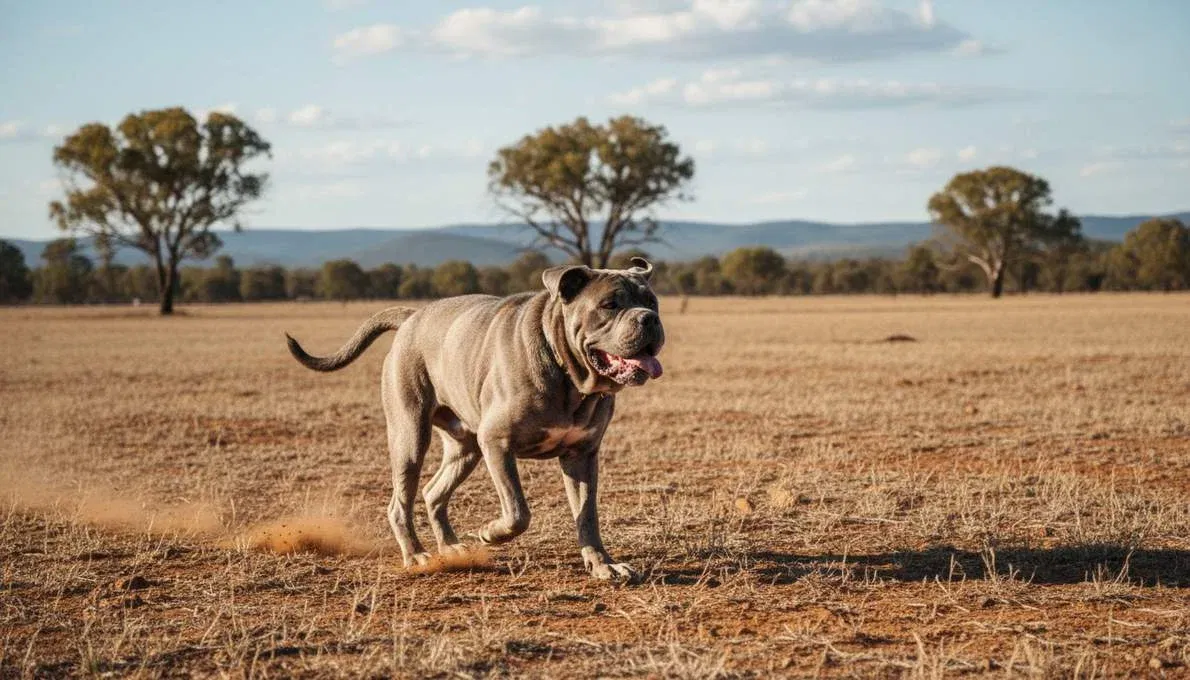
The Neapolitan Mastiff is not a marathon runner. They’re built for short bursts of explosive power, not sustained cardio. Think of them as the sumo wrestlers of the dog world — powerful but not built for endurance.
Aim for 30–45 minutes of moderate exercise daily, split across two walks. Avoid running, jumping, or high-impact activities, especially in puppies and young dogs whose joints are still developing. A fenced yard where they can amble and sniff at their own pace is ideal.
Australian climate warning: Neapolitan Mastiffs are heat-sensitive. In summer, especially in Queensland, Northern Territory, and inland areas, exercise should happen in the cool of early morning or after sunset. Heatstroke is a real risk for this breed. Always provide access to shade, fresh water, and air conditioning or cooling mats. If the pavement is too hot for your bare feet, it’s too hot for your Neo.
In cooler months and southern states, they’ll be more active and may enjoy slightly longer walks. But don’t be surprised if your Neo decides that a shady spot in the backyard is preferable to a walk — they’re natural couch potatoes and will choose rest over activity if given the option.
Training Guide
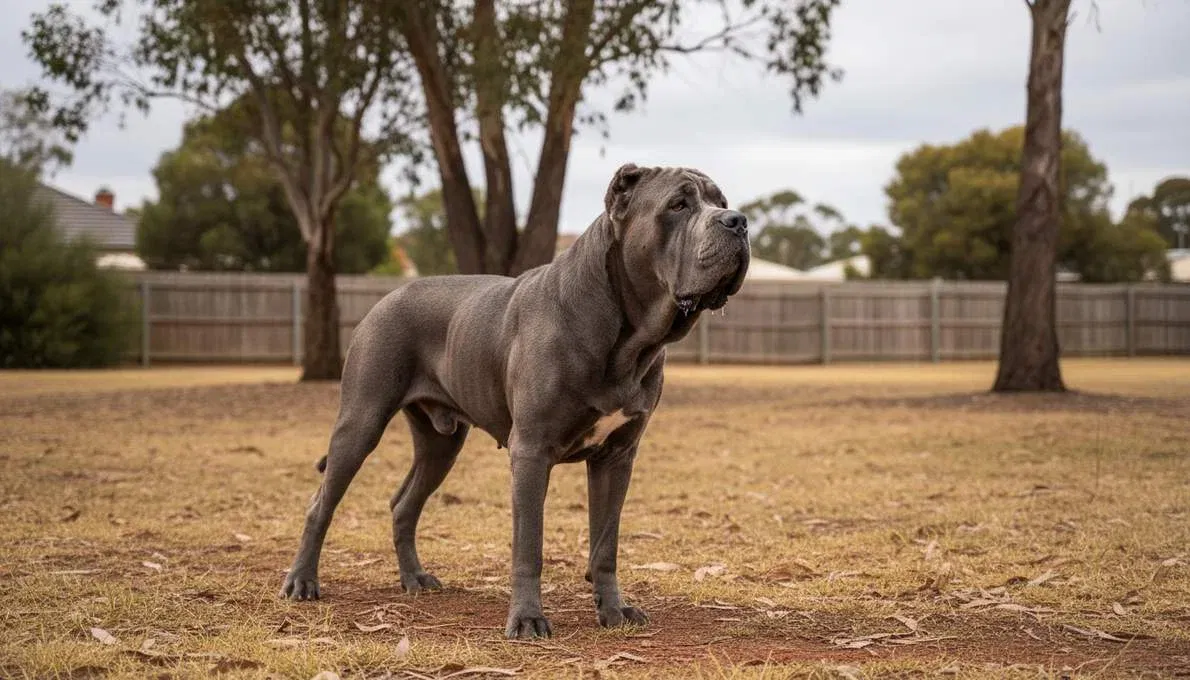
Training a Neapolitan Mastiff requires patience, consistency, and a sense of humour. This is a breed that was bred to make independent decisions, and that trait hasn’t disappeared just because they moved from guarding Roman estates to sleeping on Australian sofas.
Socialisation & Training Timeline
| Age | Focus Area | Key Tips |
|---|---|---|
| 8–16 weeks | Socialisation, bite inhibition, basic handling | Expose to different people, sounds, surfaces. Puppy school essential. Positive reinforcement only. |
| 4–6 months | Basic obedience: sit, stay, come, lead walking | Keep sessions short (5–10 min). They bore easily. High-value treats work best. |
| 6–12 months | Impulse control, recall, stranger desensitisation | Adolescent stubbornness peaks. Stay consistent. Never use force — it backfires with this breed. |
| 1–3 years | Advanced obedience, ongoing socialisation | Still maturing mentally. Continue training — they’re not “finished” until 3+. Refresh basics regularly. |
| 3+ years | Maintenance training, mental stimulation | Puzzle feeders, scent games. Keep their mind engaged or they’ll find their own entertainment (your couch cushions). |
Training difficulty: 7/10. Not because they’re unintelligent — quite the opposite. They’re smart enough to weigh up whether obeying you is worth the reward. Positive reinforcement with high-value treats (think chicken, cheese, or liver) works. Punishment-based methods will destroy the trust bond and make a stubborn dog into an uncooperative one.
This breed is not recommended for first-time dog owners. If the Neapolitan Mastiff is your first dog, invest in a professional trainer experienced with guardian breeds before problems develop.
Cost of Ownership in Australia
| Expense | One-Off / Setup | Annual Ongoing |
|---|---|---|
| Registered Puppy | $2,500–$5,000+ | — |
| Desexing (inc. gastropexy) | $800–$2,000 | — |
| Food (premium large breed) | — | $2,000–$3,500 |
| Vet Check-ups & Vaccinations | — | $400–$800 |
| Pet Insurance (giant breed) | — | $1,200–$3,000+ |
| Flea/Tick/Worming | — | $300–$600 |
| Grooming Supplies & Wrinkle Care | $100–$200 | $200–$400 |
| Bedding (XL, orthopaedic) | $200–$500 | Replaced yearly: $200–$400 |
| Training (professional) | $500–$2,000 | — |
| Council Registration | — | $30–$200 (varies by LGA) |
| Emergency Vet Fund | — | $2,000–$5,000 (set aside) |
Estimated first-year cost: $7,000–$15,000+ AUD. Estimated annual ongoing cost: $5,000–$10,000+ AUD.
Rescue option:
Neapolitan Mastiff rescue dogs are rare in Australia, but they do come up through breed-specific rescue groups and general large-breed rescues. Adoption fees typically range from $400–$800 AUD. Check with the Neapolitan Mastiff breed clubs in your state, Dogs Australia, and PetRescue.com.au.
Finding a breeder:
Start with Dogs Australia (dogsaustralia.org.au) and DogzOnline.com.au for ANKC-registered Neapolitan Mastiff breeders. Expect waitlists — there are only a handful of dedicated breeders across Australia. A reputable breeder will health-test parents, socialise puppies from birth, and ask you as many questions as you ask them.

Is the Neapolitan Mastiff Right for You?
you’ve owned large or guardian breeds before, you have a securely fenced yard with plenty of space, you can commit to early and ongoing socialisation and training, you’re financially prepared for giant-breed vet costs, you work from home or don’t leave the dog alone for long periods, and you genuinely don’t mind drool on every surface of your home.
this is your first dog, you live in a small apartment or rental without yard access, you have a very active lifestyle and want a running or hiking partner, you’re in a hot climate without reliable air conditioning, you have very young children and no experience managing giant breeds around toddlers, or you’re on a tight budget — this breed’s medical costs can be significant and unpredictable.
If you’re comparing breeds, the Cane Corso offers a similar guardian temperament with fewer health complications. The English Mastiff is even larger but often more tolerant of strangers. The Great Dane has similar size but a more social, outgoing personality. Each of these breeds has trade-offs, so research thoroughly before deciding.
The Neapolitan Mastiff is not a breed for everyone — and that’s by design. These dogs were bred for experienced handlers who understand guardian instincts, can provide consistent leadership, and have the space and budget to meet their needs.
In three lines: The Neapolitan Mastiff is one of the most loyal, protective and devoted breeds alive today — a true once-in-a-lifetime dog for the right owner. Their health costs are real and unavoidable, so budget honestly before you commit. If you have the experience, the space, and the towels, a Neo will give you a love so fierce it’ll rearrange your furniture and your heart.
Frequently Asked Questions
How much does a Neapolitan Mastiff cost in Australia?
A registered Neapolitan Mastiff puppy from an ANKC breeder typically costs between $2,500 and $5,000+ AUD. Prices vary based on bloodline, health testing, and breeder reputation. Unregistered puppies may be cheaper, but often come without health guarantees — which can cost you far more in vet bills down the track.
Are Neapolitan Mastiffs aggressive?
Neos are not inherently aggressive, but they are naturally protective and territorial. Without proper socialisation from a young age, their wariness of strangers can become problematic. A well-socialised Neo is calm and confident, not reactive. They’re gentle with family but will position themselves between you and anything they perceive as a threat.
Are Neapolitan Mastiffs good family dogs?
Yes, with caveats. They’re deeply loyal and affectionate with their family, including children. However, their massive size (60–70+ kg) means they can accidentally knock over small children. They’re best suited to families with older kids or adults, and homes where someone has experience with large guardian breeds.
How long do Neapolitan Mastiffs live?
The average Neapolitan Mastiff lifespan is 7–9 years. Some reach 10 with excellent genetics and care, but this is a short-lived breed by dog standards. Buying from health-tested parents, feeding a proper giant-breed diet, and maintaining a healthy weight are the best ways to maximise their years.
Do Neapolitan Mastiffs shed a lot?
Not excessively. They have a short, dense coat that sheds moderately, with heavier shedding in spring and autumn. Weekly brushing keeps loose hair under control. The bigger cleanup challenge is drool, not fur.
Do Neapolitan Mastiffs drool?
Yes. A lot. Neapolitan Mastiffs are one of the heaviest drooling breeds. You’ll want towels in every room, a waterproof cover on the couch, and a relaxed attitude toward slobber on your clothes. It’s part of the deal with this breed.
How big do Neapolitan Mastiffs get?
Males typically reach 66–75 cm at the shoulder and weigh 60–70 kg. Females are slightly smaller at 60–68 cm and 50–60 kg. Some individuals exceed these ranges. They’re among the heaviest dog breeds in the world.
Are Neapolitan Mastiffs good guard dogs?
Exceptional. The Neapolitan Mastiff was purpose-bred for guarding over thousands of years. Their imposing appearance alone is a deterrent, and their natural territorial instincts mean they will protect home and family without needing specific protection training. In fact, attack training is not recommended — their natural guarding instinct is more than sufficient.
What is the best food for a Neapolitan Mastiff?
A premium-quality food formulated specifically for giant or large breeds is ideal. Giant-breed formulas have adjusted calcium levels that support proper bone development and often include joint-support ingredients like glucosamine. Feed two measured meals per day (not free-feeding) and always from a bowl on the floor, not elevated, to reduce bloat risk. Consult your vet for brand recommendations suited to your dog’s age and activity level.
Can I get a Neapolitan Mastiff x Cane Corso?
Neapolitan Mastiff and Cane Corso crosses are popular in Australia and combine traits from both Italian guardian breeds. They tend to be slightly more athletic than purebred Neos with a similar protective temperament. However, crossbred puppies are unpredictable in terms of size, health, and temperament. If buying a cross, still insist on health testing of both parents.
1. Dogs Australia — Neapolitan Mastiff Breed Profile: https://dogsaustralia.org.au/BrowseBreed/browse-a-breed/157/Neapolitan-Mastiff/
2. American Kennel Club (AKC) — Neapolitan Mastiff Breed Information: https://www.akc.org/dog-breeds/neapolitan-mastiff/
3. PetMD — Neapolitan Mastiff Health & Care Guide: https://www.petmd.com/dog/breeds/neapolitan-mastiff
4. Wisdom Panel — Neapolitan Mastiff Breed Facts: https://www.wisdompanel.com/en-us/dog-breeds/neapolitan-mastiff
5. Vetstreet — Neapolitan Mastiff Breed Information: https://www.vetstreet.com/dogs/neapolitan-mastiff
6. DogzOnline Australia — Neapolitan Mastiff Breeders Directory: https://www.dogzonline.com.au/breeds/breeders/neapolitan-mastiff.asp
7. PetsForHomes Australia — Neapolitan Mastiff Pricing & Listings: https://petsforhomes.com.au/dogs-puppies/neapolitan-mastiff/
8. BetterPet — Neapolitan Mastiff Characteristics & Care: https://www.betterpet.com/learn/neapolitan-mastiff