
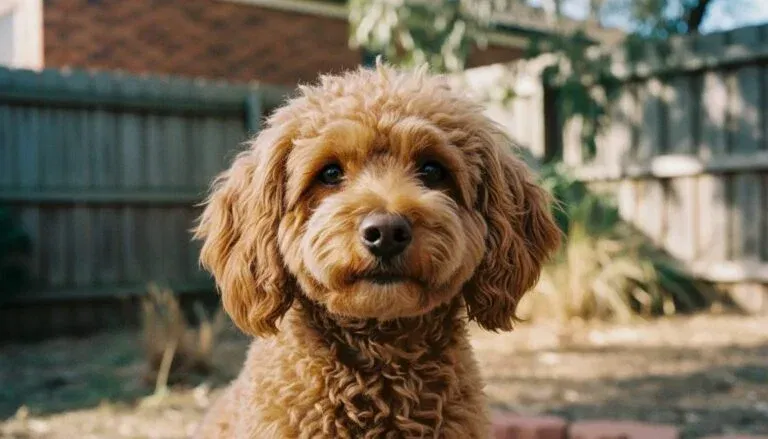
Don’t let the fancy haircuts fool you. The Miniature Poodle is one of the most athletic, trainable and genuinely clever dogs you’ll ever meet — and they know it. Originally bred down from Standard Poodles in 18th-century France for circus performance (yes, really), these curly-coated dynamos have been outsmarting their owners for centuries.
At 28–38 cm tall and 5–7 kg, the Miniature Poodle sits in the sweet spot between the tiny Toy Poodle and the larger Standard. They’re big enough to go on proper hikes, small enough for apartment living, and hypoallergenic enough that allergy sufferers can actually breathe around them. But they’re not a set-and-forget dog. That curly coat demands professional grooming every 4–6 weeks, and that big brain needs daily stimulation — or they’ll find their own entertainment, usually at the expense of your couch cushions.
This guide covers everything Australian owners need to know: honest temperament insights, real health costs in AUD, grooming schedules that actually work, and whether this breed suits your life — or if you should keep scrolling.
What You’ll Learn
- Breed traits & temperament
- Health concerns to know
- True cost in Australia
- Training & exercise needs
- Is this breed right for you?
Miniature Poodle Quick Facts
| Attribute | Details |
|---|---|
| Breed Group | Non-Sporting (ANKC Group 7) |
| Height | 28–38 cm (11–15 inches) at the shoulder |
| Weight | 5–7 kg (12–14 lbs) — males slightly heavier |
| Lifespan | 12–15 years (some reach 17+) |
| Coat Type | Dense, tightly curled, single-coat (low-shedding) |
| Coat Colours | Black, white, apricot, red, cream, silver, brown, blue, café-au-lait, parti |
| Temperament | Intelligent, alert, playful, eager to please, occasionally stubborn |
| Shedding | Very low — often called hypoallergenic |
| Exercise Needs | Moderate to high — approx. 60 minutes daily |
| Good With Kids | Yes — best with kids who understand gentle handling |
| Apartment Friendly | Excellent — one of the best small breeds for apartments |
| Grooming Needs | High — professional groom every 4–6 weeks |
| Average Price (AUD) | $2,000–$4,500 from a registered breeder |
History & Origins
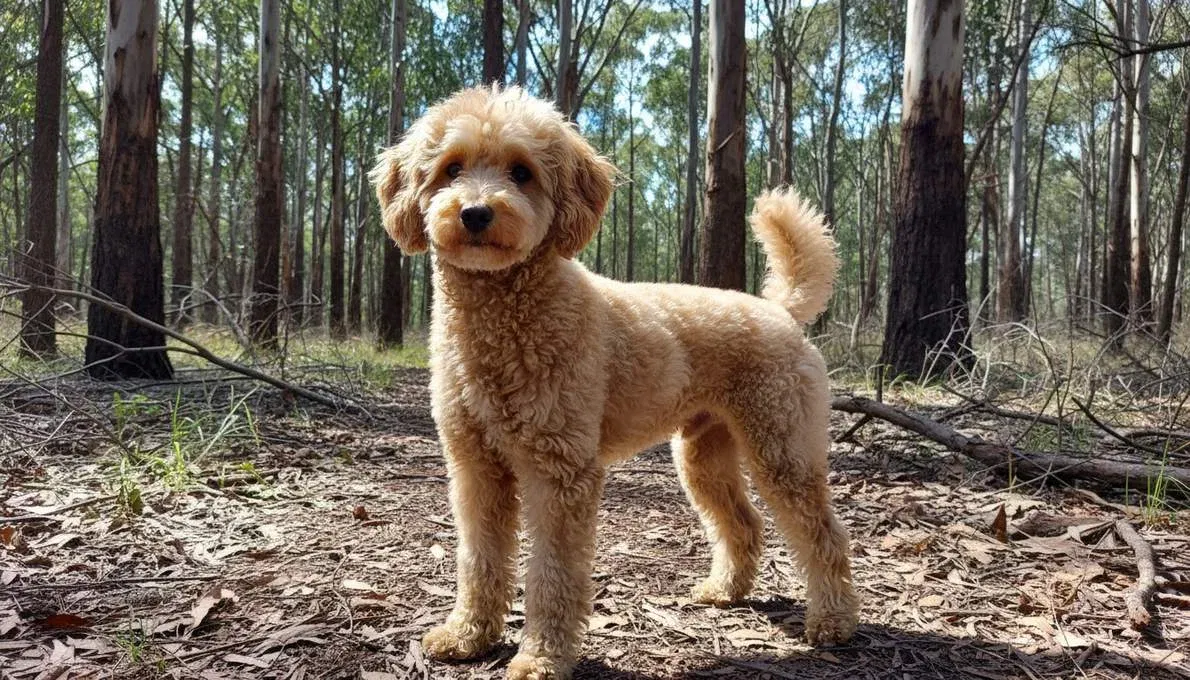
The Poodle’s story begins in Germany, not France — despite France claiming them as their national dog. The original Standard Poodle was a working water retriever, and the German word “Pudel” (meaning “to splash”) tells you exactly what they were bred for. Those elaborate haircuts? They started as functional trims to protect joints and vital organs in cold water while keeping the rest of the coat light enough for swimming.
Miniature Poodles emerged in France during the 18th century, selectively bred down from Standards specifically for circus performance. Their intelligence, trainability and compact size made them perfect showdogs — they walked tightropes, performed magic tricks and acted in comedies across Europe. It wasn’t long before French aristocracy noticed, and the breed transitioned from circus tents to royal courts.
The Toy Poodle followed in the early 20th century, bred down further from the Miniature. Today, all three sizes share identical breed standards apart from height, and the Miniature remains the most popular size in Australia for families who want Poodle intelligence without the 25+ kg commitment of a Standard.
The Australian National Kennel Council (ANKC) recognises all three Poodle varieties under Group 7 (Non-Sporting). The breed consistently ranks among the top 20 most registered pedigree dogs in Australia, with demand surging post-2020 as more families sought hypoallergenic companions for smaller homes.
Temperament & Personality
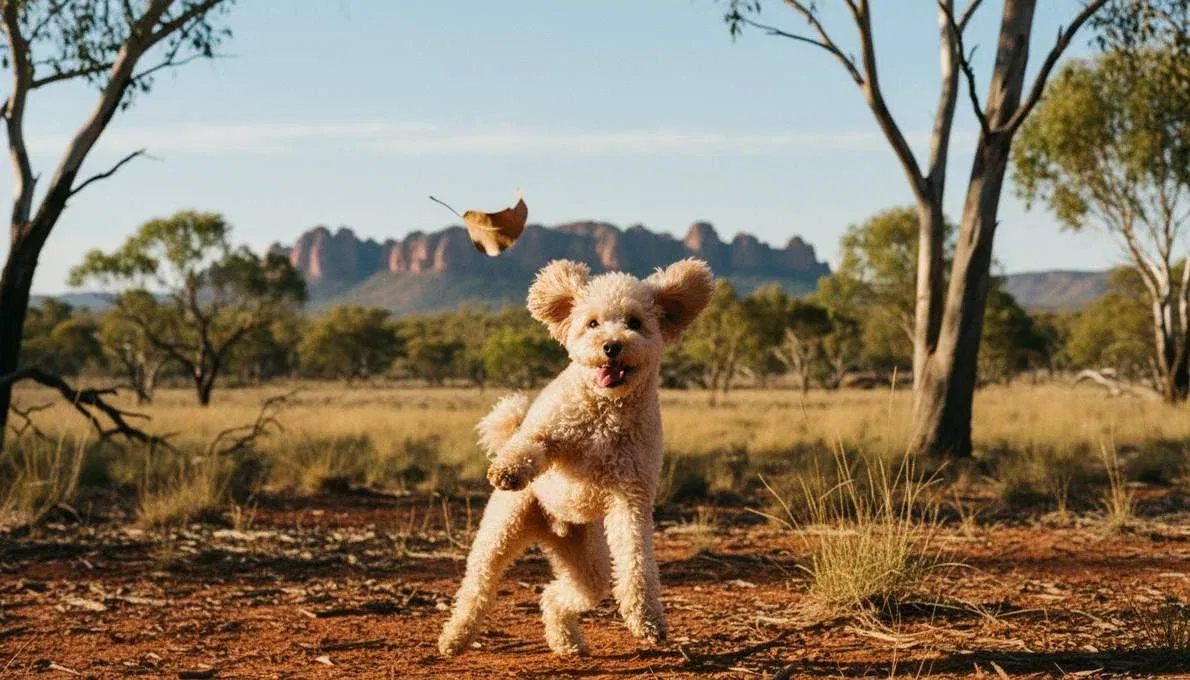
If you’ve never owned a Poodle, you might picture a prissy lap dog who refuses to get dirty. That couldn’t be further from the truth. Miniature Poodles are ranked as the second most intelligent dog breed in the world (behind only the Border Collie), and they use every bit of that brainpower — for better or worse.
They’re enthusiastic learners who thrive on mental stimulation. Teaching them basic commands is almost too easy; the real challenge is keeping them interested once they’ve mastered the basics. A bored Miniature Poodle is a destructive Miniature Poodle. They’ll rearrange your garden, disassemble their toys, or develop attention-seeking habits like barking if their minds aren’t engaged.
On the flip side, their sensitivity makes them incredibly attuned to their owners. They read moods, respond to tone of voice, and develop deep bonds with their family. Many owners describe living with a Mini Poodle as having a small, curly shadow that follows you from room to room.
Yes, but with a caveat. They’re wonderful with children who understand gentle handling. Because they’re smaller than Standards (typically 5–7 kg fully grown), rough play from toddlers can genuinely injure them. Families with children under five should supervise all interactions.
They get along well with other dogs and cats, especially when socialised early. However, they can be reserved or even aloof with strangers — which makes them surprisingly good alert dogs. They’ll let you know when someone’s at the door. And the door after that. And the postman. Some Miniature Poodles are barkers, and managing that tendency starts with consistent training from puppyhood.
This is one of the most searched comparisons in Australia, and it’s a fair question. Temperamentally, they’re very similar — both are smart, affectionate and occasionally dramatic. The main differences are physical: the Miniature stands 28–38 cm and weighs 5–7 kg, while the Toy is under 28 cm and typically 3–4 kg. That size gap matters for durability with kids, exercise capacity and overall robustness. Miniature Poodles tend to be slightly more athletic and a touch less prone to the separation anxiety some Toy Poodles experience.
Health & Genetic Conditions
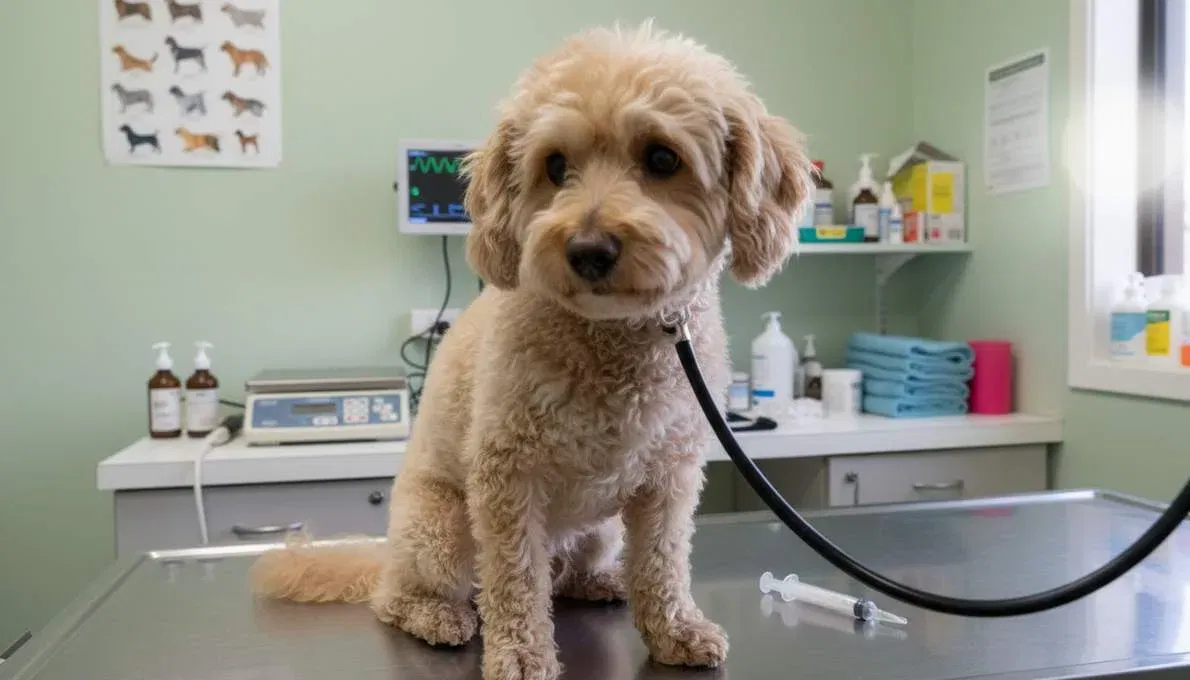
No one wants to think about their puppy getting sick. But understanding the health conditions common to Miniature Poodles — and what they cost to treat in Australia — is one of the most responsible things you can do before bringing one home.
Miniature Poodles are generally healthy dogs, especially compared to many purebreds their size. But like all pedigree breeds, they carry certain genetic predispositions that every owner should know about.
Prevalence: A well-known genetic concern in Miniature Poodles; reputable breeders DNA test for it before breeding to prevent affected puppies being born
Symptoms: Night blindness in the early stages, bumping into objects in low light, reluctance to enter dark rooms, and gradual progression to complete blindness
Treatment Cost (AUD): $300–$600 for diagnosis; there is currently no cure or treatment available
Prevention: Only buy from breeders who DNA test both parents for PRA — ask to see proof of testing before committing to a puppy
Progressive Retinal Atrophy is a genetic condition where the light-sensitive cells in the retina gradually break down over time, eventually leading to complete blindness. It is painless, and Miniature Poodles tend to adapt very well to vision loss — particularly when their home environment stays familiar and consistent. While there is no treatment currently available, DNA testing means responsible breeders can prevent affected puppies from being born altogether. (Source: OFA — Orthopedic Foundation for Animals)
Prevalence: Common in small breeds including Miniature Poodles; mild cases often self-correct while more severe cases require surgical intervention
Symptoms: Occasional skipping or hopping on a back leg, intermittent lameness, or a “bunny hop” gait that comes and goes throughout the day
Treatment Cost (AUD): $1,500–$4,000 per knee for surgical correction
Prevention: Buy from breeders who screen for patellar luxation; maintain a healthy weight throughout your dog’s life to reduce ongoing pressure on the joints
Patellar luxation means the kneecap slips out of its normal groove in the leg. You might notice your Miniature Poodle suddenly lift a back leg for a few strides then carry on as if nothing happened — that’s often the kneecap popping in and out. Mild cases can be managed conservatively with weight control and anti-inflammatories, while more severe or recurring cases require surgery to prevent chronic pain and arthritis developing over time. (Source: VCA Animal Hospitals)
Prevalence: Seen in young and growing Miniature Poodles; more common in small breeds generally and typically appears before 12 months of age
Symptoms: Gradual lameness in a back leg, muscle wasting around the hip and thigh, pain when the hip joint is touched, and reluctance to bear weight on the affected leg
Treatment Cost (AUD): $2,000–$4,500 for surgical treatment
Prevention: No guaranteed prevention as it has a vascular cause; buying from health-conscious breeders and keeping puppies at a healthy weight during their growth phase helps reduce risk
Legg-Calvé-Perthes Disease occurs when the blood supply to the top of the thigh bone is disrupted, causing the bone to slowly deteriorate at the hip joint. It is painful and progressively worsens without treatment. The good news is that surgery to remove the deteriorating bone tissue is highly effective in small breeds, and most Miniature Poodles recover very well and go on to live active, comfortable lives with excellent mobility restored. (Source: VCA Animal Hospitals)
Prevalence: A recognised concern in Miniature Poodles; less common than in larger breeds but still worth screening for, particularly in dogs from unscreened lines
Symptoms: Stiffness after rest, reluctance to exercise, lameness in the back legs, a swaying gait, and gradual worsening of mobility as arthritis develops
Treatment Cost (AUD): $1,500–$6,000+ for surgical correction depending on severity; conservative management with medication is an option for milder cases
Prevention: Buy from breeders who screen their dogs for hip health; keep your dog at a healthy weight and avoid high-impact exercise during puppyhood while joints are still developing
Hip dysplasia occurs when the hip joint doesn’t develop properly, causing the bones to rub and grind rather than move smoothly. Over time this leads to progressive arthritis and chronic pain. It has a strong genetic component, so choosing a puppy from health-tested parents is one of the most effective steps you can take to reduce the risk for your dog. (Source: Cornell University College of Veterinary Medicine)
Prevalence: Miniature Poodles are one of the breeds most commonly diagnosed with Addison’s Disease; it can appear at any age but is most often seen in young to middle-aged dogs
Symptoms: Lethargy, vomiting, weight loss, loss of appetite, shaking, and in severe cases a sudden life-threatening crisis called an Addisonian episode
Treatment Cost (AUD): $500–$1,200 per year for lifelong hormone replacement medication and regular monitoring
Prevention: No guaranteed prevention; regular vet check-ups help identify early hormonal changes — knowing the breed’s predisposition means your vet can test for it sooner if symptoms appear
Addison’s Disease occurs when the adrenal glands don’t produce enough of the hormones the body needs to manage stress and regulate essential body functions. It is sometimes called “the great pretender” because its symptoms — lethargy, vomiting, and weight loss — are vague and can mimic many other conditions, making it tricky to diagnose. Once identified, it is very manageable with lifelong medication, and most Miniature Poodles go on to live completely normal, happy lives. (Source: VCA Animal Hospitals)
Prevalence: Relatively common in Miniature Poodles; typically develops in middle to older age and is diagnosed via a straightforward blood test
Symptoms: Unexplained weight gain, low energy and lethargy, thinning or dull coat, dry or flaky skin, and increased sensitivity to cold temperatures
Treatment Cost (AUD): $300–$600 per year for daily thyroid medication and regular blood monitoring
Prevention: No guaranteed prevention; routine annual vet check-ups help catch hormonal imbalances early before symptoms become obvious
Hypothyroidism means the thyroid gland is not producing enough of the hormones that control metabolism. Dogs with this condition often just seem a bit “off” — they gain weight without eating more, lose enthusiasm for walks, and their usually beautiful Poodle coat starts to look dull and sparse. The good news is it is very easy to manage with a once or twice daily tablet, and most dogs bounce back to their normal selves once their hormone levels are properly balanced. (Source: VCA Animal Hospitals)
Prevalence: Miniature Poodles have a known predisposition to seizure disorders; typically first appears between 6 months and 5 years of age
Symptoms: Sudden episodes of uncontrolled shaking or convulsing, loss of consciousness, paddling of the legs, confusion before or after a seizure, and temporary disorientation
Treatment Cost (AUD): $500–$2,000 per year for anti-convulsant medication and regular monitoring blood tests
Prevention: No guaranteed prevention for hereditary epilepsy; inform your vet of any seizure activity as early as possible to begin management before episodes become more frequent
Epilepsy in Miniature Poodles is most commonly hereditary, meaning it is passed down through genetics rather than triggered by an injury or illness. While witnessing a seizure can be alarming for owners, most epileptic dogs live happy, full lives once their condition is well managed with daily medication. Many owners find that once the right dosage is established, their dog’s seizures become infrequent or stop altogether. (Source: Australian College of Veterinary Scientists)
Always ask your breeder for written documentation of OFA hip evaluations, PRA DNA testing and patellar examinations for both parents. A responsible breeder will provide these without hesitation. If they can’t or won’t, walk away.
Miniature Poodle Lifespan & Longevity
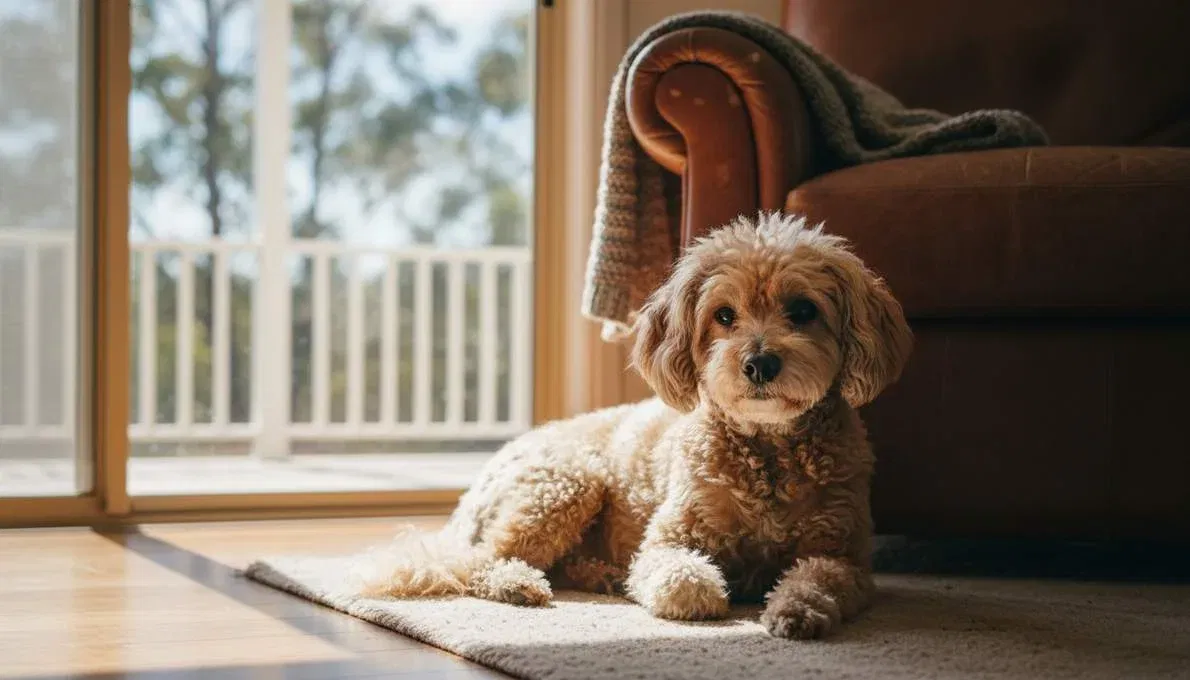
Miniature Poodles are long-lived dogs. Most will share 12–15 years with you, and reaching 15+ isn’t unusual for well-bred, well-cared-for individuals. A 2024 UK study found an average life expectancy of 14 years for Poodles, which exceeds the average for purebred dogs (12.7 years) and crossbreeds (12 years).
Their longevity is one of the breed’s biggest selling points, but it also means a long-term commitment to healthcare, grooming and companionship. A Miniature Poodle purchased as a family puppy will likely still be around when your kids finish school.
How to Maximise Your Miniature Poodle’s Lifespan
The factors that influence longevity are largely within your control: feed a high-quality, size-appropriate diet; maintain a healthy weight (obesity is a silent killer in small breeds); keep up with annual vet checks and dental cleans; and provide consistent mental and physical exercise. Genetics matter too, which is why buying from a breeder who health-tests their breeding stock is so important.
Grooming & Coat Care
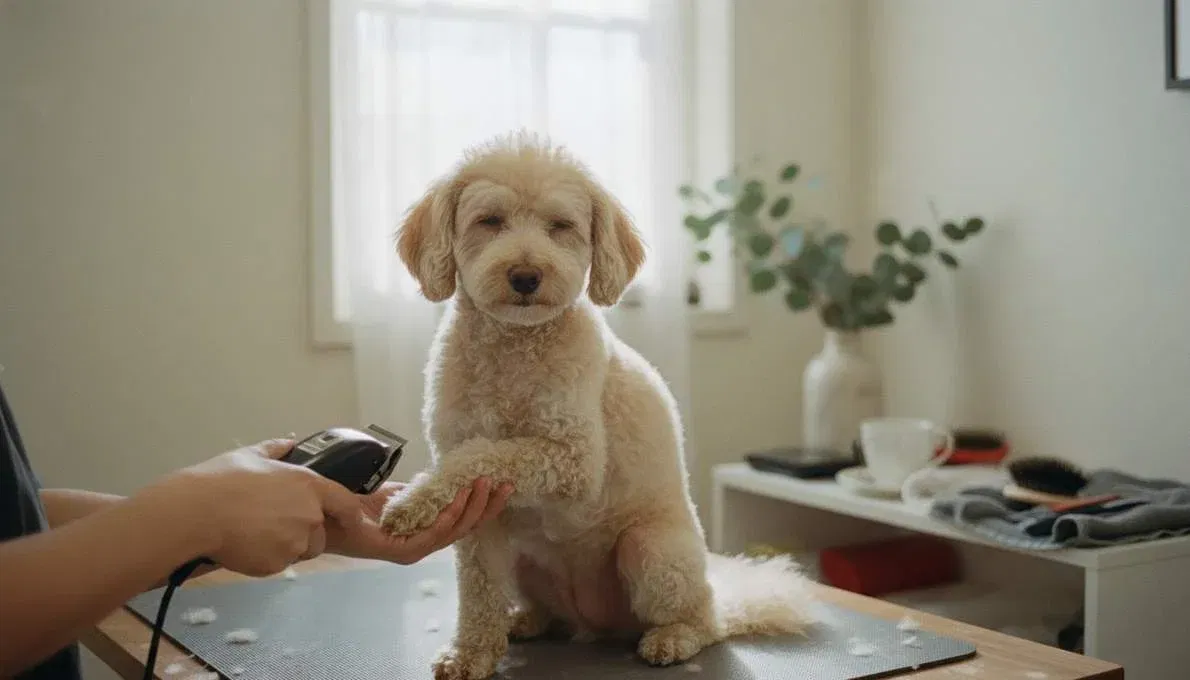
Let’s be blunt: if you hate grooming, don’t get a Miniature Poodle. Their dense, curly coat doesn’t shed (great for allergies), but it grows continuously and mats easily if neglected. Think of it less like dog fur and more like human hair — it needs regular washing, brushing and cutting.
Grooming Schedule
| Grooming Task | Frequency | Estimated Cost (AUD) |
|---|---|---|
| Full professional groom | Every 4–6 weeks | $70–$120 per session |
| At-home brushing | Every 2–3 days | Slicker brush: $15–$30 (one-off) |
| Ear cleaning | Weekly | Ear cleaner: $15–$25 |
| Nail trimming | Every 2–4 weeks | Included in professional groom or $10–$20 at vet |
| Dental care | Daily brushing; professional clean every 1–2 years | Toothbrush kit: $10–$20; professional dental: $300–$700 |
| Bath | Every 3–4 weeks (or as needed) | Dog shampoo: $15–$40 |
Annual grooming estimate: If you’re using a professional groomer every 5 weeks, expect to spend roughly $900–$1,500 per year on grooming alone. This is a non-negotiable cost of Miniature Poodle ownership.
Popular Miniature Poodle Haircut Styles
The “puppy cut” (also called a “teddy bear cut”) is by far the most popular style for pet Miniature Poodles in Australia. It keeps the coat at a uniform 2–5 cm all over the body, is easy to maintain between grooms, and looks adorable. Other options include the “lamb clip” (shorter body, fluffy legs), the “sporting clip” (similar to the puppy cut but slightly more sculpted), and the traditional “continental clip” for show dogs. Most groomers will work with you to find a style that suits your lifestyle and your dog’s coat texture.
Exercise Needs
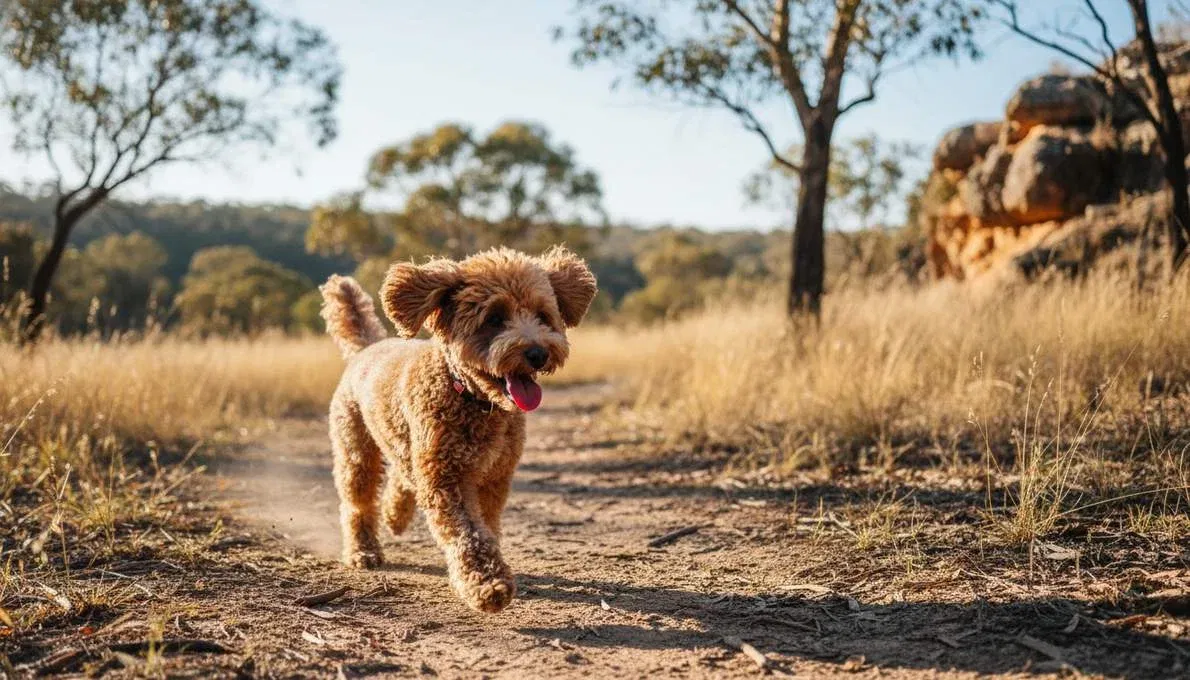
Don’t underestimate this breed’s energy. Despite their small size, Miniature Poodles need around 60 minutes of exercise daily. They were bred from working retrievers, and that athletic drive is still very much present.
A typical day should include a 30–40 minute walk plus a play session or training activity. They love swimming (it’s literally in their DNA), fetch, agility courses and puzzle toys. Off-lead parks are great for socialisation, but make sure your recall training is solid first — Poodles can be selectively deaf when something more interesting catches their eye.
Australian Climate Considerations
In Australia’s hot summers, exercise your Miniature Poodle early in the morning or after sunset. Their dark coat colours (especially black and brown) absorb heat quickly, and their small body size makes them more susceptible to heatstroke than larger breeds. Always carry water, avoid hot pavement (if it’s too hot for your palm, it’s too hot for their pads), and never leave them in a parked car — not even for five minutes.
In winter, most Miniature Poodles handle cooler Australian climates well, though their single coat offers less insulation than double-coated breeds. A lightweight dog jacket can help on particularly cold morning walks in southern states.
Training Guide
Training a Miniature Poodle is, frankly, one of the great pleasures of dog ownership. They’re responsive, food-motivated and eager to please. Most learn basic commands in just a few repetitions. The challenge isn’t teaching them — it’s keeping them challenged.
Socialisation & Training Timeline
| Age | Focus | Tips |
|---|---|---|
| 8–12 weeks | Socialisation, toilet training, crate training, name recognition | Expose to different sounds, surfaces, people. Short sessions (5 mins). Lots of positive reinforcement. |
| 3–6 months | Basic commands (sit, stay, come, drop), lead walking, bite inhibition | Enrol in puppy school ($150–$300 in Australia). Keep training fun and varied. |
| 6–12 months | Recall, impulse control, intermediate commands, manners around other dogs | Adolescent stubbornness is normal. Stay consistent. Consider group obedience classes. |
| 1+ years | Advanced tricks, agility, scent work, ongoing socialisation | Poodles excel in agility and competitive obedience. Mental stimulation is just as important as physical exercise. |
Honest difficulty rating: 2/10 for trainability. Miniature Poodles are one of the easiest breeds to train. The only “difficult” part is managing their occasional stubbornness — they’re smart enough to test boundaries and decide whether your command is worth following. Positive reinforcement always wins over punishment with this breed.
Cost of Ownership (AUD)
Miniature Poodles aren’t cheap to buy or maintain. Here’s what it actually costs to own one in Australia, broken down honestly.
Purchase Price
From a registered, health-testing Australian breeder, expect to pay $2,000–$4,500 for a Miniature Poodle puppy. Show-quality puppies or rare coat colours (red, parti) can reach $5,000–$6,000. Adoption through rescue organisations like PetRescue or breed-specific Poodle rescues typically costs $300–$600 and includes desexing, vaccinations and microchipping.
Annual Running Costs
| Expense | Estimated Annual Cost (AUD) |
|---|---|
| Premium dog food | $600–$1,000 |
| Professional grooming (every 5 weeks) | $900–$1,500 |
| Vet check-ups & vaccinations | $200–$450 |
| Parasite prevention (flea, tick, worming) | $150–$300 |
| Pet insurance | $240–$1,200 |
| Dental cleaning | $300–$700 (every 1–2 years) |
| Toys, treats & misc. | $150–$400 |
| Estimated Total | $2,540–$5,550 per year |
Over a 14-year lifespan, the total cost of Miniature Poodle ownership in Australia — including purchase price — sits somewhere between $38,000 and $82,000. That’s a real number, and it’s worth sitting with before you commit.
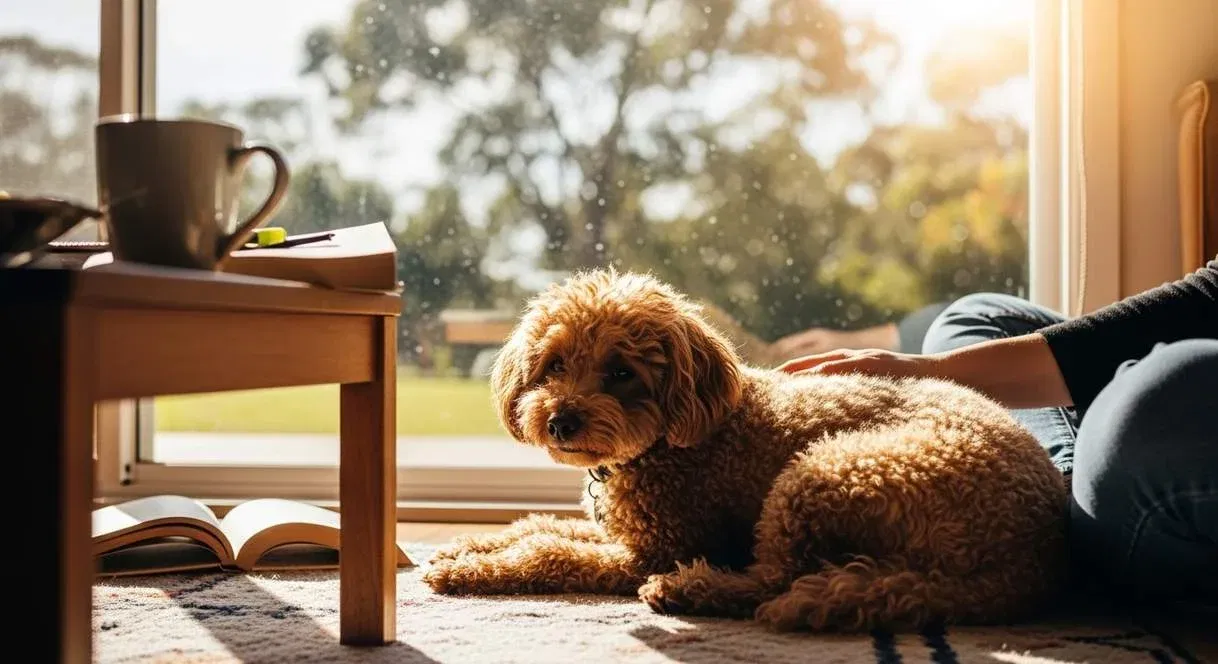
Is a Miniature Poodle Right for You?
You want a dog that’s genuinely intelligent and easy to train. You or someone in your household has allergies and needs a low-shedding breed. You live in an apartment or smaller home and need a breed that adapts well to indoor living. You enjoy grooming or are willing to budget $1,000+ per year for professional grooming. You’re an active person who can provide 60 minutes of daily exercise and mental stimulation.
You want a low-maintenance, “set and forget” dog. Miniature Poodles need consistent grooming, training and engagement. You’re away from home for long hours most days. They bond deeply and can develop separation anxiety if left alone regularly. You’re on a very tight budget. Between grooming, quality food and potential health costs, this breed is more expensive to maintain than many people expect. You want a guard dog. They’ll bark to alert you, but at 5–7 kg, they’re not deterring anyone.
If you’re torn between the two, consider your lifestyle. The Miniature is hardier, more exercise-tolerant and generally better suited to families with younger children. The Toy is ideal for seniors, very small living spaces and owners who want an even more portable companion. Both are equally smart, equally hypoallergenic and equally demanding on the grooming front.
- The Miniature Poodle is one of the smartest, most versatile small breeds available in Australia — ideal for apartment dwellers, allergy sufferers and families who want a dog that actually listens.
- Expect to invest $2,500–$5,500 per year in grooming, food and healthcare. They’re not a budget breed, but the companionship over 12–15+ years makes the investment worthwhile for the right owner.
- Buy from a registered breeder who provides OFA, PRA and patellar documentation — or adopt through a reputable Poodle rescue. Either way, you’re getting a remarkable dog.
Frequently Asked Questions
How big do Miniature Poodles get?
A full grown Miniature Poodle stands 28–38 cm (11–15 inches) at the shoulder and weighs 5–7 kg (12–14 lbs). They reach their adult size between 7 and 12 months of age. Males tend to be slightly heavier than females.
How long do Miniature Poodles live?
The average Miniature Poodle lifespan is 12–15 years, with many living beyond 15 when properly cared for. A 2024 UK study recorded an average of 14 years, which is well above the average for purebred dogs.
Are Miniature Poodles hypoallergenic?
No dog is 100% hypoallergenic, but Miniature Poodles are one of the closest you’ll get. Their curly, non-shedding coat produces significantly less dander than most breeds, making them a popular choice for allergy sufferers. It’s still worth spending time with the breed before committing, as some people react to dog saliva rather than fur.
Do Miniature Poodles bark a lot?
They can. Miniature Poodles are alert dogs and will bark to notify you of visitors, unusual sounds or basically anything they find interesting. Consistent training from puppyhood helps manage excessive barking, but if you need a completely silent breed, this probably isn’t it.
Does a Miniature Poodle shed?
Very little. Their hair grows continuously (like human hair) rather than going through seasonal shedding cycles. This is great for keeping your house clean but means regular grooming is non-negotiable to prevent painful matting.
How much does a Miniature Poodle cost in Australia?
Expect to pay $2,000–$4,500 from a registered breeder for a pet-quality puppy. Show lines and rare colours can reach $6,000+. Rescue adoption typically costs $300–$600. Annual running costs add another $2,500–$5,500 per year.
Are Miniature Poodles easy to train?
Extremely. Ranked as the second most intelligent dog breed, Miniature Poodles pick up commands quickly and thrive in obedience, agility and trick training. They respond best to positive reinforcement and short, varied training sessions.
Can Miniature Poodles be left alone?
Not for long periods. They form strong bonds with their owners and can develop separation anxiety if regularly left alone for more than 4–6 hours. Crate training, puzzle toys and gradual desensitisation can help, but this isn’t a breed suited to owners who are away from home all day.
What’s the difference between a Toy and Miniature Poodle?
Size. Miniature Poodles stand 28–38 cm and weigh 5–7 kg. Toy Poodles are under 28 cm and weigh 3–4 kg. The Miniature is more robust, more exercise-tolerant and generally better with young children. Temperament and intelligence are nearly identical between the two.
How smart are Miniature Poodles?
Exceptionally smart. Poodles of all sizes rank second only to Border Collies in canine intelligence. They excel at problem-solving, learn commands in very few repetitions and have been used historically in circus performance, truffle hunting and water retrieval. That intelligence needs a daily outlet, or they’ll find creative (and often destructive) ways to entertain themselves.
- American Kennel Club — Poodle (Miniature) Breed Standard: https://www.akc.org/dog-breeds/poodle-miniature/
- PetMD — Miniature Poodle Dog Breed Health and Care: https://www.petmd.com/dog/breeds/miniature-poodle
- Wikipedia — Poodle (breed history, sizes, health): https://en.wikipedia.org/wiki/Poodle
- Chewy — Miniature Poodle Characteristics & Care: https://www.chewy.com/education/dog-breeds/miniature-poodle
- PuppyList Australia — Cost of Miniature Poodle Puppies in Australia: https://puppylist.com.au/breeds/poodle-miniature/price/
- Pets Online Australia — Poodle Prices in Australia: https://petsonline.com.au/dog-breeds/poodle/prices/
- ASPCA Pet Health Insurance — Get to Know the Miniature Poodle: https://www.aspcapetinsurance.com/resources/mini-poodle/
- RightPaw Australia — Miniature Poodle Breeders: https://rightpaw.com.au/dogs/breed/mini-poodle