
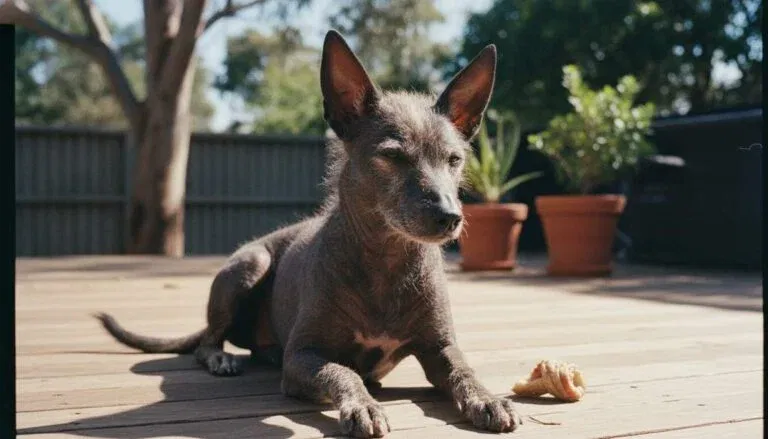
The Mexican Hairless Dog looks like something from another planet — or another millennium. Technically, it’s the latter. The Xoloitzcuintli (pronounced “show-low-eats-QUEEN-tlee” — or just call them a Xolo) has been walking alongside humans for over 3,000 years, making it one of the oldest dog breeds on Earth.
The Aztecs believed these dogs guided souls through the underworld. Today’s Xolo owners will tell you their dog still has a sixth sense — curling up against injuries, pressing their warm, hairless body against you when you’re sick, and watching the front door like they’re guarding the gates of the afterlife.
They’re not for everyone. They’re bald, opinionated, and fiercely attached to their person. But if you want a dog with genuine ancient history, surprisingly low maintenance, and a loyalty so deep it borders on obsessive — the Mexican Hairless Dog might be the most underrated breed in Australia.
What You’ll Learn
- Breed traits & temperament
- Health concerns to know
- True cost in Australia
- Training & exercise needs
- Is this breed right for you?
Quick Facts at a Glance
| Trait | Details |
|---|---|
| Breed Group | Non-Sporting (ANKC) / Primitive (FCI Group 5) |
| Origin | Mexico — 3,000+ years old |
| Other Names | Xoloitzcuintli, Xolo, Mexican Hairless |
| Sizes | Toy: 25–35 cm | Miniature: 36–45 cm | Standard: 46–60 cm |
| Weight | Toy: 4–7 kg | Miniature: 7–14 kg | Standard: 14–25 kg |
| Coat Varieties | Hairless (most common) or Coated (short, flat coat) |
| Colours | Black, grey, slate, liver, bronze, red, fawn — with or without spots |
| Lifespan | 13–18 years |
| Temperament | Calm, loyal, alert, protective, wary of strangers |
| Shedding | Hairless: none | Coated: very low |
| Exercise Needs | Moderate — two 20–30 minute walks daily |
| Good with Kids | Yes, with socialisation (standard size best for families) |
| Apartment Friendly | Yes — especially toy and miniature sizes |
| Hypoallergenic | Hairless variety may suit allergy sufferers (not guaranteed) |
| AKC Recognition | 2011 (originally 1887, dropped in 1959, reinstated) |
| ANKC Recognition | Recognised — registered under Non-Sporting Group |
| Rarity | Rare — estimated 30,000 worldwide |
History & Origins
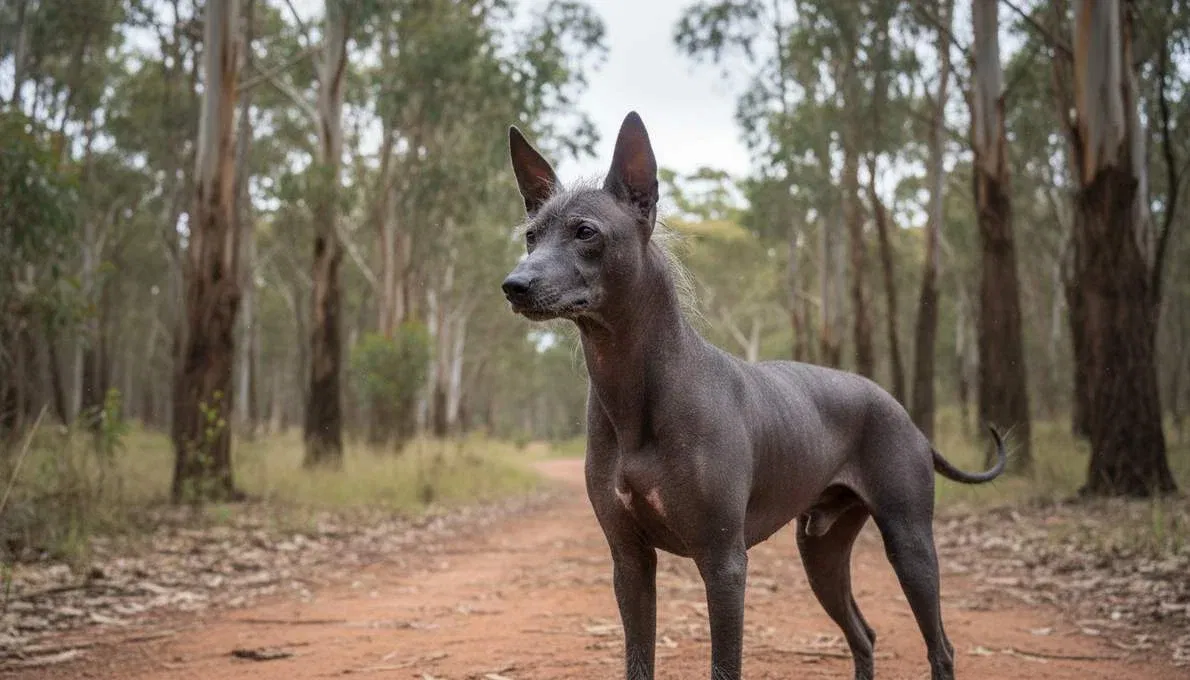
The Xoloitzcuintli is not a designer breed or a modern novelty. This dog has been documented for over 3,000 years, with archaeological evidence — including clay sculptures and skeletal remains — found in Mesoamerican burial sites across Mexico and Central America.
The breed’s name comes from the Aztec language Nahuatl: “Xolotl” (the god of lightning, death, and the underworld) and “itzcuintli” (meaning dog). The Aztecs and Maya revered the Xolo as both a spiritual guide and a practical companion. They believed these hairless dogs could heal the sick — their warm, bare skin made them living hot-water bottles, pressed against aching joints and fevered bodies. Less romantically, they also served as food on ceremonial occasions and as bed warmers on cold nights.
The Xolo’s hairlessness isn’t a modern breeding choice. It’s a natural genetic mutation that gave these dogs a survival advantage in hot Mesoamerican climates — fewer parasites, less overheating, and lower grooming needs. The breed evolved through natural selection rather than artificial human intervention, which is part of why they remain remarkably healthy today.
The breed nearly vanished in the 20th century. The AKC first recognised the Xolo in 1887, but dropped it from their registry in 1959 due to declining numbers. A group of Mexican breeders launched a rescue mission, travelling through remote villages to find surviving Xolos and rebuild the gene pool. The AKC reinstated the breed in 2011, and it has been gaining a cult following ever since.
In Australia, the Xolo was first introduced around 2009 by the Wazzat kennel, which imported dogs from overseas and produced the first Australian-bred litters. The breed is now registered with the ANKC under the Non-Sporting Group, and a small but passionate community of breeders exists across several states.
Temperament & Personality
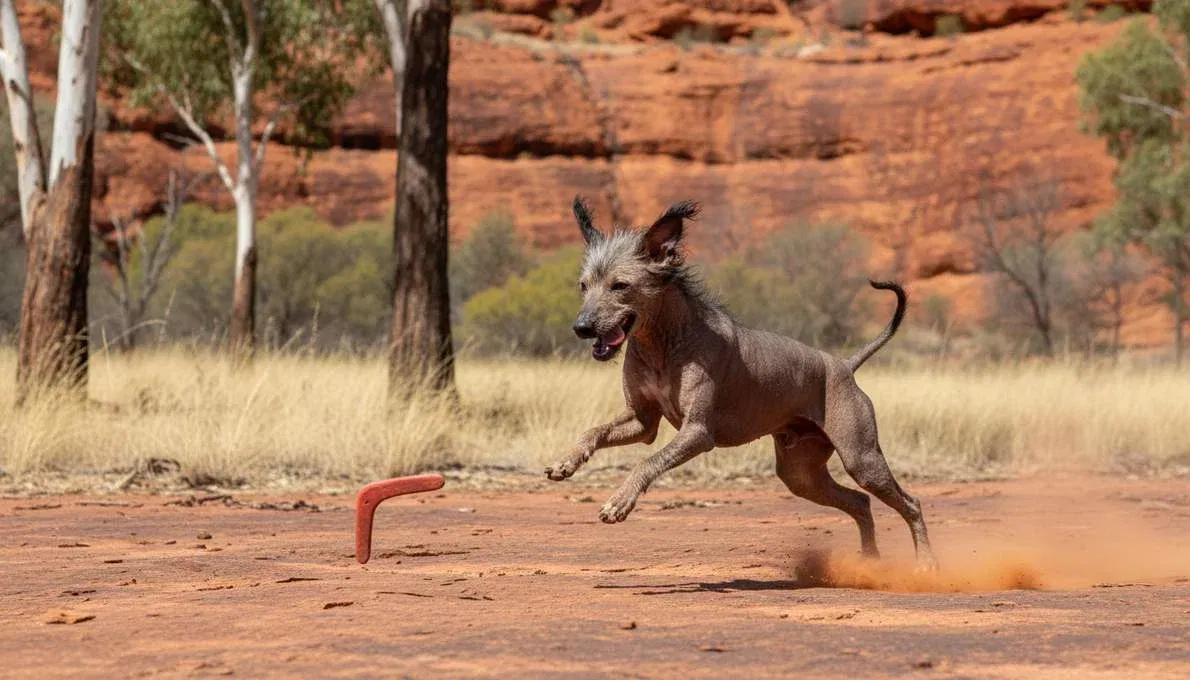
Forget everything you assume about hairless dogs being nervous, shaky little things. The Xolo is calm, dignified, and surprisingly composed — more like a cat than most dogs. They’ll observe a room before deciding it’s safe, assess new people with a long, thoughtful stare, and only offer affection once they’ve decided you’re trustworthy.
Xolos bond intensely to their primary person. Once they choose you, they’re your shadow — following you room to room, pressing against your legs while you cook, and sleeping as close to you as physically possible. This is a breed that genuinely struggles when left alone. If you work long hours away from home without arrangements for company, a Xolo is likely to develop separation anxiety.
The Mexican Hairless Dog is naturally wary of strangers. This isn’t aggression — it’s the ancient watchdog instinct that protected Aztec households for thousands of years. A well-socialised Xolo will be cautious but polite with visitors. A poorly socialised one can become anxious, reactive, or genuinely defensive. Early, consistent exposure to new people, environments, and situations is non-negotiable with this breed.
Xolos are pack-oriented and generally get along well with other dogs in the household. They can coexist with cats and smaller pets, especially if raised together from puppyhood. However, they do have a prey drive — small animals running through the garden may trigger a chase response. Watch for jealousy too; Xolos can become possessive of their favourite person if they feel another pet is getting more attention.
Unlike many primitive breeds, the Xolo is not a chronic barker. They’re described as quiet and calm around the house. They will bark to alert you to something unusual — a stranger at the door, an unfamiliar sound — but they’re not the type to bark at every passing car. This makes them surprisingly good apartment dogs, especially the toy and miniature sizes.
Health & Genetic Conditions
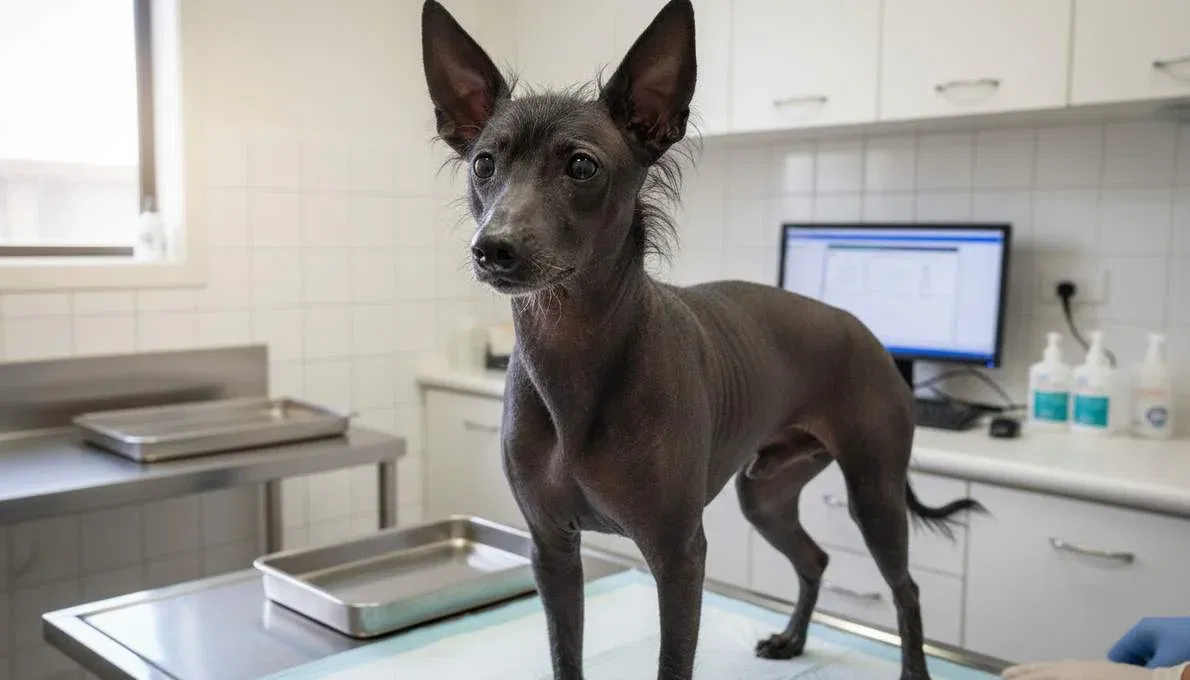
Here’s where the Xolo genuinely shines. Because this breed developed through natural selection over thousands of years — rather than being shaped by intensive human breeding programs — it avoids many of the genetic health problems that plague other purebreds. Vets who work with Xolos often remark on how structurally sound and robust they are.
That said, no breed is completely bulletproof:
Prevalence: Very common in the breed — hairless Xolos are uniquely vulnerable to skin problems throughout their entire life, not just as puppies
Symptoms: Pimples or blackheads around the muzzle and lips, dry or flaky skin, redness from sun exposure, and irritation in harsh weather
Treatment Cost (AUD): $100–$500 per year for skincare products and vet visits if the condition becomes severe
Prevention: Apply dog-safe sunscreen before outdoor time, moisturise the skin regularly, and keep up a consistent skincare routine year-round
Because Xolos have little to no hair, their skin is exposed to the elements in a way most breeds never experience. Adolescent dogs are especially prone to acne-like breakouts, while adult Xolos need year-round protection from sun damage and dryness. Think of it like skincare for people — a simple daily routine goes a long way in keeping your Xolo comfortable and healthy. (Source: American Kennel Club)
Prevalence: More commonly seen in standard-sized Xolos due to their larger frame; less frequent in toy and miniature varieties
Symptoms: Stiffness after rest, reluctance to exercise, lameness in the back legs, and a “bunny hop” gait when running
Treatment Cost (AUD): $3,000–$8,000+ for surgical correction depending on severity
Prevention: Keep your Xolo at a healthy weight, avoid high-impact exercise during puppyhood, and buy from breeders who screen their dogs for hip health
Hip dysplasia occurs when the hip joint doesn’t develop properly, causing the bones to grind against each other instead of moving smoothly. Over time this leads to arthritis and chronic pain. It has a strong genetic component, so choosing a puppy from health-tested parents is one of the best steps you can take to reduce the risk. (Source: Cornell University College of Veterinary Medicine)
Prevalence: More commonly seen in toy and miniature Xolos; a well-known issue across small and fine-boned breeds
Symptoms: Occasional skipping or hopping on a back leg, sudden short-term lameness, or a “bunny hop” gait that comes and goes
Treatment Cost (AUD): $1,500–$4,000 per knee for surgical correction
Prevention: Maintain a healthy weight to reduce pressure on the joints; avoid repetitive high-impact activities in young growing dogs
Patellar luxation is when the kneecap slips out of its normal groove in the leg. You might notice your dog suddenly pick up a back leg for a few steps and then carry on as if nothing happened — that’s often the kneecap popping in and out. Mild cases can be managed with medication and weight control, but more severe cases require surgery to prevent long-term joint damage and pain. (Source: VCA Animal Hospitals)
Prevalence: Very common in hairless Xolos — missing premolars are considered a breed trait rather than a defect, directly linked to the hairless gene
Symptoms: Gaps where premolar teeth should be; your dog may have noticeably fewer teeth than expected — usually causes no pain or functional issues
Treatment Cost (AUD): Typically nil — this is a cosmetic issue and does not usually require treatment
Prevention: No prevention needed; this is a natural genetic trait of the hairless variety — simply monitor dental health as you normally would
The same gene that gives Xolos their distinctive hairless look is also responsible for missing teeth, most commonly the premolars. This is widely accepted within the breed and rarely causes any eating or health problems. It’s worth letting your vet know so they’re not alarmed during routine dental checks, and regular mouth hygiene should still be maintained to keep the remaining teeth healthy. (Source: Xoloitzcuintli Club of America)
Prevalence: Occasional reports in the breed; not considered a primary health concern but worth monitoring, especially as dogs age
Symptoms: Cloudiness in the eye, bumping into objects, reluctance to go out in low light, and gradual deterioration of vision
Treatment Cost (AUD): $300–$600 for diagnosis; $2,500–$5,000 for surgery if required
Prevention: Regular eye check-ups with your vet; buy from breeders who screen for eye conditions where possible
Progressive retinal atrophy (PRA) is the most noted eye concern in Xolos — it causes the retina to gradually break down, eventually leading to blindness. There is currently no cure, but dogs adapt well to vision loss when their environment stays consistent. Catching eye changes early through routine vet visits helps you plan ahead and keep your dog safe and comfortable. (Source: American College of Veterinary Ophthalmologists)
Prevalence: Seen across primitive and ancient breeds; Xolos may metabolise certain medications differently to more common domestic breeds
Symptoms: Unusual reactions after medication including excessive sedation, vomiting, tremors, or slow recovery from anaesthesia
Treatment Cost (AUD): Varies — always discuss with your vet before any procedure or new medication
Prevention: Always inform your vet that you own a primitive breed before any treatment, surgery, or vaccination appointment — this one conversation could prevent a serious reaction
As one of the world’s oldest and most genetically primitive breeds, Xolos haven’t undergone the same centuries of selective breeding as many modern dogs, which means their bodies can respond to certain drugs differently. This is especially important to flag before your dog goes under anaesthesia for any procedure. A vet who is aware of this can adjust dosages and monitor your dog more carefully, making any procedure much safer. (Source: Australian Veterinary Association)
Recommended health screenings include hip evaluation, cardiac exam, patellar evaluation (toy/miniature), and ophthalmologist evaluation. Always request health clearance certificates from breeders.
Lifespan & Longevity
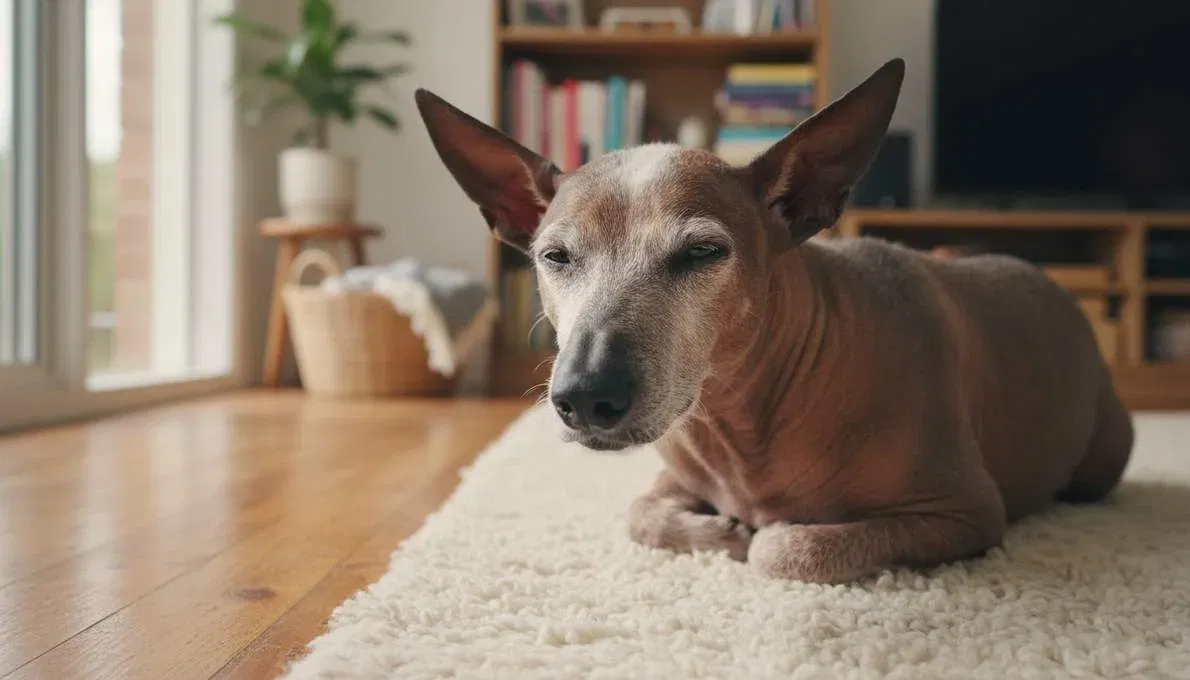
The Xoloitzcuintli is a long-lived breed, with an average lifespan of 13 to 18 years. That upper range is exceptional — very few breeds of any size routinely reach 18. Toy and miniature Xolos tend to live longer than standards, which is consistent with the general rule that smaller dogs outlive larger ones.
Age-Specific Care Tips
| Life Stage | Age Range | Key Considerations |
|---|---|---|
| Puppy | 0–12 months | Socialisation is the single most important thing you can do. Expose to as many people, sounds, surfaces, and situations as possible. Start skin care routine early. Expect adolescent acne around 6–12 months. |
| Adolescent | 1–2 years | Energy levels are highest. Increase structured exercise. Continue socialisation — Xolos can regress if exposure stops. Reinforce recall and leash manners. They’re athletic escape artists — check fences. |
| Adult | 2–10 years | Maintain daily walks and mental enrichment. Annual vet check-ups. Apply sunscreen before outdoor time. Watch for weight gain, especially in less active adults. |
| Senior | 10+ years | Reduce high-impact exercise. Increase vet visits to bi-annual. Keep skin moisturised — older Xolo skin dries out faster. Watch for joint stiffness and dental issues. |
Grooming & Care
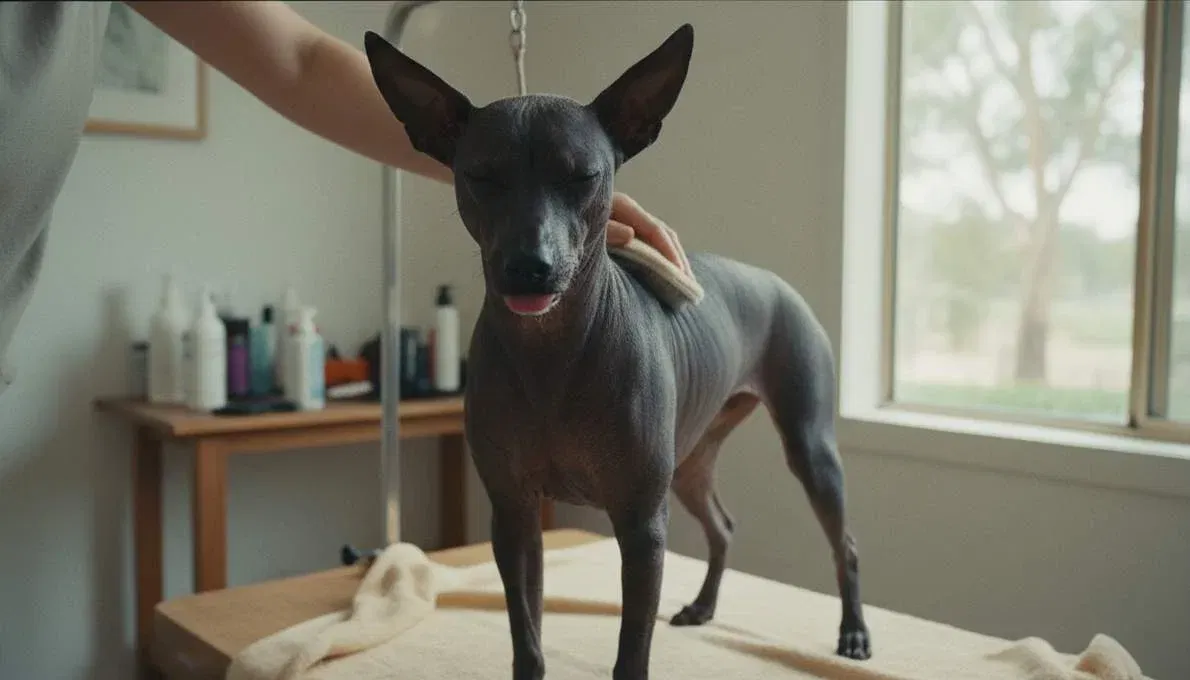
A hairless dog sounds like it would be zero-maintenance. The reality is slightly different — you’re not brushing fur, but you are managing skin. Think of it less like dog grooming and more like a skincare routine for a teenager with sensitive skin.
Hairless Xolo Skin Care
Hairless Xolos need regular baths (every one to two weeks) with a gentle, dog-safe shampoo to prevent acne and blackheads. After bathing, apply a light, fragrance-free moisturiser to keep the skin supple. Over-bathing strips natural oils and causes dryness, so don’t overdo it.
Sunscreen is mandatory in Australia. The hairless Xolo has no fur to protect against UV radiation, and Australian sun is brutal. Use a dog-formulated sunscreen (human sunscreen can be toxic to dogs) on exposed skin before any outdoor time. This is especially critical between 10am and 3pm during Australian summers.
Coated Xolo Grooming
The coated variety of the Mexican Hairless Dog has a short, flat coat with no undercoat. They’re extremely low-maintenance — a weekly brush and occasional bath is all they need. Shedding is minimal.
Grooming Schedule
| Grooming Task | Hairless Variety | Coated Variety |
|---|---|---|
| Bathing | Every 1–2 weeks with gentle shampoo | Every 4–6 weeks or when dirty |
| Moisturising | After every bath — light, fragrance-free lotion | Not required |
| Sun Protection | Dog-safe sunscreen before all outdoor time | Generally not needed |
| Brushing | Not applicable | Once per week with a soft brush |
| Nail Trimming | Weekly — nails grow fast on this breed | Every 2–3 weeks |
| Ear Cleaning | Weekly — large, open ears collect dirt | Weekly |
| Teeth Brushing | 2–3 times per week (many have missing teeth — still needs care) | 2–3 times per week |
| Skin Checks | After every outdoor session — check for cuts, sunburn, irritation | Occasional — less vulnerable |
Exercise Needs
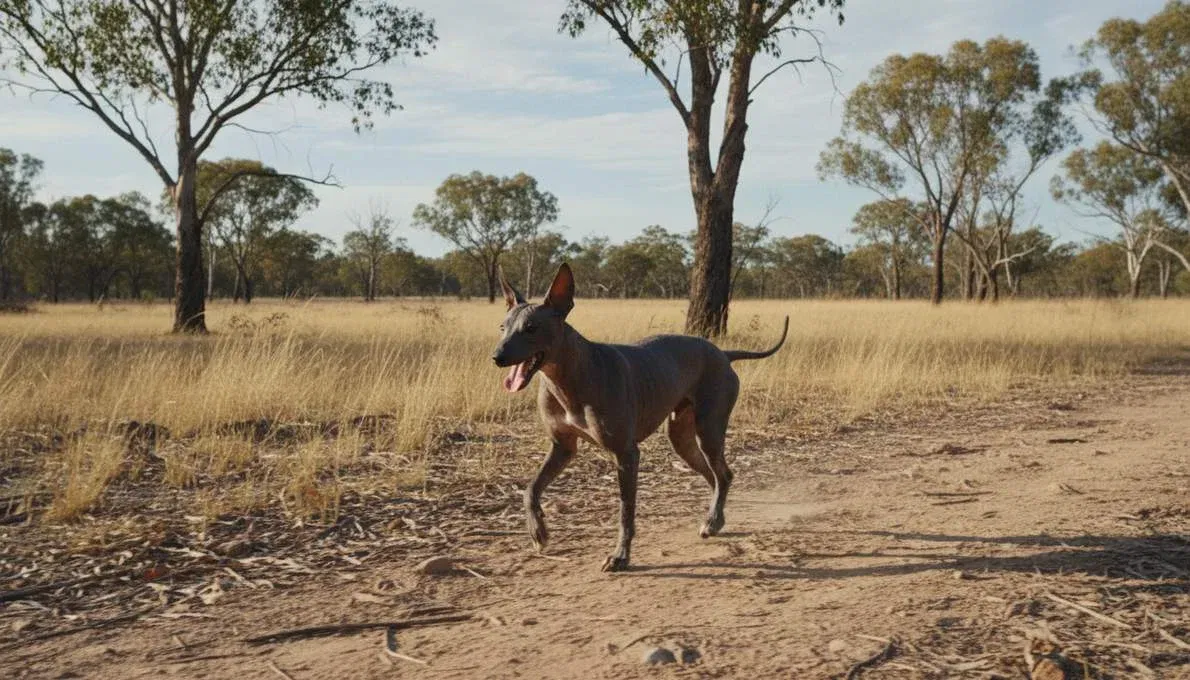
The Xolo is active but not hyperactive. Unlike some working breeds that need two hours of flat-out running, a Xolo is happy with moderate daily exercise — two walks of 20 to 30 minutes, plus some playtime in the yard or interactive games indoors.
They’re athletic and surprisingly agile. Xolos are known for being excellent jumpers — many can clear a six-foot fence without much effort. Secure fencing is essential if you have an outdoor area.
Australian Climate Considerations
The hairless Xolo is uniquely suited to warm climates — it evolved in Mexico, after all — but Australian sun intensity is a different beast. While they handle heat better than most furry breeds, their exposed skin burns easily. Exercise your Xolo in the early morning or evening during summer, and always apply sunscreen.
In winter, especially in Melbourne, Canberra, or Tasmania, a hairless Xolo will need a jumper or coat for outdoor walks. They feel the cold keenly and will shiver without protection. Many Xolo owners keep a wardrobe of doggy clothing for temperature management year-round.
What Happens If They Don’t Get Enough Exercise?
A bored Xolo is a destructive Xolo. They’re intelligent problem-solvers, and without adequate stimulation, they’ll redirect that brainpower toward escaping the yard, digging, or chewing things they shouldn’t. Mental enrichment — puzzle toys, training sessions, scent games — is just as important as physical exercise.
Dog Training Guide
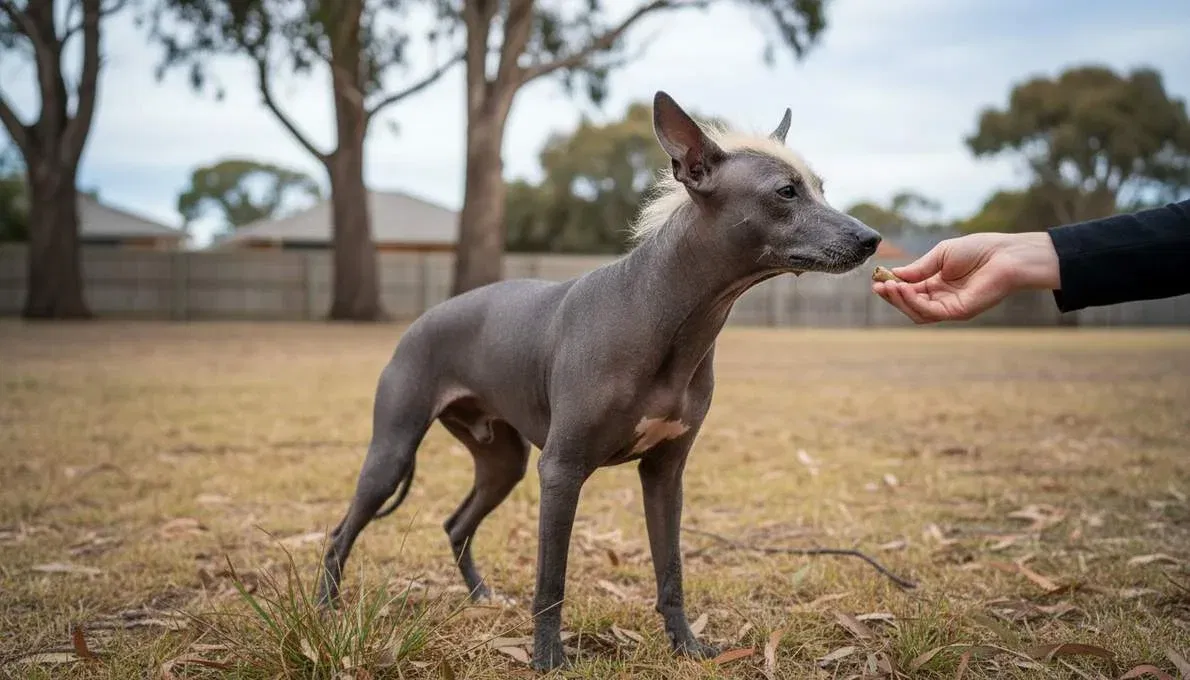
The Xolo is intelligent and responsive to training, but there’s a catch: they’re a primitive breed. That means their instincts are closer to the surface than in highly domesticated breeds. They’re independent thinkers, they read body language with eerie precision, and harsh corrections will destroy their trust. Positive reinforcement with clear, consistent boundaries is the only approach that works.
Socialisation & Training Timeline
| Age | Training Focus | Tips |
|---|---|---|
| 8–16 weeks | Socialisation & handling | This window is critical. Expose to at least 100 new experiences. Handle ears, paws, skin daily. Start crate training. Enrol in puppy school immediately. |
| 4–6 months | Basic obedience & recall | Teach sit, stay, come, leave it. Recall is especially important — Xolos have a prey drive and are escape artists. Start leash manners early. |
| 6–12 months | Adolescent boundaries | Expect testing and pushing limits. Stay consistent. Reinforce recall in high-distraction environments. Begin structured activities like agility or rally. |
| 1–2 years | Advanced skills & impulse control | Work on off-leash reliability (in safe, enclosed spaces only). Teach “settle” and “place” commands for calm household behaviour. Introduce trick training for mental stimulation. |
| 2+ years | Ongoing enrichment | Adult Xolos are calm but still need mental challenges. Rotate toys and activities. Consider nose work or tracking — their prey drive makes them naturals. |
Honest Difficulty Rating
For experienced owners who understand primitive breeds: easy to moderate. For first-time owners: moderate to challenging. The Xolo isn’t stubborn like a Shiba Inu, but it is sensitive, opinionated, and requires an owner who can provide calm, confident leadership without resorting to force.
Cost of Owning in Australia
The Xolo is rare in Australia, but unlike some uncommon breeds, there are ANKC-registered breeders here. That means you can potentially avoid the cost and complexity of international imports — though waitlists can be long.
Mexican Hairless Dog Price: Upfront Costs
| Expense | Estimated Cost (AUD) |
|---|---|
| Xolo puppy (Australian ANKC-registered breeder) | $3,000–$5,000 (pet quality) |
| Xolo puppy (show quality or rare colour) | $5,000–$8,000 |
| Imported puppy (if no local availability) | $5,000–$12,000+ (including shipping & quarantine) |
| Initial vet check, vaccinations & microchip | $300–$600 |
| Desexing | $300–$600 |
| Bed, crate, bowls, leash, jumpers | $300–$600 |
| Total First-Year Estimate (Australian breeder) | $4,200–$6,800 |
| Total First-Year Estimate (imported) | $6,200–$13,800 |
Finding a breeder in Australia: Start with the ANKC breed directory or contact Dogs NSW, Dogs Victoria, or your state body directly. The Wazzat kennel (NSW) was the first to introduce Xolos to Australia and remains a prominent breeder. Other registered breeders operate in QLD, VIC, SA, and NT. Always verify ANKC registration, ask for health clearances on both parents, and expect a waitlist of 6–12 months or more.

Is the Mexican Hairless Dog Right for You?
- Want a loyal, deeply bonded companion that sticks to you like glue
- Prefer a quiet dog that doesn’t bark excessively
- Live in a warm climate or are prepared to manage sun and cold protection
- Have experience with independent or primitive breeds
- Are home most of the day or can arrange company for your dog
- Are happy to commit to a skincare routine (hairless variety)
- Want a genuinely hypoallergenic-friendly option (hairless variety)
- First-time owners unwilling to invest in socialisation training — an unsocialised Xolo can become fearful and defensive
- People who are away from home for long hours — Xolos develop separation anxiety more than most breeds
- Anyone expecting a fetch-obsessed, people-loving golden retriever personality — Xolos are reserved and selective
- Owners who skip sun protection — an unprotected hairless Xolo in Australian sun will suffer painful burns
- Families with very young children and no dog experience — the toy and miniature sizes are fragile, and all Xolos need calm, confident handling
If you love the look but aren’t sure about the temperament, consider the Chinese Crested (a smaller, slightly more sociable hairless breed) or the Peruvian Hairless Dog (similar in spirit but slightly different in personality). For Australians wanting a similar-sized loyal companion, the Australian Kelpie shares the Xolo’s intelligence and work ethic, though it needs considerably more exercise.
Here’s what it comes down to:
- The Xoloitzcuintli is one of the oldest, healthiest, and most fascinating dog breeds on the planet — and it’s finally available in Australia through registered breeders.
- Owning a hairless dog in Australia means sun protection becomes a daily non-negotiable, but in return you get a breed that barely sheds, rarely smells, and may suit allergy sufferers.
- If you’re a patient, experienced owner who values a deep one-on-one bond over a party-animal personality, the Xolo will give you 13 to 18 years of fierce, quiet devotion.
Frequently Asked Questions
What is a Mexican Hairless Dog called?
The Mexican Hairless Dog is officially called the Xoloitzcuintli (pronounced “show-low-eats-QUEEN-tlee”). Most people shorten it to “Xolo” (show-low). Other names include Mexican Hairless, Xoloitzcuintle, and Tepeitzcuintli. In Australia, the ANKC registers the breed as the Xoloitzcuintle.
How do you pronounce Xoloitzcuintli?
It’s pronounced “show-low-eats-QUEEN-tlee.” Break it into four parts: show • low • eats • queent-lee. Most owners just say “Xolo” (show-low) in daily conversation.
Are Mexican Hairless Dogs hypoallergenic?
The hairless variety produces significantly less dander than most breeds because there’s no fur to trap and release allergens. Many allergy sufferers report fewer reactions around hairless Xolos. However, no dog is truly 100% hypoallergenic — all dogs produce some dander and saliva proteins that can trigger allergies. Spend time with a Xolo before committing if allergies are a concern.
How much does a Mexican Hairless Dog cost in Australia?
From an ANKC-registered Australian breeder, expect to pay $3,000 to $5,000 AUD for a pet-quality puppy, or $5,000 to $8,000 AUD for show quality. If importing from overseas, total costs including shipping and quarantine can exceed $12,000 AUD. Annual ongoing costs typically run $2,200 to $5,000 AUD.
Do Mexican Hairless Dogs come in different sizes?
Yes, the Xolo comes in three sizes. Toy Xolos stand 25–35 cm tall and weigh 4–7 kg. Miniature Xolos are 36–45 cm tall and 7–14 kg. Standard Xolos reach 46–60 cm and weigh 14–25 kg. All three sizes come in both hairless and coated varieties.
Can Mexican Hairless Dogs have hair?
Yes. The coated Mexican Hairless Dog has a short, flat coat with no undercoat. Both hairless and coated puppies can appear in the same litter. Even hairless Xolos typically have a small amount of coarse hair on the top of their head, their feet, and the tip of their tail. The coated variety is identical in temperament and conformation — only the coat differs.
What is the Mexican Hairless Dog’s temperament like?
Xolos are calm, loyal, intelligent, and protective. They bond deeply to one person and can be wary of strangers. They’re quiet around the house and alert enough to make excellent watchdogs. They’re not aggressive, but they need early socialisation to prevent nervousness or reactivity. They’re often described as cat-like in their independence and composure.
What health problems do Mexican Hairless Dogs have?
Remarkably few. The Xolo is one of the healthiest purebred dogs thanks to thousands of years of natural selection. The main concerns are skin care (acne, sunburn, dryness in hairless varieties), occasional hip dysplasia in standard sizes, patellar luxation in toy/miniature sizes, and missing teeth linked to the hairless gene. Lifespan is 13 to 18 years.
Are there Mexican Hairless Dog breeders in Australia?
Yes. The Xoloitzcuintli has been bred in Australia since 2009. The Wazzat kennel was the first to import and breed Xolos locally, and there are now ANKC-registered breeders in NSW, QLD, VIC, SA, and the NT. Contact the ANKC or your state kennel council for a current breeder directory. Expect waitlists of 6 to 12 months
Is the Mexican Hairless Dog the same as the Chinese Crested?
No. While both are hairless breeds, they’re genetically and historically distinct. The Xolo is a larger, more robust primitive breed from Mexico with a 3,000-year history. The Chinese Crested is a smaller toy breed with a different build, temperament, and coat pattern (including the “powderpuff” variety with long, flowing hair). Some historians speculate the two breeds may share ancient ancestry, but they’re classified as separate breeds today.
- American Kennel Club — Xoloitzcuintli Dog Breed Information: https://www.akc.org/dog-breeds/xoloitzcuintli/
- PetMD — Xoloitzcuintli (Mexican Hairless) Dog Breed Health and Care: https://www.petmd.com/dog/breeds/xoloitzcuintli
- Wisdom Panel — Xoloitzcuintli Facts: https://www.wisdompanel.com/en-us/dog-breeds/xoloitzcuintli
- Dogs NSW — Xoloitzcuintle Breed Information: https://www.dogsnsw.org.au/Breeds/browse-all-breeds/180/
- Dogs Victoria — Xoloitzcuintle Breed Profile: https://dogsvictoria.org.au/family-pet/dogs-and-puppies/buying-a-puppy/breed-information-and-registered-breeders/xoloitzcuintle/
- https://perfectpets.com.au/pets/dogs/dog-breeds/dog-breeders/xoloitzcuintle
- WebMD — Xoloitzcuintli Dogs: What You Should Know: https://www.webmd.com/pets/dogs/what-to-know-about-xoloitzcuintli
- Dogster — Mexican Hairless Dog Breed Guide: https://www.dogster.com/dog-breeds/mexican-hairless-dog-xoloitzcuintli
- Daily Paws — Xoloitzcuintli Dog Breed Information: https://www.dailypaws.com/dogs-puppies/dog-breeds/xoloitzcuintli-mexican-hairless