
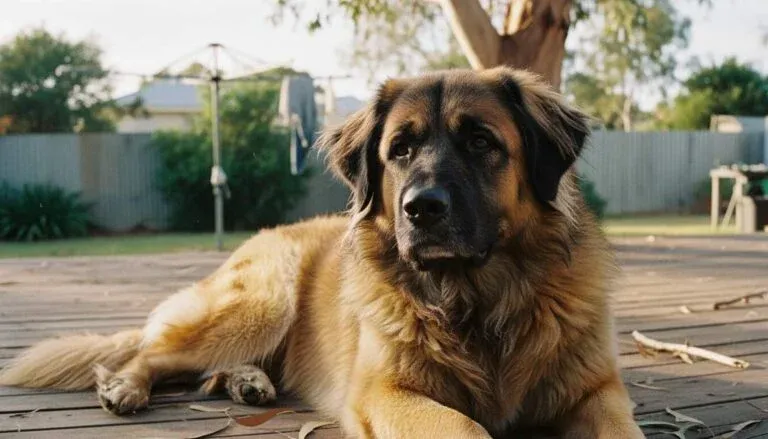
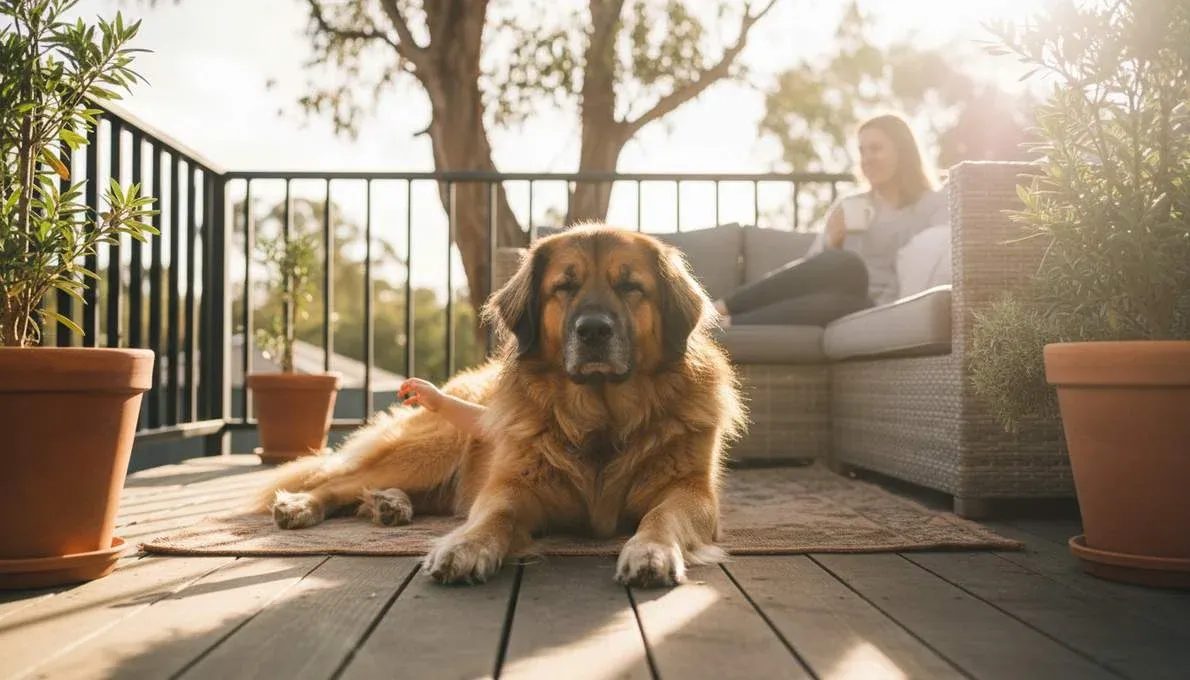
The Leonberger is a 60–80 kg dog that genuinely believes it’s a lap dog. It will climb onto your couch, lean its full weight against your legs, rest its enormous head in your lap, and look at you with warm brown eyes that say “I fit perfectly, what’s the problem?” This is one of the great contradictions of the breed: a dog built like a lion with the temperament of a golden retriever who missed the memo about personal space.
Created in the 1840s in Leonberg, Germany — allegedly by crossing a Newfoundland with a Saint Bernard and later a Pyrenean Mountain Dog — the Leonberger dog was designed to resemble the lion on the town’s coat of arms. The result was a giant, lush-coated, water-loving working dog with webbed feet, a black mask, and a temperament so gentle that European royalty lined up to own one. Napoleon III, Empress Elisabeth of Austria, and Otto Von Bismarck were all Leonberger owners.
In Australia, Leonbergers are rare but growing in popularity. The first Leonberger was imported in 1989, and a dedicated community of breeders across Victoria, NSW, and other states now produces limited litters each year. Glamourford Leonbergers (VIC) bred Australia’s first and only Best in Show (All Breeds) Leonberger and the country’s first Supreme Champion. Most Australian breeders charge $4,500–$5,500 per puppy, with waiting lists that can stretch to several years.
This guide covers everything honestly — the short lifespan (the hardest truth), the health conditions with AUD costs, the shedding reality, exercise demands, Australian breeder info, and direct comparisons with the Bernese Mountain Dog and Newfoundland.
What You’ll Learn
- Breed traits & temperament
- Health concerns to know
- True cost in Australia
- Training & exercise needs
- Is this breed right for you?
Quick Facts at a Glance
| Trait | Details |
|---|---|
| Breed Group | Utility (ANKC Group 6) / Working Group (AKC) |
| Origin | Leonberg, Baden-Württemberg, Germany (first registered 1846) |
| Size | Giant — Males: 72–80 cm; Females: 65–75 cm at the withers |
| Weight | Males: 54–77 kg (120–170 lbs); Females: 41–59 kg (90–130 lbs) |
| Lifespan | 7–10 years (2024 UK study found average of 10 years) |
| Coat | Medium to long, dense, water-resistant double coat with mane (males) |
| Colours | Lion-yellow, red, reddish-brown, sandy — all with black mask and black tipping |
| Temperament | Gentle, loyal, calm, confident, playful, affectionate |
| Exercise Needs | Moderate to high — minimum 1 hour daily; loves swimming |
| Shedding | Heavy — year-round with major seasonal blowouts twice yearly |
| Hypoallergenic? | No — heavy shedding breed |
| Drooling | Moderate — less than Saint Bernards or Newfoundlands, but present after drinking |
| Good with Kids? | Excellent — gentle and patient, though can accidentally knock over toddlers |
| Good Guard Dog? | Alert barker, not aggressive — females tend to be better watchdogs than males |
| AKC Recognition | 2010 (Working Group) |
| ANKC Recognition | Utility Group (Group 6) |
History & Origins
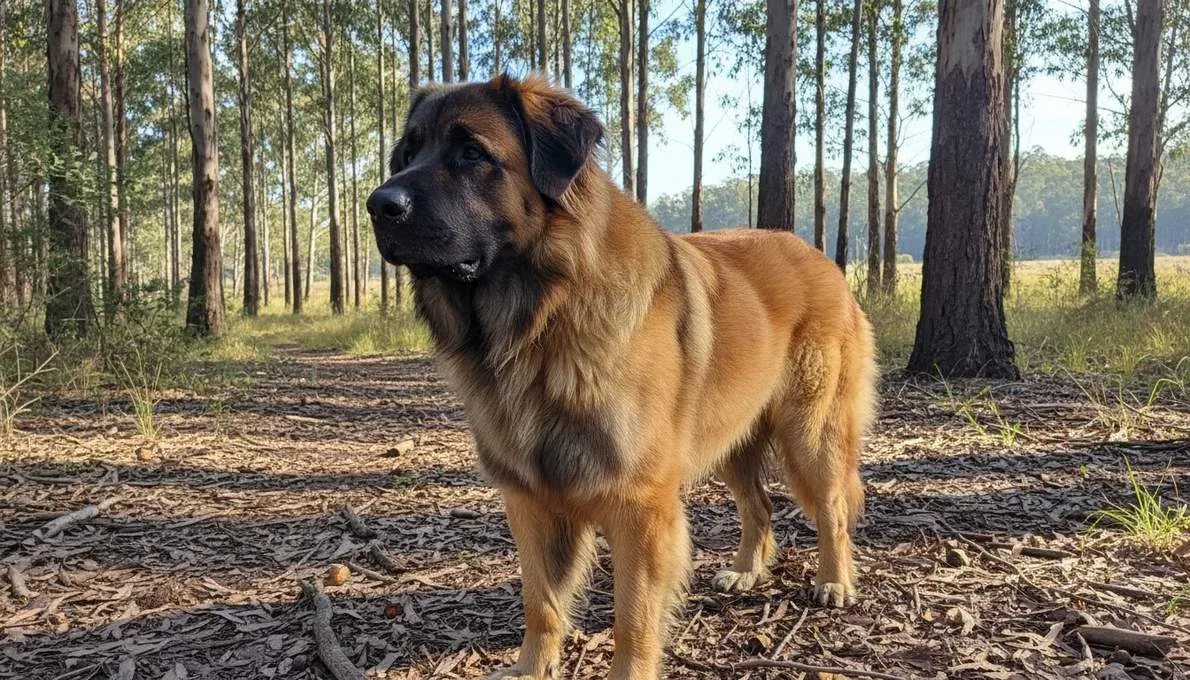
The Leonberger’s origin story is equal parts marketing genius and breeding skill. In the 1830s, Heinrich Essig — a dog breeder, seller, and mayor of Leonberg, Germany — claimed to have created the breed by crossing a female Landseer Newfoundland with a male from the Great St Bernard Hospice (the dogs that would become Saint Bernards). Later, a Pyrenean Mountain Dog was added to the mix. Essig’s stated goal was to create a dog that resembled the lion on Leonberg’s coat of arms. The first dogs registered as Leonbergers were born in 1846.
However, modern genetic analysis suggests the story may be more complex. The distinctive Leonberger colouring — pale cream to rich red with black sabling and mask — is not easily achievable from just the Newfoundland, Saint Bernard, and Pyrenean Mountain Dog combination. Other breeds likely contributed. Regardless, Essig succeeded in creating a large, striking, gentle dog that captured the attention of European royalty. Napoleon III, Empress Elisabeth of Austria-Hungary, the Prince of Wales, Otto Von Bismarck, and Umberto I of Italy all owned Leonbergers.
The breed nearly went extinct — twice. During World War I, breeding programmes collapsed. Of just 25 remaining Leonbergers after the war, only five were of breeding quality. Two dedicated fanciers, Stadelmann and Josenhans, established a club committed to saving the breed. The German government took over the breeding programme during World War II, and it was re-established after the war by the Deutsche Club für Leonberger Hunde. In the 1970s, other breeds including the Newfoundland were reintroduced to the programme, producing the modern Leonberger with its darker coat and characteristic black mask.
The first Leonberger arrived in Australia in 1989. The breed gained ANKC recognition under the Utility Group (Group 6). The Australian Leonberger community remains small but passionate. Key breeders include Glamourford (VIC), Berglöwe (Sydney, NSW), and other dedicated kennels across the country. Glamourford Leonbergers has been Dogz Online’s Advance Breeder of the Year since 2015 and bred Australia’s first Best in Show and Supreme Champion Leonberger. Most Australian breeders health-test for hip and elbow scores, eye conditions (including gonioscopy), and all four breed-specific DNA conditions (LPN1, LPN2, LPPN3, LEMP).
Leonberger Temperament & Personality
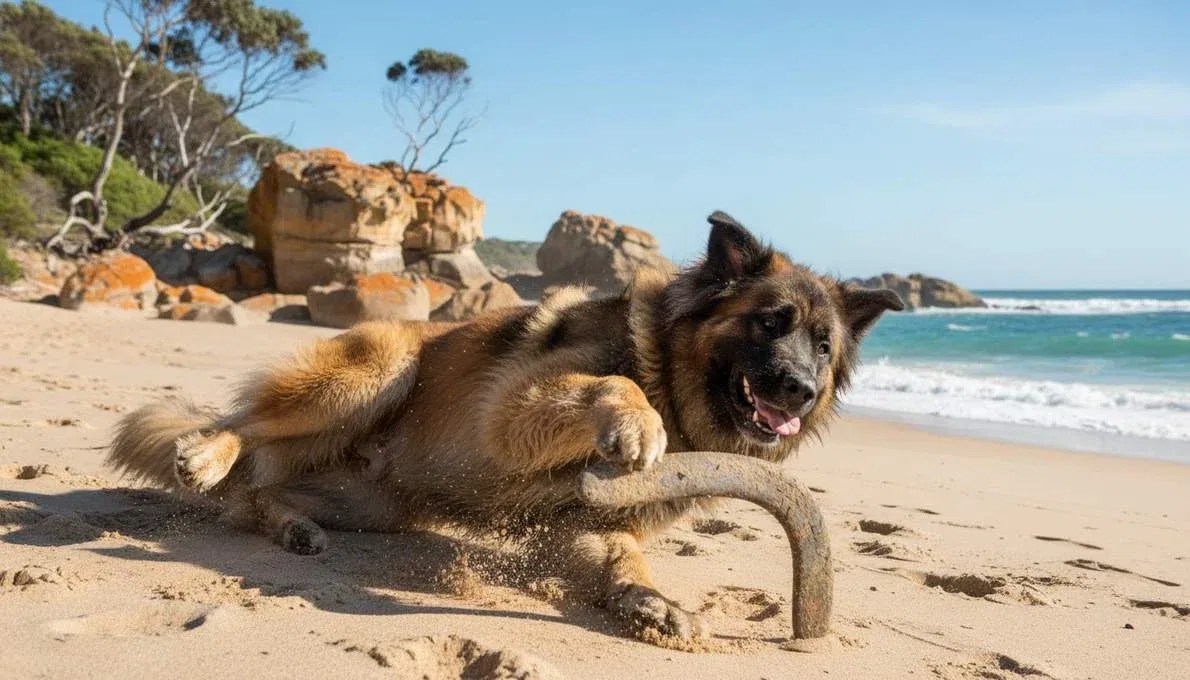
The Leonberger temperament is the breed’s defining feature and the reason owners become lifelong devotees. The breed standard uses the words “calm, confident, and lively” — which sounds contradictory but perfectly captures the Leonberger experience. They’re simultaneously the most relaxed dog in the room and the first one ready for an adventure.
Leonbergers are genuine gentle giants. They’re loving and affectionate with their families to an almost comical degree — a 70 kg dog that wants to be in your lap is endearing, if physically challenging. They’re excellent with children, patient and tolerant in ways that make them outstanding family dogs. They’re friendly with strangers when properly socialised, amenable to other dogs, and generally calm and quiet in the home. Their intelligence makes them responsive to training, and they genuinely want to please their people. They excel at therapy work, water rescue (they have webbed feet and are powerful natural swimmers), carting, agility, and obedience.
Despite their gentle nature, Leonbergers are still giant dogs with giant-dog realities. They’re not aggressive, but they can easily knock over a toddler or an elderly person simply by turning around enthusiastically. They drool — not as much as Saint Bernards, but enough that you’ll want a towel near their water bowl. They shed prolifically, year-round, with dramatic seasonal coat blowouts that leave tumbleweeds of fur under every piece of furniture. They’re messy drinkers, muddy-paw deliverers, and general household chaos agents. Dogs Victoria puts it well: “They are not necessarily for the house-proud. A sense of humour is advised.”
They can be stubborn, particularly during adolescence (roughly 9 months to 2 years), and their sheer size means that any behaviour problem is automatically a big behaviour problem. Separation anxiety is a real concern — Leonbergers are sensitive dogs that require human companionship and should not be left alone for extended periods or expected to live outdoors. Some individuals can show aggression toward unfamiliar dogs, though this is generally manageable with proper socialisation.
Health & Genetic Conditions
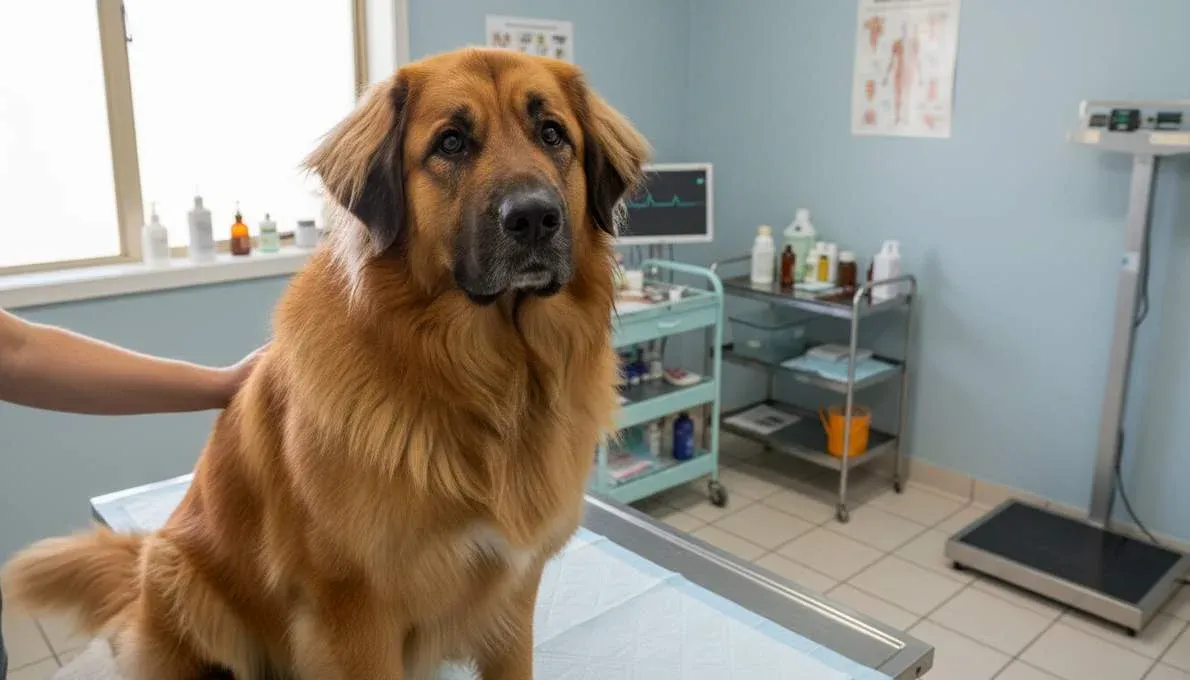
Leonberger health problems are the most sobering aspect of owning this breed. Like most giant breeds, they are predisposed to several serious conditions, and cancer is the leading cause of death. A 2024 UK study found an average life expectancy of 10 years — compared to 12.7 for purebreds overall. An analysis of Leonberger pedigrees revealed an inbreeding coefficient of 0.29 with just 22 founding dogs, and from 1989 to 2004, life expectancy dropped from 9.4 to 7.7 years. Almost half of all Leonbergers suffered from at least one health condition, with 21.5% affected by neoplasia (cancer).
The good news is that DNA testing has advanced significantly. Four breed-specific genetic conditions now have reliable DNA tests: LPN1, LPN2, LPPN3, and LEMP. Reputable Australian breeders like Berglöwe (NSW) test all breeding stock as N/N (clear) for all four conditions.
Prevalence: Polyneuropathy is one of the most significant health concerns in the Leonberger breed. LPN1 is caused by a 10 base-pair deletion in the ARHGEF10 gene and is inherited in an autosomal recessive pattern. LPN2 is caused by a 2 base-pair deletion in the GJA9 gene and is inherited in an autosomal dominant pattern. Together, LPN1 and LPN2 account for approximately 40–45% of all diagnosed polyneuropathy cases in the breed. Population testing of over 7,000 Leonbergers shows an LPN1 carrier rate of approximately 12% and LPN2 affected/susceptible rate of approximately 6%
Symptoms: Slowly worsening exercise intolerance, gait abnormalities (an exaggerated hitched step especially in the hind limbs), muscle wasting in the hindquarters, noisy breathing, change in bark quality, and in advanced cases difficulty breathing due to laryngeal paralysis. LPN1 homozygous dogs typically develop signs before age 3. LPN2 heterozygous dogs show signs on average around age 6, though some never develop clinical disease
Treatment Cost (AUD): $2,000–$5,000 for laryngeal tieback surgery; $500–$1,500 per year for ongoing management
Prevention: DNA testing for both LPN1 and LPN2 is essential. LPN1 carriers (D/N) should only be mated to LPN1-clear (N/N) dogs to prevent producing affected (D/D) puppies. For LPN2, the University of Minnesota recommends immediate removal of D/N and D/D dogs from breeding programmes due to its dominant inheritance. Insist on seeing test results for both mutations before purchasing a puppy
The University of Minnesota Canine Genetics Lab, the University of Bern, and UC San Diego have collaborated extensively on Leonberger polyneuropathy research. Their work identified LPN1 and LPN2 as genetically distinct but clinically similar diseases, with strong evidence for at least one additional unidentified genetic polyneuropathy in the breed.
Prevalence: LPPN3 is caused by an amino acid change in the CNTNAP1 gene and is inherited in an autosomal recessive manner. The carrier rate among tested Leonbergers is approximately 11.5%. Only dogs homozygous for the mutation (D/D) develop clinical disease, which tends to be severe
Symptoms: Severe laryngeal paralysis at a young age (average onset 3.4 years), often requiring surgical intervention. Additional signs include difficulty swallowing, changes in bark frequency and quality, high-stepping and uncoordinated gait, stumbling and tripping, exercise intolerance, and muscle atrophy
Treatment Cost (AUD): $3,000–$6,000 for surgical intervention (laryngeal tieback)
Prevention: DNA test available. LPPN3-D/D dogs should not be bred. LPPN3-D/N carriers should only be paired with LPPN3-N/N clear dogs. The University of Minnesota advises against automatic exclusion of all carriers from breeding, as this would unnecessarily narrow the gene pool
Prevalence: LEMP is a recessively inherited neurodegenerative disorder caused by an amino acid change in the NAPEPLD gene. It affects the white matter of the central nervous system (brain and spinal cord). Population testing of over 7,000 Leonbergers shows a carrier rate of approximately 15% (roughly 1 in 7 dogs). DNA testing has been available since April 2017
Symptoms: Slowly worsening gait abnormalities including spontaneous knuckling, dragging of the paws, and hypermetria (exaggerated limb movements) — particularly in the front legs. Clinical signs may develop as early as 1 year of age. LEMP is characterised by a distinctive pattern on MRI affecting the cervical spinal cord white matter
Treatment Cost (AUD): No effective treatment exists. Management and quality-of-life care $1,000–$3,000. The condition is progressive and ultimately debilitating
Prevention: DNA testing identifies clear, carrier, and affected dogs. Only clear-to-clear or clear-to-carrier matings should be used — never carrier-to-carrier, which produces a 25% risk of affected puppies. All Leonberger breeding stock should be LEMP tested
Prevalence: Common in giant breeds including the Leonberger. A Norwegian study found that 25% of Leonbergers had hip dysplasia after 18 months of age. Screening via X-ray is recommended for all breeding stock under the OFA, BVA/ANKC, or PennHIP schemes
Symptoms: Stiffness after rest, reluctance to rise or climb stairs, bunny-hopping gait, decreased activity, rear leg lameness, and reduced range of motion in the hip or elbow. Elbow dysplasia may present as front limb lameness, particularly after exercise
Treatment Cost (AUD): $3,000–$8,000 per joint for surgical intervention (total hip replacement or triple pelvic osteotomy); conservative management $500–$1,500 per year
Prevention: Only purchase from breeders who provide hip and elbow scores for both parents. Feed a giant-breed puppy formula to control growth rate. Maintain a lean body weight throughout life. Avoid excessive high-impact exercise during the growth phase — particularly important in a breed that grows as rapidly as the Leonberger
Hip and elbow dysplasia occur when the joints do not develop properly, causing poor articulation, cartilage damage, and progressive osteoarthritis. In giant breeds the rapid growth rate during the first 12–18 months significantly increases the risk, making nutrition and controlled exercise during puppyhood critical prevention strategies. The Leonberger Club of Canada recommends all breeding stock receive passing OFA hip evaluations at 24 months of age.
Prevalence: The Leonberger’s deep chest and giant size place it among the highest-risk breeds for GDV. A health survey of 2,726 Leonbergers recorded 54 cases of gastric torsion, making it one of the most frequently reported individual conditions in the breed
Symptoms: Sudden restlessness, unproductive retching or dry heaving, visibly swollen or distended abdomen, excessive drooling, rapid shallow breathing, pale gums, inability to lie down comfortably, and collapse. This is a time-critical emergency — minutes matter
Treatment Cost (AUD): $5,000–$10,000 for emergency surgery; $1,500–$3,000 for prophylactic gastropexy performed at desexing
Prevention: Feed two or three smaller meals daily instead of one large meal. Use a slow-feeder bowl. Avoid vigorous exercise for at least one hour before and after eating. Discuss prophylactic gastropexy with your vet — this procedure tacks the stomach to the body wall and reduces recurrence risk from up to 80% to less than 5%. For a giant breed like the Leonberger, prophylactic gastropexy at desexing is strongly recommended
Prevalence: Cancer is the leading cause of death in Leonbergers, accounting for 34–45% of all fatalities. A health survey of 2,726 Leonbergers found that 21.5% (586 dogs) had reported tumours or cancer, with osteosarcoma representing 42.5% of those cases and hemangiosarcoma 22.5%. A UK study found the Leonberger had the second-highest annual prevalence of osteosarcoma at 1.48%, compared to 0.037% across all breeds. The estimated breed prevalence of osteosarcoma is approximately 20%
Symptoms: Osteosarcoma: sudden or progressive lameness (usually in a leg), swelling at the tumour site, bone pain that worsens over time. Hemangiosarcoma: often silent until rupture, then sudden weakness, pale gums, distended abdomen, and collapse. Both cancers carry poor prognoses
Treatment Cost (AUD): $5,000–$15,000+ depending on cancer type, staging, location, and treatment approach (amputation, limb-sparing surgery, chemotherapy). Median survival with osteosarcoma treatment is approximately 10 months
Prevention: No reliable prevention exists for cancer in dogs. Maintaining a healthy weight, avoiding unnecessary chemical exposures, and providing high-quality nutrition may help. The Leonberger Health Foundation International is supporting ongoing genetic research, including an EGFR vaccine trial for osteosarcoma treatment at Yale University. Genome-wide association studies have identified the CDKN2A/B gene locus on chromosome 11 as a major risk factor for osteosarcoma in the breed.
Prevalence: DCM is a recognised cause of death in the Leonberger. A health survey recorded 45 cases of dilated cardiomyopathy among 2,726 Leonbergers (approximately 1.7%), and cardiac disease overall accounts for 9–11% of deaths in the breed
Symptoms: Exercise intolerance, coughing (particularly at night or after lying down), laboured or rapid breathing, lethargy, fainting episodes, distended abdomen (fluid accumulation), and in advanced cases sudden collapse or death. DCM can progress silently for months before clinical signs appear
Treatment Cost (AUD): $1,000–$3,000 per year for ongoing medication (pimobendan, ACE inhibitors, diuretics) and regular cardiac monitoring including echocardiography
Prevention: No proven prevention for DCM. Regular cardiac screening by a veterinary cardiologist (echocardiography and ideally a 24-hour Holter monitor) is recommended for all Leonberger breeding stock. Early detection allows medication to slow disease progression and extend quality of life. Breeding dogs with DCM is strongly discouraged
DCM causes the heart muscle to weaken and the chambers to enlarge, reducing the heart’s ability to pump blood effectively. The condition is progressive and ultimately fatal, but early detection and treatment with medications like pimobendan can significantly improve survival time and quality of life. Giant breeds are disproportionately affected.
Prevalence: Hereditary cataracts, including star cataracts, are noted in the Leonberger. Eye testing (including gonioscopy for glaucoma risk assessment) is recommended for all breeding stock
Symptoms: Cloudy or opaque appearance to one or both eyes, bumping into objects, difficulty catching treats, and a visible white or blue-grey film over the lens. Star cataracts have a distinctive spoke-like pattern radiating from the centre of the lens
Treatment Cost (AUD): $2,500–$4,500 per eye for surgical removal (phacoemulsification)
Prevention: Annual eye examinations by a certified veterinary ophthalmologist. Breeding dogs should have current eye certificates. Dogs diagnosed with hereditary cataracts should not be bred
Star cataracts are named for their distinctive radiating pattern within the lens. The Leonberger Club of Canada notes that all breeding Leonbergers should have no evidence of inherited eye disease via a certified ophthalmologist. Gonioscopy is also recommended to assess the drainage angle of the eye and identify dogs at risk of glaucoma, as the Leonberger Health Foundation International supports ongoing glaucoma research in the breed.
Prevalence: A recognised endocrine condition in the Leonberger. A health survey of 2,726 dogs recorded 142 cases of hypothyroidism, making it the most frequent endocrine disorder in the breed
Symptoms: Weight gain despite normal appetite, lethargy, dry or dull coat, hair loss (particularly along the flanks, tail, and trunk), thickened skin, cold intolerance, and in some cases behavioural changes including increased anxiety or aggression
Treatment Cost (AUD): $300–$800 per year for daily thyroid hormone replacement medication (levothyroxine) and routine blood tests
Prevention: No known prevention. Routine thyroid screening through blood tests allows early detection. Once diagnosed and stabilised on daily medication, most dogs return to normal health and energy levels
Hypothyroidism occurs when the thyroid gland does not produce sufficient thyroid hormones. In the Leonberger, coat changes are often the first visible sign — the normally luxuriant double coat may become thin, dry, or patchy. Treatment is straightforward and inexpensive, with most dogs responding well to daily oral levothyroxine within weeks. The breed’s genomic health study recorded hypothyroidism as the most frequent endocrine condition at 142 out of 2,726 surveyed dogs.
Leonberger Lifespan & Longevity
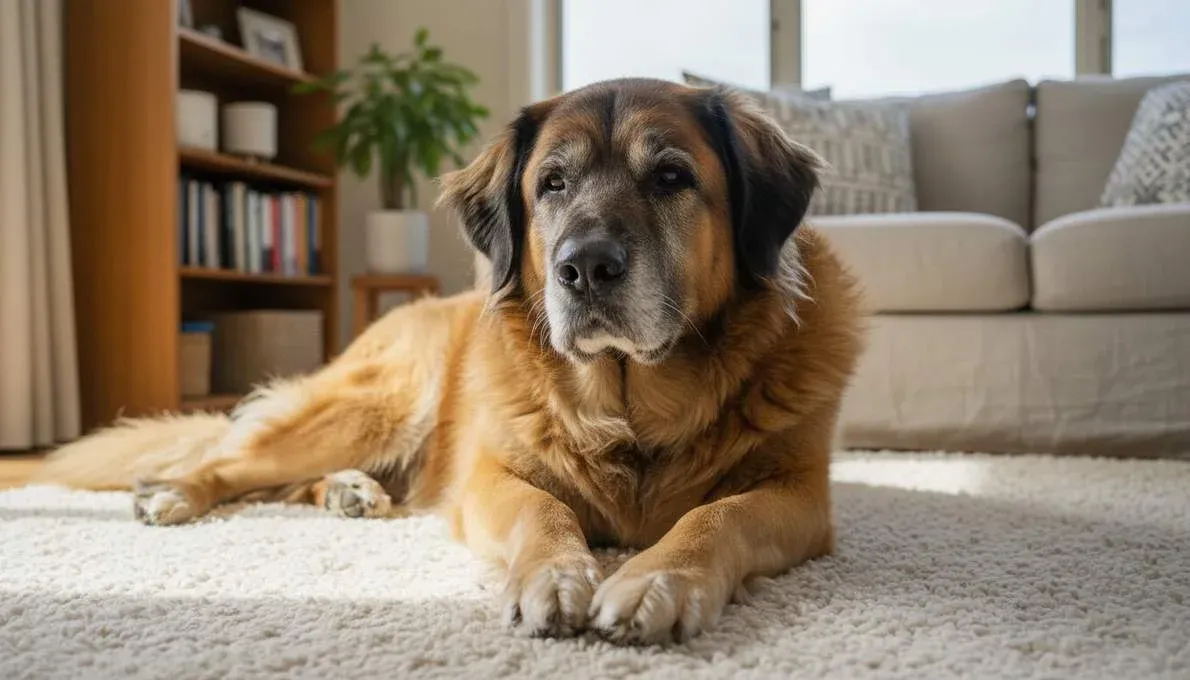
The Leonberger lifespan is the hardest truth about this breed. A 2024 UK study found an average life expectancy of 10 years. A 2015 French study found 8.75 years. A Swedish insurance analysis found 74% of Leonbergers died before age 10. PetMD cites an average of just 7 years. Dogs Victoria states 8–10 years. The realistic range for Australian owners is 7–10 years, with some well-bred, carefully managed individuals reaching 11–12 years. This is typical of giant breeds, but it’s still a short time with a dog you’ll love deeply.
Factors that maximise longevity include purchasing from health-tested lines (LPN, LEMP, hip/elbow cleared), maintaining a lean body weight (obesity is devastating for giant breeds), providing appropriate rather than excessive exercise (especially during growth), feeding a high-quality giant-breed diet, and preventive care including gastropexy at desexing, cardiac screening, and regular cancer checks from age 5 onwards.
Age-Specific Tips
Puppy (0–12 months): Leonberger puppies grow at a staggering rate. Feed a giant-breed puppy formula designed for controlled, slow growth — rapid growth increases the risk of joint problems. Limit exercise on hard surfaces: the rule of thumb is five minutes per month of age, twice daily. Socialisation is critical during this window. Begin training early — a 10 kg puppy is manageable; a 50 kg adolescent who hasn’t learned manners is not.
Adolescent (9–24 months): The “teen” phase. Leonbergers may become stubborn, test boundaries, and go through a brief shy period. They reach their full size around 12 months but don’t mature mentally until roughly age 3, when the male’s mane also fully develops. Continue training with patience — this is when consistency pays off.
Adult (2–6 years): A well-trained adult Leonberger is a calm, delightful housemate. Maintain weight management religiously — even a few extra kilograms stress giant-breed joints and hearts. Start joint supplements (glucosamine, chondroitin) once they reach full adult size. Annual cardiac and eye screening.
Senior (6+ years): In a breed with an average lifespan under 10 years, senior care begins earlier than most breeds. Switch to a senior giant-breed formula. Increase vet visits to twice yearly with blood panels and cancer screening. Watch for signs of polyneuropathy (changes in bark, noisy breathing, hind-leg weakness), cardiac issues (lethargy, coughing, exercise intolerance), and joint deterioration. Modify exercise to lower impact — swimming is ideal.
Grooming & Shedding
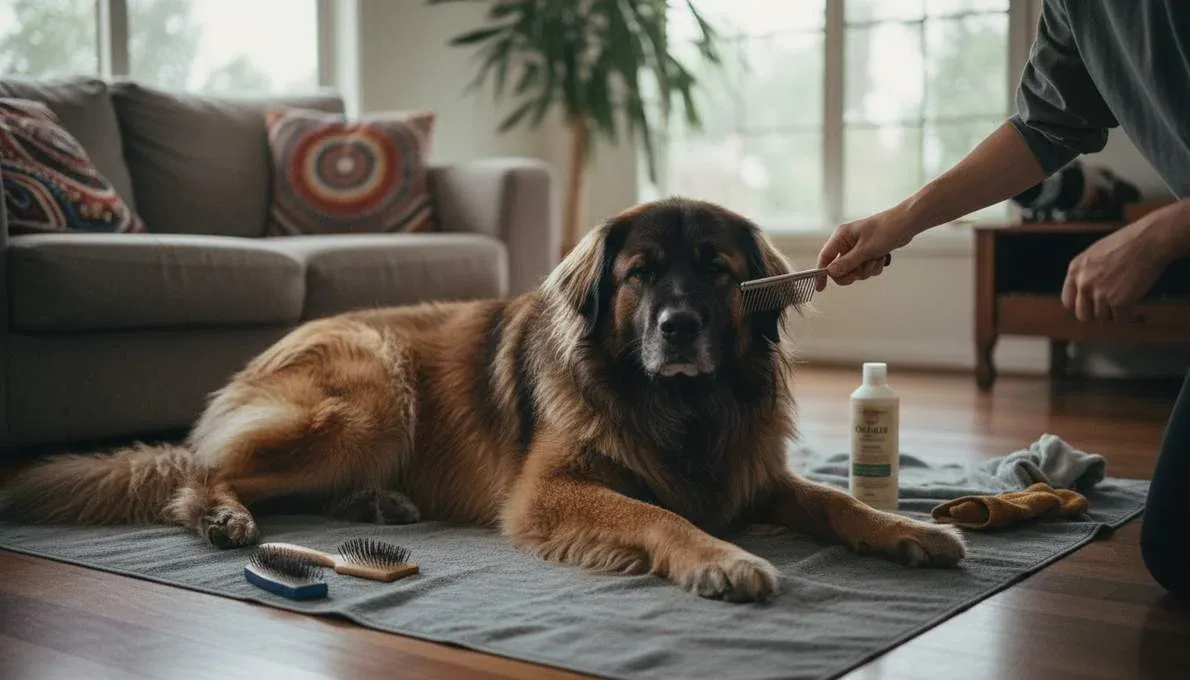
Leonberger shedding is not a minor inconvenience — it’s a lifestyle. These dogs shed year-round and undergo dramatic seasonal coat blowouts in spring and autumn when the undercoat comes out in handfuls. If you’re particular about fur on clothes, furniture, and food, the Leonberger is not for you. Leonberger grooming requires genuine commitment.
| Task | Frequency | Tools | Australian Products |
|---|---|---|---|
| Brushing | Weekly minimum; daily during seasonal blowouts | Undercoat rake, slicker brush, pin brush, metal comb | Chris Christensen Big G Slicker, Kazoo Undercoat Rake |
| Bathing | Every 6–8 weeks or as needed | Giant-breed tub or outdoor hose setup | Plush Puppy Natural Body Building Shampoo, Fidos Everyday |
| Foot Trimming | Every 2–4 weeks (fluffy feet attract seeds) | Thinning shears, straight scissors | Geib Gator Shears |
| Nail Trimming | Every 2–3 weeks | Large-dog nail clippers or Dremel | Millers Forge Large Nail Clipper |
| Ear Cleaning | Weekly (drop ears trap moisture) | Ear cleaner + cotton pads | PAW Gentle Ear Cleaner, Epiotic |
| Teeth Cleaning | 2–3 times per week minimum | Enzymatic dog toothpaste + large brush | Virbac C.E.T. Enzymatic Paste |
| Mane Care (Males) | 2–3 times per week (tangles easily) | Wide-tooth comb, detangling spray | Plush Puppy Seabreeze Oil, Chris Christensen Ice on Ice |
Show ring note: The Leonberger coat is left natural for showing. The only area trimmed is the feet. For pet owners, the coat also requires no clipping — the double coat insulates against both cold and heat, and shaving removes this natural protection. Never shave a Leonberger.
Exercise Needs
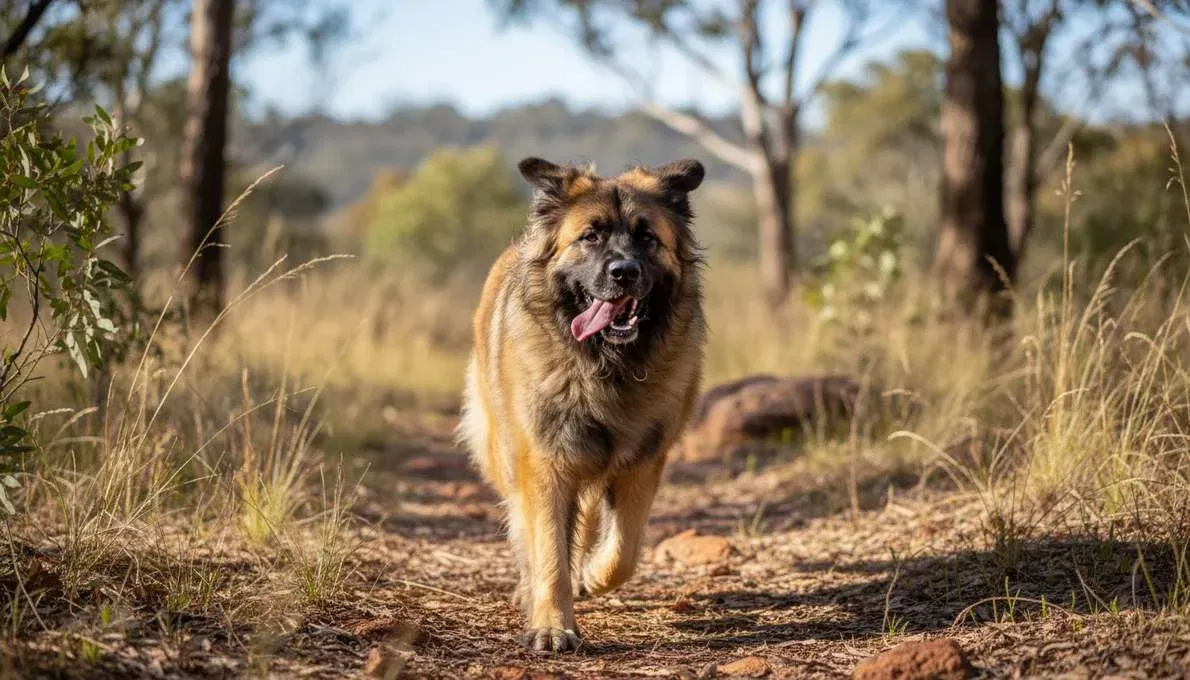
Despite their giant size, Leonbergers have moderate to high exercise needs. A healthy adult requires at least one hour of daily activity, split across multiple sessions. They’re not marathon runners — they’re built for power, not endurance — but they have genuine stamina for long days of hiking, swimming, or working. Without sufficient exercise, they become destructive and difficult.
Leonbergers are natural swimmers, thanks to their webbed feet and water-resistant double coat. Swimming is one of the best forms of exercise for this breed — it provides a full-body workout without the joint stress of running on hard surfaces. They also excel at carting (pulling sleds or wagons), agility, obedience, and therapy work. Giving them a “job” channels their intelligence and prevents boredom.
Can Leonbergers Live in Hot Weather?
This is one of the most searched questions by Australian Leonberger owners, and the honest answer is: yes, but with significant management. The Leonberger’s thick double coat was designed for European temperate climates, not Australian summers. In hot weather, exercise must be restricted to early morning and late evening. Air conditioning or well-ventilated shade is essential during the day. Constant access to fresh water and a paddling pool or sprinkler provides cooling relief. Never shave the coat — the double coat actually provides insulation from heat as well as cold. Many Australian Leonberger owners report their dogs cope well with heat when properly managed, but vigilance for overheating is constant during summer months.
Bloat warning: Never exercise your Leonberger immediately before or after meals. Feed two or more smaller meals per day rather than one large one. Elevated food bowls are no longer recommended — recent research suggests they may increase rather than decrease bloat risk. Discuss preventive gastropexy with your vet, ideally at the time of desexing.
Training Guide
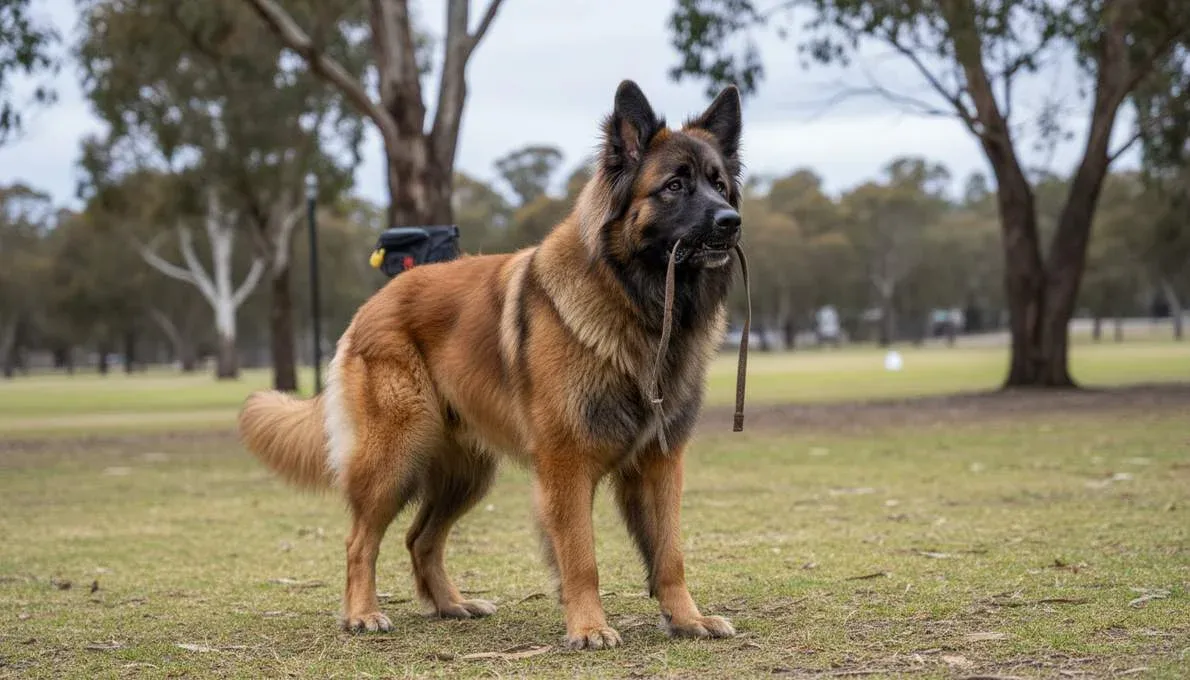
Leonberger training is generally rewarding. These dogs are intelligent, eager to please, and respond well to positive reinforcement. They’re sensitive to harsh corrections and will shut down if treated roughly. The key challenge is timing: you need to establish good manners before the puppy outweighs you, because a 70 kg dog with poor leash manners is a genuine safety hazard.
| Age | Focus Areas | Honest Difficulty |
|---|---|---|
| 8–16 weeks | Socialisation (people, dogs, cats, children, urban environments). Crate training. Name recognition. Gentle leash introduction. “Off” cue — start this immediately. | Easy — puppies are curious, sweet, and eager to learn. |
| 4–6 months | Basic obedience (sit, down, stay, come). Leash manners — critical while puppy is still manageable. Introduction to water/swimming. | Easy to moderate — growing fast, still enthusiastic. |
| 6–12 months | Recall reliability. Impulse control around food (bloat prevention). Door manners. Car loading/unloading. Public behaviour with a large dog. | Moderate — growing rapidly; getting heavy. |
| 9–24 months | Adolescent “teen” phase. Maintaining all previously learned skills. Stubborn phase requires patience and consistency. May go through a shy period. | Challenging — the longer you wait, the more stubborn (and strong) they become. |
| 2–3 years | Mental maturity arrives. Advanced obedience. Dog-sport introduction (carting, water work, therapy). Mane develops fully in males. | Easy — a trained adult Leo is a joy. |
Leonbergers mature slowly — full mental maturity doesn’t arrive until around age 3. They can become bored with repetitive training, so sessions should be kept fun and varied. Positive reinforcement with food rewards works well, but monitor treat intake carefully — obesity is a serious concern in this breed.
Cost of Ownership in Australia
The Leonberger price in Australia is significant, both upfront and ongoing. Giant breeds cost more to feed, insure, medicate, and house than smaller dogs. This is a breed where you’re committing to high expenses for the dog’s entire life — however short that life may be.
| Expense | Estimated AUD Cost | Notes |
|---|---|---|
| Puppy Purchase | $4,500–$5,500 | ANKC registered breeder; waiting lists of 1–3 years common |
| First Year Vet Costs | $1,500–$3,000 | Vaccinations, desexing + gastropexy, microchip, baseline hip/elbow X-rays |
| Annual Vet Costs | $800–$1,500 | Check-ups, parasite prevention, cardiac screening, eye exams, dental |
| Food | $1,800–$3,000/year | Giant-breed formula; they eat 4–8 cups per day depending on activity |
| Grooming | $300–$800/year | Mostly DIY; professional grooming for giant breeds costs $100–$200 per session |
| Pet Insurance | $80–$150/month | Giant-breed premiums are high; ensure cancer, orthopaedic, and cardiac cover |
| Training | $300–$1,000 | Puppy school + obedience; highly recommended for giant breeds |
| Supplies (first year) | $500–$1,200 | Giant crate, XXL bedding, heavy-duty leads, giant-breed bowls, car ramp/harness |
| Gastropexy (preventive) | $1,500–$3,000 | Strongly recommended at time of desexing for this deep-chested breed |
| Joint Supplements | $300–$600/year | Glucosamine/chondroitin from full adult size onwards |
Total first-year cost: approximately $10,000–$17,000 AUD. Ongoing annual costs: $4,500–$7,500 AUD. These are among the highest ownership costs of any breed in Australia. Pet insurance is strongly recommended given the breed’s cancer risk and potential for expensive orthopaedic and cardiac conditions.
For Leonberger breeders in Australia, start with Dogz Online. Key names include Glamourford (Mount Egerton, VIC — breeding 20+ years, Advance Breeder of the Year since 2015), Berglöwe (Sydney, NSW — all four DNA tests clear), and breeders registered through Dogs VIC and Dogs NSW. Expect waitlists of one to three years. Multiple breeders emphasise that this is a hobby, not a business — litters are planned carefully and placed thoughtfully.
Is the Leonberger Right for You?
Families who want a deeply bonded, affectionate, larger-than-life companion and are comfortable with a short lifespan. Active owners with large homes and secure yards — apartments are not suitable. Families with older children who want a patient, gentle dog that participates in everything. People who are home regularly and can provide constant companionship. Owners who enjoy grooming and don’t mind fur on everything. Those with the financial capacity for giant-breed veterinary costs, including potential cancer treatment.
House-proud people who can’t tolerate shedding, drooling, and muddy paw prints. Apartment dwellers or those with small yards. Owners away from home for long periods daily. Families with very young toddlers (accidental knockdowns are a genuine risk). Anyone on a tight budget — giant-breed costs are substantial. People who want a long-lived companion (7–10 years is not enough for some owners). First-time dog owners who aren’t prepared for the physical realities of managing a 70+ kg dog.
This is the most common comparison. The Leonberger is larger (54–77 kg vs 36–50 kg for the Bernese), has a gold/red coat with black mask versus the Bernese’s tricolour (black, white, rust), and generally has a slightly longer lifespan (7–10 years vs 6–8 for the Bernese). Both breeds are gentle, family-oriented, and shed heavily. The Leonberger is generally more active and loves water (webbed feet), while the Bernese is calmer and more content with moderate exercise. Both suffer from high cancer rates. The Leonberger is rarer in Australia than the Bernese, so availability is more limited.
The Newfoundland is the Leonberger’s closest relative (it was a founding breed). Both are giant, water-loving dogs with webbed feet and gentle temperaments. The Newfoundland is typically heavier (54–68 kg), drools significantly more, and comes in black, brown, grey, or Landseer (black and white). The Leonberger is more active and arguably easier to train. Both have short lifespans (8–10 years). The Newfoundland is more readily available in Australia, with more breeders nationally. If drooling tolerance is your deciding factor, the Leonberger is the better choice; if you want a calmer, less active giant, the Newfoundland may suit better.
The Leonberger is a breed that gives you everything intensely — intense love, intense shedding, intense vet bills, and an intensely short time together. Here’s the honest summary:
The best temperament in a giant breed. Leonbergers are genuinely gentle giants — calm, affectionate, playful, excellent with children, and deeply devoted to their families. If temperament is your priority, this breed delivers.
The lifespan is heartbreakingly short. An average of 7–10 years with a dog you’ll adore is the trade-off for owning a giant breed. Every Leonberger owner will tell you it’s not enough time. Go in with eyes open.
The costs are giant too. From a $4,500–$5,500 puppy to $4,500–$7,500 in annual costs, and potentially five-figure vet bills for cancer or surgery, this is an expensive breed to own. Budget accordingly and insure early.
Rare but worth the wait. Australian breeders are passionate, health-focused, and dedicated to the breed’s future. A Leonberger from a tested, reputable Aussie breeder is a sound — if patient — investment. Expect to wait.
Frequently Asked Questions
How big is a Leonberger dog?
Leonberger size is genuinely giant. Males stand 72–80 cm (28.5–31.5 inches) at the withers and weigh 54–77 kg (120–170 lbs). Females are 65–75 cm and 41–59 kg. Full grown Leonberger dogs reach their adult size around 12 months but don’t fully mature (mentally or physically, including the male’s mane) until about age 3. On their hind legs, a large male can easily reach 180 cm or more.
What is the Leonberger temperament like?
The Leonberger temperament is calm, confident, loyal, affectionate, and playful. They’re genuine gentle giants — excellent with children, friendly with strangers when socialised, and deeply bonded to their families. They’re not aggressive but can be stubborn during adolescence (9–24 months). They require constant human companionship and are prone to separation anxiety.
How long do Leonbergers live?
Leonberger life expectancy is 7–10 years. A 2024 UK study found an average of 10 years. Some well-bred individuals reach 11–12 years. This short lifespan is the breed’s most significant drawback and is typical of giant breeds.
How much does a Leonberger cost in Australia?
Leonberger price in Australia ranges from $4,500 to $5,500 for an ANKC registered puppy. Ongoing annual costs are approximately $4,500–$7,500 including food, vet care, grooming, and insurance. Expect waiting lists of 1–3 years from reputable breeders.
Do Leonbergers drool?
Leonbergers drool moderately. They drool less than Saint Bernards or Newfoundlands, but you’ll notice drool after drinking water, during meals, and when they’re hot or excited. Keep a towel handy near their water bowl.
Do Leonbergers shed?
Yes — heavily. Leonberger shedding is year-round with dramatic seasonal blowouts in spring and autumn. Weekly brushing is the minimum; daily brushing during coat blowouts. They are not hypoallergenic. If fur on everything bothers you, this is not your breed.
Are Leonbergers good family dogs?
Excellent family dogs. They’re patient with children, loyal, and love participating in family activities. However, their size means they can accidentally knock over small toddlers, they require significant exercise, and they don’t tolerate being left alone. They’re best for active families with older children who have space and time to commit.
Are Leonbergers aggressive?
No. Leonbergers are not an aggressive breed. They’re calm, friendly, and welcoming when properly socialised. Some individuals may show aggression toward unfamiliar dogs, but this is manageable with early socialisation. Females tend to be better watchdogs (alert barking) while males are generally more laid-back.
Can Leonbergers live in hot weather?
Yes, with careful management. Australian Leonberger owners successfully keep them in warm climates by exercising early morning and late evening, providing air conditioning or deep shade, ensuring constant water access, and offering cooling options like paddling pools. Never shave their double coat — it provides insulation from heat.
What colours do Leonbergers come in?
Leonberger colours are lion-yellow, red, reddish-brown, and sandy, all with black tipping on the outer coat and a mandatory black mask. The undercoat is lighter than the outer coat. All-black Leonbergers do not exist within the breed standard. The warm, lion-like colouring is one of the breed’s most distinctive features.
1. Wikipedia — Leonberger: https://en.wikipedia.org/wiki/Leonberger
2. AKC — Leonberger Breed Information: https://www.akc.org/dog-breeds/leonberger/
3. PetMD — Leonberger Health and Care: https://www.petmd.com/dog/breeds/leonberger
4. Vetstreet — Leonberger: https://www.vetstreet.com/dogs/leonberger
5. Dogs Australia — Leonberger: https://dogsaustralia.org.au/BrowseBreed/browse-a-breed/159/Leonberger/
6. Dogs Victoria — Leonberger: https://dogsvictoria.org.au/choosing-a-breed/browse-all-breeds/159/Leonberger/
7. Glamourford Leonbergers Australia: https://www.glamourford.com/the-leonberger
8. University of Minnesota — Leonberger Health Panel: https://vetmed.umn.edu/research/research-labs/canine-genetics-lab/canine-genetics-testing/leonberger-health-panel
9. Leonberger Database (worldwide health data): http://www.leonberger-database.com/
10. Petful — Leonberger Breed Profile: https://www.petful.com/dog-breeds/leonberger-breed-profile/
11. A-Z Animals — Leonberger vs Bernese Mountain Dog: comparative data