
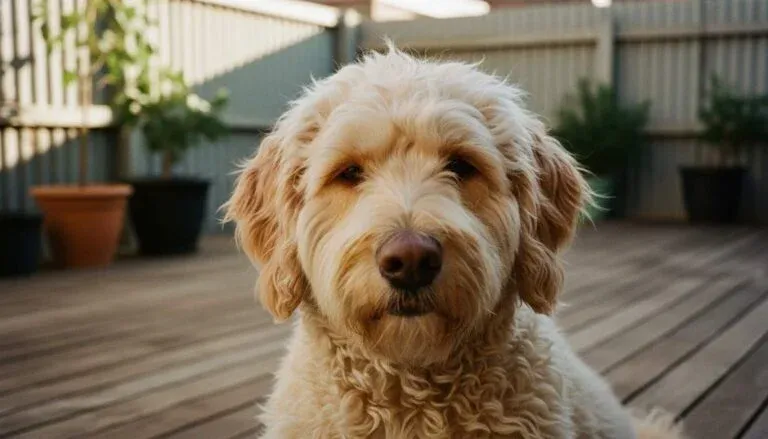
In 1989, a breeding manager for Guide Dogs Victoria named Wally Conron crossed a Standard Poodle with a Labrador Retriever — and accidentally created one of the world’s most beloved “designer dogs.” He was simply trying to breed a guide dog for a blind woman whose husband was allergic to dogs. What he got was Sultan, the first Labradoodle, and the beginning of a worldwide phenomenon. Conron has since expressed mixed feelings about opening “Pandora’s box,” but for millions of families, the Labradoodle has been nothing short of a blessing.
These teddy bear lookalikes combine the best traits of two outstanding breeds: the Poodle’s intelligence and low-shedding coat with the Labrador’s friendly, outgoing nature. Whether you’re looking at a mini Labradoodle for apartment living or a standard-sized family companion, there’s a Labradoodle to suit almost every lifestyle. Let’s explore everything you need to know before bringing one home.
What You’ll Learn:
- Key differences between Labradoodle types
- Health considerations & genetic testing
- Realistic grooming requirements
- True costs in Australia
- Is this breed right for your family?
Labradoodle Quick Facts
| Attribute | Details |
|---|---|
| Breed Type | Crossbreed / Designer Dog (Breed in Development) |
| Origin | Australia (1989) |
| Parent Breeds | Poodle × Labrador Retriever (+ Cocker Spaniel in Australian Labradoodle) |
| Size Category | Miniature, Medium, or Standard |
| Height (Adult) | Mini: 35-42cm | Medium: 43-52cm | Standard: 53-63cm |
| Weight (Adult) | Mini: 7-13kg | Medium: 13-20kg | Standard: 23-30kg |
| Lifespan | 12-14 years |
| Coat Type | Fleece (wavy), Wool (curly), or Hair (straight) |
| Shedding | Low to minimal (varies by coat type) |
| Exercise Needs | 60-90 minutes/day |
| Trainability | 5/5 — Highly intelligent and eager to please |
| Good with Children | Excellent |
| First-Time Owner Suitable | 4/5 |
| Average Puppy Price (AUD) | $3,000 – $5,000 |
Data sourced from the Australian Labradoodle Association (ALA) and breed standards.¹
History of the Labradoodle
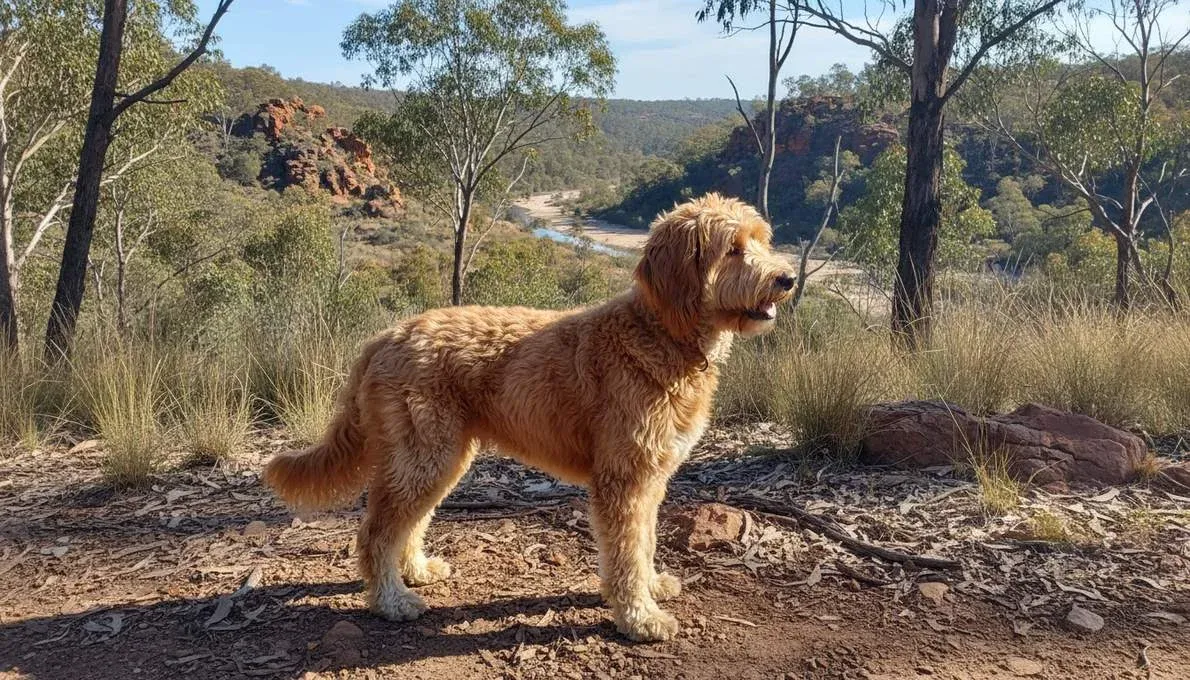
The Labradoodle story begins in Australia in the late 1980s. Wally Conron, then working for the Royal Guide Dogs Association of Victoria, received a request from a woman in Hawaii whose husband had severe allergies. She needed a guide dog that wouldn’t trigger his symptoms. After testing 33 Poodles without success, Conron decided to try something different — crossing a Standard Poodle with a Labrador Retriever.²
The resulting litter of three puppies included Sultan, who became a successful guide dog. Hair and saliva samples sent to Hawaii showed the couple could tolerate Sultan — and the Labradoodle was born. The combination of the Poodle’s low-shedding coat with the Labrador’s temperament proved irresistible, and demand exploded.
In the 1990s, Australian breeders began developing what’s now known as the Australian Labradoodle — a more refined version that incorporates Cocker Spaniel (and sometimes Irish Water Spaniel or Curly Coat Retriever) to improve coat consistency and temperament. Multigenerational Australian Labradoodles are now considered a “breed in development” with their own breed standards, while first-generation (F1) crosses remain popular as well.
Labradoodle Temperament
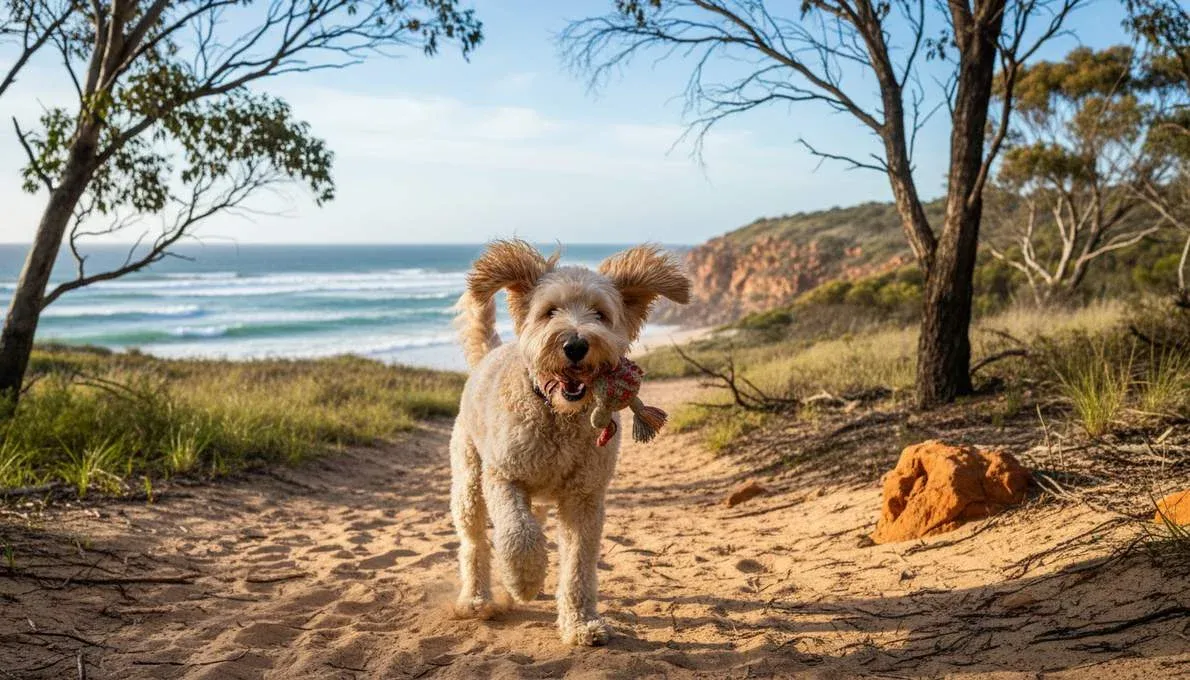
Friendly and Sociable: Labradoodles inherit the Labrador’s legendary friendliness. They typically adore people — family, friends, and strangers alike. This makes them poor guard dogs but exceptional family companions. Many Labradoodle owners report their dog has never met a stranger and assumes everyone they meet is a potential new best friend.
Intelligent and Trainable: With two of the smartest breeds as parents (Poodles rank #2, Labs rank #7 for working intelligence), Labradoodles are quick learners who genuinely enjoy training. They excel in obedience, agility, and therapy work. However, that intelligence means they can get bored easily — and a bored Labradoodle will find creative (often destructive) ways to entertain themselves.
Energetic and Playful: Every Labradoodle is different, but the breed is generally quite active, especially in their first few years. They love swimming, fetch, running, and anything that involves their humans. A well-exercised Labradoodle is a happy Labradoodle.
Affectionate and Loyal: These dogs form strong bonds with their families and genuinely want to be involved in everything you do. A Queensland breeder describes them as “the ultimate shadow dog — they’ll follow you from room to room just to be near you.”
Gentle Nature: Labradoodles are typically gentle dogs, which makes them well-suited to therapy and assistance work. They’re intuitive about human emotions and often seem to know when you need comfort.
Labradoodles are generally excellent with children of all ages. Their patient, playful nature makes them wonderful family dogs. That said, larger Labradoodles can be exuberant — particularly as puppies and adolescents — and may accidentally knock over small children in their enthusiasm. Supervision is always recommended, and teaching children how to interact respectfully with dogs is essential.
Most Labradoodles get along well with other dogs and can live harmoniously with cats, especially when raised together. They don’t typically have strong prey drive, though individual temperaments vary.
If your Labradoodle is chewing everything, jumping on guests, or seems “hyper,” don’t assume it’s a personality flaw — these are almost always signs of insufficient exercise or mental stimulation. The breed’s biggest behavioural challenge is that many owners underestimate their energy needs. A Labradoodle who gets proper exercise and training is typically calm, well-mannered, and a joy to live with. Experienced Labradoodle owners often say that a tired Labradoodle is a good Labradoodle.
Labradoodle Health Issues
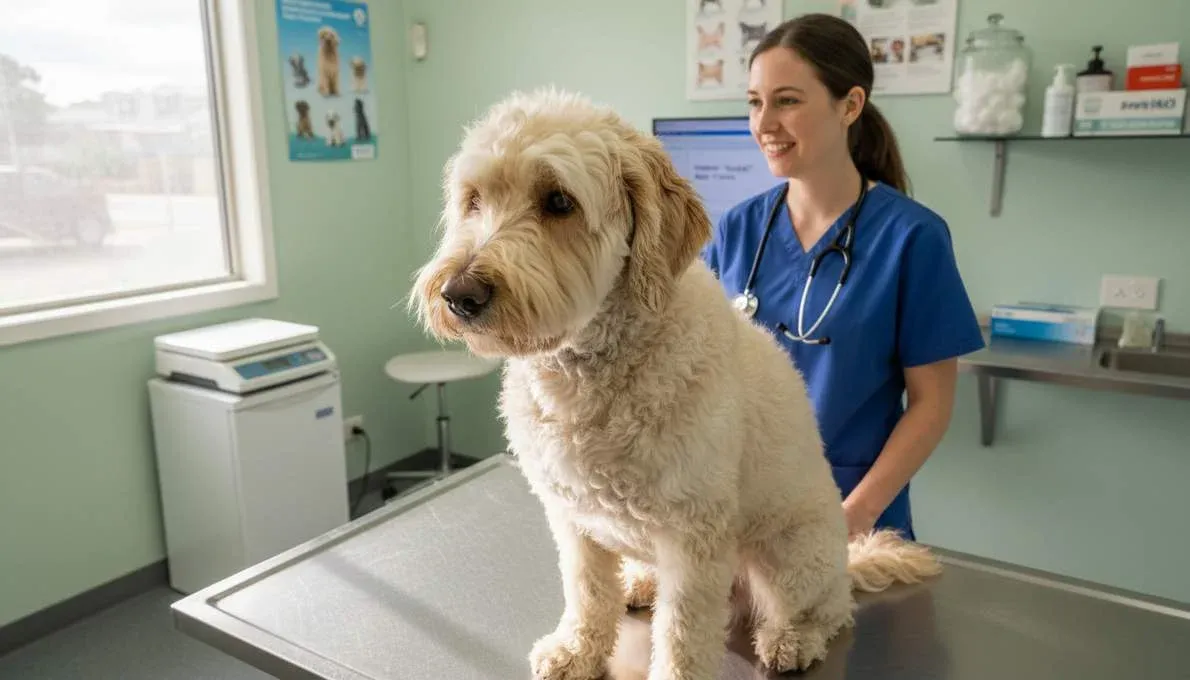
If you’re concerned about health problems in Labradoodles, that’s completely understandable — and it’s actually a sign you’re doing your research properly. While Labradoodles can inherit conditions from both parent breeds, buying from a breeder who conducts comprehensive health testing significantly reduces your risk.
According to veterinary sources and breed associations, key health considerations include:³
Both Labradors and Poodles can suffer from joint dysplasia, where the joints don’t develop properly, leading to arthritis and pain. Reputable breeders screen breeding dogs through OFA or PennHIP testing. Treatment ranges from weight management and supplements to surgery in severe cases ($3,000-$8,000+).⁴
An inherited eye disease causing gradual vision loss. DNA testing can identify carriers, and ethical breeders won’t breed affected dogs. While not painful, there’s no cure — affected dogs eventually go blind.⁵
Labradoodles’ floppy ears and sometimes hairy ear canals create a warm, moist environment perfect for infections. Regular cleaning and keeping ears dry after swimming helps prevent issues.
An endocrine disorder affecting the adrenal glands, inherited from the Poodle side. Symptoms include vomiting, lethargy, and collapse. Manageable with lifelong medication once diagnosed.
Ironically, while Labradoodles were bred for allergy sufferers, the dogs themselves can be prone to environmental and food allergies. Symptoms include itchy skin, ear infections, and digestive issues.
Seizure disorders occur in some Labradoodles. Usually manageable with medication, though any dog experiencing seizures needs veterinary evaluation.
A genetic bleeding disorder similar to haemophilia, inherited from the Poodle side. DNA testing can identify carriers.
Labradoodle Lifespan
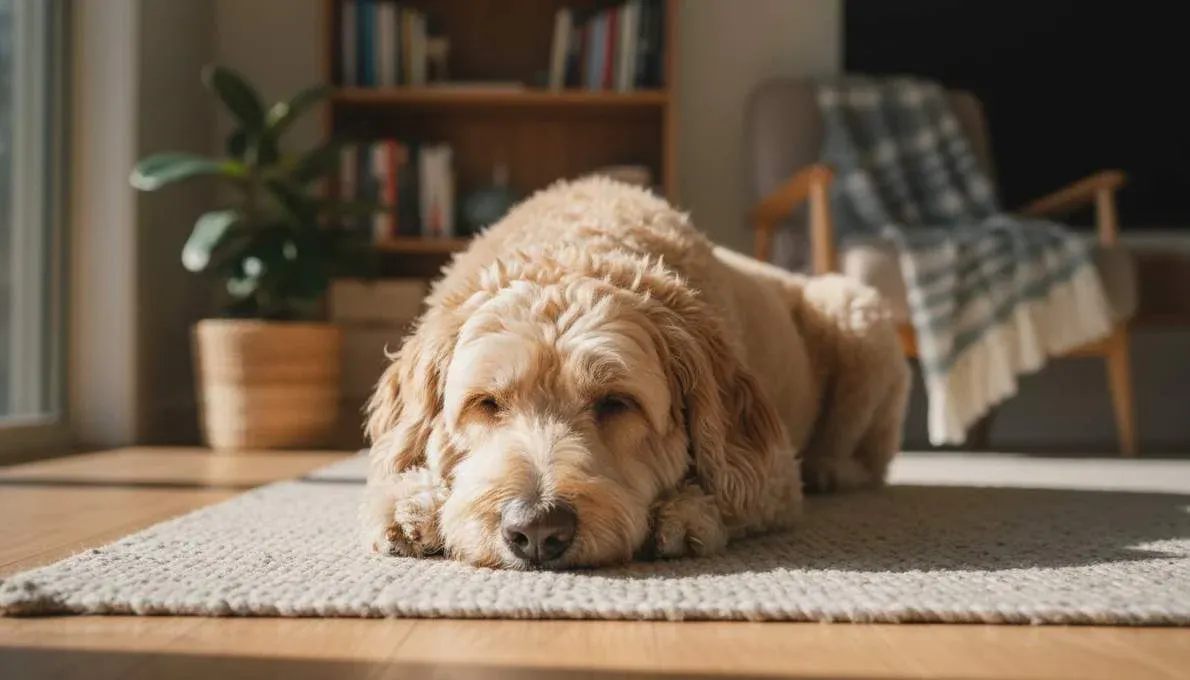
The average Labradoodle lifespan is 12-14 years, with smaller Labradoodles (mini and medium) often living longer than standards — sometimes reaching 15-16 years. This compares favourably to purebred Labradors (10-12 years) and is roughly equivalent to Standard Poodles (12-15 years).
To maximise your Labradoodle’s lifespan, the Australian Veterinary Association recommends: maintaining a healthy weight (obesity significantly shortens lifespan), providing regular exercise appropriate to their age, keeping up with preventative healthcare including dental care, feeding a high-quality diet, and scheduling regular veterinary check-ups including screening for breed-related conditions.⁶
Labradoodle Grooming Guide
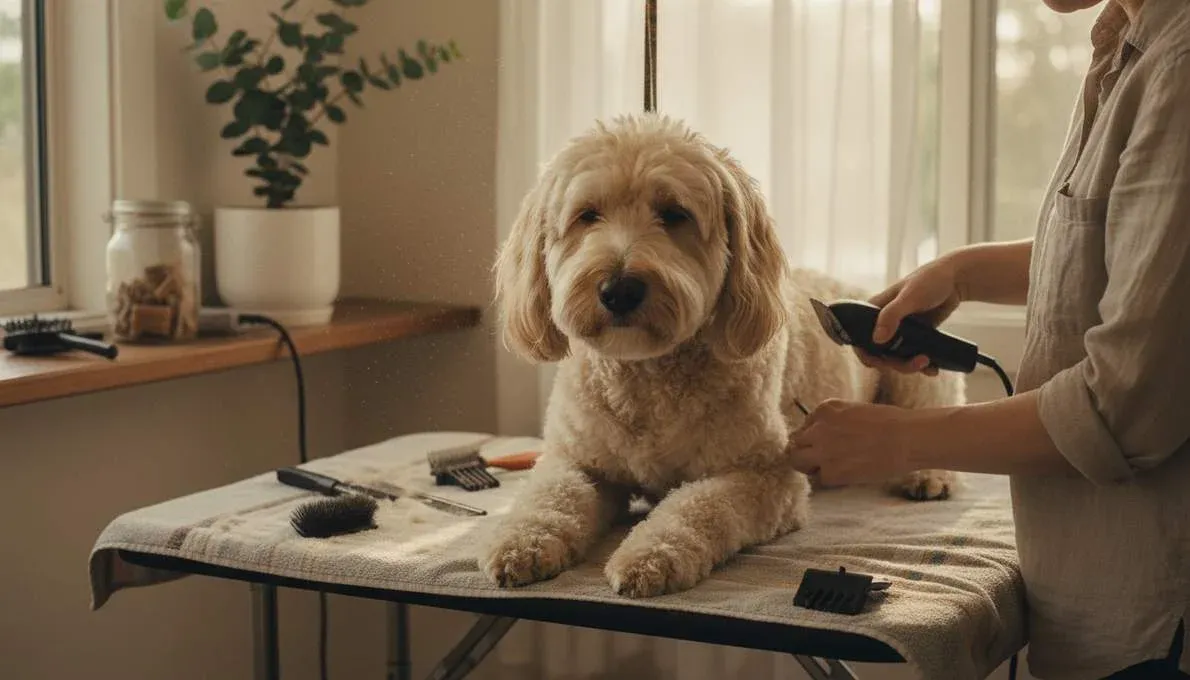
Let’s be honest: Labradoodle grooming is a significant commitment, and this is where many new owners are caught off guard. That gorgeous, fluffy coat requires regular maintenance to prevent matting — and professional grooming every 6-10 weeks isn’t optional for most Labradoodles.
Grooming Schedule
| Task | Frequency | Time | Tools/Products |
|---|---|---|---|
| Brushing | 2-3 times weekly (daily if curly) | 15-30 mins | Slicker brush, metal comb |
| Professional Grooming | Every 6-10 weeks | 2-3 hours | Professional groomer |
| Bathing | Every 4-6 weeks | 30-45 mins | Dermcare or Fido’s Shampoo |
| Ear Cleaning | Weekly | 5-10 mins | PAW ear cleaner |
| Nail Trimming | Every 2-3 weeks | 10 mins | Clippers or grinder |
| Dental Care | 2-3 times weekly | 5 mins | Dog toothbrush, Greenies |
Do Labradoodles shed? The honest answer: it depends. Fleece and wool coats typically shed minimally (often described as “hair falling out like humans” rather than the heavy shedding of Labs), while hair coats can shed more. No Labradoodle is guaranteed to be non-shedding, and even low-shedding coats require significant brushing to prevent matting.
Coat Types:
- Fleece coat: Soft, wavy, most popular. Low to minimal shedding.
- Wool coat: Dense, curly like a Poodle. Lowest shedding but highest maintenance.
- Hair coat: Straighter, more Lab-like. May shed more, requires less brushing.
Labradoodle colours range widely: cream, gold, apricot, red, chocolate, black, silver, blue, caramel, parti (patched), and phantom (two-tone). Colour can change as the dog matures.
Labradoodle Exercise Needs
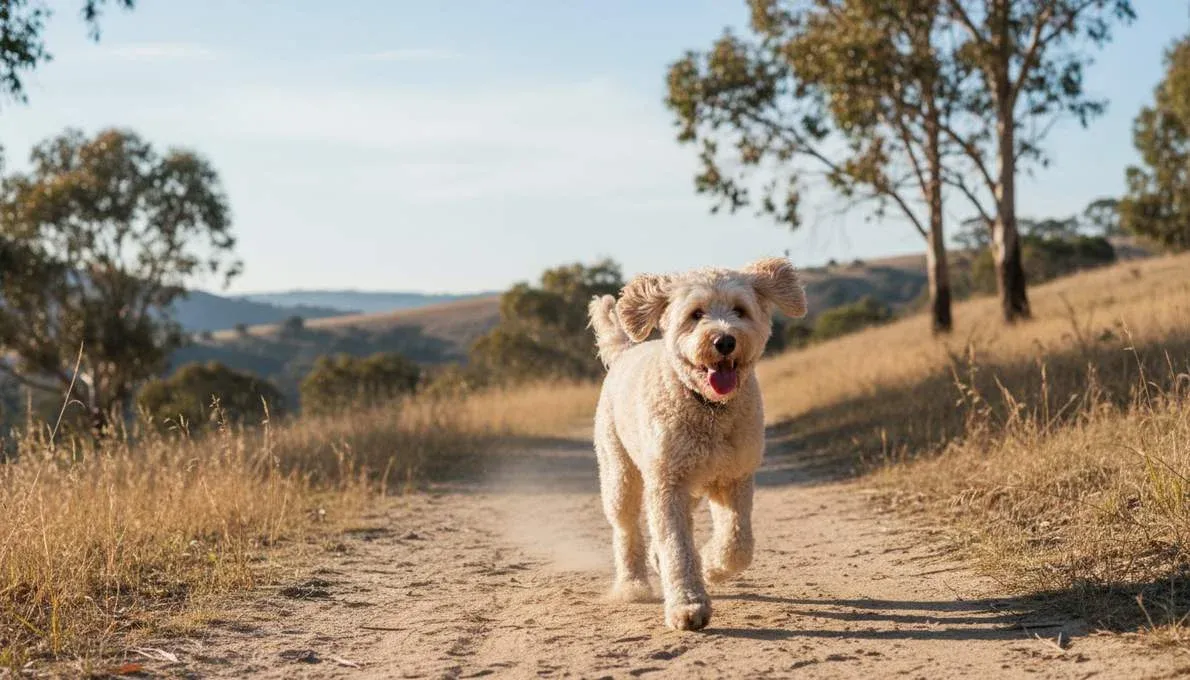
The RSPCA Australia recommends that active breeds like Labradoodles receive at least 60-90 minutes of exercise daily. This should include both physical activity (walks, runs, swimming) and mental stimulation (training, puzzle toys, interactive games).⁷
Many Labradoodle owners discover that the first two years are the most demanding — adolescent Labradoodles have seemingly boundless energy. The good news? They typically settle down around age 2-3, becoming calmer while still enjoying their daily activities.
Ideal activities for Labradoodles:
- Swimming (most love water — thanks, Labrador genes!)
- Fetch and retrieving games
- Hiking and bushwalking
- Agility and dog sports
- Off-lead running in secure areas
- Interactive puzzle toys
Important: If your Labradoodle is destructive, barking excessively, or seems “crazed,” insufficient exercise is almost always the cause. Try increasing their activity before assuming it’s a behavioural problem.
Labradoodle Training Guide
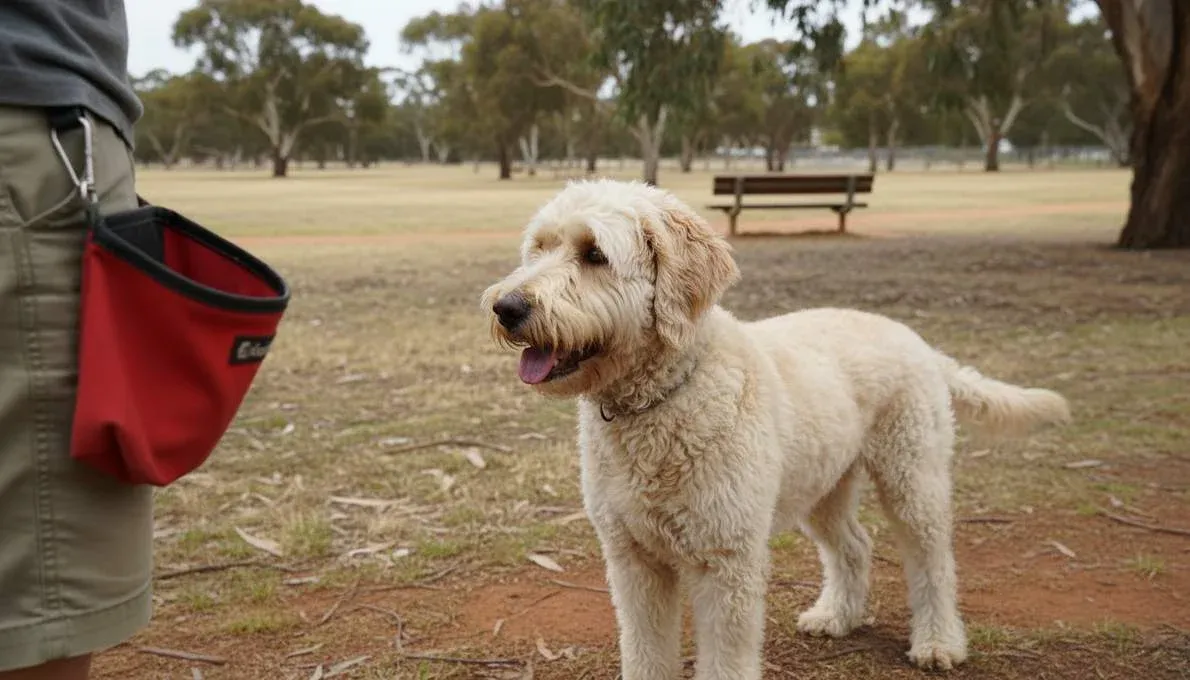
Training a Labradoodle is generally a joy — they’re intelligent, eager to please, and food-motivated. Don’t be discouraged if your Labradoodle puppy seems distracted during training sessions; puppies have short attention spans, and keeping sessions brief (5-10 minutes) with high-value treats will get better results than long, boring repetitions.
According to training specialists, Labradoodles respond exceptionally well to positive reinforcement training. Their sensitivity means harsh corrections can backfire, damaging trust and causing anxiety. Keep it fun, keep it positive, and you’ll be amazed at what they can learn.⁸
Socialisation Timeline
Socialisation & Training Timeline
| Age | Training Focus | Expected Outcomes |
|---|---|---|
| 8-12 weeks | House training, crate training, name recognition | Basic routine established |
| 3-4 months | Sit, stay, come; continued socialisation | Foundation commands solid |
| 4-6 months | Leash manners, “leave it,” drop | Walks become enjoyable |
| 6-12 months | Impulse control, distraction training | Reliable basics in most situations |
| 12+ months | Advanced training, off-lead reliability | Well-trained companion |
Experienced Labradoodle trainers note that consistency across all family members is more important than intensity — everyone needs to use the same commands and rules, or the clever Labradoodle will quickly figure out who’s the “soft touch.”
Labradoodle Price & Costs in Australia
Understanding the true cost of Labradoodle ownership is essential — this is not a budget breed. Between purchase price, grooming, and general care, Labradoodles are a significant financial commitment.
Find registered breeders through the Australian Labradoodle Association, Worldwide Australian Labradoodle Association (WALA), or the Australian Labradoodle Club of America (ALCA) for authentic Australian Labradoodles. For adoption, check PetRescue and breed-specific rescue groups.⁹
Initial Costs
| Expense | Approx. Cost (AUD) |
|---|---|
| Puppy Price (Reputable Breeder) | $3,000 – $5,000 |
| Adoption Fee (Rescue) | $300 – $600 |
| Initial Vet + Vaccinations | $200 – $400 |
| Desexing | $300 – $600 |
| Essential Supplies (bed, crate, bowls, grooming tools) | $400 – $700 |
| TOTAL INITIAL COST | $4,200 – $7,300 |
Annual Ongoing Costs
- Premium Food (Black Hawk, Advance, Royal Canin): $900 – $1,500
- Professional Grooming (6-8 sessions): $600 – $1,200
- Vet Care & Preventatives: $400 – $800
- Pet Insurance: $600 – $1,200
- Training, toys, misc: $300 – $500
- • TOTAL ANNUAL: $2,800 – $5,200
Lifetime Cost Estimate: $40,000 – $72,000 (based on 13-year average lifespan)
Is a Labradoodle Right for You?
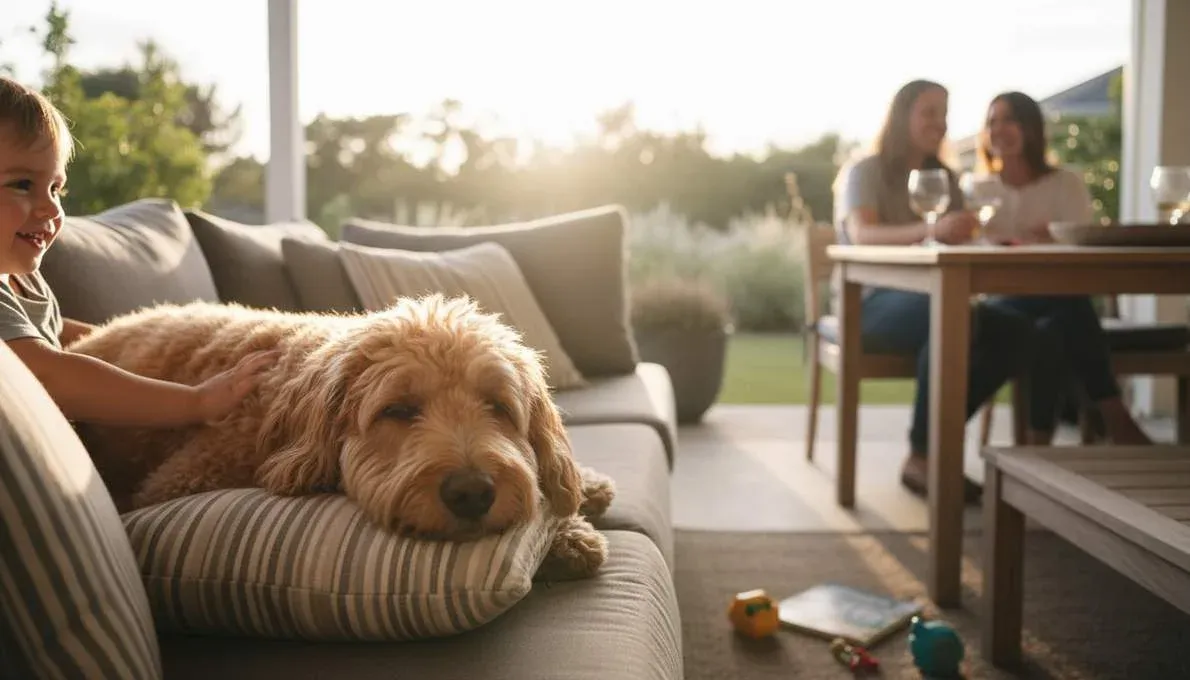
Active families or individuals who enjoy outdoor activities. People who have time for daily exercise and regular grooming or budget for professional grooming. Those wanting an affectionate, trainable companion who’ll be fully integrated into family life.
- Home Size: Adaptable to apartments (especially mini Labradoodles) if exercise needs are met, but do best with a yard.
- Yard: Secure fencing essential; they can be escape artists.
- Climate: Adapt well to Australian climates but need shade and water in heat; their coat provides some insulation in cooler weather.
Being completely honest about the challenges upfront prevents disappointment later. A Labradoodle may not be right for you if:
- You’re looking for a low-maintenance dog (grooming is significant)
- You can’t commit to 60-90 minutes of daily exercise
- You work long hours and the dog will be alone most of the day
- You have severe allergies and expect a guaranteed hypoallergenic dog
- You’re not prepared for potential health issues and associated costs
- You want a guard dog (they’re far too friendly)
This is one of the most common questions Australian buyers have. A Groodle (also called Goldendoodle) is a Golden Retriever crossed with a Poodle, while a Labradoodle is a Labrador crossed with a Poodle.
Key differences: Groodles tend to have a slightly softer, more flowing coat and are often described as marginally calmer, though both breeds are friendly and trainable. Labradoodles may have slightly higher energy levels. Both make excellent family dogs, and the “best” choice comes down to personal preference and the individual dog’s temperament.
The Labradoodle deserves its popularity. They’re intelligent, affectionate, family-friendly dogs who bring enormous joy to millions of homes worldwide. Yes, they require significant grooming and exercise, but for owners willing to meet their needs, the reward is a loyal, fun-loving companion who’ll be your shadow for 12-14 years.
Perfect for: Active families with children, allergy sufferers (with caveats), first-time owners who’ve done their research, anyone wanting a trainable, sociable companion.
Think twice if: You want a low-maintenance dog, can’t commit to grooming, or need a 100% non-shedding guarantee.
First-time owner rating: 4/5 — Excellent for committed first-time owners who understand the exercise and grooming requirements.
Frequently Asked Questions
Do Labradoodles shed?
It depends on coat type. Fleece and wool coats shed minimally; hair coats may shed more. No Labradoodle is guaranteed to be completely non-shedding.
How big do Labradoodles get?
Labradoodle size varies: Miniature (35-42cm, 7-13kg), Medium (43-52cm, 13-20kg), Standard (53-63cm, 23-30kg). Size depends on the Poodle parent used.¹
What is the Labradoodle lifespan?
The average Labradoodle lifespan is 12-14 years, with smaller sizes often living longer.
Are Labradoodles hypoallergenic?
No dog is truly hypoallergenic. However, fleece and wool-coated Labradoodles produce fewer allergens than many breeds. Always spend time with a Labradoodle before purchasing if allergies are a concern.
How much does a Labradoodle cost in Australia?
Expect to pay $3,000-$5,000 from a reputable breeder. Beware of significantly cheaper puppies, which may come from unethical breeders.
What is the difference between a Labradoodle & an Australian Labradoodle?
A standard Labradoodle is a Poodle × Labrador cross (any generation). An Australian Labradoodle is a multigenerational dog that also includes Cocker Spaniel, bred specifically for consistent temperament and coat.
Are Labradoodles good family dogs?
Excellent. They’re patient with children, playful, and affectionate. Their friendly nature makes them wonderful family companions.
How much exercise does a Labradoodle need?
60-90 minutes daily, including walks, play, and mental stimulation. Insufficient exercise leads to behavioural problems.
Are Labradoodles easy to train?
Yes. They’re highly intelligent and eager to please, making them one of the easier breeds to train. They respond best to positive reinforcement.
Primary Sources:
1. Australian Labradoodle Association (ALA) — Breed standards (australianlabradoodleassoc.org.au)
2. Guide Dogs Victoria / ABC News — Breed history
Veterinary & Health Sources:
3. Petful / PetMD — Labradoodle health information
4. OFA (Orthopedic Foundation for Animals) — Hip dysplasia screening
5. VCA Hospitals — Progressive retinal atrophy information
6. Australian Veterinary Association — General care guidelines (ava.com.au)
Australian-Specific Sources:
7. RSPCA Australia — Exercise guidelines (rspca.org.au)
8. Delta Institute Australia — Training resources
9. Australian Labradoodle Association / WALA — Breeder directory
10. PetRescue Australia — Adoption resources (petrescue.com.au)