
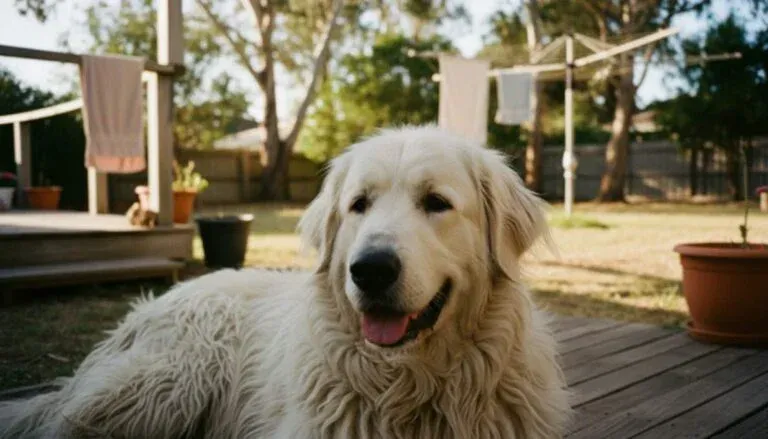
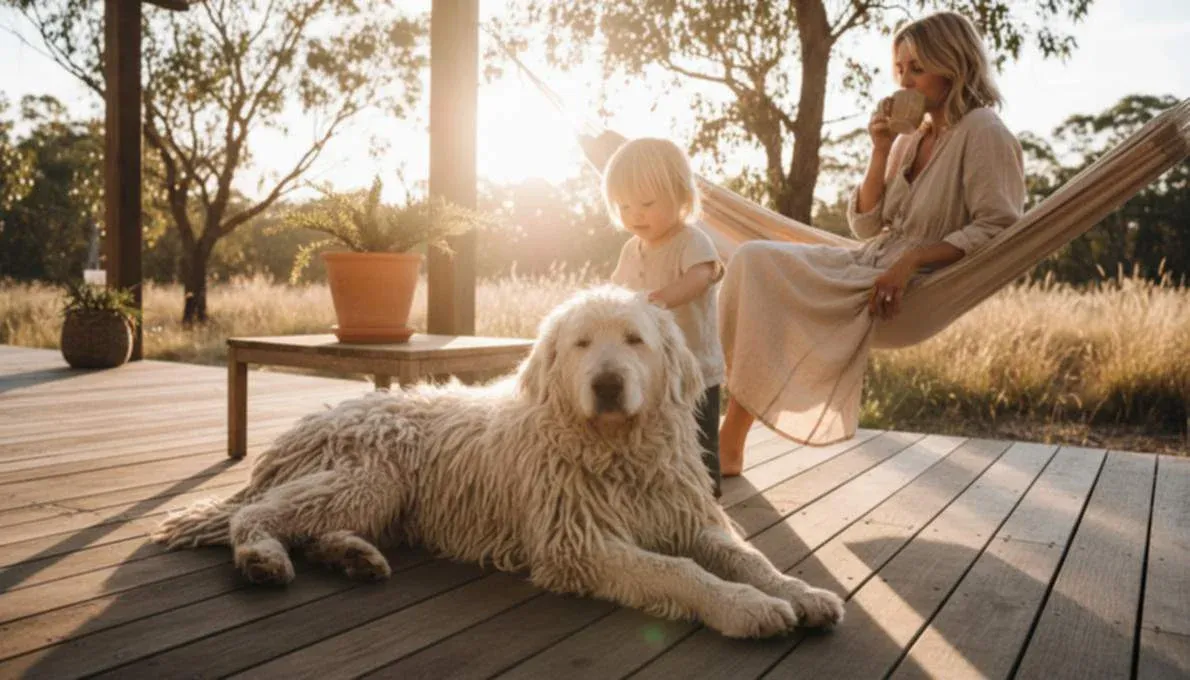
No, that’s not a walking mop. It’s a Komondor — a 50-kilogram Hungarian livestock guardian draped in floor-length white cords that look like dreadlocks, move like a curtain, and serve as genuine armour against wolves and bears. Beneath that extraordinary coat is one of the most ancient, powerful, and fiercely independent dog breeds on earth.
The Komondor (pronounced “KOM-on-dor,” plural Komondorok) has been guarding sheep on the Hungarian plains for at least a thousand years. It doesn’t herd. It doesn’t fetch. It lies among the flock, camouflaged by its white coat, and waits. When a predator appears, the Komondor transforms from a motionless pile of cords into a fearless, lightning-fast defender that has been known to drive off wolves, coyotes, and feral dogs without hesitation.
In Australia, the Komondor is one of the rarest breeds you’ll encounter. The population has historically been counted in the low double digits, and finding a breeder requires patience, research, and often looking overseas. This is not a breed for casual dog owners. It’s a breed for people who understand working livestock guardians and are prepared for the extraordinary commitment that comes with owning one.
What You’ll Learn
- Breed traits & temperament
- Health concerns to know
- True cost in Australia
- Training & exercise needs
- Is this breed right for you?
Komondor at a Glance
| Trait | Detail |
|---|---|
| Breed Group | Working Dog (ANKC Group 5 — Working Dogs) |
| Origin | Hungary (arrived with Cuman people, 12th–13th century) |
| Also Known As | Hungarian Sheepdog, Mop Dog, Dreadlock Dog |
| Size (Male) | Minimum 70 cm height / 50–60 kg |
| Size (Female) | Minimum 65 cm height / 40–50 kg |
| Coat | White, dense, naturally corded. Dreadlocks form by age 2. |
| Lifespan | 10–12 years |
| Temperament | Calm, independent, protective, territorial, courageous |
| Shedding | Minimal once cords form — hair trapped in cords |
| Exercise Needs | Moderate — 30–60 minutes daily plus secure space to patrol |
| Barking Tendency | Moderate — barks to alert, deep and booming |
| Good With Kids | Yes with family children, but supervision required due to size |
| Good With Other Dogs | Challenging — dominant and territorial |
| Hypoallergenic | No — coat traps dander and debris |
| ANKC Registered | Yes — Working Dog Group |
| Pronunciation | KOM-on-dor (plural: Komondorok) |
History & Origins
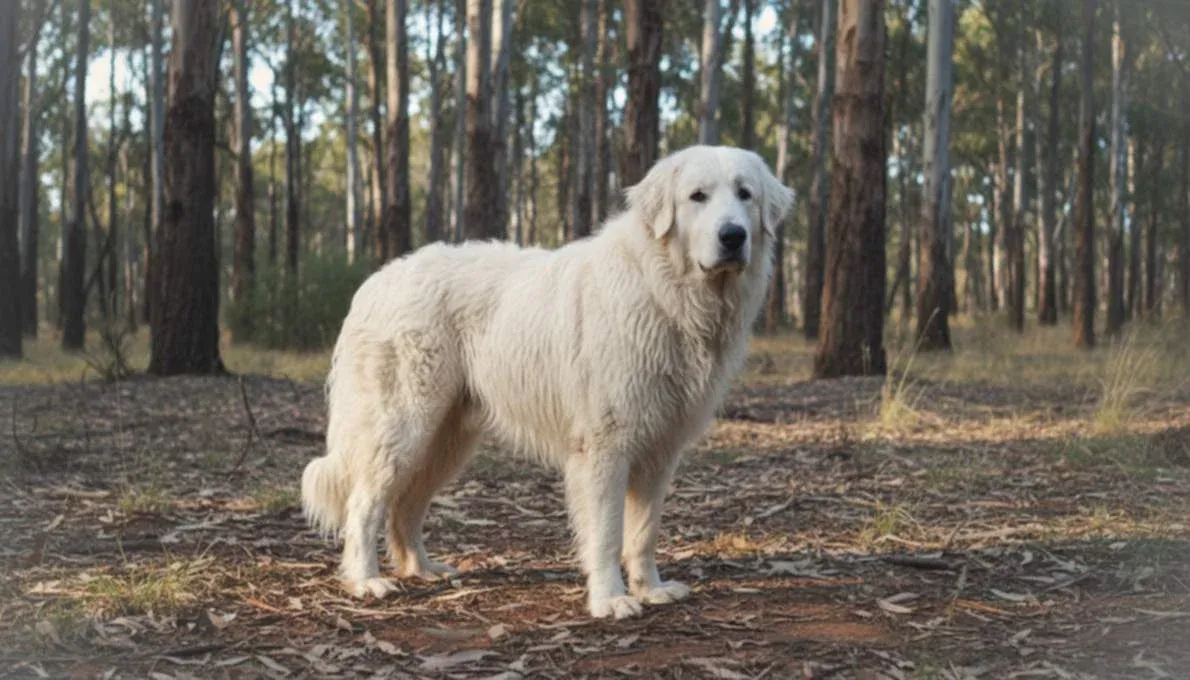
The Komondor’s history stretches back centuries, to the Cumans — a Turkic nomadic people whose original homeland may have been near the Yellow River in central Asia. When the Mongol Empire expanded westward in the early 13th century, the Cumans fled with their livestock and their dogs, eventually seeking asylum in Hungary around 1239 under Köten Khan. They brought with them a large, white, corded guardian dog that became the ancestor of the modern Komondor.
The breed’s name comes from “Koman-dor,” meaning “dog of the Cumans.” Archaeologists have found remains of these dogs at Cuman burial sites, confirming the long bond between the people and their protectors. The Komondor is believed to descend from the Owtcharka, a large Asian shepherd dog, and shares ancient roots with other Hungarian breeds like the Kuvasz.
The earliest written reference to the Komondor dates to the 16th century, though the breed was working the Hungarian plains for centuries before that. Its job was singular and specific: guard the flock. Unlike herding dogs that move livestock from place to place, the Komondor stayed with the sheep, lying among them, camouflaged by its white corded coat. When wolves attacked — and wolves were a constant threat on the Hungarian steppe — the Komondor would explode into action, fighting with a ferocity that made it legendary.
The breed gained international recognition when it began appearing in dog shows from the 1920s onward. The American Kennel Club recognised the Komondor in 1937. But the Second World War nearly destroyed the breed. Komondorok guarded farms and homesteads during the conflict, which made them targets — invading soldiers killed many of the dogs. By the end of the war, only a few dozen remained in Hungary. The breed was painstakingly rebuilt over the following decades, with contact between American and Hungarian breeders resuming in the 1960s.
Today, the worldwide Komondor population is estimated at fewer than 10,000. The breed is considered a national treasure in Hungary, where it is protected from modification. In Australia, the Komondor has always been extremely rare, with Burke’s Backyard famously noting only 13 registered Komondorok in the entire country. While numbers have grown slightly since then, this remains one of the hardest breeds to source in Australia.
Temperament & Personality
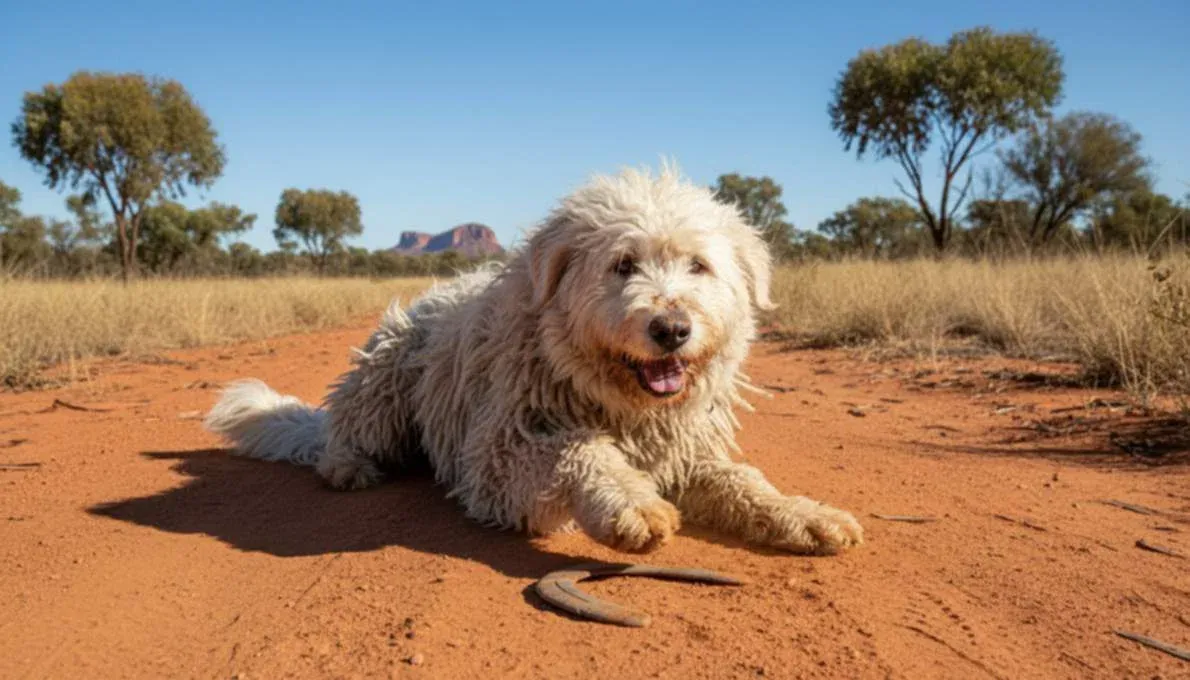
Understanding the Komondor’s temperament starts with understanding its job. This dog was never meant to be a pet. For a thousand years, it was left alone on the Hungarian steppe with nothing but a flock of sheep and its own judgement. It decided when a threat was real, how to respond, and whether a stranger was friend or foe. That independence is hardwired into the breed, and it defines everything about living with one.
When things are calm, the Komondor is calm. Remarkably calm, in fact. They can lie motionless for hours, conserving energy the way a working guardian should. They’re not hyperactive, they don’t demand constant attention, and they won’t follow you from room to room like a velcro breed. But make no mistake — they’re watching. Always watching.
When a Komondor perceives a threat, the transformation is dramatic. This calm, seemingly lazy dog becomes a fearless, powerful defender capable of confronting animals and people much larger than itself. The Komondor Club of America describes the breed as one that will knock down an intruder or break windows to protect its family. This is not an exaggeration.
For owners who want a genuine guardian, this instinct is the Komondor’s greatest asset. For owners who aren’t prepared for it, it’s a liability. An unsocialised or poorly trained Komondor can become dangerously aggressive toward visitors, delivery drivers, or neighbourhood dogs. The breed does not distinguish between a genuine threat and a pizza delivery — unless it has been taught to.
With their own people, Komondorok are affectionate and loyal. They bond deeply with their family and are typically gentle with children they’ve been raised with. However, their size alone — 50 to 60 kg of muscular dog — means supervision around young children is non-negotiable. A Komondor doesn’t need to be aggressive to accidentally knock over a toddler.
Komondorok are territorial and dominant. They do not mix well with unfamiliar dogs and can be aggressive toward animals that aren’t part of their established “flock.” Dog parks are not appropriate for this breed. However, a Komondor raised alongside other family pets from puppyhood — including cats, chickens, and even livestock — will typically accept them as part of the group and guard them with the same devotion it shows its human family.
Health & Genetic Conditions
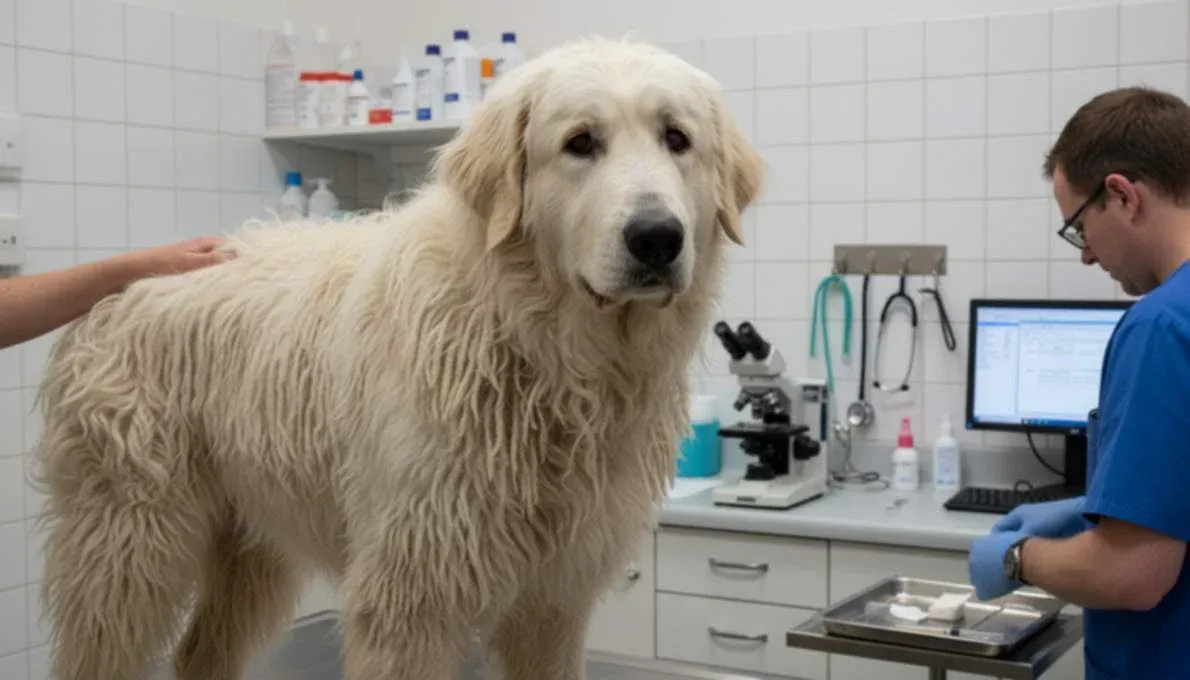
The Komondor is a generally robust breed built for endurance in harsh conditions. However, like all large and giant breeds, they carry certain health risks that prospective owners should understand.
Prevalence: The number one emergency risk for the Komondor. Large, deep-chested breeds are at the highest risk, and dogs weighing over 45 kg have an estimated 20% lifetime risk of bloat. GDV has a mortality rate of 10–45% even with surgical intervention, and is fatal without treatment
Symptoms: Sudden restlessness and inability to get comfortable, unproductive retching or dry heaving, visibly swollen or distended abdomen, excessive drooling, rapid shallow breathing, pale gums, and collapse. Symptoms can progress from first signs to life-threatening shock within one to two hours
Treatment Cost (AUD): $5,000–$10,000 for emergency surgery including stabilisation, stomach derotation, and gastropexy. Prophylactic gastropexy performed at the time of desexing costs significantly less and is strongly recommended for this breed
Prevention: Feed two or three smaller meals daily instead of one large meal. Avoid vigorous exercise for at least one hour before and after eating. Do not use elevated food bowls. Use slow-feeder bowls if the dog eats quickly. Discuss prophylactic gastropexy with your vet — this procedure surgically tacks the stomach to the body wall, reducing recurrence risk from up to 80% to less than 5%
Prevalence: Recognised in the Komondor as a hereditary orthopaedic condition common in large and giant breeds. Reputable breeders screen breeding stock with hip radiographs scored under the BVA/OFA or PennHIP schemes
Symptoms: Stiffness after rest, reluctance to rise or climb stairs, bunny-hopping gait, decreased activity, lameness in the rear legs, and audible clicking from the hip joint. Symptoms may appear as early as 5–6 months in severe cases or develop gradually through adulthood
Treatment Cost (AUD): $1,500–$6,000 for surgical intervention (including total hip replacement in severe cases); $500–$1,500 annually for conservative management including anti-inflammatory medications, joint supplements, and physiotherapy
Prevention: Maintain a lean body weight throughout the dog’s life — despite their size, Komondorok eat surprisingly little, and overfeeding stresses joints already bearing significant weight. Avoid high-impact exercise during the growth phase. Only purchase from breeders who provide hip scores for both parents
Hip dysplasia occurs when the ball and socket of the hip joint do not fit together properly, causing the bones to rub and grind against each other. Over time this leads to osteoarthritis, pain, and reduced mobility. According to the Komondor breeder Rastace, hip and elbow scoring is a minimum health testing requirement for all Komondor breeding dogs. Weight management is especially important in giant breeds, where even a few extra kilograms can significantly accelerate joint deterioration.
Prevalence: Recognised in the Komondor, though considered uncommon compared to hip dysplasia. Responsible breeders grade elbows alongside hips as part of standard health screening
Symptoms: Forelimb lameness that worsens after exercise, stiffness in the front legs, reluctance to extend the elbow fully, and swelling around the elbow joint. Often affects both elbows, though one may be worse than the other
Treatment Cost (AUD): $2,000–$5,000 per elbow for surgical correction; conservative management with anti-inflammatory medications and controlled exercise may be appropriate for milder cases
Prevention: Control growth rate during puppyhood by feeding an appropriate giant-breed puppy diet that avoids excessive calcium and calorie intake. Avoid repetitive high-impact exercise on hard surfaces during the first 18 months. Ensure breeding dogs have elbow scores before mating
Elbow dysplasia is a group of developmental abnormalities affecting the elbow joint, including fragmented coronoid process, osteochondritis dissecans, and ununited anconeal process. According to the Rastace Komondor breeding programme, elbow scoring is performed alongside hip evaluation as a minimum health testing requirement, with elbows graded individually from 0 to 3 on each side, the ideal being a score of 0. While elbow dysplasia is uncommon in the breed, screening remains important given the Komondor’s large frame and the significant forces placed on the forelimb joints.
Prevalence: A hereditary eyelid condition recognised in the Komondor. The breed’s heavy facial cording can obscure early signs, making regular eye examinations particularly important
Symptoms: Squinting, excessive tearing, mucoid discharge, rubbing at the face, redness around the eye, and visible inward rolling of the eyelid. If left untreated, the constant friction of eyelashes against the cornea can cause ulcers and permanent vision damage
Treatment Cost (AUD): $500–$2,000 per eye for surgical correction. Some dogs require a second procedure to fine-tune the correction
Prevention: Entropion is hereditary, so affected dogs should not be bred. The Komondor Club of America recommends eye exams for all breeding stock. Monitor your dog’s eyes regularly — the heavy cords around a Komondor’s face can make early detection challenging, so keep the area around the eyes trimmed and clean
Prevalence: Hereditary cataracts are recognised in the Komondor and may develop earlier than in most breeds — sometimes appearing in dogs as young as 2–3 years old. The condition is suspected to be inherited
Symptoms: A cloudy or opaque appearance to one or both eyes, bumping into objects, reluctance to navigate unfamiliar environments, difficulty catching treats, and changes in eye colour from clear to a blue-grey or white haze
Treatment Cost (AUD): $2,000–$5,000 per eye for surgical removal (phacoemulsification). Many dogs adapt well to gradual vision loss if surgery is not pursued
Prevention: Annual eye examinations by a veterinary ophthalmologist can detect cataracts early. Dogs diagnosed with hereditary cataracts should not be bred. Maintaining good overall health and managing conditions like diabetes (which can accelerate cataract formation) also helps reduce risk
Prevalence: A significant concern in the Komondor due to the breed’s dense, corded coat. The cords can trap moisture, dirt, debris, and parasites close to the skin, creating an environment conducive to bacterial and fungal infections if coat care is neglected
Symptoms: Persistent scratching, redness or irritation visible under the cords, foul odour from the coat (particularly when damp), flaky skin, hair loss around affected areas, and visible parasites (fleas, ticks) lodged within the cords
Treatment Cost (AUD): $200–$1,000 per year for treatment including medicated shampoos, antifungal or antibiotic medications, and parasite prevention products
Prevention: Thorough drying after every bath is critical — a damp Komondor coat can take 24 hours or more to dry completely, and residual moisture is the primary cause of skin infections. Use a high-velocity dryer or fan. Maintain a regular parasite prevention programme (flea, tick, and worm treatments). Inspect the skin under the cords regularly, particularly in warmer months
Prevalence: The Komondor is predisposed to footpad hyperkeratosis, a condition where the footpads become excessively thickened and hardened
Symptoms: Thickened, dry, cracked, or crusty footpads that may develop horn-like growths or deep fissures. When severe, the cracking can cause pain and lameness, particularly when walking on hard surfaces. Secondary bacterial infections can develop in the fissures
Treatment Cost (AUD): $100–$500 per year for ongoing management including veterinary-grade paw balms, keratolytic treatments, regular trimming of excess pad tissue, and antibiotics if secondary infection occurs
Prevention: There is no cure for hereditary footpad keratosis, but regular maintenance significantly reduces discomfort. Apply paw balm or moisturiser to the pads regularly, trim excess keratin growth carefully, and check footpads during routine grooming sessions. Avoid prolonged walking on hot or rough surfaces that can worsen cracking
Ask your breeder about hip and elbow scoring on the parents, and request eye health certifications. The Komondor Club of America recommends eye exams for all breeding stock, and the same standard should apply in Australia. Given the breed’s rarity, sourcing a well-health-tested Komondor may require patience and looking interstate or overseas, but cutting corners on health testing is never worth the risk.
Lifespan & Longevity
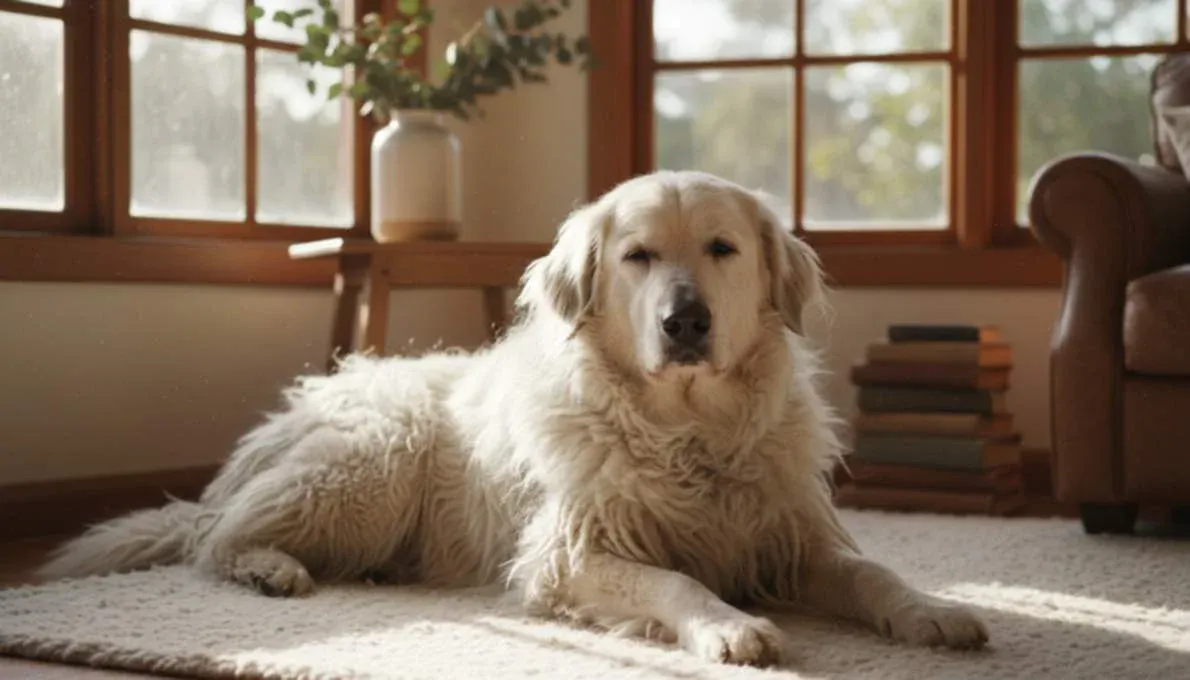
The Komondor lives 10 to 12 years on average, which is typical for a large to giant breed. Some well-cared-for Komondorok reach 13 or 14, but this is the exception rather than the rule. Given their size and the commitment required for coat care, that’s a solid decade of a very hands-on partnership.
Puppy Stage (0–18 months)
Komondor puppies are born with a soft, fluffy white coat that looks nothing like the adult cords. Around 8 to 10 months, the puppy coat begins to mat naturally as the coarse outer coat and soft undercoat start to intertwine. This is when cord formation begins, and it’s the most labour-intensive grooming period — you’ll need to manually separate the mats into smaller sections to encourage proper cording. If left unattended, the entire coat can fuse into one massive mat.
This is also the most critical period for socialisation. A Komondor puppy that isn’t exposed to a wide variety of people, animals, and situations between 8 weeks and 6 months will become an adult that views everything unfamiliar as a threat. Obedience training should start between 4 and 8 months. Many Komondorok are “late bloomers” — not fully mature until nearly three years of age.
Adult Years (2–8 years)
The adult Komondor is a powerful, calm dog that needs a job or at least a territory to patrol. Maintain regular exercise, keep the cords clean and separated, and stay on top of joint health. Weight management is important — despite their size, Komondorok eat surprisingly little (often just 3 cups of food per day), and overfeeding can stress joints that are already bearing significant weight.
Senior Years (8+ years)
Older Komondorok may develop joint stiffness, vision changes from cataracts or entropion, and reduced mobility. Twice-yearly vet checks become essential. Consider shorter cord lengths for easier maintenance as the dog ages, and provide orthopaedic bedding to support their heavy frame. Their protective instinct remains strong well into old age — a senior Komondor is still a formidable guard dog.
Grooming & Care
The Komondor’s coat is the single most discussed aspect of the breed, and for good reason. Those distinctive cords — often called dreadlocks — don’t form by accident, and they don’t maintain themselves. Understanding cord care is non-negotiable for any prospective Komondor owner.
How Do Komondor Dreadlocks Form?
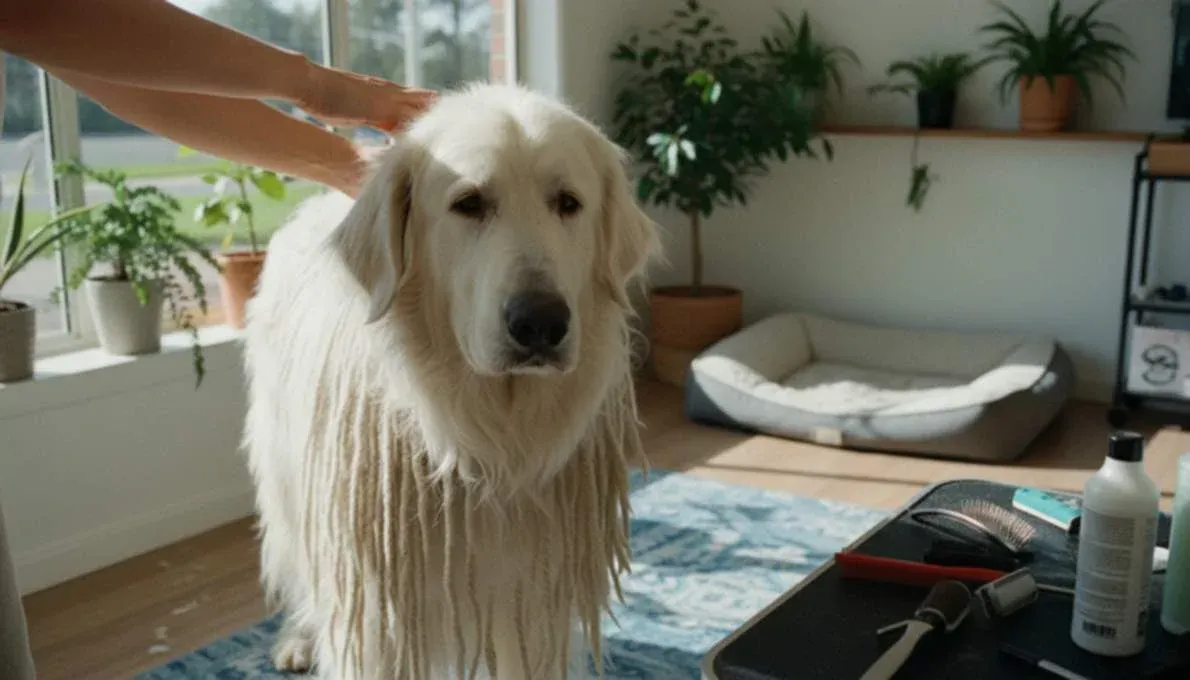
The Komondor has a double coat: a soft, dense undercoat and a coarser, wavy or curly outer coat. As the puppy matures (starting around 8–10 months), these two layers naturally begin to intertwine and felt together, forming tassels or cords. The process takes approximately two years to complete. During cord formation, the owner must manually separate the larger mats into smaller, uniform sections — typically about finger-width — to encourage clean, even cords. Left entirely unattended, the coat becomes one solid mat that causes skin problems and extreme discomfort.
Grooming Schedule
| Task | Frequency | Notes |
|---|---|---|
| Cord Separation | Weekly (daily during formation) | Pull cords apart from base to tip. Prevent cords fusing together near the skin. |
| Bathing | Every 6–8 weeks (or as needed) | Diluted shampoo squeezed through cords. Rinse thoroughly. Drying takes hours or even a full day. |
| Drying After Bath | After every bath or swim | CRITICAL. Use fans or blow dryers. Damp cords develop mildew, odour, and fungal infections. |
| Cord Trimming | 2–3 times yearly | Many owners trim to 20–25 cm for manageability. Full-length cords can reach the floor by age 5–6. |
| Ear Cleaning | Weekly | Drop ears trap moisture. Pluck hair from ear canal. Check for wax, odour, redness. |
| Footpad & Nail Care | Every 2–3 weeks | Trim hair between pads (prevents mat buildup, burrs, infection). Trim nails regularly. |
| Skin Checks | Weekly | Part cords to inspect skin for fleas, ticks, redness, hot spots. The dense coat hides problems. |
Can You Brush a Komondor?
No — and you shouldn’t. Brushing destroys the corded structure. The Komondor’s coat is maintained entirely by hand-separation of cords, not by brushing. A “brushed out” Komondor has a massive, fluffy coat that looks like a different breed entirely — it’s sometimes seen online and looks striking, but it defeats the purpose of the breed’s natural protection and is extremely difficult to maintain.
What About a Shaved Komondor?
Some owners choose to shave their Komondor short for easier maintenance, especially in hot climates. A shaved Komondor reveals a muscular, athletic dog that surprises people who’ve only seen the breed in full coat. While shaving is a personal choice and not harmful in the same way shaving a double-coated spitz breed would be, it does remove the coat’s protective function against both weather and predators. If the dog is purely a companion, it’s a practical option. If it’s a working guardian, the coat serves a real purpose.
The drying problem is real. A fully corded Komondor can take 24 hours or more to dry completely after a bath. Damp cords are a breeding ground for bacteria and fungus, and a wet Komondor can develop a strong mildew odour. In humid Australian climates, this is a genuine concern. Many Australian owners trim cords to a manageable 20–25 cm length and use industrial fans for drying.
Exercise Needs
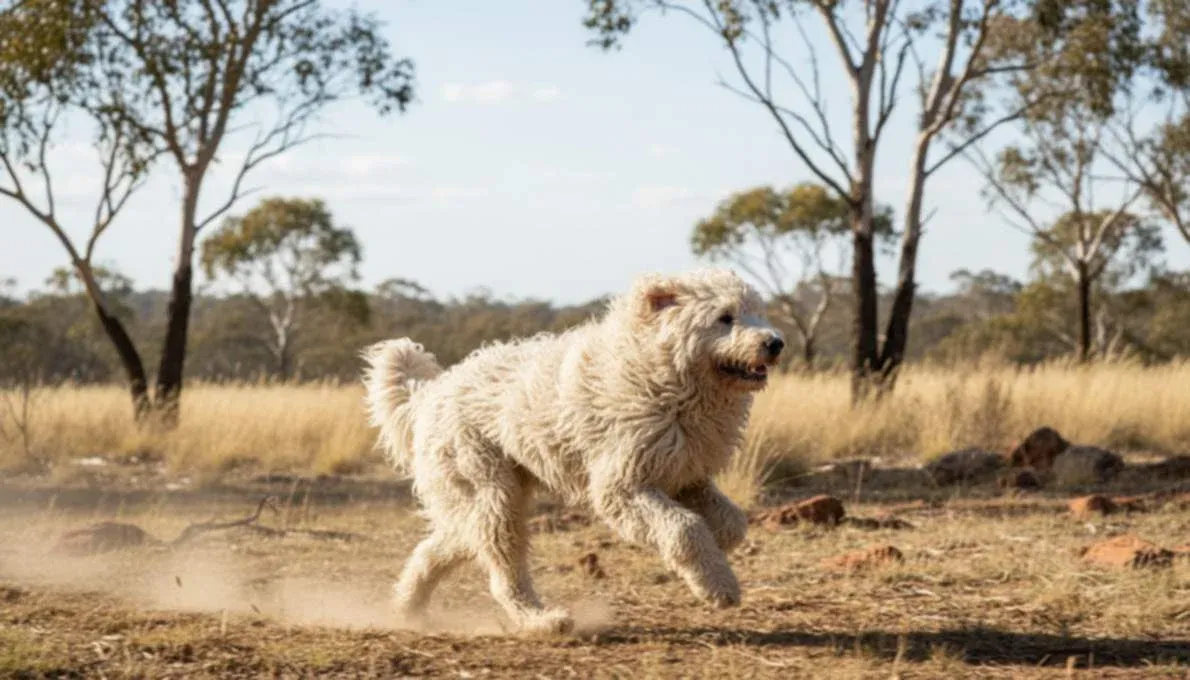
Despite their size, Komondorok are not high-energy dogs in the traditional sense. In their working role, they spend most of their day lying quietly among the flock, conserving energy for the moments when action is required. In a home setting, this translates to a dog that is content with moderate exercise — about 30 to 60 minutes of daily activity.
Two walks per day, combined with access to a securely fenced yard where the dog can patrol at its own pace, is usually sufficient. Komondorok don’t need or want long runs, agility courses, or hours of fetch. What they do need is space and a sense of territory. A Komondor without a yard to patrol and a perimeter to guard will become restless, bored, and potentially destructive.
Fencing is non-negotiable. A Komondor needs a securely fenced property with a minimum 1.8-metre fence. These dogs are territorial and will patrol their boundaries. An unfenced Komondor will expand its territory to include the entire neighbourhood, and a 50+ kg guardian dog confronting a jogger or another dog on the footpath is a serious liability.
In Australian summers, exercise in the early morning or late evening. The Komondor’s heavy coat retains heat, and while the breed handles cold weather extraordinarily well, Australian heat can cause overheating. Always provide shade, fresh water, and avoid exercising on hot pavement.
Can Komondorok swim? Technically yes, but the corded coat absorbs enormous amounts of water, becoming extremely heavy. Swimming is generally not recommended — the weight of a wet coat can exhaust the dog quickly, and drying takes an unreasonable amount of time. If your Komondor has access to water, supervise closely.
Training Guide
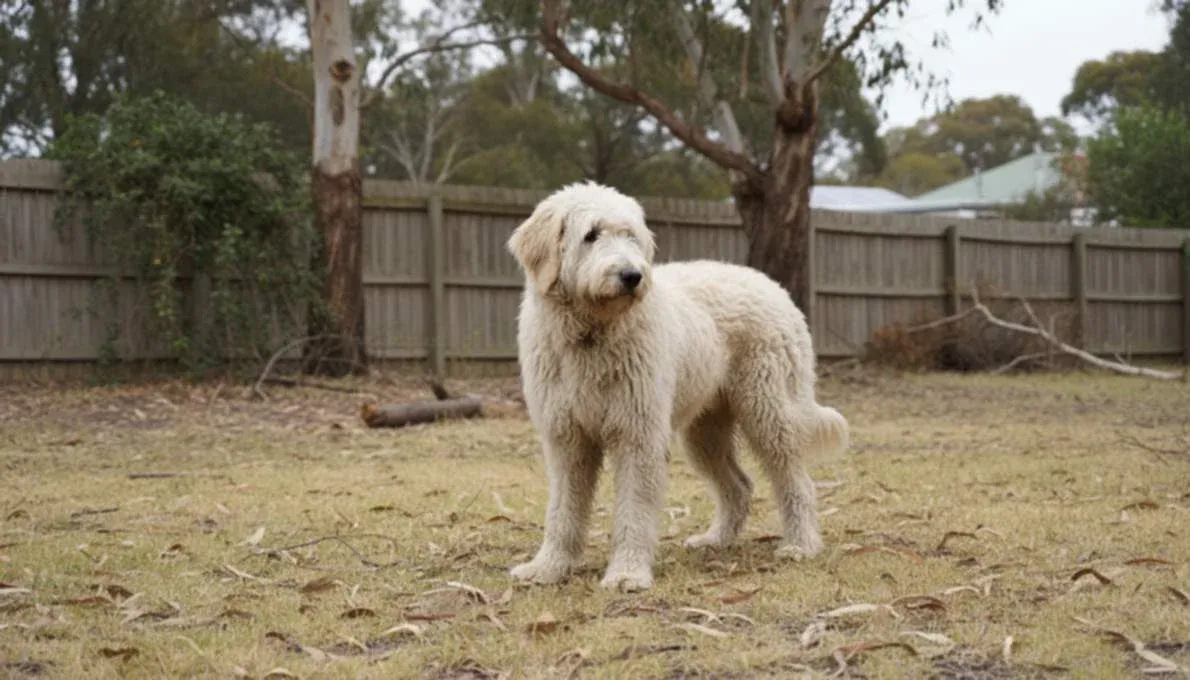
Training a Komondor is unlike training almost any other breed. These dogs are profoundly intelligent — they were bred to make independent decisions about life-and-death situations without human direction. That intelligence means they learn quickly. It also means they will question whether your command is worth following.
Socialisation & Training Timeline
| Age | Focus | What to Expect |
|---|---|---|
| 8–16 weeks | Socialisation, handling, basic trust | Critical period. Expose to many people, dogs, sounds. Handle feet, ears, mouth daily. This dog must accept being touched by strangers (vets, groomers). |
| 4–8 months | Obedience classes, leash manners, impulse control | Enrol in obedience classes. Keep sessions short and varied — Komondorok get bored with repetition. Positive reinforcement with firm, consistent boundaries. |
| 8–18 months | Territorial behaviour management, visitor protocols | Guarding instinct emerges strongly. Teach acceptable behaviour with visitors. Practice controlled greetings. Adolescent testing phase — the dog will challenge your authority. |
| 18 months–3 years | Maturity, advanced obedience, reliability | Many Komondorok aren’t fully mature until 3. Consistency is key. A well-trained Komondor at 3 is a reliable, trustworthy companion. An untrained one is a 50+ kg liability. |
| 3+ years | Maintenance, ongoing socialisation | Continue exposing to new people and situations. Without maintenance, a Komondor can regress to over-guarding. Mental stimulation through puzzle toys and controlled exploration. |
Positive reinforcement works with Komondorok, but so does clearly established authority. This isn’t a dog you can bribe with treats alone — the Komondor needs to respect you as a leader before it will consistently follow commands. That respect is earned through calm, firm, consistent handling, never through physical punishment. A Komondor that is physically corrected will either shut down or fight back, and neither outcome is acceptable.
This is not a breed for first-time owners. Experienced large-breed or livestock guardian dog owners will understand the Komondor’s independent thinking and territorial instincts. If you’ve never owned a guardian breed, spend significant time with adult Komondorok in their home environment before committing. The Komondor Club of America strongly recommends this.
Cost of Ownership in Australia
| Expense | Estimated AUD Cost | Notes |
|---|---|---|
| Puppy (ANKC registered breeder) | $2,000–$3,500+ | Extremely limited availability. May require importing from overseas at significantly higher cost. |
| Import (Hungary / Europe) | $5,000–$10,000+ | Puppy price + shipping, quarantine, veterinary clearances, and import permits. Contact Dogs Australia for current requirements. |
| Annual Food | $1,000–$2,000 | High-quality large-breed formula. Surprisingly moderate appetite for their size — 3–5 cups daily. |
| Annual Vet (routine) | $500–$1,000 | Large breeds cost more for everything: vaccinations, anaesthesia, medications, surgery. |
| Pet Insurance | $80–$150/month | Giant breed premiums are higher. Cover bloat/GDV and joint conditions. Get cover at puppy stage. |
| Grooming (DIY supplies) | $200–$500 one-off | Quality shampoo, fans/dryers, ear cleaning supplies, nail clippers. Most Komondor grooming is done at home. |
| Fencing (secure 1.8m+) | $2,000–$8,000+ | Non-negotiable. Solid fencing for a territorial giant breed. Factor this into setup costs. |
| First-Year Total (estimated) | $7,000–$15,000+ | Varies enormously depending on sourcing locally vs importing. Excludes emergency vet care. |
Where to Find a Komondor in Australia
This is the hardest part of owning a Komondor in Australia. The breed is extremely rare, and at any given time there may be no ANKC-registered Komondor breeders actively producing litters. Dogz Online lists the breed but breeders advertising Komondor puppies are uncommon. Dogs Australia (ANKC), Dogs NSW, Dogs Victoria, and Dogs Queensland can sometimes direct enquiries to registered owners or breeders.
Many Australian Komondor owners have imported their dogs from Hungary, which remains the breed’s stronghold. Importing involves significant cost and logistics: finding a reputable Hungarian breeder, arranging veterinary clearances, complying with Australian quarantine requirements, and organising international transport. Expect the total cost to exceed $5,000–$10,000 for an imported puppy.
If a local breeder does have a litter, waitlists will be long and scrutiny will be intense. Given the breed’s rarity and the commitment required, expect detailed questions about your property, fencing, experience with large guardian breeds, and lifestyle.
Komondor Rescue
Rescue Komondorok are extremely rare in Australia. When rehoming situations do arise, they are typically handled directly through the breeding community or breed-specific groups. Contact Dogs Australia or your state kennel council to register interest. The Komondor Club of America maintains a rescue network that occasionally has dogs available internationally, though importing a rescue involves the same logistics and costs as importing a puppy.
Is This Breed Right for You?
- Have significant experience with large or giant breeds, particularly livestock guardian dogs such as Maremmas, Great Pyrenees, or Anatolian Shepherds.
- Own rural or semi-rural property with secure 1.8-metre-plus fencing and enough space for the dog to patrol.
- Want a genuine livestock guardian for sheep, goats, or poultry — the Komondor excels at this job and has been used successfully on Australian farms.
- Are committed to the unique grooming demands of a corded coat and understand the time investment (especially during cord formation).
- Want a calm, independent companion that doesn’t need constant entertainment but will protect your family and property with absolute devotion.
- Are a first-time dog owner. This is one of the most demanding breeds in existence for training and management.
- Live in an apartment, townhouse, or suburban home without a large, securely fenced yard.
- Want a social, dog-park-friendly dog. Komondorok are territorial and often aggressive with unfamiliar dogs.
- Don’t have time for coat maintenance. Neglected cords cause skin infections, parasites, and suffering.
- Have frequent visitors or a busy household with unfamiliar people coming and going. The Komondor’s guarding instinct makes it wary of strangers.
The Puli is often confused with the Komondor because both have corded coats, but they’re entirely different dogs with different jobs. The Puli is a small to medium herding dog (10–15 kg) that moves livestock by nipping at heels. The Komondor is a giant guardian (50–60 kg) that protects livestock by fighting off predators. The Puli is energetic, playful, and more adaptable to suburban life. The Komondor is calm, territorial, and needs space. If you love the corded look but want a more manageable size, the Puli is the better choice. If you need a genuine guardian, the Komondor is the answer.
Both are large, white livestock guardian breeds, and they share a similar temperament: independent, protective, and calm. The Great Pyrenees is slightly more common in Australia and generally considered more approachable with strangers. The Komondor is more territorial and intense in its guarding behaviour. The Pyrenees has a conventional double coat that’s much easier to maintain than the Komondor’s cords. If you want a guardian with easier grooming and a slightly softer temperament, the Great Pyrenees may be the more practical choice.
The Bergamasco Shepherd also has a corded/felted coat, but its “flocks” (flat mats) form differently from the Komondor’s round cords. The Bergamasco is smaller (32–38 kg), more social, and generally easier to manage as a family pet. It’s also slightly more available in Australia, with at least one established ANKC-registered breeder. If you’re drawn to the corded-coat aesthetic but find the Komondor too large or too intense, the Bergamasco is worth considering.
- The Komondor is a breathtaking, ancient breed with a coat and temperament unlike anything else in the dog world — but it is emphatically not a breed for casual ownership.
- This dog requires experienced handling, extensive socialisation, secure property, and a genuine commitment to coat maintenance. In return, it offers a level of protection and loyalty that is almost unmatched among dog breeds.
- In Australia, sourcing a Komondor is the first and often hardest challenge. If you’re prepared for the wait, the cost, and the responsibility, a Komondor will reward you with a decade of unwavering guardianship and a dog that truly has no equal.
Frequently Asked Questions
How do you pronounce Komondor?
It’s pronounced “KOM-on-dor.” The plural is Komondorok (KOM-on-dor-ok). You’ll also see it spelt Komondorok in breed literature. The name derives from “Koman-dor,” meaning “dog of the Cumans” — the Turkic people who brought the breed to Hungary.
Do Komondor dogs naturally have dreadlocks?
Yes and no. The corded coat forms naturally as the puppy’s soft undercoat and coarser outer coat intertwine during maturation, starting around 8–10 months. However, the cords require human intervention to form properly — owners must separate the mats into uniform sections. Without help, the coat becomes one tangled mass rather than neat cords.
Can Komondors see?
Yes. Despite the cords hanging over their eyes, Komondorok can see through the gaps between cords. Some owners tie back or trim the cords around the face for better visibility, while others leave them natural. The dogs rely heavily on hearing and scent as well as vision, which is why the breed functions perfectly well as a guardian even with a face full of cords.
Are Komondors aggressive?
Komondorok are protective, not randomly aggressive. They are wary of strangers and territorial by nature — this is a breed-defining trait, not a fault. With proper socialisation from puppyhood, they learn to accept visitors and tolerate unfamiliar people. Without socialisation, they can become dangerously over-protective. They are typically gentle and affectionate with their own family.
Are Komondors good family dogs?
For experienced owners, yes. They bond deeply with their family and can be gentle with children they’ve been raised with. However, their size (50–60 kg), guarding instinct, and independence make them unsuitable for families with no large-breed experience. They are not recommended for first-time dog owners.
Do Komondors shed?
Minimally once the cords are fully formed. Dead hair becomes trapped in the cords rather than falling onto furniture. During cord formation (8–18 months), there is more loose hair. The coat is not hypoallergenic — it traps dander and debris.
How much does a Komondor cost in Australia?
Expect $2,000–$3,500 from a local breeder if one is available. Importing from Hungary typically costs $5,000–$10,000+ including the puppy, shipping, quarantine, and veterinary clearances. The breed is so rare in Australia that importing may be your only option.
Is there a miniature Komondor?
No. There is no recognised miniature version of the Komondor. If you want a smaller corded-coat dog, consider the Puli (10–15 kg) or the Bergamasco Shepherd (32–38 kg). Ads for “mini Komondors” are likely crossbreeds and should be approached with extreme caution.
Do Komondors smell?
A well-maintained Komondor should not smell. However, if the cords are not thoroughly dried after bathing or getting wet, they can develop a strong mildew odour. Proper drying with fans or blow dryers after every bath is essential. In humid Australian climates, this is one of the biggest practical challenges of owning the breed.
Why do Komondors have dreadlocks?
The corded coat evolved as functional protection. It insulates against extreme cold and heat, protects against wolf and bear bites (a predator gets a mouthful of felt instead of flesh), and camouflages the dog among white sheep. The coat is not decorative — it’s centuries of practical evolution for a working guardian.
1. Dogs Australia – Komondor Breed Information
2. Dogs NSW – Komondor Breed Standard
3. PetMD – Komondor Health and Care
4. AKC – Komondor Dog Breed Information
5. Hill’s Pet – Komondor Dog Breed
6. WebMD Pets – What to Know About Komondors
7. Komondor Club of America – About the Komondor