
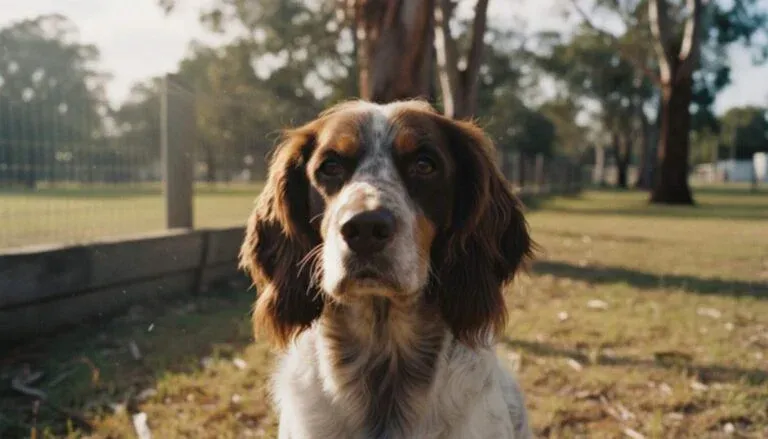
There’s a reason English Springer Spaniels have been working alongside humans for over 400 years — and it’s not because they’re calm, low-maintenance couch potatoes. These dogs are wired to move. They’re the kind of dog that will sprint through scrub, dive into creeks, flush birds you didn’t even know were there, and then curl up on your feet at night like they haven’t just run 15 kilometres.
If you’ve ever met a Springer, you know the look — those big, soulful eyes framed by long, floppy ears that seem to drag through every puddle and food bowl they encounter. They’re loyal to a fault, comically enthusiastic about everything, and they will follow you from room to room like a furry shadow. Springer owners call them “velcro dogs” for good reason.
But here’s what nobody tells you before you fall in love: Springers are not easy dogs. They need serious exercise. They need mental stimulation. Their ears need constant attention or you’ll be at the vet every other month. And if you buy from the wrong breeder, you could end up with a dog that has health issues costing thousands of dollars in vet bills.
This guide is written for new owners and prospective owners who want the honest truth about what it’s like to live with an English Springer Spaniel — the good, the messy, and the expensive. We’ll cover temperament, health conditions and their real costs in AUD, grooming schedules, training advice by age, and whether this breed is actually right for your household. No sugar-coating, no filler.
What You’ll Learn
- Breed traits & temperament
- Health concerns to know
- True cost in Australia
- Training & exercise needs
- Is this breed right for you?
Breed Quick Facts Table
| Attribute | Details |
|---|---|
| Breed Group | Gundog (Sporting) |
| Origin | England, 14th century onwards |
| Height | Males: 50–53 cm | Females: 48–51 cm at the withers |
| Weight | Males: 20–25 kg | Females: 18–23 kg |
| Lifespan | 12–14 years (some reach 15+) |
| Coat | Medium-length, flat or slightly wavy, weather-resistant double coat |
| Colours | Liver & white, black & white, or either with tan markings (tricolour) |
| Shedding | Moderate year-round, heavier in spring and autumn |
| Energy Level | High — needs 60–90+ minutes of active exercise daily |
| Temperament | Affectionate, eager to please, energetic, intelligent, loyal |
| Good With Kids | Yes — excellent family dog when properly socialised |
| Hypoallergenic | No |
| Barking Level | Moderate — alert barkers, not excessive |
| AKC/ANKC Registered | Yes — recognised by Dogs Australia (ANKC) |
| Puppy Price (AUD) | $1,500–$4,000 from registered breeders |
History of the English Springer Spaniel
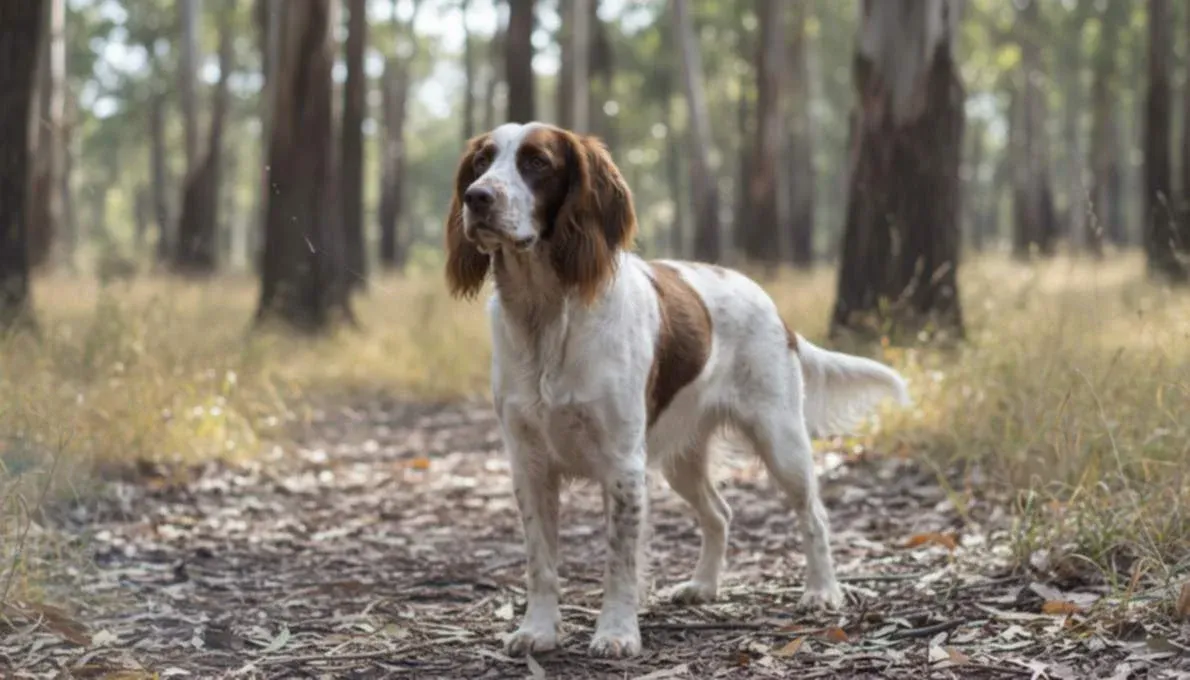
The English Springer Spaniel is one of the oldest sporting breeds in the world, with roots stretching back to at least the 14th century. Before firearms existed, spaniels were used to “spring” game — flushing birds from dense undergrowth into the air or into nets. That’s literally where the name comes from. They didn’t retrieve; they launched prey into the open so falcons or hunters could do the rest.
For centuries, “spaniel” was a catch-all term for any dog used to flush game. Litters would produce dogs of varying sizes, and breeders would sort them by function: smaller pups became Cocker Spaniels (used for woodcock), while larger, leggier pups became Springer Spaniels. It wasn’t until 1902 that the English Kennel Club formally recognised the English Springer Spaniel as its own distinct breed, separate from the Cocker.
The breed arrived in Australia by the 1930s, and by that time, dedicated breeders were already importing quality bloodlines from England. Today, the English Springer Spaniel is a well-established breed in Australia with ANKC-registered breeders in every state. You’ll find them in the show ring, in field trials, working as detection dogs with police and customs, and — most commonly — as beloved family pets who think they’re lapdogs despite weighing 22 kilos.
Field vs. Show (Bench) Lines — and Why It Matters
This is something most breed guides gloss over, but it’s critical for anyone buying an English Springer Spaniel in Australia. There are two distinct types within the breed, and they are almost like different dogs.
Show-bred Springers (sometimes called “bench” Springers) have longer coats, heavier bone, more prominent ears, and a calmer disposition. They’re bred to meet the ANKC breed standard and tend to be more relaxed in the house, though they still need plenty of exercise.
Field-bred Springers (working lines) have shorter coats, lighter frames, and significantly higher drive. These dogs are bred to work all day in the field — flushing and retrieving game, running through scrub, and responding to whistle commands at distance. They’re athletic, intense, and need a job or they will create one for themselves. If you’ve ever seen a Springer that looks like it can’t sit still for five seconds, it’s almost certainly from working lines.
If you’re a first-time Springer owner looking for a family pet, a show-bred dog from a reputable ANKC breeder is usually the better fit. If you’re a hunter, trialler, or someone who wants a dog for detection or agility work, field-bred lines are purpose-built for that intensity. Ask the breeder directly which type their dogs are — and if they can’t answer clearly, look elsewhere.
Temperament & Personality
If you could bottle the personality of an English Springer Spaniel, it would taste like pure enthusiasm with a shot of separation anxiety. These dogs don’t just love their owners — they’re obsessed with them. A Springer will follow you to the bathroom, sit outside the shower, and position themselves wherever you are in the house so they can keep one eye on you at all times.
That loyalty is beautiful, but it comes with a cost. English Springer Spaniels are prone to separation anxiety if left alone for extended periods. If you work full-time away from home and the dog has no company, you’re going to come back to scratched doors, shredded cushions, and neighbours complaining about barking. This is a breed that was designed to work alongside humans all day. Being left alone in a backyard for eight hours goes against every instinct they have.
Springers are ranked 13th in Stanley Coren’s The Intelligence of Dogs, which means they’re fast learners who pick up commands quickly. The flip side is that they’re also fast learners of bad habits. If you let a Springer puppy jump on visitors once, they’ll do it for the rest of their life unless you actively retrain them.
They’re naturally cheerful, playful, and affectionate dogs. They tend to be good with children, other dogs, and even cats — though their bird-flushing instincts mean keeping them around pet birds is a terrible idea. A Springer will often bond most closely with one family member (usually the person who feeds and exercises them), but they’re loving toward the whole household.
Expect a dog that greets every visitor like a long-lost friend, steals socks with gleeful abandon, and considers mud puddles a personal spa. They’re not guard dogs — they’ll bark to alert you that someone’s at the door, but they’ll lick the burglar’s face if given the chance.
If you’ve researched English Springer Spaniels online, you’ve probably come across “Springer Rage Syndrome.” Let’s address this directly because it causes a lot of unnecessary fear.
Rage syndrome is a rare seizure-related disorder where a dog displays sudden, unprovoked aggression with no warning signs. The dog appears to “black out,” attacks, and then returns to normal with no memory of the episode. It’s believed to be a form of epilepsy that affects the limbic system of the brain, and yes, it has been documented more frequently in English Springer Spaniels than in most other breeds.
However, true rage syndrome is extremely rare. Most cases of aggression in Springers are caused by far more common and treatable issues: poor socialisation, fear, pain, thyroid problems, or simply buying from an irresponsible breeder who doesn’t screen for temperament. Veterinary behaviourists note that the term “rage syndrome” is overused and frequently misapplied to dogs with normal (if serious) aggression problems that have identifiable causes and solutions.
The takeaway? Don’t let rage syndrome scare you away from the breed, but do buy from a registered breeder who can show you the temperament history of both parents. If a Springer does display sudden, unprovoked aggression, see a veterinary behaviourist — not just a dog trainer — and request a full workup including thyroid testing.
In a word: yes. In more words: they’re one of the best family breeds you can own, as long as you can meet their exercise needs. They’re patient with children, they love group activities, and they thrive in homes where someone is usually around. They’re not suited to households where everyone works long hours and the dog is expected to entertain itself in the backyard. But if you’re an active family who enjoys bushwalks, beach trips, or even just long suburban walks every day, a Springer will match your energy and then some.
Health & Genetic Conditions
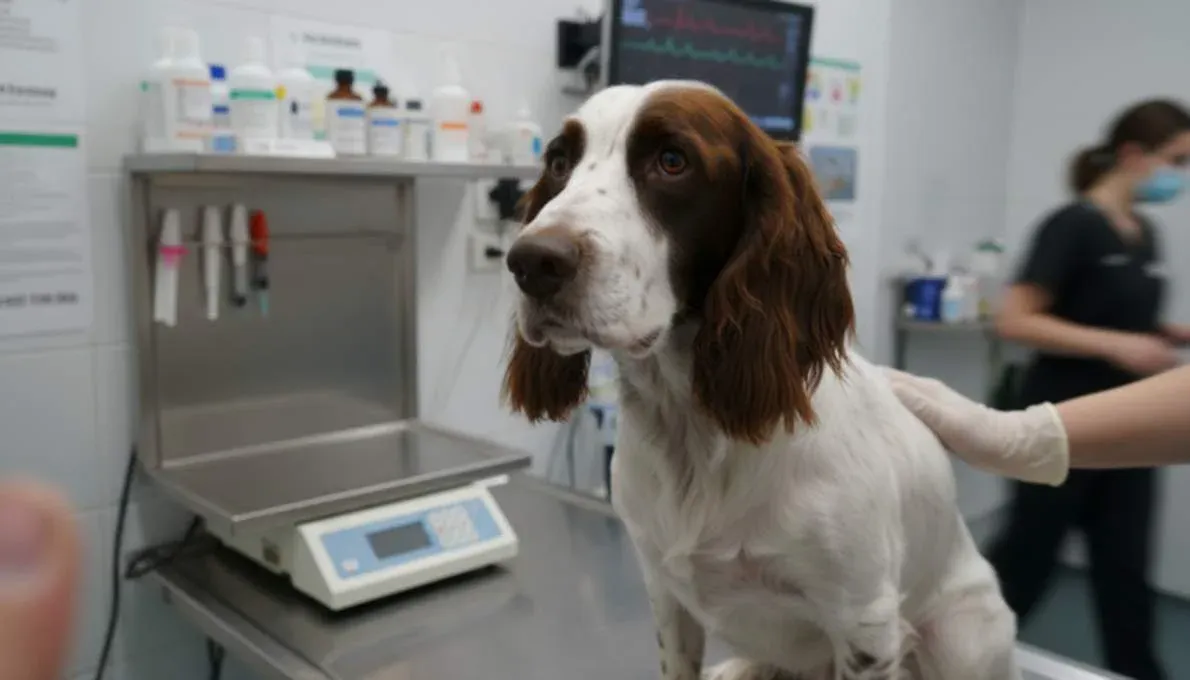
No breed guide is worth reading if it pretends the dog you’re looking at doesn’t get sick. English Springer Spaniels are generally healthy dogs — they’re not in the same league as Bulldogs or Cavalier King Charles Spaniels when it comes to genetic problems — but they do have breed-specific conditions that every owner should know about before bringing one home. Some of these conditions are manageable nuisances. Others can be expensive and heartbreaking.
Dysplasia occurs when a joint doesn’t develop properly, leading to loose fit, cartilage damage, and eventually arthritis. Both hip and elbow dysplasia are documented in the breed. Symptoms include limping, reluctance to jump or climb stairs, and stiffness after rest. Mild cases can be managed with weight control, joint supplements (glucosamine and chondroitin), and anti-inflammatory medication. Severe cases may require surgery, which in Australia can cost between $3,000 and $8,000 per joint depending on the procedure and surgeon.
Reputable breeders in Australia hip and elbow score their breeding stock through the ANKC scheme. Always ask to see the scores before buying a puppy. The breed average hip score is moderate — you want parents that score below the breed average.
PRA is a degenerative eye disease that leads to gradual blindness. In Springers, onset usually occurs between 2 and 6 years of age. The first sign is typically night blindness — you’ll notice your dog bumping into furniture in dim light or being reluctant to go outside after dark. There is no cure or treatment for PRA, but a DNA test exists (PRA-CORD1) that identifies carriers. No responsible breeder should be producing puppies without testing both parents. If a breeder can’t show you PRA test results, walk away.
This one isn’t life-threatening, but it’s the single most common health issue you’ll deal with as a Springer owner. Those gorgeous long ears trap moisture, restrict airflow, and create a warm, humid environment that bacteria and yeast love. Add grass seeds (a major problem in rural and semi-rural Australia) and you’ve got a recipe for chronic ear problems.
A single ear infection treated by a vet will cost $100–$250 including consultation, ear cleaning, and medication. If your Springer gets chronic ear infections (and many do), you could be spending $500–$1,000+ per year on ear care alone. Prevention is key: clean the ears weekly with a vet-approved solution, keep the hair around the ear canal trimmed, and check for grass seeds after every walk during spring and summer.
PFK deficiency is an inherited metabolic disorder that impairs the body’s ability to produce energy from sugar. Affected dogs may show episodes of weakness, muscle cramps, or dark-coloured urine after exercise. It’s more common in working/field lines. A DNA test is available and should be part of any responsible breeding program. Carriers can be bred safely if paired with a clear dog, but two carriers should never be mated.
Retinal Dysplasia: A congenital defect present at birth where the retina develops abnormally. A canine ophthalmologist can detect this in puppies. Severity ranges from mild folds (which may not affect vision) to complete retinal detachment (which causes blindness).
Epilepsy/Seizures: Inherited epilepsy does occur in the breed, though it’s considered uncommon. Seizures usually begin before 5 years of age and can often be managed with anticonvulsant medication. Medication costs in Australia typically run $30–$80 per month depending on the drug and dosage, plus regular blood monitoring at $100–$200 per test.
Autoimmune Skin Conditions: Pemphigus foliaceus is a skin disease more common in Springers than in many other breeds. It causes crusting and hair loss, typically on the nose, ear flaps, and footpads. It’s manageable but requires ongoing treatment that can cost $500–$1,500 per year in medication and vet visits.
Obesity: Springers love food and will eat anything not nailed down. They gain weight easily, and excess weight worsens joint problems, shortens lifespan, and increases the risk of diabetes and heart disease. Keeping your Springer at a healthy weight is one of the cheapest and most effective things you can do for their long-term health.
Budget for comprehensive pet insurance from day one. A good policy for an English Springer Spaniel in Australia runs $80–$150 per month depending on the level of cover and your location. Given the breed’s predisposition to ear infections, joint issues, and eye conditions, insurance will almost certainly pay for itself over your dog’s lifetime. Without insurance, a single cruciate ligament rupture or hip surgery can cost $5,000–$10,000.

Lifespan & Longevity
The average English Springer Spaniel lifespan is 12 to 14 years, which is solid for a medium-sized breed. Some well-cared-for Springers reach 15 or beyond — there’s even a documented case of a Springer in the UK named Basher who lived to 19.
What determines whether your Springer lands at the lower or upper end of that range comes down to a few key factors: genetics (which you influence by choosing a responsible breeder), weight management (obesity shortens lives significantly), dental care (dental disease can lead to kidney and heart damage), exercise consistency, and regular veterinary care including vaccinations and parasite prevention.
Life Stages of the English Springer Spaniel
Puppy (0–18 months): High energy, teething, socialisation window. Growth plates close around 12–18 months — avoid high-impact exercise like long runs on hard surfaces until they’re fully grown.
Adult (18 months – 8 years): Peak years. This is when your Springer will be at their most active and athletic. Maintain consistent exercise, annual vet checks, and dental care.
Senior (8–10+ years): Energy levels gradually decrease. Watch for signs of arthritis, vision changes, and weight gain. Senior blood panels every 6–12 months can catch issues early. Many Springers stay remarkably active into their senior years compared to other breeds of similar size.
The single biggest thing you can do to extend your Springer’s life is keep them at a healthy weight. An overweight Springer puts extra stress on joints already predisposed to dysplasia, and studies consistently show that lean dogs live an average of 1.8 to 2.5 years longer than overweight dogs of the same breed.
Grooming & Care
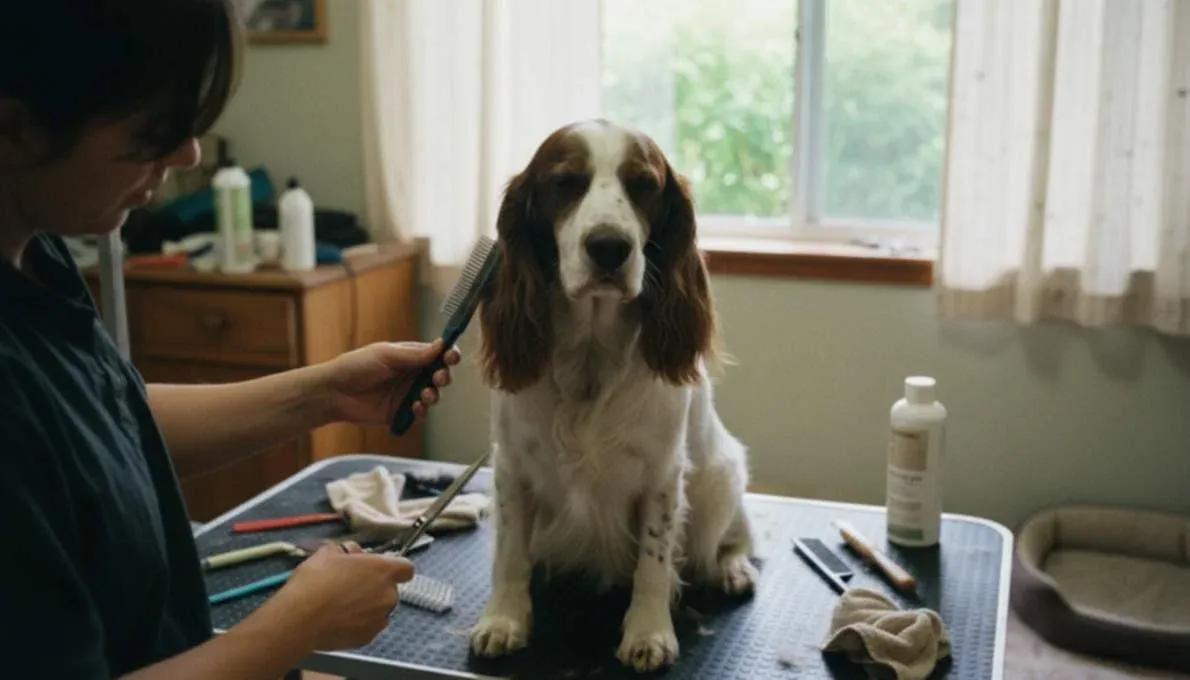
English Springer Spaniels have a double coat that’s beautiful, functional, and a magnet for every burr, twig, and grass seed in Australia. Grooming isn’t optional with this breed — it’s a non-negotiable part of ownership. If you don’t stay on top of it, you’ll end up with a matted, uncomfortable dog and vet bills for skin infections and embedded grass seeds.
Do English Springer Spaniels Shed?
Yes. Springers shed moderately year-round and more heavily during seasonal coat changes in spring and autumn. They are not hypoallergenic. If you have allergies and are hoping a Springer might be okay, it probably won’t be. The breed produces dander, sheds hair, and their long, feathered coats trap allergens.
Grooming Schedule
| Task | Frequency | Notes |
|---|---|---|
| Full body brush | 2–3 times per week | Use a slicker brush for body, comb for feathering on ears, chest, legs and belly. Check for mats behind ears. |
| Ear cleaning | Weekly | Use vet-approved ear solution. Check for redness, odour, and grass seeds. This is the #1 grooming priority for the breed. |
| Ear hair trimming | Every 2–4 weeks | Trim excess hair around and inside ear canal to improve airflow. A groomer or vet can show you how. |
| Nail trimming | Every 2–3 weeks | If you can hear nails clicking on tiles, they’re too long. Use a guillotine clipper or Dremel. |
| Bathing | Every 4–6 weeks | More often if they swim or roll in things. Use a gentle dog shampoo — avoid human products. |
| Professional groom | Every 6–8 weeks | Full clip, strip, or tidy depending on coat type. Show dogs are hand-stripped; pets are usually clipped. Expect $80–$150 per session in Australia. |
| Teeth brushing | 2–3 times per week (daily ideal) | Use dog-specific toothpaste. Dental disease is a real problem in the breed and can affect organ health. |
| Grass seed check | After every outdoor walk (spring/summer) | Check ears, paws (between toes), armpits, and groin. Australian grass seeds can burrow into skin and require surgical removal ($300–$800+). |
Show Grooming vs. Pet Grooming
If you’re keeping your Springer as a pet, a standard clip every 6–8 weeks is perfectly fine. Many owners opt for a “field cut” or “puppy cut” that keeps the coat shorter and more manageable, especially during Australian summers. Show dogs require hand-stripping (pulling dead coat by hand rather than cutting), which preserves coat texture but is time-consuming and expensive if done professionally.
Exercise Needs
If you’re looking for a dog that’s happy with a 15-minute stroll around the block, the English Springer Spaniel is not your breed. These dogs were bred to work in the field for hours at a time, and that drive doesn’t disappear just because they’re living in suburban Melbourne or Sydney.
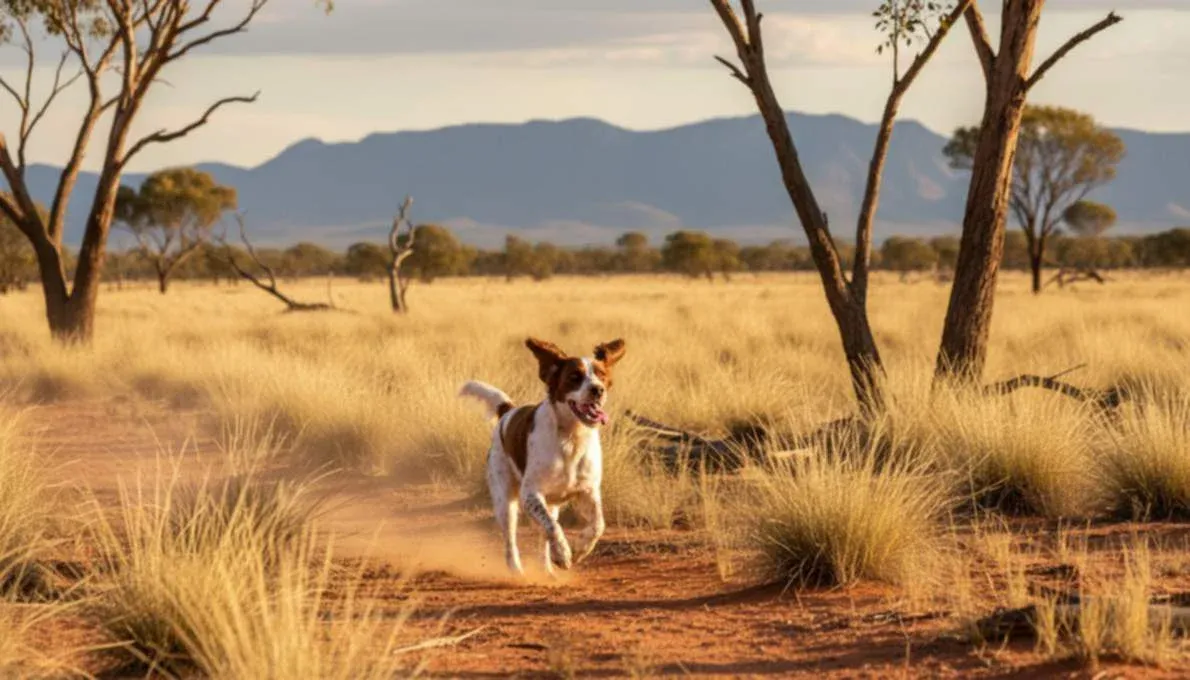
An adult English Springer Spaniel needs a minimum of 60 to 90 minutes of active exercise every day. That’s not a gentle amble — it’s brisk walking, off-lead running, swimming, fetch, or structured activities like agility or scent work. On top of physical exercise, they need mental stimulation: puzzle feeders, training sessions, nose games, or anything that makes them think.
A Springer that doesn’t get enough exercise will tell you about it. Common signs of an under-exercised Springer include destructive behaviour (chewing furniture, digging holes), excessive barking, hyperactivity indoors, and attention-seeking behaviours like stealing objects and running away with them.
Australian Climate Considerations
Australia’s heat is a serious concern for this breed. Springers have a double coat and can overheat quickly in temperatures above 28–30°C. During Australian summers, exercise should be limited to early morning (before 8 am) and evening (after 6 pm). Always carry water, watch for signs of heat stress (excessive panting, drooling, stumbling), and never exercise a Springer on hot pavement — if the ground is too hot for your bare hand held flat for 5 seconds, it’s too hot for their paws.
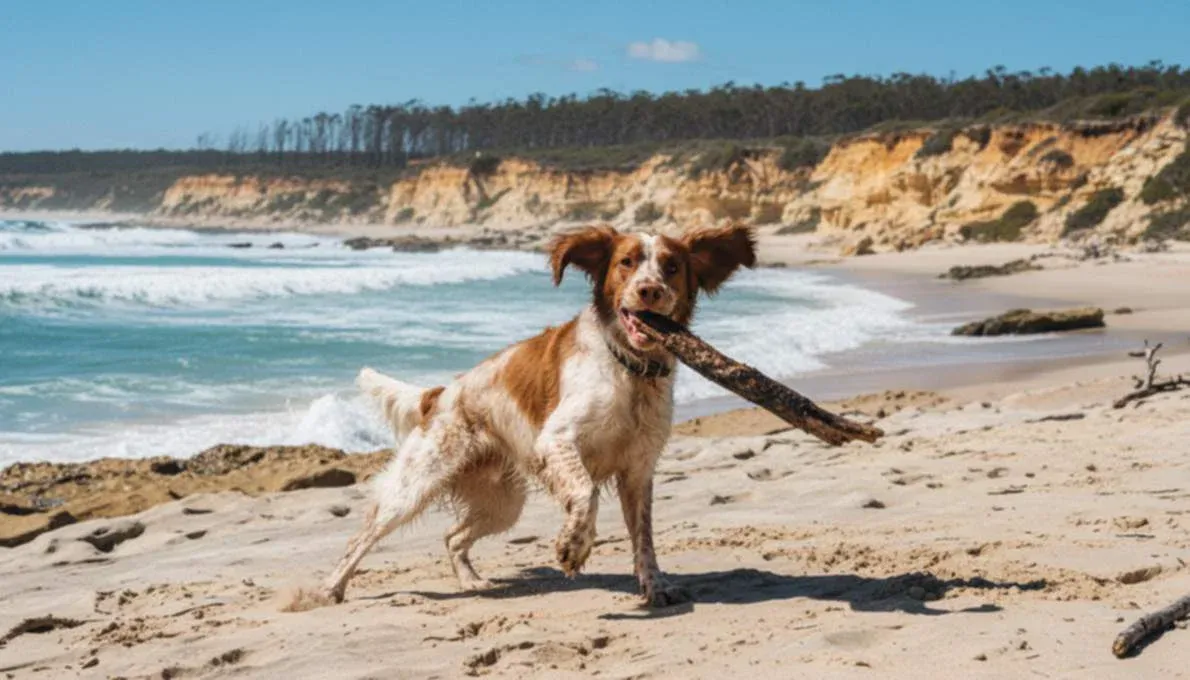
The good news? Springers are excellent swimmers, and swimming is one of the best forms of exercise for them. It’s low-impact on joints, burns enormous amounts of energy, and most Springers take to water like they were born in it (because, in a sense, they were — many were historically used for waterfowl retrieving). If you live near a dog-friendly beach, lake, or river, your Springer will be in heaven.
Can English Springer Spaniels Live in Apartments?
Technically, yes — but realistically, it’s hard. An apartment Springer can work if you’re genuinely committed to multiple long walks and off-lead exercise sessions every day. But most apartment-dwelling owners find the energy levels overwhelming. A house with a securely fenced yard is the ideal setup, though the yard alone is not a substitute for structured exercise. A Springer left alone in a yard will run the fence line, bark at neighbours, and dig craters.
Training Guide
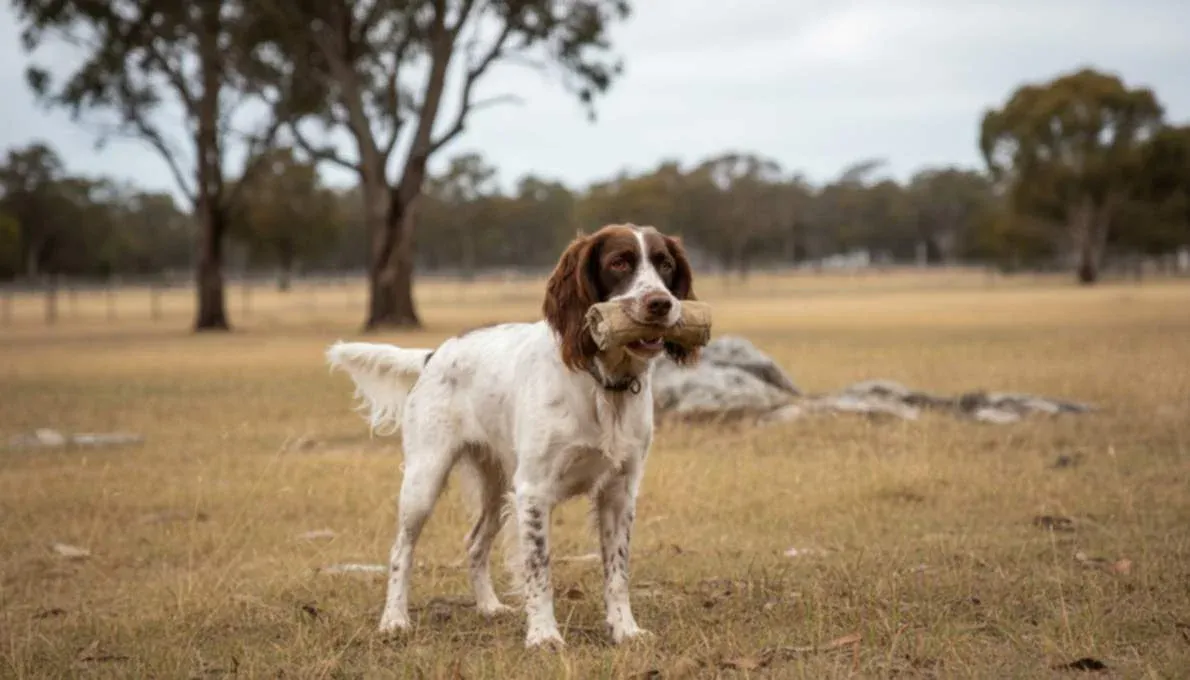
English Springer Spaniels are highly trainable dogs. They’re eager to please, food-motivated, and smart enough to learn complex commands. But “easy to train” doesn’t mean “trains itself.” Without consistent, positive-reinforcement training from puppyhood, a Springer’s intelligence and energy will work against you.
The breed’s biggest training challenge is impulse control. Springers are excitable dogs who want to greet everyone, chase everything, and go full speed at all times. Teaching a reliable recall, a solid “leave it,” and calm behaviour around distractions takes patience and repetition.
Socialisation & Training Timeline
| Age | Training Focus | Tips |
|---|---|---|
| 8–12 weeks | Socialisation, name recognition, sit, toilet training, crate training | Expose to different people, surfaces, sounds, and environments. This window closes fast — don’t waste it. |
| 3–6 months | Recall, loose-lead walking, “leave it,” drop, impulse control games | Start recall training early — it’s the most important command for a Springer. Use high-value treats (cooked chicken, cheese) to compete with distractions. |
| 6–12 months | Adolescent rebellion phase. Reinforce basics, introduce “stay” at distance, start structured activities | They’ll test boundaries. Stay consistent. This is when many owners give up — don’t. Consider a group obedience class for accountability. |
| 12–18 months | Advanced obedience, off-lead reliability, sport introduction (agility, scent work, retrieving) | If your Springer has a solid recall and can settle on command, you’re in a great position. If not, go back to basics — it’s never too late. |
| 18 months + | Maintenance and enrichment. Keep training sessions short (10–15 min) and fun. Springers love learning new tricks throughout life. | A bored Springer is a destructive Springer. Ongoing training doubles as mental exercise. Consider nose work or tracking — they’re naturals. |
A Note on Punishment-Based Training
Springers are sensitive dogs. Harsh corrections, shouting, or punishment-based methods can damage their trust and make behaviour problems worse, not better. Positive reinforcement (rewarding the behaviour you want) is universally recommended by veterinary behaviourists for this breed. If a trainer suggests prong collars, e-collars, or “dominance” techniques for your Springer, find a different trainer.
Price & Costs
Owning an English Springer Spaniel in Australia is not cheap. Between the purchase price, vet bills, food, grooming, and insurance, you’re looking at a significant ongoing financial commitment. Here’s a realistic breakdown in AUD so you can plan accordingly.
Upfront Costs
| Item | Estimated Cost (AUD) |
|---|---|
| Puppy from registered ANKC breeder | $1,500–$4,000 |
| Adoption/rescue (if available) | $350–$800 |
| Initial vet visit + vaccinations | $150–$350 |
| Desexing (spay/neuter) | $300–$600 |
| Microchipping (if not included) | $50–$80 |
| Bed, crate, bowls, lead, collar, toys | $300–$600 |
Ongoing Annual Costs
| Item | Estimated Annual Cost (AUD) |
|---|---|
| Premium dry food | $800–$1,500 |
| Pet insurance | $960–$1,800 |
| Annual vet check + vaccinations | $200–$400 |
| Flea, tick & worming prevention | $200–$350 |
| Professional grooming (6–8 sessions) | $480–$1,200 |
| Treats & chews | $150–$300 |
| Council registration | $30–$200 (varies by council) |
| Unexpected vet costs (ear infections, injuries) | $300–$2,000+ |
A rough annual total for a healthy English Springer Spaniel in Australia sits between $3,000 and $7,000, depending on whether they have health issues and how much you spend on grooming, food quality, and insurance. Over a 13-year lifespan, that’s $39,000–$91,000. It sounds like a lot because it is a lot. Dogs are a financial commitment, and Springers are not a low-cost breed.
Where to Buy or Adopt in Australia
For puppies, start with the ANKC state body in your state (Dogs NSW, Dogs Victoria, Dogs Queensland, Dogs SA, Dogs West, Dogs Tasmania, Dogs ACT, Dogs NT). They maintain breeder directories and can point you toward registered breeders who health test their stock. Websites like DogzOnline also list registered breeders by state.
For rescue and adoption, check Springer Spaniel rescue groups, PetRescue, the RSPCA, and state-based rescue organisations. Purebred Springers do come up in rescue, though they’re not as common as some breeds. Adoption fees are typically $350–$800 and usually include desexing, microchipping, vaccinations, and a vet check.
Is the English Springer Spaniel Right for You?
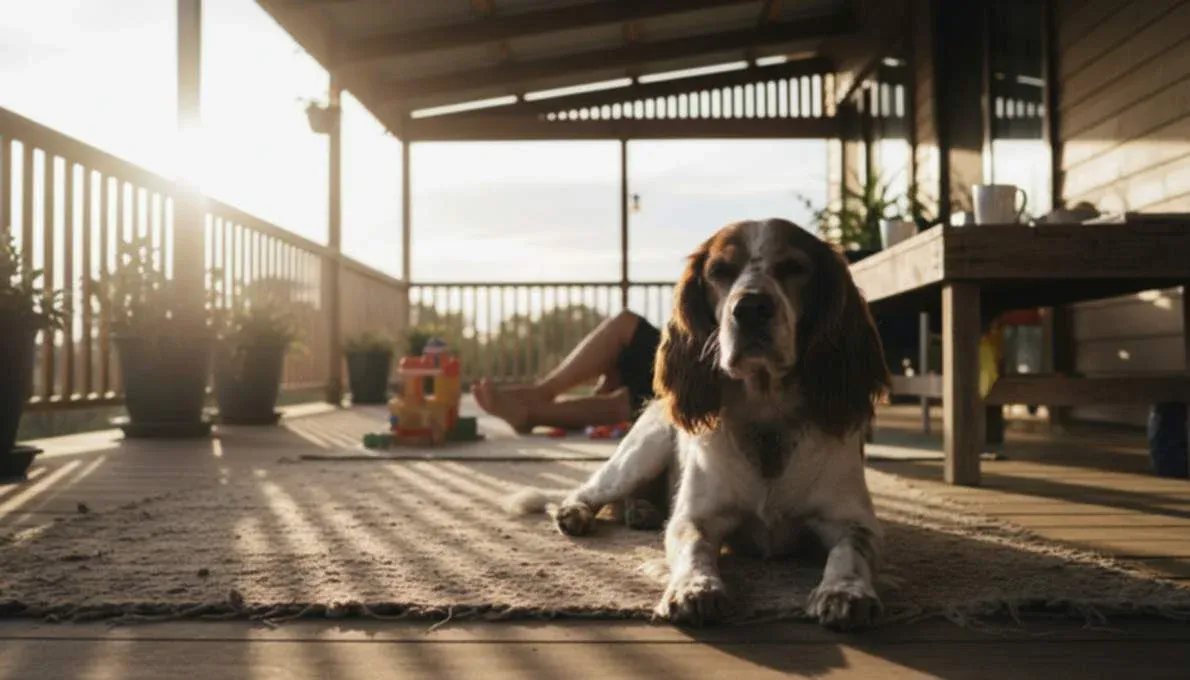
This is the section where we stop selling you on the breed and start being blunt. English Springer Spaniels are wonderful dogs, but they’re wonderful for a specific kind of owner. If your lifestyle doesn’t match their needs, both you and the dog are going to be miserable.
Have an active lifestyle and can commit to 60–90+ minutes of exercise every day, rain or shine. You enjoy bushwalking, running, cycling, or dog sports. Someone is home for a significant portion of the day (or you have another dog for company). You have a securely fenced yard — Springers will follow a scent over a fence if given the chance. You’re prepared for regular grooming and ear maintenance. You want a dog that’s deeply bonded to you and your family.
Work full-time away from home with no one to keep the dog company. You live in a small apartment with no access to off-lead exercise areas. You want a low-maintenance, independent dog that entertains itself. You’re not prepared for moderate shedding and regular grooming. You have pet birds (the flushing instinct is real). You’re looking for a guard dog — Springers are lovers, not fighters.
If you’re deciding between an English Springer Spaniel and a Cocker Spaniel, the main differences are size and energy. Cockers are smaller and slightly less demanding in terms of exercise, though they share many of the same health concerns (ear infections, PRA). If you want the spaniel personality in a smaller package, a Cocker might suit a less active household better.
Compared to a Labrador, Springers are lighter, more agile, and generally more intense in their need for activity. Labs are often easier to manage in terms of grooming (shorter coat) but are more prone to obesity. Both breeds are excellent family dogs.
If you’re drawn to the Springer but worried about the energy level, consider that show-bred Springers are noticeably calmer than field-bred lines. Talking to breeders about which type suits your lifestyle is one of the most important conversations you’ll have before buying.
The English Springer Spaniel is a loyal, intelligent, and endlessly enthusiastic companion that rewards active owners with a level of devotion few breeds can match. They’re not easy dogs, but they’re deeply rewarding ones.
Here’s what it comes down to:
They need serious daily exercise. This isn’t negotiable. A tired Springer is a happy Springer — an under-exercised one will destroy your house.
Their ears are high-maintenance. Budget for weekly cleaning, regular grooming, and the occasional vet visit for infections. It’s the price of admission for those beautiful floppy ears.
Buy from a registered breeder who health tests. PRA testing, hip/elbow scoring, and temperament screening are non-negotiable. The upfront cost of a well-bred puppy is nothing compared to the heartbreak and expense of genetic health problems from a backyard breeder.
Frequently Asked Questions
How long do English Springer Spaniels live?
The average English Springer Spaniel lifespan is 12–14 years, with some reaching 15 or beyond. Lifespan depends on genetics, diet, weight management, and quality of veterinary care.
Are English Springer Spaniels good family dogs?
Yes. Springers are affectionate, patient with children, and thrive in active family environments. They bond closely with their people and do best in homes where someone is around for most of the day.
Do English Springer Spaniels shed a lot?
They shed moderately year-round and more heavily in spring and autumn. Regular brushing (2–3 times per week) helps manage loose hair, but if you want a non-shedding dog, a Springer isn’t it.
Are English Springer Spaniels hypoallergenic?
No. They produce dander and shed hair, making them unsuitable for allergy sufferers looking for a hypoallergenic breed.
How much does an English Springer Spaniel cost in Australia?
Expect to pay $1,500–$4,000 AUD for a puppy from a registered ANKC breeder. Show-quality or championship-line puppies may cost more. Rescue adoption fees are typically $350–$800.
How much exercise does an English Springer Spaniel need?
A minimum of 60–90 minutes of active exercise per day, plus mental stimulation. Swimming, fetch, bushwalking, and dog sports are ideal. A short walk around the block is not enough for this breed.
What is Springer Rage Syndrome?
Rage syndrome is a rare seizure-related disorder causing sudden, unprovoked aggression. It’s been documented in Springers more than most breeds, but true cases are extremely uncommon. Most aggression in Springers has identifiable causes and is treatable. Always consult a veterinary behaviourist for diagnosis.
Can English Springer Spaniels live in apartments?
It’s possible but difficult. Springers have high energy needs and prefer homes with a yard. Apartment living requires a strong commitment to daily off-lead exercise and mental enrichment.
What colours do English Springer Spaniels come in?
The most common colours are liver (chocolate) and white, and black and white. Both can also come with tan markings, known as tricolour. Blue roan patterns also occur. The colour doesn’t affect temperament or health.
What’s the difference between an English Springer Spaniel and a Cocker Spaniel?
Springers are larger (20–25 kg vs. 12–16 kg for Cockers), have longer legs, and generally need more exercise. Both breeds share similar temperaments and health concerns, but Springers are the more athletic, high-energy option.
Primary Sources:
- English Springer Spaniel Field Trial Association (ESSFTA) — Health and Genetics: https://englishspringerspaniels.org/health-and-genetics/
- PetMD — English Springer Spaniel Breed Profile: https://www.petmd.com/dog/breeds/english-springer-spaniel
- Australian Dog Lover — English Springer Spaniel Breed Profile: https://www.australiandoglover.com/2016/07/english-springer-spaniel-breed-profile.html
- Dogs Australia (ANKC) — Breed Standards and Registered Breeders: https://dogsaustralia.org.au/
- DogzOnline — English Springer Spaniel Breeders in Australia: https://www.dogzonline.com.au/breeds/breeders/english-springer-spaniel.asp
- Orthopedic Foundation for Animals (OFA) — CHIC Health Testing Requirements: https://ofa.org/
- Wikipedia — Rage Syndrome: https://en.wikipedia.org/wiki/Rage_syndrome
- Vets Choice (Guild Insurance) — English Springer Spaniel Health and Traits: https://vetschoice.guildinsurance.com.au/dogs/dog-breeds/english-springer-spaniel
- PetRescue Australia: https://www.petrescue.com.au/
- Coren, S. (2006). The Intelligence of Dogs. Free Press.