

The English Setter is one of those breeds that stops people mid-walk. That flowing, speckled coat, the soft expression, the way they carry themselves with a kind of quiet dignity — there’s a reason they’re described as a “gentleman by nature.” They’re arguably the most beautiful of all the gundog breeds, and they know it.
But that beauty comes at a price, and we’re not just talking about the purchase cost. English Setters shed constantly. Their long, silky feathering tangles if you look at it wrong. They’ll drip water across your kitchen floor after every drink. And while they’re famously gentle indoors, they can be stubbornly deaf to your commands the moment they catch a bird scent outside.
In Australia, the English Setter has a small but passionate following. There are dedicated ANKC-registered breeders across NSW, Victoria, Queensland, Western Australia and Tasmania — many with decades of experience and internationally recognised bloodlines. The breed works as both a show dog and a field hunter in Australia, and some breeders are importing European working lines to keep the gene pool healthy.
This guide gives you the honest picture. What the English Setter temperament is actually like to live with, what grooming really involves, which health conditions to watch for, and how much it all costs in Australia. If you’re thinking about bringing one home, read this first.
What You’ll Learn
- Breed traits & temperament
- Health concerns to know
- True cost in Australia
- Training & exercise needs
- Is this breed right for you?
Quick Facts: English Setter at a Glance
| Trait | Detail |
|---|---|
| Breed Group | Gundog (ANKC Group 3) |
| Height | 61–69 cm (males); 58–66 cm (females) |
| Weight | 25–36 kg (55–80 lbs) |
| Lifespan | 10–13 years (average around 12) |
| Coat | Long, silky, flat with feathering; unique “belton” speckling |
| Colours | Blue belton, orange belton, lemon belton, liver belton, tricolour |
| Temperament | Gentle, affectionate, mischievous, people-oriented, sensitive |
| Exercise Needs | High — minimum 1–2 hours daily, including off-lead running |
| Shedding | Moderate–High, year-round |
| Drooling Level | Low–Moderate (drips water after drinking) |
| Barking Level | Moderate — will alert-bark and may become vocal if bored |
| Good With Kids | Excellent — one of the best gundog breeds for families |
| Good With Other Dogs | Very good — sociable and tolerant |
| Apartment Friendly | Not ideal — needs a yard and regular off-lead exercise |
| Average Puppy Price (AUD) | $2,000–$3,500 from a registered breeder |
History & Origins
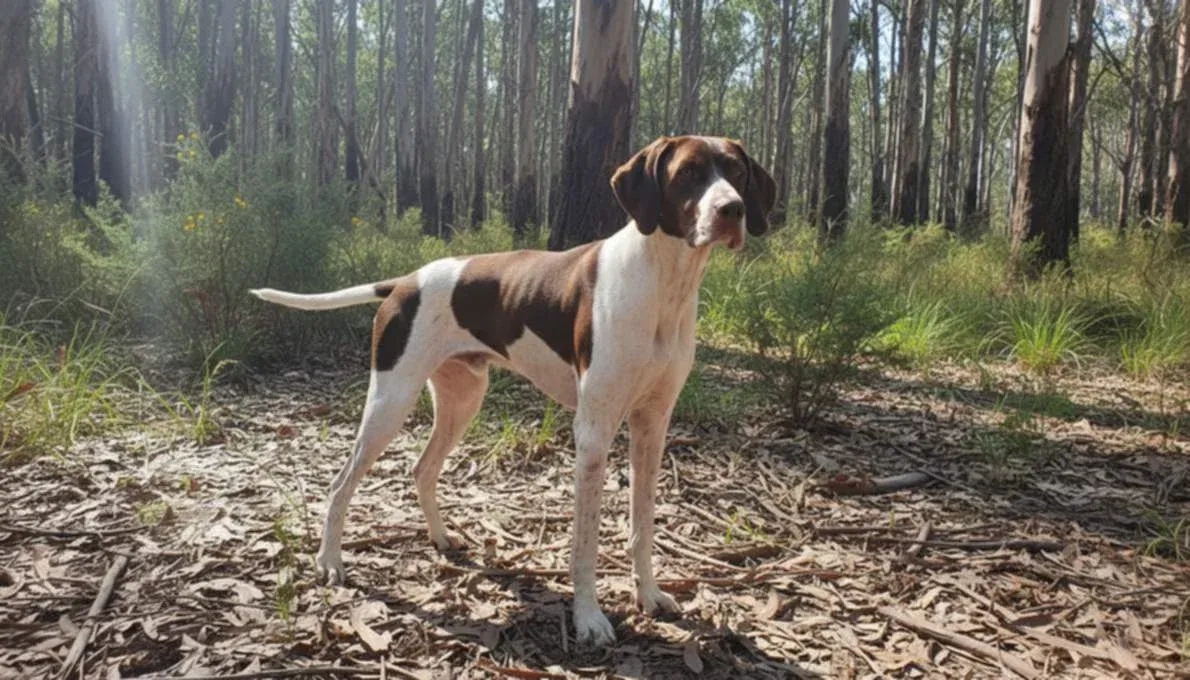
The English Setter is one of the oldest gundog breeds, with roots stretching back 400–500 years in England. Early “setting dogges” were used to locate game birds on the moors, crouching (or “setting”) near quarry so hunters could throw nets over both dog and birds. The name stuck long after nets were replaced by guns.
The modern English Setter owes its existence to two pivotal figures. Edward Laverack (1800–1877) spent decades selectively breeding a strain of Setters focused on beauty, temperament and companionability — these became the foundation of the show type. Richard Purcell Llewellin (1840–1925) took Laverack’s best dogs and crossed them with strong field lines, producing a leaner, more driven working dog. Today, the terms “Laverack Setter” and “Llewellin Setter” are still used to loosely describe show-type and field-type English Setters, though the lines have mixed considerably over 150 years.
English Setters hunt by ranging across large areas, silently seeking game by air scent. When they detect prey, they freeze in a standing point (unlike the low crouch of their historical ancestors). This instinctive behaviour appears in puppies as young as a few months old. The breed hunts quail, pheasant and grouse in their homeland, and in Australia they’re used for similar upland game.
In Australia, the English Setter has been present for well over a century. Waratah Kennels has been breeding since 1959, Graylors (NSW) since 1984, and Orwin Kennels (now in QLD) for over 40 years. Graylors was named English Setter Conformation and Performance Breeder of the Year in both 2023 and 2024. Several breeders are importing from European and American lines to strengthen the gene pool.

Temperament & Personality
The English Setter temperament is the breed’s greatest selling point. These dogs are genuinely gentle, deeply affectionate and intensely people-oriented. They want to be with you — on the couch, in bed, in the car, underfoot in the kitchen. The breed standard describes them as a “gentleman by nature,” and most owners will tell you that’s accurate.
They’re one of the best gundog breeds for families with children. English Setters are patient, tolerant and playful with kids without being rough or overwhelming. They rank well for affection, and multiple sources describe them as one of the finest breeds you can have around young people.
Show lines vs field lines matter here too. Show-bred English Setters are calmer, more laid-back and easier to manage as family companions. Field-bred dogs are leaner, higher-energy and can be more strong-willed and mischievous. Both types are loving, but field-bred Setters from working lines need significantly more exercise and mental stimulation. Ask your breeder which type they produce.
The breed is sensitive — emotionally and physically. They don’t respond to harsh training methods. Raised voices, heavy-handed corrections or punishment will cause an English Setter to shut down, sulk or become anxious. They thrive on praise, gentleness and routine.
English Setters are social with other dogs and generally good with other pets when raised together. However, they are bird dogs at heart. A home with pet birds is asking for trouble. Cats are manageable if the puppy is raised alongside them, but the chase instinct is always simmering.
One honest warning: English Setters can be vocal when bored. They’re not excessive barkers under normal circumstances, but an under-exercised Setter left alone in the yard will bark, dig and potentially become destructive. They also don’t do well as outdoor-only dogs. This breed needs to live inside with the family.
They’re intelligent — ranked 37th in Stanley Coren’s intelligence rankings — but their smarts come with a side of selective hearing. Outdoors, especially around birds, your English Setter may pretend you don’t exist. Recall is a lifelong training project with this breed.

Health & Genetic Conditions
English Setters are generally healthy and long-lived. They’re fortunate to have relatively few breed-specific mandatory health screens compared to many breeds. That said, there are several conditions any prospective owner should know about.
| Condition | Risk Level | Estimated Treatment Cost (AUD) | Notes |
|---|---|---|---|
| Hip Dysplasia | Moderate | $3,000–$8,000 (surgery per hip) | Affects roughly 24% of the breed historically. Always ask for hip scores from both parents. |
| Elbow Dysplasia | Low–Moderate | $2,000–$6,000 (surgery per elbow) | Good Australian breeders now routinely elbow score. Request results. |
| Congenital Deafness | Moderate | No cure (vibrating collar ~$50–$60) | Around 12% of tested English Setters show some degree of hearing loss. BAER testing is essential. Reputable Aussie breeders BAER test all puppies. |
| Hypothyroidism | Moderate | $500–$1,500/year (lifelong medication) | Common in the breed. Symptoms include weight gain, lethargy, skin problems. Manageable with daily thyroid medication. |
| Neuronal Ceroid Lipofuscinosis 8 (NCL8) | Low (severe) | No cure — fatal | A devastating neurological disease causing seizures, blindness and death. DNA test available. Both parents should be tested. |
| Progressive Retinal Atrophy rcd4 (PRA) | Low | No cure | Causes progressive blindness, starting with night vision loss. DNA test available. |
| Atopic Dermatitis | Moderate | $500–$3,000+/year | Environmental allergies causing itching, skin irritation and ear infections. The breed is predisposed. Common in Australian climates. |
| Ear Infections | Moderate | $100–$500 per episode | Those gorgeous floppy ears trap moisture and debris. Weekly cleaning is a must. |
The best Australian English Setter breeders — Graylors, Waratah, Orwin, Whimsily and others — now routinely hip and elbow score, BAER test for deafness, and DNA test for NCL8 and PRA rcd4. This is the minimum standard you should accept from any breeder. If a breeder doesn’t test, walk away.
Pet insurance for an English Setter runs approximately $60–$130/month for comprehensive cover in Australia. Given the breed’s susceptibility to hip dysplasia, hypothyroidism and skin allergies, insurance is a smart investment.

Lifespan & Longevity
The English Setter lifespan is 10–13 years, with a 2024 UK study finding an average of 13.1 years — slightly above the purebred average. Some English Setters live well into their teens with good care. This is solid longevity for a medium-to-large breed.
| Life Stage | Age Range | Key Considerations |
|---|---|---|
| Puppy | 0–12 months | Wild energy. Socialisation is critical. Bones don’t fully mature until 12–14 months — avoid high-impact exercise. |
| Adolescent | 1–2 years | Peak mischief. Strong-willed phase. Consistent training and patience are essential. Still growing. |
| Adult | 2–8 years | The golden years. They mellow considerably from puppyhood. Maintain daily exercise and grooming routine. |
| Senior | 8–11 years | Gradually slowing down. Watch for weight gain and thyroid issues. Annual vet checks are critical. |
| Geriatric | 11+ years | Reduced mobility. Softer bedding, shorter walks, six-monthly vet visits. Many stay sweet-tempered to the end. |
English Setters are known for mellowing significantly with age. The crazy, boundless puppy grows into a calm, affectionate adult that genuinely enjoys lounging on the couch. Many owners say the first two years are the hardest, and after that the breed is a dream to live with.

Grooming & Care
Let’s be blunt: if you don’t enjoy grooming, an English Setter is the wrong breed for you. That stunning coat requires regular maintenance. Skip it, and you’ll end up with a matted, tangled mess that’s painful for the dog and expensive to fix professionally.
| Grooming Task | Frequency | Product/Tool | Estimated Cost (AUD) |
|---|---|---|---|
| Full brushing | 2–3 times per week (daily for show dogs) | Long-toothed metal comb + slicker brush | $25–$50 |
| Feathering detangling | 2–3 times per week | Detangling spray + pin brush | $15–$30 |
| Bathing | Every 4–6 weeks | Dog-specific shampoo + conditioner | $20–$40 |
| Ear cleaning | Weekly | Veterinary ear cleaner | $20–$35 |
| Nail trimming | Every 2–3 weeks | Nail clipper or grinder | $15–$40 |
| Feet and face trim | Every 4–6 weeks | Thinning shears | $20–$40 |
| Teeth brushing | 2–3 times per week | Enzymatic dog toothpaste | $10–$20 |
| Professional grooming | Every 6–8 weeks (optional) | Professional groomer | $80–$150 per visit |
| Professional dental clean | Annually | Veterinary clinic | $300–$700 |
English Setter shedding is moderate to high and happens year-round. They shed short hairs from their body coat and longer hairs from their feathering. Regular brushing reduces the amount of hair on your furniture, but it won’t eliminate it. If dog hair on clothing is a dealbreaker for you, look elsewhere.
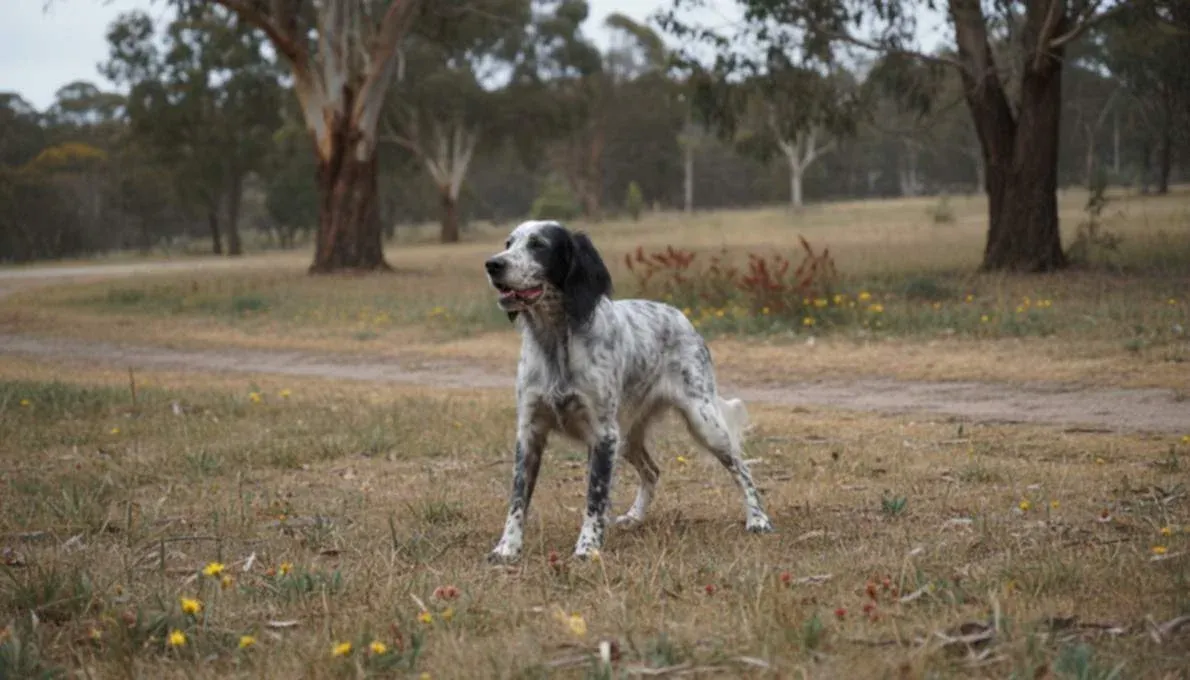
The breed’s “belton” coat pattern — that distinctive speckled ticking on a white base — is unique to English Setters. Puppies are born white, and the belton markings develop over the first few weeks. The feathering on ears, chest, belly, legs and tail is where most of the grooming effort goes. Mats form fastest behind the ears, under the armpits and around the back legs.
One quirk worth mentioning: English Setters drip water after drinking. Their deep flews (lip folds) hold water, and they’ll trail it across your floor. It’s not heavy drooling, but if you’re fussy about clean floors, keep a towel near the water bowl.

Exercise Needs
Daily Exercise Requirements:
English Setters need 1–2 hours of exercise daily, including time to run off-lead in a secure area. They’re an active sporting breed, but they’re not as relentlessly high-energy as breeds like the English Pointer or German Shorthaired Pointer. The key word is “moderate-to-high” — they need genuine activity, but they also know how to switch off indoors.
That said, a young English Setter (under 2 years) is a different animal. Expect hurricane-level energy, constant mischief and an apparent inability to sit still. Puppies and adolescents need multiple daily exercise sessions, but be careful about high-impact activities until their bones mature at around 12–14 months.
Ideal activities include off-lead running in fenced areas, hiking, swimming (many Setters love water), field trials, agility, tracking and general outdoor adventuring. Mental stimulation matters too — puzzle feeders, scent games and varied walking routes keep them happy.
Australian climate note: English Setters adapt reasonably well to Australian conditions. They’ll enjoy running in the snow during cold winters in southern states and are happy in moderate warmth. In the heat of an Australian summer, limit exercise to early morning and evening, ensure plenty of shade and water, and never leave them outside in direct sun for extended periods. Their coat provides some insulation against both heat and cold, but they’re not a breed that thrives in extreme heat.
A securely fenced yard is essential. English Setters have a strong hunting instinct and will range far if given the chance. They’re also known for being roamers — if they pick up a scent trail, they can cover surprising distances before they remember they have an owner. Fencing of 1.5 metres minimum is recommended.
Training Guide
Training Timeline & Focus:
| Age | Training Focus | Honest Difficulty |
|---|---|---|
| 8–16 weeks | Socialisation (critical window), crate training, name recognition, basic house manners | Easy–Moderate — eager and food-motivated. Start grooming handling early. |
| 4–6 months | Leash walking, sit/stay/come foundations, “leave it,” exposure to different environments | Moderate — bird instinct starts to kick in; distractibility increases. |
| 6–12 months | Recall work, impulse control, steadiness around birds and wildlife | Hard — adolescent stubbornness peaks. They’ll test every boundary. |
| 1–2 years | Reliable recall (ongoing project), advanced obedience, sport introduction | Moderate–Hard — still strong-willed but starting to mature. |
| 2+ years | Maintenance, field work, trick training, therapy dog certification | Moderate — they settle significantly and become very responsive. |
Recall is the biggest training challenge with English Setters. When they’re on a scent, the rest of the world disappears. Many experienced owners use long lines for training and accept that their Setter may never have bombproof recall in open environments. Off-lead exercise should always be in securely fenced areas.
Positive reinforcement is the only effective approach. English Setters are emotionally sensitive — harsh methods will produce a fearful, anxious dog that’s even harder to train. Short sessions (10–15 minutes), high-value treats and lots of praise work best.
Crate training is strongly recommended. English Setters can be challenging to housetrain compared to some breeds, and a crate provides structure during the learning process. Start from day one.
Cost of Ownership (AUD)
| Expense | Estimated Annual Cost (AUD) | Notes |
|---|---|---|
| Puppy Purchase Price | $2,000–$3,500 (one-off) | ANKC registered breeders. Show-quality and rarer colours (lemon, tricolour) at the higher end. |
| Food (premium medium/large-breed) | $1,000–$1,600/year | 2.5–3.5 cups of quality dry food daily. Active dogs or field-bred Setters may need more. |
| Vet Check-ups & Vaccinations | $350–$600/year | Annual wellness exam plus boosters. More frequent for seniors and dogs on thyroid medication. |
| Pet Insurance | $720–$1,560/year | Recommended. Covers hip dysplasia, thyroid and allergy treatments that can get expensive. |
| Flea, Tick & Worming | $250–$400/year | Monthly preventatives. Essential across all Australian climates. |
| Grooming (DIY supplies) | $150–$300/year | Brushes, combs, shampoo, ear cleaner, detangling spray. Ongoing investment. |
| Professional Grooming | $500–$1,200/year | Optional but many owners use a groomer every 6–8 weeks for trimming and coat maintenance. |
| Training | $300–$800 (first year) | Puppy classes + obedience. Consider a gundog-specific trainer if you plan to hunt or do field work. |
| Fencing | $1,000–$5,000+ (one-off) | Secure, 1.5m+ fencing is essential. Budget for this before the puppy arrives. |
| Toys & Enrichment | $100–$300/year | Puzzle feeders, snuffle mats, squeaky toys. They love toys. |
First-year total estimate:
First-year total estimate: $5,500–$13,000+ AUD (including purchase price, setup, initial vet work, fencing and food).
Annual ongoing cost:
Annual ongoing cost: $3,000–$6,000 AUD (food, insurance, vet, grooming, preventatives and miscellaneous).
Rescue is rare for purebred English Setters in Australia, but it’s worth checking PetRescue.com.au and contacting your state canine council. Some breed enthusiasts rehome older dogs — keep an eye on DogzOnline and breed-specific Facebook groups.
For breeder enquiries, DogzOnline (dogzonline.com.au) lists registered Australian English Setter breeders by state. Notable kennels include Graylors (NSW), Waratah (QLD), Orwin (QLD), Whimsily (VIC), Mistypoint (VIC) and Talshae (NSW). Always ask for hip/elbow scores, BAER test results and DNA testing for NCL8 and PRA rcd4.

Is the English Setter Right for You?
- Want a gentle, affectionate family dog that’s brilliant with children
- Enjoy grooming and don’t mind hair on your clothes and furniture
- Have 1–2 hours daily for exercise, including off-lead running
- Have a securely fenced yard (acreage or semi-rural is a bonus)
- Are home regularly — English Setters need companionship and don’t do well alone
- Have patience for training and can handle a dog that occasionally ignores you outdoors
- Want a breed that mellows beautifully with age into a calm, dignified companion
- Dislike grooming or don’t have time for regular coat maintenance
- Want a breed with reliable off-lead recall around wildlife
- Live in an apartment or home without a yard
- Work long hours and the dog will be alone for most of the day
- Keep pet birds (the hunting instinct is strong)
- Want a spotlessly clean house — between shedding and water-dripping, they’re messy
- Prefer a breed that’s easy to housetrain quickly
If you love the Setter look but want something different, consider the Irish Setter (higher energy, more exuberant, solid red coat), the Gordon Setter (calmer, heavier, black and tan), or the English Pointer (similar gundog heritage but short coat and lower grooming needs).
- The English Setter is one of the most lovable, family-friendly breeds you’ll find. Their gentle temperament, devotion to their people and beautiful appearance make them a standout choice for families who want a dog that’s as sweet-natured as it is good-looking.
- The trade-offs are real: grooming is a commitment, recall is a lifelong project, and they need more exercise than their couch-potato tendencies might suggest. They’re also not the easiest breed to housetrain.
- For Australian families willing to invest the time in grooming and exercise, the English Setter rewards you with a companion that’s affectionate, loyal and genuinely happy to be part of your life. They mellow into one of the calmest, most dignified dogs you’ll ever own.
Frequently Asked Questions
Are English Setters good family dogs?
Absolutely. English Setters are one of the best gundog breeds for families. They’re gentle, patient, affectionate and brilliant with children. They love being involved in family life and form deep bonds with every household member.
Do English Setters shed a lot?
Yes. English Setters shed moderately to heavily year-round. Both the body coat and the longer feathering shed. Regular brushing (2–3 times per week minimum) helps manage it, but you’ll always find hair on furniture and clothing. They are not hypoallergenic.
How much does an English Setter cost in Australia?
Expect $2,000–$3,500 AUD for a puppy from a registered ANKC breeder. Rarer colours and show-quality dogs sit at the higher end. Annual ongoing costs are approximately $3,000–$6,000 AUD.
What is a “belton” coat?
Belton is the term for the unique speckled or ticked coat pattern found only in English Setters. It comes in several colour variations: blue belton (black ticking on white), orange belton, lemon belton, liver belton and tricolour. The word was coined by Edward Laverack, after a village in northern England.
How long do English Setters live?
The English Setter lifespan is 10–13 years, with a 2024 UK study finding an average of 13.1 years. With good diet, exercise and veterinary care, some individuals live well into their teens.
What is the difference between an English Setter and an Irish Setter?
English Setters have a white coat with coloured speckles (belton), while Irish Setters have a solid chestnut or mahogany coat. Irish Setters are typically larger, more exuberant and higher-energy. English Setters are generally calmer and more reserved. Both are friendly, active gundog breeds.
Are English Setters easy to train?
They’re intelligent and willing to please, but they can be stubborn and easily distracted — especially outdoors around birds. Positive reinforcement and patience are essential. Recall is the hardest command to master. They’re not the best choice for someone who expects instant obedience.
How much grooming does an English Setter need?
Significant grooming. Brushing 2–3 times per week is the minimum, with daily brushing for show dogs. Feathering tangles easily and needs regular detangling. Ears should be cleaned weekly, and many owners have their Setter professionally groomed every 6–8 weeks.
Can English Setters live in apartments?
Not recommended. They need a securely fenced yard and daily off-lead exercise. While they’re calm indoors once exercised, their size, shedding and exercise needs make apartment living difficult for both dog and owner.
What health tests should English Setter breeders provide?
At minimum: hip and elbow scores, BAER hearing test, and DNA tests for NCL8 and PRA rcd4. Good Australian breeders like Graylors, Orwin and Whimsily routinely provide all of these. Don’t buy from a breeder who can’t show you results.
When do English Setters calm down?
Most English Setters settle significantly around age 2–3. The first two years are high-energy and mischievous, but they mature into calm, dignified adults. Many owners describe a dramatic personality shift around the two-year mark.
Are English Setters good with cats?
They can be, if raised with cats from puppyhood. However, English Setters are bird dogs with a prey drive. They may chase cats they haven’t been socialised with. Early, controlled introduction is essential, and some individual Setters will never be fully trustworthy around small animals.
1. American Kennel Club — English Setter Breed Information: https://www.akc.org/dog-breeds/english-setter/
2. Wikipedia — English Setter: https://en.wikipedia.org/wiki/English_Setter
3. PetMD — English Setter Dog Breed Health and Care: https://www.petmd.com/dog/breeds/english-setter
4. Hill’s Pet — English Setter Temperament, Personality and Characteristics: https://www.hillspet.com/dog-care/dog-breeds/english-setter
5. Daily Paws — English Setter Dog Breed Information and Characteristics: https://www.dailypaws.com/dogs-puppies/dog-breeds/english-setter
6. DogzOnline Australia — English Setter Breeders: https://www.dogzonline.com.au/breeds/breeders/english-setter.asp
7. English Setter Association (UK) — Health Information: https://www.englishsetterassociation.co.uk/health.html
8. English Setter Association of America — Breed FAQs: https://www.esaa.com/english-setters/breed-faqs/
9. WebMD Pets — What to Know About English Setters: https://www.webmd.com/pets/dogs/what-to-know-about-english-setters