
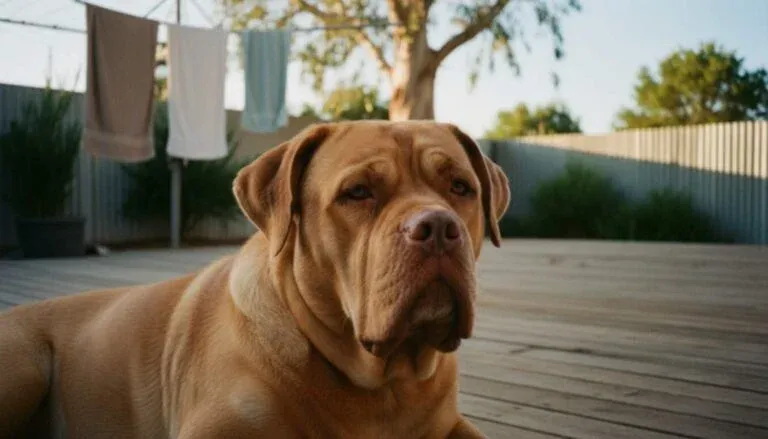
If you fell in love with the slobbering, scene-stealing French Mastiff from Turner & Hooch, you’re not alone. The Dogue de Bordeaux has one of the most memorable faces in the dog world — a massive wrinkled head, soulful eyes and an expression that somehow manages to look both deeply wise and slightly unimpressed at the same time. They’re loyal, calm, affectionate and built like a small tank.
But here’s the part the movie didn’t prepare you for: this breed has one of the shortest life expectancies of any dog. Most Dogues de Bordeaux live just 5 to 8 years. Heart disease, cancer and bloat claim far too many of them far too young. In one UK health survey, 31% of deceased Dogues had died suddenly and unexpectedly. That’s the reality anyone considering this breed needs to sit with before falling in love.
This guide gives you everything: honest Dogue de Bordeaux temperament truths, the cardiac disease data you need to understand, real Australian pricing in AUD, drool management advice (yes, it warrants its own section) and a clear-eyed assessment of whether this beautiful, heartbreaking breed is the right choice for you and your family.
What You’ll Learn
- Breed traits & temperament
- Health concerns to know
- True cost in Australia
- Training & exercise needs
- Is this breed right for you?
Quick Facts at a Glance
| Trait | Detail |
|---|---|
| Breed Group | Utility (Working) — ANKC Group 6 |
| Size | Giant | Males 50–65 kg, Females 45–55 kg | 58–68 cm at shoulder |
| Coat | Short, fine, soft. Minimal grooming but heavy drool. |
| Colours | Fawn, mahogany, red, Isabella (lilac). Black or brown mask, or no mask. |
| Lifespan | 5–8 years (one of the shortest of any breed) |
| Temperament | Calm, loyal, affectionate, protective, stubborn, courageous |
| Exercise Needs | Moderate — 45–60 minutes daily (avoid heat and overexertion) |
| Shedding | Low–moderate year-round |
| Drool Level | Extreme — constant. Keep towels in every room. |
| Good With Kids | Yes when well-socialised, but size can accidentally knock small children over |
| First-Time Owner | Not recommended — needs experienced, confident handling |
| Price (AUD) | $2,500–$4,000 (pet) | $4,000–$6,000+ (show) | Rescue: $300–$800 |
| Health Warning | Heart disease (SAS & DCM) is the leading cause of death. Cardiac screening essential. |
History & Origins
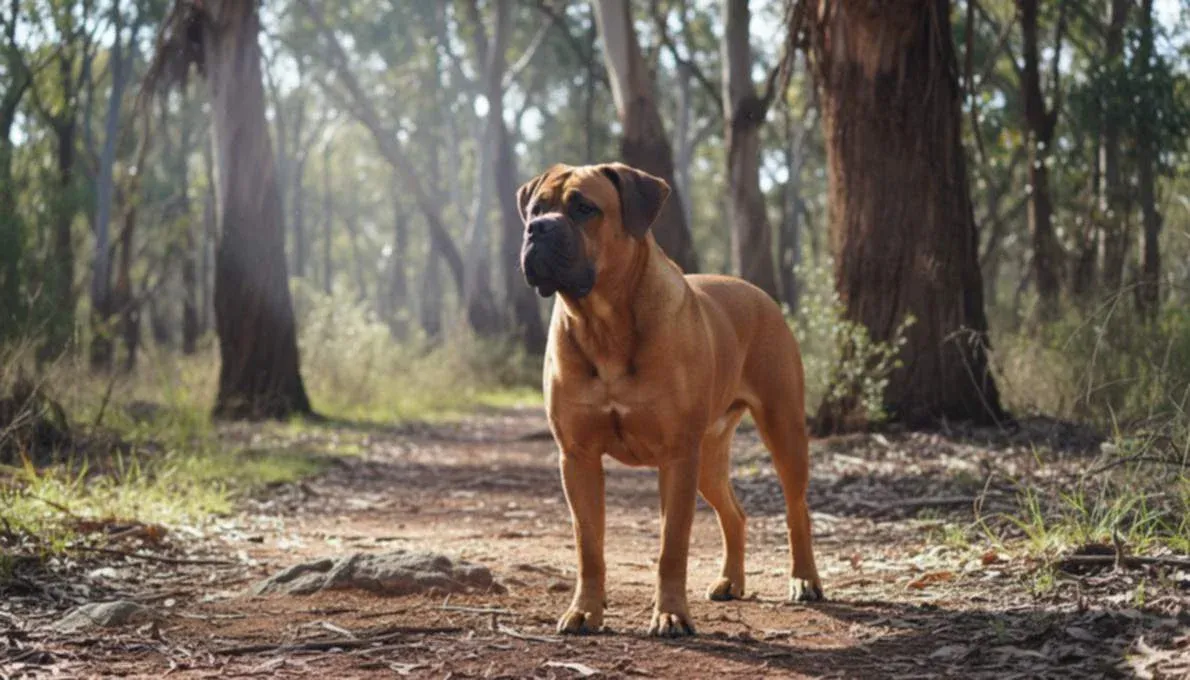
The Dogue de Bordeaux is one of the oldest French breeds, with a lineage stretching back to the 14th century in the Bordeaux region of southwest France. These dogs were originally bred as formidable guardians of estates, cattle herders, haulers of heavy carts and — during France’s darker chapters — participants in bull-baiting and dog fighting. Their massive heads, powerful jaws and muscular frames made them the ultimate working dog for French nobility.
The breed nearly went extinct during the French Revolution, when dogs associated with the aristocracy were slaughtered along with their owners. They survived in pockets of rural France, slowly rebuilding through the 19th century. The first French breed standard was written by veterinarian Pierre Mégnin in 1896, establishing the massive-headed, red-fawned dog we recognise today.
International recognition came slowly. The Dogue de Bordeaux was virtually unknown outside France until 1989, when a drooling, furniture-destroying DDB named Beasley stole every scene from Tom Hanks in the film Turner & Hooch. The movie launched a wave of breed popularity that continues today. The American Kennel Club didn’t officially recognise the breed until 2008 — remarkably late for such an ancient lineage.
In Australia, the Dogue de Bordeaux (also called the French Mastiff) sits within the ANKC’s Utility Group. There are around 30 registered breeders across the country, with the strongest concentration in NSW, Victoria and Queensland. The breed is moderately popular but far less common than English Mastiffs or Bullmastiffs.
Temperament & Personality
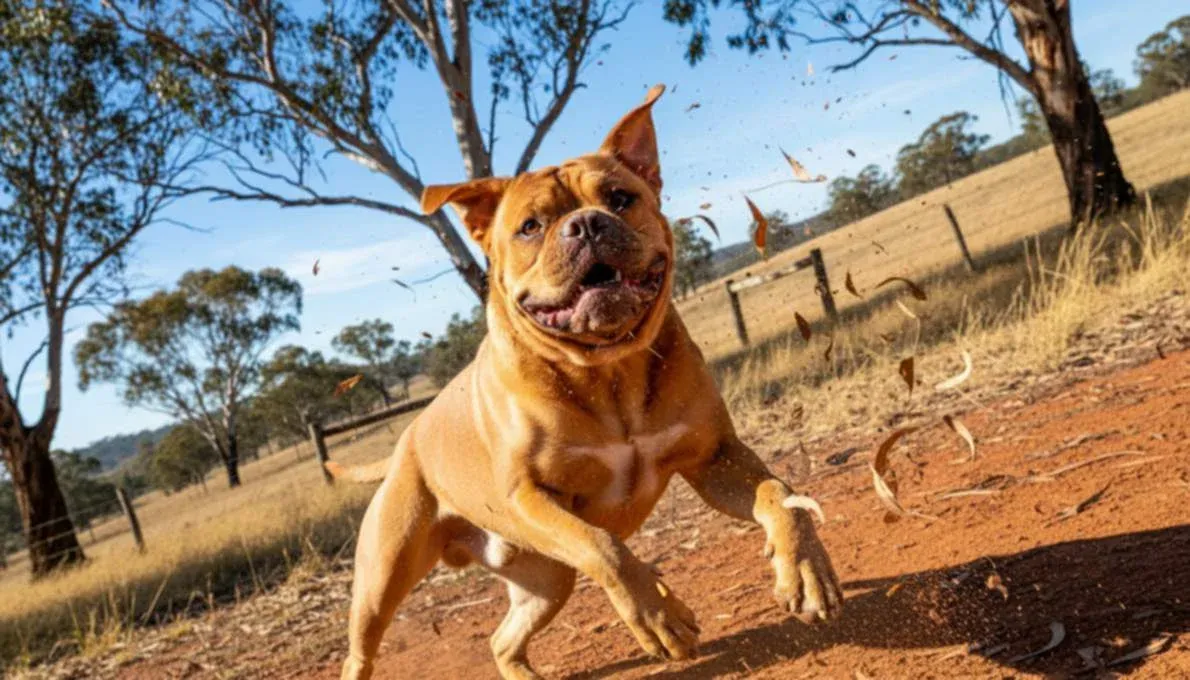
The Dogue de Bordeaux temperament is the reason people fall in love with this breed despite everything working against it. They’re genuine gentle giants — calm, deeply loyal, surprisingly sensitive and utterly devoted to their families. A well-bred, well-socialised DDB will follow you from room to room, lean their 60-kilogram frame against your legs, and look at you with an expression that communicates more than most humans manage with words.
Dogues are not high-energy dogs. They’re content to spend large portions of the day sleeping, provided they get their daily walks and play sessions. They’re affectionate without being anxious, protective without being aggressive, and playful well into adulthood despite their imposing size. Many owners describe them as having an almost human quality — emotionally attuned, responsive to moods and remarkably gentle with children.
The other side of the coin: they’re stubborn. Dogues have their own opinions about what’s worth doing and will resist commands they find pointless. They’re not defiant — they just require a reason. This is not a dog that performs tricks for applause. It’s a dog that learns house rules, understands boundaries, and then tests them periodically to see if you’re still paying attention.
The Dogue de Bordeaux was bred to guard, and that instinct runs deep. Without early, consistent socialisation, they can become wary of strangers and reactive to other dogs. This isn’t aggression in the traditional sense — it’s protectiveness taken to an extreme. A well-socialised DDB will be calm and confident around visitors. An unsocialised one can become a liability at 60 kg of muscle. Early puppy school, regular exposure to new people, dogs and environments, and ongoing socialisation throughout their life are non-negotiable.
Dogues are typically wonderful with children they’re raised with. The main risk is their size — a friendly nudge from a dog this heavy can knock a toddler off their feet. Supervision with small children is essential, not because of temperament but because of physics. With other dogs, they can be dominant, particularly males with other males. Introducing a DDB into a multi-dog household requires careful management. Cats are generally fine if introduced early, but small animals like rabbits or birds are best kept separate.
Health & Genetic Conditions
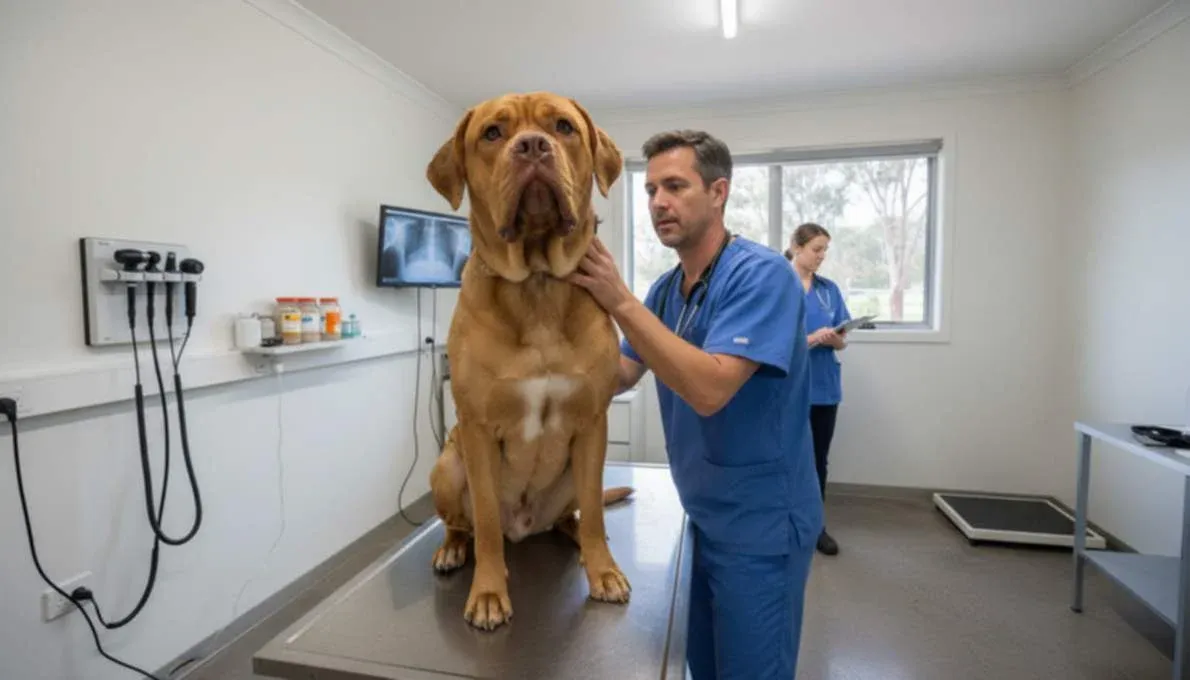
This is the section that matters most if you’re considering a Dogue de Bordeaux. The breed carries a significant burden of serious health conditions, and understanding them before you commit is not optional — it’s responsible ownership. Heart disease alone accounts for a disproportionate number of DDB deaths, and many of these deaths occur suddenly with no prior warning.
Heart disease is the single biggest threat to the Dogue de Bordeaux. Two conditions dominate:
Subaortic Stenosis (SAS): This is a congenital narrowing of the aorta just below the valve, forcing the heart to work harder to pump blood. It’s inherited and present from birth, though mild cases may not be detected until the dog is older. In one study at a major veterinary hospital, the Dogue de Bordeaux had the highest incidence of SAS among all breeds examined — identified in 72.7% of DDBs seen by the cardiology service. Severe SAS can cause exercise intolerance, fainting and sudden cardiac death. There is no cure; treatment focuses on beta-blockers to manage the heart’s workload. Breeding dogs must be screened by echocardiogram by a veterinary cardiologist.
Dilated Cardiomyopathy (DCM): The heart muscle weakens and enlarges, becoming unable to pump blood effectively. Signs include lethargy, coughing, laboured breathing, fainting and sudden collapse. DCM can develop at any age but typically appears in middle-aged dogs. Combined with atrial fibrillation (irregular heart rhythm), it is frequently fatal.
The sudden death problem: In a UK-based health survey of 278 Dogues de Bordeaux, 55 dogs (19.8%) were dead at the time of the survey. Of those, 17 (31%) had died suddenly and unexpectedly — meaning nearly one in three deaths came with zero warning. This is a breed where annual cardiac screening isn’t just recommended, it’s essential.
Cardiac screening costs (AUD): Echocardiogram by veterinary cardiologist: $400–$800. Annual screening recommended from 12 months of age. Ongoing cardiac medication (if needed): $100–$400/month. Emergency cardiac hospitalisation: $3,000–$10,000+.
Deep-chested giant breeds are at the highest risk for bloat, where the stomach fills with gas and can twist on itself (GDV). This is a life-threatening emergency that requires immediate surgery. Symptoms include a distended abdomen, unproductive retching, restlessness and rapid breathing. Without treatment, GDV is fatal within hours.
Treatment costs (AUD): Emergency GDV surgery: $3,000–$8,000. Prophylactic gastropexy (stomach tacking, can be done at desexing): $300–$800 additional. Many DDB owners and vets consider prophylactic gastropexy worthwhile given the breed’s extreme risk.
Other conditions to be aware of
| Condition | What It Is | Typical Cost (AUD) |
|---|---|---|
| Hip Dysplasia | Abnormal hip joint development; pain, lameness, arthritis. Very common in the breed. | $1,500–$7,000 surgery |
| Elbow Dysplasia | Abnormal elbow joint growth; lameness, pain, arthritis | $2,000–$5,000 surgery |
| Cancer (Lymphoma) | One of the leading causes of death. Lymphoma particularly prevalent. Enlarged lymph nodes, weight loss, lethargy. | $5,000–$15,000+ chemo |
| Epilepsy | Inherited seizure disorder; onset typically 6 months–3 years. Often difficult to manage in giant breeds. | $500–$2,000/yr meds |
| Eye Conditions | Ectropion (drooping eyelids), entropion (inward-rolling lids), cherry eye, distichiasis. Facial structure predisposes to multiple eye issues. | $500–$3,000 surgery |
| Skin Fold Infections | Facial wrinkles trap moisture, food and bacteria. Requires daily cleaning to prevent dermatitis. | $100–$500 per episode |
| Footpad Hyperkeratosis | Footpads harden and crack abnormally. Appears at 4–6 months. No cure; managed with soaks and creams. | $200–$600/yr ongoing |
| Brachycephalic Airway | Short muzzle causes breathing difficulties, especially in heat. Snoring, exercise intolerance, overheating risk. | $2,000–$5,000 surgery |
Tip: Pet insurance is essential for this breed. Enrol your puppy as early as possible — pre-existing conditions won’t be covered, and cardiac issues can be detected early. Budget $800–$1,500/year for a comprehensive giant-breed policy in Australia.
Lifespan & Longevity
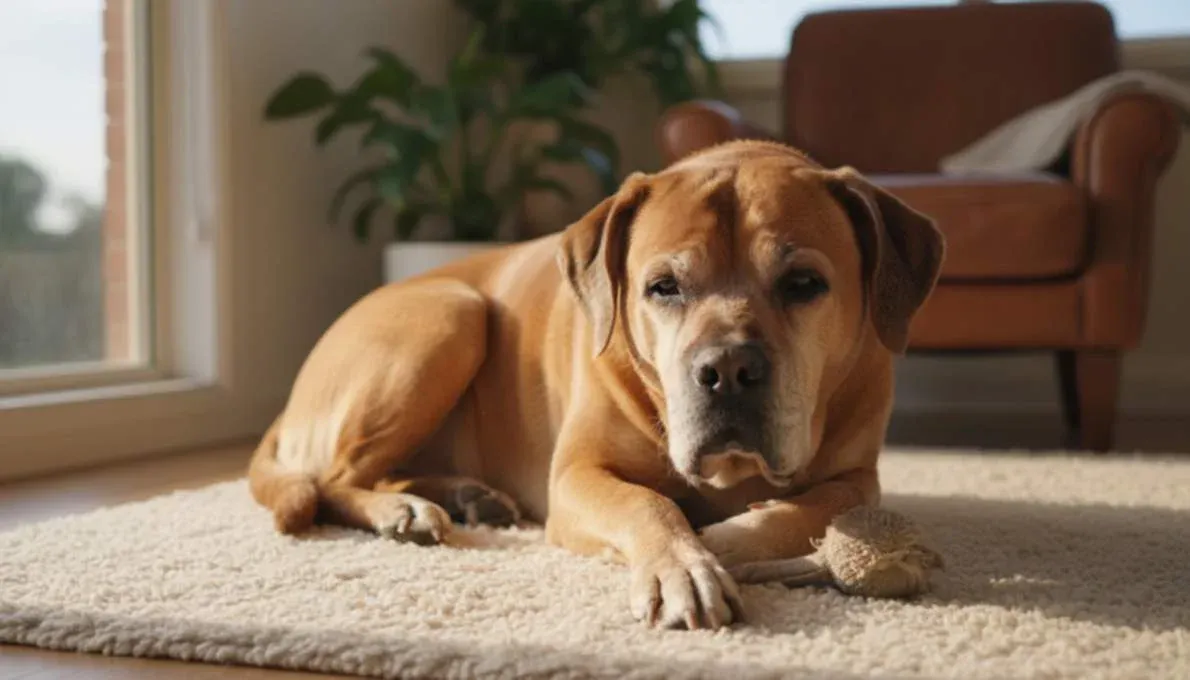
The Dogue de Bordeaux lifespan is the hardest truth about this breed. Most live just 5 to 8 years, making their life expectancy one of the shortest of any dog breed. PetMD cites 5–8 years. Some sources report an average closer to 6 years. A small number reach 10 or beyond, but these are the exceptions, not the rule.
The leading causes of premature death are cardiac disease (SAS, DCM, congestive heart failure), cancer (particularly lymphoma) and gastric dilatation-volvulus (bloat). The combination of giant size, brachycephalic anatomy and a relatively small gene pool conspires against longevity.
What you can do to help
| Life Stage | Key Focus Areas |
|---|---|
| Puppy (0–1 yr) | Slow, controlled growth (avoid overfeeding — rapid growth worsens joint disease). First cardiac screening at 12 months. Puppy insurance immediately. Socialisation. Prophylactic gastropexy at desexing. |
| Adult (1–5 yrs) | Annual cardiac echocardiogram. Weight management (every extra kilo strains heart and joints). Daily wrinkle cleaning. Joint supplements. Moderate exercise — avoid heat. |
| Senior (5+ yrs) | Biannual vet visits. Cardiac monitoring every 6 months. Arthritis management. Reduced exercise intensity. Cancer screening. Adjusted diet for ageing kidneys and liver. |
The single most impactful thing you can do for your Dogue de Bordeaux’s life expectancy is choose a breeder who cardiac-screens their breeding stock and keep up annual echocardiograms throughout your dog’s life. Early detection of heart disease allows medication that can extend life significantly.
Grooming & Care
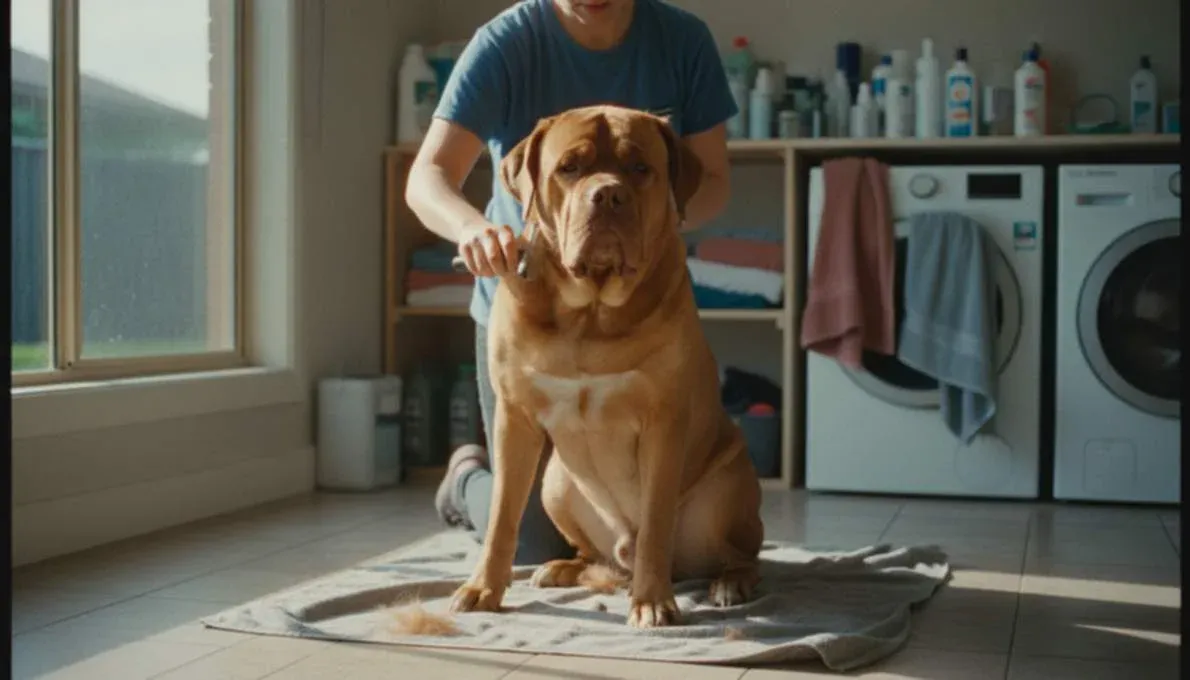
The Dogue de Bordeaux’s short coat is low maintenance. The drool and wrinkles are not.
The drool situation
Let’s address this directly: Dogues de Bordeaux drool constantly and copiously. After eating, after drinking, when excited, when hot, when sleeping, and sometimes apparently just because they can. You will find drool on your walls, your clothes, your ceiling (yes, really — they shake their heads), your furniture and your guests. Experienced DDB owners keep towels in every room and one in every pocket. If the idea of wiping slobber off yourself, your visitors and your kitchen cabinets multiple times a day makes you recoil, this is not your breed. There is no way to reduce or eliminate the drooling — it’s structural, caused by their loose, pendulous lips.
| Grooming Task | Frequency & Notes |
|---|---|
| Wrinkle Cleaning | Daily — clean between all facial folds with a damp cloth and dry thoroughly. Trapped moisture causes bacterial and yeast infections. |
| Brushing | Weekly with a rubber curry comb or shedding blade. Sheds lightly year-round. |
| Bathing | Every 4–6 weeks. More frequent wipe-downs between baths to manage smell. |
| Ear Cleaning | Weekly — floppy ears trap moisture and debris |
| Nail Trimming | Every 2–3 weeks. Giant breed nails need consistent management. |
| Dental Care | Daily brushing recommended. Breed is prone to dental disease due to undershot jaw. |
| Drool Management | Constant. Keep dedicated towels everywhere. Wipe jowls after eating/drinking. Consider waterproof furniture covers. |
| Professional Grooming | $80–$150 per session. Most DDB grooming is done at home. Find a groomer comfortable handling giant breeds. |
Exercise Needs
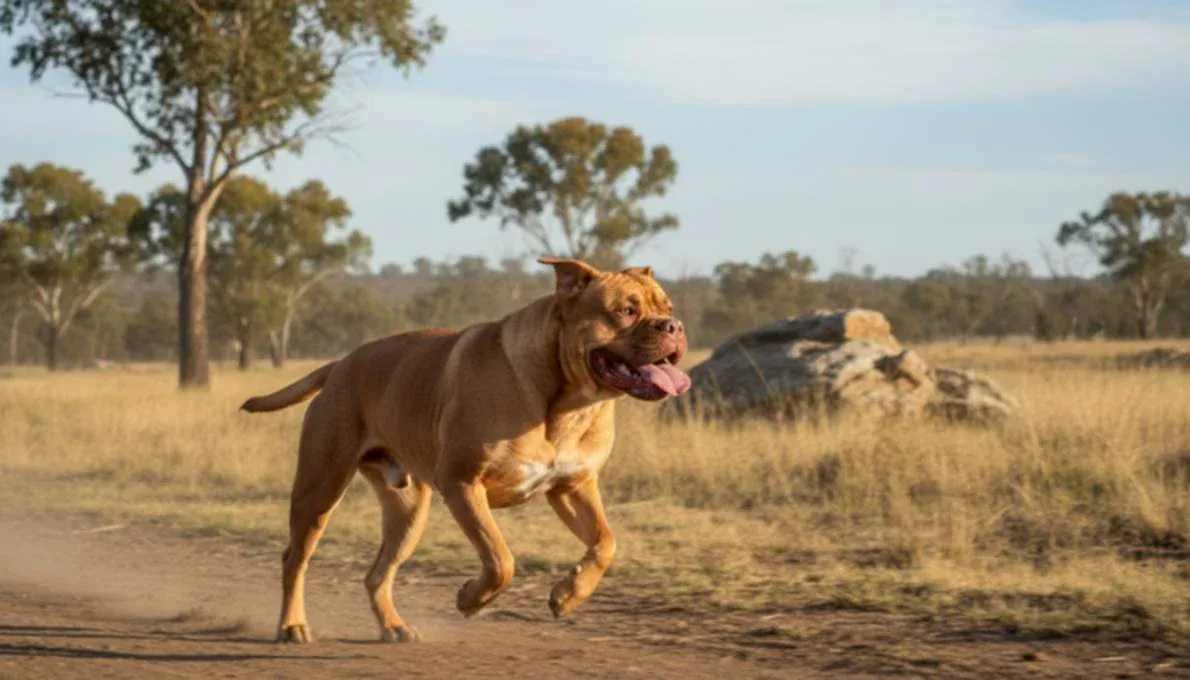
Despite their imposing size, Dogues de Bordeaux are not high-energy dogs. They’re calm and somewhat lazy by nature, happy to spend hours sleeping on the coolest spot in the house. But they still need daily exercise to stay fit, manage their weight and prevent boredom-driven destructive behaviour — and at 60 kg, a bored DDB can do serious damage to furniture and fencing.
Aim for 45 to 60 minutes of moderate exercise daily. Two shorter walks are better than one long session, especially in warm weather. Fetch, tug games and swimming (many Dogues love water) are all good options. Avoid high-impact exercise like running or jumping, particularly in dogs under 18 months — their growing joints cannot handle the stress.
Australian climate warnings
This is critical for Australian owners: the Dogue de Bordeaux is brachycephalic (short-muzzled) and cannot cool itself efficiently. Combined with their massive body mass and dark coats, they are extremely vulnerable to heatstroke. In an Australian summer, this can be fatal.
- Walk only in the early morning or after sunset during warm months
- Never leave a DDB in a car — not even for two minutes
- Provide constant access to shade, water and air-conditioned spaces
- Watch for signs of overheating: excessive panting, drooling more than usual, disorientation, bright red gums
- Swimming is excellent exercise that keeps them cool — supervise closely due to their heavy build
In the Australian climate, many DDB owners structure their entire summer routine around keeping their dog cool. This is a non-negotiable aspect of ownership in most parts of Australia.
Training Guide
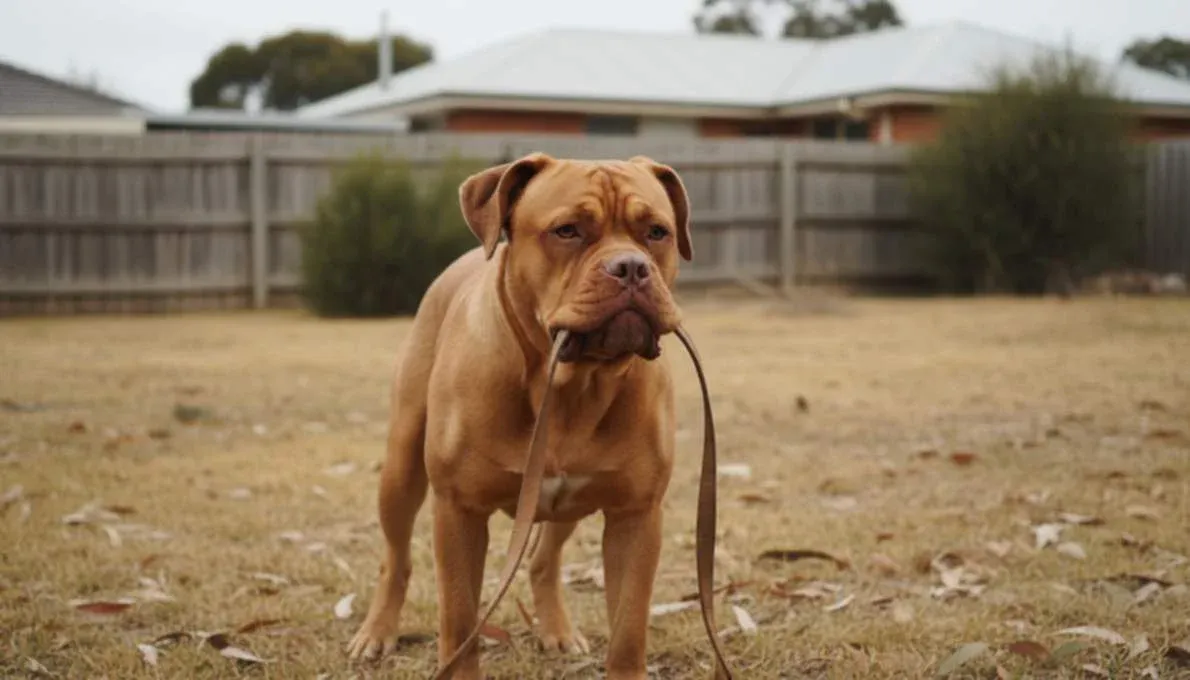
Dogues de Bordeaux are intelligent but wilful. They learn quickly — the challenge isn’t comprehension, it’s motivation. A DDB who doesn’t see the point of a command will simply ignore it, then look at you as if to say, “I heard you. I just disagree.” This is charming in a small dog. In a 60 kg dog with a jaw that can crunch through a tennis ball in one bite, it’s something you need to address from day one.
Training essentials
- Start early — an 8-week-old DDB puppy is already the size of many adult small breeds
- Positive reinforcement only — Dogues are sensitive to harsh corrections and will shut down or become defensive
- Consistent leadership is essential — these are not dogs that respect weakness or inconsistency
- Socialisation is the single most important training investment — ongoing exposure to people, dogs and environments throughout their life
- Lead training is urgent — a 60 kg adult who pulls on the lead is unmanageable and dangerous
Age-based training milestones
| Age | Focus | Honest Difficulty |
|---|---|---|
| 8–12 weeks | Socialisation, name recognition, crate training, handling (ears, mouth, paws), lead introduction | Moderate — already strong and mouthy |
| 3–6 months | Sit, stay, recall, lead manners, bite inhibition, guest manners | Moderate–Hard — stubbornness emerges |
| 6–12 months | Reliable lead walking, impulse control, settling on cue, not jumping on people | Hard — adolescent testing at giant-breed size |
| 1–2 years | Proofing commands, advanced socialisation, calm behaviour around other dogs | Moderate — maturity brings cooperation |
Puppy school is strongly recommended and should begin the week you bring your DDB home. One-on-one training with a behaviourist experienced in giant/guardian breeds is even better. Budget $200–$500 AUD for a 4–6 week puppy course or $100–$200 per private session.
Cost of Ownership (AUD)
Owning a Dogue de Bordeaux is expensive. Their giant size drives up food, medication and veterinary costs, and their health predispositions mean unexpected bills are more likely than with most breeds. Here’s the honest breakdown.
Upfront costs
| Item | Cost (AUD) |
|---|---|
| Registered breeder — pet quality (health-tested, limited registration) | $2,500–$4,000 |
| Registered breeder — show/breeding quality | $4,000–$6,000+ |
| Rescue / adoption | $300–$800 |
| Initial vet setup (vaccines, microchip, desexing) | $600–$1,500 (giant breeds cost more to desex) |
| Prophylactic gastropexy (at desexing) | $300–$800 additional |
| First cardiac echocardiogram (12 months) | $400–$800 |
| Supplies (giant crate, bed, bowls, lead, harness) | $500–$1,000 |
Ongoing annual costs
| Item | Annual Cost (AUD) |
|---|---|
| Quality dog food (giant breed formula, 20–30 kg/month) | $1,200–$2,400 |
| Annual vet checkup + vaccinations | $250–$500 |
| Annual cardiac echocardiogram | $400–$800 |
| Worming, flea & tick prevention (giant-breed doses) | $300–$600 |
| Pet insurance (giant breed, comprehensive) | $800–$1,500 |
| Joint supplements (glucosamine/chondroitin) | $200–$500 |
| Toys, treats, drool towels, replacement beds | $200–$500 |
Estimated annual cost: $3,500–$7,000+ AUD.
Estimated lifetime cost: $25,000–$50,000+ AUD over 5–8 years. A single cardiac emergency or cancer diagnosis can add $5,000–$15,000+ to this figure. The Dogue de Bordeaux is one of the most expensive breeds to own on a per-year basis due to the combination of giant size, high food consumption and serious health predispositions.
Breeders and rescue in Australia
There are approximately 30 registered Dogue de Bordeaux breeders across Australia. Start your search with:
- Dogz Online — Dogue de Bordeaux breeders directory: dogzonline.com.au
- Dogs Australia (ANKC) — national breeder directory: dogsaustralia.org.au
- Dogue de Bordeaux Club of NSW
- State breed clubs via your state canine control body (Dogs Victoria, Dogs NSW, Dogs Queensland)
When choosing a breeder, insist on seeing cardiac echocardiogram results for both parents, plus hip and elbow scores. Any breeder who cannot or will not provide cardiac clearances should be avoided. Breeding Dogue de Bordeaux without cardiac screening is irresponsible given the breed’s heart disease burden.
Rescue Dogues do appear in Australia, though not frequently. Check PetRescue (petrescue.com.au) and breed-specific rescue groups. Be aware that rescue DDBs may come with unknown health histories, which is particularly concerning given this breed’s cardiac risks.

Is the Dogue de Bordeaux Right for You?
- You want a calm, deeply loyal companion with a powerful presence
- You’re experienced with large or giant breeds and confident handling a strong dog
- You’re prepared for a short lifespan (5–8 years) and the emotional cost that brings
- You can afford annual cardiac echocardiograms and comprehensive pet insurance
- You have space — a house with a secure, fenced yard is ideal
- You’re comfortable with extreme, constant drool on every surface
- You’re home frequently — Dogues bond deeply and don’t cope well with long absences
- You’re a first-time dog owner — the combination of size, stubbornness and health complexity is too much
- You live in a hot climate without reliable air conditioning
- You want a dog that lives 12–15 years
- You’re uncomfortable with drool, snoring, flatulence and general messiness
- You can’t commit to the financial demands of a giant breed with serious health risks
- You want a dog that’s easy to train or eager to please
If you love the DDB temperament but want more longevity, consider a Bullmastiff (8–10 years, similar guardian temperament), a Cane Corso (9–12 years, more athletic), or a Rhodesian Ridgeback (10–12 years, loyal and protective but healthier overall).
A Note on Breeding Dogue de Bordeaux
Breeding Dogue de Bordeaux carries unique challenges that any prospective breeder must understand. The breed’s large head and relatively narrow pelvis frequently cause birthing difficulties, and caesarean sections are commonly required. Breeding without veterinary support is dangerous for both dam and puppies.
Responsible breeding of Dogue de Bordeaux in Australia requires, at minimum, cardiac echocardiograms for both parents, hip and elbow scoring, eye examinations and DNA testing for conditions where tests are available. Given the breed’s cardiac disease burden, any dog with detectable SAS or DCM should never be bred.
The cost of a single health-tested DDB litter — including cardiac screening, hip/elbow scoring, stud fees, veterinary monitoring, potential C-section, puppy vet care and registration — can easily exceed $5,000–$10,000 before a single puppy is sold. This is not a breed to enter into breeding lightly.
The Dogue de Bordeaux is one of the dog world’s great contradictions: a massive, powerful guardian with the soul of a devoted companion, wrapped in a body that betrays them far too soon.
- Personality: Genuinely wonderful. Calm, loyal, sensitive and protective in exactly the right measure when well-socialised. Few breeds bond as deeply as a DDB.
- Health reality: Brutal. Heart disease is the defining challenge, with SAS, DCM and sudden cardiac death all prevalent. Cancer, bloat and joint problems compound the risk. Annual cardiac screening is non-negotiable.
- Lifespan: 5–8 years. You will almost certainly have less time than you want. Every DDB owner knows this going in, and every DDB owner says it still wasn’t enough.
- Cost: $2,500–$4,000 upfront, $3,500–$7,000+ annually, plus the near-certainty of significant veterinary expenses. This is one of the most expensive breeds to own per year of life.
If you go into this breed with your eyes open — prepared for the drool, the heartbreak, the vet bills and the too-short time — a Dogue de Bordeaux will give you a depth of love and companionship that’s hard to find anywhere else. Just know what you’re signing up for. They deserve owners who do.
Frequently Asked Questions
What is a Dogue de Bordeaux?
A Dogue de Bordeaux (also called a French Mastiff or Bordeaux Mastiff) is a giant French breed originally used for guarding estates, herding cattle and pulling carts. They’re known for their massive wrinkled heads, calm temperament, deep loyalty and tragically short lifespan. They were popularised worldwide by the 1989 film Turner & Hooch.
How long do Dogues de Bordeaux live?
The average Dogue de Bordeaux lifespan is 5 to 8 years, making their life expectancy one of the shortest of any dog breed. Heart disease, cancer and bloat are the leading causes of premature death. Some individuals reach 10 or beyond, but this is uncommon.
What is the difference between a Dogue de Bordeaux and a French Mastiff?
They’re the same breed. “Dogue de Bordeaux” is the official breed name (French for “Mastiff of Bordeaux”). “French Mastiff” and “Bordeaux Mastiff” are common alternative names used in English-speaking countries. In Australia, the ANKC uses “Dogue de Bordeaux.”
How much does a Dogue de Bordeaux cost in Australia?
From a registered breeder, expect $2,500–$4,000 AUD for a pet-quality puppy with limited registration, or $4,000–$6,000+ for show/breeding quality. Rescue dogs are occasionally available for $300–$800. Ongoing costs are high due to giant-breed food consumption, cardiac screening and health predispositions — budget $3,500–$7,000+ per year.
Do Dogues de Bordeaux drool a lot?
Yes. Dogues de Bordeaux are among the heaviest drooling breeds in existence. The drooling is constant, structural (caused by their loose lips and jowls) and cannot be reduced or eliminated. Experienced owners keep towels in every room. If drool bothers you, this breed is not a good fit.
Are Dogues de Bordeaux good with children?
When well-socialised, yes — they’re typically gentle, patient and affectionate with children. The main concern is their size: a friendly nudge from a 60 kg dog can easily knock a toddler or small child over. Supervision with young children is essential.
Are Dogues de Bordeaux aggressive?
Not inherently. They’re protective and can be wary of strangers if undersocialised, but well-bred, well-socialised Dogues are calm and confident, not aggressive. Early and ongoing socialisation is critical. The breed’s guarding instinct means they will react to genuine threats, which is part of their character — but this should never manifest as unprovoked aggression.
What heart problems do Dogues de Bordeaux have?
The two main cardiac conditions are subaortic stenosis (SAS) — a congenital narrowing of the aorta that restricts blood flow — and dilated cardiomyopathy (DCM) — where the heart muscle weakens and enlarges. Both can cause sudden death. Annual echocardiograms by a veterinary cardiologist are recommended from 12 months of age. Breeding dogs must be cardiac-cleared.
- PetMD — Dogue de Bordeaux Health and Care: https://www.petmd.com/dog/breeds/dogue-de-bordeaux
- PDSA — Dogue de Bordeaux Breed Information: https://www.pdsa.org.uk/pet-help-and-advice/looking-after-your-pet/puppies-dogs/large-dogs/dogue-de-bordeaux
- UFAW — Dogue de Bordeaux — Aortic Stenosis: https://www.ufaw.org.uk/dogs/dogue-de-bordeaux—aortic-stenosis-1
- Frontiers in Veterinary Science — Congenital Cardiac Outflow Tract Abnormalities in Dogs: Prevalence and Pattern of Inheritance (Ontiveros et al. 2019): https://www.frontiersin.org/journals/veterinary-science/articles/10.3389/fvets.2019.00052/full
- PubMed — Online health survey of Dogue de Bordeaux owners and breeders (Petrazzini et al. 2018): https://pubmed.ncbi.nlm.nih.gov/29428097/
- Companion Animal Health and Genetics — Genetics of Canine Subvalvular Aortic Stenosis (2021): https://cgejournal.biomedcentral.com/articles/10.1186/s40575-021-00103-4
- VCA Animal Hospitals — Aortic Stenosis in Dogs: https://vcahospitals.com/know-your-pet/aortic-stenosis-in-dogs
- Cornell University College of Veterinary Medicine — Aortic Stenosis: https://www.vet.cornell.edu/departments-centers-and-institutes/riney-canine-health-center/canine-health-information/aortic-stenosis
- Embrace Pet Insurance — Dogue de Bordeaux Breed Information: https://www.embracepetinsurance.com/dog-breeds/dogue-de-bordeaux
- Dogs Australia (ANKC) — Breed Standards and Breeder Directory: https://dogsaustralia.org.au/