
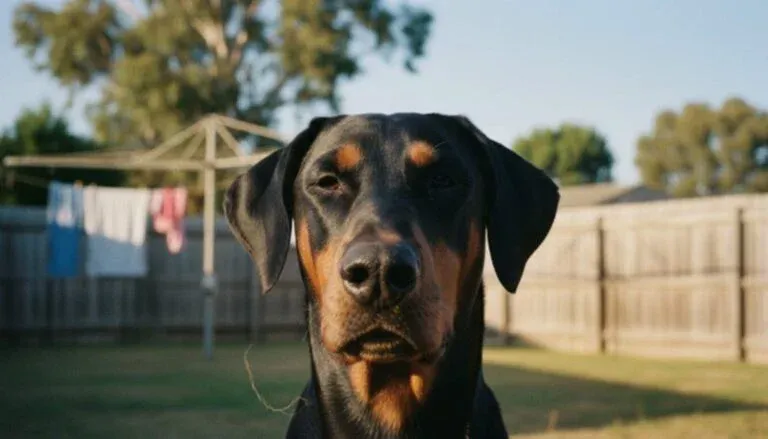
The Dobermann is one of those breeds that commands a room before it even enters. Sleek, muscular, alert — they look like they were designed in a wind tunnel. And in a sense, they were: the breed was engineered from the ground up to be the perfect personal protection dog. That engineering produced something extraordinary, but it also produced a dog that is genuinely not suited to casual ownership.
Dobermanns are intensely bonded to their people, whip-smart, and physically powerful. They’re also carrying one of the most serious genetic health burdens of any breed on earth: dilated cardiomyopathy (DCM), a heart disease that affects an estimated 58% of the breed. That number isn’t a typo. More than half of all Dobermanns will develop a heart condition that can cause sudden death with zero warning.
This guide doesn’t shy away from the hard truths. You’ll get real AUD pricing, verified health data, honest temperament information and a clear picture of what Dobermann ownership actually looks like in Australia — where ear cropping and tail docking are illegal, and a natural Dobermann looks quite different from the cropped-ear image most people carry in their heads.
What You’ll Learn
- Breed traits & temperament
- Health concerns to know
- True cost in Australia
- Training & exercise needs
- Is this breed right for you?
Quick Facts at a Glance
| Trait | Detail |
|---|---|
| Breed Group | Utility (Working) |
| Size | Large | 30–45 kg | 63–72 cm at shoulder |
| Coat | Short, smooth, close-lying — minimal grooming required |
| Colours | Black & tan, brown (chocolate) & tan, blue & tan, fawn (Isabella) & tan |
| Lifespan | 9–12 years (average closer to 10) |
| Temperament | Loyal, intelligent, alert, energetic, protective, sensitive |
| Exercise Needs | Very high — minimum 1–2 hours vigorous daily activity |
| Shedding | Low–moderate — short coat, year-round light shedding |
| Good With Kids | Yes, when raised together — but supervision essential due to size |
| Apartment Friendly | Not ideal — needs space, a yard, and significant daily exercise |
| Price (AUD) | $1,500–$3,500 (registered breeder) | $300–$800 (rescue) |
| Critical Health Note | 58% prevalence of DCM (dilated cardiomyopathy) — annual cardiac screening is essential |
History & Origins
The Dobermann is one of the few breeds with a known, documented creator. In the 1880s, a German tax collector named Karl Friedrich Louis Dobermann needed a dog that could protect him during his rounds through dangerous neighbourhoods. He also ran the local dog pound, which gave him access to a variety of breeds. Through selective crossbreeding — likely involving the Rottweiler, German Pinscher, Weimaraner, Greyhound, and others — he produced a medium-to-large dog that was fast, fearless, loyal and intelligent.
After Dobermann’s death in 1894, the breed was refined by Otto Goeller and others into the sleek, athletic dog we know today. The breed was officially recognised in Germany and quickly spread across Europe. During both World Wars, Dobermanns served as military dogs, scouts, messengers and sentries. In the Pacific Theatre of World War II, the US Marine Corps used Dobermanns extensively, earning them the nickname “Devil Dogs.”
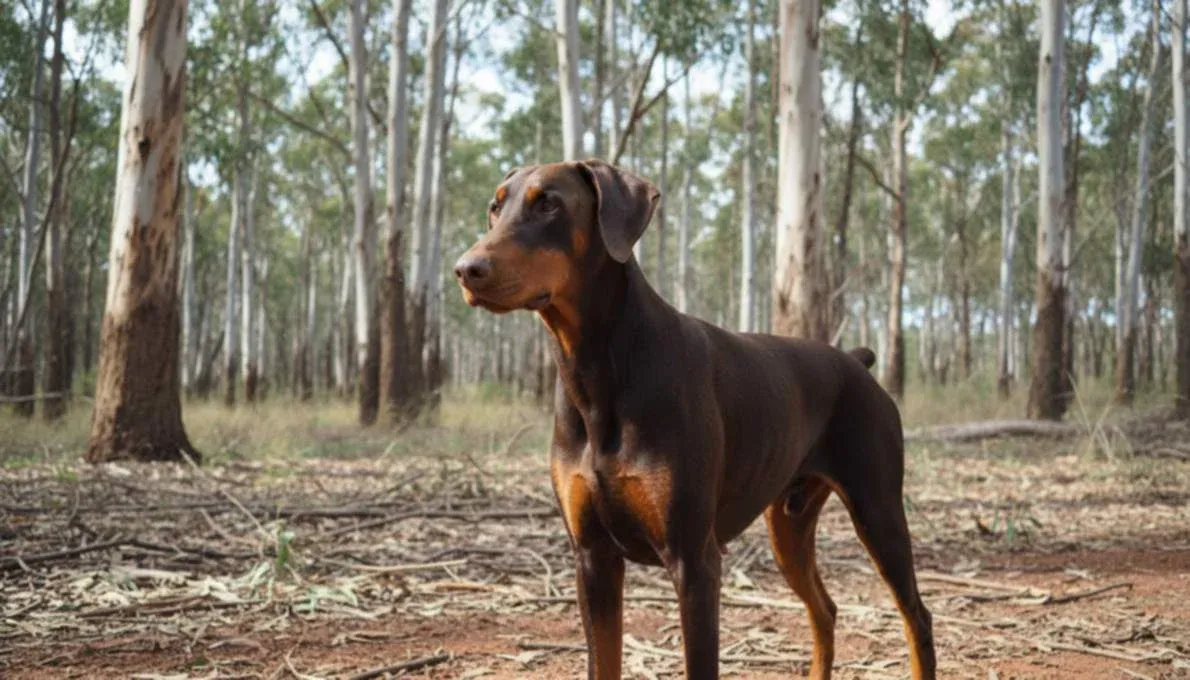
The breed arrived in Australia in the mid-20th century. In Australia, the breed is correctly spelled “Dobermann” (with two n’s), following the FCI and ANKC standard, rather than the American “Doberman Pinscher.” Importantly, ear cropping and tail docking are illegal in all Australian states and territories, meaning Australian Dobermanns have their natural floppy ears and long tails — a look quite different from the cropped silhouette most people associate with the breed.
Temperament & Personality
The Dobermann temperament is intense. There’s no gentler way to put it. These dogs are deeply loyal, highly intelligent, and emotionally attuned to their owners to a degree that can surprise even experienced dog people. They’re often called “velcro dogs” because they want to be with you — in the same room, on the same couch, ideally touching you — at all times.
First-time Dobermann owners consistently report two surprises: how sensitive they are, and how much exercise they actually need. Despite the tough exterior, Dobermanns are emotionally soft. They pick up on household stress, respond badly to raised voices, and can develop anxiety if left alone for long periods. A Dobermann who feels neglected or under-stimulated will become destructive, vocal, or withdrawn.
On the flip side, a well-exercised Dobermann with a confident owner is one of the most rewarding breeds alive. They’re incredibly trainable, excel in obedience, agility, tracking and protection sports, and will learn complex tasks with enthusiasm. Many owners describe them as having an almost intuitive ability to read human emotions and intentions.
The Dobermann vs Rottweiler comparison comes up constantly, and both breeds carry unfair reputations for aggression. A well-bred, well-socialised Dobermann is not aggressive. It is alert, protective and discerning — which means it will position itself between you and a perceived threat, but it won’t attack without provocation. Problems arise from poor breeding, inadequate socialisation, and owners who encourage guarding behaviour without professional training.
That said, Dobermanns are naturally protective. They were literally designed to be. This trait needs to be managed with early socialisation, consistent training, and exposure to a wide variety of people and situations from puppyhood. An under-socialised Dobermann is a liability.
Health & Genetic Conditions
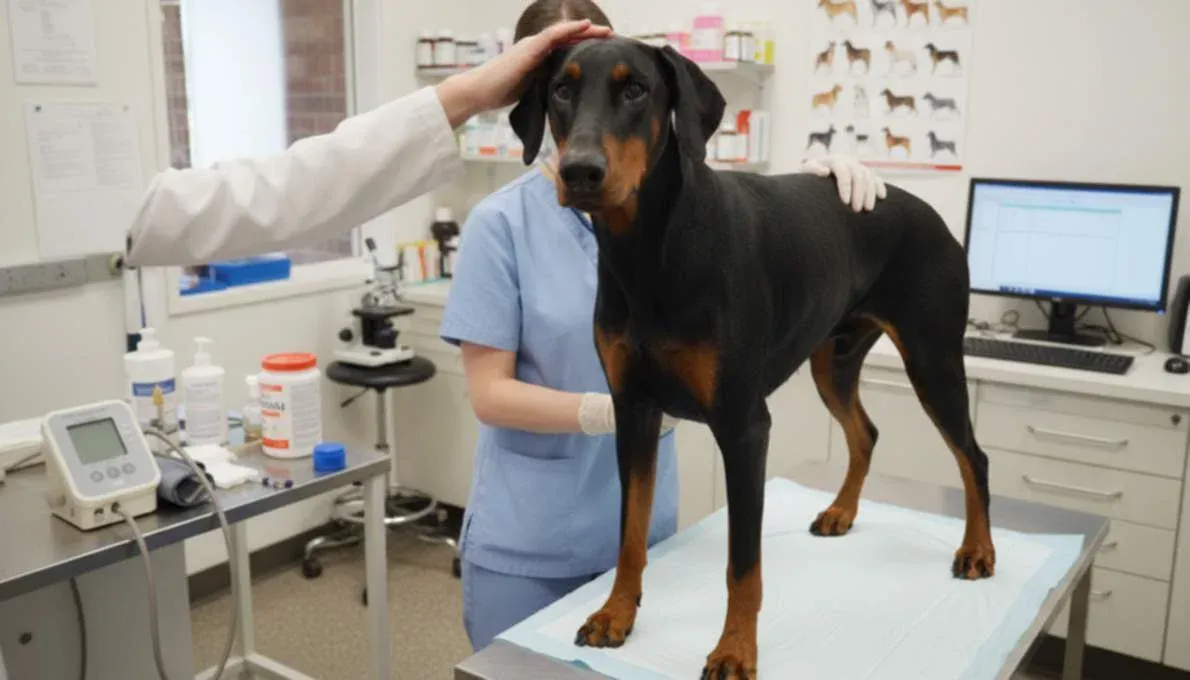
This is where Dobermann ownership gets sobering. The breed carries one of the heaviest genetic health burdens of any dog, and ignoring it doesn’t make it go away. If you’re considering a Dobermann, you need to understand DCM in particular — and you need to choose a breeder who takes cardiac screening seriously.
DCM is the single biggest health threat to the Dobermann breed. Studies estimate that 58% of Dobermanns in Europe carry the disease, and the numbers in Australia and the US are comparable. DCM causes the heart muscle to weaken and enlarge, eventually leading to congestive heart failure or sudden cardiac death. About 25–30% of affected dogs die suddenly with no prior warning signs.
The disease typically appears between ages 4 and 10, meaning dogs may have already been bred before it’s detected. Two genetic mutations (PDK4 and DCM2) have been identified, but having these mutations doesn’t guarantee disease, and dogs without them can still develop DCM. The genetics are complex and not yet fully understood.
Screening protocol: Annual echocardiograms (heart ultrasound) + 24-hour Holter monitor testing, starting from age 2. Dogs in breeding programs should be tested every 6 months. DNA tests for PDK4 and DCM2 mutations are available via cheek swab.
Treatment costs (AUD): Echocardiogram: $400–$800 per session. Holter monitor: $300–$600 per session. Ongoing cardiac medication (pimobendan, diuretics, anti-arrhythmics): $100–$400/month. Emergency cardiac hospitalisation: $3,000–$10,000+. Average survival after congestive heart failure diagnosis: 6–24 months.
VWD is an inherited bleeding disorder common in Dobermanns. Affected dogs have reduced ability to clot blood, which can cause excessive bleeding during surgery, injury or even heat cycles. A definitive DNA test is available (cheek swab), and responsible breeders test all breeding stock. Most affected Dobermanns live normal lives — the condition mainly becomes relevant during surgical procedures.
DNA test cost: $60–$120 AUD. Precautions during surgery: minimal additional cost if vet is informed in advance.
Other conditions
| Condition | What It Is | Typical Cost (AUD) |
|---|---|---|
| Gastric Dilatation-Volvulus (Bloat/GDV) | Stomach twists; life-threatening emergency. Deep-chested breeds at highest risk. | $3,000–$8,000 emergency surgery |
| Wobblers (CVI) | Cervical vertebral instability; causes uncoordinated gait, neck pain | $3,000–$10,000+ surgery |
| Hypothyroidism | Underactive thyroid; weight gain, lethargy, poor coat | $300–$600/yr medication |
| Chronic Active Hepatitis | Progressive liver disease; more common in females. Onset 4–6 years. | $500–$3,000+ management |
| Hip Dysplasia | Abnormal hip joint; pain, lameness, arthritis. Less common than in some large breeds. | $1,500–$6,000+ surgery |
| Colour Dilution Alopecia | Hair loss and skin issues in blue and fawn Dobermanns due to dilute gene | $300–$1,500/yr management |
Important: Prophylactic gastropexy (surgically tacking the stomach to prevent bloat/GDV) can be done at the time of desexing for $300–$800 additional. Many Dobermann owners and vets consider this a worthwhile preventive measure for this deep-chested breed.
Lifespan & Longevity
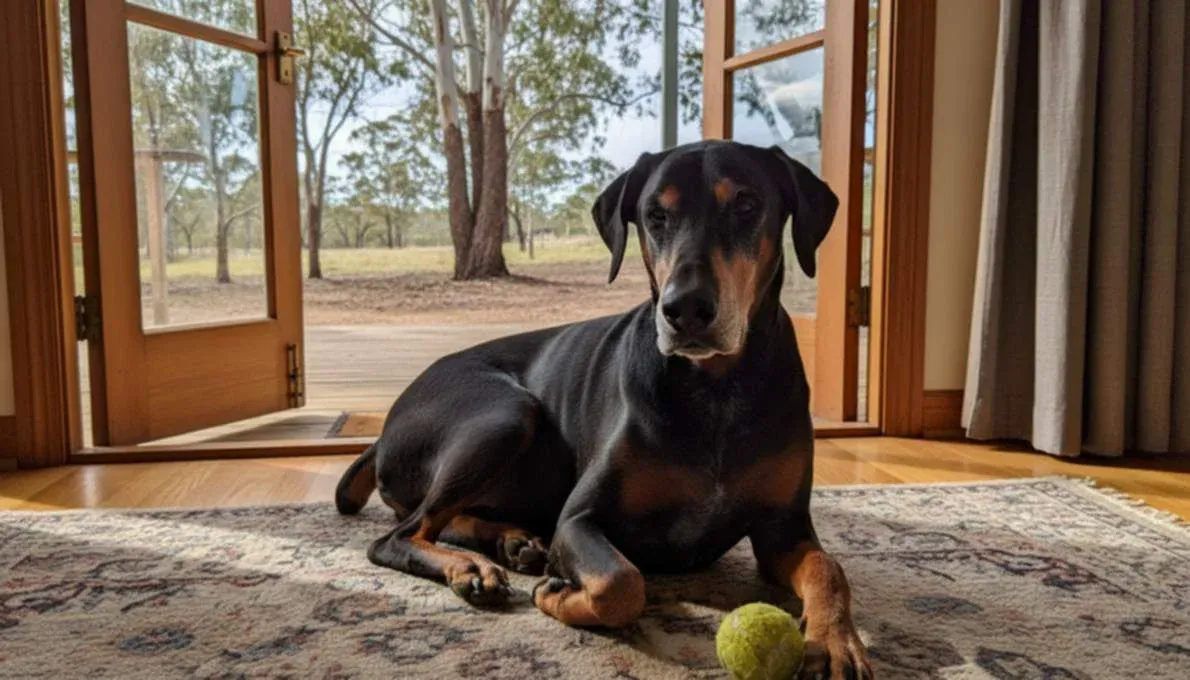
The average Dobermann lifespan is 9 to 12 years, with many sources placing the realistic average closer to 10. DCM is the leading cause of premature death in the breed. Dogs from cardiac-screened lines, kept lean and active, have the best chance of reaching 11–12.
Age-specific advice
| Life Stage | Key Focus Areas |
|---|---|
| Puppy (0–1 yr) | Socialisation (critical), vaccinations, pet insurance, basic obedience, controlled exercise (protect growing joints), DNA testing for vWD |
| Adult (1–7 yrs) | Annual cardiac screening (echo + Holter from age 2), vigorous daily exercise, ongoing training, weight management, annual vet checks |
| Senior (7+ yrs) | Biannual cardiac screening, joint support, thyroid monitoring, adjusted exercise, senior bloodwork panels, liver function checks |
The single most impactful thing you can do for your Dobermann’s longevity is annual cardiac screening. Early detection of DCM allows medication to begin sooner, which can extend quality life by months to years.
Grooming & Care
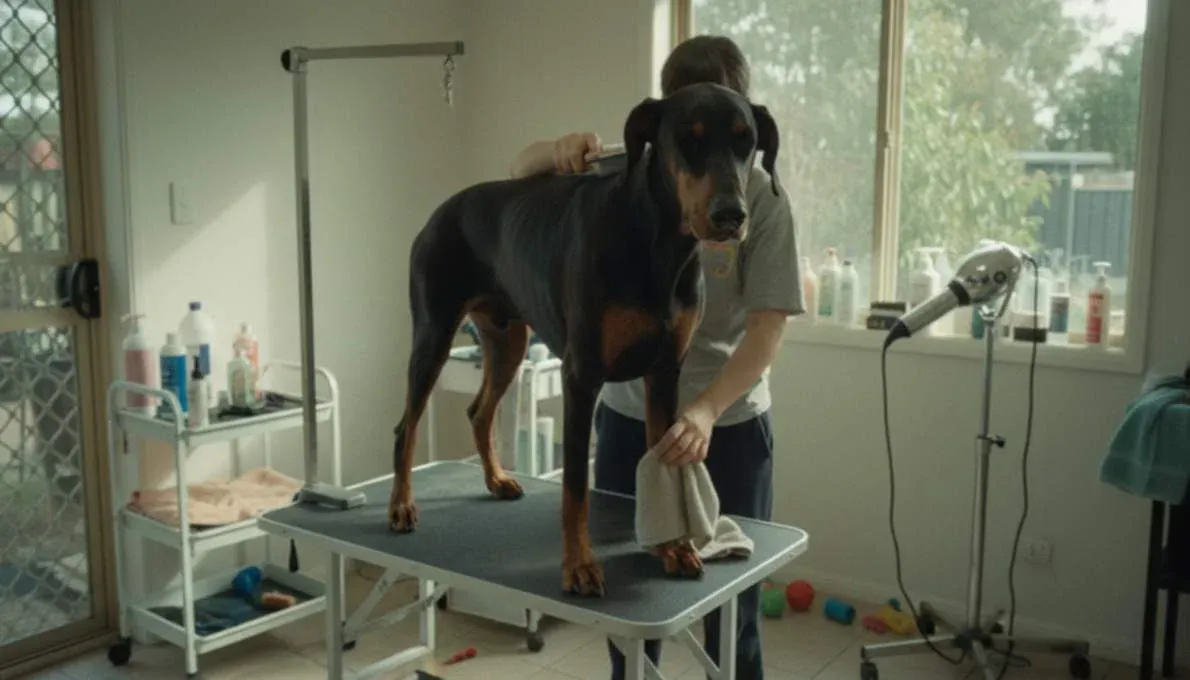
Grooming is one area where Dobermann ownership is genuinely easy. Their short, smooth coat requires minimal maintenance compared to most breeds. However, there are a few Dobermann-specific considerations.
| Grooming Task | Frequency & Notes |
|---|---|
| Brushing | Once a week with a rubber curry brush or grooming mitt — removes loose hair and distributes oils |
| Bathing | Every 6–8 weeks or as needed. Their coat is naturally low-odour. |
| Nail Trimming | Every 2–3 weeks — dark nails make this tricky; use a nail grinder for precision |
| Dental Care | Daily brushing ideal; dental chews as supplement |
| Ear Cleaning | Weekly — natural (uncropped) ears fold over and can trap moisture |
| Shedding | Low–moderate year-round. Short hairs can embed in furniture. |
Note on blue and fawn Dobermanns: These dilute colour variants are visually striking but carry a higher risk of colour dilution alopecia (CDA) — a condition causing hair loss and chronic skin issues. Blue and fawn Dobermanns may need medicated shampoos, moisturisers and ongoing dermatological care. This is a significant factor to consider when choosing a puppy colour.
Exercise Needs
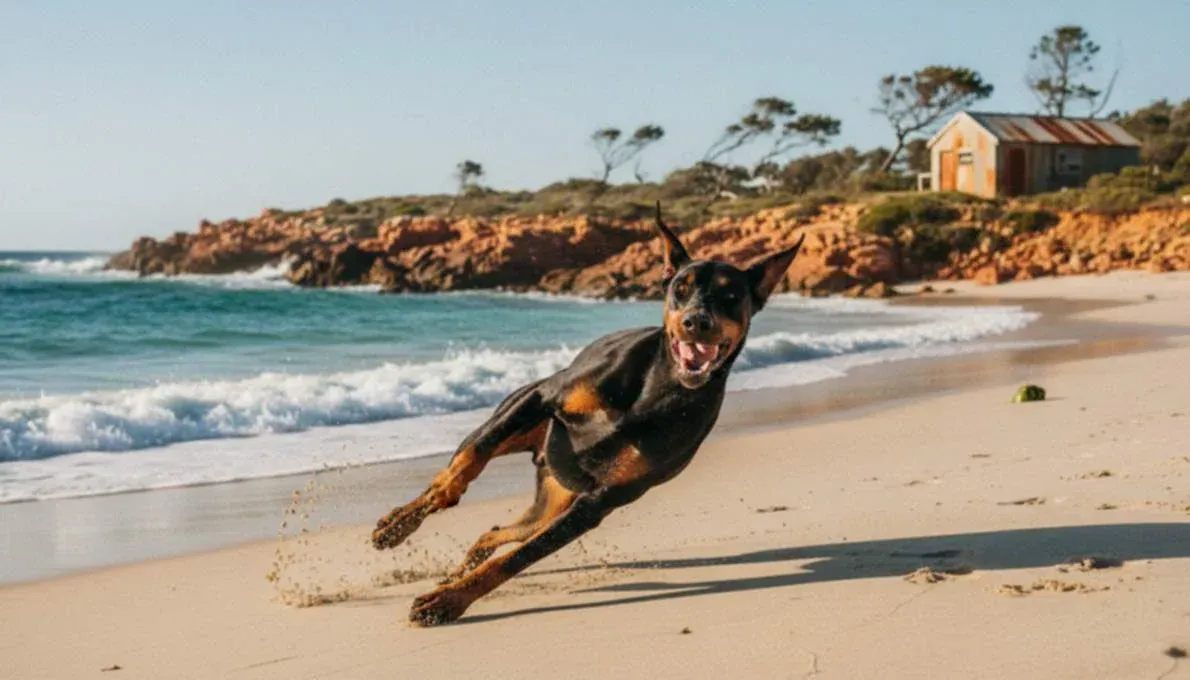
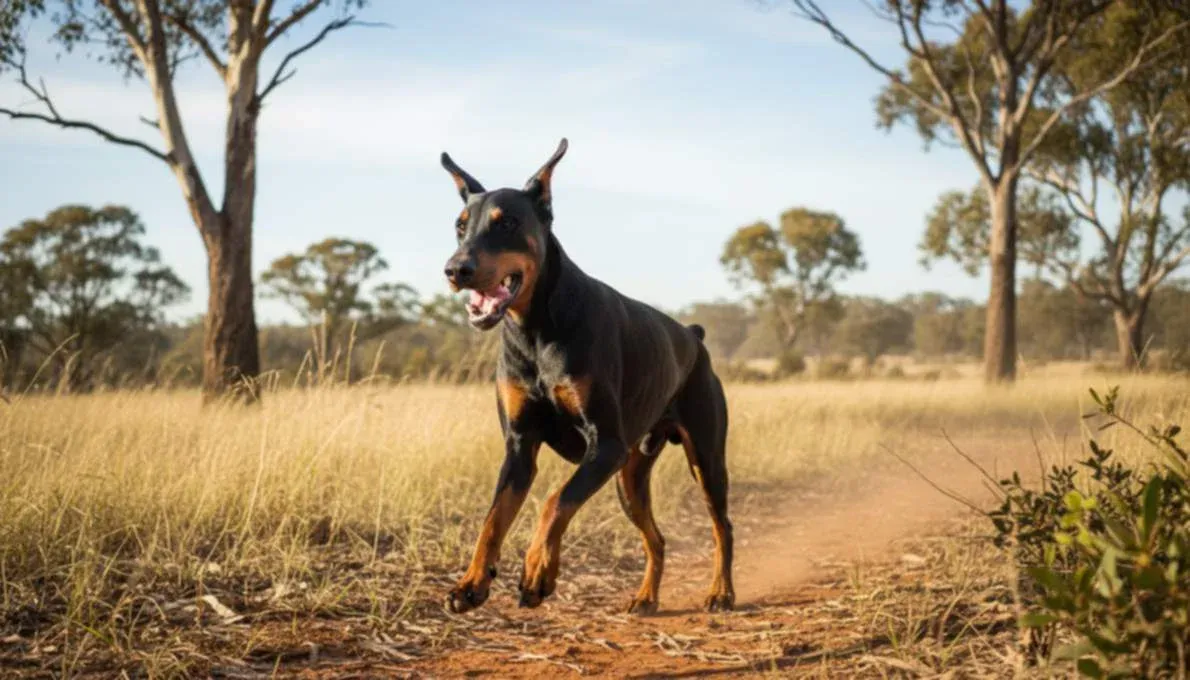
Dobermanns are high-performance athletes. They were bred to run, guard and work all day, and that drive hasn’t gone anywhere. A healthy adult Dobermann needs a minimum of 1 to 2 hours of vigorous exercise daily. A 15-minute stroll around the block is not exercise for this breed — it’s a warm-up.
What works for Dobermanns
- Long runs or jogs (they’re exceptional running partners once fully grown)
- Structured fetch, frisbee or flirt pole sessions
- Obedience training, agility, tracking or protection sport (Schutzhund/IPO)
- Swimming — excellent low-impact exercise, especially for older dogs
- Off-lead running in secure, fenced areas
Australian climate considerations
Dobermanns have virtually no undercoat and minimal body fat, which makes them more vulnerable to temperature extremes than their muscular appearance suggests. In Australian summers, exercise early morning or late evening only. In winter, many Dobermanns genuinely benefit from a coat or jumper in cooler climates — they feel the cold more than most large breeds.
An under-exercised Dobermann is a destructive, anxious Dobermann. If you work full-time and can’t provide adequate daily exercise, this breed will suffer — and so will your furniture.
Training Guide
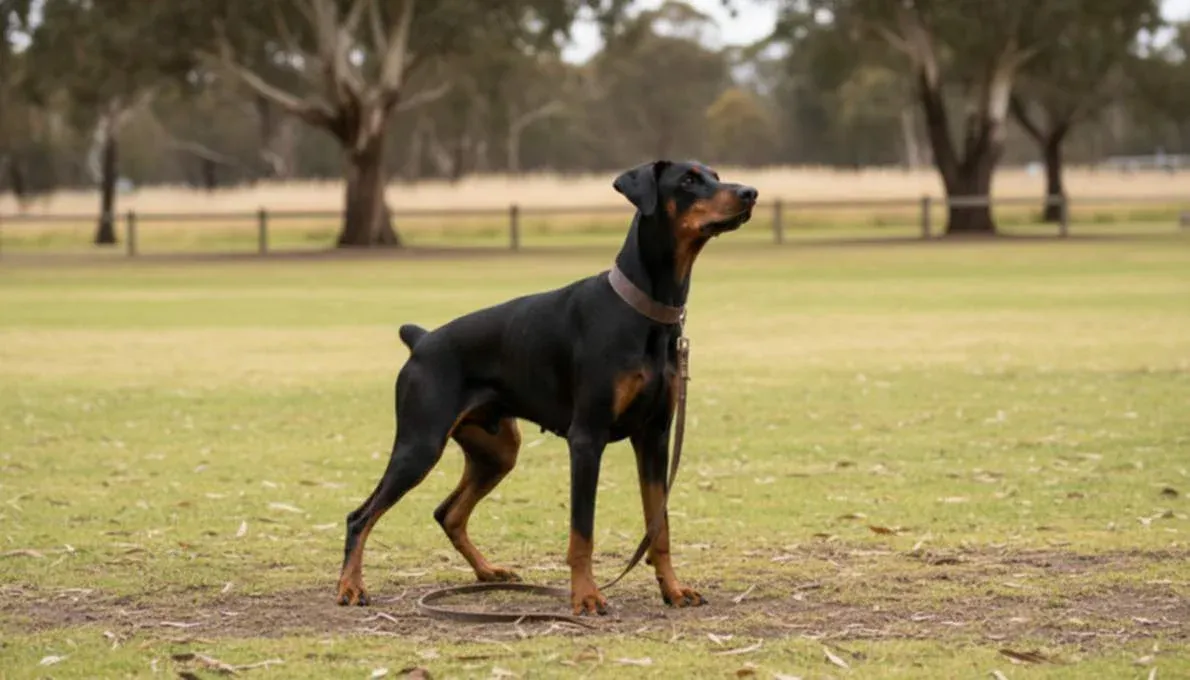
Dobermanns are one of the most trainable breeds in existence. They consistently rank in the top 5 for canine intelligence, and they actively enjoy working with their handler. Positive reinforcement methods are essential — Dobermanns are sensitive enough that harsh corrections can create fear-based reactivity, which is the opposite of what you want in a 40 kg protection-bred dog.
Age-based training milestones
| Age | Focus | Honest Difficulty |
|---|---|---|
| 8–12 weeks | Socialisation (people, dogs, sounds, environments), crate training, name recognition, handling | Easy — they’re eager to engage |
| 3–6 months | Basic obedience (sit, down, stay, recall), lead walking, bite inhibition, impulse control | Easy–Moderate — fast learners |
| 6–18 months | Advanced obedience, reliable recall, neutrality around strangers and dogs, off-lead work | Moderate — adolescent testing phase |
| 18 months+ | Sport training (agility, tracking, protection), advanced off-lead reliability, public manners | Easy–Moderate — maturity + intelligence = cooperative |
The critical socialisation window (3–16 weeks) is arguably more important for Dobermanns than for most breeds. An unsocialised Dobermann is a liability — a well-socialised one is a model citizen. Invest in puppy school ($150–$400 AUD), followed by intermediate obedience or a breed-specific trainer who understands working breeds.
If you’re considering protection training, only work with certified professionals. Untrained “protection” work creates dangerous dogs. Properly trained protection dogs are among the most controlled, obedient dogs you’ll ever meet.
Cost of Ownership (AUD)
Dobermann ownership costs more than average for a large breed, primarily because of the cardiac screening requirements. Skipping annual heart testing to save money is a false economy that can cost your dog’s life.
Upfront costs
| Item | Cost (AUD) |
|---|---|
| Registered breeder (cardiac-screened parents, DNA tested) | $1,500–$3,500 |
| Rescue / adoption | $300–$800 |
| Initial vet setup (vaccines, microchip, desexing) | $500–$1,500 |
| Prophylactic gastropexy (bloat prevention, optional) | $300–$800 (at time of desexing) |
| Supplies (large crate, bed, bowls, lead, harness) | $400–$800 |
Ongoing annual costs
| Item | Annual Cost (AUD) |
|---|---|
| Quality large-breed dog food | $1,200–$2,000 |
| Annual cardiac screening (echo + Holter) | $700–$1,400 |
| Annual vet checkup + vaccinations | $200–$400 |
| Worming, flea & tick prevention | $200–$600 |
| Pet insurance | $600–$1,500 |
| Training / sport club membership | $300–$800 |
| Toys, treats & replacement supplies | $200–$500 |
Estimated lifetime cost: $35,000–$65,000+ AUD over 9–12 years. The annual cardiac screening alone adds $7,000–$14,000 over a lifetime compared to breeds without this requirement. A single emergency cardiac hospitalisation can add $5,000–$10,000+.
Where to buy or adopt
Registered breeders: Contact the Dobermann Club of your state (Dobermann Club of NSW, Dobermann Club of Victoria, Dobermann Club of WA) or search the Dogs Australia (ANKC) breeder directory. Always confirm that both parents have current cardiac screening (echo + Holter) and vWD DNA testing.
Rescue: Dobermann rescue organisations exist in most states, and breed-specific groups can be found through PetRescue (petrescue.com.au). Dobermanns do appear in rescue more frequently than rare breeds, often due to owners underestimating exercise and training demands.
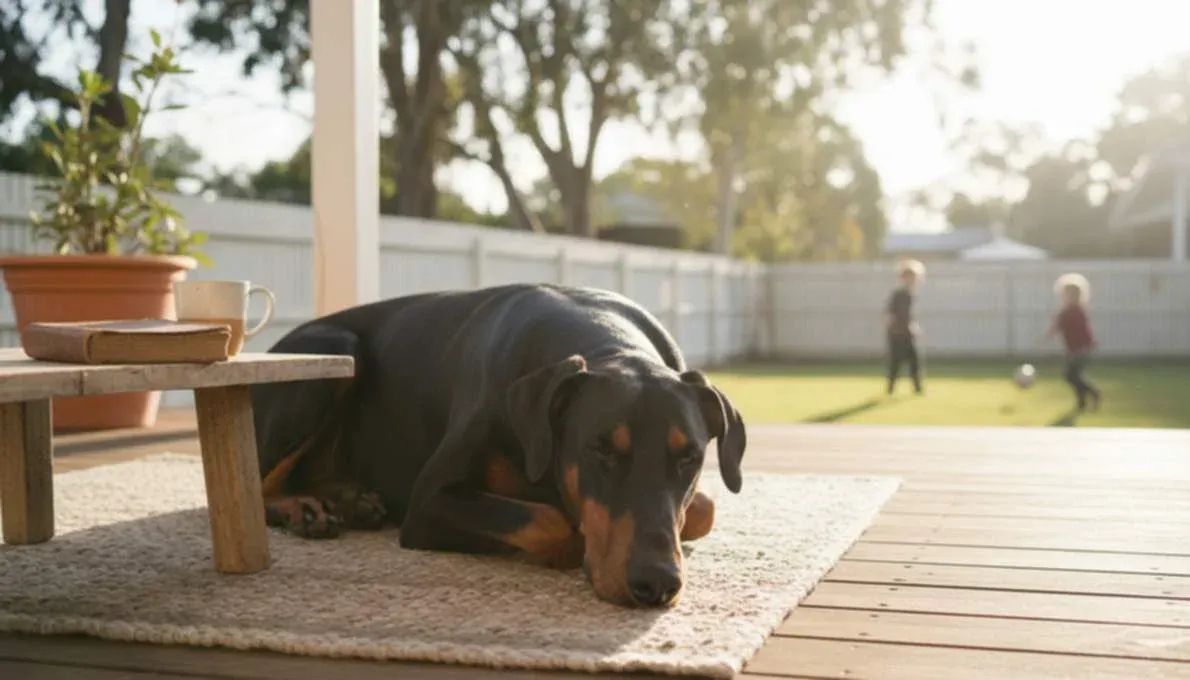
Is the Dobermann Right for You?
- You’re an experienced dog owner who understands large, working breeds
- You have 1–2 hours daily for vigorous exercise — rain or shine
- You can commit to annual cardiac screening ($700–$1,400/year)
- You want a deeply loyal, intelligent companion who thrives on training
- You have a house with a secure yard and aren’t away from home all day
- You’re a first-time dog owner (unless you commit to professional training support)
- You work long hours and the dog will be alone most of the day
- You’re not financially prepared for cardiac screening and potential DCM treatment
- You want a low-energy dog that’s happy with a short daily walk
- You’re uncomfortable with a dog that is naturally alert and protective
If you love the Dobermann’s intelligence and loyalty but are concerned about DCM, consider comparing them to a German Shorthaired Pointer (athletic and trainable, fewer cardiac issues), a Belgian Malinois (similar drive and intelligence, though even more intense), or a Standard Poodle (highly intelligent, athletic, with a better health profile).
The Dobermann is a remarkable dog for the right person. It is not a casual pet. It’s a partnership that demands your time, attention, training commitment and financial preparedness.
- Personality: Fiercely loyal, intensely intelligent, emotionally sensitive. One of the most rewarding breeds to train and live with — if you meet their needs.
- Health reality: DCM affects an estimated 58% of the breed. Annual cardiac screening is non-negotiable. Von Willebrand’s disease and bloat are additional risks.
- Cost reality: $35,000–$65,000+ AUD over a lifetime. The cardiac screening requirement alone puts this breed in a higher cost bracket than most large dogs.
If you go in with your eyes open — with the right breeder, the right screening, enough exercise and the right training — a Dobermann will give you a level of loyalty and companionship that very few breeds can match. Just don’t go in blind.
Frequently Asked Questions
Is it Dobermann or Doberman?
Both are correct depending on context. In Australia, the UK and FCI countries, the breed is officially “Dobermann” (with two n’s), named after the breed’s creator Karl Friedrich Louis Dobermann. In the US, it’s registered as the “Doberman Pinscher.” The ANKC uses “Dobermann.”
Are Dobermanns aggressive?
Not inherently. Dobermanns are alert, protective and discerning, but well-bred, well-socialised Dobermanns are not aggressive. Aggression issues almost always stem from poor breeding, inadequate socialisation, or owners who encourage guarding behaviour without professional training.
How long do Dobermanns live?
The average Dobermann lifespan is 9–12 years, with 10 being a realistic expectation. DCM is the leading cause of premature death. Dogs from cardiac-screened lines with proactive health management have the best chance of reaching 11–12.
What is DCM in Dobermanns?
Dilated cardiomyopathy (DCM) is a genetic heart disease that weakens the heart muscle, eventually causing heart failure or sudden death. An estimated 58% of Dobermanns are affected. Annual screening with echocardiograms and Holter monitors from age 2 is the only way to catch it early.
What’s the difference between a Dobermann and a Rottweiler?
Both are German working breeds, but they’re quite different. Dobermanns are leaner, faster, more sensitive and higher-energy. Rottweilers are stockier, calmer, and generally more laid-back. Dobermanns need more exercise and are more prone to DCM, while Rottweilers are more prone to joint issues and certain cancers.
How much does a Dobermann cost in Australia?
From a registered breeder with cardiac screening and DNA testing, expect $1,500–$3,500 AUD. Rescue adoption fees are typically $300–$800. Budget an additional $700–$1,400 per year for mandatory cardiac screening.
What are blue and fawn Dobermanns?
Blue (grey) and fawn (Isabella) Dobermanns carry a dilute colour gene. While striking, they’re more prone to colour dilution alopecia (CDA), a skin condition causing hair loss and chronic dermatological issues. Many experienced breeders advise against specifically seeking dilute colours due to this health risk.
Can Dobermanns be left alone?
Not for extended periods. Dobermanns are deeply bonded to their families and prone to separation anxiety. If you work full-time, you’ll need a dog walker, doggy daycare, or a work-from-home arrangement. An anxious Dobermann left alone will destroy your home.
- Australian National Kennel Council (ANKC) — Breed Standards: https://dogsaustralia.org.au/
- Dobermann Club of NSW — Health Issues: https://www.dobermannclubnsw.com.au/health-issues
- Von Roth Dobermanns — Health Issues of the Dobermann: https://www.vonroth.com.au/health-issues.html
- Universities Federation for Animal Welfare (UFAW) — Doberman DCM: https://www.ufaw.org.uk/dogs/doberman-pinscher-dilated-cardiomyopathy
- VCA Animal Hospitals — Dilated Cardiomyopathy in Dogs: https://vcahospitals.com/know-your-pet/dilated-cardiomyopathy-dcm-in-dogs–indepth
- Optimal Selection — DCM in Dobermans: https://optimal-selection.com/pages/dcm-in-dobermans
- Doberman Diversity Project — Diseases: https://www.dobermandiversityproject.org/diseases.html
- PetPost Australia — Dobermann Breed Guide: https://www.petpost.com.au/breed/dog-breeds/dobermann
- Purina Pro Club — DCM Research in Doberman Pinschers: https://www.purinaproclub.com/resources/dog-articles/health/alternative-treatments-studied-for-dobermans-with-dilated-cardiomyopathy