
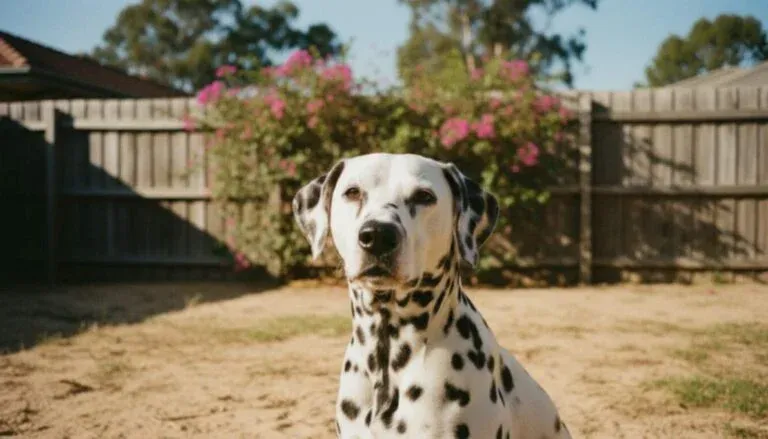
The Dalmatian is the dog breed equivalent of buying a sports car before checking the fuel costs. Gorgeous? Absolutely. Head-turning? Every single walk. Easy to live with? Not even close.
These spotted athletes were bred to run alongside horse-drawn carriages for hours, and that energy hasn’t gone anywhere. A Dalmatian without enough exercise is a Dalmatian that’s eating your couch, digging up your lawn, and making neighbours question your life choices. They’re smart, strong-willed, and more sensitive than their bold appearance suggests.
But here’s what most breed guides skip: Dalmatians come with genuinely unique health challenges that no other breed shares. Every single Dalmatian has a metabolic defect that makes them prone to urinary stones. Up to 30% are born deaf or partially deaf. And their energy demands mean they’re frequently surrendered by owners who underestimated the commitment. This guide covers all of it — honest temperament truths, real AUD pricing, verified health data, and zero Disney fantasy.
Quick Facts at a Glance
| Trait | Detail |
|---|---|
| Breed Group | Non-Sporting (Utility) |
| Size | Medium–Large | 20–32 kg | 48–61 cm at shoulder |
| Coat | Short, dense, sleek — sheds heavily year-round |
| Colours | White with black spots or white with liver (brown) spots |
| Lifespan | 10–13 years |
| Temperament | Energetic, loyal, intelligent, sensitive, can be aloof with strangers |
| Exercise Needs | Very high — minimum 1–2 hours daily of vigorous activity |
| Shedding | Heavy — white hairs on everything, year-round |
| Good With Kids | Older kids, yes. Toddlers — too boisterous and excitable |
| Apartment Friendly | No — needs a house with a yard and active owners |
| Price (AUD) | $3,000–$5,500 (registered breeder) | $300–$800 (rescue) |
| Unique Health Note | 100% of Dalmatians carry a gene causing high uric acid — requires a low-purine diet |
History & Origins
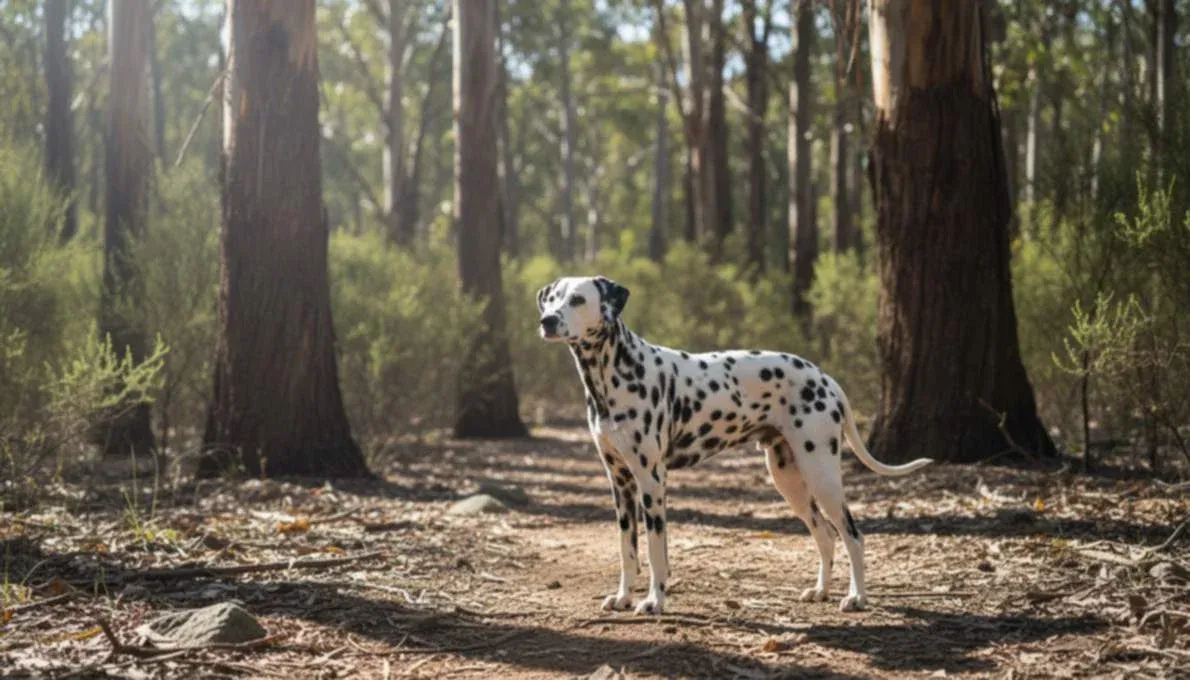
Despite being named after Dalmatia (a coastal region in modern-day Croatia), the Dalmatian’s true origin is debated. Spotted dogs resembling Dalmatians appear in Egyptian tomb paintings, Italian frescoes from the 1300s, and English literature from the 1700s. What’s not debated is what they were bred to do.
Dalmatians were coach dogs — bred to trot alongside horse-drawn carriages for miles, guarding the horses and cargo from thieves and other animals. This gave them their legendary stamina, their affinity for horses, and their instinct to guard. When horse-drawn fire engines became common in the 1800s, Dalmatians transitioned into fire station mascots, running ahead of the engines to clear the path — a role that cemented their iconic association with firefighting.
They arrived in Australia in the early colonial era and gained steady popularity through the 1900s. The release of Disney’s 101 Dalmatians in 1961 — and the live-action remake in 1996 — caused massive spikes in demand, followed by equally massive spikes in surrender rates as families discovered the breed wasn’t the gentle, low-maintenance companion the films portrayed.
Today, responsible breeders and Dalmatian rescue organisations work hard to ensure puppies go to homes that understand what they’re signing up for.
Temperament & Personality
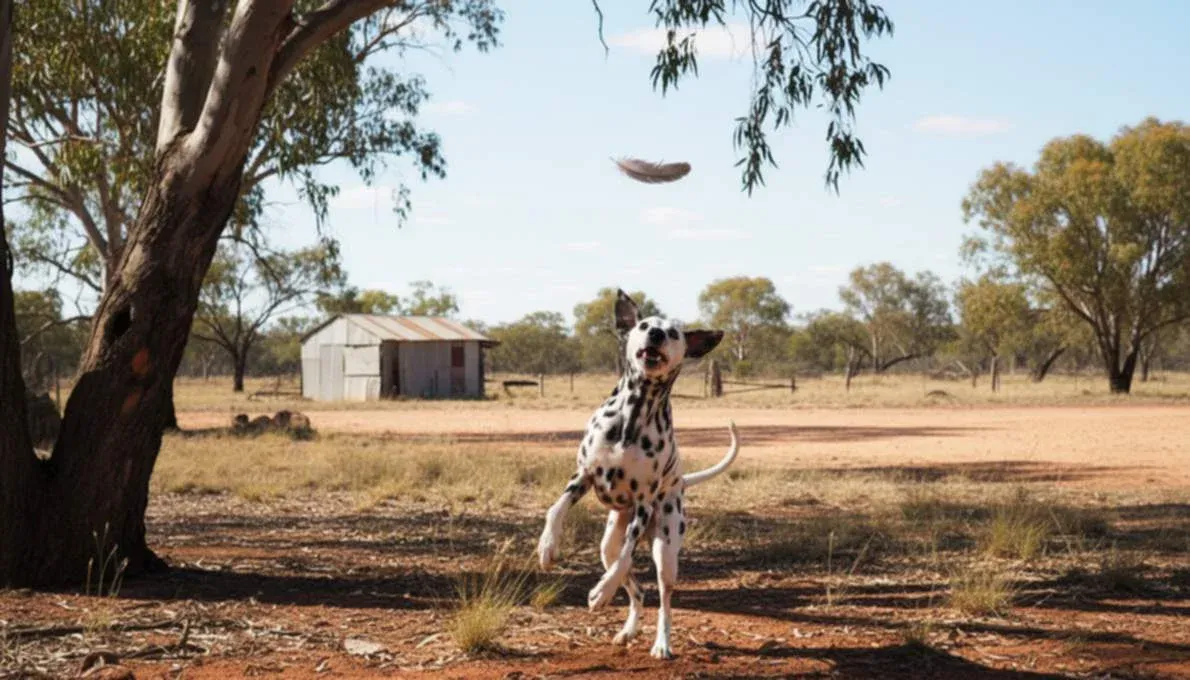
The Dalmatian temperament catches a lot of people off guard. These are not laid-back dogs. They’re athletic, intense, and incredibly bonded to their owners — but they can also be wary of strangers, reactive if under-socialised, and destructive if bored. The question “are Dalmatians aggressive?” comes up frequently, and the honest answer is: not inherently, but they can become reactive or nippy if they don’t get enough exercise, training and socialisation.
First-time Dalmatian owners consistently report three surprises: the shedding, the energy and the sensitivity. Dalmatians are emotionally tuned in to their household. They don’t respond well to harsh training, raised voices or chaotic environments. A stressed Dalmatian will shut down or act out — neither of which helps anyone.
On the flip side, a well-exercised Dalmatian who gets consistent, reward-based training is an absolute joy. They’re playful, goofy, endlessly affectionate with their family, and smart enough to learn complex commands. Many excel in agility, obedience and endurance sports.
Dalmatians can do well with other dogs, especially if raised together, but they have a high prey drive and may chase cats or smaller animals. With children, they’re generally enthusiastic and playful — sometimes too much so. A 25 kg Dalmatian zooming around a living room can easily knock over a toddler. They’re best matched with families whose kids are school-aged or older and can handle a boisterous, physical dog.
If you’ve read that Dalmatians are “mean” or “unpredictable,” that reputation almost always traces back to poorly bred, poorly socialised dogs from the post-101 Dalmatians puppy-mill era. A well-bred, well-raised Dalmatian from a responsible breeder is a loyal, stable companion.
Health & Genetic Conditions
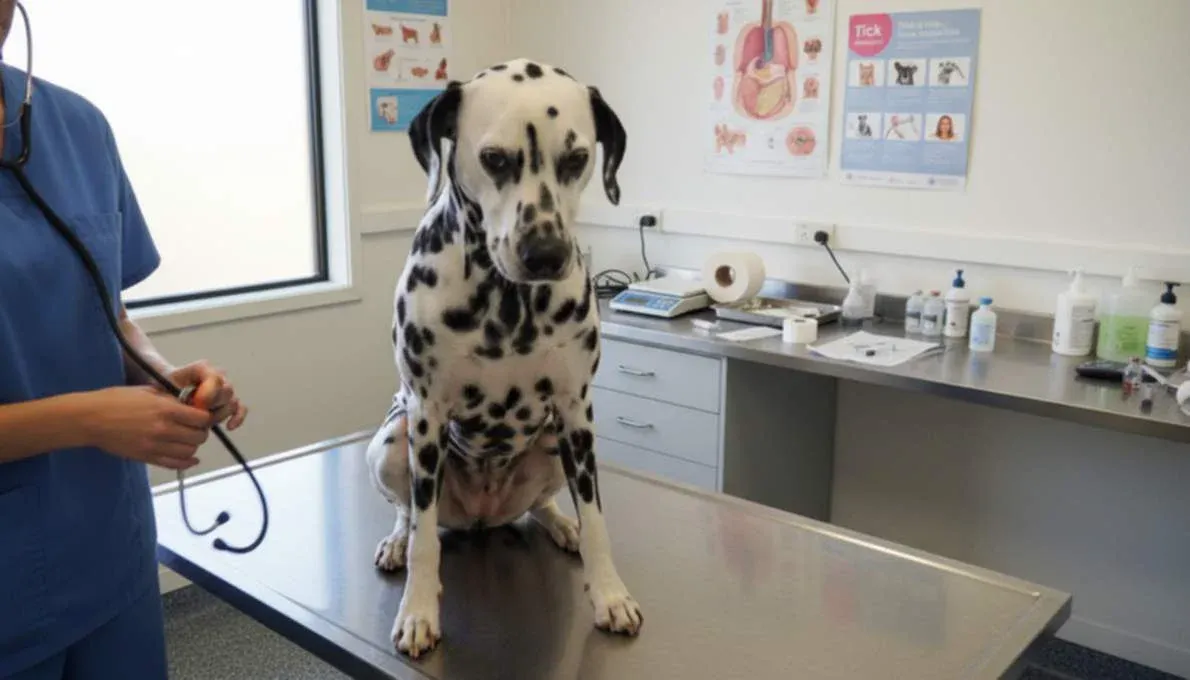
Dalmatians carry some of the most unique genetic health challenges of any breed. This isn’t about fear-mongering — it’s about making sure you know what to budget for, what to ask your breeder, and what to watch for throughout your dog’s life.
This is the most well-known Dalmatian health issue. Roughly 15–30% of Dalmatians are born deaf in one or both ears, with about 5% being completely deaf (bilateral deafness). The deafness is linked to the same gene that gives them their white coat and spots — the extreme piebald gene — which affects pigment-producing cells needed for inner ear development.
Blue-eyed Dalmatians are at higher risk. Dogs with a solid colour patch on their head (rather than spots only) have a lower risk, though patches are considered a fault in the show ring.
What to do: Insist on BAER (Brainstem Auditory Evoked Response) testing for any puppy you’re considering. Reputable breeders BAER-test entire litters at 6–8 weeks. Unilaterally deaf dogs (deaf in one ear) can live perfectly normal lives. Bilaterally deaf dogs need experienced owners and hand-signal training.
BAER test cost: $50–$100 per puppy (usually included by registered breeders).
This one is unique to the breed. Every single Dalmatian carries a mutation in the SLC2A9 gene that prevents them from converting uric acid to allantoin like other dogs. Instead, they excrete 10–20 times more uric acid in their urine than other breeds. This acid can crystallise and form urate bladder stones, which are painful and potentially life-threatening if they cause a urinary blockage.
Males are far more commonly affected than females (97% vs 3% for symptomatic stone formation), partly because of anatomical differences. Urinary blockage is a veterinary emergency that can kill within 24–48 hours without treatment.
Prevention: Feed a low-purine diet (avoid organ meats, sardines, mackerel, yeast), ensure constant access to fresh water, and provide at least 3 opportunities to urinate daily. Avoid early desexing in males as it can narrow the urethra.
Treatment costs (AUD): Bladder stone surgery: $2,000–$5,000. Emergency urinary unblocking: $1,500–$4,000. Ongoing prescription diet (Hill’s u/d or Royal Canin): $100–$180/month. Recurrence rate after surgical removal: 33–50%.
| Condition | What It Is | Typical Cost (AUD) |
|---|---|---|
| Hip Dysplasia | Abnormal hip joint development; causes pain and arthritis | $1,500–$6,000+ |
| Hypothyroidism | Underactive thyroid; weight gain, lethargy, poor coat quality | $300–$600/yr medication |
| Atopic Dermatitis | Skin allergies causing itching, redness, recurring infections | $500–$3,000/yr management |
| Epilepsy (Seizures) | Recurring seizures; multiple possible causes | $200–$800/yr medication |
| Iris Sphincter Dysplasia | Eye condition causing light sensitivity; breed-specific | Monitoring; $200–$500/yr |
| Copper Hepatopathy | Liver disorder; copper accumulates causing liver damage | $500–$3,000+ (varies) |
Tip: Get pet insurance before your Dalmatian puppy turns 1. The breed’s predisposition to urate stones, deafness and skin allergies means early cover is critical. Australian premiums typically run $35–$85/month.
Lifespan & Longevity
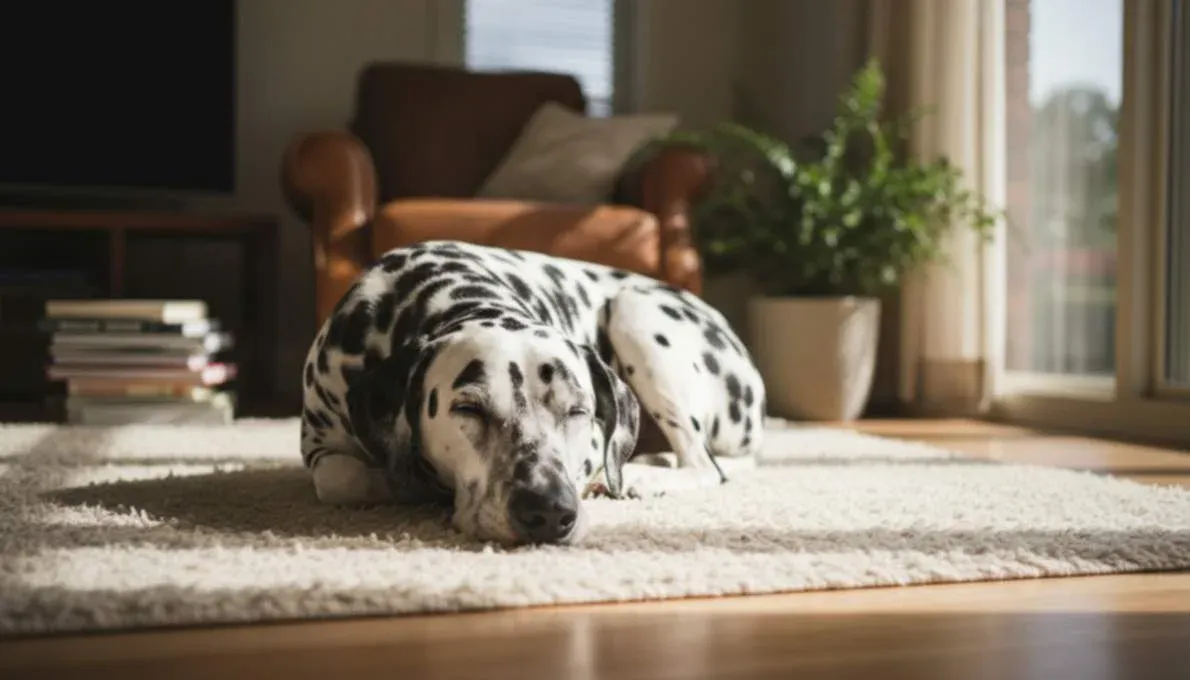
The average Dalmatian lifespan is 10 to 13 years, which is typical for a medium-to-large breed. Well-cared-for Dalmatians with good genetics and proactive health management regularly reach 12–14.
Age-specific advice
| Life Stage | Key Focus Areas |
|---|---|
| Puppy (0–1 yr) | BAER testing, vaccinations, socialisation (critical window), pet insurance, low-purine diet introduction, avoid early desexing in males |
| Adult (1–7 yrs) | Annual vet checks, urinalysis monitoring for urate crystals, weight management, ongoing socialisation, high-intensity exercise |
| Senior (7+ yrs) | Biannual vet visits, joint support, thyroid screening, adjusted exercise, kidney function monitoring |
The biggest factor in Dalmatian longevity is consistent exercise, appropriate diet (low-purine is non-negotiable), and regular urinalysis screening to catch urate crystal build-up before stones form. A lean Dalmatian with a managed diet and active lifestyle will almost always outlive an overweight, sedentary one.
Grooming & Care
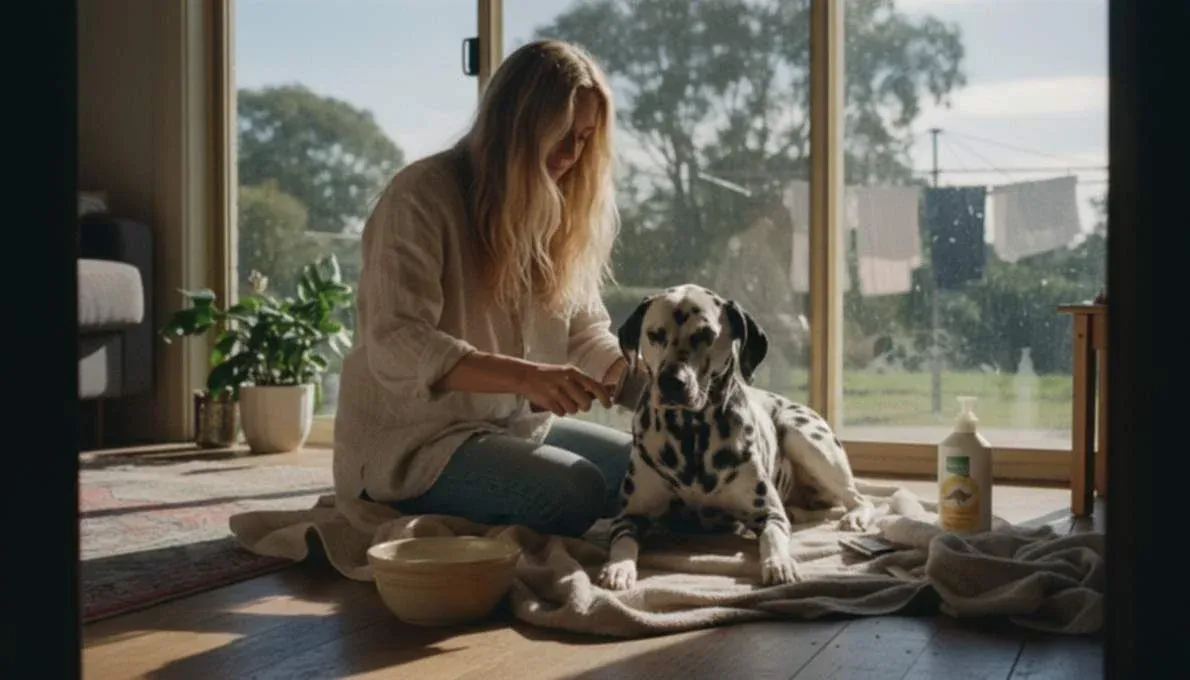
Dalmatians have a short, dense coat that looks low-maintenance but sheds relentlessly. Their white hairs are stiff, slightly barbed, and embed themselves into furniture, clothing and car seats with impressive tenacity. If you wear black, prepare to be covered in white hair. If you wear white, the spotted undercoat hairs will find you.
| Grooming Task | Frequency & Notes |
|---|---|
| Brushing | 3–4 times per week minimum with a rubber curry brush or bristle brush |
| Bathing | Every 6–8 weeks (their coat is naturally clean-smelling) |
| Nail Trimming | Every 2–3 weeks — active dogs may wear them down naturally |
| Dental Care | Daily brushing ideal; dental chews as supplement |
| Ear Cleaning | Weekly check and clean; watch for infection signs |
| Shedding Level | Very heavy year-round — invest in a quality lint roller and robot vacuum |
Note on long haired Dalmatians: A rare genetic variant produces Dalmatians with a longer, softer coat (sometimes called “LC” Dalmatians). They’re the same breed but require more brushing and are not recognised in the ANKC show ring. They shed less visibly than smooth-coated Dalmatians but still require regular grooming.
Exercise Needs
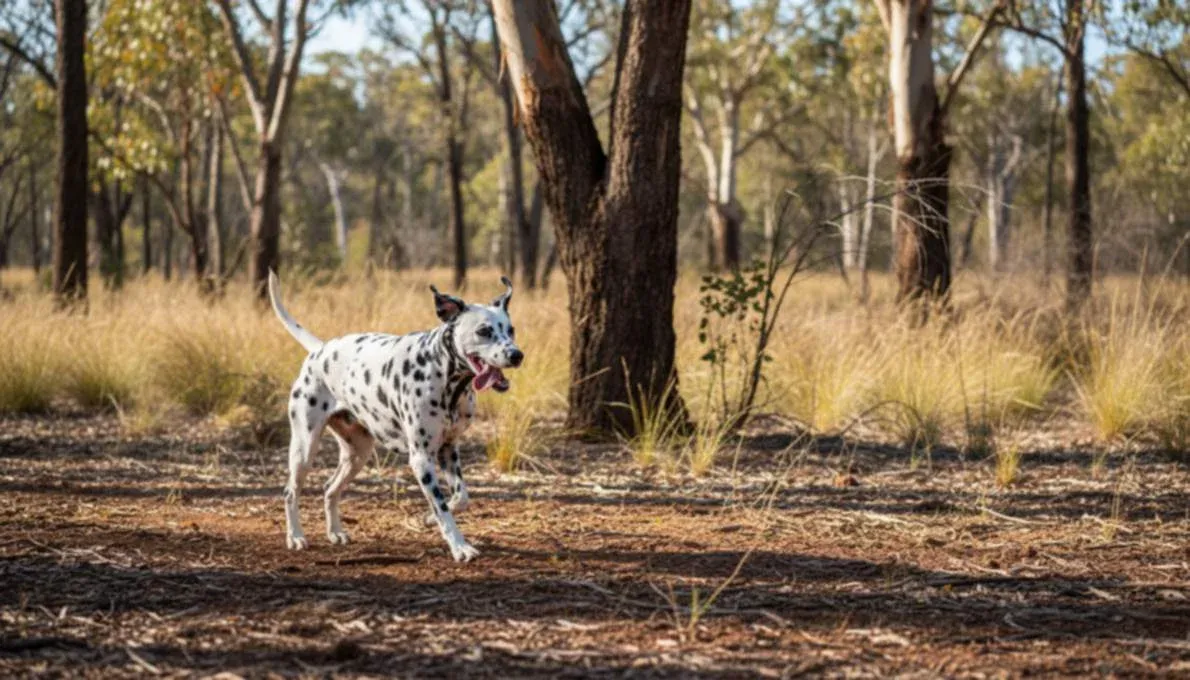
This is where most Dalmatian ownership goes wrong. These dogs were bred to run for hours — not trot around the block for 15 minutes. A healthy adult Dalmatian needs a minimum of 1 to 2 hours of vigorous exercise daily. That means running, swimming, fetch, cycling alongside them, or structured dog sports — not just a casual walk.
Australian climate warnings
Dalmatians are lean dogs with a short coat and relatively low body fat, which means they handle heat better than many breeds — but they still need protection in Australian summers. Their white coat reflects some UV light, but their skin underneath can sunburn, particularly on the nose, ears and belly. Light-coloured and liver-spotted Dalmatians are especially vulnerable.
During summer months, exercise early in the morning or late in the evening. Always carry water. Dalmatians need to urinate frequently (at least 3 times daily, more is better) to flush uric acid from their system, so restricting water or outdoor access is genuinely dangerous for this breed.
What works for Dalmatians
- Long runs or jogs (they’re outstanding running partners)
- Swimming — many Dalmatians love water
- Fetch, frisbee, and structured play in large, fenced areas
- Agility, flyball, or obedience trials
- Off-lead bushwalking (only with reliable recall, which takes serious training)
An under-exercised Dalmatian is an anxious, destructive Dalmatian. If you can’t commit to daily high-intensity exercise, this is not your breed.
Training Guide
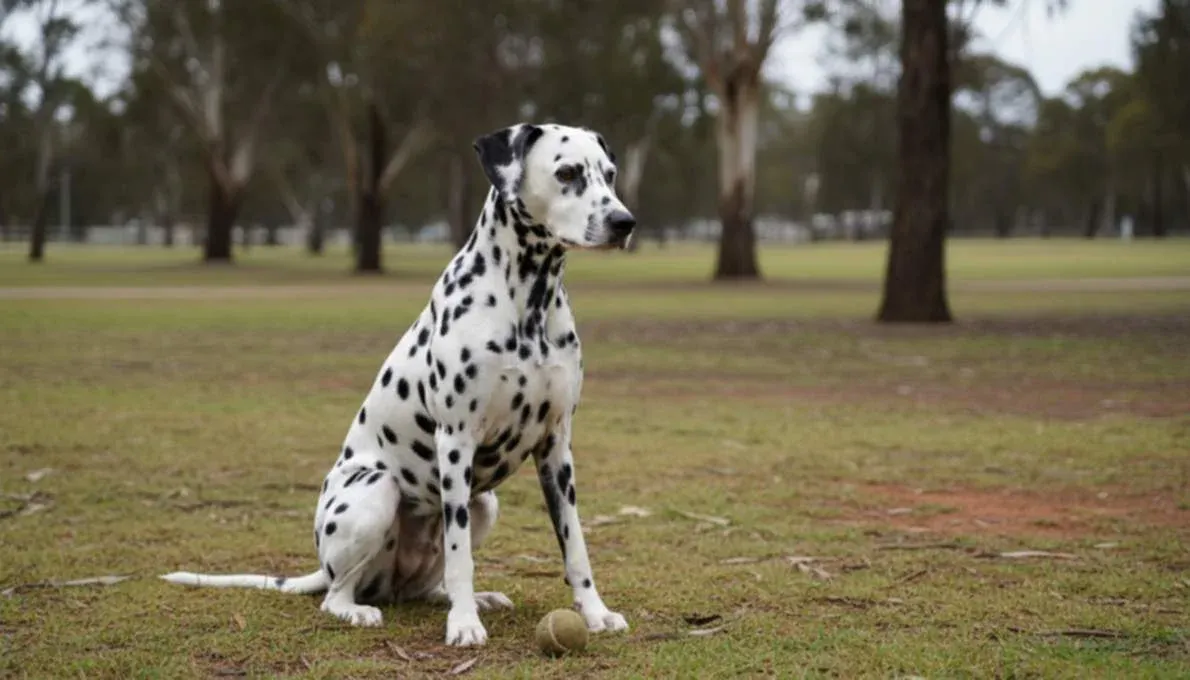
Dalmatians are intelligent and eager to please when motivated, but they’re also sensitive and will shut down completely if you use harsh corrections. Positive reinforcement training is the only approach that works consistently with this breed. They respond to enthusiasm, food rewards and variety — repetitive drills bore them quickly.
Age-based training milestones
| Age | Focus | Honest Difficulty |
|---|---|---|
| 8–12 weeks | Socialisation (expose to people, dogs, sounds, surfaces), name recognition, crate training | Moderate — socialisation is the #1 priority |
| 3–6 months | Basic commands (sit, stay, drop), lead walking, toilet training, bite inhibition | Moderate — they learn fast but get distracted |
| 6–12 months | Reliable recall, impulse control, manners around strangers and other dogs | Hard — adolescent energy + testing boundaries |
| 1–2 years | Off-lead reliability, advanced commands, sport training if desired | Moderate — maturity brings focus (finally) |
The critical window for socialisation is 3–16 weeks. A Dalmatian that isn’t well-socialised during this period has a significantly higher chance of becoming reactive or anxious around strangers and other dogs. If there’s one thing you invest in, make it early socialisation and a quality puppy school. Budget $150–$400 AUD for a 4–6 week course in most Australian cities.
Cost of Ownership (AUD)
Dalmatian ownership in Australia is more expensive than most people expect, largely because of their dietary requirements and health screening needs. Here’s what the numbers actually look like.
Upfront costs
| Item | Cost (AUD) |
|---|---|
| Registered breeder (BAER-tested, health-screened) | $3,000–$5,500 |
| Rescue / adoption | $300–$800 |
| Initial vet setup (vaccines, microchip, desexing) | $500–$1,200 |
| Supplies (crate, bed, bowls, lead, harness) | $300–$700 |
Ongoing annual costs
| Item | Annual Cost (AUD) |
|---|---|
| Low-purine dog food (prescription or formulated) | $1,200–$2,200 |
| Annual vet checkup + vaccinations | $200–$400 |
| Urinalysis screening (2–4x/year recommended) | $100–$300 |
| Worming, flea & tick prevention | $180–$600 |
| Pet insurance | $420–$1,020 |
| Grooming supplies (brushes, lint rollers, etc.) | $100–$200 |
| Toys, treats & replacement supplies | $200–$500 |
Estimated lifetime cost: $30,000–$60,000+ AUD over 10–13 years. The prescription low-purine diet alone adds $6,000–$10,000+ over a lifetime compared to standard dog food. A single bladder stone surgery adds $2,000–$5,000.
Where to buy or adopt
Registered breeders: Search the Dogs Australia (ANKC) Breeder Directory or contact the Dalmatian Club of your state (e.g., Dalmatian Club of NSW, Dalmatian Club of Victoria). Always confirm BAER testing results and health screening certificates.
Rescue organisations: Dalmatian Rescue Australia, PetRescue (petrescue.com.au), and RSPCA state branches regularly list Dalmatians needing homes. Given the breed’s history of being surrendered post-purchase, rescue is a genuinely good option.
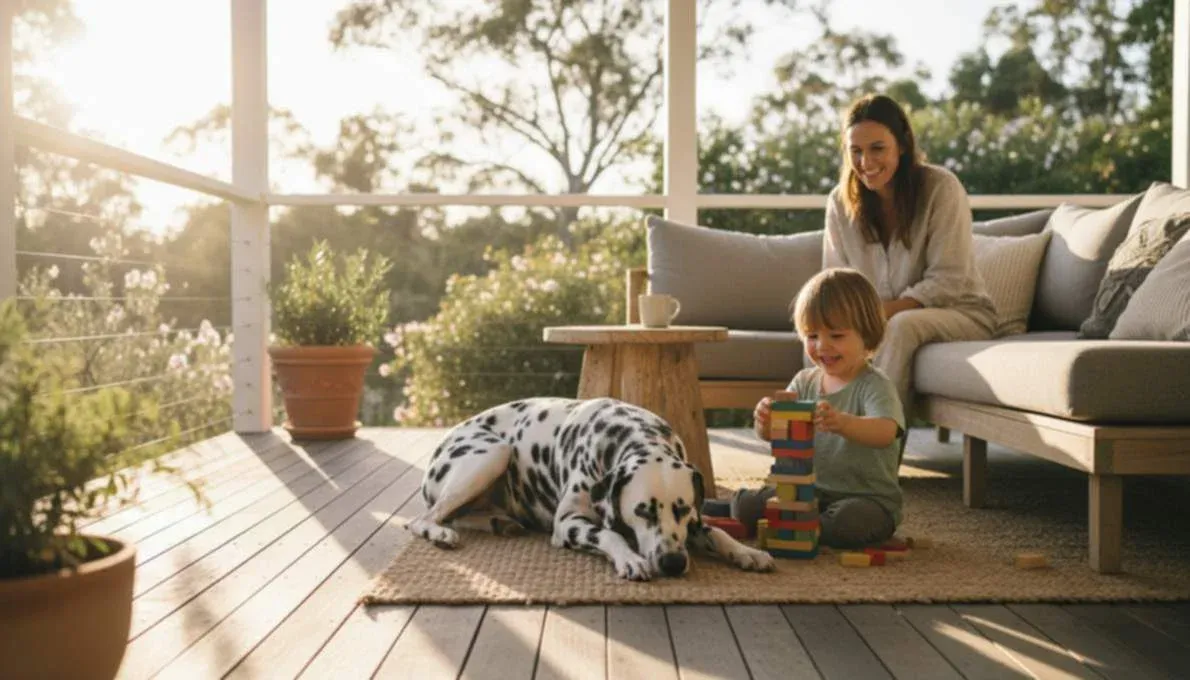
Is the Dalmatian Right for You?
- You’re an active person or family who runs, cycles, hikes or swims regularly
- You have a house with a secure, fenced yard
- You can commit to a specialised low-purine diet and regular urinalysis
- You understand that socialisation and training aren’t optional
- You’re financially prepared for breed-specific health management
- You work long hours and the dog will be home alone most of the day
- You want a low-energy, low-maintenance companion
- You live in an apartment or don’t have outdoor space
- You’re not prepared for heavy, year-round shedding
- You chose this breed because your kids watched 101 Dalmatians
If you love the Dalmatian’s look but aren’t sure about the exercise commitment, consider comparing them to a Whippet (similarly sleek and athletic, but lower energy at home), a Vizsla (equally affectionate and active, with fewer unique health requirements), or a Standard Poodle (intelligent, athletic and hypoallergenic).
The Dalmatian is a spectacular dog for the right owner — and a genuinely difficult one for the wrong owner. There’s no middle ground with this breed.
- Personality: Loyal, athletic and endlessly entertaining when their needs are met. Anxious and destructive when they’re not.
- Health reality: Unique metabolic needs (low-purine diet is lifelong), deafness screening is essential, and urate stones are a real financial risk.
- Cost reality: $30,000–$60,000+ AUD over a lifetime. The diet alone sets this breed apart financially from most medium-sized dogs.
If you go in prepared — with the right breeder, the right diet, enough exercise and a solid financial buffer — a Dalmatian will reward you with a decade or more of fierce devotion, athletic companionship and a dog that turns every head at the dog park.
Frequently Asked Questions
Are Dalmatians aggressive?
Not by nature. Dalmatians are loyal and protective, but they’re not an aggressive breed. Aggression issues almost always stem from poor socialisation, lack of exercise, or irresponsible breeding. A well-bred, well-socialised Dalmatian is confident and friendly. The breed’s negative reputation largely traces to the puppy-mill boom following the 101 Dalmatians films.
How long do Dalmatians live?
The average Dalmatian lifespan is 10–13 years. With a proper low-purine diet, regular exercise and proactive health management, many reach 12–14 years.
Why do Dalmatians need a special diet?
Every Dalmatian carries a gene mutation that prevents them from properly metabolising purines. This causes high uric acid levels in their urine, which can lead to painful bladder stones. A low-purine diet (limiting organ meats, certain fish and yeast) combined with high water intake is essential for every Dalmatian, not just those who’ve had stones.
Are Dalmatians deaf?
About 15–30% of Dalmatians have some degree of hearing loss, and roughly 5% are completely deaf in both ears. It’s linked to the same gene that produces their white coat. All reputable breeders BAER-test their puppies. Dogs deaf in one ear live normal lives; bilaterally deaf dogs need experienced owners.
What is a brown Dalmatian?
A brown (liver) Dalmatian has chocolate-brown spots instead of black, with a brown nose and amber eyes. They’re the same breed with the same temperament and health profile — just a different colour variation that’s recognised in the breed standard.
How much does a Dalmatian cost in Australia?
From a registered breeder with BAER testing and full health screening, expect $3,000–$5,500 AUD. Rescue adoption fees are typically $300–$800. Budget an additional $500–$1,200 for initial vet setup and supplies.
Can Dalmatians live in apartments?
It’s not recommended. Dalmatians need space to move, a yard for play, and 1–2 hours of vigorous daily exercise. An apartment-bound Dalmatian without sufficient outlets for energy will develop behavioural problems.
Do Dalmatians shed a lot?
Yes — heavily and year-round. Their short, stiff white hairs embed into fabric and are notoriously difficult to remove. Frequent brushing (3–4 times per week) helps but won’t eliminate the problem. If you value a hair-free home, this is not your breed.
- American Kennel Club — Dalmatian Breed Information: https://www.akc.org/dog-breeds/dalmatian/
- Australian National Kennel Council (ANKC) — Breed Standards: https://ankc.org.au/
- Universities Federation for Animal Welfare (UFAW) — Dalmatian Deafness: https://www.ufaw.org.uk/dogs/dalmatian-deafness
- UFAW — Dalmatian Hyperuricosuria: https://www.ufaw.org.uk/dogs/dalmatian-hyperuricosuria
- AKC Canine Health Foundation — Complex Genetics Underlie Deafness in the Dalmatian: https://www.akcchf.org/educational-resources/library/articles/complex-genetics-underlie.html
- Dalmatian Club of America Foundation — Urinary Stones: https://dcaf.org/dalmatian-health/urinary-stones/
- Cornell University College of Veterinary Medicine — Hyperuricosuria (HUU): https://www.vet.cornell.edu/departments-centers-and-institutes/riney-canine-health-center/canine-health-information/hyperuricosuria-and-hyperuricemia-or-urolithiasis-huu
- Pets Online Australia — Dalmatian Prices in Australia: https://petsonline.com.au/dog-breeds/dalmatian/prices/
- Dogz Online Australia — How Much Does a Dalmatian Cost: https://www.dogzonline.com.au/resources/getting-started/are-you-ready-for-a-dog/how-much-does-it-cost-to-buy-a-dalmatian
- Dogster — 10 Common Health Problems in Dalmatians: https://www.dogster.com/dog-health-care/common-health-problems-in-dalmatians