
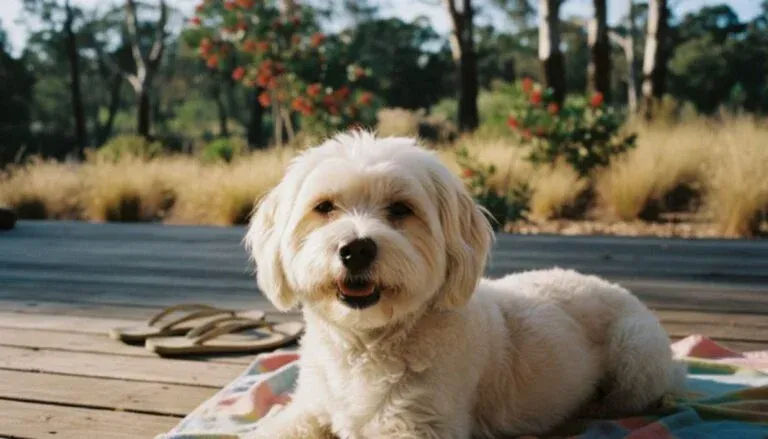
Imagine a dog that walks on its hind legs just to make you laugh, has a coat that feels like holding a cloud, barely sheds, rarely smells, and lives to 17 years. Now imagine that same dog is so rare in Australia that most people have never seen one in the flesh. That’s the Coton de Tulear — pronounced “ko-TAWN day too-LEE-are” — and once you meet one, it’s hard to think about any other breed.
Known as the “Royal Dog of Madagascar,” the Coton de Tulear is a member of the Bichon family that spent centuries charming the island’s ruling aristocracy before French travellers brought them to Europe in the 1960s. Their cotton-textured coat, expressive dark eyes, and genuinely comedic personality set them apart from their better-known cousins — the Maltese, Bichon Frise, and Havanese.
In Australia, the breed was officially recognised by the ANKC in December 2015, and the first litters were born in 2016. There are still very few registered breeders nationwide, which means long waitlists and premium prices. This guide covers everything an Australian buyer needs to know: from the breed’s unique temperament and grooming demands to health testing, costs, and where to find a responsible breeder. If you’re considering a Coton, you’re considering something special — and you deserve the full picture.
What You’ll Learn
- Breed traits & temperament
- Health concerns to know
- True cost in Australia
- Training & exercise needs
- Is this breed right for you?
Coton de Tulear at a Glance
| Trait | Detail |
|---|---|
| Breed Group | Toy (ANKC Group 1) — FCI Group 9 Companion and Toy Dogs |
| Origin | Madagascar (via Bichon ancestors from Europe) |
| Height | Males: 25–28 cm (10–11 in) | Females: 22–25 cm (9–10 in) |
| Weight | Males: 4–6 kg (9–15 lb) | Females: 3.5–5 kg (8–13 lb) |
| Coat | Long, soft, cotton-textured — hair (not fur), dense and slightly wavy |
| Colours | Primarily white; puppies may have tan, brown, grey, or black markings that fade with age |
| Lifespan | 14–17 years (some sources report up to 19) |
| Temperament | Happy, affectionate, clownish, intelligent, eager to please, sociable |
| Shedding | Very low — shed hair is trapped in the coat rather than dropping |
| Hypoallergenic | As close as it gets — low-shedding, low-dander (no dog is truly hypoallergenic) |
| Barking | Generally quiet — can become vocal during play (grunting, unique vocalisations) |
| Good With Kids | Yes — gentle, patient, and playful |
| Good With Other Pets | Yes — sociable with dogs and cats |
| Apartment Friendly | Excellent — small, adaptable, moderate exercise needs, low barking |
| Exercise Needs | Low to moderate — 30–45 minutes daily plus play |
| Separation Anxiety | High risk — bonds intensely, does not cope well alone |
| Puppy Price (AUD) | $6,500–$8,000+ from registered breeders (rare breed premium) |
History & Origins
The Coton de Tulear has one of the most colourful origin stories in the dog world — part shipwreck legend, part royal intrigue, part island isolation.
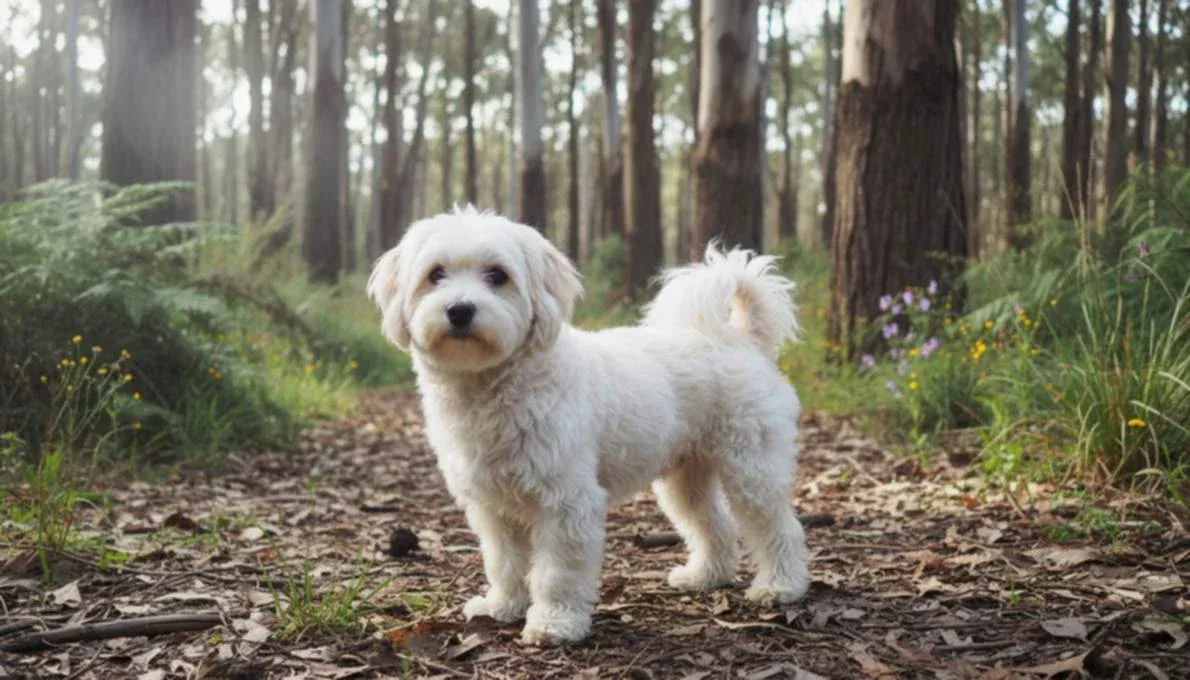
The Bichon ancestors: The Coton de Tulear is a member of the Bichon family, descended from small white companion dogs (Bichon Tenerife) that were popular across Europe from the Renaissance onward. European sailors kept these dogs aboard ships as rat catchers and companions. As trade routes extended to the Indian Ocean, Bichon-type dogs reached the island of Reunion, about 500 miles from Madagascar, where they interbred and adapted.
The shipwreck legend: The most famous version of the Coton’s arrival in Madagascar involves a shipwreck near the port of Tulear (now Toliara). Legend has it the small white dogs survived the wreck and swam ashore, establishing a feral population on the island. Whether the story is literal truth or romantic embellishment, what’s certain is that Bichon-type dogs arrived in Madagascar centuries ago and evolved into the breed we know today through natural selection and selective breeding by the island’s inhabitants.
The Royal Dog of Madagascar: Madagascar’s ruling Merina aristocracy fell in love with the Coton and adopted it as a symbol of nobility. For a time, only the ruling class was permitted to own the breed, which is how the Coton earned its title as the “Royal Dog of Madagascar.” The breed became so culturally significant that Madagascar issued a postage stamp in its honour.
European rediscovery: French travellers discovered the breed during visits to Madagascar in the 1960s and brought Cotons to Europe, where they were an immediate sensation. The breed was formally recognised by the Société Centrale Canine (France’s national kennel club) in 1970 and accepted by the Fédération Cynologique Internationale (FCI) in 1972. The AKC recognised the breed much later, in 2014.
In Australia: The Coton de Tulear was officially recognised by the ANKC in December 2015. Cotonrun, based in Queensland, pioneered the breed in Australia, importing European champion dogs from Hungary’s Carbonebianco Kennel and producing Australia’s first registered litters in 2016. As of 2026, the breed remains rare in Australia with only a handful of registered breeders nationwide. The ANKC classifies the Coton de Tulear under Group 1 (Toys).
The name: “Coton” is French for cotton, describing the breed’s distinctive cloud-like coat. “Tulear” (or Toliara) is the port city in southwestern Madagascar where the breed became established. So the name literally translates to “Cotton of Tulear.”
Coton de Tulear Temperament & Personality
The Coton de Tulear exists for one reason: to be your companion. That’s not an exaggeration — it’s the breed’s entire job description, and they’re spectacularly good at it.
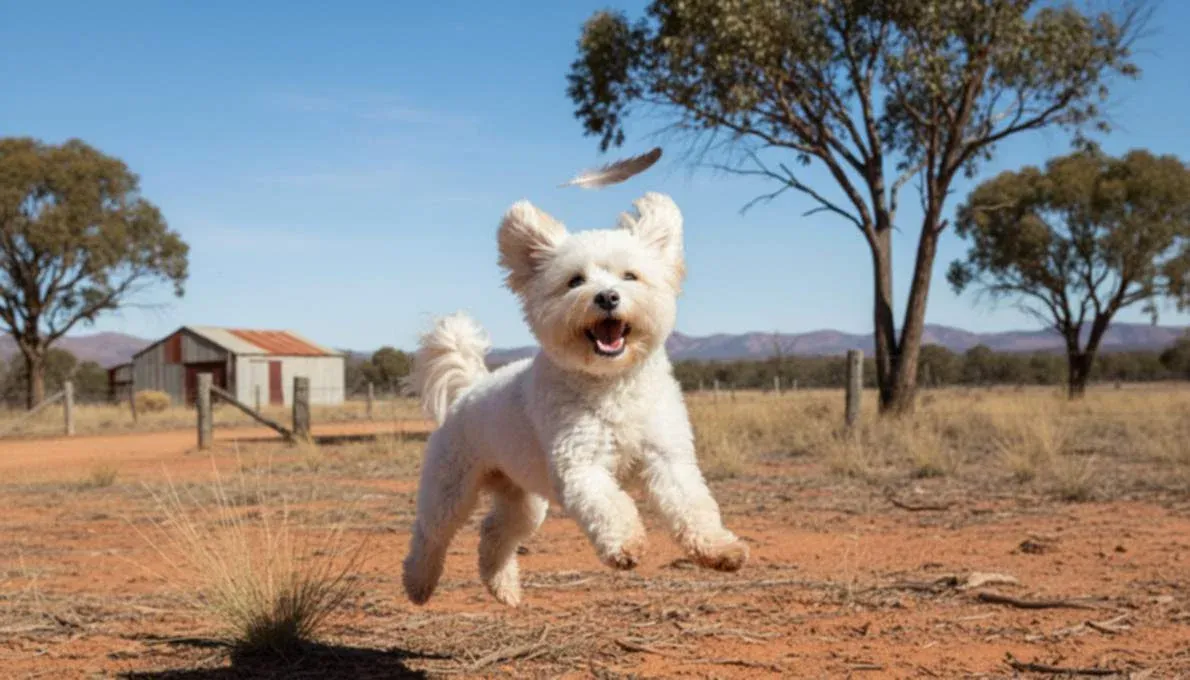
Cotons are famous for their comedic behaviour. They’ll walk on their hind legs to entertain you, make a range of unique vocalisations (grunting, muttering, “talking”), zoom around the house at top speed, and invent games to get your attention. Breed fanciers describe them as “witty,” “naturally clownish,” and possessing a “remarkably gentle, sympathetic awareness.”
Cotons bond deeply with their humans and want to be with you at all times. They’ll follow you from room to room, sit on your lap whenever possible, and check on you regularly. This is charming for homebodies and people who work from home, but it means separation anxiety is a real issue. A Coton left alone for extended periods will become stressed and potentially destructive.
Unlike some small breeds that can be snippy with strangers, Cotons are genuinely friendly with new people, children, other dogs, and cats. They’re curious rather than suspicious, and they tend to greet newcomers with enthusiasm rather than alarm. This makes them poor guard dogs but outstanding family companions.
Cotons are quick learners who respond well to positive reinforcement. They pick up tricks, obedience commands, and household routines faster than many small breeds. Their eagerness to please means training is generally straightforward — they want to make you happy.
Cotons are not yappy dogs. They tend to be quiet at rest and save their vocalisations for play and excitement. When they do get vocal, it’s often an entertaining mix of barks, grunts, and murmurs rather than sharp, persistent barking. This makes them notably better apartment dogs than many other toy breeds.
A well-known Coton trait is that they tend to get their burst of energy and playfulness in the evening. After a calm day, expect zoomies, play invitations, and peak comedy around dusk. This is a charming feature for families who are home in the evenings.
Coton owners consistently describe their dogs as having “almost human qualities.” They read moods, adapt their behaviour to their owner’s emotional state, and display an unusual level of empathy for a dog. This emotional intelligence is a defining characteristic of the breed and a big part of why people become lifelong Coton devotees.
Coton de Tulear Health & Genetic Conditions
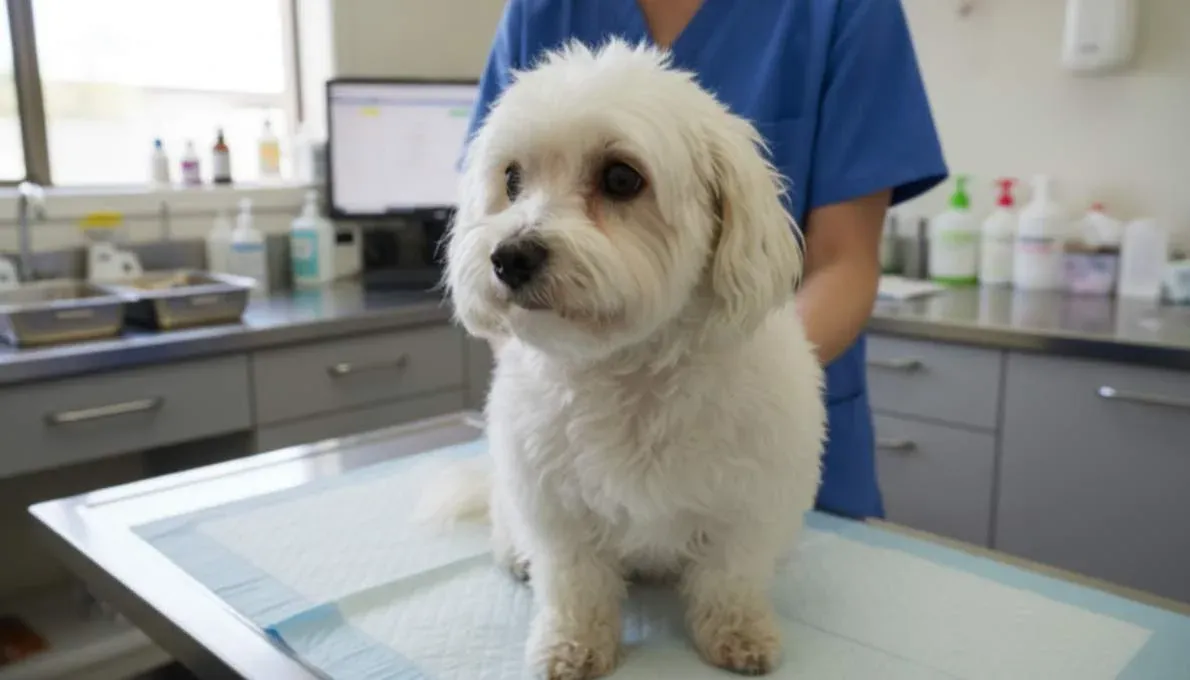
The Coton de Tulear is considered one of the healthiest small breeds, with a long lifespan and relatively few genetic problems compared to many pedigree dogs. However, because the breed comes from a small gene pool, responsible DNA testing is especially important.
| Condition | Risk Level | What It Means | DNA Test Available? |
|---|---|---|---|
| Primary Hyperoxaluria (PH) | Moderate — breed-specific | A rare autosomal recessive disorder causing calcium oxite crystal buildup, primarily in the kidneys, leading to progressive kidney failure if untreated. Testing breeding stock is critical. | Yes — autosomal recessive |
| Bandera’s Neonatal Cerebellar Ataxia (BNAt) | Moderate — breed-specific | A hereditary disease found only in Coton de Tulears. Affects the cerebellum (movement coordination). Affected puppies show lack of movement control from birth. Fatal in severe cases. | Yes — autosomal recessive |
| Progressive Retinal Atrophy (PRA-prcd) | Low to moderate | Gradual degeneration of retinal cells leading to progressive vision loss and eventual blindness. Signs typically appear at 3–5 years. Cannot be treated but affected dogs adapt well. | Yes — autosomal recessive |
| Von Willebrand’s Disease Type 1 | Low | Mild form of a bleeding disorder. Most affected dogs show few or no symptoms. Important to identify before surgery. | Yes — autosomal recessive |
| Hyperuricosuria (HUU) | Low | Causes elevated uric acid in urine, increasing the risk of bladder and kidney stones. Carriers may not show symptoms. | Yes — autosomal recessive |
| Canine Multifocal Retinopathy (CMR) | Low | Causes local retinal detachment in young dogs. Does not always cause vision impairment but can in severe cases. | Yes — autosomal recessive |
| Luxating Patella | Moderate — common in small breeds | Kneecap slips out of position, causing intermittent lameness. Mild cases managed with weight control; severe cases may need surgery. | No — physical examination |
| Hip Dysplasia | Low to moderate | Abnormal hip joint development. Less common than in larger breeds but still possible. Hip scoring of parents recommended. | No — radiographic screening |
| Skin Allergies | Moderate | Cotons can develop environmental or food allergies causing itching, redness, and secondary infections if untreated. | No — clinical management |
| Dental Disease | Moderate — common in small breeds | Small mouths with crowded teeth predispose to plaque, tartar, and gum disease. Regular dental care is essential. | No — preventative care |
| Ear Infections | Moderate | Pendulous (floppy) ears retain moisture and warmth, creating conditions for bacterial and yeast infections. Regular cleaning is important. | No — preventative care |
Because the Coton de Tulear has a small gene pool, DNA testing of breeding stock is critically important. At minimum, responsible Australian breeders should test for PH (Primary Hyperoxaluria), BNAt (Bandera’s Syndrome), PRA-prcd, CMR, VWD Type 1, and HUU. All six tests are readily available through canine genetics laboratories. Ask to see results before committing to a puppy.
The Coton is a genuinely healthy breed. With proper breeding, diet, dental care, and regular vet checks, most Cotons live well into their mid-teens with minimal health intervention. The breed-specific genetic conditions listed above are all testable and avoidable through responsible breeding.
Coton de Tulear Lifespan & Longevity
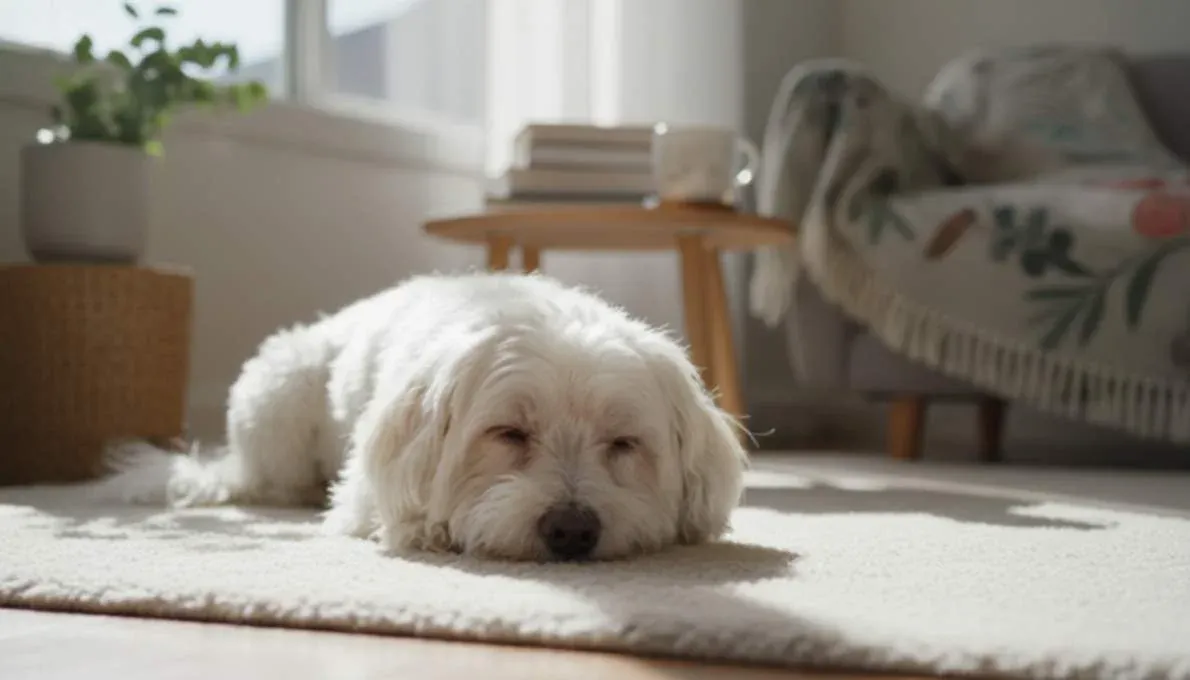
The Coton de Tulear is one of the longest-lived dog breeds. Most sources cite a lifespan of 14–17 years, with some Cotons reaching 18–19 years. This exceptional longevity is one of the breed’s major selling points — and one of the reasons people fall so deeply in love with them.
| Life Stage | Age Range | What to Watch For |
|---|---|---|
| Puppy | 0–12 months | Rapid development. Start socialisation and training early. Puppy coat transition begins around 7–15 months — this is when the soft puppy coat sheds and the adult cotton coat comes in. This period requires extra grooming attention. Dental development — monitor crowded teeth. |
| Young Adult | 1–3 years | Full size reached. Adult coat established. Peak energy and playfulness. Establish grooming routine, dental care, and exercise habits. First full health screening. |
| Mature Adult | 3–10 years | Settled temperament, still active and playful. Annual vet checks. Monitor weight, dental health, and skin/ear condition. Watch for early signs of luxating patella. |
| Senior | 10+ years | Gradual slowing. Watch for vision changes (PRA if present), joint stiffness, dental deterioration, and weight changes. Bi-annual vet visits recommended. Most Cotons remain active and playful well into their senior years. |
The keys to Coton longevity are buying from DNA-tested parents, maintaining dental health (small breeds lose years to dental disease), keeping weight in check, providing consistent companionship (stress from separation anxiety can affect long-term health), and regular vet monitoring. A well-cared-for Coton from health-tested lines has every chance of being your companion for 15+ years.
Coton de Tulear Grooming & Care
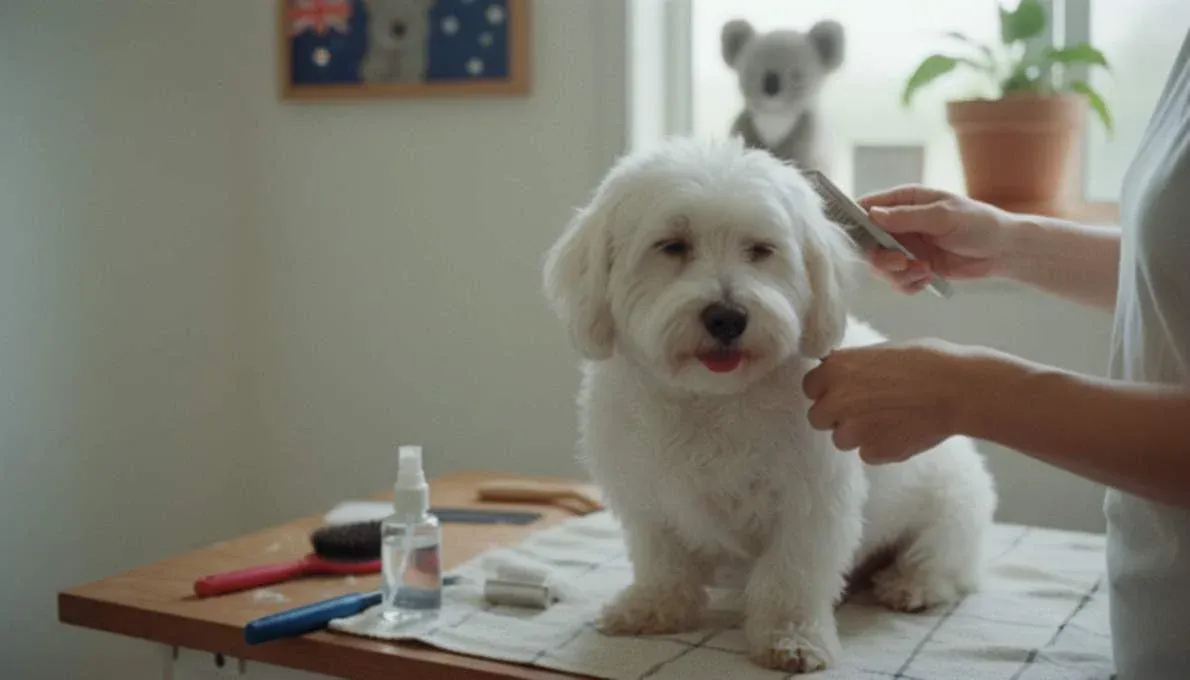
The Coton’s coat is the breed’s defining feature and its biggest maintenance requirement. The good news: they barely shed, have minimal odour, and are tolerated by many allergy sufferers. The commitment: that cotton-textured coat mats fast if you skip grooming, and the puppy coat transition can be a trial by fire for new owners.
Grooming Schedule
| Task | Frequency | Notes |
|---|---|---|
| Brushing | Daily to every other day (non-negotiable) | Use a pin brush and metal comb, working from the skin outward. A spray-on detangling conditioner prevents breakage. The coat’s texture traps shed hair — without regular brushing, mats form quickly and can become painful. Focus on ears, legs, elbows, and belly where matting is worst. |
| Bathing | Weekly to every 10 days | More frequent than most breeds because the long white coat picks up dirt easily. Use a quality dog shampoo and conditioner. Blow-dry thoroughly after bathing — air-drying a Coton coat encourages matting. |
| Coat Cuts | Every 6–8 weeks (if kept in a shorter clip) | Many pet owners opt for a “puppy cut” (trimmed to 5–8 cm) to reduce daily grooming. Show dogs are kept in full coat. Professional grooming: $80–$150 AUD per session. |
| Nail Trimming | Every 2–3 weeks | Small breeds often need more frequent trimming as nails may not wear down naturally. |
| Ear Cleaning | Weekly | Floppy ears trap moisture. Clean with a vet-approved ear cleaner to prevent infections. Check for redness, odour, or discharge. |
| Teeth Brushing | Daily (ideal) or 3–4 times per week | Critical for this breed. Small mouths and crowded teeth make dental disease a primary health risk. Start early and use dog-specific toothpaste. |
| Tear Stain Care | Daily wiping | White-coated dogs often develop reddish-brown tear stains below the eyes. Wipe daily with a damp cloth or use a tear stain remover. Keep hair around eyes trimmed. |
The puppy coat transition:
Between 7 and 15 months, Coton puppies shed their soft puppy coat as the adult cotton coat grows in. During this phase, matting can be severe and daily brushing is essential. Some owners find this the most challenging grooming period. Professional grooming help during the transition is common and recommended if you’re struggling.
Shedding and allergies:
The Coton de Tulear has hair rather than fur, similar to Poodles and Maltese. Shed hair gets trapped in the coat rather than dropping onto furniture and clothing. Combined with low dander production, this makes them one of the most allergy-friendly breeds available. However, no dog is truly hypoallergenic — always spend time with the breed before committing if you have allergies.
The no-smell bonus:
Cotons are known for having virtually no doggy odour, even between baths. This is a genuine breed trait that owners consistently confirm, and it makes them even more suited to indoor and apartment living.
Coton de Tulear Exercise Needs
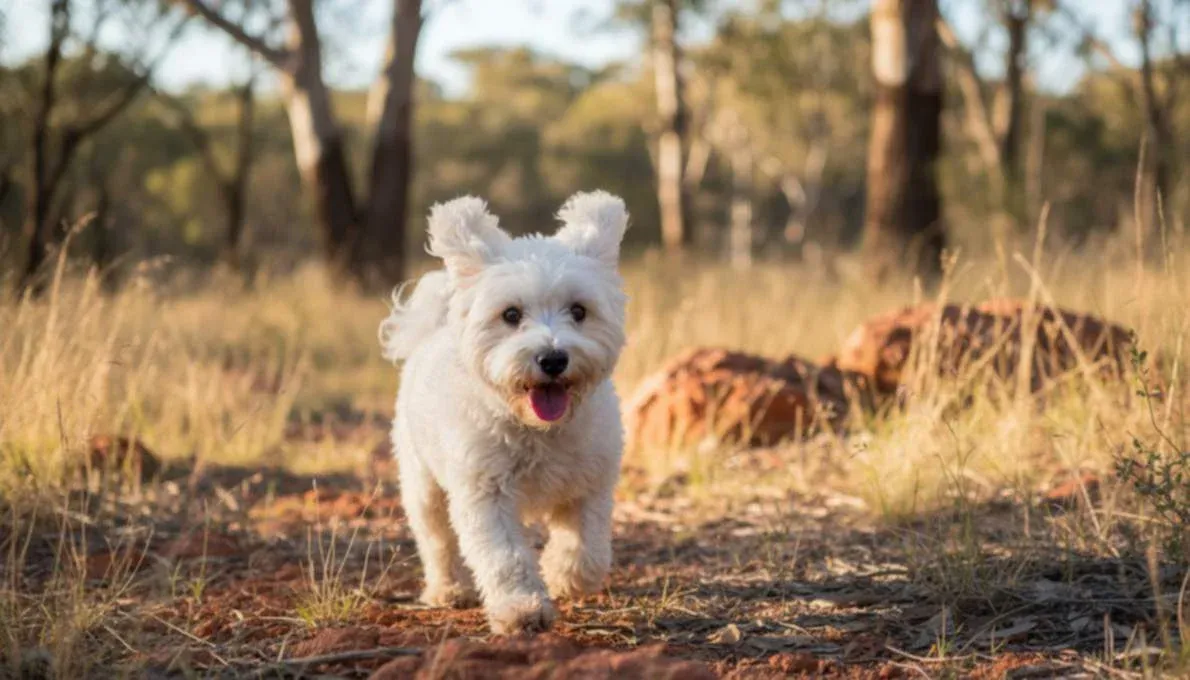
The Coton de Tulear is an adaptable dog that doesn’t need marathon exercise sessions, but they’re more active than their cloud-like appearance suggests. They were bred on an island where they ran semi-feral for centuries, and they retain genuine athleticism beneath that fluffy coat.
Daily exercise:
30–45 minutes per day is typical. This can be split between a walk and a play session. Cotons are happy with a brisk neighbourhood walk followed by an indoor game of fetch or tug.
Play is essential:
Cotons are playful dogs who need interactive play with their humans. They love fetch, chase games, puzzle toys, and trick training. Play is both physical exercise and mental stimulation for this intelligent breed.
Swimming:
Many Cotons enjoy swimming, which is unusual for a toy breed. If you have a pool, supervised swim sessions are excellent exercise. Not all Cotons take to water naturally, so introduce it gradually.
Mental stimulation:
Equally important as physical exercise. Cotons are intelligent dogs that need to engage their brains. Puzzle feeders, trick training, scent games, and learning new commands all help prevent boredom. An under-stimulated Coton may develop behavioural issues.
Dog sports:
Cotons can excel at agility, obedience, rally, and trick competitions. Their intelligence, eagerness to please, and small size make them surprisingly competitive in these events.
⚠️ Australian Climate Note:
Cotons handle Australian heat better than many small breeds, but their long coat can cause overheating during intense exercise in summer. Walk during cooler parts of the day, provide shade and fresh water, and watch for panting or reluctance to move. Their white coat does reflect some heat, but common sense applies.
Coton de Tulear Training Guide
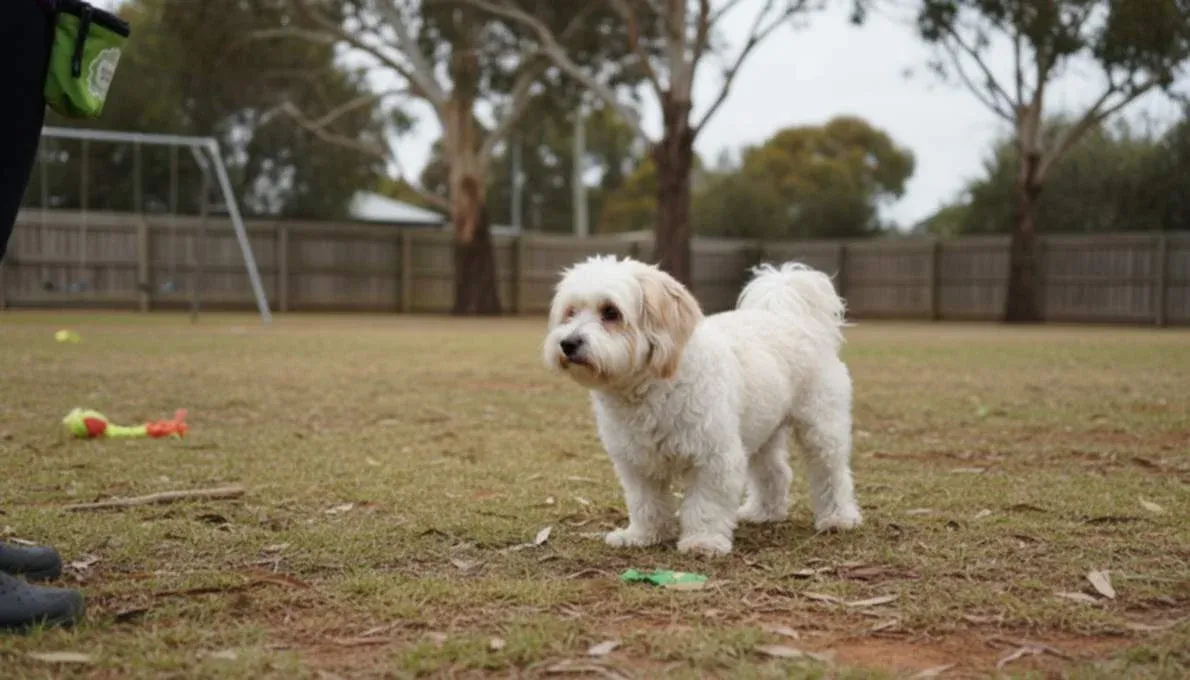
Training a Coton de Tulear is one of the genuine pleasures of owning this breed. They’re intelligent, food-motivated, eager to please, and genuinely enjoy the training process. This is an excellent breed for first-time dog owners.
Honest difficulty rating:
Easy. Cotons are one of the most trainable toy breeds. They pick up commands quickly, respond well to positive reinforcement, and rarely show the stubbornness common in many small breeds. First-time owners will find them forgiving and cooperative.
Socialisation & Training Timeline
| Age | Training Focus | Tips |
|---|---|---|
| 8–16 weeks | Socialisation, handling, housebreaking | Critical socialisation window. Expose to people, environments, sounds, and other animals. Begin crate training and housebreaking. Cotons can be slow to housetrain — patience and consistency are key. Use an enzyme cleaner for accidents. |
| 4–6 months | Basic obedience, leash manners, grooming tolerance | Teach sit, stay, come, and down. Establish grooming routine — daily brushing should feel normal by this age. Continue socialisation. Use small, high-value treats. |
| 6–12 months | Impulse control, advanced commands, separation training | Begin leaving the dog alone for short periods and gradually increasing. Address any early signs of separation anxiety. The coat transition happens during this period — keep grooming positive. |
| 1–2 years | Ongoing training, tricks, sport foundations | Cotons love learning new tricks — keep adding to their repertoire. Consider agility or obedience classes for mental stimulation and socialisation. |
Separation anxiety management:
This is the number one training challenge with Cotons. They bond so deeply that being left alone causes genuine distress. Start separation training early: leave for very short periods, gradually increase duration, provide puzzle toys and background noise when you’re away, and avoid making departures or arrivals overly dramatic. Some Cotons do best with a companion animal. In severe cases, consult a veterinary behaviourist.
Housetraining note:
Cotons can take longer than average to housetrain. This is common across the Bichon family. Consistent routine, frequent outdoor breaks, crate training, and patience will get you there — but expect the process to take several months rather than weeks.
Cost of Owning a Coton de Tulear in Australia
The Coton de Tulear is a premium purchase in Australia due to the breed’s rarity and the limited number of registered breeders. Ongoing costs are moderate for a toy breed, with grooming being the main recurring expense.
| Expense | Estimated Annual Cost (AUD) | Notes |
|---|---|---|
| Puppy Purchase | $6,500–$8,000+ (one-off) | ANKC registered breeders with full DNA testing. Cotonrun (QLD) lists pet puppies at $7,700 incl GST. Prices include health checks, microchipping, vaccination, puppy insurance, parentage DNA testing, and ANKC registration. Waitlists are common. |
| Food (Premium) | $600–$1,000/year | Small breed, small portions. Use high-quality food appropriate for toy breeds. Measure meals carefully — Cotons can gain weight if overfed. |
| Vet Check-ups | $250–$500/year | Annual wellness checks. Dental check essential at each visit. Bi-annual after age 10. |
| Professional Grooming | $1,000–$1,800/year (if used) | $80–$150 per session every 6–8 weeks. Some owners manage grooming at home, reducing this cost significantly. Budget for quality grooming tools if DIY. |
| Pet Insurance | $400–$1,000/year | Recommended. Generally healthy breed so premiums are moderate. Ensure hereditary conditions are covered. |
| Dental Care | $200–$500/year | Professional dental cleaning every 1–2 years ($300–$800 per clean). Daily brushing at home reduces frequency and cost. |
| Vaccinations & Worming | $200–$400/year | Standard preventative care. |
| Toys, Beds & Accessories | $150–$400/year | Puzzle toys, quality bed, grooming supplies, tear stain products. |
| Council Registration | $20–$250/year | Varies by council. Desexed discounts apply in most areas. |
Total first-year cost estimate:
$8,000–$12,000+ including puppy purchase and initial setup.
Annual ongoing cost:
$2,000–$4,500 for a healthy adult Coton. Lower than many breeds due to small size and good health.
Finding a breeder in Australia:
Start with DogzOnline.com.au, which lists ANKC-registered Coton de Tulear breeders. Key breeders include Cotonrun (QLD — pioneered the breed in Australia, est. 2016, Dogs Queensland registered), GuysNDolls (QLD — Brisbane-based, Dogs Queensland registered), Cotonmanor (VIC — Dogs Victoria registered, imports from Denmark and the US), and Bonflor (NSW — first NSW registered breeder, est. 2023). RightPaw.com.au also lists verified Coton breeders. Expect waitlists of 6–12+ months due to the breed’s rarity.
Important buyer warning:
Because the Coton is rare and expensive, unregistered breeders and scam listings do appear online. Always verify ANKC registration, ask for DNA test results (all six breed-relevant tests), visit the breeder in person if possible, and be cautious of prices significantly below the $6,500–$8,000 range from registered breeders.
Rescue:
Coton-specific rescue in Australia is virtually non-existent due to the breed’s rarity and high demand. PetRescue.com.au occasionally lists Coton or Coton-mix dogs but it is extremely uncommon.
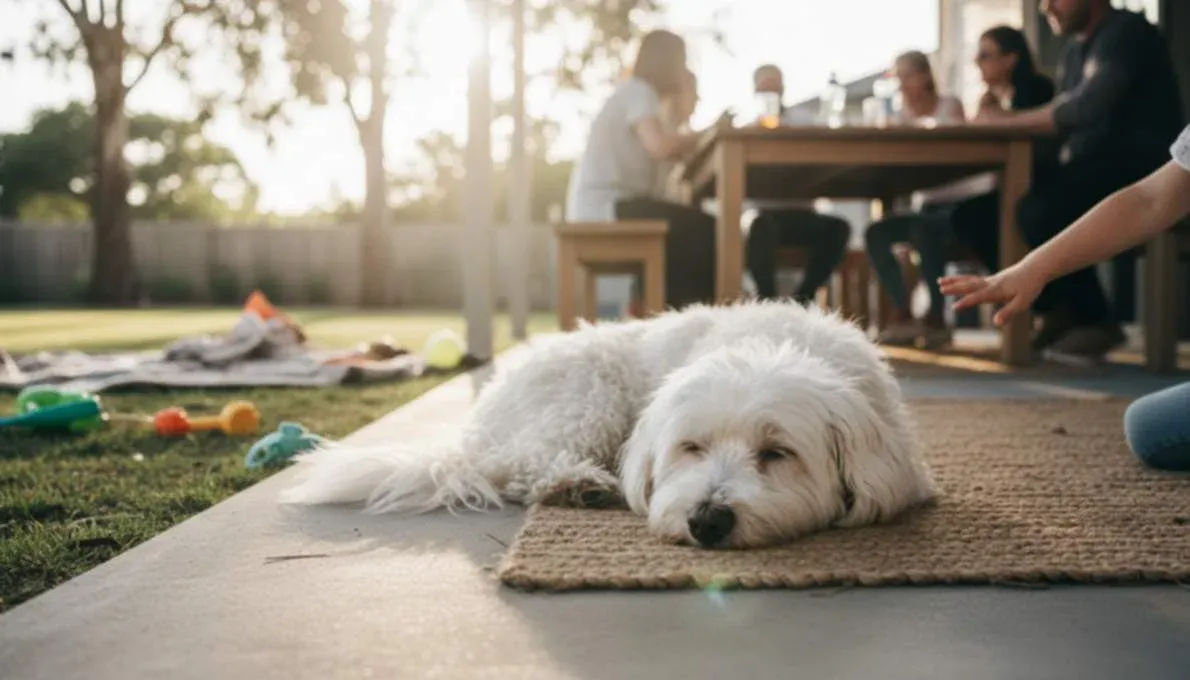
Is a Coton de Tulear Right for You?
- You want a loving, loyal companion who will be your shadow and your daily source of entertainment.
- You work from home, are retired, or have a lifestyle where the dog won’t be left alone for long periods.
- You’re willing to commit to daily grooming (or regular professional grooming appointments).
- You or a family member has mild dog allergies — the Coton’s low-shedding, low-dander coat is among the most allergy-friendly.
- You live in an apartment or small home — their size, moderate exercise needs, and quiet nature make them ideal.
- You have children — Cotons are gentle, patient, and genuinely enjoy kids.
- You want a long-lived, healthy breed with fewer genetic problems than most pedigree dogs.
- You’re a first-time dog owner — the Coton’s trainability and forgiving temperament make them an excellent choice.
- You’re away from home for long hours. Separation anxiety is a defining challenge of this breed.
- You want a low-maintenance coat. The cotton coat mats quickly and requires near-daily grooming attention.
- You want a guard dog or a watchdog. Cotons are friendly with everyone and rarely bark at strangers.
- You’re impatient with housetraining. Cotons can take longer than average to be reliably house-trained.
- You want a dog you can adopt quickly. The breed is rare in Australia with long waitlists and high prices.
- You want an outdoor adventure dog with high exercise needs. Cotons are adaptable but they’re companion dogs at heart.
Coton de Tulear vs Similar Breeds
| Feature | Coton de Tulear | Maltese | Havanese | Bichon Frise |
|---|---|---|---|---|
| Origin | Madagascar | Mediterranean/Malta | Cuba | Mediterranean/Canary Islands |
| Weight | 3.5–6 kg | 3–4 kg | 3.5–7 kg | 3–5 kg |
| Coat | Cotton-textured, slightly wavy | Silky, straight, long | Silky, wavy to curly | Curly, powder-puff |
| Shedding | Very low | Very low | Very low | Very low |
| Temperament | Clownish, affectionate, vocal during play | Gentle, devoted, can be feisty | Outgoing, playful, spirited | Cheerful, playful, gentle |
| Barking | Low — generally quiet | Moderate to high | Moderate | Moderate |
| Separation Anxiety | High | High | Moderate to high | Moderate to high |
| Trainability | Easy — very eager to please | Moderate — can be stubborn | Easy — eager to please | Easy — responds well to training |
| Lifespan | 14–17 years | 12–15 years | 13–16 years | 12–15 years |
| Availability (Australia) | Very rare — few breeders | Common — many breeders | Moderate — growing popularity | Common — well established |
| Price (AUD) | $6,500–$8,000+ | $3,000–$5,000 | $3,500–$6,000 | $3,000–$5,000 |
The Coton de Tulear is a rare and special breed that rewards dedicated owners with exceptional companionship. Here’s the honest summary:
- They’re one of the most delightful companion breeds on earth — funny, affectionate, intelligent, gentle with children, sociable with other pets, and equipped with a coat that barely sheds and doesn’t smell. Their 14–17 year lifespan means a long and deeply bonded relationship.
- The coat requires genuine commitment (daily brushing or regular professional grooming), separation anxiety is a real management challenge, and housetraining takes patience. They’re not the right dog for anyone who’s away from home all day.
- In Australia, expect to pay $6,500–$8,000+ from the small number of ANKC-registered breeders, with waitlists of 6–12+ months. Insist on full DNA testing (PH, BNAt, PRA, CMR, VWD, HUU at minimum), visit the breeder in person, and be cautious of unregistered sellers.
Coton de Tulear FAQs
[1] Wikipedia – Coton de Tuléar — https://en.wikipedia.org/wiki/Coton_de_Tulear
[2] Dogs NSW – Coton De Tulear Breed Information — https://www.dogsnsw.org.au/Breeds/browse-all-breeds/38/Coton-De-Tulear/
[3] PetMD – Coton de Tulear Health and Care — https://www.petmd.com/dog/breeds/coton-de-tulear
[4] Coton de Tulear Care – Common Health Issues — https://www.coton-de-tulear-care.com/common-coton-de-tulear-health-issues.html
[5] UK Coton de Tulears – Health Information — https://cotondetulears.uk/health/
[6] WebMD Pets – Coton de Tulear — https://www.webmd.com/pets/dogs/what-to-know-about-coton-de-tulear
[7] Cotonrun – Australian Coton de Tulear Breeder — https://cotonrun.com.au/
[8] RightPaw – Cotonrun Breeder Profile — https://rightpaw.com.au/l/cotonrun-coton-de-tulears/ed0ece4a-57a1-4574-9093-79b4e7025c2c
[9] AKC – Coton de Tulear Breed Information — https://www.akc.org/dog-breeds/coton-de-tulear/