
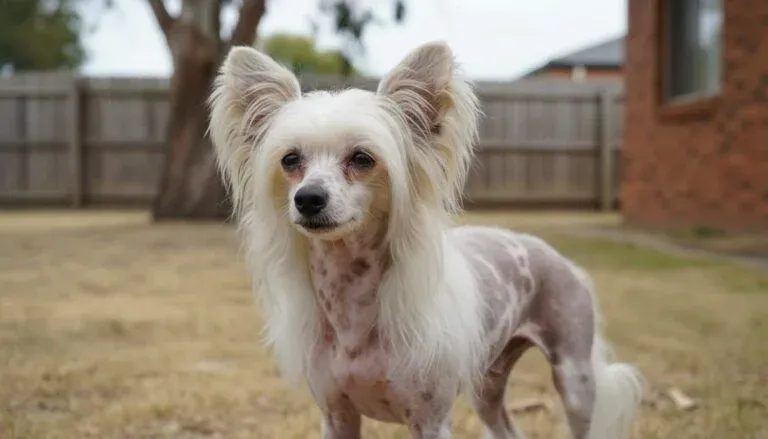
The Chinese Crested is one of those breeds that makes people do a double take. Half naked with a punk-rock crest of hair, spotted pink skin, and furry boots — or completely covered in a flowing silk coat that looks like it belongs in a shampoo commercial. Both versions come from the same litter, which is the first of many things about this breed that doesn’t quite make sense until you’re living with one.
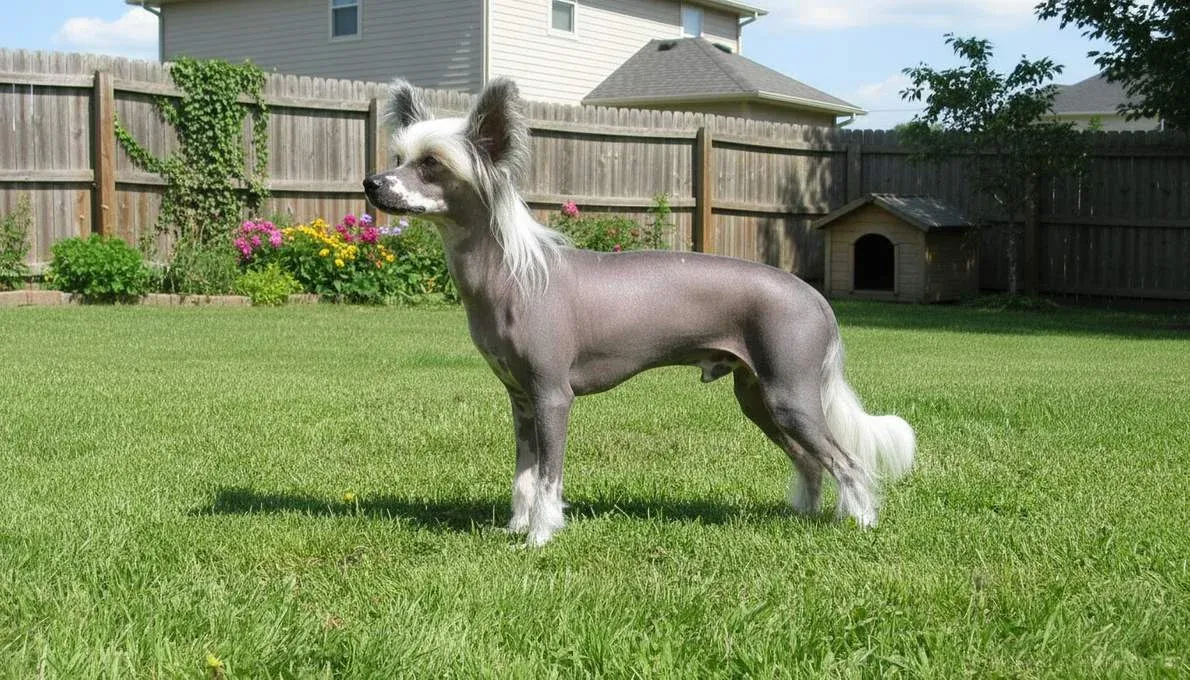
Available as either the Hairless variety (smooth skin with hair on the head, feet, and tail) or the Powderpuff (a full, soft double coat), the Chinese Crested dog is a toy breed that weighs somewhere between a large cat and a small handbag. But the personality inside that tiny frame is enormous — affectionate to the point of being clingy, sensitive enough to read your mood before you’ve figured it out yourself, and playful in a way that makes them genuinely funny to live with.
They’re also perennial winners of Ugly Dog contests, which is either deeply unfair or entirely on brand, depending on who you ask. In Australia, they’re a small but dedicated breed community with registered breeders across several states. This guide covers both varieties honestly — skin care, grooming, health, Australian costs, and whether this lovably strange little dog is actually the right fit for your life.
What You’ll Learn
- Breed traits & temperament
- Health concerns to know
- True cost in Australia
- Training & exercise needs
- Is this breed right for you?
Breed Quick Facts Table
| Trait | Details |
|---|---|
| Breed Group | Toy (ANKC Group 1) |
| Origin | Disputed — possibly Africa or Mexico, developed in China |
| Other Names | Crested, Puff, Chinese Ship Dog, Dr Seuss Dog |
| Size | Small (Toy) |
| Height | 28–33 cm (11–13 inches) at the shoulder |
| Weight | 3.5–5.5 kg (8–12 lbs) |
| Varieties | Hairless and Powderpuff — both born in the same litter |
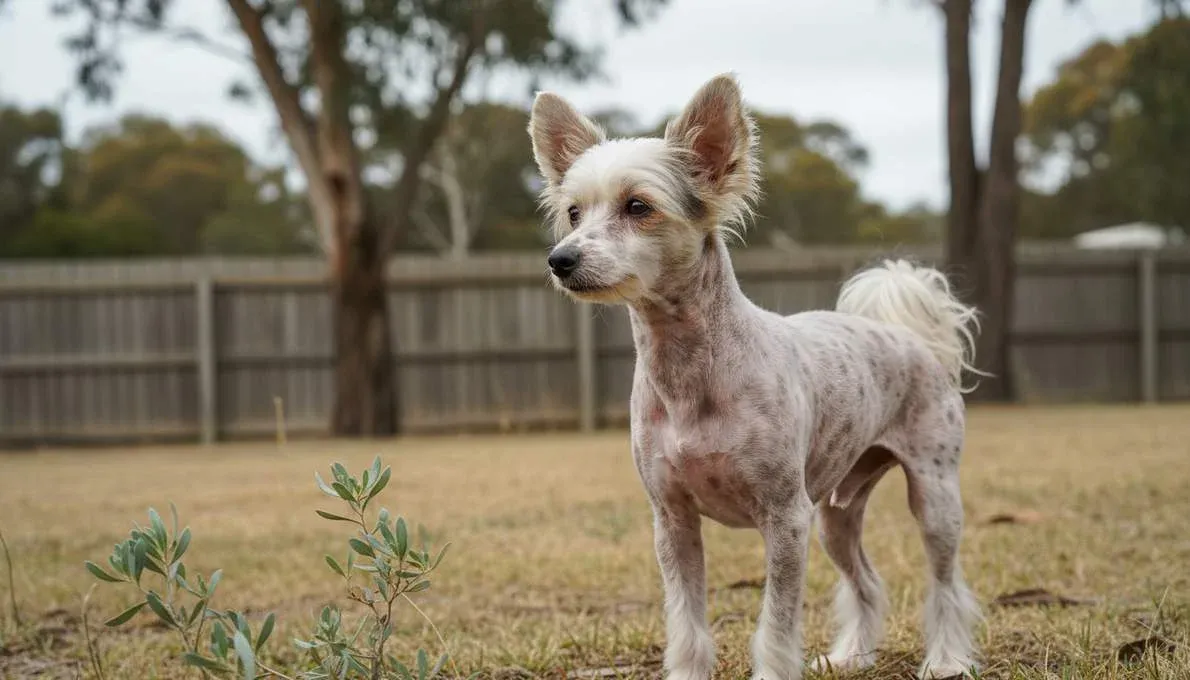
| Coat (Hairless) | Smooth, soft skin with silky hair on head (crest), feet (socks), and tail (plume) |
| Coat (Powderpuff) | Full, soft, silky double coat covering the entire body |
| Colours | Any colour or combination — 20+ colour combinations recognised |
| Lifespan | 13–15 years (some sources cite 12–14) |
| Temperament | Affectionate, playful, sensitive, devoted, needy |
| Shedding | Minimal to none (Hairless); very low (Powderpuff) |
| Hypoallergenic | Considered hypoallergenic — one of the best breeds for allergy sufferers |
| Barking Level | Low to moderate — alert barkers but not excessive |
| Good With Kids | Yes — gentle and patient, but fragile. Best with older, gentle children. |
| Apartment Friendly | Excellent — one of the best apartment dogs |
| Puppy Price (AUD) | $1,500–$3,500 from registered breeders |
History & Origins
Despite the name, the Chinese Crested dog almost certainly did not originate in China. The breed’s exact origins are one of the great mysteries of the dog world. Genetic evidence points to a connection with hairless dogs from Mexico and Central America, while some historians believe larger hairless dogs originated in Africa and were brought to China through ancient trade routes.
What we do know is that the Chinese developed these dogs into the small, refined companions we recognise today. China had a long tradition of miniaturising dog breeds — the same process that produced the Pekingese and Shih Tzu. The hairless varieties were prized aboard Chinese trading ships, where they earned the nickname “Chinese Ship Dogs” and served as ratters, keeping holds free of vermin and the fleas that carried plague. Sailors traded them in port towns across the globe, which is why similar hairless dogs appear in historical records from South America, Turkey, South Africa, and Egypt.
The breed surfaced in European and American records in the late 1800s. The burlesque dancer Gypsy Rose Lee was a notable breeder in the mid-20th century, and her lines — combined with those of breeder Debora Wood — form the foundation of virtually every Chinese Crested alive today. The breed was recognised by the FCI in 1987 and the AKC in 1991. In Australia, Chinese Cresteds are registered under ANKC Group 1 (Toys), with an active community of breeders and exhibitors across NSW, Victoria, Queensland, South Australia, and beyond.
Chinese Crested Temperament & Personality
The Chinese Crested dog temperament is often described as “cat-like,” and once you live with one you’ll understand why. They perch on the back of couches. They choose a favourite person and follow them with unsettling dedication. They’re particular about who they warm up to. But unlike cats, they are absolutely desperate for your attention.
Chinese Cresteds form intensely close bonds with their owners. They want to be touching you at all times — on your lap, under your blanket, tucked into your jumper. If you work from home, expect a small warm body pressed against your leg for eight hours straight. This is not a dog for people who want independence. Separation anxiety is common and should be managed early.
This breed is remarkably sensitive to human moods. If you’re stressed, they know. If you’re sad, they’ll climb onto your chest and stare at you with their enormous eyes until you feel better (or at least feel something). The flip side is that they don’t handle conflict well. Raised voices in the house — even when not directed at them — can make a Crested anxious and withdrawn.
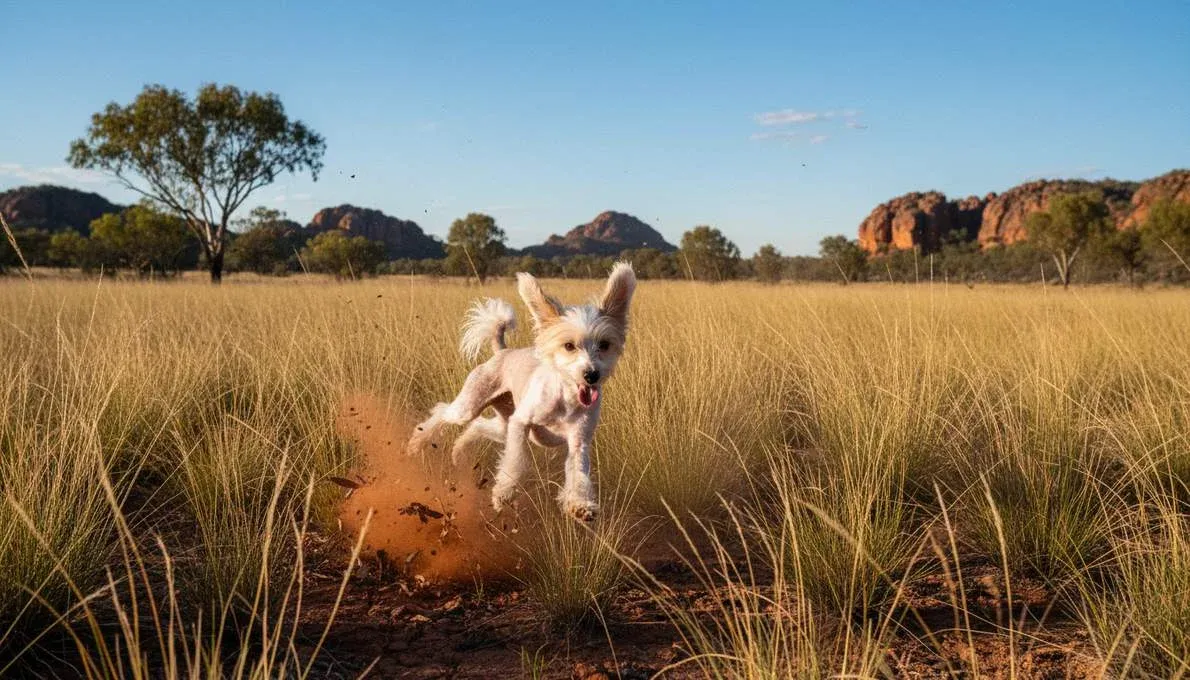
Cresteds have a clownish streak. They learn tricks quickly and will repeat anything that gets a laugh. They’re alert, curious, and surprisingly agile for a breed that looks like it was designed by a committee. Many owners describe them as the funniest dogs they’ve ever lived with.
Despite being labelled “friendly” in many breed guides, plenty of Chinese Cresteds are actually quite shy with new people. They’re not aggressive — they’re cautious. Early socialisation makes a significant difference, but some Cresteds will always prefer to observe newcomers from the safety of your lap rather than bouncing over to greet them.
Cresteds are gentle, patient, and genuinely enjoy children. The problem is that they’re fragile. A 4 kg dog with fine bones can be seriously injured by a toddler who sits on it, squeezes it, or drops it. They’re best suited to families with older, gentle children who understand how to handle a small dog respectfully.
Most Cresteds get along well with other dogs and cats, especially if raised together. They’re not possessive or dominant. They’re more likely to curl up with the cat than chase it.

Health & Genetic Conditions
Chinese Cresteds are generally healthy dogs with a long lifespan, but the breed does carry some specific conditions — particularly eye problems, dental issues, and skin concerns unique to the Hairless variety.
| Condition | Applies To | What It Means | Estimated Cost (AUD) |
|---|---|---|---|
| Primary Lens Luxation (PLL) | Both varieties | Lens of the eye shifts out of position, causing glaucoma and potential blindness. DNA test available. | $2,000–$4,000 per eye (surgery) |
| Progressive Retinal Atrophy (PRA) | Both varieties | Retinal degeneration leading to blindness. prcd-PRA form has a DNA test. At least two forms exist in the breed. | $500–$1,500 (diagnosis); no cure — management only |
| Dental Disease (Hairless) | Primarily Hairless | Missing, crowded, and decay-prone teeth are directly linked to the hairless gene. Powderpuffs usually have normal dentition. | $500–$3,000+ (extractions, dental cleaning) |
| Legg-Calvé-Perthes Disease | Both varieties | Blood supply to the femoral head deteriorates, causing hip pain and lameness. Common in toy breeds. | $2,500–$5,000 (surgery) |
| Patellar Luxation | Both varieties | Kneecap slips out of position. Ranges from mild to requiring surgery. | $1,500–$4,000 per knee (surgery) |
| Skin Issues (Hairless) | Hairless variety | Acne, blackheads, dryness, sunburn, allergic reactions. Requires ongoing skin care similar to human skincare routines. | $200–$800/year (skincare products, vet consults) |
| Keratoconjunctivitis Sicca (Dry Eye) | Both varieties | Reduced tear production causing chronic eye irritation. Requires lifelong treatment. | $500–$1,500/year (eye drops, ongoing management) |
Buy only from breeders who DNA test for PLL and prcd-PRA — both tests are readily available and responsible Australian breeders routinely screen for them. Ask to see test results for both parents. Annual eye exams by a veterinary ophthalmologist are recommended, as the breed carries at least two forms of PRA and one cannot be DNA tested. For Hairless Cresteds, establish a skin care routine from puppyhood.
The gene that causes hairlessness is directly linked to dental abnormalities. Missing teeth, forward-pointing teeth (the “tusked” look), and teeth prone to early decay are not a sign of bad breeding — they’re an inherent part of the Hairless variety. Regular dental care and professional cleanings are essential throughout the dog’s life. Powderpuffs, which carry two copies of the recessive gene, typically have normal teeth.
Wikipedia [1]; PetMD – Chinese Crested [5]; American Chinese Crested Club – Breed Health [6]; BorrowMyDoggy [7]
Chinese Crested Lifespan & Longevity
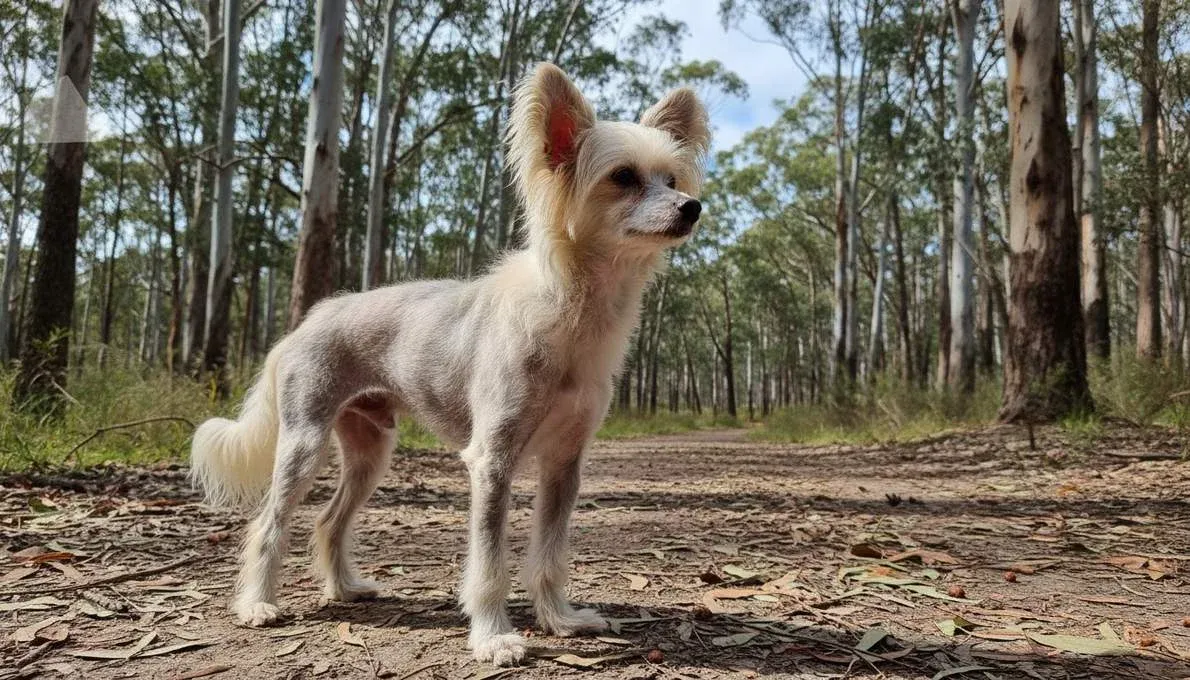
The Chinese Crested dog lifespan is impressively long for a purebred dog. Most sources cite 13–15 years, and a 2024 UK study of over 580,000 dogs found the breed’s median life expectancy to be 13.4 years — above the purebred average of 12.7 years. It’s not unusual for well-cared-for Cresteds to reach 15–17 years.
| Life Stage | Age Range | What to Watch For |
|---|---|---|
| Puppy | 0–12 months | Fragile and tiny. Careful handling essential. Begin socialisation early — shy temperaments set in fast if missed. Start skin care routine for Hairless puppies. Ear taping may be needed to help ears stand. |
| Young Adult | 1–3 years | Full size reached. Playful energy peaks. Establish dental care habits. Monitor skin condition (Hairless). Core personality is set by this stage. |
| Mature Adult | 3–10 years | Settled and affectionate. Watch for weight gain — small dogs gain impactful weight fast. Annual eye exams. Regular dental checks. |
| Senior | 10+ years | Dental disease becomes more likely. Joint stiffness (patellar luxation, Legg-Calvé-Perthes). Eye conditions may progress. Keep warm — older Hairless Cresteds feel the cold even more. |
To maximise your Chinese Crested’s lifespan: maintain dental health aggressively (dental disease can shorten life by 1–3 years if untreated), keep them at a lean weight, protect Hairless skin from sun damage (which can be cumulative over years), and schedule annual eye exams to catch PRA or PLL early.
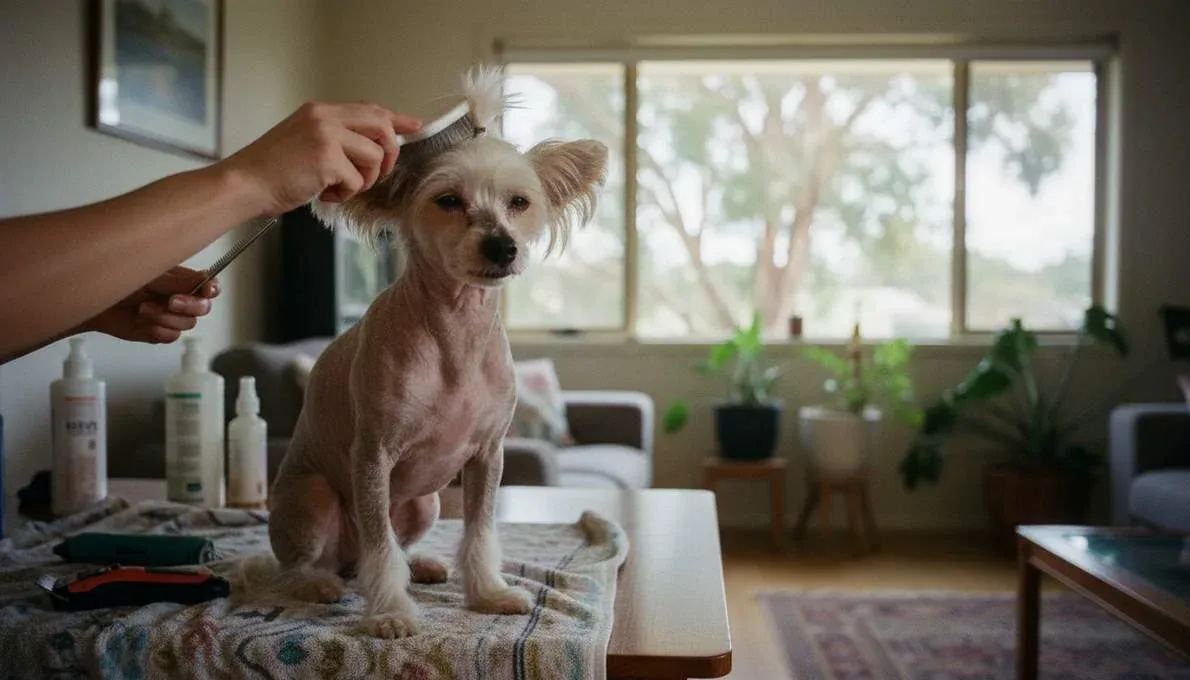
Chinese Crested Grooming & Care
Grooming a Chinese Crested depends entirely on which variety you have. The Hairless and Powderpuff have completely different care routines, despite being the same breed born in the same litter.
Hairless Chinese Crested Grooming
| Task | Frequency | Notes |
|---|---|---|
| Bathing | Weekly to fortnightly | Use a gentle, fragrance-free or hypoallergenic shampoo. Their skin is similar to human skin and needs to be kept clean to prevent acne and blackheads. |
| Moisturising | Every other day or after bathing | Use an oil-free, hypoallergenic moisturiser. Some Cresteds are allergic to lanolin, so check ingredients. Coconut oil works for many dogs. |
| Sun Protection | Before any outdoor time in UV | Apply dog-safe sunscreen to exposed skin. Lighter-skinned Hairless Cresteds burn easily. UV-protective clothing is also an option in Australia’s intense sun. |
| Acne/Blackhead Care | As needed | Gentle exfoliation and human-grade acne products (benzoyl peroxide, salicylic acid) can be used. Don’t squeeze — this causes scarring and infection. |
| Hair Trimming | Monthly | Unless “true hairless” (virtually no body hair), most Hairless Cresteds grow some fuzzy body hair that needs trimming or shaving for a clean look. |
| Nail Trimming | Every 2 weeks | Hare feet with elongated toes — quicks run deeper. Trim carefully to avoid pain and bleeding. |
| Teeth Brushing | Daily if possible; minimum 3x week | Critical for Hairless Cresteds due to dental abnormalities. Professional cleaning recommended annually. |
Powderpuff Chinese Crested Grooming
| Task | Frequency | Notes |
|---|---|---|
| Brushing | Daily or every other day | Silky double coat mats easily if neglected. Never brush dry — mist with water or grooming spray first. A slicker brush and comb work well. |
| Bathing | Every 1–2 weeks | Powderpuffs are very clean and have little doggy odour. Bathe as needed. Use a quality conditioner to keep the coat soft. |
| Professional Grooming | Every 6–8 weeks | Many owners use a “pony cut” — shaved body with long hair on legs, tail, head, and crest. Easy care and very cute. |
| Nail Trimming | Every 2 weeks | Same elongated toes as Hairless. Deep quicks — trim carefully. |
| Teeth Brushing | 2–3 times per week | Powderpuffs typically have normal teeth, but dental care is still important for long-term health. |
| Ear Cleaning | Weekly | Check for wax buildup and signs of infection. Clean with a vet-recommended ear solution. |
⚠️ Australian sun warning: Australia has some of the highest UV levels on the planet. Hairless Chinese Cresteds need sun protection every single time they go outside during daylight hours — even on overcast days. Dog-safe sunscreen on exposed skin, UV-protective clothing, and limiting outdoor time during peak UV hours (10am–2pm) are non-negotiable. Cumulative sun damage causes skin ageing, discolouration, and increases skin cancer risk over the dog’s long life.
Chinese Crested Exercise Needs
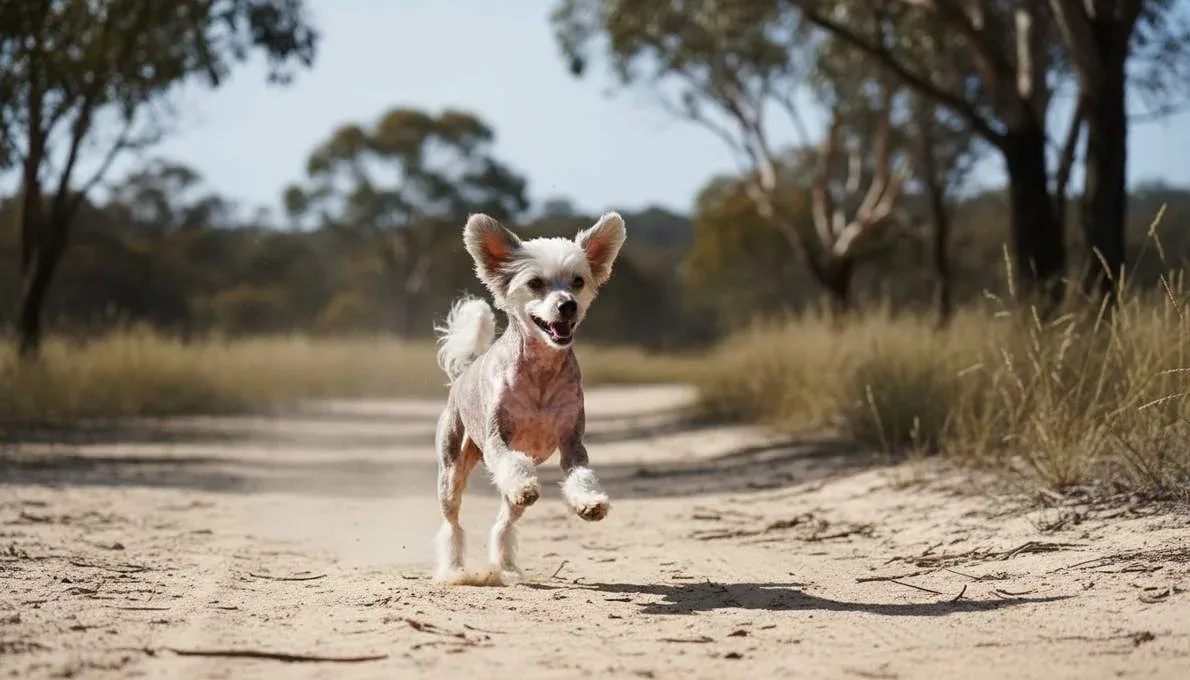
Chinese Cresteds are not a high-energy breed. They’re happy with moderate daily activity and will match your energy level — active enough for a walk around the block, content enough to skip it if you’re having a couch day.
Adults:
20–40 minutes per day of walking or play. Two short walks or one moderate walk plus some indoor play is usually plenty. They enjoy running around a secure yard but won’t demand it.
Puppies:
Short, gentle play sessions. Their small size and fine bones mean no rough play, no jumping from heights, and no over-exercising growing joints. Socialisation outings count as exercise at this age.
Mental stimulation:
Cresteds are intelligent and enjoy trick training, puzzle toys, and interactive games. They pick up new behaviours quickly and enjoy showing off. A bored Crested may develop behavioural issues like excessive barking or destructive chewing.
Temperature sensitivity:
This is critical for both varieties. Hairless Cresteds have virtually no insulation — they feel the cold acutely and need clothing in winter, even in moderate Australian climates like Melbourne or Canberra. In summer, they need sun protection but handle warm temperatures reasonably well (they’re one of the few breeds with sweat glands). Powderpuffs manage cold slightly better but can still feel it. Neither variety tolerates extreme heat well.
Apartment perfect:
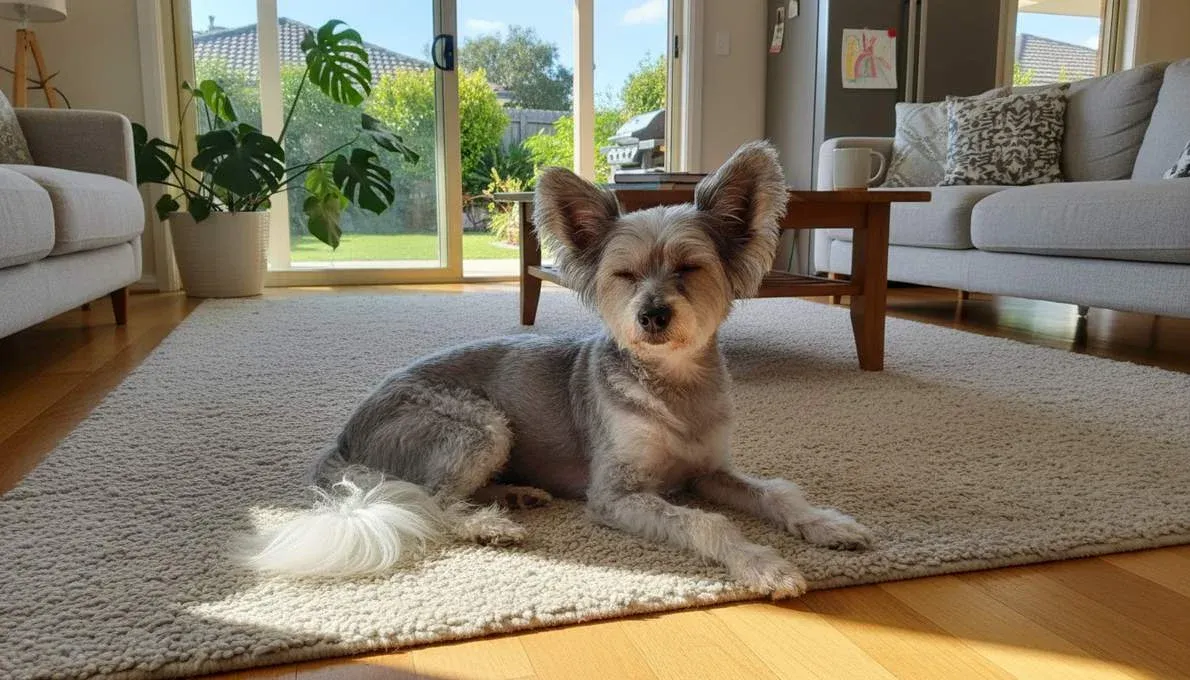
The Chinese Crested is one of the best apartment dogs. Low exercise needs, minimal barking, small size, and a preference for indoor living make them ideally suited to apartment and unit life. Their main need is being close to their owner, not roaming a large property.
Chinese Crested Training Guide
Chinese Cresteds are intelligent, eager to please, and learn quickly — but they’re also sensitive. Harsh training methods will shut them down completely. Gentle, positive reinforcement is the only approach that works.
Honest difficulty rating:
Easy to moderate. One of the more trainable toy breeds. They genuinely want to make you happy and will work for praise almost as readily as treats. The main challenges are housetraining (common in small breeds) and managing separation anxiety.
| Age | Training Focus | Tips |
|---|---|---|
| 8–16 weeks | Socialisation, gentle handling, name recognition | Expose to different people, sounds, surfaces, and environments. Cresteds can become fearful if under-socialised. Carry them to new places — the world is overwhelming at 500 grams. |
| 4–6 months | Housetraining, basic commands (sit, stay, come), crate training | Housetraining can be slow with toy breeds — small bladders and fast metabolisms. Consistent schedule, frequent outdoor trips. Crate training helps enormously. |
| 6–12 months | Leash manners, recall, trick training | This is where Cresteds shine. They love learning tricks and will repeat anything that earns attention or laughter. Start trick training early — it builds confidence. |
| 1–2 years | Separation anxiety management, continued socialisation | Practice short absences from puppyhood. Leave them with a frozen Kong or puzzle toy. Gradually increase alone time. If anxiety is severe, consult a behaviourist. |
Housetraining reality:
Small dogs are notoriously harder to housetrain than larger breeds, and Cresteds are no exception. Their tiny bladders fill fast, they can sneak off to toilet in hidden spots, and some owners report it taking 6–12 months of consistent effort. Indoor grass patches or pee pads as a backup are common strategies for Crested owners, especially in apartments.
Separation anxiety:
This is the breed’s biggest training challenge. Cresteds bond so intensely with their people that being left alone can cause genuine distress — barking, destructive behaviour, toileting accidents, and in severe cases, self-harm. Start teaching independence from puppyhood. If you work full-time away from home, this breed may not be the right choice unless you can arrange a companion or dog sitter.
Cost of Owning a Chinese Crested Dog in Australia
Chinese Cresteds are a moderately priced breed to buy in Australia, with a well-established community of registered breeders. Ongoing costs are relatively low compared to larger breeds, but Hairless Cresteds have additional skin care and dental expenses that add up.
| Expense | Estimated Annual Cost (AUD) | Notes |
|---|---|---|
| Puppy Purchase | $1,500–$3,500 (one-off) | ANKC registered breeders. Show-quality or imported-line puppies at the higher end. Hairless and Powderpuff typically priced similarly. |
| Food (Premium Small Breed) | $500–$900/year | Small dogs eat small amounts. High-quality small-breed kibble or raw diet. They’re not expensive to feed. |
| Vet Check-ups | $250–$500/year | Annual checks; bi-annual after age 10. Annual eye exams strongly recommended ($80–$150 each). |
| Pet Insurance | $400–$900/year | Worth it for eye conditions (PLL, PRA), dental issues, and orthopaedic problems (patellar luxation, Legg-Calvé-Perthes). |
| Dental Care | $300–$1,500/year (Hairless); $100–$500 (Powderpuff) | Hairless Cresteds need more frequent professional dental work. Budget higher for this variety. Home brushing reduces costs significantly. |
| Skin Care (Hairless) | $200–$600/year | Sunscreen, moisturiser, acne products, UV clothing. Not applicable to Powderpuffs. |
| Grooming (Powderpuff) | $300–$700/year | Professional grooming every 6–8 weeks. Hairless grooming is cheaper (bathing + skin care at home). |
| Clothing & Sun Protection | $100–$400/year | Hairless Cresteds need winter jumpers and summer UV protection. Australian weather demands both. |
| Toys, Beds & Accessories | $100–$300/year | Small dogs — small costs. They love soft beds, blankets, and interactive toys. |
| Council Registration | $20–$200/year | Desexed small breeds are at the lowest end of registration fees in most Australian councils. |
Total first-year cost estimate:
$3,500–$7,000 depending on variety and breeder.
Annual ongoing cost:
$1,500–$3,500 for a healthy adult (Hairless at the higher end due to skin and dental care).
Finding a breeder in Australia:
DogzOnline lists registered breeders across NSW, VIC, QLD, SA, and other states. Established kennels include breeders in Ballarat VIC, Harden NSW, Central QLD, Adelaide SA, and the NSW South Coast. Many breeders show actively and health test for PRA and PLL. Expect waitlists — litters are small (typically 2–5 puppies) and good breeders are selective about homes.
Rescue:
Chinese Crested rescue dogs do occasionally become available. Check PetRescue.com.au, breed-specific Facebook groups, and the Chinese Crested Club of NSW/VIC for rehoming listings.
Is a Chinese Crested Dog Right for You?
The Chinese Crested is a brilliant companion dog for the right person — but their neediness and specific care requirements aren’t for everyone.
- You want a velcro dog that’s genuinely happiest in your lap, under your blanket, or tucked inside your jacket.
- You live in an apartment, townhouse, or small home — they thrive in compact spaces.
- You or a family member has dog allergies — the Hairless variety is one of the best breeds for allergy sufferers.
- You work from home or are retired and can be with the dog for most of the day.
- You enjoy grooming routines — whether it’s skin care (Hairless) or coat care (Powderpuff), there’s a daily ritual.
- You want a long-lived companion — 13–15+ years is a genuine commitment and reward.
- You appreciate quirky, funny, personality-driven dogs over athletic or working breeds.
- You work long hours away from home and the dog will be alone regularly. Separation anxiety is a breed-wide issue.
- You have toddlers or very young children who may accidentally injure a fragile 4 kg dog.
- You want a low-maintenance dog. Despite their size, Hairless Cresteds need significant skin care, sun protection, dental care, and temperature management.
- You’re not prepared for the dental costs and management that come with the Hairless variety.
- You want a robust outdoor adventure dog — Cresteds are indoor companions, not hiking partners.
- You live in an area with extreme temperatures (very cold winters or very hot, high-UV summers) and can’t provide climate control.
Hairless vs Powderpuff Chinese Crested: Which Variety Suits You?
| Feature | Hairless | Powderpuff |
|---|---|---|
| Coat | Smooth skin with hair on head, feet, and tail only | Full, soft, silky double coat covering entire body |
| Shedding | Almost none | Very low — minimal shedding, no doggy odour |
| Hypoallergenic | Excellent — best option for allergy sufferers | Good — still considered hypoallergenic |
| Skin Care | High — sunscreen, moisturiser, acne prevention, UV clothing | Minimal — standard skin care |
| Coat Grooming | Minimal — occasional trimming of body fuzz | High — daily brushing, regular professional grooming |
| Dental Issues | Common — missing/crowded teeth linked to hairless gene | Rare — typically normal dentition |
| Cold Tolerance | Very poor — needs clothing in winter | Poor — slightly better but still feels the cold |
| Sun Sensitivity | High — burns easily, needs daily sun protection in Australia | Low — coat provides natural protection |
| Overall Maintenance | Different, not less — skin care replaces coat care | Traditional grooming — brushing and professional trims |
The Chinese Crested dog is one of the most distinctive, affectionate, and genuinely entertaining companion breeds you’ll find. They’re not for everyone, but for the right owner, they’re addictive. Here’s the honest summary:
- They come in two varieties — Hairless and Powderpuff — born in the same litter, with completely different grooming needs but the same devoted, playful, sensitive personality. Expect a dog that lives for your attention and doesn’t handle being alone.
- Health-wise, they’re long-lived (13–15 years) but carry breed-specific risks in eyes (PLL, PRA), teeth (Hairless variety), and joints. DNA testing is available for major conditions — always buy from breeders who test.
- In Australia, they’re well-established with good breeder networks, moderately priced to buy ($1,500–$3,500), and affordable to keep — but Hairless Cresteds need sun protection as a genuine daily commitment in our UV-intense climate.
Chinese Crested Dog FAQs
What is the difference between a Hairless and Powderpuff Chinese Crested?
Both are the same breed, born in the same litter. The Hairless has smooth skin with hair only on the head (crest), feet (socks), and tail (plume). The Powderpuff has a full, soft, silky double coat covering the entire body. The Hairless trait is caused by a dominant gene — Powderpuffs carry two copies of the recessive gene. Both share the same temperament, size, and personality.
Are Chinese Crested dogs hypoallergenic?
Yes, they’re considered one of the most hypoallergenic breeds available. The Hairless variety produces very little dander and has almost no shedding. Powderpuffs shed minimally. While no dog is 100% hypoallergenic, Cresteds are among the best options for people with dog allergies.
What is the Chinese Crested dog temperament?
Affectionate, playful, sensitive, devoted, and needy. They bond intensely with their owner, are sensitive to moods, enjoy learning tricks, and can be reserved with strangers. Separation anxiety is common. They’re clownish, entertaining, and described by many owners as the funniest dogs they’ve ever had.
How much does a Chinese Crested cost in Australia?
Registered breeders charge $1,500–$3,500 AUD for a puppy. Annual ongoing costs are $1,500–$3,500 depending on the variety (Hairless costs more due to skin and dental care). Total first-year investment is typically $3,500–$7,000.
What is the Chinese Crested lifespan?
13–15 years on average. A 2024 UK study found a median of 13.4 years — above the purebred average. Many Cresteds live to 15–17 with good care. Maintaining dental health and lean weight are the biggest longevity factors.
Do Chinese Crested dogs shed?
The Hairless variety sheds almost nothing — they’re one of the lowest-shedding breeds available. The Powderpuff sheds very lightly, significantly less than most coated breeds. Neither variety produces the typical doggy odour.
What are Chinese Crested health problems?
The main concerns are eye conditions (Primary Lens Luxation, Progressive Retinal Atrophy — DNA tests available), dental disease (Hairless variety — linked to the hairless gene), Legg-Calvé-Perthes disease, patellar luxation, and skin issues (Hairless — acne, sunburn, dryness). They’re generally healthy with a long lifespan.
Are Chinese Crested dogs good apartment dogs?
Excellent. They’re one of the best apartment breeds. Small size, low exercise needs, minimal shedding, low barking level, and a preference for indoor living make them perfectly suited to apartment and unit life. Their main need is being close to their owner, not roaming a large property.
Why do Chinese Cresteds win ugly dog contests?
Hairless Cresteds — especially older ones with dental issues, patchy hair, and protruding tongues — have a distinctive look that tends to dominate World’s Ugliest Dog competitions. It’s a bit unfair, because to their owners, they’re beautiful. The breed has won the competition more times than any other. It’s become part of their charm.
Do Chinese Cresteds need clothes?
Hairless Cresteds absolutely need clothing. In winter, they need jumpers and coats even in moderate Australian climates — they have no insulating coat and feel the cold intensely. In summer, they need UV-protective clothing or sunscreen. Powderpuffs may benefit from a light coat in very cold weather but generally manage without.
Are Chinese Crested dogs good with other pets?
Generally, yes. They’re not dominant or possessive and tend to get along well with other dogs and cats, especially if raised together. Their small size means introductions with larger dogs should be supervised to prevent accidental injury.
What colours do Chinese Crested dogs come in?
Any colour or combination of colours. The breed has over 20 recognised colour variations including solid, spotted, and patterned. Common colours include black, white, cream, chocolate, blue, lavender, apricot, and pink skin (Hairless). There’s no colour standard — anything goes.
[1] Wikipedia – Chinese Crested Dog — https://en.wikipedia.org/wiki/Chinese_Crested_Dog (FOLLOW)
[2] AKC – Chinese Crested Breed Information — https://www.akc.org/dog-breeds/chinese-crested/ (FOLLOW)
[3] WebMD Pets – What to Know About Chinese Cresteds — https://www.webmd.com/pets/dogs/what-to-know-chinese-cresteds (FOLLOW)
[4] Hill’s Pet – Chinese Crested Breed — https://www.hillspet.com/dog-care/dog-breeds/chinese-crested (FOLLOW)
[5] PetMD – Chinese Crested Dog Health and Care — https://www.petmd.com/dog/breeds/chinese-crested (FOLLOW)
[6] American Chinese Crested Club – Breed Health — https://chinesecrestedclub.info/breed-health/ (FOLLOW)
[7] BorrowMyDoggy – Chinese Crested Breed Guide — https://www.borrowmydoggy.com/doggypedia/dog-breed-guides-chinese-crested (FOLLOW)
[8] DogTime – Chinese Crested Breed Information — https://dogtime.com/dog-breeds/chinese-crested (FOLLOW)
[9] DogzOnline – Chinese Crested Breeders Australia — https://www.dogzonline.com.au/breeds/breeders/chinese-crested-dog.asp
[10] Perfect Pets – Chinese Crested Breeders Australia — https://perfectpets.com.au/pets/dogs/dog-breeds/dog-breeders/chinese-crested