
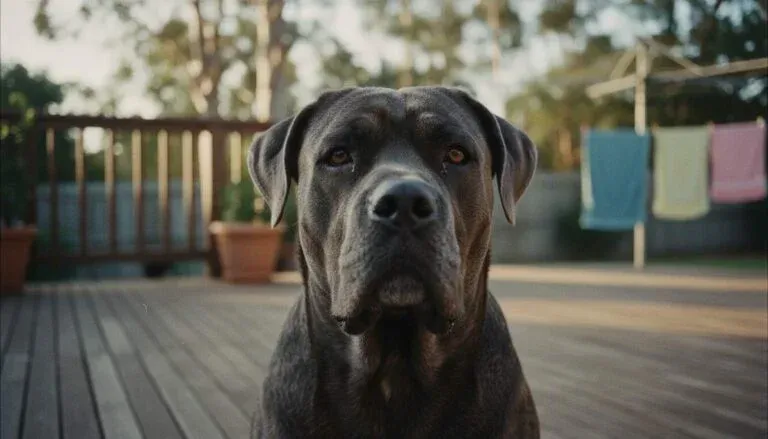
The Cane Corso doesn’t enter a room — it occupies it. At up to 50 kg of Roman-engineered muscle, with a stare that could make a seasoned tradesman reconsider knocking on your front door, this Italian mastiff is one of the most commanding dog breeds on the planet. And in Australia, it’s also one of the most misunderstood.
The name translates roughly from Latin as “bodyguard dog” or “guard of the courtyard,” and that’s exactly what you get. Cane Corsos are fiercely loyal to their family, naturally suspicious of strangers, and calm enough to sleep at your feet for hours — until they decide you need protecting. They’re not aggressive by default. But they are powerful, they are opinionated, and they are absolutely not the right dog for a first-time owner who just wants something that looks tough on Instagram.
If you’re seriously considering a Cane Corso in Australia — or you’re just trying to work out whether they’re even legal in your state — this guide covers everything from honest temperament advice to vet costs, breeder pricing, and the legal restrictions you need to know about before you commit.
What You’ll Learn
- Breed traits & temperament
- Health concerns to know
- True cost in Australia
- Training & exercise needs
- Is this breed right for you?
Breed Quick Facts Table
| Trait | Details |
|---|---|
| Breed Group | Utility (ANKC) / Working (AKC) |
| Origin | Italy (ancient Roman lineage) |
| Other Names | Italian Mastiff, Cane Corso Italiano |
| Size | Large to giant |
| Height | Males: 64–70 cm | Females: 60–66 cm |
| Weight | Males: 45–50 kg | Females: 40–45 kg |
| Coat | Short, dense, double-layered |
| Colours | Black, grey (lead, slate, light), fawn, red, brindle |
| Lifespan | 9–12 years |
| Temperament | Loyal, protective, intelligent, assertive, calm |
| Bite Force | Approximately 700 PSI (one of the strongest of any breed) |
| Shedding | Low to moderate (heavier in spring) |
| Barking Level | Low — they bark when it matters |
| Good With Kids | Yes, with older children and proper training — too strong for toddlers |
| Apartment Friendly | No — they need space and a securely fenced yard |
| Exercise Needs | High — 60+ minutes daily of vigorous activity |
| Puppy Price (AUD) | $3,000–$6,000+ from registered breeders |
| Legal Status (AU) | Legal but restricted in some states — see Section 12 |
History & Origins
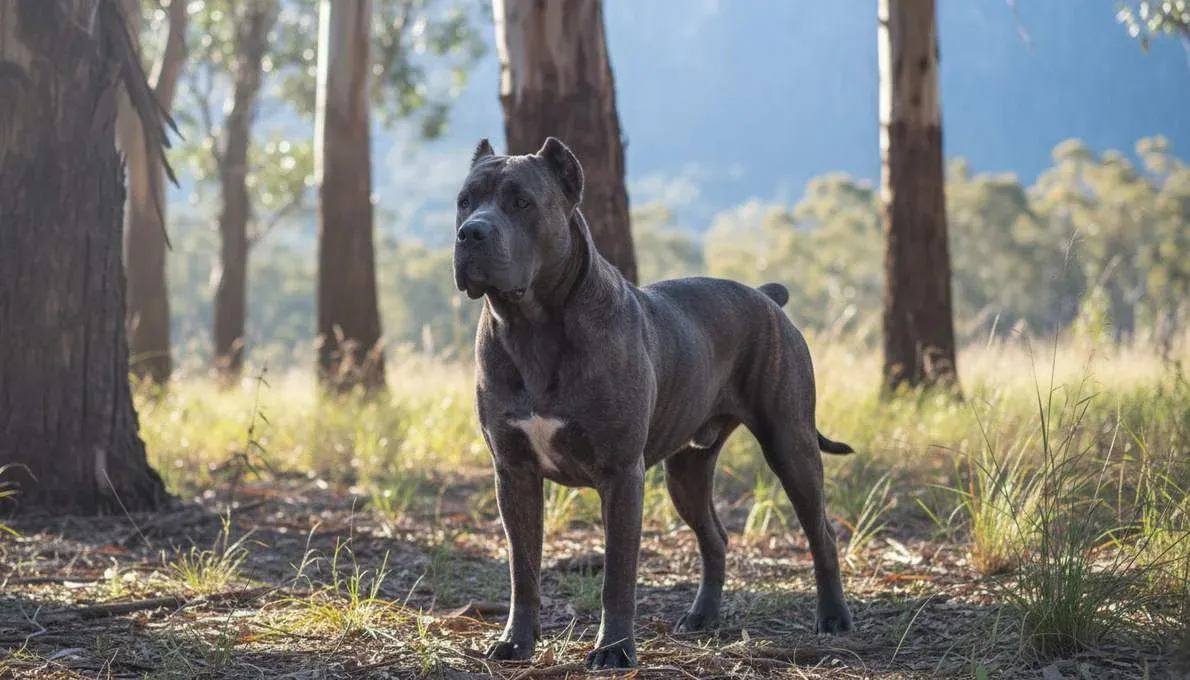
The Cane Corso’s lineage stretches back further than almost any modern dog breed. Their ancestors were Molossian war dogs — massive, fearless animals used by the ancient Greeks and later adopted by the Roman Empire. The Romans brought these dogs back to Italy after conquering the Greek islands and crossbred them with local Italian dogs, producing two distinct descendants: the heavier Neapolitan Mastiff and the lighter, more athletic Cane Corso.
Roman soldiers used the earliest Cane Corsos in warfare. Historical accounts describe dogs charging enemy lines with buckets of flaming oil strapped to their backs. After the fall of Rome, the breed transitioned into civilian life across the Italian countryside, working as farm guardians, livestock herders, and wild boar hunters. For centuries, the Cane Corso was a working dog in southern Italy — particularly in the Puglia region — valued for its versatility and unwavering loyalty.
By the mid-20th century, the breed had nearly disappeared. Industrialisation and the collapse of Italy’s share-cropping system in the 1960s made farm dogs redundant, and the Cane Corso population dwindled to dangerously low numbers. In the 1970s, a group of Italian breed enthusiasts launched a dedicated recovery effort. The Società Amatori Cane Corso was formed in 1983, and the breed was officially recognised by the Italian kennel club (ENCI) in 1994.
International recognition followed: the FCI provisionally accepted the breed in 1996 (fully in 2007), and the AKC granted full recognition in 2010. The Australian National Kennel Council (ANKC) recognised the Cane Corso in 2003, though the breed remains relatively rare in Australia, with estimates suggesting very few registered purebred dogs in the entire country.

Cane Corso Temperament & Personality
The Cane Corso temperament is not a casual thing. This is a breed with thousands of years of guardian instinct baked into its DNA, and it shows in every aspect of their behaviour. Understanding what you’re getting into is non-negotiable before you bring one home.
Once a Cane Corso accepts you as its family, the bond is absolute. They’re affectionate, attentive, and deeply devoted. With their people, they’re surprisingly gentle and even playful. They want to be near you at all times and will follow you from room to room like a 50 kg shadow.
This isn’t a breed that learns to guard — it’s born knowing. A Cane Corso will instinctively position itself between you and anything it perceives as a threat. Their sheer size, deep bark, and unwavering eye contact are usually enough to make anyone think twice. They rarely need to escalate beyond presence.
Unlike Golden Retrievers who greet everyone like a long-lost friend, the Cane Corso is measured and watchful around people it doesn’t know. This isn’t aggression — it’s assessment. Early and extensive socialisation is the only way to ensure this natural caution doesn’t tip into reactivity.
Cane Corsos are exceptionally smart. They learn commands quickly, but they’ll also test boundaries just as fast. They need a confident, consistent owner who can lead without resorting to force. Harsh corrections backfire with this breed — they’re sensitive to tone and will shut down or push back if they feel mistreated.
They’re not barkers. When a Cane Corso does bark, it’s a deep, resonant sound that carries serious weight. It’s worth paying attention.
Let’s be direct: many Cane Corsos have a dominant streak with other dogs, especially same-sex pairings. They also have a high prey drive, which means smaller animals (cats, rabbits, chickens) may trigger a chase response. Multi-pet households require very careful management and early socialisation.
With their own family’s older children, a well-raised Cane Corso can be patient and protective. But their size and strength make them unsuitable for households with toddlers or very young children. A playful nudge from a 50 kg dog can knock a small child off their feet.
The American Temperament Test Society reports an 88.1% pass rate for the breed — higher than many “family-friendly” breeds. The key variable is always the owner, not the dog.

Health & Genetic Conditions
The Cane Corso is a generally robust breed with a lifespan of 9–12 years — longer than many giant breeds. But like all large dogs, they carry genetic predispositions to certain conditions. Being prepared financially and medically is part of responsible ownership.
| Condition | Risk Level | What It Means | Estimated Cost (AUD) |
|---|---|---|---|
| Hip Dysplasia | High (common in large breeds) | Malformation of the hip joint causing pain, arthritis, and mobility issues | $3,000–$7,000 per hip (surgery) |
| Elbow Dysplasia | Moderate to high | Abnormal elbow joint development leading to lameness | $2,500–$5,000 (surgery) |
| Bloat / GDV (Gastric Dilatation-Volvulus) | High risk (deep-chested breed) | Stomach fills with gas and twists — life-threatening if untreated | $3,000–$8,000 (emergency surgery); preventive gastropexy: $500–$1,500 |
| Entropion / Ectropion / Cherry Eye | Common in the breed | Eyelid abnormalities causing irritation, infections, and corneal damage | $1,500–$3,500 per eye (surgery) |
| Idiopathic Epilepsy | Moderate | Seizure disorder, typically onset 6 months–5 years | $1,000–$3,000/year (medication and monitoring) |
| Dilated Cardiomyopathy (DCM) | Moderate | Heart muscle weakens, reducing ability to pump blood | $2,000–$5,000 (ongoing treatment) |
| DSRA (Dental-Skeletal-Retinal Anomaly) | Breed-specific genetic condition | Brittle teeth, skeletal abnormalities, and progressive vision loss — unique to Cane Corsos | Varies; no cure — management only |
| Demodectic Mange | Moderate | Immune-related skin condition caused by mites | $500–$1,500 (treatment) |
Only buy from breeders who can provide hip and elbow scores, cardiac clearances, eye certifications, and DNA testing (particularly for DSRA). In Australia, reputable breeders registered through Dogs Australia (formerly ANKC) and state bodies will have these records. A preventive gastropexy — tacking the stomach to the abdominal wall during desexing surgery — is worth discussing with your vet, as it can prevent the life-threatening stomach twist that kills large dogs.
PetMD – Cane Corso Health [4]; Dogster – Cane Corso [5]; Wikipedia – Cane Corso [1]; Chewy – Cane Corso Breed [6]

Cane Corso Lifespan & Longevity
The Cane Corso life expectancy sits between 9 and 12 years, which is relatively good for a breed of this size. Research has also found an interesting link between coat colour and lifespan — black brindle Cane Corsos tend to live slightly longer than dogs with other coat colours, though the reasons aren’t fully understood.
| Life Stage | Age Range | What to Watch For |
|---|---|---|
| Puppy | 0–18 months | Rapid growth. Large-breed puppy food is essential. Avoid high-impact exercise to protect joints. Begin socialisation immediately. |
| Young Adult | 18 months–3 years | Peak energy and strength. Consistent training is critical — this is when they’ll test boundaries hardest. |
| Mature Adult | 3–7 years | Settle into a calmer but still active routine. Monitor weight and joint health. |
| Senior | 7+ years | Increased risk of heart conditions and cancer. Bi-annual vet checks. Joint supplements recommended. Adjust exercise intensity. |
To maximise your Cane Corso’s years: maintain a healthy weight (obesity accelerates joint disease and heart conditions), feed a high-quality large-breed diet, keep them mentally stimulated, and stay on top of regular vet visits. In Australia, the heat is also a factor — Cane Corsos handle warm climates better than some mastiff types, but still need shade, water, and common sense during summer.
Cane Corso Grooming & Care
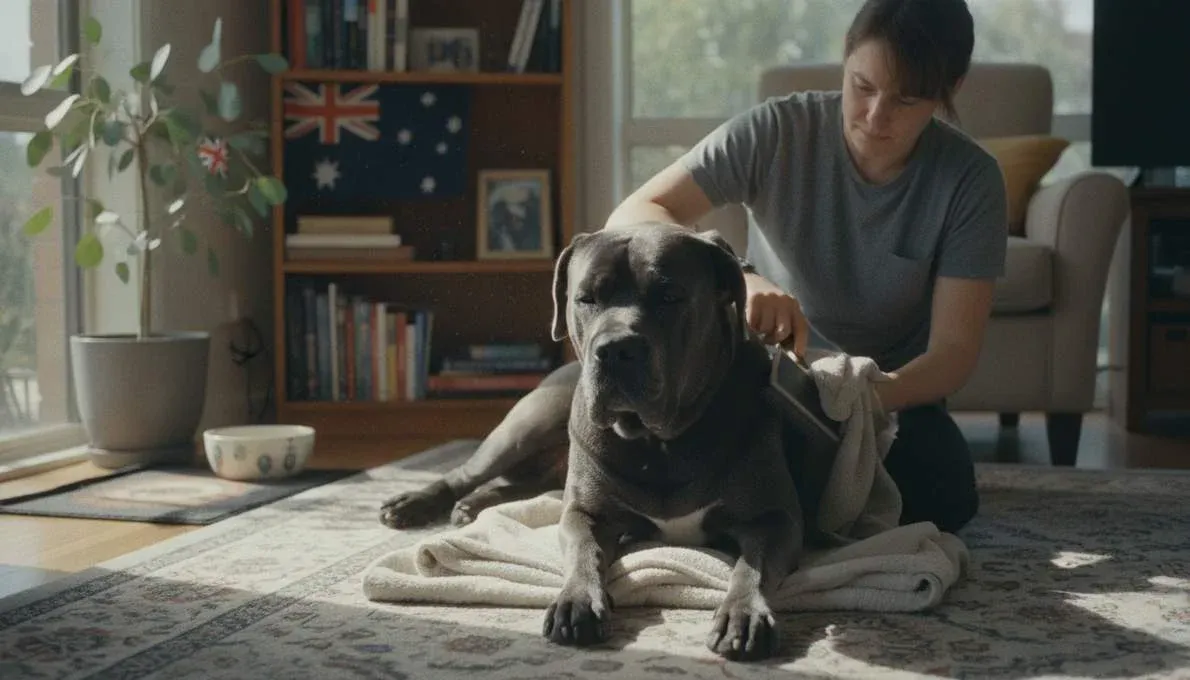
Grooming a Cane Corso is about as low-maintenance as it gets for a large breed. The short, dense double coat takes care of itself for the most part. The drool, however, is another story.
Grooming Schedule
| Task | Frequency | Notes |
|---|---|---|
| Brushing | Once or twice a week | A rubber grooming mitt or medium-bristle brush removes loose hair. Daily during spring shedding. |
| Bathing | Every 6–8 weeks | Don’t over-bathe — it strips natural coat oils. Spot-clean as needed. |
| Ear Cleaning | Weekly | Especially important if ears are natural (uncropped). Check for redness and odour. |
| Nail Trimming | Every 2–4 weeks | Large breed nails grow fast. If they’re clicking on floors, they’re too long. |
| Teeth Brushing | 2–3 times per week | Dental disease is common. Dog-specific toothpaste only. |
| Wrinkle/Jowl Cleaning | Every few days | Wipe facial folds and jowls to prevent bacterial infections and skin irritation. |
| Drool Management | Daily reality | Keep towels near water bowls and entry points. It’s not optional — it’s a lifestyle. |
Shedding is manageable year-round but picks up noticeably in spring. The Cane Corso is not hypoallergenic, but compared to heavy-shedding breeds, the hair situation is relatively contained. A quick weekly brush is usually enough to stay ahead of it.
A note on ear cropping: Ear cropping is illegal in Australia under animal welfare legislation in all states and territories. If you see cropped Cane Corsos online, that’s from countries where the practice is still permitted. In Australia, your Corso will have its natural ears — which, honestly, give them a softer, more approachable look.
Cane Corso Exercise Needs
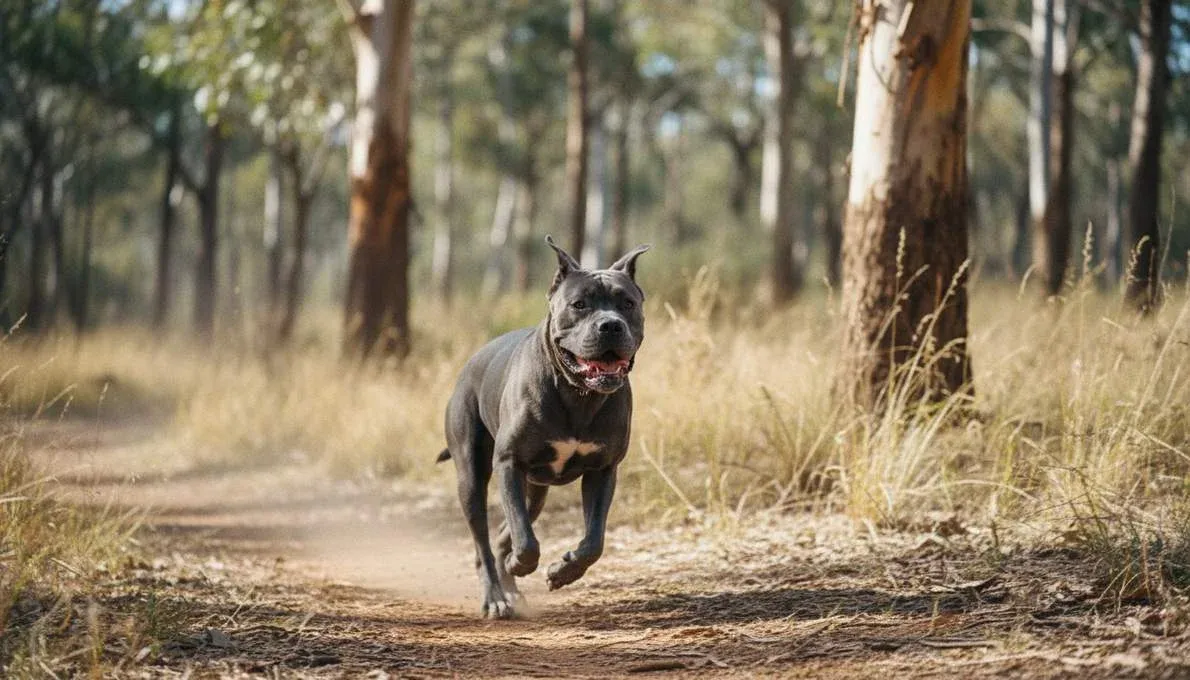
Unlike the Bullmastiff (which is content with a couple of moderate walks), the Cane Corso is an athletic, high-energy working dog that needs serious daily exercise. Underestimate this and you’ll pay for it in destroyed furniture and behavioural problems.
Adults:
A minimum of 60 minutes per day of vigorous activity. This means brisk walks, runs, structured play, and ideally a job to do. Many Cane Corsos thrive in canine sports like obedience, agility, tracking, and dock diving. A long walk around the block won’t cut it.
Puppies:
Follow the one-minute-per-week-of-age rule (e.g., 16 weeks = 16 minutes). Over-exercising growing puppies damages developing joints. Keep it gentle — short walks and supervised play on soft surfaces.
Mental stimulation is non-negotiable.
A bored Cane Corso is a destructive Cane Corso. Puzzle feeders, scent work, training sessions, and enrichment toys are essential, especially if the dog is left alone during the day.
⚠️ Australian Climate Warning:
Cane Corsos tolerate heat better than some mastiff breeds, but they’re still large, muscular dogs that overheat easily. In Australian summers, exercise should be restricted to early morning or late evening. Always provide shade and fresh water. In tropical or arid regions (Northern Territory, Far North QLD, inland NSW), air-conditioned indoor time is essential during peak heat.
Fenced yard required:
This is not a negotiable point. A Cane Corso needs a securely fenced yard — minimum 1.8 metres high. They’re not great candidates for off-leash dog parks unless extensively trained and socialised, and even then, supervision is essential given their prey drive and size.
Cane Corso Training Guide
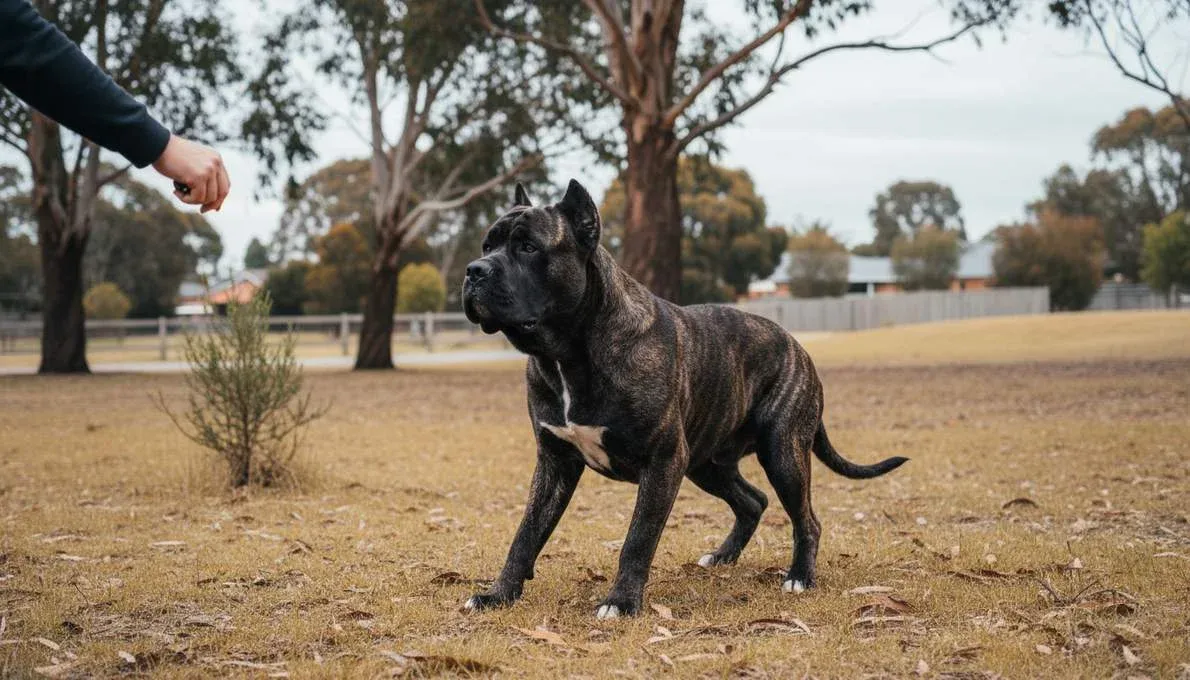
If there’s one section of this article you read carefully, make it this one. Training a Cane Corso is the single most important factor in whether you end up with a well-adjusted family companion or a 50 kg liability. The breed is intelligent, responsive, and eager to please — but it is also powerful, confident, and will absolutely take charge if you let it.
Honest difficulty rating:
Moderate to advanced. Experienced dog owners will find the Cane Corso responsive and rewarding to train. Novice owners will likely feel overwhelmed without professional help. This is not a breed that tolerates inconsistency.
Socialisation & Training Timeline
| Age | Training Focus | Tips |
|---|---|---|
| 8–12 weeks | Socialisation, name recognition, handling exercises | This is the most critical window. Expose to people, dogs, sounds, environments, surfaces. Carry them if needed — they haven’t finished vaccinations yet. |
| 3–6 months | Basic obedience: sit, stay, come, leash manners, crate training | Short sessions (5–10 mins). High-value treats. Enrol in a structured puppy school. |
| 6–12 months | Impulse control, not jumping, door manners, recall | They’re growing fast and getting strong. Teach “leave it,” “wait,” and loose-leash walking now. |
| 12–24 months | Advanced obedience, distraction training, public behaviour | Adolescent pushback is intense at this stage. Stay calm, stay consistent. Professional trainer recommended. |
| 2 years+ | Maintenance, enrichment, continued socialisation | Never stop socialising. A Cane Corso that stops meeting new people and dogs will revert to suspicion. |
Positive reinforcement is the only approach that works long-term with this breed. Cane Corsos are sensitive and will remember harsh corrections. A balanced, confident leadership style — firm boundaries delivered with calm consistency — earns their respect and cooperation.
Cost of Owning a Cane Corso in Australia
| Expense | Estimated Annual Cost (AUD) | Notes |
|---|---|---|
| Puppy Purchase | $3,000–$6,000+ (one-off) | Registered breeders with full health testing. Very few breeders in Australia. Waitlists common. |
| Food (Premium Large Breed) | $1,800–$3,000/year | Adults eat 4–6 cups daily. Large-breed or working-dog formulas recommended. |
| Vet Check-ups | $400–$700/year | Annual checks; bi-annual after age 7. Factor in large-breed medication dosages. |
| Pet Insurance | $1,000–$2,200/year | Strongly recommended. Hip surgery alone can exceed $7,000 per side. |
| Vaccinations & Worming | $200–$400/year | Standard preventative care. |
| Grooming | $100–$300/year | Mostly DIY. Professional grooming optional but not usually necessary. |
| Training (Essential) | $500–$2,000 (first 2 years) | Puppy school + ongoing obedience. Private trainer highly recommended for this breed. |
| Toys, Beds, Accessories | $300–$600/year | Heavy-duty toys only. Standard toys won’t survive. XL beds, harnesses, and crates. |
| Council Registration | $30–$250/year | Varies by council. May require additional registration as a restricted breed in some states. |
| Emergency Vet Fund | $3,000–$8,000+ (reserve) | Bloat surgery, ACL tears, and cancer treatment can all exceed $5,000. |
Total first-year cost estimate:
$8,000–$15,000+ depending on breeder price, training investment, and any early health issues.
Annual ongoing cost:
$4,000–$7,000+ for a healthy adult Cane Corso.
Finding a breeder in Australia:
Cane Corsos are rare here. Start with Dogs Australia (dogsaustralia.org.au) and state kennel bodies. DogzOnline lists some breeders. Be prepared for waitlists of 6–12+ months. Never buy from unregistered breeders or importers without verifiable health testing documentation.
Rescue option:
Cane Corso rescue is uncommon in Australia due to low breed numbers. Check PetRescue.com.au and breed-specific rescue networks. Adoption fees are typically $300–$800.
Is a Cane Corso Right for You?
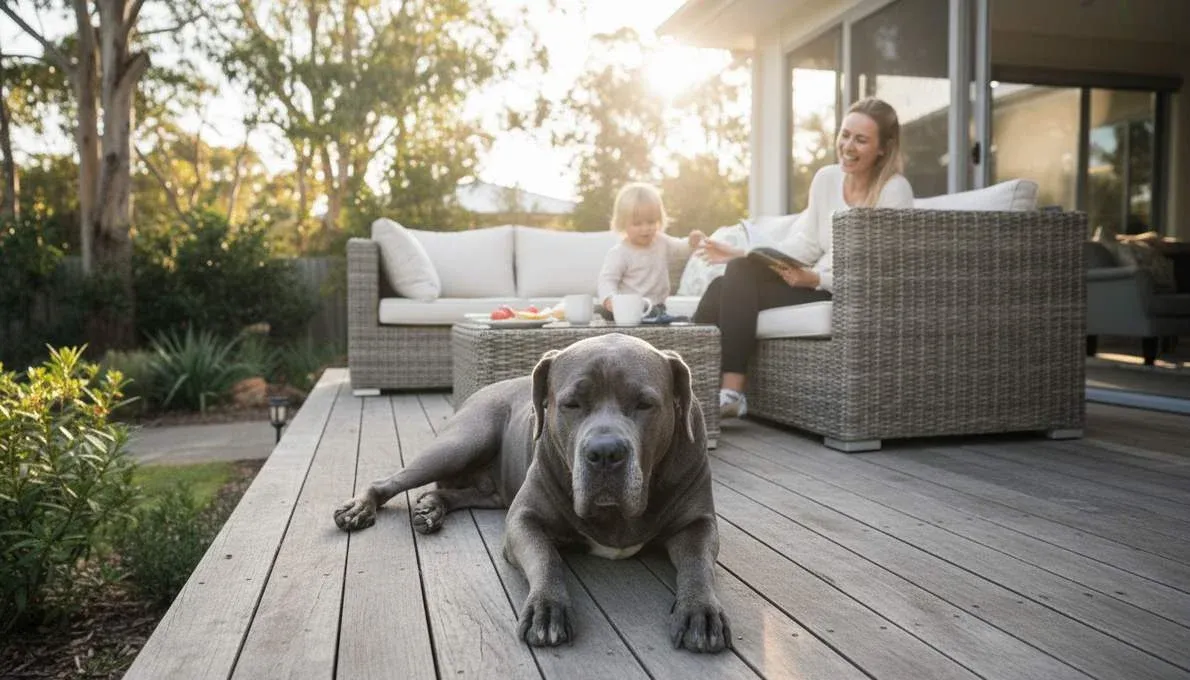
This is a breed that demands honesty from prospective owners. A Cane Corso in the right home is one of the most rewarding dogs you’ll ever own. In the wrong home, it’s a disaster waiting to happen.
- You have experience with large, strong-willed breeds — or are fully committed to working with a professional trainer.
- You have a house with a securely fenced yard (1.8m+ fencing).
- You can provide 60+ minutes of vigorous daily exercise and mental stimulation.
- You’re home most of the day or can arrange for the dog not to be left alone for extended periods.
- You have older children (8+) who understand how to behave around large dogs.
- You’ve checked your state and council regulations and can comply with any restricted breed requirements.
- You’re a first-time dog owner with no mentor, trainer, or large-breed experience.
- You live in an apartment or a property without secure fencing.
- You work long hours and the dog would be alone for 8+ hours daily.
- You have toddlers or very young children.
- You have small pets (cats, rabbits, birds) and can’t manage a high-prey-drive dog.
- You want a dog you can take to off-leash parks without concern.
- You’re not financially prepared for premium food, training, insurance, and potentially expensive health issues.
Legal Status in Australia — What You Need to Know
The Cane Corso is NOT a banned breed in Australia, but its legal status varies by state and territory. Here’s the current situation:
| State/Territory | Legal Status | Key Requirements |
|---|---|---|
| Victoria | Restricted breed | Requires a licence, mandatory registration, desexing, muzzling in public, secure enclosure. |
| NSW | Classified as “dangerous dog” by some councils | Requirements vary by local council. Contact your council directly before purchasing. |
| ACT | May have dangerous dog classification | Check with local authority. Specific ownership conditions may apply. |
| QLD | Legal with standard registration | No breed-specific restrictions, but general dangerous dog laws apply. |
| SA | Legal with standard registration | Standard dog ownership requirements. |
| WA | May be subject to restricted breed rules | Check with local government. Sterilisation and enclosure requirements possible. |
| TAS | Legal with standard registration | Standard requirements. Check local council for any additional conditions. |
| NT | Legal with standard registration | Standard dangerous dog provisions apply to all breeds. |
Critical advice: Regulations change. Before committing to a Cane Corso, contact your local council directly to confirm current requirements in your specific area. Some councils within otherwise unrestricted states may have their own rules. Import restrictions also apply — it is extremely difficult to import a Cane Corso into Australia. Nearly all Cane Corsos in Australia are bred domestically.
The Cane Corso is not a casual pet. It’s a commitment — to training, to exercise, to financial preparedness, and to being the kind of calm, confident leader this breed needs. Get it right, and you have one of the most loyal, intelligent, and impressive dogs in existence. Here’s the honest summary:
- They’re exceptional guardians with ancient instincts, a calm temperament, and an intimidating presence that rarely needs to escalate to aggression.
- They require experienced ownership, early socialisation, consistent training, and significant daily exercise — this is not a “set and forget” breed.
- In Australia, legal restrictions, breed rarity, and high costs make them an even bigger commitment. Do your homework on state regulations before you start looking for a breeder.
If you’ve read all of this and you’re not deterred — if anything, you’re more interested — you’re probably the right kind of owner for a Cane Corso. Just check with your council first.
Cane Corso FAQs
Are Cane Corsos banned in Australia?
No, the Cane Corso is not a banned breed in Australia. However, it is classified as a restricted breed in Victoria and may face additional requirements in some councils in NSW, ACT, and WA. Import restrictions make them very rare. Always check with your local council before purchasing.
Are Cane Corsos legal in Australia?
Yes, they’re legal to own in all Australian states and territories. Some states (notably Victoria) classify them as a restricted breed, which means additional ownership conditions apply — including mandatory desexing, secure enclosures, and muzzling in public. Requirements vary by location.
Are Cane Corsos dangerous?
Not inherently. The breed has an 88.1% pass rate on the American Temperament Test — higher than many popular family breeds. However, they are large, powerful, and protective. Without proper socialisation and training, any large breed can become a risk. The Cane Corso’s strength amplifies the consequences of poor ownership.
What is the Cane Corso bite force?
The Cane Corso’s bite force is approximately 700 PSI (pounds per square inch), making it one of the strongest of any domestic dog breed. For context, a German Shepherd’s bite force is around 238 PSI. This is why responsible ownership, training, and socialisation are critical.
What is the Cane Corso temperament like?
Loyal, protective, intelligent, and calm with their family. Reserved and watchful around strangers. They’re confident dogs that need a confident owner. With proper training, they’re steady and reliable. Without it, they can become dominant and difficult to manage.
How much does a Cane Corso cost in Australia?
Registered breeders in Australia typically charge $3,000–$6,000+ for a Cane Corso puppy with full health testing. The breed is rare here, so waitlists are common. Annual ongoing costs (food, vet, insurance, training) run $4,000–$7,000+.
What is the Cane Corso lifespan?
The average Cane Corso life expectancy is 9–12 years. Black brindle dogs may live slightly longer on average. Maintaining a healthy weight, feeding quality food, and staying current with vet check-ups all contribute to longevity.
How big do Cane Corsos get?
Males stand 64–70 cm at the shoulder and weigh 45–50 kg. Females are slightly smaller at 60–66 cm and 40–45 kg. Some individuals exceed these ranges. They’re muscular, athletic dogs — not as heavy as English Mastiffs but more agile.
Do Cane Corsos shed a lot?
No. They have a short, double-layered coat that sheds lightly year-round with a heavier shed in spring. Weekly brushing keeps it under control. They’re not hypoallergenic, but shedding is minimal compared to most large breeds.
Are Cane Corsos good family dogs?
They can be excellent family dogs for the right family — one with older children, dog experience, a secure property, and the time to invest in training and exercise. They’re not recommended for households with toddlers or first-time dog owners without professional support.
What is a Cane Corso x Bullmastiff like?
A Cane Corso crossed with a Bullmastiff produces a large, muscular, and loyal dog with strong protective instincts. Temperament varies, but you generally get a calmer dog than a purebred Corso with slightly less exercise demands. Health testing on both parents is essential.
What colours do Cane Corsos come in?
Accepted coat colours include black, grey (lead, light, slate), fawn (light and dark), red, and brindle variations of these colours. A black mask is common on fawn and red dogs. Blue and formentino (dilute fawn) are popular but may carry higher health risks associated with colour dilution.
[1] Wikipedia – Cane Corso — https://en.wikipedia.org/wiki/Cane_Corso
[2] Britannica – Cane Corso — https://www.britannica.com/animal/Cane-Corso
[3] AKC – Cane Corso Breed Information — https://www.akc.org/dog-breeds/cane-corso/
[4] PetMD – Cane Corso Health and Care — https://www.petmd.com/dog/breeds/cane-corso
[5] WebMD Pets – What to Know About Cane Corsos — https://www.webmd.com/pets/dogs/what-to-know-cane-corsos
[6] Agriculture Victoria – Restricted Breed Dogs — https://agriculture.vic.gov.au/livestock-and-animals/animal-welfare-victoria/dogs/restricted-breed-dogs
[7] Dogs Australia (ANKC) — https://dogsaustralia.org.au/