
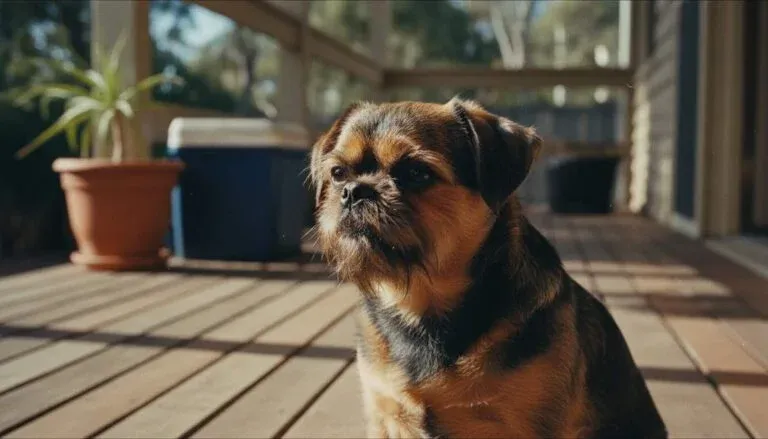
If you’ve ever wondered what it would be like to live with a tiny, bearded aristocrat who demands your undivided attention, follows you to the bathroom and gives you a look of genuine betrayal when you leave the house without them — allow us to introduce the Brussels Griffon.
This is a dog that weighs less than a house cat but carries itself like it owns the building. Originally bred in Brussels to catch rats in horse stables, the Griffon has spent the last two centuries climbing the social ladder from pest controller to pampered companion. And if you’ve seen the 1997 film As Good As It Gets, you’ve already met one — the scene-stealing dog that upstaged Jack Nicholson was a Brussels Griffon.
In Australia, Brussels Griffons (also known as Griffon Bruxellois under the ANKC) are an uncommon breed with a devoted following. Litters are small — often just one to three puppies — and whelping frequently requires caesarean sections, which keeps supply limited and prices firm. If you want one, you’ll need patience, a waitlist and an honest understanding of what this charmingly demanding little dog actually needs.
What You’ll Learn
- Breed traits & temperament
- Health concerns to know
- True cost in Australia
- Training & exercise needs
- Is this breed right for you?
Breed Quick Facts Table
| Trait | Detail |
|---|---|
| Breed Group | Toy |
| Origin | Brussels, Belgium |
| Also Known As | Griffon Bruxellois, Griff |
| Size | Small – 18–20 cm at the shoulder |
| Weight | 3.2–5.5 kg |
| Coat Types | Rough (wiry, bearded) or Smooth (short, glossy) |
| Colours | Red, black, black and tan (belge in some standards) |
| Lifespan | 12–15 years |
| Temperament | Affectionate, loyal, stubborn, alert, sensitive |
| Exercise Needs | Moderate – 30–45 minutes daily |
| Shedding | Low (rough coat) to moderate (smooth coat) |
| Good With Kids | Better with older children (5+) due to small size |
| Apartment Friendly | Yes – well suited to apartment living |
| Price (AUD) | $4,500–$5,500 from registered breeders |
History & Origins
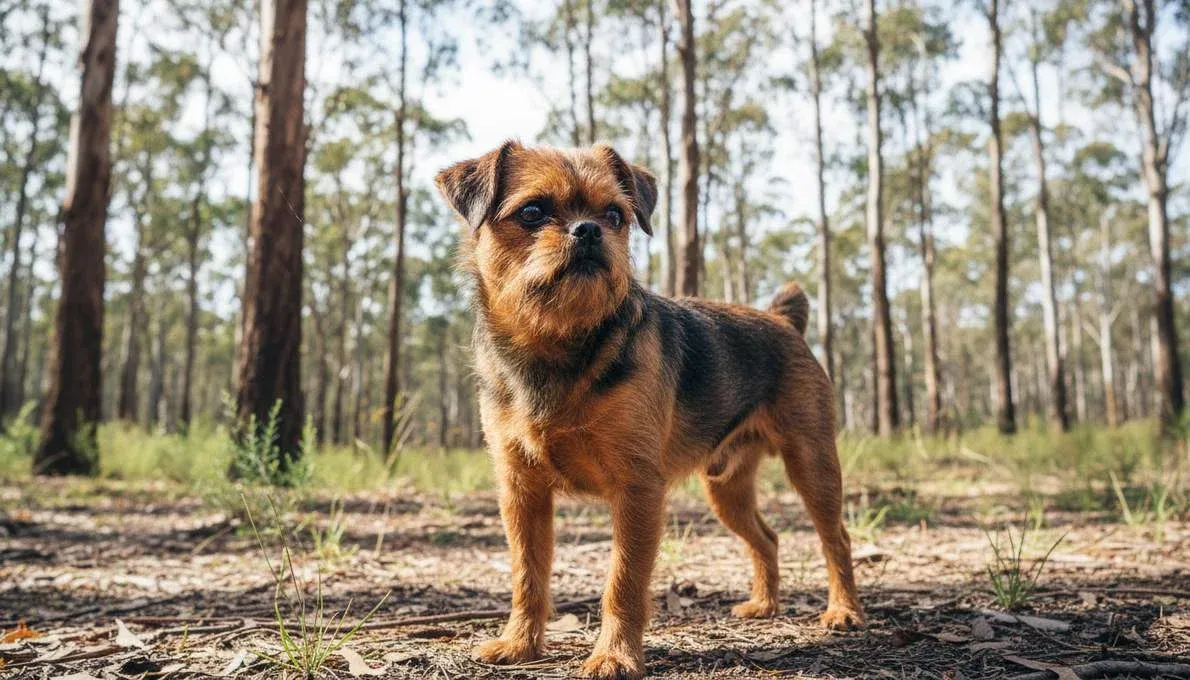
The Brussels Griffon traces its roots to the streets and stables of Brussels, Belgium, where small, rough-coated terrier-type dogs were kept to hunt rats. These scruffy little working dogs — collectively known as Griffons d’Ecurie (stable griffons) — earned their keep in the 17th and 18th centuries as reliable vermin catchers.
The modern Brussels Griffon emerged in the 19th century when Belgian breeders crossed these stable dogs with imported breeds including the Pug, English Toy Spaniel (King Charles) and Affenpinscher. The Pug influence gave the breed its distinctive flat face and smooth-coated variety, while the Affenpinscher contributed the wiry, bearded rough coat. The result was a charismatic little dog that quickly moved from the stable to the parlour.
Queen Marie Henriette of Belgium became a devoted fan of the breed, which elevated its status from working ratter to royal companion. By the late 1800s, Griffons were a fixture at European dog shows. Both World Wars devastated the breed’s numbers in Europe, and it was largely through British breeders that the Brussels Griffon survived.
In Australia, the Griffon Bruxellois (as the ANKC registers the breed) has a dedicated but small community of breeders. The Griffon Bruxellois Club of Victoria and the Country Griffon Bruxellois Club of NSW are the primary breed clubs, and DogzOnline lists approximately 42 registered breeders nationally. Litters are small and demand consistently exceeds supply — expect to join a waitlist.
Temperament & Personality
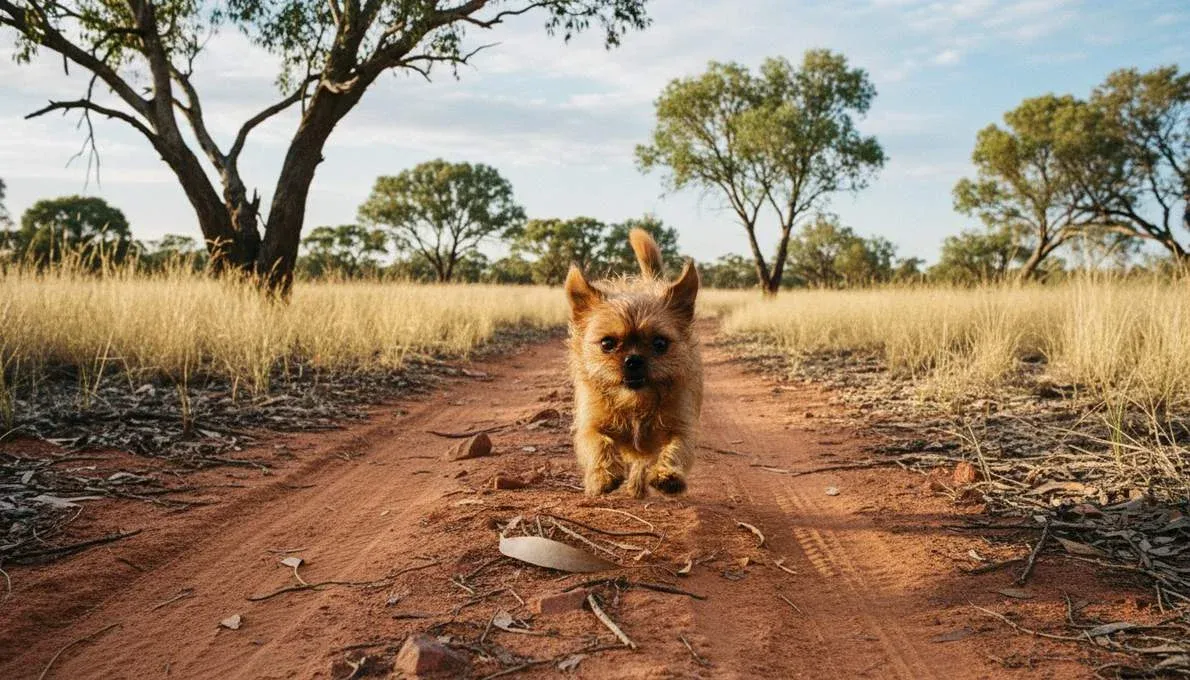
The Brussels Griffon temperament is best described as “big dog trapped in a tiny body.” These dogs are confident, opinionated, emotionally complex and utterly convinced that they are the most important being in any room. And they’re probably right, because most Griffon owners end up arranging their lives around these little dogs.
Griffons are famous “velcro dogs.” They form an intense bond with one person (sometimes two) and want to be physically touching that person at all times. They’ll sit on your lap, follow you from room to room, sleep under your covers and position themselves between you and anything they consider a rival for your attention — including your partner, your phone and the television remote.
Many do, or at least they’re highly predisposed to it. This is not a dog you can leave alone for eight hours while you go to work. A lonely, bored Griffon will bark, chew, dig, scratch at doors and generally make its displeasure known in creative and destructive ways. If you work full-time away from home, this breed is a serious challenge unless you have a dog sitter, doggy daycare or a work-from-home arrangement.
With older children who understand how to handle a small dog, yes. Griffons are playful and affectionate with kids they’ve grown up with. But they’re not suited to households with toddlers or very young children. At 3–5 kg, a Griffon can be seriously injured by rough handling or accidental drops. They can also be snappy if startled or cornered, which is a self-preservation instinct rather than aggression.
They can. Griffons are alert, watchful dogs and they’ll sound the alarm for visitors, deliveries, suspicious noises and the occasional leaf blowing past the window. Training and early socialisation help manage barking, but a Griffon is never going to be a silent dog. In an apartment setting, this is worth considering carefully.
Yes, remarkably so. They learn quickly and understand far more than they let on. The challenge isn’t intelligence — it’s willingness. A Griffon will learn a command perfectly and then decide whether it feels like complying on any given day. They’re not defiant; they’re just independently minded, which is code for “stubborn.”
Health & Genetic Conditions
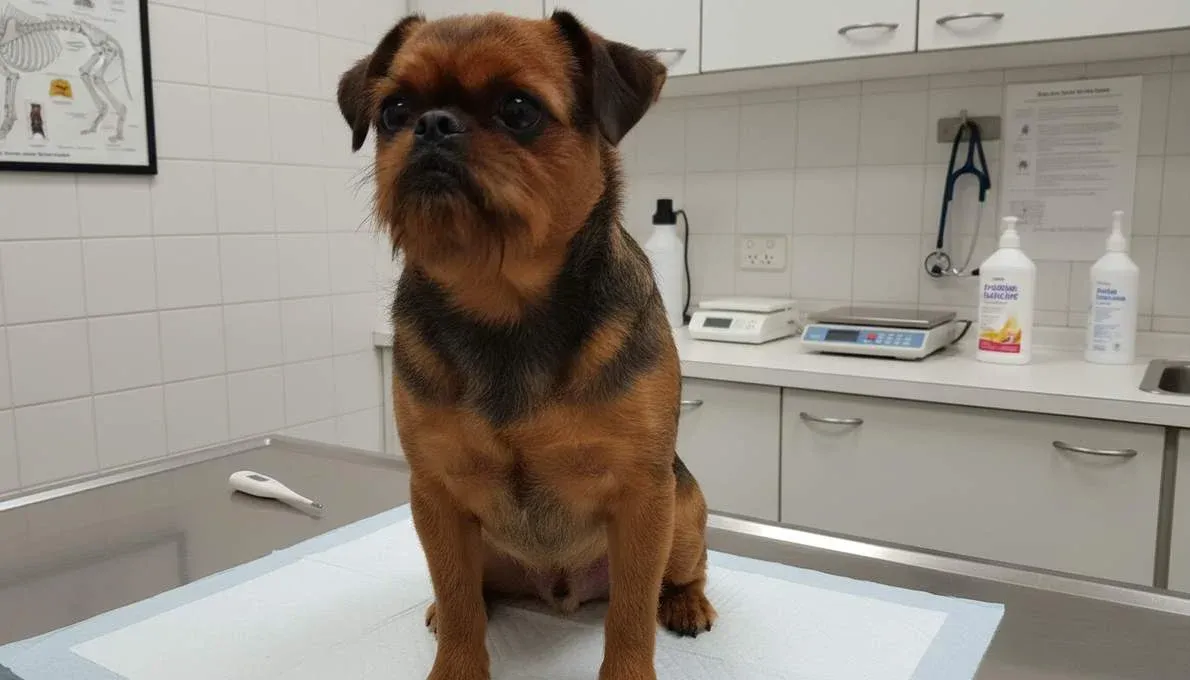
The Brussels Griffon is generally a healthy small breed with a long lifespan, but its flat face and small stature create specific vulnerabilities that buyers need to understand. Reputable breeders screen for these conditions before breeding.
| Condition | What It Is | Estimated Vet Cost (AUD) |
|---|---|---|
| Brachycephalic Obstructive Airway Syndrome (BOAS) | Narrowed nostrils, elongated soft palate and constricted airways due to the flat face. Causes snoring, exercise intolerance and breathing difficulty. | $2,000–$6,000 (corrective surgery) |
| Patellar Luxation | Kneecap slips out of position, causing intermittent lameness and pain. Very common in toy breeds. | $1,500–$5,000 per knee (surgery) |
| Hip Dysplasia | Unusual in toy breeds but documented in Griffons. Joint malformation causing arthritis and pain. | $3,000–$8,000 (surgical correction) |
| Cataracts (Hereditary) | Clouding of the eye lens causing vision loss. Can appear at any age in genetically predisposed dogs. | $3,000–$5,000 per eye (surgery) |
| Progressive Retinal Atrophy (PRA) | Genetic degeneration of the retina causing gradual blindness. No cure, but dogs adapt well. | $200–$400 (genetic testing); no cure |
| Syringomyelia (SM) | Fluid-filled cavities in the spinal cord caused by a skull too small for the brain (Chiari-like malformation). Causes neck pain and scratching. | $3,000–$8,000+ (MRI diagnosis + management) |
| Heart Disease (Mitral Valve Disease) | Progressive degeneration of a heart valve. Leading cause of death in older Griffons. | $500–$2,000/year (ongoing medication and monitoring) |
| Dental Disease | Small jaw causes crowding, misalignment and rapid tartar build-up. Can lead to infection and tooth loss. | $500–$2,000 (dental cleaning and extractions) |
| Hypothyroidism | Underactive thyroid causing weight gain, lethargy and skin issues. | $300–$600/year (ongoing medication) |
| Skin Allergies (Atopy) | Itchy skin affecting feet, belly, ears and skin folds. Common in the breed and often lifelong. | $500–$2,000/year (treatment and management) |
Brussels Griffons are a brachycephalic (flat-faced) breed. This means they can struggle with breathing during exercise, in hot weather and during anaesthesia. Discuss BOAS assessment with your vet, especially before any surgical procedures. In Australian summers, Griffons must have access to air conditioning, shade and cool water at all times. Never exercise them in the heat of the day.
SM is a devastating neurological condition that occurs in breeds with shortened skulls. The Griffon Bruxellois Club of Victoria recommends MRI screening for breeding stock. If a breeder cannot provide evidence of SM/CM testing, consider this a red flag.
Annual routine vet costs for a healthy Brussels Griffon typically run $400–$800, but dental work, eye surgeries and BOAS correction can quickly reach $5,000+. Comprehensive small-breed pet insurance in Australia costs approximately $60–$120 per month.
Lifespan & Longevity
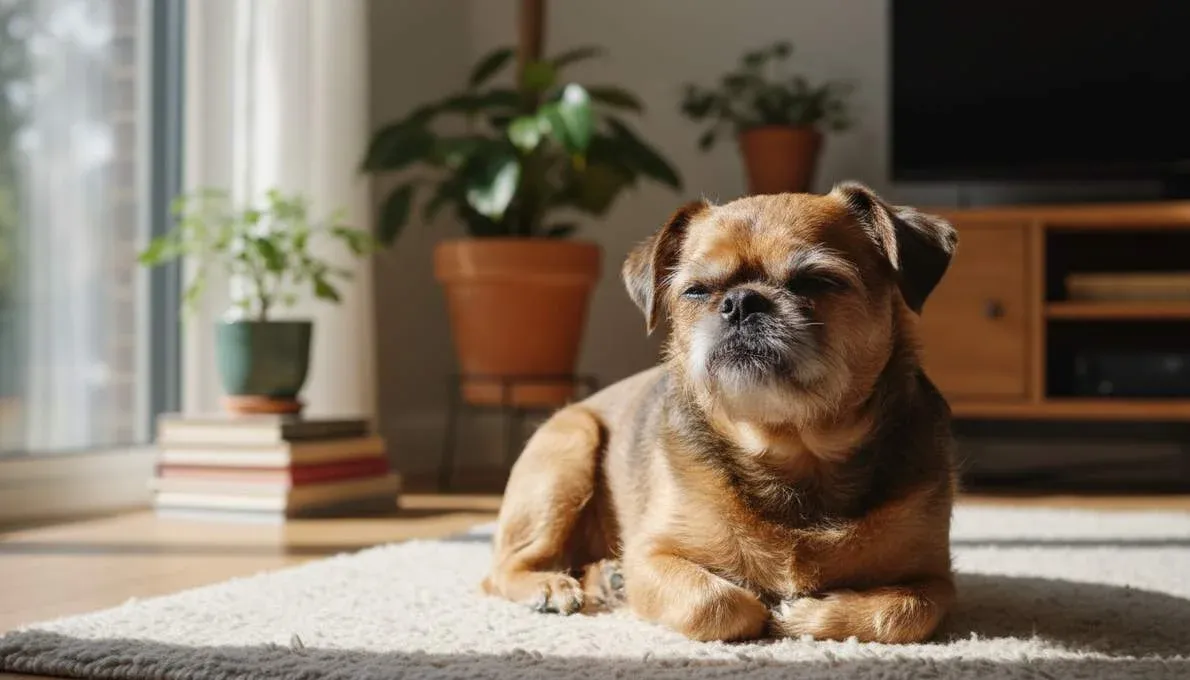
The average Brussels Griffon lifespan is 12–15 years, with well-cared-for dogs from health-tested lines sometimes reaching 16–17 years. For a small breed, this is typical. Their longevity depends heavily on dental health, cardiac monitoring, weight management and how well their brachycephalic airways are managed.
| Life Stage | Age Range | Key Considerations |
|---|---|---|
| Puppy | 0–12 months | Careful socialisation (critical window 8–16 weeks), vaccination schedule, dental monitoring, hypoglycaemia awareness, crate training |
| Adolescent | 1–2 years | Ongoing socialisation, desexing discussion, patella and eye screening, training consistency, dental regime established |
| Adult | 2–10 years | Annual vet checks including dental, cardiac auscultation, eye exams, weight management, patella monitoring, skin allergy management |
| Senior | 10+ years | Bi-annual vet visits, cardiac screening (mitral valve disease common), dental extractions as needed, joint support, senior diet, eye health monitoring |
Heart disease is the leading killer of Brussels Griffons in old age. Mitral valve disease causes the valve to deteriorate over time, leading to heart murmur, fluid retention and eventually heart failure. Early detection through regular auscultation gives the best chance of managing the condition with medication. Weight management is also critical — an overweight Griffon is far more likely to develop joint, cardiac and breathing problems.
Grooming & Care
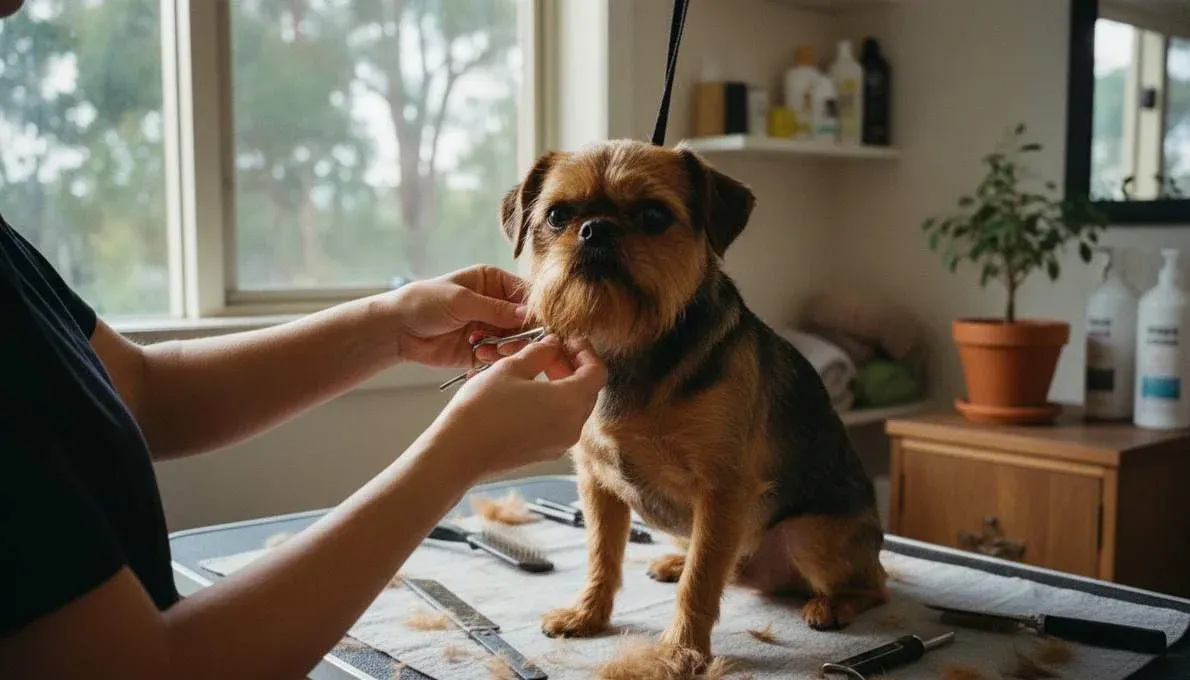
Brussels Griffon grooming varies significantly depending on coat type. The breed comes in two coat varieties: rough (wiry, with the signature beard and eyebrows) and smooth (short, glossy, resembling a Pug’s coat). Each has different maintenance requirements.
| Task | Rough Coat | Smooth Coat |
|---|---|---|
| Brushing | 2–3 times per week with a pin brush and comb. Work through beard and leg feathering to prevent mats. | Weekly with a rubber grooming mitt or bristle brush. Minimal tangles. |
| Hand-stripping / trimming | Every 8–12 weeks. Show dogs are hand-stripped; pet Griffons can be clipped, though this changes coat texture. | Not required. |
| Bathing | Every 3–4 weeks. Dry beard thoroughly after baths and meals to prevent bacterial growth. | Every 4–6 weeks. Quick drying due to short coat. |
| Facial wrinkle cleaning | Daily. Clean facial folds and beard with a damp cloth to prevent infection and odour. | Daily. Clean facial folds and around the eyes. |
| Eye care | Daily. Wipe tear staining with a soft cloth. Prominent eyes are prone to debris and irritation. | Daily. Same eye prominence means same attention needed. |
| Nail trimming | Every 2–3 weeks. Start handling feet early. | Every 2–3 weeks. |
| Dental care | Daily brushing essential. Crowded teeth trap debris and tartar builds rapidly. | Daily brushing essential. Same dental concerns. |
Do Brussels Griffons shed?
It depends on the coat. Rough-coated Griffons shed very little — their wiry coat traps loose hair, which is removed during brushing and stripping. Smooth-coated Griffons shed moderately, similar to a Pug, and you’ll find short hairs on furniture and clothing. If shedding is a concern, the rough coat variety is the better choice.
Are Brussels Griffons hypoallergenic?
Rough-coated Griffons are often listed as a lower-allergen breed because they shed minimally and produce less dander. Smooth-coated Griffons are not considered low-allergen. No dog is truly hypoallergenic, so allergy sufferers should spend time with the specific coat type before committing.
Professional grooming costs for Brussels Griffons in Australia run $60–$120 per session depending on coat type and your location. Rough coats requiring hand-stripping are at the higher end. Budget $500–$1,200 annually for professional grooming if you don’t maintain the coat at home.
Exercise Needs
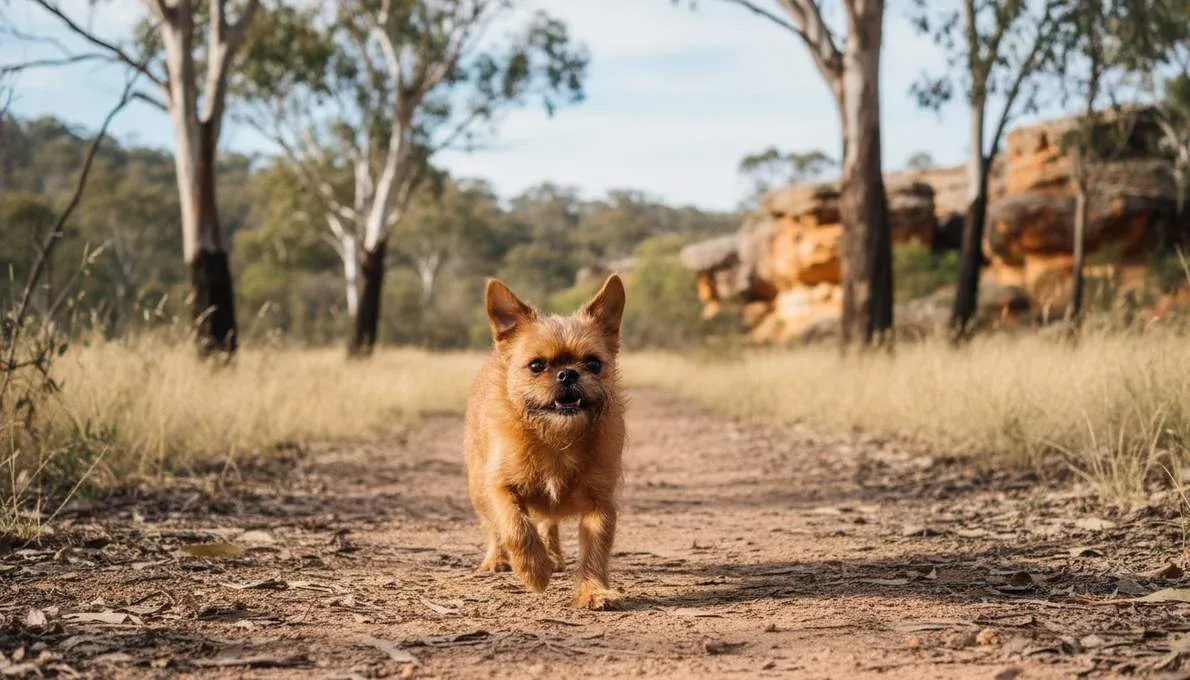
Brussels Griffons need moderate exercise — around 30 to 45 minutes daily. They’re active and playful indoors but don’t require the intense physical outlets of a working breed. A couple of short walks, some playtime and mental stimulation through training or puzzle toys will keep a Griffon happy and healthy.
That said, Griffons are more athletic than they look. They enjoy a good run around a fenced yard, agility at a scaled-down level and interactive games with their owner. They’re also surprisingly good hikers for a toy breed, though their flat face limits how hard they can push in warm weather.
Australian Climate Considerations:
As a brachycephalic breed, the Brussels Griffon is heat-sensitive and at real risk of heat stress in Australian summers. Exercise must happen in the cool of the early morning or late evening. Never walk a Griffon on hot pavement — their low-to-the-ground body absorbs radiant heat rapidly. Always carry water, watch for heavy panting or laboured breathing and get them inside to air conditioning if they show any signs of overheating.
Off-lead exercise should only happen in secure, enclosed areas. Griffons are small enough to slip through gaps in fencing and confident enough to approach larger dogs without considering the size difference. Their recall can be unreliable when they’re following an interesting scent or chasing a bird, so a secure environment is essential.
Training Guide
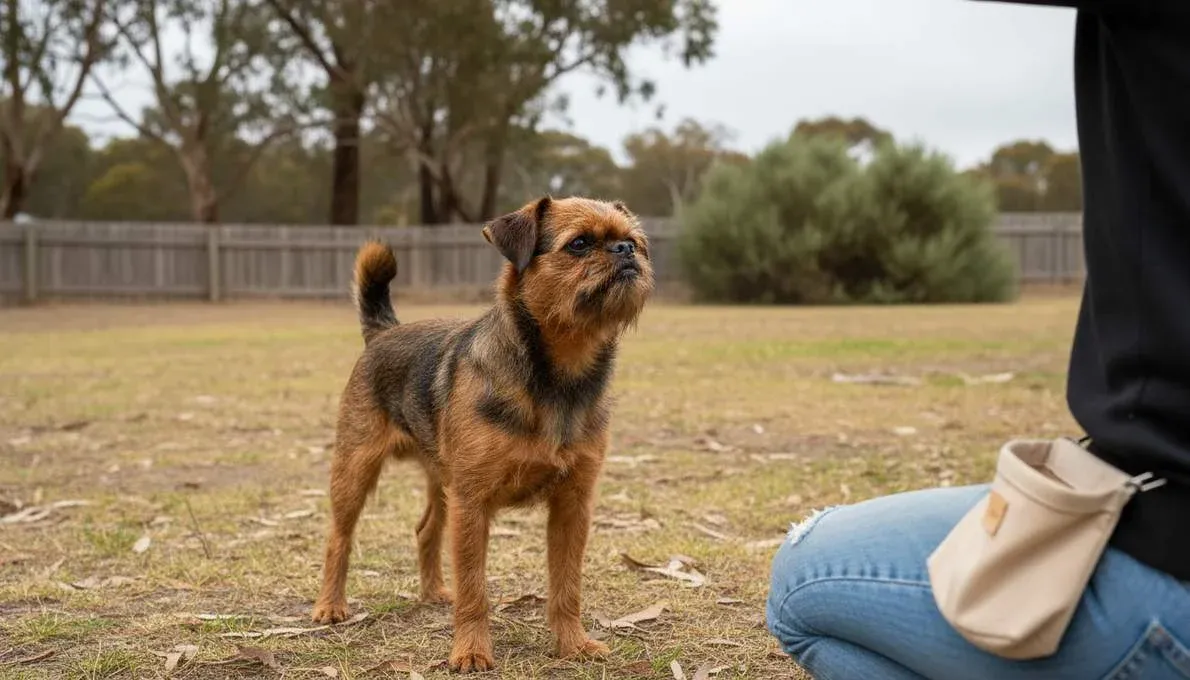
Training a Brussels Griffon requires patience, humour and an understanding that you are negotiating with a very small creature that has a very large opinion of itself. Griffons are intelligent and learn quickly, but they are also sensitive and willful. Harsh corrections will shut them down completely; repetitive drilling will bore them into defiance.
| Age | Training Focus | Tips |
|---|---|---|
| 8–16 weeks | Socialisation, handling, crate training, name recognition | The most important period. Expose your Griffon puppy to diverse people, sounds, surfaces and environments. Griffons that miss this window can become timid, snappy or excessively clingy. Puppy school is essential. |
| 4–6 months | Basic commands (sit, stay, come), toilet training, separation practice | Keep sessions short (5–10 minutes). Use high-value treats. Start leaving the Griffon alone for short periods to build tolerance — this is critical for preventing separation anxiety. |
| 6–12 months | Recall, lead walking, greeting manners, impulse control | Adolescent Griffons get bold and test boundaries. Stay calm and consistent. Avoid picking them up to resolve every problem — they need to learn to walk on their own feet. |
| 1+ years | Advanced obedience, trick training, ongoing socialisation | Griffons love learning tricks and showing off. Keep training varied and fun. Continue regular exposure to new people and dogs throughout their life. |
Are Brussels Griffons easy to train?
Easy to teach, harder to convince. They understand what you want — they just weigh up whether it’s in their interest to comply. Positive reinforcement with food, praise and play works well. Consistency across all family members is essential. And accept that a Griffon’s version of “obedient” will always have a slight asterisk next to it.
Small Dog Syndrome warning:
Because Griffons are small and adorable, owners often carry them everywhere, excuse bad behaviour and fail to set boundaries. This creates a dog that barks at everything, snaps when handled and panics when separated from its owner. Treat your Griffon like a dog, not an accessory. Train it, socialise it and let it walk on its own legs.
Cost of Ownership (AUD)
Brussels Griffons are an expensive breed to acquire in Australia, primarily because litters are tiny (one to three puppies average), breeding often requires caesarean sections and demand far exceeds supply. Here’s the honest financial picture.
| Expense | One-Off Cost (AUD) | Annual Cost (AUD) |
|---|---|---|
| Puppy (registered breeder) | $4,500–$5,500 | — |
| Adoption/rescue (rare) | $400–$1,000 | — |
| Initial vet setup (vaccinations, microchip, desexing) | $600–$1,500 | — |
| Food (quality small-breed diet) | — | $600–$1,000 |
| Routine vet care (annual check, vaccinations, dental, bloods) | — | $400–$800 |
| Pet insurance (comprehensive, small breed) | — | $720–$1,440 |
| Grooming (professional) | — | $500–$1,200 |
| Dental care (professional cleaning, extractions) | — | $500–$2,000 |
| Toys, bedding, crate, accessories | $200–$400 | $100–$200 |
| Training (puppy school + obedience) | $200–$500 | $100–$300 |
| Unexpected vet costs (BOAS surgery, patella, SM, cardiac, eyes) | $2,000–$10,000+ | Varies |
Estimated first-year cost:
$7,500–$13,000+ (including puppy purchase and initial setup). Ongoing annual costs: approximately $3,000–$7,000 depending on health, grooming frequency and insurance.
Finding a Brussels Griffon breeder in Australia requires networking with breed clubs.
Contact the Griffon Bruxellois Club of Victoria (griffonclubvic.com) or the Country Griffon Bruxellois Club of NSW (griffonnsw.com) for breeder referrals. DogzOnline lists approximately 40+ registered breeders nationally. Expect waitlists of 6–18 months. All registered breeders must provide ANKC pedigree papers included in the purchase price — if a breeder charges extra for papers, walk away.
Ensure your breeder provides documented evidence of health testing including patella grading, hip scoring, eye testing (ACES scheme) and ideally MRI for SM/CM.
The Griffon Bruxellois Club of Victoria has published a Puppy Buyer Information guide that outlines what to look for.
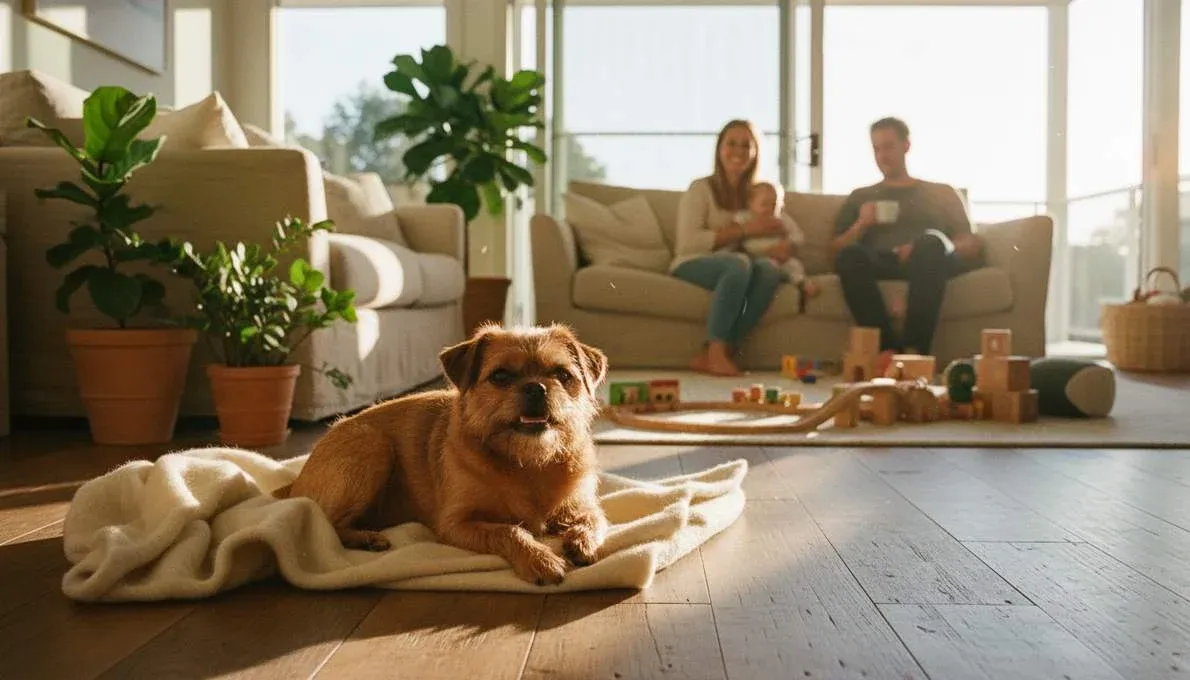
Is a Brussels Griffon Right for You?
The Brussels Griffon is an extraordinary companion for the right owner. But its emotional intensity, health considerations and grooming needs mean it’s not the right fit for everyone. Here’s an honest assessment.
- Work from home or can be with your dog for most of the day
- Want a deeply bonded, affectionate companion that thrives on closeness
- Live in an apartment or small home — the breed adapts beautifully to smaller spaces
- Are patient with training and appreciate a dog with personality and opinions
- Can commit to daily dental care and regular grooming
- Have older children (5+) or an adult-only household
- Work long hours away from home with no one else at home during the day
- Have toddlers or very young children — the size mismatch creates safety risks for the dog
- Want a low-maintenance, easy-going companion that doesn’t require much attention
- Expect a dog that’s reliably friendly with everyone it meets
- Are unwilling to manage the financial costs of a brachycephalic breed (potential airway, eye and dental surgeries)
- Live in a very hot climate without reliable air conditioning
Both are brachycephalic toy breeds with big personalities, but they’re quite different dogs. Pugs are more easygoing, more food-motivated and more tolerant of being left alone. Griffons are more intense, more emotionally demanding and more selective about who they like. Pugs shed heavily; rough-coated Griffons barely shed at all. Both have airway concerns, but Griffons also carry the risk of syringomyelia, which Pugs generally do not.
These two breeds share ancestry and look somewhat similar, but the Affenpinscher is more terrier-like and independent, while the Griffon is more human-focused and emotionally needy. Both are stubborn, both are small and both have beards. The Griffon is more widely available in Australia.
- The Brussels Griffon is a tiny dog with an enormous personality. They’re funny, emotionally complex, fiercely loyal and will form a bond with you so strong that you’ll genuinely wonder who is more attached to whom. If you want a companion that’s present for every moment of your life, this is the breed.
- Health management is non-negotiable. Brachycephalic airway issues, dental disease, heart conditions and the risk of syringomyelia mean you need a good vet, comprehensive insurance and a commitment to regular screening. Budget for it before you buy.
- In Australia, Brussels Griffons are worth the wait. A well-bred, health-tested puppy from a registered breeder will cost $4,500–$5,500 and may take over a year to find — but you’ll be rewarded with a little dog that looks like an Ewok, behaves like a tiny emperor and loves you with a dedication that borders on the absurd.
Frequently Asked Questions
How long do Brussels Griffons live?
The average Brussels Griffon lifespan is 12–15 years, with some well-cared-for dogs reaching 16–17 years. Longevity depends on cardiac health, dental care, weight management and managing any brachycephalic issues. Regular vet visits and early detection of heart murmurs are particularly important.
Do Brussels Griffons shed?
It depends on the coat type. Rough-coated (wiry) Brussels Griffons shed very little — loose hair is trapped in the coat and removed through brushing and stripping. Smooth-coated Brussels Griffons shed moderately and leave short hairs on furniture and clothing.
Are Brussels Griffons hypoallergenic?
Rough-coated Griffons are considered a lower-allergen breed because of their minimal shedding and reduced dander. Smooth-coated Griffons are not low-allergen. No dog breed is completely hypoallergenic, so spend time with the specific coat type before purchasing.
How much does a Brussels Griffon cost in Australia?
Expect $4,500–$5,500 from a registered ANKC breeder. Brussels Griffons have very small litters (often 1–3 puppies) and breeding frequently requires caesarean sections, which keeps prices firm. Waitlists of 6–18 months are common. Always buy from a registered breeder with documented health testing.
What is a Brussels Griffon’s temperament like?
Affectionate, loyal, sensitive, stubborn and alert. They form an intense bond with their primary person and want to be near them constantly. They’re confident and opinionated despite their size, can be reserved or cautious with strangers, and are known to be vocal. Early socialisation is essential.
Do Brussels Griffons have breathing problems?
They can. As a brachycephalic (flat-faced) breed, Brussels Griffons are prone to Brachycephalic Obstructive Airway Syndrome (BOAS), which causes snoring, exercise intolerance and difficulty breathing in heat. Severity varies. Corrective surgery ($2,000–$6,000) can significantly improve breathing.
What is the difference between rough and smooth coat Brussels Griffons?
Rough-coated Griffons have a wiry, bearded coat that sheds minimally and requires hand-stripping or clipping every 8–12 weeks. Smooth-coated Griffons (sometimes called Petit Brabançon) have a short, glossy coat similar to a Pug’s that sheds more but requires less grooming. Both coat types occur in the same breed and can appear in the same litter.
Are Brussels Griffons good apartment dogs?
Yes, they’re one of the better apartment breeds. Their small size, moderate exercise needs and preference for indoor life make them well suited to apartments. The main concern is barking — Griffons are alert and vocal, so training is needed to manage noise for your neighbours.
What health problems do Brussels Griffons have?
The most common issues are BOAS (breathing difficulties), patellar luxation, dental disease, hereditary cataracts, PRA, mitral valve heart disease, hypothyroidism, skin allergies and syringomyelia. Eye conditions and dental crowding are particularly prevalent. Always confirm health testing from the breeder.
Why do Brussels Griffons look like Ewoks?
The Brussels Griffon’s large, wide-set eyes, flat face and rough-coated beard bear a striking resemblance to the Ewoks from Star Wars: Return of the Jedi. This visual similarity, amplified by the breed’s appearance in As Good As It Gets, has made the “Ewok dog” comparison one of the most common search terms associated with the breed.
1. PetMD – Brussels Griffon Dog Breed Health and Care — https://www.petmd.com/dog/breeds/brussels-griffon
2. WebMD Pets – What to Know About Brussels Griffon — https://www.webmd.com/pets/dogs/what-to-know-about-brussels-griffon
3. Chewy – Brussels Griffon Breed Information and Care — https://www.chewy.com/education/dog-breeds/brussels-griffon
4. Griffon Bruxellois Club of Victoria – Breed and Buyer Information — https://www.griffonclubvic.com/griffon-bruxellois–peti.asp
5. Country Griffon Bruxellois Club of NSW – Breeders Directory — http://www.griffonnsw.com/breeders-directory.asp
6. DogzOnline – Griffon Bruxellois Breeders in Australia — https://www.dogzonline.com.au/breeds/breeders/griffon-bruxellois.asp
7. Lyka – Brussels Griffon Breed Guide (Australia) — https://lyka.com.au/blog/brussels-griffon-breed-guide
8. American Brussels Griffon Association – The Aging Griffon — https://abga.club/the-aging-griffon/