

There’s a reason the Brittany Spaniel consistently ranks among the top pointing breeds in field trial competitions worldwide — pound for pound, this compact sporting dog delivers more versatility, athleticism, and heart than breeds twice their size. Originally bred to work closely with hunters in the rugged Brittany region of France, these dogs have an almost uncanny ability to read their handler’s intentions.
Despite being called a “spaniel,” the Brittany actually works more like a pointer or setter, ranging ahead to locate game birds before freezing in that iconic pointing stance. In 1982, the American Kennel Club officially dropped “Spaniel” from the breed name, though Australians and many other countries still affectionately use the full title.
What makes the breed truly special isn’t just their hunting prowess — it’s their remarkable ability to transition from tireless field companion to devoted family pet. If you’re considering this energetic, affectionate breed, you’re in for an adventure that combines the best of sporting dog athleticism with genuine household companionship.
What You’ll Learn
- Breed traits & temperament
- Health concerns to know
- True cost in Australia
- Training & exercise needs
- Is this breed right for you?
Breed Quick Facts Table
| Attribute | Details |
|---|---|
| Breed Group | Gundog (Sporting) |
| Origin | Brittany, France |
| Size Category | Medium |
| Height (Adult) | Male: 47-52 cm/Female: 46-51 cm |
| Weight (Adult) | Male: 14-18 kg/ Female: 13-16 kg |
| Lifespan | 12-14 years |
| Coat Type | Dense, flat or wavy, medium length |
| Exercise Needs | 60-90+ minutes/day |
| Trainability | 5/5 |
| Good with Children | Yes (excellent) |
| First-Time Owner Suitable | 4/5 |
| Average Puppy Price (AUD) | $2,000 – $4,000 |
Breed History & Origins
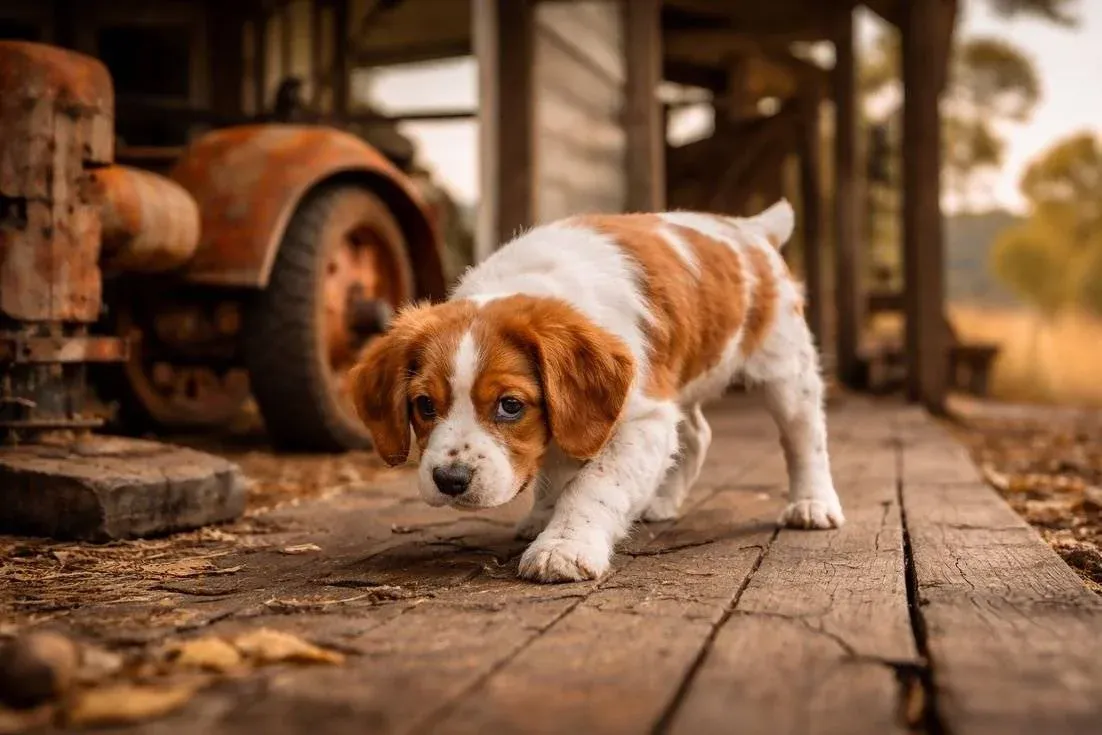
The Brittany Spaniel emerged from the forested, hilly terrain of northwestern France during the 17th and 18th centuries. Local hunters needed a versatile dog that could point, flush, and retrieve game across challenging landscapes — and do it all day without tiring. The breed developed from crosses between local French spaniels and English pointing dogs brought over by visiting hunters.²
What set Brittany apart was their compact size combined with tireless stamina. Unlike larger pointing breeds, Brittanys could work thick cover and navigate dense undergrowth while still covering impressive ground. French peasant hunters prized them because they didn’t require horses to keep up with — a practical consideration that shaped the breed’s moderate size.
Brittany arrived in Australia during the mid-20th century, finding a natural home among bird hunters and field trial enthusiasts. According to Dogs Australia, the breed has maintained a dedicated following, particularly in rural areas where their hunting abilities remain highly valued.³ Today, they’re increasingly popular as active family companions in suburban homes across the country.
Temperament & Personality
Many Brittany Spaniel owners report that living with this breed feels like having a perpetually enthusiastic teammate who’s always ready for the next adventure — whether that’s a bushwalk, a backyard game, or simply following you from room to room.
Eager to Please: The breed temperament centres on a genuine desire to make their people happy. This trait makes them highly trainable and responsive, though it also means they’re sensitive to harsh corrections.
Energetic: This isn’t a breed content with lounging on the couch all day. they possess seemingly endless reserves of energy that need appropriate outlets through exercise and mental stimulation.
Affectionate: These dogs form deep bonds with their families and crave physical closeness. Expect Brittany to lean against your legs, curl up beside you, and generally stay within arm’s reach whenever possible.
Alert: Originally bred to detect hidden game birds, Brittanys remain naturally watchful. They’ll notice visitors, wildlife, and neighbourhood changes — sometimes vocally.
Versatile: Few breeds transition as seamlessly between field work and family life. The same dog that hunts tirelessly all morning will happily play with children in the afternoon.
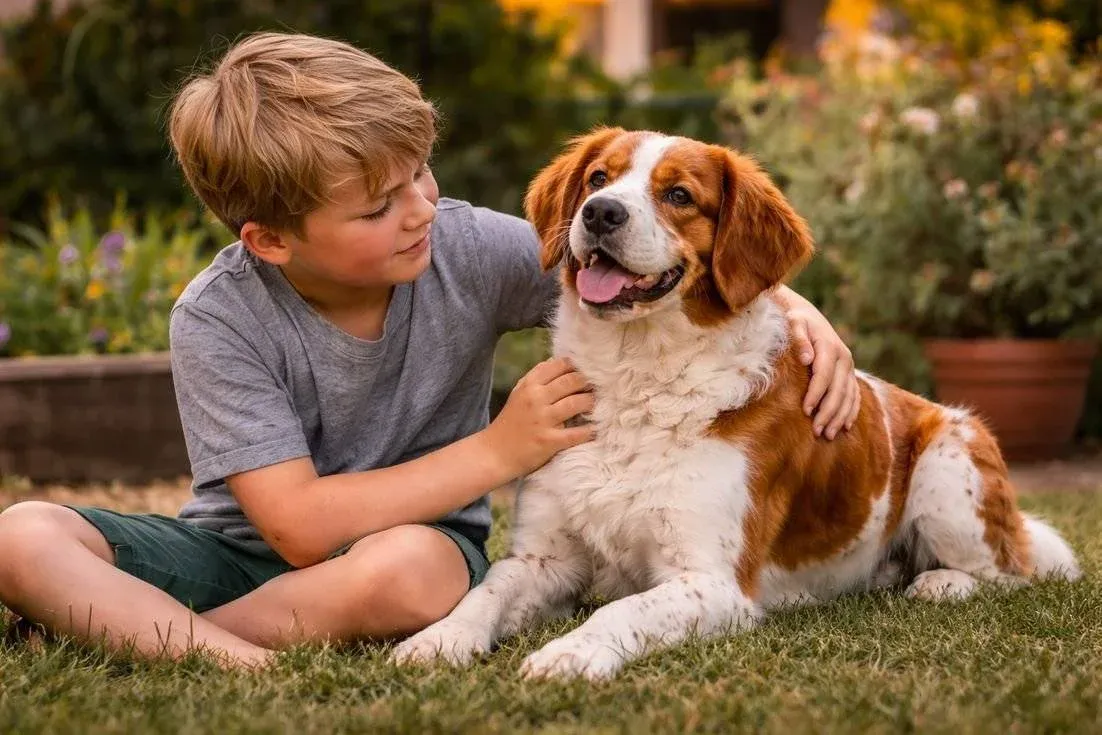
Brittanys typically excel with children of all ages. Their medium size makes them sturdy enough to handle enthusiastic young playmates without being so large they accidentally knock toddlers over. First-time Brittany owners are often surprised by how gentle and patient these high-energy dogs become around small children.
That said, their exuberance during play means supervision is always wise, particularly with very young children who might be overwhelmed by an excited Brittany’s greeting ritual.
This varies significantly between individual dogs — some Brittanys have minimal prey drive while others retain strong hunting instincts around small animals. Every Brittany is different, but early socialisation dramatically increases your chances of multi-pet harmony.
With other dogs, Brittanys are generally friendly and sociable. Their sporting background means they’re accustomed to working alongside other dogs, which typically translates to good canine social skills.
If your Brittany starts becoming destructive or developing obsessive behaviours like spinning or excessive barking, insufficient exercise is almost always the culprit. Experienced handlers often say that a tired Brittany is a happy Brittany — and they’re absolutely right.
Separation anxiety can affect this breed more than some others due to their strong attachment to their people. Breeders consistently note that Brittanys left alone for extended periods may develop problematic behaviours. As one Victorian breeder put it: “Brittany’s idea of personal space is being in the same postcode as their favourite human — preferably the same room.”
Health Issues to Know
If you’re worried about health problems, you’re not alone — it’s one of the first things prospective owners ask. The good news is that Brittany Spaniels are generally healthy dogs with fewer inherited conditions than many purebreds, though responsible ownership means understanding the issues that can occur.
According to PetMD, hip dysplasia is one of the few health issues some Brittany dogs may develop. This genetic condition affects the stability of the hip joint, occurring when the joint doesn’t fit together properly, and can lead to osteoarthritis if left untreated.⁴
- Prevention: Buy from breeders who test parents; maintain healthy weight; appropriate exercise during growth
- Prevalence: Approximately 14% of Brittanys tested through OFA show some degree of dysplasia⁵
- Symptoms: Difficulty rising, reluctance to jump, bunny-hopping gait
- Treatment Cost (AUD): $1,500 – $6,000 for surgery; ongoing management $400-1,200/year
Idiopathic epilepsy occurs in Brittanys at higher rates than the general dog population. While frightening to witness, this condition is often manageable with proper medication.
- Management: Consistent medication, seizure tracking, regular veterinary oversight
- Prevalence: Studies suggest elevated rates in the breed
- Symptoms: Seizures, typically beginning between 1-5 years of age
- Treatment Cost (AUD): $500 – $1,500 annually for medication and monitoring
Brittanys can be prone to several eye issues, including Progressive Retinal Atrophy (PRA), cataracts, and lens luxation. According to PetMD, PRA causes gradual vision loss and has no cure, making genetic testing of breeding stock essential.⁶
- Prevention: DNA testing of breeding stock; annual eye examinations
- Prevalence: Variable; responsible breeders screen extensively
- Symptoms: Night blindness progressing to complete vision loss, cloudy eyes
- Treatment Cost (AUD): $2,000 – $4,000 for cataract surgery where possible
Those beautiful floppy ears that give Brittanys their appealing expression also create a warm, moist environment where infections can thrive. Regular ear cleaning and monitoring are essential for this breed.
Lifespan & Longevity Tips
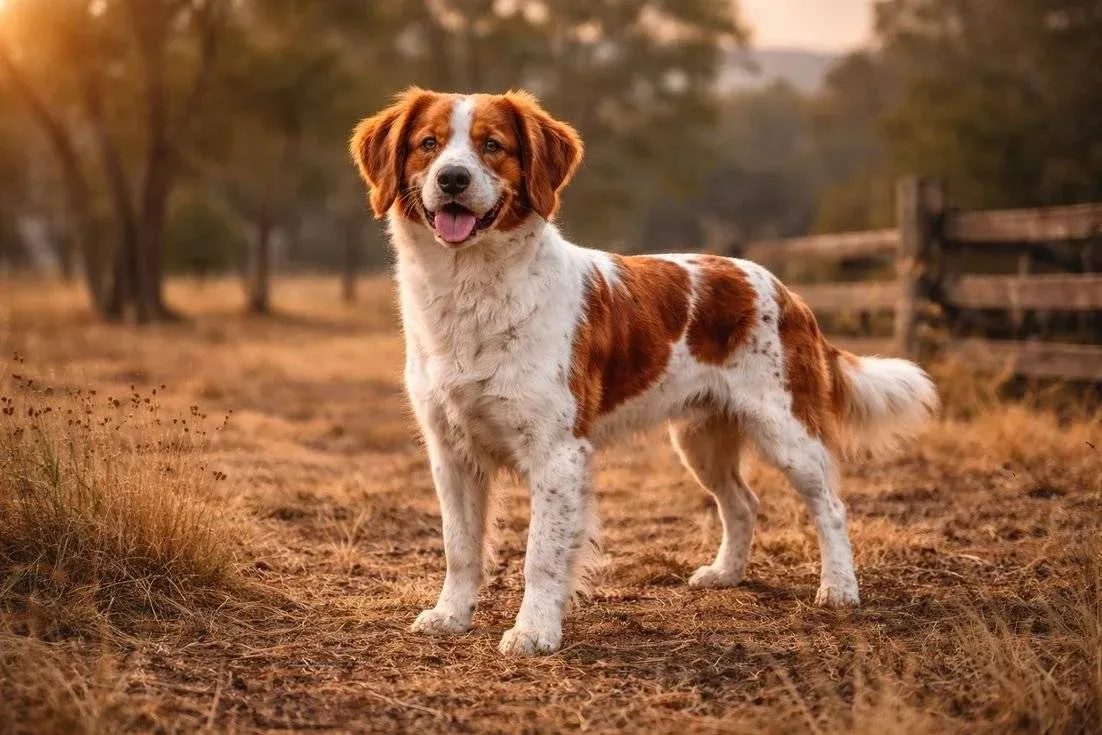
The breed lifespan typically ranges from 12 to 14 years, which is excellent for a dog of their activity level. Many owners report their Brittanys remaining active and enthusiastic well into double digits.
To maximise your Brittany’s years:
- Maintain a lean body condition (obesity significantly impacts joint health and longevity)
- Provide consistent mental and physical stimulation throughout life
- Keep up with preventative veterinary care and regular health screenings
- Address health issues early rather than waiting
- Protect ears from chronic infections
Veterinarians at the Australian Veterinary Association recommend adjusting exercise intensity as your dog ages while maintaining activity to preserve muscle mass and mental engagement.⁷
Brittany’s Grooming Guide
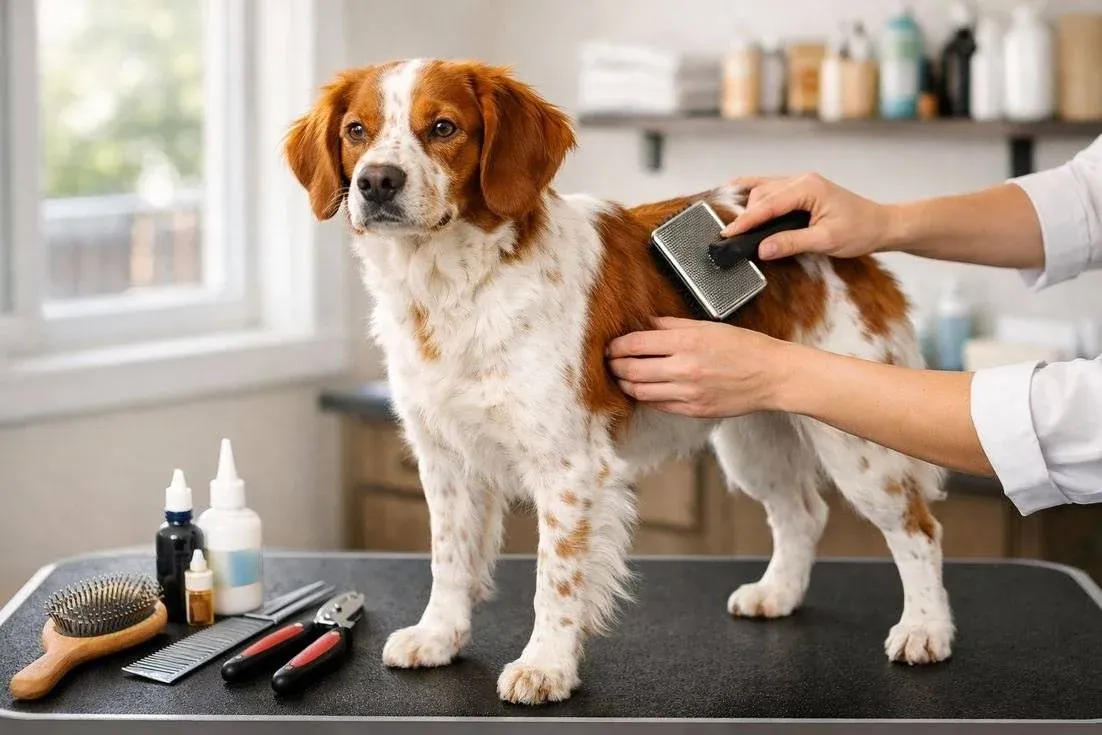
The Brittany’s coat is one of their more practical features — dense enough to protect them in the field, but not so heavy that it requires extensive maintenance. Their medium-length coat lies flat or slightly wavy and comes in distinctive patterns.
Do Brittany Spaniels shed? Yes, but moderately compared to many sporting breeds. You’ll notice seasonal increases in shedding during spring and autumn coat changes, but daily fur tumbleweeds aren’t typically a Brittany hallmark.
Grooming Schedule Table
| Task | Frequency | Time | Tools/Products |
|---|---|---|---|
| Brushing | 1-2 times weekly | 10-15 mins | Slicker brush, bristle brush |
| Bathing | Every 6-8 weeks (or after field work) | 20-30 mins | PAW by Blackmores or Dermcare Natural Shampoo |
| Nail Trimming | Every 2-3 weeks | 10-15 mins | Clippers/Grinder |
| Ear Cleaning | Weekly | 5-10 mins | Vet-approved ear cleaner |
| Feathering Trim | Monthly | 15-20 mins | Thinning shears |
| Professional Grooming | Optional, 2-3 times yearly | 1-2 hours | $70-120 per session |
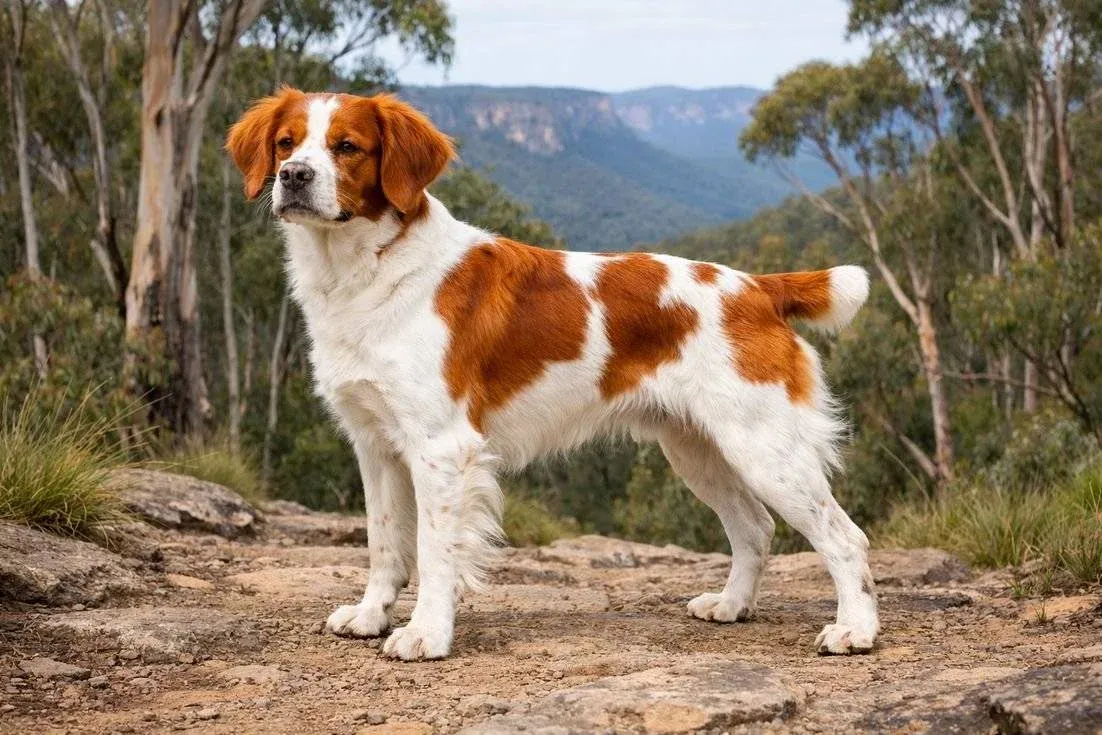
Breed colours include orange and white, liver and white, and tricolour (liver, white, and orange). The orange and white pattern is most common, with colours ranging from pale cream to deep russet. Some Brittanys display extensive ticking (small spots of colour throughout white areas), which adds to their distinctive appearance.

Exercise Requirements
First-time Brittany owners are often surprised by just how much exercise this breed genuinely needs — and “needs” is the operative word. This is a breed developed to work all day in the field, and that stamina hasn’t diminished through generations of companion breeding.
According to RSPCA Australia, sporting breeds like these dogs require substantial daily activity to maintain both physical and mental wellbeing.⁸
Minimum daily requirements:
- 60-90 minutes of active exercise
- Mental stimulation through training, puzzles, or scent work
- Off-leash running opportunities several times weekly
Many Brittany owners report that their dogs thrive on closer to two hours of activity daily, particularly during their prime years (ages 2-8).
Exercise Ideas for Brittanys
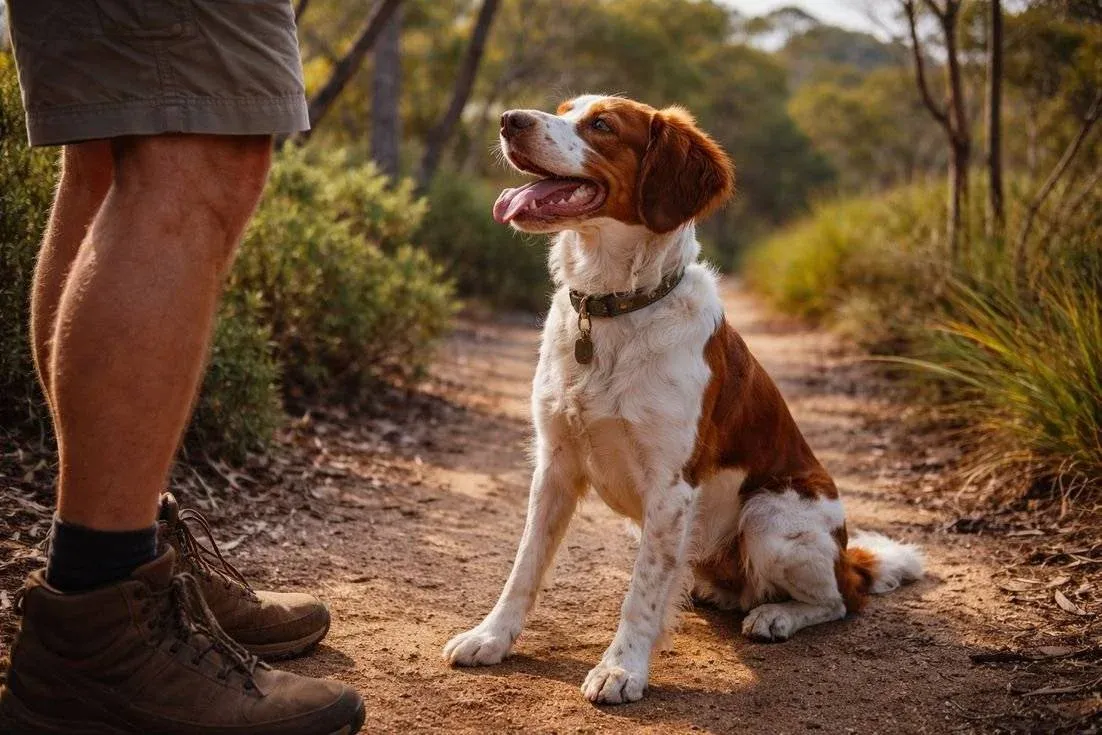
- Hiking and bushwalking (their natural environment)
- Swimming (most Brittanys love water)
- Fetch and retrieve games
- Scent work and nose games
- Agility or flyball training
- Hunting or field trial participation
Brittanys Training Tips
This breed’s intelligence and eagerness to please make them exceptionally trainable dogs. They respond beautifully to positive reinforcement and genuinely seem to enjoy the learning process. This is a breed that wants to work with you, not against you.
Don’t be discouraged if your young Brittany seems easily distracted — their keen senses mean they notice everything. The good news is that with consistency and patience, they develop excellent focus and become remarkably reliable partners.
Socialisation & Training Timeline
| Age | Training Focus | Expected Outcomes |
|---|---|---|
| 8-12 weeks | Name recognition, potty training, basic handling | Responds to name, beginning house-training |
| 3-4 months | Sit, stay, come, introduction to lead | Basic command recognition |
| 4-6 months | Recall reliability, impulse control, extensive socialisation | Solid basics in moderate distractions |
| 6-12 months | Advanced obedience, off-leash work, sport introduction | Well-trained adolescent |
According to the American Kennel Club, they excel in virtually every canine sport, from obedience and agility to their traditional role in field trials.⁹ If you enjoy training and want a willing, capable partner, this breed delivers.
Training Tips Specific to Brittanys:
- Keep sessions short (10-15 minutes) and upbeat
- Use high-value rewards — Brittanys are food and praise motivated
- Incorporate retrieve games into training
- Never use harsh corrections — these sensitive dogs will shut down
- Channel their natural hunting instincts into structured activities
Price & Costs in Australia
This can feel overwhelming when you see the numbers, but being honest about costs upfront saves heartbreak later. Owning a Brittany Spaniel represents a significant financial commitment that extends well beyond the initial purchase price.
Finding Your Brittany
Find registered breeders through the Dogs Australia Breeder Directory. The breed community in Australia is relatively small but dedicated, so you may need to join waiting lists or travel interstate to find your puppy.
Consider adoption through PetRescue or sporting dog rescue organisations. While Brittanys appear in rescue less frequently than some breeds, adult dogs occasionally become available and can make wonderful companions.
Initial Costs:
| Expense | Approx. Cost (AUD) |
|---|---|
| Puppy Price (Registered Breeder) | $2,000 – $4,000 |
| Adoption Fee (Rescue) | $350 – $550 |
| Initial Vet + Vaccinations | $200 – $400 |
| Desexing | $300 – $500 |
| Essential Supplies (crate, bed, bowls, leash, toys) | $400 – $600 |
| Microchipping + Registration | $80 – $150 |
| TOTAL INITIAL COST | $3,330 – $6,200 |
Annual Ongoing Costs:
- Quality Food: $1,000 – $1,500 (brands like Black Hawk, Advance, or Ivory Coat)
- Vet & Preventatives: $500 – $1,000
- Pet Insurance: $500 – $1,000
- Grooming (supplies/occasional professional): $150 – $300
- Training classes/activities: $200 – $600
- Toys, treats, miscellaneous: $250 – $400
- TOTAL ANNUAL: $2,600 – $4,800
Lifetime Cost Estimate: $38,000 – $70,000 (based on 13-year average lifespan).
Is an Australian Shepherd Right for You?
Active individuals or families who enjoy outdoor activities and can provide substantial daily exercise. You have access to safe off-leash areas, enjoy training, and want a close canine partnership. Hunters and field sport enthusiasts find natural companions in this breed.
- Home Size: House with secure yard strongly preferred; apartments only with exceptional exercise commitment
- Yard: Securely fenced — Brittanys are athletic and can clear surprisingly high barriers when motivated
- Climate: Adaptable to Australian conditions; their coat provides moderate protection from both cold and heat
This can feel overwhelming, but being honest about challenges saves heartbreak later.
- Sedentary households: If you’re not genuinely active, this breed will struggle and so will you
- Those working long hours away from home: Brittanys don’t tolerate extended isolation well and may develop separation anxiety
- People wanting a calm, quiet companion: This breed has energy to spare and will express it
- Owners who dislike outdoor activities: Brittanys need regular access to running, exploring, and using their noses
- Those unwilling to provide consistent training: Their intelligence requires direction, or they’ll find their own entertainment
Perfect for: Active owners who want an athletic, trainable companion for outdoor adventures. Hunters seeking a versatile pointing breed. Families with children who can participate in exercise and activities. Experienced or first-time owners committed to meeting high exercise needs.
Think twice if: You prefer quiet evenings at home, work long hours away, or want a low-energy companion who’s happy with brief daily walks.
First-time owner rating: Excellent choice for active first-time owners. Brittanys are forgiving of training mistakes, eager to please, and not prone to dominance challenges. Their main requirement is energy output, not experience.
The Brittany Spaniel offers a remarkable combination of athletic ability, trainability, and genuine affection that’s hard to find elsewhere. They’ll push you to be more active, reward your training efforts with enthusiastic progress, and greet you each day with unbridled joy. For the right owner, there’s simply no better companion.
FAQs
Are Brittany Spaniels good family dogs?
Yes, They typically make excellent family dogs. Their medium size, gentle nature, and love of play make them wonderful companions for children. They’re patient and affectionate without being overwhelming. The main consideration is ensuring the whole family can participate in meeting their exercise needs.
Do Brittany Spaniels shed a lot?
They are moderate shedders. You’ll notice some loose hair, particularly during seasonal coat changes in spring and autumn, but they don’t produce the heavy shedding associated with breeds like Golden Retrievers or German Shepherds. Weekly brushing manages loose fur effectively.¹²
How much exercise does a Brittany Spaniel need?
The average lifespan is 12-14 years with proper care. Many remain active and healthy well into their senior years. Factors that influence longevity include genetics, diet, exercise, weight management, and preventative healthcare.
How much does a puppy cost in Australia?
Expect to pay $2,000 – $4,000 for a registered puppy from a reputable breeder in Australia. Rescue adoption fees typically range from $350 – $550. Annual ownership costs run $2,600 – $4,800, meaning lifetime costs can reach $38,000 – $70,000.
Do Brittany Spaniels bark a lot?
They are moderately vocal. They’ll alert you to visitors and interesting wildlife, and some individuals are more talkative than others. They’re not typically excessive barkers, but they won’t be silent sentinels either. Proper exercise usually reduces unnecessary barking significantly.
Primary Sources:
- Dogs Australia (ANKC) (https://dogsaustralia.org.au) – Official breed registration and standards
- American Kennel Club (AKC) (https://www.akc.org/dog-breeds/brittany/) – Breed history and standards
- Dogs Australia Annual Registration Statistics
Veterinary & Health Sources:
- VCA Hospitals (https://vcahospitals.com/know-your-pet/hip-dysplasia-in-dogs) – Hip dysplasia in dogs
- Orthopedic Foundation for Animals (OFA) (https://ofa.org) – Breed health statistics
- PetMD (https://www.petmd.com/dog/conditions/eyes/progressive-retinal-atrophy-dogs) – Progressive Retinal Atrophy information
- Australian Veterinary Association (https://www.ava.com.au) – Senior dog care guidelines
Australian-Specific Sources:
- RSPCA Australia (https://www.rspca.org.au) – Working dog welfare guidelines
- American Kennel Club – Breed activities and sports
- Dogs Australia Breeder Directory
- PetSure (Bow Wow Meow) (https://www.bowwowinsurance.com.au) – Australian pet ownership cost data
- Breed-specific grooming guides