
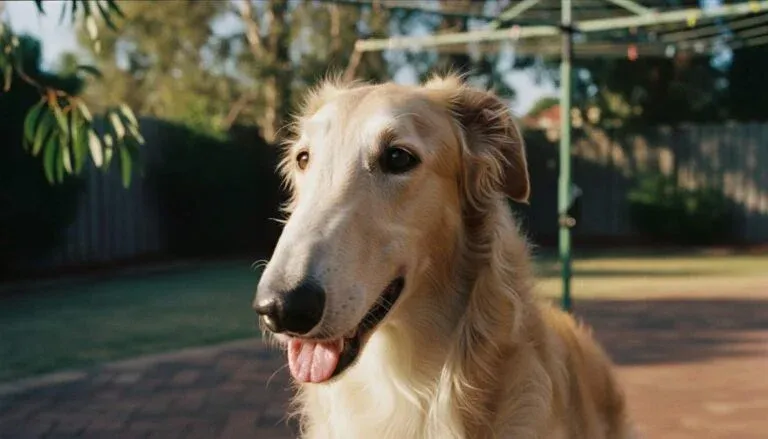
The Borzoi looks like someone stretched a Greyhound, gave it a supermodel’s cheekbones, draped it in silk, and then programmed it to spend 90% of its life asleep on your couch. If you’ve seen one on TikTok or Instagram — all dramatic snout and flowing coat — you already know why this Russian sighthound is having a moment online.
But behind the memes and the aesthetic lies a genuinely complex breed. Borzoi (formerly known as the Russian Wolfhound) were bred to chase down wolves across frozen Russian steppes at speeds of up to 60 km/h. That prey drive hasn’t softened with centuries of aristocratic pampering. These dogs are fast, independent, sensitive, and stubbornly uninterested in doing anything they haven’t decided is worth their time.
They’re also gentle, deeply affectionate with their people, and surprisingly low-energy indoors. It’s a strange combination — and it’s exactly why Borzoi owners tend to be obsessively devoted to the breed. Here’s the honest guide for Australians considering one.
What You’ll Learn
- Breed traits & temperament
- Health concerns to know
- True cost in Australia
- Training & exercise needs
- Is this breed right for you?
Quick Facts at a Glance
| Trait | Detail |
|---|---|
| Breed Group | Hound (Sighthound) |
| Origin | Russia (16th century) |
| Height | 68–85 cm (males), 66–78 cm (females) |
| Weight | 27–48 kg |
| Lifespan | 9–14 years |
| Coat | Long, silky, wavy — variety of colours |
| Shedding | Moderate to heavy, seasonal coat blows |
| Temperament | Gentle, independent, calm indoors, strong prey drive |
| Exercise Needs | Moderate — 1–2 hours daily, including off-lead sprints in secure areas |
| Good With Kids | Yes with older children — too large for rough toddler play |
| Apartment Friendly | Possible with commitment, but a house with a yard is strongly preferred |
| Barking Level | Very low — one of the quietest breeds |
| Prey Drive | Extremely high — will chase cats, small dogs, wildlife |
| Top Speed | Up to 58–60 km/h |
| ANKC Status | Recognised — Group 4 (Hounds) |
History & Origins
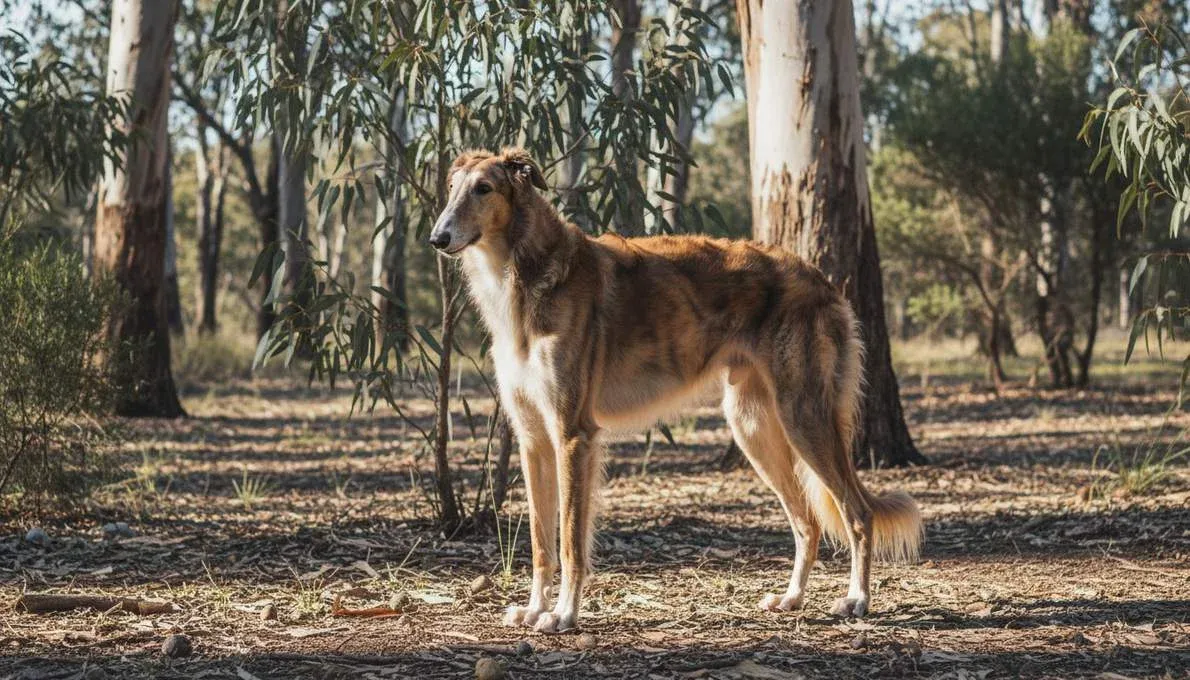
The Borzoi’s name comes from the Russian word “borzyi,” meaning “swift.” And swift they are — but the breed’s history is as dramatic as its appearance.
Borzoi were developed in 16th-century Russia by crossing Saluki-type sighthounds from the Middle East with thick-coated Russian breeds capable of surviving brutal winters. The result was a dog fast enough to chase wolves, strong enough to pin them, and glamorous enough to earn a permanent place in the Russian aristocracy. For centuries, Borzoi could not be purchased — they could only be received as gifts from the Tsar [1].
Wolf hunts with Borzoi were spectacular events. Hundreds of dogs, mounted huntsmen, and serfs would descend on open fields. Pairs or trios of matched Borzoi would be released to sprint after flushed wolves, seize them by the neck or ear, and hold them until the hunters arrived. These weren’t just hunts — they were theatrical productions that could last days [2].
The Russian Revolution of 1917 nearly wiped out the breed. Borzoi were symbols of the despised aristocracy, and thousands were killed. The breed survived largely because European and American enthusiasts had already received gifted dogs and established breeding programmes outside Russia. In Australia, Borzoi arrived in the mid-20th century and remain a rare but dedicated niche breed, with a small number of ANKC-registered breeders across the country [3].
Temperament & Personality
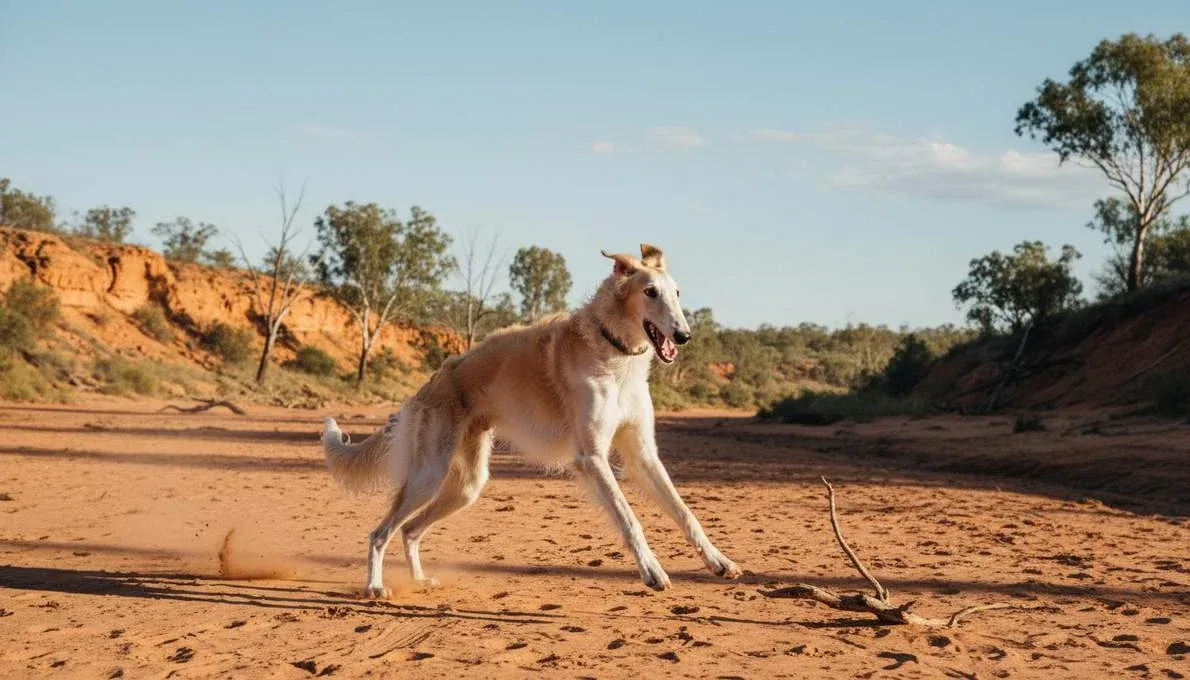
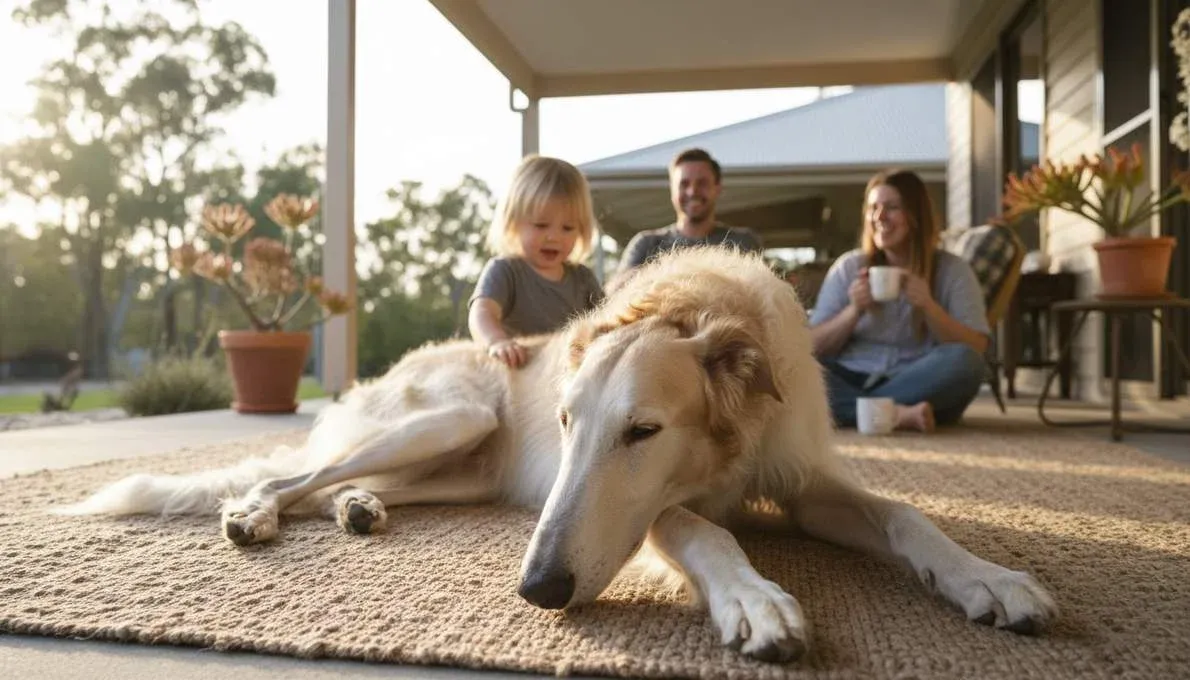
The Borzoi temperament is a study in contradictions. Indoors, they’re calm to the point of being furniture. They’ll drape themselves across your couch with the elegance of a Renaissance painting and barely move for hours. Outdoors, they’re a 48 kg missile locked onto anything that moves.
They’re affectionate with their family but not clingy — think cat-like independence wrapped in a dog’s body. They’ll lean against you for a pat and then wander off when they’ve had enough. With strangers, they’re reserved and dignified, rarely aggressive but equally uninterested in making friends with every person they meet. They do not make good guard dogs. They’ll watch an intruder walk in and possibly offer a polite sniff.
Borzoi were bred to chase and kill wolves. That instinct is alive and well. Off-lead in an unsecured area, a Borzoi will chase cats, rabbits, possums, small dogs, and anything else that runs. This is not a training problem you can fix — it’s hardwired genetics. Borzoi must always be on-lead or in a securely fenced area (1.8 m minimum). If you have cats, a Borzoi can learn to coexist with cats they’re raised with from puppyhood, but the risk never fully disappears.
Generally gentle and tolerant with older children who understand boundaries. Their sheer size (up to 85 cm tall) means they can accidentally knock over small children. They don’t enjoy rough play and will simply leave if things get too chaotic.
Borzoi are emotionally sensitive dogs. They don’t respond well to harsh corrections, raised voices, or chaotic home environments. A calm, consistent household suits them best.
Health & Genetic Conditions
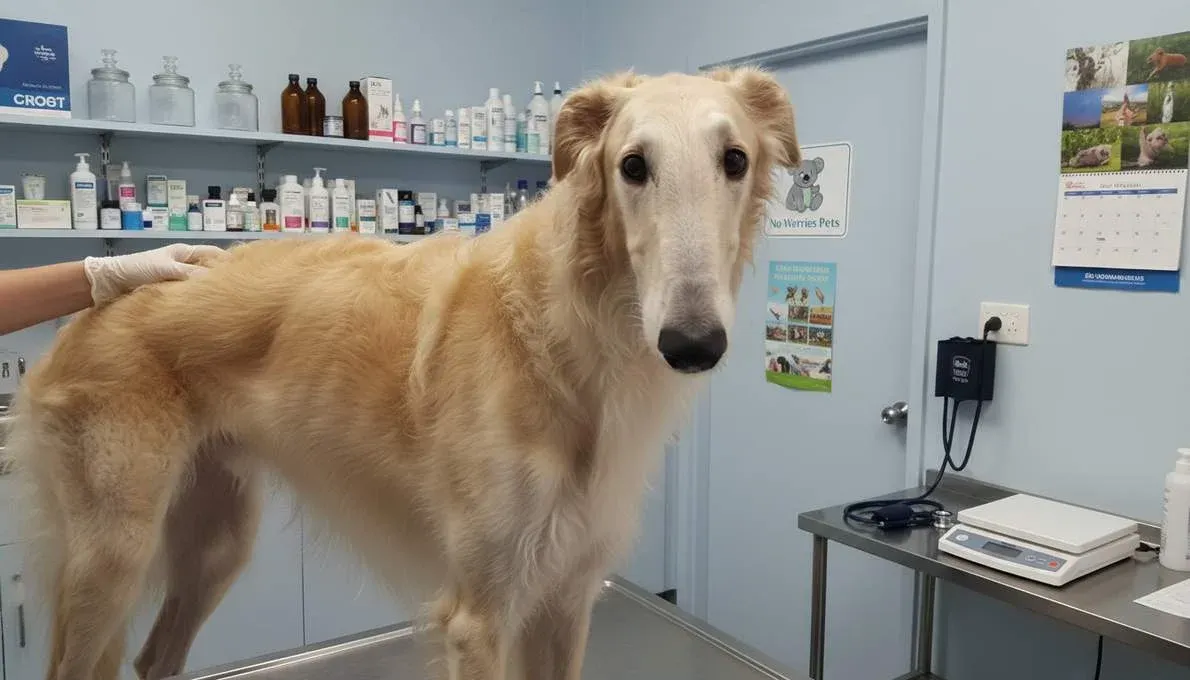
Borzoi are a generally healthy breed for their size, but they carry some serious risks that every owner needs to understand — particularly bloat, which can kill within 30 minutes.
| Condition | What to Know (AUD Costs) | Risk Level |
|---|---|---|
| Bloat / GDV | The #1 killer of Borzoi. The stomach fills with gas and twists, cutting off blood supply. Emergency surgery required immediately. Preventive gastropexy (stomach tacking) available: $500–$1,500 AUD during desexing. Emergency GDV surgery: $5,000–$10,000+ AUD. | Very High |
| Heart Disease | Over 50% of clinically healthy Borzoi show heart murmurs in studies. Mitral and tricuspid valve issues common. Annual cardiac screening recommended: $200–$400 AUD. Ongoing medication if needed: $50–$150/month AUD. | High |
| Hypothyroidism | Thyroid underactivity causing weight gain, lethargy, and skin issues. Blood test: $80–$150 AUD. Lifelong medication: $20–$50/month AUD. Manageable once diagnosed. | Moderate |
| Hip & Elbow Dysplasia | Joint malformation. Less common than in heavy breeds but documented. Hip scoring recommended for breeding dogs. Surgery if severe: $3,000–$7,000 AUD per joint. | Low–Moderate |
| Degenerative Myelopathy | Progressive spinal cord disease causing hind limb weakness. DNA test available. No cure, but early detection allows quality-of-life planning. Genetic test: $70–$150 AUD. | Low |
| Osteochondritis Dissecans | Joint cartilage disorder in fast-growing puppies. Usually shoulder. Surgery: $2,000–$5,000 AUD. Monitor growth rate and avoid over-supplementing. | Low–Moderate |
| Anaesthesia Sensitivity | Sighthounds metabolise anaesthesia differently due to low body fat. Your vet MUST be informed this is a sighthound before any procedure. Not a disease but a critical safety factor. | Critical |
Critical: Every Borzoi owner must know the signs of bloat — restlessness, drooling, unproductive retching, swollen abdomen, and the “prayer position” (front legs down, rear up). If you see these signs, drive to the emergency vet immediately. Minutes matter [4].
Lifespan & Longevity
The Borzoi lifespan averages 9–14 years, which is respectable for a giant breed. A 2024 UK study found an average life expectancy of around 12 years. With proactive health management, many Borzoi reach the higher end of that range.
Puppy to 18 months: Borzoi are slow to mature physically. Limit high-impact exercise (no long runs, no repetitive jumping) until growth plates close around 18–24 months. Feed a large-breed puppy formula to manage growth speed. Overfeeding accelerates growth and increases joint disease risk.
2–7 years: Prime years. Maintain regular exercise, annual cardiac screening, and thyroid checks. Feed two smaller meals daily rather than one large meal to reduce bloat risk. Avoid exercise 30 minutes before and after eating.
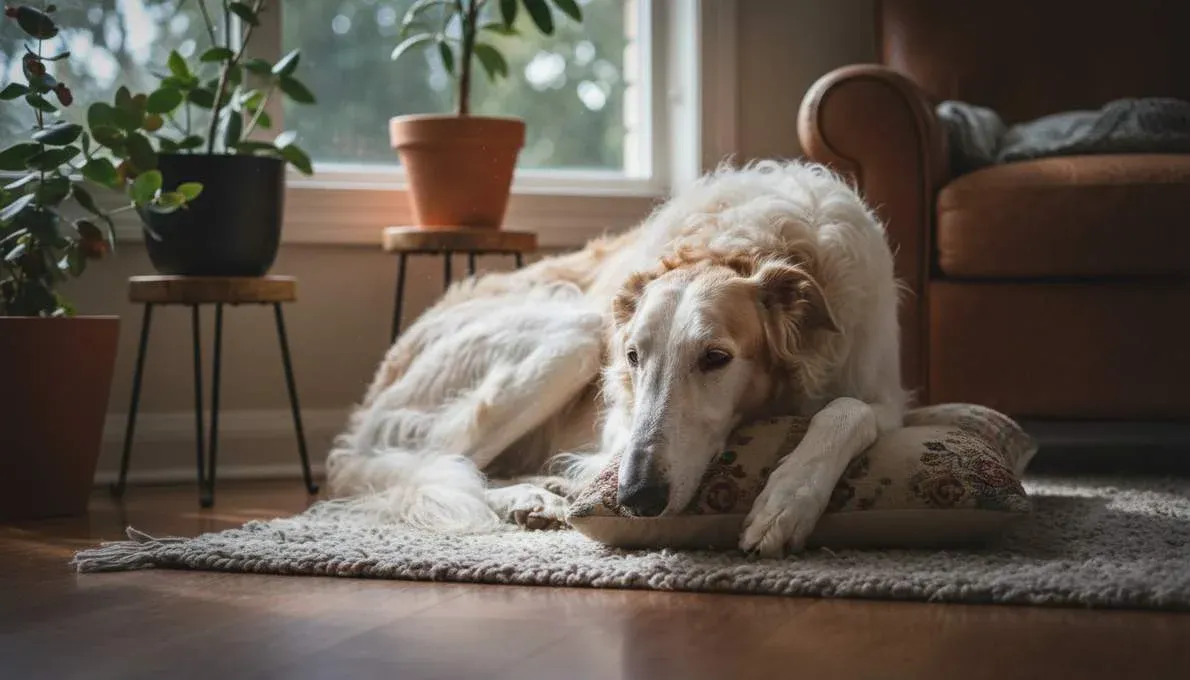
8+ years: Senior Borzoi may develop joint stiffness, vision changes, or cardiac progression. Switch to twice-yearly vet visits. Provide soft, supportive bedding — their lean build and bony joints need cushioning. Joint supplements and omega-3 fatty acids help maintain mobility.
Grooming & Care
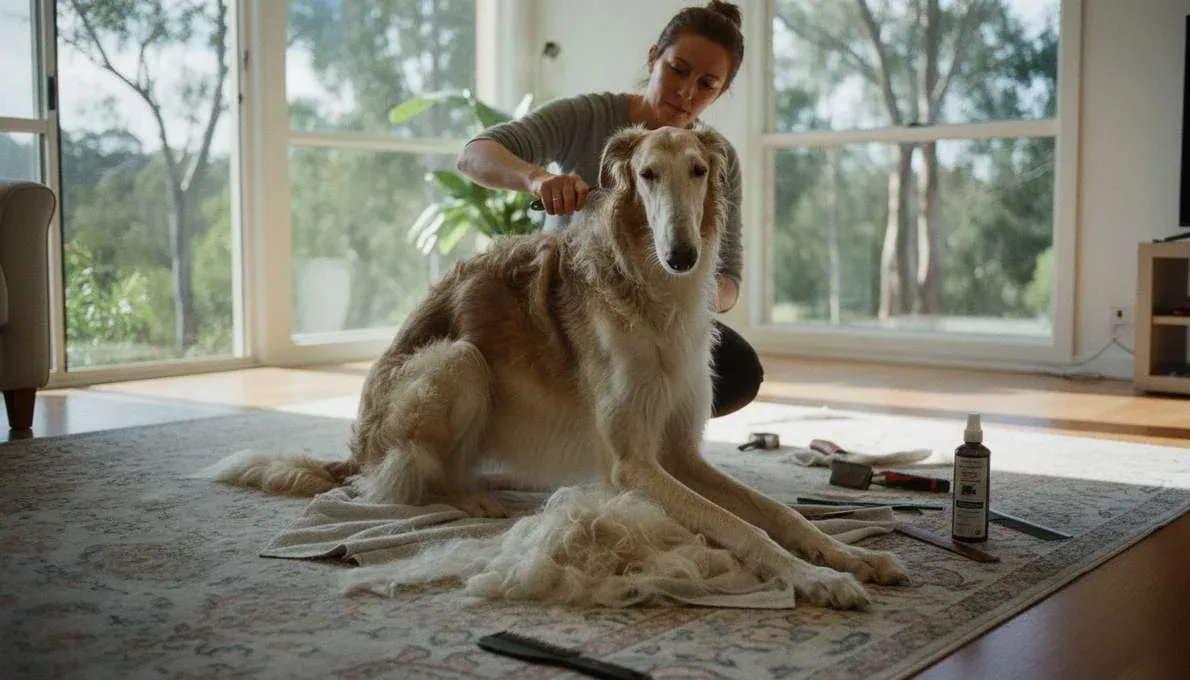
The Borzoi’s coat is long, silky, and wavy — beautiful to look at but not as high-maintenance as you’d expect. Unlike some long-coated breeds, the Borzoi’s hair has a texture that resists matting to a degree, though it still needs regular attention.
| Task | Frequency | Notes |
|---|---|---|
| Brushing | 2–3 times per week | Use a pin brush and metal comb. Focus on feathering behind ears, legs, chest, and tail where tangles form. |
| Bathing | Every 4–6 weeks | Their coat stays relatively clean between baths. Use a dog-specific shampoo. Due to their size, a walk-in shower or outdoor hose is practical. |
| Ear Cleaning | Weekly check, monthly clean | Pendulous ears can trap moisture. Check for redness or odour. Use vet-recommended ear cleaner. |
| Teeth Brushing | 3–4 times per week | Borzoi have a unique jaw shape that can make them prone to dental issues. Start early. |
| Nail Trimming | Every 2–4 weeks | Long nails on a dog this size cause gait problems. Regular trimming or grinding essential. |
| Paw Pad Check | Daily (especially after runs) | Trim hair between paw pads. Check for grass seeds, burrs, or cuts after off-lead running. |
| Professional Groom | Every 8–12 weeks | Budget $80–$150 AUD per session. Large-breed surcharge common at most groomers. |
Borzoi shed moderately year-round and heavily during seasonal coat blows (spring and autumn). During these periods, daily brushing is a must unless you want silk-like dog hair woven into every fabric in your home.
Exercise Needs
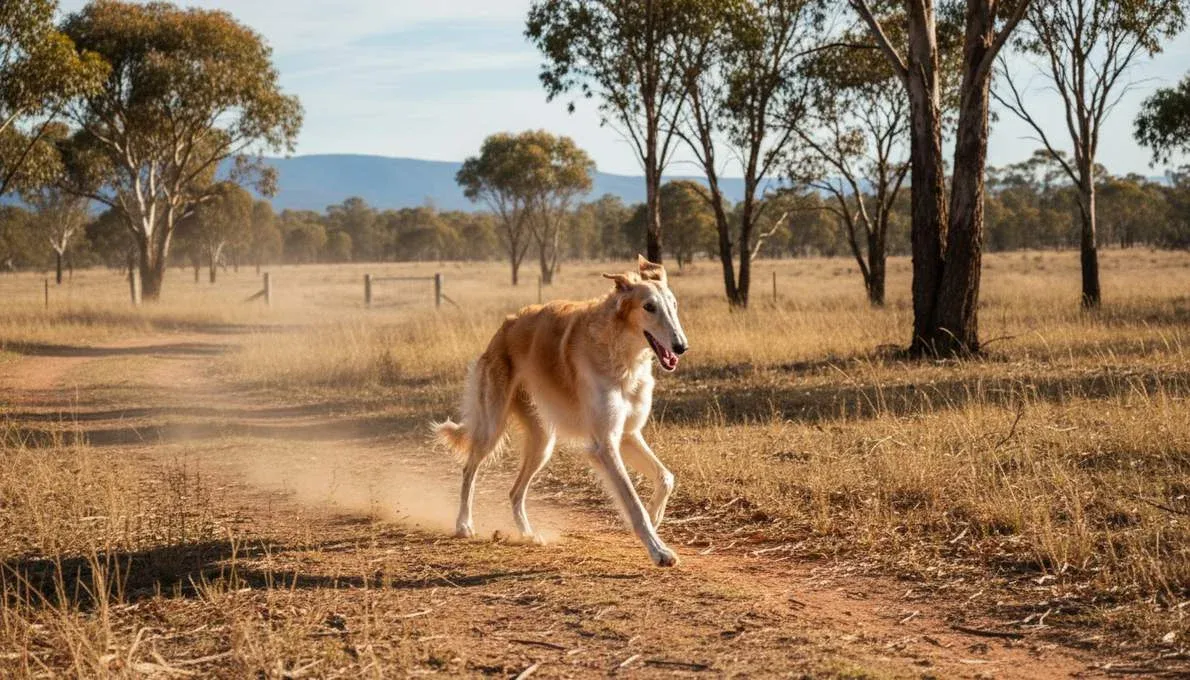
Here’s the surprise about Borzoi: they’re not as exercise-demanding as their athletic build suggests. A Borzoi is a sprinter, not a marathon runner. They need 1–2 hours of daily exercise, ideally split between a good walk and access to a securely fenced area where they can run at full speed for short bursts.
The key word is “securely fenced.” A Borzoi at full sprint can cover enormous distances in seconds, and if they spot a rabbit or cat, no amount of recall training will bring them back. Fencing must be at least 1.8 metres high — these dogs can easily clear a standard 1.2 m fence.
Between sprints, Borzoi are genuinely low-energy indoors. They’ll happily sleep 16–18 hours a day, artfully arranged on your couch, your bed, or your lap (all 40+ kg of them). This makes them more adaptable to smaller homes than you’d expect, provided the exercise needs are met.
Australian climate warning: That long coat provides insulation in both directions, but Borzoi can overheat in Australian summers. Exercise early morning or after sunset during hot months. Their lean build means they also feel the cold more than stockier breeds, so a dog coat may be needed on frosty winter mornings in Victoria, Tasmania, or the ACT. Always provide shade and fresh water outdoors.
Lure coursing: If you want to see a Borzoi truly come alive, try lure coursing. Several clubs across Australia run events specifically for sighthounds. It’s the perfect outlet for their chase instinct in a safe, controlled environment.
Training Guide
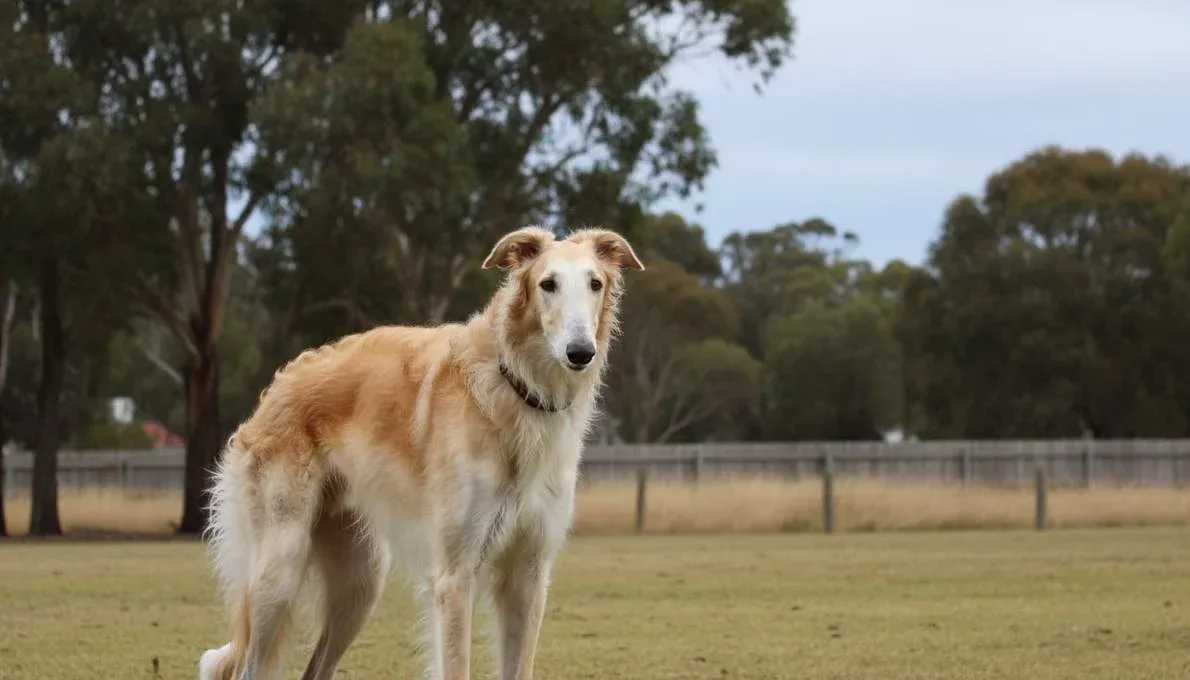
Let’s be direct: Borzoi are not Golden Retrievers. They are intelligent dogs who absolutely understand what you’re asking — they just reserve the right to decide whether it’s worth their effort. Training a Borzoi requires patience, humour, and an acceptance that “perfect obedience” is not on the menu.
| Age | Training Focus |
|---|---|
| 8–12 weeks | Socialisation is everything. Expose to different people, dogs, surfaces, and sounds. Borzoi puppies are sensitive — keep experiences positive. Basic name response and toilet training. Handle paws, ears, mouth daily. |
| 3–6 months | Sit, stay, come (with low expectations on recall). Leash manners — they’ll want to pull towards movement. Begin controlled introductions to household cats or small pets if applicable. Never use harsh corrections. |
| 6–18 months | Adolescence hits hard. Borzoi go through a lanky, clumsy, selectively deaf phase. Maintain consistency. Practice recall in enclosed areas only. Introduce lure coursing or free running in secure spaces. |
| 18 months+ | Reinforce basics. Accept that off-lead recall in open areas may never be reliable. Focus training on what matters: leash manners, house manners, and a solid “leave it” command for the prey drive. |
Honest difficulty rating: Moderate to hard. Borzoi are not stubborn for the sake of it — they’re independent thinkers bred to make decisions at 60 km/h without human input. Positive reinforcement, short sessions, and a good sense of humour are essential. If you need a dog that hangs on your every word, this isn’t it.
Cost of Ownership (AUD)
Borzoi are a rare breed in Australia, and everything from the purchase price to the vet bills reflects their size and scarcity. Here’s the realistic breakdown:
| Expense | Cost (AUD) | Notes |
|---|---|---|
| Puppy (registered breeder) | $4,000–$6,000 | Very few ANKC-registered Borzoi breeders in Australia. Expect waitlists of 6–12+ months. Rare colours (solid black, brindle) at the higher end. |
| Adoption/Rescue | $500–$700 | Extremely uncommon in rescue. Contact breed-specific groups and sighthound rescue organisations. |
| First-year vet costs | $1,000–$2,000 | Vaccinations, desexing, microchipping, initial screening. Consider prophylactic gastropexy during desexing ($500–$1,500 extra). |
| Annual vet costs | $600–$1,200 | Annual cardiac screening, thyroid checks, dental, flea/tick/worming. Higher for giant breeds. |
| Food (monthly) | $80–$150 | Large breed but not a huge eater. High-quality, large-breed formula. Feed 2 smaller meals to reduce bloat risk. |
| Grooming (annual) | $400–$800 | Professional grooming every 8–12 weeks plus home grooming supplies. Large-breed surcharges apply. |
| Pet Insurance (annual) | $600–$1,500 | Highly recommended given bloat and cardiac risks. Giant breed premiums are higher. Compare on comparethemarket.com.au. |
| Miscellaneous | $400–$800/year | Extra-large beds, leads, crates (XL sizes cost more), council registration, secure fencing maintenance. |
| Estimated Lifetime Cost | $30,000–$60,000+ | Over 9–14 years. Emergency GDV surgery alone can add $5,000–$10,000 to this figure. |
Where to find breeders: DogzOnline.com.au lists ANKC-registered Borzoi breeders across Australia. Dogs Victoria, Dogs NSW, Dogs QLD, and Dogs SA maintain breed directories. Established kennels like Clovelly, Marakhoff, Gleneagle, and Russkimir have decades of Borzoi breeding history. Always visit breeders in person and request cardiac, thyroid, and degenerative myelopathy test results [5].
Is the Borzoi Right for You?
appreciate a calm, quiet, independent dog with a regal presence, have a securely fenced yard (1.8 m minimum), enjoy long walks and can provide access to safe off-lead running spaces, don’t need a dog that obsessively obeys every command, and are comfortable with a giant breed’s higher costs and shorter lifespan.
have cats or small pets you can’t separate from the dog, want reliable off-lead recall in open areas, have very young children, live in a small apartment with no yard, want a highly trainable, people-pleasing breed, or aren’t prepared for the financial reality of giant-breed vet bills (especially emergency bloat surgery).
If you love the sighthound aesthetic but want something smaller or easier to manage, consider a Whippet (smaller, similar temperament), an Italian Greyhound (apartment-friendly sighthound), or a retired racing Greyhound (abundant in Australian rescue, calm and gentle).
The Borzoi is a magnificent, contradictory dog — equal parts fierce hunter and elegant couch ornament. In the right home, they’re one of the most graceful, gentle, and quietly devoted companions you’ll ever have.
The prey drive is real and permanent. No amount of training will override centuries of wolf-chasing genetics. Secure fencing and on-lead management are lifelong commitments, not training failures.
Budget $4,000–$6,000 AUD from a registered breeder and prepare for long waitlists. Borzoi are rare in Australia for a reason — they need experienced, patient owners with the right setup. But if that’s you, this breed will reward you with 12+ years of quiet elegance and surprising comedy.
Frequently Asked Questions
What is a Borzoi?
A Borzoi (formerly called the Russian Wolfhound) is a large Russian sighthound originally bred to hunt wolves, fox, and hare. They’re part of the Bichon’s polar opposite — tall, lean, fast, and intensely independent. The name comes from the Russian word for “swift.”
How much does a Borzoi cost in Australia?
Expect to pay $4,000–$6,000 AUD from a registered breeder. Rare colours like solid black or brindle sit at the higher end. Adoption fees are $500–$700 AUD but finding a Borzoi in rescue is uncommon in Australia.
How long do Borzoi live?
The average Borzoi lifespan is 9–14 years, with a 2024 UK study finding an average of around 12 years. For a giant breed, this is respectable. Proactive cardiac and bloat management can extend their healthy years.
Do Borzoi shed?
Yes, Borzoi shed moderately year-round and heavily during seasonal coat blows in spring and autumn. Regular brushing (2–3 times per week, daily during shedding season) manages it. They are not hypoallergenic.
Can Borzoi live with cats?
It’s risky. Borzoi have an extremely strong prey drive and may see cats as prey. If raised with a cat from puppyhood, coexistence is possible with careful management, but the risk never fully disappears. Never leave them unsupervised with cats or small animals.
Are Borzoi good family dogs?
They can be excellent companions for families with older children who respect their space. They’re gentle and calm indoors but too large to safely roughhouse with toddlers. Their sensitivity means they prefer a calm household environment.
Do Borzoi bark a lot?
No. Borzoi are one of the quietest dog breeds. They rarely bark excessively and are not good watchdogs or guard dogs. They may alert you to something unusual but won’t make a fuss about it.
How fast can a Borzoi run?
Borzoi can reach speeds of 58–60 km/h (36–37 mph) in short sprints. They’re one of the fastest dog breeds in the world, comparable to Greyhounds over short distances but with more stamina over longer chases.
Why are Borzoi so long / why do they look like that?
Their elongated skull, deep chest, and lean build are the result of centuries of selective breeding for speed and coursing ability. The long snout allows for better airflow at high speeds, the deep chest houses large lungs, and the tucked abdomen reduces drag. They’re basically aerodynamic dogs.
Are Borzoi easy to train?
Not particularly. Borzoi are intelligent but independent. They understand commands perfectly well — they just don’t always see the point in following them. Positive reinforcement, patience, and short training sessions work best. They’re not ideal for first-time dog owners seeking an obedient companion.
How do you pronounce Borzoi?
It’s pronounced “BOR-zoy” (rhymes with “boy”). The plural can be either “Borzoi” or “Borzois” — both are accepted.
[1] Wikipedia — Borzoi: https://en.wikipedia.org/wiki/Borzoi
[2] Dogs Victoria — Borzoi Breed Information: https://dogsvictoria.org.au/family-pet/dogs-and-puppies/buying-a-puppy/breed-information-and-registered-breeders/borzoi/
[3] DogzOnline — Borzoi Breeders in Australia: https://www.dogzonline.com.au/breeds/breeders/borzoi.asp
[4] PetMD — Borzoi Dog Breed Health and Care: https://www.petmd.com/dog/breeds/borzoi
[5] American Kennel Club — Borzoi Dog Breed Information: https://www.akc.org/dog-breeds/borzoi/
[6] WebMD — What to Know About Borzois: https://www.webmd.com/pets/dogs/what-to-know-about-borzois
[7] Purina UK — Borzoi Dog Breed Information: https://www.purina.co.uk/find-a-pet/dog-breeds/borzoi
[8] PetsOnline — Borzoi Prices Australia: https://petsonline.com.au/dog-breeds/borzoi/prices/