
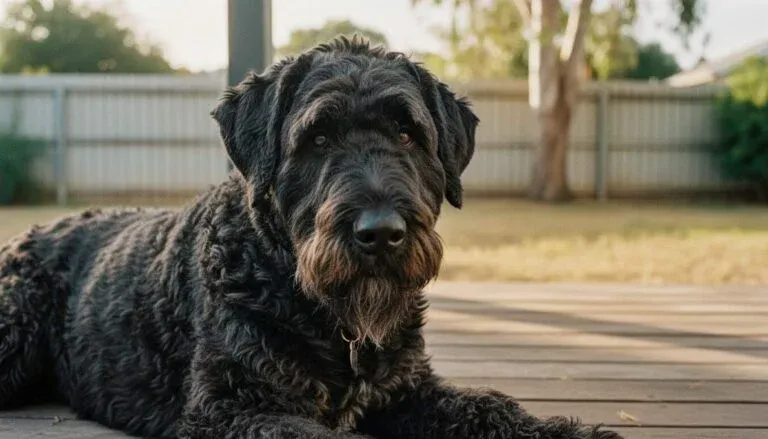
The Black Russian Terrier was literally engineered by the Soviet military. After World War II, the Red Star Kennel in Moscow was tasked with creating the perfect working dog: massive, fearless, intelligent, obedient, and tough enough to patrol Siberian prison camps in minus-30 temperatures. They crossed Giant Schnauzers, Rottweilers, Airedales, Newfoundlands, and at least 17 other breeds until they got what they wanted.
What they created was a 60-kilogram bear of a dog with the confidence of a bouncer, the loyalty of a Labrador, and a shaggy black coat that makes it look like it should be guarding a castle in a fantasy novel. The Black Russian Terrier — or “Blackie” to fans — is one of the most impressive dogs you’ll ever meet.
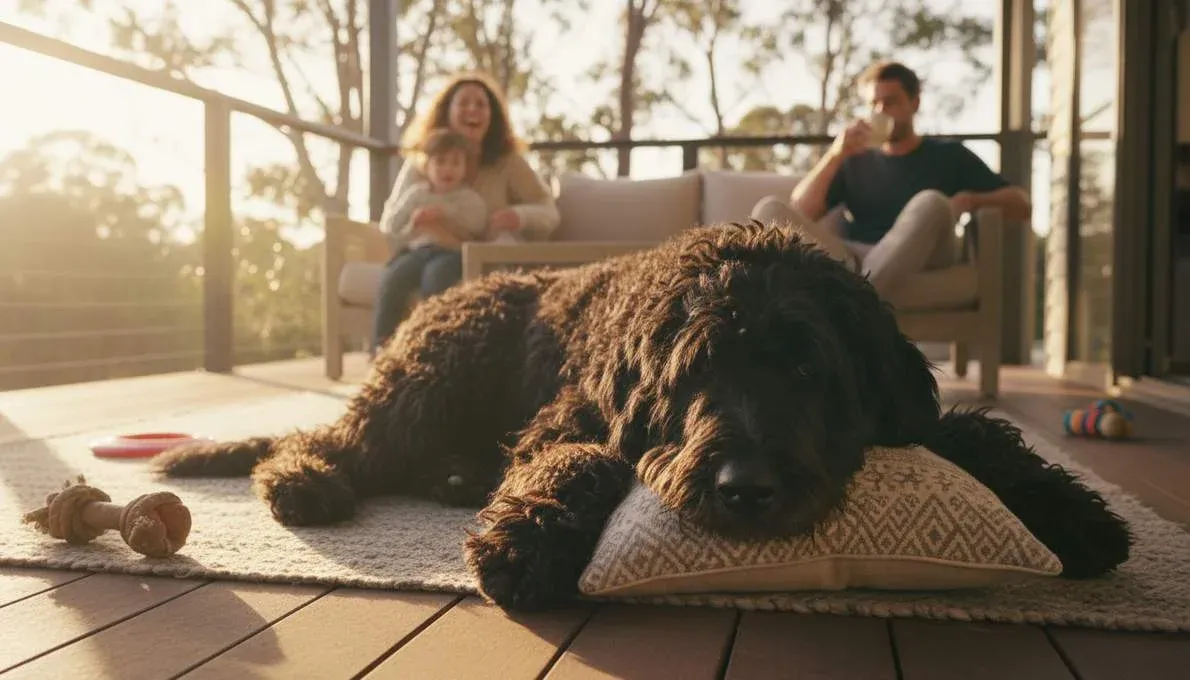
Here’s the thing nobody tells you, though: despite being bred to guard gulags, the modern BRT is a spectacular family dog. They’re calm indoors, gentle with kids, and so attached to their humans that they’ll follow you from room to room like a very large, very hairy shadow. They are emphatically not outdoor kennel dogs — leave a BRT alone in the backyard and you’ll have a miserable, destructive, 60 kg problem.
In Australia, the breed is rare but growing. There’s a small, passionate community of BRT breeders and owners, mostly concentrated in Victoria and Queensland. If you’re considering one, this guide covers everything you need to know — from the eye-watering food bills to the health screenings you absolutely cannot skip.
What You’ll Learn
- Breed traits & temperament
- Health concerns to know
- True cost in Australia
- Training & exercise needs
- Is this breed right for you?
Black Russian Terrier at a Glance
| Attribute | Details |
|---|---|
| Breed Group | Utility (ANKC Group 6) |
| Origin | Soviet Union (Russia), 1940s–1950s |
| Height | Males 70–78 cm, Females 66–74 cm |
| Weight | Males 50–60 kg, Females 45–50 kg |
| Lifespan | 10–12 years (some reach 14) |
| Coat Type | Double coat — coarse outer, soft dense undercoat, 4–10 cm length |
| Colours | Black only (small amount of grey acceptable) |
| Hypoallergenic | Low-shedding but not truly hypoallergenic |
| Grooming Needs | High — weekly brushing, professional trim every 8–12 weeks |
| Exercise Needs | Moderate to high — 40–60 minutes daily |
| Trainability | High — intelligent, eager to work, responds to confident leadership |
| Good With Kids | Yes — gentle and protective when well-socialised |
| Barking Level | Low to moderate — barks with purpose, not nuisance barkers |
| Shedding | Low (double coat sheds seasonally) |
| AKC Popularity | #119 of 200 breeds (rare) |
History & Origins
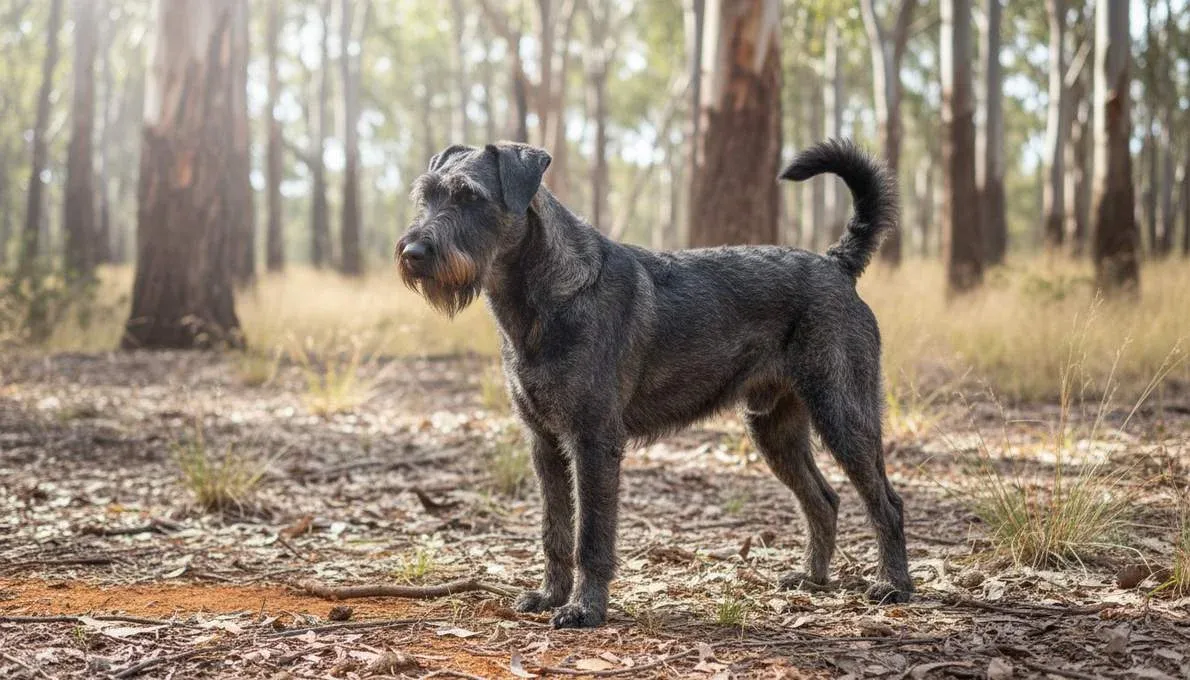
The Black Russian Terrier is one of the youngest recognised breeds in the world, and one of the few deliberately engineered by a government. After WWII, the Soviet military needed a large, trainable guard dog that could withstand the brutal Russian climate. Existing breeds didn’t tick every box, so the state-run Red Star Kennel in Moscow began a systematic crossbreeding program.
The foundation dog was a Giant Schnauzer named Roy. Over subsequent generations, breeders introduced Rottweiler (for guarding instinct and power), Airedale Terrier (for tenacity and coat texture), and Newfoundland (for size, swimming ability, and temperament). At least 17 breeds contributed to the gene pool, including Caucasian Shepherd Dogs, Great Danes, and several native Russian working breeds.
By the late 1950s, the breed was producing consistent offspring. The first Russian breed standard was written in 1958. BRTs were used to guard military installations, prisons, and border crossings across the Soviet Union. When the Cold War thawed and breeding stock became available to civilians, the breed’s remarkable temperament — fierce when working, gentle at home — quickly won over families.
The BRT was declared an official separate breed in Russia in 1981, accepted by the FCI in 1996, and recognised by the ANKC in 2001. The first pair arrived in Australia that same year — CH Zornoi James Bond (imported from Finland) and Best Guard Deniza (imported from Russia). These two dogs are behind the majority of Australian-bred BRTs today.
Despite the name, the Black Russian Terrier is not a true terrier. It’s classified in the Working Group (AKC) and Utility Group (ANKC). The “terrier” label comes from the Airedale influence in its ancestry, but this dog has far more in common with Giant Schnauzers and Rottweilers than with any terrier you’d recognise.
Temperament & Personality
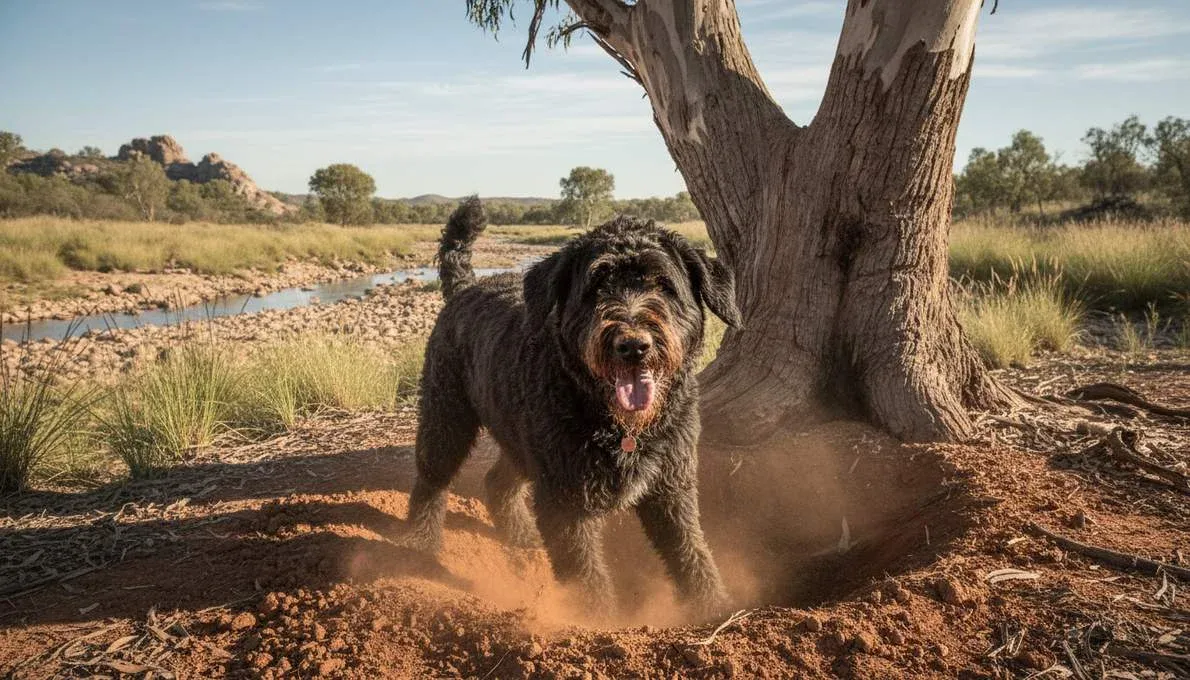
The Black Russian Terrier’s temperament is its greatest asset and its biggest responsibility. These dogs were bred to be calm, confident, courageous, and deeply bonded to their handler. They achieved all four, sometimes to an extreme degree.
At home, a well-raised BRT is surprisingly mellow. They’ll sprawl across the floor while you watch television, play gently with your kids, and follow you around the house like a 60 kg puppy. BRT owners consistently describe their dogs as “velcro dogs” — they want to be near their people at all times. This is an indoor breed. Dogs Victoria explicitly states that Black Russian Terriers are not suitable for owners who plan to leave them outside.
With children, BRTs are typically gentle and protective. Their size means supervision is always necessary (a playful BRT can accidentally knock a toddler over without trying), but their temperament with kids is generally excellent. They’re patient, tolerant, and seem to understand instinctively that small humans require a lighter touch.
With strangers, things change. BRTs are naturally suspicious of unfamiliar people and will position themselves between their family and anyone they don’t know. This isn’t aggression — it’s what they were bred for. But it means socialisation isn’t optional; it’s absolutely critical. A poorly socialised BRT that decides a visitor is a threat is a 60 kg problem that no amount of obedience training can fix in the moment.
With other dogs, BRTs are generally tolerant when properly socialised. Males can be dominant with other large, assertive males — two intact male BRTs under the same roof is not recommended. They typically coexist well with smaller dogs and cats, particularly if raised together.
One important note: BRTs are slow to mature. Males don’t reach full physical and mental maturity until around 4 years of age, females around 3.5 years. Your “puppy” will be the size of a small horse long before it develops adult judgement. Plan accordingly.
Health & Genetic Conditions
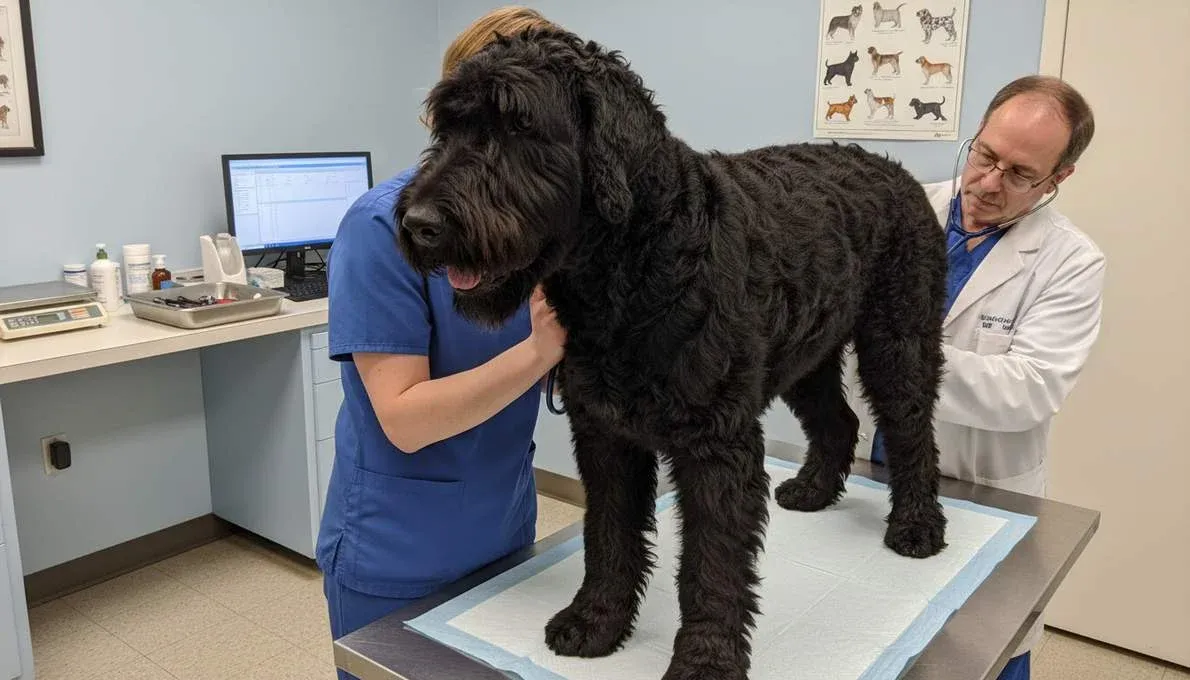
The Black Russian Terrier is generally a robust breed, which is unsurprising given it was engineered for resilience. But large breeds carry large-breed health risks, and BRTs have several conditions that responsible owners and breeders must screen for.
The most common orthopaedic concern in BRTs. Both conditions involve abnormal joint development that leads to arthritis, pain, and reduced mobility. Reputable breeders hip and elbow score all breeding stock — always ask to see results. In Australia, scoring is done through the ANKC/AVA scheme.
Estimated costs: X-rays and scoring: $300–$600 AUD. Conservative management (supplements, weight control, physiotherapy): $500–$1,500 AUD/year. Surgical options (total hip replacement, arthroscopy): $5,000–$12,000 AUD per joint.
A life-threatening emergency where the stomach fills with gas and twists. Deep-chested breeds like the BRT are at elevated risk. Symptoms include a distended abdomen, restlessness, unproductive retching, and drooling. GDV requires emergency surgery within hours or it is fatal.
Prevention: Feed 2–3 smaller meals daily rather than one large meal. Avoid vigorous exercise immediately before and after eating. Some owners opt for prophylactic gastropexy (stomach tacking) during desexing surgery ($500–$1,000 AUD added to procedure). Emergency GDV surgery costs $5,000–$10,000+ AUD.
A genetic condition causing elevated uric acid in urine, leading to bladder and kidney stones. HUU is a known issue in the BRT breed and a DNA test is available. Responsible breeders test all breeding stock. Affected dogs require a controlled diet and monitoring. Surgical stone removal costs $1,500–$4,000 AUD.
A devastating inherited neurological condition where puppies develop laryngeal paralysis (difficulty breathing), gait abnormalities, and progressive nerve damage from as early as 3 months of age. JLPP is fatal. A DNA test exists and all breeding stock should be tested. Never buy a BRT puppy without confirmed JLPP-clear status for both parents.
BRTs can develop progressive retinal atrophy (PRA), cataracts, entropion (inward-rolling eyelids), and ectropion (outward-rolling eyelids). Annual eye examinations are recommended. Surgical correction for entropion/ectropion costs $1,000–$3,000 AUD. PRA has no cure but progresses slowly; affected dogs adapt well.
Allergies and atopy (particularly in Australian climates), heart conditions including cardiomyopathy, and obesity are all seen in the breed. Regular vet check-ups and weight management are essential.
Bottom line: Buy only from breeders who provide hip/elbow scores, HUU DNA test results, and JLPP DNA test results. These are non-negotiable. Pet insurance from puppyhood is strongly recommended — a single orthopaedic surgery or GDV emergency can cost more than the dog’s purchase price.
Lifespan & Longevity
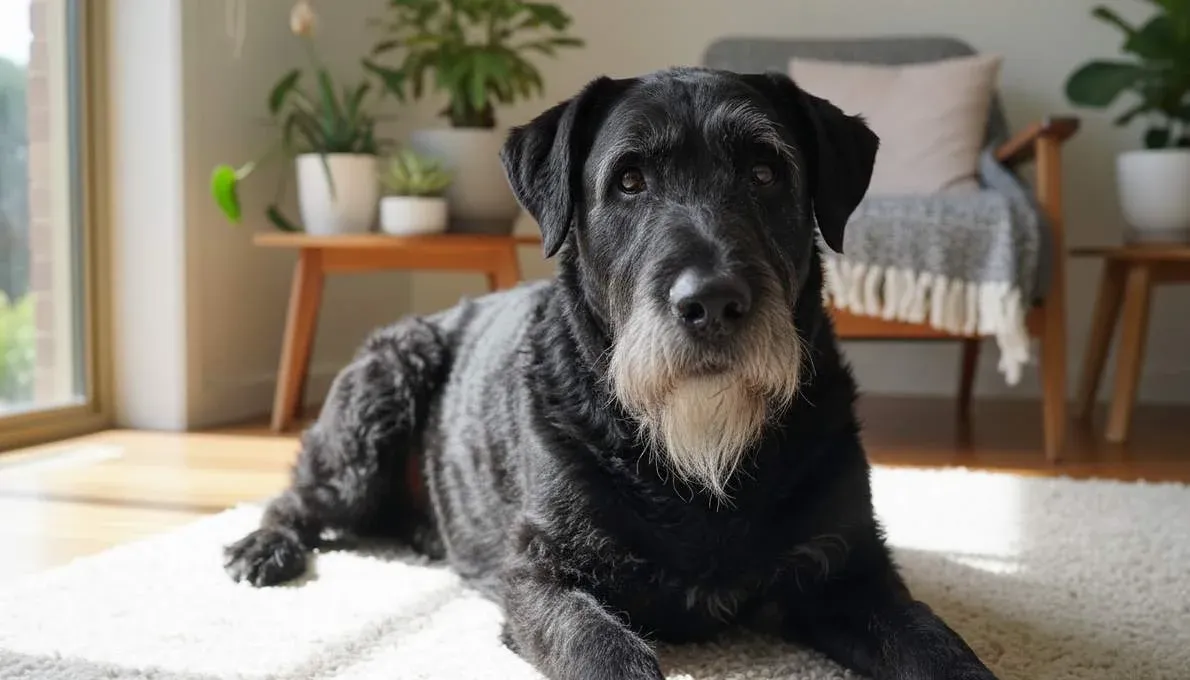
For a dog their size, Black Russian Terriers live reasonably long. The typical lifespan is 10–12 years, with well-bred, well-cared-for dogs sometimes reaching 13–14. This compares favourably to other giant breeds — Great Danes average 7–8 years, Bernese Mountain Dogs 6–8 years.
Age-Specific Care Tips
| Life Stage | Key Considerations |
|---|---|
| Puppy (0–18 months) | Controlled exercise to protect growing joints — no forced running or jumping on hard surfaces. Start socialisation immediately: expose to people, dogs, environments, sounds. Confirm JLPP and HUU clear status. Begin grooming routine early. |
| Young adult (1.5–4 years) | Still maturing mentally. Continue socialisation and training. Hip/elbow X-rays at 12–24 months. Increase exercise gradually. Watch for early signs of allergies. Bloat awareness from day one. |
| Adult (4–8 years) | Peak years. Maintain consistent exercise and weight control. Annual eye exams. Monitor for joint stiffness. Dental checks. This is when BRTs are at their best — fully mature, calm, and deeply bonded. |
| Senior (8+ years) | Bi-annual vet visits. Joint supplements and pain management if needed. Heart screening. Adjust exercise for comfort. Senior-appropriate diet to maintain weight without overloading joints. |
Grooming & Care
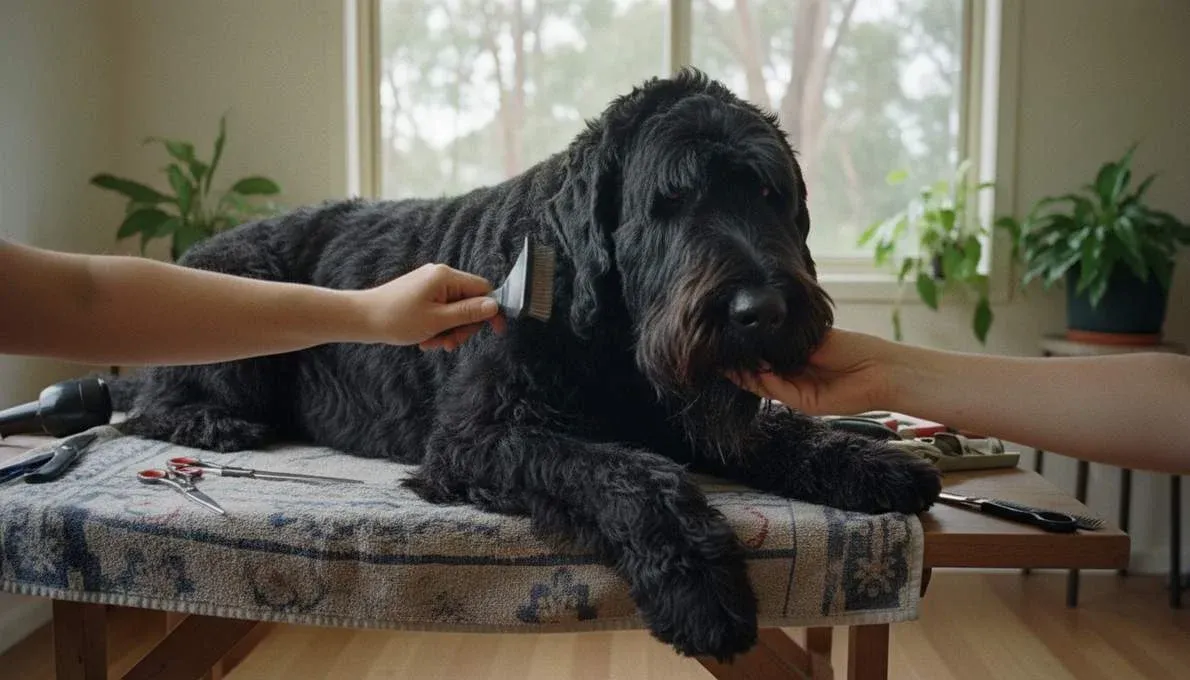
The Black Russian Terrier’s coat is a defining feature: a dense, tousled double coat ranging from 4 to 10 cm in length, with a distinctive beard, moustache, and eyebrows that give the breed its characteristic “bear” appearance. The coat is designed to withstand Siberian winters, which means it’s thick, insulating, and requires consistent maintenance.
BRTs are low-shedding compared to many large breeds, but they’re not non-shedding. The double coat sheds seasonally (spring and autumn), and without regular brushing, loose undercoat hair mats painfully. Daily brushing during coat-blow season, weekly brushing otherwise.
| Grooming Task | Frequency | Estimated Cost (AUD) |
|---|---|---|
| Professional clip/trim | Every 8–12 weeks | $120–$200+ per session (large breed premium) |
| At-home brushing | 1–2 times per week (daily when shedding) | Slicker brush + undercoat rake ~$40–$70 |
| Beard/moustache cleaning | Daily (after meals and water) | Towels — no real cost |
| Bathing | Every 6–8 weeks or as needed | DIY or included in grooming |
| Ear cleaning | Weekly | Ear cleaner ~$15–$25 |
| Nail trimming | Every 2–4 weeks | $15–$25 or DIY |
Beard warning: BRT beards are magnificent but they’re also sponges. After every drink of water, your BRT will trail water across the floor via its beard. After every meal, food particles will lodge in the facial hair. Many BRT owners keep a towel permanently stationed near the water bowl. It’s a small price for the look, but if you’re house-proud, you need to know this going in.
Exercise Needs
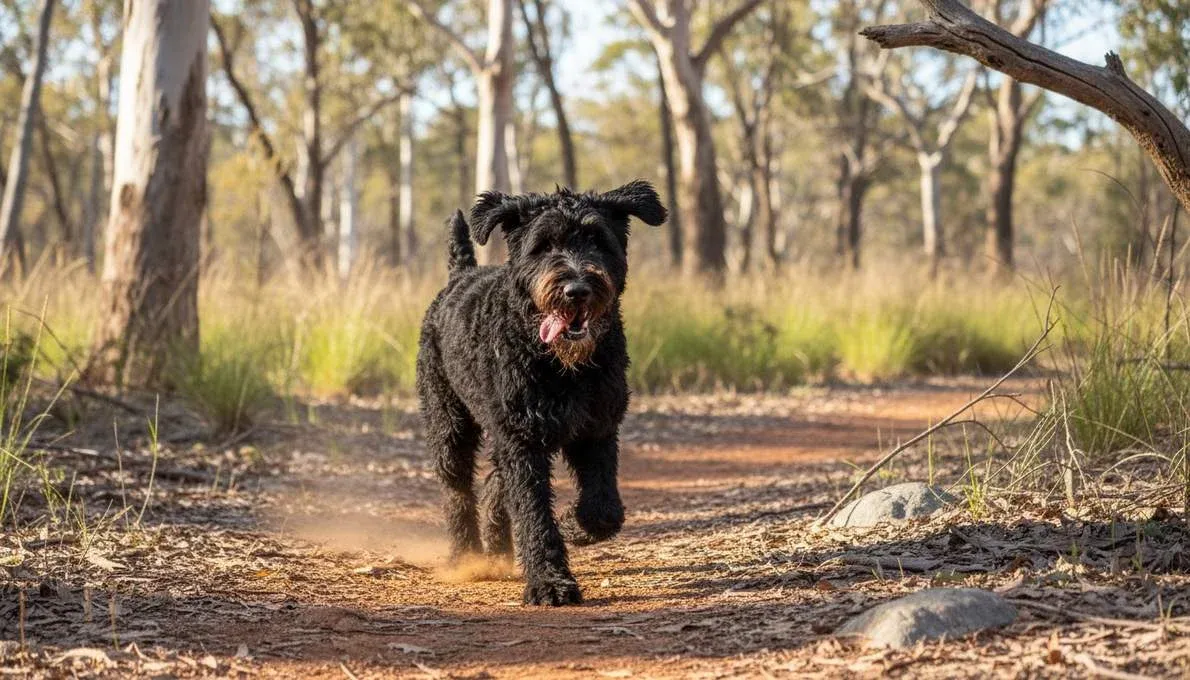
Despite their size, BRTs are not marathon dogs. They need 40–60 minutes of daily exercise: a long walk, some off-lead play in a secure area, and mental stimulation. They’re athletic and capable of much more — BRTs compete successfully in obedience, agility, tracking, and even herding trials — but they don’t need hours of exercise to be content.
What they do need is mental engagement. BRTs are highly intelligent working dogs that get bored without a job to do. Puzzle feeders, training sessions, scent work, and interactive games are essential. A physically tired BRT with an under-stimulated brain will find its own entertainment, and at 60 kg, that entertainment tends to be expensive.
Puppies and young dogs require carefully managed exercise. Growing joints in large breeds are vulnerable to damage from excessive running, jumping, and hard-surface exercise. The general rule is 5 minutes of structured exercise per month of age, twice daily, until skeletal maturity (around 18–24 months). Free play on soft surfaces is fine.
Australian Climate Considerations
BRTs were designed for Russian winters, not Australian summers. Their thick double coat makes them heat-sensitive, and temperatures above 28–30°C require serious caution. In much of Australia, summer exercise must be limited to early morning and evening. Provide shade, constant fresh water, and consider a cooling mat or kiddie pool. Never leave a BRT in a parked car or enclosed space in warm weather.
On the flip side, BRTs handle Australian winters beautifully and will happily play in the rain. Their coat is weather-resistant and they genuinely enjoy cooler conditions.
Training Guide
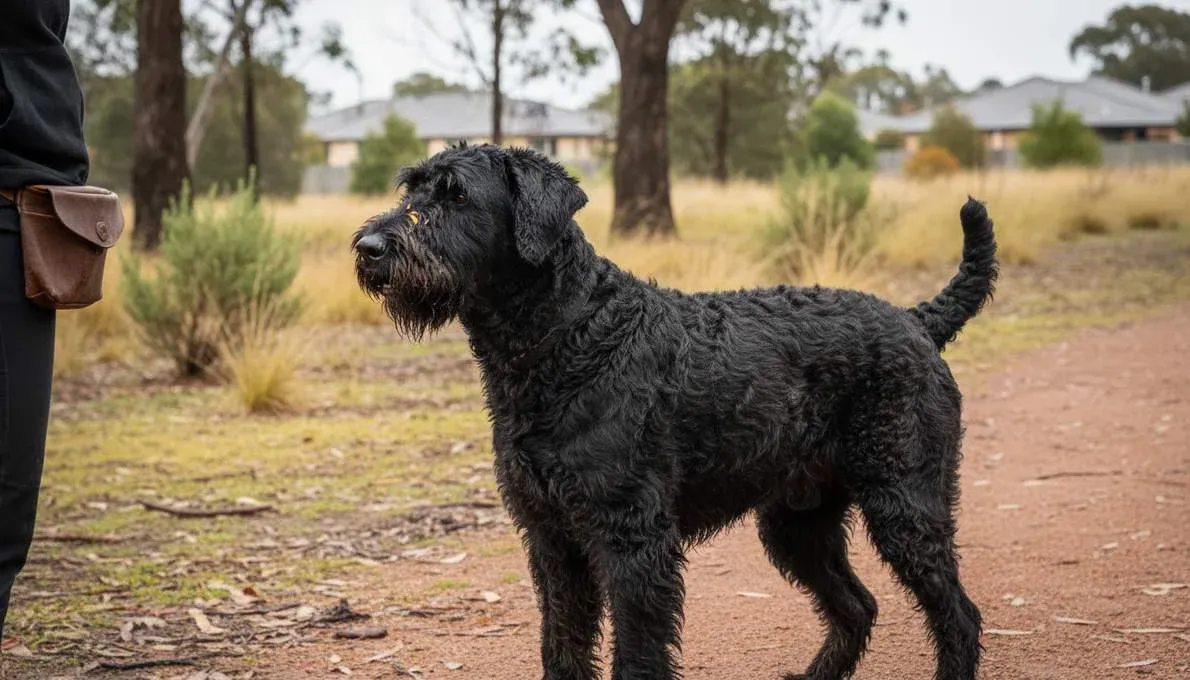
Training a Black Russian Terrier is rewarding but demands confidence and consistency. These are intelligent, powerful dogs that were bred to assess threats and make independent decisions. That’s a fantastic trait in a guard dog; it’s a challenging trait in a pet that needs to accept your judgement about who’s allowed in the house.
BRTs respond well to positive reinforcement with clear boundaries. They need a handler who is calm, firm, and fair — not harsh. Physical punishment or intimidation will either shut them down or create a defensive, dangerous dog. Equally, permissive “he’s just a big baby” handling will produce a 60 kg dog that makes its own rules.
| Age | Training Focus | Tips |
|---|---|---|
| 8–16 weeks | Socialisation (critical window), name recognition, crate training, basic handling, grooming tolerance | Expose to as many people, dogs, and environments as possible. Puppy school is non-negotiable for this breed. |
| 4–6 months | Basic obedience (sit, stay, come, down, leave it), lead walking without pulling, impulse control | BRTs learn fast but test boundaries. Be consistent. Short sessions (5–10 min). Use high-value treats. |
| 6–18 months | Advanced obedience, reliable recall, “settle” command, stranger management, on-lead manners around other dogs | Adolescence is challenging — size increases faster than brain maturity. Enrol in ongoing obedience classes. |
| 18 months–4 years | Continued socialisation, advanced working skills (tracking, protection sports, agility), off-lead reliability | BRTs thrive with a “job.” Structured activities channel their intelligence and drive. Full maturity around 3.5–4 years. |
Honest difficulty rating: 7/10. BRTs are highly trainable but not for beginners. They need an owner who understands large, guardian breeds and can provide confident, consistent leadership. If you’ve never owned a large working dog, mentor yourself with an experienced BRT owner or hire a trainer who knows the breed before your puppy arrives.
Cost of Ownership in Australia
Black Russian Terriers are expensive dogs. The purchase price is just the beginning — feeding, grooming, and insuring a 50–60 kg dog adds up fast. Here’s a realistic breakdown in AUD.
Upfront Costs
| Item | Estimated Cost (AUD) |
|---|---|
| Registered puppy from reputable breeder | $2,500–$4,000+ |
| Initial vet check, vaccinations, microchip | Usually included in purchase price |
| Desexing (consider gastropexy at same time) | $500–$1,200 |
| Large crate, bed, bowls, lead, toys | $400–$700 |
| Puppy school + ongoing obedience classes | $300–$600 |
Ongoing Annual Costs
| Item | Estimated Annual Cost (AUD) |
|---|---|
| Professional grooming (4–6 sessions) | $500–$1,200 |
| Quality large-breed dog food | $1,200–$2,400 |
| Annual vet check + vaccinations | $300–$500 |
| Pet insurance (large breed premiums) | $800–$1,600 |
| Joint supplements | $300–$600 |
| Flea, tick & worming prevention | $300–$500 (higher for large dogs) |
| Council registration | $30–$100 |
| Toys, treats, replacements (large-breed durable) | $200–$400 |
Total estimated first-year cost: $6,000–$10,000+ AUD. Annual ongoing costs: $3,500–$7,000+ AUD. The food bill alone is double or triple what you’d spend on a medium-sized dog. Factor in large-breed pet insurance premiums and the occasional grooming bill, and BRT ownership is a genuine financial commitment.
Where to Find a Black Russian Terrier in Australia
The BRT community in Australia is small but passionate. Check DogzOnline (dogzonline.com.au) for current Russian Black Terrier litters — the breed is listed under “Russian Black Terrier” in ANKC registration. Key breeders include Tvorimir Kennels (Queensland), Ogaraf Kennels (Victoria), Ruslana Kennels (Victoria), and HausNoir (imported Russian lines). Expect waiting lists of 6–12+ months.
Contact Dogs Victoria, Dogs NSW, Dogs Queensland, or your state canine body for breeder referrals. There are no BRT-specific rescue organisations in Australia given the breed’s rarity, but occasionally rehoming needs arise through breeder networks.
Is a Black Russian Terrier Right for You?
Want a large, imposing dog that’s calm and gentle at home. Have experience with large or guardian breeds. Can commit to thorough socialisation and ongoing training. Have space for a 60 kg dog (house with a yard is ideal, though some BRTs live happily in large apartments). Are home frequently — BRTs need human company. Want a natural watchdog that doesn’t need to be taught to guard.
Are a first-time dog owner — this breed requires confident, experienced handling. Work long hours away from home — BRTs develop separation anxiety and destructive behaviour when left alone. Can’t afford the ongoing costs of a large breed — food, vet bills, grooming, and insurance for a 60 kg dog are significantly more expensive than for a medium-sized breed. Live in a hot climate without air conditioning — BRTs suffer in Australian summers. Don’t want a dog that’s suspicious of strangers — this is a guardian breed and that trait is hardwired. Want an off-lead dog at the dog park — BRTs can be selective about which dogs they tolerate.
If you like the BRT’s look and temperament but want something slightly smaller, the Giant Schnauzer is a close cousin with similar traits in a marginally more manageable package. If you want the guardian instinct with a different coat type, consider a Rottweiler (shorter coat, less grooming). The Bouvier des Flandres is often compared to the BRT — similar size, similar coat, but generally less intense guarding instinct. For a large, calm family dog without the guardian edge, a Newfoundland shares ancestry with the BRT and is gentler with strangers.
The Black Russian Terrier is one of the world’s great working breeds: intelligent, loyal, imposing, and surprisingly affectionate behind closed doors. They’re not a dog you buy on a whim — they demand experience, space, time, money, and commitment.
But for the right owner, a BRT is an extraordinary companion. They’ll guard your home without being asked, play with your kids without being rough, and sit on your feet while you watch TV like a 60 kg weighted blanket. They’re not common in Australia, and that rarity is part of the appeal — walking a BRT guarantees you’ll be stopped and asked “what kind of dog is that?” at least three times.
If you’ve done the research, found a reputable breeder, and you’re ready for a decade-long commitment to a very large, very loyal shadow — a Blackie might just be the best dog you’ll ever own.
Frequently Asked Questions
Are Black Russian Terriers good family dogs?
Yes, when properly socialised and trained. BRTs are gentle with children, calm indoors, and deeply devoted to their family. Their protective nature is an asset for families, but it requires responsible management. They’re not ideal for first-time owners — experience with large or guardian breeds is strongly recommended.
What is the Black Russian Terrier’s temperament like?
Calm, confident, intelligent, and protective. BRTs are naturally suspicious of strangers but never needlessly aggressive. At home they’re affectionate and surprisingly gentle for their size. They bond deeply with their humans and dislike being left alone. They’re slow to mature — males reach full mental maturity around age 4.
Do Black Russian Terriers shed?
They’re low-shedding compared to many large breeds, but they’re not non-shedding. The double coat sheds moderately, with heavier seasonal shedding in spring and autumn. Regular brushing (weekly minimum, daily during coat changes) controls loose hair. Professional grooming every 8–12 weeks keeps the coat manageable.
How much does a Black Russian Terrier cost in Australia?
Expect $2,500–$4,000+ AUD from a registered breeder. Show-quality or breeding-quality puppies cost more. The breed is rare in Australia with only a handful of active breeders, so expect waiting lists of 6–12+ months. Ongoing costs (food, insurance, grooming, vet) run $3,500–$7,000+ AUD annually.
What is the Black Russian Terrier’s life expectancy?
Typically 10–12 years, with some well-cared-for dogs reaching 13–14. This is above average for a breed of their size. Good hip/elbow health, weight management, and bloat prevention are the biggest factors in longevity.
What health problems do Black Russian Terriers have?
The main concerns are hip and elbow dysplasia, gastric dilatation-volvulus (bloat), hyperuricosuria (HUU, causing bladder stones), juvenile laryngeal paralysis and polyneuropathy (JLPP, a fatal neurological condition), and various eye conditions. DNA tests exist for HUU and JLPP — always confirm both parents are clear before purchasing a puppy.
Are Black Russian Terriers rare in Australia?
Very. The breed only arrived in Australia in 2001 and the breeding community remains small. Most active breeders are in Victoria and Queensland. The breed is listed under “Russian Black Terrier” in ANKC registration. Finding a puppy requires patience and planning.
What were Black Russian Terriers bred for?
Military and police work in the Soviet Union. They were created by the Red Star Kennel in Moscow after WWII by crossing Giant Schnauzers, Rottweilers, Airedales, Newfoundlands, and at least 13 other breeds. They were used to guard military installations, prisons, and border crossings in extreme cold. Today they’re primarily family companions, show dogs, and working dog sport competitors.
How big do Black Russian Terriers get?
Males stand 70–78 cm at the shoulder and weigh 50–60 kg. Females are slightly smaller at 66–74 cm and 45–50 kg. Some dogs exceed these ranges. This is a genuinely large breed that requires space, a sturdy lead, and an owner who can physically manage them.
What does a shaved Black Russian Terrier look like?
Very different from their usual shaggy appearance. A clipped or shaved BRT reveals a muscular, athletic build that’s closer in appearance to a large Rottweiler or Giant Schnauzer. The signature beard, moustache, and eyebrows disappear, and the dog looks sleeker and more angular. Some owners clip short in summer for heat management, but the full coat provides sun protection, so a moderate trim is generally better than a full shave.
1. PetMD — Black Russian Terrier Dog Breed Health and Care: https://www.petmd.com/dog/breeds/black-russian-terrier
2. Dogs Victoria — Russian Black Terrier Breed Information: https://dogsvictoria.org.au/family-pet/dogs-and-puppies/buying-a-puppy/breed-information-and-registered-breeders/russian-black-terrier/
3. Dogs NSW — Russian Black Terrier Breed Profile: https://www.dogsnsw.org.au/Breeds/browse-all-breeds/170/Russian-Black-Terrier/
4. DogzOnline — Russian Black Terrier Breeders in Australia: https://www.dogzonline.com.au/breeds/breeders/black-russian-terrier.asp
5. DogWellNet — Black Russian Terrier Breed-Specific Health Reports: https://dogwellnet.com/content/health-and-breeding/breeds/breed-specific-health-reports/get-a-grihp-on-black-russian-terriers-r739/
6. Iz Teremka BRT Kennel — Health Issues in Black Russian Terriers: https://www.izteremkabrtkennel.dog/health-issues-black-russian-terrie
7. WebMD — What to Know About Black Russian Terriers: https://www.webmd.com/pets/dogs/what-to-know-black-russian-terriers
8. American Kennel Club — Black Russian Terrier Breed Information: https://www.akc.org/dog-breeds/black-russian-terrier/
9. PuppyList Australia — Cost of Buying a Black Russian Terrier in Australia: https://puppylist.com.au/breeds/black-russian-terrier/price/
10. Animal Health Center — Black Russian Terrier Breed Guide: https://www.animalhealthcenternjwc.com/client-resources/breed-info/black-russian-terrier/