
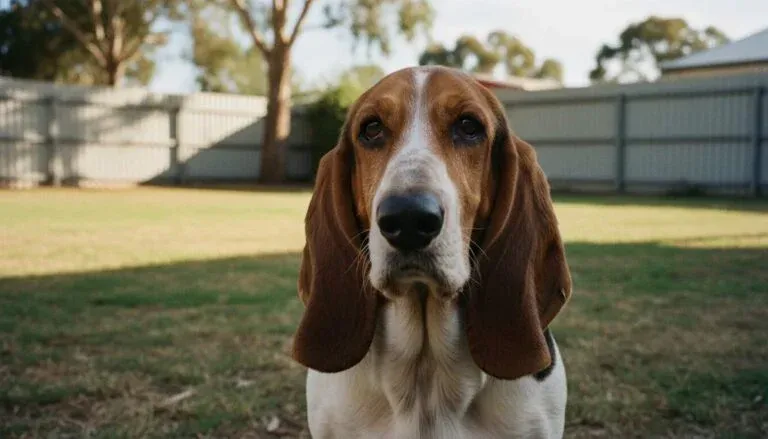
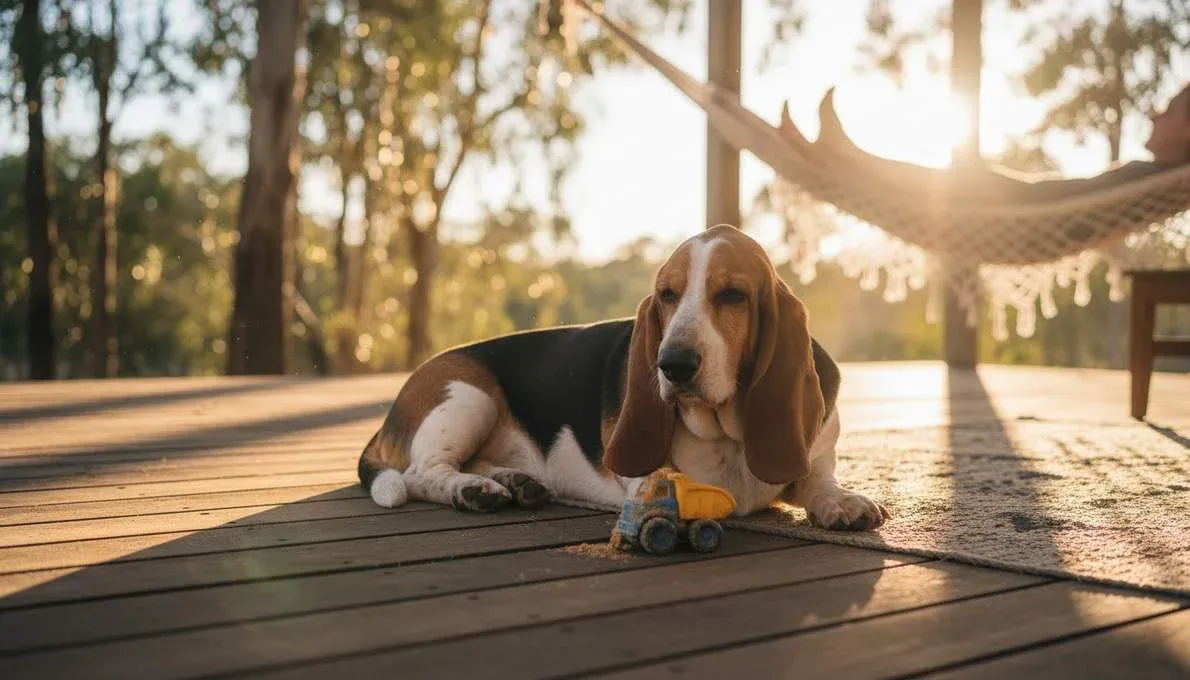
There’s a particular look a Basset Hound gives you when you ask it to do something it doesn’t feel like doing. Head slightly tilted, ears pooling on the floor, those impossibly sad eyes staring up at you as if to say, “I heard you. I just don’t agree.” It’s the look that has launched a thousand memes — and it perfectly captures what it’s like to live with one of these dogs.
The Basset Hound is one of the most recognisable dog breeds on the planet. That low-slung body, those ridiculous ears, the droopy face that looks permanently heartbroken — they’re impossible to miss and even harder to resist. But beneath the cartoon appearance is a genuine working hound with one of the most powerful noses in the canine world, a stubborn streak that would humble a mule, and a loyalty so deep it borders on Velcro-level clinginess.
In Australia, Basset Hounds have had a dedicated following since the breed was first shown in Sydney in 1957. There are roughly 30 registered breeders across the country, concentrated in NSW, QLD and Victoria. They’re not the most common breed at the local dog park, but anyone who’s owned one will tell you: once you’ve had a Basset, no other breed quite measures up.
This guide covers everything an Australian owner needs to know — real costs in AUD, honest temperament advice, the health conditions that come with this unique body shape, and a brutally honest assessment of whether a Basset Hound actually suits your life.
What You’ll Learn
- Breed traits & temperament
- Health concerns to know
- True cost in Australia
- Training & exercise needs
- Is this breed right for you?
Quick Facts at a Glance
| Attribute | Detail |
|---|---|
| Breed Group | Hound (Scenthound) |
| Origin | France / Great Britain |
| Height | 33–38 cm (13–15 inches) |
| Weight | 20–34 kg (44–75 lbs) |
| Lifespan | 10–13 years |
| Coat Type | Short, smooth, dense — water-resistant |
| Colours | Tricolour (tan/black/white), lemon & white, red & white, black & white |
| Shedding | Moderate to high — year-round with seasonal increases |
| Drooling | High — jowls mean strings of drool, especially after eating and drinking |
| Exercise Needs | Moderate — 1–1.5 hours daily |
| Trainability | Low to moderate — highly intelligent but legendarily stubborn |
| Good with Kids | Excellent — gentle, patient, tolerant |
| Good with Other Dogs | Yes — pack-bred and sociable |
| Apartment Suitable | Possible — low energy indoors, but loud bay and drool to consider |
| Puppy Price (AUD) | $2,000–$4,500 from registered breeders |
History & Origins
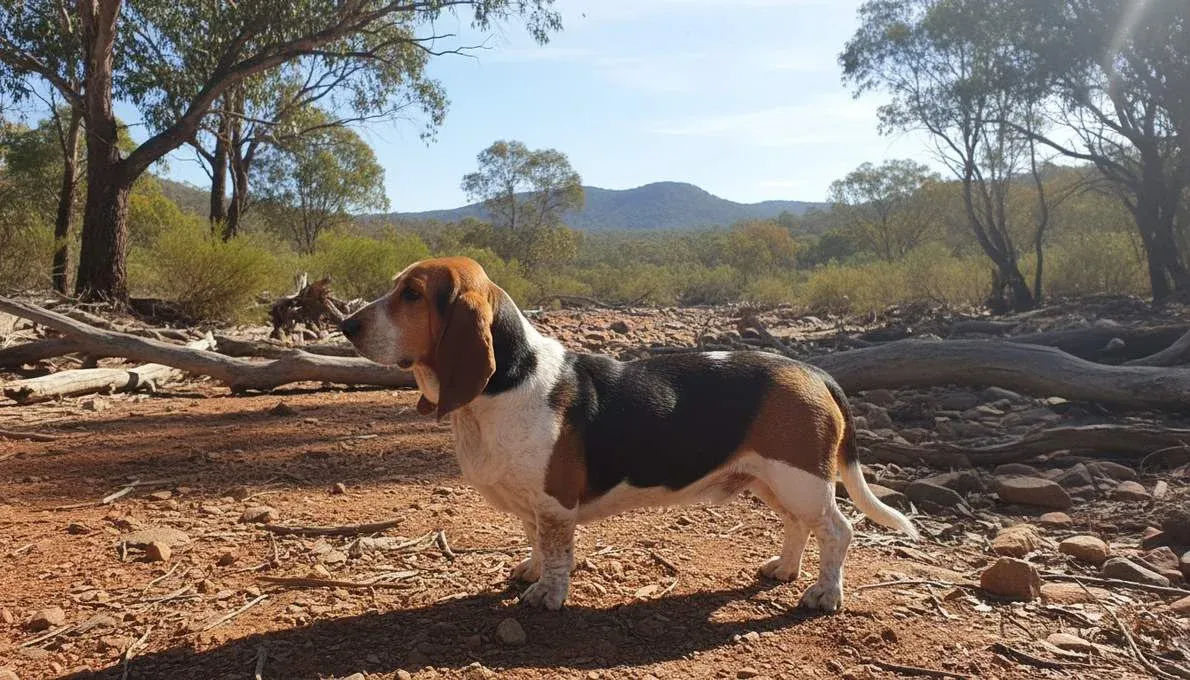
The Basset Hound’s story starts in France, where the word “basset” simply means “low-set” — from the French “bas” (low) and the suffix “-et” (rather). Short-legged hounds appear in French hunting literature as far back as the 1500s, bred deliberately for hunters who followed on foot rather than horseback. After the French Revolution dismantled the aristocracy’s monopoly on hunting, the demand for slower, low-to-the-ground hounds that common people could keep up with exploded.
The modern Basset Hound as we know it was largely developed in Britain during the 1800s. French Bassets were imported to England, where breeders refined them into the heavy-boned, loose-skinned dog we recognise today. The Basset’s extraordinary nose — second only to the Bloodhound in scenting ability — made it invaluable for tracking hare and rabbit through dense undergrowth.
The breed was recognised by the Kennel Club in 1882 and by the American Kennel Club in 1885. It arrived in Australia in 1957 and has maintained a dedicated, if niche, following ever since. There are around 30 ANKC-registered Basset Hound breeders in Australia today, spread across Queensland, New South Wales, Victoria and a handful in other states. The Australian breeding community is relatively small but passionate, with several kennels now testing for genetic conditions including Lafora disease, POAG, and thrombopathia.
Temperament & Personality
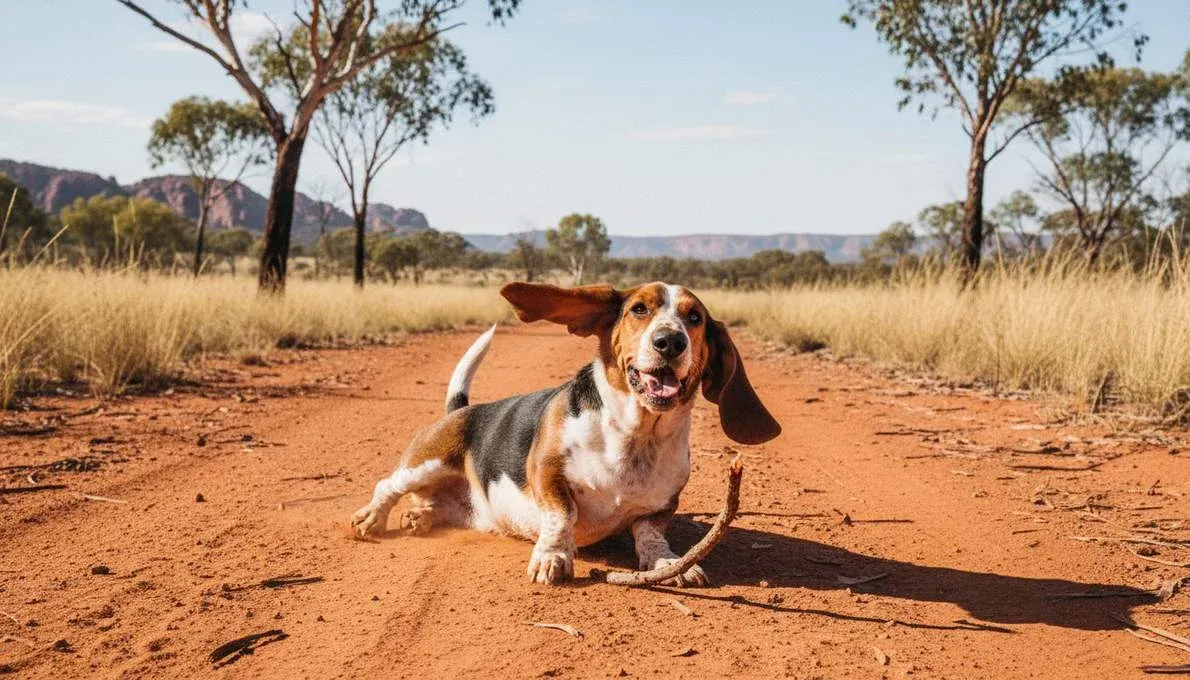
The Basset Hound temperament is a study in contradictions. They’re deeply affectionate yet stubbornly independent. They look lazy but can sustain a tracking pace for hours. They’re not aggressive in the slightest, yet they’ll bay so loudly at the postman that your neighbours three doors down will hear it.
At home, a Basset Hound is a couch potato in the best possible way. They’re calm, gentle and extraordinarily patient with children — genuinely one of the best family dog breeds for households with young kids. Their pack-hound heritage means they generally get along beautifully with other dogs, and their low prey drive (compared to sighthounds) means they can often coexist with cats, especially if raised together.
But the stubbornness is real. A Basset Hound doesn’t disobey because it doesn’t understand you — it understands perfectly. It just doesn’t see the point. Ask a Basset to come inside when it’s sniffing something interesting in the yard, and you’ll get that famous look. Then nothing. Then more nothing. Training a Basset requires patience measured in geological timescales and a bribery budget that would make a politician blush.
Separation anxiety is common. Basset Hounds were bred to work in packs and they genuinely do not enjoy being alone. A lonely Basset will express its displeasure through baying — that deep, resonant howl that carries for blocks — and possibly through destructive behaviour. If you work full-time away from home, a second dog (not necessarily another Basset) can help, or you’ll need to arrange daycare or a dog walker.
The drool. Nobody warns new Basset owners enough about the drool. Those magnificent jowls are saliva factories, and a Basset Hound that’s just had a drink of water will shake its head and redecorate your walls, your clothes, and your self-respect. If you’re fastidious about a clean house, this is not your breed. If you can laugh about finding drool on the ceiling, welcome to the club.
They’re also vocal. Not constant barkers, but when a Basset Hound has something to say — a stranger at the door, a cat on the fence, a vague feeling that dinner should have been served five minutes ago — it uses a deep, booming bay that’s impressive in its volume and persistence. Apartment living is possible but only if your neighbours are extremely tolerant.
Health & Genetic Conditions
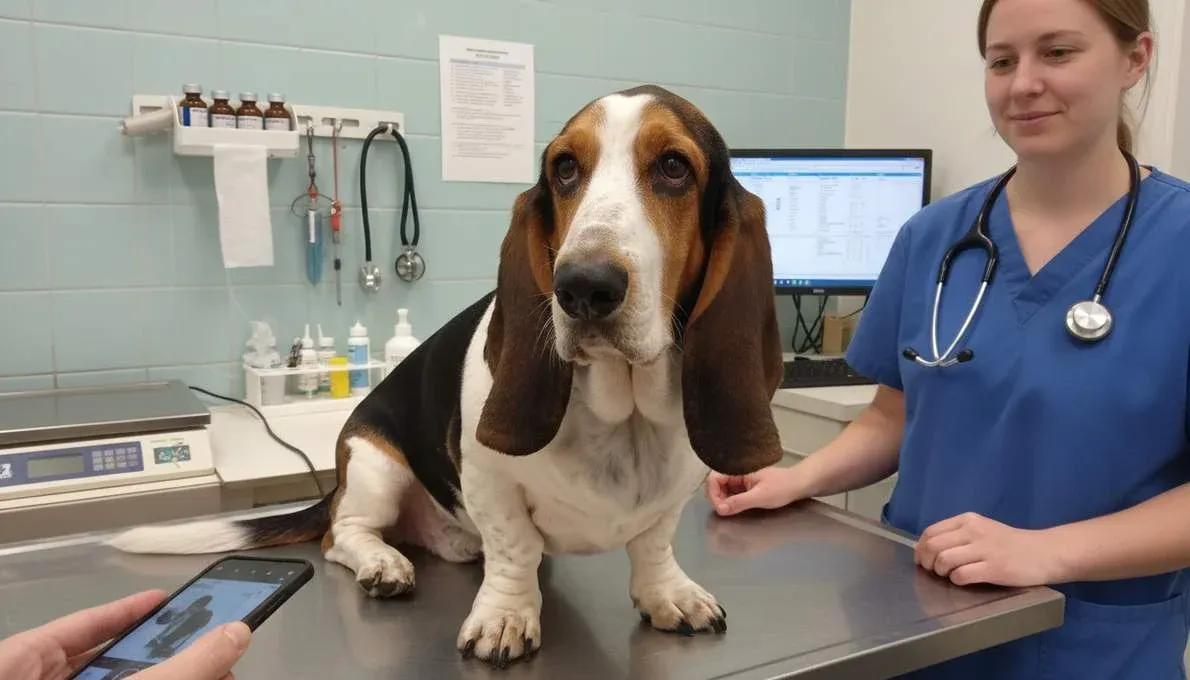
The Basset Hound’s distinctive body shape — heavy bone, long back, short legs, loose skin, deep chest, long ears — is the source of both its charm and most of its health problems. This is a breed where form directly affects function, and responsible ownership means understanding what that body was designed to do (track game at low speed) and what it wasn’t designed to do (jump, swim, or run fast). Here are the conditions every Australian Basset Hound owner should know about.
The most common structural health concern. That long spine and short legs put enormous stress on the intervertebral discs. Disc herniation can cause pain, weakness or paralysis. Keeping your Basset at a healthy weight, preventing jumping on and off furniture, and using ramps where possible all help. Treatment ranges from strict rest and medication ($500–$2,000 AUD) to emergency spinal surgery ($5,000–$12,000 AUD).
A life-threatening emergency where the stomach fills with gas and can twist on itself. Deep-chested breeds like Basset Hounds are at elevated risk. Symptoms include a distended abdomen, retching without vomiting, restlessness and rapid breathing. GDV requires immediate veterinary intervention — every minute counts. Emergency surgery can cost $5,000–$10,000+ AUD. Preventative gastropexy (stomach tacking) during desexing surgery costs around $500–$1,500 AUD and significantly reduces the risk.
Those gorgeous, ground-sweeping ears are an infection magnet. The ear canal gets almost no airflow, creating a warm, moist environment perfect for bacteria and yeast. Weekly ear cleaning is essential — not optional. Budget $150–$400 AUD per vet visit if an infection develops, and expect it to happen multiple times over a Basset’s life.
Basset Hounds are susceptible to both Primary Open Angle Glaucoma (POAG) and Primary Closed Angle Glaucoma (PCAG). A DNA test exists for POAG — always ask your breeder for results. PCAG is more common in the breed but currently has no genetic test. Both forms cause increased eye pressure, pain and eventual blindness if untreated. Treatment can cost $2,000–$6,000+ AUD per eye.
A late-onset (5–7 years) neurological condition causing involuntary head jerking (myoclonus), seizures, panic attacks, impaired vision and loss of balance. Symptoms can be triggered by sudden sounds, movements or flickering light. Lafora is progressive and ultimately fatal, though diet and medication can help manage seizures. A DNA test is available and reputable Australian breeders are now testing for it. This is one of the most important questions to ask any Basset Hound breeder.
A breed-specific inherited bleeding disorder where platelets don’t clot properly. Affected dogs may have recurrent nosebleeds, excessive gum bleeding, easy bruising and blood-filled masses under the skin. It’s often not discovered until surgery or trauma. A DNA test exists — another non-negotiable question for your breeder.
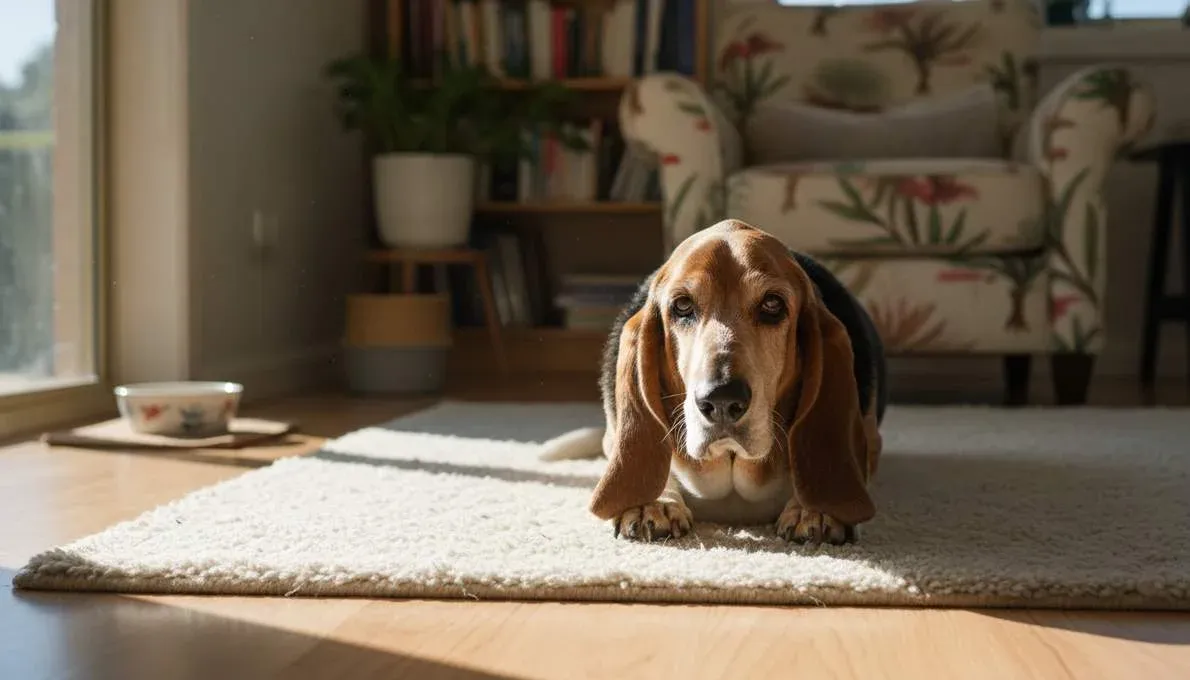
This is the number one preventable health problem in Basset Hounds. They’re food-obsessed, they’re not naturally active, and those sad eyes make it incredibly hard to resist giving them treats. An overweight Basset puts catastrophic stress on its spine, joints and heart. Keep them lean — you should be able to feel their ribs easily through a thin fat covering.
Skin fold dermatitis and seborrhea (oily, smelly skin), cherry eye, ectropion/entropion (eyelid abnormalities), hip and elbow dysplasia, and osteochondritis dissecans (OCD) in growing puppies.
The four key genetic tests to ask any breeder about are: Lafora disease, POAG, thrombopathia, and MPS1 (a condition causing early puppy mortality, discovered in 2019). All four are autosomal recessive, meaning responsible testing and informed breeding decisions can eliminate them.
Lifespan & Longevity
The average Basset Hound lifespan is 10–13 years, with some well-cared-for dogs reaching 14. That’s a reasonable lifespan for a medium-to-large breed, but it’s significantly influenced by weight management and structural health.
The single biggest thing you can do to extend your Basset Hound’s life is keep it slim. An overweight Basset is a Basset on a fast track to disc problems, joint pain, heart disease and diabetes. It’s not dramatic to say that maintaining a healthy weight could add two or three years to your dog’s life.
Annual vet check-ups are essential until age seven, then switch to every six months. Pay particular attention to eyes (glaucoma can develop at any age), ears (chronic infections cause long-term damage), and mobility (early signs of disc problems include reluctance to climb stairs or jump, a stiff gait, or crying out when picked up).
In their senior years (typically 8+), Basset Hounds slow down noticeably. Joint supplements containing glucosamine and chondroitin can help maintain mobility. Switching to a senior-formulated food helps manage weight as metabolism drops. Ramps for getting on and off beds or into cars become essential rather than optional.
In the Australian climate, summer heat management matters at every age but especially for seniors. Basset Hounds are not built for extreme heat. Their heavy bodies and short legs mean they’re close to hot ground, and their exertion tolerance drops significantly in temperatures above 30°C. Early morning and evening exercise only during summer, with access to shade, cool water and air conditioning throughout the day.
Grooming & Care
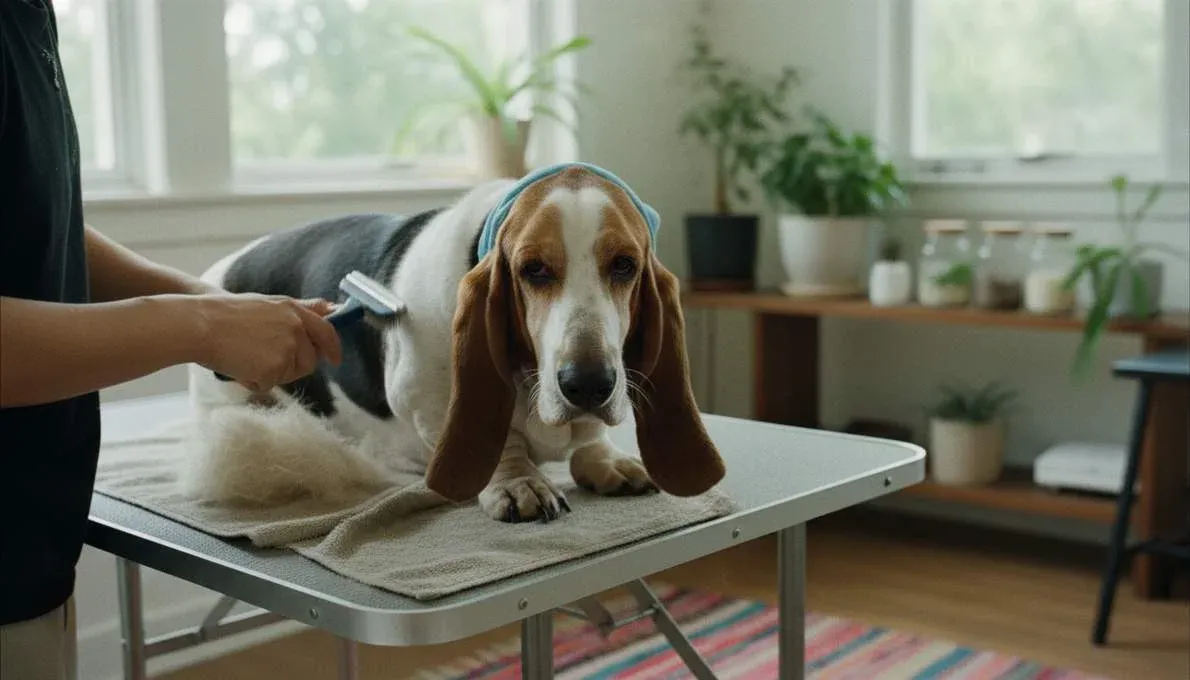
Basset Hounds have a short, smooth coat that looks deceptively low-maintenance. The coat itself is easy — the rest of the dog isn’t. Between the ears, the wrinkles, the drool, the skin folds and the, shall we say, distinctive Basset aroma, grooming a Basset Hound is less about coat care and more about full-body maintenance.
Grooming Schedule
| Task | Frequency | Notes |
|---|---|---|
| Brushing | 2–3 times per week | Use a rubber curry brush or hound glove. They shed more than you’d expect from a short coat |
| Bathing | Every 4–6 weeks | Bassets have oily skin and a distinctive “hound smell”. Regular bathing with a gentle dog shampoo helps |
| Ear cleaning | At least weekly — twice if prone to infections | Critical. Those ears drag on the ground and trap dirt, moisture and bacteria. Use a vet-approved cleaner |
| Wrinkle/skin fold cleaning | Every 2–3 days | Wipe facial wrinkles and lip folds with a damp cloth. Trapped moisture causes dermatitis and odour |
| Nail trimming | Every 2–3 weeks | Heavy dogs on short legs need properly trimmed nails to maintain correct posture |
| Teeth cleaning | Daily ideal; 3x/week minimum | Dental disease compounds quickly. Those jowls trap food debris |
| Eye checks | Weekly | Droopy lower lids (ectropion) expose the conjunctiva. Watch for redness, discharge or cloudiness |
| Drool management | Constant | Keep cloths near water bowls and food stations. Drool bibs exist and some owners swear by them |
The “hasset smell” is real and deserves a mention. Basset Hounds have naturally oily skin (which originally helped them repel water and brush in the field), and this produces a musky, houndy odour that regular bathing manages but never fully eliminates. If a dog-free home scent matters to you, be honest with yourself about this before committing.
Shedding is moderate to heavy — surprising for a short-coated dog. Basset fur is dense and waterproof, and it gets everywhere. A good rubber grooming tool and a quality vacuum cleaner are essential household items for Basset owners.
Exercise Needs
The Basset Hound’s exercise needs are moderate but non-negotiable. Despite their lazy reputation, an under-exercised Basset will gain weight rapidly and become destructive or excessively vocal out of boredom. Plan for 1 to 1.5 hours of exercise daily, split into two sessions.
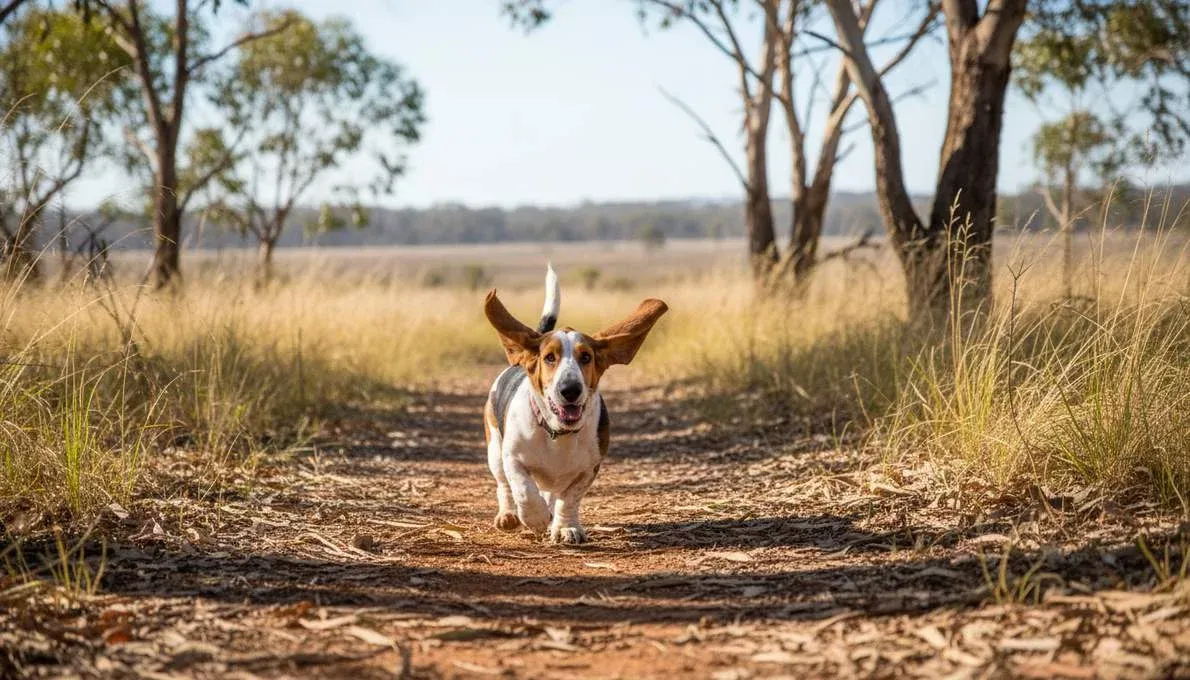
The ideal exercise for a Basset Hound is a long, steady “sniff walk” — a walk at the dog’s pace where it can investigate scents along the way. This isn’t jogging. This isn’t agility. This is ambling along a bushland track while your Basset methodically catalogues every smell within nose reach. It’s meditative, it’s slow, and it’s exactly what the breed was built for.
A few important exercise rules for Basset Hounds: avoid high-impact activities like jumping, running on hard surfaces or going up and down stairs repeatedly (spine and joint protection); never let a Basset swim unsupervised — their heavy bone structure, short legs and long body make them poor swimmers and drowning is a genuine risk; use a harness rather than a collar for lead walks, as Bassets will pull hard when they pick up a scent and a collar puts pressure on their throat and neck.
Australian climate warning: Basset Hounds and Australian summers are not natural friends. That heavy, low-to-the-ground body absorbs radiant heat from pavement and soil. Exercise in temperatures above 28–30°C should be limited to very early morning or late evening. Always test the pavement with the back of your hand before walking. Carry water, watch for heavy panting, excessive drooling (beyond their normal level) or lethargy — all signs of heat stress. During heatwaves, indoor enrichment games and short garden pottering may need to replace walks entirely.
Off-lead exercise should only occur in fully fenced areas. A Basset Hound that catches an interesting scent will follow it with single-minded determination, and their recall is essentially non-existent once the nose takes over. They’re not fast, but they’re relentless, and you will not outpace a Basset that’s on a trail.
Training Guide
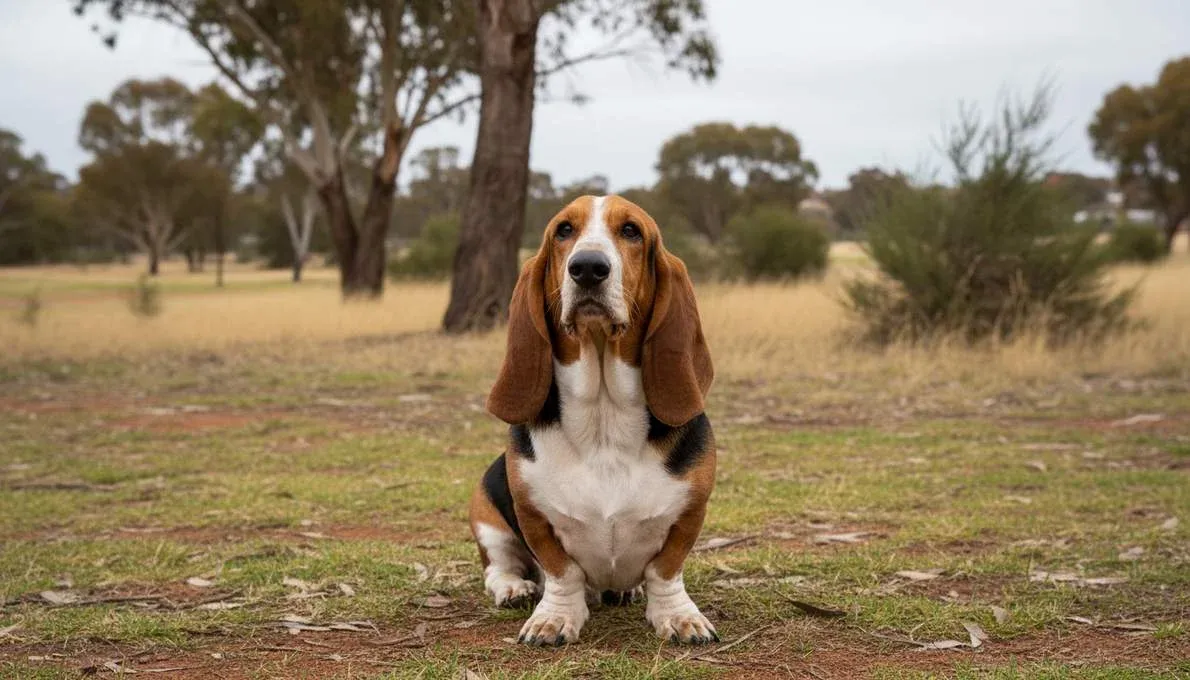
Let’s be honest: Basset Hounds are not easy to train. They consistently rank among the most stubborn dog breeds, and “stubborn” is doing a lot of work in that sentence. They’re genuinely intelligent — problem-solving is hardwired into a scenthound’s brain — but their cooperation is conditional on the perceived value of what you’re offering versus what they’d rather be doing.
Socialisation & Training Timeline
| Age | Focus Areas | Tips |
|---|---|---|
| 8–12 weeks | Socialisation, name recognition, crate training, toilet training | Start immediately. Bassets are slow to housetrain — some breeders say it takes up to 6 months. Crate training helps enormously |
| 3–6 months | Sit, down, lead manners, recall foundations, not pulling | Keep sessions to 5–10 minutes. Use very high-value treats (chicken, cheese, liver). Expect progress measured in millimetres |
| 6–12 months | Proofing basics, loose-lead walking, managing scent distractions | Adolescence amplifies stubbornness. Don’t punish — you’ll lose their trust and get nowhere. Redirect and reward |
| 1–2 years | Reliable basics, scent work, impulse control, polite greetings | A well-trained Basset is not an obedient Basset — it’s a Basset that cooperates because the relationship is worth it. Aim for willing partnership, not military precision |
Toilet training deserves its own paragraph. Basset Hounds are notoriously slow to housetrain. Six months is not unusual, and some owners report occasional accidents well into the first year. The keys are consistency (take them out on a strict schedule), patience (punishing accidents teaches them to hide, not to wait), and enzyme-based cleaners (to remove all scent traces from previous accidents).
Food is your most powerful training tool. A Basset Hound that smells roast chicken in your pocket will pay significantly more attention than one being offered praise alone. Use this shamelessly. Many experienced Basset owners carry a treat pouch on every single walk for the dog’s entire life — not as a training phase, but as standard operating procedure.
Consider enrolling in scent work or tracking classes. Basset Hounds come alive when given nose-based tasks, and channelling their natural abilities into structured activities builds confidence, strengthens your bond and gives them a job they actually want to do.
Cost of Ownership in Australia
Basset Hounds are a moderately expensive breed to buy and a deceptively expensive breed to own. That droopy face comes with a body that generates vet bills, and the food costs are higher than their size might suggest (those heavy bones burn calories). Here’s an honest breakdown.
| Expense | Estimated Cost (AUD) |
|---|---|
| Puppy (ANKC registered breeder) | $2,000–$4,500 |
| Initial setup (crate, bed, bowls, lead, harness, ramps, toys) | $600–$1,000 |
| Annual food (quality kibble/raw) | $1,200–$2,200 |
| Annual vet check-ups & vaccinations | $400–$800 |
| Pet insurance (comprehensive) | $1,000–$2,000/year |
| Ear cleaning supplies | $100–$200/year |
| Flea, tick & worming prevention | $350–$600/year |
| Training classes (puppy + basic obedience) | $300–$600 |
| Desexing (with preventative gastropexy) | $600–$1,800 |
| Genetic testing (Lafora, POAG, thrombopathia, MPS1) | $200–$400 (if not done by breeder) |
| Estimated first-year total | $6,500–$13,000+ |
| Estimated annual ongoing cost | $3,500–$6,000 |
Pet insurance note:
Pet insurance is strongly recommended for Basset Hounds. The breed’s structural health risks (IVDD, bloat, joint issues) mean a single emergency can easily cost $5,000–$12,000 AUD. Comprehensive cover typically runs $80–$170 AUD per month depending on the provider and your Basset’s age. Always read the fine print on waiting periods and pre-existing condition exclusions.
Finding a breeder in Australia:
Check DogzOnline (dogzonline.com.au) for ANKC-registered Basset Hound breeders. There are approximately 30 listed nationally, with concentrations in QLD, NSW and Victoria. Reputable breeders test for Lafora, POAG, thrombopathia and MPS1, and will be happy to show you certificates. Expect a waitlist — litters are not frequent and good breeders are selective about homes.
Rescue and adoption:
Basset Hound rescue is more viable than with rarer breeds, though dedicated Basset rescues are limited in Australia. Check with the Basset Hound Club of your state, Hound Rescue groups, and PetRescue (petrescue.com.au). Adoption fees typically range from $300–$600 AUD. Rescued adult Bassets can be wonderful companions, though some may come with health or behavioural baggage that needs management.
Is the Basset Hound Right for You?
- Want a gentle, affectionate family dog that’s patient with children
- Are home most of the day or can arrange company for your dog
- Enjoy relaxed, unhurried walks where the dog sets the pace
- Have a sense of humour about stubbornness, drool and “hound smell”
- Are prepared for higher-than-average vet costs due to the breed’s structural health risks
- Have a securely fenced yard (doesn’t need to be huge)
- Are interested in scent work, tracking or other nose-based activities
- Need a clean, odour-free home — drool and hound smell are part of the deal
- Want an off-lead hiking companion with reliable recall
- Work long hours with no arrangement for the dog’s company
- Live in an apartment with noise-sensitive neighbours (baying)
- Want a dog that’s easy to train or responds quickly to commands
- Are not prepared for the potential cost of serious health issues (bloat, IVDD, eye problems)
- Expect a dog that enjoys swimming, running or high-impact exercise
If you’re comparing breeds, the Beagle is a popular alternative — smaller, more energetic, similar hound personality but generally fewer structural health issues. The Basset Hound cross Beagle (sometimes called a “Bagle”) is also increasingly seen in Australia, though crosses are unpredictable in temperament and health. For a similar look with a different personality, consider the Bloodhound (much larger, more driven) or the Petit Basset Griffon Vendéen (wiry coat, higher energy, slightly smaller).
- The Basset Hound is a profoundly lovable, stubbornly independent scenthound that rewards patient owners with unshakeable loyalty and a personality that never gets old.
- They come with genuine health costs and grooming demands that go well beyond their simple-looking coat — ears, wrinkles, weight management and drool are daily responsibilities.
- If you can handle the slobber, the smell, the selective hearing and the vet bills, a Basset Hound will fill your home with warmth, laughter and an impressive amount of fur for the next 10–13 years.
Frequently Asked Questions
How long do Basset Hounds live?
The average Basset Hound lifespan is 10–13 years, with some well-cared-for dogs reaching 14. Weight management is the single biggest factor influencing longevity.
How much does a Basset Hound cost in Australia?
Expect to pay $2,000–$4,500 AUD for a puppy from an ANKC-registered breeder. The first-year total cost (including setup, vet, insurance, etc.) typically ranges from $6,500–$13,000+.
Are Basset Hounds good family dogs?
Yes, they are excellent with children — gentle, patient and tolerant. Their pack-bred nature also makes them generally good with other dogs.
Are Basset Hounds easy to train?
No. They are highly intelligent but legendarily stubborn. Training requires immense patience, high-value treats and a sense of humour.
Do Basset Hounds bark a lot?
They don’t bark constantly, but they have a deep, booming bay that they use to alert or express displeasure. It’s loud and carries far, which can be problematic in apartments.
Are Basset Hounds good apartment dogs?
Possible, but not ideal. They are low-energy indoors, but their bay is loud and their drool is messy. You need tolerant neighbours and a commitment to daily exercise.
What health problems do Basset Hounds have?
Key concerns include Intervertebral Disc Disease (IVDD), bloat (GDV), ear infections, glaucoma, Lafora disease, thrombopathia and obesity due to their unique body shape.
Can Basset Hounds swim?
They are poor swimmers. Their heavy bone structure, short legs and long body make swimming difficult and dangerous. Never leave a Basset Hound unsupervised near water.
Where can I find Basset Hound puppies for sale in Australia?
Check DogzOnline (dogzonline.com.au) for ANKC-registered breeders. There are around 30 breeders nationally, concentrated in QLD, NSW and Victoria. Expect a waitlist.
- Basset Hound Club of America — Health & Research: https://basset-bhca.org/about-bassets/health-research/
- American Kennel Club — Basset Hound Health Statement: https://www.akc.org/wp-content/uploads/2022/09/BassetHound-Health-Statement-7.22.pdf
- Basset Hound Foundation — Common Health Issues: https://bassethoundfoundation.org/all-topics/common-health-issues-in-basset-hounds/
- Paw Print Genetics — Thrombopathia (Basset Hound Type): https://www.pawprintgenetics.com/products/tests/details/95/?breed=169
- Dog Breed Health — Basset Hound Health Profile: https://www.dogbreedhealth.com/basset-hound/
- DogzOnline — Basset Hound Breeders Australia: https://www.dogzonline.com.au/breeds/breeders/basset-hound.asp
- Burke’s Backyard — Basset Hounds: https://www.burkesbackyard.com.au/fact-sheets/pets/pet-road-tests/dogs-breeds/basset-hounds/
- Pets for Homes Australia — Basset Hound: https://petsforhomes.com.au/dogs-puppies/basset-hound/
- PuppyList Australia — Cost of Basset Hound: https://puppylist.com.au/breeds/basset-hound/price/
- Dogster — 11 Common Health Problems in Basset Hounds: https://www.dogster.com/dog-health-care/basset-hound-health-problems