
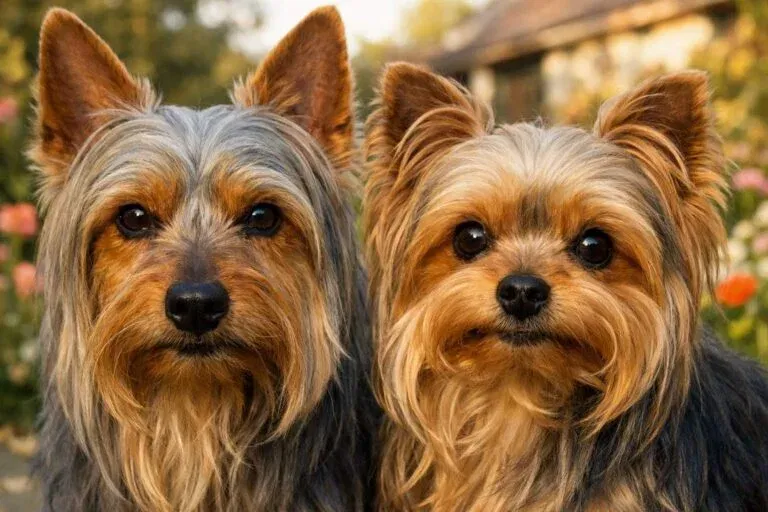
They look almost identical. They share the same glossy blue-and-tan coat, the same bright dark eyes, and the same terrier confidence that says “I may weigh 4 kg, but I run this house.” The Australian Silky Terrier and the Yorkshire Terrier are so closely related that the Silky was literally created by crossing Yorkies with Australian Terriers in the early 1900s. But despite their shared DNA, these are different dogs with different energy levels, different temperaments, and different care needs — and choosing the wrong one for your lifestyle is a mistake that plays out over 12–15 years. Here’s the honest breakdown.
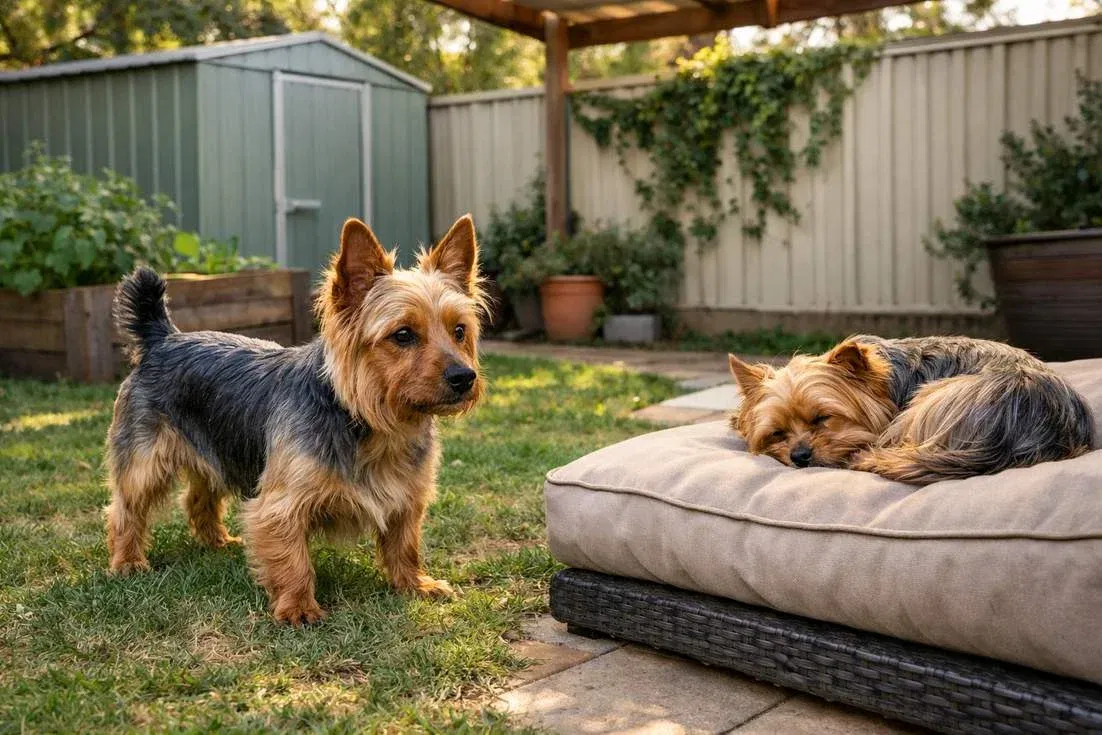
[Featured image: Silky Terrier vs Yorkie side-by-side. Alt text: “Australian Silky Terrier vs Yorkshire Terrier comparison”]
What You’ll Learn
- Breed traits & temperament
- Health concerns to know
- True cost in Australia
- Training & exercise needs
- Is this breed right for you?
Breed Quick Facts Table
| Trait | Australian Silky Terrier | Yorkshire Terrier |
|---|---|---|
| Origin | Australia (early 1900s) | England (1860s) |
| Parent Breeds | Yorkshire Terrier × Australian Terrier | Various small English/Scottish terriers |
| ANKC Group | Group 1 — Toys | Group 1 — Toys |
| Height | 23–26 cm (9–10 in) | 18–23 cm (7–9 in) |
| Weight | 3.5–5 kg (8–11 lb) | 2–3.5 kg (4–7 lb) |
| Lifespan | 12–15 years | 12–16 years |
| Coat Type | Single, silky, straight, 12–15 cm long | Single, silky, straight, floor-length if uncut |
| Shedding | Very low | Very low |
| Hypoallergenic | Yes (low-shedding, hair not fur) | Yes (low-shedding, hair not fur) |
| Energy Level | Moderate–High | Moderate |
| Trainability | Moderate (smart but stubborn) | Moderate (smart but stubborn) |
| Barking Level | High — alert watchdog | High — vocal and protective |
| Good With Kids | Better with older children (8+) | Better with older children (8+) |
| Apartment Friendly | Yes | Yes — very |
| Puppy Price (AUD) | $1,200 – $3,000 | $2,000 – $5,000 |
| Availability in Australia | Moderate — ANKC breeders available | Good — more breeders nationwide |
History & Origins
The Yorkshire Terrier came first. Developed in Yorkshire and Lancashire in northern England during the 1860s, the Yorkie was originally a working-class dog bred to catch rats in textile mills and coal mines. Scottish workers migrating south brought small terrier breeds with them — including the now-extinct Clydesdale and Paisley Terriers — which were crossed with local English terriers. The resulting small, silky-coated dog quickly became popular, and by the Victorian era, the Yorkie had transitioned from a rat-catcher to a fashionable lap dog for the upper class. A show dog named Huddersfield Ben (born 1865) is considered the foundation sire of the modern breed.
The Australian Silky Terrier was created when Yorkshire Terriers arrived in Australia during the late 1800s and were crossed with Australian Terriers. Breeders wanted a dog that combined the Yorkie’s beautiful silky coat with the Australian Terrier’s hardier, more robust working temperament. The result was a slightly larger, sturdier terrier that could kill vermin around the home and garden while also being an elegant companion. Originally called the Sydney Silky (reflecting where most breeding took place), the breed was renamed the Australian Silky Terrier in 1955 by the ANKC. It’s one of the few ANKC-recognised breeds that was developed entirely in Australia.
This family relationship matters: the Australian Silky Terrier, the Yorkshire Terrier, and the Australian Terrier are all closely related breeds developed for different purposes. The Silky sits squarely between the Yorkie (smaller, more refined) and the Aussie Terrier (larger, rougher-coated, more rugged).
How to Tell Them Apart
At first glance, these two breeds are nearly indistinguishable — both sport the signature blue-and-tan silky coat, dark almond eyes, and confident terrier posture. But look closer and the differences emerge.
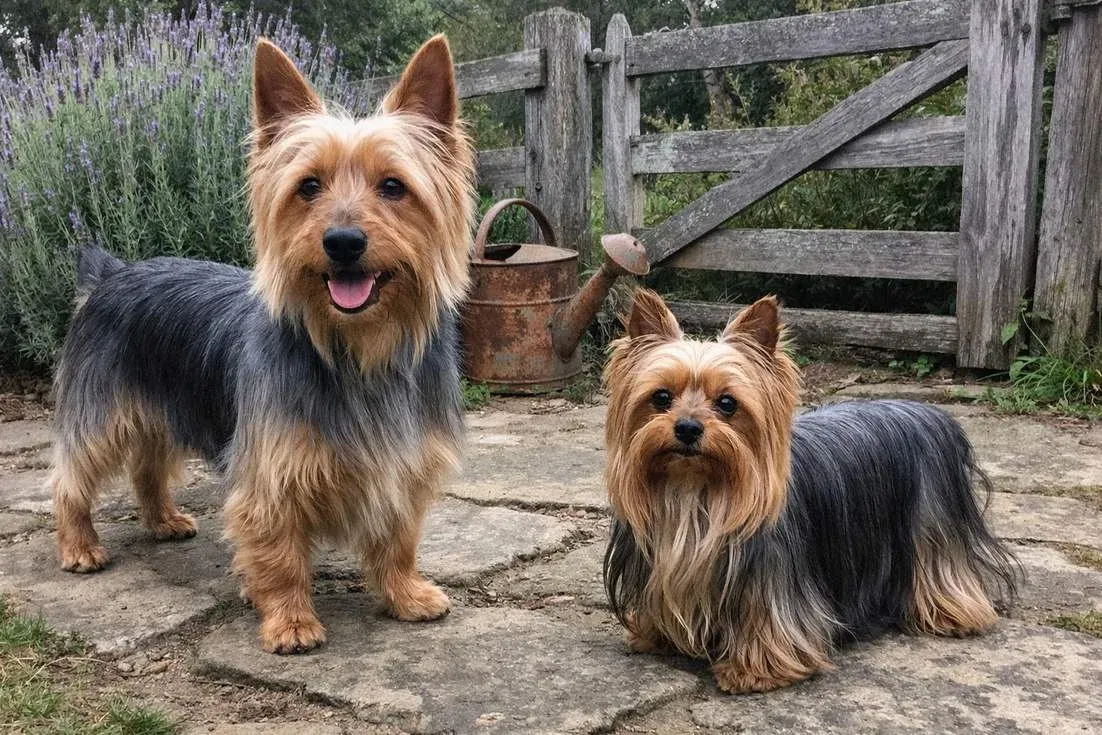
The Silky Terrier is noticeably bigger and more substantial. At 23–26 cm tall and 3.5–5 kg, they have more bone, more muscle, and a longer body in proportion to height. Their head is wedge-shaped with a longer muzzle, and their coat, while silky, is shorter (12–15 cm) and sits closer to the body — it doesn’t reach the ground. The Silky looks like a working dog in a glamorous coat.
The Yorkshire Terrier is smaller and more delicate. At 18–23 cm and 2–3.5 kg, they’re among the tiniest terrier breeds. Their head is rounder, their muzzle is shorter, and their coat grows floor-length if left untrimmed — often styled with a topknot to keep hair out of their eyes. The Yorkie looks like it belongs on a silk cushion, which is exactly where most of them end up.
Physical Comparison at a Glance
| Physical Trait | Australian Silky Terrier | Yorkshire Terrier |
|---|---|---|
| Height | 23–26 cm | 18–23 cm |
| Weight | 3.5–5 kg | 2–3.5 kg |
| Head Shape | Wedge-shaped, longer muzzle | Rounder, shorter muzzle |
| Ears | V-shaped, erect or semi-erect | V-shaped, erect, small |
| Coat Length | 12–15 cm, sits close to body | Floor-length if uncut, often styled |
| Coat Texture | Silky, slightly coarser than Yorkie | Very fine, human hair-like texture |
| Common Colours | Blue and tan, grey-blue and tan | Steel blue and tan (born black and tan) |
| Body Proportions | Longer body, more muscular | Compact, more delicate frame |
Personality — What Are They Actually Like to Live With?
Both are terriers, which means both are smart, both are confident beyond their size, both will bark at the postman like he’s personally offending them, and both will selectively ignore commands they find boring. But the way they express their terrier nature is genuinely different.
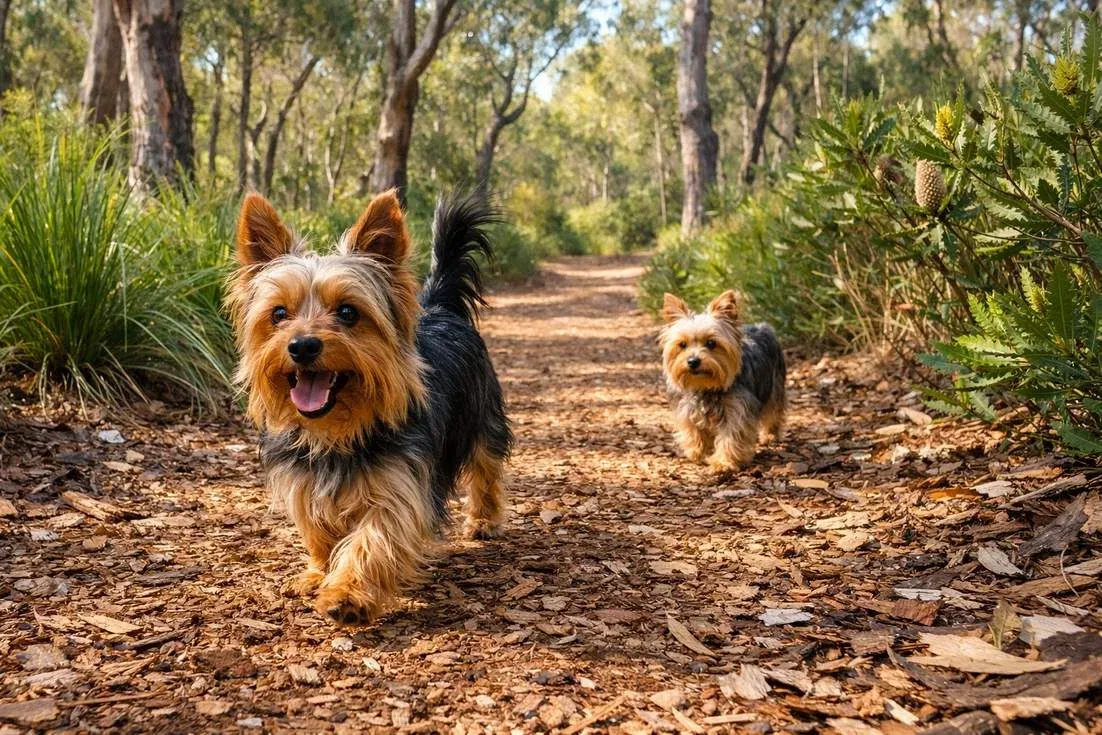
The Silky Terrier is the more energetic dog. They inherited the Australian Terrier’s working drive and genuinely need 30–45 minutes of exercise daily — not just a lap around the block, but actual play, mental stimulation, and garden patrol time. A bored Silky will dig, bark, and find creative ways to destroy things. The Yorkshire Terrier is more moderate — 20–30 minutes of walking and play is usually sufficient. Yorkies are genuinely happy to spend large portions of the day on your lap or a warm bed. They’re portable in a way the Silky is less inclined to be.
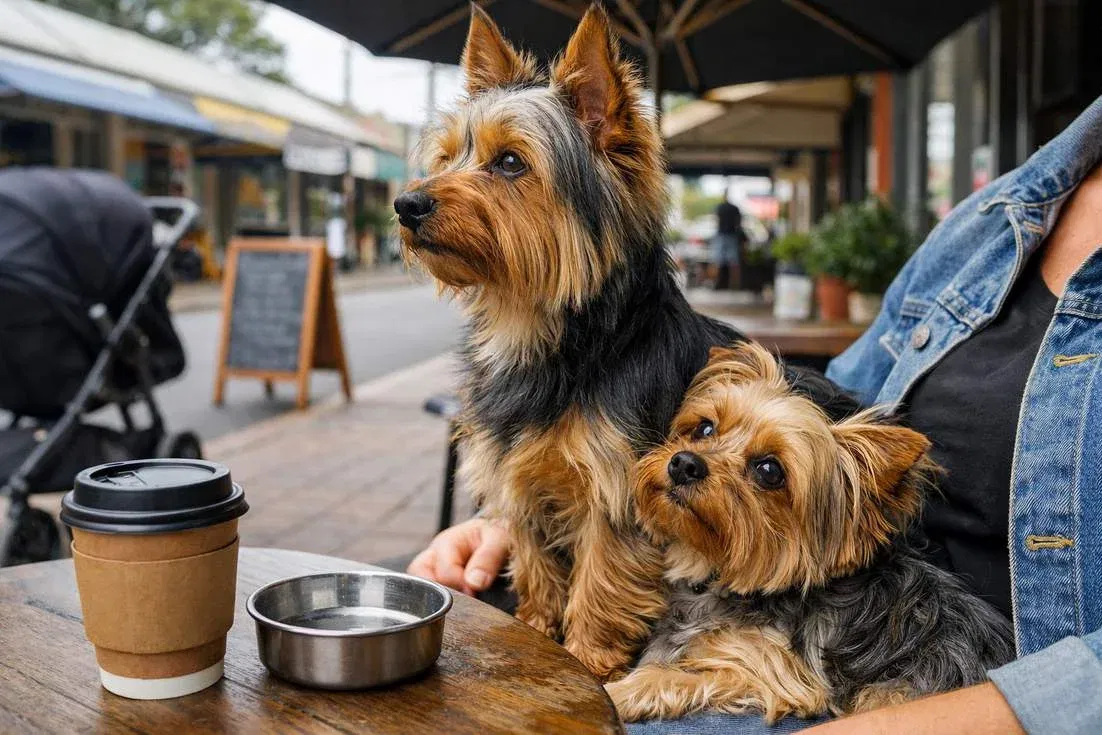
Yorkies are the lap dogs. They bond intensely to their primary person and want physical closeness — sitting on you, sleeping against you, following you room to room. They’re classic companion dogs. Silky Terriers are affectionate but more independent. They’ll be in the same room, they’ll seek attention, but they’re equally happy doing their own thing — investigating the garden, chasing a lizard, patrolling the fence line. The Silky is your co-worker; the Yorkie is your shadow.
This is the biggest personality difference. The Australian Silky Terrier retains strong hunting instincts from its Australian Terrier heritage. They will chase and kill small animals — mice, rats, lizards, and potentially small birds. Many Silky owners report their dogs proudly delivering dead rodents. This makes them surprisingly effective household vermin control. Yorkies also have historical prey drive (they were rat-catchers), but it’s been significantly bred down over generations of companion breeding. Most Yorkies will chase but rarely catch anything.
Both breeds bark. A lot. This is the number one complaint from owners of both breeds. They’re alert, territorial, and have opinions about everything — doorbells, possums, the wind, other dogs, suspicious leaves. The Silky may bark slightly more due to its stronger watchdog instinct, but the Yorkie’s bark is sharper and more persistent. Early training and desensitisation are essential for both breeds, especially in apartments.
Both breeds are better with older children (8+). Their small size makes them vulnerable to accidental injury from rough handling by toddlers, and both breeds can snap if startled or hurt. Yorkies are particularly fragile at 2–3.5 kg — a dropped Yorkie can suffer serious injury. Silkies are slightly sturdier but still not ideal with very young children.
Yorkies are more prone to separation anxiety due to their intense people-bonding. They can become distressed, bark excessively, and develop destructive habits when left alone. Silky Terriers handle alone time somewhat better — their independence means they’re more content to self-entertain for short periods. Neither breed should be left alone for more than 4–5 hours.
[Image: Silky Terrier in Australian garden. Alt text: “Australian Silky Terrier playing in a suburban garden”]
Health Issues
Both breeds are generally healthy and long-lived (12–15+ years), which is one of the great advantages of toy terriers. However, they share several health vulnerabilities common to small breeds, plus some breed-specific conditions.
Shared health risks: Patellar luxation (kneecap dislocation — extremely common in both breeds), tracheal collapse (a weakening of the windpipe cartilage causing a honking cough), dental disease (small mouths mean overcrowded teeth and rapid tartar build-up), Legg-Calvé-Perthes disease (bone death in the hip joint, usually appearing in the first year), and hypoglycaemia (low blood sugar, particularly dangerous in puppies under 1 kg).
Silky Terrier-specific risks: The Silky can be prone to epilepsy, diabetes mellitus, cataracts, and intervertebral disc disease due to their longer back. Their ears (which can be erect or semi-erect) may be more susceptible to ear infections than the Yorkie’s consistently erect ears. Elbow dysplasia, while uncommon, has been reported. Some lines carry a predisposition to allergic skin conditions.
Yorkshire Terrier-specific risks: Yorkies are more susceptible to portosystemic shunt (liver shunt — a serious condition where blood bypasses the liver), progressive retinal atrophy (PRA), and progressive rod-cone degeneration. They’re also at higher risk of hypoglycaemia than Silkies due to their smaller size. Dental disease is the single biggest ongoing health issue for Yorkies — many require professional dental cleaning annually from as early as 2–3 years of age.
For both breeds, use a harness rather than a collar to reduce tracheal pressure, maintain a healthy weight (every extra 200 g matters on a 3 kg dog), and budget for annual dental care.
Common Health Costs Comparison
| Health Concern | Silky Terrier Risk | Est. Cost | Yorkie Risk | Est. Cost |
|---|---|---|
| Patellar Luxation | Moderate–High | $1,500–$4,000 | Moderate–High | $1,500–$4,000 |
| Dental Disease (annual clean) | Moderate | $400–$1,000/yr | High | $400–$1,000/yr |
| Tracheal Collapse | Moderate | $500–$4,000 | Moderate–High | $500–$4,000 |
| Legg-Calvé-Perthes Disease | Low–Moderate | $2,000–$4,000 | Low–Moderate | $2,000–$4,000 |
| Liver Shunt (portosystemic) | Low | $2,000–$8,000 | Moderate | $2,000–$8,000 |
| Eye Conditions (PRA/cataracts) | Moderate | $1,000–$3,000 | Moderate | $1,000–$3,000 |
| Est. Annual Vet Costs | $500 – $1,200 | $600 – $1,500 |
Grooming — Which Is More Work?
Both breeds have high grooming needs. Their silky, human hair-like coats don’t shed much (which is why they’re considered hypoallergenic), but they tangle and mat without regular care. Grooming is the hidden cost of owning either breed — if you skip it, the coat becomes painful for the dog.
The Yorkshire Terrier kept in a long show coat requires daily brushing and is genuinely high-maintenance. Most pet owners opt for a “puppy cut” (short trim), which reduces brushing to every 2–3 days but requires professional grooming every 6–8 weeks. The Silky Terrier’s coat, while still silky, is naturally shorter and doesn’t grow floor-length, making it slightly easier to maintain. Brushing 2–3 times per week is usually sufficient for a Silky in a pet trim.
The biggest grooming concern for both breeds is dental care. Small-breed dental disease is a genuine welfare issue, and both the Silky and Yorkie need daily tooth brushing at home plus annual professional dental cleans. Budget for this — it’s not optional.
| Grooming Task | Australian Silky Terrier | Yorkshire Terrier |
|---|---|---|
| Brushing Frequency | 2–3 times per week (pet trim) | Daily (long coat) / 2–3 times (puppy cut) |
| Professional Grooming | Every 6–8 weeks | $50–$90 AUD | Every 6–8 weeks | $50–$90 AUD |
| Bathing | Every 2–4 weeks | Every 2–4 weeks |
| Tooth Brushing | Daily (essential) | Daily (essential) |
| Nail Trimming | Every 2–3 weeks | Every 2–3 weeks |
| Ear Cleaning | Weekly (infection-prone) | Fortnightly |
| Prof. Dental Clean (annual) | $400–$1,000 AUD | $400–$1,000 AUD |
Exercise — How Active Are They Really?
Neither breed needs marathon runs, but don’t make the mistake of thinking toy terriers are purely decorative. Both breeds have genuine terrier energy and need daily physical and mental stimulation.
| Exercise Factor | Australian Silky Terrier | Yorkshire Terrier |
|---|---|---|
| Daily Exercise Needed | 30–45 minutes | 20–30 minutes |
| Exercise Type | Walks, garden play, chase games, vermin patrol | Short walks, indoor play, puzzle toys |
| Off-Leash Safety | Caution — prey drive, may chase | Caution — small size, may chase |
| Heat Tolerance (Aus climate) | Good — bred for Australian conditions | Moderate — single coat, small body |
| Cold Tolerance | Moderate | Low — may need a coat in winter |
| If Under-Exercised… | Digging, barking, destructive chewing | Barking, attention-seeking, anxiety |
Australian Climate Considerations
The Australian Silky Terrier was literally developed for Australian conditions and handles the climate well across all regions. They’re comfortable in heat and humidity that would stress many other breeds. The Yorkshire Terrier, bred in the cool English north, is slightly less heat-tolerant — their single coat provides no insulation, and their tiny body mass means they can overheat on extreme days. In Australian summers, keep walks short and early/late for Yorkies. Both breeds should never be left outdoors in direct sun.
[Image: Yorkshire Terrier on walk. Alt text: “Yorkshire Terrier on a leash walking in an Australian park”]

Which one Easier to Train?
Both breeds are smart. Both breeds are stubborn. This is the terrier paradox — they learn quickly, understand exactly what you want, and then decide whether it’s worth their time.
Yorkshire Terriers are slightly easier for first-time owners because they’re more eager to please and more motivated by human approval. They respond well to positive reinforcement and can be surprisingly obedient when training is kept short, fun, and reward-based. The challenge: they’re tiny, so many owners skip formal training, which leads to “Small Dog Syndrome” — a barking, snapping, anxious dog that rules the household.
Australian Silky Terriers are more independent and more easily bored during training. They have a stronger “what’s in it for me?” attitude inherited from the Australian Terrier side. They learn fast but need variety, short sessions, and high-value treats. The Silky’s stronger prey drive also makes recall training more challenging — if they spot something worth chasing, your commands become background noise.
Critical training for BOTH breeds: Bark control (start early and be consistent), socialisation with other dogs and people (small dogs that aren’t socialised become reactive and fearful), and housetraining (toy breeds are notoriously slow to housetrain — expect 4–6 months of consistency, not 4–6 weeks).
Which Costs More in Australia?
The Yorkshire Terrier costs more upfront in Australia. Standard-coloured Yorkies from registered breeders typically sell for $2,000–$3,500 AUD, while rare colours (merle, chocolate) can push prices to $5,000–$8,000 AUD. The Australian Silky Terrier is more affordable at $1,200–$3,000 AUD from ANKC-registered breeders (with the Silky Terrier Club of Victoria quoting $2,000–$2,500). Ongoing costs are similar for both breeds, though Yorkies may incur slightly higher vet bills due to their smaller size and higher dental disease rates.
| Cost Category | Silky Terrier (AUD) | Yorkshire Terrier (AUD) |
|---|---|---|
| Puppy (Registered Breeder) | $1,200 – $3,000 | $2,000 – $5,000+ |
| Rescue / Adoption | $200 – $600 | $200 – $600 |
| First-Year Setup | $800 – $1,200 | $800 – $1,200 |
| Annual Ongoing Costs | $1,500 – $2,500 | $1,500 – $3,000 |
| Professional Grooming (Annual) | $400 – $700 | $400 – $700 |
| Pet Insurance (Monthly) | $30 – $60 | $30 – $70 |
| Annual Dental Care | $400 – $1,000 | $400 – $1,000 |
| Lifetime Cost (Est.) | $20,000 – $40,000 | $25,000 – $50,000 |
A note on Yorkie pricing: the Australian market has seen a surge in non-standard and merle Yorkshire Terriers being sold for $4,000–$8,000+ AUD. Many of these come from breeders operating outside ANKC registration. Merle is not a recognised Yorkie colour under ANKC or AKC breed standards and may indicate crossbreeding. If you’re paying a premium for rare colours, do your homework and demand DNA test results.
Which one for Australian Owners
The Australian Silky Terrier was developed in Australia and handles the climate beautifully — from Sydney humidity to Melbourne cold snaps to Perth heat. It’s genuinely one of the best-adapted toy breeds for Australian conditions. The Yorkshire Terrier is slightly less heat-tolerant due to its English origins and tiny body mass, but manages well across most of Australia with common-sense precautions (shade, water, avoiding midday walks in summer).
Neither breed is affected by breed-specific legislation in any Australian state or territory.
Standard council registration applies. Costs vary by LGA, typically $20–$70/year (desexed). Both breeds registered through ANKC breeders will come with pedigree documentation.
Both breeds are among the most rental-friendly dogs in Australia. At 2–5 kg, they’re well under any weight restriction, they don’t shed visibly, and they’re quiet indoors (when trained). If you’re renting, either of these breeds is a practical choice. The main issue is barking — untrained Silkies and Yorkies in apartments will generate noise complaints.
Both breeds are at standard risk in tick-endemic areas (NSW and QLD coasts). Their small size means paralysis tick toxin is more dangerous per kilogram of body weight — early detection and year-round prevention (NexGard, Bravecto, Simparica) are critical. Both breeds are too small and too curious to survive most snake encounters. Keep them on-leash in bushland and supervise garden time in snake season.
There’s a cultural argument for the Silky — it’s an Australian-developed breed, one of the ANKC’s own. Choosing an Australian Silky Terrier supports local breed preservation and Australian breeding lines. The breed was literally created for Australian lifestyles, and it shows in their adaptability, hardiness, and practical temperament. If “buy Australian” matters to you, the Silky is the obvious choice.
So, Should You Get a Silky Terrier or a Yorkshire Terrier?
- You want a proper terrier in a small package — one that will patrol your garden, chase mice, and keep you entertained with real terrier personality
- You’re moderately active and want a dog that enjoys 30–45 minutes of walking and play daily
- You value a slightly more independent dog that can handle short periods alone
- You want an Australian-bred dog that’s built for Australian conditions
- You want a devoted, velcro companion who lives for your attention and physical closeness
- You prefer a smaller, more portable dog (Yorkies at 2–3.5 kg are easy to carry and travel with)
- You have a quieter lifestyle and want a dog that’s genuinely content with shorter walks and more lap time
- You’re a first-time dog owner — Yorkies are slightly more forgiving for training mistakes
- You have toddlers or very young children. Both breeds are fragile and can snap if handled roughly. A dropped Yorkie from waist height can break bones
- You won’t commit to daily dental care. Dental disease in toy breeds is painful, expensive, and preventable. If you’re not willing to brush teeth daily, choose a larger breed
- You can’t tolerate barking. Both breeds are vocal, and while training helps, you’ll never have a silent Silky or Yorkie. If you live in a noise-sensitive apartment, think carefully
- You want a low-maintenance dog. Despite their small size, both breeds need regular grooming, dental care, training, and attention. They’re high-maintenance in a tiny package
- You want an off-leash hiking companion. Both breeds have terrier prey drive and are too small for most off-leash situations — they’re snack-sized for birds of prey and can disappear down rabbit holes
- The Australian Silky Terrier is the terrier that still works for a living — sturdier, more energetic, more independent, and built for Australian conditions. It’s the better choice for owners who want personality, practicality, and a dog that actually enjoys being outdoors.
- The Yorkshire Terrier is the terrier that retired to become a full-time companion — smaller, more affectionate, more portable, and perfectly content as a devoted lap dog. It’s the better choice for owners who want constant companionship in the smallest possible package.
- Both breeds live long, healthy lives when well cared for. Both need more grooming and dental care than most people expect. And both will run your household with an iron paw, regardless of which one you choose.
Australian Silky Terrier vs Yorkshire Terrier: Frequently Asked Questions
Are Australian Silky Terriers and Yorkshire Terriers the same breed?
No, though they’re closely related. The Australian Silky Terrier was created by crossing Yorkshire Terriers with Australian Terriers in the early 1900s. They’re separate ANKC-recognised breeds with different breed standards, different sizes (Silkies are bigger), and different temperaments (Silkies are more energetic and independent).
Which breed is more hypoallergenic?
Both are considered hypoallergenic because they have hair (not fur) and shed very little. Neither is 100% hypoallergenic — no dog is. The difference is minimal, but the Silky’s slightly coarser coat may trap marginally less dander than the Yorkie’s very fine hair. If allergies are severe, spend time with the individual dog before committing.
Which is cheaper to own in Australia?
The Australian Silky Terrier is cheaper to purchase ($1,200–$3,000 AUD vs $2,000–$5,000+ for Yorkies) and may have slightly lower lifetime vet costs due to a sturdier build. Ongoing grooming and food costs are comparable. The Silky is the better-value choice for budget-conscious buyers.
Can Silky Terriers and Yorkies live together?
Generally yes — they have compatible sizes and temperaments. Introduce them gradually and ensure each dog has their own space, bed, and food bowl. Same-sex pairings can sometimes clash (terrier egos), so an opposite-sex pair often works better. Supervise initial interactions and watch for resource guarding.
Are these breeds good for apartments in Australia?
Both are excellent apartment dogs due to their small size and low exercise needs. The main concern is barking — both breeds are naturally vocal, and untrained terriers in apartments will cause noise complaints. Invest in early bark-control training and provide adequate mental stimulation. The Yorkie is slightly better suited to very small apartments; the Silky benefits from any outdoor space, even a balcony.
Do Silky Terriers and Yorkies get along with cats?
Yorkies usually coexist well with cats, especially if raised together. Silky Terriers can be more problematic due to their stronger prey drive — a Silky may chase a cat, particularly outdoors. Careful introductions and supervision are needed. Many Silky–cat households work well, but it depends on the individual dog’s temperament.
How long do these breeds live?
Both are long-lived breeds. Australian Silky Terriers live 12–15 years on average. Yorkshire Terriers live 12–16 years, with some reaching 18+. Both lifespans depend heavily on dental care, weight management, and overall health maintenance. Well-cared-for toy terriers are among the longest-lived of all dog breeds.
What is the difference between an Australian Silky Terrier and an Australian Terrier?
The Australian Terrier is the Silky’s other parent breed — larger (6–7 kg), rougher-coated, and sturdier, with a more classic working terrier look. The Silky sits between the Aussie Terrier and the Yorkie in size, coat type, and temperament. The Australian Terrier is classified in ANKC Group 2 (Terriers), while the Silky is in Group 1 (Toys).
1. Australian Silky Terrier Club of Victoria: https://www.australiansilkyterrierclub.org.au/
2. DogsOnline — Australian Silky Terrier Puppies: https://www.dogzonline.com.au/breeds/puppies/australian-silky-terrier.asp
3. DogsOnline — Yorkshire Terrier Breeders: https://www.dogzonline.com.au/breeds/breeders/yorkshire-terrier.asp
4. Yorkshire Terrier Club of NSW: https://www.yorkshireterrierclubnsw.com/
5. AKC — Yorkie vs Silky Terrier Comparison: https://www.akc.org/expert-advice/dog-breeds/yorkshire-terrier-vs-silky-terrier/
6. Chewy — Silky vs Yorkshire Terrier Differences: https://www.chewy.com/education/dog/general/silky-terrier-vs-yorkshire-terrier-whats-the-difference
7. PuppyList Australia — Silky Terrier Pricing: https://puppylist.com.au/breeds/australian-silky-terrier/price/
8. PetsForHomes — Yorkshire Terrier for Sale Australia: https://petsforhomes.com.au/dogs-puppies/yorkshire-terrier/
9. RightPaw — Yorkshire Terrier Breeders: https://rightpaw.com.au/
Category Tags: Breeds | Breed Comparisons | Toy Breeds | Terrier Breeds