
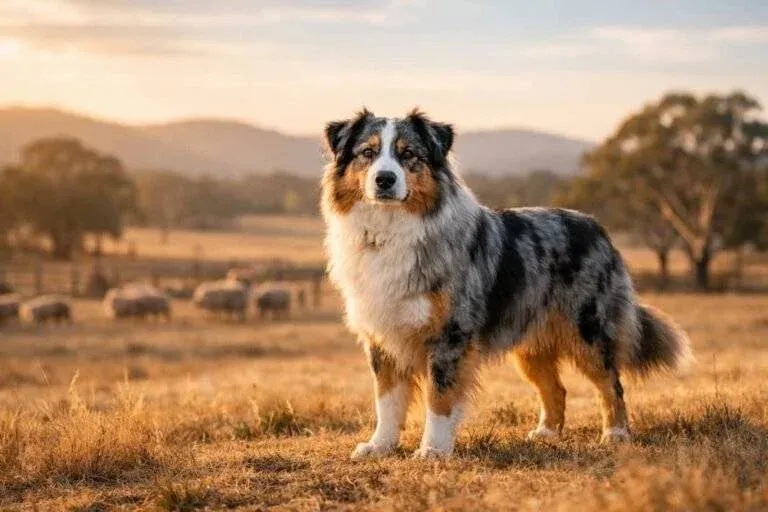
Despite their name suggesting an outback origin, the Australian Shepherd was actually developed in the western United States during the 19th century. This surprising fact hints at the breed’s complex history — and if you’re considering bringing one of these stunning dogs into your life, understanding their true nature is just as important as appreciating their striking blue eyes and merle coats.
The Australian Shepherd consistently ranks among the most intelligent dog breeds worldwide, and in Australian homes, they’ve become beloved companions for active families, rural property owners, and dog sport enthusiasts alike.¹ But make no mistake — this breed’s exceptional intelligence comes with exceptional demands. Your Australian Shepherd won’t be content lounging on the couch while you binge-watch television.
What You’ll Learn
- Breed traits & temperament
- Health concerns to know
- True cost in Australia
- Training & exercise needs
- Is this breed right for you?
Breed Quick Facts Table
| Attribute | Details |
|---|---|
| Breed Group | Herding / Working Dog |
| Origin | United States (via Australia) |
| Size Category | Medium |
| Height (Adult) | Male: 51-58 cm | Female: 46-53 cm |
| Weight (Adult) | Male: 25-32 kg | Female: 18-25 kg |
| Lifespan | 12-15 years |
| Coat Type | Medium-length double coat |
| Exercise Needs | 90-120 minutes/day |
| Trainability | 5/5 |
| Good with Children | Yes (with supervision) |
| First-Time Owner Suitable | 3/5 (challenging but manageable) |
| Average Puppy Price (AUD) | $2,500 – $4,500 |
History of the Australian Kelpie
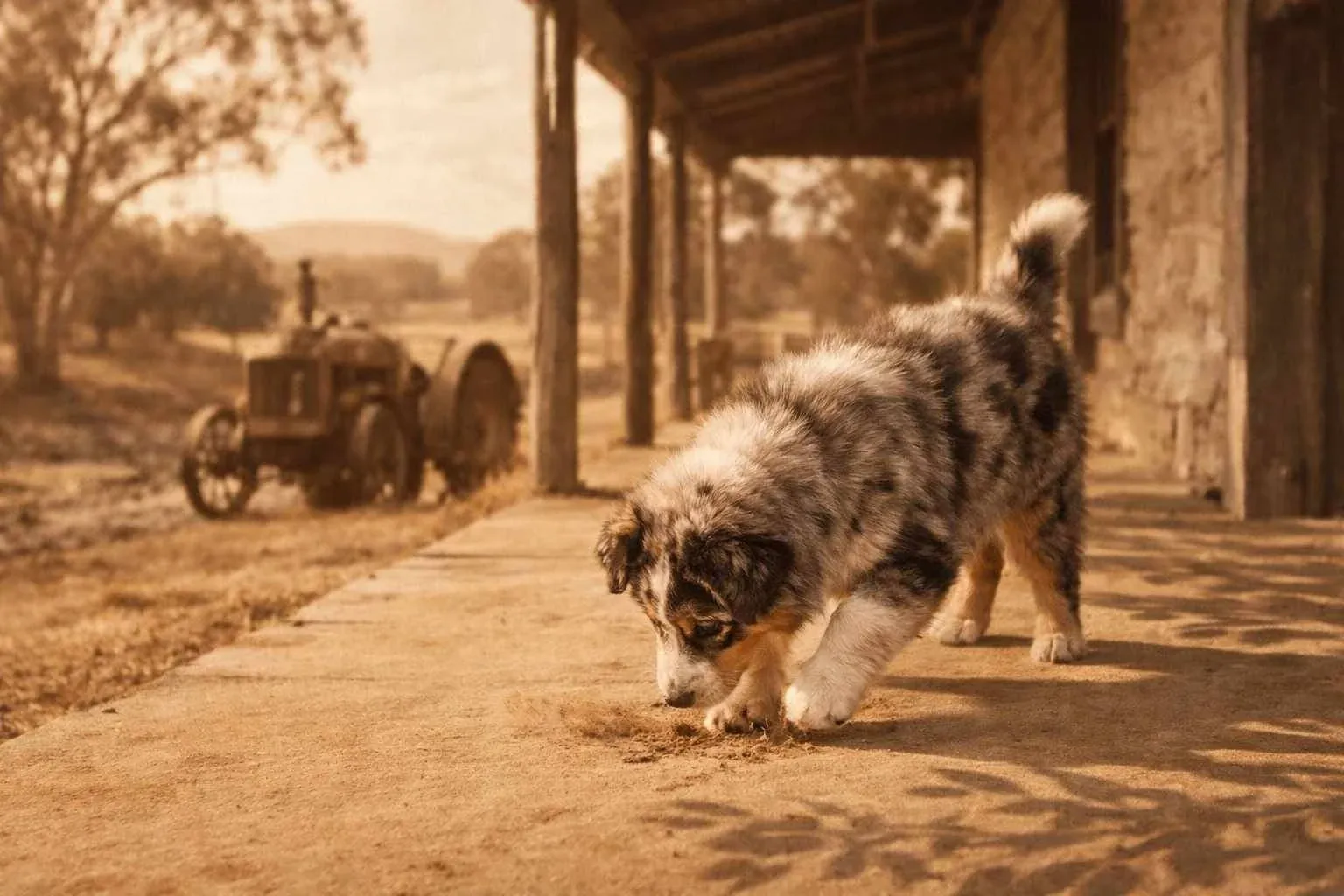
The Australian Shepherd’s name is something of a misnomer. According to the American Kennel Club’s breed history archives, these dogs actually originated in the Pyrenees Mountains between Spain and France, where Basque shepherds bred them for herding livestock.² When these shepherds emigrated to Australia in the early 1800s, and later to California during the Gold Rush era, their dogs came along — and Americans assumed the ‘exotic’ herding dogs had Australian origins.
In the United States, ranchers refined the breed specifically for the demands of American ranching, creating a versatile working dog capable of managing cattle, sheep, and even protecting property. The breed gained enormous popularity through rodeo performances and Western films throughout the mid-20th century.
Australian Shepherds arrived in Australia during the late 20th century and quickly found a niche among rural property owners and dog sport competitors. Today, they’re recognised by Dogs Australia and are particularly popular in Queensland, New South Wales, and Victoria, where their weather tolerance and work ethic suit both farm life and suburban activity.
Australian Shepherd Temperament
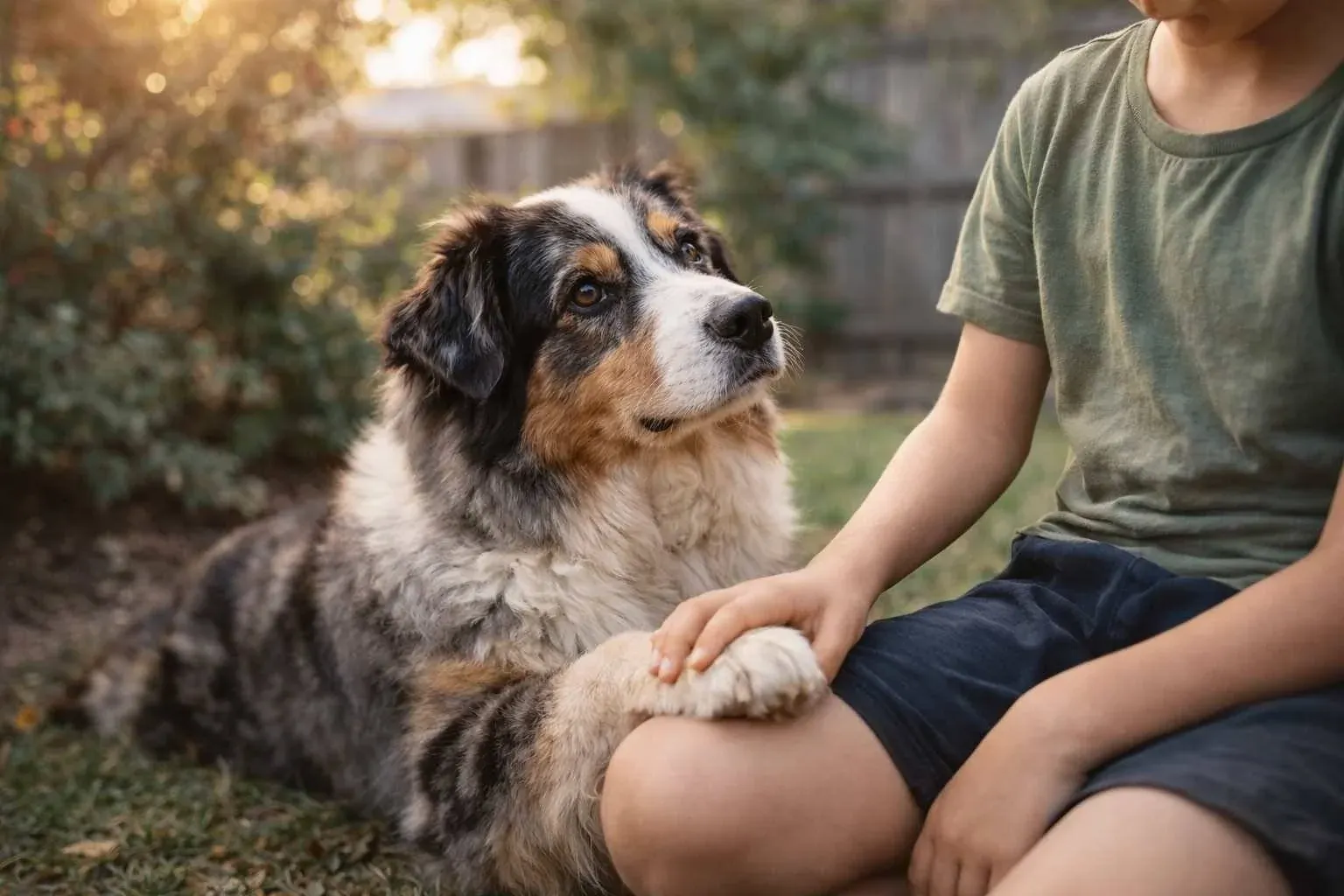
Loyal? Absolutely. Your Australian Shepherd will follow you from room to room, supervising your every move with quiet dedication. But don’t mistake their devotion for low maintenance — this breed demands serious mental and physical engagement.
- Intelligence: Ranked among the top 10 most intelligent breeds, Aussies learn commands rapidly — sometimes too rapidly. Many Australian Shepherd owners report that their dogs figured out how to open doors, gates, and even refrigerators within the first year.
- Loyalty: Deeply bonded to their families, often choosing a ‘favourite person’ while remaining affectionate with everyone.
- Energy: High-drive dogs bred for all-day work. Your Aussie won’t be satisfied with a casual stroll around the block.
- Alertness: Natural watchdogs who notice everything — which can tip into reactivity without proper socialisation.
- Playfulness: Maintains puppy-like enthusiasm well into adulthood, delighting in games, tricks, and interactive play.
Australian Shepherds can be wonderful family dogs, though their herding instincts require management. Every Australian Shepherd is different, but the general tendency is to view small, fast-moving children as ‘livestock’ that needs organising. Supervision is essential with children under eight, and you’ll need to teach both your dog and your children appropriate boundaries.
With proper introduction and socialisation, Aussies generally coexist well with other dogs. Cats and small animals are another matter — your experience may differ, particularly if your Aussie has a strong prey drive or wasn’t raised alongside cats from puppyhood. First-time Australian Shepherd owners are often surprised by how intensely their dog watches the family cat’s every movement.
If your Australian Shepherd starts nipping at heels or circling family members, don’t panic — this is herding behaviour, not aggression. Redirect that energy immediately with a game of fetch or a training session. As one Queensland breeder put it: ‘A bored Aussie is a creative Aussie — and their creativity usually involves reorganising your furniture, excavating your garden, or teaching themselves to open cupboards.’
Experienced Australian Shepherd handlers often say that the breed’s biggest challenge isn’t physical energy — it’s mental energy. A physically tired Aussie who hasn’t been mentally challenged will still find ways to entertain themselves, often destructively.
Australian Shepherd Health Issues
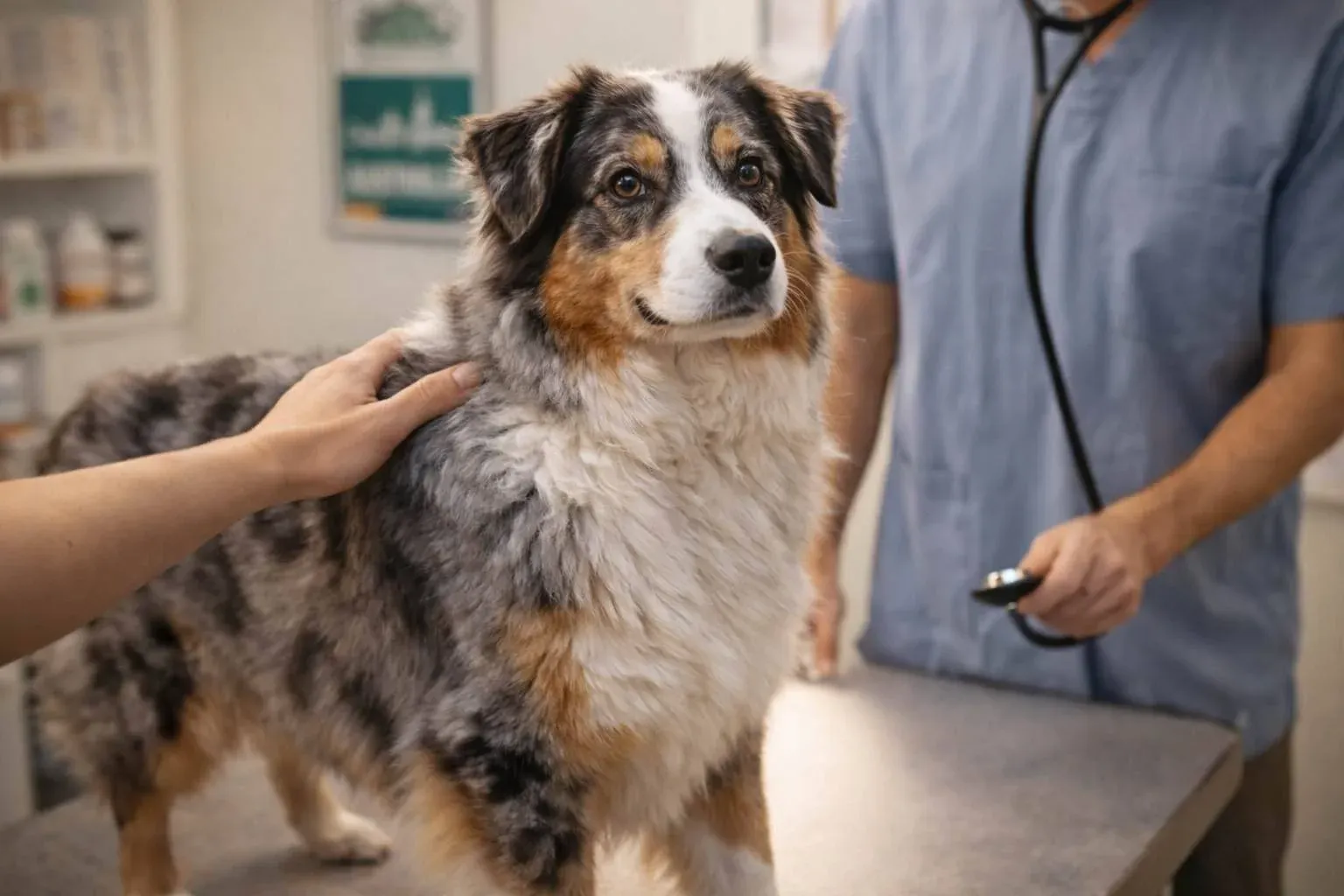
If you’re worried about health issues in Australian Shepherds, you’re not alone — it’s one of the first things prospective owners ask. The good news is that with responsible breeding and proactive veterinary care, most Aussies live long, healthy lives.
According to the AKC, Australian Shepherds are generally healthy dogs, but conditions seen in the breed include hip dysplasia, elbow dysplasia, and various eye diseases including cataracts and Collie eye anomaly.³
Prevalence: Approximately 6-8% of Australian Shepherds
Symptoms: Difficulty rising, reluctance to jump or climb stairs, bunny-hopping gait
Treatment Cost (AUD): $3,000-$8,000 for surgery; $500-$1,500/year for management
Prevention: Choose breeders who hip-score parents; maintain healthy weight; avoid over-exercising puppies
According to Washington State University’s College of Veterinary Medicine — whose researchers first identified the MDR1 mutation — approximately 50% of Australian Shepherds carry at least one copy of the MDR1 gene variant. Dogs with this mutation can have severe, potentially fatal reactions to common medications including ivermectin (found in some heartworm preventatives), loperamide (Imodium), and certain sedatives and anaesthetics. A simple DNA test can identify carriers — ask your vet or breeder about testing.
Progressive Retinal Atrophy (PRA): Gradual vision loss; genetic testing available
Cataracts: Can develop at any age; surgery costs $3,000-$5,000 per eye
Collie Eye Anomaly (CEA): Present from birth; severity varies widely
Idiopathic epilepsy occurs in approximately 2-4% of Australian Shepherds.⁵ While witnessing a seizure is frightening, most dogs with epilepsy can be well-managed with medication costing $50-$150 monthly. If you notice your dog experiencing seizures, your vet can develop a management plan tailored to your dog’s needs.
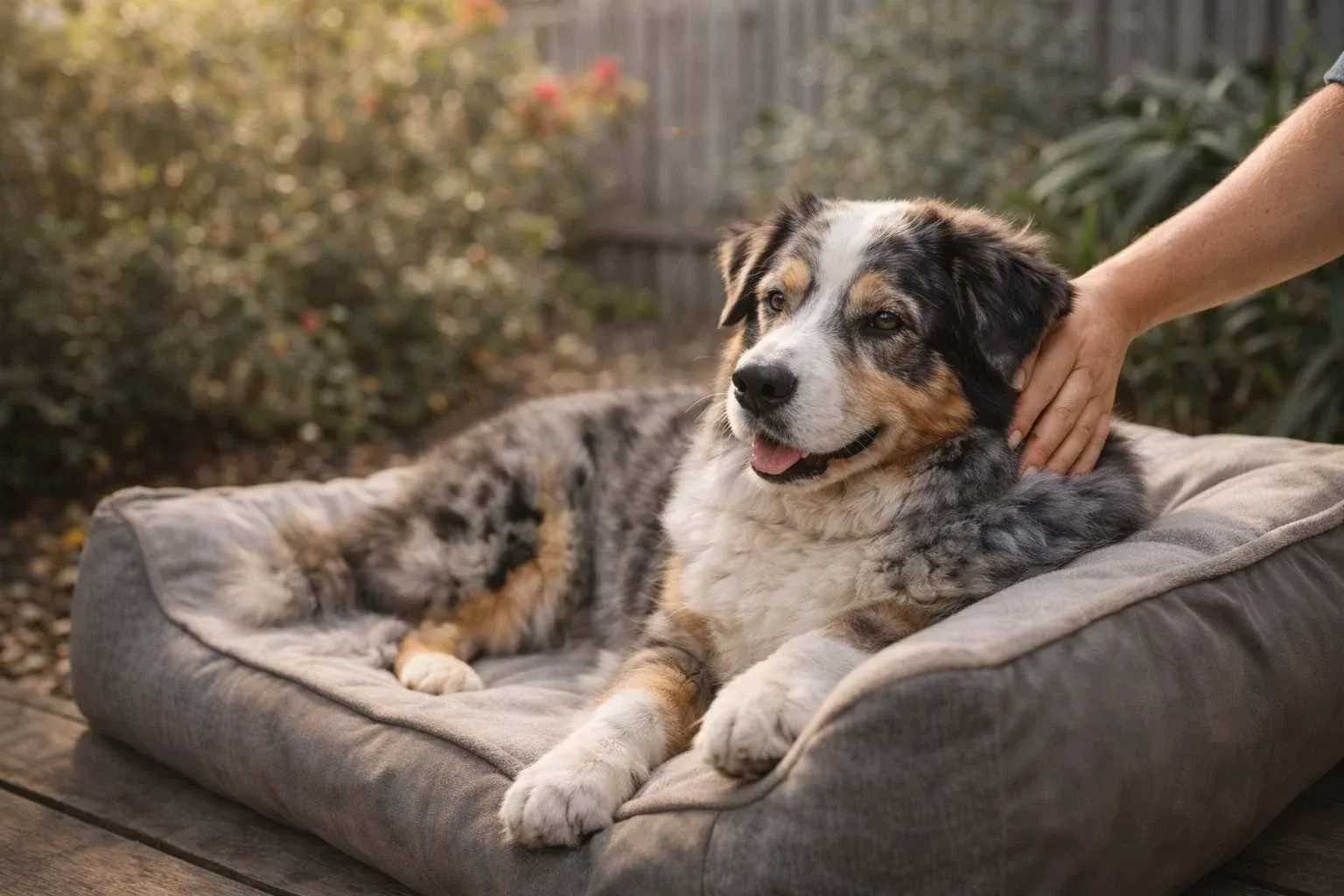
Australian Shepherd Lifespan & Longevity Tips
The average Australian Shepherd lifespan is 12-15 years, with many individuals reaching their mid-teens when well cared for. Veterinarians at the Australian Veterinary Association recommend the following for maximising your Aussie’s healthy years:⁶
- Maintain a healthy weight — obesity significantly shortens lifespan
- Schedule annual vet check-ups (twice yearly for dogs over 7)
- Keep up with dental care — dental disease affects overall health
- Provide appropriate exercise without over-stressing joints
- Feed a high-quality, age-appropriate diet
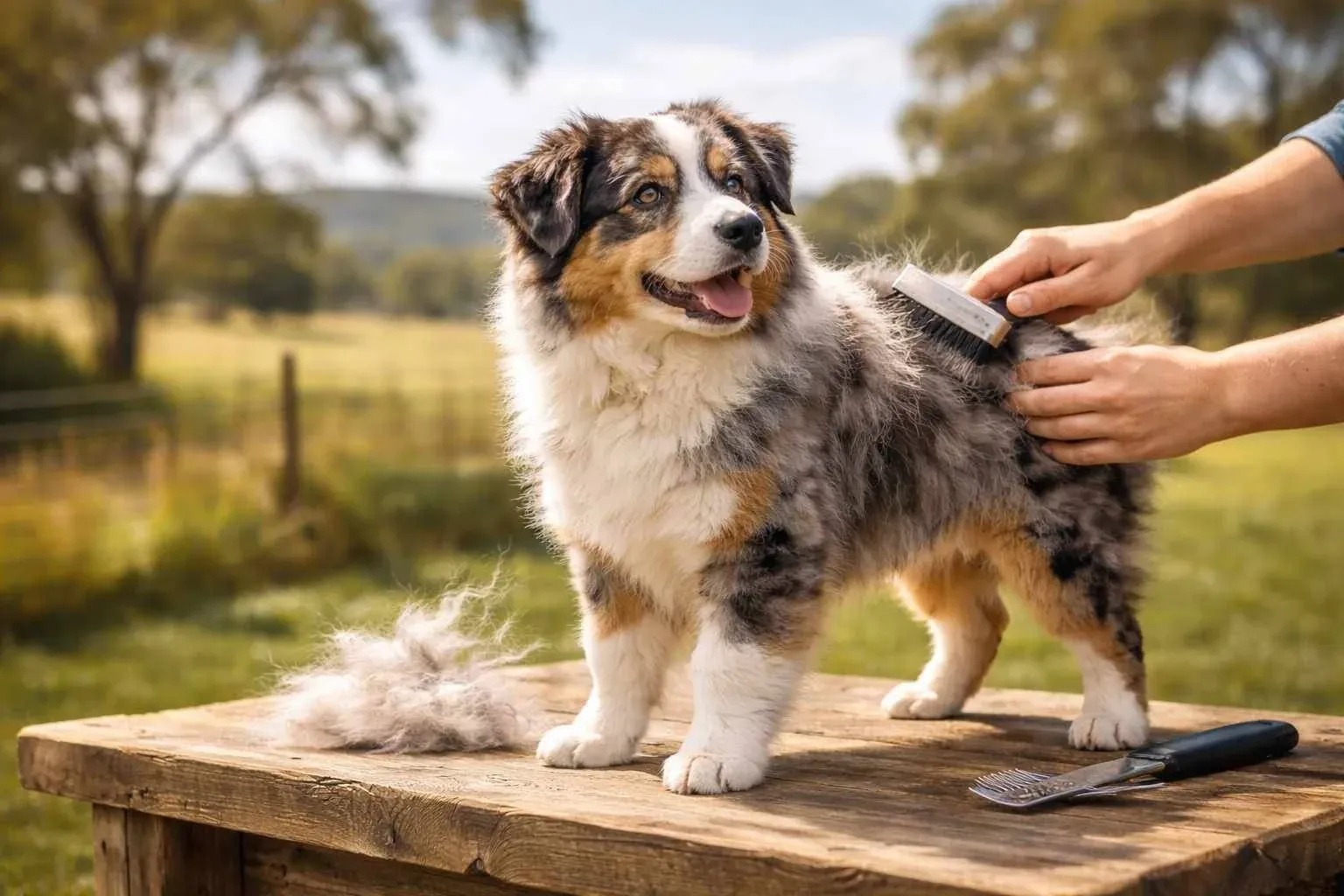
Australian Shepherd Grooming Guide
That beautiful double coat requires commitment. Australian Shepherds shed moderately year-round and heavily (‘blow coat’) twice yearly during seasonal changes. If you’re imagining a pristine, fur-free home, this isn’t your breed.
Grooming Schedule Table
| Task | Frequency | Time | Tools/Products |
| Brushing | 2-3x weekly | 15-20 mins | Slicker brush, undercoat rake |
| Bathing | Every 6-8 weeks | 30-45 mins | Dermcare/Fido’s Shampoo |
| Nail Trimming | Every 2-3 weeks | 10-15 mins | Clippers/Grinder |
| Pro Grooming | Every 8-12 weeks | 1-2 hours | $80-$120 |
Important: Never shave your Australian Shepherd’s double coat. The undercoat provides insulation from both heat and cold, and shaving can permanently damage coat texture and regrowth patterns. For dental care, products like Greenies or Oravet chews (available at most Australian pet stores and vet clinics) help maintain oral health between professional cleanings.
Australian Shepherds come in four recognised colours: black, blue merle, red, and red merle — each potentially with white markings and/or copper points. The striking merle pattern results from a gene that creates mottled patches of colour, often accompanied by blue or heterochromatic eyes.
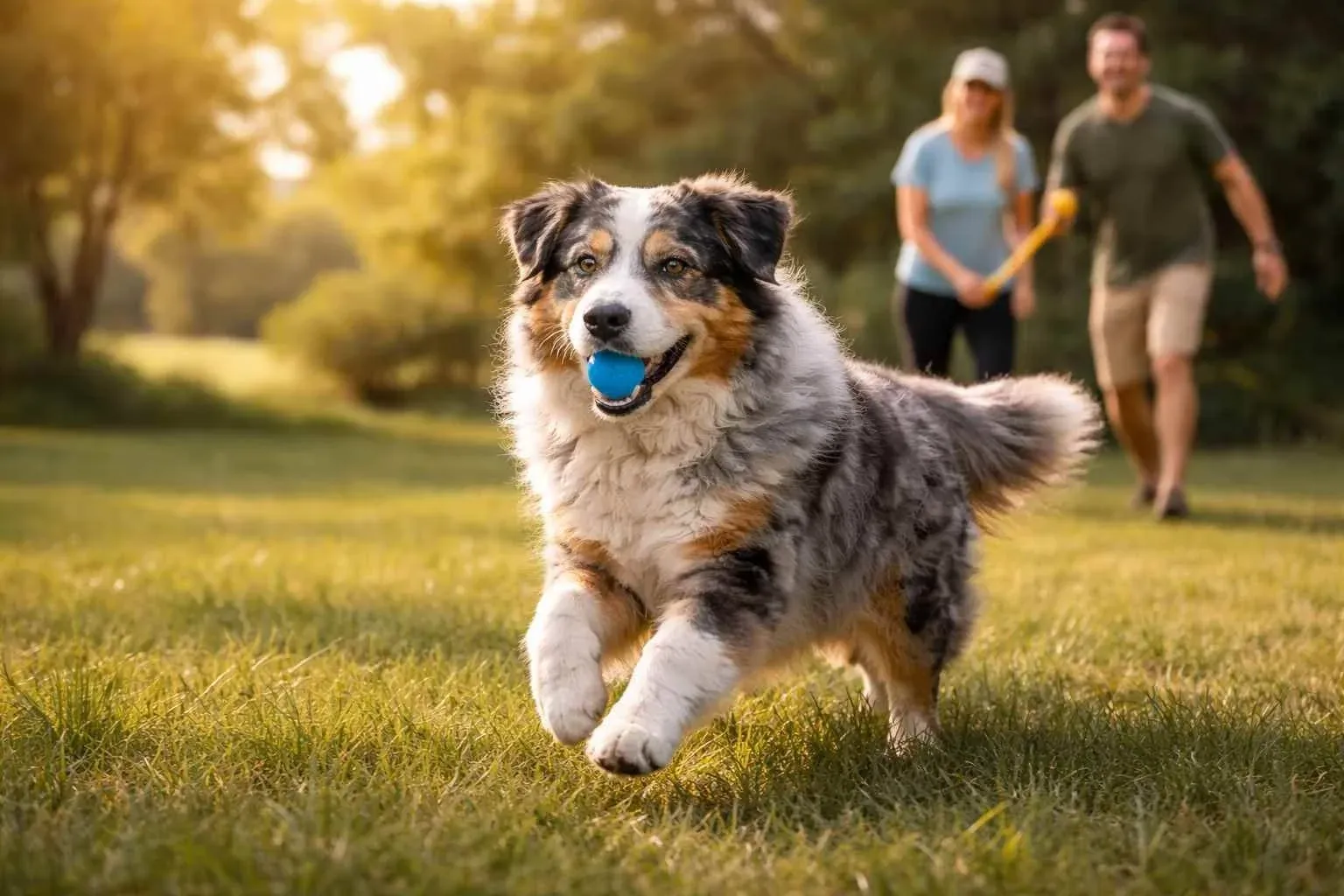
Australian Shepherd Exercise
The AKC recommends that active breeds like Australian Shepherds receive a minimum of 90-120 minutes of exercise daily.⁷ But here’s what those numbers don’t tell you: not all exercise is created equal for this breed.
Breeders consistently note that Australian Shepherds need mental exercise as much as physical activity. A 30-minute training session or puzzle-solving game can tire your Aussie out more effectively than an hour of walking. According to owners in Australian Shepherd communities, the most successful exercise routines combine physical activity with mental challenges: agility training, herding trials, nose work, or advanced obedience.
If your Aussie hits adolescence around 8-14 months and suddenly seems to have boundless, uncontrollable energy, don’t panic. This is completely normal. The key is to increase mental stimulation alongside physical exercise — add training challenges, rotate puzzle toys, and consider structured activities like flyball or dock diving.
Warning signs of under-exercised Aussies: excessive barking, destructive chewing, digging, pacing, hyperactivity indoors, and attempts to ‘herd’ family members or other pets.
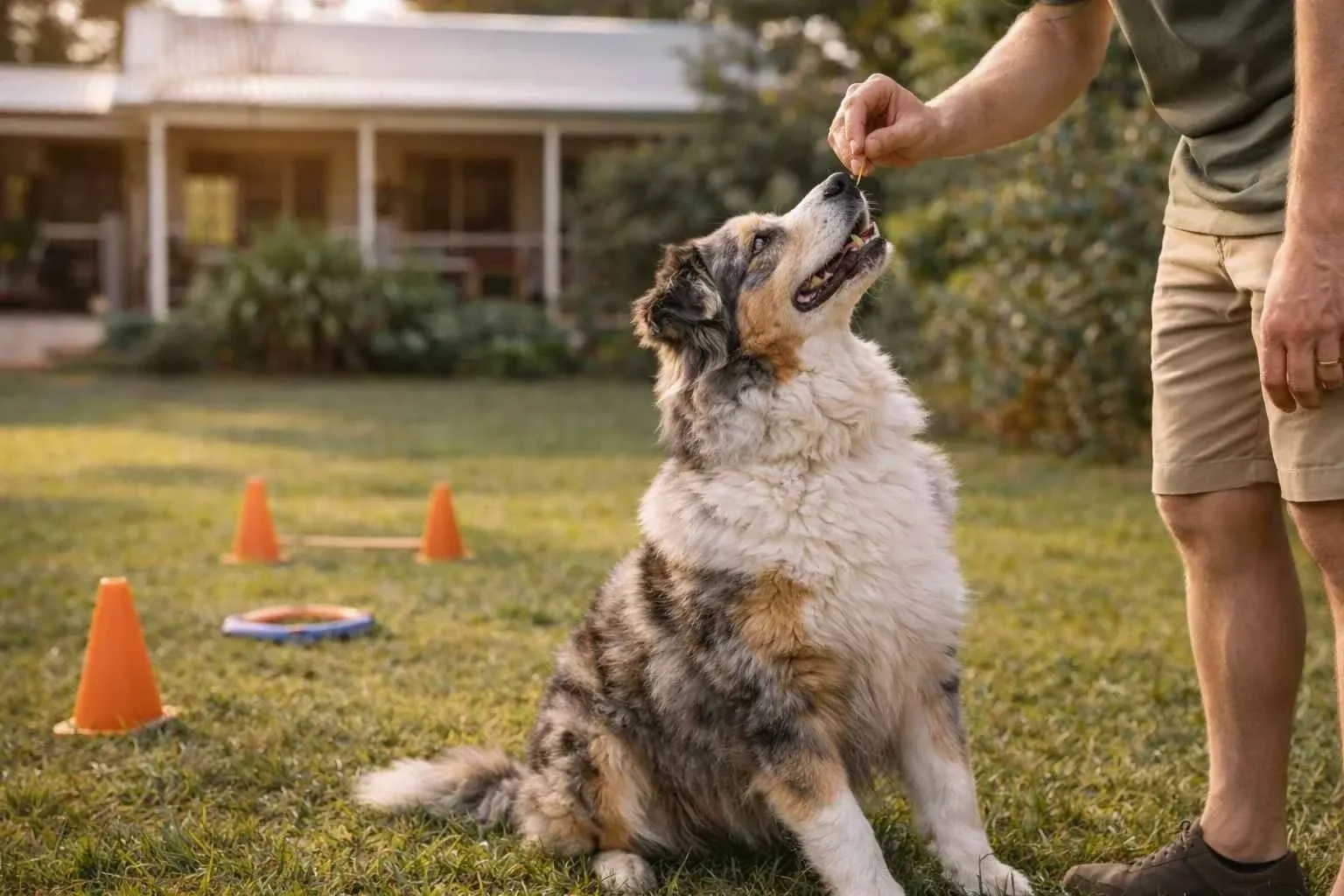
Australian Shepherd Training Tips
Don’t be discouraged if your Australian Shepherd seems to learn commands instantly but then ‘forgets’ them in new environments — this is normal for intelligent dogs who need extensive generalisation training. The good news is that Aussies are incredibly responsive to positive reinforcement, and most owners see remarkable progress by the six-month mark.
Professional dog trainers recommend starting structured training from the day you bring your Australian Shepherd home. These dogs thrive on having a ‘job,’ and training provides exactly that mental engagement they crave. The American Kennel Club’s training resources emphasise early socialisation as critical for this breed.⁸
Socialisation & Training Timeline
| Age | Training Focus | Expected Outcomes |
| 8-12 weeks | Name recognition, potty training, crate training, handling | Basic recognition, comfort with routine |
| 3-4 months | Sit, stay, come, leash walking, socialisation | Basic obedience in low-distraction environments |
| 4-6 months | Advanced commands, impulse control, public socialisation | Reliable basics, good public behaviour |
| 6-12 months | Off-leash reliability, advanced tricks, sport foundation | Well-trained, mentally engaged dog |
Training tip: If you notice your Aussie becoming ‘stubborn’ or disengaged, they’re likely bored. Switch up your training approach, introduce new challenges, or take a break. These dogs are eager to please but need variety to stay interested.
Australian Shepherd Price & Costs
Understanding the true cost of Australian Shepherd ownership helps you budget realistically. Pet insurance companies like PetSure and Bow Wow Meow provide Australian-specific cost data that’s invaluable for planning.⁹
Where to Find Your Australian Shepherd
Find registered breeders through the Dogs Australia Breeder Directory. Consider adoption through PetRescue or breed-specific rescues like Australian Shepherd Rescue Australia.
Initial Costs:
| Expense | Approx. Cost (AUD) |
| Puppy Price (Registered Breeder) | $2,500 – $4,500 |
| Adoption Fee (Rescue) | $350 – $600 |
| Initial Vet + Vaccinations | $200 – $400 |
| Desexing | $400 – $600 |
| Essential Supplies | $400 – $700 |
| TOTAL INITIAL COST | $3,850 – $6,800 |
Annual Ongoing Costs:
- Food (premium quality like Black Hawk or Ivory Coat): $1,200 – $1,800
- Vet & Preventatives: $500 – $800
- Pet Insurance: $600 – $1,200
- Grooming: $400 – $800
- TOTAL ANNUAL: $2,700 – $4,600
Lifetime Cost Estimate: $38,000 – $65,000 (based on 13-year average lifespan).

Is an Australian Shepherd Right for You?
Active individuals or families who can provide 90+ minutes of daily exercise, enjoy training and mental enrichment activities, and have time to dedicate to a highly bonded, velcro-style companion. Australian Shepherds thrive with owners who want a dog that participates in their daily lives, whether that’s farm work, hiking, dog sports, or active family activities.
- Home Size: House with yard strongly preferred; apartments possible only with extensive daily exercise commitment
- Yard: Secure fencing essential — Aussies are athletic and can clear low barriers
- Climate: Adaptable to most Australian climates; avoid strenuous exercise during extreme heat
This can feel overwhelming, but being honest about challenges upfront saves heartbreak later.
- Those working long hours with limited time for exercise and training
- People seeking a low-maintenance, couch-potato companion
- First-time owners unwilling to invest in professional training or puppy classes
- Those intolerant of heavy shedding and regular grooming requirements
- Apartment dwellers without dedicated time for daily off-property exercise
The Australian Shepherd is a remarkable breed — intelligent, loyal, athletic, and endlessly devoted to their families. But that devotion comes with demands that not every owner can meet.
First-time owner rating: Challenging but achievable with commitment to training classes and daily engagement
Perfect for: Active families, rural property owners, dog sport enthusiasts, and dedicated owners wanting a trainable, velcro companion
Think twice if: You work long hours, prefer low-maintenance pets, or can’t commit to extensive daily exercise and mental stimulation
Australian Shepherds FAQs
Are Australian Shepherds good for first-time owners?
Australian Shepherds can work for dedicated first-time owners, but they’re not the easiest choice. Their high intelligence and energy require consistent training, extensive exercise, and mental enrichment. If you’re willing to invest in puppy classes, commit to daily activity, and learn positive reinforcement techniques, you can succeed — but be prepared for a steep learning curve.¹⁰
Do Australian Shepherds shed a lot?
Yes. Australian Shepherds shed moderately year-round and heavily twice yearly during seasonal coat changes. Regular brushing (2-3 times weekly, daily during shedding seasons) helps manage fur, but expect to find hair on your furniture, clothing, and floors.
How much exercise does an Australian Shepherd need?
A minimum of 90-120 minutes daily, combining physical activity with mental stimulation. Simple walks aren’t enough — Australian Shepherds need running, playing, training sessions, and puzzle-solving to stay balanced and happy.
How long do Australian Shepherds live?
The average Australian Shepherd lifespan is 12-15 years. With proper care, many Aussies reach their mid-teens. Regular veterinary care, appropriate exercise, dental care, and maintaining a healthy weight all contribute to longevity.
How much does an Australian Shepherd cost in Australia?
Expect to pay $2,500-$4,500 for a registered Australian Shepherd puppy from a reputable breeder in 2025. Adoption fees typically range from $350-$600. Annual ongoing costs run $2,700-$4,600 for food, veterinary care, insurance, and grooming.
Are Australian Shepherds good with children?
Australian Shepherds can be excellent family dogs when properly trained and supervised. However, their herding instincts may lead them to nip at or ‘herd’ small children who run or scream. Supervision is essential with young children, and both the dog and children need to be taught appropriate interactions.
Primary Sources:
- Dogs Australia (ANKC) — Official breed registration and standards (dogsaustralia.org.au)
- American Kennel Club (AKC) — Breed history archives and standards (akc.org)
- VCA Hospitals — Health conditions, symptoms, and treatments (vcahospitals.com)
Veterinary & Health Sources:
- Washington State University College of Veterinary Medicine — MDR1 mutation research
- Orthopedic Foundation for Animals (OFA) — Health testing and prevalence data (ofa.org)
- Australian Veterinary Association — Care guidelines and recommendations (ava.com.au)
Australian-Specific Sources:
- PetRescue — Breed-specific rescue information (petrescue.com.au)
- RSPCA Australia — Animal welfare and exercise guidelines (rspca.org.au
- American Kennel Club — Training resources and breed information (akc.org)
- PetSure (Bow Wow Meow) — Australian pet ownership cost data
Australian Cost & Ownership Data:
- PetSure (Bow Wow Meow) – Australian pet ownership cost reports
- Pets Online Australia – Kelpie prices in Australia (2025) – petsonline.com.au
- Australian pet insurance providers – Regional pricing data