
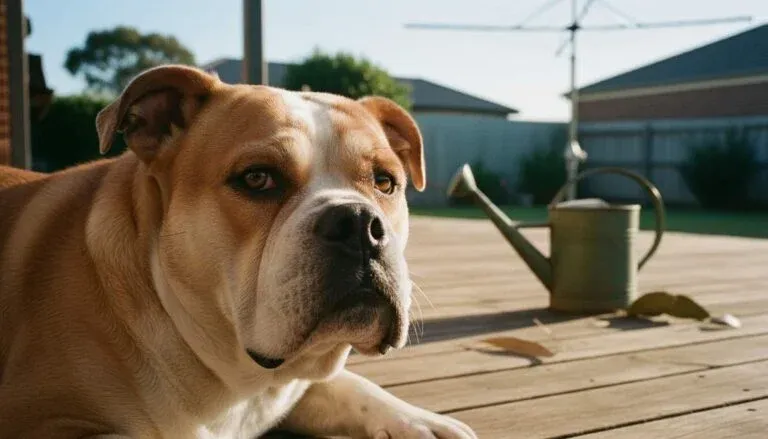
The Australian Bulldog looks like it could bounce you off the footpath. Barrel chest, wide stance, a head like a cinder block. But spend five minutes with one and you’ll realise the toughest thing about this dog is choosing whose lap to sit in.
Developed right here in Queensland in the 1990s, the Australian Bulldog was purpose-bred to fix what’s broken in the English Bulldog: the breathing problems, the overheating, the inability to mate or give birth without veterinary intervention. The result is a dog that keeps the classic bulldog charm — the stocky build, the wrinkled face, the stubborn-but-lovable personality — while being genuinely healthier and better suited to Australian conditions.
But “healthier than an English Bulldog” is a low bar, and the Australian Bulldog still comes with real health considerations that every buyer needs to understand before putting down a deposit. This isn’t a “problem-free” breed — it’s a “fewer-problems” breed. Big difference.
What You’ll Learn
- Breed traits & temperament
- Health concerns to know
- True cost in Australia
- Training & exercise needs
- Is this breed right for you?
Quick Facts
| Attribute | Details |
|---|---|
| Breed Name | Australian Bulldog (also called Aussie Bulldog) |
| Origin | Queensland, Australia (1990s) |
| Breed Group | Companion / Non-Sporting (not ANKC recognised) |
| Height (Male) | 46–51 cm |
| Height (Female) | 44–48 cm |
| Weight (Male) | 28–35 kg |
| Weight (Female) | 23–28 kg |
| Lifespan | 10–12 years |
| Coat Type | Short, smooth, fine |
| Colours | Fawn, red, brindle, white, apricot, mahogany, pied (various combinations) |
| Temperament | Affectionate, loyal, outgoing, playful, mildly stubborn |
| Shedding | Low to moderate (year-round) |
| Good With Kids | Yes — excellent family dog, though can be boisterous with toddlers |
| Good With Other Dogs | Generally yes; early socialisation recommended |
| Hypoallergenic | No |
| Barking Level | Low to moderate — alert barker, not excessive |
| Exercise Needs | Moderate — daily walk plus play time |
| Suitable For | Families, suburban homes with a yard, first-time owners with research |
| ANKC Registered | No — registered through breed-specific clubs (ABCA, ANBC, ABS, ABKC) |
History & Origins
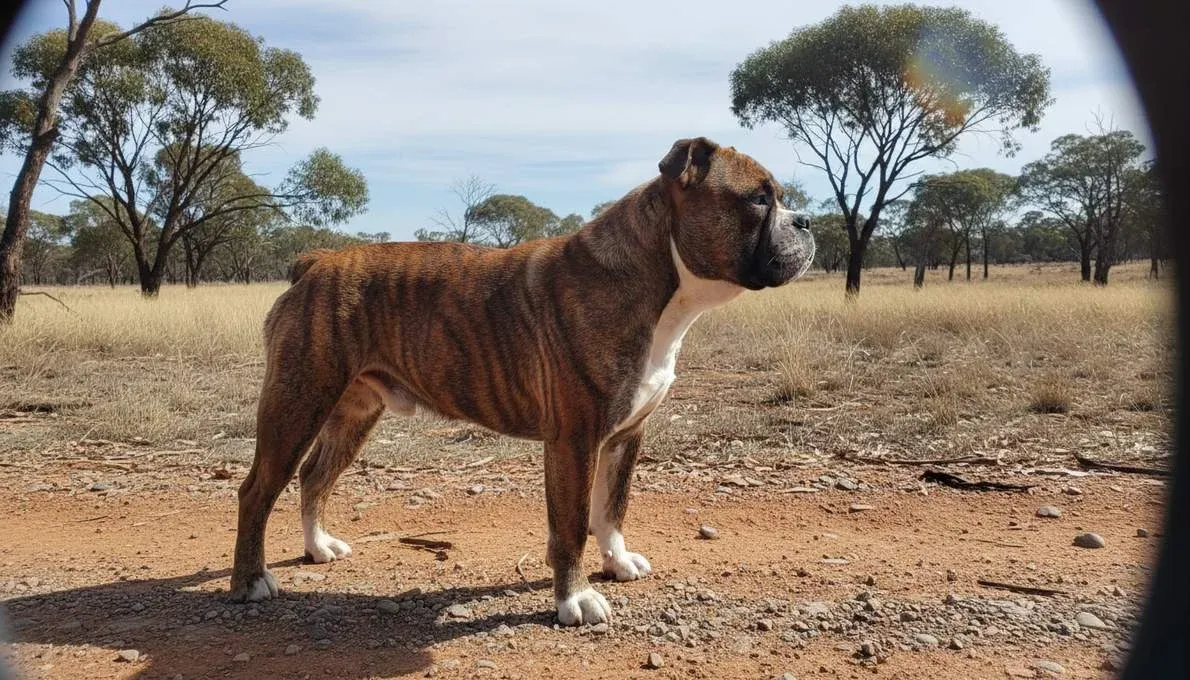
The Australian Bulldog history starts in the 1990s in Queensland, when breeder Pip Nobes set out to create a bulldog that could actually thrive in Australian conditions. The English Bulldog — a breed she loved — was struggling badly in the Australian heat. Flat faces, narrow airways, and compact bodies meant these dogs were overheating, struggling to breathe, and frequently needing caesarean sections to give birth.
Nobes crossed English Bulldogs with Boxers, Bullmastiffs, and English Staffordshire Bull Terriers, selecting for longer muzzles, broader hips, better respiratory function, and a more athletic build. Fellow breeders Noel and Tina Green ran a parallel programme in Toowoomba, and Joe and Louise Cauchi contributed JD Johnson-line American Bulldog genetics that added substance and health to the developing breed.
The Australian Bulldog breed was introduced to the public on Burke’s Backyard in 1998, and the response was enormous. Australians loved the idea of a bulldog that looked the part but could actually run around the backyard without collapsing. In 2003, Pip Nobes founded the United Aussie Bulldog Association (UABA), followed by the Australian Bulldog Society (ABS) in 2004. The Aussie Bulldog Club of Australia (ABCA) was established in 2007.
The Australian Bulldog is not recognised by the ANKC (Dogs Australia) and is unlikely to be in the near future. Instead, it’s registered through breed-specific clubs like the ABCA, the Australian National Bulldog Club (ANBC), Bulldogs Australia Inc. (BA), and the Australian Bulldog Kennel Club (ABKC). This means there’s no single governing body enforcing a universal breed standard — something buyers should be aware of when choosing a breeder.
Temperament & Personality
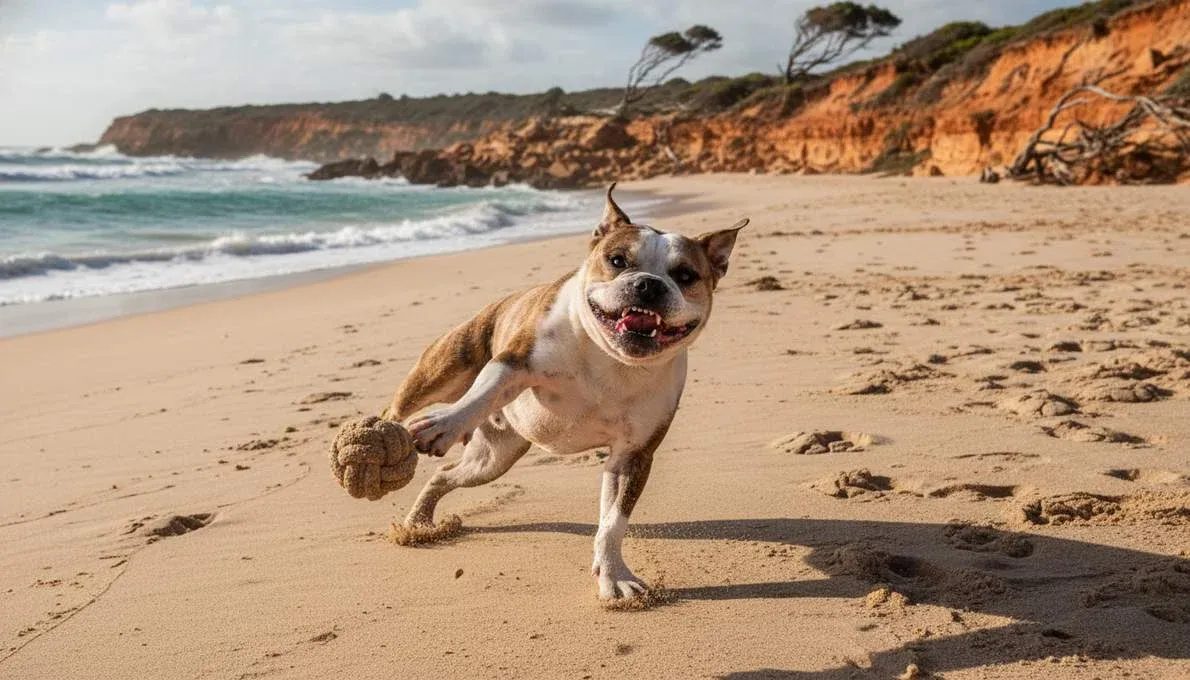
The Australian Bulldog temperament is the breed’s biggest selling point, and honestly, it’s hard to overstate how affectionate these dogs are. If you want a dog that follows you from room to room, sits on your feet while you cook dinner, and somehow believes it’s a lap dog despite weighing 30 kilograms — congratulations, you’ve found your breed.
Australian Bulldogs are outgoing, friendly, and genuinely happy to meet new people. They don’t have the aloofness of many guardian breeds. When the postie arrives, your Aussie Bulldog is more likely to wag its tail and lean against their legs than bark them off the property.
With children, the Australian Bulldog is patient, playful, and protective in a gentle way. They’re one of the better bulldog breeds for families. That said, they have a “bulldozing” nature — they barge through doorways, lean on people, and don’t always understand their own weight. Families with very young toddlers should supervise interactions, not because of aggression, but because a 30-kg Aussie Bulldog has all the spatial awareness of a shopping trolley.
Are Australian Bulldogs aggressive? No. The breed was specifically developed with a focus on stable, non-aggressive temperament. They can be a bit dominant with other dogs if not socialised early, but genuine aggression is rare and considered a serious fault in the breed. Australian Bulldogs make alert watchdogs — they’ll bark at unusual sounds and their appearance alone deters most strangers — but they are not guard dogs. They’d sooner invite a burglar in for a belly rub.
The Australian Bulldog personality does come with a streak of stubbornness. They’ll learn a command quickly and then decide, completely independently, whether or not they feel like obeying it. This isn’t defiance — it’s the Bulldog brain running a cost-benefit analysis on every request.
Health & Genetic Conditions
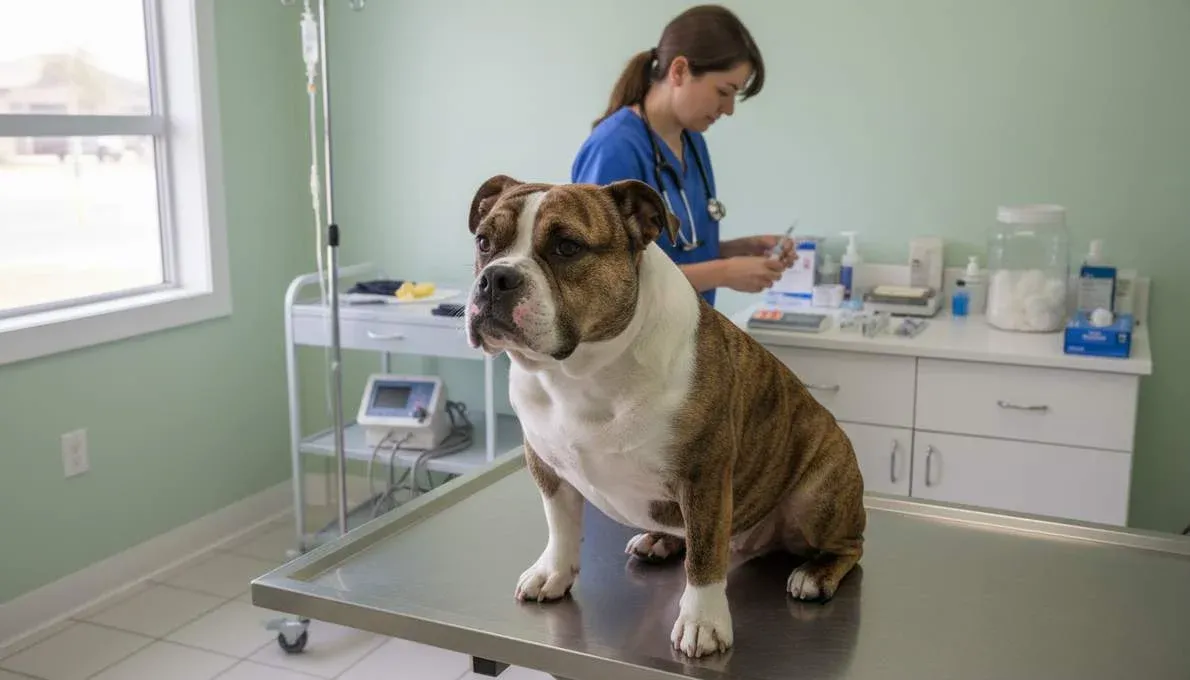
This is the section that matters most. The Australian Bulldog was created to be healthier than the English Bulldog, and in many respects it is. The longer muzzle, wider nostrils, and more proportionate body mean fewer of the extreme health crises that plague the English Bulldog. But “healthier than an English Bulldog” still leaves room for significant Australian Bulldog health problems, and you need to go in with your eyes open.
This is the big one. Despite the longer muzzle, Australian Bulldogs are still a brachycephalic breed and many are affected by BOAS to some degree. Symptoms include snoring, noisy breathing during exercise, regurgitation, exercise intolerance, and sleeping in unusual positions to keep airways open. Veterinary specialists recommend all Australian Bulldogs be assessed for BOAS before 12 months of age. Corrective surgery (widening nostrils and shortening the soft palate) costs $2,500–$5,000 AUD and can significantly improve quality of life.
A developmental condition where the hip joint doesn’t form properly, leading to arthritis and pain. Reputable Australian Bulldog breeders will have hip scores for breeding dogs. Surgical intervention ranges from $3,000–$8,000 AUD depending on severity, with ongoing management costs of $500–$1,500 AUD per year.
A prolapse of the third eyelid gland that appears as a red, fleshy mass in the corner of the eye. Common in bulldog breeds. Surgical correction costs $800–$2,000 AUD per eye.
Inward rolling of the eyelids, causing irritation and potential corneal damage. Surgical correction typically costs $1,500–$3,000 AUD per eye.
Those adorable wrinkles trap moisture, dirt, and bacteria. Without regular cleaning, skin infections develop quickly. Prevention costs nothing — just daily wiping of facial folds with a damp cloth. Treatment for established infections runs $100–$500 AUD per episode.
Some Australian Bulldogs develop vertebral problems, including hemivertebrae (malformed vertebrae). Reputable breeders will have spine scores for their breeding dogs. Severe cases may require surgery costing $5,000–$10,000+ AUD.
The bottom line: budget $500–$1,000 AUD annually for routine vet care, plus a contingency fund of at least $3,000 for the unexpected. Pet insurance is strongly recommended for this breed — expect premiums of $60–$120 AUD per month for a comprehensive plan covering a brachycephalic breed.
Lifespan & Longevity
The Australian Bulldog lifespan is typically 10 to 12 years, which is a genuine improvement over the English Bulldog’s average of 8 to 10 years. How long do Australian Bulldogs live in practice? Most Australian owners report their dogs living comfortably into their early double digits with proper care.
The key factors that influence Australian Bulldog life expectancy are weight management (this breed gains weight easily and extra kilos worsen every health issue on the list above), respiratory health (early BOAS assessment and surgical correction if needed can add years to your dog’s life), quality nutrition (avoid cheap fillers and overfeeding), moderate daily exercise (enough to keep them fit, not so much that you stress their airways), and avoiding heat stress (never exercise in the middle of an Australian summer day).
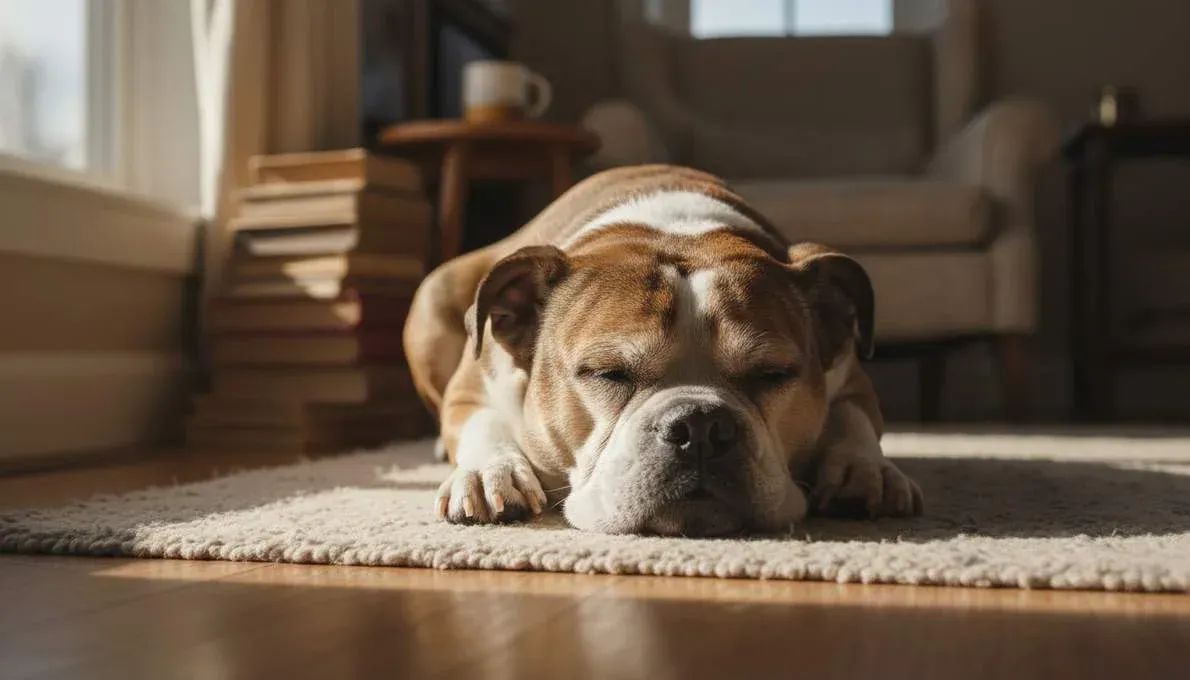
By age 7–8, your Australian Bulldog may slow down noticeably. Joint supplements from around age 5–6 can help maintain mobility. An orthopaedic bed is a worthwhile investment for any brachycephalic breed, as elevated head positioning can also help with breathing during sleep.
Grooming & Care
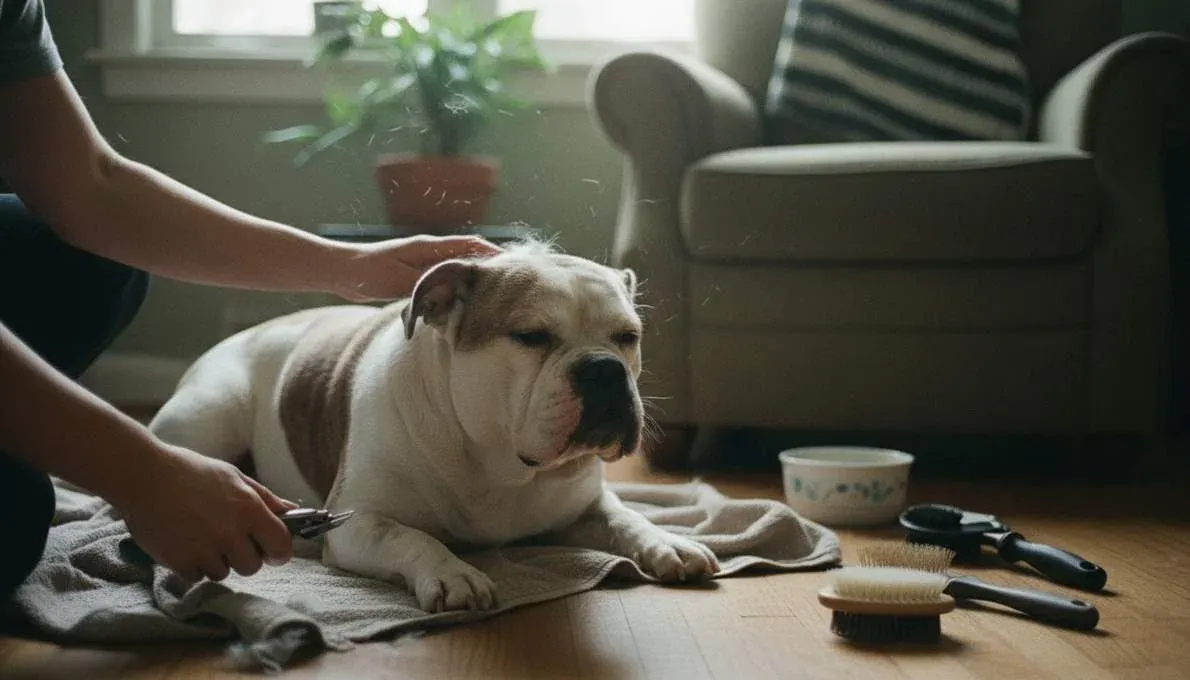
Australian Bulldog grooming is low-maintenance compared to most breeds, but those facial wrinkles add a daily task that you absolutely cannot skip.
Grooming Schedule
| Task | Frequency |
|---|---|
| Daily: Wrinkle Cleaning | Wipe facial folds with a damp cloth or baby wipe. Dry thoroughly. |
| Weekly Brushing | Once per week with a soft bristle brush or rubber grooming mitt |
| Bathing | Every 4–6 weeks, or when needed. Use a gentle, pH-balanced dog shampoo. |
| Nail Trimming | Every 2–3 weeks |
| Ear Cleaning | Weekly check and clean — floppy ears trap moisture |
| Teeth Brushing | 2–3 times per week (dental disease is common in brachycephalic breeds) |
| Professional Grooming | Optional; $50–$100 AUD per session for medium breeds |
Australian Bulldog colours include fawn, red, apricot, mahogany, white, and at least five shades of brindle. Pied markings (one colour dominant with patches of another) are also common and popular. The coat is short and smooth regardless of colour, so grooming requirements are the same across all Australian Bulldog colour variants.
Exercise Needs
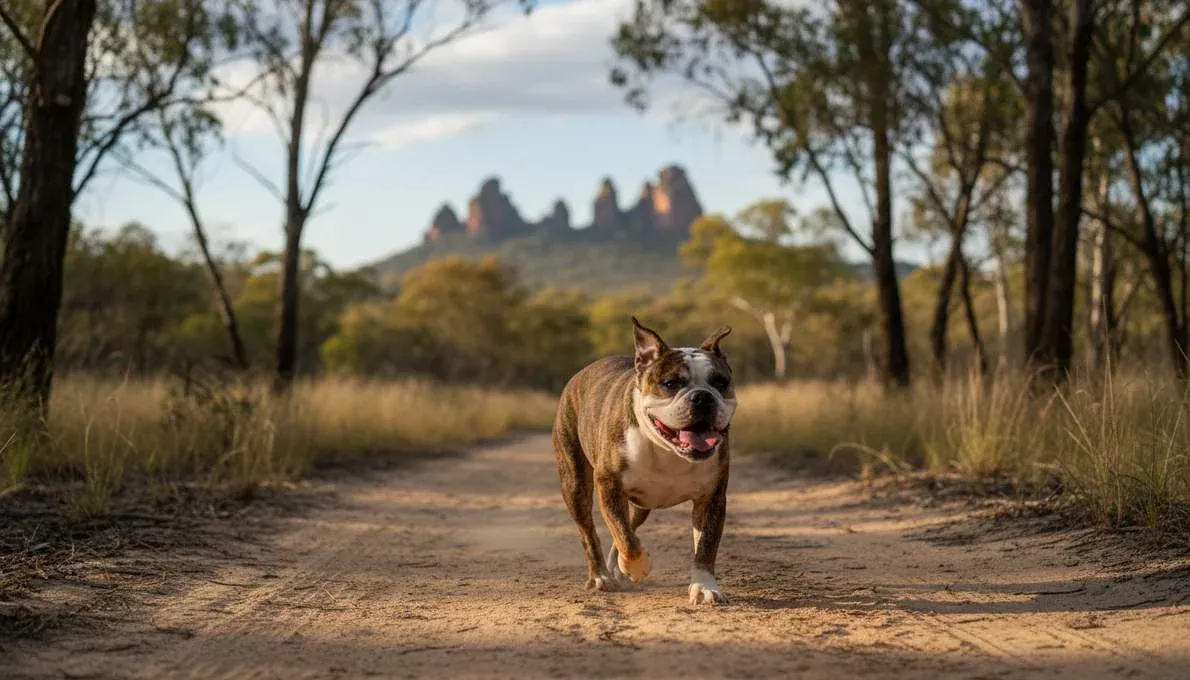
The Australian Bulldog is not a couch potato, but it’s not a marathon runner either. Think of their exercise needs as “enthusiastic moderate.” They’ll happily go for a 20–30 minute walk, play fetch in the backyard, and then be perfectly content to spend the rest of the afternoon napping next to you on the couch.
A daily walk plus 15–20 minutes of interactive play (tug toys, short fetch sessions, food puzzles) is enough for most adult Australian Bulldogs. They also love water — many Aussie Bulldogs enjoy splashing in kiddie pools or chasing the garden hose, which is a brilliant way to keep them cool and entertained during warmer months.
Australian climate warning: Despite being bred for Australian conditions, Australian Bulldogs are still a brachycephalic breed and heat is their enemy. Never exercise your Australian Bulldog in the middle of the day during summer. Early morning or late evening walks only. Always carry water. Watch for heavy panting, drooling, bright red gums, or stumbling — these are signs of heat stress, and it can escalate to a life-threatening emergency within minutes. If in doubt, skip the walk and play indoors with the air conditioning on.
Australian Bulldogs are not suited to apartment living without a commitment to multiple daily outings. They do best with a backyard — it doesn’t need to be huge, but they need space to mooch around and sniff things. A bored Australian Bulldog with no outlet will find creative and destructive ways to entertain itself.
Training Your Australian Bulldog
The good news: Australian Bulldogs are intelligent, people-focused, and genuinely want to make you happy. The bad news: they also have the attention span of a goldfish and the stubbornness of a toddler who’s been told it’s bedtime.
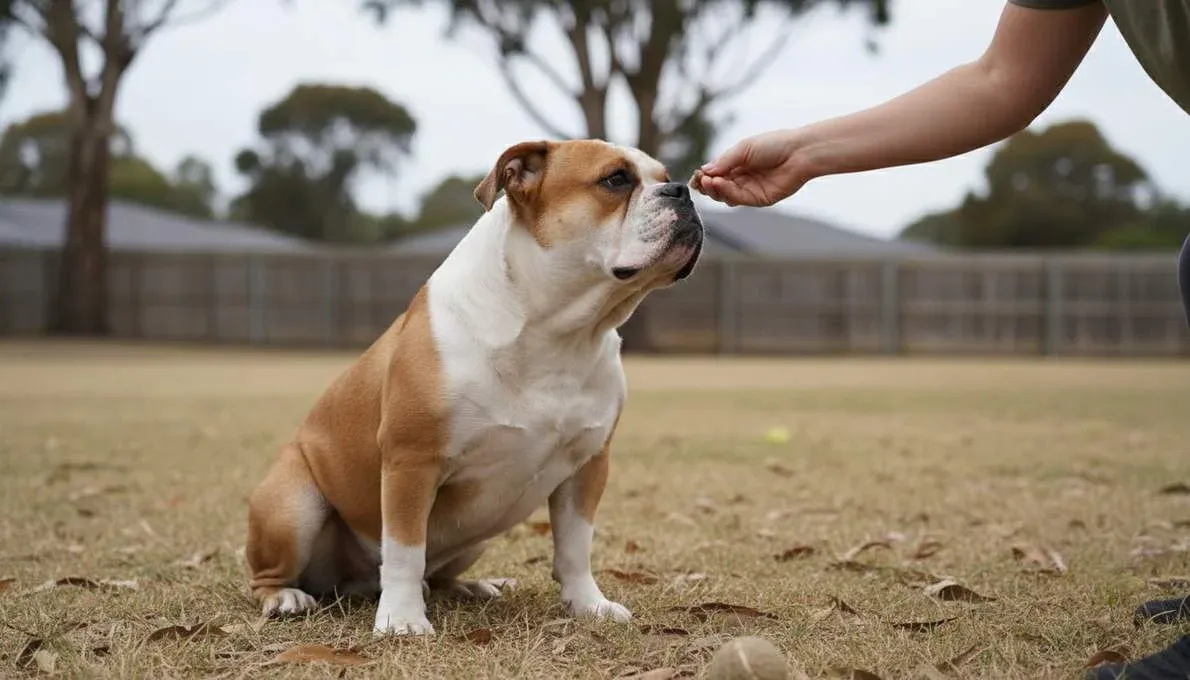
Training an Australian Bulldog requires patience, consistency, and a pocket full of treats. Positive reinforcement works brilliantly with this breed — they’re highly food-motivated (sometimes too food-motivated; watch the calorie count on training treats). Harsh corrections will shut them down or make them anxious, neither of which helps.
Puppy preschool and basic obedience classes are strongly recommended. Australian Bulldogs can be a bit dominant with other dogs, so early socialisation is critical. Expose your Australian Bulldog puppy to different people, dogs, environments, and sounds between 8–16 weeks.
Socialisation & Training Timeline
| Age | Focus |
|---|---|
| 8–12 weeks | Socialisation, name recognition, crate training, wrinkle-cleaning desensitisation |
| 3–6 months | Basic obedience (sit, stay, come), leash manners, visitor greetings |
| 6–12 months | Recall, impulse control, polite behaviour around other dogs |
| 12+ months | Ongoing reinforcement. Bulldogs will test boundaries well into adulthood. |
One common mistake with Australian Bulldog training: letting cute puppy behaviours slide because they’re “funny.” That puppy jumping up to greet people is adorable at 5 kg. At 30 kg, it’s a liability. Set the rules early and stick to them.
Cost of Owning an Australian Bulldog in Australia
The Australian Bulldog cost goes well beyond the sticker price. This is a breed where ongoing health care can add up significantly, so it’s important to budget honestly.
Australian Bulldog Price: Puppy Purchase
Australian Bulldog puppies for sale in Australia typically range from $2,000 to $4,000 AUD from a registered breeder. Miniature Australian Bulldog puppies tend to sit at the higher end of this range or above. Rare colours (blue, chocolate, lilac merle) can push prices to $4,000–$5,000+ AUD, though be cautious — colour-focused breeding sometimes prioritises aesthetics over health.
Australian Bulldog puppies for sale in NSW, QLD, VIC, and WA are available through breeders registered with the ABCA, ANBC, or Bulldogs Australia. Waiting lists of 3–6 months are common for well-regarded breeders. If someone is advertising cheap Australian Bulldog puppies with no registration papers, that’s a red flag.
Adoption
If you want to buy or adopt an Australian Bulldog, rescue is an option. Mini’s Bulldog Rescue is a registered charity that rehomes bulldogs across Australia. Australian Bulldog rescue fees are typically $500–$1,000 AUD and usually include desexing, vaccination, and microchipping.
Ongoing Costs (Annual Estimates in AUD)
| Item | Estimated Cost (AUD) |
|---|---|
| Quality dog food (medium breed) | $1,200–$2,000 |
| Routine vet care | $500–$1,000 |
| Pet insurance (brachycephalic) | $700–$1,400 |
| BOAS surgery (one-off, if needed) | $2,500–$5,000 |
| Grooming supplies / sessions | $150–$400 |
| Training / puppy school | $200–$600 (first year) |
| Parasite prevention | $200–$350 |
| Miscellaneous (beds, toys, wrinkle wipes) | $200–$500 |
| TOTAL ANNUAL ESTIMATE (excl. surgery) | $3,150–$6,250 |
Over a 10–12 year lifespan, the total cost of owning an Australian Bulldog in Australia comes to roughly $35,000–$75,000+ AUD including the purchase price. The wide range reflects the variability in health costs — a healthy Aussie Bulldog that never needs BOAS surgery will cost significantly less than one that does.
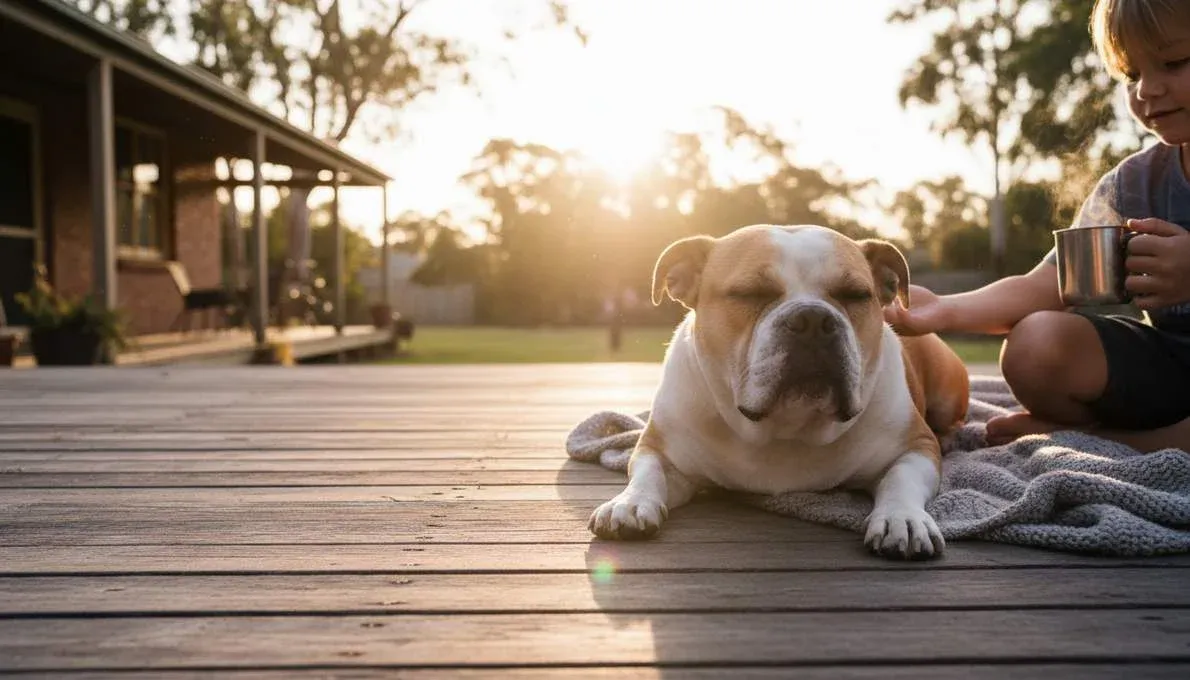
Is the Australian Bulldog Right for You?
- You want an affectionate, loyal companion that thrives on family life
- You have a suburban home with at least a small backyard
- You’re prepared for the financial commitment of a brachycephalic breed (vet bills matter)
- You want a dog that’s good with kids and generally friendly with strangers
- You’re home often — Australian Bulldogs get separation anxiety if left alone for long periods
- You think snoring is endearing, not annoying
- You want a running or hiking partner (their airways can’t handle sustained cardio)
- You live in a hot climate with no air conditioning
- You can’t commit to daily wrinkle cleaning (it sounds minor but skipping it causes infections)
- You’re not prepared for potential BOAS surgery costs
- You want a dog that obeys every command instantly — Bulldogs negotiate
- You’re away from home for 8+ hours a day with no one else around
If you’re comparing the Australian Bulldog vs English Bulldog, the Australian version has a longer muzzle, better respiratory function, broader hips (allowing natural birth in most cases), and generally better heat tolerance. If you’re weighing the Australian Bulldog vs British Bulldog, they’re essentially the same comparison — “British Bulldog” is the Australian term for the English Bulldog. And for those considering the Australian Bulldog vs American Bulldog, the American is a significantly larger, more athletic, and higher-energy dog that’s better suited to experienced owners with space.
- Purpose-built for Aussie families: The Australian Bulldog was designed from the ground up to be a healthier, more functional companion dog for Australian conditions, and for most families, it delivers on that promise.
- Health costs are real: BOAS, hip dysplasia, and skin issues mean this breed needs a dedicated owner willing to budget for veterinary care. Pet insurance isn’t optional — it’s essential.
- The ultimate family companion: If you want a loyal, affectionate, endlessly entertaining dog that loves nothing more than being part of your household, the Australian Bulldog is hard to beat.
Frequently Asked Questions
What is an Australian Bulldog?
The Australian Bulldog is a companion breed developed in Queensland in the 1990s by crossing English Bulldogs with Boxers, Bullmastiffs, and English Staffordshire Bull Terriers. The goal was to create a bulldog with fewer health problems, better heat tolerance, and a more functional build for Australian conditions.
How much does an Australian Bulldog cost in Australia?
Australian Bulldog puppies from registered breeders typically cost $2,000–$4,000 AUD. Miniature Australian Bulldog puppies and rare colour variants can cost more. Annual ownership costs run $3,150–$6,250 AUD excluding one-off surgical expenses.
What is the Australian Bulldog lifespan?
The average Australian Bulldog lifespan is 10–12 years, which is longer than the English Bulldog’s typical 8–10 years. Weight management, early BOAS intervention, and quality nutrition are the biggest factors in reaching the upper end of this range.
Are Australian Bulldogs aggressive?
No. Australian Bulldogs were specifically bred for stable, friendly temperaments. They can be slightly dominant with other dogs if not socialised early, but genuine aggression is rare and considered a serious breed fault.
What is a miniature Australian Bulldog?
The miniature Australian Bulldog is a smaller version of the standard Aussie Bulldog, typically standing under 40 cm and weighing 15–22 kg. They’re registered through the Miniature Australian Bulldog Register and are popular with owners who want the Aussie Bulldog personality in a more compact package.
What is the Australian Bulldog size and weight?
Full-grown Australian Bulldog males stand 46–51 cm tall and weigh 28–35 kg. Females are slightly smaller at 44–48 cm and 23–28 kg. They’re a solid, medium-sized dog — compact but surprisingly heavy for their height.
Australian Bulldog vs English Bulldog — what’s the difference?
The Australian Bulldog has a longer muzzle, wider nostrils, broader hips, and a more athletic build compared to the English Bulldog. This means better breathing, greater heat tolerance, and the ability to mate and whelp naturally in most cases. The Australian Bulldog is also slightly taller and more active.
What are common Australian Bulldog health problems?
The most significant health issues include Brachycephalic Obstructive Airway Syndrome (BOAS), hip dysplasia, cherry eye, entropion, skin fold dermatitis, and spinal problems. Specialists recommend BOAS assessment before 12 months of age.
Do Australian Bulldogs shed?
Yes, but moderately. Their short, smooth coat sheds lightly year-round. Weekly brushing with a rubber grooming mitt helps manage loose hair. They’re not hypoallergenic.
Where can I find Australian Bulldog breeders in Australia?
Look for breeders registered with the Aussie Bulldog Club of Australia (ABCA), Australian National Bulldog Club (ANBC), Australian Bulldog Society (ABS), or Bulldogs Australia Inc. Breeders are active in NSW, QLD, VIC, SA, WA, and TAS. Always ask for health testing results, meet the parents, and verify registration before purchasing.
1. Burke’s Backyard – Aussie Bulldog: https://www.burkesbackyard.com.au/fact-sheets/pets/pet-road-tests/aussie-bulldog/
2. Bow Wow Meow – Australian Bulldog Dog Breed Profile: https://bowwowinsurance.com.au/dogs/dog-breeds/australian-bulldog/
3. Pooches at Play – Australian Bulldog Breed Profile: https://poochesatplay.com/pet-health/australian-bulldog/
4. Wag! – Australian Bulldog Breed Information: https://wagwalking.com/breed/australian-bulldog
5. Aussie Bulldog Club of Australia (ABCA): https://www.aussiebulldogclub.com/
6. Miniature Australian Bulldog Register: https://miniatureaustralianbulldog.com.au/
7. Lyka – Australian Bulldog Breed Guide: https://lyka.com.au/blog/australian-bulldog-breed-guide
8. Dogster – Australian Bulldog Complete Guide: https://www.dogster.com/dog-breeds/australian-bulldog