
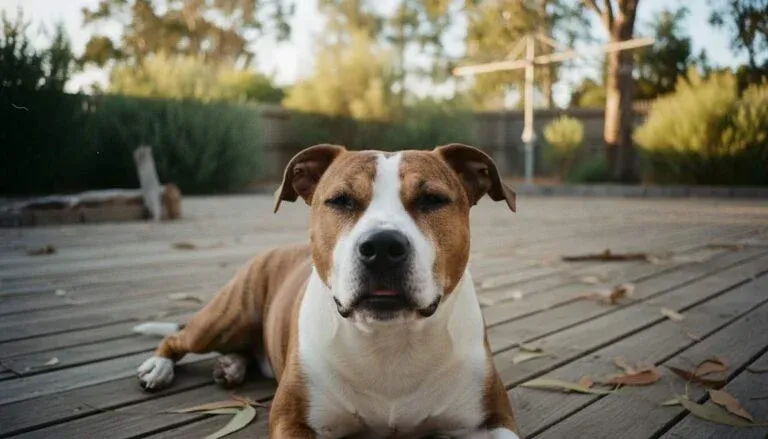
The American Staffordshire Terrier walks into a room and every head turns — partly because of that tank-like build, and partly because half the people in the room aren’t sure whether they should be impressed or nervous. That’s the AmStaff experience in a nutshell. This breed carries more baggage from bad press than almost any other dog in Australia, yet behind that broad chest and blocky head is one of the most people-obsessed, sofa-hogging, face-licking dogs you’ll ever meet.
AmStaffs aren’t the right dog for everyone — they’re strong, determined, and need an owner who understands the difference between firm leadership and heavy-handed discipline. But for the right household? They’re fiercely loyal, surprisingly gentle with children, and the kind of dog that will follow you from room to room just to be near you. If you’re considering an American Staffordshire Terrier in Australia, you also need to understand how breed-specific legislation affects ownership. This guide covers the lot — temperament, health costs, BSL realities, and what it actually takes to own one responsibly in this country.
What You’ll Learn
- Breed traits & temperament
- Health concerns to know
- True cost in Australia
- Training & exercise needs
- Is this breed right for you?
Quick Facts
| Trait | Detail |
|---|---|
| Breed Group | Terrier (AKC) / Group 2 Terriers (ANKC) |
| Origin | United States (1800s, from English bull-and-terrier crosses) |
| Height (Male) | 46–48 cm (18–19 in) |
| Height (Female) | 43–46 cm (17–18 in) |
| Weight (Male) | 25–32 kg (55–70 lb) |
| Weight (Female) | 18–25 kg (40–55 lb) |
| Coat | Short, stiff, glossy — low maintenance |
| Colours | Any colour — brindle, blue, fawn, black, red, white patches common |
| Lifespan | 12–16 years |
| Temperament | Loyal, confident, affectionate, courageous, people-focused |
| Exercise Needs | 60–90 minutes daily (moderate to high) |
| Shedding | Low to moderate — seasonal increases twice yearly |
| Good With Children | Yes — excellent with supervised children when well-socialised |
| Good With Other Dogs | Variable — requires careful socialisation and management |
| AKC Recognition | 1936 (as Staffordshire Terrier; ‘American’ added 1972) |
| ANKC Recognition | Yes — recognised breed, not restricted or banned |
History & Origins
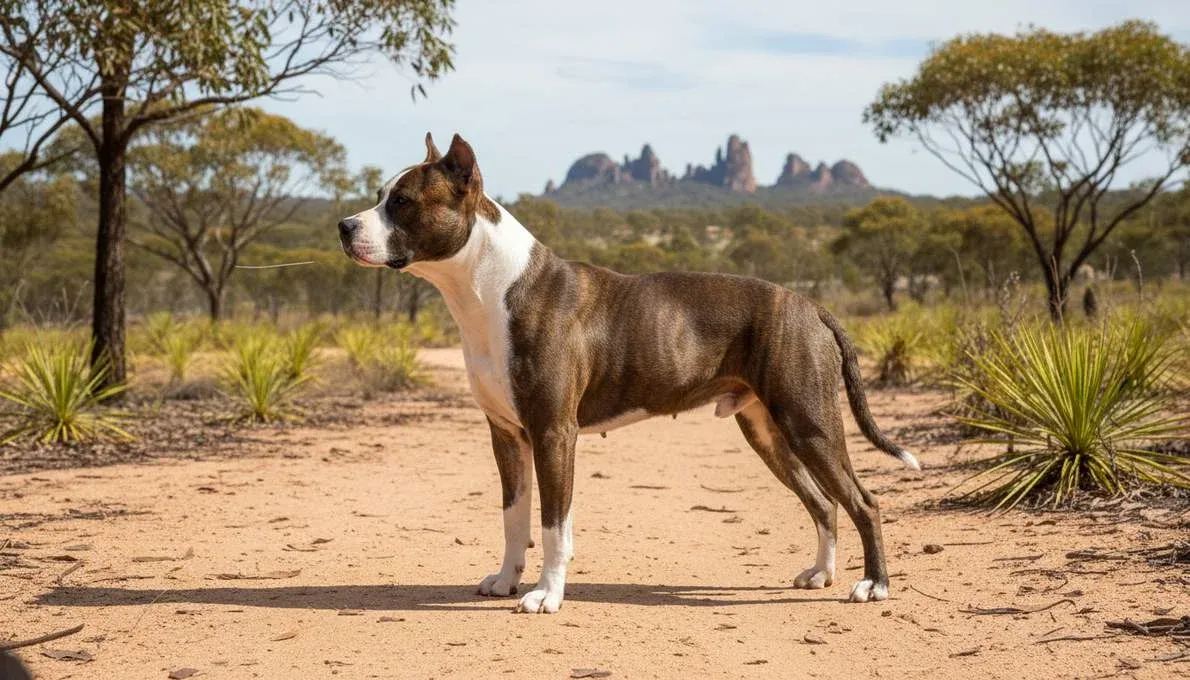
The American Staffordshire Terrier’s story starts in early 19th-century England, where bulldogs and terriers were crossed to produce dogs for the blood sports of bull-baiting and dog fighting. When these sports were outlawed and immigrants brought their dogs to America from the 1850s onward, American breeders began developing a larger, heavier version of these bull-and-terrier types. The focus shifted from fighting to farm work — guarding property, hunting vermin, and being an all-round family companion.
The United Kennel Club (UKC) recognised these dogs as American Pit Bull Terriers in 1898. But in 1936, the American Kennel Club (AKC) chose to register a subset of these dogs under a different name — initially “Staffordshire Terrier” — with an emphasis on conformation and stable temperament rather than fighting ability. When the British Staffordshire Bull Terrier was separately recognised in 1972, the AKC added “American” to the name to distinguish the two breeds.
Since the 1970s, the AmStaff has been bred strictly to AKC conformation standards. Decades of selective breeding for show-ring qualities and family temperament have moved the breed further from its shared ancestry with the American Pit Bull Terrier. Today’s AmStaff is a distinct breed — typically stockier, with a broader head and heavier bone structure than the APBT.
In Australia, the AmStaff is recognised by the ANKC and has an established community of registered breeders. The breed’s history here is intertwined with the broader “staffy” culture, but it’s important to understand that the American Staffordshire Terrier and the Staffordshire Bull Terrier (the “English Staffy”) are separate breeds with different size standards and breed histories.
Temperament & Personality
If you’ve never spent time with a well-bred, properly socialised AmStaff, the temperament might surprise you. These dogs are ridiculously affectionate with their people. They’ll lean their entire body weight against your legs, wedge themselves onto your lap despite being 30 kg of solid muscle, and greet you at the door like you’ve been gone for a year even if you only popped out to check the letterbox.
AmStaffs are confident and alert without being jittery or reactive — when they’re raised well. They’re naturally aware of their surroundings and make excellent watchdogs, not because they’re aggressive, but because they’re tuned in to anything unusual. Most will bark to alert you, then look to you for direction.
The AmStaff has a long-standing reputation as a family dog. Their tolerance for the rough-and-tumble play of children is genuinely impressive — they’re sturdy enough to handle it and patient enough to put up with ear-pulling toddlers. That said, no dog of any breed should be left unsupervised with young children. An AmStaff’s strength means accidental knockdowns happen easily, particularly with smaller kids.
This is where honesty matters. The AmStaff can get along with other dogs and pets, but it requires dedicated socialisation from puppyhood and ongoing management. The breed’s terrier heritage means some individuals have a higher prey drive and can develop dog-selectivity as they mature (typically from around 2 years of age). The AKC breed club itself advises that AmStaffs should not be left unsupervised with other dogs. This doesn’t mean every AmStaff is dog-aggressive — many live happily with other pets — but responsible ownership means acknowledging and managing this tendency rather than pretending it doesn’t exist.
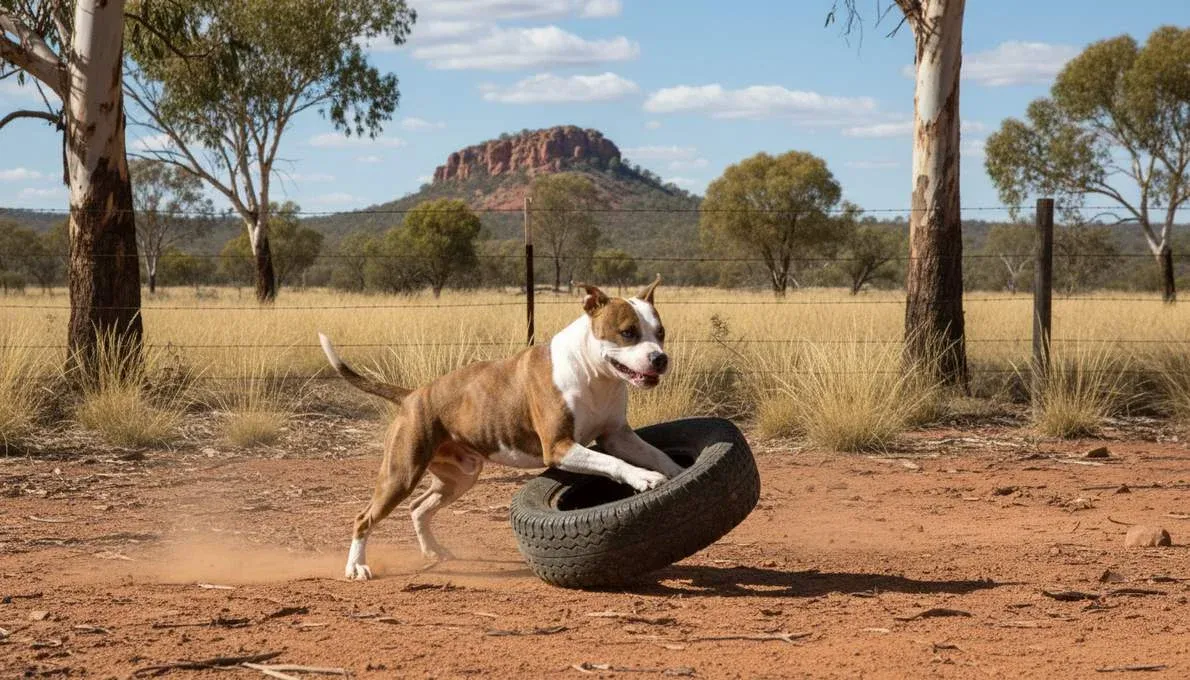
AmStaffs are strong. Physically, genuinely strong. An untrained 30 kg AmStaff on a lead can pull an adult off their feet. They’re also mouthy as puppies and teenagers — those powerful jaws can turn a leather couch into confetti if they’re bored or under-exercised. They need mental stimulation, consistent training, and an owner who sets clear boundaries without resorting to punishment-based methods. Harsh corrections tend to make AmStaffs shut down or become anxious rather than compliant.
Health & Genetic Conditions
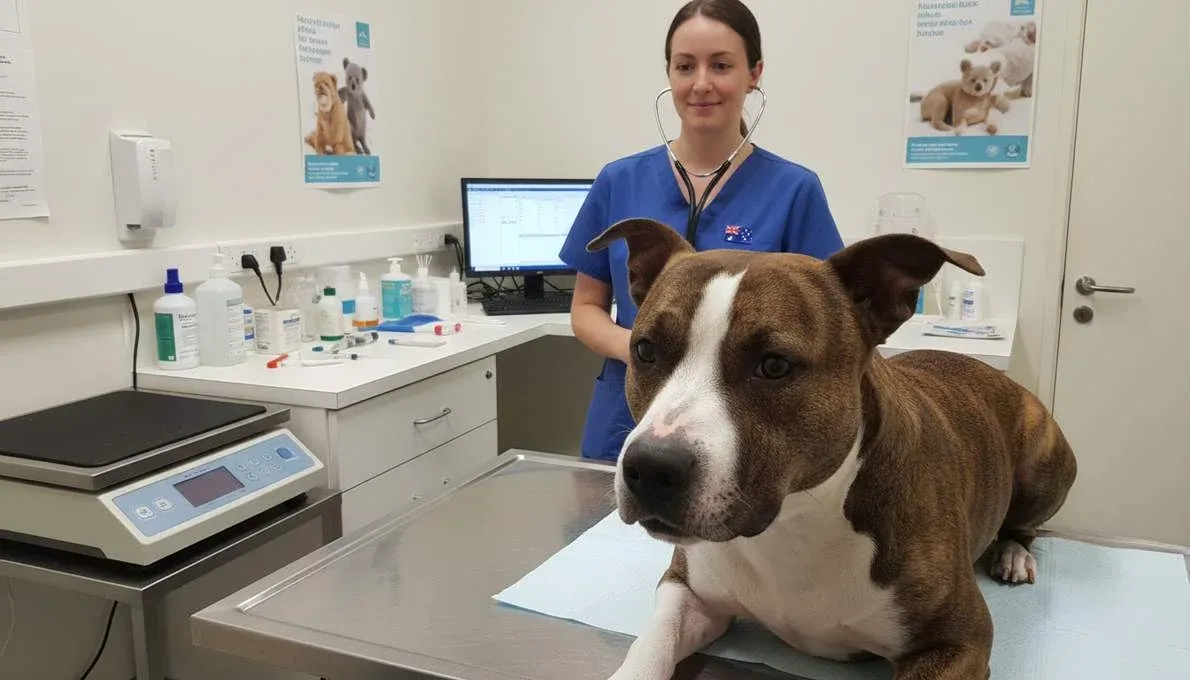
No one wants to think about their dog getting sick, but understanding breed-specific health risks upfront means you can screen for problems early, budget for potential costs, and choose a breeder who tests for the conditions that matter. The American Staffordshire Terrier is generally a robust breed, but there are several conditions to watch for.
| Condition | What It Is | Estimated AUD Cost |
|---|---|---|
| Hip Dysplasia | Abnormal hip joint development causing pain, lameness and arthritis. OFA data shows 24.4% of AmStaffs affected. | $1,500–$6,000+ per hip (surgery) |
| Elbow Dysplasia | Developmental abnormality of the elbow joint. OFA data shows 16.1% of AmStaffs affected. | $1,500–$4,000 per elbow (surgery) |
| Cerebellar Ataxia (NCL4A) | Progressive neurological disease causing loss of coordination, stumbling and falling. Onset typically 3–5 years. DNA test available. | $300–$600 (diagnosis); no cure — management only |
| Progressive Retinal Atrophy (PRA) | Hereditary eye disease causing gradual blindness. Usually starts with night vision loss. | $300–$500 (diagnosis); no treatment |
| Cardiac Disease | Heart conditions including murmurs and congenital defects. Annual screening by cardiologist recommended. | $400–$800 (echocardiogram); $2,000–$10,000+ (treatment) |
| Hypothyroidism | Underactive thyroid causing weight gain, lethargy and coat thinning. Onset usually 4–10 years. | $200–$400 (diagnosis); $30–$60/month ongoing medication |
| Skin Allergies / Demodicosis | AmStaffs are predisposed to allergic skin disease. 20% of juveniles under 2 affected by demodicosis. | $200–$1,500+ per year (management) |
| ALPP (Juvenile Laryngeal Paralysis) | Rare hereditary condition affecting breathing and nerve function in young dogs. DNA test available. | $500–$3,000+ (diagnosis and management) |
| Cranial Cruciate Ligament (CCL) Rupture | Knee ligament tear common in athletic, muscular breeds. | $3,000–$6,000 per knee (surgery) |
The most important breed-specific condition to understand is cerebellar ataxia. It’s an autosomal recessive disease, meaning a dog needs two copies of the defective gene to develop it. A simple DNA test (around $80–$120) can identify whether a dog is clear, a carrier, or affected. Any reputable Australian AmStaff breeder should be testing for ataxia before breeding — if they’re not, walk away. The same applies to hip and elbow scoring, cardiac evaluation, and DNA profiling.
Lifespan & Longevity
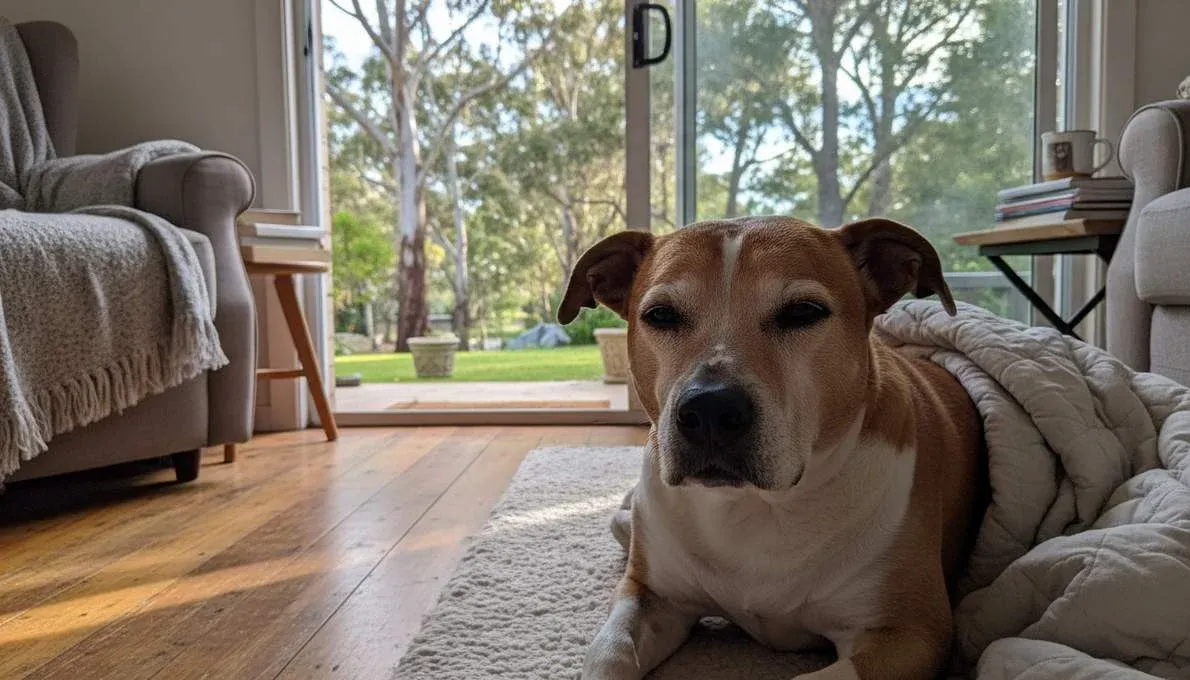
The American Staffordshire Terrier has a lifespan of 12 to 16 years, with most dogs living 12 to 14 years. For a medium-to-large muscular breed, that’s a solid run. Some well-cared-for AmStaffs reach 15 or 16, particularly if they’ve avoided major orthopaedic issues and maintained a healthy weight throughout their lives.
Age-Specific Care
Puppy to 2 years: This is the critical socialisation and training window. Avoid over-exercising growing joints — no forced running on hard surfaces until at least 12–18 months. Focus on controlled play and short walks. Watch for signs of demodicosis, which peaks in dogs under two.
2 to 7 years: Peak athletic years. Maintain a consistent exercise routine and keep weight in check — AmStaffs are prone to packing on muscle and fat if overfed. This is when cerebellar ataxia symptoms may first appear (typically 3–5 years), so watch for any changes in coordination or gait.
7 years and older: Senior AmStaffs may develop arthritis, particularly if hip or elbow dysplasia is present. Switch to joint-support supplements, consider a senior-formulated diet, and reduce high-impact exercise. Hypothyroidism onset is most common in this age range. Six-monthly vet checks become worthwhile.
Grooming & Care
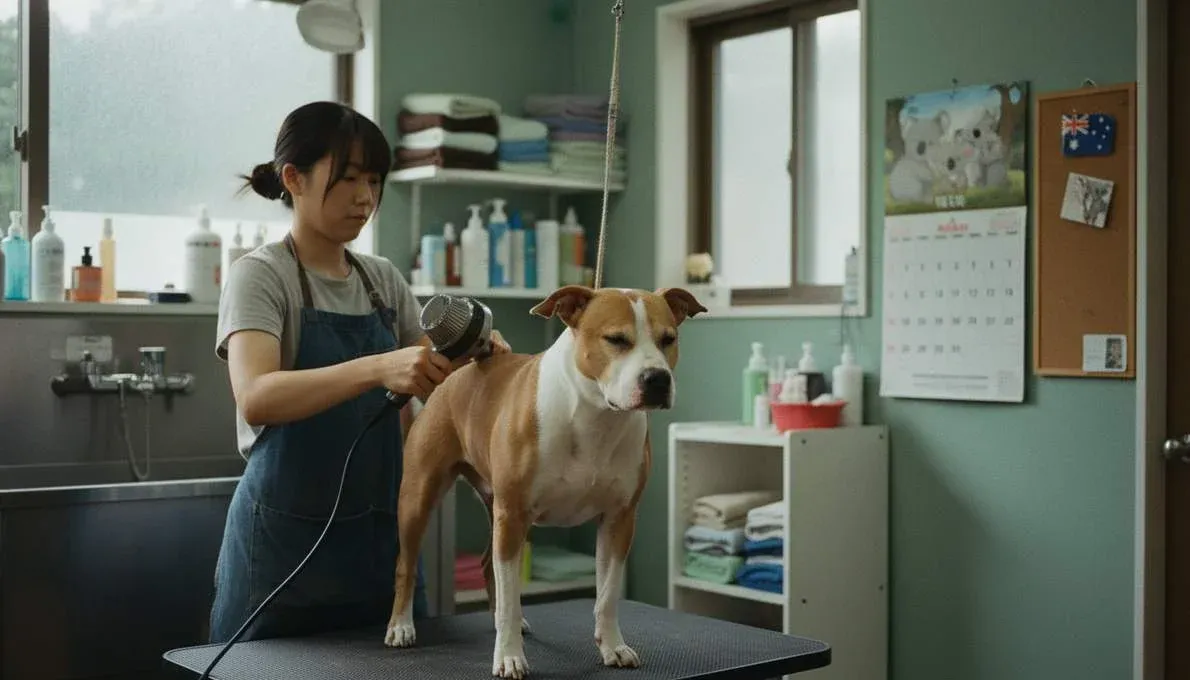
The AmStaff is about as low-maintenance as dogs get when it comes to grooming. That short, stiff coat essentially takes care of itself with minimal input from you. But “low maintenance” doesn’t mean “no maintenance.”
| Task | Frequency & Notes |
|---|---|
| Brushing | Weekly with a rubber curry brush or bristle brush. Removes loose hair, distributes skin oils, and keeps the coat glossy. |
| Bathing | Every 6–8 weeks or as needed. Over-bathing strips natural oils. Use a mild oatmeal-based shampoo if skin allergies are present. |
| Nail Trimming | Every 2–3 weeks. AmStaffs have thick, fast-growing nails. Start handling paws early in puppyhood. |
| Ear Cleaning | Weekly check, clean as needed. Rose or half-prick ears have good airflow, but check for wax buildup. |
| Dental Care | Daily brushing ideal. Professional dental clean annually. AmStaffs have powerful jaws — dental chews help but don’t replace brushing. |
| Skin Checks | Weekly — run your hands over the entire body. Check for lumps, rashes, hot spots. AmStaffs are prone to skin allergies and seasonal flare-ups. |
| Coat Shedding | Low year-round, moderate seasonal blowout twice yearly. A rubber grooming mitt during shedding season makes a big difference. |
Australian-specific note: AmStaffs have thin coats and light-coloured skin areas (especially on the nose, belly, and ears) that are vulnerable to sunburn. Apply pet-safe sunscreen to exposed areas before extended outdoor time, particularly in summer. In winter, short-coated breeds can feel the cold more than you’d expect — a dog coat for early morning walks in southern states isn’t overkill.
Exercise Needs
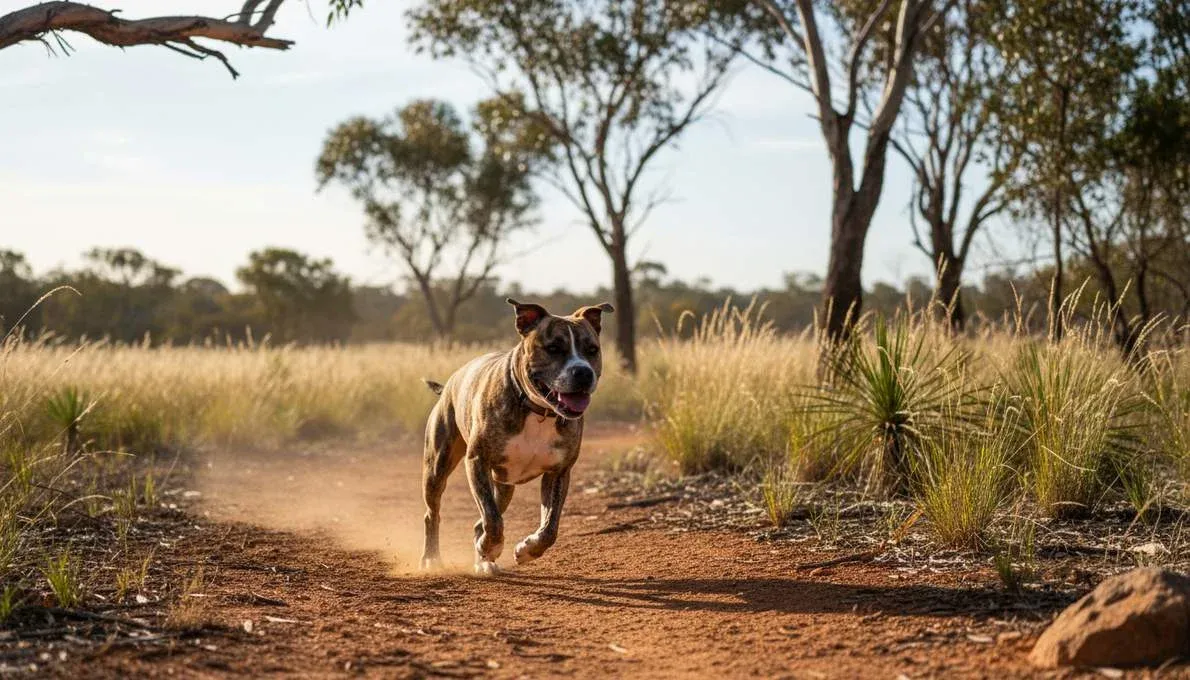
AmStaffs need 60 to 90 minutes of exercise daily. They’re athletic dogs with a moderate-to-high energy level, but they’re not hyperactive — a well-exercised AmStaff is perfectly content to spend the rest of the day sprawled on the couch. The key word there is “well-exercised.” An under-stimulated AmStaff will find ways to burn off energy, and you won’t like most of them.
Best Activities
- Brisk walking and jogging — on-lead, as most councils require it for this breed
- Fetch and tug-of-war — AmStaffs excel at both and these games build the bond
- Weight pull — a breed-specific sport that channels their natural strength
- Agility and obedience trials — mental and physical challenge combined
- Flirt pole — a pole with a lure that satisfies prey drive in a controlled way
- Swimming — many AmStaffs enjoy water, though their muscular build means they’re not natural floaters; always supervise
- Scent games and puzzle feeders — mental exercise is just as tiring as physical
Australian Climate Considerations
AmStaffs are brachycephalic-adjacent — while they don’t have the extreme short-nosed issues of Bulldogs, their broad heads and muscular build mean they can overheat faster than leaner breeds. In Australian summers, exercise should happen in the early morning or after sunset. Always carry water, watch for heavy panting or drooling, and never leave an AmStaff in a car. Their thin coat also means they’re vulnerable to heat radiating off hot pavement — if you can’t hold your hand on the ground for five seconds, it’s too hot for their paws.
Training Guide
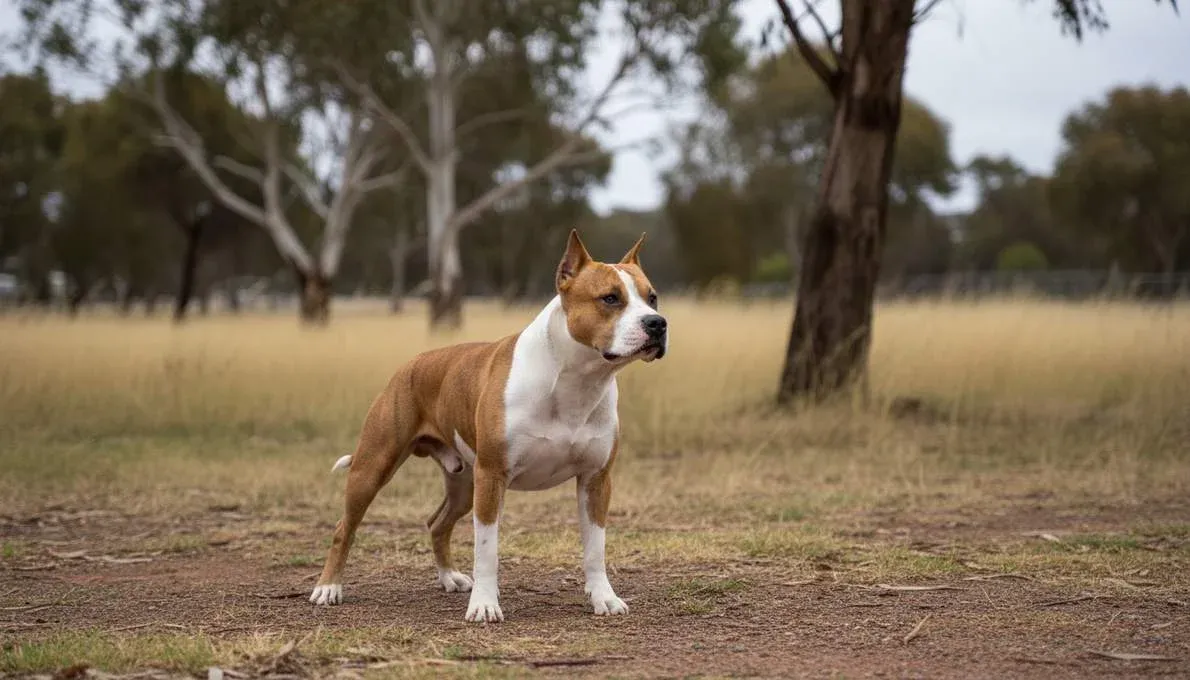
AmStaffs are intelligent and eager to please, which makes them highly trainable — but their strength and determination mean training isn’t optional. An untrained AmStaff isn’t just inconvenient; it can be genuinely difficult to manage. The good news is that this breed responds brilliantly to positive reinforcement and loves having a job to do.
| Age / Stage | Training Focus |
|---|---|
| 8–16 weeks | Socialisation is everything. Expose to different people, dogs, surfaces, sounds and environments. Start crate training, name recognition and basic bite inhibition. Enrol in puppy classes immediately. |
| 4–6 months | Basic commands: sit, stay, down, come, leave it. Leash manners are critical — start loose-lead walking before they have the strength to drag you. Begin impulse control exercises. |
| 6–12 months | Adolescence hits hard. Expect regression in previously learned behaviours. Continue socialisation with other dogs under controlled conditions. Strengthen recall. Begin structured exercise. |
| 1–2 years | Advanced obedience, trick training, or dog sports. This is when dog-selectivity may emerge — maintain positive dog-to-dog experiences but don’t force interactions. Build an unshakeable “leave it” command. |
| 2+ years | Maintenance training and ongoing enrichment. Many AmStaffs settle noticeably around age 3. Continue regular training sessions to keep their mind engaged. Consider therapy dog or canine good citizen certification. |
Training Truths
Positive reinforcement works best. AmStaffs are sensitive dogs despite their tough appearance. Punishment-based methods — prong collars, e-collars, alpha-rolling — tend to produce anxiety, shut-down behaviour, or defensiveness. Use high-value food rewards, toys, and praise.
Socialisation cannot be overstated. The single biggest thing you can do for your AmStaff’s future behaviour is to give them hundreds of positive experiences with different people, animals, and environments before they’re 16 weeks old. Under-socialised AmStaffs are far more likely to develop fear-based reactivity.
Leash manners are non-negotiable. A 30 kg dog that pulls is a liability. Invest in a well-fitted front-clip harness and practise loose-lead walking daily from the start. The earlier you address this, the easier your life will be.
Cost of Ownership in Australia
Purchase Price
An ANKC-registered American Staffordshire Terrier puppy from a reputable breeder in Australia typically costs $2,000 to $5,000 AUD. Show-quality puppies from champion bloodlines with imported genetics may cost more. Expect the higher end of this range from breeders who conduct full health testing (ataxia DNA, hip/elbow scoring, cardiac certification, eye testing).
Be extremely cautious of unregistered AmStaffs sold cheaply through platforms like Gumtree. Without ANKC pedigree papers, you have no proof the dog is actually an American Staffordshire Terrier rather than an American Pit Bull Terrier — and in states with breed-specific legislation, that distinction can mean the difference between legal ownership and having your dog seized.
Adoption through rescue organisations (RSPCA, PetRescue, breed-specific rescues) typically costs $250 to $600 AUD, including desexing, vaccinations, and microchipping. AmStaff and staffy-type dogs are among the most commonly surrendered breeds in Australian shelters, so adoption is both affordable and meaningful.
Annual Running Costs
| Expense | Estimated Annual Cost (AUD) |
|---|---|
| Food (premium quality) | $800–$1,500 |
| Routine Veterinary Care | $300–$600 |
| Pet Insurance | $600–$1,400 |
| Parasite Prevention | $200–$350 |
| Council Registration | $50–$250 (varies by council; some charge higher fees for ‘declared’ breeds) |
| Grooming Supplies | $50–$100 |
| Training / Behaviour Classes | $200–$600 |
| Toys, Beds & Miscellaneous | $200–$400 |
| TOTAL ESTIMATED ANNUAL COST | $2,400–$5,200 |
Pet insurance note: Some Australian insurers charge higher premiums for AmStaffs and other bull-breed types, and a few may exclude certain conditions. Compare policies carefully. Fetch, PetSure, and RSPCA Pet Insurance all cover AmStaffs, but always check breed-specific exclusions in the Product Disclosure Statement.
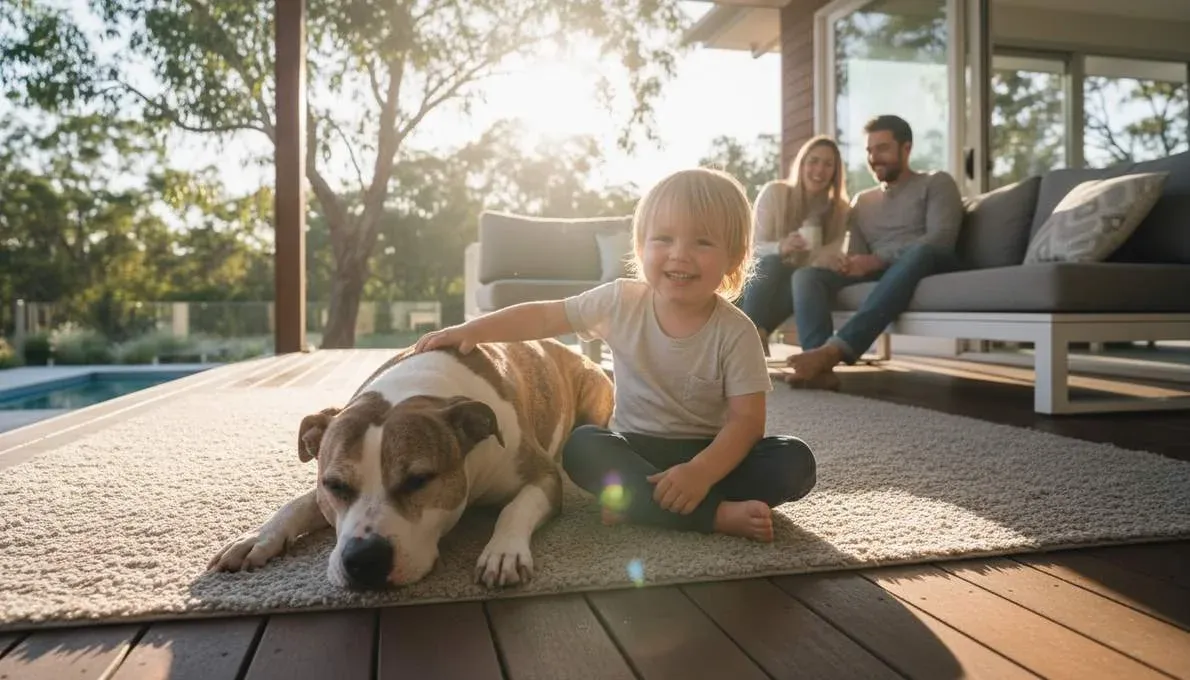
Is the American Staffordshire Terrier Right for You?
- Want a loyal, people-focused companion who’ll be your shadow
- Have experience with strong, confident dog breeds (or are committed to professional training)
- Can provide 60–90 minutes of daily exercise and mental enrichment
- Have a securely fenced yard (1.5 m minimum; 1.8 m preferred)
- Understand and accept the breed’s dog-selectivity potential
- Are prepared to navigate BSL requirements and potential breed stigma
- Want a family dog that’s great with kids when properly socialised
- Are looking to adopt — shelters are full of wonderful AmStaff-type dogs
- Want an off-lead dog park regular — most AmStaffs do better with controlled dog interactions
- Have never owned a strong-breed dog and aren’t willing to invest in training
- Live in a rental with breed restrictions (many Australian landlords and strata bylaws restrict bull breeds)
- Work long hours with no one home — AmStaffs are prone to separation anxiety and destructive behaviour when isolated
- Want a low-commitment dog — AmStaffs need consistent socialisation, training and exercise throughout their lives
- Have small prey animals (rabbits, guinea pigs) without a safe separation plan
This is the most common question about the breed. The American Staffordshire Terrier and the American Pit Bull Terrier share ancestry and were essentially the same population of dogs until the 1930s. Since then, AmStaffs have been bred for conformation and temperament under AKC standards, while APBTs have been bred under UKC standards with different selection pressures. Today’s AmStaff is typically stockier, with a broader head and heavier bone, while the APBT tends to be leaner and more athletic. The AKC recognises the AmStaff but not the APBT; the UKC recognises both. In Australia, the AmStaff is ANKC-recognised and legal; the APBT is a restricted breed.
The “English Staffy” is a smaller, lighter dog (11–17 kg vs the AmStaff’s 18–32 kg). Both breeds share bull-and-terrier ancestry but have been developed separately for over a century. The Staffordshire Bull Terrier is more commonly seen in Australian suburbs and is one of the most popular breeds in the country. If you love the staffy personality but want a bigger, more athletic version, the AmStaff might be your dog. If space and strength management are concerns, the English Staffy is the easier choice.
- The American Staffordshire Terrier is a powerful, affectionate, and deeply loyal breed that thrives with experienced, committed owners who provide consistent training, daily exercise, and plenty of human contact.
- In Australia, the breed is legal and well-supported by ANKC breeders, but navigating BSL awareness, potential rental restrictions, and public perception is part of the ownership reality. Always buy from a registered breeder with ANKC papers and full health testing.
- AmStaffs are among the most commonly surrendered breeds in Australian shelters. If you’re prepared for the commitment, adoption is one of the best things you can do — you’ll save a life and gain a dog that will be devoted to you for the next 12 to 16 years.
Frequently Asked Questions
Are American Staffordshire Terriers banned in Australia?
No, the American Staffordshire Terrier is not banned in Australia. It is a recognised breed by the Australian National Kennel Council (ANKC) and is legal to own in all states and territories. However, it is important to note that breed-specific legislation (BSL) exists in some areas, and dogs that visually resemble ‘pit bull types’ may be subject to restrictions or require special permits. Always check your local council regulations.
Are American Staffordshire Terriers the same as pit bulls?
No, they are separate breeds with shared ancestry. The American Staffordshire Terrier (AmStaff) is a distinct breed recognised by the AKC and ANKC, bred for conformation and temperament. The American Pit Bull Terrier (APBT) is recognised by the UKC but not the AKC and is considered a restricted breed in many Australian jurisdictions. While they look similar, AmStaffs are typically stockier with a broader head.
Are American Staffordshire Terriers dangerous?
Any dog’s behaviour depends on breeding, socialisation, training, and ownership. Well-bred, properly socialised, and responsibly owned American Staffordshire Terriers are not inherently dangerous. They are known for their loyalty, affection, and confidence. However, their strength and potential for dog-selectivity mean they require an experienced owner who provides consistent training and management.
Are American Staffordshire Terriers good family dogs?
Yes, when raised with proper socialisation and supervision, AmStaffs can be excellent family dogs. They are known for their patience and affection with children. However, due to their strength, interactions with young children should always be supervised to prevent accidental knocks. They thrive in active families that can provide the exercise, training, and attention they need.
How long do American Staffordshire Terriers live?
The average lifespan of an American Staffordshire Terrier is 12 to 16 years, with many living 12 to 14 years. Good genetics, proper diet, regular exercise, and preventative veterinary care contribute to a long, healthy life.
How big do American Staffordshire Terriers get?
Males typically stand 46–48 cm (18–19 inches) tall and weigh 25–32 kg (55–70 lbs). Females are slightly smaller, standing 43–46 cm (17–18 inches) tall and weighing 18–25 kg (40–55 lbs). They are a medium-sized, muscular, and stocky breed.
Do American Staffordshire Terriers shed?
Yes, but they are considered low to moderate shedders. They have a short, stiff coat that sheds year-round, with heavier seasonal ‘blowouts’ typically twice a year. Weekly brushing with a rubber curry or bristle brush helps manage loose hair.
How much does an American Staffordshire Terrier cost in Australia?
A puppy from an ANKC-registered breeder typically costs between $2,000 and $5,000 AUD. Show-quality puppies from health-tested lines are at the higher end. Adoption fees from rescues range from $250 to $600 AUD. Annual running costs (food, vet, insurance, etc.) are estimated at $2,400 to $5,200 AUD.
What’s the difference between an American Staffordshire Terrier and a Staffordshire Bull Terrier?
The Staffordshire Bull Terrier (‘English Staffy’) is a smaller, distinct breed. AmStaffs are larger (18–32 kg vs 11–17 kg), taller, and have a more athletic build. Both share bull-and-terrier ancestry but have been developed separately for over a century. The Staffy Bull Terrier is more common in Australia.
Can American Staffordshire Terriers be left alone?
They are people-oriented dogs and can develop separation anxiety if left alone for long periods. They are not suited to owners who work long hours away from home. With proper training and gradual acclimation, they can tolerate being alone for 4-6 hours, but they thrive on human companionship and do best in homes where someone is present most of the day.
1. American Kennel Club — American Staffordshire Terrier Breed Information: https://www.akc.org/dog-breeds/american-staffordshire-terrier/
2. PetMD — American Staffordshire Terrier Dog Breed Health and Care: https://www.petmd.com/dog/breeds/american-staffordshire-terrier
3. Wisdom Panel — American Staffordshire Terrier Facts: https://www.wisdompanel.com/en-us/dog-breeds/american-staffordshire-terrier
4. DogTime — American Staffordshire Terrier Breed Information & Characteristics: https://dogtime.com/dog-breeds/american-staffordshire-terrier
5. Agriculture Victoria — Owning a Restricted Breed Dog: https://agriculture.vic.gov.au/livestock-and-animals/animal-welfare-victoria/dogs/restricted-breed-dogs/owning-a-restricted-breed-dog
6. DogzOnline — American Staffordshire Terrier Breeders in Australia: https://www.dogzonline.com.au/breeds/breeders/american-staffordshire-terrier.asp
7. Staffordshire Terrier Club of America — Health Committee: https://amstaff.org/health
8. Wikipedia — American Staffordshire Terrier: https://en.wikipedia.org/wiki/American_Staffordshire_Terrier