
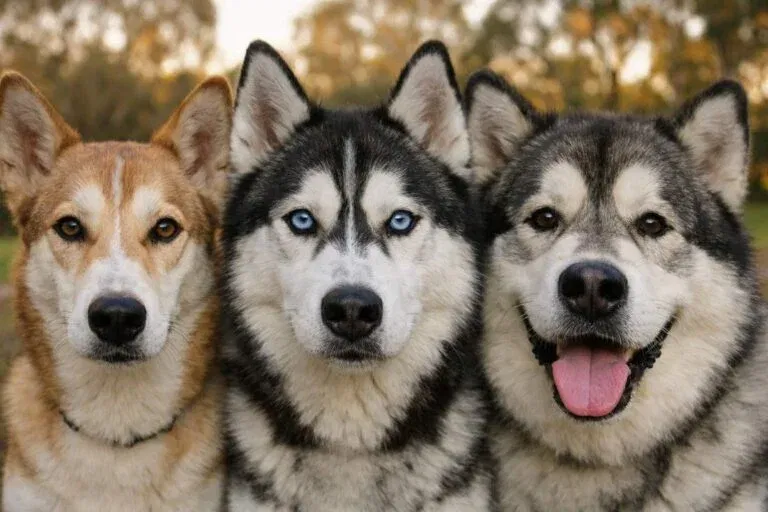
Every year, thousands of Aussies type some version of “husky vs malamute” into Google and end up more confused than when they started. Fair enough. These three Arctic breeds look like they belong in the same family photo, and in a way, they do. But the short version? The Siberian Husky is the chatty marathon runner, the Alaskan Malamute is the quiet powerlifter, and the Alaskan Husky is the athlete you’ve probably never heard of who smokes them both on race day.
Here’s what actually matters when you’re choosing between them in Australia, where the biggest challenge isn’t snow — it’s surviving a 40-degree January.
What You’ll Learn
- Breed traits & temperament
- Health concerns to know
- True cost in Australia
- Training & exercise needs
- Is this breed right for you?
Quick Facts at a Glance
| Trait | Alaskan Husky | Siberian Husky | Alaskan Malamute |
|---|---|---|---|
| Origin | Alaska / North America (mixed heritage) | Siberia, Russia | Alaska, USA |
| Kennel Club Status | Not recognised (no ANKC/AKC registration) | ANKC & AKC registered | ANKC & AKC registered |
| Size (Height) | 51–66 cm | 51–60 cm | 58–64 cm |
| Weight | 16–34 kg | 16–27 kg | 34–39 kg |
| Lifespan | 12–15 years | 12–14 years | 10–14 years |
| Coat Type | Variable — short to medium double coat | Medium-length dense double coat | Thick, coarse double coat (longer) |
| Shedding Level | Moderate to High | High (heavy seasonal blow) | High (heavy seasonal blow) |
| Energy Level | Very High | High | Moderate to High |
| Trainability | Moderate — independent thinkers | Moderate — intelligent but stubborn | Challenging — strong-willed |
| Barking Level | Moderate (howlers and talkers) | High (notorious howlers) | Low to Moderate (woo-woo talkers) |
| Good With Kids | Yes, with supervision | Yes, with supervision | Yes — gentle with children |
| Good With Other Dogs | Yes — pack-oriented | Yes — pack animals | With supervision — can be same-sex aggressive |
| Apartment Friendly | No | Not ideal | No |
| Puppy Price (AUD) | Rare in Australia — $2,000–$4,000+ if available | $1,500–$5,000 | $2,500–$5,000 |
| ANKC Group | N/A — unregistered | Group 5 (Working Dogs) | Group 5 (Working Dogs) |
| Australian Popularity | Very rare — mostly working kennels | Popular — commonly bred nationally | Moderate — niche but growing |
Where Did These Three Breeds Come From?
The Siberian Husky traces its roots to the Chukchi people of northeast Siberia, who bred compact, endurance-focused sled dogs over 3,000 years ago. These dogs hauled light loads at speed across frozen terrain and lived alongside families as companions. Their fame exploded in 1925 when sled teams carried diphtheria serum across Alaska in the Great Race of Mercy.
The Alaskan Malamute is one of the oldest Arctic breeds, developed by the Mahlemut Inuit tribe of Alaska. These dogs were powerhouses — bred to pull heavy freight over long distances at a slow, steady pace. They also hunted seals and guarded camps. The breed nearly vanished during the Klondike Gold Rush when crossbreeding diluted the lines, but remote Mahlemut villages preserved the original dogs.
The Alaskan Husky isn’t a breed in the traditional sense. It’s a purpose-bred type — a performance dog created by crossing Siberian Huskies, Malamutes, and sometimes Pointers, Greyhounds, and German Shorthaired Pointers. No kennel club recognises them because breeders don’t care about looks; they breed for speed, endurance and drive. These are the dogs you see winning the Iditarod and Yukon Quest today.
What does history tell you about living with them? The Siberian was bred for community and teamwork — they need people around. The Malamute was bred for raw power and independence — they can be stubborn as concrete. The Alaskan Husky was bred to run — and if you can’t provide that outlet, your house becomes the obstacle course.
How to Tell Them Apart
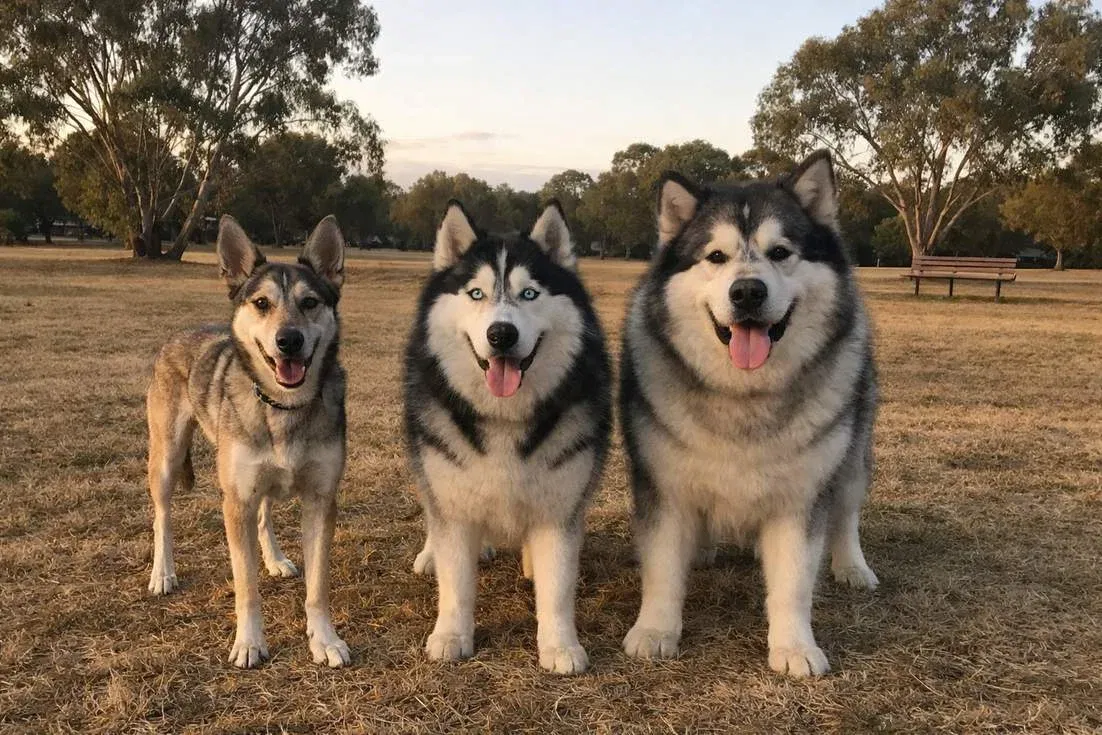
If you lined all three up at an off-leash park, most people would call them all “Huskies.” Here’s how to actually tell them apart.
Size is the dead giveaway. The Alaskan Malamute is a tank — up to 39 kg with a broad chest, heavy bones and a bear-like frame. The Siberian Husky is noticeably lighter and more compact, topping out around 27 kg with a leaner, athletic build. The Alaskan Husky falls somewhere in between, but their build varies wildly — some look like sleek Siberians, others look more like lanky Greyhound crosses.
Eyes are another tell. Siberians are famous for their striking blue eyes, though brown and heterochromia (one blue, one brown) are also common. Malamutes almost always have brown eyes — blue eyes are actually a disqualification in the ANKC breed standard. Alaskan Huskies typically have brown eyes.
Tails give them away too. The Malamute carries a thick, plumed tail curled over its back like a furry flag. The Siberian’s brush-like tail hangs down or trails behind. Alaskan Huskies can go either way, depending on their genetic mix.
Physical Comparison at a Glance
| Physical Trait | Alaskan Husky | Siberian Husky | Alaskan Malamute |
|---|---|---|---|
| Build / Frame | Variable — lean to moderate | Compact, athletic, nimble | Stocky, muscular, heavy-boned |
| Head Shape | Variable — narrow to moderate | Medium, wedge-shaped | Broad, deep muzzle, strong jaw |
| Ear Type | Variable — prick or tipped | Erect, triangular, set high | Erect, triangular, slightly rounded |
| Tail | Variable — brush or straight | Brush tail, carried low | Thick plumed tail, curled over back |
| Coat Length | Short to Medium | Medium | Medium to Long |
| Eye Colour | Usually brown | Blue, brown, or heterochromia | Brown only (blue = ANKC DQ) |
| Colour Options | Any colour — no standard | All colours, white to black, often masked | Grey/white, black/white, red/white, sable, seal |
What Are They Actually Like to Live With?
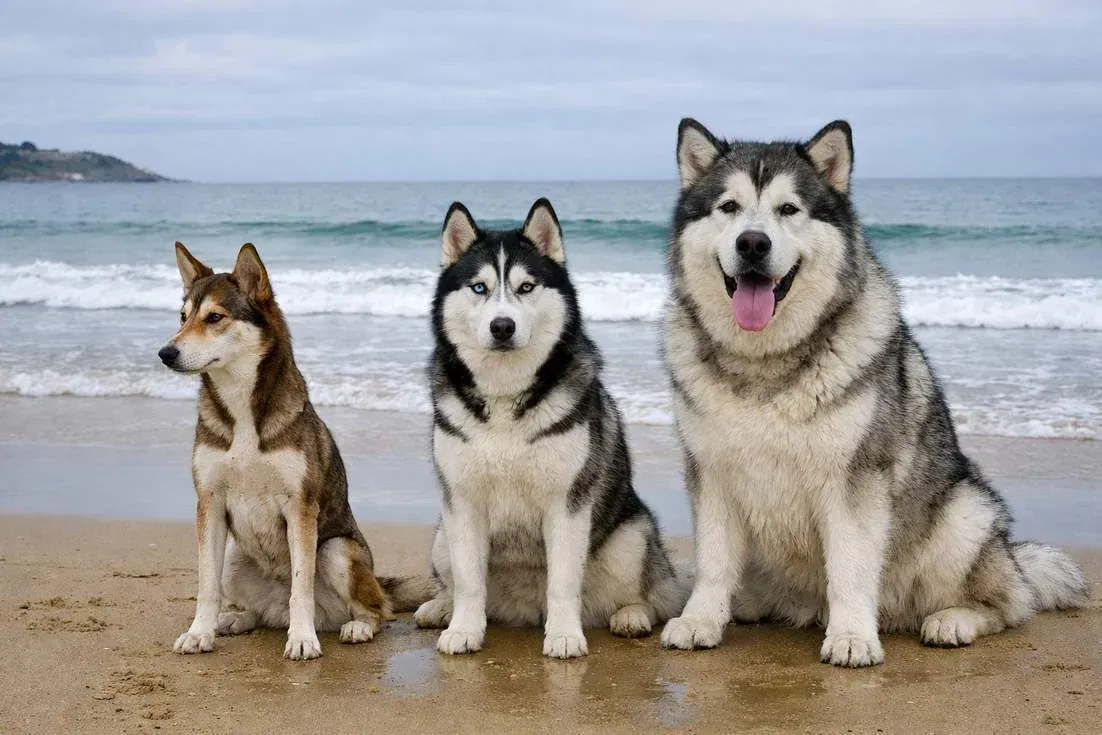
Forget the generic trait lists. Here’s what living with each breed actually looks like day to day.
The Alaskan Husky was bred to run 160+ km a day. Let that sink in. Even the most active Aussie family won’t tire one out through walks alone. The Siberian Husky isn’t far behind — they need at least 90 minutes of solid exercise daily, and they’ll find creative ways to punish you if they don’t get it (goodbye, couch cushions). The Malamute is powerful but has a slightly lower cruising speed. They still need 60–90 minutes of exercise, but they’re more interested in a long hike with a weighted pack than a flat-out sprint.
The Siberian is your classic pack dog — they want to be near you at all times and will dramatic-howl if they feel ignored. The Malamute loves their family deeply but is more dignified about it. They’ll lean against your legs on the couch, not crawl into your lap. The Alaskan Husky sits somewhere in the middle — affectionate with their people, but their real love language is running.
If you value quiet weekends, skip all three — but especially the Siberian. They are legendary howlers. They don’t bark much; they carry on full conversations with the neighbourhood. The Malamute does a deep “woo-woo” that’s quieter but equally persistent. The Alaskan Husky varies, but most are vocal, especially when they’re excited to go.
All three are generally good with kids, but the Malamute’s size (35+ kg of enthusiastic love) can accidentally knock over a toddler. The Siberian is usually the safest bet for families with small children due to their lighter frame. None of the three are aggressive toward children — they’re pack animals that consider kids part of the team.
The Siberian and Alaskan Husky generally do well with other dogs if socialised early. The Malamute can be same-sex aggressive, particularly males with other males. All three breeds have a strong prey drive — cats, chooks and small animals are genuinely at risk unless introductions happen from puppyhood.
The Siberian handles being alone the worst. They’re pack animals who will protest loudly and destructively. The Malamute is more independent but will still dig massive craters in your yard from boredom. The Alaskan Husky, bred for kennel life in racing teams, is arguably the most tolerant of alone time — but only if they’ve been run properly first.
Health Issues
No breed is bulletproof, and all three carry some genetic baggage. Here’s what you’re looking at.
Shared Health Risks
All three breeds are susceptible to hip dysplasia and eye conditions, though the severity differs. Their double coats also make them prone to skin conditions in Australia’s warmer, more humid climates.
Siberian Husky-Specific Risks
Siberians are generally the healthiest of the trio. Their primary concerns are eye conditions — cataracts (juvenile cataracts can appear as early as 6 months), progressive retinal atrophy (PRA) and corneal dystrophy. Hip dysplasia occurs but at lower rates than in Malamutes.
Alaskan Malamute-Specific Risks
Malamutes carry a heavier health burden. They’re prone to chondrodysplasia (a form of dwarfism), inherited polyneuropathy (nerve damage causing weakness in the legs), hypothyroidism, bloat (gastric dilatation-volvulus, which is a genuine emergency) and von Willebrand’s disease (a bleeding disorder). Their larger frame also means hip and elbow dysplasia rates are higher.
Alaskan Husky-Specific Risks
The Alaskan Husky benefits from hybrid vigour due to its mixed heritage, but they can inherit conditions from any parent breed. Watch for exercise-induced collapse (more common in sprint lines), eye conditions and hypothyroidism. Their varied genetics make health screening harder because there’s no single breed standard to test against.
Common Health Costs Comparison
| Health Concern | Alaskan Husky | Siberian Husky | Alaskan Malamute |
|---|---|---|---|
| Hip Dysplasia | Low–Moderate | $4,000–$8,000 | Moderate | $4,000–$8,000 | High | $4,000–$8,000 |
| Eye Conditions (cataracts/PRA) | Moderate | $1,500–$4,000 | High | $1,500–$4,000 | Moderate | $1,500–$4,000 |
| Hypothyroidism (ongoing) | Moderate | $300–$800/yr | Low–Moderate | $300–$800/yr | High | $300–$800/yr |
| Bloat (GDV — emergency) | Low | $3,000–$8,000 | Low | $3,000–$8,000 | Moderate–High | $3,000–$8,000 |
| Chondrodysplasia / Polyneuropathy | Low | Variable | Rare | N/A | Moderate | $1,000–$5,000+ |
| Est. Annual Vet Costs | $800–$1,500 AUD | $800–$1,500 AUD | $1,000–$2,000 AUD |
Malamutes are the most expensive of the three to insure and maintain health-wise, primarily due to their size and predisposition to bloat and orthopaedic issues. Siberians are generally hardier, while Alaskan Huskies benefit from genetic diversity but lack the standardised health screening of registered breeds.
Grooming — Which Is More Work?
If you hate vacuuming, stop reading and go look at Poodles. All three of these breeds blow their undercoat twice a year, turning your home into a snow globe of fur. Outside of blowing season, the Malamute sheds the most due to its longer, denser coat. The Siberian is a close second. The Alaskan Husky varies — sprint-line dogs with shorter coats shed noticeably less than distance-line dogs with thicker coats.
Professional grooming runs $80–$150 AUD per session for the Malamute (every 6–8 weeks recommended), $60–$100 for the Siberian, and roughly the same as the Siberian for the Alaskan Husky. None of the three should ever be shaved — their double coat regulates temperature in both cold and hot conditions, and shaving it can permanently damage regrowth.
| Grooming Task | Alaskan Husky | Siberian Husky | Alaskan Malamute |
|---|---|---|---|
| Brushing Frequency | 2–3 times/week | 2–3 times/week | 3–4 times/week (daily when blowing) |
| Professional Grooming | Every 8–10 weeks | $60–$100 | Every 8–10 weeks | $60–$100 | Every 6–8 weeks | $80–$150 |
| Shedding Season | Moderate year-round, heavy 2x/yr | Heavy year-round, extreme 2x/yr | Very heavy year-round, extreme 2x/yr |
| Nail Trimming | Every 3–4 weeks | Every 3–4 weeks | Every 2–3 weeks |
| Ear Cleaning | Fortnightly | Fortnightly | Weekly |
Exercise — How Active Are They Really?
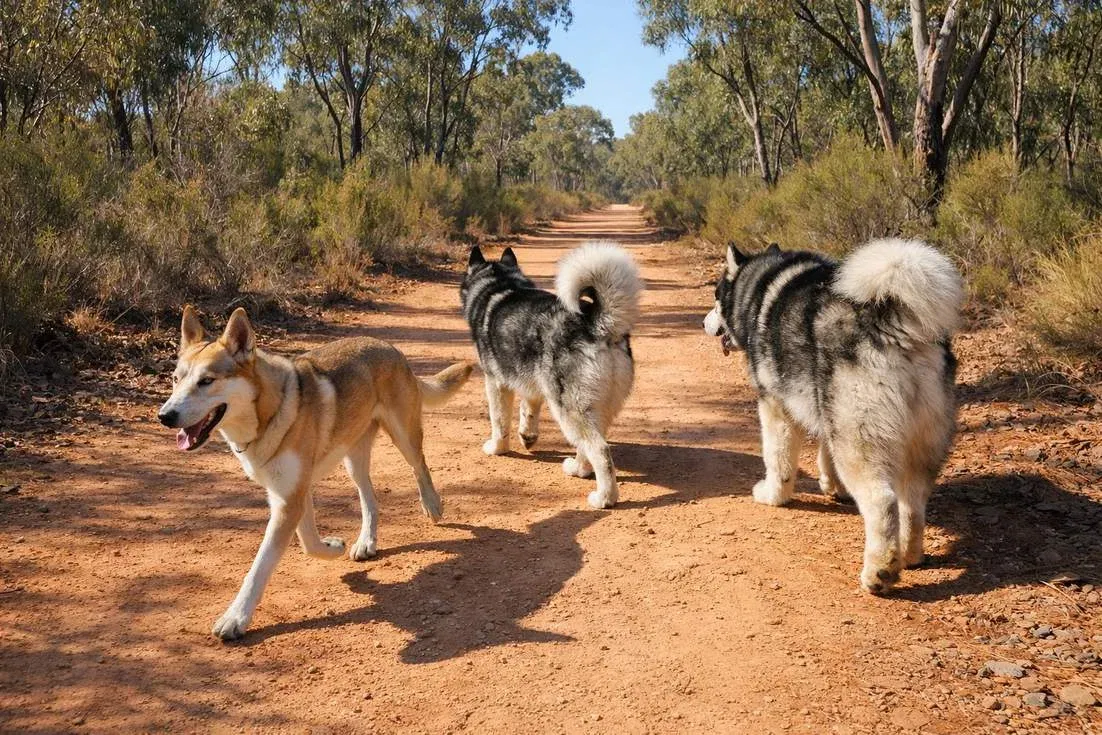
All three breeds need significantly more exercise than your average dog. But the type and intensity differ, and getting this wrong is the number one reason these breeds end up in rescue.
| Exercise Factor | Alaskan Husky | Siberian Husky | Alaskan Malamute |
|---|---|---|---|
| Daily Exercise Needed | 2+ hours (ideally running) | 1.5–2 hours | 1–1.5 hours |
| Exercise Type | Running, bikejoring, sled sports | Running, hiking, agility, play | Long walks, hiking, weight pulling, swimming |
| Off-Leash Reliability | Poor — high prey drive, bred to run | Poor — notorious escape artists | Moderate — better recall but still independent |
| Heat Tolerance (Aus summers) | Low to Moderate (sprint lines slightly better) | Low | Very Low |
| Swimming Ability | Moderate — varies by line | Moderate — most enjoy it | Good — many Malamutes love water |
| If Under-Exercised… | Destructive, escape attempts, neurotic pacing | Howling, digging, chewing furniture, escape attempts | Digging craters, destructive chewing, weight gain |
Australian Climate Warning
This is not negotiable: all three breeds are built for sub-zero temperatures, not 35-degree Australian summers. Exercise must happen before 7am or after 7pm during warmer months. Hot footpaths will burn their paw pads — test the pavement with the back of your hand before every walk. Signs of heatstroke include excessive panting, drooling, glazed eyes and vomiting. The Alaskan Malamute is at the highest risk due to its heavier coat and larger body mass. The Siberian is marginally better but still a genuine concern. If you live in Darwin, Far North Queensland, or inland areas with sustained heat above 35 degrees, think very carefully before getting any of these breeds.
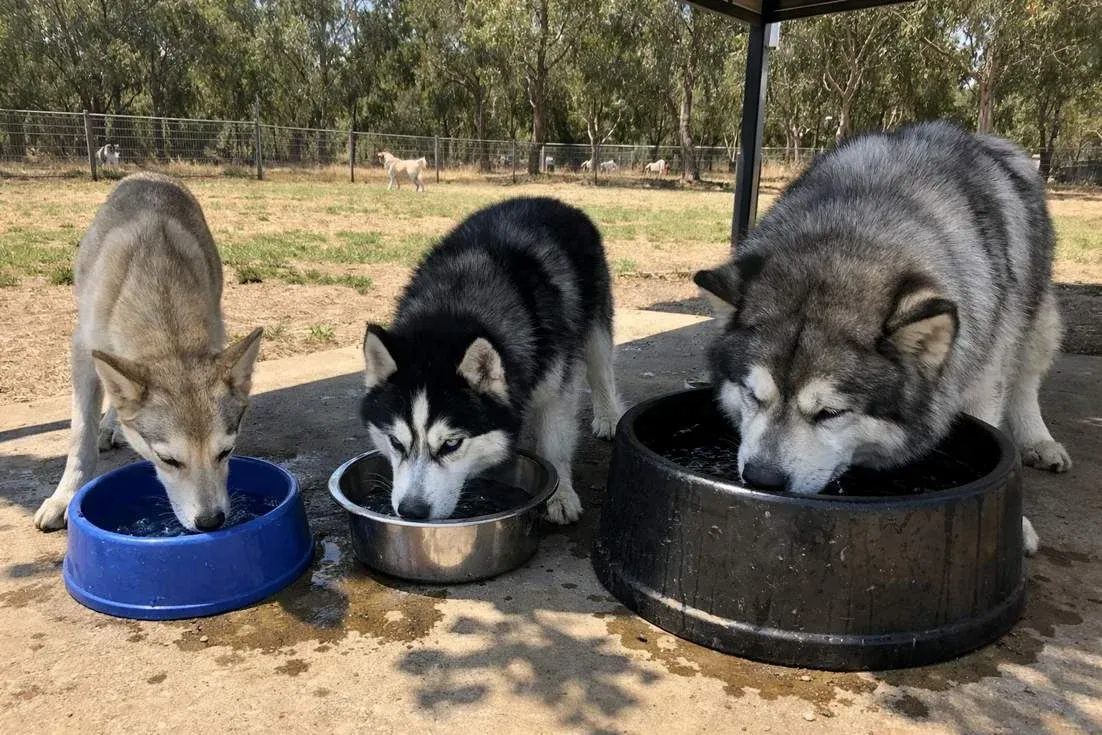
Provide cooling mats, shade structures, air conditioning and constant access to fresh water. A clam shell pool in the yard is a cheap and effective cooling tool. Never leave any of these breeds outside in the heat without shade and water.
Training – Easier to Train?
The Siberian Husky is the easiest to train of the three — but “easiest” is relative. None of these dogs will respond to repetitive drills or heavy-handed training. They’re all intelligent, independent thinkers bred to make decisions without human input at 30 km/h across frozen tundra. That intelligence makes them quick learners; the challenge is motivating them to care.
Siberians are food-driven and eager to engage, which gives you leverage. Keep sessions short (10–15 minutes), use high-value treats, and end on a win. They’ll learn quickly but they’ll also decide which commands are optional. Reliable off-leash recall is extremely difficult with Siberians — many experienced owners never achieve it.
Alaskan Malamutes are the most stubborn of the three. They’re not slow learners; they’re selective listeners. They need a confident, consistent owner who establishes clear leadership without dominance-based methods. Positive reinforcement works, but it takes patience measured in months, not weeks. First-time dog owners regularly underestimate a Malamute’s willpower.
The Alaskan Husky is generally the most biddable because they’ve been selected for generations to work cooperatively with mushers. They respond well to tasks and structure but still have the classic northern-breed independence streak. They’re the best choice if you want a sled dog you can actually direct, but they need a job — without one, all that cooperative energy turns into creative destruction.
Common training mistakes across all three: using punishment-based methods (you’ll lose their trust permanently), skipping early socialisation (critical window is 3–14 weeks), and assuming they’ll be like a Labrador that just wants to please you. These breeds respect partnership, not obedience for its own sake.
Which Costs More in Australia?
The Alaskan Malamute is the most expensive to own overall, driven by higher food costs (they eat more), higher grooming costs, higher vet bills and more expensive insurance premiums. The Siberian Husky sits in the middle, and the Alaskan Husky — while the cheapest to buy if you can find one — carries hidden costs because there are almost no breed-specific health testing standards.
| Cost Category | Alaskan Husky (AUD) | Siberian Husky (AUD) | Alaskan Malamute (AUD) |
|---|---|---|---|
| Puppy (Registered Breeder) | N/A — not registered. $2,000–$4,000 from working kennels | $1,500–$5,000 | $2,500–$5,000 |
| Rescue / Adoption | $300–$600 | $400–$800 | $400–$800 |
| First-Year Setup | $1,500–$2,500 | $1,500–$2,500 | $2,000–$3,000 |
| Annual Ongoing Costs | $2,000–$3,500 | $2,000–$3,500 | $2,500–$4,500 |
| Pet Insurance (Monthly) | $40–$80 | $50–$90 | $60–$110 |
| Lifetime Cost (Est.) | $25,000–$45,000 | $28,000–$50,000 | $35,000–$60,000 |
Look for ANKC-affiliated breeders through Dogs NSW, Dogs Victoria, Dogs QLD, or your state’s canine control body. For Alaskan Huskies, contact sled dog racing clubs such as Sled Dog Sports Australia. Breed-specific rescues include Arctic Breed Rescue (Victoria/NSW) and Husky Rescue Australia.
Which one for Australian Owners
None of these breeds were designed for Australian summers. Air conditioning isn’t optional — it’s mandatory. Coastal areas of Victoria, Tasmania and southern NSW are the most suitable regions. Owners in QLD, WA and the NT need to be especially diligent about heat management. Morning and evening exercise only during warmer months. Cooling vests, frozen kongs and climate-controlled indoor spaces are standard kit for Aussie owners of Arctic breeds.
None of these three breeds are affected by BSL in any Australian state or territory. They are not classified as restricted or dangerous breeds under current legislation.
Council registration costs vary by state and council, typically $30–$100/year for desexed dogs and $100–$300/year for entire dogs. Rates are the same across all three breeds since none carry specific council restrictions.
All three breeds can be difficult to rent with in Australia, particularly the Malamute. Many landlords and strata bodies have size limits (often 10–20 kg), which rules out the Malamute and many Siberians. Some property managers list “no Huskies” specifically due to their reputation for howling and destructive behaviour. Always get written pet approval before signing a lease. Victoria’s rental reforms make it harder for landlords to refuse pets without valid reason, but other states are less protective.
All three breeds’ thick coats make finding paralysis ticks extremely difficult. If you live in tick-prone coastal areas (particularly along the east coast from North QLD to eastern Victoria), preventive tick treatments are non-negotiable. Monthly or tri-monthly tick preventives (Bravecto, NexGard Spectra, Simparica Trio) run $20–$40/month depending on the dog’s weight — and the Malamute’s higher weight pushes costs up. All three breeds have strong prey drives that may lead them to investigate snakes. Basic snake avoidance training ($150–$300 per session through specialist trainers) is worth considering.
Both the Siberian Husky and Alaskan Malamute are covered by all major Australian pet insurers (Bow Wow Meow, PetSure, RSPCA Pet Insurance, Petcover). The Alaskan Husky, as an unregistered mixed breed, may be classified differently by insurers — typically as a “mixed breed” or “working dog” — which can sometimes mean lower premiums but less breed-specific coverage. Always declare the breed accurately and compare quotes.
So, which one Should You Get for you?
You want a registered purebred with predictable size and temperament. You have an active family with older kids who’ll take the dog running, hiking or to agility classes. You want the most readily available option from ANKC breeders across Australia. You can handle a dog that talks back — literally.
You want a large, imposing but gentle dog that’s calmer indoors than a Siberian. You prefer hiking and weight-pulling over sprinting and agility. You have experience with large, independent breeds and can commit to consistent, patient training. You don’t mind being the only dog household, or you’re confident introducing a Malamute to existing pets carefully.
You’re an active or competitive musher, bikejorer, canicrosser or ultra-runner who genuinely needs a performance dog. You understand they’re not a breed — they’re an athlete. You have the space, time and commitment to give a dog 2+ hours of hard exercise daily. You’re comfortable sourcing from sled dog kennels rather than traditional breeders, and you accept limited health-testing standards.
You live in a small apartment with no yard, or your yard has low fences (all three are escape artists — Siberians especially). You’re away from home for 8+ hours a day with no company for the dog. You live in a consistently hot climate without air conditioning. You’ve never owned a dog before (seriously — these breeds punish inexperience). You’re not prepared for extreme shedding, or you have severe allergies. Your budget for annual vet and maintenance costs is under $2,000 AUD.
Alaskan Husky vs Siberian Husky vs Alaskan Malamute: The Bottom Line
The Siberian Husky is the best all-round family choice for most Australian owners — more available, lighter, slightly easier to manage in heat, and backed by ANKC breeding standards and health testing.
The Alaskan Malamute is the gentle giant for experienced owners who want a calm powerhouse — just budget for bigger food bills, bigger vet bills and bigger craters in your garden.
The Alaskan Husky is the serious athlete’s dog — built for performance, not the show ring, and almost impossible to source in Australia unless you’re connected to the sled dog community.
All three will fill your house with fur, your life with adventure and your weekends with exercise. If that sounds like a warning, it probably is. If it sounds like a promise, welcome to the pack.
Read more: /siberian-husky/ | /alaskan-malamute/
Frequently Asked Questions
Is a Siberian Husky or Alaskan Malamute better for families with young children?
The Siberian Husky is generally the better choice for families with young children. At 16–27 kg, they’re large enough to be sturdy play partners but light enough that accidental knock-downs are less of a concern. Malamutes are gentle with children but their 35+ kg frame can unintentionally bowl over toddlers. Both breeds need supervision around small kids.
Are Alaskan Malamutes more aggressive than Siberian Huskies?
No. Alaskan Malamutes are not inherently aggressive toward people — they’re actually known for being friendly with strangers. However, Malamutes can be same-sex aggressive with other dogs, particularly intact males. Siberians are generally more sociable with other dogs. Neither breed makes a reliable guard dog; they’re both too friendly.
What’s the difference between an Alaskan Husky and a Siberian Husky?
The Siberian Husky is a recognised purebred registered with the ANKC and AKC. The Alaskan Husky is not a breed — it’s a performance-bred working dog type created by crossing multiple breeds (Siberians, Malamutes, Pointers, Greyhounds and others) for optimal sled racing ability. Alaskan Huskies are leaner, faster and more variable in appearance than Siberians.
Which breed is cheaper to own in Australia?
The Siberian Husky is the most affordable overall. Puppy prices start from $1,500 AUD, and their medium size means lower food and insurance costs than the Malamute. Alaskan Huskies may cost less to purchase but are extremely difficult to find in Australia. Lifetime costs range from around $28,000–$50,000 AUD for a Siberian versus $35,000–$60,000 AUD for a Malamute.
Can you keep a Siberian Husky or Alaskan Malamute in an apartment in Australia?
The Siberian Husky can technically live in an apartment if you commit to two solid exercise sessions daily and provide mental enrichment — but it’s not ideal. The Malamute and Alaskan Husky are not suited to apartment living under any realistic circumstances. Council and strata regulations may also restrict large breeds. A securely fenced yard (1.8m+ fencing) is strongly recommended for all three breeds.
Do Siberian Huskies and Alaskan Malamutes get along with each other?
Often, yes — they share similar pack instincts and play styles. The main risk is Malamute same-sex aggression, so an opposite-sex pairing typically works best. Early socialisation is critical. Be aware that two Arctic breeds in one household means double the shedding, double the exercise needs and double the escape attempts.
Which breed sheds more — the Siberian Husky or Alaskan Malamute?
The Alaskan Malamute sheds more due to its longer, denser coat. Both breeds blow their entire undercoat twice a year, creating a fur explosion that lasts 3–5 weeks. Invest in a quality de-shedding tool (a Furminator or undercoat rake), and brush at least 3 times per week — daily during blowing season. Robot vacuums become a necessity, not a luxury.
Can any of these breeds handle Australian summers?
With proper management, yes — but none of them thrive in heat. Air conditioning, early-morning and late-evening exercise, cooling mats, shade and constant water are mandatory. The Malamute struggles the most due to its size and coat density. Southern states (VIC, TAS, southern SA and NSW) are the most suitable regions. Owners in tropical or arid zones should seriously reconsider.
1. ANKC Breed Standard — Siberian Husky: https://ankc.org.au/breed-standard/group-5/siberian-husky/
2. ANKC Breed Standard — Alaskan Malamute: https://ankc.org.au/breed-standard/group-5/alaskan-malamute/
3. American Kennel Club — Siberian Husky vs Alaskan Malamute: https://www.akc.org/expert-advice/dog-breeds/siberian-husky-vs-alaskan-malamute/
4. Wikipedia — Alaskan Husky: https://en.wikipedia.org/wiki/Alaskan_husky
5. PetSure — Breed Specific Claims Data Australia: https://www.petsure.com.au/
6. Bow Wow Meow — Siberian Husky Pet Insurance Australia: https://bowwowinsurance.com.au/dogs/dog-breeds/siberian-husky-pet-insurance/
7. Arctic Breed Rescue Victoria: https://www.arcticbreedrescue.com.au/
8. Alaskan Malamute Club of Victoria Inc.: https://www.amcv.org.au/
9. PetsOnline — Alaskan Malamute Prices Australia: https://petsonline.com.au/dog-breeds/alaskan-malamute/prices/
10. PetsOnline — Siberian Husky Prices Australia: https://petsonline.com.au/dog-breeds/siberian-husky/prices/
Category Tags: Breeds | Breed Comparisons | Working Dogs