
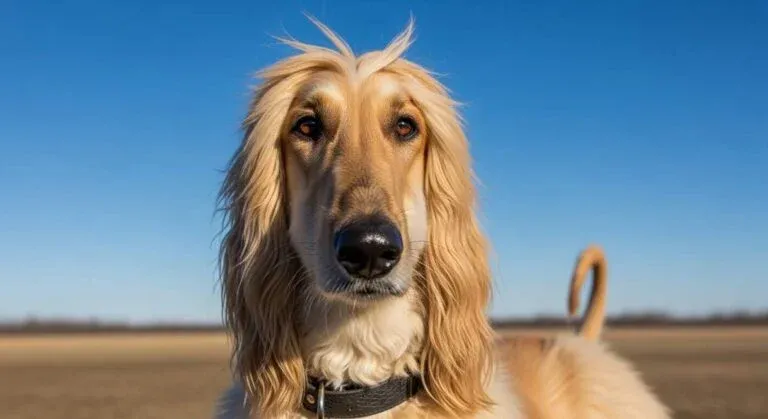
In 2019, an Afghan Hound named Sasha became the first of her breed to win Best in Show at the prestigious Westminster Dog Show in over four decades — a victory that reminded the world why this ancient breed has captivated dog lovers for thousands of years. That stunning moment on the green carpet tells you everything about what makes the Afghan Hound special: breathtaking beauty paired with an unmistakable presence that commands attention.
But here’s what the glamorous show ring doesn’t reveal: behind that flowing silk coat and regal bearing lives a dog with the heart of an athlete and the independence of a cat. The Afghan Hound is not your typical companion. They won’t fetch your slippers or hang on your every word — and honestly? That’s precisely why their devoted owners adore them.
If you’re considering bringing an Afghan Hound into your Australian home, you’re in for an extraordinary journey. This comprehensive guide covers everything you need to know — from the realities of that legendary coat to the true costs of ownership down under.
What You’ll Learn
- Breed traits & temperament
- Health concerns to know
- True cost in Australia (2025)
- Training & exercise needs
- Is this breed right for you?
Afghan Hound Quick Facts
| Attribute | Details |
|---|---|
| Breed Group | Hound (Sighthound) |
| Origin | Afghanistan |
| Size Category | Large |
| Height (Adult) | Male: 68–74 cm | Female: 63–69 cm |
| Weight (Adult) | Male: 26–34 kg | Female: 23–27 kg |
| Lifespan | 12–14 years |
| Coat Type | Long, silky, fine-textured |
| Exercise Needs | 60–90 minutes/day |
| Trainability | 2/5 (Independent thinker) |
| Good with Children | Yes, with older children |
| First-Time Owner Suitable | 2/5 (Experienced owners preferred) |
| Average Puppy Price (AUD) | $2,500 – $5,500 |
Data sourced from Dogs Australia (ANKC) Breed Standards and the Afghan Hound Club of NSW.¹
History of the Afghan Hound
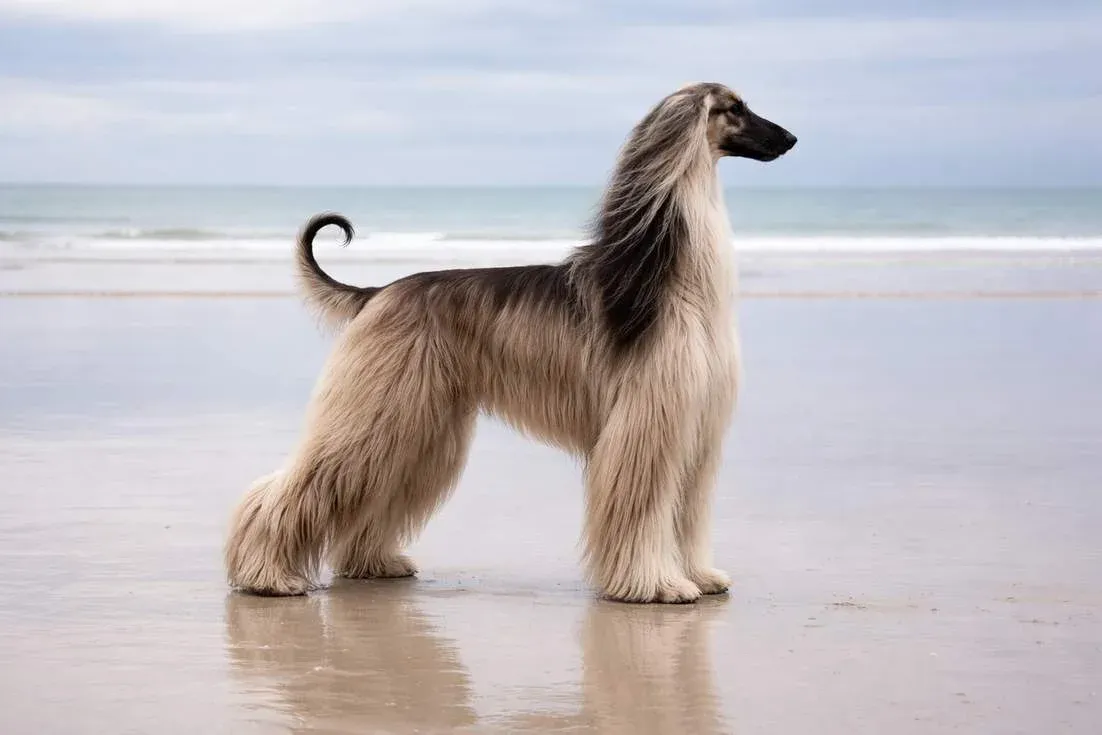
The Afghan Hound is one of the oldest documented dog breeds, with origins stretching back thousands of years to the mountainous regions of Afghanistan. These elegant hounds were developed by nomadic tribes who needed a versatile hunting companion capable of pursuing game across harsh, rocky terrain.²
Unlike scent hounds that track prey by smell, the Afghan Hound is a sighthound — hunting by sight with remarkable speed and agility. In their homeland, they pursued everything from hares to leopards, working independently across vast distances while their handlers followed on horseback.
The breed arrived in England during the 1920s, brought back by British soldiers stationed near the Afghan border. Australia welcomed its first Afghan Hound litter in April 1935, with dogs exhibited at Sydney Royal in 1936. After the bloodlines were lost during World War II, the modern Australian population traces back to imports in the 1950s. Today, Australian-bred Afghan Hounds are considered among the finest in the world, with many exported internationally to great success.³
Afghan Hound Temperament
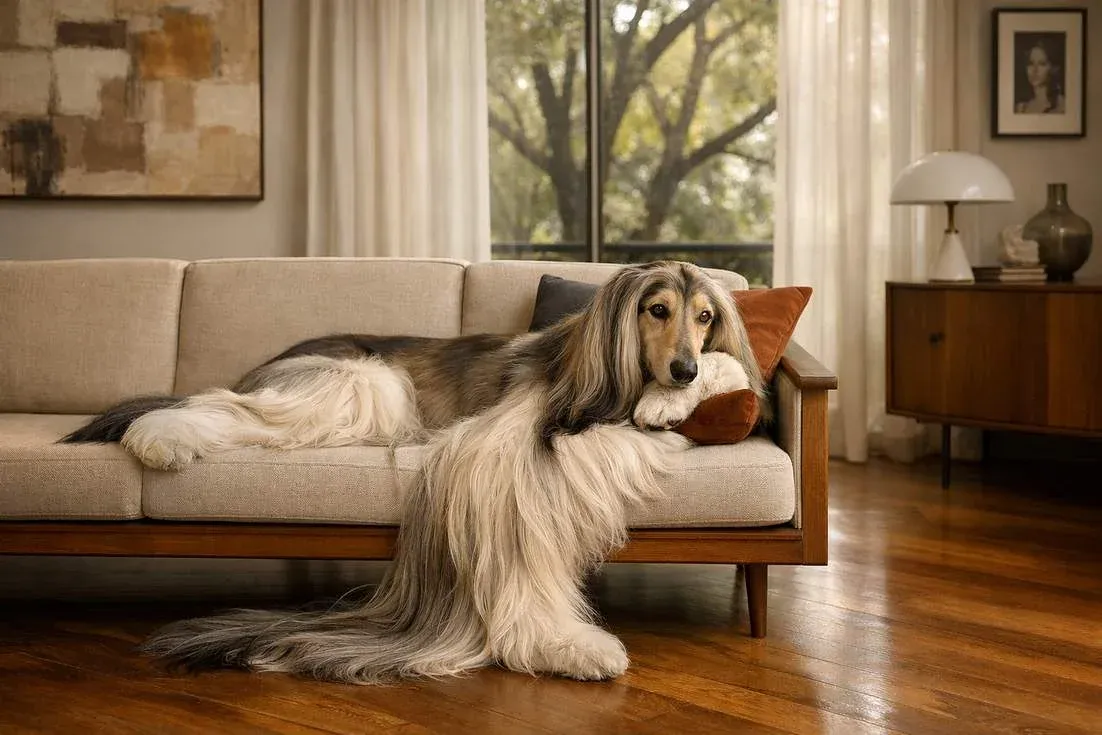
The Afghan Hound temperament is often compared to that of a cat — and honestly, the comparison is spot-on. These dogs are independent, dignified, and selective about their affections. They’ll love you deeply, but on their own terms.
Dignified & Aloof: Afghan Hounds carry themselves with an almost aristocratic bearing. They’re not unfriendly — just reserved, particularly with strangers. Many Afghan Hound owners report that their dogs take time to warm up to new people, but once trust is established, the bond runs remarkably deep.
Independent Thinker: This breed was developed to hunt independently, making decisions without human direction. That intelligence remains — your Afghan will absolutely understand what you’re asking; they’ll simply decide whether it’s worth doing. As one Victorian breeder put it: “An Afghan Hound will sit when asked… eventually… if they think you’ve earned it.”
Sensitive Soul: Beneath that aloof exterior lies a surprisingly sensitive dog. Afghan Hounds pick up on household tension and don’t respond well to harsh corrections. They thrive in calm, consistent environments.
Playful & Clownish: Here’s what surprises first-time Afghan Hound owners: these regal dogs have a genuinely silly side. In comfortable surroundings, they’ll zoom around the house, play-bow enthusiastically, and engage in antics that seem completely at odds with their dignified public persona.
Afghan Hounds can be wonderful family dogs, though they’re generally better suited to families with older children. Their size and occasionally boisterous play style can accidentally knock over toddlers, and they don’t appreciate rough handling or sudden grabbing. With respectful, gentle children who understand boundaries, Afghans are patient and protective companions.
This varies significantly between individual dogs — and early socialisation plays a crucial role. Afghan Hounds generally do well with other dogs, particularly other sighthounds who match their energy and temperament. However, their strong prey drive means small animals like cats, rabbits, or guinea pigs can trigger their chase instinct. Breeders consistently note that Afghan Hounds raised with cats from puppyhood usually coexist peacefully, but introductions to small pets later in life require careful management.
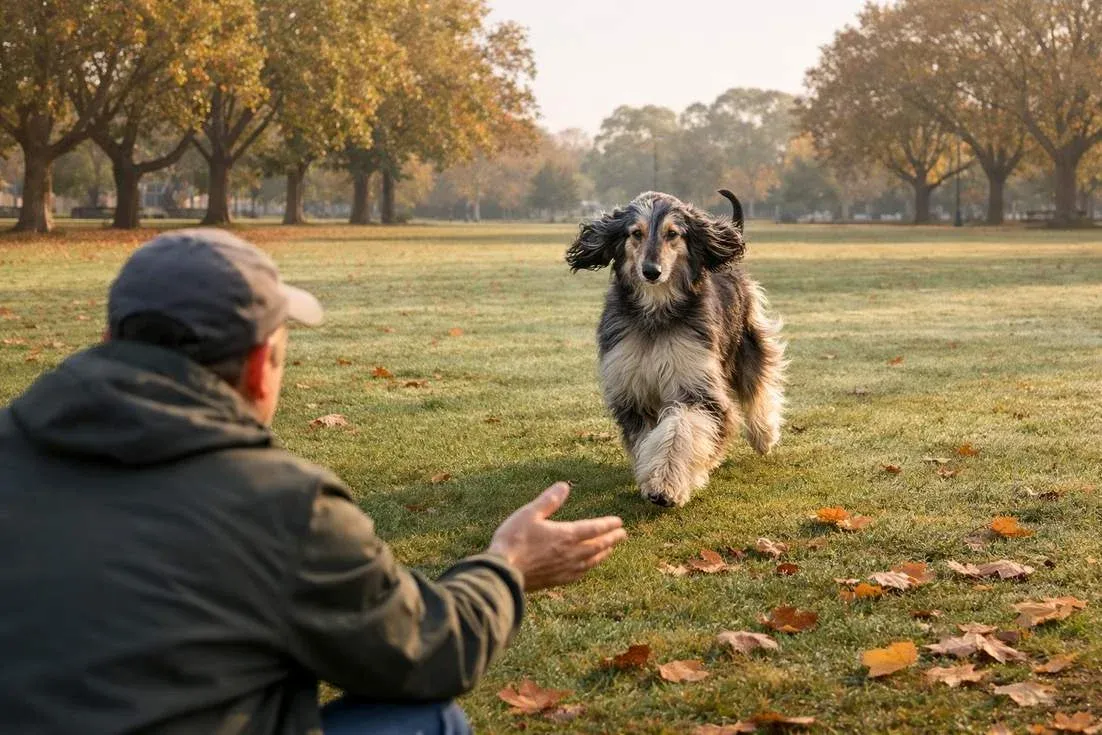
If your Afghan Hound starts ignoring recall commands entirely — and trust us, they will try — don’t panic. Their independent nature means “come” is often interpreted as a suggestion rather than a command. The key is making yourself more interesting than whatever they’re investigating: high-value treats, an excited voice, and plenty of patience.
If you notice your Afghan suddenly becoming destructive or withdrawn, this often indicates boredom or insufficient exercise. Try adding an extra walk or introducing puzzle feeders to engage their clever minds.
Afghan Hound Health Issues
If you’re worried about potential health problems, you’re not alone — it’s one of the first things prospective owners ask. The good news is that with proper health screening and responsible breeding, many Afghan Hounds live long, healthy lives well into their teens.
The most common Afghan Hound health issues include hip dysplasia, cataracts, hypothyroidism, and autoimmune diseases.⁴ Breeding parents should have OFA (Orthopedic Foundation for Animals) and CERF (Canine Eye Registration Foundation) clearances before being bred.
Key Health Conditions to Know
| Condition | Symptoms | Treatment Cost | Prevention |
|---|---|---|---|
| Hip Dysplasia | Limping, difficulty rising, reduced activity | $3,000–$7,000+ | OFA screening of parents |
| Cataracts | Cloudy eyes, vision impairment | $3,000–$5,000 per eye | CERF testing, annual eye exams |
| Hypothyroidism | Weight gain, lethargy, skin issues | $200–$500/year ongoing | Thyroid screening |
| Bloat (GDV) | Distended abdomen, restlessness, retching | $2,000–$5,000 emergency | Smaller frequent meals, avoid exercise after eating |
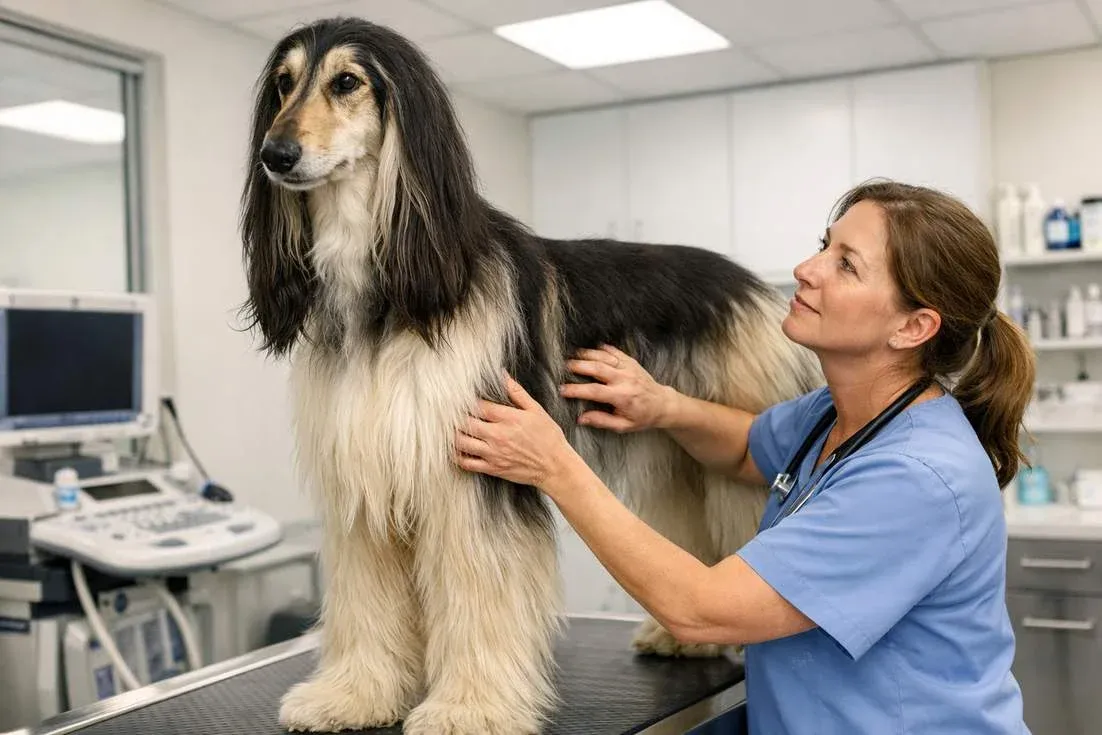
Afghan Hounds also have a unique sensitivity to anaesthesia due to their low body fat percentage and specific liver enzyme differences. Always inform your veterinarian that you have a sighthound so appropriate adjustments can be made.⁵
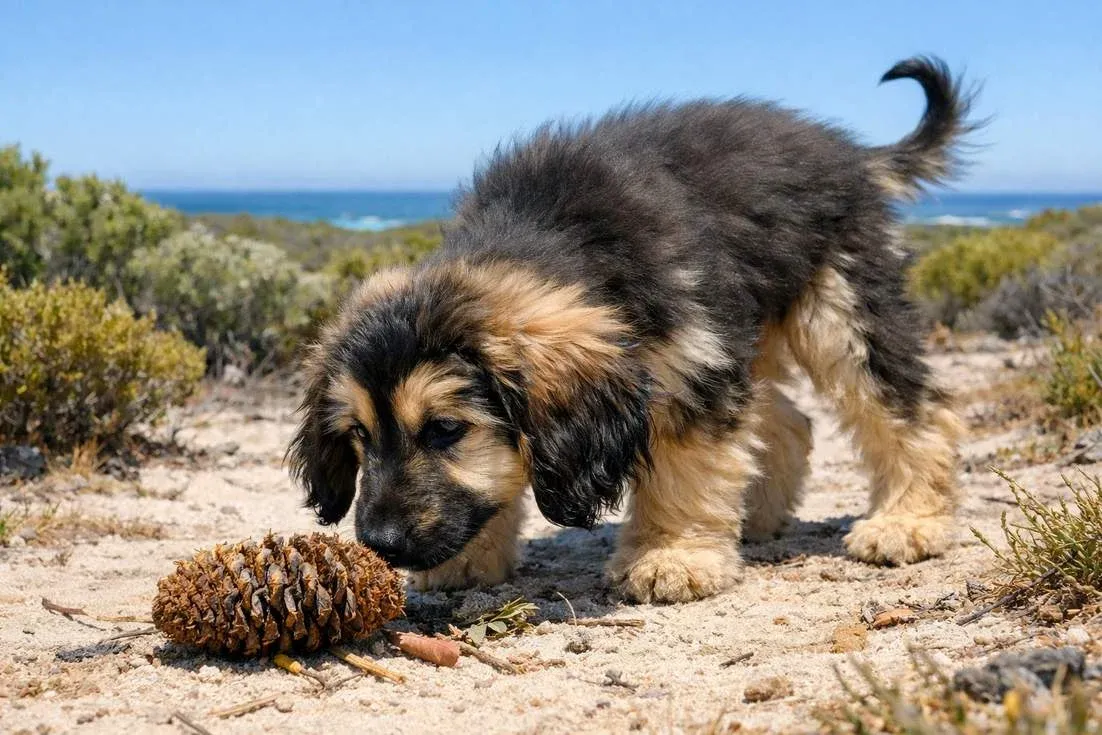
Afghan Hound Lifespan & Longevity Tips
The average Afghan Hound lifespan is 12–14 years, though many healthy dogs live beyond this with excellent care. It is recommend regular health screenings, maintaining a healthy weight, and consistent dental care to support longevity.⁶
To maximise your Afghan’s lifespan:
- Maintain a lean body condition (you should feel ribs easily)
- Provide daily exercise
- Keep up with preventative veterinary care
- Feed a high-quality diet appropriate for their life stage
Afghan Hound Grooming Guide
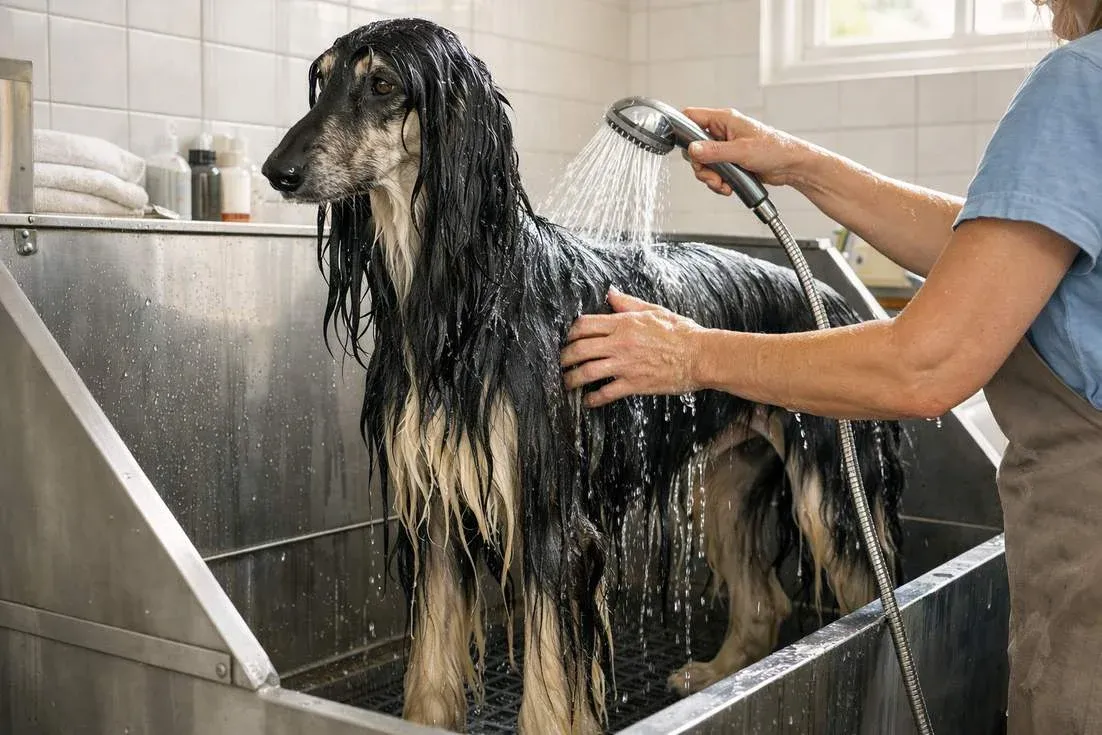
Let’s be completely honest: Afghan Hound grooming is not for the faint-hearted. That stunning, flowing coat requires serious commitment — we’re talking hours each week to keep it in good condition. Many Afghan Hound owners describe grooming time as bonding time, turning what could be a chore into a relaxing ritual with their dog.
Grooming Schedule
| Task | Frequency | Time | Tools/Products |
|---|---|---|---|
| Brushing | 3–4 times weekly | 30–45 mins | Pin brush, wide-tooth comb, detangling spray |
| Bathing | Every 1–2 weeks | 45–60 mins | Dermcare Natural Shampoo, PAW Conditioner |
| Nail Trimming | Every 2–3 weeks | 10–15 mins | Nail clippers or grinder |
| Ear Cleaning | Weekly | 5–10 mins | Vet-approved ear cleaner |
| Pro Grooming (optional) | Monthly | 2–3 hours | $80–$150 per session |
Do Afghan Hounds shed? Yes, but perhaps not as dramatically as you’d expect given all that hair. Afghan Hound shedding is moderate — they don’t have the heavy seasonal “blow” that breeds like Huskies experience. Regular brushing removes loose hair before it ends up on your furniture. Some owners opt to keep their pet Afghans in a shorter “puppy clip” for easier maintenance, which is perfectly acceptable for non-show dogs.
For Australian owners, products like Dermcare Natural Shampoo (vet-recommended and widely available) and Fido’s Everyday Shampoo (budget-friendly) work well for regular bathing. PAW by Blackmores offers excellent conditioning products available at most pharmacies.
Afghan Hound Exercise Needs
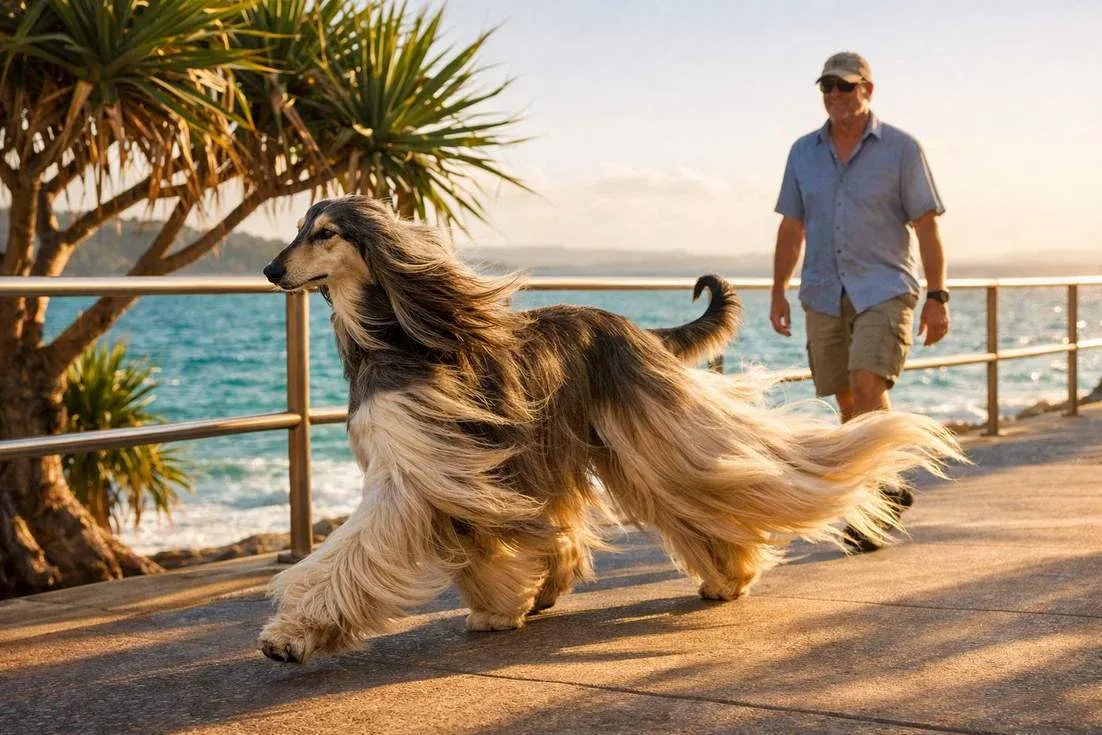
Don’t let the elegant appearance fool you — the Afghan Hound is a serious athlete who needs substantial daily exercise. It is recommend that active sighthounds like Afghans receive at least 60–90 minutes of exercise daily.⁷
Experienced Afghan Hound handlers often say that a tired Afghan is a well-behaved Afghan. When their exercise needs are met, these dogs are surprisingly calm indoors — happy to lounge on the sofa for hours. But skimp on activity, and you’ll discover just how creative a bored sighthound can be.
If your Afghan seems restless, destructive, or starts “redecorating” your garden by digging, this is almost certainly an exercise deficit. Try adding a second walk or finding a secure area where they can sprint — and yes, they will sprint. Afghan Hounds can reach speeds of up to 65 km/h.
Consider lure coursing, a sport specifically designed for sighthounds that channels their natural chase instinct in a safe, controlled environment. Several clubs across Australia offer lure coursing events — check with your state kennel council for local opportunities.
Afghan Hound Training Guide
Don’t be discouraged if your Afghan Hound seems to ignore your carefully taught commands — their independent thinking is hardwired, not a training failure on your part. The good news is that with patience, consistency, and the right approach, Afghan Hounds are capable of learning everything they need for polite household behaviour.
According to canine behaviourists, Afghan Hound training requires a completely different mindset than training an eager-to-please breed like a Labrador. Harsh corrections backfire spectacularly — these sensitive dogs simply shut down. Instead, focus on positive reinforcement, keep sessions short (10–15 minutes maximum), and make training feel like a game rather than a drill.⁸
Socialisation & Training Timeline
| Age | Training Focus | Expected Outcomes |
|---|---|---|
| 8–12 weeks | Name recognition, potty training, crate training | Basic recognition, house manners beginning |
| 3–4 months | Sit, stay, come, leash walking | Basic obedience (with variable compliance) |
| 4–6 months | Advanced commands, extensive socialisation | Reliable basics in low-distraction environments |
| 6–12 months | Impulse control, off-leash work (secure areas only) | Well-mannered companion |
Important: Due to their strong prey drive, Afghan Hounds should never be trusted off-leash in unfenced areas, regardless of training. Even the most obedient Afghan will forget everything if a rabbit dashes across their path.
Afghan Hound Price & Costs
Understanding the true Afghan Hound price Australia helps you budget realistically for this breed. Beyond the initial puppy price, ongoing expenses — particularly grooming — are significant.
Where to Find Afghan Hounds in Australia:
Registered Breeders: Find registered breeders through the Dogs Australia Breeder Directory or contact your state breed club directly: Afghan Hound Club of NSW, Afghan Hound Club of Victoria, Queensland Afghan Hound Association.
Rescue & Adoption: Consider adoption through PetRescue or the Afghan Hound and Saluki Rescue and Rehoming (AHSRR). Many surrendered Afghan Hounds are rehomed due to owners underestimating their care needs — these dogs often make wonderful companions for the right home.
Initial Costs:
| Expense | Approx. Cost (AUD) |
|---|---|
| Puppy Price (Registered Breeder) | $2,500 – $5,500 |
| Adoption Fee (Rescue) | $300 – $600 |
| Initial Vet + Vaccinations | $200 – $400 |
| Desexing | $300 – $600 |
| Essential Supplies (crate, bed, bowls, lead, etc.) | $400 – $800 |
| TOTAL INITIAL COST | $3,700 – $7,900 |
Annual Ongoing Costs:
- Premium Food: $1,200 – $1,800 (Black Hawk, Advance, or Ivory Coat recommended)
- Vet & Preventatives: $400 – $800
- Professional Grooming: $960 – $1,800 (monthly sessions)
- Pet Insurance: $600 – $1,200
- Grooming Supplies: $200 – $400
- TOTAL ANNUAL: $3,360 – $6,000
Lifetime Cost Estimate: $45,000 – $85,000+ (based on 12–14 year lifespan)⁹
Is an Afghan Hound Right for You?
The perfect Afghan Hound owner appreciates independence over obsequiousness, has time for grooming and exercise, lives in a home with secure fencing, and understands that this breed’s love is earned rather than freely given. Experienced dog owners tend to adapt more easily to the Afghan’s unique personality, though dedicated first-timers with professional support can absolutely succeed.
- Home Size: House with yard preferred; apartments possible with committed exercise routine
- Yard: Secure fencing minimum 1.8m high (Afghan Hounds can jump!)
- Climate: Tolerates Australian conditions well; provide shade and fresh water in hot weather, consider cooling mats for extreme heat
This can feel overwhelming, but being honest about challenges upfront saves heartbreak later. An Afghan Hound is likely not the right choice if you:
- Want a dog who hangs on your every word and lives to please
- Cannot commit to regular grooming (hours weekly) or professional grooming costs
- Have small pets (cats, rabbits) without careful introduction plans
- Need a reliable off-leash dog for hiking or beach trips
- Have very young children who may handle the dog roughly
- Want a guard dog — Afghan Hounds are too aloof to be effective protectors
The Afghan Hound is a breed like no other — a living work of art with the heart of an athlete and the soul of an aristocrat. Owning one means accepting their independent nature, committing to serious grooming, and understanding that their affection, when given, is all the more meaningful for being earned.
Perfect for: Experienced owners who appreciate independence, have time for grooming, and want a unique, dignified companion
Think twice if: You want an eager-to-please, low-maintenance family pet
First-time owner rating: Challenging but possible with dedication and professional support
Afghan Hound FAQs
Are Afghan Hounds good for first-time owners?
Generally, Afghan Hounds are better suited to experienced owners due to their independent temperament and significant grooming needs. However, a committed first-time owner willing to work with professional trainers and groomers can succeed.¹⁰
Do Afghan Hounds shed a lot?
Afghan Hound shedding is moderate despite their abundant coat. Regular brushing removes loose hair effectively. They don’t experience the heavy seasonal shedding common in double-coated breeds.
How much exercise does an Afghan Hound need?
Afghan Hounds need 60–90 minutes of daily exercise, including opportunities to run in secure, fenced areas. They’re sprinters by nature and benefit from occasional high-speed activity.
How long do Afghan Hounds live?
The average Afghan Hound lifespan is 12–14 years, with some healthy dogs living into their mid-teens with excellent care.
How much does an Afghan Hound cost in Australia?
Afghan Hound puppies from registered Australian breeders typically cost between $2,500 and $5,500 AUD, with show-quality puppies from champion lines at the higher end. Rescue adoption fees range from $300–$600.
Are Afghan Hounds good with children?
Afghan Hounds can be wonderful with older children who understand gentle handling. Their size and occasional boisterous play may be too much for toddlers. Always supervise interactions between dogs and young children.
Are Afghan Hounds hypoallergenic?
While no dog is truly hypoallergenic, Afghan Hounds are sometimes better tolerated by allergy sufferers due to their single-layer, hair-like coat that sheds less dander than double-coated breeds. Individual reactions vary.
Primary Sources:
- Dogs Australia (ANKC) — Official breed registration and standards (dogsaustralia.org.au)
- American Kennel Club (AKC) — Breed history archives (akc.org)
- Afghan Hound Club of NSW — Australian breed history (afghanhoundclubnsw.org.au)
Veterinary & Health Sources:
- VCA Hospitals — Afghan Hound breed profile and health conditions (vcahospitals.com)
- Embrace Pet Insurance — Afghan Hound health information (embracepetinsurance.com)
- Australian Veterinary Association — Care guidelines (ava.com.au)
Australian-Specific Sources:
- RSPCA Australia — Animal welfare guidelines (rspca.org.au)
- Dogs Victoria — Breed information (dogsvictoria.org.au)
- PetSure (Bow Wow Meow) — Australian pet ownership cost data
- Pet Care Shed Australia — Afghan Hound care guide (petcareshed.com.au)