
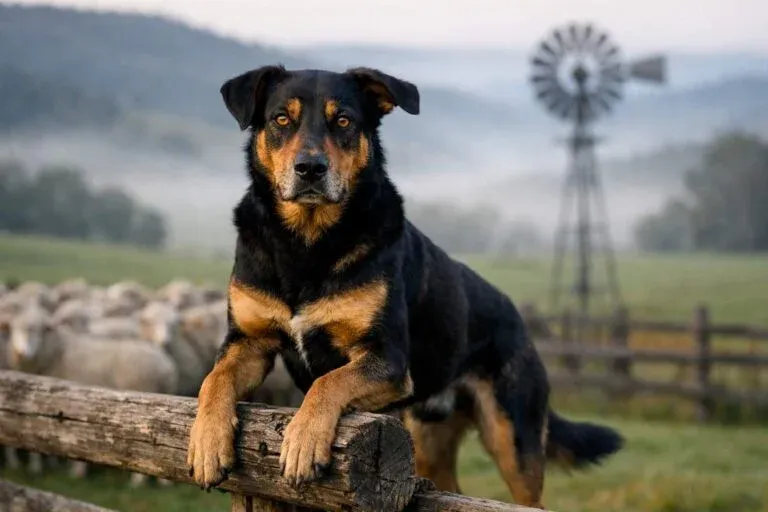
If you’ve ever heard a dog bark with the sustained enthusiasm of someone commentating a rugby match, you may have encountered a Huntaway. Born from the rugged sheep stations of New Zealand, the Huntaway is a working dog unlike any other — bred specifically to use its powerful, carrying bark to drive sheep across vast hillsides where silence simply isn’t an option.
Here’s what makes Huntaways genuinely different: while most herding breeds were developed to work silently (moving sheep with their presence and “eye”), the Huntaway was purpose-built to bark. And bark they do — enthusiastically, persistently, and with impressive volume. This makes them extraordinary working dogs and, for the right owner, wonderful companions. It also makes them completely unsuitable for apartment living or noise-sensitive neighbourhoods.
The Huntaway dog breed has been gaining popularity in Australia, particularly among rural owners who appreciate their work ethic and those seeking an active, intelligent companion. But this is a breed that demands honesty: if you’re considering a Huntaway, you need to understand what you’re signing up for.
What You’ll Learn
- Breed traits & temperament
- The truth about Huntaway barking
- Exercise & training requirements
- Health concerns & lifespan
- Is this breed right for you?
Huntaway Quick Facts
| Attribute | Details |
|---|---|
| Breed Group | Working / Herding (not recognised by major kennel clubs) |
| Origin | New Zealand |
| Size Category | Medium-Large |
| Height (Adult) | Male: 56-66 cm | Female: 51-61 cm |
| Weight (Adult) | Male: 25-40 kg | Female: 22-35 kg |
| Lifespan | 12-14 years |
| Coat Type | Short to medium; smooth or slightly rough |
| Exercise Needs | HIGH — 90+ minutes/day |
| Trainability | 4/5 (intelligent, eager to work) |
| Good with Children | Good (with active families) |
| First-Time Owner Suitable | 2/5 (experienced owners preferred) |
| Average Puppy Price (AUD) | $800 – $2,000 (working lines) |
Note: Huntaways are not recognised by the ANKC or major international kennel clubs. Standards vary as the breed is selected for working ability rather than appearance.¹
History of the New Zealand Huntaway
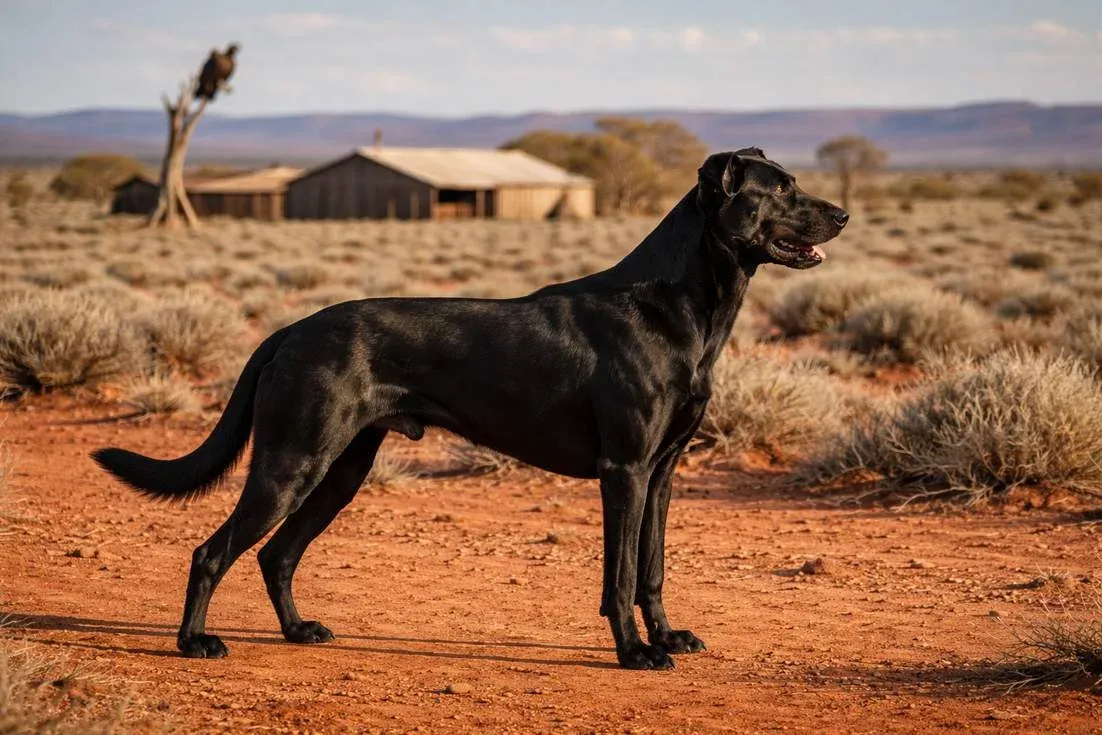
The Huntaway is New Zealand’s only native dog breed, developed in the late 19th and early 20th centuries on the country’s vast high-country sheep stations.¹ When British settlers arrived with their Border Collies and other “heading” dogs (silent dogs that use eye contact and stalking behaviour to move sheep), they quickly discovered that these breeds weren’t always effective in New Zealand’s challenging terrain.
The problem? New Zealand sheep stations could span tens of thousands of hectares of steep, mountainous country. Sheep needed to be moved across hillsides where the dogs couldn’t always be seen. The solution was to breed dogs that could use their bark to drive sheep from behind — a technique called “hunting away” that gave the breed its name.²
According to historians, Huntaways were developed from various breeds including Border Collies, Labrador Retrievers, Rottweilers, Dobermans, and various hound breeds — anything that contributed stamina, bark, and drive.² There’s no single “founder” breed; Huntaways were shaped by function, not pedigree. If a dog could bark loudly, work tirelessly, and move sheep, it contributed to the gene pool.
Today, Huntaways are celebrated in New Zealand with annual dog trials and even a festival in Hunterville. They’ve gradually made their way to Australia, where they’re valued both as working dogs and increasingly as active family companions.³
Huntaway Temperament
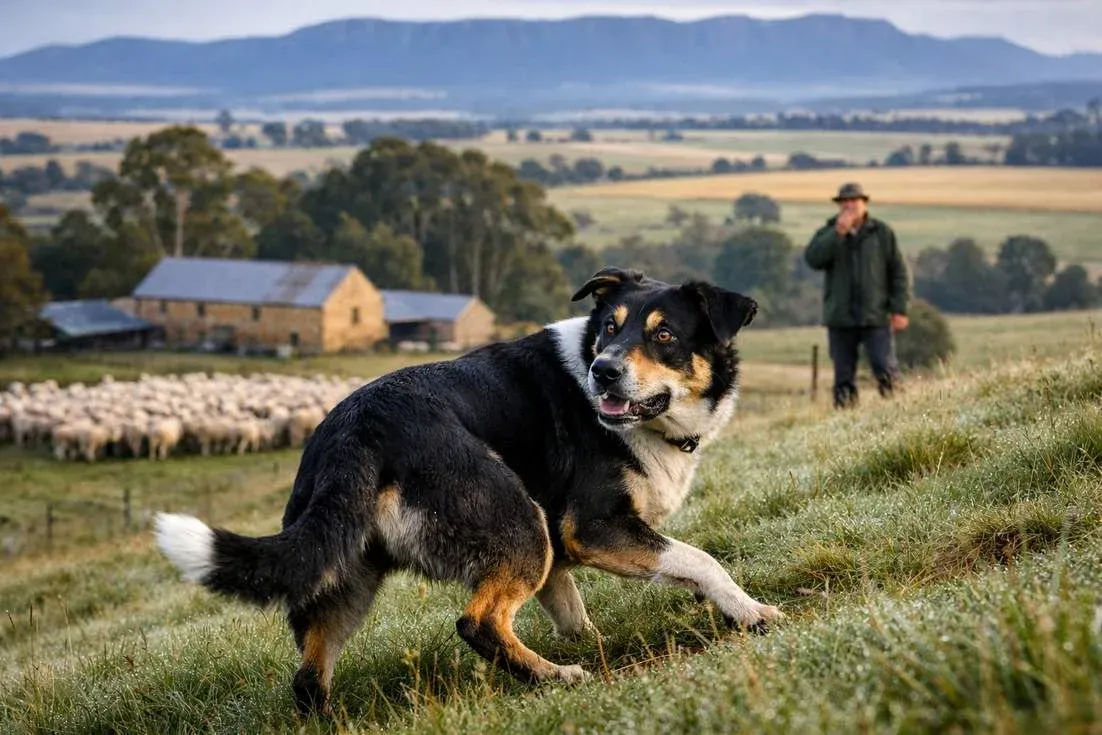
The Huntaway temperament is built for work — and understanding this is essential before bringing one home. These dogs have been selected for over a century based on their drive, stamina, and willingness to work independently in challenging conditions. The result is a dog that’s intelligent, energetic, and genuinely needs a job to do.
Vocal: Let’s address this first because it’s non-negotiable. Huntaways bark. It’s what they were bred to do. A Huntaway’s bark is loud, deep, and can carry across valleys. They bark when working, when excited, when they want attention, and sometimes seemingly just because they enjoy the sound. If barking bothers you or your neighbours, this is not your breed.
High-Energy: These dogs were bred to work steep hillsides for hours. Your Huntaway will need significant daily exercise and mental stimulation. A bored Huntaway will find creative ways to entertain themselves — usually involving destruction, digging, or (you guessed it) barking.
Intelligent: Huntaways are smart, trainable dogs who pick up commands quickly. Experienced Huntaway handlers note that these dogs can learn complex tasks and remember them for years. The flip side? They’re also smart enough to get bored and develop behavioural issues if understimulated.
Loyal & Affectionate: Despite their working heritage, Huntaways form strong bonds with their families. They’re not aloof dogs — they want to be involved in everything you do. As one Queensland Huntaway owner put it: “Mine follows me room to room. If I’m gardening, she’s gardening. If I’m on the couch, she’s trying to fit on the couch too.”
Independent Problem-Solvers: Working Huntaways often need to make decisions without handler input — figuring out how to move sheep in difficult terrain. This independence is valuable on a farm but can translate to stubbornness in a pet setting.
Huntaways can be excellent family dogs for active households with older children. Their energy and enthusiasm can be overwhelming for toddlers, and their herding instinct may lead them to chase or nip at running children. Teach children to respect the dog’s space, supervise interactions, and channel the dog’s energy appropriately.
Huntaways generally coexist well with other dogs, particularly if raised together. Their herding instinct can be triggered by cats and smaller animals, though this varies between individuals. Early socialisation helps, but some Huntaways will always want to “work” the family cat.
No, Huntaways are not an aggressive breed. They were bred to work with handlers and livestock, not to guard or protect aggressively. However, their deep bark and confident demeanour can be intimidating to people unfamiliar with the breed. A well-socialised Huntaway should be friendly with strangers.
Huntaway Health Issues
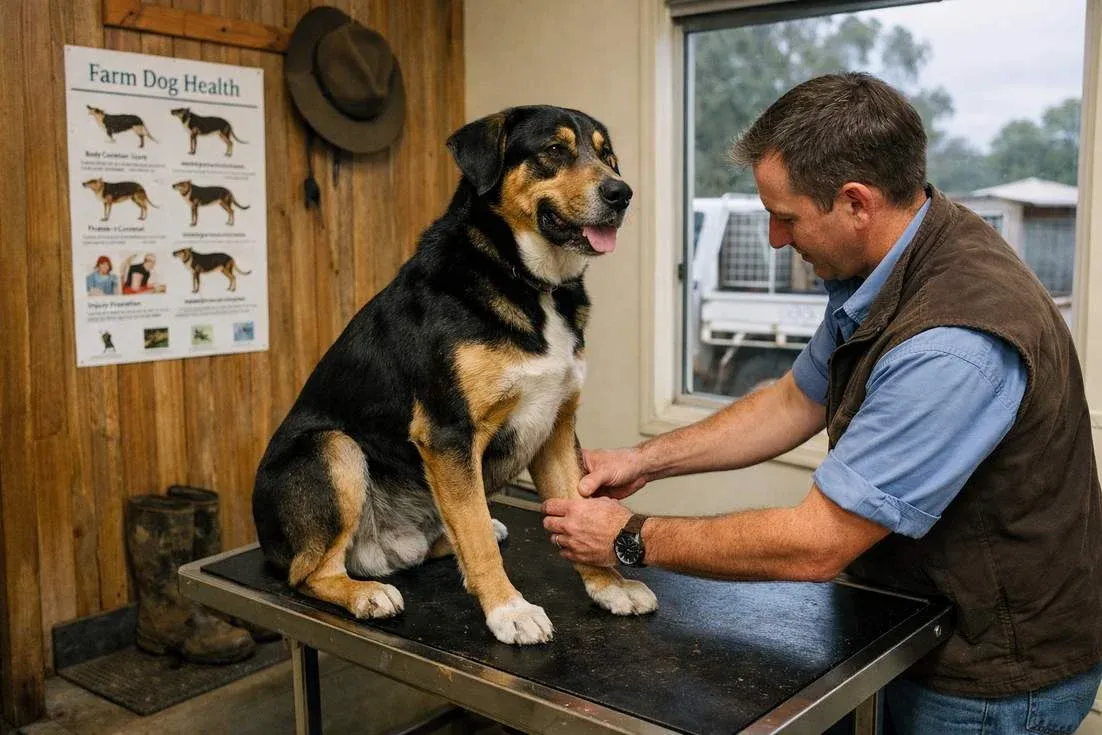
Huntaways are generally healthy, robust dogs — a benefit of being bred for function rather than appearance. Unlike many purebred dogs with closed gene pools, Huntaways have maintained genetic diversity because breeders prioritise working ability over pedigree. That said, there are still health concerns potential owners should understand.
Because Huntaways aren’t recognised by major kennel clubs, there’s less standardised health testing — making it especially important to choose breeders who prioritise health.
Prevalence: Moderate risk in medium-large breeds
Symptoms: Difficulty rising, reluctance to run or jump, bunny-hopping gait
Treatment Cost (AUD): $3,000 – $8,000 for surgical intervention
Prevention: Ask breeders for hip scores; maintain healthy weight; avoid over-exercising puppies
Prevalence: Less common than hip dysplasia but still a concern
Symptoms: Front leg lameness, reluctance to exercise, joint swelling
Treatment Cost (AUD): $2,500 – $6,000 for surgery
Prevention: Choose breeders who screen for elbow issues; controlled growth rate
Prevalence: Risk in deep-chested breeds
Symptoms: Distended abdomen, unproductive retching, restlessness
Treatment Cost (AUD): $3,000 – $8,000 emergency surgery
Prevention: Feed smaller meals; avoid exercise immediately after eating; use slow-feeder bowls
Huntaway Lifespan & Longevity Tips
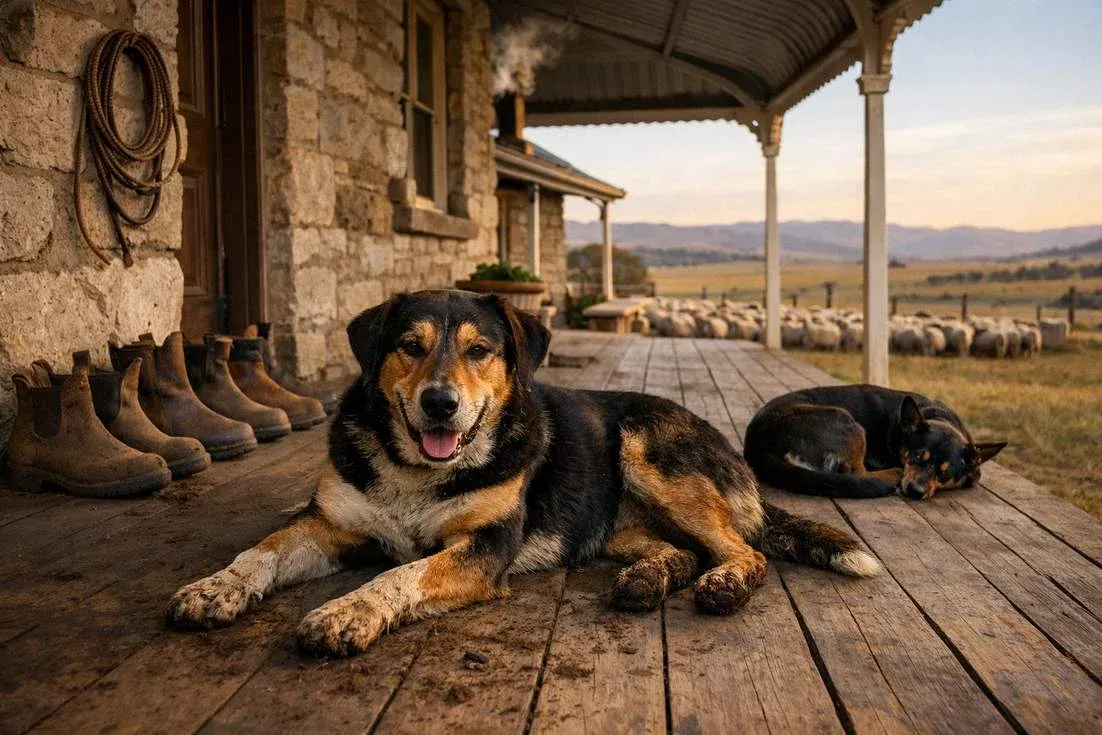
How long do Huntaways live? The good news is that Huntaway life expectancy is solid for a medium-large breed — typically 12-14 years.¹ Some well-cared-for Huntaways reach 15 years, particularly those from working lines where physical soundness has been prioritised.
This longevity is likely due to the breed’s genetic diversity and the fact that unhealthy dogs simply can’t do the work — natural selection has favoured robustness.
Longevity Tips:
- Maintain healthy weight — working dogs easily become overweight when retired
- Provide appropriate exercise throughout life (adjusting for age)
- Mental stimulation is just as important as physical exercise
- Annual vet check-ups, twice-yearly for seniors
- Quality nutrition formulated for active breeds
Huntaway Grooming Guide
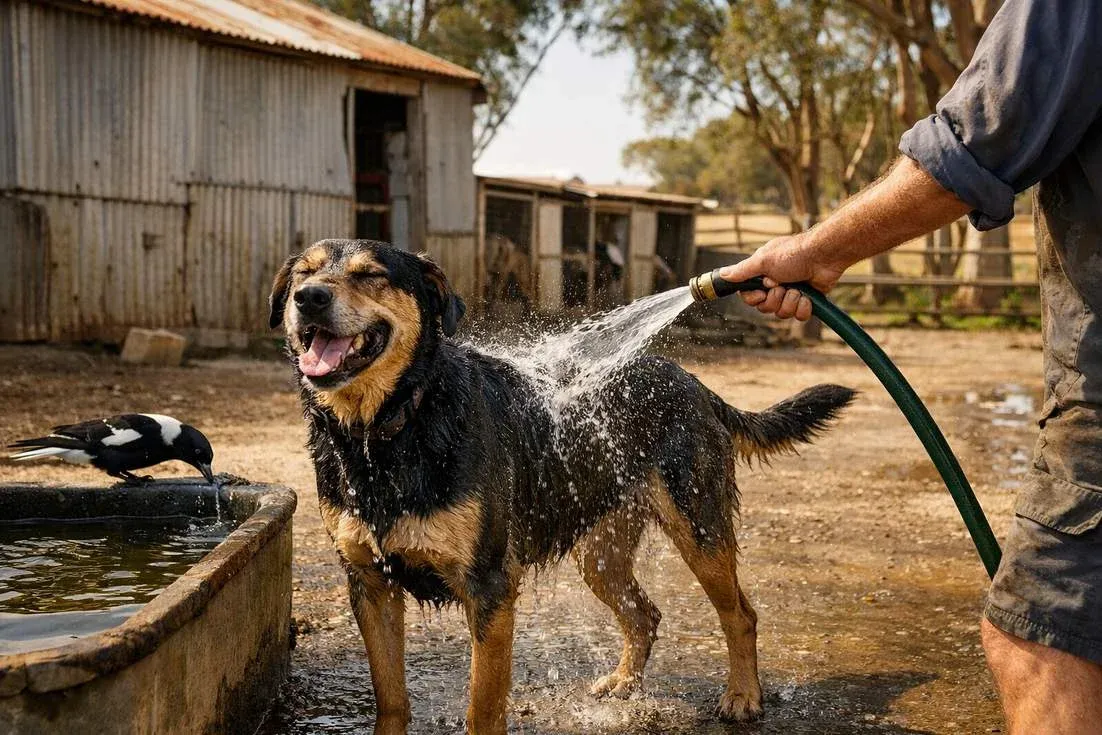
Huntaways are relatively low-maintenance in the grooming department — fitting for a working breed that doesn’t have time for fuss. Their coat ranges from short and smooth to slightly rough and medium-length. Do Huntaways shed? Yes, they shed moderately year-round with heavier shedding during seasonal changes.
Huntaway colours typically include black and tan (the most common), solid black, brindle, and occasionally tricolour. Some Huntaways have a longer, rougher coat — sometimes called “bearded Huntaways” — which requires slightly more grooming attention.
Grooming Schedule
| Task | Frequency | Time | Tools/Products |
|---|---|---|---|
| Brushing | Weekly | 10-15 mins | Slicker brush, undercoat rake |
| Bathing | Every 6-8 weeks | 20-30 mins | Dermcare/Fido’s Shampoo |
| Nail Trimming | Every 3-4 weeks | 10 mins | Clippers or grinder |
| Ear Cleaning | Fortnightly | 5 mins | PAW ear cleaner |
Huntaway Exercise Needs
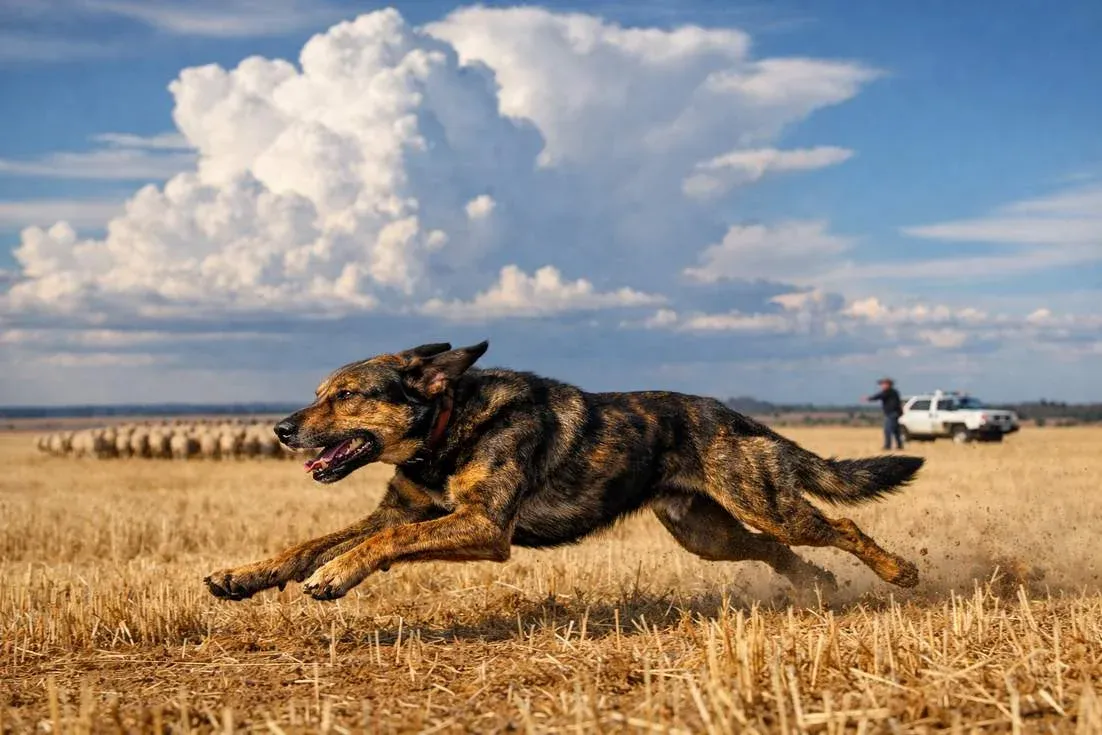
This is where many potential Huntaway owners underestimate the breed. A Huntaway’s exercise needs are HIGH — think 90+ minutes of activity daily, combining physical exercise and mental stimulation. This working breeds require significant daily exercise to prevent behavioural problems.⁷
Huntaway owners consistently report that a tired Huntaway is a good Huntaway. One experienced handler from NSW noted: “People see a Huntaway lounging on the porch and think they’re calm dogs. They’re calm because they’ve already done two hours of work this morning. An under-exercised Huntaway is a nightmare.”
Exercise Guidelines:
- Adults: Minimum 90 minutes daily — split between active play and training
- Puppies: 5 minutes per month of age, twice daily
- Mental exercise counts — training sessions, puzzle toys, scent work
- Ideal activities: Running, hiking, agility, herding trials, fetch
- Avoid: Long-distance running with puppies; exercise in extreme heat
In Australia’s climate, exercise timing matters. Early morning and evening exercise during summer months is advisable. Always provide access to water and shade.
Huntaway Training Guide
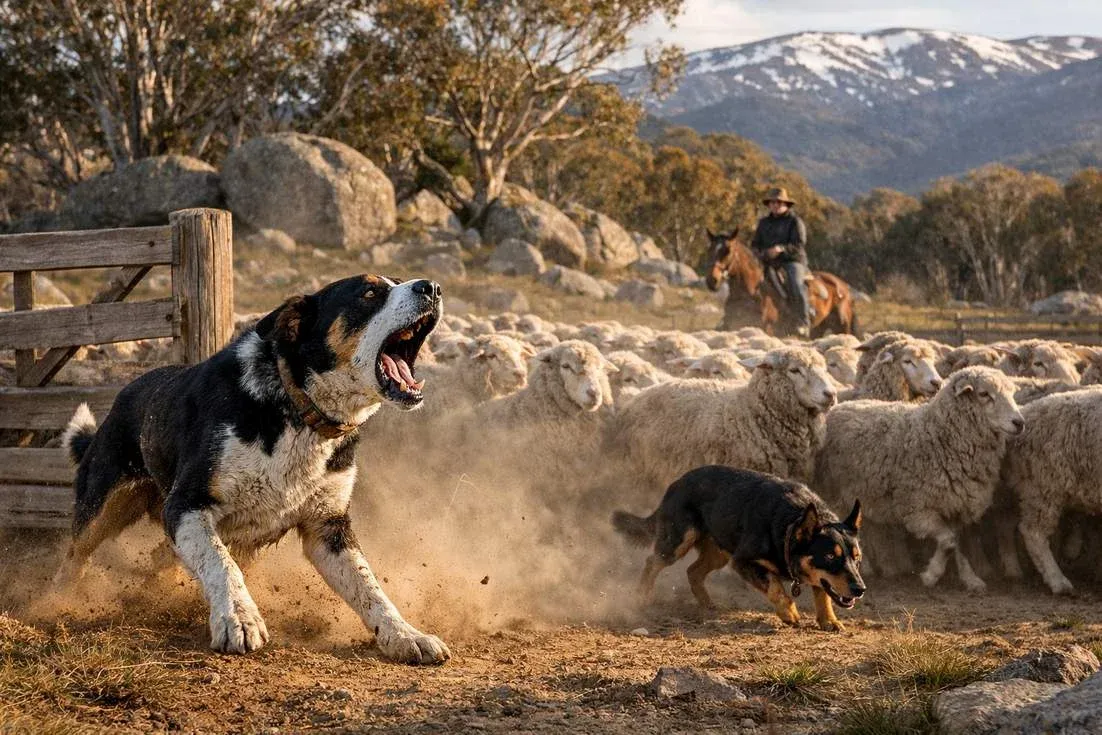
Training a Huntaway can be incredibly rewarding — these are smart dogs who genuinely enjoy working with their handlers. But don’t be discouraged if the first few weeks feel chaotic. Huntaway puppies are bundles of energy and enthusiasm that need patient, consistent guidance.
The key to Huntaway training is understanding their motivation: they want to work. Turn training into a job, and they’ll excel. Make it boring, and they’ll find something more interesting to do.
Managing the Bark: Let’s be realistic: you cannot train the bark out of a Huntaway. It’s hardwired into their DNA. What you can do is teach a “quiet” command to interrupt barking, manage situations that trigger unnecessary barking, and provide enough exercise that your dog isn’t barking from boredom.
Socialisation & Training Timeline
| Age | Training Focus | Expected Outcomes |
|---|---|---|
| 8-12 weeks | Socialisation, name recognition, crate training | Confident around new experiences |
| 3-6 months | Basic commands, leash manners, recall | Responds to basic cues reliably |
| 6-12 months | Advanced commands, impulse control, “quiet” cue | Well-mannered adolescent |
| 12+ months | Advanced work, proofing in distractions | Reliable working companion |
Training Tips:
- Keep sessions short (10-15 minutes) and end on success
- Use high-value rewards — Huntaways are food-motivated
- Channel their energy before training with a short walk
- Consistency is critical — all family members must use the same cues
Huntaway Price & Costs
Huntaway puppies are more affordable than many purebred dogs, primarily because they’re working dogs bred for function rather than pedigree. However, ongoing costs — particularly exercise equipment, training, and potential fencing — can add up.
Finding Huntaway breeders in Australia requires research since the breed isn’t registered with the ANKC. Look for working dog breeders in rural areas, check farming publications, and ask at working dog trials. Some Huntaways come from New Zealand breeders.³
Initial Costs:
| Expense | Approx. Cost (AUD) |
|---|---|
| Puppy Price (Working Lines) | $800 – $2,000 |
| Adoption Fee (Rescue) | $350 – $600 |
| Initial Vet + Vaccinations | $250 – $400 |
| Desexing | $300 – $500 |
| Essential Supplies | $400 – $700 |
| Secure Fencing (if needed) | $1,500 – $5,000+ |
| TOTAL INITIAL COST | $3,600 – $9,200+ |
Annual Ongoing Costs:
- Food (quality active-breed formula): $1,000 – $1,500 (Black Hawk, Advance)
- Vet & Preventatives: $500 – $900
- Pet Insurance: $600 – $1,200
- Grooming & Supplies: $150 – $300
- Training/Dog Sports: $300 – $800
- TOTAL ANNUAL: $2,550 – $4,700
Lifetime Cost Estimate: $35,000 – $65,000 (based on 13-year lifespan)
Is a Huntaway Right for You?
Active individuals or families with acreage or large properties, experienced dog owners who understand working breeds, people who can provide 90+ minutes of daily exercise, and those who don’t mind a vocal dog.
- Home: Rural property or large suburban block preferred. NOT suitable for apartments
- Yard: Secure fencing essential — Huntaways can jump and dig
- Neighbours: Distance from neighbours helps manage barking concerns
This can feel discouraging if you love the breed, but being honest now prevents heartbreak later.
- Apartment or townhouse dwellers
- People with close neighbours sensitive to noise
- First-time dog owners without experienced support
- Anyone unable to provide 90+ minutes of daily exercise
- People seeking a calm, quiet companion dog
Given the popularity of searches for “Huntaway x Kelpie” in Australia, it’s worth noting these crosses are common. Both breeds are intelligent working dogs, so crosses typically inherit high energy, strong work drive, and need for stimulation. The resulting dog may or may not bark as much as a purebred Huntaway — it’s unpredictable.
The New Zealand Huntaway is a remarkable breed — intelligent, loyal, hardworking, and genuinely unique among dogs. For the right owner, there’s nothing quite like the bond you’ll develop with a Huntaway. They’ll work beside you, play with enthusiasm, and announce every visitor with gusto.
Perfect for: Rural property owners, working dog enthusiasts, experienced owners with active lifestyles who can handle the bark.
Think twice if: You live in close quarters, need a quiet dog, can’t commit to significant daily exercise, or want a low-maintenance companion.
First-time owner rating: 2/5 — Not recommended for inexperienced owners unless you have access to mentorship and live on suitable property.
Huntaway FAQs
What is a Huntaway?
A Huntaway is a working dog breed developed in New Zealand specifically to move sheep using their bark. Unlike silent herding dogs like Border Collies, Huntaways were bred to “hunt away” (drive sheep from behind) using their loud, carrying voice.¹
How long do Huntaways live?
Huntaway life expectancy is typically 12-14 years, which is good for a medium-large breed.⁶
Do Huntaways make good family pets?
Huntaways can make excellent pets for families with active lifestyles, space, and tolerance for barking. They require 90+ minutes of daily exercise and aren’t suitable for apartments.
Are Huntaways aggressive?
No, Huntaways are not an aggressive breed. They were bred to work cooperatively with handlers and livestock, not for guarding. Their deep bark can sound intimidating, but well-socialised Huntaways are typically friendly.
What breeds make up a Huntaway?
Huntaways were developed from multiple breeds including Border Collies, Labrador Retrievers, Rottweilers, Dobermans, and various hound breeds. Dogs were selected for working ability rather than pedigree.²
How big do Huntaway dogs get?
Huntaway size varies: males typically stand 56-66 cm at the shoulder and weigh 25-40 kg. Females are slightly smaller at 51-61 cm and 22-35 kg.¹
Can you stop a Huntaway from barking?
You cannot eliminate barking in a Huntaway — it’s bred into them. You can manage it by teaching a “quiet” command, providing adequate exercise, and managing triggers.
Where can I find Huntaway puppies in Australia?
Since Huntaways aren’t ANKC registered, finding breeders requires research. Look for working dog breeders in rural areas, check farming publications, or contact breed enthusiast groups. Some puppies are imported from New Zealand.³
Primary Sources:
- New Zealand Kennel Club — Huntaway breed information — nzkc.org.nz
- NZ Huntaway Club — Breed history and development — nzhuntaway.co.nz
- Working Dog Alliance Australia — Working breed resources — workingdogalliance.com.au
Veterinary & Health Sources:
- VCA Hospitals — Working breed health considerations — vcahospitals.com
- Australian Veterinary Association — Pet insurance recommendations — ava.com.au
- PetMD — Working dog lifespan and health — petmd.com
Australian-Specific Sources:
- RSPCA Australia — Exercise guidelines for working breeds — rspca.org.au
- PetRescue — Adoption resources — petrescue.com.au