

In 2023, the French Bulldog officially became the most popular dog breed in Australia, ending the Labrador’s 30-year reign at the top.¹ That’s not just a statistic — it’s a revolution in the way Australians think about what makes the perfect family dog. Compact enough for apartment living, affectionate enough to melt the coldest heart, and stubborn enough to keep things interesting, the French Bulldog has captured our nation’s imagination for good reason.
But here’s the thing — behind those bat ears and squishy faces lies a breed that demands more than just Instagram-worthy photos. Your French Bulldog will need specialised care, a solid understanding of their unique health challenges, and the kind of patience that turns first-time owners into seasoned dog people.
What You’ll Learn
- Breed traits & temperament
- Health concerns to know
- True cost in Australia
- Training & exercise needs
- Is this breed right for you?
French Bulldog Quick Facts Table
| Attribute | Details |
|---|---|
| Breed Group | Non-Sporting / Companion |
| Origin | France (developed from English Bulldogs) |
| Size Category | Small |
| Height (Adult) | Male: 27-35 cm | Female: 24-32 cm |
| Weight (Adult) | Male: 9-14 kg | Female: 8-13 kg |
| Lifespan | 10-14 years |
| Coat Type | Short, smooth, fine |
| Exercise Needs | 30-45 minutes/day |
| Trainability | 3/5 (moderately trainable) |
| Good with Children | Excellent |
| First-Time Owner Suitable | 4/5 |
| Average Puppy Price (AUD) | $4,500 – $8,000 |

History of the French Bulldog
Despite the name, the French Bulldog actually has English roots. In the mid-1800s, lace workers in Nottingham bred smaller “toy” Bulldogs as lap warmers during cold factory shifts. When the Industrial Revolution displaced these workers to France, they brought their miniature companions along — and the French absolutely fell in love.²
Parisian society embraced these compact dogs, and French breeders refined the look we know today: the iconic bat ears, the flat face, and that irresistible stocky build. According to the American Kennel Club’s breed history archives, the French Bulldog quickly became a symbol of Parisian café culture and artistic bohemia.²
The breed arrived in Australia in the early 1900s but only gained mainstream popularity in the 2010s. Today, French Bulldogs are consistently among the top three most registered breeds with Dogs Australia.³
French Bulldog Temperament
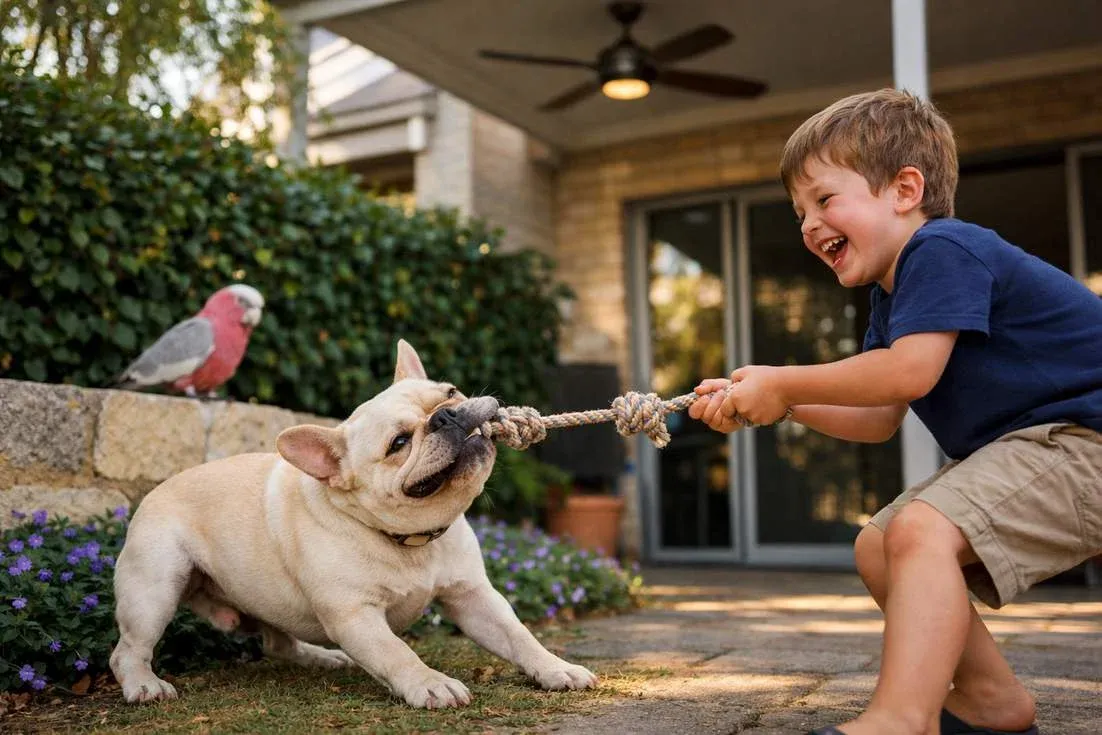
If you’re expecting a high-energy athlete, prepare to be pleasantly surprised. The French Bulldog temperament is best described as adaptable, affectionate, and entertainingly stubborn. Many French Bulldog owners report that their dogs seem to have an almost human-like emotional intelligence — they read the room, adjust their energy accordingly, and always seem to know when you need a cuddle.
Affectionate: Your French Bulldog will follow you from room to room, supervising your every move with quiet dedication. They’re often called “velcro dogs” for good reason.
Adaptable: Whether you live in a Sydney apartment or a Queensland farmhouse, Frenchies adjust. They’re equally content snoozing on the couch or joining you for a café outing.
Playful: Don’t let the compact frame fool you — these dogs have a surprising burst of energy. Expect zoomies, toy obsessions, and the occasional wrestling match with cushions.
Stubborn: There’s a reason breeders joke that “Frenchies don’t have owners — they have staff.” This breed knows what it wants and will negotiate accordingly.
Alert: Despite their relaxed demeanour, French Bulldogs make surprisingly good watchdogs. They’ll bark to alert you of visitors but rarely become nuisance barkers.
French Bulldogs excel as family dogs. Their sturdy build means they can handle the enthusiastic affection of young children better than most small breeds, and their patient nature makes them forgiving of the occasional tail tug. Experienced handlers often say that Frenchies seem to instinctively adjust their play style based on who they’re interacting with — gentler with toddlers, more boisterous with older kids.
Most French Bulldogs get along well with other dogs, especially when socialised early. They’re generally too lazy to chase cats, though individual personalities vary significantly between dogs. If your Frenchie was raised with feline siblings, expect peaceful coexistence — perhaps even cuddling.
If your French Bulldog starts demanding attention by barking or pawing at you during work-from-home calls, don’t panic — this is classic Frenchie behaviour. The solution is simple: establish a “settle” routine before you start work, with a Kong or puzzle feeder to keep them occupied.
Separation anxiety can be a real challenge with this people-oriented breed. First-time French Bulldog owners are often surprised by just how attached their dog becomes — it’s flattering, but requires management. Start independence training early with short absences and gradually increase duration.
French Bulldog Health Issues
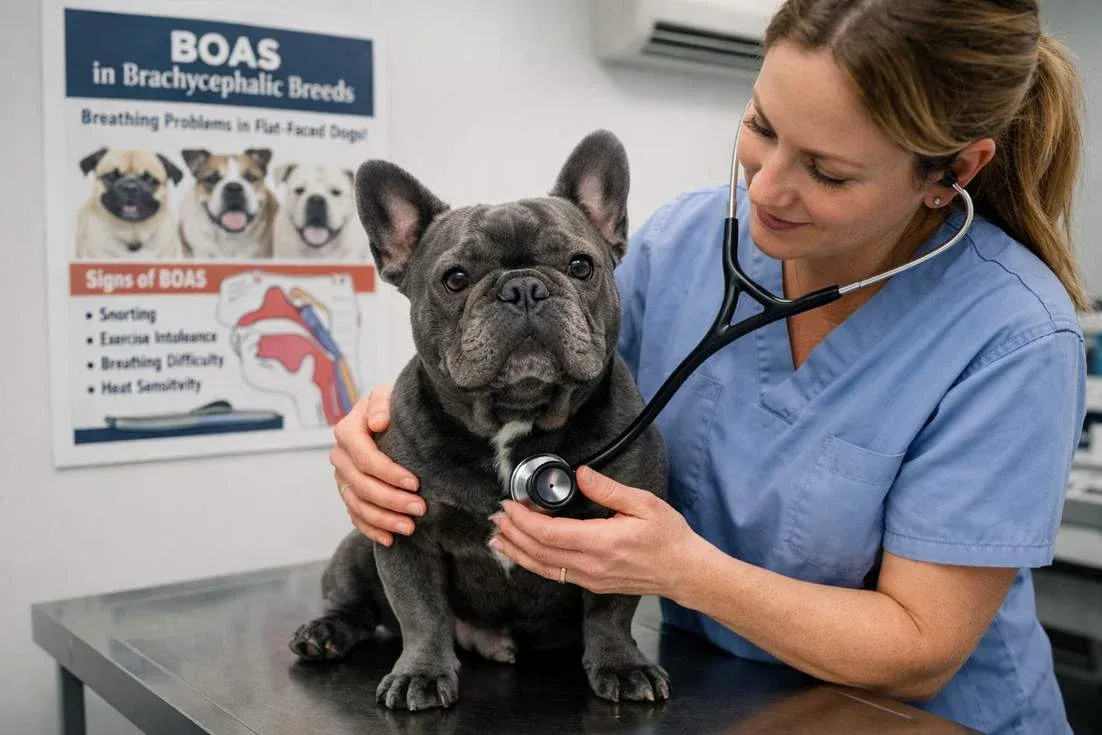
If you’re worried about French Bulldog health problems, you’re not alone — it’s one of the first things prospective owners ask, and rightfully so. The good news is that understanding these issues upfront allows you to choose a responsible breeder, budget for appropriate care, and catch problems early.
The flat face that makes French Bulldogs so appealing is also the source of their most significant health challenges.
Prevalence: Affects 50-70% of French Bulldogs to varying degrees
Symptoms: Noisy breathing, snoring, exercise intolerance, overheating
Treatment Cost (AUD): $3,000 – $6,000 for corrective surgery
Prevention: Choose breeders who test for BOAS; maintain healthy weight
Prevalence: Affects approximately 20% of French Bulldogs
Symptoms: Back pain, reluctance to jump, wobbling gait, paralysis in severe cases
Treatment Cost (AUD): $5,000 – $12,000 for spinal surgery
Prevention: Use ramps instead of stairs; maintain healthy weight; avoid rough play
Skin Allergies and Dermatitis: Affects 30-40% of French Bulldogs. Symptoms include itching, red skin, ear infections, paw licking. Treatment costs $500 – $2,000 AUD annually for management. Prevention includes regular skin fold cleaning, quality diet, and allergy testing if needed.
Hip Dysplasia: Affects approximately 18% of French Bulldogs according to the Orthopedic Foundation for Animals.⁵ Symptoms include bunny-hopping gait, difficulty rising, reluctance to exercise. Treatment costs $3,000 – $7,000 AUD for hip replacement surgery. Choose breeders with OFA-certified parents; maintain healthy weight.
It recommends comprehensive pet insurance for French Bulldogs due to their predisposition to expensive health conditions. Budget accordingly — this breed costs more to maintain than many others.⁶

French Bulldog Lifespan & Longevity Tips
How long do French Bulldogs live? The average French Bulldog life expectancy is 10-14 years, with well-bred dogs from health-tested parents often reaching the higher end. Research from PetMD suggests that Frenchies who maintain a healthy weight and receive proper veterinary care can live full, active lives well into their teens.⁷
Longevity Tips:
- Maintain optimal weight — obesity significantly shortens lifespan
- Keep them cool — heat stress is a serious risk for this breed
- Regular vet check-ups — twice yearly for seniors
- Quality diet — premium food supports overall health
- Dental care — brush teeth regularly to prevent periodontal disease

French Bulldog Grooming Guide
Do French Bulldogs shed? Yes, but not excessively. Their short, smooth coat sheds moderately year-round, with heavier seasonal shedding in spring and autumn. Weekly brushing keeps loose fur under control and distributes natural oils.
French Bulldogs come in a stunning variety of colours: fawn, brindle, cream, white, and combinations like fawn and white or brindle and white. More exotic colours like blue French Bulldog, lilac French Bulldog, and merle French Bulldog exist but are not recognised by the ANKC and may be associated with health issues.³
Grooming Schedule Table
| Task | Frequency | Time | Tools/Products |
|---|---|---|---|
| Brushing | Weekly | 5-10 mins | Rubber curry brush, bristle brush |
| Bathing | Monthly or as needed | 15-20 mins | Dermcare/Fido’s Shampoo |
| Skin Fold Cleaning | Daily | 2-3 mins | PAW skin fold wipes |
| Nail Trimming | Every 2-3 weeks | 10-15 mins | Clippers or grinder |
| Professional Grooming | Optional | 1 hour | $50-$80 |
The most critical grooming task? Cleaning those adorable facial wrinkles. Moisture and debris trapped in skin folds can lead to infections, so daily cleaning with a damp cloth followed by thorough drying is essential.
French Bulldog Exercise Needs
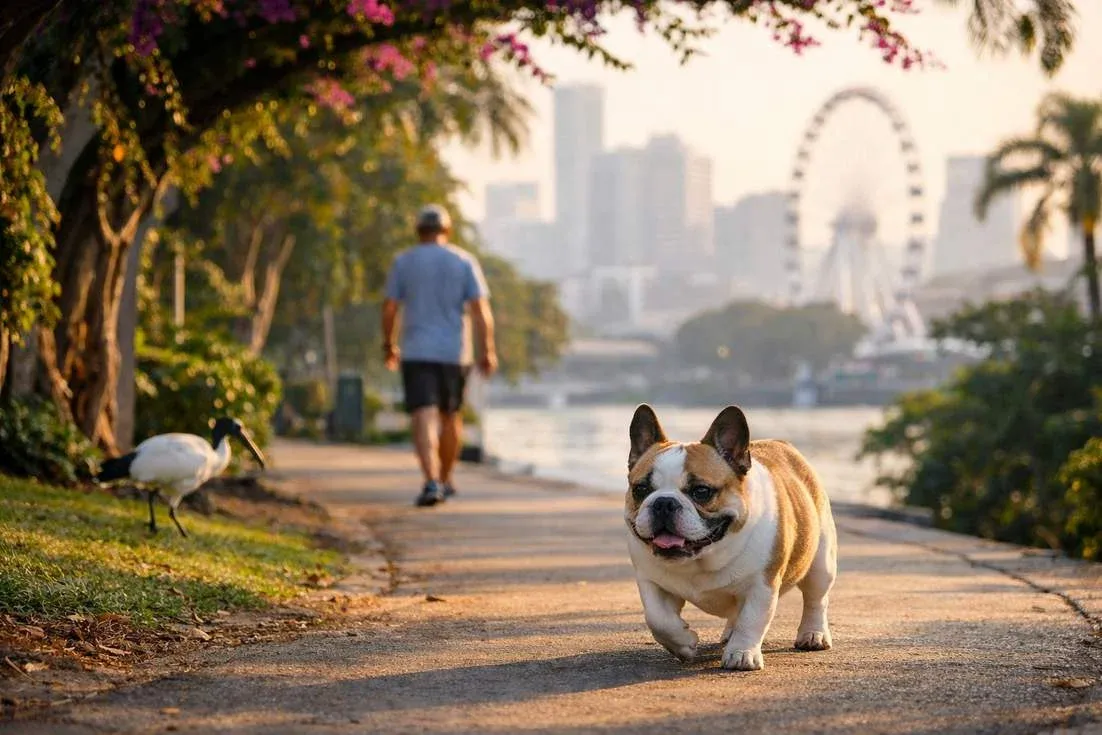
It is recommends that French Bulldogs receive 30-45 minutes of daily exercise, broken into shorter sessions to prevent overheating.⁸ Unlike high-energy breeds that need hours of activity, your Frenchie will be perfectly content with moderate walks and play sessions.
Many French Bulldog owners report that their dogs are surprisingly playful indoors but tend to “hit the wall” outdoors — one minute they’re trotting along happily, the next they’ve planted themselves firmly and refuse to budge. If your Frenchie suddenly stops mid-walk and gives you that immovable look, they’re not being stubborn (well, not just stubborn) — they’re likely getting too warm or tired. Bring water, find shade, and take a break.
Exercise Guidelines:
- Two 15-20 minute walks daily (avoid midday heat in summer)
- Indoor play sessions: fetch, tug-of-war, puzzle toys
- Always carry water during walks
- Watch for signs of overheating: excessive panting, drooling, slowing down
- Swimming is NOT recommended — most Frenchies sink like stones
In Australia’s climate, timing is everything. During summer, walk your French Bulldog early in the morning or after sunset. Many owners invest in cooling vests and portable water bowls for hotter days.
French Bulldog Training Guide
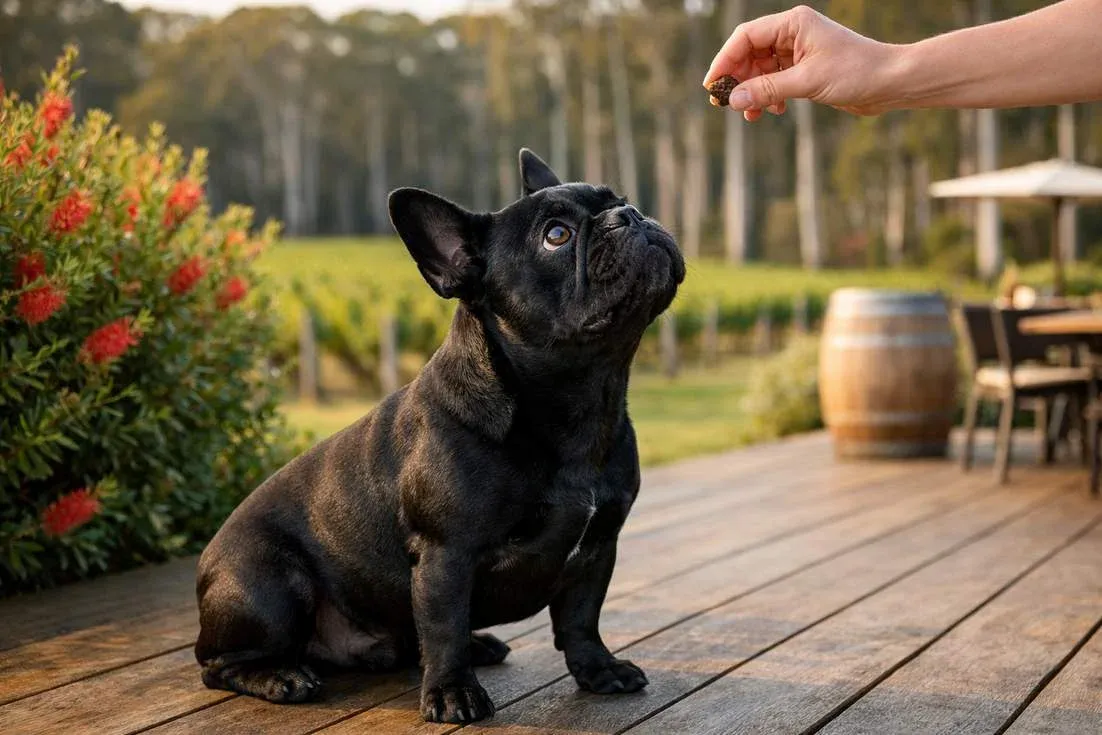
This can feel overwhelming at first, but don’t be discouraged if your French Bulldog seems to learn commands at their own pace — they’re smart, they understand what you want, they’re just deciding whether it’s worth their effort. The key to training a Frenchie is making cooperation more rewarding than stubbornness.
When your French Bulldog hits adolescence around 6-9 months, expect a phase where previously reliable commands become “optional.” The key is to stay patient, increase the value of your treats, and remember that this too shall pass. Many owners in Australian French Bulldog communities mention that consistency during this teenage phase pays off enormously.
Training Timeline
| Age | Training Focus | Expected Outcomes |
|---|---|---|
| 8-12 weeks | Name recognition, potty training, crate training | Basic recognition, house routine |
| 3-4 months | Sit, stay, come, leash manners | Basic obedience foundation |
| 4-6 months | Advanced commands, socialisation | Reliable basics, social confidence |
| 6-12 months | Impulse control, distraction proofing | Well-mannered companion |
Training Tips:
- Keep sessions short (5-10 minutes) — Frenchies bore easily
- Use high-value treats — cheese, chicken, or freeze-dried liver work well
- Avoid repetitive drilling — they’ll shut down
- Make training feel like a game, not a chore
- End on a positive note — always finish with something they can succeed at
French Bulldog Price & Costs
Let’s talk numbers, because the French Bulldog price in Australia often catches first-time buyers off guard. This breed is expensive to buy and expensive to maintain — understanding the true cost upfront prevents financial stress later.
Find registered French Bulldog breeders through the Dogs Australia Breeder Directory.³ For adoption options, check PetRescue or the French Bulldog Rescue Network of Australia.
Initial Costs:
| Expense | Approx. Cost (AUD) |
|---|---|
| Puppy Price (Registered Breeder) | $4,500 – $8,000 |
| Adoption Fee (Rescue) | $400 – $800 |
| Initial Vet + Vaccinations | $200 – $400 |
| Desexing | $400 – $700 |
| Essential Supplies (bed, crate, bowls, etc.) | $400 – $700 |
| TOTAL INITIAL COST | $5,900 – $10,600 |
Annual Ongoing Costs:
- Food (premium quality): $800 – $1,200 (Black Hawk, Advance)
- Vet & Preventatives: $600 – $1,000
- Pet Insurance: $1,200 – $2,400 (comprehensive coverage highly recommended)
- Grooming & Supplies: $200 – $400
TOTAL ANNUAL: $2,800 – $5,000
Lifetime Cost Estimate: $35,000 – $65,000 (based on 12-year lifespan, including potential health treatments)
According to PetSure’s Annual Pet Report, French Bulldogs are among the top five most expensive breeds to insure in Australia, reflecting their higher-than-average health claim rates.⁹
Is a French Bulldog Right for You?
Someone who works from home or has flexible hours, lives in any size dwelling (apartment to house), wants an affectionate companion without high exercise demands, and has the budget for potential health costs.
Home Size: Apartment-friendly — one of the best breeds for unit living
Yard: Not essential, but secure outdoor access appreciated
Climate: Struggles in hot weather — air conditioning essential in Australian summers. Best suited to temperate climates or homes with cooling
This can feel overwhelming, but being honest about challenges upfront saves heartbreak later.
- Those who work long hours away from home — this breed needs companionship
- People seeking a jogging or hiking partner — Frenchies can’t keep up
- Anyone on a tight budget — health costs can be significant
- Those who live in very hot climates without air conditioning
- People who want a quiet dog — Frenchies snore, snort, and make many noises
The French Bulldog is a remarkable companion — affectionate, adaptable, and endlessly entertaining. They’ll make you laugh with their antics, comfort you with their presence, and probably snore loudly next to you on the couch.
Perfect for: Apartment dwellers, families with children, retirees, work-from-home professionals, and anyone seeking a low-exercise but high-affection companion.
Think twice if: You’re away from home frequently, need a running buddy, live in a hot climate without cooling, or are on a limited pet budget.
First-time owner rating: 4/5 — Highly suitable provided you understand the health requirements and costs involved.
French Bulldog FAQs
Are French Bulldogs good for first-time owners?
Yes, French Bulldogs are excellent for first-time owners due to their adaptable nature, moderate exercise needs, and affectionate temperament. However, be prepared for potential health costs and ensure you can provide air conditioning during Australian summers.⁴
Do French Bulldogs shed a lot?
French Bulldogs shed moderately year-round, with increased shedding in spring and autumn. Weekly brushing keeps shedding manageable. Their short coat doesn’t require professional grooming.
How long do French Bulldogs live?
The average French Bulldog lifespan is 10-14 years. Well-bred dogs from health-tested parents, maintained at a healthy weight, often reach the higher end of this range.⁷
How much does a French Bulldog cost in Australia?
French Bulldog puppies from registered breeders cost $4,500-$8,000 AUD. Expect to spend an additional $2,800-$5,000 annually on food, vet care, and insurance. Lifetime costs can reach $35,000-$65,000.⁹
Are French Bulldogs aggressive?
No, French Bulldogs are generally not aggressive. They’re bred as companion dogs and typically have friendly, affectionate temperaments. Proper socialisation during puppyhood further ensures good behaviour with people and other animals.
How much exercise does a French Bulldog need?
French Bulldogs need 30-45 minutes of daily exercise, ideally split into shorter sessions. Avoid exercise during hot weather due to their breathing limitations. Indoor play and short walks are ideal.⁸
Do French Bulldogs have tails?
Yes, French Bulldogs have naturally short tails that are either straight or “screwed” (curved). Their tails are not docked — they’re born this way due to selective breeding. Some French Bulldogs have longer tails than others.
What is a fluffy French Bulldog?
A fluffy French Bulldog (also called a long-haired French Bulldog) carries a recessive gene that produces a longer, fluffy coat. While popular, this is not a recognised coat type under ANKC standards and may come from less reputable breeding programs.
Primary Sources:
- Dogs Australia (ANKC) — Official breed registration and standards — dogsaustralia.org.au
- American Kennel Club (AKC) — Breed history archives — akc.org/dog-breeds/french-bulldog/
- ANKC Breed Standards — Physical characteristics and colours — ankc.org.au
Veterinary & Health Sources:
- VCA Hospitals — Brachycephalic Syndrome in Dogs — vcahospitals.com
- Orthopedic Foundation for Animals (OFA) — Hip dysplasia statistics — ofa.org
- Australian Veterinary Association — Pet insurance recommendations — ava.com.au
- PetMD — French Bulldog breed guide and lifespan — petmd.com
Australian-Specific Sources:
- RSPCA Australia — Exercise guidelines for brachycephalic breeds — rspca.org.au
- PetSure (Bow Wow Meow) — Annual Pet Insurance Report — petsure.com.au