
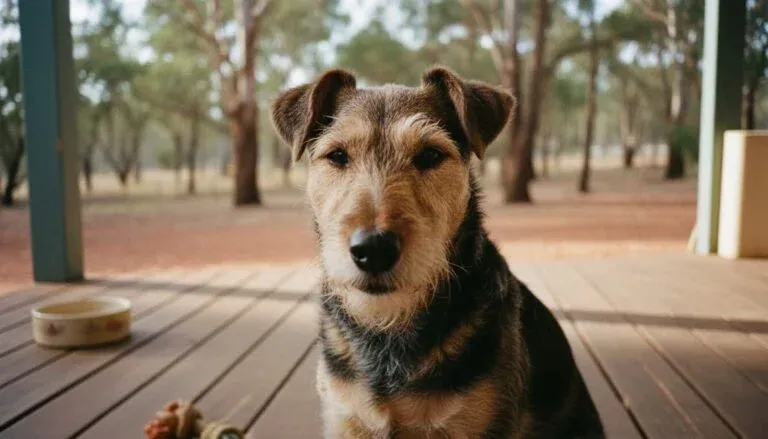
The Wire Fox Terrier has won Best in Show at Westminster more than any other breed in history — fifteen times. It’s starred in Hollywood films, appeared in Tintin comics, walked alongside kings in funeral processions, and been drawn by Charles Darwin himself. For a dog that weighs less than eight kilograms, it’s had an outsized impact on popular culture.
But the show ring wins and celebrity cameos can give a misleading impression of what it’s actually like to live with a Wire Fox Terrier. This is not a pampered lapdog. Beneath that sculpted, bearded face and immaculate wiry coat is a working terrier with centuries of fox-bolting instinct still running hot. They’re fast, fearless, opinionated, and equipped with a bark that will carry across your entire street. They dig. They chase. They will absolutely try to run your household if you let them.
If you’re ready for a dog with the confidence of a Great Dane packed into a body the size of a carry-on suitcase, the Wire Fox Terrier might be the most entertaining companion you’ll ever own. But the grooming alone — specifically, hand stripping — is enough to send unprepared owners running. This guide covers everything Australian owners need to know: temperament (the real version), health conditions with AUD costs, the hand stripping vs clipping debate, exercise, training, pricing, and where to find registered breeders.
What You’ll Learn
- Breed traits & temperament
- Health concerns to know
- True cost in Australia
- Training & exercise needs
- Is this breed right for you?
Quick Facts at a Glance
| Trait | Details |
|---|---|
| Official Name | Fox Terrier (Wire) |
| Nicknames | Wire, Wire Fox, Foxy, WFT |
| Origin | England (late 1700s) |
| Breed Group | Terrier Group (AKC/ANKC Group 2 — Terriers) |
| Height (Male) | 37–40 cm (approx. 15–16 inches) |
| Height (Female) | 34–38 cm (approx. 13–15 inches) |
| Weight (Male) | 7.5–8.5 kg (16–18 lbs) |
| Weight (Female) | 6.5–7.5 kg (14–17 lbs) |
| Lifespan | 12–15 years |
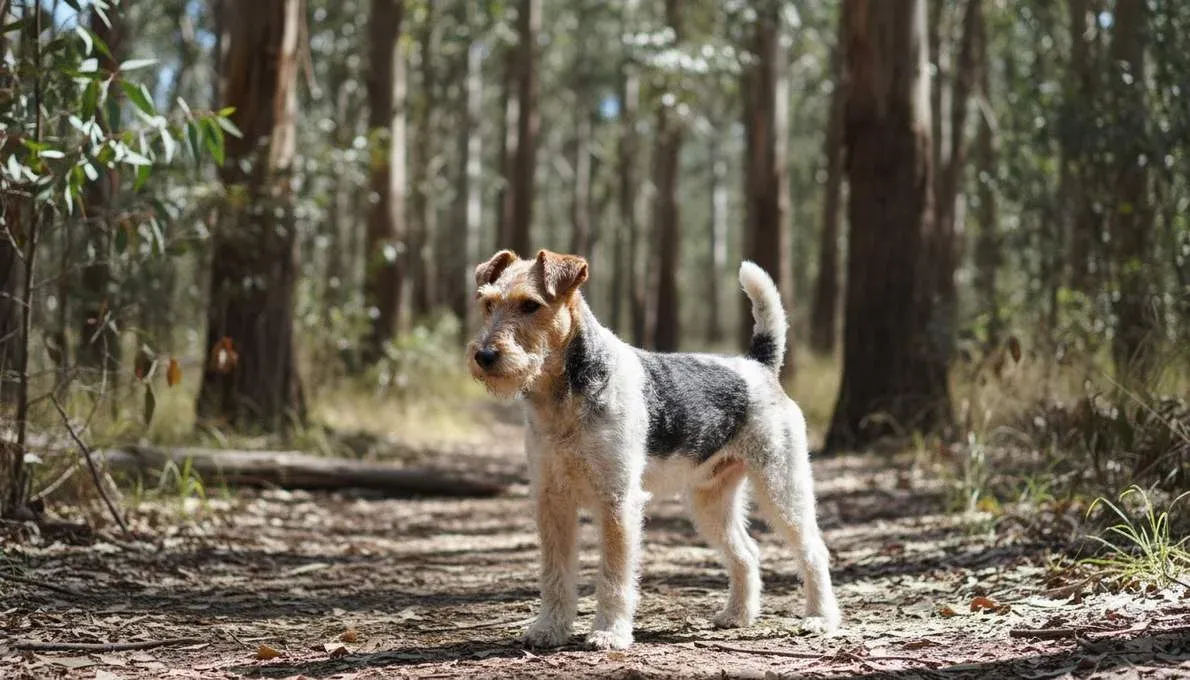
| Coat Type | Dense, wiry double coat; twisted, crinkly guard hairs over soft undercoat |
| Coat Colours | Predominantly white with black, tan, or black-and-tan markings. No red permitted. |
| Temperament | Alert, fearless, lively, affectionate, independent, confident, vocal |
| Exercise Needs | High — 45–60+ minutes daily; mental stimulation essential |
| Shedding | Very low — one of the lowest-shedding breeds when coat is properly maintained |
| Hypoallergenic | Often listed as hypoallergenic; very low shedding but no breed is truly allergy-free |
| Good with Kids | Good with older children; may be too intense for toddlers |
| Good with Other Dogs | Variable — can be scrappy; early socialisation essential |
| Good with Small Pets | No — strong prey drive; not reliable around cats, rabbits, or rodents |
| Barking Level | High — bred to bark to alert hunters; vocal breed |
| Apartment Suitable | Possible with sufficient exercise and bark management |
| ANKC Recognition | Yes — Group 2 (Terriers) |
| Australian Availability | Moderate — several active ANKC breeders across multiple states |
| Price Range (AUD) | $2,500–$5,000+ (purebred from registered breeder) |
History & Origins
The Wire Fox Terrier’s history is inseparable from the British foxhunt — the grand, mounted tradition that defined rural English aristocracy for centuries. These small, fierce dogs weren’t ornaments. They had a specific, dangerous job: go underground into a fox’s den and flush it out so the hounds could give chase.
The Foxhunt Connection (1700s–1800s)
Fox Terriers were developed in the late 1700s by foxhound masters who needed a small, brave, fast dog that could keep pace with mounted hunters and then go to ground when the fox retreated to its den. The Wire Fox Terrier is thought to have descended from the rough-coated black-and-tan terriers of Wales, Derbyshire, and Durham — a separate lineage from the Smooth Fox Terrier, despite the two breeds being treated as varieties of the same breed for over a century.
Breeders deliberately selected for predominantly white coats so that hunters could distinguish the dog from the fox in the chaos of a hunt. No red colouring was permitted in the standard, and that rule persists today. Early crosses with the Smooth Fox Terrier helped refine the Wire’s head shape and increase white pigmentation. Interbreeding between Wires and Smooths ceased in the early 1900s.
Show Ring Dominance
The Wire Fox Terrier quickly became one of the most successful show dogs in history. It was recognised by the Kennel Club in England in the late 1800s and by the AKC in 1885 (though the AKC didn’t formally separate Wires and Smooths until 1985). The breed has won Westminster’s Best in Show fifteen times — more than any other breed — a record that still stands.
Famous Wire Fox Terriers
King Edward VII owned a Wire named Caesar who was so beloved that he marched alongside the King’s casket in the 1910 funeral procession, ahead of nine reigning monarchs. Asta, a Wire Fox Terrier, starred in six “Thin Man” films in the 1930s and 1940s, turning the breed into a household name. Tintin’s faithful companion Snowy (Milou in the original French) is a Wire Fox Terrier. Charles Darwin owned a Wire named Polly who appeared in illustrations for his final book.
The Wire Fox Terrier in Australia
The Wire Fox Terrier has been present in Australia for well over a century and is recognised by Dogs Australia (ANKC) in Group 2 (Terriers). The breed has a strong show presence in Australia, with dedicated breeders across NSW, Victoria, Queensland, and South Australia. The Fox Terrier Club of NSW and the Fox Terrier Club of Victoria both cater to Wire and Smooth varieties. While the breed isn’t as common as it once was, it’s considerably more available than many rare breeds — active breeders regularly produce litters, and puppies can typically be found with moderate wait times.
Wire Fox Terrier Temperament & Personality
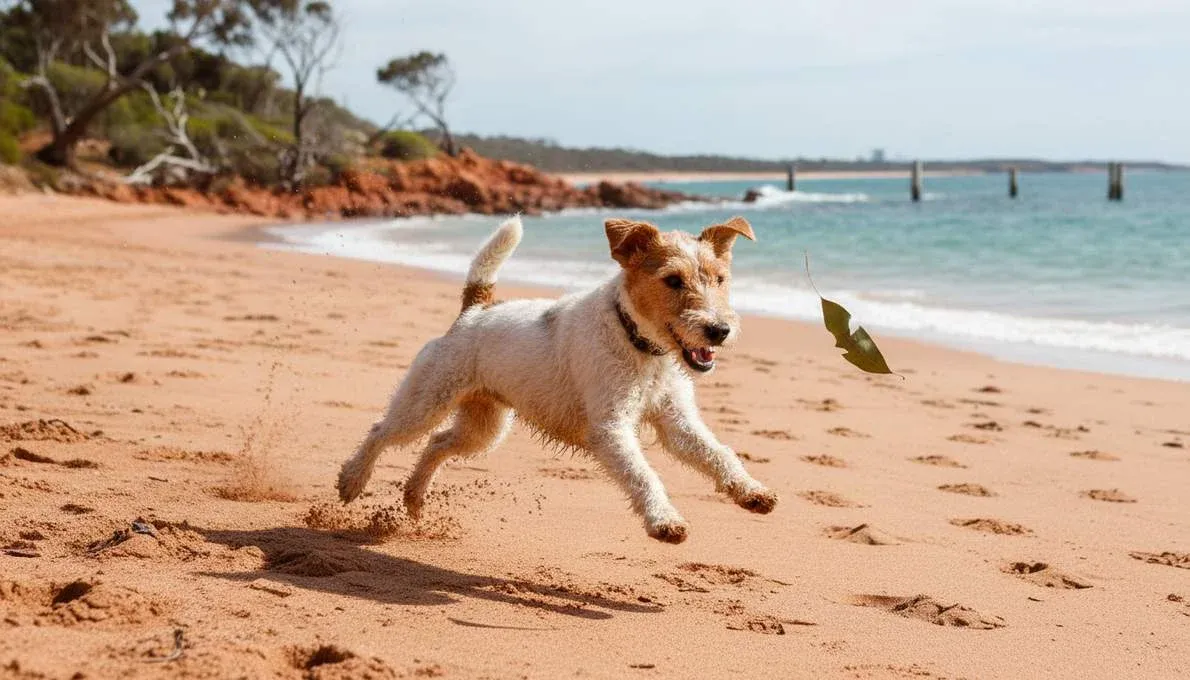
The AKC breed standard describes the Wire Fox Terrier as being “on the tip-toe of expectation at the slightest provocation.” That line tells you more about living with this breed than any personality test. Wire Fox Terriers are wired — alert, reactive, opinionated, and perpetually convinced that something interesting is about to happen. They move through life like they’ve had three espressos.
Wire Fox Terriers have absolutely no concept of their own size. An 8 kg Wire will confront a dog ten times its weight with genuine confidence. This fearlessness was essential for a dog expected to enter a fox’s underground den alone, but in suburban life it means they can be scrappy with other dogs if not properly socialised. They’re not aggressive by nature — they’re bold. There’s a difference, but the practical outcome for unprepared owners can look similar.
At home, Wire Fox Terriers are deeply affectionate. They bond intensely with their family and want to be involved in everything. They’re natural entertainers — playful, clownish, and remarkably expressive. That bearded face communicates a range of emotions that will make you laugh daily. They’re genuinely fun dogs to live with, provided you have the energy to match.
Like all terriers, Wires have an independent streak. They were bred to work autonomously underground, making life-or-death decisions without human input. That self-reliance hasn’t disappeared. A Wire Fox Terrier will consider your command, weigh it against its own assessment of the situation, and decide whether compliance is worth the effort. They’re not unintelligent — they’re extremely smart dogs that rank highly in problem-solving. They simply don’t see obedience as an end in itself.
Wire Fox Terriers do best with older children who understand dog body language and boundaries. They’re playful and energetic, which kids love, but they can be nippy and reactive if startled or handled roughly. They’re not the gentle, tolerant type that will passively accept a toddler climbing on them. With respectful older children (roughly 7+), they’re enthusiastic playmates. Supervision is always appropriate.
Wire Fox Terriers can live with other dogs, particularly if raised together, but they have a reputation for being “scrappy” — willing to start or escalate confrontations, especially with same-sex dogs. Early, thorough socialisation is essential. As for small animals: this breed has a powerful prey drive. They were built to chase and kill foxes, rats, and other small quarry. Cats, rabbits, guinea pigs, and birds are genuinely at risk around an unsupervised Wire Fox Terrier. Some individuals learn to coexist with cats, but it’s never guaranteed.
Wire Fox Terriers bark. A lot. They were bred to bark at quarry to alert hunters, and that instinct translates to barking at visitors, passing dogs, birds in the garden, the postman, and things only they can perceive. They’re also dedicated diggers — going to ground is literally in their DNA. If your garden beds are sacred, a Wire Fox Terrier will test your patience. Secure fencing is essential, as they’ll dig under a fence with impressive speed and determination.

Wire Fox Terrier Health & Genetic Conditions
The Wire Fox Terrier is a generally healthy breed with a robust constitution, which is typical of breeds that were developed for physically demanding work. However, there are several genetic conditions that prospective owners should be aware of.
This is the most significant breed-specific health concern. The fibres that hold the eye’s lens in place are genetically weakened, causing the lens to dislocate. This can trigger painful glaucoma and, if untreated, blindness. DNA testing is available and responsible breeders screen for PLL. Breeders should be testing for Van den Ende-Gupta Syndrome (VDEGS) clear status as well, which is now standard in the Australian Wire Fox Terrier community.
Estimated AUD cost: DNA test for PLL costs $70–$150. If the condition develops, emergency surgery costs $3,000–$6,000 per eye. Ongoing glaucoma management runs $500–$1,500 per year.
Wire Fox Terriers are predisposed to cataracts (clouding of the lens) and glaucoma (increased eye pressure). Annual eye examinations by a veterinary ophthalmologist are recommended, particularly after age 5.
Estimated AUD cost: Annual eye exam costs $150–$300. Cataract surgery, if needed, costs $3,500–$7,000 per eye.
Common across small breeds, this involves the kneecap slipping out of its normal groove. Grades range from I (mild, occasional slipping) to IV (permanently displaced). Lower grades are managed conservatively; higher grades may require surgical correction.
Estimated AUD cost: Diagnosis costs $200–$500. Surgical correction runs $2,000–$5,000 per knee.
Less common in Wire Fox Terriers than in large breeds, but it does occur. The joint develops abnormally, leading to pain and arthritis. Responsible breeders screen breeding stock with hip and elbow scoring.
Estimated AUD cost: X-ray diagnosis costs $300–$800. Surgical options range from $4,000–$10,000 depending on procedure.
A neurological condition where the spinal cord in the neck is compressed, causing an unsteady, wobbly gait. It’s relatively rare but has been documented in the breed. Early signs include an uncoordinated walk, particularly in the hind legs.
Estimated AUD cost: Diagnosis (MRI, neurological exam) costs $2,000–$5,000. Surgical treatment, if required, costs $6,000–$15,000.
Wire Fox Terriers can be prone to skin allergies, including contact dermatitis and food sensitivities. Signs include itching, redness, ear infections, and coat changes. Identification and management require veterinary guidance, and some dogs need ongoing treatment.
Estimated AUD cost: Allergy testing costs $300–$800. Ongoing management (medicated shampoos, diet changes, medications) costs $500–$2,000 per year.
A reputable Wire Fox Terrier breeder should provide DNA test results for PLL and VDEGS, eye certifications, patella grading, and hip/elbow scores. In Australia, the Wire Fox Terrier breeding community is well-established and health-conscious, with many breeders importing VDEGS-clear stock from the UK, Italy, and New Zealand. Ask for full health panel results and don’t accept excuses about why testing wasn’t done.
Wire Fox Terrier Lifespan & Longevity
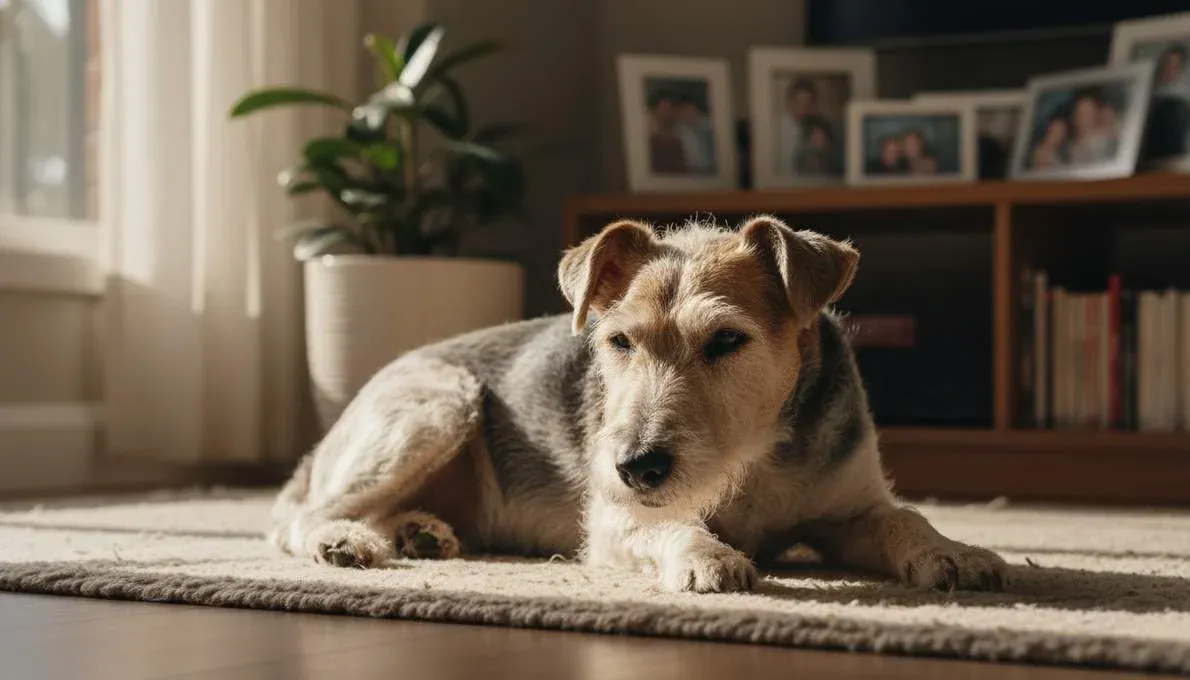
The Wire Fox Terrier enjoys a healthy lifespan of 12–15 years, which is typical for small terrier breeds. Many well-cared-for Wires live comfortably into their mid-teens. Their robust constitution, active nature, and relatively low incidence of life-threatening genetic conditions contribute to their longevity.
Age-Specific Care
| Life Stage | Age | Key Focus Areas |
|---|---|---|
| Puppy | 0–12 months | Socialisation is the top priority — with other dogs, children, strangers, and environments. Start grooming routines early so they accept handling. Begin bite inhibition training immediately. Vaccinations and initial vet visits. |
| Adolescent | 12–24 months | Peak terrier energy and boundary-testing. Consistent training, continued socialisation. Introduce hand stripping if pursuing that grooming method. Transition to adult food around 12 months. |
| Adult | 2–9 years | Prime years. Annual vet checks, annual eye exams (important for PLL screening), dental care, weight management. Maintain daily exercise and mental stimulation. Regular grooming schedule. |
| Mature Adult | 9–12 years | Biannual vet visits. Joint supplements may be helpful. Watch for eye changes (cataracts, lens issues). Adjust exercise intensity to comfort level. Dental health becomes increasingly important. |
| Senior | 12+ years | Senior blood panels, twice-yearly vet checks. Monitor vision, hearing, mobility, and cognitive function. Adjust exercise and diet. Many Wires remain spirited well into their senior years. |
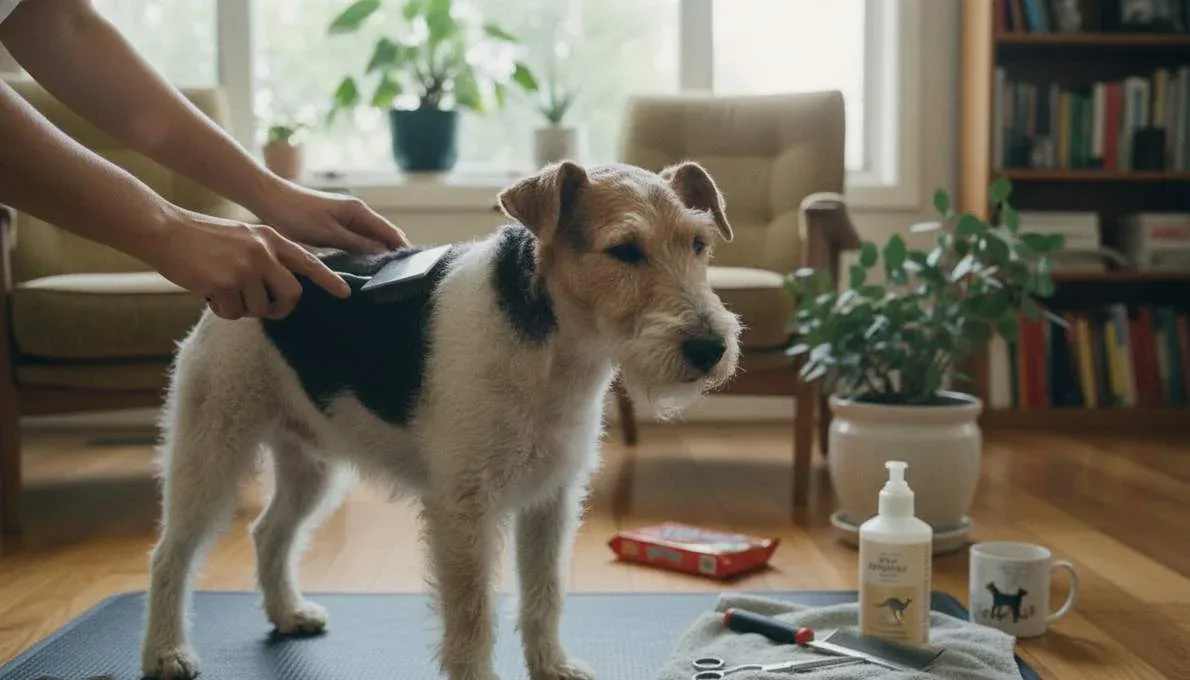
Grooming & Coat Care for the Wire Fox Terrier
This is the section that separates the casually interested from the committed. The Wire Fox Terrier’s coat is one of the breed’s most distinctive features — that dense, wiry, slightly crinkly jacket that gives the dog its sculpted, bearded appearance. Maintaining it properly involves a technique called hand stripping, and understanding your options here is essential before you commit to the breed.
Hand Stripping vs Clipping: The Great Debate
Hand stripping involves pulling dead hairs from the coat by the root, either with fingers or a stripping knife. It sounds harsh but is painless when done correctly — dead wire hairs release easily. Hand stripping maintains the coat’s correct hard, wiry texture, preserves the rich colour, and keeps the coat weather-resistant. It’s what show dogs get, and it’s what breed purists recommend. The trade-off: it’s time-consuming (2–4 hours for a full strip), requires skill, and professional hand stripping is expensive.
Clipping is the alternative used by most pet owners. An electric clipper cuts the coat rather than removing it from the root. It’s faster, cheaper, and easier to find a groomer who can do it. The trade-off: clipping progressively softens the coat texture, dulls the colour, and removes the characteristic “wire” quality. A clipped Wire Fox Terrier looks quite different from a hand-stripped one. The coat may become fluffier, lighter in colour, and lose its weather resistance over time.
Neither approach is “wrong.” If you’re showing your Wire, hand stripping is required. If your Wire is a companion, clipping is perfectly acceptable and the dog won’t care. Just be aware that the coat will change with repeated clipping, and returning to a hand-stripped coat after prolonged clipping can take several cycles.
Grooming Schedule
| Grooming Task | Frequency | Estimated AUD Cost | Notes |
|---|---|---|---|
| Brushing | 2–3 times per week | $25–$50 for bristle brush + slicker brush | Prevents matting, distributes skin oils, removes debris. Essential for maintaining coat health between grooming sessions. |
| Hand Stripping (professional) | Every 6–8 weeks | $100–$250 per session | Finding a groomer skilled in hand stripping can be challenging. Ask your breeder for recommendations. Many terrier breeders strip their own dogs. |
| Clipping (professional) | Every 6–8 weeks | $60–$120 per session | More widely available than hand stripping. Ask for a “terrier pattern” clip that maintains the breed’s silhouette. |
| Bathing | Every 4–6 weeks or as needed | $15–$30 per shampoo | The wiry coat repels dirt well. Overbathing softens the coat. Use a terrier-appropriate shampoo. |
| Beard and Face Grooming | Daily wipe; trim as needed | $10–$20 for grooming wipes | The beard picks up food, water, and dirt. Daily wiping keeps it clean. Some owners trim the beard between grooming sessions. |
| Nail Trimming | Every 2–3 weeks | $15–$25 per clipper; $15–$30 at groomer | Active dogs on hard surfaces may need less frequent trimming. Start handling paws early. |
| Ear Cleaning | Weekly check; clean as needed | $15–$25 per ear cleaner | V-shaped folded ears can trap moisture. Check weekly for signs of infection. |
| Dental Care | Daily brushing ideal; minimum 3x per week | $10–$20 for dog toothpaste + brush | Small breeds are prone to dental issues. Regular brushing is essential. |
The Low-Shedding Advantage
One of the Wire Fox Terrier’s biggest practical advantages is its coat’s minimal shedding. When properly maintained (whether hand-stripped or clipped), Wires shed very little. The dead coat stays in place until it’s manually removed through stripping or brushing. This makes them one of the better breeds for people who want less hair on their furniture and clothes. While no breed is truly hypoallergenic, Wire Fox Terriers produce less dander than many breeds, and some allergy sufferers report fewer reactions.
Australian Climate Considerations
The Wire Fox Terrier’s coat provides good protection against both cold and moderate heat, but Australian summers still require management. Their predominantly white coat helps reflect heat, which is an advantage. However, the white areas are also susceptible to sunburn, particularly on the nose, ears, and any sparsely covered areas. In summer, exercise during the coolest parts of the day, provide shade and fresh water, and consider pet-safe sunscreen on exposed areas. Wire Fox Terriers handle Australian winters comfortably across all states.
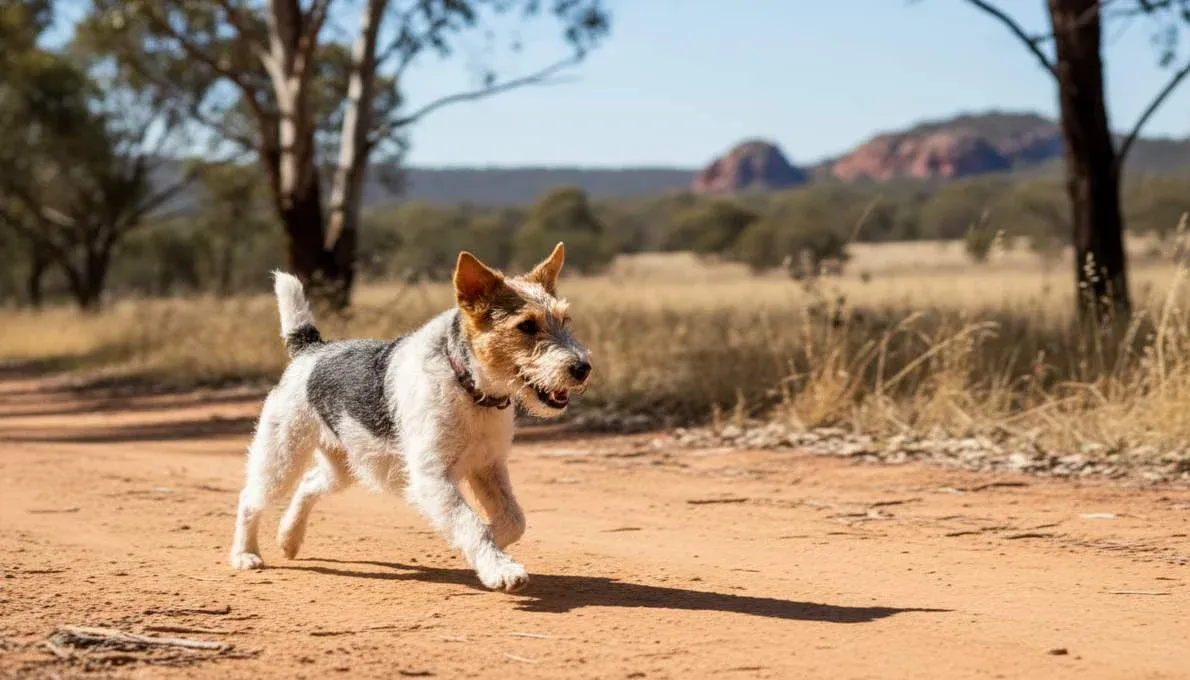
Wire Fox Terrier Exercise Needs
Wire Fox Terriers are high-energy dogs that need meaningful daily exercise. Don’t be fooled by their small size — these dogs were built to run alongside mounted hunters across open country and then work underground. They have stamina, speed, and an almost inexhaustible supply of energy that needs an outlet.
Daily exercise recommendation: 45–60+ minutes. A combination of a brisk walk (30–45 minutes), off-lead play in a secure area, and interactive games or training. Wire Fox Terriers that don’t get enough exercise will find their own entertainment — typically through barking, digging, and destructive behaviour.
Mental stimulation: Just as important as physical exercise. These are clever dogs that need their minds engaged. Puzzle toys, scentwork games, food-dispensing toys, trick training, and varied walking routes prevent boredom. Bored Wires are destructive Wires.
Best Activities for Wire Fox Terriers in Australia
Earthdog trials — these test the breed’s natural instinct to work underground and are available through ANKC clubs. Agility — Wire Fox Terriers are athletic, fast, and love the challenge. Flyball — their speed and ball drive make them natural competitors. Scentwork — uses their keen nose in a structured, rewarding way. Fetch and tug games — simple but effective for burning energy. Bush walks — always on-lead due to prey drive, but they love exploring new terrain.
Exercise Cautions
Prey drive and recall: Wire Fox Terriers have an unreliable recall once they’ve spotted something worth chasing. A squirrel, a lizard, a cat — they will pursue it with single-minded determination. Off-lead exercise should only occur in fully fenced, secure areas. On walks, a standard lead (not a retractable) provides the most control.
Fencing: Wire Fox Terriers are agile jumpers and dedicated diggers. Fencing should be at least 1.5 metres high with the base secured to prevent digging under. Check the fence line regularly — Wires are escape artists.
Heat management: In Australian summer, limit exercise to early morning and late evening. Their white coat helps with heat reflection but they can still overheat. Carry water on all walks.
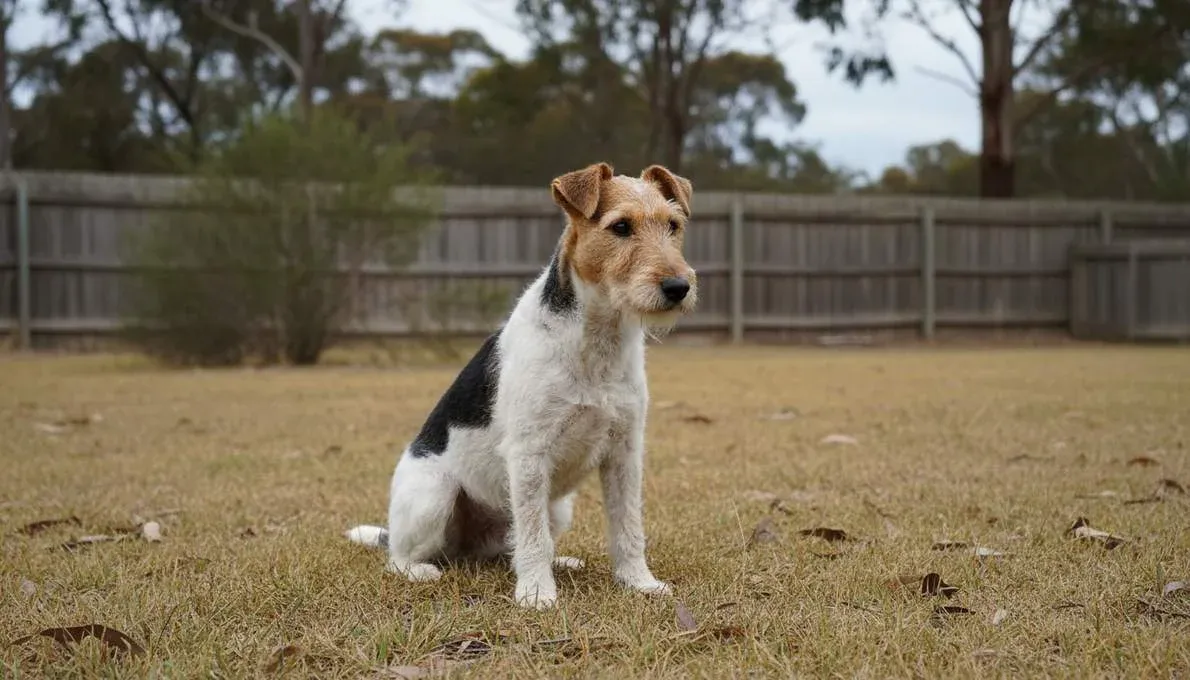
Training Your Wire Fox Terrier
Training a Wire Fox Terrier is an exercise in patience, consistency, and humour. These dogs are smart enough to learn almost anything — and smart enough to decide whether they want to. The terrier temperament means you’re not so much training a student as negotiating with a very confident colleague.
Training Difficulty: Honest Assessment
On a scale of 1 (Golden Retriever) to 10 (Afghan Hound), the Wire Fox Terrier sits around 6–7. They learn quickly and can excel in structured activities like agility and earthdog trials. The challenge isn’t comprehension — it’s motivation. They need to see the point, and they bore quickly with repetitive drills.
Socialisation & Training Timeline
| Age | Training Focus | Tips |
|---|---|---|
| 8–12 weeks | Socialisation (critical window), bite inhibition, name recognition, crate training | Expose to diverse people, dogs, environments. Bite inhibition is essential — terrier puppies mouth everything. Use redirection to appropriate chew toys. Crate training provides a safe space. |
| 3–6 months | Basic commands (sit, down, stay, come), leash manners, continued socialisation | Keep sessions very short (3–5 minutes). High-value treats are essential. Wires respond poorly to repetition — vary exercises constantly. Make everything a game. |
| 6–12 months | Reliable recall (in enclosed areas), impulse control, “leave it” command, settling on cue | Adolescence is when the terrier personality emerges fully. The “leave it” command is essential for managing prey drive. Teach a solid “settle” for calm indoor behaviour. |
| 12–18 months | Advanced obedience, introduction to dog sports (agility, earthdog), proofing commands in distracting environments | Begin dog sport training if interested — Wires often thrive with structured activities. Continue socialisation with other dogs to prevent same-sex aggression from developing. |
| 18 months+ | Maintenance, ongoing enrichment, bark management, continued sport training | A well-trained Wire Fox Terrier is a pleasure. But training is truly a lifelong commitment with this breed — they’ll always push boundaries if they sense inconsistency. |
The “Small Dog Syndrome” Trap
Because Wire Fox Terriers are small and charming, it’s tempting to let bad behaviour slide. This is a mistake. Wires that aren’t given clear boundaries and consistent rules can develop what behaviourists call “small dog syndrome” — resource guarding, snapping, excessive barking, territorial aggression, and general household tyranny. The same rules and expectations you’d apply to a large breed should apply to your Wire. They’re small dogs with big personalities, and they need a handler who respects that.
What Works in Training
Very short, varied sessions that feel like games. Very high-value rewards (real meat, cheese — kibble often won’t cut it). Positive reinforcement exclusively. Channelling terrier instincts into structured activities (earthdog, scentwork, agility). Consistency from every family member — Wires will exploit gaps in rules.
What Doesn’t Work
Repetitive drills (they’ll check out mentally). Harsh corrections or physical punishment (damages trust, may provoke defensive snapping). Expecting immediate, reflexive obedience (this is a terrier, not a service dog). Letting bad behaviour slide because the dog is small and cute.
Cost of Owning a Wire Fox Terrier in Australia
The Wire Fox Terrier is more available in Australia than many breeds covered in this series, with active breeders in several states. The higher grooming costs — particularly if you choose professional hand stripping — are the biggest ongoing expense that distinguishes this breed from lower-maintenance dogs.
Purchase Price
Purebred Wire Fox Terrier puppy (ANKC registered breeder): $2,500–$5,000+ AUD. Show-quality puppies with strong pedigrees and imported bloodlines will be at the higher end. Pet-quality puppies from the same health-tested litters are generally more affordable.
Rescue: The Fox Terrier Club of Victoria maintains rescue contacts, and breed-specific rescue does occur in Australia. Adoption fees typically range from $350–$800 and include desexing, vaccinations, and microchipping.
Annual Ongoing Costs (AUD Estimates)
| Expense | Low Estimate | High Estimate | Notes |
|---|---|---|---|
| Food (premium small-breed formula) | $600 | $1,200 | Small breed with moderate appetite. Watch portions — Wires can gain weight easily. |
| Vet (annual check, vaccines, flea/tick/worming) | $400 | $800 | Add eye exams for PLL screening; particularly important from age 3+. |
| Pet Insurance | $350 | $900 | Recommended. Eye conditions (PLL, cataracts) can be expensive to treat. |
| Grooming (hand stripping 6–8x/year) | $600 | $2,000 | Biggest variable cost. Hand stripping is more expensive. DIY clipping reduces this significantly. |
| Grooming (clipping 6–8x/year) | $360 | $960 | More affordable alternative. Many pet owners choose this route. |
| Training (puppy school, ongoing classes) | $250 | $800 | Essential investment. Terrier temperament requires consistent, skilled training. |
| Toys, bedding, leads, bowls | $150 | $400 | Wires enjoy puzzle toys, tug toys, and anything they can “kill.” Durable materials recommended. |
| Council registration | $30 | $250 | Varies by council and desexing status. |
| Boarding / pet sitting | $0 | $1,500 | Wires can be challenging in commercial kennels due to barking and dog-reactivity. A familiar pet sitter is often better. |
| Secure fencing (one-off or maintenance) | $0 | $1,500 | Must be dig-proof and at least 1.5 metres high. |
Total estimated annual cost (with hand stripping): $2,380–$9,350 AUD. With clipping instead of hand stripping, the range drops to roughly $2,140–$8,310. Over a 13-year lifespan, total ownership costs including purchase run approximately $33,400–$126,500+.
Where to Find Wire Fox Terrier Puppies in Australia
The Wire Fox Terrier is better represented in Australia than many breeds. Start with Dogs Australia (ANKC) and check DogzOnline for registered breeders with current or planned litters. The Fox Terrier Club of NSW and Fox Terrier Club of Victoria are excellent breed-specific resources. Active breeders operate in NSW, Victoria, Queensland, and South Australia, with some importing bloodlines from the UK, Italy, and New Zealand. Expect to wait several months for a puppy from a quality breeder, but availability is generally better than rare breeds. As always, avoid Gumtree, Facebook Marketplace, and unregistered sellers.
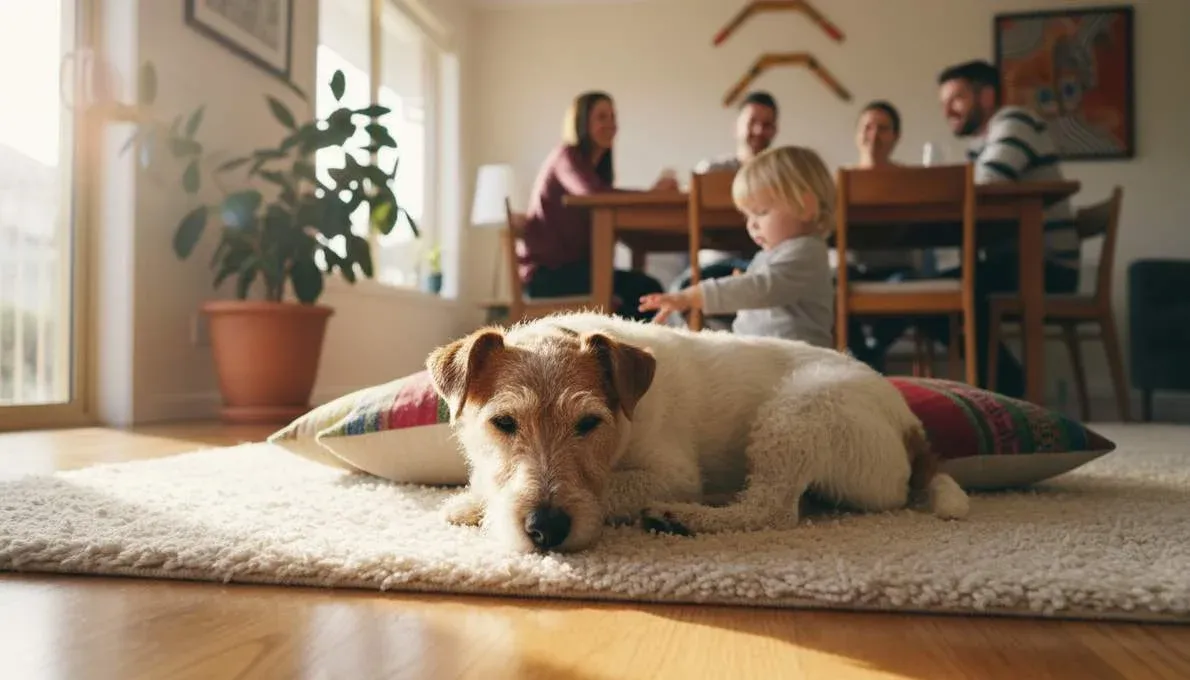
Is the Wire Fox Terrier Right for You?
The Wire Fox Terrier inspires passionate loyalty from its owners and genuine confusion from everyone else. It’s a breed that rewards the right owner enormously but will make the wrong owner’s life genuinely difficult. Here’s an honest assessment.
You enjoy an active, energetic dog with a strong personality. You have experience with terrier breeds or are prepared for the terrier temperament. You can commit to regular grooming (hand stripping or clipping every 6–8 weeks). You have older children (7+) who respect boundaries with dogs. You want a low-shedding breed with a distinctive, head-turning appearance. You’re interested in dog sports like agility, earthdog, or flyball. You have a securely fenced yard. You have a sense of humour and don’t take yourself too seriously — Wires demand this.
You have very young children or toddlers. You have small pets (cats, rabbits, birds, guinea pigs) unless you can guarantee permanent separation. You want a quiet, calm, easy-going dog. You want an immediately obedient, eager-to-please breed. You dislike grooming or aren’t willing to invest in regular professional grooming. You want a dog that’s reliably off-lead in open areas. You can’t provide secure fencing (dig-proof and at least 1.5 metres). Your living situation has strict noise restrictions.
If you love the Wire’s look but want a calmer temperament, the Lakeland Terrier is a less intense option from the same terrier family. The Welsh Terrier is slightly larger with a similar wire coat and a marginally mellower disposition. The Miniature Schnauzer offers a wiry coat, low shedding, and a terrier-like personality with somewhat better trainability. If you want the terrier spirit in a smoother package, the Smooth Fox Terrier is the Wire’s closest relative with an easier-to-maintain coat.
The Wire Fox Terrier is one of the most characterful, entertaining, and historically significant dog breeds in existence. It’s the most decorated show dog of all time, a Hollywood and literary icon, and a companion that will fill your house with energy, laughter, and — yes — a fair amount of noise. But it’s a terrier through and through, and that means it comes with terrier demands.
The good: Stunning, distinctive appearance that turns heads everywhere. Low-shedding coat. Affectionate and deeply entertaining personality. Excellent watchdog. Long lifespan. Great for active families with older kids. Thrives in dog sports. Good availability from Australian breeders.
The challenging: Strong prey drive (not safe around small pets). Can be scrappy with other dogs. Vocal and prone to barking. Dedicated digger. Independent and requires patient, consistent training. Significant grooming commitment (especially hand stripping). Not ideal for very young children.
The bottom line: If you want a small dog with the courage and personality of something three times its size, a Wire Fox Terrier will deliver in spectacular fashion. Just be honest with yourself about the grooming, the training, and the prey drive. This isn’t a beginner’s breed, but for the right owner, it’s an unforgettable one.
Frequently Asked Questions
What is a Wire Fox Terrier?
A Wire Fox Terrier is a small terrier breed originally developed in England in the late 1700s to flush foxes from their dens during foxhunts. It has a dense, wiry coat (distinct from the Smooth Fox Terrier’s flat coat), a bearded face, V-shaped ears, and a predominantly white coat with black and/or tan markings. It’s one of the most successful show dogs in history, with fifteen Westminster Best in Show wins.
Are Wire Fox Terriers hypoallergenic?
They’re often listed as hypoallergenic because they shed very little, especially when the coat is properly maintained through hand stripping or regular clipping. However, no breed is truly hypoallergenic. Wire Fox Terriers produce less dander than many breeds, and some allergy sufferers report fewer reactions, but individual responses vary.
Do Wire Fox Terriers shed?
Very little. The wiry coat holds dead hair in place rather than releasing it, which is why regular grooming (hand stripping or clipping) is needed to remove the old coat. Between grooming sessions, shedding is minimal. This makes them one of the better breeds for keeping your home relatively fur-free.
What is the Wire Fox Terrier temperament like?
Alert, confident, energetic, affectionate with family, and independent. They’re fearless dogs with a strong prey drive and a terrier’s natural boldness. They’re playful and entertaining but also vocal, prone to digging, and can be scrappy with other dogs. They need consistent training and clear boundaries.
How big do Wire Fox Terriers get?
Males typically stand 37–40 cm (15–16 inches) and weigh 7.5–8.5 kg (16–18 lbs). Females are slightly smaller at 34–38 cm and 6.5–7.5 kg. They’re a compact, square-proportioned small dog.
How long do Wire Fox Terriers live?
12–15 years, which is a healthy lifespan for a small breed. With proper care, regular veterinary attention, and good genetics, many Wires live well into their mid-teens.
What is hand stripping and does a Wire Fox Terrier need it?
Hand stripping is a grooming technique where dead hairs are pulled from the coat by the root, either by hand or with a stripping knife. It maintains the coat’s correct wiry texture and colour. Show dogs require it, but pet owners can opt for clipping instead. Clipping is easier and cheaper but gradually softens the coat and dulls the colour.
Are Wire Fox Terriers good with cats?
Generally no. Wire Fox Terriers have a strong prey drive inherited from their fox-hunting heritage. They may chase and potentially harm cats, particularly those that run. Some individual Wires can learn to coexist with cats when raised together from puppyhood, but it’s never fully reliable. They should not be left unsupervised with cats or other small animals.
How much does a Wire Fox Terrier cost in Australia?
Purebred puppies from ANKC-registered breeders typically cost $2,500–$5,000+ AUD. Show-quality puppies with strong pedigrees are at the higher end. Rescue adoption fees are typically $350–$800. Ongoing annual costs run approximately $2,100–$9,350 depending on grooming choices.
Can Wire Fox Terriers live in apartments?
It’s possible but challenging. They’re small enough physically, but their barking, energy levels, and need for secure outdoor space make apartments difficult. If you do have a Wire in an apartment, commit to substantial daily exercise, mental stimulation, and active bark management. Close neighbours and noise restrictions could be problematic.
What is the difference between a Wire and Smooth Fox Terrier?
The main difference is the coat: Wires have a dense, crinkly, wiry coat that requires hand stripping or clipping, while Smooths have a flat, short coat that sheds more but requires less grooming. They likely descended from different ancestors (Wires from rough-coated terriers in Wales; Smooths from a separate English lineage). Their temperaments are very similar, though Smooths are sometimes considered slightly calmer.
Are Wire Fox Terriers good for first-time owners?
Generally not recommended. Their independent terrier temperament, grooming needs, prey drive, and tendency toward scrappiness with other dogs make them better suited to experienced dog owners. A dedicated first-time owner who has thoroughly researched the breed and committed to training could succeed, but it’s a steep learning curve.
1. American Kennel Club — Wire Fox Terrier Breed Information: https://www.akc.org/dog-breeds/wire-fox-terrier/
2. PetMD — Wire Fox Terrier Health and Care: https://www.petmd.com/dog/breeds/wire-fox-terrier
3. Hill’s Pet Nutrition — Wire Fox Terrier Breed Profile: https://www.hillspet.com/dog-care/dog-breeds/wire-fox-terrier
4. Wisdom Panel — Wire Fox Terrier Facts: https://www.wisdompanel.com/en-us/dog-breeds/fox-terrier-wire
5. WebMD — What to Know About Wire Fox Terriers: https://www.webmd.com/pets/dogs/what-to-know-about-wire-fox-terriers
6. Daily Paws — Wire Fox Terrier Breed Information: https://www.dailypaws.com/dogs-puppies/dog-breeds/wire-fox-terrier
7. Purina — Wire Fox Terrier Breed Guide: https://www.purina.com/dogs/dog-breeds/wire-fox-terrier
8. DogzOnline — Wire Fox Terrier Breeders Australia: https://www.dogzonline.com.au/breeds/breeders/fox-terrier-wire.asp
9. Dogs NSW — Fox Terrier (Wire) Breed Profile: https://www.dogsnsw.org.au/Breeds/browse-all-breeds/218/Fox-Terrier-(Wire)/
10. Fox Terrier Club of Victoria: https://www.foxterrierclubofvictoria.com/